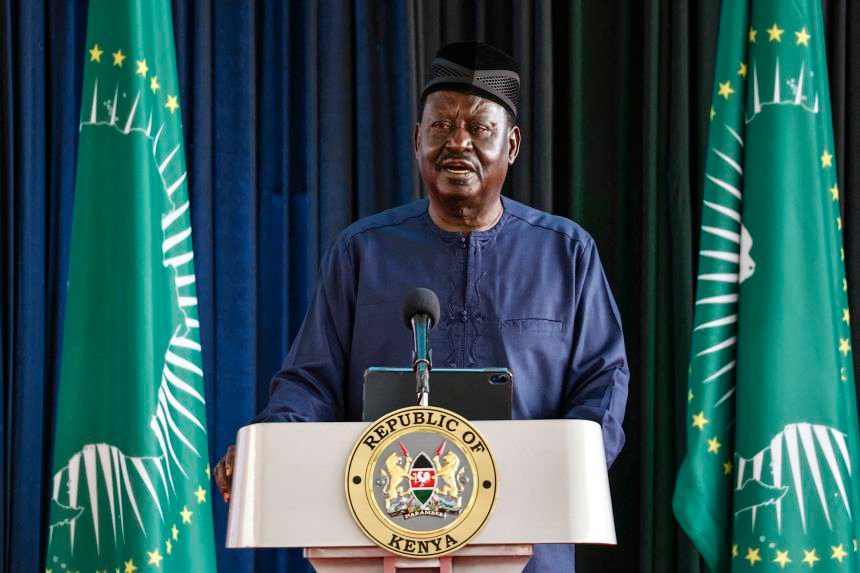
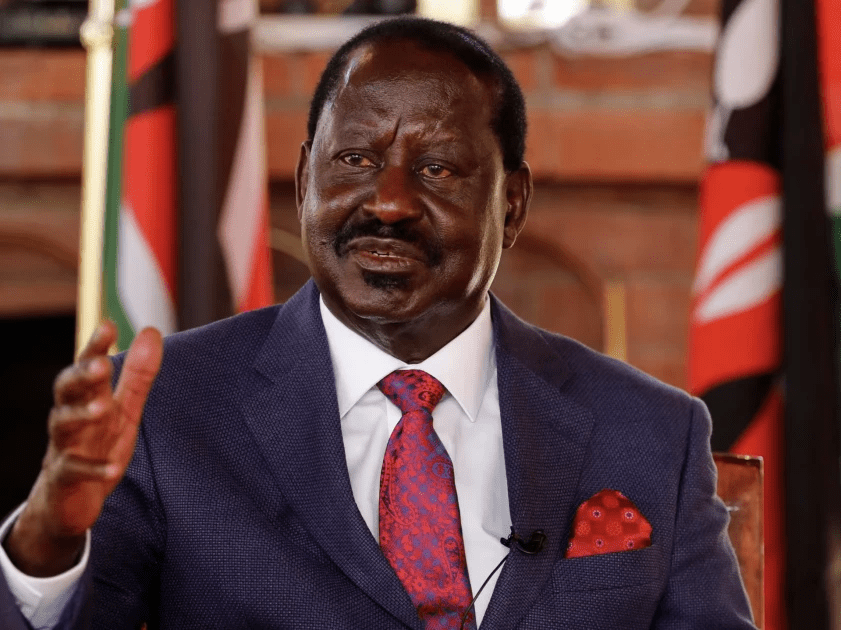
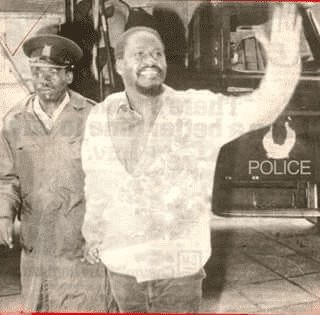
Hundreds of Kenyans and notable figures gathered at the Nyayo Stadium in Nairobi on October 17th 2025, to pay their respects to the late former Prime Minister, Raila Odinga, at his state funeral.
The former figurehead passed away at the age of 80 after suffering a heart attack on October 15th, during a morning walk at a health clinic in Southern India, where he was receiving treatment. Krishnan, a superintendent of police in Kerala, India, confirmed that Odinga was pronounced dead after being rushed to Devamatha private hospital.
During a speech at the funeral, Odinga’s daughter, Winnie, recounted her memory of her father, ‘I watched him at his best. I watched him fall and rise again, each time with grace, forgiveness, and hope.”
(Photo via The Nairobi Law Monthly)
Being one of the most revered political figures in Kenya, Odinga’s death has attracted condolences from prominent national and international figures.
In a tribute to the late Prime Minister, President of Kenya, William Samoei Ruto said, “Through his words and deeds, he taught us that true patriotism is not measured by what we receive from our country, but by what we are willing to give in service to it.”
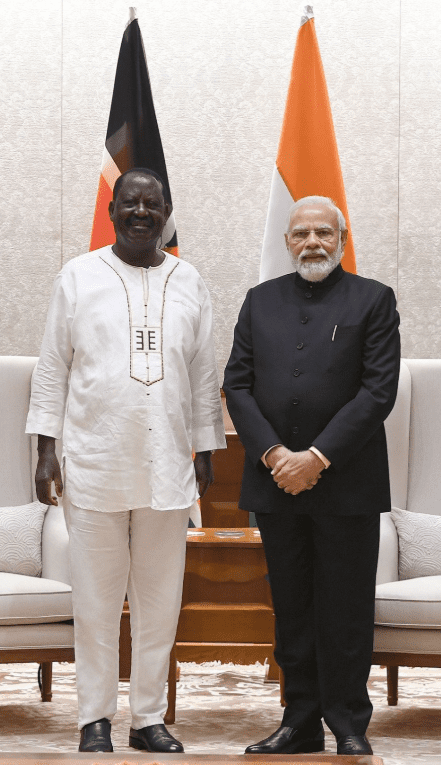
Similarly, the Prime Minister of India, Narendra Modi, commented on Odinga’s death via his official X handle, “Deeply saddened by the passing of my dear friend and former Prime Minister of Kenya, Mr. Raila Odinga. He was a towering statesman and a cherished friend of India.”
(Photo by Narendra Modi via X)
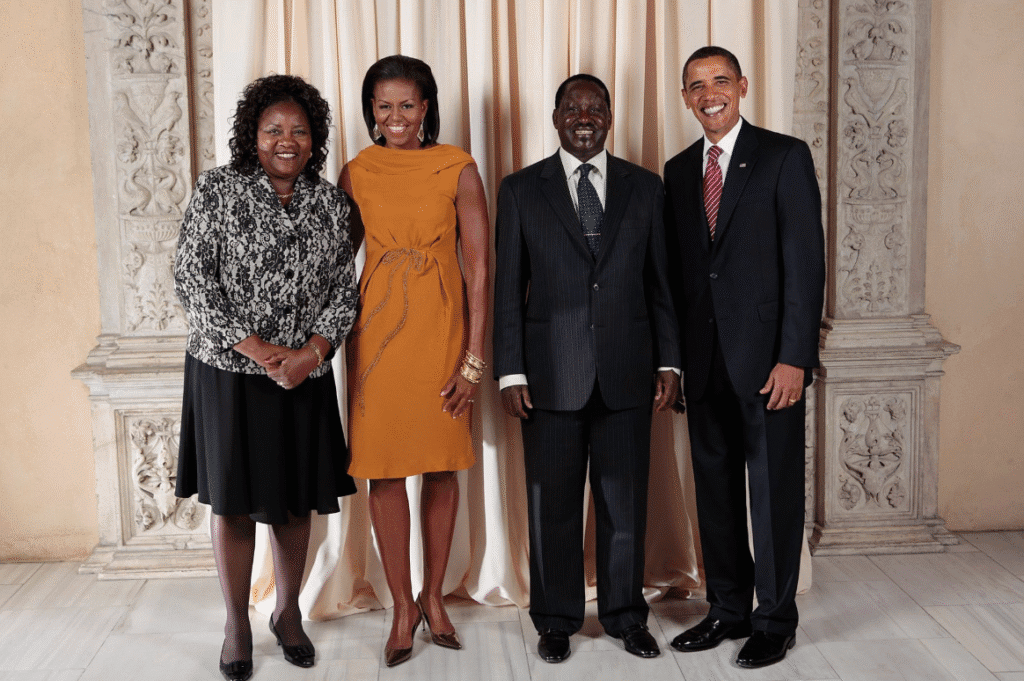
Former United States president, Barack Obama, equally sympathized with Kenyans, saying, “Raila Odinga was a true champion of democracy. A child of independence, he endured decades of struggle and sacrifice for the broader cause of freedom and self-governance in Kenya…I know he will be missed.”
(Photo by Barack Obama via X)
Many Kenyans, who fondly referred to Odinga as ‘Baba’, also took to social media to express their sadness about his death. One user commented, “Every man dies. Not all men live. Baba Raila Amolo Odinga lived. Impactful both in life and death.”
Raila Odinga was born on January 7, 1945, in Maseno, Kenya. As the son of Kenya’s first vice president, Odinga’s exposure to politics began from early childhood. It wasn’t until the late 90s, however, that he became actively involved in politics.
Odinga was notable for his fight against one-party dictatorship in Kenya. In 1982, Odinga was arrested and imprisoned for six years after allegedly plotting a coup against then-president Daniel Arap Moi.
Despite running for the office of the presidency five times, Odinga never won any elections. He however, occupied various positions in Kenya, including Minister of Roads, Public Works, and Housing (2003-2005), Minister of Energy (2001-2002), and Prime Minister (2008-2013).
As Kenyans continue to turn up in numbers to mourn the death of the former Prime Minister, his wife, Ida Odinga, urges people to remain peaceful and avoid repeating the tragic stampede that resulted in the deaths of others.
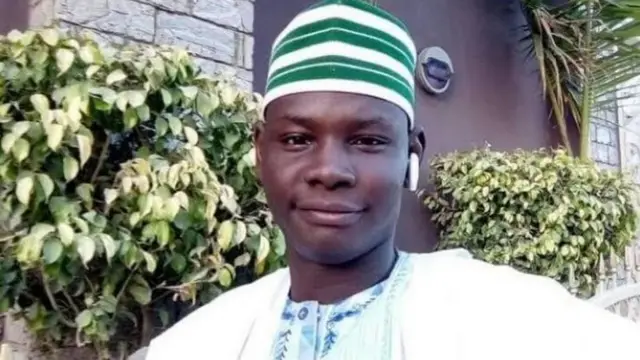
A religious blasphemy case involving a local musician in Kano state, Nigeria, who was sentenced to death by a sharia court, has raised concerns about the sharia law and its infringement on fundamental human rights such as freedom of expression.
Photo by Daily Post
The genesis of the case can be traced back to 2020, when Yusuf Sharif Aminu, a local musician based in Kano, was arrested for allegedly sharing song lyrics that were blasphemous against the Prophet Muhammad.
Yusuf’s lyrics generated fury among a certain group of protesters in Kano state who took matters into their hands and set his family’s house ablaze.
The musician was later said to have been arrested and taken into custody by the religious police force in Kano, Hisbah.
In August of 2020, Yusuf was tried by an upper Sharia court in the Hausawa Filin Hockey area of Kano and was sentenced to death by hanging.
The following year, in 2021, Yusuf appealed to the Court of Appeal in Kano after the initial conviction in 2020 was overturned because he had not been granted legal representation during the proceedings.
The court, however, rejected his appeal for release, stating that the Sharia court was not unconstitutional and ordered a retrial of the case by a different Sharia court.
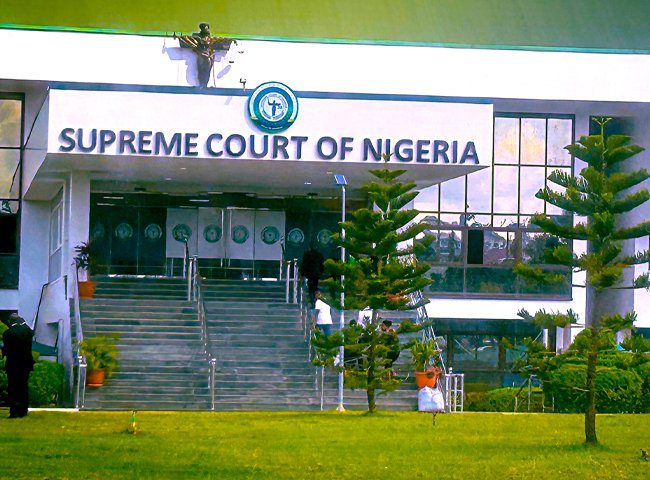
In the most recent development, Yusuf and his lawyers have taken their case to the Supreme Court to request permission to appeal the retrial, which has been approved by the court. Kola Alapinni, the lawyer representing Yusuf, stated, “The court has graciously granted our request and ordered an accelerated hearing. We will file the appeal next week.”
Photo by Channels TV
The Supreme Court of Nigeria (Photo by Channels TV)
Five years down the line, Yusuf’s case remains a topic of debate among Nigerians and international bodies. Social media users have expressed concerns over the clash between the provisions of the constitution and Sharia law, insisting that the two cannot coexist in a country of varying religious practices.
An X user commented, “Religion should be personal. Should have no place in law, politics, or the government.”
Analysing the issue during an interview with Yuvoice, a Nigerian lawyer, Barrister Yusufu explained, “Applying Sharia criminal codes in a diverse, multi-faith country creates constitutional and social problems. The best approach is ensuring that no Nigerian, Muslim or non-Muslim is coerced under a religious legal system they do not subscribe to.”
An international lawyer for the Alliance Defending Freedom, Sean Nelson, equally commented on the issue during a lecture with university students. He maintained that blasphemy laws like the one in Yusuf’s case were censorious and infringed on the right to speech and religion.
Yusuf’s case is currently ongoing at the Supreme Court of Nigeria and pending trial.
After nearly ten years of painstaking negotiations, Indonesia and the European Union have finally sealed a landmark trade agreement. The Indonesia-European Union Comprehensive Economic Partnership Agreement (IEU-CEPA) was signed in Bali on Tuesday, September 23, 2025, by Indonesia’s Coordinating Minister for Economy Airlangga Hartarto and EU Trade Commissioner Maros Sefcovic.
The timing couldn’t be more strategic. With the US imposing tariffs and global trade tensions mounting, this deal represents far more than just tariff reductions—it’s a calculated move in the geopolitical chess game of economic alliances.
The Numbers Behind the Partnership
The EU ranks as Indonesia’s fifth-largest trading partner, while standing as ASEAN’s third-largest after China and the United States. Last year, bilateral trade in goods totaled €27.3 billion, with the EU exporting €9.7 billion and importing €17.5 billion from Indonesia, according to European Commission data.
What’s on the Table?
The agreement promises substantial tariff eliminations. Indonesia will see 80 percent of export duties removed immediately upon the deal’s entry into force, climbing to 96 percent within five years. This opens significant market access for Indonesian products across EU member states.
For Indonesia, the deal means duty-free access for EU agricultural exports including dairy and meat, alongside zero tariffs on industrial goods such as pharmaceuticals, machinery, and motor vehicles.
Bhima Yudhistira, Executive Director of CELIOS and prominent economist, sees particular promise in the fisheries sector.
“Most fishery products consumed in Europe currently come from Vietnam and Thailand,” Bhima explained in an interview. “This agreement provides an opportunity for Indonesian seafood products—particularly processed fish—to capture greater market share in Europe.”
The tourism industry also stands to benefit, with EU cooperation expected to enhance Indonesia’s tourism infrastructure and accelerate sustainable tourism development.
How Indonesia Compares to Its ASEAN Neighbors
The EU’s approach varies significantly across Southeast Asia. Vietnam’s agreement (EVFTA), which took effect in August 2020, eliminated 99 percent of tariffs on Vietnamese manufacturing. Singapore’s 2019 deal focused heavily on digital trade, cross-border data flows, and services rather than commodities.
Indonesia’s agreement differs markedly—it’s commodity-driven, reflecting the country’s status as ASEAN’s largest economy and a G20 member rich in resources critical to the EU’s green industrial agenda, particularly nickel and minerals essential for EV batteries and supply chains.
Meanwhile, the EU’s negotiations with Malaysia and Thailand remain mired in challenges—palm oil sustainability concerns in Malaysia’s case, labor issues for Thailand. Malaysia only resumed FTA talks with the EU this past January 20, 2025.
The Thorny Issues That Remain
Not everything is resolved. The controversial crude palm oil (CPO) and nickel sectors remain flashpoints.
Indonesia suffered a defeat at the WTO over nickel following its ore export ban mandated by mining law. While Indonesia has challenged EU biodiesel duties at the WTO, the CPO situation differs due to persistent concerns about deforestation and labor practices.
“The EU has established standards for CPO-related products that Indonesia hasn’t yet met,” said Yusran, an international relations expert from Budi Luhur University. “But we need to understand the broader context—the Russia-Ukraine conflict drags on, and US tariffs are pushing the EU to seek new economic partners.”
Bhima pointed to a critical gap: Indonesia’s government hasn’t adequately incentivized independent and smallholder palm oil farmers to meet environmental standards.
“If we comply with these standards, we could significantly increase CPO exports to Europe,” he noted, adding that the EU employs traceability systems to verify plantation origins and sustainability practices.
On nickel, Bhima argues Indonesia squandered the decade-long negotiation period that could have been used to address the sector’s systemic problems.
“Our nickel industry is plagued with issues—massive coal power plants in mining areas, water pollution, hazardous working conditions for workers. There’s a long list that needs fixing,” he said.
While Indonesia can still export processed ore following the WTO ruling, environmental compliance issues in the nickel sector may ultimately undermine the EU’s willingness to source nickel from Indonesia.
Why This Deal Matters Despite Its Flaws
The IEU-CEPA represents a pragmatic win-win, even with unresolved issues lingering. Indonesia will need to demonstrate genuine commitment to meeting EU green standards—and other emerging economies watching these negotiations will pay close attention to how Indonesia implements environmental safeguards.
More broadly, this agreement reinforces ASEAN’s position as a pivotal player in global trade. Its successful conclusion may well pressure Malaysia and Thailand to accelerate their own stalled negotiations with Brussels.
In an era of trade wars and shifting alliances, Indonesia has secured its seat at the table. Now comes the harder part: delivering on the promises.
Coletta Feek was the sole proprietor of the small chocolate shop, Magnifeek Sweets. Her shop remained her entire life and the only thing she had ever actively worked towards. The relationships, and broken days, that she had experienced were, in her eyes, treasures directly resulting from her shop’s success. She had had a honeyed childhood, soul-searching adolescence, and desired nothing. Although her own life experiences were often dressed in ganaches and gossamer doilies, the young woman truly believed that she had felt the kaleidoscope of human emotions already, all due to the wide display window of her shop.
The pane was worn and thin, fogging around the edges where the glass had warped as Magnifeek Chocolates had been everything from a florist to a pharmacy before Coletta had purchased the property. Since the window itself looked rather tired, she did everything she could to make what it housed vibrant. She set false evergreen boughs, dressed in holiday lights, around the edges of the glass and a rich burgundy velvet pooled on the tiered platforms that contained confections of nearly every color and shape.
Chocolate seashells, a seaswept reminder of her grandmother, sat on pewter plates she polished regularly. Stained glass window cookies glistened next to succulent roulades and mousse cakes dressed in candied rind and mint leaves. Bouquets of chocolate lollipops stunned in vases she had never used for flowers, while her shop’s signature chocolate mice with ribbon tails scurried among the treats, adding the whimsy she hoped her customers would appreciate as much as she always had.
Coletta’s most precious part of owning her shop was watching passersby linger, if only briefly, at her shop window, because, for a moment, she could see them as they truly were. She had witnessed families, with children who pressed their small faces against the pane, begging their loved ones to enter the chocolate shop. Lovers of every age had sought out the sweets to enjoy together under streetlights as the rumble of traffic hid their whispers from the rest of the world. And, every once in a while, a widower would come to the shop for a sweet bit of respite, remembering who he had held close as a younger man when kisses were still sugar.
The chocolatier had been privy to the lives of her customers for as long as she could remember, which meant that she had also observed the darker shades of hope outside her shop’s window.
…
In particular, she recalled a middle-aged man who lingered a few steps behind the same attractive couple. His hair was red, with a bit of starlight at its edges, and she recollected the patch of silver in his beard, shaped like a roof shingle. The man never spoke to the couple, but he followed them as wearily as if tethered to them. The couple rarely seemed to notice his presence, and, no matter how many times they crossed the shop’s window, they were never speaking to the man whose shadow was interwoven with their own. Coletta once dropped a chocolate mouse when the redheaded man reluctantly pulled his gaze away from the couple and fixed his cool eyes upon her. She stared down at the ruined sweet, crumbled on the ground in front of her, picked up the pieces and combed the ribbon tail gently between her fingers.
…
The couple continued to walk by Magnifeek Sweets, stopping in for a small box of truffles to share with one another, and, eventually, their affection enveloped even Coletta. She heard the bell ring at the shop’s door.
“Coletta! Kalev and I are here for some of your divine truffles!”
“Hello, you two,” Coletta cooed. She always admired the warmth with which Madigan spoke to everyone, especially her Kalev. He was usually quiet, but always cordial with Coletta, while Mads asked her about new confections and the changes in the display window.
“Coletta, you wouldn’t perchance take custom orders, would you?”
“I haven’t previously, but I am open to the idea,” she responded while carefully packaging an assortment of truffles, adding two complimentary chocolate mice—one with a teal tail, the other with chartreuse—to the box. Mads had picked up the endearing habit of opening the ribbon-wrapped box as soon as Kalev and she were outside, looking incredulously through the display window at Coletta, then running back inside the shop to grab her hand and thank her for such a kindness.
“There are more than just window sweets here!” she would say, squeezing Coletta’s hand while Kalev tipped his hat to her through the window, still holding the open box of truffles.
“You’re very welcome, Mads. Please take care of yourself, and see you soon…” Coletta’s voice trailed off as she recognized the red haired man, sitting on a bench across from the shop, staring with those languishing eyes, at Kalev and Mads. As the duo cheerfully wandered off, the man rose and began trailing them once more.
Coletta had come to relish in those moments of quiet friendship between Kalev, Mads, and herself, but she hadn’t the courage to bring up the bearded man and his concerning surveillance of the couple. Instead, she placed her energy into the curious custom order she had received from the lovers. They had asked for some small chocolates, all embossed with the figure of an imposing hound. The couple had never spoken of owning any animals. Coletta had even spied Mads retreating from a stray mutt that had startled her by accident some time ago. But, the order was an easy one. She crafted the chocolates and filled them with peach preserves and pistachio praline, as Kalev had mentioned the order was a gift. As always, she boxed the chocolates up, including a few extra chocolate mice for good measure. While she placed the finishing touches on her display’s delights, sampling a few to gauge their quality (an indulgent ritual of hers), the red haired man was suddenly standing in her shop. The door’s bell had not rung. “Miss Feek, is it?” His voice was high, akin to a young man’s. “Ye-yes?” Coletta corrected herself immediately, years of customer service conditioning her tongue to mouth certain saccharine salutations. “Please excuse my verbal lapse. Welcome, and how may I assist you, sir?” The man did not stir, and he continued looking, almost through, Coletta. The two stood there in silence for a few moments, until the chocolate in Coletta’s hand began to melt.
“Please pardon my intrusion. I have noticed your stares when I am near, especially when Kalev and Madigan are present?” Coletta caught her breath– he knows their names. She steeled herself, wiping her fingers clean with a damp cloth. “They are friends of mine, and I cannot help but notice you have a rather… keen interest in them.” The man’s eyes appeared less exhausted now. “Well, I see you understand more than chocolate,” he muttered quietly. “You see,” his voice rose slightly, “I have a genuine fondness for both of your friends. We knew each other well, some time ago, but those two probably do not remember me.” “Is that so? Why don’t you speak to them then, instead of following them around like a lost puppy?” Customer service be damned, Coletta thought to herself. The man smirked. “That’s a fair point, Miss. In any case, I simply stopped by to thank you for your kindness to them. I shan’t be much more trouble to Kalev and Madigan, and I assure you that I shall not darken your shop’s doorway again–” “Sir, I apologize for my slip of the tongue. You think it would be sweeter with all the sugar surrounding me. Please, take this, and you are welcome here at any time.” She held out two of the extra chocolates with the hound emblazoned on them, nestled on a square of wax paper. The man grabbed the token gingerly, folding the paper gently around the chocolates. “Another kindness, I see.” He looked at Coletta directly once more, and she darted her eyes towards his gloved hand, holding the small parcel. “Tell me,” he said more gently now, “What made you want to be a confectioner?” Coletta, who began looking out her display window fondly, answered with a certainty that years of pride had instilled. “I want to make this world something we want to cling onto, even on desperate days.” She looked up, hoping to gauge the redheaded man’s reaction to her answer. However, he was already walking by her store’s wide window, never looking back.
…
Madigan and Kalev adored the chocolates Coletta had crafted, and Mads embraced Coletta gratefully. “They’re perfect! Thank you so much, Coletta!” she said serenely. “Yes, they are your best ones yet,” Kalev chimed in calmly. “You two are exceptionally kind. May I ask what these chocolates are for? Kalev, you informed me that they are a gift if I recall?” “Precisely. It is the anniversary of my family’s dog trainer’s passing, and we wished to bring a special gift to his resting place this year. It was my sweet’s idea–” Mads interrupted her heart, “Kalev, I just knew Coletta would work her magic! I still remember how kind Mr. Tihar was when we were children– we should celebrate his memory always.” “I agree, my love. Mr. Tihar was like a father to me years ago, and he always had a fondness for sweets. I am certain he would have loved your shop, if he were still alive.”
…
After Mads had embraced her a few more times, the couple departed, and Coletta was left in the stillness of her beloved shop, with chocolate mice staring back at her knowingly. She smiled, ever-so-slightly, and whispered, “It was lovely to meet you, Mr. Tihar. I hope you enjoy the chocolates.”
Costumed kids, Pumpkin pie, Wind whips And trees sigh: My tears run (Generator Dies), and you Don’t ask me Not to cry, But say, “Hold Out your hand.”
I soar upwards, watching the world simultaneously minimize and enlarge before my eyes. Roads transform into unraveled threads, mountain ranges into gentle ridges, great lakes into dots of blue.
I know that the land below hasn’t really changed, only my perspective of it. But from several thousand feet high, that’s hard to believe. Lost in myself, I forget that the objective and subjective aren’t the same. In the landscape of my own consciousness, there are no true norths — no indisputable, solid landmarks that can guide me. And just as my perspective shifts, transformed by age, so have my memories.
To recall is not straightforward. We don’t pull a perfectly preserved file from the mind and replace it, unaltered. Instead, to remember is to erase, add shading, embellish. Sitting on this plane, I know my memory of Halloween night has been distorted beyond recognition — a road turned into a shoe string.
Every time I write about my life, I want to caution whoever reads it: what I’m about to tell you is both entirely true and a bold-faced lie.
That fateful Halloween of the cat
(Photo by Beth Teutschmann on Unsplash)
Last Saturday, I talked with my brother on the phone. We swapped memories, unsure of whose lay closer to the truth.
“Wasn’t it in the front yard?” I asked.
“No,” he said, “I’m pretty sure it was in the back. Mom wouldn’t have let you play in the front.”
“But, I thought I remembered Dad getting home,” I argued, “which is why we were out there. I was running out to greet him and show him my cat, and I fell.”
Halloween, 2000, in foggy Pacifica, which is situated on the northern California coast: we were a family of five. I wouldn’t use the adjective “normal” to describe us — because who is normal when you dig deep enough down? — but I will paint you a generic picture: white, suburban, middle-class.
My brother reminded me that he dressed up as Spiderman that year, complete with webshooters that catapulted Silly String. I can picture him at 8 years old, sprinting around the house, trying to climb the walls, spinning web after web. Dodging behind the couch to evade my mother, speeding past one of his little sisters, almost knocking her down. I have no idea what costume my two-or-so self wore, but I imagine it was nothing elaborate. The prior year, I had shrieked so determinedly when my mother attempted to dress me up in anything that, exasperated, she finally drew a circle on my t-shirt, wrote “I’m a pill,” and forced me into it.
Whether I understood Halloween as a concept at two and a half is debatable. However, the great pride I took in the cat I had “painted” at Clay Creation earlier in the week — red splotches blobbed over white ceramic — was not. We must have picked up our artistic triumphs that day. My mother stayed at home with us as our father worked, and she was always spoiling us with that kind of fun — painting, crafts, sewing.
“I know I shouldn’t have let you carry it,” she told me, “but you wanted to show Dad yourself.”
So, I had toddled out to him across the pavement, hands outstretched, clutching my seemingly blood-bespeckled cat (an omen of what was to come) as he got out of the car.
“Dadda, look,” I said proudly. And then I tripped, smashed the luckless cat into a million pieces, fell palm first, and gracefully landed on sharp ceramic.
My “memory” ends there — actually, it ends before the impalement, with the trip, the slow fall, and the shattering. I’m sure I screamed. Blood undoubtedly trickled across the pavement.
“I thought I remembered you saying later,” I told my brother, “that you were really worried you wouldn’t get to go trick-or-treating.”
“Probably. But Dad took us, and we had a really great time. I don’t remember thinking about you at all,” he laughed.
My poor mother, meanwhile, wrapped my hand in a towel and transported me, shrieking, to the emergency room.
Are parents real?
Parents aren’t really people for their children for a very long time; children usually don’t see their caregivers as individuals with wants and needs and vibrant inner lives of their own. I know I certainly didn’t for a long time. Someday, they may see the light, but only through a painful process of maturation that culminates in their own experience of parenthood.
It’s hard for me, even now as a grown woman, to conceptualize what my mother felt then — as impossible as it would be for someone who has never flown to imagine what the world looks like from several thousand feet high. My perspective of her is shifting, but she still hasn’t quite become a person yet, maybe because, in my mind, she was always more of an icon or a household god than a woman with emotions, fears, and a life of her own.
She was always right. She could fix everything. One word, one hug, and she could drive all the sadness away.
That night, after we had arrived at the emergency room and were ushered in to see a doctor, the sky had darkened to pitch black. Fog billowed on the sidewalk, reflecting the streetlights.
My mother remembers the emergency room being busy. Amid the shuffle, bustle, and crying kids, something truly eerie happened — the lights went out, the backup generator failed, and we were left swathed in darkness.
“They got the lights back on again pretty quickly,” my mother told me, “but on Halloween night, it was pretty creepy.”
Bleeding in the dark, I must have been frightened — but not overly so. My mother, after all, was with me. However, a fresh wave of fear must have hit me when I sat before the doctor, sharp metal instruments shining on his left and right, and listened to him say I needed … stitches.
“You were really little,” she always recalls, when telling the story, “and for small children, they strap them down to something called a papoose board. But I knew how much that would scare you. I told them that if I asked you to, you would hold out your hand and be completely still.”
The doctor objected. My mother insisted. I was not strapped down.
“Sofie,” she said to me. “I want you to hold out your hand for the doctor. Keep looking at me and stay still — even though it hurts.”
I did.
To this day, I have a scar on my right palm, extending from wrist to lifeline, drawing a half-moon. And for a long time, the story of my extreme filial obedience was a source of pride. It is clear to me now that all glory should go to my mother, who inspired such a high level of faith and respect in her child, and in a doctor. That is no common thing.
And I do like to think it was trust, not a fear of punishment, that led me to obey. The belief she would never ask me to do something painful unless it were for my ultimate well-being. When you find a deity both all powerful and all good, you follow them.
The crash that follows
Can you sense the inevitable crash to come — anticipate how adult complexities must eventually clash with childlike faith? As I got older, my mother fell off her pedestal. Adolescence and adulthood have brought me great pain as I realized, little by little, that she’s no god after all.
For the last ten years, my sister, the undescribed fifth member of my family, has been sick. She may never get better, nor will she die anytime soon — she’s stuck in a type of half-alive purgatory, a caterpillar cemented in its cocoon.
As we have readjusted to the reality of her illness, life has gone on over this painful backdrop, separate from and yet always intertwined with it. I have fiercely disagreed with my parents; reevaluated my childhood — broken the snow globe and poured the contents on the floor. I have dealt with my own mental illness, gone to therapy. Back to therapy again, as I try to accept that my sister is ill.
I’ve been so, so angry that my mother can’t fix it, can’t make my sister well, can’t wave a magic wand and fix the cracks in our family and the world.
If she were to read this, I’d say. “Any anger I have towards you, any feelings of disappointment … are because you were a damn good parent. You wrapped me in a beautiful illusion, and it’s a testament to the strength of that illusion that seeing you as you are, with limitations, has been so painful for me.”
The cycle of life continues
(Photo by Omar Lopez on Unsplash)
Throughout our lives, point of view shifts. Objective truths blur, fade, and come into focus again. Even now, the plane has begun its descent: once again, I can make out rivers, roads, houses.
As my fiancé and I talk about having children, I can feel my perspective morphing into a new shape, one that will only be fully visible when my own children have been raised, and I finally have lived as much life as my mother has.
I know that when I hold my baby girl in my arms, I’m going to hope and pray that we also have the kind of relationship where, if I ask her, she’ll hold out her hand, not counting the cost. What a terrifying privilege and responsibility — beautiful when stewarded, disastrous when mishandled.
It makes me want to weep knowing that, just like my mother, I will champion that responsibility both well and poorly in turn. Because, after all, no one is all powerful or all good — we are all just people, trying, and often failing, to do the best for those we love.
My parents tried much harder than most.
Back together
When we got home that Halloween night, it was to find that my father had meticulously collected every piece of my cat and glued it back together.
I still have it — splattered blood red, lined with deep fissures that tell the story of its shattering and repair. And if I could wave a magic wand, wish away the scars, and make the ceramic smooth again, I wouldn’t.
When Lt-Gen Nhlanhla Mkhwanazi first laid bare accusations of political interference, hidden criminal syndicates, and sabotage within the South African Police Service (SAPS) in July 2025, it sent shockwaves through the country particularly in communities already living in fear. For ordinary citizens in townships and informal settlements where criminality and “vanishing police dockets” are part of daily conversations, that moment was less about surprise and more about relief because someone was finally naming the injustice that shaped their daily lives.
Now, as the Madlanga Commission of Inquiry has begun its public hearings on 17 September 2025 at the Brigitte Mabandla Justice College in Pretoria, the emotions of ordinary citizens mirrored the nation’s tension. The delays, resource problems, and political pushbacks are not just bureaucratic obstacles, they carry real costs in people’s lives. Nicole Myburgh, Ward Committee Member in Eldorado Park, commented “As a resident of Eldorado Park, I’ve witnessed firsthand the devastating impact of gun violence and drug cartels in our community. For years, we’ve lived under the shadow of gang warfare, a reality shared by many communities across the country.”
The first public witness to take the stand was Lieutenant-General Nhlanhla Mkhwanazi, his testimony immediately set the tone. Speaking under oath, Mkhwanazi painted a damning picture of political interference that, in his words, had “turned the South African Police Service into a playground for power brokers.” Mkhwanazi told the commission. “It is a capture of policing itself from the station level right up to the minister’s office. Political loyalties decide who gets promoted, which cases disappear, and who lives to tell the story.”
The second witness National Police Commissioner Fannie Masemola corroborated parts of his account, testifying that ministerial directives had “encroached upon operational independence” and undermined accountability. According to internal documents tabled before the commission, 121 case dockets, many tied to politically connected suspects, were re-routed or “lost” after the task team’s dissolution. Witnesses described how officers who resisted interference were threatened, transferred, or quietly sidelined.
Opposition parties quickly seized on the revelations. DA leader John Steenhuisen told reporters outside the hearings, “These testimonies confirm what South Africans have long suspected that state institutions have been weaponised for factional gain. This commission must go beyond exposure; it must end impunity.” It is worth noting that even though the commission of inquiry has been well received by citizens, if it delivers not only revelations but prosecutions, not just words but systemic reform, perhaps the state will again be seen as a protector, not a predator.
South Africa’s democracy was built on accountability, the idea that no one, however powerful, stands above the law. However, as the Madlanga Commission peels back layers of a major political crisis, that principle feels increasingly fragile. The sudden death of former Police Minister Nathi Mthethwa on 30 September 2025, barely two weeks after his name surfaced in testimony linking him to “protection networks” around illicit mining and logistics cartels, has further raised suspicion. Officially ruled as a suicide falling off a hotel in Paris, his passing nonetheless sparked an online storm of speculation and conspiracy theories leaving others in fear that the line between politics and organised crime may now be one of survival.
Parallel economies thrive in this environment. From the zama-zamas (unregulated small scale mining) of mainly Gauteng’s abandoned shafts to cross border tobacco and vehicle hi-jacking cartels, organized crime has become a shadow state which is exploiting gaps in governance and the rule of law while the most vulnerable in society suffer more into poverty. In a report, the Transnational Alliance to Combat Illicit Trade (TRACIT) estimated that illicit trade (tobacco, alcohol, counterfeiting, etc.) causes losses of about R100 billion annually, but that is not expressed as a percent of GDP.
In the end, the Madlanga Commission is not just about rooting out corruption, it is a mirror held up to a democracy testing its own endurance. South Africa’s political underworld did not emerge overnight but it grew in the blind spots of accountability, in the silence of those who looked away. Whether the commission’s findings lead to prosecutions or fade into another forgotten report will determine far more than political reputations, it will reveal whether this democracy still has the courage to save itself and whether citizens like Nicole will inherit a country worth living in.
When I was a kid and played little prince-turned-to-toad-type games, I always used to wonder: Hmmmm? What kind of peeper would I be?
Toadie
Would I be the Goliath frog of Cameroon? They say it’s the largest Conrauidae amphibian anywhere in the world. A beast of a frog. Giant. Massive. Monstrous. A right warty ruin. These so-called “slippery frogs” can grow to the size of a baby deer. And they’re born to run — just like Bruce Springsteen or a real deer. Drop, trot. Hop, hop. Takes four hands to hold type shit.
So if I had to be a bullfrog, then it better be that same, slick dreadnought. That’s the frog I’ve always wanted. Conraua goliath. Camarooni leviathanicus. Froggy monstrosititus. Amphibi juggernautti. Toadus maximus. All gross, no glory.
Batty
As an adult, I’ve played a similar game when wanting to fly: What kind of creature would I be in flight? No stupid bird for sure. All beak and big feathers. Weak! And far too pretty, to be sure. Soaring through the clouds. Bathed in light. Close to God and Daedalus too.
No way! I’d rather be a bat. A giant grotesque. A rodent with fleshy wings and nighttime flight. Eating insects and fruit. Sucking nectar from flowers. Drinking blood from a field full of cows.
But what sort of bat would I be?
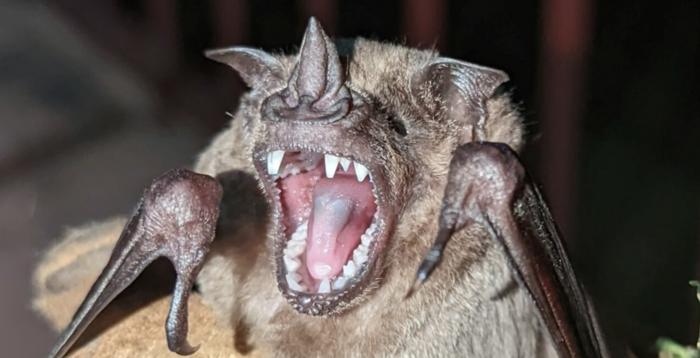
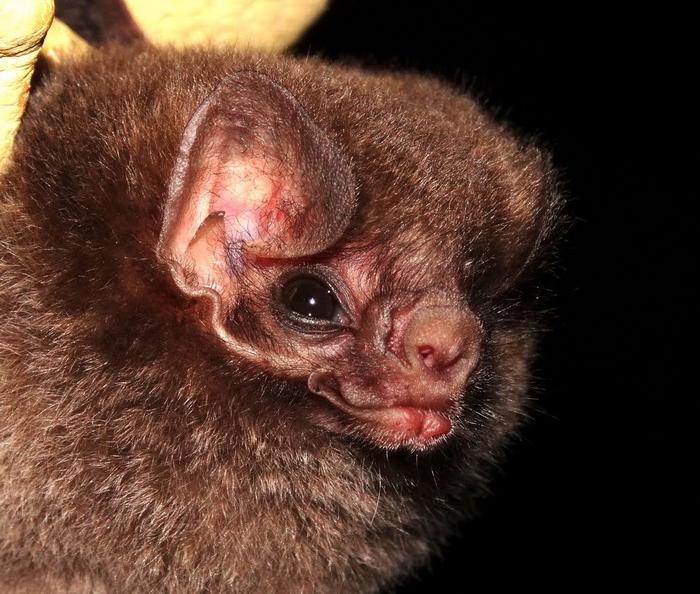
The Jamaican fruit bat Artibeus jamaicensis has a short jaw, like many fruit-eating bats.
(Image courtesy of Alexa Sadier via Eurekalert)
A few bat muthafuckaz
Would I be that gorgeous beast known as the flying fox? He of golden-crowned, golden-capped locks? The giant fruit bat Acerodon jubatus is the biggest one of all. A bat out of hell — like a small cat with wings, only with a rat face and groovy two-tone hair. They eat only fruit and the occasional insect taco too. Plus what a cool name… Jubatus? Chew bet I am!
But forget about him. The coolest, most awesomely enviable of all bat names is Vampyrum spectrum, the so-called great spectral bat — also known as the American false vampire bat. These bats are remarkable. Loving. Social. Popular.
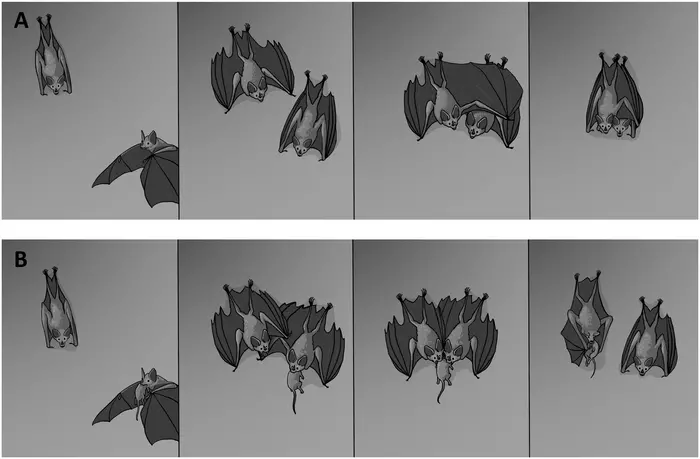
Last month, scientists at the Museum of Natural History in Berlin, Germany, reported hiding a camera in a tree and filming one group of this curious species. These bats sometimes sleep in balls for warmth on cold nights, with the outside bats wrapping their wings around the group. They also give each other bro-hugs, apparently. Most significantly, they participate in a takes-a-village form of “biparenting,” where hunting adults bring back food to share with random pups in the batty ball — often not even their own offspring. Gotta love ‘em.
Social behavior in Vampyrum spectrum bats. The top four panels show a classic bat “bro hug.” The bottom four panels depict an “Ooo… gimme, gimme” example of biparenting.
(Image courtesy of Paulo C. Ditzel (2025). CC-BY 4.0 via PLOS One)
Could I be part of that bat ball too — a screeching, gnashing commensal hunter and communal hugger? Maybe.
Or would I be the greatest hunting bat of all… the amazing incomprehensible Nyctalus lasiopterus, otherwise known as the greater noctule bat.
In-flight mealtime
This month, researchers studying lasiopterus from Aarhus University in Denmark and Doñana Biological Station in Spain showed that the bats are rare predators indeed. One of the few hunters in the entire animal kingdom capable of taking down a migrating songbird from a high-altitude avian flock at night. Bon appe-tit.
The greater noctule bat flies to an altitude of more than 1,200 meters (~4,000 feet). There, using sonar, it blindly trolls the mid-troposphere in search of a bounty. Ultrasonic screeches echolocate its path and pinpoint its prey: an unfortunate warbler, robin, or other songbird booty. The noctule bat picks them off. One by one. It can catch birds almost as big as itself.
While it takes them down, the bat doesn’t take them, uh, down. Audio recordings the scientists made of bats catching birds in mid-flight reveal their screeching continues, echolocating around, after the capture. And there are other sounds as well. Chewing sounds. Spitting sounds. Drooling. Yum. In one recording, a noctule bat devours its songbird dinner for 23 minutes, all while soaring high above Earth.
Ah, sweet mystery of life
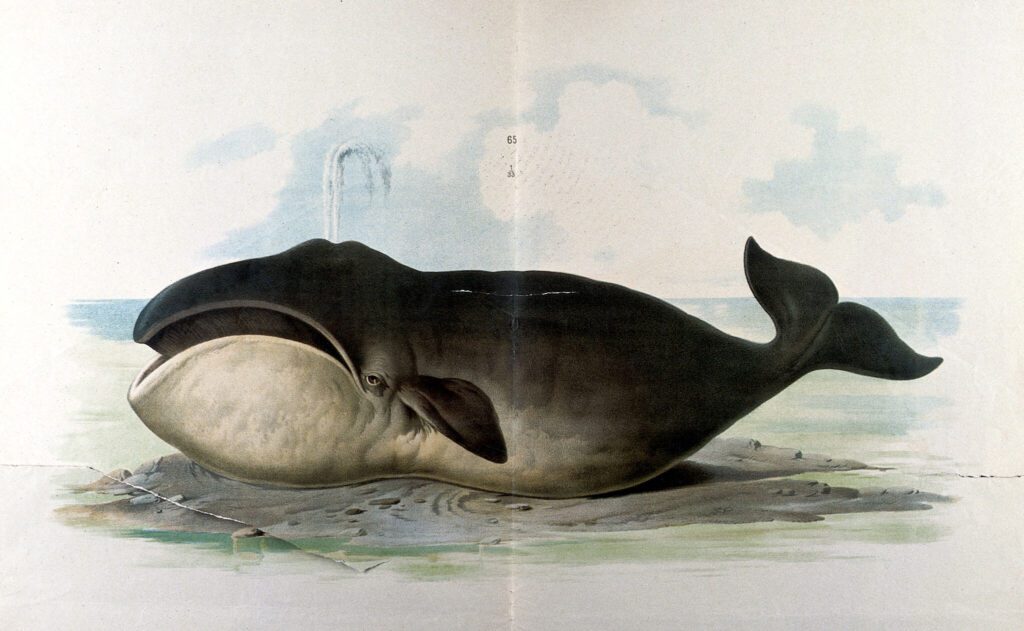
What mysteries these bats keep close. Some may even spill the secret to human longevity. They buck nature’s trend of live small, die young. Mice and rodents have lifespans measured in months — dogs and cats, years. Human life spans average out in decades, and larger mammals can live even longer still. The mighty 4-meter (13-foot) bowhead whale can easily live to be 200.
An 1860 chromolithograph by F. Gerasch of a bowhead whale resting on a sandbank.
(Image courtesy of F. Gerasch via Wellcome Trust)
But bats buck this trend and then some. For their size, they are the longest lived of all mammals, according to zoologist Emma Teeling of University College Dublin. “There are 19 species of mammal that live longer than humans, given their body size,” Teeling told me in a 2022 interview. “And 18 of these are bats.”
For the last 13 years, Teeling has led a group of researchers in a mobile lab to the north of France. As I have reported, they drive through the pastoral hills and picturesque towns of Brittany to arrive at an old Gothic church whose belfry serves as both flophouse and nursery to a population of around 5,000 bats. Then they get together with local townsfolk to capture, weigh, measure, and release every bat in this population, repeating the same procedure with the same bats the next year.
Teeling likens the secrets of a bat’s biology to a Ferrari with good brakes — a car that’s fast as hell but can stop on a dime without setting the tires on fire. Their bodies resist cancer. They tolerate viruses (thank you for that whole COVID-19 thing, by the way). And learning those lessons may someday help humans live longer.
Dracula as Fat Bubba Bat
But if truth be told, I want to be the weirdest bat of all, which in my opinion is the most famous bat in nature: our dear, dear, dreaded creature-of-the-night friend, Desmodus rotundus.
Vampire bats are biological wonders. They have spherically distensible bellies, shorter jaws, sharper teeth, and can drink twice their body weight in blood every night. Ever seen a fat, full vampire bat taking flight? Think about a bowling ball with wings. They’re not called rotundus for nothing!
The hairy-legged vampire bat Diphylla ecaudata feeds primarily on the blood of birds. It is one of three living species of vampire bats. Fewer teeth and shorter jaws serve their specialized diet.
(Image courtesy of Sharlene Santana/University of Washington via Eurekalert)
They have special pits in their nose lined with infrared detectors — heat vision goggles, essentially. That physiology allows them to spot the pulsing, blood-pounding vein of a large mammal in the dark. They have no sweet and bitter taste receptors on their tongues, which means they’ve lost the taste for anything other than gimme-more blood. And they get it. They have razor sharp teeth, another evolution. Self-sharpening teeth, in fact. With no tooth enamel, their teeth wither into a keenly honed edge, always. Not just sharp — razor sharp.
All that allows them to spot, bite, and spout open a main line cut through the rough fur and thick hide of their traditional dinner — mountain lion or other large mammal — or sometimes even crocodiles, turtles, and rattlesnakes. Such brave bats!Their modern diet is often an all-you-can-eat bonanza of bitten ankles of domestic cows and sheep.
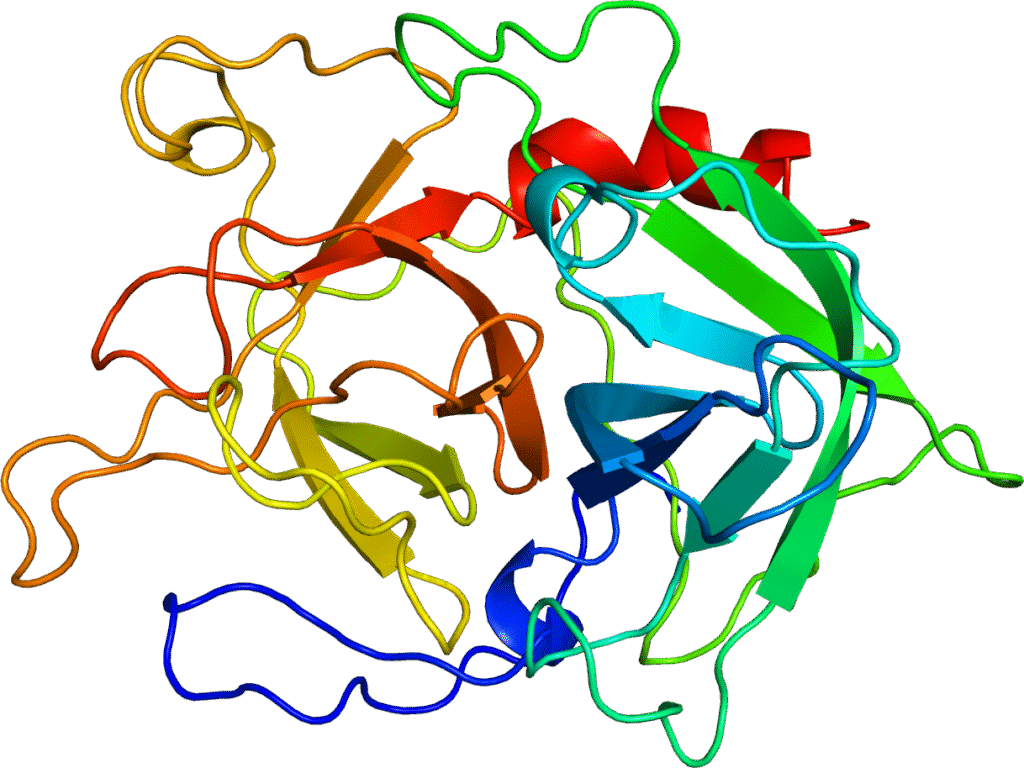
Vampire evolutionary adaptations do not stop at opening wounds, either. The bats have grooved tongues, like built in straws. Lick, lick. Gulp, gulp. They also produce chemicals that keep the flow of blood unstaunched via an anticoagulant present in their saliva — affectionately dubbed “Draculin.”
3D structure of desmoteplase, a compound derived from Draculin.
(Image courtesy of Protein Data Bank coordinates (PDB #1A5I) via Wikimedia Commons)
Large animals will kick these annoying vampire bats away when they bite. Those fangs… Oh mommy it hurts! But the more the bat licks the wound, the better it feels. The more the searing pain subsides. The cows stop fighting back. Bat licks are soothing. Nice. They have painkilling analgesic compounds on their tongues as well that soothe the wounds. Licks de-staunch and double salve. Let them do it, bitter bitten cows moo. It doesn’t hurt. Feels good.
Vampire bats are also social, though disgustingly so. Rather than wallow in their own post-sanguine puffery, a vampire bat will not hesitate to regurgitate a share of its bloodmeal with its brood mates. They literally vomit-share directly into the mouths of their loved ones. (Candy corn anyone?)
And finally… There’s one feature of the vampire bat that I love the most. They have freakishly large thumbs, which they use in conjunction with their strong thighs to launch themselves into the air. It ain’t pretty, waddling down the runway into a freakish thumb Cabriole caper. But it works. They launch themselves time after time into the nighttime sky and escape — to bite and suck and drink (to later vomit) and live another day.
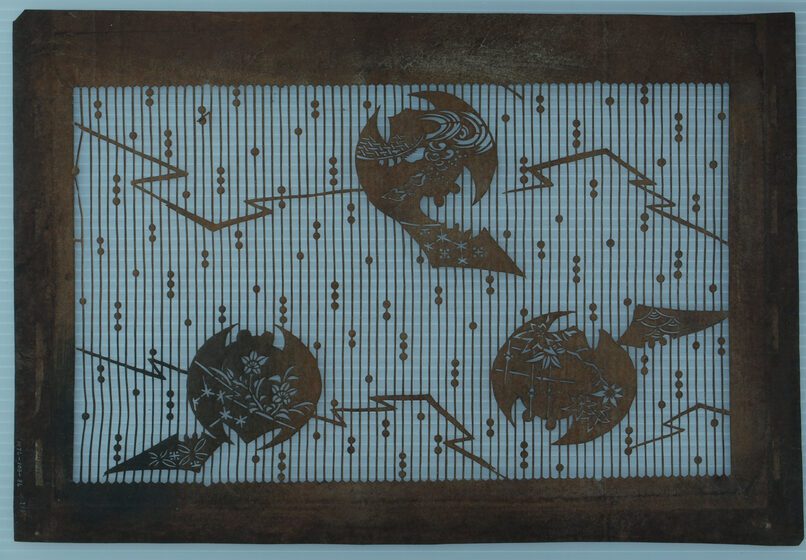
A Katagami of three bats dated mid 18th or early 19th century and now part of the Cooper Hewitt, Smithsonian Design Museum Collection. Waves, bamboo, maple leaves, and multiple blossoms give life to the lucky silhouettes on a medium of mulberry paper (kozo washi) treated with fermented persimmon juice (kakishibu), and utilizing silk threads (itoire). In Japan, bats symbolize good luck.
(Image courtesy of Helen Snyder via Smithsonian)
Halloween comes once a year for most. A night of masks, spooky movies, and pretend scares. But in Iran, under the rule of the mullahs, every day is Halloween.
The mullahs hide behind the mask of religion while practicing a reign of terror. They turn faith into fear and laws into lethal weapons. The world celebrates Halloween as a once-a-year fantasy. For Iranians, it is a daily horror.
I am Iranian. It was for me.
A death that sparked a movement
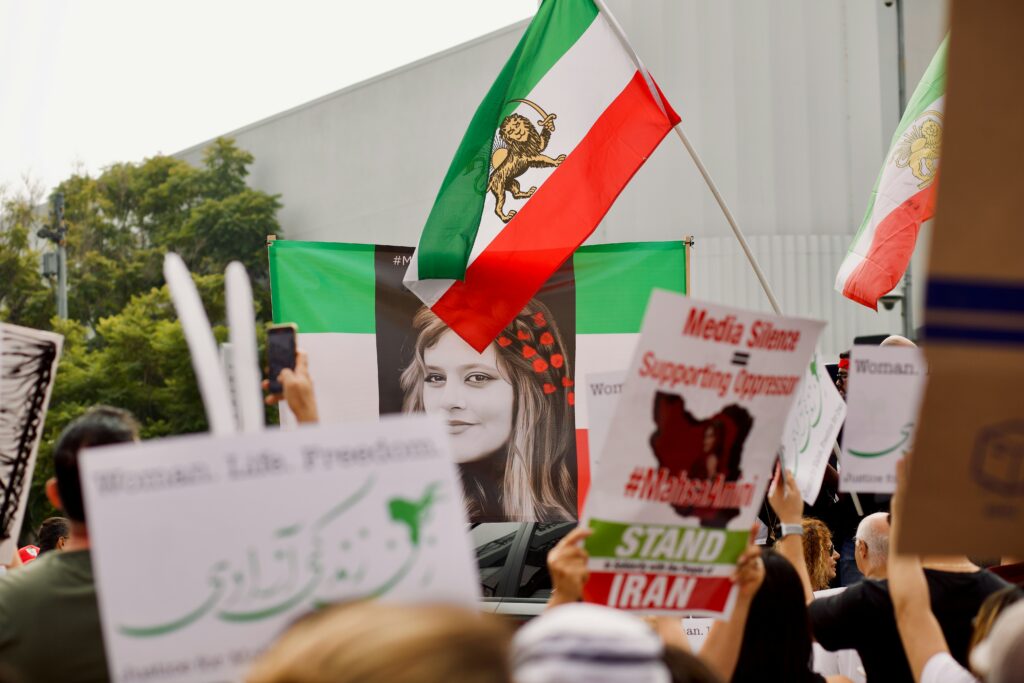
On September 16, 2022, Mahsa Amini, only 22 years old, died after being taken into custody by the frightening gasht-e ershad patrol — “Guidance” in Farsi, but we Persians call it the morality police.
She was arrested and taken to the notorious Vozara detention center because of her hair. Too much of it showed from beneath her hijab. Three days later, she was dead.
The regime insisted it was a heart attack, the people knew it was murder, something a UN report later confirmed. Protests swept across the country. People took to the streets with courage, but unlike in the West, they could not carry painted signs. In Iran, even holding a sign is enough to be detected, arrested, and imprisoned. The images of banners you may have seen come from protests abroad, where Iranians in exile have the freedom to speak in ways that are impossible inside the country. The government responded with full metal jackets.
More than 500 people were killed to prove that Mahsa’s death was not their fault. Proof this is the Islamic Republic within Iran.
(Image courtesy of Craig Melville via Unsplash)
Since then, executions have become the regime’s loudest weapon. More than 10 protesters have been executed since the uprising, their deaths meant as warnings. In just the first nine and a half months of 2025, more than 1172 people were executed, about three every single day. Imagine this in the 21st century: a state that takes lives on an industrial scale to prove its power. More proof.
The cruelty is not limited to the streets. On January 8, 2020, Ukraine International Airlines Flight PS752 was shot down by Iran’s Revolutionary Guards just minutes after takeoff from Tehran. All 176 people on board, men, women, children, even an unborn baby, were killed. Iran became the only country to shoot down its own civilian plane in its own airspace.
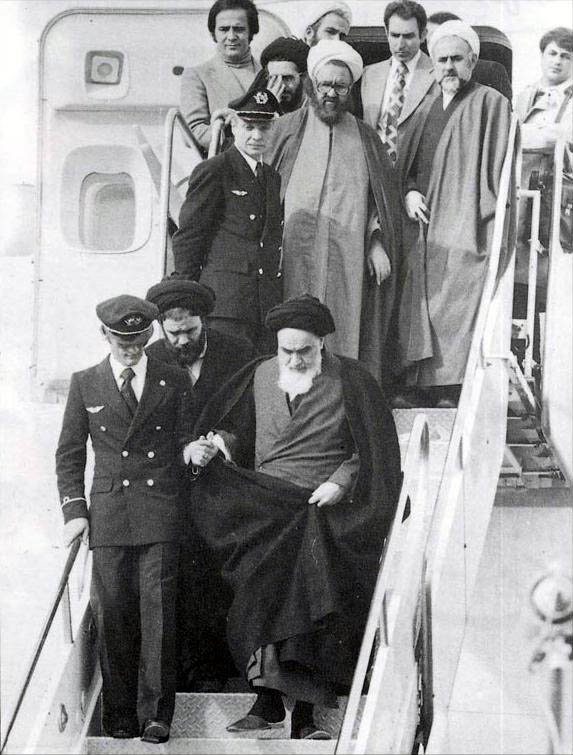
The horror stretches back to the beginning. After the 1979 Islamic Revolution (recall that the country became known as The People’s Islamic Republic of Iran), thousands were executed. Opposition to the regime was framed as opposition to God.
Graves of hundreds remain unknown.
In the 1980s, the Iran–Iraq war was prolonged. not to defend the nation but to silence dissent under the slogan of “wartime unity.” To this day, the true cost of human horror in that meaningless war is hidden.
A dried lake, a dried future
The regime’s brutality is not only against people, but even against nature. Lake Urmia, once the largest saltwater lake in the Middle East and the place of childhood summers for many, has dried. Neglect, mismanagement, and corruption drained this natural treasure and place of cultural heritage, leaving behind salt plains and despair.
Even the land bears scars and wears the mask of this misrule, bereft and humiliated.
A real-life Halloween
What kind of regime kills its women for the way they wear their hair, shoots down its own people in the sky, drains its lakes, and executes three people a day, all while demanding respect?
I know this horror personally. As an academic, my work and my voice put me at risk. The same regime that silences women on the street has no tolerance for those who speak up in universities or in public life. In solidarity with the ‘Woman, Life, Freedom’ movement, I resigned from my position in Iran in 2022. That act of conscience made me a target. Like so many others, I was forced into exile, not out of choice, but out of necessity, to protect both my life and my ability to continue my work.
Here in the West, I have witnessed Halloween in its sweetest form. Children knocking on doors in costumes, candy-filled buckets, laughter under streetlights. I have seen a tiny mermaid holding her father’s hand, a Glinda the Good Witch skipping along with friends, and even a toddler dressed as Sonic the Hedgehog racing up and down the sidewalk. This is what Halloween should be: play, imagination, and community.
Back in Iran, the most dangerous Halloween costume in the world is worn every day. This is the cloak of the mullahs, because behind it is not a happy face, but a machine of death.
The difference between once-a-year Halloween in the West and everyday life in Iran is simple: during Halloween, your fear is pretend. Your nights are filled with trick-or-treat candy and fun. Your daylight brings safety. In Iran, our nightmare does not end at dawn. It just continues to haunt.
Yet Iranians endure. Despite decades of brutality, they remain among the kindest, most resilient people. They hope that there will be light at the end of this darkness. One day, the mask will be torn away, so the nightmare will end.
This Halloween
Soon, I will stand at my door and see children on my street dressed as witches, superheroes, and fairy-tale characters; their laughter will no doubt echo into the night. Their joy in a world where fear is only pretend gives me hope. Hope that one day, children in Iran too will know only the sweet kind of fright, the kind that ends with candy at dusk and safety at dawn. And perhaps then, the mullahs and their reign of horror will be nothing more than a dark fairy tale told of the past.
As the year comes to a close, a sense of panic and the need to hurry often rises in the air with back-to-back family dinners, unneeded arguments about pointless topics, and the occasional yet unavoidable political conversation. The tension is often inescapable.
I would know, as my family is well-versed in participating in all of these topics, yet family is still family and nothing will change that. But for me, the feeling of a true change in the air occurs between the months of October and November. The excitement of summer is over, people are back in school, so for me it feels like the world is starting to slow down in the best way possible.
Even though I’ve lived in Florida my whole life, I’ve never experienced a “true fall” before or a real shift in the seasons where the leaves turn from green to orange, red, and yellow. While we do have a “Florida winter,” it does not happen until the months of January through March, and there’s no surprise of snow. Without the seasons changing in the South, the air does change for me. I feel the summer heat go away after a while, and the air feels fresher in my neighborhood as well as in Central Florida where I grew up and still spend most of my time.
This shift brings a sense of peace to me and makes me feel motivated to make lifestyle changes. Whether it be eating healthier, working out before the New Year, or wanting to finish a book that has been collecting dust for weeks, I only get this motivation towards the end of the calendar year. As the year is soon over and while all the craziness of Thanksgiving and Christmas is about to take place, I know I’ve got a few good weeks before that happens.
(Image courtesy of grafmex via Pixabay)
During the months of October and November, it is usually the time for pumpkin-spiced lattes and reading scary novels. I am mainly trying to catch up on my extensive reading list and going crazy for all of the caramel-apple-flavored snacks. By this I mean my household will devour an entire bag of caramel apple flavored lollipops, while my Dad and I still talk about Robert Egger’s Nosferatu and how he is still amazed at Bill Skarsgård’s use of Dacian in the film (now the Romanian language).
With this sense of peace and even normality approaching, I can’t help but wonder why this happens at the end of the year rather than at the beginning. I think it’s because everyone knows that the year is about to end – good or bad – and that we all want to move forward with happiness and a new set of goals.
Brrr!
While I don’t take part in New Year’s resolution’s anymore, I technically start them around this time because I know they’ll stick. This just adds another reason as to why I believe that the “ber” months bring a different kind of a reset to my life. I feel more motivated, energized, and even more fulfilled when I accomplish my goals during this time of the year. I’m so thankful to have this change happen within recent years. It feels like I can, as well as the world, truly breathe again.
Even with all of the good food and much loved family time, there’s something so special about the months of September through November. But November feels the most chaotic, yet peaceful at the same time. I know that I can actually check items off my seemingly never-ending list that never gets any smaller since I graduated from UCF last year.
I no longer have that “holiday stress” of getting essays and other projects done within a short amount of time. I know that I can truly take my time with life, and I no longer experience that ‘burden’ of falling behind in life both personally and professionally. I know that I can dawdle on goals that I have set for myself or if my Mom wants to join in. November especially brings us the time to slow down and appreciate life in all of its chaotic neutrals to remind us what life is all about. Taking a moment for yourself and for family is what matters the most, so we have to enjoy it while it lasts.
You wake up in your childhood bedroom, and the bad things that happened to you haven’t happened to you yet. It should make you happy, but instead it aches. You can’t curl up inside your childish innocence because it isn’t there. You could pretend it was, if you really wanted to, but you don’t want to really. As you watch the early morning sunlight dance across the wall, you wonder if you can change things this time. You wonder who you’d be if the bad things that happened to you never happened to you. Did they make you better? Did they make you worse? If the bad things that happened to you never happened to you, would you truly be you?
You wake up in your childhood bedroom, and the bad things that happened to you haven’t happened to you yet. You realise that you’ll need to pretend that nothing has changed, and so you go downstairs, your bare feet treading on stairs that you haven’t touched for years. Your brother is already in the kitchen, and he is still your brother because he doesn’t hate you yet. His face is the same as it once was, trapped in the liminal space between boy and man, and his eyes meet yours with that look that only a brother can master, halfway between awe and disgust, respect and embarrassment, shame and love. Before it really occurs to you what you’re doing, you pull him into a hug, the kind of hug that clamps and tightens, the kind of hug that suffocates but is all love, so much love, love that can maim you and love that can mend you. He stiffens at first, then realises that there is no audience to perform for, no jeering friends lingering in the corners of the room, and, as his bony arms wrap around you, a thought solidifies in your mind that things cannot decay this time, that you must hold onto this bond for dear life, grasping and gasping until the rope burns your palms, because this time you cannot lose your brother.
Your sister is not there. Your sister is never there. Your sister is an absence. Your sister is the space between heartbeats, the gap between ribs, the sound of silence on the other end of the telephone.
You wake up in your childhood bedroom, and the bad things that happened to you haven’t happened to you yet. Your dad comes down and makes breakfast, because that is what he always used to do, and the crackling of bacon and the music on the radio hit you like the melody of a song you haven’t heard in years; first slowly, then like a fierce punch in the stomach with all the force of a car crash. You realise now that you never used to appreciate these tender moments, too tired to do more than sit and watch the breeze dancing through the kitchen blinds. You never appreciated these moments, because you hadn’t realised yet that one day they would be over. You never noticed that, morning by morning, your father was getting older, his presence less resolute, his voice and body less strong. You never considered the fact that one day your mornings would be silent, that one day your father would be gone. But now, burdened by the knowledge that your father’s time is running increasingly short, you wish that you could live in this moment forever, eternally untouched by the sands of time.
You wake up in your childhood bedroom, and the bad things that happened to you haven’t happened to you yet. You make your way back upstairs after breakfast, and, as you reach the hallway, the scent of your mother’s perfume drifts towards you, as gentle as the lullaby she would whisper across your fevered forehead on unsettled nights: a balm of words, a remedy of song. There was always a tenderness to your mother, but there was a sharpness too. She was quick to comfort but even quicker to blame. She was there to take you into her arms after the bad things happened, but she was also the first to suggest that you might have deserved it somehow, that perhaps you had been too forward, too bold, too reckless, too impulsive, too much, too yourself. She was a confidant and an accuser, an ally and a judge, a friend and a stranger. She was your mother, and yet you never truly knew her. You knew only the masks she would present to the world, the image she would carefully curate while the rest of the family was eating breakfast, the perfume, the final act of the performance. You do not knock on the door, because you don’t want your mother to see you. You never wanted your mother to see you, and yet, at the same time, you wanted nothing more. You don’t want your mother to see you because your mother could always see through you, and she would be the first to know that something was different, that you weren’t the child you had been the day before, that you never would be again.
You wake up in your childhood bedroom, and the bad things that happened to you haven’t happened to you yet. You realise with a sense of certainty that you cannot stay. You have long overgrown the mold that was cast for you there. Trying to live out a life that you have experienced before makes you feel ungainly, a giant trying to live in a miniature cardboard town. You’re the only living soul in a house of ghosts, and you can feel yourself slowly becoming haunted. The bad things that happened will happen, have happened, will never not happen, and you would be foolish to try and change that. You wake up in your childhood bedroom, but you do not fall asleep there. You close your bedroom door for the last time, walk down the stairs, open your front door, and walk out into the mild summer night. You don’t know where you are going, but you know that you can’t return. You try and tell yourself that things are better this way, but the lost child inside you knows that that is a lie.