For many children, our parents are our whole world. They are the people whom we idolize most in the first few years of our lives. We romanticize them and expect nothing but the best from them.
Yet as we get older, there comes a moment or series of moments when we realize our parents aren’t quite as perfect as we thought they were. For me, I grew up with two parents in a rather “traditional” household: Dad went to work and earned a living, Mom stayed home and took care of me and my little sister. I always thought the world of both my mom and dad, my mom being the loving caretaker and my dad being the stern yet reliable working man.
As I grew, I started to see the cracks, some more hidden than others. Arguments, money troubles, mistakes made — and slowly but surely, they eroded that idolized image of my parents, and I came to see them for what they were: flawed human beings. My mom and dad, the two people in my life who could do no wrong, suddenly had an unflattering light shown on them. While cartoons and the Tooth Fairy and all the joys of childhood distracted me from this for a time, every adult knows that whimsy doesn’t last forever.
Their learned flaws
The parents who raised my generation came from a time when their parents’ words were law — children were meant to be seen, not heard. A parent could never be wrong. A parent needed to be a perfect role model so that the kids grew up to be perfect role models for their kids and the whole cycle would continue. If only life were so simple.
I imagine for many people the sudden realization that their parents aren’t the epitome of humanity was a rather nasty shock, as it was for me. As that barrier breaks down and you see your parents as flawed human beings, it can become harder to abide by their words, when doubt creeps in over whether or not they’re correct in their views, actions, or behaviors. I held a lot of resentment against both my mom and dad for not being their “honest selves,” some of it earned and some of it due to a lack of understanding of just how difficult it is to be a parent.
Arguments were swept under the rug, not properly dealt with and discussed. Those arguments would happen because resentment festered and bubbled. My family would not always openly discuss the real issues, instead dealing with the superficial ones while my parents still tried to make it seem like everything was okay. I certainly can’t blame them for wanting to give me a happy childhood, something they both had their own struggles with. Yet not discussing the real problems behind these arguments, sometimes oversharing in the middle of an argument because they had hit their boiling point, only made it more difficult to understand why they would fight if everything was okay.
My parents had difficult childhoods, as did their parents before them. It’s hard to break cycles like that. Throughout their time raising me, my parents tried not to repeat the mistakes they saw their own parents make. At times they succeeded, and at other times they fell into the trap of trying to be perfect role models, making it all the more confusing whenever they struggled to uphold that impossible goal. There was no smooth transition from idolizing my parents to understanding they were just regular, flawed people.
Parents have a lifelong impact
I don’t think my parents, or any parents for that matter, were wrong to put on a show at times and pretend everything was okay, even when it wasn’t. I have yet to have the privilege of being a parent, but I’ve worked with many kids and interacted with my nieces and nephews over the past ten years. If there’s one thing I’ve learned, it’s that a panicking adult does no good for a child. Maybe my parents knew that, too, and were just trying to protect me.
Adults are supposed to have the tools to handle any situation and make sure kids know that everything is going to be okay, even when we don’t know ourselves and lack the tools to determine otherwise. But we lie or exaggerate. We hold their hands for reassurance, then go and break down silently to process it ourselves, hidden from their prying eyes.
Being completely honest with a child that you don’t have all the answers and are freaking out yourself can introduce trauma, and life does enough of that already. It’s only since we are all older that both my parents and I can be more honest with each other. I now find that being able to speak openly with my parents about their flaws and mistakes has helped me understand them on a much deeper level and avoid making some of the same mistakes.
The three of us have come a long way from who we all used to be. In a sense, we’ve come full circle. As a kid, I openly loved my parents and enjoyed being around them. As the years went on and family dysfunction took hold, I distanced myself from them, not fully comprehending why they pretended to be these perfect role models that they never were. Now as an adult, as someone who has been able to openly talk to my parents and discuss and understand their flaws, I’ve grown to understand why they tried to be so perfectly perfect, while also learning how to break the cycle.
In my opinion, letting a child see that you are human, that you make mistakes and apologize for them, being honest without imposing your own fears and insecurities, is crucial to developing a proper relationship with them.
With my own nieces and nephews, I make sure to apologize and admit to them when I am wrong. I want them to be able to talk to me about life, and I want to help them navigate it with stories of my own experiences and mistakes. No adult is perfect, no adult will ever have all the answers. Kids need to know that it is okay to be wrong. Otherwise the cycle of the “perfect parents” will continue. And parent-child relationships will suffer as a result.
Writer’s Note: Charles Perrault’s stories contain mature themes, specifically: violence against women and girls, sexual violence, xenophobia, cannibalism, and negative depictions of poverty.
If you wish to read his fables, discretion is advised. Many of the themes were glorified during Perrault’s lifetime, but are outdated now and are controversial in a modern context. I do not take inspiration from these controversial themes.
Hud and Grampy
From the time that I learned how to read, I gravitated towards literature and the arts. At first, it was pictures and touch-and-feel books. Later, I read chapters and The Rainbow Magic series. Post Transitional-1st when my fine motor skills began to improve, forming letters and writing sentences became easier. After school, my maternal grandparents’ house was the place where my creativity truly shined. I spent several hours there every afternoon during the week when my parents were working. Stacks of computer paper, pencils, and a stapler were tools that I regularly used. Before I learned the basics of navigating a computer, I assembled my short stories by hand.
My creative process started with the details, building the story arc without even realizing it. Next, I added the visual elements, imagery that featured characters from my own imagination. Not only did I recognize that language was important, but I knew that readability was fundamental. One side of my story was in English, and the other was in Spanish that I inaccurately gleaned from Google Translate. My grandparents fostered my interests, allowing me to have mock-storytime sessions in their living room. It didn’t matter how much it made sense, it only mattered that I tried. They resisted providing negative feedback, only giving me constructive criticism when necessary. Once I learned how to draft the pages on a computer, my grandfather simply reminded me to not use too much computer paper and printer ink — with my literary collection.
Grandmother Hud loved to read, and I enjoyed asking her questions about the dusty books on the bookshelf (including outdated encyclopedias.) I loved our frequent trips to the library during the summer when I had more time with my grandparents. My favorite genre to check out was fiction, especially the American Girls collection series by Valerie Tripp & Connie Rose Porter.
Outside of the library, my grandparents’ shelf mesmerized me with all of the colors, artwork, genres, and variety of authors. However, some items on the shelves were untouchable, fragile; very personal to my grandfather. Sometimes, I tried to quickly glance at a blue book with a yellow typeface: Perrault’s Fairy Tales, with thirty-four full-page illustrations by Gustave Doré.
For the longest period of my life, I believed that my storytelling came from my grandfather, Grampy. He was a storyteller in his own right, usually repeating tales that he had picked up during his lifetime. He adored sharing how people in the past used to tell tales by word-of-mouth before it was typical to write stories down. His words enticed me, and he knew exactly how to draw readers in.
I was a naturally curious child who wondered about our family history, about the origin of things. Where did the name Perrault come from? Who was the first person to have the namesake? Soon, this would be revealed to me.
When I was seven or eight, Grampy noticed how I attempted to flip through his prized possession when I thought he wasn’t looking. He grabbed it off of the shelf, while telling me the significance of it. Grampy described as if it was a trivia show, “See this book? Did you know that you’re related to Charles Perrault, the author of this? My dad was a Perrault.” I stared at him with amazement, thinking of how lucky I was to be related to someone like that.
(Image courtesy of Joshua Manjgo via Unsplash.)
He continued, “This book has been passed down in our family for generations. It was given to me when I was your age, and it’s my turn to pass it down to you.” It felt like a magical fairytale, unfathomable to my undeveloped mind. Grampy embellished some of it and fabricated the history of the supposed family heirloom, which in reality was published in 1969. I think he wanted me to have an even greater purpose for writing, because he believed in me when I often stood out to others.
After this a-ha moment, I reflected on what it meant for my future. In my early childhood, I constantly switched my potential career goals, going from a veterinarian, a pop star, a ballerina, a nail technician, and an author. I believe that the creative industry is the best field, based on my skills, interests, and literal heritage.
Charles Perrault was a well-known author who began his career (as an advisor and architect) through serving on the Acadèmie Française, and later, helping Louis XIV design part of the Palace of Versailles. In the 1690s, he continued writing, and released his book, “Tales and Stories of the Past With Morals.”
A version of Charles Perrault’s fairytales:
(Image courtesy of Francis Power & Charles Perrault via Wikipedia Commons)
Transcription of “Hush-a-by baby”
Hush-a-by baby On the tree top, When the wind blows the cradle will rock; When the bough breaks the cradle will fall, Down tumbles baby, Cradle and all.
This may serve as a warning to the proud and ambitious, who climb so high that they generally fall at last.
He is best known for: “The Tales of Mother Goose,” the modern version of “Cinderella,” “Sleeping Beauty,” “Puss in Boots,” “Little Red Riding Hood,” “Bluebeard,” “Little Tom Thumb.”
A version of Charles Perrault’s fairytales
(Image courtesy of Julian Bastinos and Charles Perrault via Google Books.)
How could I be related to Charles and not find out until now? I pondered on all of life’s possibilities. Everything suddenly made sense: how my brain was wired, how language, reading, and writing came easy to me; why I felt a deep desire to create literature. Writing is in my blood. In my veins, it’s in my DNA. My creativity originates from a man I never met. We are generations apart, yet we share the same passion and admiration.
(Image courtesy of Warren Umoh via Unsplash.)
I told myself that day that when I grew up, I wanted to become an author like Charles Perrault. I would work towards becoming famous, a household name. Whenever I feel like my chance of getting into the industry is dwindling away, I remind myself of what keeps me going. What makes me believe in myself. That answer is always the revelation that I had on what began as an ordinary afternoon.
My life changed that day, and it was all I could think about for the rest of the week. Last year in 2025, I started the painstaking genealogical process of figuring out exactly how we are related. Charles is my tenth great-granduncle. Not only do I trace my love for writing back to him, but the commonalities and family history are connected through physical traits, such as how Grampy strongly resembled Charles Perrault.
(Image courtesy of Academie Francaise via Wikimedia Commons.)(Image courtesy of the author.)
When I look at myself in the mirror, I don’t notice any major similarities between Charles, and Grampy, and me. The only physical trait that we share is that one side of my nose appears higher and slightly elongated from the right side profile, possibly resembling his nasal bridge.
Genetics can be tricky, especially when my maternal and paternal genetics frequently clash. I do not resemble Charles, but we are relatives.
Even though I was a child when I had my first eureka moment, it sits with me, and courses through my body. Time has passed and Hud and Grampy are no longer living, but we will always be intertwined. I will permanently be related to Charles Perrault and my grandparents, no matter what. It’s a constant bond that will never fade away.
The biblical gardens were a fairyland. In Jean’s imagination, no one had planted the flowers, engraved the stones, or bought the benches: they had all appeared out of thin air. An angel had flown down from heaven, touched the land with a long, shining finger, and Eden had sprouted, flourished.
Mother often took Jean there to paint. “I could live without the overt Christianity,” she always said, “But something about this place calms me down.”
Jean played along the paths, in the creek, puzzled over the Bible verses, scattered throughout the garden – etched on rocks, displayed on wooden signs – as natural and essential to this place as the colony of ants that lived beside Mother’s favorite bench. Mother spent most of her time sitting there, overlooking the waterfall, often painting it, but sometimes staring at the signs with a sad, sour look on her face.
From a young age, Jean knew the real reason they came here was Grandma.
“I would have scattered her ashes here if the old bitch hadn’t insisted on being buried,” Mother told Jean again and again. “It would have been cheaper and nicer, but nope, because it would be easier on me… fuck it.”
Then she would sketch a flower, butterfly, or sometimes children playing in the garden. But none of the pictures, no matter how beautiful they were, made anyone who saw them happy. Even the butterflies, still and scrawled, came away looking sad.
To this day, one of these sketches hangs in Jean’s hallway, and she stops to look at it sometimes, just to remember the burden her mother had to carry.
In the picture, three children run down the trail, past Maudlin’s empty bench. The face of the first, a tall girl with curly brown hair that streams behind her as she runs onto the bridge crossing the creek, cannot be seen. The second is a little boy, mid-trip, his hands falling down in front of him to catch himself, his profile also not visible.
Maudlin is the third – drawn to impart the liminal: a grown-woman’s countenance plastered on a little girl’s body – turning around to stare at the voyeur looking in. Her mouth hangs open like a trap door, her eyes wide and globular, like two green planets; her arms hang limply at her sides, flopping, as if they have no bones.
…
The path through the garden is aided by several bridges, which allow the walker to zig-zag back and forth over the creek. The second, a dainty wooden arch that crosses the stream nearest the waterfall, sits deep in the garden, while the first, broader and well-worn, stands at the entrance. The thudding of Jean’s feet against the wood, drowning out the noise of Highway 49 behind her, seemed to herald her arrival, making her journey into another world complete.
A big sign that hung over the first bridge said: “Taste and See the Goodness of the Lord.” Mother always made a face whenever they walked past it, but Jean liked the idea of a god-garden. And she understood what the sign meant, too: when you experienced art, you couldn’t help but learn about the Maker.
Jean invited Jules to come with them, but only once, because not only did Mother find him annoying – “That kid talks so much about reptiles it makes me want to kill myself” – but also because Jean rightly recognized that he would be incapable of respecting the sanctity of the place.
You didn’t run in these gardens, she tried to explain, you were meant to walk slowly. Nor did you shout – you spoke in low, dulcet tones.
“It’s like church,” she warned him, “solemn.”
“You don’t go to church.”
“My grandma took me, when I was really little, like 3 or 4.”
“You can’t remember that. That’s too little to remember.”
A hazy world, blurred at the edges, like a dream:
Thick lights, streaming through the stained glass, illuminated the face of the baby, whose mother held up for all to see. She looked sad. Were all mothers sad?
Little boys, at the front of the church, dressed in white, singing like angels, or doves; the tone of each voice building on another, climbing higher and higher, further and further upward, till the whole church swam in music, till the sound, crystalizing at the tippy top of the high-ceiling, threatened to burst through the roof and obliterate the chapel in a violent, vibrating melody.
The big wooden cross loomed at the front with a man dying, sweating beads of blood – ever after. When Jean thought of her grandmother, she thought also of the statue of that man, because a moment after spotting him she turned her eyes to the ground and was shocked and frightened to find her grandmother on her knees, opening and closing her mouth without words, crying. Jean had never seen her cry before and would never witness her doing so again.
She almost reached out her little hand, like one might reach for a blooming cactus, before she remembered the touch would hurt. And her eyes again rested on the wooden cross. Jean wondered why on earth that poor man was up there, half-naked and sweating blood. And why all these people stared at him.
She asked Grandma, after service, who he was.
“That’s God,” Grandma said solemnly.
And for some reason it made sense to Jean that God was mutilated, that he bled.
“I hate church,” Jules said. “It’s boring.”
“You’ll like it here though,” Jean reassured him. “There’s a creek. And lots of lizards.”
“Well, alright,” Jules said, “I’ll come if I have nothing better to do.”
Jean frowned at his lack of enthusiasm.
…
Jules insisted on racing from the car to the garden, which confirmed that Jean’s decision to invite him had been a grave mistake. Still, it did feel wonderful to run, with her hair streaming out behind her and her feet thudding bombastically on the wooden bridge like the music of an off-beat drum. She didn’t race past the world; it bolted by her, elegantly topsy-turvy, with the speed and swiftness of light and wind.
Then her feet landed on the soft, spongy grass with relief. She wanted to sink down into it and grow burrowing roots for the cool, dark earth to hold.
Jean collapsed on the bench closest to the entry way as Jules finally came sprinting across the bridge, huffing and puffing.
“I beat you!” Jean gasped, triumphantly.
“Only ‘cause I let you win,” Jules wheezed. He took out his inhaler and brought it to his mouth, inhaling long puffs.
Jean saw Mother far away, still lingering in the parking lot, fading into the background like a tree or moss-covered rock. And the garden before her grew larger than itself—expanding into tangible imagination, a thought bubble solidified into a new, wild continent.
“I know what to play,” Jules said, excitedly. “We’ll be explorers, making maps and stuff.”
Jean considered this. “But why are there only two of us?”
“I don’t know, maybe everyone else died… and now we are running out of food.” Jules, in thoughtful contemplation, bit his lip. “You can’t be a girl, though,” he continued. “They wouldn’t have brought girls.”
“That’s not true. Lewis and Clark brought an Indian woman with them.”
“I can’t even say her name,” Jules said, “so she doesn’t really count.”
Jean frowned, wondering aloud: “It was an ‘S’ something…”
She suddenly felt it was important to remember, because this woman had existed – hadn’t she? – as much as Lewis or Clark, and she was actually more real than either of them, because she had been born from the land she traversed: sprouted up straight from the soil, rather than merely being someone who walked on top of it. Like the difference between herself and Jules – he stomped over and through places, but they never belonged to him or changed him in any way. But Jean became a part of the world she walked in, weaving a flower into her hair, scattering earth into the cuts on her fingers, welcoming water into her stinging eyes. Of course Jules wanted all the characters in the story to be stompers: unaware of the shrubbery they marred and the big boot tracks they left.
“Sacagawea!” she said triumphantly, remembering.
“Yeah, whatever. Don’t you want to play?”
“Why don’t you be the explorer, and I’ll be the Indian woman,” Jean said. “And I’ll help you learn to survive.”
In an uncharacteristic moment of self-assertion, she continued, ignoring Jules furrowed brow, and said, “We can pretend the creek’s the ocean, and you got shipwrecked here. And you don’t have any food. And if you want to survive you better become friends with me!”
Jean ran away then, ignoring Jules’ calling after her, because she didn’t want to argue, and maybe what she really wanted was to play alone – along the path, over the bridge, many waters gurgling underfoot, drowning out his voice. Up the winding trail (which ran parallel to the one Jules stood on but was separated by the creek), up the wooden steps and out of his sight – till she stood below the big wooden crucifix, with the image of the God-man, dying. She walked past him quickly because it made her sad to look at him, and continued to ascend the steps till she came to a stone table engraved with twelve men. The one in the center held out an ornate cup to the others, and the inscription sprawled beneath them, covering its length in fancy letters:
“This is my blood of the covenant, poured out for you.”
(Image courtesy of SK Stannik via Pexels)
The table and engraved goblet suggested to her a deep, disturbing magic. Witch doctors drinking the blood of their victims, magic spells and voodoo dolls, vampires lurking in the shadows. She connected it in her mind with that horrible scene in Narnia, where Aslan lay strapped to the stone table, murdered by the ghouls and goblins. It didn’t seem, for some reason, like Jules would be able to find her here. And so, in the brush a few steps beyond the table, in the shade of a large oak tree, she made her wigwam.
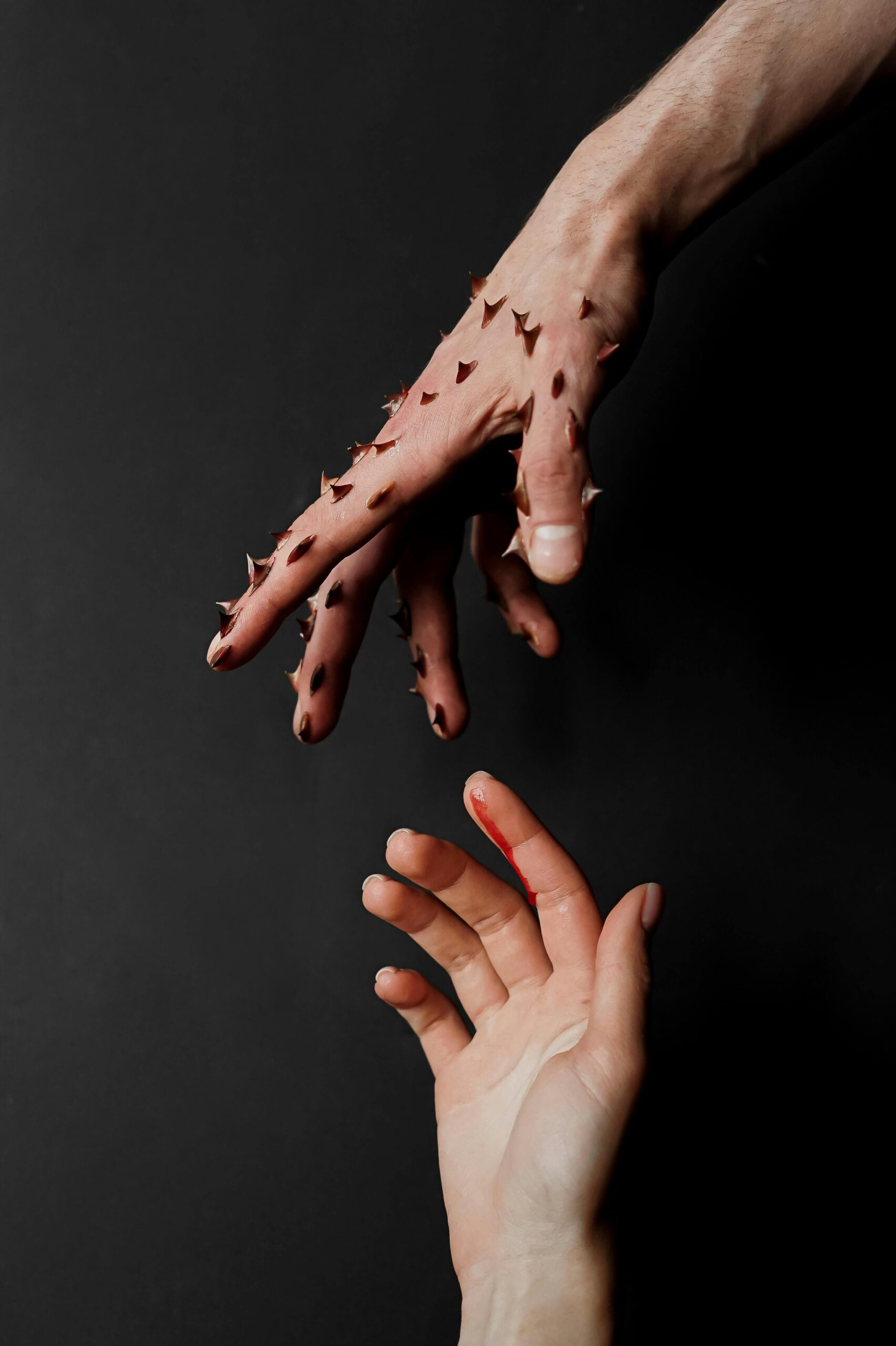
A tributary of the creek wound through this area, no more than a trickle this time of year, almost hidden completely by blackberry bushes. The big, shining berries dotted the branches, weighing them down. Carefully, she ventured into the thicket of thorny tendrils that tore at her clothes. Jean grabbed at the stems between the thorns and unstuck the fabric best she could. She plucked the berries nearest to her, one by one, from the bush, careful not to crush those which were juicy and overripe. But her delicate grip still pulverized many – resulting in a drain of dark, sticky blood flowing down her fingers.
Jean ate some and transported the rest to the stone table where she mashed them up with a stick. But upon poking her finger cautiously in the resulting juices and realizing the concoction was too thin and watery for her purposes, she knelt down by the nearly dried up stream and gathered some mud from the edges. Then, she mixed the mud with the mushed-up berries, creating a black paste.
One mark on the forehead. One on each cheek. One mark on the chin. Because the berries and the mud, cool and granular, now covered her skin, seeping into her pores, clogging them, she felt she knew the earth more intimately, like Sacagawea must have known it.
Jean heard Jules splashing in the creek, pounding on the ground with his feet in big, heavy beats, whooping and screaming loudly as he pretended to sail a ship on the seven seas. Everything he did affronted this place; his life force a chaotic reverberation that echoed throughout quiet earth and sky, silencing nature—scattering lizards, forcing birds to take flight.
She marked her hands with paste, then her forearms, in swirls of stars and moons, till black-red galaxies covered her body. If she were here alone, she would make a gallon of the stuff and lather herself, head to toe in it. She wondered if doing so would camouflage her and allow her to disappear against the backdrop of the ground, granting her invisibility. Or would the earth, seeing her skin turned to mud, recognize her as its own and swallow her whole?
The real world (where Mother lived, drawing somewhere, and Jules tramped) intruded on Jean’s solitude, limiting the scope of what she could become. It hung in the corner of her mind, frowning, reminding her always that she could not cover her whole body in mud and that she was not really an Indian. But her desire for this not to be true became so intense that, when Jules began to call her, Jean did not answer.
She was a Native American woman, cautious of this strange, noisy, pale man. She must not let herself be seen, but instead, observe the stranger, see if he was her friend or foe.
“Jean, where’d you go?” Jules called. His footsteps – thud, thud, thud – resounding from below, came closer. She must hide. Furtively, Jean slipped behind the stone table, behind the large wooden cross that overshadowed it, which marked the boundary of the garden. All that lay before her was a hedge of thick blackberry bushes. For a moment she felt trapped, until she realized: why shouldn’t these be her home? Wouldn’t the thorns, with white tips like teeth, protect her?
Only, they would hurt her, too. She cautiously grabbed one of the branches between the thorns, and then, with less care, grabbed another, accepting the painful pricks. She could hear Jules coming up the trail toward the stone table, closer and closer, so she abandoned all caution, covered her face with her arms, and waded head first into the blackberries.
Thorns scratched and tore at her arms, legs, and hands, creating so many cuts that she didn’t know where to focus on the pain. But Jean kept going until she knew the shrub had become her shroud. She crouched there, in the middle of the bush, the thorns hovering all around her like hungry fangs, savoring her, so if she moved even a centimeter they gnawed. She watched as a big scratch on her bicep produced a thin trail of blood, quickly filling the fleshy, thorn-carved trench it originated from and overflowing, trickling down her forearm. Still, she remained motionless.
And Jules’ feet – thud, thud, thud. “Jean?”
He stood before the stone table, only feet away, but he could not see her. The ability to watch him, undetected, filled Jean with an exhilarating sense of power. She knew more than him – could see more; he was at her mercy.
He looked this way and that, calling her, a slight panic crouching in the corner of his eye. “Jean, where’d ya go? You’re always disappearing,” he howled. Frustrated, he kicked the stone table. “Ow! Ow! Owww!”
Jean, counting on his preoccupying pain, snuck out of the bushes as silently as she could and routed him from behind. She felt like a snake in the garden, quiet, crafty, shrewd.
His eyes rose from his foot; seeing her there; a millisecond’s pause to take in her form – the berry juice paint, the scratches, the trickling blood; then, a delayed scream, high-pitched, and a hop backwards, so he almost fell onto the stone table.
His eyes opened wider still. Jean pantomimed an imaginary bow and arrow, strung taunt and ready to fly at his face. “Jeeeeez Jean, how’d you…?”
“Shhhh,” she whispered, like a narrator speaking to her reader in an aside, “we’re still playing.”
Editor’s Note: This piece is an example of the Japanese “rensaku” poetic form, a collection of haiku poems that connect with one another to create an overarching narrative.
Lifetime Haikus
A shimmer, shadow Wrapped in swaddle, to blossom In a mud puddle.
One learns to love the Days lost to scraped knees, teary Eyes, hugs that mend all.
Then the legs grow, the Arms reach out, fingers spread, The heart finds color.
You love her, lost the Fears you had handing her bruised Daisies, wrapped with bows.
She found you, held the Bouquet close, and you closer, Even after dawn.
Her hand is on your Chest, warm, serene, securely Yours– you breathe her in.
Your daughter is born, Her eyes still closed, she is safe Against your bare chest.
Everything is hard, Harder than you ever thought It would be to love.
A part of you shrinks as She grows, no mud to muddle, You love her. You lose.
She scrapes her knees as Yours feel heavier, all Steps forward for her.
You lost her mother, You lose yourself, but see her Still, as your heart breathes.
Your lass lingers less At home, begins her own way. “It’s alright, sweetie.”
She left today. You’re So happy to see her eyes Closed again; you hug.
Everything mending, She shimmers, the car drives east, Casting more shadows.
You lose you, again… Sit there, reading her letters, As your hair thins, grays.
She visits, her wife And son– the image of you– Hug you, eyes open,
As hers crinkle closed, Like her mother’s; you miss them Both, brutally now.
On your knees, at the Cemetery, your eyes mist, In the fog. You loved.
The photographs blur, Just a bit, and your daughter’s Voice sounds less like home.
“It’s alright–,” colors Paint your heart in antique grays, Blue, bruised arms that grasp,
That cling on, fingers Spread wide, on your chest, as you Still remember them.
You thank the world, Watch the rain, the mud puddles, Hold the daisies, bruise them.
The darkness grows, as Your crinkled eyes close, nothing To lose. You were loved.
Today, in the stillness of winter, I realized how brilliant my twin brother is. I have always thought of him as highly intelligent. More than that, though, he is a force of good in my life, a being who encompasses constancy, sincere honesty, and all of those facets of society that I wish I beheld more often in other human beings.
Truthfully, I have been struggling with maintaining the same vibrancy I see within him these past months; I find myself looking for the broken pieces of our world upon which to cut my fingers. And there he is: always ready to mend my hands. I cherish him.
One afternoon, while we were walking through the brisk and battling winds of snowfields, we talked. We shared how we were feeling, how we viewed humanity’s tangible vicissitude, and my twin gently reminded me of the triumphs our world continues to nurture in defiance of the tragedies we are living through. However, what I found so powerful was that, unlike my prevailing bias in placing human beings at the center of all achievement, my brother discussed the success of plants, of things that grow simply because they must.
He described the delicacy of peonies, how they flourished, what they symbolized, their perfect mutualism with the ants that could spoil a picnic and also cause sweet florescence. He spewed metaphors and similes as verdant as the plants whose names he recited, relaying how much we can learn from “those whose speech we rarely stop to listen to, let alone attempt to understand.” I found myself staring at the snow, imagining boughs and buds bursting forth with a vigor I could only hope to emulate.
My brother’s willingness to casually gift me the knowledge that would allow me to engage with nature in such intimate ways was akin to anything I have felt with someone I truly cared about, through reading poetry, tasting the best meal of my life, or landing a new job. It was euphoric, and all he did was describe to me how other living things continue onward despite global atrocities. I felt changed, and welcomed once more, by the living lyceum surrounding me, bestowing silent revelations. There were a few brief moments of envy when I desperately wished that I had arrived in this proverbial place of quietude on my own, but I was comforted by the fact that I have far more conversations, with both my twin and the plants whose languages I have yet to comprehend, to learn from and savor.
***
My brother’s generosity in welcoming me into the sanctity of nature felt healing, potentially from some hurt that had not yet been inflicted, and would now be wholly prevented. It felt rapturous, and so I asked him of other marvels that he leaned on in times of misery. He then spoke of “moon trees.”
For anyone who is unfamiliar, NASA launched Apollo 14 to orbit Earth’s moon in 1971. Aboard the vessel were astronauts, provisions and equipment, and tree seeds that Stu Roosa (the command module pilot of the mission) had stowed away. These seeds traveled through the void and the stars with the crew, and, upon returning to Earth, they germinated and were distributed across the world to national parks and historic locations. The saplings were strong, and, in some aspects, considered to be imbued with an abstruse vitality. They were fondly referred to as “moon trees,” and many continue to prosper today despite everything.
In 2023, more seeds were ferried to space upon the Orion spacecraft. These precious beginnings traveled thousands of miles for over a month before returning to Earth and being cultivated. This time, however, the moon trees were granted to schools, children’s camps, town halls, and community parks. In fact, organizations from across the globe were encouraged to write to NASA and illustrate why these precious trees would be beneficial to their communities, garnering over one-thousand submissions. Students, teachers, construction workers, hair stylists, and other changemakers wrote about the nearly ineffable hope that the moon trees represented and how they would remedy the increasing apathy of our celestial sphere by bringing everyone together.
My brother then described his own adventure locating a precious moon tree at the botanical garden where he once worked, and how he had made a point to map the location of the tree, a sturdy sycamore, so that everyone in the area could marvel at it.
“It is magnificent,” he said as we walked, our warm breath misting in front of us. “And it is important for others to see that.”
I found myself getting emotional, recognizing the goodness within my twin, and understanding that he himself is, in more ways than one, a moon tree of sorts. He is someone who, like the powder-pink peonies, provides a sweetness that I crave in this bitter reality. He is a being, like the moon trees, who grants his own energy to lift others around him, all while harboring that same spirit that can only be born of stardust and moonlight.
I am proud of my brother for the numerous achievements that punctuate the years of his young life, but I, as his twin, feel fortunate beyond words that I, being half of something that also created him, could potentially be a moon tree to someone someday. I could become the peonies, in early spring, that don crowns of blushing heads, gilded in ants and glistening sugar.
I can choose to grow, whether it is in my ability to say that I was wrong, or to seek to understand when someone else fails to admit that they need help. I should prune my pride so that it does not become hubris, and I can nourish my everyday with humility and gratitude. Most importantly, I must decide to love without condition or expectation. For then, I may be pleasantly surprised when someone reaches out, bouquet in hand, to love me in return.
Yes, I believe that my twin brother has a brilliance that I rarely observe in other souls, but that is precisely why I am so grateful to discover it all over again, on our walks together, during these wintry days. He, along with Mother Nature, generously remind me that I may yet bloom in the snow and ash that surround me.
(Image courtesy Photo by Anastasia Sineokaya via Pexels)
I’ve come to learn and understand that loss is multifaceted. When losing significant others, you can miss and yearn for the person you were to them as much as the person themselves. However, with these two… I swear I just miss them. They were blue-chippers, solid gold, 100 percent themselves, through and through. My Babcia (BAB-cha) and Dziadzio (ZHAD-zee-oh). These curious sounding words are Polish, and they mean Gran and Grandpa.
These two were almighty impressive people. They overcame the unimaginable as child refugees from war-torn Poland in 1939, he just 14, she just 17. Surviving the Gulag was just one leg of an incredible picture-perfect journey that would span the globe: from middle Europe, across the ‘stans to the Middle East, down to Africa, then back up to Europe.
Yet this isn’t necessarily the most astounding part of their story. They went on to become examples of everything society expected from people after the war.
They were staples of the Polish communities found in Ealing & Balham in London. They were decades-long company men and women in the years that followed. They were doting and dedicated parents and guardians. Proudly married for 45 years. These were the kind of people that rebuilt the world. “The Greatest Generation” may not be hyperbole.
My relationship to them? Hard to begin to quantify.
Babcia, Dziadzio, the moon, and I
But I’ll do my best. So… I would face orphandom as a teenager. I share this not to underscore how much closer, tighter, or in need I was of them. No, quite the opposite. In circumstances where the moon had fallen out of the sky, where all was off and nothing made sense anymore – they did. My Babcia and Dziadzio stayed right as they were. The world changed and they didn’t. They were who they’d always been to me and I was all the better for it.
I’d always be met with his boisterous warmth and her curious concern.
My Dziadzio would rattle off an engaged recounting of current affairs from his favorite paper, wanting to hear my take, then onto football for much the same. This was laced with a healthy sprinkling of the most corny Christmas cracker-tier jokes (look it up) and the latest action films he’d caught on terrestrial television (shout out to Arnold Schwarzenegger, Jean-Claude Van Damme, with honorable mentions to Steven Segal’s later work and early-career Jason Statham).
My Babcia always wanted to know how I was doing. She wanted the latest updates on anything and everything with a tone balancing curiosity and concern. Not a single detail was unimportant to her. Even when entirely uninteresting to me. She was rare to give advice or instruction; she always just listened, cared, and celebrated the little wins that I couldn’t even see. I remember bringing them a pizza I had made in Home-Ec. Nothing more than a flatbread with tomato and cheese on top, it was celebrated like a Michelin star masterpiece. Otherwise, she’d update me on the latest happenings of the Royal Family and her Columbo reruns, and throw casual sprinklings of shade at my Grandpa, something only a decades-long marriage can earn.
Eat!
A copious feeding was entirely non-negotiable. Even when I’d started slimming down, attempting to watch what I eat, it didn’t stop. I was trying to make myself into an unstoppable force while the feeding was an immovable object. They nailed it, though. A pitch-perfect palate hit that I very much wanted and, sure, got a kick knowing they enjoyed me consuming it.
Irrespective of time of day or visit (or even if there was a meal to consume ahead), there was a given rollout:
Pringles (I suspect these were stocked for their addictive capacities…)
Kabanos (Polish garlic sausage — long, thin, at their best when left to dry in a cupboard for a few days)
In time, a beer (Tyskie — Polish brand, crisp, light, not a bad lager at all)
And a scotch (when I was old enough — my girlfriend at the time was served sherry, for ‘The ladies are served sherry’)
The lighthouse of light
I was always seated with two great talkers at a time when I could be struggling to find words. For sure, I took it for granted then. I could to a degree be ‘umming and ahhing’ about the necessity or frequency of weekly visits to them. Yet each visit, without fail, they were the most impeccable and genial of hosts. There was always energetic and warm conversation when I often didn’t know what to say, think, or even feel. A lighthouse in the storm.
My whole association with them is light, or like light. It’s clear, it’s warm, and profoundly positive. Every single fragment of memory figment. From the shape of clear frame spectacles or the pattern of floral blouses, to the upholstery of arm chairs and tablecloths. Anything Babcia-and-Dziadzio-related is ‘good times’ psychologically speaking. And, oh, the way they sounded… such thoroughly anglicized people with thick Polish accents till they parted. They were distinct, they were unique, they were them — just right.
Now to be clear, my Gran and Grandpa were… how to put this gently? Like, old when I was born. They were always old, definitely part of the charm. So it should come as no surprise by the time I’m north of about 21, they would begin to have their struggles. Her mobility was significantly affected, leaving her housebound for her last few years. He would suffer macular degeneration, in essence, gradually losing his sight. Their spirits simply didn’t budge, though.
He became something of her carer in their final years, despite sight leaving his grasp. She would find herself on more than one occasion expressing genuine surprise, even awe, that she had lived so long. He would lose his drivers license and long for driving his car when it was gone. However, the difficulty didn’t define them, they didn’t really know how to moan or complain, these two. From the outside looking in, we relatives could see how it wasn’t easy for them. We all shared a genuine wonder in how they continued as ever. My sister and I have since wondered, did they stay around, live longer for us? Until we’d reached adulthood? Cosmically or consciously, I don’t know. I never will, I’m not sure I’m meant to.
(Image courtesy of the writer)
But, you know
She would go first. Initially — though this would inevitably fade before he would join her — he was given a new zest on life in months proceeding. We would be granted one of his great one-liners.
Sitting there in their flat, he would look out the window and mournfully declaim:
“I miss my car.”
He would then state in a much less deep and profound manner:
“I miss my wife, but, you know.”
Their difficulties, inner storms, were somewhat hidden in these later years. Certainly from myself and again, even in decline, they didn’t make demands or change up their roles. Babcia and Dziadzio stayed the same, even when the greatest confrontation was upon them. Their wisdom and perspective was never wielded at us, certainly not at me.
I have a clear memory that serves this up to a tee. There was a World Cup on, I believe 2018. I had trained out from London to visit them and had spent the best of a late afternoon at their flat. It was heading into the evening, so I was ready to train back. I came to the door to say goodbye, and my Dziadzio asked if I wanted to stay and watch one of the games with him. I declined, for I had an hour and half journey back, and had spent the afternoon there. When it came to the exit, looking back at their flat door, him closing it, I could see a slight resigned sadness to him.
A couple of years later it struck me like a brick — he likely knew that was our last chance to catch a World Cup together, which it was — and that went completely over my head at the time. As you can see, this was only handled with a quiet grace and wisdom; a selflessness.
I have their stories in recorded form and research from family members and writers of the Polish diaspora post WWII. It’s a daunting task, but I very much endeavor to write them. At the same time, as expressed here, child refugees of Poland form just a strand of a much greater tale. I’m daunted by it and believe it’s because I know even the best of writing would never capture their totality and all they gave and meant.
Maybe that’s just for me though, maybe that’s the legacy they’ve left me personally; their place in my heart and mind.
After 30 years living in my childhood home, I finally moved away last year.
Moving was in the cards for a while, with the cost of living in the UK making living in such a big house unsustainable. After an incredibly stressful year that consisted of having improvements done, putting the house on the market, finding a new place to live, finding a buyer, and then going through the whole process of moving, I was relieved when the dust settled and I was free to enjoy my new life.
After the first few months, I’d mostly been able to move on from everything I missed from my old home. My new house had everything I needed in a good location with great transport links, and I was able to visit my niece and nephew more often, only 10 minutes away.
Everything was great, but there’s one thing I missed after moving: seeing my dad regularly. He and my mum split amicably in 2007 and he moved to a little flat about five minutes away, so it was never too difficult to see him when I wanted. That’s changed now that I’m living in a whole new place while he’s stayed in that little flat. My mum, brother, sister and her children live nearby, but he’s stubbornly refused to talk about moving whenever we’ve broached the subject.
He’s 75 years old and has some mobility problems that means he can’t get out as much as he used to. He can still drive, so he does visit me every so often. He also still has friends in the area, so it’s not like he’s completely alone. However, this is the first time in my life where I’ve lived far away from him, and I can’t help but feel guilty that I can’t see him as often as I used to.
Take me out to the movies
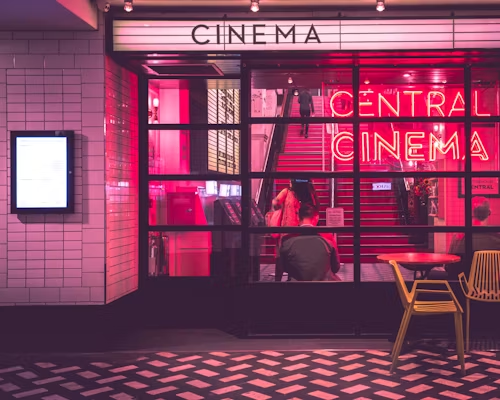
This is why our occasional trips to the cinema have become such an important part of my life. We used to go all the time before I moved, as the cinema is only a 10 minute walk from where we lived and I’ve strived to carry on this pastime. Even though it’s not as frequent anymore, it’s still a special thing for both of us.
My parents have always loved movies, and it’s something they passed on to us at an early age. I have fond memories of birthdays and Christmases spent watching some film or another on the TV. This has changed over the years, from animated movies and Christmas films to horror movies at Halloween, but it’s always been something that helped us bond. It’s helped me as well in a way I never would have expected. It was writing reviews of movies I’d seen that made me realize how much I loved writing, and it’s the reason I write for a living today. My life wouldn’t be the same if my parents and I hadn’t bonded over our love of movies.
This is why I still make the long journey back to my home town whenever I can. In the last year, a new restaurant opened up next to the cinema, and it’s become traditional to grab something to eat there after the film. It sounds mundane. In many ways it is. We see a film, grab a table, and order some pretty standard food — usually pizza or pasta.
In an increasingly stressful time, it’s become something I look forward to every time. There are times where we’ll go to the big cinema in town for big movies like the new Mission Impossible, but most of the time we’ll go to the small independent cinema in Whitley Bay and see a quieter, smaller-scale film. Even if the film isn’t very good, I’m still grateful for the time I get to spend with my dad.
Stepping out and stepping back
Cinema has always been an escape from the real world for me, a chance to not think about the outside world for a few hours at least. Following my move, it’s become so much more than that, and I’m so glad that my parents shared their love of movies with me. It’s helped me bond with my dad, and it’s helping me keep in touch with him even after I’ve moved away.
You wake up in your childhood bedroom, and the bad things that happened to you haven’t happened to you yet. It should make you happy, but instead it aches. You can’t curl up inside your childish innocence because it isn’t there. You could pretend it was, if you really wanted to, but you don’t want to really. As you watch the early morning sunlight dance across the wall, you wonder if you can change things this time. You wonder who you’d be if the bad things that happened to you never happened to you. Did they make you better? Did they make you worse? If the bad things that happened to you never happened to you, would you truly be you?
You wake up in your childhood bedroom, and the bad things that happened to you haven’t happened to you yet. You realise that you’ll need to pretend that nothing has changed, and so you go downstairs, your bare feet treading on stairs that you haven’t touched for years. Your brother is already in the kitchen, and he is still your brother because he doesn’t hate you yet. His face is the same as it once was, trapped in the liminal space between boy and man, and his eyes meet yours with that look that only a brother can master, halfway between awe and disgust, respect and embarrassment, shame and love. Before it really occurs to you what you’re doing, you pull him into a hug, the kind of hug that clamps and tightens, the kind of hug that suffocates but is all love, so much love, love that can maim you and love that can mend you. He stiffens at first, then realises that there is no audience to perform for, no jeering friends lingering in the corners of the room, and, as his bony arms wrap around you, a thought solidifies in your mind that things cannot decay this time, that you must hold onto this bond for dear life, grasping and gasping until the rope burns your palms, because this time you cannot lose your brother.
Your sister is not there. Your sister is never there. Your sister is an absence. Your sister is the space between heartbeats, the gap between ribs, the sound of silence on the other end of the telephone.
You wake up in your childhood bedroom, and the bad things that happened to you haven’t happened to you yet. Your dad comes down and makes breakfast, because that is what he always used to do, and the crackling of bacon and the music on the radio hit you like the melody of a song you haven’t heard in years; first slowly, then like a fierce punch in the stomach with all the force of a car crash. You realise now that you never used to appreciate these tender moments, too tired to do more than sit and watch the breeze dancing through the kitchen blinds. You never appreciated these moments, because you hadn’t realised yet that one day they would be over. You never noticed that, morning by morning, your father was getting older, his presence less resolute, his voice and body less strong. You never considered the fact that one day your mornings would be silent, that one day your father would be gone. But now, burdened by the knowledge that your father’s time is running increasingly short, you wish that you could live in this moment forever, eternally untouched by the sands of time.
You wake up in your childhood bedroom, and the bad things that happened to you haven’t happened to you yet. You make your way back upstairs after breakfast, and, as you reach the hallway, the scent of your mother’s perfume drifts towards you, as gentle as the lullaby she would whisper across your fevered forehead on unsettled nights: a balm of words, a remedy of song. There was always a tenderness to your mother, but there was a sharpness too. She was quick to comfort but even quicker to blame. She was there to take you into her arms after the bad things happened, but she was also the first to suggest that you might have deserved it somehow, that perhaps you had been too forward, too bold, too reckless, too impulsive, too much, too yourself. She was a confidant and an accuser, an ally and a judge, a friend and a stranger. She was your mother, and yet you never truly knew her. You knew only the masks she would present to the world, the image she would carefully curate while the rest of the family was eating breakfast, the perfume, the final act of the performance. You do not knock on the door, because you don’t want your mother to see you. You never wanted your mother to see you, and yet, at the same time, you wanted nothing more. You don’t want your mother to see you because your mother could always see through you, and she would be the first to know that something was different, that you weren’t the child you had been the day before, that you never would be again.
You wake up in your childhood bedroom, and the bad things that happened to you haven’t happened to you yet. You realise with a sense of certainty that you cannot stay. You have long overgrown the mold that was cast for you there. Trying to live out a life that you have experienced before makes you feel ungainly, a giant trying to live in a miniature cardboard town. You’re the only living soul in a house of ghosts, and you can feel yourself slowly becoming haunted. The bad things that happened will happen, have happened, will never not happen, and you would be foolish to try and change that. You wake up in your childhood bedroom, but you do not fall asleep there. You close your bedroom door for the last time, walk down the stairs, open your front door, and walk out into the mild summer night. You don’t know where you are going, but you know that you can’t return. You try and tell yourself that things are better this way, but the lost child inside you knows that that is a lie.
To my great surprise, the year has turned its cogs once more through their cycle, delivering us to the dreary descent of winter and everyone’s favorite pumpkin-slaughtering holiday — Halloween. Now, the day itself doesn’t represent a great deal for me or my family. I know Mum will be tucked up in a blanket next to her expensive log burner, enjoying the autumnal chill that October heralds — the excuse for tucking away on lazy evenings. Dad will have forgotten (not for the first time) to stockpile any sweets before the inevitable stragglers in threadbare costumes come salivating at the door. There’s never been much ceremony for ghosts and goblins, or any of that materialistic nonsense, but this year will be special.
Not to blow smoke up my ass, but I am my parents favorite (and only) son, and I will be blessing them with my company.
Feels like an age since I saw them last. Life just escapes you, doesn’t it? One’s parade of self-importance and fractured completeness overwhelms everything; that’s to say, I’d be perfectly happy to kick my feet up with the wife in Hoxton… sneak in a signature mocktail. Perhaps bump uglies over the ominous tones of Michael Myers rampaging through Haddonfield (such a ridiculous franchise — I mean, it’s iconic and undoubtedly transformed the slasher genre, but Michael, my buddy and pal, walk a little faster). Something about this year though… We’ve grown tired of routine. “To hell with automation!” So Laura’s visiting her brother in Ireland (who’s a bit of a nut for the spooky season himself — she’ll never escape), and I’m visiting the hallowed streets of my glorious hometown… Dramworth.
You know when you’re a kid and everything feels more compact? Everything makes more sense when it’s handed to you on a silver platter — nothing adult to worry about, only your numerous group of friends, who’s snogging who and which local park you’ll be vandalizing next. A town like… Dramworth (God, I can’t even say it without dying inside) can feel like your whole world. Then you reach that second stage of young adulthood where you’d literally dig through hell and back to escape those cloying memories and never return? Yeah, the older I get… and the more this bus does a kickflip every time it hits a pothole, the more I understand where that impulse is borne from.
Something’s changed here… Even the generic bus smell is different, more clinical. Less likely to taper your nose hairs with curling wafts of ass dust… Well, no one’s mourning that loss.
Stepping off the drear-mobile, I realize it’s a remarkably on-brand day. Dull, gray skies; the distinct possibility of rain, foretold by hurried attempts to fold up the standing dryers lurking in front gardens; a biting wind that tears through any attempts to appear cool or nonplussed. There’s literally a tumbleweed in the gutter. The local witches will be most pleased.
I’ve packed only the bare essentials for staying a few nights — let’s just say I’ll be reusing underwear. I don’t know, it’s difficult to visit my parents regularly nowadays for more than short, controlled bursts at a time. I’m not attached to them by the hip anymore, so they’ve taken that strange path of evolution, upgrading from parents to just… people. People I don’t necessarily get along with all of the time. They’re like my in-laws now… Actually, no, that’s not fair. My in-laws are much better.
Still, it’s necessary, isn’t it, to repair those broken lines of communication before the portent of mental decay and the rapid search for nursing homes. That’s when they become children for the second time. When you suddenly look upon them with tinted eyes and wonder where the time escaped to. And you confront the things that were never said and now cannot be understood. Makes me shiver a little bit, so it’s not something I dwell on more than maybe… once a week.
I want to see them. Maybe I have to keep telling myself that, hoping the fact sinks in, but it’s absolutely true. There’s many a life update to share. It’s all been hush-hush till now, but… Laura’s expecting. We haven’t had the scans yet, but she’s secretly hoping that the gods of anomaly are on her side and we get twins. Two little girls. I must admit, the idea appeals to me greatly. Plus, work is blooming on my end. The company just recently processed a vacancy and they’re recommending me for…
The fountain’s gone.
Wait… Am I in the right — Yeah, I’m not that lost. This can’t be right. Ron’s Fountain, it was right here in the town center! It was, like, our one notable tourist destination. What happened? Did it get airlifted?
Come to think of it, everything’s half-falling apart around here. The shopping mall is a quarter-mile of tired linoleum and B-side shops that fall just outside the region of relevancy… Well, it always was like that (I enjoyed poking my head into Home Bargains every so often, trying to find the weirdest drink possible and sampling it with a group of my friends — that’s how I figured out I like the taste of dandelion and burdock). The market stalls in the plaza stand empty, now a labyrinth of obstacles for young lads on their Voi scooters. Exposed brickwork, fading plaster, repurposed windows… When did it get this depressing?
It’s just a shell now…
And suddenly, I get the distinct sense I’m being watched. Not maliciously, in the way of sizing up a target or judging someone’s appearance. Just a vague, apathetic awareness of one’s presence crossing into another, invading an alien space and loitering… And I realize how long I’ve been standing in this one spot, staring into an empty fountain basin and drooling onto my chin. Damn my nostalgia!
Can’t believe this. Back when I was young, that fountain was a sight to behold. One of the jets was said to reach twelve feet in the air! My friends and I never really spent much time around the fountain itself — I mean, it was swarming on all the good days, people making wishes, flicking coins into the bottom and all that schmuck.
But we knew Ron, this homeless dude who draped around the alley on Knox Road. Before the market got really busy in the mornings, around the time my friends and I would be heading to school, we sometimes caught Ron splashing about in the fountain, having a whale of a time (I mean, genuinely, I’ve never seen unfiltered joy quite like Ron’s when he got into that water). Usually we sniggered and moved on, making fun of him as young kids do, but sometimes we called out. Went and bantered with him. He was honestly such a down-to-earth guy (if, admittedly, a little unfurnished upstairs) and not at all the picture of the loony we’d generated in our heads. He always stank of petrol for some reason…
One time, the police caught him in his act. There was a standoff, apparently. Reports say he held his hands up as if they’d trained a gun on him and assured them he was only washing himself. Naturally, this didn’t go down well. Ron was chased out of there (with his pockets chock full of silvers and pennies, I imagine). From what I know, he was never apprehended, but… we never saw him again after that day, so I couldn’t confirm that.
Now that I’m three blocks away from my parents, I’m absolutely sure I’m being followed. It’s funny… I think I’ve seen maybe five people out in Dramworth today. That’s it. Maybe everyone’s fully embraced the Halloween spirit, becoming masters of disguise and fading into the creeping shadows, but I doubt this town’s coordination is that strong. Dusk is descending, so it’s possible people are just settling into their evenings. Still… It’s eerie out here, and every footstep is magnified. I’m not even sure which direction they’re coming from, but I can hear them. Around every bush, between every parked car.
I don’t fancy turning around to confront them. Back in Dramworth, having eyes on you is something you just become accustomed to while sticking to lit paths and fostering a monumental sense of awareness. I’m almost home now and, hey, I’m a grown-ass man who don’t need no…
The footsteps recede. I stop still as a crosswind picks up, scattering skeletal leaves across the dented pavement and into the road.
There’s a faint whiff of petrol on the tide of the breeze.
– – –
I ring the doorbell. Crusty old thing — one of those Victorian antiques, now green with oxidation. The front porch is inherently familiar, coaxing like a warm embrace. Mum opens the pine door. She smiles. I smile. She reaches down to help me with my case.
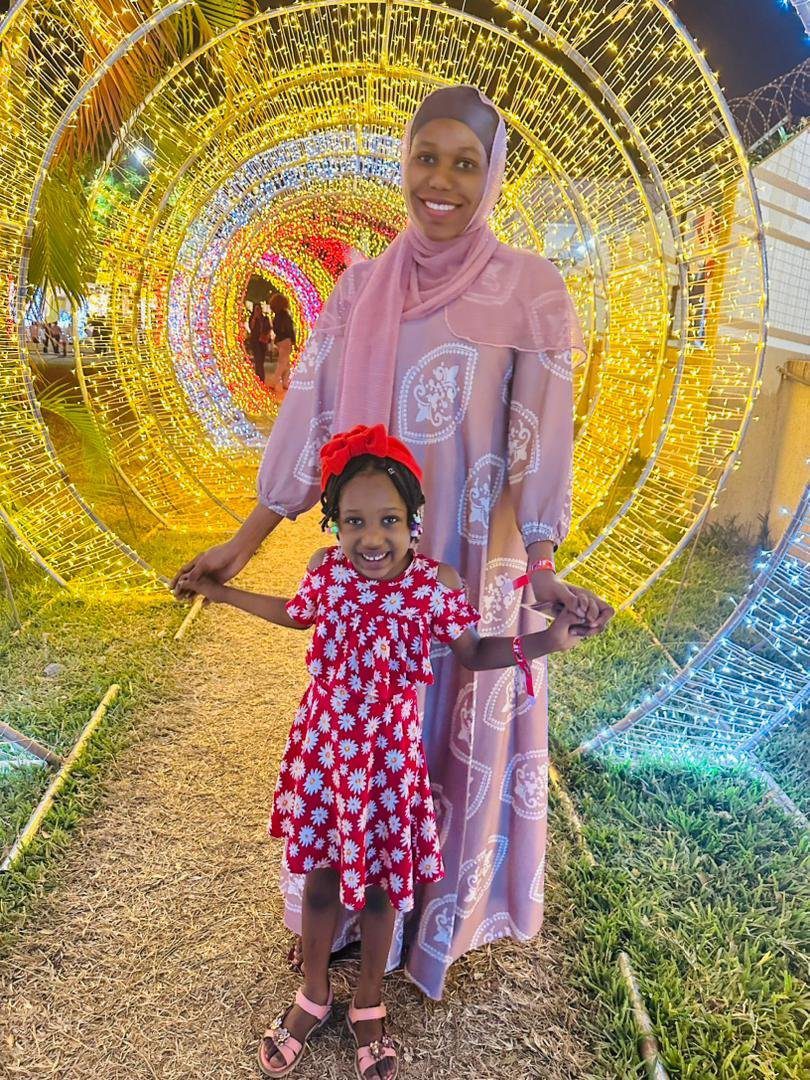
Like most toddlers in the kitchen, my daughter Naanie (also Hayat, my munchkin) is very tactile and loves the concept of eating her art project. Still, she has my very close supervision since her dexterity and motor skills are still developing. She does the following tasks with minimal assistance: picking fresh herb leaves off stems and ripping them into small pieces, tearing up lettuce, brushing (or “painting”) oil with a pastry brush, using the rolling pin for dough or puff pastry, squeezing water out of thawed spinach, stirring, and mashing.
I give her close supervision when it comes to grating and peeling, but no chopping vegetables and herbs with a knife.
When she was 3
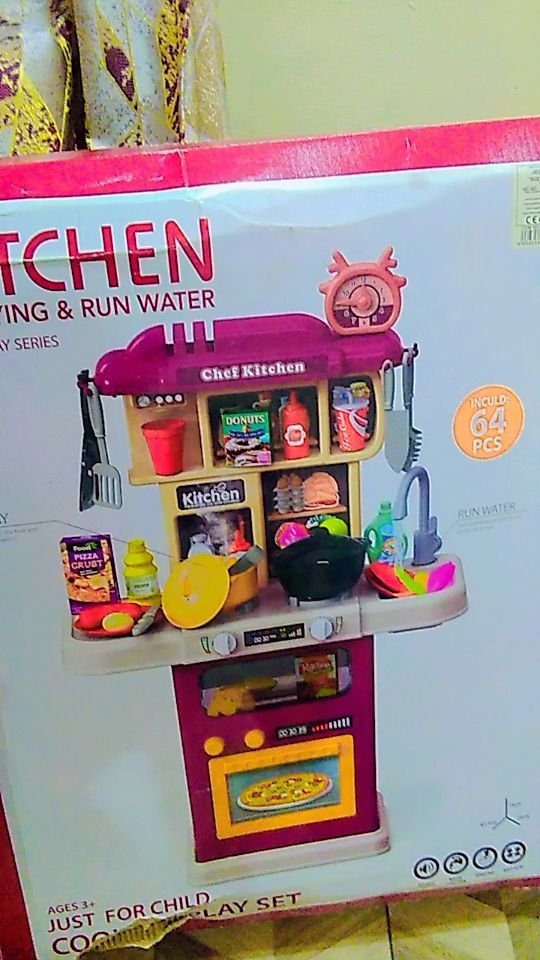
She broke plenty of eggs one time. “Naanie, what are you going to do with these eggs?“ — “I want to bake cakes.” So, telling my mom the story of what happened in the kitchen, she brought her grandchild a 64-piece toy kitchen set … from Egypt.
When she was 4
“Ammie,” the name she addresses me with, “can I cook with you?”
When she was 6
My now 6-year-old had expressed a few times that she wanted to learn to cook. Over the years, I’ve had her help here and there, but one day last Ramadan she asked if she could help me cook “everything“ for the iftar, our evening meal breaking fast.
“Sure Hayat.”
My daughter thought it was such fun that she ran and grabbed art supplies and made menus. Her dad came home to a set table with all this and more:
Mains
Sides
Also …
Sandwiches
Yam balls
Pita
Meat pie
Potato balls
Naan
Chicken pie
Mixed potatoes
Croissants
Shepherd’s pie
Samosa
Popcorn
Spaghetti Bolognese
French fries
Juices
Couscous
Tender rice
Smoothies
Dashishi
Multicolored rice
Tuwo (corn dumplings)
From that day on, every evening we do have a blast! We begin to cook and do the kitchen chores together more regularly.
Naanie and I plan meals together. She’s included in the whole process from finding the recipes to purchasing and gathering the ingredients, plus researching for various cuisines on the internet. Followed by actually making the meal and creating the ambience. It must be the world chef in us, as I love the energy in the warm atmosphere.
We learn a few words for our meals, to try and incorporate them into our dinner conversation. Learning and living, plus cooking and eating. Munchkin makes menus and creates a restaurant name: Purple Hearts 💜.
We’ve found that this time together is truly fun, and we laugh throughout the work. Cooking can be an escape, and my daughter often comments on how relaxing it is. I would have never known that about her had I not allowed her to help. That said, it does take more of my time and patience to oversee her doing the tasks, and not twitching every time there’s a spill.
If she can cook, so can he
Her dad simply adores these evenings. He has commented multiple times on how special he feels coming home to a surprise feast from his girls. Now he also includes her when he cooks. Cooking has become a family activity, and we all get involved.
Our meals are made with love, as my daughter often says.
For me, I really do like to keep a clean kitchen, so I clean as I go. Therefore, before allowing my daughter to join in, I shared with her how cooking looks in our house, so that I wouldn’t react negatively. If she spills some sauce, or dribbles some mix, she now wipes it up immediately saying to herself, “we clean as we go,” and then there’s no frustration. Spills and accidents happen, but she’s proactive about cleaning it up and I like that. It makes me more likely to want to include her again. We make a good team, and I can honestly say it’s one of our favorite activities to do together now. We even have matching aprons! Who would have thought!? It all started on a whim, but it’s become a fun tradition in our home.