My Future Could Have Been Affected, Too

Writer’s Note

There have been initiatives to rename special education programs. I use this terminology because it’s the phrase with which I’m most familiar due to it being used during my time in school.

Individualized education plans (IEP) and 504 plans vary by state and district. Transitional 1st (T-1) programs are intended for students who have completed kindergarten but are still socially or educationally unprepared to begin first grade with their peers. It’s a year-long program and is often suggested for students with additional support needs.

My Education Journey

In preschool, my teacher told my parents that I was struggling with academics and with fine motor skills. The remedy for improving the latter, at least, was to place me in occupational therapy. I remember learning how to button a jacket and crab-walking. I was rewarded with lollipops. In kindergarten, I began receiving additional support for academics through a special education teacher. We met one-on-one, multiple times per week.

Transitional First Grade

I remember being sent home with lined sheets of paper with dotted letters name writing practice for home. My mother stated that I only learned how to write my name at five years old because she promised me a Strawberry Shortcake doll if I did so.

Towards the end of kindergarten, my teacher thought I still required extra help with my handwriting, despite my progress in other skills. She suggested to my mom that I start first grade a year later, participating in a T-1 program. T-1 would allow me to remain in one class all day and work with a teacher on an individualized scale. It was eventually decided that I would begin T-1 instead of moving directly into first grade.

Professional photo of a five-year-old girl, smiling in a fairy Halloween costume.
Image courtesy of the writer.

I was upset when I realized that I wouldn’t be moving up to kindergarten with my classmates. The worst part: no longer being in the same class as my best friend. Due to having a February birthday, her birthday being six months earlier, and starting first grade a year later, I was suddenly two grade levels behind her. My younger self wasn’t so happy; my older self knows that the decision wasn’t easy for my mother, and she just wanted what was best for me academically.

After a full academic year in T-1, I finally moved into first grade with an IEP.

IEPs and standardized testing

My IEP included a non-specific math learning disability; an auditory processing disorder would also be noticed once I got older.

Math doesn’t make sense to me, especially when I try to calculate things mentally. Imagine trying to solve a 500-piece puzzle while missing 100 pieces. I’m not unable to solve equations mentally; I just need support like a calculator or a piece of paper to better visualize it. Multiplication and division is a lot more straightforward because of the kinesthetic way it was taught to me.

The math-related learning disability determined the bulk of my IEP; I’d be pulled out of class a few times a week to work on math with a teacher one-on-one. Additional accommodations included clarification on assignments and instructions, preferential seating, extended time on tests and assignments, use of a highlighter on paper copies of schoolwork, and more. Having a paraprofessional in a math class was my norm. By third grade, I began to take standardized tests (SOLs), which I found difficult. Passing SOLs, however, was mandatory for advancement.

Starting in middle school, special education was rechristened resource classes. Same thing, different title. And no matter how much time I spent studying and prepping on my own and with my teachers, I still struggled.

In 9th or 10th grade, I failed my first three attempts on the SOLs. Due to my disability and trying my best every time, an exception was made. I was close to the desired score, so my teachers chose to consider my final score as passing. Without that exception and advocacy, I might not have graduated high school.

Then, COVID happened

The pandemic shut down in-person schooling during my junior year. The future of standardized testing and specialized learning was unknown.

A hybrid learning system was put in place for senior year. School administration considered resource classes too complex to navigate in this environment. Instead, we had “learning coaches” who ensured that we did our classwork on remote days. That was the extent of support. Without access to the resources I needed, I knew my results on the SAT, which I was due to take that year, would be poor.

Miraculously, a COVID consideration was available. Some school districts, including mine, decided that SATs were optional. Many colleges chose to make reporting scores optional as well. Keeping this in mind, I chose not to take the test. It was through this series of events that I managed to receive several acceptance letters from different universities.

The future is uncertain

I know I’m one of the lucky ones. Recent headlines have discussed layoffs and budget cuts to educational programs, including the Individuals with Disabilities Act. Millions of children in schools today rely on these educational programs, like I did. Cutting resource programs like these removes access to opportunities for students, changing the course of their lives. Without those very resources, I don’t think I would be where I am today.

I can’t imagine how children who have to worry about their accommodations and plans being taken away from them feel. There are legal protections surrounding resource classes for students with learning disabilities, but how can we know that the protections will always be guaranteed? For now, the action of removing accessible education has been temporarily reversed. Its long-term future is uncertain, and I worry about what might happen over the next few years.

My only hope is that future students have access to the resources they need to succeed — just like I did.

Image of a person in a cap and gown facing away from the camera.
Image courtesy of MD Duran on Unsplash.

Further Reading

If interested in reading further about resources for students with additional support needs, here are some resources below:

A Guide to the Individualized Education Program

Center for Parent Information & Resources: Paraprofessionals
107 Degrees in D.C.

They breathe steadily, rhythmically,

Against my chest, 

As the world melts;

Their eyelashes graze my chin–

Two sets of petals–

Rosy as the day flowers, ablaze

In rivulets and revolts,

Conflicts that cause

The pain we never hope

To hold in our arms,

Like we do these twin

Babes, swaddled in

The mirth and murk

Our world breathes–

The sun, she burns

Our eyes in honey.

Screw the Standard-Issue Labeling Machine

Message: “Aunt nell, Nanti hettie. Dooey daiture and quinque, parker, Bona lavs, ducky. “
Polari translation: Listen, I am not straight. In 2025, I give you my best wishes, my dear.

In high school gym class, I often overheard conversations about sexual encounters, stories, ‘advice,’ and asking questions. I remember in ninth or tenth grade, a friend asked me questions about sexual experiences due to my being in a relationship. I felt uncomfortable, as this wasn’t something I wanted to discuss out in the open. I also didn’t want to discuss what started occurring in my life at 17 (that I hadn’t yet  fully processed). Sex was an uncomfortable topic. Romance was different.

Finding the right words or labels

I had always felt romantic attraction towards others. My first crush was on a boy in my kindergarten class, and I realized in sixth grade that I was attracted to girls. Throughout my life, I thought of romantic attraction, not sexual attraction, as a vital component of a relationship.

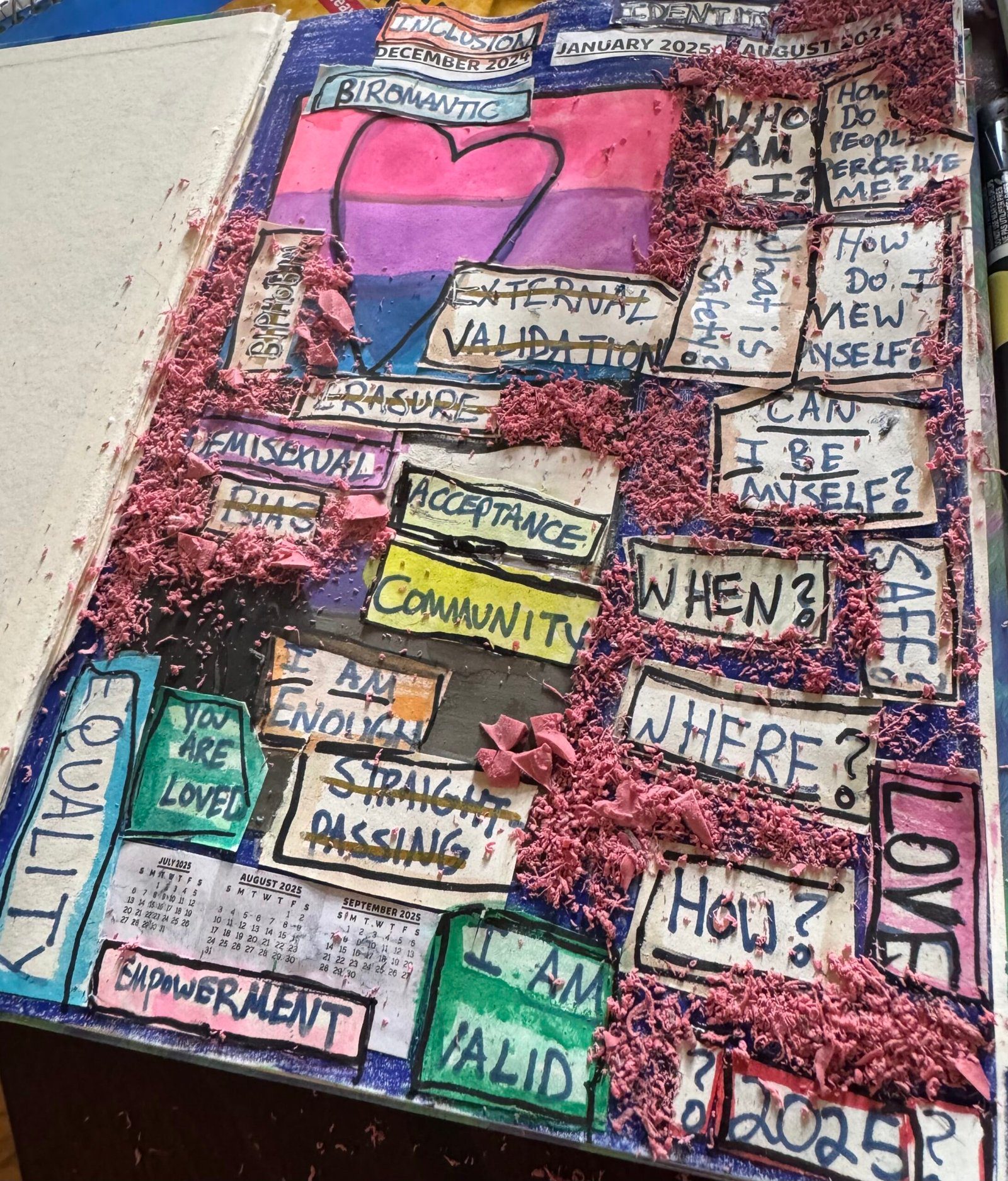
In seventh grade, I discovered the label bisexual. That identity lasted eight years, since I didn’t know there were other options to define myself. Earlier this year, I reconsidered if the label I had worn for so long was accurate to who I am. After thinking it over, I faced that the most accurate way to identify myself was biromantic and demisexual.

Biromantic is described as “being romantically attracted to more than one gender, not exactly in the same degree, same time, or in the same way.”

Biromantic to me means that I am romantically attracted to others, just not in the sexual sense.

Demisexual can be defined as “experiencing little to no sexual attraction without a strong emotional or romantic connection, falling under the ace umbrella (Asexual).”

To me, this means that I’m only sexually attracted to someone after thoroughly getting to know and trusting them on a deep, romantic level. I’ve never viewed myself as someone who could have a one-night stand or a friends-with-benefits situation.

For the past five years, I’ve reconsidered if it’s safe for me to be authentic in terms of my sexuality. With the rise of anti-LGBT laws and bills, I’m afraid to be open about it in public. If I’m with my close friends and in a safe environment, I’m able to speak about it in detail. Without my community, I’d feel lost. 

The feeling of community does not always take the form of a connection that exists in person, since there are online friendships I hold dear to me. For basically ten years now, I have been an active member of the fandom that surrounds two of my favorite YouTubers, Dan and Phil. 

Many within the fandom (phandom) are also LGBTQIA+. In addition, Dan and Phil themselves are queer individuals, and foster community within their fan base. This has been a positive space for me since I was thirteen, and first discovered my attraction to women/feminine-presenting people. 

A friend of mine who I first met in the phandom once exclaimed while hanging out, “I’m here, I’m queer, I’m gay, and I slay.” This is an example of inclusion within the phandom. 

Although I’m afraid to share my identity in some social situations, I have a safety net. The same net simultaneously protects and isolates me. Two years ago, my fiance and I became engaged. Due to bias and biphobia, I’m often viewed as straight because of my fiance’s gender. 

For example, a classmate in high school asked me if I was “still bi” after beginning my relationship with my now-fiance. I’m sometimes not considered part of  the LGBT community as a result of this relationship. That’s isolating.

Erasure is a concept that I internalize, and I have a difficult relationship with it. It makes me feel uneasy knowing that others dictate my identity. Being part of the community is part of my identity. The intersectionality of all my identities live within me: I am a woman, biromantic, demisexual, neurodivergent, and disabled — all at the same time.

Image of paints that make for a rough rainbow
(Image courtesy of Steve Johnson on Unsplash)

The world we live in now

However, in this current climate, I’m privileged to have that safety net of being straight-passing. I am outwardly protected against hatred in some ways, but still discriminated against. 

After a situation that happened to me a few years ago at a local restaurant,  I’m scared to wear pride clothing. A nearby city didn’t have their first pride celebration until 2019. I know that not everyone in the area supports people like myself. 

That protest during senior year

During my senior year of college last year, students found out about a restrictive policy that was passed by the board. This policy stated that transgender, trans, and nonbinary students were no longer eligible for admission; many of my former peers are trans and nonbinary.

At a campus event with a guest speaker, I felt unfairly silenced. We were told we couldn’t speak out, couldn’t interrupt the speaker, yet weren’t allowed to leave yet. Students who weren’t seniors protested the policy by wearing all black and accessorized with pride flag pins. But, I was a senior. 

Part of me knew that the college administration was restricting students, but part of me didn’t know to what extent. I knew I needed to use my voice for good, since the restrictions were even stricter for students who were not closer to graduating. People in my life warned me about protesting, told me to not get myself in trouble. I didn’t care, because it was my senior year and knew just one extra voice could make a difference. I crossed that line almost daily, every time the administration made changes. I constantly worried that I would be called into the dean’s office, but thankfully I wasn’t.

I was surprised to find out how restricted I was as a student, but not shocked at the same time. I believe I was surprised that the administration thought so low of students, as many of us would not have even attempted to interrupt the speaker — without being told not to. I felt a sense of disconnection between how we as students viewed ourselves and our peers vs. how the Admin viewed us. The local police showed up to the Annual Founder’s Day event after the meeting, without our knowledge. I felt as if Admin viewed anyone who spoke out as a threat, when most people were not. 

Some faculty were supportive of students, and I understand why some were not in the position to risk their jobs in order to support us. 

In response to feeling shut out before, that same month I attended a protest on campus where students joined together, raising our voices to “Rescind the policy.” The administration approved the protest ahead of time. It was student-led, with fixed guidelines allowing us to shout approved phrases, hold signs, and only protest during the approved time slot. The protest coincided with the week that a board of directors meeting was occurring on campus. Once the meeting was over, we could no longer protest.

Following the protest, I joined a few others who were planning on speaking to a local reporter.  I didn’t know if I would be punished for speaking out afterwards, but I took that risk. Loved ones warned me not to do it, saying I would get in trouble. However, after the way the campus climate had shifted quickly under the appointment of a new commander, getting in trouble was the least of my concern.

Despite graduating from college and leaving that environment, I face bias and discrimination still, but primarily due to other parts of my identity.

Anxiety comes upon me whenever I see red MAGA banners in nearby cities or when I come across articles online that mention politicians’ stances. Anxiety creeps in when I visit cities that are dominated by primarily anti-LGBT institutions.

I often don’t tell others about my sexuality upon meeting them since I cannot be sure of their intentions. I wonder if I can attend local pride events — if it’s worth the possibility of being targeted online by someone from my hometown who is passionate in their anti-LGBT sentiments. How accepting a particular state is a variable in determining where to relocate. 

As well as this, I never know what will happen to my loved ones who are part of the community in 2025. I wish there were protections in place for every LGBTQIA+ individual. I wish I could foster that progress.

How I define progress and resistance

I may be ridiculed in public when I wear a pride shirt, but I know my experience isn’t the same as LGBTQIA+ people in other states or around the world. I may have been outed in seventh grade — and called a slur when I publicly came out as bisexual on instagram in ninth grade — yet, I cannot compare my experience to those who were queer activists in the 60s, 70s, and  onward. I don’t know what it’s truly like to fear my life on the daily for who I am.

I can’t relate to the community members who spoke a code language for decades in order to share everyday encounters with their friends. There are no direct terms for biromantic and demisexual in this language. Thus, I most likely would have been referred to as bibi palone (bisexual woman). Polari represents the history of the community during one of many  dangerous time periods for those in the LGBTQIA+ community. 

Survive and thrive

The historical basis for pride was to stand up against injustice, fight for those who can’t do so themselves, and make a difference. Pride at its root is about being authentic, even when social barriers are in place.

I’m not suggesting that others outside of myself should necessarily tackle injustice, as individuals exist in different circumstances than myself. I myself am sometimes worried about wearing pride clothing or accessories. Further, fostering change is not a monolith. It can be carried out through different methods.

Prioritizing well-being and self-care may be the only form of autonomy for individuals. Sometimes, resistance consists of survival and, eventually, thriving. Being true to who I am makes a difference. 

I’m very glad to be able to live with my fiance now. Right now, for me, being myself is resistance enough. 

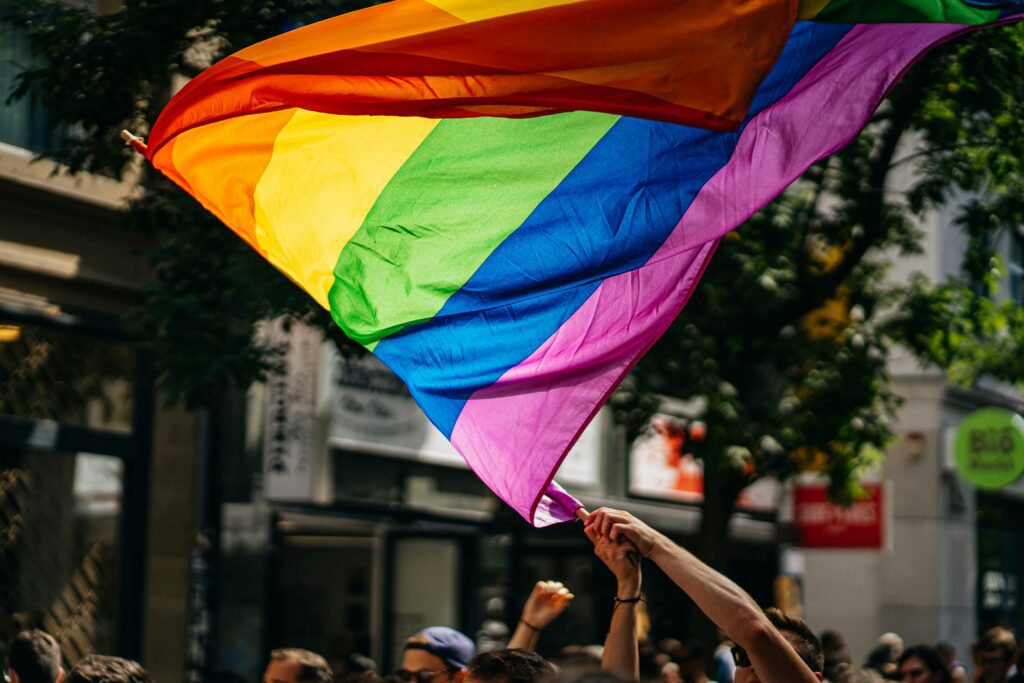
Arms waving a glowing pride flag in the wind
Image courtesy off Raphael Renter | @raphi_rawr on Unsplash

Former President and Brazilian Generals Arrested for Attempted Coup for the First Time in Brazilian History

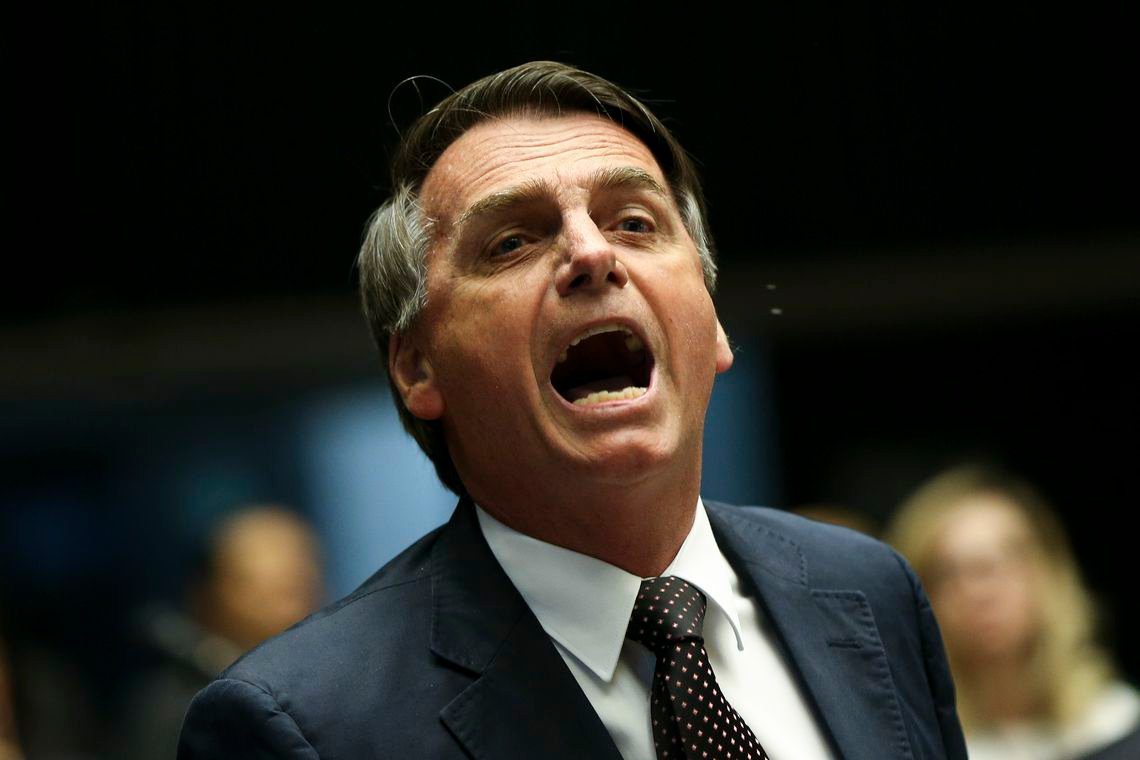
The former President of Brazil, Jair Messias Bolsonaro, has been definitively sentenced to 27 years in prison by the Supreme Federal Court on the afternoon of this Wednesday (25), in Brasília, the Federal Capital ( where the military resided). There, the former parliamentarian and retired captain of the Brazilian Army will initially be held in a Federal Police superintendent’s office., There are no further appeals available for the defendants in this case.

Former President Jair Bolsonaro had already been preventively arrested by the Brazilian Federal Police at sunrise last Saturday, November 22, at his residence in a luxury condominium in the capital of Brazil, Brasília. The former president attempted to tamper with the electronic ankle bracelet that monitored him, using a welding iron, which led to his preventive arrest and the subsequent suspension of the house arrest he had been serving since August 2025, due to the alleged escape risk. Until then, the convicted could appeal the conviction in the process, but the deadline ended this Tuesday.

In addition to the former president, Generals Augusto Heleno and Paulo Sérgio Nogueira, participants in the former Bolsonaro government, will also begin serving their definitive sentences (21 and 19 years, respectively) in a military barracks. Admiral Almir Garnier will be held in a military radio station of the Brazilian Navy. General Braga Neto, who ran for vice president in the 2022 elections, had already been in preventive custody for 11 months in a barracks in Rio de Janeiro, where he will remain. Former Minister of Justice Anderson Torres, who is not military, will go to the Papuda prison in Brasília.

The definitive arrest order was issued by Minister Alexandre de Moraes, the rapporteur of the judicial process that had already sentenced former President Jair Bolsonaro and others involved in an attempted coup at the end of 2022. At that time, Bolsonaro and the other convicted did not accept the electoral results of that year, which indicated the victory of the current president Luiz Inácio Lula da Silva and the unelection of thenPresident Jair Bolsonaro. It was the first time in Brazilian political history that a sitting president was unable to be re-elected to continue government. 

It is also the first time in Brazilian history that military personnel have been convicted for attempted coups. Brazilian historians point to up to nine coups since the end of the Brazilian monarchy. It should be noted that, whilst there is controversy among scholars regarding the counting of coups against the Republic, no fewer than nine coups have been cited.. In the 136 years since the abolishment of the monarchy, seven coups were successful, each with varying degrees of military participation.

In recent interviews with The Washington Post, three researchers paid attention to the unprecedented nature of the punishment of Brazilian military personnel. According to historian Lilia Schwarcz from the University of São Paulo, “Brazil carries two pacts of silence: the silence about slavery and the violence it produced, and the silence about the military. That’s why this case is so symbolic.” Carlos Fico, a professor at the Federal University of Rio de Janeiro, emphasized the aforementioned numerical issue concerning historical coups and, despite the high number, the absence of punishment: “For decades, I have studied more than 12 coups and coup attempts, and all resulted in impunity or amnesty. This time will be different…” Finally, political scientist Matias Spektor from FGV (Getúlio Vargas Foundation) points out the seriousness of the leniency against public officials who have the right to use weapons: “The country has never imprisoned anyone who had access to state weaponry. This is revolutionary.”

Kenya Mourns as Former Prime Minister, Raila Odinga, Passes Away

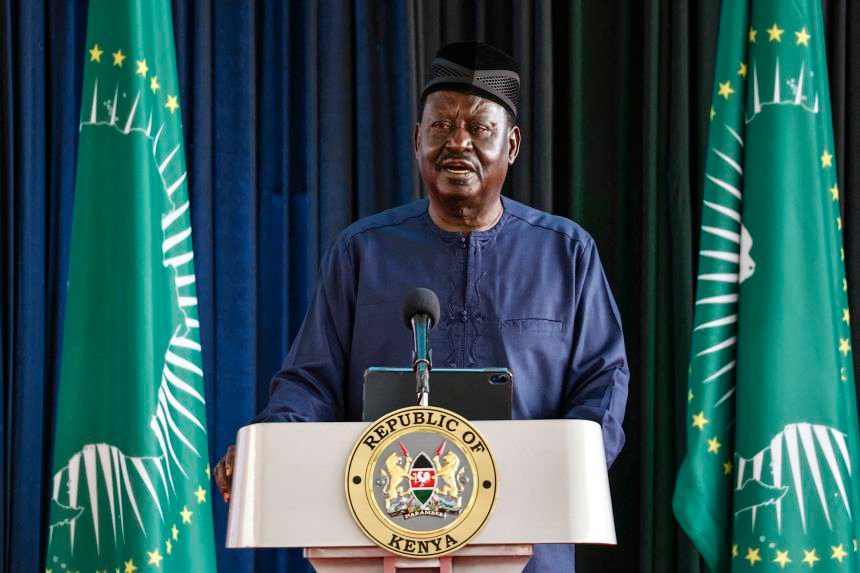
Hundreds of Kenyans and notable figures gathered at the Nyayo Stadium in Nairobi on October 17th 2025, to pay their respects to the late former Prime Minister, Raila Odinga, at his state funeral.

The former figurehead passed away at the age of 80 after suffering a heart attack on October 15th, during a morning walk at a health clinic in Southern India, where he was receiving treatment. Krishnan, a superintendent of police in Kerala, India, confirmed that Odinga was pronounced dead after being rushed to Devamatha private hospital.

During a speech at the funeral, Odinga’s daughter, Winnie, recounted her memory of her father, ‘I watched him at his best. I watched him fall and rise again, each time with grace, forgiveness, and hope.”

(Photo via The Nairobi Law Monthly)

Being one of the most revered political figures in Kenya, Odinga’s death has attracted condolences from prominent national and international figures. 

In a tribute to the late Prime Minister, President of Kenya, William Samoei Ruto said, “Through his words and deeds, he taught us that true patriotism is not measured by what we receive from our country, but by what we are willing to give in service to it.”

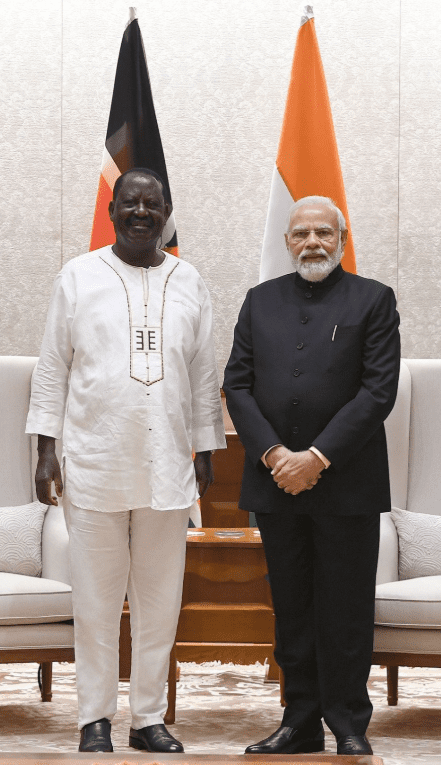
Similarly, the Prime Minister of India, Narendra Modi, commented on Odinga’s death via his official X handle, “Deeply saddened by the passing of my dear friend and former Prime Minister of Kenya, Mr. Raila Odinga. He was a towering statesman and a cherished friend of India.”

Raila Odinga and Indian Prime Minister Narendra Modi
(Photo by Narendra Modi via X)

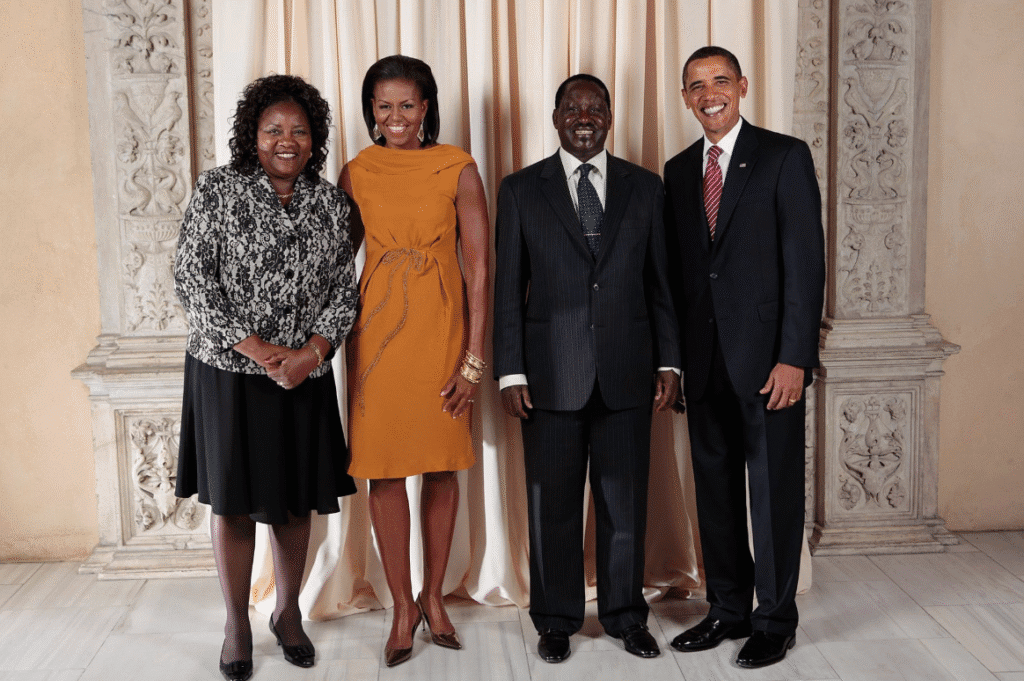
Former United States president, Barack Obama, equally sympathized with Kenyans, saying, “Raila Odinga was a true champion of democracy. A child of independence, he endured decades of struggle and sacrifice for the broader cause of freedom and self-governance in Kenya…I know he will be missed.”

Right to left: Barack Obama, Raila Odinga, Michelle Obama, Ida Odinga
(Photo by Barack Obama via X)

Many Kenyans, who fondly referred to Odinga as ‘Baba’, also took to social media to express their sadness about his death. One user commented, “Every man dies. Not all men live. Baba Raila Amolo Odinga lived. Impactful both in life and death.”

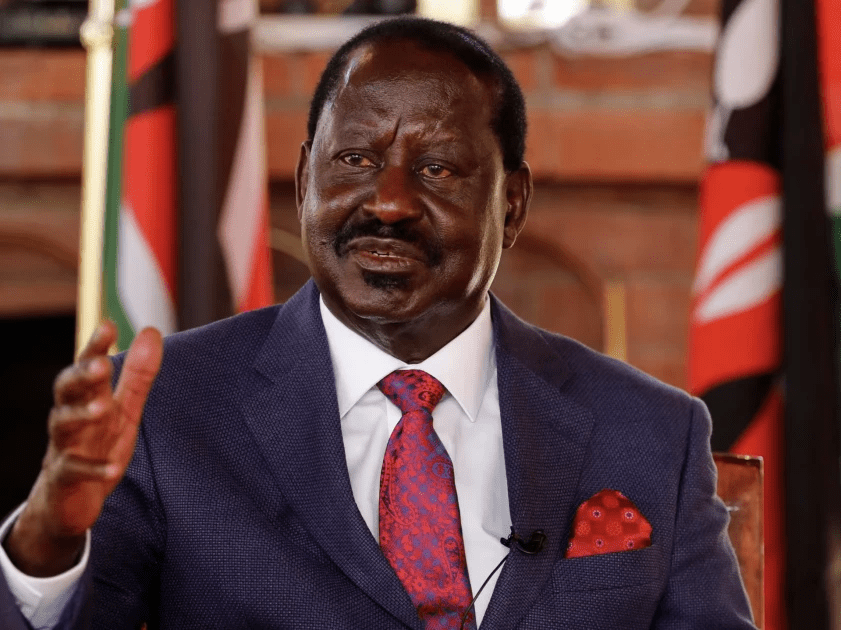
Raila Odinga was born on January 7, 1945, in Maseno, Kenya. As the son of Kenya’s first vice president, Odinga’s exposure to politics began from early childhood. It wasn’t until the late 90s, however, that he became actively involved in politics.

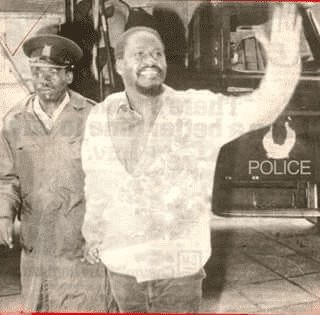
Odinga was notable for his fight against one-party dictatorship in Kenya. In 1982, Odinga was arrested and imprisoned for six years after allegedly plotting a coup against then-president Daniel Arap Moi.

Police arrest of Raila Odinga
Police arrest of Raila Odinga (Photo by Raila Odinga via X)

Despite running for the office of the presidency five times, Odinga never won any elections. He however, occupied various positions in Kenya, including Minister of Roads, Public Works, and Housing (2003-2005), Minister of Energy (2001-2002), and Prime Minister (2008-2013).

As Kenyans continue to turn up in numbers to mourn the death of the former Prime Minister, his wife, Ida Odinga, urges people to remain peaceful and avoid repeating the tragic stampede that resulted in the deaths of others.

South Africa’s Reckoning: Can Justice Still Save the Republic?

When Lt-Gen Nhlanhla Mkhwanazi first laid bare accusations of political interference, hidden criminal syndicates, and sabotage within the South African Police Service (SAPS) in July 2025, it sent shockwaves through the country particularly in communities already living in fear. For ordinary citizens in townships and informal settlements where criminality and “vanishing police dockets” are part of daily conversations, that moment was less about surprise and more about relief  because someone was finally naming the injustice that shaped their daily lives. 

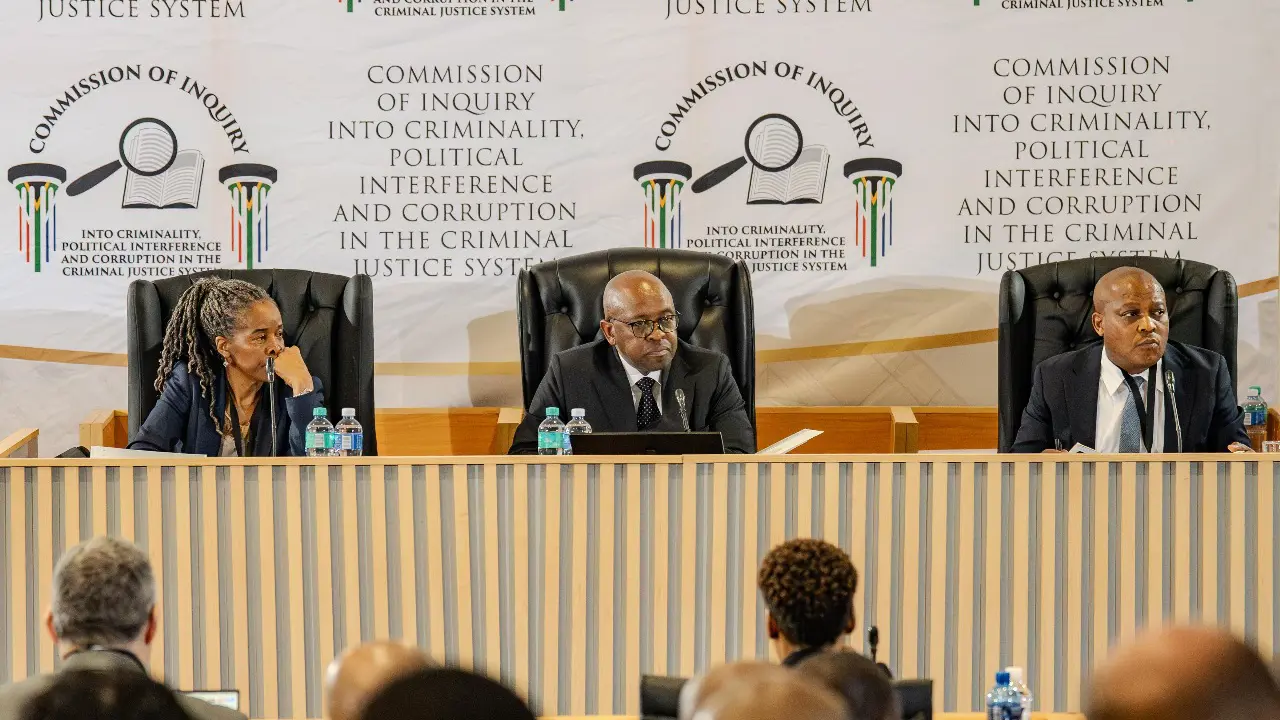
Now, as the Madlanga Commission of Inquiry has begun its public hearings on 17 September 2025 at the Brigitte Mabandla Justice College in Pretoria, the emotions of ordinary citizens mirrored the nation’s tension. The delays, resource problems, and political pushbacks are not just bureaucratic obstacles, they carry real costs in people’s lives. Nicole Myburgh, Ward Committee Member in Eldorado Park, commented “As a resident of Eldorado Park, I’ve witnessed firsthand the devastating impact of gun violence and drug cartels in our community. For years, we’ve lived under the shadow of gang warfare, a reality shared by many communities across the country.”

The first public witness to take the stand was Lieutenant-General Nhlanhla Mkhwanazi, his testimony immediately set the tone. Speaking under oath, Mkhwanazi painted a damning picture of political interference that, in his words, had “turned the South African Police Service into a playground for power brokers.” Mkhwanazi told the commission. “It is a capture of policing itself from the station level right up to the minister’s office. Political loyalties decide who gets promoted, which cases disappear, and who lives to tell the story.

The second witness National Police Commissioner Fannie Masemola corroborated parts of his account, testifying that ministerial directives had “encroached upon operational independence” and undermined accountability. According to internal documents tabled before the commission, 121 case dockets, many tied to politically connected suspects, were re-routed or “lost” after the task team’s dissolution. Witnesses described how officers who resisted interference were threatened, transferred, or quietly sidelined.

Opposition parties quickly seized on the revelations. DA leader John Steenhuisen told reporters outside the hearings, “These testimonies confirm what South Africans have long suspected that state institutions have been weaponised for factional gain. This commission must go beyond exposure; it must end impunity.” It is worth noting that even though the commission of inquiry has been well received by citizens, if it delivers not only revelations but prosecutions, not just words but systemic reform, perhaps the state will again be seen as a protector, not a predator.

South Africa’s democracy was built on accountability, the idea that no one, however powerful, stands above the law. However, as the Madlanga Commission peels back layers of a major political crisis, that principle feels increasingly fragile. The sudden death of former Police Minister Nathi Mthethwa on 30 September 2025, barely two weeks after his name surfaced in testimony linking him to “protection networks” around illicit mining and logistics cartels, has further raised suspicion. Officially ruled as a suicide falling off a hotel in Paris, his passing nonetheless sparked an online storm of speculation and conspiracy theories leaving others in fear that the line between politics and organised crime may now be one of survival.

Parallel economies thrive in this environment. From the zama-zamas (unregulated small scale mining) of mainly Gauteng’s abandoned shafts to cross border tobacco and vehicle hi-jacking cartels, organized crime has become a shadow state which is exploiting gaps in governance and the rule of law while the most vulnerable in society suffer more into poverty. In a report, the Transnational Alliance to Combat Illicit Trade (TRACIT) estimated that illicit trade (tobacco, alcohol, counterfeiting, etc.) causes losses of about R100 billion annually, but that is not expressed as a percent of GDP.

In the end, the Madlanga Commission is not just about rooting out corruption, it is a mirror held up to a democracy testing its own endurance. South Africa’s political underworld did not emerge overnight but it grew in the blind spots of accountability, in the silence of those who looked away. Whether the commission’s findings lead to prosecutions or fade into another forgotten report will determine far more than political reputations, it will reveal whether this democracy still has the courage to save itself and whether citizens like Nicole will inherit a country worth living in. 

Brazil’s Supreme Court Sentences Former President Bolsonaro to 27 Years for Coup Plot

Last week, Brazil’s Supreme Court delivered a historic ruling: former president Jair Bolsonaro, 70, was sentenced to 27 years and three months in prison for plotting a coup d’état after losing the 2022 election.

The court found Bolsonaro guilty of leading a conspiracy that sought to overturn the democratic process. Plans included dissolving the Supreme Court, disbanding institutions, and even assassinating then president-elect Luiz Inácio Lula da Silva before he could take office. 

Bolsonaro has denied orchestrating a coup, insisting he only sought “constitutional alternatives” to remain in power.

A First in Brazilian History

Brazil has experienced at least 15 coups or coup attempts since the monarchy fell in 1889. This is the first time a leader accused of organizing one has been criminally convicted. 

Alongside Bolsonaro, seven high-ranking allies were also sentenced, including his vice-presidential candidate, his former defense minister, and senior military commanders.

Justice Cármen Lúcia, whose decisive vote sealed the conviction, underscored the court’s message: “In Brazil this has one name only: a coup d’état.”

The sentencing marks a watershed moment for Latin America’s largest democracy. Bolsonaro, often compared to other far-right populist leaders worldwide, energized a movement that reshaped Brazilian politics over the last decade. 

His imprisonment leaves that movement without a clear leader ahead of the 2026 elections.

Public reactions have been mixed. While progressive groups celebrated the decision as a defense of democratic institutions, Bolsonaro’s supporters organized protests, framing the trial as political persecution. 

Polls conducted during the trial showed the country nearly split: about half of Brazilians agreed he should go to prison, while a large minority opposed it.

The case has also stirred international debate. Reports indicate that former U.S. President Donald Trump pressured Brazil to drop the prosecution, threatening steep tariffs. 

The conviction now risks straining relations further, as Bolsonaro’s defense team pushes for him to serve his sentence under house arrest due to health concerns.

“No Amnesty” Movement

Brazilian congresswoman Dandara Tonantzin, a rising voice in the country’s progressive wing, told Yuvoice the conviction was a long-overdue step: “This is a victory for all who defended democracy tooth and nail. There can be no amnesty for those who attempted to silence the ballot box with force.”

Her remarks highlight a growing demand that Bolsonaro’s privileges as a former president (including taxpayer-funded security and staff) be revoked.

She also highlighted the symbolism of Justice Cármen Lúcia casting the decisive vote: “It is not by chance that it was a woman from Minas Gerais who stood firm. Bolsonaro once called the birth of his daughter a ‘weak moment,’ yet now he has been stopped by the strength of a woman’s hands: delicate, but firm.”

For Dandara, the ruling is also a historical reckoning: “What happened was not an exaggeration, not a theory, it was a crime against democracy. Justice being served is an essential step to ensure that never again will anyone attempt to shut down the will of the people with force.”

What’s Next?

Bolsonaro’s lawyers are expected to file appeals, which may delay his imprisonment. The timeline for where and how he will serve his sentence – whether in a federal facility, under house arrest, or elsewhere – remains uncertain. 

Meanwhile, political allies are floating a controversial bill to grant him amnesty, though legal experts say such a move would likely be unconstitutional.

Still, the ruling is already shaping Brazil’s political future. Bolsonaro is now banned from running for office until 2060, effectively ending his electoral career. 

For a country still scarred by past authoritarian regimes, the decision signals both accountability and an attempt to strengthen democratic resilience.

The conviction of Jair Bolsonaro resonates far beyond Brazil. It is a reminder that democratic institutions, however imperfect, can hold even the most powerful figures accountable. 

In a time when democracies worldwide are tested by misinformation, authoritarian pressures, and weakened trust, Brazil’s verdict may stand as a precedent and a warning.

Court Orders Nigerian Senate to Reinstate Suspended Senator, Natasha Akpoti-Uduaghan

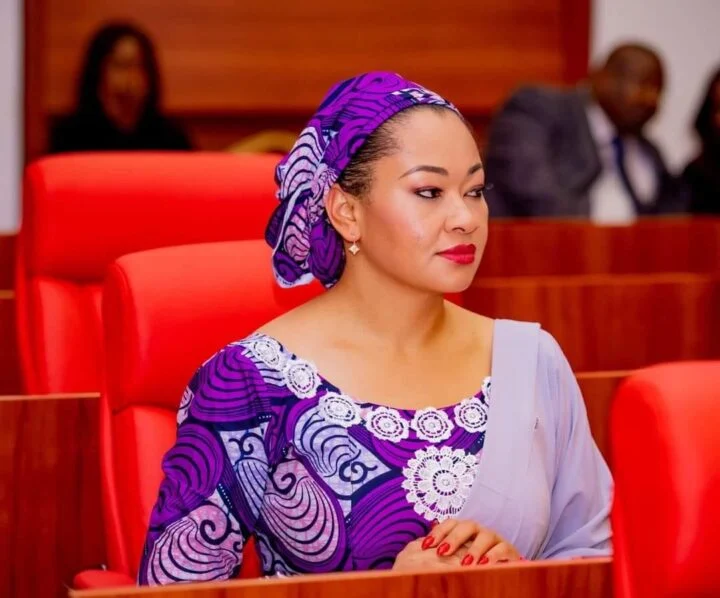
A Federal High Court in Abuja, the capital of Nigeria, has ruled in favor of a senator representing Kogi Central, Natasha Akpoti-Uduaghan, who was suspended by the Senate for six months over alleged misconduct.

Justice Binta Nyako, who led the court sitting on Friday, July 4th, 2025, delivered the judgment stating that the suspension of the senator was ‘excessive.’

The judge added that because lawmakers are expected to sit for 181 days in a legislative session, the six-month suspension would hinder the Senator’s ability to carry out her legislative mandate thereby denying her constituents the right to representation.

Reacting to the favorable judgment, the Senator told supporters, “I thank you for your support. I am glad we are victorious today. We shall resume in the Senate on Tuesday, by the grace of God.”

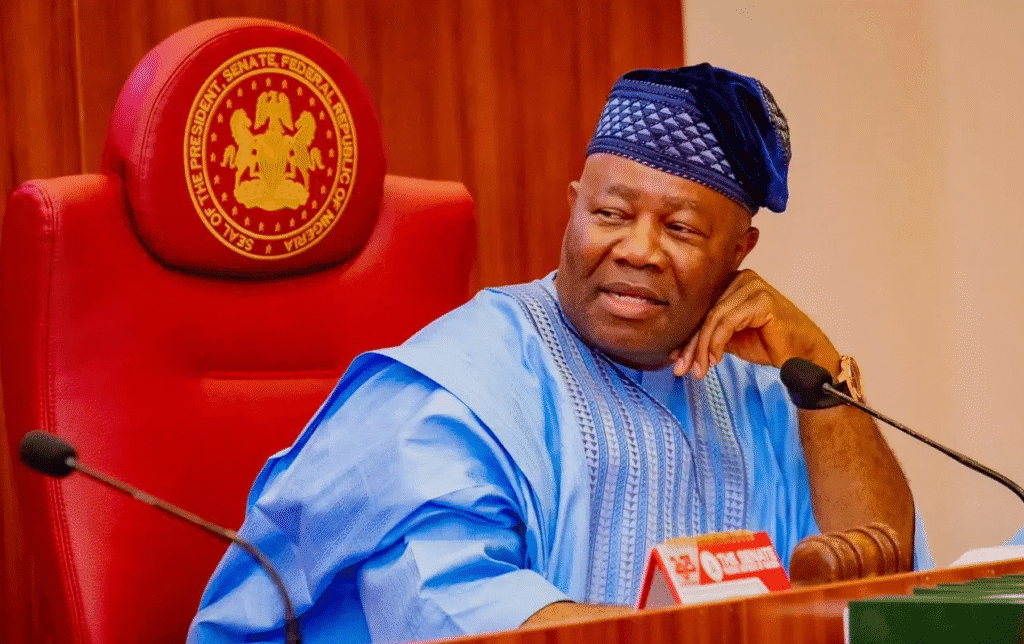
It can be recalled that Senator Natasha was suspended by the Senate Committee on Ethics after she brought forward a series of allegations against the Senate President, Godswill Akpabio

Senate President, Senator Godswill Akapbio (Photo by Vanguard)

The exchange between Senator Natasha and Senator Akpabio began after an argument about a reshufflement in sitting arrangement ensued between her and the Senate President. 

The senator claimed that the new sitting arrangement put her in a dead zone where her legislative activities wouldn’t be captured by cameras. This she insisted, was an attempt by the Senate President to silence her. 

The chairman of the Senate Committee on Ethics, Neda Imasuen rebuffed Senator Natasha’s claims stating that she wasn’t the only one whose position was changed and, “About four or five other senators were moved.”

Analyzing the issue, a Legislative Governance expert, Chibuzo Okereke explained, “She belongs to the minority caucus. They sit on the left side of the presiding officer by the tail of the maze…these things have significance because they are symbolism.”

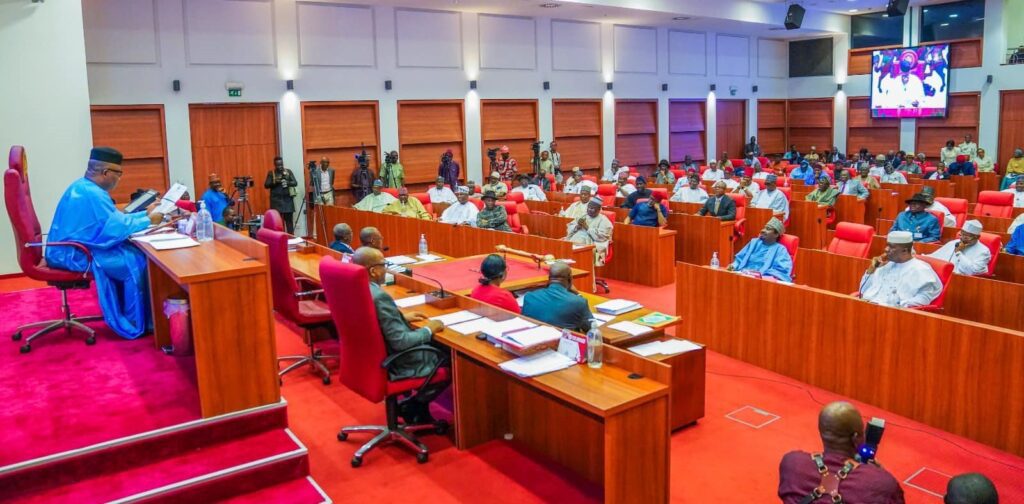
The Nigerian Senate (Photo by Nigerian Senate Via Facebook)

Following the reshuffling disagreement, Senator Natasha presented a petition against the Senate President to the Senate. She accused him of sexual harassment, abuse of office, and malicious obstruction of her legislative functions.

Responding to the claims during the Senate gathering, the Senate President said, “I have the highest regard for women…so at no time will I ever harass any woman.”

Although Senator Natasha’s petition was initially rejected by the Senate, it was later approved and a decision was made by the Committee on Ethics on March 25th, 2025, to suspend the Senator for six months. The body insisted that her actions brought dishonor to the Senate and its leader.

The suspension was accompanied by other strict conditions, such as stripping the Senator of her security detail, cutting off her salary, restricting her visit to the National Assembly, and prohibiting her from introducing herself as a Senator

A lawyer, Chinenye Uwanaka, condemned the situation, saying, “Looking at what has played out in the National Assembly, honestly speaking, it doesn’t look like a place that is welcoming for women.” 

She continued, “We even have case law in Dume and Omo Agege…the Supreme Court held that those suspensions were not constitutional because it’s supposed to be a maximum of 14 days.”

As the court has reviewed the case and come to a consensus that this suspension was ‘overreaching,’ Senator Natasha has begun making preparations to resume her legislative duties. 

Her resumption is, however, still dependent on the Senate’s examination and verification of the Certificate of True Copy (CTC) of the judgment. In a statement on 6th July 2025, the spokesperson for the Senate, Senator Yemi Adaramodu, said, “Pending the receipt and examination of the CTC, and acting on the advice of counsel, the Senate shall refrain from taking any steps that may prejudice its legal position.”

In a separate ruling, Senator Natasha was fined 5 million naira by the same judge after she posted a satirical apology to the Senate President on Facebook, disobeying the gag order that restrained all parties from commenting on the case.

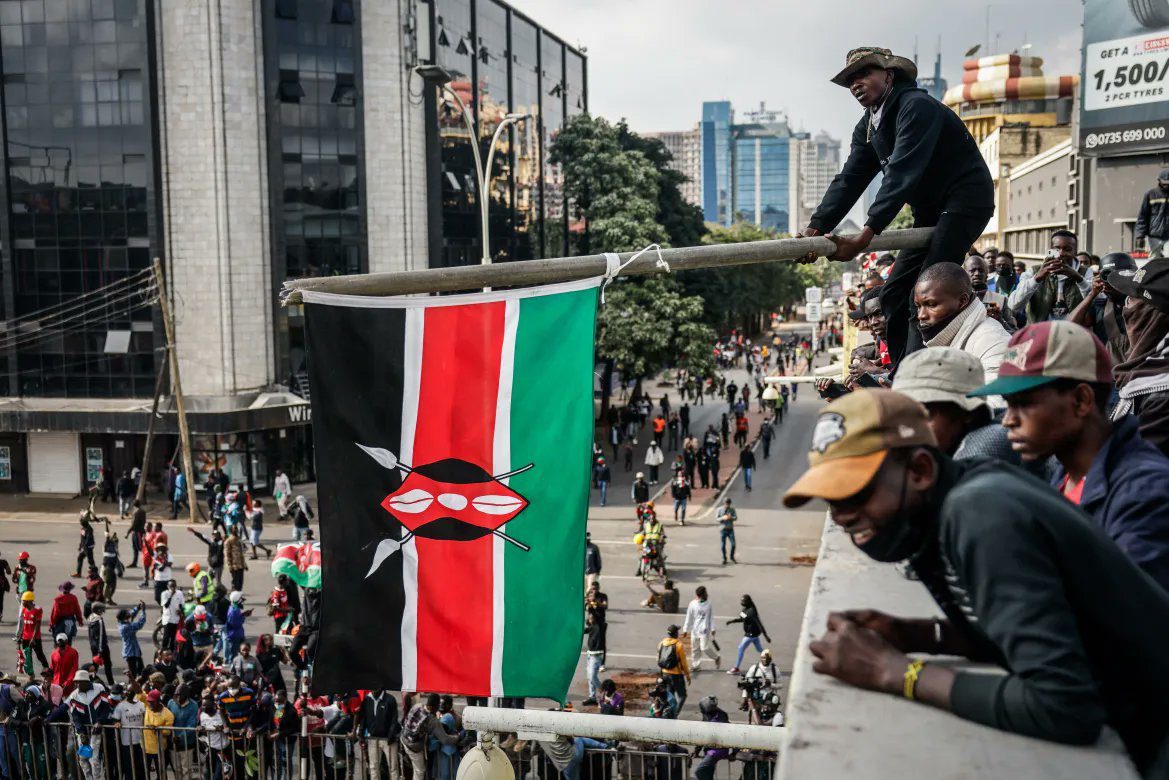
Parliament Set To Make Drastic Moves After Gen-Z Led Kenyan Protest Leaves 16 Dead

Kenya’s Parliament moves to table a restrictive motion on protests in the country following the violent waves of protests in the country in the last two years.

Days after the latest demonstration in the country, the Parliament of the country is now said to be threatening the constitutional right of the people to protest by suggesting laws that will restrict them.

This law will force protest movements to register full names of individuals, addresses of individuals, routes planned, number of protesters, as well as slogans to be chanted during protests.

The proposed law comes after thousands of Kenyan youths marched in protest on 25 June 2025 in the country’s capital, Nairobi, to air out their grievances against the corrupt government, express their dissatisfaction surrounding the mysterious disappearances of fellow Kenyans, and illegal operations of the police force.

This June marked a year since the country witnessed a violent anti-tax bill protest that left 60 people killed and several injured. 

According to a former Member of Parliament, George Koimburi, the controversial financial tax bill was passed by lawmakers in 2024, after the Members of Parliament were offered 2 million in Kenyan Shillings to vote in favour of the bill.

However, after the deadly protest that left the country shaken, the Kenyan president, William Ruto, refrained from signing the bill, stating, “I concede, and therefore I will not sign the 2024 finance bill.”

In honour of last year’s anti-tax protest and to mourn those who were lost during the demonstration, Kenyans came out in their numbers once again, insisting that they have yet to see any substantial changes one year after they marched to parliament demanding a better system.

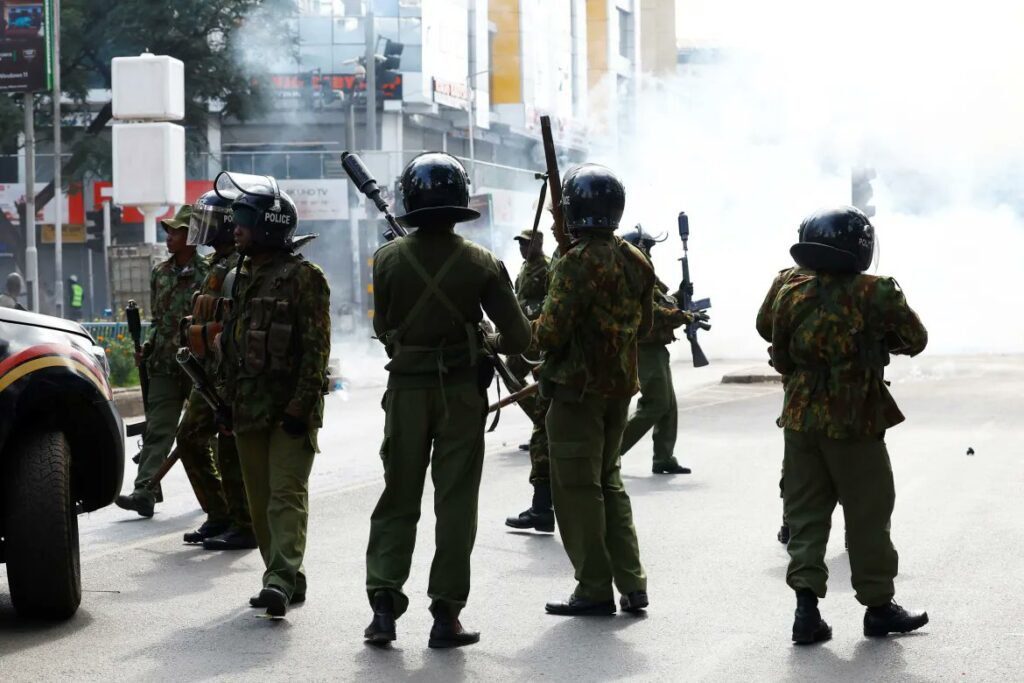
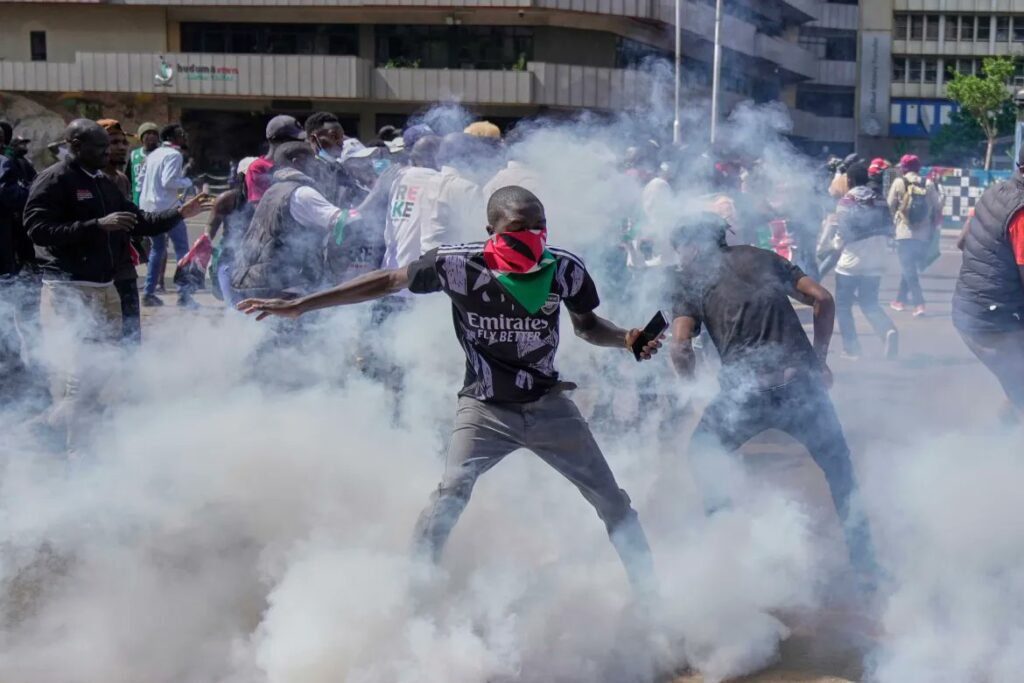
According to Amnesty International Kenya, the death toll in this year’s protest is marked at 16, while at least 107 persons are said to have suffered from injuries resulting from bullet hits. Al Jazeera notes that peaceful protesters were attacked by police using live rounds, tear gas, rubber bullets, and water cannons.

The Kenyan police at the protest scene (Photo by Al Jazeera, via X)
Tear gas being deployed at protesters (Photo by Al Jazeera, via X)

Center of this year’s protest is the death of 31-year-old blogger, Albert Ojwang, who died in police custody. Protesters were seen on video holding up signs with the blogger’s name and chanting ‘Justice for Ojwang.’ 

Ojwang was found dead in his police cell after being arrested at his house because he allegedly posted false and malicious information about the Deputy Chief of the Police Force, Eliud Lagat.

An autopsy conducted on Ojwang revealed that he had suffered a head injury, neck compression, and soft tissue damage, all of which point to assault as the cause of death. 

Ojwang’s case is only one out of many cases of police brutality in Kenya, and the citizens are now saying they have had enough.

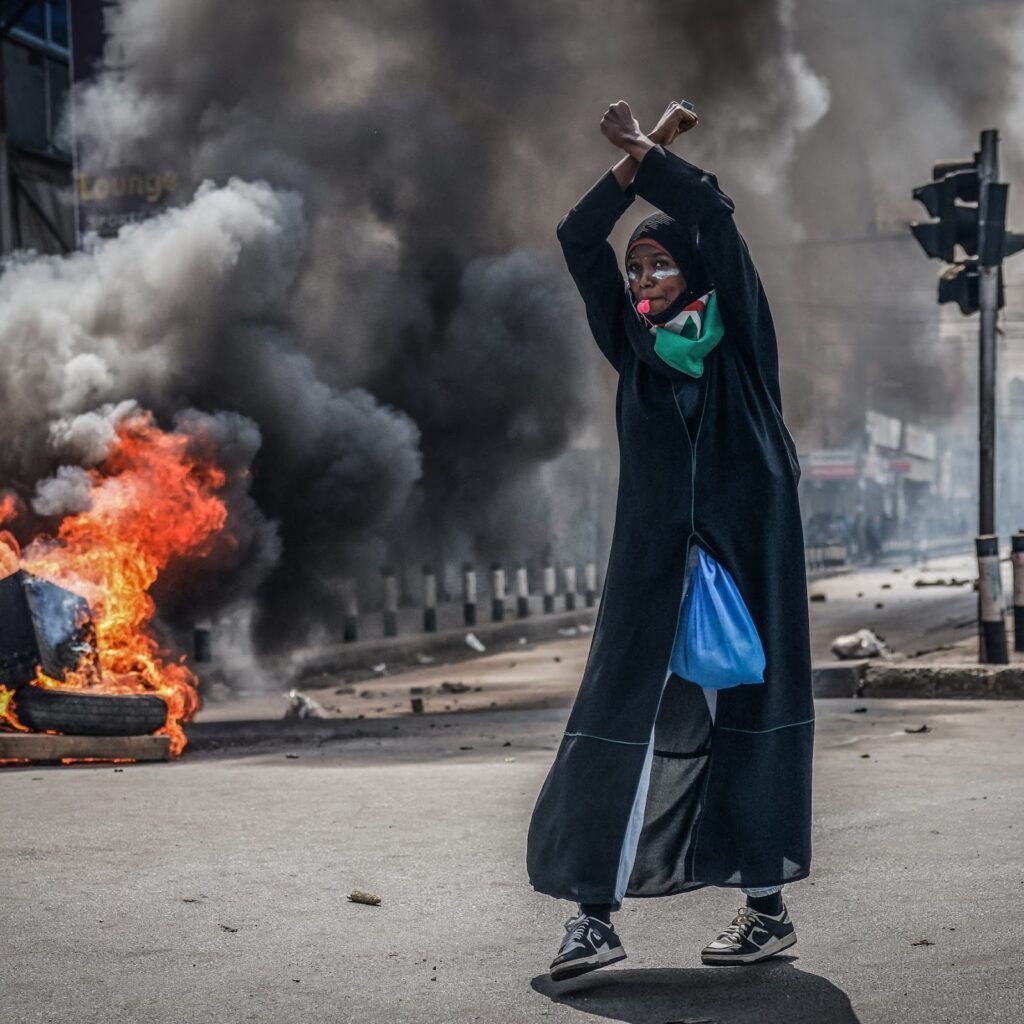
Female protester at the scene (Photo by Thuso Van Zyl, via X)

Kenya’s Independent Policing Oversight Authority (IPOA) has taken up the responsibility of investigating police activities during last year’s and this year’s protests. The body has successfully tracked down 6 men, including police officers, who are connected to the death of Albert Ojwang.

The coverage of this year’s protest was halted by the government after the Communications Authority of Kenya ordered all television and radio stations in the country to stop broadcasting live coverage of the march. 

Several Kenyan broadcast stations that proceeded to offer live coverage of the protest despite the order from the CA were taken off air, however, after a court in Nairobi suspended the ban, broadcasting commenced in those stations.

Responding to this order, the Kenya Editors’ Guild stated in a press release that the “CA is actively undermining judicial authority and reopening the door to unconstitutional state censorship.”

Many youths, particularly those in African countries, have reacted to the protest in Kenya, stating that the courage of Kenyan youths is admirable. One X user posted, “All eyes on Kenya please, they are having a historic Gen-Z-led protest…”

The government’s present efforts to restrict protests in Kenya make many citizens believe the war is far from being over, and with the recent abduction of another blogger, Ndiangui Kinyagia, the youths continue to demand justice on social media using the hashtag #FreeDaguin.

A Kenyan activist, Abigail Arunga, who spoke with Yuvoice, expressed that this could spiral into another protest with the upcoming national holiday on July 7, Saba Saba, which was historically a protest day in Kenya.

No Kings Rally Draws 1,400 in Idaho: A Protest Movement in Red America

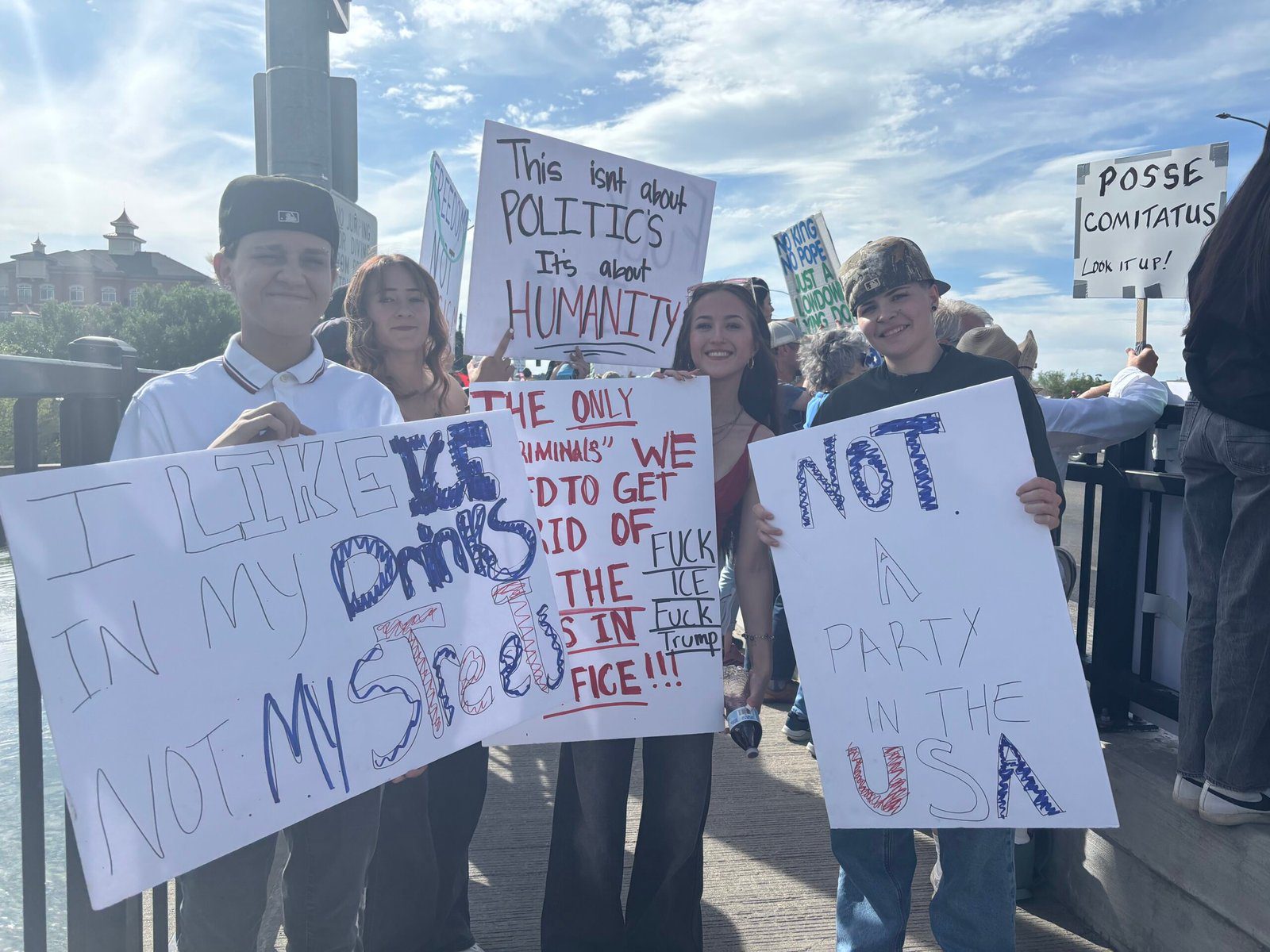
On June 14th, a large crowd of Idaho residents held their No Kings Rally in Bonneville County, Idaho Falls. The event took place on Broadway Avenue near the Japanese Friendship Gardens. Protesters began to gather around 4 PM MDT with signs and flags, chanting the phrase “No More Kings” as they stood on both sides of the bridge overlooking the Snake River.

Cities across the United States participated in No Kings Day, a movement that has now become one of the largest protests against a president in U.S. history. No Kings Day was a nationwide act of demurral, organized by the 50501 movement to oppose the actions of the Trump administration, which many Americans have observed to be autocratic or resembling the rule of a king. It was expected that many of these protests would be held in cities in more Democratic-leaning states—like Philadelphia, Atlanta, and New York—but what do rallies look like in predominantly red or Republican states?

Idaho Residents protesting at No Kings Rally by Gracie Leavitt

Idaho Residents protesting at No Kings Rally by Gracie Leavitt

This rally had more than 1,400 individuals present to share their voices. The event was planned a month in advance, set to occur on both Trump’s 79th birthday and the U.S. Army’s 250th Anniversary Parade. 

One of the main coordinators of the event and Idaho resident, Miranda Armenta, spoke about her personal motivation to help facilitate the event and her experience with activism:“What prompted me was the blatant misinformation the Trump administration is spreading. Convincing Americans we aren’t a democracy. Convincing Americans and those here [that they] aren’t allowed due process. Convincing America rallies and protests are just riots that are well funded. All these conclusions are wrong about us, and I want to battle the misinformation with education.”

Armenta said she began advocating during the 2016 Trump administration—a common sentiment shared by some of the Idahoans present. 

One of the participants, Kris Burnham, expressed that her frustration began early on: “I’ve been frustrated with Trump since his first presidency. I feel like the things that are happening in the United States are so egregious that we have to take any time and chance we can to come out and let our voices be heard. We need people to know this isn’t right; this isn’t normal. There’s this continual stream of lies that are going out to a lot of people, and I feel like events like this have to happen to let people know that it’s not the truth. That’s why I’m here.”

Idaho resident Kris Burnham advocating at the No Kings Rally by Gracie Leavitt

Though all the protesters present were advocating for the same cause, many had specific issues they highlighted through their decorated signs and banners. Some of these included information about reproductive rights, LGBTQIA+ rights, and environmental awareness. One of the younger protesters, Gavin McClain, said he was there specifically advocating for trans rights. Annette Harker, a resident of Idaho, was trying to spread awareness of local opportunities by offering documents for nonpartisan voter registration, ballot initiatives, volunteer opportunities, and more.

Idaho residents displaying their signs at No Kings Rally by Gracie Leavitt

Idaho residents displaying their signs at No Kings Rally by Gracie Leavitt

The protest lasted for two hours, ending around 6 PM MDT. It was, overall, a peaceful event that encountered little resistance from counter-protesters—an event that reflected many others across the nation in both Republican and Democratic states, united for a common cause.