Screw the Standard-Issue Labeling Machine

Message: “Aunt nell, Nanti hettie. Dooey daiture and quinque, parker, Bona lavs, ducky. “
Polari translation: Listen, I am not straight. In 2025, I give you my best wishes, my dear.

In high school gym class, I often overheard conversations about sexual encounters, stories, ‘advice,’ and asking questions. I remember in ninth or tenth grade, a friend asked me questions about sexual experiences due to my being in a relationship. I felt uncomfortable, as this wasn’t something I wanted to discuss out in the open. I also didn’t want to discuss what started occurring in my life at 17 (that I hadn’t yet  fully processed). Sex was an uncomfortable topic. Romance was different.

Finding the right words or labels

I had always felt romantic attraction towards others. My first crush was on a boy in my kindergarten class, and I realized in sixth grade that I was attracted to girls. Throughout my life, I thought of romantic attraction, not sexual attraction, as a vital component of a relationship.

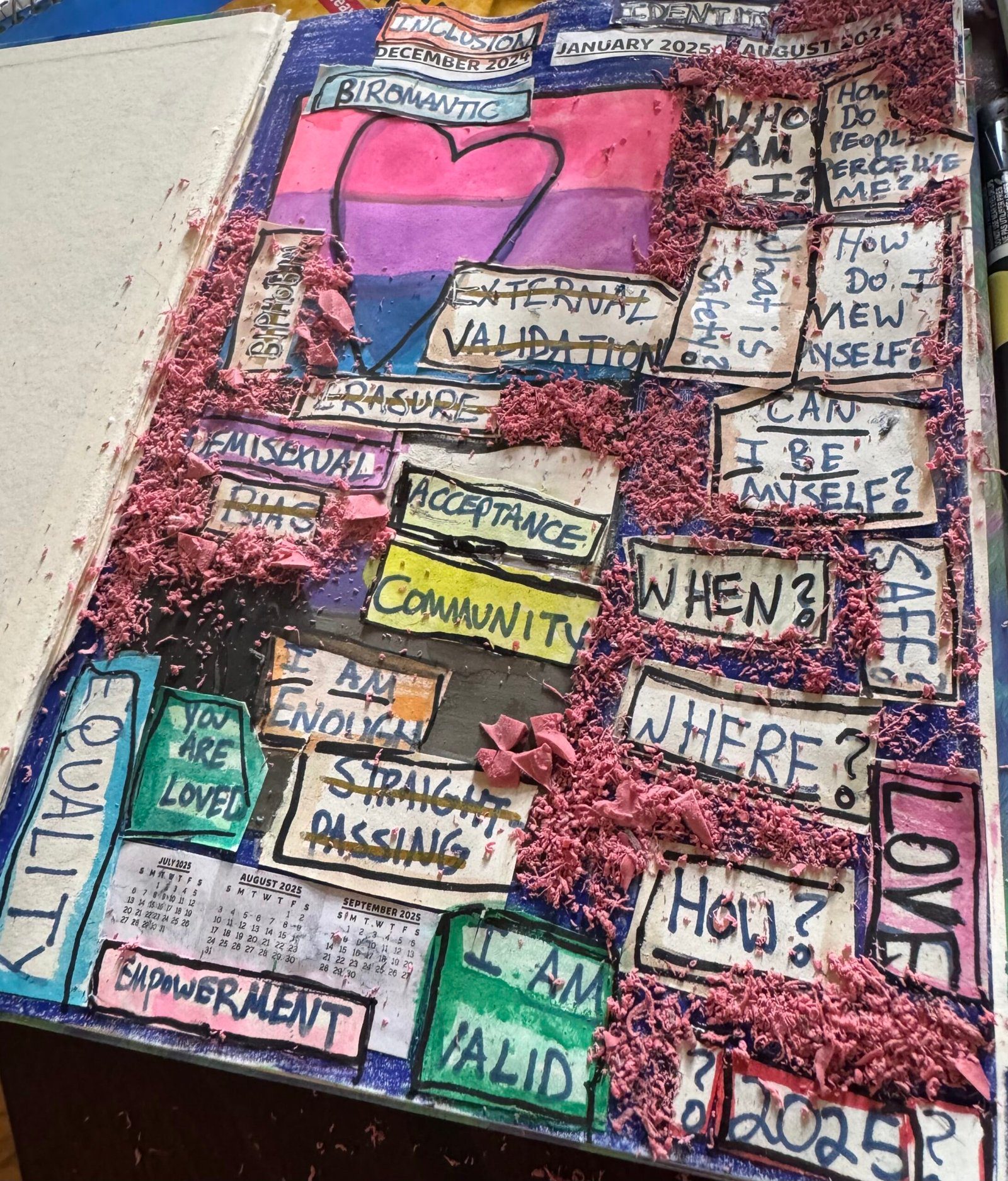
In seventh grade, I discovered the label bisexual. That identity lasted eight years, since I didn’t know there were other options to define myself. Earlier this year, I reconsidered if the label I had worn for so long was accurate to who I am. After thinking it over, I faced that the most accurate way to identify myself was biromantic and demisexual.

Biromantic is described as “being romantically attracted to more than one gender, not exactly in the same degree, same time, or in the same way.”

Biromantic to me means that I am romantically attracted to others, just not in the sexual sense.

Demisexual can be defined as “experiencing little to no sexual attraction without a strong emotional or romantic connection, falling under the ace umbrella (Asexual).”

To me, this means that I’m only sexually attracted to someone after thoroughly getting to know and trusting them on a deep, romantic level. I’ve never viewed myself as someone who could have a one-night stand or a friends-with-benefits situation.

For the past five years, I’ve reconsidered if it’s safe for me to be authentic in terms of my sexuality. With the rise of anti-LGBT laws and bills, I’m afraid to be open about it in public. If I’m with my close friends and in a safe environment, I’m able to speak about it in detail. Without my community, I’d feel lost. 

The feeling of community does not always take the form of a connection that exists in person, since there are online friendships I hold dear to me. For basically ten years now, I have been an active member of the fandom that surrounds two of my favorite YouTubers, Dan and Phil. 

Many within the fandom (phandom) are also LGBTQIA+. In addition, Dan and Phil themselves are queer individuals, and foster community within their fan base. This has been a positive space for me since I was thirteen, and first discovered my attraction to women/feminine-presenting people. 

A friend of mine who I first met in the phandom once exclaimed while hanging out, “I’m here, I’m queer, I’m gay, and I slay.” This is an example of inclusion within the phandom. 

Although I’m afraid to share my identity in some social situations, I have a safety net. The same net simultaneously protects and isolates me. Two years ago, my fiance and I became engaged. Due to bias and biphobia, I’m often viewed as straight because of my fiance’s gender. 

For example, a classmate in high school asked me if I was “still bi” after beginning my relationship with my now-fiance. I’m sometimes not considered part of  the LGBT community as a result of this relationship. That’s isolating.

Erasure is a concept that I internalize, and I have a difficult relationship with it. It makes me feel uneasy knowing that others dictate my identity. Being part of the community is part of my identity. The intersectionality of all my identities live within me: I am a woman, biromantic, demisexual, neurodivergent, and disabled — all at the same time.

Image of paints that make for a rough rainbow
(Image courtesy of Steve Johnson on Unsplash)

The world we live in now

However, in this current climate, I’m privileged to have that safety net of being straight-passing. I am outwardly protected against hatred in some ways, but still discriminated against. 

After a situation that happened to me a few years ago at a local restaurant,  I’m scared to wear pride clothing. A nearby city didn’t have their first pride celebration until 2019. I know that not everyone in the area supports people like myself. 

That protest during senior year

During my senior year of college last year, students found out about a restrictive policy that was passed by the board. This policy stated that transgender, trans, and nonbinary students were no longer eligible for admission; many of my former peers are trans and nonbinary.

At a campus event with a guest speaker, I felt unfairly silenced. We were told we couldn’t speak out, couldn’t interrupt the speaker, yet weren’t allowed to leave yet. Students who weren’t seniors protested the policy by wearing all black and accessorized with pride flag pins. But, I was a senior. 

Part of me knew that the college administration was restricting students, but part of me didn’t know to what extent. I knew I needed to use my voice for good, since the restrictions were even stricter for students who were not closer to graduating. People in my life warned me about protesting, told me to not get myself in trouble. I didn’t care, because it was my senior year and knew just one extra voice could make a difference. I crossed that line almost daily, every time the administration made changes. I constantly worried that I would be called into the dean’s office, but thankfully I wasn’t.

I was surprised to find out how restricted I was as a student, but not shocked at the same time. I believe I was surprised that the administration thought so low of students, as many of us would not have even attempted to interrupt the speaker — without being told not to. I felt a sense of disconnection between how we as students viewed ourselves and our peers vs. how the Admin viewed us. The local police showed up to the Annual Founder’s Day event after the meeting, without our knowledge. I felt as if Admin viewed anyone who spoke out as a threat, when most people were not. 

Some faculty were supportive of students, and I understand why some were not in the position to risk their jobs in order to support us. 

In response to feeling shut out before, that same month I attended a protest on campus where students joined together, raising our voices to “Rescind the policy.” The administration approved the protest ahead of time. It was student-led, with fixed guidelines allowing us to shout approved phrases, hold signs, and only protest during the approved time slot. The protest coincided with the week that a board of directors meeting was occurring on campus. Once the meeting was over, we could no longer protest.

Following the protest, I joined a few others who were planning on speaking to a local reporter.  I didn’t know if I would be punished for speaking out afterwards, but I took that risk. Loved ones warned me not to do it, saying I would get in trouble. However, after the way the campus climate had shifted quickly under the appointment of a new commander, getting in trouble was the least of my concern.

Despite graduating from college and leaving that environment, I face bias and discrimination still, but primarily due to other parts of my identity.

Anxiety comes upon me whenever I see red MAGA banners in nearby cities or when I come across articles online that mention politicians’ stances. Anxiety creeps in when I visit cities that are dominated by primarily anti-LGBT institutions.

I often don’t tell others about my sexuality upon meeting them since I cannot be sure of their intentions. I wonder if I can attend local pride events — if it’s worth the possibility of being targeted online by someone from my hometown who is passionate in their anti-LGBT sentiments. How accepting a particular state is a variable in determining where to relocate. 

As well as this, I never know what will happen to my loved ones who are part of the community in 2025. I wish there were protections in place for every LGBTQIA+ individual. I wish I could foster that progress.

How I define progress and resistance

I may be ridiculed in public when I wear a pride shirt, but I know my experience isn’t the same as LGBTQIA+ people in other states or around the world. I may have been outed in seventh grade — and called a slur when I publicly came out as bisexual on instagram in ninth grade — yet, I cannot compare my experience to those who were queer activists in the 60s, 70s, and  onward. I don’t know what it’s truly like to fear my life on the daily for who I am.

I can’t relate to the community members who spoke a code language for decades in order to share everyday encounters with their friends. There are no direct terms for biromantic and demisexual in this language. Thus, I most likely would have been referred to as bibi palone (bisexual woman). Polari represents the history of the community during one of many  dangerous time periods for those in the LGBTQIA+ community. 

Survive and thrive

The historical basis for pride was to stand up against injustice, fight for those who can’t do so themselves, and make a difference. Pride at its root is about being authentic, even when social barriers are in place.

I’m not suggesting that others outside of myself should necessarily tackle injustice, as individuals exist in different circumstances than myself. I myself am sometimes worried about wearing pride clothing or accessories. Further, fostering change is not a monolith. It can be carried out through different methods.

Prioritizing well-being and self-care may be the only form of autonomy for individuals. Sometimes, resistance consists of survival and, eventually, thriving. Being true to who I am makes a difference. 

I’m very glad to be able to live with my fiance now. Right now, for me, being myself is resistance enough. 
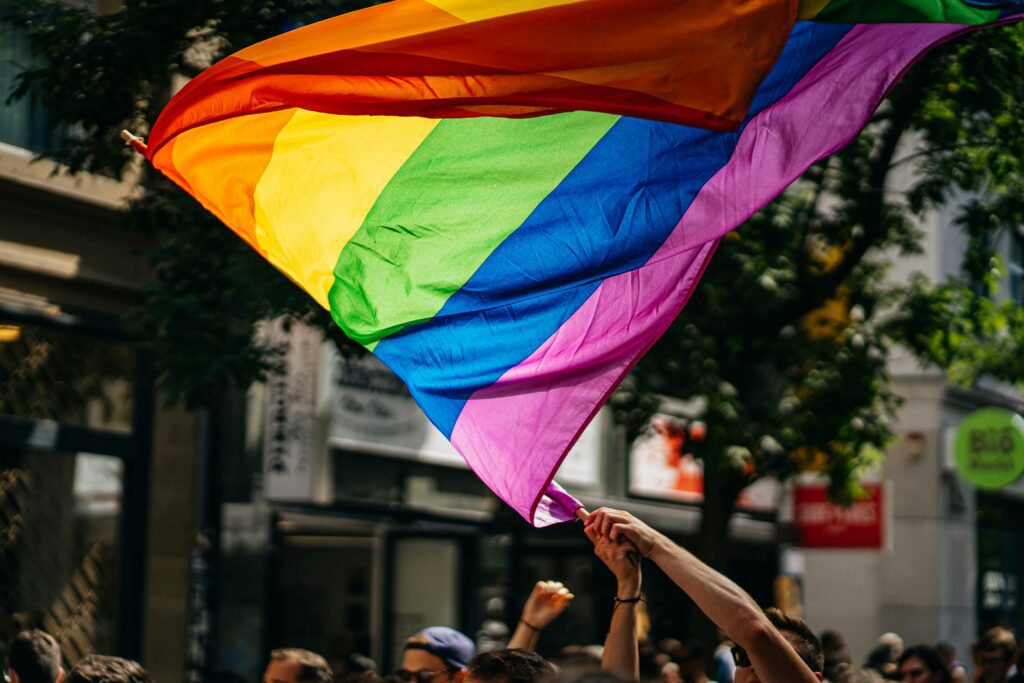
Arms waving a glowing pride flag in the wind
Image courtesy off Raphael Renter | @raphi_rawr on Unsplash

Federal Prosecutors Give Brazil 45 Days to Fix Nation’s Digital Accessibility

In September, the Federal Prosecutor’s Office (MPF) demanded that the federal government regulate Article 63 of Brazilian law within 45 days, aiming to increase digital accessibility. Ten years after the law was enacted, the provision has never been regulated, which prevents the establishment of mandatory standards and penalties for those who fail to comply.

A survey by the Brazilian Institute of Geography and Statistics (IBGE) revealed that only 3% of the country’s websites are considered accessible. Data like this shows that companies’ negligence toward this legal requirement remains a persistent issue, one that not only excludes part of the population but also overlooks its competitive market implications.

Given this scenario, it is essential to understand what digital accessibility is: the creation of environments, platforms, and content that can be used by anyone, regardless of physical, sensory, cognitive, or social conditions. This includes compatibility with screen readers, color contrast, image descriptions, captions, keyboard navigation, and sign language resources.

The most widely adopted international reference is the WCAG (Web Content Accessibility Guidelines), which defines the standards that websites and apps must follow. By regulating Article 63, Brazil intends to finally establish similar parameters.

Who is most affected?

With the advancement of the internet, it has become increasingly common for essential public services to be digitalized. Over a 30-year period, the digital evolution has been extraordinary . Today, it is possible to pay bills from anywhere in the world, without going to a bank or waiting in line. This shift is seen as positive, as it speeds up tasks and makes mobility more practical.

However, the central question remains: is this convenience accessible to everyone?

Recent IBGE data shows that 20.5 million Brazilians are still considered digitally excluded because they do not use the internet. These individuals are primarily older adults, people with disabilities, and people with low education or income levels. Democratizing this access is essential so that internet use does not become a privilege, as the online world is now central to research, leisure, creativity, and bureaucracy.

The lack of digital accessibility directly affects citizens’ lives. Failures in apps and digital domains cause many Brazilians to miss out on benefits and lose important deadlines because they cannot complete basic steps on digital platforms. In many cases, people must give up their autonomy and rely on others, exposing them to vulnerabilities that could have been avoided with more inclusive design.

This situation became evident in 2025, when the Federal Prosecutor’s Office investigated the accessibility of Brazil’s main government website, https://gov.br, and deemed that the platform’s facial recognition step was not accessible enough for visually impaired individuals.. Even after the addition of features such as a voice assistant and extended validation time, the service was still not considered adequate by the MPF.

In an exclusive interview with Yuvoice, Joyce Rocha shared her digital experience as an autistic woman. The accessibility specialist highlighted that companies’ disregard for digital inclusion largely stems from the ableism embedded in society, which seeks to undermine the independence of people with disabilities.

“This belief comes very much from ableism. Many think there is no need for such services, assuming these individuals depend on ‘third parties’. […] They are condemned to be seen only as vulnerable.”

Joyce also stresses the importance of sensitivity during the creation of these resources. With the rise of artificial intelligence and the automation of accessibility by many companies, Rocha believes that much of the design’s human sensitivity is lost during product transcription, directly affecting user experience.

Future outlook

The expansion of accessibility and the tightening of regulations are not limited to Brazil, but are happening worldwide. In June 2025, the European Accessibility Act (EAA) came into force, establishing mandatory legal requirements aimed at eliminating technological barriers and ensuring equal access to digital services.

In the United States, the ADA (Americans with Disabilities Act) has for years established legal accountability for companies that fail to ensure accessibility in their products and services.

With the growing enforcement of digital inclusion, companies are prioritising not only the inclusive aspect but also in the pursuit of market competitiveness. One example is Microsoft, which, in response to regulatory developments, redesigned its products and documentation in advance to implement new inclusive features. The company’s approach shows that accessibility is not only a matter of rights but also of market strategy, where those who adapt quickly gain an advantage.

Dragged

She’s wrapped around the toilet,
face pressed into the cold, plastic lid,
tapping nails against the bowl–
yellow where the press-ons have popped off–
a fast rhythm, like the heartbeat in her head.

She can’t remember
switching from fast food to dry heaves,
but she does recall her folks’
hazy hours-long road trips in the old
broken-roll-down-window machine.
Cold coffee in paper cups, sulfur and spray deodorant,
AM talk radio hosts cut up with static and
bursts of fresh air as ash leaves the front windows.
Memory is sticky in her lungs.

There she sits
stinking of sweat and smoke,
near empty pack tucked into her bra;
shoes kicked off by the stall door,
stationary as the world moves around her
like lake water.

For the first time in forever,
for the third time this week,
she prays to God.
Swearing, cursing and bartering:
she’ll be nicer to the new neighbors–
and the old ones too–
she’ll swear off drinking on work nights
and start working on herself tomorrow
if he’ll just make it go away.

But saliva rushes against her teeth, and
there’s lightness in her pounding head, and
her stomach muscles quiver, and
tobacco lingers in her nostrils, and
she knows he can’t help her tonight.

Five Years After Backer Beer Contamination, All Defendants Acquitted for Lack of Evidence

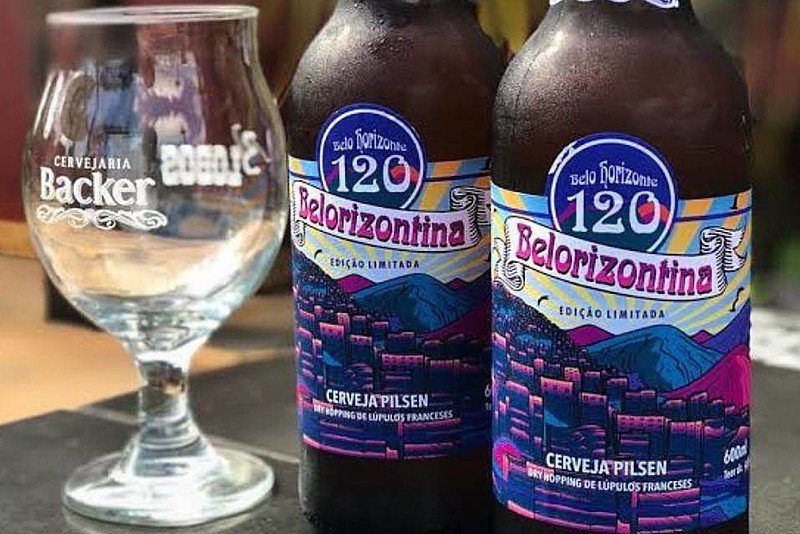
Five years after the discovery that beers from the Brazilian brand Backer were contaminated, an incident which caused the deaths of ten consumers and left 19 others with permanent injuries, all defendants have been acquitted due to insufficient evidence.

The decision was issued by the 2nd Criminal Court of Belo Horizonte on November 4, 2025. The justification was that there was not enough proof to hold any of the accused personally responsible. According to Judge Alexandre Magno de Resende Oliveira, the complaint filed by the Public Prosecutor’s Office failed to demonstrate “who, individually, acted or omitted themselves in a criminal manner.”

Background

The case began in January 2020, when several people were hospitalized in the Brazilian state of Minas Gerais with symptoms such as kidney failure, blindness, and neurological disorders. Investigations revealed that all victims had consumed beverages produced by Backer Brewery, based in Belo Horizonte.

Reports from the Civil Police and Anvisa (Brazil’s National Health Surveillance Agency) confirmed the presence of the toxic substances diethylene glycol and monoethylene glycol, both commonly used as antifreeze. According to the investigation, the contamination resulted from a manufacturing defect caused by a leak in the cooling system that allowed toxic fluid to mix with the beer.

At least ten deaths and 19 severe injuries were confirmed. Consumption of the contaminated beers led to permanent sequelae, including vision loss and neurological damage.

At the time, the Minas Gerais Public Prosecutor’s Office (MPMG) charged ten individuals linked to Cervejaria Três Lobos, the company that owns the Backer brand, with manslaughter, bodily harm, and crimes against consumer relations. The defendants included company partners, directors, and production and maintenance technicians.

Initially, the owners were accused of having knowingly taken the risk of contamination by keeping the factory operational despite technical failures. However, two of them were acquitted after evidence showed they had no management authority within the company. The third partner, responsible only for marketing, was also acquitted for having no direct involvement with product manufacturing.

Regarding the six engineers and technicians, the judge concluded that all were subordinate employees without decision-making power over the industrial process. The court also noted that responsibility for the refrigeration system lay with the technical supervisor, who had since passed away, and the industrial operations manager, who was not charged.

The tenth defendant, accused of perjury for allegedly lying about a label replacement at a supplier, was also acquitted under the principle of reasonable doubt, due to lack of concrete evidence.

In summary, the court found no individualized evidence of criminal negligence that could justify a conviction, even though the episode was acknowledged as a systemic failure within the company.

Aftermath and Civil Liabilities

Despite the criminal acquittal, Cervejaria Três Lobos still faces civil obligations. In July 2023, the MPMG reached a compensation agreement with Backer to provide financial reparations to the victims and their families. The deal stipulates payments of R$ 500,000 per victim and R$ 150,000 per immediate family member for material and moral damages.

So far, no victim has received payment, as Backer is undergoing judicial recovery (similar to bankruptcy protection), delaying compensation. The company maintains that the contamination was accidental and denies ever using toxic substances intentionally in its brewing process.

The acquittal has shocked victims and their families, who remain without compensation or accountability for the tragedy. Speaking to O Estado de Minas, Mirza Quintão Utsch, daughter of victim Antônio Márcio Quintão de Freitas, who died after drinking Backer beer on New Year’s Eve 2020, said:

“It’s extreme negligence to have a leaking tank, poison so many people, and not be held responsible for it.”

Despite the verdict, the Public Prosecutor’s Office announced it is considering an appeal to the Minas Gerais Court of Justice (TJMG). If accepted, the acquittal could be upheld or partially overturned, leading to a new trial. Until a final conviction is reached, all defendants remain free.

Perfectly Imperfect

As someone who grew up in a family that values excellence, I was preoccupied with perfection for most of my life, whether it was in school, relationships, or everyday life. I set impossibly high standards for myself, and I thought that only through flawlessness could I achieve success and happiness. It wasn’t until I hit a breaking point that I realized the desire for absolute perfection was what kept me from finding true contentment and success. It was only when I embraced my defects did I achieve a better outcome than I could have ever imagined.

All became clear when I was 23, my life marked by ambition and self-doubt. I had just graduated from a world-class Israeli university with a postgraduate degree, and was immediately seized by the ambition to get a PhD. My first job was in a biological research company in the UK where I was mandated to research a study titled Quorum Sensing Disruption by Urban Plant Volatiles: A New Avenue for Anti-Biofilm Therapy in Multi-Drug-Resistant Pathogens. The job was everything I had hoped for — challenging, fast-paced, and full of opportunities to prove myself. But along with the excitement came an overwhelming fear of failure. However, I was determined to show my worth, to stand out, to be perfect.

At first, I was meticulous in everything I did. Every email had to be perfectly worded, every presentation flawless, and every project completed with a near-obsessive attention to detail. I spent late nights tweaking reports, overanalyzing every decision, and second-guessing myself. But no matter how hard I tried, it never felt like I had done enough. My colleagues seemed to work more with less effort, and yet their work was praised just as much as mine, perhaps even more so. I couldn’t understand it.

My performance reviews, while generally positive, always left me feeling like I wasn’t living up to my full potential. I began to notice something unsettling: I was burning out. I would go to bed exhausted every night, only to wake up feeling the same sense of anxiety and pressure as the deadline approached. I was trapped in a cycle of trying to be perfect, yet never feeling satisfied with the outcome. In my mind, the only way to get ahead was to be flawless in everything I did, but it was taking a toll on my mental and physical health.

The turning point came during a major presentation to a group of executives. I had spent weeks preparing, rehearsing, perfecting the slides, and running through every possible scenario, yet the real challenge lay in the topic itself: a combination of plants, microbiology, and medicine. As a  microbiologist, I had to be able to face and argue successfully in front of a panel consisting of individuals from a multidisciplinary field. On the day of the presentation, my nerves were at an all-time high. I could barely sleep the night before, and when I woke up, I had a knot in my stomach. I was convinced that one small mistake would ruin my chances of advancing in the company.

As I stood in front of the panel, I felt the weight of everyone’s eyes on me. I began the presentation, but my hands were shaking, my voice trembling. Halfway through, I stumbled over my words and froze. The silence in the room felt deafening. I could feel my face flush, and my mind was racing. “This is it,” I thought. “This is where it all falls apart.” But then, something unexpected happened. One of the executives, a woman named Victoria, spoke up. “Hey, it’s okay,” she said with a smile. “Take a deep breath. We’re all human. Let’s keep going.” At this point I remembered what my master thesis supervisor, Dr. Gidon Winters once told me: “Fredrick, everyone feels nervous, even after having published several peer-reviewed articles and made countless presentations, I am often nervous while presenting in a room full of people.”

An image of two monitors and long, skinny microphones atop a conference table with a podium in the background.
(Image courtesy of Werner Pfennig via pexels)

That moment, so small yet deep, changed everything for me. The pressure I had put on myself to be perfect, to avoid any flaws, was suffocating me. Victoria’s kindness and her understanding of the situation made me realize that mistakes were not the end of the world. They were simply part of the process. I took a deep breath and continued the presentation. My hands still trembled, but I felt a sense of relief. The rest of the meeting went smoothly, and despite my initial panic, I received positive feedback, and the paper was ranked as one of the best research papers in the company. I realized then that the perfection I had been striving for wasn’t what mattered. It was how I handled the imperfections that made the real difference.

After that presentation, I started to shift my mindset. Instead of obsessing over every little detail, I began to focus on progress rather than perfection. I allowed myself to make mistakes and learn from them. Instead of spending hours perfecting a report, I focused on completing tasks efficiently and learning from feedback. I began to understand that imperfection didn’t equate to failure — it was an opportunity to grow.

Over the next few months, I noticed a change in how I approached research and work in general. I was more relaxed and more present, and I wasn’t constantly living in fear of making a mistake. I began to take on more challenging projects, and I wasn’t afraid to take risks. Some of those risks didn’t pay off of course, but others turned out to be some of the most rewarding experiences of my research. My team noticed a difference, too. I became a better collaborator, more willing to ask for help when I needed it, and more open to other people’s ideas.

But the benefits weren’t limited to just my research. I started to apply the same principles of imperfection to my personal life. I had always been self-conscious about my appearance, constantly comparing myself to others and trying to achieve an unattainable standard of beauty. I spent years dieting, exercising, and obsessing over my appearance, only to end up feeling frustrated and inadequate. I realized that I was never going to look like the models in magazines or the influencers on social media, and that wasn’t the point. What mattered was how I felt about myself.

I began to embrace my natural features, faults and all. I stopped worrying about every little flaw and started appreciating what made me unique. I no longer measured my worth by the number on the scale or the reflection in the mirror. I started to focus on things that truly mattered — like spending quality time with family and friends, pursuing hobbies, and learning new skills. And, most importantly, I permitted myself to be imperfect.

Sometimes I forget that I’m allowed to be flawed, that I’m allowed to be human. Perfection used to be an addiction forced onto me because everyone chased it. However, since I strived to accept my flaws, my drive has been different. I want to make mistakes and learn from them. I want to develop a better understanding of everything. I want to be held accountable for every mistake and bad decision, and to be gifted with the grace to grow. I have done a lot of imperfect things — from lying to breaking others’ hearts to ghosting people with no reason — but that’s the beauty of discovering myself.

I learned that all these faults don’t define me; instead, they are stepping stones to meeting the version of myself I can honor. I realized that I had embraced a part of myself that disguised itself as good, but it was the version of myself that prevented me from appreciating who I am. I have taken accountability and changed my ways, character, and behaviors. It’s funny how we often think that perfection is the key to success, but in reality, it’s our imperfections that make us human, and it’s through those imperfections that we truly grow.

Eventually, I discovered that it’s not about being flawless. It’s about showing up, learning from the mistakes, and being kind to yourself along the way. When I let go of the need to be perfect, I found not only better outcomes but also a sense of peace and contentment that I had been desperately searching for. Sometimes, it’s in our imperfections that we find our greatest strengths.

Brazil Faces Methanol Poisoning Crisis: 14 Dead and Dozens Hospitalized

Since last August, Brazil has been recording numerous cases of methanol poisoning due to illegal additions to beverages, resulting in several deaths. Beverage fraudsters add the highly toxic alcohol to reduce the costs of counterfeit drinks. Authorities continue to investigate  other possible hypotheses. In the last week of October, the Ministry of Health reported 59 cases and 14 deaths.

Methanol is an alcohol used by the industry as a solvent but never as an ingredient in beverages for human consumption. Recently, several countries around the world have experienced criminal poisonings due to methanol being added to alcoholic beverages. In 2024, the case of three British friends who died after consuming methanol-contaminated drinks in Laos made headlines in major newspapers worldwide. Until 2025, Indonesia was the country with the highest number of methanol poisoning cases, totaling 335 since 2019. In second place, India reported 140 cases, while Russia, with 121 cases, ranked third in methanol poisoning since 2019, according to data provided by Médecins Sans Frontières.

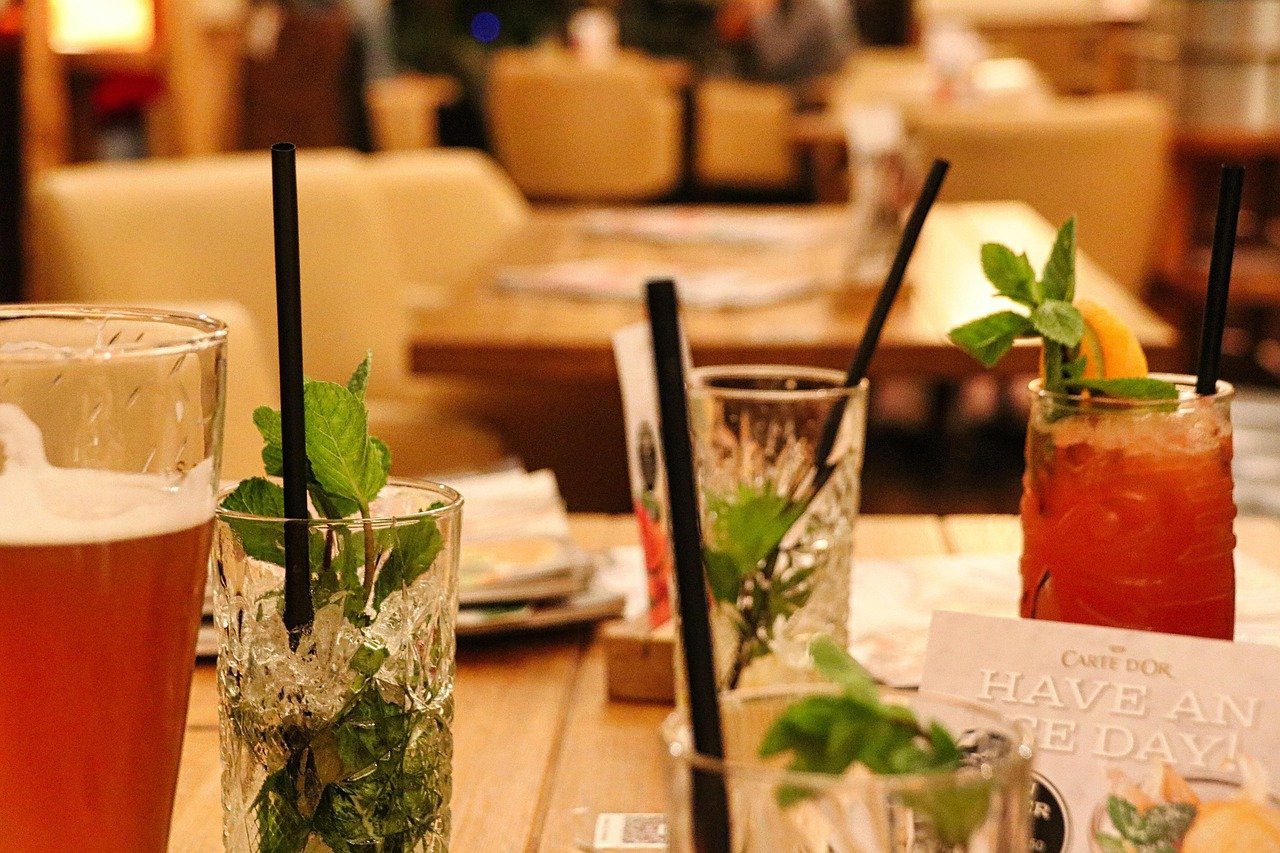
It is impossible for someone drinking a cocktail or even pure distilled and fermented beverages to know if methanol has been added to their glass. Both highly toxic methanol and ethanol, which is normally present in distilled and fermented drinks, are alcohols, making it difficult to identify them by odor or the colorless appearance of both.

After having three caipirinhas at a bar in São Paulo, in the upscale Alameda Lorena area, architect Radharani Domingos, 43, lost her vision in both eyes. Ophthalmologist Dr Fábio Ejzenbaum from the Santa Casa Hospital in São Paulo explained that the architect lost her vision permanently and emphasized the difficulty he had in delivering the news to the patient and her family. 

Dr. Ejzenbaum underscored  that abdominal cramping is one of the symptoms that go beyond what we know is expected after alcohol consumption, acting as an important alert to seek medical attention urgently. He also noted that early recognition and treatment, sometimes including hemodialysis, ICU admission, and acidosis control, are crucial.

Methanol added to drinks is metabolized differently from ethanol, as methanol is metabolized by the liver and turns into formaldehyde, which is highly toxic to the optic nerve and other organs and structures, such as the central nervous system, and  the kidneys. Formaldehyde is the substance used to embalm (preserve) deceased bodies, being very toxic to living beings.

The police are investigating several hypotheses, not ruling out the possible use of vehicle fuel alcohol, intentionally contaminated with methanol. That is, two offenses:

  1. Using fuel alcohol to add to counterfeit alcoholic beverages
  2. Adulterating fuel with the addition of highly toxic methanol, which is harmful even to car engines.

In the state of São Paulo alone, 66 people have been arrested for allegedly being involved in the counterfeiting of beverages with methanol. In early October, a clandestine factory was shut down by the São Paulo Civil Police in the ABC Paulista region, near the city of São Paulo. Brazilian lawmakers are evaluating changes in legislation to make the adulteration of food and beverages a heinous crime.

Earwax Test Developed in Brazil Can Detect Cancer Early, Study Shows

A study conducted by the Federal University of Goiás (UFG), a Brazilian public institution, shows that earwax-based tests can help indicate the presence of cancer in patients. The initiative, named Cerumenogram, received an honorable mention at the 2025 Capes Award.

The main advantage of the research lies in its ability to diagnose cancer early through a non-invasive, low-cost, and highly accurate approach.

“For oncology, we hope this helps improve people’s quality of life by preventing them from even developing cancer. It’s a simple, inexpensive, practical, and painless method,” said the study’s coordinator, Nelson Antoniosi Filho.

For these researchers, the earwax that accumulates in the ear canal holds enormous value. When removed and analyzed in the lab, it allows for the identification of changes in a person’s health.

“If our body is healthy, the chemical composition of earwax looks one way. If something is off, possibly indicating disease, that composition changes. So today, earwax is like a fingerprint of our health condition,” Antoniosi explained in an interview with Jornal Nacional.

The research began with diagnosing diabetes and detecting drug and pesticide intoxication through earwax analysis. The method was later adapted for veterinary medicine, allowing the identification of intoxications and even cancer in dogs.

The project has been ongoing for ten years in partnership with Amaral Carvalho Hospital, in Jaú (São Paulo), a cancer treatment center. Over time, results proved promising, and the test began detecting cancer in humans.

In 2025, a new discovery further excited the scientists: earwax experiments can identify pre-cancerous stages, enabling earlier and less painful treatment for patients. This breakthrough reinforces the importance of early diagnosis: the earlier cancer is identified, the greater the chances of a cure.

During testing, samples from 751 volunteers were analyzed, with 531 already undergoing cancer treatment. Among these, the test returned positive results for the disease. Of the 220 without prior diagnosis, only five showed atypical substances; all five were later confirmed to have cancer through conventional exams.

In an interview with Yuvoice, Nelson Antoniosi Filho explained that there is still no timeline for the test to become available for free in Brazil’s public healthcare system (SUS) due to regulatory processes. Therefore, it is expected to first reach private healthcare providers and public educational institutions.

“I want every public teaching and research institution in Brazil to offer this service to their communities. That’s how it should start, and then it can expand to the public healthcare system,” he said.

Nelson also emphasized the importance of public universities in achieving this milestone. He noted that funding and support from Brazil’s public education system are essential for revolutionary research, as such backing is rarely seen in private institutions.

“If it were a private university, I would never have approval for a project involving earwax. Do you think any private university would fund earwax research? At best, I’d lose my job for being insane!” he joked.

Currently, Antoniosi and his team are exploring the potential to detect neurological diseases such as Alzheimer’s and Parkinson’s through earwax analysis.

“We’re studying neurodegenerative conditions, like Alzheimer’s, Parkinson’s, and other dementias, which are also metabolic processes, to see if diagnosis is possible,” he told Yuvoice. “These studies aren’t finished yet, but we expect to conclude them within a year.”

This study highlights the strength of Brazilian science, especially research developed in public institutions, in driving scientific innovation. With new studies underway, the Cerumenogram project stands out as one of the most promising scientific initiatives in the country.

Former President and Brazilian Generals Arrested for Attempted Coup for the First Time in Brazilian History

The former President of Brazil, Jair Messias Bolsonaro, has been definitively sentenced to 27 years in prison by the Supreme Federal Court on the afternoon of this Wednesday (25), in Brasília, the Federal Capital ( where the military resided). There, the former parliamentarian and retired captain of the Brazilian Army will initially be held in a Federal Police superintendent’s office., There are no further appeals available for the defendants in this case.

Former President Jair Bolsonaro had already been preventively arrested by the Brazilian Federal Police at sunrise last Saturday, November 22, at his residence in a luxury condominium in the capital of Brazil, Brasília. The former president attempted to tamper with the electronic ankle bracelet that monitored him, using a welding iron, which led to his preventive arrest and the subsequent suspension of the house arrest he had been serving since August 2025, due to the alleged escape risk. Until then, the convicted could appeal the conviction in the process, but the deadline ended this Tuesday.

In addition to the former president, Generals Augusto Heleno and Paulo Sérgio Nogueira, participants in the former Bolsonaro government, will also begin serving their definitive sentences (21 and 19 years, respectively) in a military barracks. Admiral Almir Garnier will be held in a military radio station of the Brazilian Navy. General Braga Neto, who ran for vice president in the 2022 elections, had already been in preventive custody for 11 months in a barracks in Rio de Janeiro, where he will remain. Former Minister of Justice Anderson Torres, who is not military, will go to the Papuda prison in Brasília.

The definitive arrest order was issued by Minister Alexandre de Moraes, the rapporteur of the judicial process that had already sentenced former President Jair Bolsonaro and others involved in an attempted coup at the end of 2022. At that time, Bolsonaro and the other convicted did not accept the electoral results of that year, which indicated the victory of the current president Luiz Inácio Lula da Silva and the unelection of thenPresident Jair Bolsonaro. It was the first time in Brazilian political history that a sitting president was unable to be re-elected to continue government. 

It is also the first time in Brazilian history that military personnel have been convicted for attempted coups. Brazilian historians point to up to nine coups since the end of the Brazilian monarchy. It should be noted that, whilst there is controversy among scholars regarding the counting of coups against the Republic, no fewer than nine coups have been cited.. In the 136 years since the abolishment of the monarchy, seven coups were successful, each with varying degrees of military participation.

In recent interviews with The Washington Post, three researchers paid attention to the unprecedented nature of the punishment of Brazilian military personnel. According to historian Lilia Schwarcz from the University of São Paulo, “Brazil carries two pacts of silence: the silence about slavery and the violence it produced, and the silence about the military. That’s why this case is so symbolic.” Carlos Fico, a professor at the Federal University of Rio de Janeiro, emphasized the aforementioned numerical issue concerning historical coups and, despite the high number, the absence of punishment: “For decades, I have studied more than 12 coups and coup attempts, and all resulted in impunity or amnesty. This time will be different…” Finally, political scientist Matias Spektor from FGV (Getúlio Vargas Foundation) points out the seriousness of the leniency against public officials who have the right to use weapons: “The country has never imprisoned anyone who had access to state weaponry. This is revolutionary.”

Dyeing to Learn the Color Code

My punk history

I wasn’t always into punk rock. The first genres that I was into were classic rock and metal. The first album I picked for myself was Guns N’ Roses’s Appetite for Destruction. My first concert when I was in the sixth grade was a Kiss concert. It wasn’t until I was at a friend’s house playing NCAA Football 06 that I heard my first punk song. The NOFX song “Jeff Wears Birkenstocks” came on, and I was instantly hooked. NOFX still stands as one of my favorite punk bands. Over the years I started getting into other sub-genres of punk and becoming interested in the culture. It wouldn’t be until recently, within the past six years, that I would get my first pair of Doc Martens. 

My boots

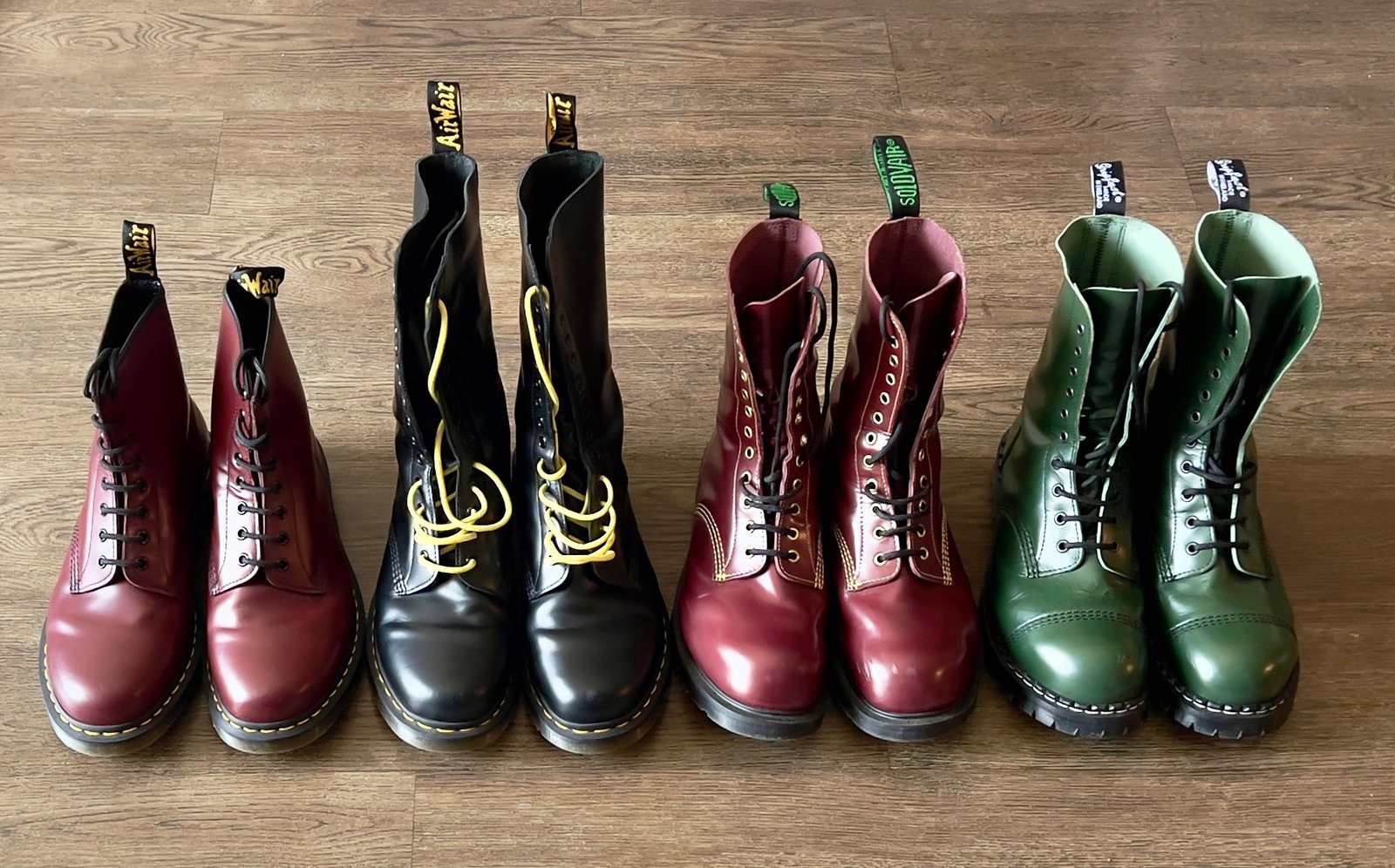
A pair of 1460 smooth leathers in cherry red were my first pair. I chose these  because they are a smaller boot, and seemed like less of a commitment in case I wasn’t into them. My only regret was not getting a more substantial pair first. My second pair, 14 eyelet 1914 Doc Martens, a taller boot, made more of a statement. This is the pair that would introduce me to colored laces and their importance. Unlike my first pair, which came with black laces, the 1914s came with yellow. There was a small paragraph explaining why yellow had become the staple for Doc Martens. It was chosen as a symbol against racism. There had been issues of extremist hate groups infiltrating the punk scene, which led to distinctions in lace color. I’m glad I read it because I almost made a crucial error.

White and red

Both white and red have strong ties to hate groups. White represents white power and subsequent ideologies, and red is for neo-nazi gangs. Red can mean the individual has committed a violent act. But red may also be worn by anti-fascists. Given the negative associations I’ll never sport either color, even if the meanings dramatically change. Not only do these colors represent things I stand against, I must consider the way I look. I’m a paper-white male who shaves his head. I’ve even been in the unfortunate situation of being greeted by a Huntington Beach skinhead gang member at the beach. I remember the greeting being something to the effect of, “Hey, brother.” I wasn’t even wearing anything that could be misconstrued. Black board shorts. It was simply because of my physical appearance and where I was. I ignored him and haven’t been back since.

Blue and green

Blue began as a way to identify individuals who had killed police officers, but I was unable to find evidence supporting this claim. And SHARPS, the group known for wearing blue, wore them as a symbol against racial prejudice and police brutality. Even though I align with those sentiments, the possibility of me wearing blue laces is low; I don’t want to be associated with groups of which I’m not a member. It reminds me of a biker bar near where I grew up. It was best not to wear red or green; the Hell’s Angel’s (red) and Vagos (green) MCs were known to go there. Running the risk of wearing the opposite faction’s colors could get me into trouble. Green is considered neutral in the States but can also be associated with anti-fascist groups in St. Petersburg. I’d rather err on the side of caution and forgo green altogether.

Black and purple

Black is the standard color and has no affiliations. It’s the color that is on three out of four of my boots. It’s a neutral lace that is always okay to wear. Purple is another color I would never wear, but not because of any negative implications. Purple laces are associated with gay pride. Being cisgender and straight, I wouldn’t find it appropriate to don these laces even in a show of support.

Narrowly dodging ignorance

Many people never give a second thought to the color of their shoelaces, even if they change them out for a new pair. When it comes to a pair of Docs or similar pair of stompers, lace color is significant. I almost made a mistake before I knew what each color represented. I came very close to buying a pair of white laces only because I thought black and white would look cool. Thankfully, I read that paragraph when I bought my second pair. I feel embarrassed about how close I came to being that ignorant; I hadn’t realized how many subliminal messages might be intertwined with the color of bootlaces until then, and I’m truly glad I found out before making such an error.

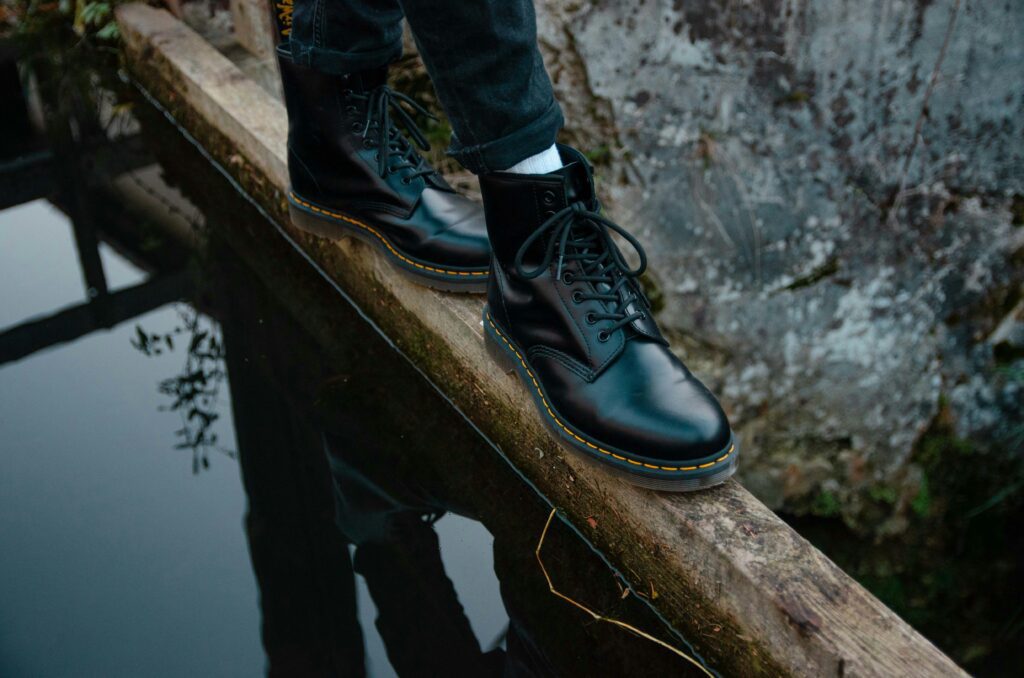
A person wearing black Doc Martens while walking along a wooden beam over water.
(Image courtesy of Kilian Seiler on Unsplash)

Am I Posturing?

Here’s an idea

Over the past year, people have asked me many questions about my health, then proposed how I should approach seeking medical answers. At this point, the suggestions and perspectives overlap, muddling all of the feedback into one processing & storage facility within my brain. I know people have good intentions, but. 

So it becomes complicated when there are so many factors that affect my ability to receive the correct diagnosis.

My health journey began in early summer of 2024, when bloodwork that was done during my voluntary psychiatric hospital stay indicated that part of my lab work was not within the “normal” range. I began experiencing widespread pain, dizziness, fatigue, and other symptoms after my lab results were examined. Since last summer, I have been limited in my mobility due to my symptoms, as I become extremely dizzy when my posture changes from sitting to standing. I know that my widespread pain and fatigue is because of my fibromyalgia, but I continue on my journey to receive the information that will allow me to further adapt in my daily life. 

Posture and diagnosis

After rounds of regular bloodwork, head imaging,  EKGs — plus two heart monitors — I do not have an official diagnosis for POTS (Postural Orthostatic Tachycardia Syndrome), yet it fits as “a group of disorders that feature orthostatic intolerance. Orthostatic intolerance is the term used to describe symptoms that occur when a person stands up and can be relieved by lying down.” I fit the criteria of having this condition, due to the fact that I become dizzy when standing, as well as my heart rate fluctuating before and after standing. Thus, my posture is part of the diagnostic criteria itself. Possibly. 

About two months ago, I decided to go on a walk around my neighborhood, ignoring my body’s intuition that I overexerted myself. As a result, I endured presyncope/syncope and collapsed in the grass a few streets over. Since then, I do not attempt to regularly overexert myself. When I reach the breaking point, I listen to my body. It isn’t safe to collapse in grass, especially when your heart rate reaches the 150-160  beats per minute range. I suspect that I have POTS, but it has not been officially confirmed by a healthcare provider. It’s often hard for me to tell if the symptoms I consistently undergo are from my fibromyalgia (pervasive pain) or from what aligns with POTS (standing symptoms). I am unsure of which specific condition it is, as it seems to be one of three conditions on the POTS spectrum.

Although I am 23 and still figuring out how to adapt, I have many interests and ambitions that fill up the time I have lost. Even with lost time I could have spent at college parties or social events, I feel proud of who I am, and who I am becoming. I have gained a deep fondness for accessibility initiatives and disability rights. Activism and advocacy has become a love of mine, and it’s something I often research, to inform myself on a deeper level.

Accepting and adapting

Being a disabled woman is part of my identity, something I have learned to take pride in. The disability community is my community — my connection to others who can relate to my experience. My health journey has changed my outlook on the world, as I continually consider elements of my everyday life that I previously did not think of. For example, in social gatherings, I bring snacks, water, a portable fan, and a foldable camping chair, just so I can comfortably participate. 

When traveling, I research the cities and their accessibility features. Will certain routes require more walking? Do certain hotels and buildings not have elevators? Do I need to bring my shower chair to the hotel? Are there seating areas inside and outside of popular destinations? Am I allowed to bring my own water bottle into museums? Depending on my energy level, I sometimes have to skip or delay traveling to further destinations within a city. 

Overcoming hurdles

I attempt to adapt as best as I am able to, but it can be very difficult at times when I am unsure of which accommodations & support needs to utilize.  In August of 2024, I purchased my first cane in order to independently support my balance when walking. Navigating a college campus was already challenging before I became more physically disabled, but it developed into something that was 10 times as difficult. 

The college I recently graduated from is known for its historic features. Translation: it was not the most accessible. 

For instance, traveling to academic buildings was extremely frustrating, as I would often have to cut through other buildings with fewer stairs to reach class. Moreover, I had to speak to several of my professors about having classes relocated to a different building, so it was easier for me to attend my courses. Going from my dorm that had an elevator to the cafeteria took me an extra six minutes with my route of shortcuts. Accommodating myself for one year on campus was not simple, yet I persevered and graduated.

Reality that is life

However, in less than six months, the grace period for repaying my undergraduate student loans will end, meaning I will start paying back my loans. I do not know if continuing to keep searching for verifiable results is a viable option for me in the near future, even though I view it as necessary.

To most, it’s just some writing on a piece of paper. Just something on my patient portal. Just words. People often ask me why I keep trying to figure out what is going on with my health, why I am getting myself into debt over it. I see it as something that is vital for myself. Wouldn’t I wish I didn’t have to owe a lot of money to doctors and hospitals just to figure it out. 

Taxed if you do, taxed if you don’t

That’s the reality of being chronically ill. It’s either I get myself into medical debt or go without knowing for the rest of my life. That’s the disability tax: the extra money that I put into healthcare and mobility equipment so I can thrive in this world. 

For myself, seeking a diagnosis is not about a label or just something that exists in my medical chart. A diagnosis will create the specific accommodations that will help me succeed. I need it. Accommodations are tailored, personal, and often based on your medical history. Without it, I will continue to have difficulty finding jobs I am able to perform as a result of the physical limitations my health has on my body. I aim to continue searching for a job where I do not have to stand for long periods of time or lift a lot of weight. Impossibly. 

I know I will eventually reach this goal, because I know I have a support system and will have better access to resources when I am no longer in central Virginia. 

I may be unsure of how my life will look in terms of my health, yet I approach this challenge through the lens of destigmatization and inclusion. I can accommodate myself to the best of my ability, while using my voice to speak up for those who cannot do so themselves. 

Small European robin with orange face and breast, calling out with open beak.
(Image courtesy of hotblack via Morguefile)

When life feels tough, I remember a quote that has helped me through hard times, “Embrace the void, and have the courage to exist” — Daniel Howell.  

To readers who can or will be able relate to my experience at some point — you are more than valid. You are seen, you are enough, and you belong. You will eventually have the medical results that you have sought after for so long. 

You are not alone in your journey. When you are ready, there will be others in the disabled community who will welcome you.