Parents: Surprise, They’re Human Too!

For many children, our parents are our whole world. They are the people whom we idolize most in the first few years of our lives. We romanticize them and expect nothing but the best from them.

Yet as we get older, there comes a moment or series of moments when we realize our parents aren’t quite as perfect as we thought they were. For me, I grew up with two parents in a rather “traditional” household: Dad went to work and earned a living, Mom stayed home and took care of me and my little sister. I always thought the world of both my mom and dad, my mom being the loving caretaker and my dad being the stern yet reliable working man. 

As I grew, I started to see the cracks, some more hidden than others. Arguments, money troubles, mistakes made — and slowly but surely, they eroded that idolized image of my parents, and I came to see them for what they were: flawed human beings. My mom and dad, the two people in my life who could do no wrong, suddenly had an unflattering light shown on them. While cartoons and the Tooth Fairy and all the joys of childhood distracted me from this for a time, every adult knows that whimsy doesn’t last forever. 

Their learned flaws

The parents who raised my generation came from a time when their parents’ words were law — children were meant to be seen, not heard. A parent could never be wrong. A parent needed to be a perfect role model so that the kids grew up to be perfect role models for their kids and the whole cycle would continue. If only life were so simple. 

I imagine for many people the sudden realization that their parents aren’t the epitome of humanity was a rather nasty shock, as it was for me. As that barrier breaks down and you see your parents as flawed human beings, it can become harder to abide by their words, when doubt creeps in over whether or not they’re correct in their views, actions, or behaviors. I held a lot of resentment against both my mom and dad for not being their “honest selves,” some of it earned and some of it due to a lack of understanding of just how difficult it is to be a parent. 

Arguments were swept under the rug, not properly dealt with and discussed. Those arguments would happen because resentment festered and bubbled. My family would not always openly discuss the real issues, instead dealing with the superficial ones while my parents still tried to make it seem like everything was okay. I certainly can’t blame them for wanting to give me a happy childhood, something they both had their own struggles with. Yet not discussing the real problems behind these arguments, sometimes oversharing in the middle of an argument because they had hit their boiling point, only made it more difficult to understand why they would fight if everything was okay. 

My parents had difficult childhoods, as did their parents before them. It’s hard to break cycles like that. Throughout their time raising me, my parents tried not to repeat the mistakes they saw their own parents make. At times they succeeded, and at other times they fell into the trap of trying to be perfect role models, making it all the more confusing whenever they struggled to uphold that impossible goal. There was no smooth transition from idolizing my parents to understanding they were just regular, flawed people.

Parents have a lifelong impact 

I don’t think my parents, or any parents for that matter, were wrong to put on a show at times and pretend everything was okay, even when it wasn’t. I have yet to have the privilege of being a parent, but I’ve worked with many kids and interacted with my nieces and nephews over the past ten years. If there’s one thing I’ve learned, it’s that a panicking adult does no good for a child. Maybe my parents knew that, too, and were just trying to protect me. 

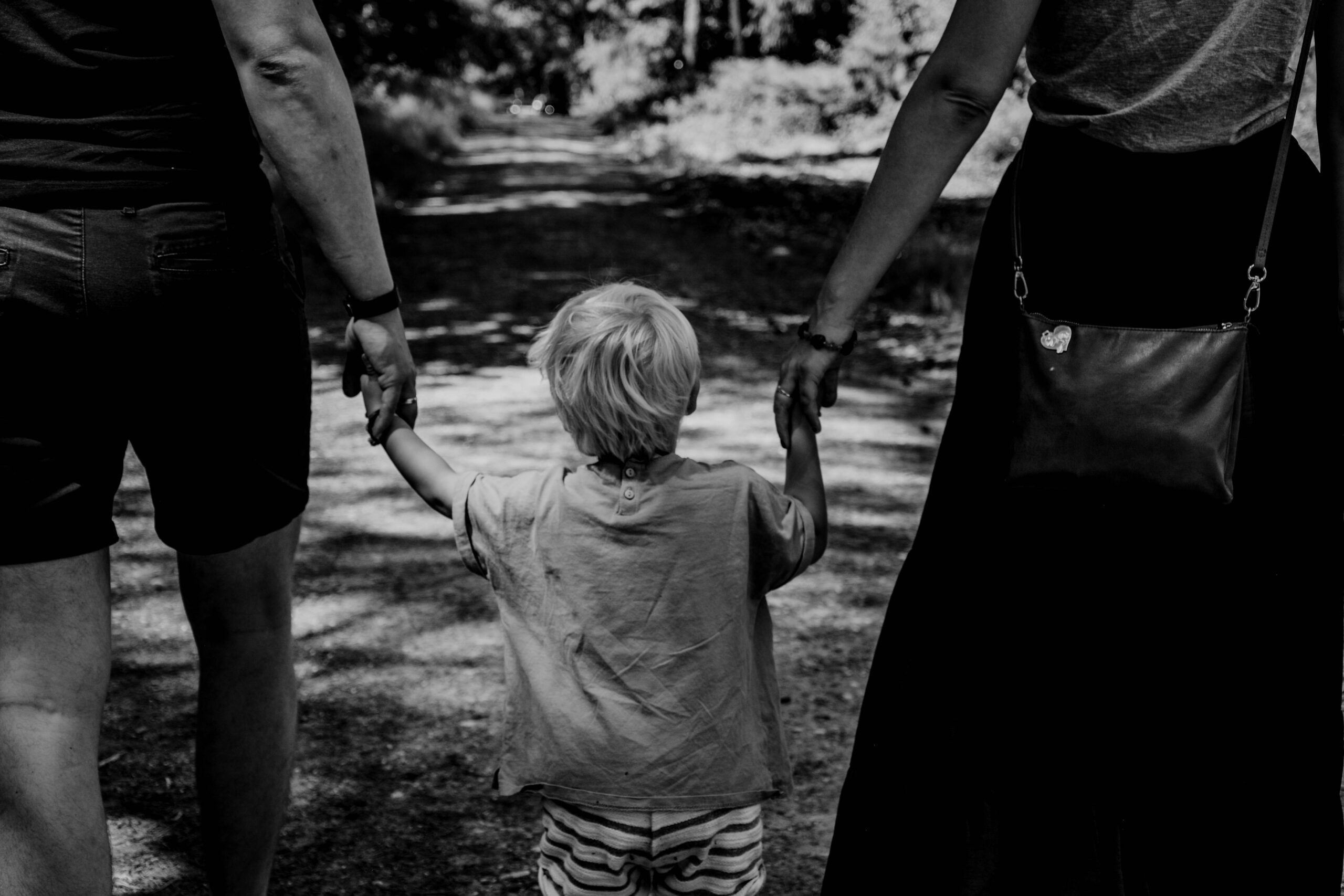
Adults are supposed to have the tools to handle any situation and make sure kids know that everything is going to be okay, even when we don’t know ourselves and lack the tools to determine otherwise.  But we lie or exaggerate. We hold their hands for reassurance, then go and break down silently to process it ourselves, hidden from their prying eyes. 

Being completely honest with a child that you don’t have all the answers and are freaking out yourself can introduce trauma, and life does enough of that already. It’s only since we are all older that both my parents and I can be more honest with each other. I now find that being able to speak openly with my parents about their flaws and mistakes has helped me understand them on a much deeper level and avoid making some of the same mistakes. 

The three of us have come a long way from who we all used to be. In a sense, we’ve come full circle. As a kid, I openly loved my parents and enjoyed being around them. As the years went on and family dysfunction took hold, I distanced myself from them, not fully comprehending why they pretended to be these perfect role models that they never were. Now as an adult, as someone who has been able to openly talk to my parents and discuss and understand their flaws, I’ve grown to understand why they tried to be so perfectly perfect, while also learning how to break the cycle. 

In my opinion, letting a child see that you are human, that you make mistakes and apologize for them, being honest without imposing your own fears and insecurities, is crucial to developing a proper relationship with them. 

With my own nieces and nephews, I make sure to apologize and admit to them when I am wrong. I want them to be able to talk to me about life, and I want to help them navigate it with stories of my own experiences and mistakes. No adult is perfect, no adult will ever have all the answers. Kids need to know that it is okay to be wrong. Otherwise the cycle of the “perfect parents” will continue. And parent-child relationships will suffer as a result.
Carolina Maria de Jesus: The Day Hunger Stopped Being Abstract

During Brazil’s 2026 Carnival, one of the most celebrated names was that of writer Carolina Maria de Jesus. She was honored by Unidos da Tijuca, a major samba school from Rio de Janeiro competing in the country’s top division. Her life story became a samba anthem, echoed by thousands of voices along the Sambadrome — the iconic parade avenue where Rio’s Carnival unfolds each year.

But my first encounter with Carolina did not happen at Carnival.

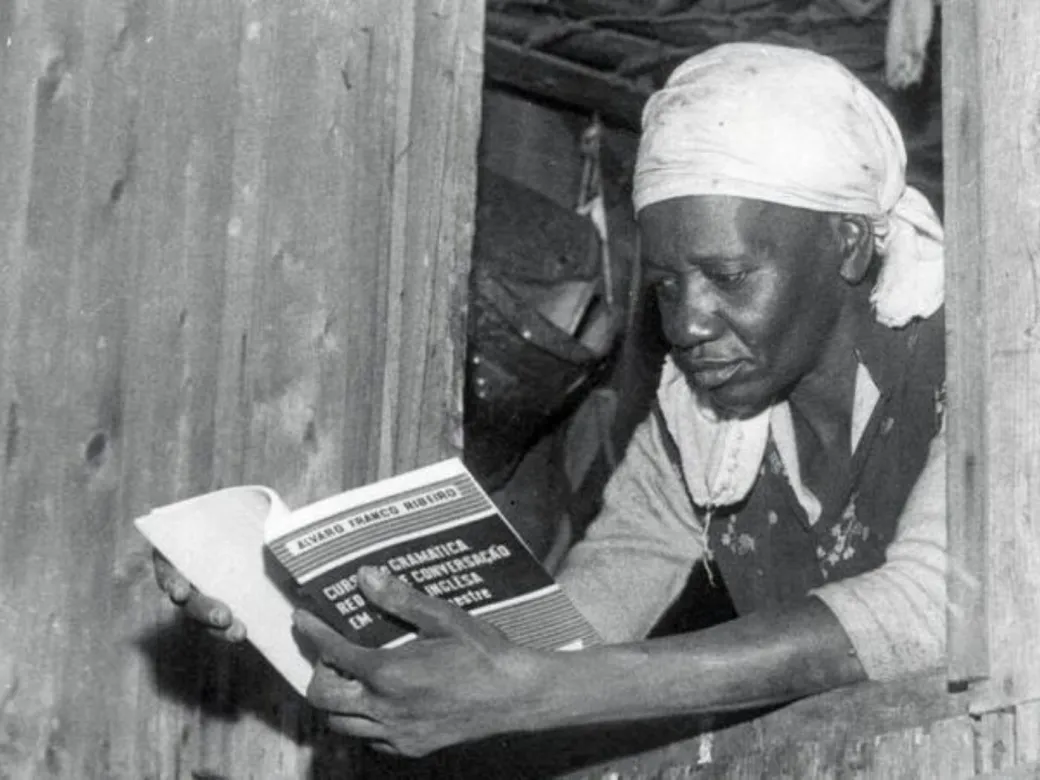
I was 13 years old when I first read ‘Quarto de Despejo’ 1960, at the beginning of my adolescence, for a school assignment. It was the first time I was confronted with a narrative that spoke about hunger in a real way. Until then, hunger had been a distant word — a textbook statistic, a concept that fit neatly into exams and classroom debates.

For the first time, hunger stopped being social data and gained a voice, a body, and a daily life. Carolina,  a Black woman from a favela — often translated as “urban slum,” but more accurately a marginalized community shaped by structural inequality — who survived by collecting paper, wrote in order to live. Her direct, raw language was the only one possible in the face of daily violence.

One simple sentence stopped me: “Hunger is also a teacher.”

I remember closing the book for a few seconds. Reading does more than move us — it leaves a mark. It makes us think about our world, how we live in it, and reminds us that it is not the only world that exists. Reading allows us to reflect on the different realities and experiences of every human being.That book showed me that writing can be a form of resistance and that no human being is defined by the conditions into which they are born.

That was when I realized writing could be more than literature. It could be resistance.

Born in 1914, Carolina documented hunger, exclusion, and the struggle to raise her three children. She transformed scarcity into historical record. She disrupted Brazil’s elitist literary tradition by placing the favela,  or  “urban slum,” at the center of the narrative.

The original title ‘Quarto de Despejo’ literally means “the junk room,” the space where unwanted objects are stored. Carolina used it as a metaphor for how society hides what it does not want to see. Not just an urban metaphor, but a political one. Society organizes itself through the marginalization of its own citizens.

But at that age, my reaction was not theoretical.

I had already moved between very different social worlds — from dinners in affluent neighborhoods in Rio de Janeiro to visits to Rocinha, one of Latin America’s largest favelas. I understood the difference. What I did not yet understand was structure.

Carolina taught me that hunger is not accidental. It is constructed. And she showed me that writing can expose that construction.

Perhaps that was the moment I began to understand why I wanted to use my own voice. Perhaps that was when journalism stopped seeming like just a profession and started feeling like responsibility.

Years later, when I saw Carolina’s name sung by thousands during Rio’s Carnival parade, I realized that the private revelation I had experienced as a teenager had become collective recognition. The parade did in celebration what the book had done in silence for me: affirm that literature is born wherever human experience insists on being heard.

Despite the international success of Child of the Dark, Carolina was not immediately embraced by Brazil’s literary canon. For years, her work was treated merely as social documentation, as if testimony could not also be art.

“Hunger is also a teacher.”

I have never read Brazil the same way since.

When the World Stopped, I Kept Going

I sat in my bedroom, recovering from the flu, not knowing what would happen later that day. It was March 12, 2020.

I had planned to return to school the next day. Two text messages received in the afternoon changed that plan. The first was from a classmate, sharing that our teacher said that we wouldn’t have school the next day or the following Monday. A bit confused, I guessed it was due to the flu going around. A few hours later, my boyfriend texted, informing me that he heard about school being canceled for the next two weeks. Later, he sent an update. School will be canceled for the rest of the school year due to the virus, COVID-19.

Anxiety kicked in, and I blamed myself for the school closing even though there had been no confirmed cases in my county. I was worried that others would hold me accountable, thinking that maybe they believed that I was the reason school was canceled. Based on my symptoms – a cold made worse by asthma – my tendency to internalize things led me to rumination. Would my peers suppose that my absence and being sick could be COVID? Would they think I caused our school to shut down?

A blue face mask next to a bottle of hand sanitizer.
(Image courtesy of Tai’s Captures via Unsplash.)

Unwelcome changes

I would soon have more things about which to worry.

A few days after the schools in our state closed, my grandmother’s assisted living facility stopped allowing any visitors per the state’s COVID guidelines. Two weeks later, the facility’s staff began allowing residents’ families to speak to them through the window. My mother, aunt, and I held up signs outside, showing our support to grandma Hud. In April, however, we lost Hud to an accident that occurred at the facility. My heart felt like it had been slowly ripped from my chest. Hud meant everything to me, a constant source of support in my life.

I was already mourning the loss of my grandfather, Grampy, when Hud passed away. Grampy had passed five months earlier from stage 4 brain cancer. Navigating this grief through a pandemic and as a high school student was agonizing, but I numbed myself to the pain. I was confined with my parents in our home, and the only way that I got through it was because of my friends, my boyfriend, and the Nintendo game Animal Crossing: New Horizons. It gave me something to focus on, as well as a sense of control. It distracted me and was calming. It was a temporary, and much needed, escape.

Depression, dissociation, and emotional survival

Around May, I was in a free cosmetology program. The instructor was a hair stylist who attempted to teach the class over Zoom, but it wasn’t the same as in-person schooling. My parents didn’t want to be used as models, so I resorted to practicing cutting hair on my Pug, Luna. She wasn’t a very good client. Focusing on the course became more challenging with all of the changes I faced.

Parisian-style braid on a woman with ginger hair.
(Image courtesy of jagadshd via Unsplash.)

A few months before the pandemic began, I had begun to have episodes in cosmetology classes where I would lose track of time and couldn’t focus. I didn’t think much of it at first. Maybe there was just too much of my mind, too many things to worry about. There were several times in class where I thought only a short time had passed, but it had actually been 20 minutes. I tried to snap out of it, but the dissociative spells consumed me. I wouldn’t measure out the right amount of heat protection spray to use with flat irons. I’d begin the task of flat ironing a mannequin’s hair and then dissociate in the middle of it. There were a few times where I ended up leaving the iron on the countertop and didn’t finish the task. 

Each time, I’d feel like I was on a lazy river, slowly swaying back and forth, feeling the ripples of reality touch my feet. My mind was blank, occasionally punctuated by sadness and grief. I didn’t understand what was going on, and it worried me.

There was no internal script during these moments, which was rare for me. For as long as I can recall, my mind has raced with thoughts that I cannot contain. My brain is a hamster that is spinning rapidly on a wheel to nowhere. I was unaware that I was dissociating in front of others, and what the cause of it was. I would later learn that I was developing PTSD from abuse (inflicted by an ex-partner). 

Being away from friends and others due to the pandemic worsened these experiences. Despite having my parents and dogs around, I longed for more social connection. The lack of social support led to more and more dissociative spells, and I withdrew myself from others even more as a result.

A difficult, but right, decision

Before COVID, I was already struggling to keep up with my classmates in terms of technique and efficiency. Because of how the virtual schooling and isolation impacted my ability to learn, I found it difficult to keep up with my peers. I hadn’t taken into consideration that my hand-eye coordination skills weren’t very strong, and the inability to practice in person with a teacher meant I fell behind even more. Several people in my class were able to perfect their techniques soon after it was demonstrated to them. A lot of them were being considered for internships for the following year, while I could barely get everything on my list accomplished in one class period. In a time when I should have been able to receive extra emotional support from my grandparents, I couldn’t. 

The grief consumed me, and I moved into survival mode. The lack of socialization and support gave me more time to reflect on whether cosmetology was right for me. As time went on, I became less convinced that it was. Eventually, I decided to drop out of the free program. 

It was a difficult decision, but I knew that it was the best outcome for me. That choice allowed me to spend more time with my boyfriend during our senior year, where hybrid learning meant that we attended school in person three out of five days a week. The additional social interaction supported my wellbeing and helped me feel better about the decision to drop the course. If I had chosen to remain in cosmetology, I would have had one or two days on the main campus and the rest at the technical center, and I wouldn’t have been able to interact with my friends or boyfriend as often. 

Feeling a sense of support and familiarity was essential, particularly when socialization was rare, and learning was mostly independent. Thinking back to this time, I cannot see myself staying in a field that I didn’t truly enjoy. Although my choice to drop the course led to attending college — and student loan debt — the knowledge I gained and the networking connections I built more than made up for what I might have gained had I continued with cosmetology.

These events, like everything in our lives, are all interconnected, a web expanding outward in hundreds of directions. Our trajectory changes as we adapt to different circumstances, events. I learned it was okay to not know what I wanted to pursue or to switch even though I didn’t know what the outcome would be. I reminded myself that I had an abundance of time to find the right answer for me, and that’s led me to where I am today. 

And from where I’m sitting, I’m pretty happy with those choices.

Starting Anew Within the Old

The move

Growing up, I always thought I would get an apartment near the city. Something bigger but cozy, and not a pain to clean. It would ideally be on the cheaper side, so I could leave it every so often to go traveling, embark on big adventures, and create amazing memories.

That opportunity came soon after I finished college when I got to move to Japan as part of a cultural exchange program and live on my own for the very first time. I was excited to start my new life somewhere so far away — in a land that created the media that shaped my childhood to adulthood, abundant with delicious food, and home to so many cultural sites. I had been studying Japanese in college, so I was extra excited to interact with people and really surround myself within a new environment.

A three-year arc

Living abroad allowed me to immerse myself in the language and culture. My Japanese proficiency improved the more I applied my studies, and my confidence grew as I continued to interact and make Japanese friends. I think what really helped me become more comfortable in a foreign country were the friends I made who were also immigrants with whom I could talk and reminisce.

There were some things I missed about being in the U.S., and some more things that irked me while living in a foreign country, but all in all, I loved my life in Japan. Three years was plenty of time for me to get a feel for living on my own, become my own person, and amass a load of amazing travel experiences to think fondly of. So, when my visa expired, I decided it was time to close that chapter of my life and return to where I left my American story.

So, do I really need to be responsible?

As soon as I moved back home, I immediately moved out to live with my friend. I missed my family, don’t get me wrong, but my learned independence was too hard to give up, and I wanted to continue that lifestyle. 

After having worked consistently for about eight years by then, I wanted to take my time finding a job again. At first, I wanted a break for a few months. But who knew it would take ten months to find another stable job?

Not only that, but I had to get new legal documents: my driver’s license had expired, my physical address had changed, my bank accounts had to be updated, and my passport and Global Entry also needed to be renewed.

A MacBook, a smartwatch, two iPhones, and a credit card laid out on a dark table.
(Image Courtesy of Nico Indii via Unsplash)

And let’s not forget: getting a phone plus a new number, a car now that I can’t rely on trains or my trusty bike anymore, another laptop now that my faithful one of six years was on its last legs, and a slew of furniture to go into my new abode. Mostly everything had to be used, of course, because I was quickly racking up credit card debt to enjoy my new solo living.

Health insurance, dental insurance, an optometrist, and new medications didn’t exactly make reintegrating back into American life any easier, either.

On top of everything else, I had to figure out my tax situation now that I was back on American soil. While living in Japan, I was also part of the mandatory pension program, so working out how to get my money transferred over, how much the fees were to take care of it in Japan, and how much taxes were going to be in California made me seriously contemplate leaving the $2,000-ish amount with the Japanese government.

My social life

Setting my life back up was an overwhelming challenge. There were so many things that needed to be accomplished in order for me to enjoy myself again. But once I was back on my own two feet, I was excited to go back out and meet up with familiar faces. I had made a couple of trips back home throughout the years, but it was never enough time to do everything I had wanted to do before I had to get back on that 12-hour flight.

It was great to be able to talk face-to-face, in real time, and to physically hold my friends and family. Re-visiting my old haunts and finding new restaurants was also an exciting adventure as I re-familiarized myself with the area. 

The sad thing was that some of the friends that I thought I had close relationships with ended up fizzling out. I did my best to keep in touch with the friends I made abroad, but much of our conversations were hard to maintain due to the different countries, let alone the time zone differences. So, when I realized that some of my friends had either moved on or moved away, it felt like I missed out on the opportunity to keep our relationship intact. Not to mention finding my favorite places either closed down or changed beyond familiarity — I’ll never be able to enjoy fro-yo on my way back home from a jog ever again.

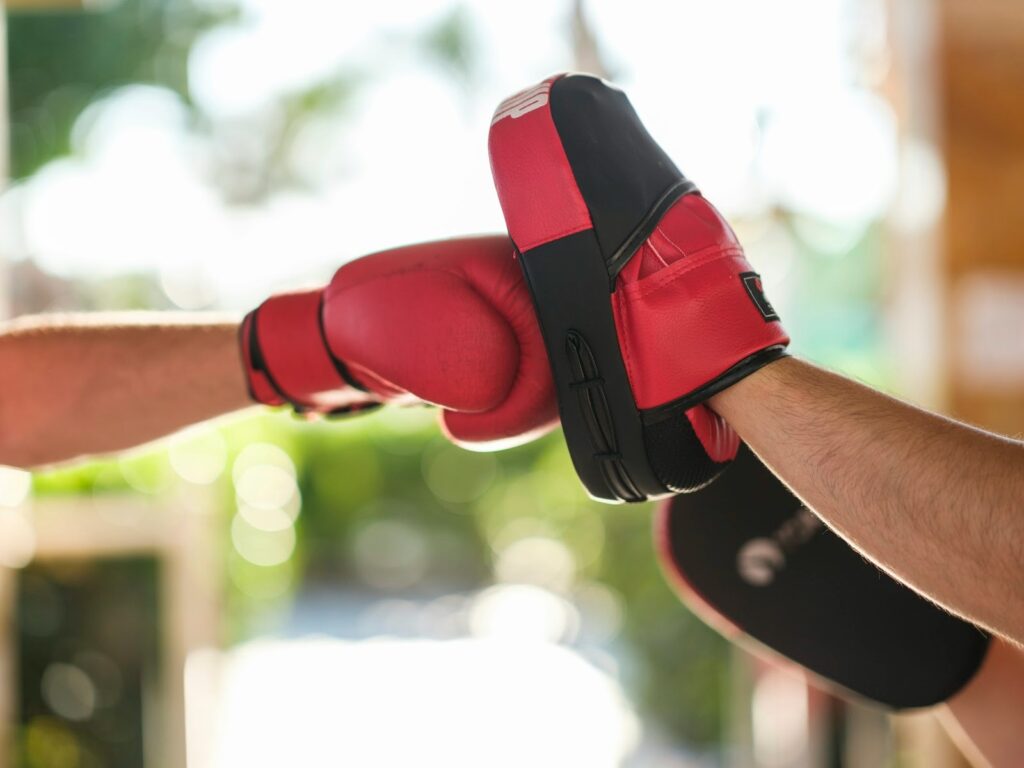
A person wearing a boxing glove punching into a focus mitt.
(Image Courtesy of engin akyurt via Unsplash)

But on the brighter side

Life happens. Even if I did stay in my hometown, friends would’ve moved away, I would’ve changed careers, and that corner restaurant I went to every month would’ve closed its doors eventually. The “fear of missing out” makes one try to take life on and tackle new challenges. But it can also be applied to not wanting to change, too. 

What if I leave, and I end up missing these life events? I was just here last month, how is it gone already? Why should I move to somewhere I don’t know anybody?

I’ve dealt with some hard life events while in the States and living abroad in Japan. However, I don’t regret starting that new journey because it consisted of multiple smaller trips and adventures that I feel truly helped establish my character and outlook. Re-integrating myself back into my old life was challenging, but it wasn’t impossible. The experiences I gained helped me cultivate new relationships, which then led to even more exciting adventures.

Rolling with the punches is a life skill I try to maintain, and I wholeheartedly encourage anybody to try taking that leap of faith. Because more often than not, you can go back to that starting point and try again.

Springtime For Iran? The Iranian Haft-Sin and the Eighth “S”: Soghoot (Collapse)

The Iranian New Year arrives with spring, or perhaps it is more accurate to say that spring finds its meaning through the Iranian New Year.

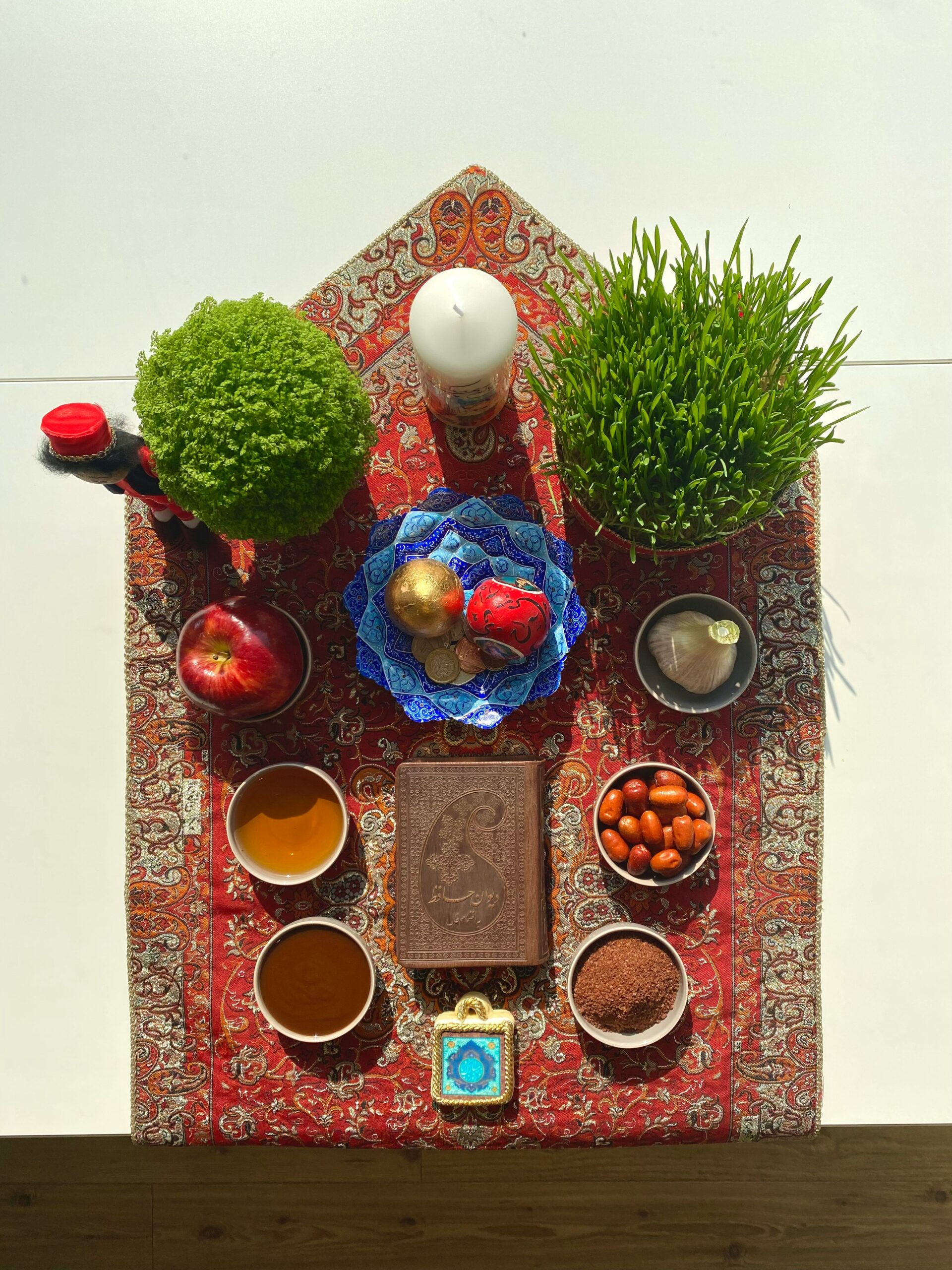
One of our most beautiful traditions is setting the Haft-Sin table — seven symbols starting with “S” that represent life, hope, rebirth, and continuity. But this year, for Iranians across the world, there is one more “S”: Soghoot (Collapse.)

Collapse; a word that begins with the same letter in Persian, yet carries with it a weight of pain, anger, and at the same time, hope.

For years, Iranians have chanted: “This is the year of blood; the regime will fall.”
But each time, before any fall could happen, it was these innocent people who fell to the ground;
it was these dreams that shattered;
it was these lives that were extinguished.

And yet, each time — like a phoenix — they rose from the ashes, with wounded bodies and exhausted souls, but still standing.

Who could have believed that after the massacre of January 2026, after so many lives were cut short, one could even think of spring?
The grief was so overwhelming that even uttering the word “freedom” had become difficult;
a word whose cost proved far greater than we had ever imagined,
and the brutality that stood against it was beyond any nightmare.

But only twenty days ago, at 9:33 in the morning local time on the 28th of February 2026, news shook the world:
an attack on the “House of the Leader.”

A place that for years symbolized power and repression suddenly became an epicenter of collapse.
No one believed that a dictator who called himself the “Leader of the Muslims of the world” — and who had been hiding underground after the 12-day war in the summer of 2025, leading him to be unofficially crowned with the derogatory alias of Mooshali (mouse in Farsi) — could have been killed in such an attack.

It took a full day for the news to be confirmed.
And once again, during the dawn call to prayer.

For Iranians, the call to prayer at dawn is not just the beginning of a day;
it is a chilling reminder of the hours when executions took place, before sunrise.
How many nights did we stay awake until dawn, in anxiety and helplessness, wishing
that maybe this time…
maybe this young person, this athlete, this activist, this unnamed human being… would survive.

And now, the announcement of the dictator’s death at that very moment, at the dawn call to prayer
felt, for many, like cooling water poured over burning hearts.

The morning after was a different morning.
A morning that — even if it marked the beginning of another war — carried the scent of liberation.

Twenty days have passed since that day.
An intense war is underway, with multiple countries involved in the Persian Gulf region and the engagement of two major armies.
Yet despite all this, the number of casualties still cannot be compared to the massacre that took place in just a few hours.

Today, the world is less shocked by the war than by the “continued resistance of the regime.”
But how could they understand, when for years they chose to look away?

Over the last 47 years, many countries that claim to uphold human rights
not only remained silent,
but through their actions, granted legitimacy to this monstrous regime.

And they still fail to understand that a government that massacres its own people has no hesitation in setting the world on fire and destroying the ancient land of Iran.

To this day, not a single country has officially closed its embassy in Tehran,
nor expelled the ambassadors of this regime.

But the people of Iran see all of this clearly, and without forgetting.

When the “right side of history” is more visible than ever,
yet political interests outweigh human values,
surely this should serve as a warning sign for the citizens of those very countries.

Meanwhile, the power structure in Iran remains in the hands of the terrorist authority, the Islamic Revolutionary Guard Corps, which has controlled the country for years. And just today, before the New Year, they offered a “gift” to Iranians; they executed three protesters of the uprising in January, again at prayer time. That is why Iranians fear the survival of this inhuman regime more than missiles. 

And now, a new leader, the son of that same dictator, has been chosen, carrying the same veneration of violence, and one even more rigid than before.
A leader whose voice the people have not even heard, and whose very existence, whether  alive or dead, is uncertain,
yet his alias, Mooshtaba (from the lineage of a mouse, as his father’s alias was Mooshali, and a distorted form of his real name Mojtaba), speaks volumes about how local people view this continuity.

But what has not changed is the voice of the Iranians.

Iranians who still chant: “Death to Khamenei.”
While during the lifetime of the first leader of this regime, no one publicly chanted “Death to Khomeini,”
and his funeral was held with the utmost pomp and circumstance.

And now, 36 years after his death,
the body of the dictator, who was killed on a cold winter day, remains unburied.

This is the fate of a dictatorship that denied families the right to mourn.
that buried bodies at night, without names;
that broke gravestones so that memories would be erased.

And yet, the names and memories of those loved ones were not erased;
they were etched into the hearts of the people.

And today, that same dictator remains without a name, without a grave.

As if the soil of Iran, stained with the blood of its children,
refuses to accept his cursed body.

During these years of resistance, Iranians have always said: even if only one of us remains, it will be enough to dance on your grave.
And now, there is no grave to dance upon.

And may this be a stark lesson for dictators: how one can fall from the height of power to utter humiliation in less than half a century, despite all the massacres and crimes.

Last year was a year filled with pain.
A pain that neither fades nor is forgotten.
A massacre whose full dimensions are still unknown, yet one that is forever seared into the collective memory of Iranians.

And yet
hope was never extinguished.

This year, among the Haft-Sin,
there stands one more “S”:

Soghoot (Collapse)

A collapse we waited for, for years.
A collapse we paid for with our lives.
And a collapse that perhaps — marks a new beginning for life, freedom, and a spring that, this time, belongs to the people.

Missiles That Attack Your Heart Thousands of Kilometers Away

My first experience with war — yes, the first one — was when I was five years old. I remember it clearly.

I was born in the winter of 1982, about a year and a half after the Iran–Iraq War began. Until I turned five, my city, Tabriz, famous for its handmade carpets and the largest covered bazaar in the world, had remained relatively safe. Some infrastructure outside the city had been attacked, but I was too young to remember.

Then, in the winter of 1987, the city was bombed, and we were forced to leave.

My grandfather had a white Peykan, the iconic first Iranian-made car that evokes national nostalgia.  He drove my grandmother, my mother, my two-year-old brother, my aunt — who was in the last month of pregnancy — and me, out of the city. My father and my aunt’s husband stayed behind to protect the house and our belongings. Looking back, it seems both frightening and absurd: how could two men protect a home from missiles with their bare hands? 

I remember the cold winter day we left Tabriz for Miyaneh, a small city about two hours away, where relatives lived.

Maybe it was the wrong decision.

The day we arrived, Iraqi bombers attacked Miyaneh. A girls’ high school — Zeinabieh High School — was hit. Even today, nearly four decades later, a sign at the entrance to the city reads: “Welcome to the city of the martyrs of Zeinabieh High School.” It remains the most tragic event in the city’s history.

But the memory that stayed carved in my mind happened just before that. As we entered the city, my grandfather stopped at the bazaar to buy some nuts for the relatives we were about to stay with — we had left Tabriz so suddenly that we had brought nothing. At that moment, a jet fighter broke the sound barrier overhead. The explosion of sound shattered the windows of every shop around us.

The plane flew so low that, in my childish imagination, I thought I could reach up and catch it.

Years later, when I learned in physics class about supersonic speed and the breaking of the sound barrier, I already knew exactly what it meant. I had experienced it in the most real laboratory imaginable.

No child should ever have to learn physics through war.

A few days later, my cousin was born. 

Her birth filled the house with joy. As a child, it helped me forget the fear of that attack. We soon returned to Tabriz with the newborn baby, and only years later, did those memories come back to me.

*  *  *  

Years later, while studying in Italy, I once heard fighter jets flying over the city for a national day celebration. The sound instantly brought back that childhood fear. I could not continue studying.

For many years afterward, life in Iran felt like a different kind of battle. Especially as a girl, I was in a constant, invisible fight with the regime’s inhumane rules — a compulsory hijab among them. But despite repression, there was no real war again until the summer of 2025.

By then, I was already living in exile.

We knew this was the regime’s war, not the people’s. Unlike the war with Iraq, this conflict was not even with a neighboring country; it was with a state the Iranian regime refuses to recognize. The war lasted only twelve days, nothing compared with the eight-year war of my childhood.

This time, many regime officials were assassinated, and nuclear facilities were attacked. Civilians were also killed, and residential buildings were destroyed — tragically, as in every war. Yet many Iranians felt relief that those responsible for decades of repression were gone.

But the most terrifying experience — even for those of us in the diaspora — was the complete communications blackout. The internet, phone lines — everything cut.

We could not hear the voices of our loved ones to know if they were alive.

The internal enemy that has held Iranians hostage for forty-seven years feels more dangerous than missiles.

*  *  * 

And now I find myself living through the third war of my lifetime.

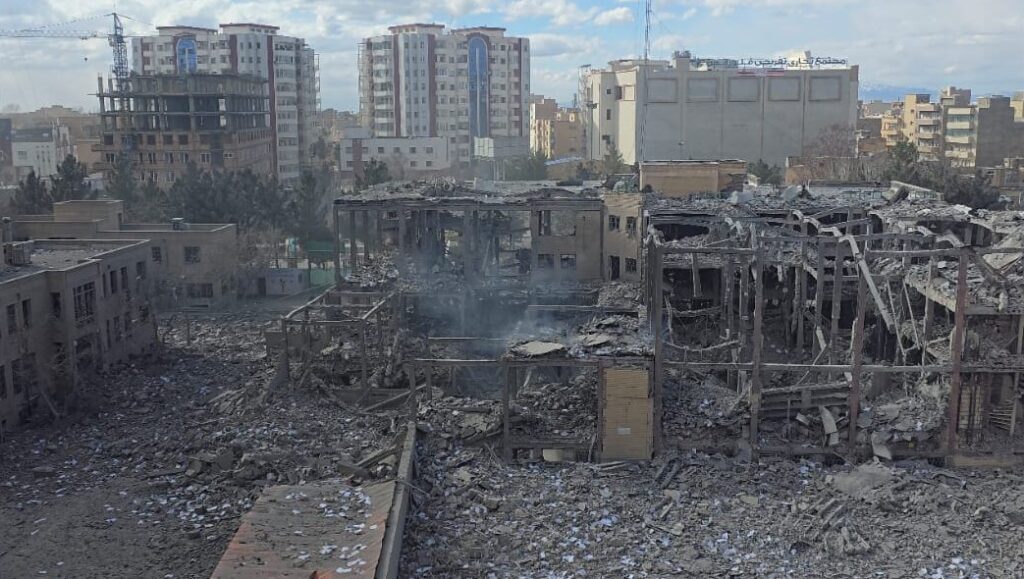
On the eleventh day of this war, a police building next to my family’s home was struck by a missile.

That day was the hardest day of my life in exile.

Destroyed police station in Tabriz, Iran. | (Photo by Anonymous)

Since the beginning of the war, I had spoken with my mother only once, for less than a minute. The communications channels were blocked again. That morning, I woke at 4:30 a.m. with a terrible headache. I took a painkiller and tried to go back to sleep, but could not.

I started the day as usual, pretending to live a normal life in exile while my country was at war.

Around noon, in the middle of an online meeting, my brother suddenly called.

“We are safe,” he said quickly. “Don’t worry. But the police station next to the house was hit hours ago.”

When he told me the exact time, I realized it had happened at 4:30 a.m.— the moment I woke up.

Thousands of kilometers away, yet somehow my mind was still there.

As a physicist, I should not believe in telepathic connections. But not everything in life can be explained by science.

When I finally heard my mother’s voice, it was a huge relief. She tried to reassure me.

“I had just cleaned the windows for the New Year,” she said lightly. “Now they’re all broken.”

I knew she was downplaying it to protect me. But when she ended the call with “I love you so much,” I heard the fear she did not say out loud.

For the past three days, we have had no connection again.

No internet. No phone.

Who could imagine that during war — when communication is vital— a regime would deliberately cut people off from the world?

I even feared my family might be in danger because we had spoken critically of the regime during that call. In Iran, that can be more dangerous than missiles.

I cannot stop thinking: if that missile had deviated by only a few meters, what would have happened to my family? And how could I have continued living?

That day I took two more painkillers. Even three days later, the pain has not fully subsided.

After sunset, I walked for hours, crying. I wanted desperately to hug someone, but exile is a lonely place. Instead, I hugged the trees along the path.

I imagined their branches wrapping around me.

When you hug a tree, you notice something: its skin is rough, not soft like human skin. Perhaps that is because it has survived many harsh winters. The bark grows thick to endure them.

It reminded me that my own skin must also grow stronger.

Trees teach us something else: after every long winter, spring eventually arrives.

But there is one difference between trees and people like me. Trees are rooted. In the past four years of exile, moving across four countries, I have not been able to take root anywhere.

My roots remain in my beloved Iran.

And I carry a small seed of hope in my heart, waiting for the day I can plant it in a free Iran.

Peonies and Moon Trees

Today, in the stillness of winter, I realized how brilliant my twin brother is. I have always thought of him as highly intelligent. More than that, though, he is a force of good in my life, a being who encompasses constancy, sincere honesty, and all of those facets of society that I wish I beheld more often in other human beings.

Truthfully, I have been struggling with maintaining the same vibrancy I see within him these past months; I find myself looking for the broken pieces of our world upon which to cut my fingers. And there he is: always ready to mend my hands. I cherish him.

One afternoon, while we were walking through the brisk and battling winds of snowfields, we talked. We shared how we were feeling, how we viewed humanity’s tangible vicissitude, and my twin gently reminded me of the triumphs our world continues to nurture in defiance of the tragedies we are living through. However, what I found so powerful was that, unlike my prevailing bias in placing human beings at the center of all achievement, my brother discussed the success of plants, of things that grow simply because they must. 

He described the delicacy of peonies, how they flourished, what they symbolized, their perfect mutualism with the ants that could spoil a picnic and also cause sweet florescence. He spewed metaphors and similes as verdant as the plants whose names he recited, relaying how much we can learn from “those whose speech we rarely stop to listen to, let alone attempt to understand.” I found myself staring at the snow, imagining boughs and buds bursting forth with a vigor I could only hope to emulate.

My brother’s willingness to casually gift me the knowledge that would allow me to engage with nature in such intimate ways was akin to anything I have felt with someone I truly cared about, through reading poetry, tasting the best meal of my life, or landing a new job. It was euphoric, and all he did was describe to me how other living things continue onward despite global atrocities. I felt changed, and welcomed once more, by the living lyceum surrounding me, bestowing silent revelations. There were a few brief moments of envy when I desperately wished that I had arrived in this proverbial place of quietude on my own, but I was comforted by the fact that I have far more conversations, with both my twin and the plants whose languages I have yet to comprehend, to learn from and savor.

***

My brother’s generosity in welcoming me into the sanctity of nature felt healing, potentially from some hurt that had not yet been inflicted, and would now be wholly prevented. It felt rapturous, and so I asked him of other marvels that he leaned on in times of misery. He then spoke of “moon trees.”

For anyone who is unfamiliar, NASA launched Apollo 14 to orbit Earth’s moon in 1971. Aboard the vessel were astronauts, provisions and equipment, and tree seeds that Stu Roosa (the command module pilot of the mission) had stowed away. These seeds traveled through the void and the stars with the crew, and, upon returning to Earth, they germinated and were distributed across the world to national parks and historic locations. The saplings were strong, and, in some aspects, considered to be imbued with an abstruse vitality. They were fondly referred to as “moon trees,” and many continue to prosper today despite everything.

In 2023, more seeds were ferried to space upon the Orion spacecraft. These precious beginnings traveled thousands of miles for over a month before returning to Earth and being cultivated. This time, however, the moon trees were granted to schools, children’s camps, town halls, and community parks. In fact, organizations from across the globe were encouraged to write to NASA and illustrate why these precious trees would be beneficial to their communities, garnering over one-thousand submissions. Students, teachers, construction workers, hair stylists, and other changemakers wrote about the nearly ineffable hope that the moon trees represented and how they would remedy the increasing apathy of our celestial sphere by bringing everyone together.

My brother then described his own adventure locating a precious moon tree at the botanical garden where he once worked, and how he had made a point to map the location of the tree, a sturdy sycamore, so that everyone in the area could marvel at it. 

“It is magnificent,” he said as we walked, our warm breath misting in front of us. “And it is important for others to see that.”

I found myself getting emotional, recognizing the goodness within my twin, and understanding that he himself is, in more ways than one, a moon tree of sorts. He is someone who, like the powder-pink peonies, provides a sweetness that I crave in this bitter reality. He is a being, like the moon trees, who grants his own energy to lift others around him, all while harboring that same spirit that can only be born of stardust and moonlight.

I am proud of my brother for the numerous achievements that punctuate the years of his young life, but I, as his twin, feel fortunate beyond words that I, being half of something that also created him, could potentially be a moon tree to someone someday. I could become the peonies, in early spring, that don crowns of blushing heads, gilded in ants and glistening sugar.

I can choose to grow, whether it is in my ability to say that I was wrong, or to seek to understand when someone else fails to admit that they need help. I should prune my pride so that it does not become hubris, and I can nourish my everyday with humility and gratitude. Most importantly, I must decide to love without condition or expectation. For then, I may be pleasantly surprised when someone reaches out, bouquet in hand, to love me in return.

Yes, I believe that my twin brother has a brilliance that I rarely observe in other souls, but that is precisely why I am so grateful to discover it all over again, on our walks together, during these wintry days. He, along with Mother Nature, generously remind me that I may yet bloom in the snow and ash that surround me.

A white peony, looking as pale as the Moon, flowers in darkness.
(Image courtesy Photo by Anastasia Sineokaya via Pexels)


My Future Could Have Been Affected, Too

Writer’s Note

There have been initiatives to rename special education programs. I use this terminology because it’s the phrase with which I’m most familiar due to it being used during my time in school.

Individualized education plans (IEP) and 504 plans vary by state and district. Transitional 1st (T-1) programs are intended for students who have completed kindergarten but are still socially or educationally unprepared to begin first grade with their peers. It’s a year-long program and is often suggested for students with additional support needs.

My Education Journey

In preschool, my teacher told my parents that I was struggling with academics and with fine motor skills. The remedy for improving the latter, at least, was to place me in occupational therapy. I remember learning how to button a jacket and crab-walking. I was rewarded with lollipops. In kindergarten, I began receiving additional support for academics through a special education teacher. We met one-on-one, multiple times per week.

Transitional First Grade

I remember being sent home with lined sheets of paper with dotted letters name writing practice for home. My mother stated that I only learned how to write my name at five years old because she promised me a Strawberry Shortcake doll if I did so.

Towards the end of kindergarten, my teacher thought I still required extra help with my handwriting, despite my progress in other skills. She suggested to my mom that I start first grade a year later, participating in a T-1 program. T-1 would allow me to remain in one class all day and work with a teacher on an individualized scale. It was eventually decided that I would begin T-1 instead of moving directly into first grade.

Professional photo of a five-year-old girl, smiling in a fairy Halloween costume.
Image courtesy of the writer.

I was upset when I realized that I wouldn’t be moving up to kindergarten with my classmates. The worst part: no longer being in the same class as my best friend. Due to having a February birthday, her birthday being six months earlier, and starting first grade a year later, I was suddenly two grade levels behind her. My younger self wasn’t so happy; my older self knows that the decision wasn’t easy for my mother, and she just wanted what was best for me academically.

After a full academic year in T-1, I finally moved into first grade with an IEP.

IEPs and standardized testing

My IEP included a non-specific math learning disability; an auditory processing disorder would also be noticed once I got older.

Math doesn’t make sense to me, especially when I try to calculate things mentally. Imagine trying to solve a 500-piece puzzle while missing 100 pieces. I’m not unable to solve equations mentally; I just need support like a calculator or a piece of paper to better visualize it. Multiplication and division is a lot more straightforward because of the kinesthetic way it was taught to me.

The math-related learning disability determined the bulk of my IEP; I’d be pulled out of class a few times a week to work on math with a teacher one-on-one. Additional accommodations included clarification on assignments and instructions, preferential seating, extended time on tests and assignments, use of a highlighter on paper copies of schoolwork, and more. Having a paraprofessional in a math class was my norm. By third grade, I began to take standardized tests (SOLs), which I found difficult. Passing SOLs, however, was mandatory for advancement.

Starting in middle school, special education was rechristened resource classes. Same thing, different title. And no matter how much time I spent studying and prepping on my own and with my teachers, I still struggled.

In 9th or 10th grade, I failed my first three attempts on the SOLs. Due to my disability and trying my best every time, an exception was made. I was close to the desired score, so my teachers chose to consider my final score as passing. Without that exception and advocacy, I might not have graduated high school.

Then, COVID happened

The pandemic shut down in-person schooling during my junior year. The future of standardized testing and specialized learning was unknown.

A hybrid learning system was put in place for senior year. School administration considered resource classes too complex to navigate in this environment. Instead, we had “learning coaches” who ensured that we did our classwork on remote days. That was the extent of support. Without access to the resources I needed, I knew my results on the SAT, which I was due to take that year, would be poor.

Miraculously, a COVID consideration was available. Some school districts, including mine, decided that SATs were optional. Many colleges chose to make reporting scores optional as well. Keeping this in mind, I chose not to take the test. It was through this series of events that I managed to receive several acceptance letters from different universities.

The future is uncertain

I know I’m one of the lucky ones. Recent headlines have discussed layoffs and budget cuts to educational programs, including the Individuals with Disabilities Act. Millions of children in schools today rely on these educational programs, like I did. Cutting resource programs like these removes access to opportunities for students, changing the course of their lives. Without those very resources, I don’t think I would be where I am today.

I can’t imagine how children who have to worry about their accommodations and plans being taken away from them feel. There are legal protections surrounding resource classes for students with learning disabilities, but how can we know that the protections will always be guaranteed? For now, the action of removing accessible education has been temporarily reversed. Its long-term future is uncertain, and I worry about what might happen over the next few years.

My only hope is that future students have access to the resources they need to succeed — just like I did.

Image of a person in a cap and gown facing away from the camera.
Image courtesy of MD Duran on Unsplash.

Further Reading

If interested in reading further about resources for students with additional support needs, here are some resources below:

A Guide to the Individualized Education Program

Center for Parent Information & Resources: Paraprofessionals

The First Sunrise After The Dictator

This morning, I woke up in exile, as I did in the last 42 months. The same winter light over a Canadian sky. The same distance — thousands of kilometers away — from the country that still lives inside my bones.

As an astronomer, I know that the sun rose the same way it always has.

And yet, something had shifted. And yet, it did not feel the same when I reminded myself that this is the first sunrise after the dictator.

For the first time in decades, the sunrise did not pass over the shadow of a man who believed himself permanent. A man who believed he is the representative of God on Earth. A man whose portrait watched over classrooms, courtrooms, prisons, and graves. A man whose decisions shaped the rhythm of fear in everyday life.

Dictators cultivate the illusion of eternity. They speak in absolutes. They wrap themselves in history, religion, destiny. They convince a nation that they are as immovable as mountains.

But even mountains erode. And this morning, the sun rose over a world without him.

When I heard the news, I did not believe it until the authorities of the still-existing regime confirmed his death a day later. But still, I could not celebrate. I could not cry. I could not shout.

I felt something far more unfamiliar: stillness.

For decades, life has been suspended in a kind of political limbo. Iranians measured time not by seasons, but by crackdowns. By internet blackouts. By arrests. By the names of the killed. By the names of the executed. By the silence that followed.

Exile teaches you to live in parentheses. You continue your work. But a part of you remains paused in the month and year you forcibly left your beloved homeland, your loved ones. For me, that was August 2022, when I packed a suitcase not knowing that departure would not be temporary. Not knowing that return would become a question mark. It is waiting in limbo for a moment you are not sure will ever arrive.

This morning, that pause shifted. But it is still unclear when this rejoining of my body to my soul, which remained in Iran, will happen, since the regime still exists.

For years, the structure of power in Iran felt immovable — like geology. Like something older than protest, older than grief, older than courage. A regime that survived uprisings, sanctions, global condemnation and a massacre. A dictator who seemed to feed off crisis.

And then this morning, the illusion of permanence cracked.

The dictator did not die a normal death. He was killed, and that makes his death hopeful, since there is hope for regime change. The creaking power structure then announced 40 days of public mourning. What a calamitous conflict. They still believe they will survive after all this murderous brutality unleashed over 47 years, and the massacre in January, just 50 days ago, that killed tens of thousands of Iranians. And they expect us to be sad about the death of someone many consider to have been the most brutal dictator in history.

But for generations that grew up under one face, one voice, one permanent authority, this is more than a political event. It is a psychological rupture. It is the breaking of an assumption that power is immortal.

But with the hope in his death, there is still fear.

Because one man’s death never repairs decades of repression. Because injustice never dissolves overnight. Structures still remain. Networks of power remain. Those who enforce repression remain. And the country is at war. Fear remains.

It carries questions heavier than answers.

Will the regime collapse?
What comes next?
Who will claim authority?
Will violence escalate?
Will hope be manipulated again?

And yet, beneath the uncertainty, there is something quietly radical: possibility.

This sunrise does not guarantee freedom.

But it reintroduces imagination.

Somewhere in Iran, a young girl woke up today under a sky no longer governed by the same dictator who killed girls because of their hair. Somewhere, a student who once whispered freedom in dormitories, allowed themselves a moment to breathe. Somewhere, a mother who lost her child to state violence, watched the light change and wondered if history is shifting in her favor.

This sunrise belongs to them more than anyone.

For those of us in exile, we live with a particular ache: the ache of not being physically present in the decisive moments of our country’s history. When protests erupted, I was watching from a distance. When students were beaten, arrested, and killed, I was writing statements. When universities were closed, I was speaking about academic freedom abroad.

In exile, this sunrise is complicated. We carry grief, distance, survivor’s guilt, and responsibility. We know that the end of a dictator is not the end of a system. We know transitions can be dangerous.

But we also know this: permanence was a lie.

Authoritarianism depends on inevitability. Today, inevitability cracked.

I remain in exile this morning. The distance has not shrunk. The grief has not disappeared. The country I love is still wounded.

But I allowed myself one unfamiliar thought:

Perhaps history is moving again.

The first sunrise after a dictator is not a victory. It is not bright with triumph. It is fragile. Uncertain. Almost quiet.

But it is the reopening of history.

And history, unlike dictatorships, belongs to the people.

Today, I do not claim joy.

I claim change, which I hope will lead to freedom.

From afar, I imagine Iran waking up with this sunrise.

And all this reminds me of the poem by Baktash Abtin, a poet who was in prison during Covid and who passed away because the regime denied him treatment when he caught Covid:

His shadow
had swallowed the whole city;
we thought
he was a mountain…
He collapsed — and we saw
he was only a bubble
that had leapt
from the mouth of darkness.

Let them say death is the end,
but I say:
the death of a dictator
is the only day
when calendars
truly touch spring.

And the spring, which is the season for celebrating the new year in Iran, is coming without the dictator and hopefully, without this regime.

Because English!

The English language can be a fickle bastard. It does what it wants and is heavily unregulated. But that’s part of what makes it so interesting. 

During my time as an English major, I took a course studying the different aspects of the English language down to minute details such as morphemes, which is a piece of language that cannot be further broken down. I was even tasked with writing phonetically every week in general discussions. When it came to pronunciation and word origins and uses over time, my professor had a go-to answer to explain why we say things a certain way. His explanation was “Because English!”. It was my time during this course that inspired me to write about how we are actively shifting language today. Words like literally, iconic, and legend have become catch all’s for when we don’t really have much to say. 

So, allow me to take you on what might be the most iconic and legendary breakdown of modern slang you’ve ever read… literally.

Literally is literally an adverb for opinions now. Literally the funniest thing I’ve ever heard. Literally the best movie. Literally insane. Literally the best news I could get. Literally the worst billionaire ever (this last one might be true). I say literally to emphasize, and so does everyone now. I can’t remember the last time I heard someone use literally in a literal sense. The word has been successfully co-opted by society to not have one true meaning. Any meaningful meaning. And that’s okay in my literal opinion, because language in dialogue is supposed to be informal. Adverbs used in papers, books (not including dialogue), and emails can be seen as lazy, but in conversation and other informal areas of writing, they get a much-deserved pass. Imagine if we all spoke in APA and MLA format —  that’s not a world I would ever refer to as iconic.

A friend of mine just used iconic for a reel I sent over. And you know what, I don’t remember the reel. Which means it was literally not iconic. Everything is iconic nowadays. My friend had a hell of a round in a video game we were playing; it was iconic. I made it home a few minutes faster than my maps app said it would take; it was iconic. I wore an all-black suit and green steel-toed boots at my wedding; it was iconic (I literally believe this was iconic though). Like the word literally, we’ve adopted iconic into our everyday language when there are true icons out there. For instance, I don’t  watch basketball or golf and have zero interest in either sport, yet I know who Tiger Woods, Michael Jordan, and Larry Bird are. Those are icons. The first moon landing, the Olympics — these are iconic. Breaking the speed limit on my way home is not iconic, it’s stupid, and it’s stupid for me to think otherwise. Literally and iconic have taken their places in the lexicon to a point to where they’ve become, dare I say, legendary.

Legend, or ‘lejund’ as I like to spell it on occasion, has also been inflated in its use. My friends and I often call each other “LEGEND” when one of us makes a joke at the expense of another. I remember getting into working out and seeing literally everyone think they were being iconic by saying “you can’t spell legendary without leg day.” Absurd. It made me cringe when I first saw it on a t-shirt and it still makes me cringe. My ears shudder at the thought of the phrase. We even use legend as a word of praise. I solved the issue with the treadmill at work… legend. I drank twelve beers in one sitting at a friend’s house… legend. I thought to make a reservation ahead of time so we didn’t wait for a table… legend. There’s nothing legendary about any of that. I’m guilty of it, too.

A coworker brought in a box of artisan donuts, so I called them legend. They’re not a legend, they literally didn’t earn the iconic title of legend, but we say it anyway. Because English

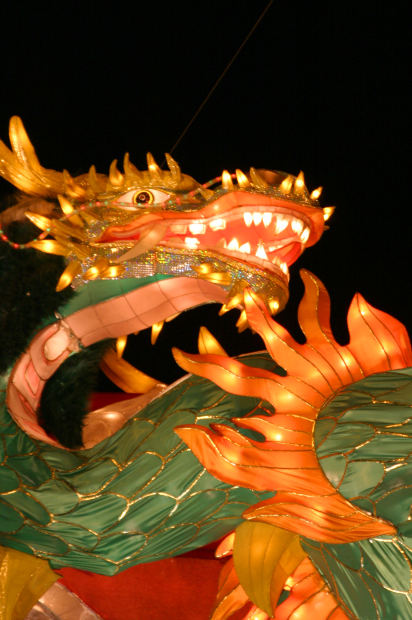
Green & orange paper-mâché dragon that is literally an iconic legend — because literally
(Image courtesy of Chamomile via Morguefile)

Note: Paper-mâché or not, a dragon is literally an iconic legend — because literally.