Treats to Tricks

Come, all children, and take a seat
As I tell you a tale of tricks and treats.
For do you know the tale of Mr. Jack?
Well, better keep those socks on your feet.

’Twas an extraordinary night, on the eve
Where souls can cross with ease,
Between here and the spectral plane
To witness the goings-on of you and me.

Then, from yonder! Within the woods,
A ghoul, most peculiar, there stood.
Roaming around, without a care,
Looking as if he had barely reached adulthood.

“Ah, another year, another bore.
Whatever is there to come for?
These breathing passersby care not one bit
As they wander, listlessly, on the ground floor.”

“They cackle with glee, and sing with mirth,
While my body lies beneath this earth!
Well, no more! No more, I say!
Chaos and confusion, I… shall… give… thee… birth.”

And with that, our poltergeist flew from the trees,
Racing through his mind, many mysteries
Mr. Jack was gleeful to plague those humans,
All in order to disrupt their reveries.

From shrubberies, doors, and around high dormers,
Look at Mr. Jack! He was a born performer.
He’d howl, levitate, and steal any and all treats,
From all types: witches, robots, and even black cats on the corner.

A spider here, a fake door there, a crooked entranceway–
Clear the cul-de-sac, off the streets, the town was in disarray!
He tipped chairs and filched hats from anyone he saw,
While his mischievous acts put horror and havoc on display.

As the night waned and the innocents had all gone home,
Our ghostly menace found himself left all alone.
Sure, it was fun to tease humans on this one dark night,
But now, he was left feeling colder than his tombstone.

“Maybe, just maybe, I went a little too far with such measures…”
He mused sadly, recounting his misdeeds amidst ghoulish leisures.
The laughter, cheer, and excitement, once making the air so electric,
Had been sucked away, leaving the town devoid of any pleasures.

Quietly to himself, he made an invigorating promise.
His new plan, it wasn’t going to be as thoughtless.
He hurried back across the divide just as the sun rose, amber,
And the living roamed once more, feet firmly on the surface.

As days turned to weeks, to months, and finally to a year,
Our once-spooked town was traveling forth without fear.
Lingering thoughts of mishaps past and horrors forgotten
Weren’t going to spoil the night around these parts, no dear!

And from across the plane floats Mr. Jack, with new determination
To make things right, better—and a little cleverer. With renewed motivation,
He decided to tone things down—last year, it got out of hand!
But this year, this year! He’s ready to begin new machinations.

He spied treats and candy everywhere he went,
And there his attention was now being spent.
“What’s Halloween without a little trickery?
I won’t go overboard this year, but I’m not that innocent.”

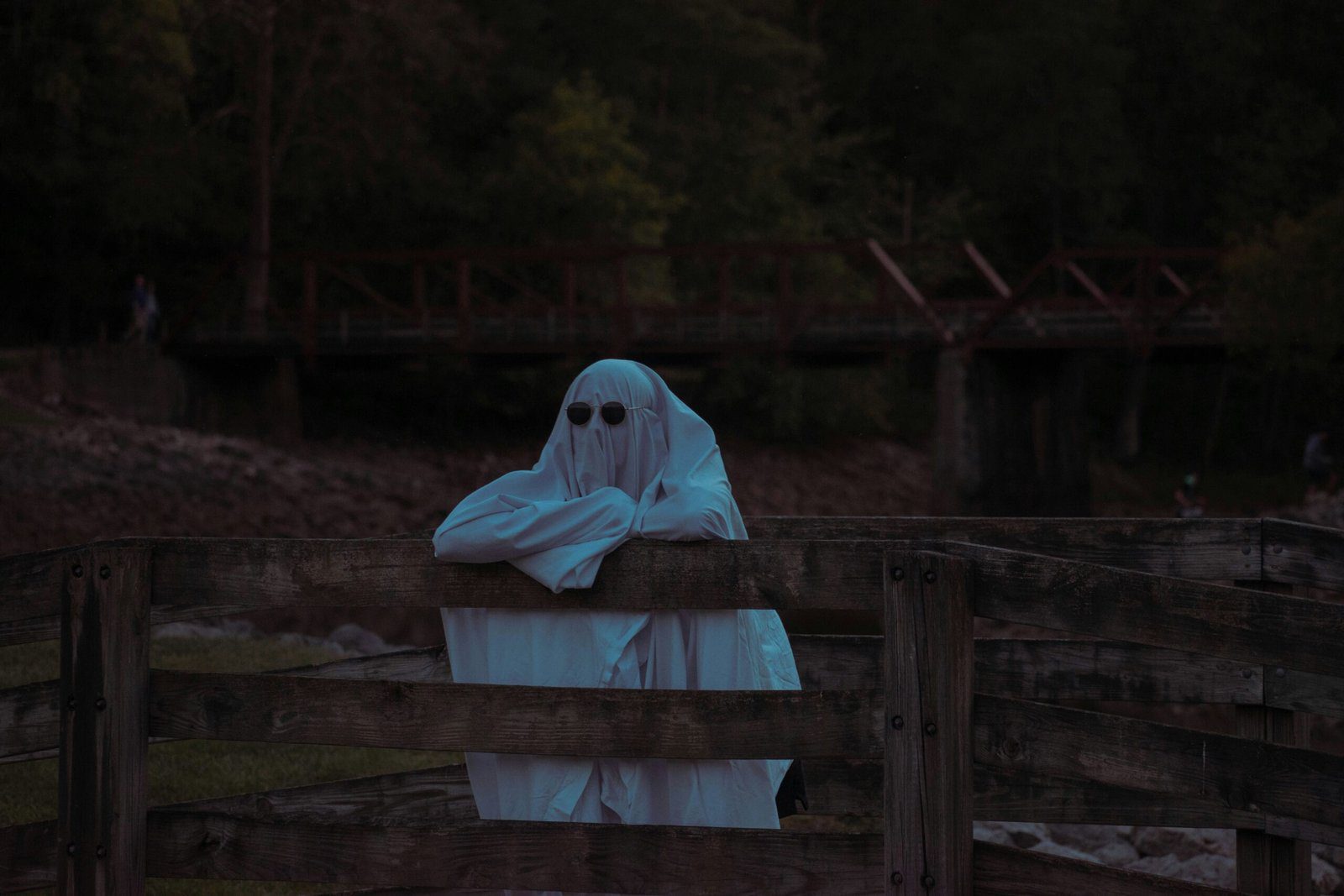
A ghost wearing sunglasses hiding in a field of shrubs and greenery with purple flowers.
(Image courtesy of Susan Flores via Pexels)

Mr. Jack smiled to himself as he played his part
Hiding, disguising, mystifying; now this was art!
Sure, there were no screams of fear or wails of anguish,
But he did feel some joy in his undead heart

When he noticed others surrounding his victims,
Laughing and cajoling at the unexpected outcome
Of a bewildered child, who was counting his delights,
Only to find the broccoli head his candy had become.

“Next year, I wonder if I should expand my operations?”
Mr. Jack debated, heavily immersed in his internal conversation.
“Why should I only keep to this one town three years in a row?
Next Halloween is going to need even more preparation!”

Delhi’s stray dog battle in the Supreme Court of India: Compassion vs Fear

The Supreme Court of India has modified its earlier directive to confine all stray dogs into shelters after facing widespread protests and legal challenges. The initial order, issued on August 11 following the death of a six-year-old girl from a rabies attack, had called for the permanent sheltering of all strays across the country. In its detailed order, the Bench noted that while compassion for animals is part of Indian law, the safety of citizens, particularly that of its children, the elderly, and visually impaired persons, cannot be compromised.

On August 22, after weeks of outrage and legal altercations through multiple public interest litigations by various advocates and animal welfare societies, the Court softened its stance, citing its previous order as “harsh”. It allowed strays to be vaccinated, sterilised and released back to their original areas, while keeping aggressive or rabid dogs in custody.

The three-judge bench of Justices Vikram Nath, Sandeep Mehta and N.V. Anjaria constituted under the Chief Justice B.R Gavai, modified the earlier order. The new ruling bans public feeding of stray dogs but asks municipalities to create designated feeding zones. Notice boards must clearly state that feeding is allowed only in such areas. Feeding on public roads and streets will not be permitted.

“Persons found feeding dogs in violation of this direction shall be liable to action under the relevant framework,” the order noted, adding that helplines must be set up for reporting violations.

It also makes States and Union Territories party to the case to help draft a national policy on managing India’s stray population, extending the application of the order to pan-India rather than just the National Capital Region (NCR).

How it all began-

The debate began on July 28, when Justices J.B. Pardiwala and R. Mahadevan took suo motu notice of a newspaper report about a six-year-old girl in Delhi who died after being mauled by stray dogs. The Bench said India records nearly 20,000 dog bite cases every year, with 2,000 incidents in Delhi daily. On August 11, they directed Delhi and NCR authorities to round up strays within eight weeks and place them in pounds, warning activists not to interfere.

Divided Public Opinion

That order was considered by some as a long-overdue response to a public health crisis. Others condemned it as unscientific and impossible to enforce given the lacking resources. Animal welfare activists, feeders, and caretakers argued the order ignored existing laws like the Animal Birth Control (ABC) Rules, which allow sterilised dogs to be returned to their original areas after treatment.  Local civic bodies were criticised for years of inaction on sterilisation and vaccination, and many asked why municipal funds never translated into effective ABC programmes. 

For many residents, however, fear remains real. “Dogs have become a threat to society. With proper care in shelters, they can lead a better life, but right now it’s unsafe,” said Apurva Garg, a law student in Chandigarh. “Personally, we are afraid to go out alone because of the fear of dog attacks.” 

She added that while she once considered herself a dog lover, repeated incidents near her campus and in her neighbourhood made her support the Court’s decision. As a law student, she said she has observed the government’s lax attitude firsthand and supports the order only if it is implemented effectively.

Municipal figures estimate Delhi has nearly a million strays, with surrounding NCR cities like Noida and Gurugram facing similar spikes. India accounts for 36 percent of global rabies deaths, according to the World Health Organization.

Activists’ Perspective

While on the other hand, Animal welfare volunteers working at the ground level tell another story of neglect by civic authorities and scapegoating of caretakers.

“For years, there have been almost no sterilizations in Gurgaon and very low numbers in Delhi. Feeders have been spending their own money to vaccinate and sterilise dogs, yet they’re vilified and even assaulted,” said a volunteer associated with several shelters in Delhi, who requested anonymity due to threats.

She questioned why municipalities were not held accountable. “If the administration had done its job, there would be no rabies. Why punish the animals for failures of governance? Where are our taxes going? Since the earlier Supreme Court remarks blaming ‘dog lovers,’ there’s been a spike in cruelty. Dogs have been stabbed, and puppies burnt alive. The hatred has only worsened.”

“The Hon’ble Judges had remarked that- there is a very loud vocal minority and silent suffering majority- Since this statement, there have been multiple cases of “the silent majority” taking the law into their own hands, where is the justice in that?”, she said questioning the order.

Conclusion

The controversy has revealed a deep divide: on one side, families grieving lost children and citizens terrified of dog bites; on the other, volunteers who believe the only humane and effective solution is mass sterilization and vaccination, not unnecessary confinement.What makes this conflict harder is that both narratives are grounded in lived reality. The Supreme Court’s shifting orders reflect the urgency of addressing a growing crisis and highlight the administrative gaps in implementing sustainable animal control measures.

‘Batman: Arkham Asylum’ = Enduring Interactive Fear

Welcome to the madhouse, Batman!

As a kid, very little excited me more than getting to interact with my favorite DC hero, Batman. Whether it was a new animated show or a movie that changed the superhero film landscape, any opportunity to experience more Batman was a welcome one to me. So imagine my excitement when the brand new Batman game, Batman: Arkham Asylum, was announced. Needless to say, 11 year-old me was over the moon, thrilled to get to properly play as Batman for the first time ever. 

One thing I think no one was ready for was just how scary Batman: Arkham Asylum turned out to be. Most outsiders to the Arkham video game series likely hear “Batman” and immediately think it is just another superhero game. It certainly is a superhero game, with you running around as Batman beating up thugs while trying to stop the Joker’s latest scheme. What makes it so much more than that though, is how the game carried with it a fantastic element of horror throughout the entire story. Although future games in the franchise carried over this horror theme, none of them nailed it quite like Arkham Asylum did.

The game starts out as your standard Batman adventure, or technically the end of one: Batman has captured Joker and is taking him to be locked back up in Arkham Asylum, the incredibly outdated psychiatric hospital (= prison) that hosts the majority of Batman’s rogues gallery. Not long after bringing Joker in, the Clown Prince of Crime launches his real scheme – overtaking the asylum staff and taking control of the madhouse. 

From the very beginning, Batman: Arkham Asylum creates an atmosphere of unease. The titular asylum is dingy, grimy, and very reminiscent of an abandoned, haunted mental hospital you would find in an aging horror film. The only difference is that instead of being haunted by incorporeal spirits, Arkham Asylum is haunted by very real, very alive threats who all have one goal in mind: to kill you, as Batman. 

In fact, the asylum even has some monsters of its own: Killer Croc, a mutated crocodile man, tells Batman in the very beginning of the game he intends to eat the Caped Crusader. Cut to later in the game when you are slowly creeping around Croc’s lair, he will spontaneously burst out from the water, chasing you across flimsy platforms. With your only option being to walk slowly or risk Croc taking notice of your location, players have to painstakingly make their way through his lair with the constant fear of a crocodile man jumping out and hunting you down.

As you run around the asylum, Joker will periodically use the PA system to speak with Batman and taunt him. The PA system makes a noise that will haunt me for the rest of the time; a chime that sounds slightly off, almost as if it’s getting further and further under your skin every time it plays. Eventually, Joker also unleashes the absolutely rabid ‘Arkham Lunatics’, locked up in straight jackets and ready to attack anyone on sight. They hide throughout the asylum, forcing on the player the expectation that one of them could jump out from under the floorboards or pounce on you from the ceiling at any moment. Over the moon. 

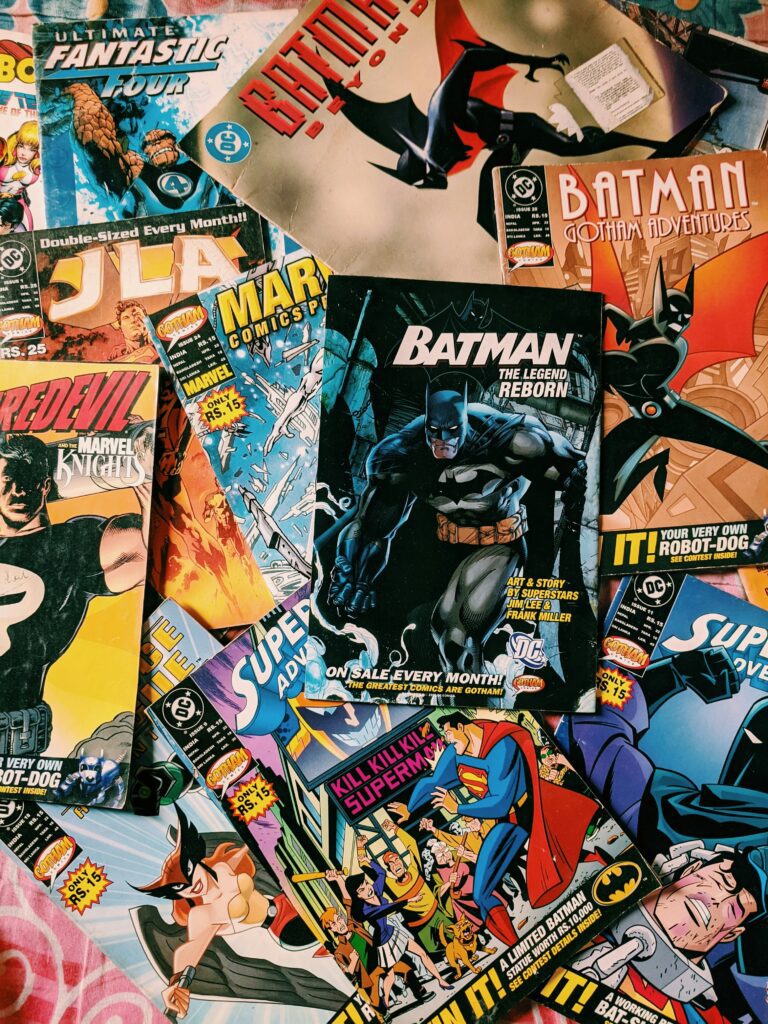
Brightly colored classic comic book covers including Batman
(Image courtesy of Dev via Unsplash)

Scarecrow: The Master of Fear

But of course, nothing embodies fear more in the Arkham series than the master of fear himself, Scarecrow. For the uninitiated, Scarecrow, a.k.a. Dr. Jonathan Crane, is a former doctor of Arkham Asylum who invented the aptly-named “Fear Toxin,” a chemical concoction that shows its user their worst fears come to life as horrific hallucinations. Three times throughout the game, players are forced to contend with Scarecrow while under the effects of his Fear Toxin – running a deadly nightmare gauntlet where they need to fight off skeletons and hide whenever the massive Scarecrow appears and looms over his realm of fear. Being seen by him results in immediate death, driving the stakes and the player’s blood pressure up even more. 

Right before the very last Scarecrow nightmare challenge, the player experiences what can be considered the best scare tactic in the entire franchise. As Batman is walking through the asylum, he is dosed with Fear Toxin. Suddenly, the game seems to crash, with the screen and audio glitching and the player left frustrated and dealing with a very real fear for any gamer: did my game just break and make me lose all my progress? From what I’ve read from others who have played the game, this “glitch” tricked many players into resetting their game console, convinced that their game had actually broken. Oh, heavens.

For those who stuck it out, they learned that the glitch was actually a scripted event. As one fear was conquered a new one emerged, and  the game seemingly starts over from the very beginning with its opening cutscene. This time, Joker is in the driver seat, taking Batman to Arkham Asylum where he is promptly brought in on a stretcher and shot by the Joker, leaving the player unable to do anything but watch helplessly. Of course, Batman is a beacon of willpower, so he overcomes the hallucinations and manages to take down Scarecrow and, inevitably, the Joker – though not before Joker mutates himself into a monstrosity that likely haunted the dreams of many young players.

Batman: Arkham Asylum manages to accomplish polar opposites at once: making players truly feel like Batman on an immersive level, who himself inspires fear in the many thugs he takes down, while also managing to surprise and terrorize the player on a meta level. 

Melting down, yet over the moon

Batman may not have been afraid, but I certainly was, nearly having a heart attack every time a lunatic launched at me from out of a grate I didn’t notice. I did notice my controller flying up in the air as I yelled out. In fear?

Horror games aren’t everybody’s cup of tea, myself typically included. But Batman: Arkham Asylum reaches this crucial sweet spot where it gives players all the power and then knocks them back down, forcing them to overcome the twisted thoughts and schemes of Gotham City’s most wanted. Even now, nearly 20 years later, I still find myself feeling that same unease as I step back into the asylum and contend with the likes of Scarecrow, the Joker, Killer Croc. Especially Killer Croc. 

Yet, traversing all that chaos and destruction to triumphantly take down the Joker at the end makes it all the more satisfying when I surpass the nightmares and finally save the day, standing tall as the Batman. 

characters dressed as Batman and the Joker point at the camera
(Image courtesy of dmscs via Morguefile)

A Macchiato with Ennui

I order two coffees as the rain thrashes slick against the streets outside – a black ground for myself and a macchiato with ten… ten espresso shots for my friend. Now, I’ve never tried a macchiato, let alone one designed to make your brain implode like this one. I don’t think too hard about the different types, whether to steam or foam the milk, which volcanic rocks the coffee beans were barbecued on, et cetera. Coffee is coffee as far as I’m concerned, a necessity to make it through the day… but this, this is beyond necessity. 

The young ponytailed barista can’t help shooting me a bemused, cautionary glance as she hands over the second of the steaming mugs. “Wednesdays, am I right?” I attempt to chuckle amiably, feeling a cringe winding down my spine. God, suck it up, man.

Caffeine grenades in hand, I tiptoe back to the corner booth where my friend is slumped, quietly existing. Well, I say friend… We’ve barely spoken since I stumbled upon him in that dark alleyway, lying flat on his back behind a stinking skip bin. I remember feeling a certain… morbid curiosity. I mean, you’d know what I was talking about if you were able to see him. He’s a tough nut to crack, that’s for sure – he was unresponsive for the first three days I visited. So, on the fourth day that week (which now must have been at least a month ago), I invited him for coffee. To my pleasant surprise, he inclined his head – which may have been an affirmative gesture, or… actually, he might have been shielding his eyes from the sun. Still… here he is. Better late than never, I suppose.

My friend rolls his head at the bitter stench wafting across the table, stretching his pallid fingers around the scalding ceramic. Taking a sip, his eyes close momentarily as if drifting into a wistful slumber… then he whacks the table with his fist. “Wowza! Coffee’s a rarity where I’m from,” he remarks, setting the mug aside (I’ll realise later that this is the first and only time he touches it). “The buzz reminds me that I’m alive.”

His natural name, whatever that means, is Annuien Inodiare. Is that Latin? Late Middle Ages French or Anglo-Saxon, perhaps? Either way, his preferred name is Ennui.

At first glance, it would appear that some form of prehistoric wild animal had slunk into this Mean Bean on Fifth Street. Fortunately, I appear to be the only person capable of seeing Ennui… all ten feet of him. Unkempt, unwashed hair tousles down his pockmarked face, which is prone to yawning every ten seconds or so. Mousey fabric covers his prodigious shoulders, stitched into a makeshift cloak which billows as if constantly being swept up by some invisible draught. “That’s just the Tide,” he dismisses. “It’s like a cosmetic effect for immortal beings. Can’t get rid of it. A bit of a nuisance, really.”

His voice is grating in a way I can’t fathom and yet… comfortingly familiar. Listless? It’s like a dull drone, accented with tedium. A voice that clearly takes great effort to form, emerging on the wave of a sigh. At this point, I haven’t pried too deeply into his background. I mean, he’s clearly not of this world (and I’m handling that fact with remarkable composure). With the name and his characteristics… I fear I’ve bumped into a modern-day god or deity or… immortal being? I’ll choose my questions very wisely.

“So you clearly don’t look… I mean, with the height and all… this…” I gesture pathetically in his direction, deciding I might never open my mouth again. What the hell was that?

“Eh, I look more impressive than I actually am and that’s… not a high bar.” Ennui trills his lips, glimpsing around the coffee shop with the interest of a sulking preteen. “You probably think I’m a mess. Can hardly blame you. The others have told me I’m nothing but an ‘unfortunate byproduct’ anyway. None of ‘em want me around.”

“The others?” I query, taking a sip of my own coffee. Ennui yawns for the thirtieth time.

“The cardinal emotions,” he tuts. “You know, my extended family. From what I’ve heard, they’re making real change out there, Rage and Fear and… Joy. Ugh, Joy. Sometimes I think he’s trying way too hard. Don’t you find it exhausting to be that happy all the time? Come on, man… Why bother when it’s easier to feel nothing at all?”

“Yeah…” Damn, he’s got me there. I know I’ve been guilty of that mindset from time to time. “But what are you doing here? You know… on Earth, I guess. Do all the other emotions have… bodies?”

“Not typically.” Ennui grins slightly. “You know, I’d pay good money to see that. How you mortals do it, all these loose, fleshy parts… I’ve grown fond of them myself, but I know a few divas up there who’d have some choice opinions. No, I’ve been… let’s say I’ve been given a time out. The others don’t want me messing up their big, progressive plans, but… I don’t know. I get bored, man! I’m bored, and I’m tired all the time, and that starts impacting you mortals when I try to hang out with the guys up top, all ethereal and… wibbly-wobbly and whatever. I just get in the way. They sent me down here, saying it could cure me, which is cute.” 

It’s at this moment that I start to wonder whether I might be dreaming. I pinch the soft flesh of my thigh under the table. Ow… 

Well. Worth a shot. I turn back to my coffee. “So… why can I see you when no-one else can?” 

Ennui chuckles, then. That’s progress. “Don’t think you’re special. I’ve got, like, a million Samaritans quacking at me right now. There’s a form of me here for anyone feeling the same way that I do. People just like you!”

I can’t help feeling stung by this accusation. “I’m not some kind of defeatist. Ennui, that’s… a feeling of worthlessness, right? Like, everything is meaningless?”

“Ah, no, that’s Nihil,” Ennui reassures. “Bloody Nihil… Trust me, none of us go near that one. He’s always off somewhere dark and unpleasant, brooding, making everyone miserable. Luckily for us, his utter disbelief in humanity by definition affects a small percentage of it. Me, I just have lapses. I come and go, that’s why I’m a bit of a wanderer right now. I don’t feel defeated, I’m just… waiting for something that I find exciting to come along. And trust me, that can take forever.”

“But that’s such a lacking feeling,” I pipe up. “The best thing we can do is just… just get on with our lives as they are and stay on track.”

Ennui leans back against the faux-leather. “Do you really believe that?”

I hesitate, pursing my lips. Do I? Truthfully, with the consulting firm giving me grief on a daily basis, it’s been harder to stay motivated in the evenings. I’ve stopped writing, I can barely set aside any brain space for learning guitar… But that’s just life, isn’t it? “We can’t just wake up one day and decide that everything’s going to change. It’s impractical, and… and it takes an insane amount of willpower to follow through, you know?”

“Nah, I fully agree with you. Way too much effort, to be honest. I’m far too disorganised to be that kind of advocate – you should meet Muse, though. She’s an absolute hoot.” Ennui links his fingers, sloping his massive body over the puny square table. “I’ve never wanted to be a saint but I’m no villain either. I’m indifferent to any of that. See, the others think I’m some productivity-killer, but I disagree. The way I see it… I’m your reminder that life is transitory and beautiful, and that moments of true fulfilment should be cherished above anything else.” 

“That’s… one way of looking at it, I guess.”

“Did that sound good? I’ve been practicing.” Ennui stands then, his hulking body creaking like an old wooden ship tipping through icy waters. “Cheers for the macchiato. That’s a brain fog decimator right there. I’ll remember that feeling for a long time.”

“Will I see you again?” I ask, my voice rattling with unexpected hope. God, I’m pathetic.

“No, I somehow doubt you will, but listen… This has cheered me right up, so thanks. Genuinely.” He trudges through the coffee shop, stopping by the door with a barely perceptible tilt of his head. “Hah! Look at all these people – they think you’ve been talking to yourself for twenty minutes.” Then he’s gone, fading into the argentine mist of diminishing rainfall.

Why Brazil Turns Yellow Every September: A Nation’s Fight Against Suicide Stigma

Every day, 38 Brazilians take their own lives. Since 2013, every September, the country turns yellow to highlight the urgency of this number and expand the conversation around mental health. The “Yellow September” campaign has become one of the largest global initiatives against the stigma surrounding suicide.

Yet the topic remains globally neglected: according to the World Health Organization (WHO), suicide claims more lives than AIDS, malaria, and breast cancer, but only 38 out of approximately 194 countries promote national prevention campaigns. In Brazil, the most concrete response to these statistics has been listening. 

More than numbers, these are interrupted stories that call for compassion. It’s in the space between silence and a cry for help that initiatives like the Center for Valuing Life (CVV) emerge—a national reference in emotional support and suicide prevention.

CVV Hotline: A Safe Space to Be Heard

Loneliness. We are solitary beings. We’re even born alone. Sometimes we go through good or bad moments, but we don’t always have someone to talk to. This is just one of the situations experienced by CVV’s on-call volunteers, part of a global network of similar centers.

Early Saturday morning. Most people in Brazil are asleep, but Alan Lima, for the past eight years, remains available to answer calls to 188. On the other end of the line, a voice may belong to someone with insomnia, someone lonely, with no one to share life’s difficulties with—or someone experiencing suicidal thoughts. 

Alan explains that he’s received calls from people so lonely they simply wanted to share a joyful life experience but had no one to talk to. He also has a paid profession, but dedicates himself to giving lectures and serving as a spokesperson for the Center for Valuing Life.

Like Alan, CVV Brazil’s volunteers are ordinary people. You don’t need to be a healthcare professional or have specific training to volunteer—just the willingness to listen. After a few weeks of training, volunteers begin answering calls and hearing stories, initially supervised by a more experienced colleague. 

One weekly shift is the minimum requirement. During months when mental health is more widely discussed—like September, thanks to the national “Yellow September” campaign—there’s a need to reinforce the team handling calls.

Volunteers attend monthly support meetings to share experiences and continue their training. Most work remotely, answering calls via software on a computer. Some members even live outside Brazil and still provide services. 

Support is also available via chat, email, and in-person. Across the country, there are 90 physical service centers. Across all platforms, 3,360 volunteers rotate shifts 24 hours a day, 7 days a week. In the first half of 2025, CVV received over 1.2 million calls.

Search platforms like Google and even Instagram help guide people to the organization. For example, if we come across content showing signs of distress, we can anonymously report it (via the “three dots” on Instagram), prompting CVV to reach out and offer help. 

Volunteers have noticed that AI chat platforms, when detecting users trying to use them as “therapists” or expressing suicidal thoughts, have also started suggesting calling 188.

Despite all the benefits CVV provides to society, it receives no government or private funding, surviving solely on volunteer labor and donations to maintain its structure. Most of the financial donations come from… the volunteers themselves! (Yes, besides their time and dedication, they also donate money.) 

The institution, now 73 years old, handled 2.7 million calls in 2024. Beyond the hotline, it’s active on social media and offers over 100 free podcasts on mental health and suicide.

More recently, the organization joined TikTok to reach younger audiences and promote suicide prevention among them. 

With a calm and steady voice, Alan explains that suicide and mental health remain taboos in Brazilian and global society. Often, simply having someone to talk to is already a way to prevent worse outcomes.

It’s quiet work that may seem small, but it holds the immense power of meaningful social support. 

CVV Brazil is part of Befrienders, a global organization.

A Grave Scribe Tale: Fatal Fame

WRITER’S  NOTE: I am writing the introduction of this story as a homage to Tales from the Crypt with my Grave Scribe persona. Please enjoy!

A coffin creak is heard in the background.

“Ah… so you found me again, dear reader. ‘The Grave Scribe,’ keeper of secrets and chronicler of souls too restless to stay buried. Tonight, I open my tome to a tale from the humid heart of Malaysia. A tale of vanity, ambition, and blood.

A pop singer turned witch doctor.
A politician turned victim.
A ritual turned execution.

Oh yes… a modern-day witch trial!

Now, let her speak. Let Mona Fandey rise from her grave and tell you, in her own words, how the hunger for fame can devour far more than just your career.”

“I will not die.” Those were my last words. 

I knew from childhood, I was born to shine like Taylor Swift and the K-Pop idols who adorn your YouTube feed. They did not have YouTube in my time. All I ever wanted was to be adored. When I sang, people listened. When I smiled, the world tilted a little closer. Even though my husband gave up his savings to give me air time, the moguls of Malaysian media decided I was not good enough. 

Fame, it seemed, was a cruel lover. 

Unlike Affandi, my loyal husband. He was also my greatest believer. He told me I wasn’t meant to fade. “You have the gift,” he said, “If the world won’t give you power, take it.

After much discussion, we both decided to take up magic. We would make people’s dreams come true since many believed in unseen forces. Some might call it black magic, but it was hope and power for me, Affandi, and our assistant, Juraimi. His ingratitude would lead to our inevitable fall, and I still don’t know if I should curse him or thank him. I still remember smiling for the cameras while being escorted out of the courthouse and thinking I should strangle him, but maybe it was also another chance for fame, so I just took the chance and smiled. I knew I was born for fame; I did what came naturally. But, I digress. 

My clients came from every corner and dark hollow of society: businessmen, socialites, politicians—all desperate for something they couldn’t earn.

That’s when Datuk Mazlan Idris came to me.

A man of ambition, burning so brightly he couldn’t see the shadows closing in. He wanted power. Minister of State, he said. He wanted more. And he could have it, what I could never attain. The people’s praise and respect. I decided that men like him should never outshine me. 

That’s why I told Affandi to give him the axe. “Power to the people,” I say! “Death to tyrants!”

He came with money — lots of it. 2.5 million ringgit was my quote. He did not pay me the full amount upfront – the nerve of him. But a deal is a deal, and he gave enough for my plastic surgery and new car later on. 

I offered him two talismans: a cane and a songkok, once belonging — so I told him — to Sukarno, the first President of Indonesia. “With these,” I said, “you will be invincible.”

He believed me. They always do.

That night, the air was heavy with the cloying fragrance of incense, burnt at the site of our patron’s home. My husband, Affandi, and our helper, Juraimi, prepared the room and the means of disposing of our victim later on. I told Mazlan to lie face down, close his eyes, and trust in the magic of the ritual so money would come to him out of thin air in droves he couldn’t dream of — the fool! 

He smiled at the prospect.
Oh, how easily men trust when ambition blinds them.

I placed petals over his body and whispered blessings. He thought fortune was about to rain from the heavens. Instead, Juraimi’s axe fell thrice.

Three swings.
Three echoes.
Then silence.

We dismembered him, piece by piece, like a broken promise. I told myself it was art. A ritual of power. A step toward the immortality fame had denied me.

But you know what’s strange? The moment the blood touched my hands, I felt alive again. Not as a pop star. Not as a has-been. But as someone seen. I was finally unforgettable. I could have tasted his blood, but not with my husband watching of course. 

When the police caught us, I smiled for the cameras. They clicked and flashed, and I gave them what they wanted — a star reborn in scandal. My name was everywhere. Mona Fandey. The witch. The murderer. The legend.

And when the judge read my sentence — death by hanging — I didn’t tremble. I only smiled wider.

“Aku takkan mati,” I told them.
I will not die.

And, perhaps, I haven’t.

When they pulled the lever, I didn’t scream. I thought of lights, of applause,  of my name echoing in eternity. I got what I wanted; all it took was a sacrifice. All of the greats did so for their art, and I am their peer. 

And now… I’m here.

Whispering through time, through screens, through stories.

You think this is just a tale of horror, dear reader?
No. It’s a mirror.

You scroll, you post, you crave followers and fame.
You’d trade pieces of yourself just to be seen.

Be careful what you chase.
Because vanity never dies.

And neither did I.

The Grave Scribe closes the tome with a slow grin.

“Sleep well, my wicked friend. And if you hear a dark song in the shadows, don’t look back. It might just be Mona, craving another chance to perform.”

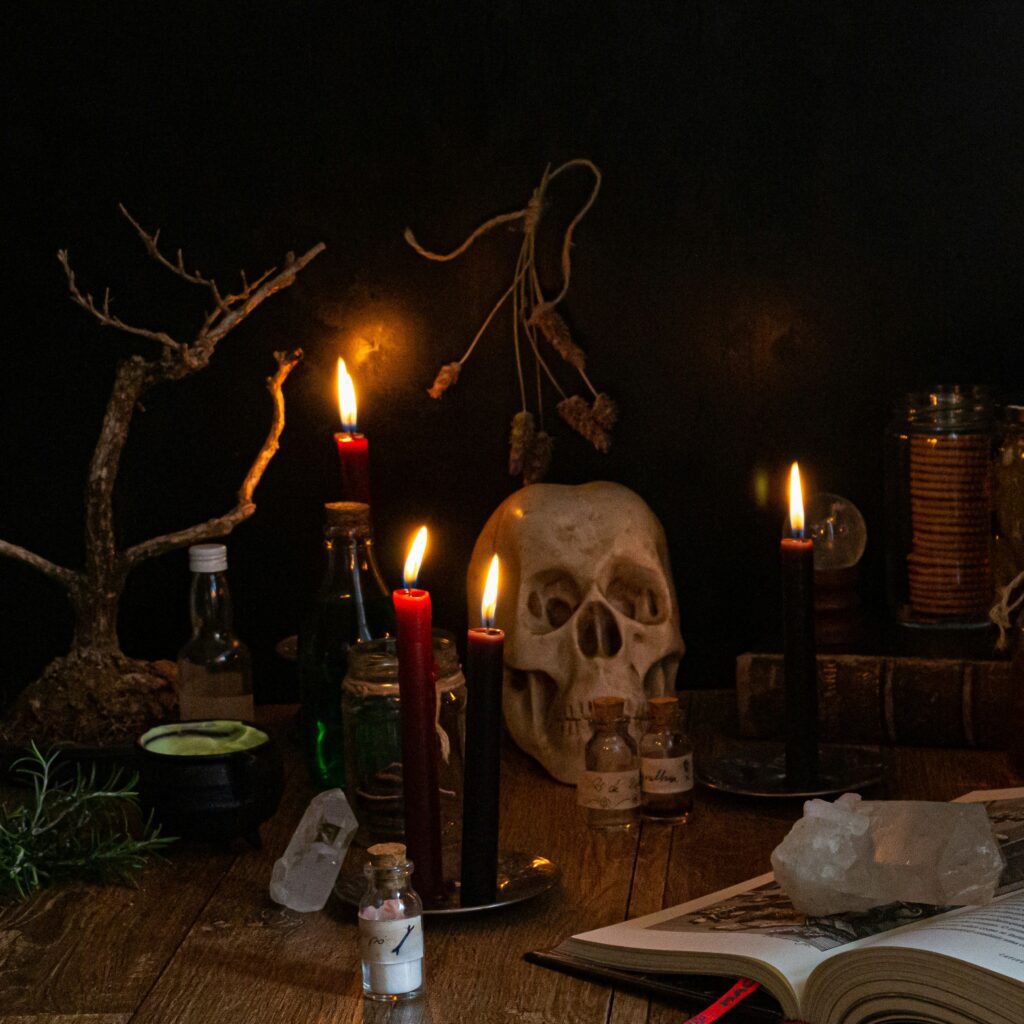
A skull, red candles, a spell book, and potions/vials sit on an old table – a scene fit for a witch and other figures of the night!
(Photo courtesy of Sabrina Roman via Unsplash)

Zambian Farmers Take Chinese Miners to Court Over Toxic Spill

In February 2025, a tailings dam at a copper mine in Chambishi, Zambia, collapsed, unleashing millions of litres of acidic, toxic waste into surrounding rivers and farmland. Now, more than 170 local farmers and residents have filed a lawsuit against Chinese-linked mining companies Sino-Metals Leach Zambia and NFC Africa Mining, alleging severe environmental damage, health risks, and destruction of livelihoods. The plaintiffs are demanding $80 billion in compensation and environmental restoration.

The spill described by experts as one of Zambia’s worst ecological disasters—has scorched crops, killed livestock, and poisoned water sources. Affected residents report symptoms including vomiting, skin rashes, and blood in urine. Despite this, government assessments have been inconsistent. According to civil society groups such as the Zambia Environmental Justice Coalition, the Impact Assessment Association of Zambia, and the Centre for Environment Justice, initial findings cited negligence by the company, but subsequent government statements claimed water pH levels had “normalized.” This has led to accusations of political interference and growing public distrust.

Dr. Mweene Himwiinga, pointed out inconsistencies in the official reports: “At some points, toxins are high; at others, low. There’s no conclusive evidence. We need robust enforcement of environmental laws, and communities are growing tired of investors who in their view, do more harm than good..” She further stressed the need for better monitoring tools and legal frameworks to enable regulatory bodies to respond more effectively to environmental threats.

Rashida Mulenga, former mayor of Kalulushi supported the community’s legal action, stating, “The lawsuit is within their rights. It shows people are no longer silent about environmental breaches.” She added, however, that enforcement bodies remain underfunded and lack the technological capacity to carry out regular monitoring—challenges that have long plagued the sector.

Nsama Musonda Kearns, Executive Director of Care for Nature Zambia, raised deeper concerns: “This community represents only a small portion of those affected,” she said. “There’s been conflict over previous consultants, including claims of corrupted figures. People are eating contaminated fish in Ngwabe district, and we still haven’t tested the full aquatic ecosystem.”

According to Kearns, the lawsuit is not only about financial compensation, but about demanding accountability from companies and regulators. It highlights long-standing issues in Zambia’s mining sector—foreign investment without adequate oversight, under-resourced environmental protection, and a lack of transparency. The outcome of this case could set a precedent for how environmental justice is pursued in the country going forward.

“They’ve drawn a line,” said Kearns. “And the whole country and the world at large is watching.”

Transgender row disturbs open-water swimmers

The normally calm waters of a small swimming lake in north London are facing turbulence in a dispute over transgender access.

For the past century, the Kenwood Ladies’ Pond has welcomed women swimmers year-round to its secluded spot on the 790-acre Hampstead Heath. The pond has an inclusive approach, and its member association successfully fought off a campaign to ban transgender women last year.

However, a recent Supreme Court judgment in Britain, brought by campaigning group For Women Scotland versus The Scottish Ministers, has muddied the waters.

The court ruled in April that the terms “woman” and “sex” in the Equality Act 2010 refer only to a biological woman and to biological sex at birth, a ruling which has led to confusion about transgender access, for instance to single-sex toilets.

City of London Corporation, the municipal body which operates the Ladies Pond and the Highgate Men’s Pond, has opened a consultation about access to the ponds. It has given a range of options, from keeping the status quo – in which the Ladies’ Pond is open to all biological and trans women and the Men’s Pond to biological and trans men – to banning transgender swimmers from ponds which do not match their biological sex at birth. Among compromise suggestions are that transgender swimmers use a separate shower and changing room and that certain times are reserved for swimmers based on their biological sex.

“Like many organisations, we are reviewing our access rules to ensure they remain fair, lawful, and respectful”, a City of London spokesperson said, adding that “our priority is to provide a safe and respectful environment for all users”.

Maya Forstater, CEO of campaigning group Sex Matters, said that following the Supreme Court judgment “it’s clear that women-only means what it says: no men allowed, not even men who identify as women”.

However, Steph Richards, chief executive of Translucent, which campaigns for transgender rights, said there had been no issues with the existing policy.

“What harm have trans women done? Most women accept trans people,” she told Yuvoice.

“What we are having now, especially after the Supreme Court judgment, is a massive swing to see trans people excluded from society.”

Kenwood Ladies’ Pond
Photo by Ruth Corney, via www.ruthcorney.com

Venice Allan, a former ponds swimmer who has protested against the inclusive policy, said she would return to the Ladies’ Pond if the policy is scrapped. Allan started swimming in the pond nearly 30 years ago.

“It’s the first women-only space I went to,” Allan told Yuvoice. “We talk about women-only spaces for safety, for privacy, but it’s also a very joyful space for being women-only.”

However, another swimmer, a Ladies’ Pond regular for 25 years, told Yuvoice that “the idea that cis women need protection from trans women is frankly absurd, profoundly prejudiced, bears no relation to actual experience and puts trans women at even more risk than they already face”. The swimmer, who declined to be named due to the sensitivity of the issue, added that: “I don’t plan on policing anyone’s sex or gender identity when I go swimming and I profoundly hope that trans women can continue to find the pond the peaceful oasis it has always been”.

The consultation is open until November 25.

Of Monsters and Motherhood

Amongst humanities graduate students, especially literature students, there is a joke that grad school will kill one’s passion for reading. I always thought that I would be impervious to such a curse – that no matter what my Hispanic Literature programs threw at me, my love of reading would remain unscathed. I chose to study literature because, like most people who do the same, I loved reading from an early age. Further, I loved dissecting passages and plots, analyzing character motivations, and connecting works of fiction to larger societal themes. To a certain degree, I was right about my passion being steadfast in the face of the stresses of advanced academic training. There are numerous books from many different countries and eras that piqued my interest beyond them being required reading.  

However, the greatest book in the world cannot fix the fatigue that a bloated reading schedule causes. I knew what I was getting into, of course, but knowing really doesn’t matter after having to read hundreds upon hundreds of pages of say, Garcilaso de la Vega or Gonzalo Fernández de Oviedo (real ones know!), as I had to do during my Colonial Latin American Literature survey course. For six years, I often felt as though I had one eye on a PDF and one eye on the clock, mentally calculating how long it took to read one page and estimating how quickly I could finish a book before moving on to the next one. However, In early 2021, I found myself free of the constraints of reading under pressure, as I had passed my preliminary exams for my doctoral degree the semester before. 

Turning the page

With my attention now solely focused on crafting my dissertation and teaching Spanish language classes, I had won back something that had been missing during my time taking courses: an eensy, teensy bit of free time. Unfortunately for me, I had also been recently diagnosed with allergic asthma, so some of this free time was spent, once or twice a week, in my allergist’s office, on the receiving end of histamine shots that would (hopefully) reduce the severity of my allergies, while also not inducing anaphylaxis.

In that sterile and uninspiring room, far from the creaky, imposing library shelves I had been dwarfed by for so long, the pressure to read for the purposes of writing papers and bolstering class discussions melted away. Accompanied only by my ancient iPad, loaded with the Libby app, I would spend hours waiting in that office, interrupted intermittently by my doctor checking my airways and the injection site on my arm. At my fingertips was what seemed like an unending catalogue of books whose publications I had missed for the last six years. What’s more, I soon discovered something about me that I never expected: I loved reading horror fiction.

All my life I have hated horror movies. I have only seen one, The Strangers (2008), and even that was against my will. The Halloween of my fourteenth year saw me crowding into my friend’s basement with the rest of our social group, which consisted of teens who were not scaredy-cats like me. Due to a combination of peer pressure and shaky confidence, I agreed to watch the aforementioned horror flick while thinking, “Maybe it won’t be so bad.”

Boy, was I wrong. 

Despite my rejection of slasher films, I wouldn’t consider myself an overly  sensitive person, but my anxious personality is not well-suited to the anticipation and gore of the horror genre. There are some days I refuse to watch even an episode of The X-Files as twilight approaches. So to have been, suddenly, breathlessly waiting for books to come off hold that featured content aimed to terrify was very surprising to me, though I embraced it all the same.

My reading reawakening that began beneath the stale, fluorescent lights in a random medical building in north-central Indiana led to a years-long obsession of reading (when I wasn’t writing my dissertation, of course) anything horror- or thriller-adjacent that I could get my hands on. I devoured litfic that centered around body and/or psychological horror, crimes being committed, anything that boasted showcasing the darker sides of humanity.

I didn’t exclusively read horror and thrillers, but I found myself gravitating back toward such works, desperate for the illusion of control while living in a political landscape that was (and still is) trending anti-woman. In these fictional worlds, women could act on their impulses– something we’re very rarely allowed to do in reality. They may be committing crimes, sure, but aren’t we, as women, allowed a little rage when we’re losing our rights to medical care? Can’t we cheer for women doing exactly as they wish when there are those who wish to take away our rights to vote, to divorce, to be employed? Sadly, to everything there is a season, and it seems as though my time voyeuristically consuming women’s rights and wrongs through fiction has come to a possible end. 

A lone light illuminates an old bookcase.
(Image courtesy of Engin Akyurt via Pexels)

Plot twist

After the birth of my daughter, my anxiety has gone into overdrive in an effort, evolutionarily and biologically, I suppose, to try to maintain my family unit within a small, protective bubble and keep the horrors of the world away. The terror that originally had no effect on me when reading horror is now wholly felt, as if I were back in the eighth grade, in my friend’s basement, watching Liv Tyler and Scott Speedman get stalked and terrorized by three weirdos in masks.

I noticed this change when I was finally able to read Monstrilio by Gerardo Sámano Córdova, a book about a woman mourning the loss of her child to such a degree that she turns a piece of his body into a sentient monster. I read, maybe, 10 percent of the book when panic began to overtake me. What if I lost my daughter? In our world, sadly devoid of magical realism, I wouldn’t be able to manifest such a creature. I would have nothing. Plenty of parents around the globe have obviously experienced loss, so I would not be special. But, such a fact does not eliminate the disquietude that this concept produces. I returned the book almost immediately. Then, very recently, a similar thing happened while I was reading the beginning pages of The Lamb by Lucy Rose. 

I had read books describing cannibalism before and, while the idea personally disgusts me, I was able to push past this revulsion to see how these gruesome tales proceeded. Now, my response was so visceral, so palpably felt, that not even a can of Vernors ginger ale could remedy my nausea.

Both books had been hyped up on Bookstagram (a community with which, like BookTok, I have many issues but ultimately can’t quit) for months, as certain accounts received advanced reading copies and therefore raved about how good they were before library-using plebs like me could gain access to them. I was so excited to read them, but, this enthusiasm, and the state of my emotional moods, were in direct opposition.  

The militant feminist in me (which, let’s be honest, is most of my personality) is begging me to push through. She, to be frank, doesn’t even think it’s appropriate to confess that motherhood has caused any change. I should be able to engage in the things I enjoy, instead of letting possible internalized patriarchal ideals – that dictate that mothers’ lives should revolve around their children; that they should spend every single second of every single hour of every single day thinking about their children and their needs; that they are not complete people now, but accessories to the new generation – win. Whatever individuality I can eke out, says this feminist, should be celebrated and pursued doggedly.

Cliffhanger?

Unfortunately, overriding my brain is easier said than done. I find that I miss the previous catharsis I relished while reading; I have no outlet for my frustrations. Also, a small part of me fears that, with this change in taste, I’m no longer cool. Is this how the process from eclectic individual to lame parent starts?

Maybe I’ll return to Monstrilio and The Lamb in the future, when I’m more practiced at divorcing reading and my anxieties. Maybe it’s finally time to give Marcel Proust’s In Search of Lost Time a try? Maybe I’ll exclusively read nonfiction until I’m 90. The specifics of my reading habits were different at 10, 17, 25, and will continue to vary at 32, 46, 54, and so on.

I find myself back at square one, in a place akin to where I was in 2021, wanting to read but not sure where that desire will take me. Still, I have progressed before and will again. And, I should emphasize, I’m ultimately grateful that my lifelong passion for reading remains in spite of the hiccups detailed here, and that I have passed that passion on to my daughter, who demands a reading of Frog and Toad Are Friends at least once a day.

For now, I suppose the horror books on my to-be-read list must wait patiently  in their dark corners. But, as the current total of this list, according to my profile on The Storygraph, is 3,308 books, there’s plenty to read in the meantime. 

Show Stage Fright the Stage Door 1-2-3

1 — Surviving stage fright

As a kid, I loved soloing in choirs. But I hated speaking in front of the class, overcome with stage fright — my own private hell. 

As a favor to a new friend, I will resist triggering you with a detailed list of unpleasant-to-debilitating symptoms. You’re welcome. 

2 — Surmounting stage fright

I was choreographing a solo modern piece years later for a dance concert in college. Four weeks before the show, my old friend stage fright barged in hard to block me, claiming squatter’s rights. On my property. Out of nowhere, I invented a new deed & title to show him the door. 

If I give in to him, that guarantees that I drain all the joy from rehearsing to performing to the warm afterglow I wish to bask in. 

I don’t think so. He moved on. 

I was psyched, but relaxed, and the performance excelled. 

3 — Surpassing stage fright 

Now as a singer-songwriter, I share this one freely with newcomers: 

Performing is scary. I can help 1-2-3, but you have to trust me. And I have to say the word ****. 

When you perform, you’re suddenly so magnetic that you become everyone’s world. They all want to **** you. The least you can do is to make them feel like they are yours, too. That is, return the favor by signaling you are quite ready to **** them silly. You have a special privilege like bartenders and waiters who everybody falls in love with because they serve and give, nourish and nurture. Performers, with their job to entice, are automatically attractive. 

Performing is not about you, but what you serve up to your audience. 

Stage fright is about being wrapped up in me while stage presence is about what I bestow upon the audience. Focus on your delivery and ‘bringing it’, so stage fright — what was that about? — might just fade with the lights.

Hey, if you are adored by virtue of the role you took, you should reciprocate symbolically by rewarding the audience with a wonderful performance. 

A duel of love perhaps, a dance, a courtship for sure, entertaining holds the power to cast a spell over an audience, and performers do so as they step onstage, maybe even before the crowd settles. Believe me, you somehow bewitch them. Let that magic linger. 

When we host, we focus without worry on pleasing our guests, not ourselves. As performers, recognize that your guests all arrive hungry for your show, ready to enjoy, ready to love you. Yo’ goodies are baked in, if yet unearned. So earn it. 

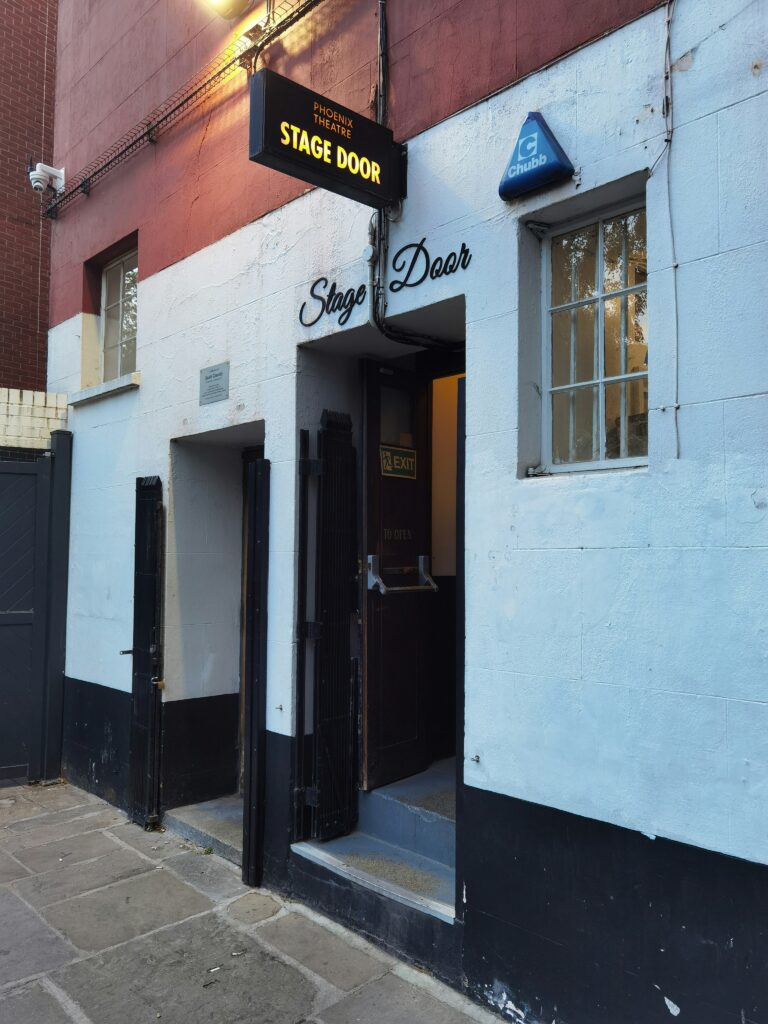
Open stage door, up two steps
(Image courtesy of Call Me Fred via Unsplash)