Through Eyes That Have Cried: Justice Defenders Behind Bars, Then Before the Bar

From behind bars to the Bar

I was a bit skeptical before this interview. No doubt many a reader would be. Why would anyone teach a prisoner how to defend themselves in court?

The premise — that prisoners and prison staff in Kenya and Uganda could be trained as paralegals and lawyers to defend themselves and others — struck me, at first, as too well-meaning. Likely just a pipe dream. But then what do I know about the justice system in Kenya, Uganda, and possibly other African nations?

To me this was the kind of idea that sounds beautiful on paper and quietly falls apart on contact with reality. But here is what Justice Defenders works with: overcrowded prisons, under-resourced courts, colonial-era legal systems creaking under their own weight. Getting an attorney to defend your innocence for free comes at the expense of time. You could wait years for a plea bargain, if that was even an option. Reading a law textbook in your cell could actually save you, if you were wrongly incarcerated in Kenya or Uganda.

Matteo Cassini, Director of Fundraising at Justice Defenders, did not take offense at the initial skepticism. He welcomed it.

“We believe that certain things can only be seen through eyes that have cried.”

Those words really stood out, as there could be nothing more authentic in the pursuit of justice than the passion of someone who wanted to correct the system after falling through the cracks.

———

For almost twenty years, Justice Defenders has in fact worked to equip and empower people within prisons to become paralegals and lawyers. They train both incarcerated individuals and prison staff. 

The organization operates 22 legal offices inside prisons across Kenya and Uganda, where they host weekly legal education sessions and keep their doors open for prisoners to draw on help from their trained peers. Currently, more than 250 paralegals are active, each receiving a stipend for their efforts. Unlike charities that simply send in outside lawyers, Justice Defenders focuses on building legal expertise from within the prison community. It works well. 

As Cassini explained, the rationale is both philosophical and practical:

“Those who have that lived experience of incarceration add something that no lawyer who has studied through law school alone can have — that first-hand understanding of what injustice looks like, of what struggling to have your day in court looks like.”

Before speaking to Cassini about the work of Justice Defenders, my insight was limited on the scope of the problem they are trying to solve. A significant proportion of the prison population in both Kenya and Uganda are on remand — held before trial, and sometimes for years, without having been found guilty. Cassini put it plainly: there are around 25,000 people in Kenya and a similar number in Uganda who are  held on remand, some for up to 10 years without conviction, without seeing their day in court, without receiving legal information. Legal systems shaped by historical structures, ongoing resource constraints, and systemic bottlenecks mean that due process is often a luxury afforded to few. 

Wrongful convictions and endless delays are destined to occur within systems facing structural constraints.

The most powerful proof of what Justice Defenders does is Morris Kaberia , who spent 13 years in prison for a crime he did not commit. He was framed by his former boss and, without access to a capable lawyer, was sentenced to death for robbery with violence. Inside, he joined a nascent program where prisoners and prison officers were invited to study law together in the prison library. 

Initially reluctant, he became one of its first participants. Skepticism is all around us, although Kaberia’s hesitance came from a traumatic situation only he could understand. Once in the program, he learned the law, worked with colleagues on his own appeal, and in 2018 argued his own case in front of the court. He was released on acquittal, his wrongful conviction recognized and overturned.

As of this writing, Kaberia is about to be admitted as an advocate of the High Court of Kenya and serves as Director of Legal Education at Justice Defenders — leading the very program he once studied while incarcerated. As Cassini put it, Kaberia went “from the bars to the Bar.”

Defending justice jointly

Justice Defenders is careful about how it positions itself within the legal ecosystem. Rather than publicly criticizing judges or government officials, the organization collaborates. Cassini was emphatic on this point:

“We’re not adversarial. We exist to strengthen the rule of law in the countries we’re in. We work with the institutions and within the institutions — and we invite those who hold power, the judges, the magistrates, the lawyers, to come and hold hands and to learn from each other.”

Everyone qualifies for their services, as long as they lack access to legal representation.
Justice Defenders does not screen clients by the severity or nature of their alleged offence. When pressed on this — on the discomfort of potentially assisting someone who has done genuine harm — Matteo was clear:

“We don’t ask what brought them to prison. We believe that we all are more than the worst thing we’ve done — or that we’ve allegedly done. Anyone who has the willingness and the desire to serve is welcome.”

The values filter of integrity, solidarity, bravery, excellence, and humility applies to those who work within the organization, not to those seeking help.

———

The other part of this interview focused on fundraising. How does an organization like Justice Defenders sustain itself? Grassroots and community-driven organizations are often told that authentic impact will attract resources. 


That is true, up to a point. But good work alone does not attract funding. These kinds of resources have to be cultivated, often over years, through relationships that go far beyond grant applications. Years of working on clout, visibility, and community participation are all part and parcel of the pain of fundraising for NGOs. 

Justice Defenders relies primarily on philanthropy — trusts, foundations, and high-net-worth individuals, largely based in the United States. It actively avoids the quick payoff, and Cassini’s framing of this approach is worth sitting with:

“The work that we do is only possible because of the relationship and the trust that we’ve built over the past 20 years. Just showing up day in and day out, showing that we’re not here for a quick buck, that we’re here for the long run. We’re not transactional in that sense. And I guess it’s quite refreshing for a number of donors.”

Still, impact metrics matter: Justice Defenders has worked on over 170,000 cases and supported the release of over 70,000 people. But Cassini was candid that numbers alone do not move people. Stories do. They use storytelling and media like CNN, Anderson Cooper, and 60 Minutes to create the conditions for those relationships to form. 

For organizations just starting out, his advice was grounding in its simplicity. Do not start with marketing. Start smaller than you think you need to:

“It can begin — it has to begin — in the smallest fashion, just serving the one that is in front of you, and then getting to understand the community that that one person is coming from, fully, deeply, immersing yourself.”

And on the temptation to lead with branding:

“Surely there are ways of starting this work from a more marketing perspective — you come up with nice photos and nice slogans, and you put something out on the internet. But I don’t know if that’s sustainable. I don’t know if you can do that type of work with full integrity.”

———

Symmetry in New York

Justice Defenders is now expanding to the United States, with a pilot in New York State launching this year. It will begin with an introductory course in law, develop into an accredited paralegal training program, and aims before long to offer a full law degree to participants. The same pathway established in Kenya and Uganda, replicated inside American prisons.

On the ground, Bruce Bryan, incarcerated in New York for 29 years, drives the program. He watched the 2021 60 episode of Minutes on Justice Defenders from his prison cell, put the JD on his vision board, and began writing letters. Cassini replied to one of them while Bruce was still inside. A year later, Bruce received clemency. Today, he drives the New York effort in the same prisons where he once served time.

The symmetry is almost too neat to be real. Except that it is.

Coming into this conversation wondering whether the premise was naive, I left it wondering whether the rest of us had simply been thinking about justice and about changemaking too small.

Former President and Brazilian Generals Arrested for Attempted Coup for the First Time in Brazilian History

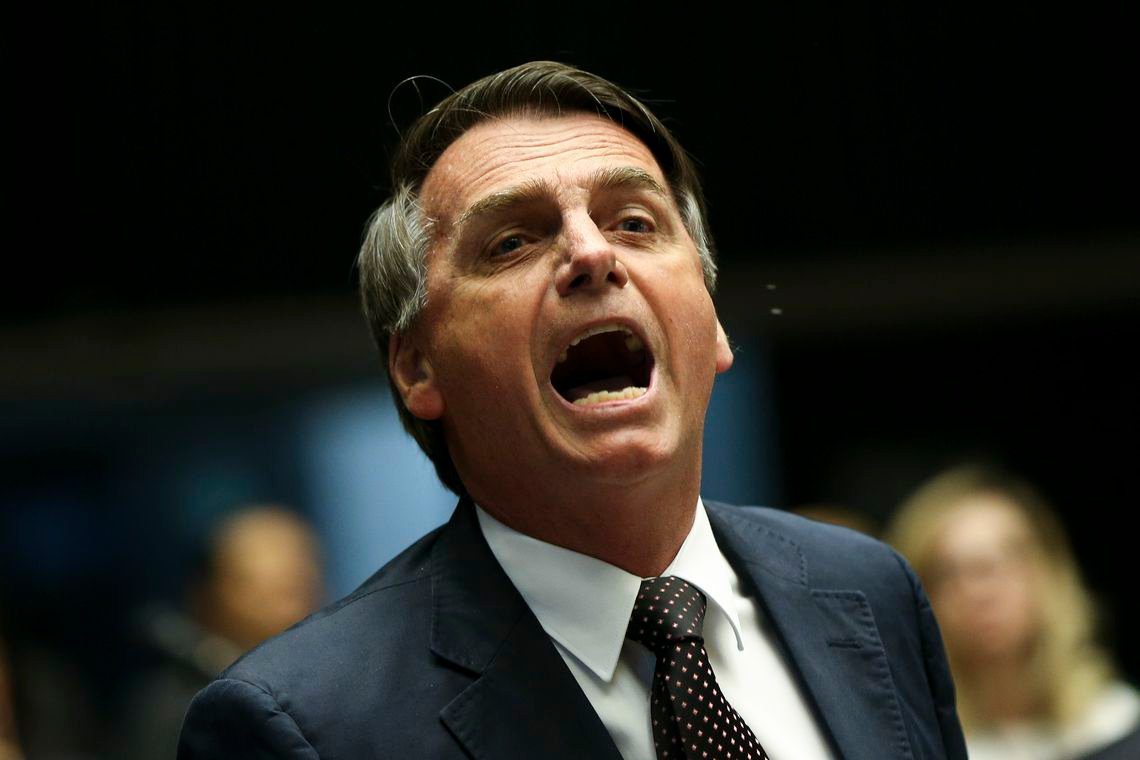
The former President of Brazil, Jair Messias Bolsonaro, has been definitively sentenced to 27 years in prison by the Supreme Federal Court on the afternoon of this Wednesday (25), in Brasília, the Federal Capital ( where the military resided). There, the former parliamentarian and retired captain of the Brazilian Army will initially be held in a Federal Police superintendent’s office., There are no further appeals available for the defendants in this case.

Former President Jair Bolsonaro had already been preventively arrested by the Brazilian Federal Police at sunrise last Saturday, November 22, at his residence in a luxury condominium in the capital of Brazil, Brasília. The former president attempted to tamper with the electronic ankle bracelet that monitored him, using a welding iron, which led to his preventive arrest and the subsequent suspension of the house arrest he had been serving since August 2025, due to the alleged escape risk. Until then, the convicted could appeal the conviction in the process, but the deadline ended this Tuesday.

In addition to the former president, Generals Augusto Heleno and Paulo Sérgio Nogueira, participants in the former Bolsonaro government, will also begin serving their definitive sentences (21 and 19 years, respectively) in a military barracks. Admiral Almir Garnier will be held in a military radio station of the Brazilian Navy. General Braga Neto, who ran for vice president in the 2022 elections, had already been in preventive custody for 11 months in a barracks in Rio de Janeiro, where he will remain. Former Minister of Justice Anderson Torres, who is not military, will go to the Papuda prison in Brasília.

The definitive arrest order was issued by Minister Alexandre de Moraes, the rapporteur of the judicial process that had already sentenced former President Jair Bolsonaro and others involved in an attempted coup at the end of 2022. At that time, Bolsonaro and the other convicted did not accept the electoral results of that year, which indicated the victory of the current president Luiz Inácio Lula da Silva and the unelection of thenPresident Jair Bolsonaro. It was the first time in Brazilian political history that a sitting president was unable to be re-elected to continue government. 

It is also the first time in Brazilian history that military personnel have been convicted for attempted coups. Brazilian historians point to up to nine coups since the end of the Brazilian monarchy. It should be noted that, whilst there is controversy among scholars regarding the counting of coups against the Republic, no fewer than nine coups have been cited.. In the 136 years since the abolishment of the monarchy, seven coups were successful, each with varying degrees of military participation.

In recent interviews with The Washington Post, three researchers paid attention to the unprecedented nature of the punishment of Brazilian military personnel. According to historian Lilia Schwarcz from the University of São Paulo, “Brazil carries two pacts of silence: the silence about slavery and the violence it produced, and the silence about the military. That’s why this case is so symbolic.” Carlos Fico, a professor at the Federal University of Rio de Janeiro, emphasized the aforementioned numerical issue concerning historical coups and, despite the high number, the absence of punishment: “For decades, I have studied more than 12 coups and coup attempts, and all resulted in impunity or amnesty. This time will be different…” Finally, political scientist Matias Spektor from FGV (Getúlio Vargas Foundation) points out the seriousness of the leniency against public officials who have the right to use weapons: “The country has never imprisoned anyone who had access to state weaponry. This is revolutionary.”

South Africa’s Reckoning: Can Justice Still Save the Republic?

When Lt-Gen Nhlanhla Mkhwanazi first laid bare accusations of political interference, hidden criminal syndicates, and sabotage within the South African Police Service (SAPS) in July 2025, it sent shockwaves through the country particularly in communities already living in fear. For ordinary citizens in townships and informal settlements where criminality and “vanishing police dockets” are part of daily conversations, that moment was less about surprise and more about relief  because someone was finally naming the injustice that shaped their daily lives. 

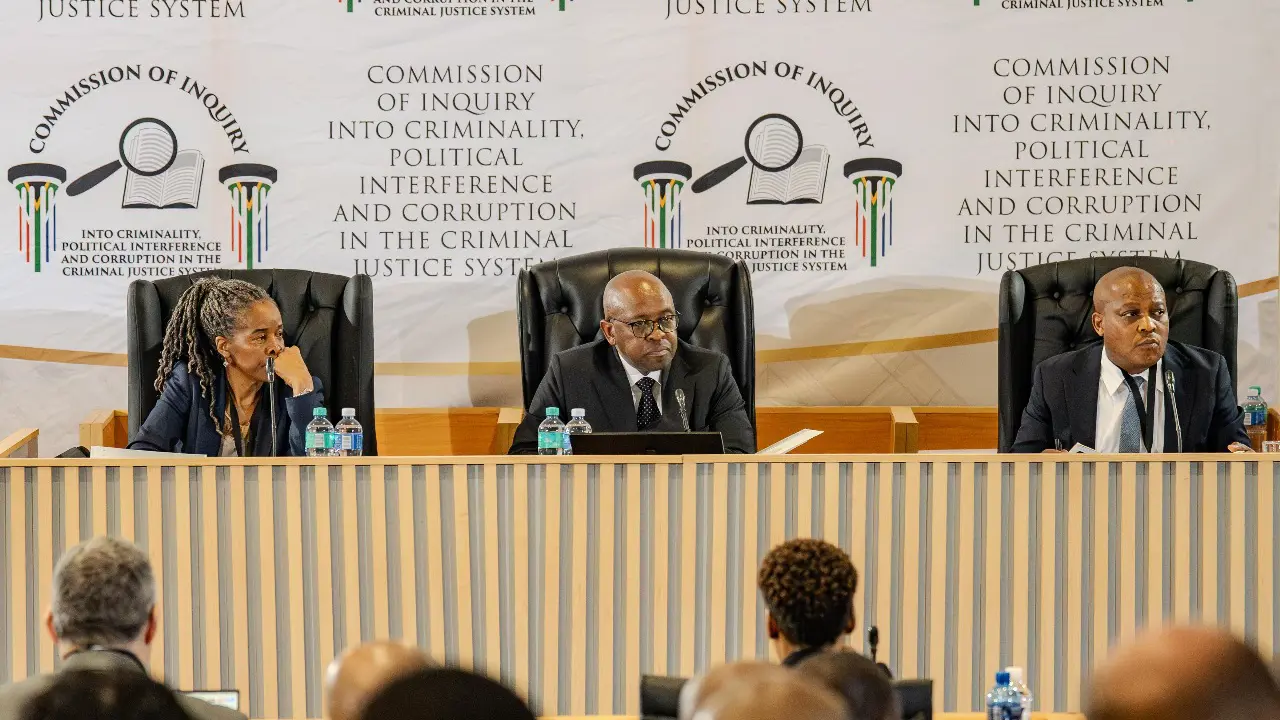
Now, as the Madlanga Commission of Inquiry has begun its public hearings on 17 September 2025 at the Brigitte Mabandla Justice College in Pretoria, the emotions of ordinary citizens mirrored the nation’s tension. The delays, resource problems, and political pushbacks are not just bureaucratic obstacles, they carry real costs in people’s lives. Nicole Myburgh, Ward Committee Member in Eldorado Park, commented “As a resident of Eldorado Park, I’ve witnessed firsthand the devastating impact of gun violence and drug cartels in our community. For years, we’ve lived under the shadow of gang warfare, a reality shared by many communities across the country.”

The first public witness to take the stand was Lieutenant-General Nhlanhla Mkhwanazi, his testimony immediately set the tone. Speaking under oath, Mkhwanazi painted a damning picture of political interference that, in his words, had “turned the South African Police Service into a playground for power brokers.” Mkhwanazi told the commission. “It is a capture of policing itself from the station level right up to the minister’s office. Political loyalties decide who gets promoted, which cases disappear, and who lives to tell the story.

The second witness National Police Commissioner Fannie Masemola corroborated parts of his account, testifying that ministerial directives had “encroached upon operational independence” and undermined accountability. According to internal documents tabled before the commission, 121 case dockets, many tied to politically connected suspects, were re-routed or “lost” after the task team’s dissolution. Witnesses described how officers who resisted interference were threatened, transferred, or quietly sidelined.

Opposition parties quickly seized on the revelations. DA leader John Steenhuisen told reporters outside the hearings, “These testimonies confirm what South Africans have long suspected that state institutions have been weaponised for factional gain. This commission must go beyond exposure; it must end impunity.” It is worth noting that even though the commission of inquiry has been well received by citizens, if it delivers not only revelations but prosecutions, not just words but systemic reform, perhaps the state will again be seen as a protector, not a predator.

South Africa’s democracy was built on accountability, the idea that no one, however powerful, stands above the law. However, as the Madlanga Commission peels back layers of a major political crisis, that principle feels increasingly fragile. The sudden death of former Police Minister Nathi Mthethwa on 30 September 2025, barely two weeks after his name surfaced in testimony linking him to “protection networks” around illicit mining and logistics cartels, has further raised suspicion. Officially ruled as a suicide falling off a hotel in Paris, his passing nonetheless sparked an online storm of speculation and conspiracy theories leaving others in fear that the line between politics and organised crime may now be one of survival.

Parallel economies thrive in this environment. From the zama-zamas (unregulated small scale mining) of mainly Gauteng’s abandoned shafts to cross border tobacco and vehicle hi-jacking cartels, organized crime has become a shadow state which is exploiting gaps in governance and the rule of law while the most vulnerable in society suffer more into poverty. In a report, the Transnational Alliance to Combat Illicit Trade (TRACIT) estimated that illicit trade (tobacco, alcohol, counterfeiting, etc.) causes losses of about R100 billion annually, but that is not expressed as a percent of GDP.

In the end, the Madlanga Commission is not just about rooting out corruption, it is a mirror held up to a democracy testing its own endurance. South Africa’s political underworld did not emerge overnight but it grew in the blind spots of accountability, in the silence of those who looked away. Whether the commission’s findings lead to prosecutions or fade into another forgotten report will determine far more than political reputations, it will reveal whether this democracy still has the courage to save itself and whether citizens like Nicole will inherit a country worth living in. 

Brazil’s Supreme Court Sentences Former President Bolsonaro to 27 Years for Coup Plot

Last week, Brazil’s Supreme Court delivered a historic ruling: former president Jair Bolsonaro, 70, was sentenced to 27 years and three months in prison for plotting a coup d’état after losing the 2022 election.

The court found Bolsonaro guilty of leading a conspiracy that sought to overturn the democratic process. Plans included dissolving the Supreme Court, disbanding institutions, and even assassinating then president-elect Luiz Inácio Lula da Silva before he could take office. 

Bolsonaro has denied orchestrating a coup, insisting he only sought “constitutional alternatives” to remain in power.

A First in Brazilian History

Brazil has experienced at least 15 coups or coup attempts since the monarchy fell in 1889. This is the first time a leader accused of organizing one has been criminally convicted. 

Alongside Bolsonaro, seven high-ranking allies were also sentenced, including his vice-presidential candidate, his former defense minister, and senior military commanders.

Justice Cármen Lúcia, whose decisive vote sealed the conviction, underscored the court’s message: “In Brazil this has one name only: a coup d’état.”

The sentencing marks a watershed moment for Latin America’s largest democracy. Bolsonaro, often compared to other far-right populist leaders worldwide, energized a movement that reshaped Brazilian politics over the last decade. 

His imprisonment leaves that movement without a clear leader ahead of the 2026 elections.

Public reactions have been mixed. While progressive groups celebrated the decision as a defense of democratic institutions, Bolsonaro’s supporters organized protests, framing the trial as political persecution. 

Polls conducted during the trial showed the country nearly split: about half of Brazilians agreed he should go to prison, while a large minority opposed it.

The case has also stirred international debate. Reports indicate that former U.S. President Donald Trump pressured Brazil to drop the prosecution, threatening steep tariffs. 

The conviction now risks straining relations further, as Bolsonaro’s defense team pushes for him to serve his sentence under house arrest due to health concerns.

“No Amnesty” Movement

Brazilian congresswoman Dandara Tonantzin, a rising voice in the country’s progressive wing, told Yuvoice the conviction was a long-overdue step: “This is a victory for all who defended democracy tooth and nail. There can be no amnesty for those who attempted to silence the ballot box with force.”

Her remarks highlight a growing demand that Bolsonaro’s privileges as a former president (including taxpayer-funded security and staff) be revoked.

She also highlighted the symbolism of Justice Cármen Lúcia casting the decisive vote: “It is not by chance that it was a woman from Minas Gerais who stood firm. Bolsonaro once called the birth of his daughter a ‘weak moment,’ yet now he has been stopped by the strength of a woman’s hands: delicate, but firm.”

For Dandara, the ruling is also a historical reckoning: “What happened was not an exaggeration, not a theory, it was a crime against democracy. Justice being served is an essential step to ensure that never again will anyone attempt to shut down the will of the people with force.”

What’s Next?

Bolsonaro’s lawyers are expected to file appeals, which may delay his imprisonment. The timeline for where and how he will serve his sentence – whether in a federal facility, under house arrest, or elsewhere – remains uncertain. 

Meanwhile, political allies are floating a controversial bill to grant him amnesty, though legal experts say such a move would likely be unconstitutional.

Still, the ruling is already shaping Brazil’s political future. Bolsonaro is now banned from running for office until 2060, effectively ending his electoral career. 

For a country still scarred by past authoritarian regimes, the decision signals both accountability and an attempt to strengthen democratic resilience.

The conviction of Jair Bolsonaro resonates far beyond Brazil. It is a reminder that democratic institutions, however imperfect, can hold even the most powerful figures accountable. 

In a time when democracies worldwide are tested by misinformation, authoritarian pressures, and weakened trust, Brazil’s verdict may stand as a precedent and a warning.