Brazilian named among the 10 most important scientists of the year

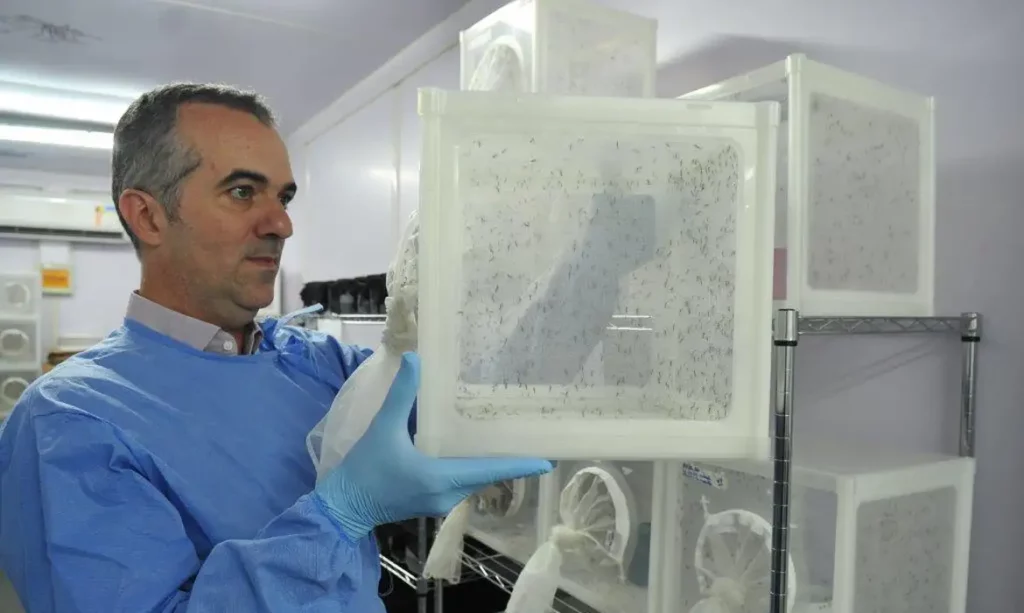
The journal Nature has released its list of the 10 people who shaped science in 2025. Among them is Brazilian scientist Luciano Moreira. His work focuses on inhibiting the transmission of diseases carried by the Aedes aegypti mosquito through the use of the bacterium Wolbachia.

An agronomist engineer and a licensed researcher at the Oswaldo Cruz Foundation (Fiocruz), one of the most important biomedical research institutions in Latin America, Moreira has worked for over 30 years in the search for alternative methods to combat mosquito-borne diseases.

According to the World Health Organization (WHO), insects are responsible for transmitting diseases that kill more than one million people every year worldwide.

In response to this challenge, Moreira developed the Wolbachia method, which consists of introducing the bacterium into mosquito eggs, thereby preventing the replication of pathogenic viruses.

The relevance of Luciano Moreira’s research becomes even more significant within the Brazilian context, where diseases such as dengue, chikungunya, and Zika continue to recur as annual epidemics, especially during the warmer seasons.

In 2024, Brazil recorded a historic peak, with more than 6 million cases of dengue throughout the year, 45 percent of which occurred during the summer months.

According to experts, the combination of a tropical climate, unplanned urbanization, and climate change favors the proliferation of the disease-carrying mosquito.

“The Wolbachia Method is one of the most promising and innovative strategies to reduce dengue transmission (as well as Zika and chikungunya). It is not a ‘treatment’ for people who are already ill, but rather a form of prevention that acts directly on the mosquitoes that transmit the viruses,” explains biologist Nathalia Costa.

She emphasizes that, despite major Brazilian scientific discoveries, the country still does not invest sufficiently in the biomedical field, causing many research projects to be interrupted.

Carolina Batista, a biomedical scientist at the Federal University of Rio de Janeiro (UFRJ), argues that instability in research funding leads to demotivation among professionals in the field.

“Brazil is recognized worldwide for training great scientists. I often say that we don’t do science, we perform miracles. Because of this great creativity in solving problems, Brazilians are highly sought after abroad in all areas of knowledge. What is missing? Beyond financial incentives, proper infrastructure. Power outages, lack of water, high taxes on laboratory reagents, everything discourages researchers. Many ‘brains’ have left the country in recent years.”

She also highlights the importance of the Wolbachia Method not only for the population but also for the environment.

“The project is wonderful because it found a natural way to combat mosquitoes while maintaining environmental balance, unlike what happens when a species is simply removed from nature. In addition, it is a cheaper health technology than vaccinating or treating the entire population.”

The so-called “anti-dengue” mosquitoes, still in the production phase, have become part of Brazilian public policy. The city of Niterói, in the state of Rio de Janeiro, is a pioneer in using these mosquitoes to reduce cases of epidemic diseases.

With a significant reduction of up to 89 percent in the tested neighborhoods, the experiment demonstrates the success of the method, proving to be a sustainable public health strategy that protects the entire community.

Recognized by the global scientific community, Luciano Moreira’s work goes beyond Brazil’s borders and influences public health policies around the world.

The Wolbachia Method is being implemented through the World Mosquito Program (WMP) in around 15 countries, including Australia, Colombia, Indonesia, among others.

Moreira’s presence on Nature’s list symbolizes not only an individual achievement, but also the recognition of the potential of Brazilian science to produce solutions capable of saving lives on a global scale.

Meet the other people on Nature’s list

In addition to Luciano Moreira, the magazine also highlights: 

  • Susan Monarez, from the United States, a leading advocate for science-informed public policy;
  • Achal Agrawal, an Indian scientist known for exposing scientific fraud and retractions;
  • Tony Tyson, from the United States, a pioneer in telescope development and leader of the Vera C. Rubin Observatory project;
  • Precious Matsoso, from South Africa, regarded as a key figure in negotiating the global treaty against pandemics;
  • Sarah Tabrizi, from the United Kingdom, for her efforts to advance treatments for Huntington’s disease;
  • Mengran Du, a Chinese geologist responsible for the discovery of new ecosystems in the deep ocean;
  • Liang Wenfeng, also from China, for innovations in collaborative artificial intelligence;
  • Yifat Merbl, an Israeli scientist, for breakthroughs in understanding the immune system; and
  • K.J. Muldoon, a baby born in the United States who has become a symbol of progress in hyper-personalized gene therapy, marking a milestone in the treatment of rare diseases.
What Kind of Bat Are You?

When I was a kid and played little prince-turned-to-toad-type games, I always used to wonder: Hmmmm? What kind of peeper would I be?

Toadie

Would I be the Goliath frog of Cameroon? They say it’s the largest Conrauidae amphibian anywhere in the world. A beast of a frog. Giant. Massive. Monstrous. A right warty ruin. These so-called “slippery frogs” can grow to the size of a baby deer. And they’re born to run — just like Bruce Springsteen or a real deer. Drop, trot. Hop, hop. Takes four hands to hold type shit.

So if I had to be a bullfrog, then it better be that same, slick dreadnought. That’s the frog I’ve always wanted. Conraua goliath. Camarooni leviathanicus. Froggy monstrosititus. Amphibi juggernautti. Toadus maximus. All gross, no glory.

Batty

As an adult, I’ve played a similar game when wanting to fly: What kind of creature would I be in flight? No stupid bird for sure. All beak and big feathers. Weak! And far too pretty, to be sure. Soaring through the clouds. Bathed in light. Close to God and Daedalus too.

No way! I’d rather be a bat. A giant grotesque. A rodent with fleshy wings and nighttime flight. Eating insects and fruit. Sucking nectar from flowers. Drinking blood from a field full of cows.

But what sort of bat would I be?

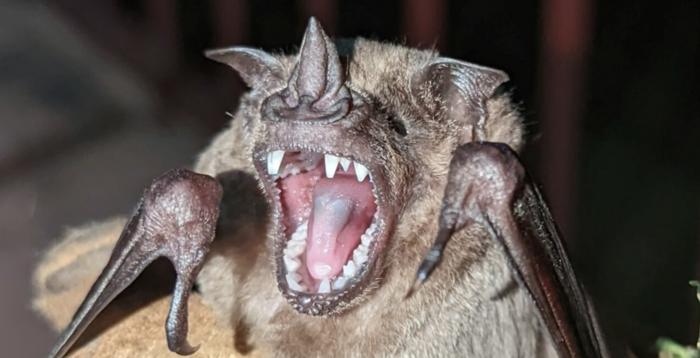
Closeup of a bat with its mouth wide open, exposing tongue,  molars, and incisors clearly
The Jamaican fruit bat Artibeus jamaicensis has a short jaw, like many fruit-eating bats. (Image courtesy of Alexa Sadier via Eurekalert)

A few bat muthafuckaz

Would I be that gorgeous beast known as the flying fox? He of golden-crowned, golden-capped locks? The giant fruit bat Acerodon jubatus is the biggest one of all. A bat out of hell — like a small cat with wings, only with a rat face and groovy two-tone hair. They eat only fruit and the occasional insect taco too. Plus what a cool name… Jubatus? Chew bet I am!

But forget about him. The coolest, most awesomely enviable of all bat names is Vampyrum spectrum, the so-called great spectral bat — also known as the American false vampire bat. These bats are remarkable. Loving. Social. Popular.

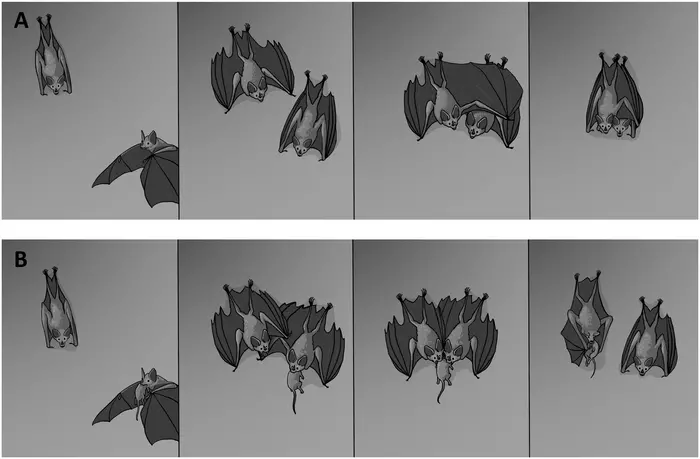
Last month, scientists at the Museum of Natural History in Berlin, Germany, reported hiding a camera in a tree and filming one group of this curious species. These bats sometimes sleep in balls for warmth on cold nights, with the outside bats wrapping their wings around the group. They also give each other bro-hugs, apparently. Most significantly, they participate in a takes-a-village form of “biparenting,” where hunting adults bring back food to share with random pups in the batty ball — often not even their own offspring. Gotta love ‘em.

The B&W illustration has two rows of four panels. The top panel shows two bats encountering each other and hugging in a side hug. In the bottom panel are the same two bats. One brings a rodent in its mouth and gives it to the other bat who greedily accepts.
Social behavior in Vampyrum spectrum bats. The top four panels show a classic bat “bro hug.” The bottom four panels depict an “Ooo… gimme, gimme” example of biparenting. (Image courtesy of Paulo C. Ditzel (2025). CC-BY 4.0 via PLOS One)

Could I be part of that bat ball too — a screeching, gnashing commensal hunter and communal hugger? Maybe.

Or would I be the greatest hunting bat of all… the amazing incomprehensible Nyctalus lasiopterus, otherwise known as the greater noctule bat.

In-flight mealtime

This month, researchers studying lasiopterus from Aarhus University in Denmark and Doñana Biological Station in Spain showed that the bats are rare predators indeed. One of the few hunters in the entire animal kingdom capable of taking down a migrating songbird from a high-altitude avian flock at night. Bon appe-tit.

The greater noctule bat flies to an altitude of more than 1,200 meters (~4,000 feet). There, using sonar, it blindly trolls the mid-troposphere in search of a bounty. Ultrasonic screeches echolocate its path and pinpoint its prey: an unfortunate warbler, robin, or other songbird booty. The noctule bat picks them off. One by one. It can catch birds almost as big as itself.

While it takes them down, the bat doesn’t take them, uh, down. Audio recordings the scientists made of bats catching birds in mid-flight reveal their screeching continues, echolocating around, after the capture. And there are other sounds as well. Chewing sounds. Spitting sounds. Drooling. Yum. In one recording, a noctule bat devours its songbird dinner for 23 minutes, all while soaring high above Earth.

Ah, sweet mystery of life

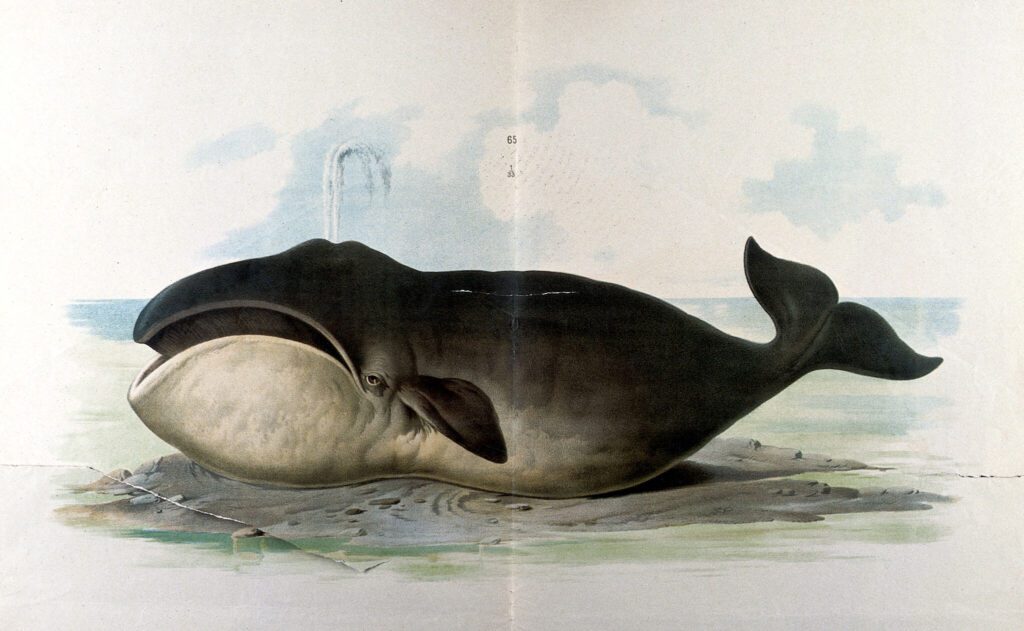
What mysteries these bats keep close. Some may even spill the secret to human longevity. They buck nature’s trend of live small, die young. Mice and rodents have lifespans measured in months — dogs and cats, years. Human life spans average out in decades, and larger mammals can live even longer still. The mighty 4-meter (13-foot) bowhead whale can easily live to be 200.

A color lithograph plate from a 19th century book depicting a bowhead whale done by a talented artist. A crease line down the middle of the print suggests a two-page spread in a book.
An 1860 chromolithograph by F. Gerasch of a bowhead whale resting on a sandbank. (Image courtesy of F. Gerasch via Wellcome Trust)

But bats buck this trend and then some. For their size, they are the longest lived of all mammals, according to zoologist Emma Teeling of University College Dublin. “There are 19 species of mammal that live longer than humans, given their body size,” Teeling told me in a 2022 interview. “And 18 of these are bats.”

For the last 13 years, Teeling has led a group of researchers in a mobile lab to the north of France. As I have reported, they drive through the pastoral hills and picturesque towns of Brittany to arrive at an old Gothic church whose belfry serves as both flophouse and nursery to a population of around 5,000 bats. Then they get together with local townsfolk to capture, weigh, measure, and release every bat in this population, repeating the same procedure with the same bats the next year.

Teeling likens the secrets of a bat’s biology to a Ferrari with good brakes — a car that’s fast as hell but can stop on a dime without setting the tires on fire. Their bodies resist cancer. They tolerate viruses (thank you for that whole COVID-19 thing, by the way). And learning those lessons may someday help humans live longer.

Dracula as Fat Bubba Bat

But if truth be told, I want to be the weirdest bat of all, which in my opinion is the most famous bat in nature: our dear, dear, dreaded creature-of-the-night friend, Desmodus rotundus.

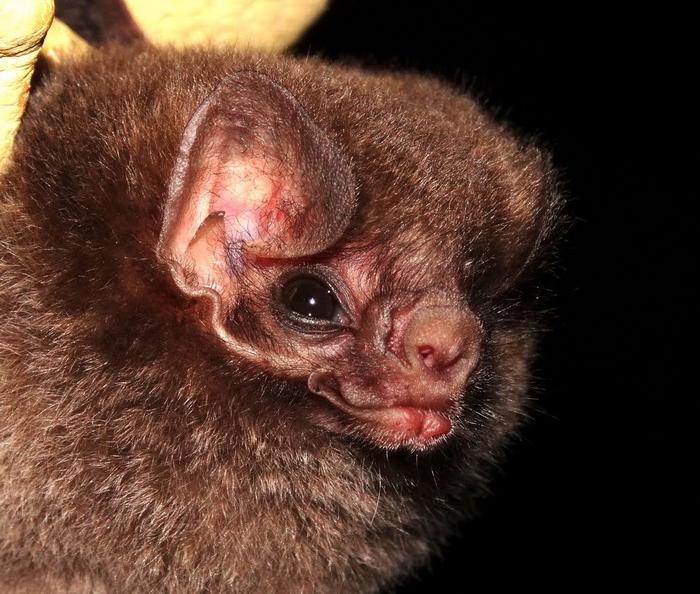
Vampire bats are biological wonders. They have spherically distensible bellies, shorter jaws, sharper teeth, and can drink twice their body weight in blood every night. Ever seen a fat, full vampire bat taking flight? Think about a bowling ball with wings. They’re not called rotundus for nothing!

Closeup of a bat with its mouth closed, but a brown hairy face and a fat, round body.
The hairy-legged vampire bat Diphylla ecaudata feeds primarily on the blood of birds. It is one of three living species of vampire bats. Fewer teeth and shorter jaws serve their specialized diet. (Image courtesy of Sharlene Santana/University of Washington via Eurekalert)

They have special pits in their nose lined with infrared detectors — heat vision goggles, essentially. That physiology allows them to spot the pulsing, blood-pounding vein of a large mammal in the dark. They have no sweet and bitter taste receptors on their tongues, which means they’ve lost the taste for anything other than gimme-more blood. And they get it. They have razor sharp teeth, another evolution. Self-sharpening teeth, in fact. With no tooth enamel, their teeth wither into a keenly honed edge, always. Not just sharp — razor sharp.

All that allows them to spot, bite, and spout open a main line cut through the rough fur and thick hide of their traditional dinner — mountain lion or other large mammal — or sometimes even crocodiles, turtles, and rattlesnakes. Such brave bats!Their modern diet is often an all-you-can-eat bonanza of bitten ankles of domestic cows and sheep.

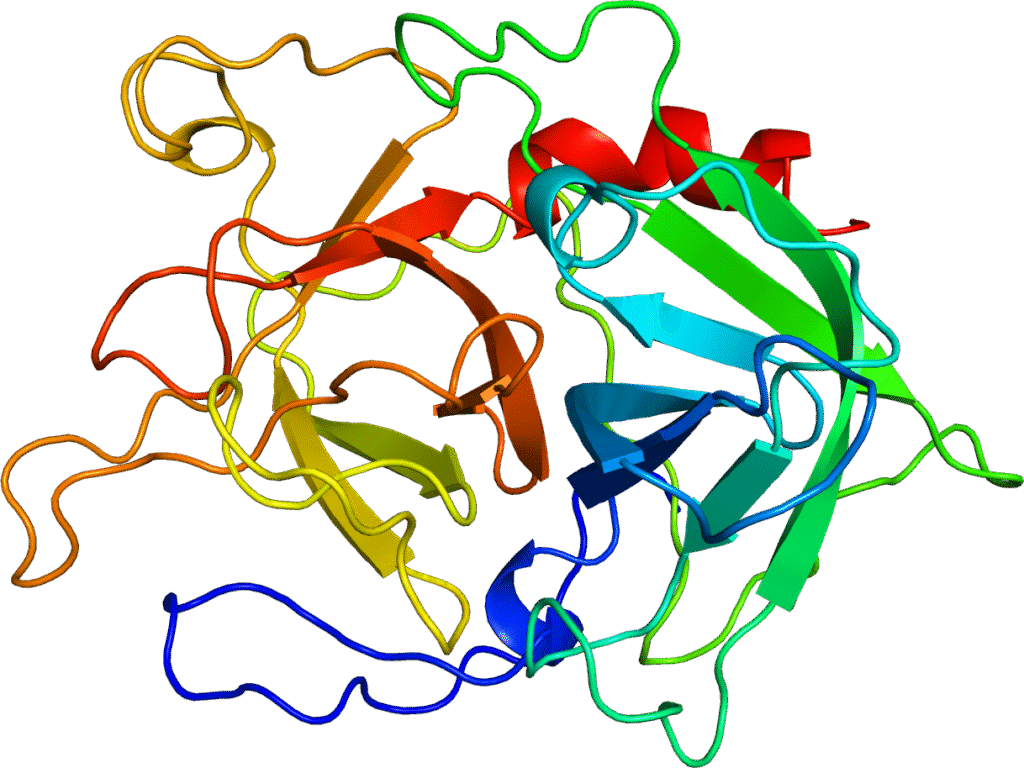
Vampire evolutionary adaptations do not stop at opening wounds, either. The bats have grooved tongues, like built in straws. Lick, lick. Gulp, gulp. They also produce chemicals that keep the flow of blood unstaunched via an anticoagulant present in their saliva — affectionately dubbed “Draculin.”

Colorful ribbon diagram of an enzyme molecule based on its atomic structure. The art shows large unstructured regions as well as some beta-sheets and one alpha-helix.
3D structure of desmoteplase, a compound derived from Draculin. (Image courtesy of Protein Data Bank coordinates (PDB #1A5I) via Wikimedia Commons)

Large animals will kick these annoying vampire bats away when they bite. Those fangs… Oh mommy it hurts! But the more the bat licks the wound, the better it feels. The more the searing pain subsides. The cows stop fighting back. Bat licks are soothing. Nice. They have painkilling analgesic compounds on their tongues as well that soothe the wounds. Licks de-staunch and double salve. Let them do it, bitter bitten cows moo. It doesn’t hurt. Feels good.

Vampire bats are also social, though disgustingly so. Rather than wallow in their own post-sanguine puffery, a vampire bat will not hesitate to regurgitate a share of its bloodmeal with its brood mates. They literally vomit-share directly into the mouths of their loved ones. (Candy corn anyone?)

And finally… There’s one feature of the vampire bat that I love the most. They have freakishly large thumbs, which they use in conjunction with their strong thighs to launch themselves into the air. It ain’t pretty, waddling down the runway into a freakish thumb Cabriole caper. But it works. They launch themselves time after time into the nighttime sky and escape — to bite and suck and drink (to later vomit) and live another day.

I’ll have what she’s having.

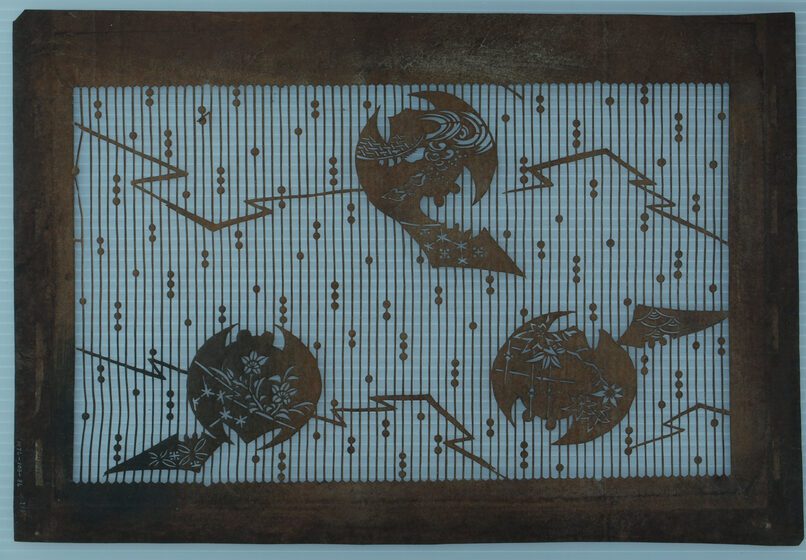
 A delicate Japanese cut paper Katagami art showing three bats decorated in various nature motifs amongst vertical bamboo stripes.
A Katagami of three bats dated mid 18th or early 19th century and now part of the Cooper Hewitt, Smithsonian Design Museum Collection. Waves, bamboo, maple leaves, and multiple blossoms give life to the lucky silhouettes on a medium of mulberry paper (kozo washi) treated with fermented persimmon juice (kakishibu), and utilizing silk threads (itoire). In Japan, bats symbolize good luck. (Image courtesy of Helen Snyder via Smithsonian)

Litterbugs and Thieves Go Gently Into That Good Night

A telltale trend in true crime stats dropped out of urban South Yorkshire County, England, this week, and it has rekindled my love for citizen science. Why? I’ll explain that in a moment. 

For now, just know this: the trend emerged from a massive analysis of illegal behavior in that one British district over an entire decade. It showed that certain crimes — like burglary, robbery, bicycle theft, or vehicle offences — occur more frequently in the dark.

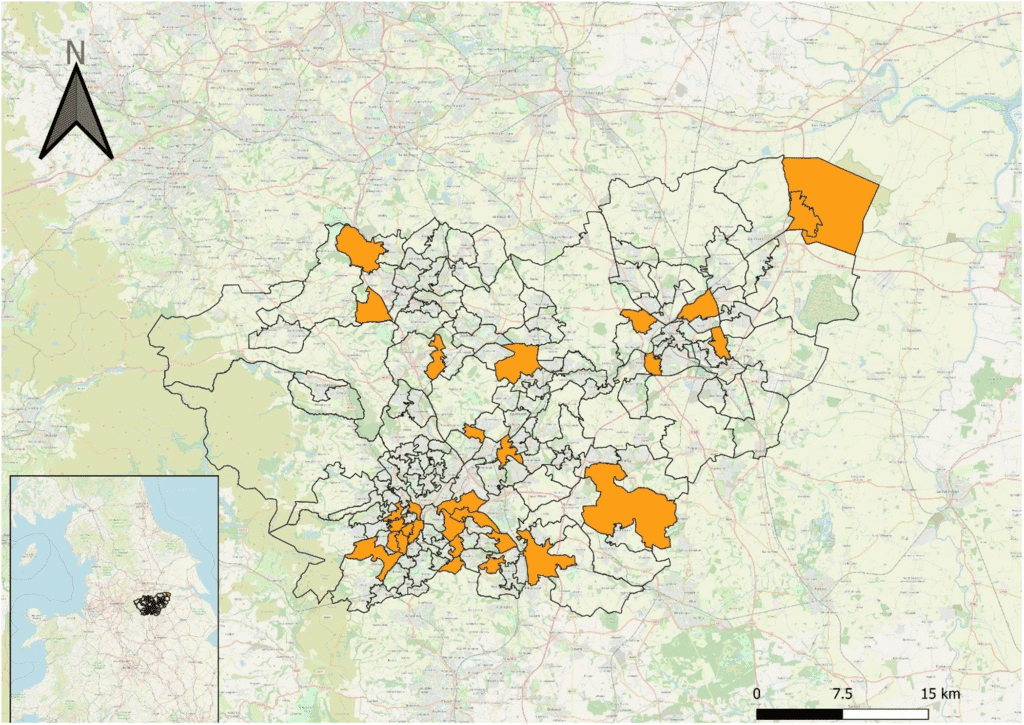
Conducted by a team of architects at the University of Sheffield and members of the South Yorkshire police department, the study examined all 990,446 crimes committed in the county from 2010–2020, mapping where they occurred and at what time of day. As they described in the journal PLOS One last week, the researchers found a correlation between light and crime, concluding that the risk of certain crimes grew after dark. 

A map of the county with high-crime districts highlighted in orange.
(Image courtesy of Uttley et al. via PLOS One. CC-BY 4.0)

Crime-after-dark hotspots in South Yorkshire, England, 2010–2020.
A map of the county with high-crime districts highlighted in orange.

They also identified about two dozen specific hotspots across the county where crime rates are especially elevated in darker places — all of which suggests that urban lighting design could play a role in reducing crime. 

Taking a step back for the moment, many other studies have shown, not surprisingly, that dark places instill fear in people. Everyone is afraid of the dark to some degree, whether we admit it or not. And research shows people feel safer after dark in brightly lit places like parking lots. But the relationship between darkness and crime is less clear. 

More light, less crime?

Some studies show that if you install better street lighting, crime goes down. But confusingly, crime rates often go down in those places during the day as well. Other studies show no relationship between streetlights and crime rates at all. And some even show places with less lighting see lower crime. Criminals are afraid of the dark as well?

This new study is a breakthrough, however, because it shows a definitive connection between darkness and crime in urban areas, and it defines what specific types of crime, like bicycle theft, are more likely to take place in the dark. All that has rekindled my love for citizen science. 

Mushrooms, monarchs, and manatees

What is citizen science? It’s everything, literally. Gazing through telescopes, ripping out invasive plants, taking pictures of mushrooms, geolocating trees, counting butterflies and birds, making soil pH measurements in your backyard, and monitoring your own biometrics for drug discovery. Here are a few specific examples (from a longer searchable list):

Citizen scientists are a unique set of people. All ages. All places. All walks of life. They are the telescope hobbyists, the do-gooders, the day trippers, the crowdfunders, the ethical hackers, the quantified selfers, the street-marching activists, the land and sea photographers, the storm chasers, the nerdiest of the nerds, and the just plain curious. Many come with nothing more than a smartphone, a pair of hiking boots, and some attitude. 

Others invest small fortunes in their art — underwater camera rigs with mirrorless SLRs, floating flashes, wetsuits, fins, tanks, regulators, reef charters, and salty old boat captains thinking “We’re gonna need a bigger hobby.” 

They are the unsung heroes of astronomy, climate change, ornithology, wildlife monitoring, land management, freshwater protection, coastal preservation, and rare and neglected disease research. They track coastal landslides, mushrooms, urban coyotes, zombie asteroids, Great White sharks, freshwater pollution, saltwater manatees, invasive weeds in South Australia, feral pigs in Canada, mountain goats in Montana, boreal toads in Colorado, black swans anywhere in the world, and monarch butterflies heading home to Jalisco, Mexico. 

Two boys digging dry leaves near brick wall
(Image courtesy of Harrison Qi via Unsplash)

My own first foray into citizen science came more than 25 years ago when I was in graduate school.  One of my first pieces of journalism covered a local ecology project in Baltimore that enlisted classrooms in surrounding counties and trained children in these classrooms to take pH, temperature, and moisture readings in their own backyards. Years later, when my very own children were that same age, I got an idea for a citizen science investigation of my own.

I had visions of starting a massive project with my kids and their friends. We would walk along the Rock Creek, our local waterway. We would count pieces of litter dropped as people walked the paved outer path beside the parkway or the overgrown single-track dirt inner path on the banks of the creek. We would do this one day before one of the two big semi-annual volunteer cleanup days the county organizes. And we would map which parts of the park had the most trash and needed the most attention.

I had grand ambitions about what to do with this data. I thought it could steer resource allocation during volunteer clean-ups. The county could prioritize certain stretches of the park for maintenance throughout the year based on these analytics. Then when the small army of well-meaning local residents descended on the park with thick plastic bags and thin metal pickers once or twice a year, they would have a map. The organizers could use the data to stage the volunteers effectively where needed most. I imagined expanding from my little stretch of the Rock Creek to beautification efforts up and down the entire watershed. 

Of course, it didn’t work out that way. My kids were not as interested in my project as I was. Even so, I went out myself one afternoon, full of citizen-science spunk: I came, I saw, I tabulated tin cans.

But even though I had fun crawling through the brush collecting data, I dropped the ball and never contacted the county or the cleanup day organizers. One volunteer cleanup day came and went. And another. I soon forgot about the whole thing, even though what I discovered in my own data intrigued me.

Darkness scorns the witness tattle

My assumption at the start was that I would find more trash in the places that saw more foot traffic—the kids parks along the trail and the places where urban planners placed benches and trash cans for the dog walkers and tired sloggers. Those places, I reasoned, saw more people so they would see more trash. Not so!

I found far more litter in the more remote parts of the park — the rough, unmaintained lone-hiker spurs jutting off the main path into the deep woods. These places saw the least amount of traffic and the most amount of refuse. Why? My hypothesis at the time was altruism. The remarkable influence of a million small, selfless acts. I reasoned that far more litter was dropped in the highly trafficked spots, but that there were also more genuinely nice people in those places who care enough to pick up someone else’s garbage when they see it. Less so in more remote parts of the trail.

But reading about the South Yorkshire police study this week made me reconsider. There’s another mechanism as well, I think. Crime rates increase in dark places, the study teaches. And why not. Criminals love the darkness. It’s their friend. They may fear the dark, just as all humans do, but what they fear more is getting caught. So they work in the shadows. Darkness favors brazen theft and scorns the witness tattle.

So that’s my new hypothesis. Litterbugs love the dark as well — not the darkness of night but the darkness of solitude. They walk in remote sections of park with purpose, I suspect, passing into thick woods and behind dense brush where no one can see. There they drop their trash, thinking: If a wrapper falls in the woods and nobody’s there, does it make a sound? 

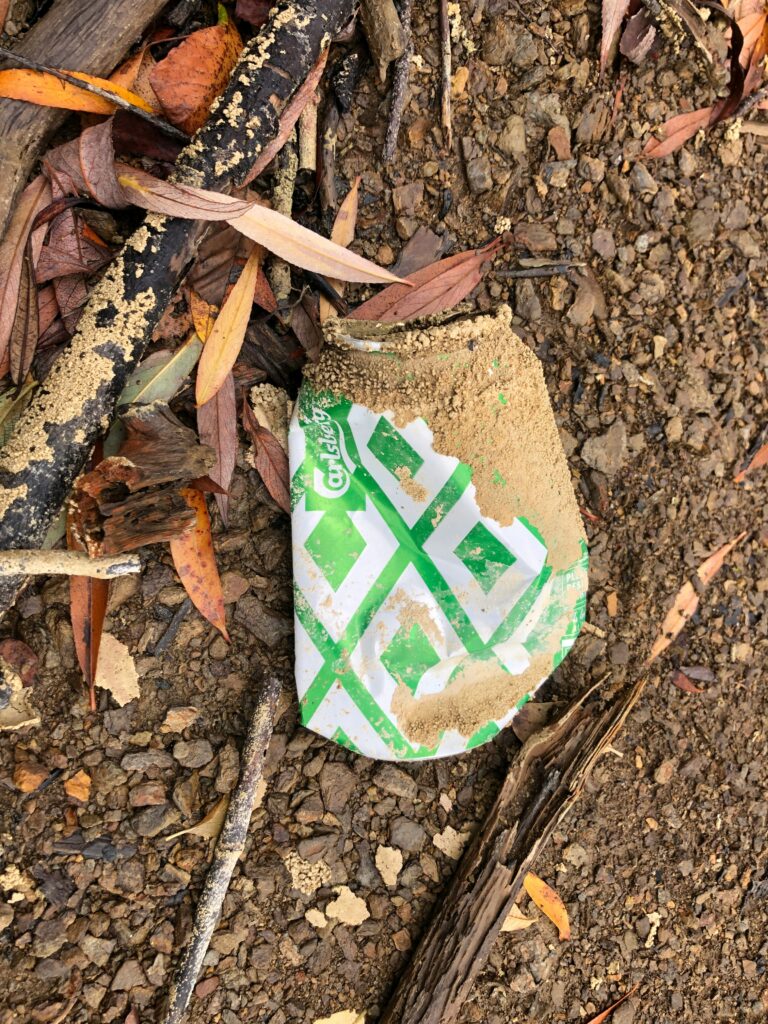
Crusty, crushed beer can lying among dirt, fallen branches, and dead leaves.
(Image courtesy of Red Dot via Unsplash)

Could We Become The Last of Us?

A pandemic caused by fungal spores is the exact premise of a popular gaming franchise called “The Last of Us”. Is there any justification for humans to fear a fungal-based diseased world?

We can start by defining the characteristics that plummet the fictional world into crisis. Without too many spoilers, the game uses Cordyceps fungus which has mutated. The resulting spores are able to infect humans by targeting their neural pathways, and also continue infecting new humans by transfer of body fluids. The driving goal of the world is to find a cure. Obviously, there are some shared characteristics to the world that we have lived through, which aids the game in creating an immersive scenario. Quick outbreaks lead to overwhelmed healthcare systems, which causes panic and worse, and the resulting disruption to daily life is felt on a global scale. The main difference is the level of violence a fungally-infected person is compelled to inflict on others.

So, can any fungus on earth create aggression? There’s no scientific evidence of such a fungus in the real world. Aside from being poisonous when ingested, there are some species of fungi that can “infect” a human which causes headaches and fever and fatigue. There’s even a species of Cordyceps fungi that is capable of infecting insects to alter their behavior to prioritize growth of the Cordyceps instead of the insect. But these insects and arthropods are small compared to humans. It’s virtually impossible that Cordyceps would be able to grow to an overwhelming concentration in humans. This is why the game stresses that the Cordyceps are a mutated species.

As a scientist, I wonder if we have already identified any genes within Cordyceps that would increase the strength or hasten the growth. So I looked and the answer was “no.” While Cordyceps is a well studied species, we have not discovered any specific gene that makes it a stronger parasite. So far, it seems like the reason Cordyceps is even able to manipulate behavior in its host is because of the fungal metabolites produced.

The problem is that ‘metabolites’ is a rather large umbrella term that can include complex neurotransmitters or simple sugars. This means it is possible that small molecules and neurotransmitters target the host’s nervous system, or that the immune system of the host is challenged leading to a significant change in behavior. Again, the size of an ant compared to a human means that a few Cordyceps cells are able to manifest as a significant disease. As humans, our immune system would likely recognize the invasive Cordyceps spores before they could replicate through the many many cycles needed to generate a substantial infection.

It seems rude to critique the practicality of infection without offering my own. I would have proposed using Chronic Wasting Disease (CWD) which is a serious transmissible spongiform encephalopathy that is killing deer, elk, and moose in the North American continent. I hope that you never witness such an infection, as it would mean a growing harm to nearby cervid populations, but deer and their genetic relatives experience weight loss, lethargy, and other symptoms that eventually lead to death. The slow development of symptoms is part of the reason for the widespread infections, as deer appearing healthy are able to engage in behaviors that lead to transmission before the other members of the herd realize they are at risk. Little by little, their bodies become infected with high amounts of misfolded proteins, more specifically known as prions, and these levels of prions are able to interfere with normal behaviors controlled by the nervous system. The deer pace, and droop their heads, and their brain becomes increasingly more inflamed. Along with the deer, wildlife management agencies are heartbroken to manage infections in these populations. There is not yet a cure, so the best course of action is to isolate suspected infected deer from the main herd and take action as necessary to spare the deer continued pain. 

Currently, there is no reported threat to humans for CWD. Similarly, a zombie apocalypse as depicted in popular culture is not a scientifically feasible possibility in the real world. The idea of a zombie outbreak, characterized by the reanimation of the dead and their subsequent attack on the living, is purely fictional and has no basis in science.

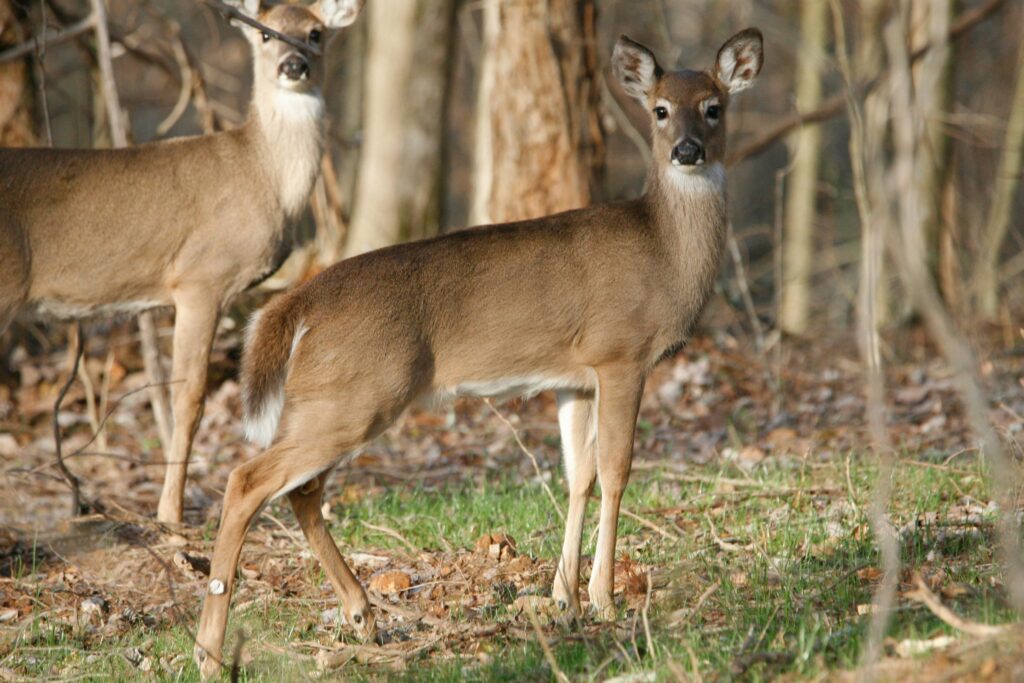
Two deer stand in a forest.
(Image courtesy of Seth Wickham via Unsplash)

However, there are some real-world scenarios that have been used as inspiration for the zombie genre. For example, some diseases like rabies can cause aggressive and erratic behavior in infected individuals, which could resemble the portrayal of zombies in movies and TV shows. Additionally, pandemics and other widespread outbreaks of infectious diseases could cause widespread panic and social disruption, which could mimic some elements of a zombie apocalypse.

It’s important to note that these real-world scenarios are still far from the classic depiction of a zombie apocalypse and should not be taken as evidence that such an event is likely to occur. They are simply points of inspiration for creative works, and should not be a source of fear or concern for the general public.

While the topics of dystopian-era diseases are not kind to the heart, we are not powerless. The genre of survival games are parallel to the world in which we all live. Similarly to how Sci-Fi is a feedback loop for innovation that can inspire accessibility, I believe that survival games breed empathy and awareness to horrifying diseases in our world. With every mind that begins to love the universes in fictional games, there becomes a new innovator in the world of medical interventions. Now it is your turn to share what diseases you have heard of that relate in some small way. One thing that fictional or non-fictional worlds need to survive is global collaboration to keep the balance of life safe.