
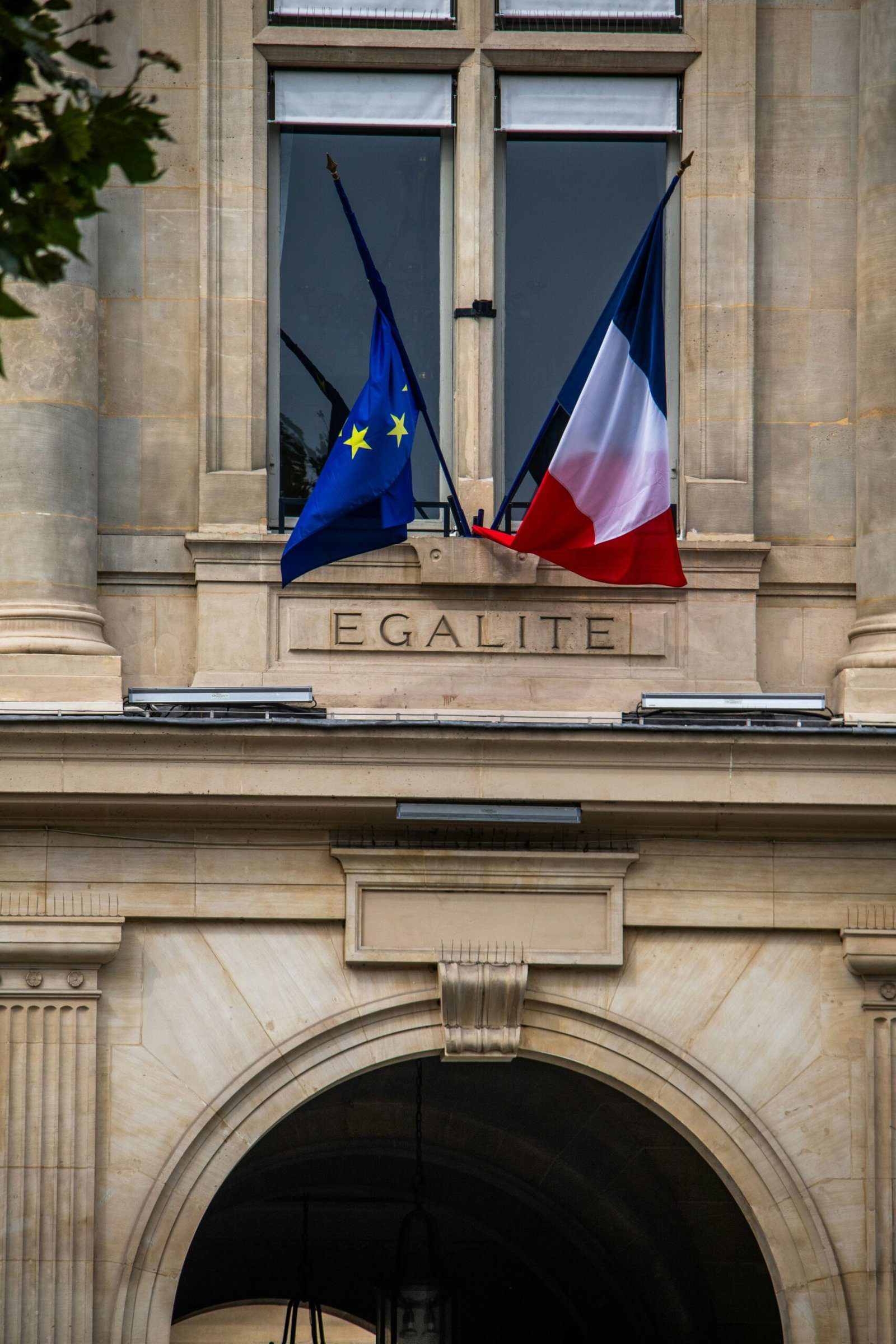
Explaining the strength of European populism

Why does right-wing populism appear so strong in Europe?

In a recent sign of its success, a populist party led by billionaire businessman Andrej Babis won parliamentary elections in the Czech Republic in October. Other European Union (EU) countries Hungary and Italy also have populist leaders.

In France, the government of centrist president Emmanuel Macron narrowly survived a no-confidence vote. The government has been flip-flopping after Prime Minister Sébastien Lecornu resigned after 26 days, only to return four days later. Macron faces a challenge in the polls from the far-right National Rally, led by Marine Le Pen.

The populist Reform UK is also doing strongly in opinion polls, while Germany’s right-wing AfD party has won state elections in the past year.

The rise of European populism is hard to counteract, because of the continent’s economic performance. Europe is lagging in both technology and  manufacturing, says Ronen Palan, professor of international politics at City St George’s, University of London.

“The fundamental problem that Europe faces is that the fourth industrial revolution skipped it,” Palan told Yuvoice in an interview.

“You have the American companies,  the Magnificent Seven – Meta, Apple etc. There is nothing in Europe remotely like that. Manufacturing excellence is now in China – China is far advanced. Europe is squeezed in between. Without a solution to that problem, we are talking about economic stagnation – Europe becomes a tourist attraction.”

The first industrial revolution started in Britain in the eighteenth century with inventions such as the steam engine.  The second industrial revolution of the late nineteenth century got a boost from the expansion of electricity, while computers led the third industrial wave of the late twentieth century.

The Magnificent Seven U.S. tech companies have stormed ahead in the U.S. stock market in recent years, helped by their role in the development of artificial intelligence.

Populist parties are offering little practical to address these economic concerns, but are playing on people’s sense of the precariousness of their lives, according to Palan.

Laggardness in Europe is also nothing new, he adds.

“Similar events took place in the 1970s. The European car industry was buffeted by the Japanese, the Americans were pulling ahead, the Americans and the Japanese were competing with one another. The answer was the common market and the single market, the creation of European champions, European competitors – we are in the same situation now.”

It has become harder for Europe to pull together as one force since one of its biggest economies, Britain, left the European Union following the Brexit vote, although Britain and Europe continue to collaborate on geopolitical issues, Palan says.

“Brexit created an institutional gap. The fact that Britain is out weakened Europe and weakens Britain,” he said, though he added that: “it doesn’t mean that if Britain were part of Europe, they would find a solution.”

The mood is not all going one way. A pro-European Union party won elections in September in the eastern European country of Moldova. Italian Prime Minister Giorgia Meloni faced a general strike and major protests in September and October following her refusal to recognise the state of Palestine, in contrast to other EU countries such as France and Spain. Left-wing as well as right-wing parties are also popular in France.

However, Palan points out that the rhetoric of both left-wing and right-wing parties is often similar, as right-wing parties such as France’s National Rally and Reform UK also promote strong intervention by the state. British think tank Chatham House said in an October report, that the National Rally’s economic policies were “closer in tone to French Socialist icon Jean Jaurès than to the Iron Lady (former Conservative British Prime Minister Margaret Thatcher)”.

These right-wing populist groups are taking their lead from U.S. President Donald Trump, whose language comes straight from the Marxist playbook, according to Palan.

“The Deep State is a Marxist concept, the idea that there is a small cabal of people – the bourgeoisie – controlling the state, and that Trump represents the working class against the entrenched state,” said Palan, adding that Reform UK leader Nigel Farage “is also adopting Marxist language – it’s very confusing.”

Francesco Rigoli, a political psychologist at City St George’s, University of London, says Europe’s biggest economies, Britain, France and Germany, could all have populist parties in government in a few years.

“The level of polarisation remains extreme,” he told Yuvoice. “There’s a feeling that the traditional parties have disappointed, that they have not fulfilled expectations. There’s a feeling that Europe is in crisis.”
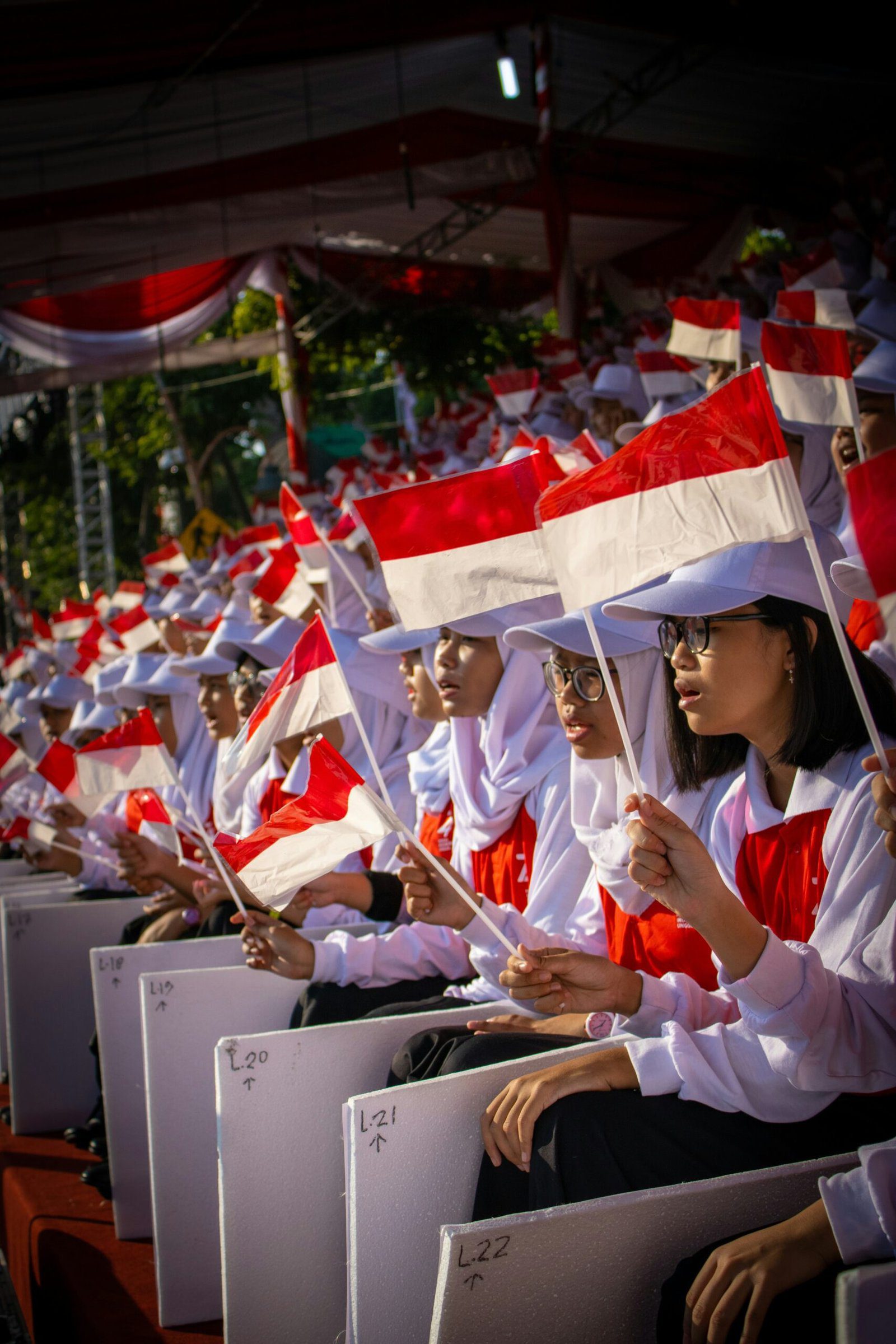
Indonesia-EU Trade Deal: A New Chapter in Economic Partnership

After nearly ten years of painstaking negotiations, Indonesia and the European Union have finally sealed a landmark trade agreement. The Indonesia-European Union Comprehensive Economic Partnership Agreement (IEU-CEPA) was signed in Bali on Tuesday, September 23, 2025, by Indonesia’s Coordinating Minister for Economy Airlangga Hartarto and EU Trade Commissioner Maros Sefcovic.

The timing couldn’t be more strategic. With the US imposing tariffs and global trade tensions mounting, this deal represents far more than just tariff reductions—it’s a calculated move in the geopolitical chess game of economic alliances.

The Numbers Behind the Partnership

The EU ranks as Indonesia’s fifth-largest trading partner, while standing as ASEAN’s third-largest after China and the United States. Last year, bilateral trade in goods totaled €27.3 billion, with the EU exporting €9.7 billion and importing €17.5 billion from Indonesia, according to European Commission data.

What’s on the Table?

The agreement promises substantial tariff eliminations. Indonesia will see 80 percent of export duties removed immediately upon the deal’s entry into force, climbing to 96 percent within five years. This opens significant market access for Indonesian products across EU member states.

For Indonesia, the deal means duty-free access for EU agricultural exports including dairy and meat, alongside zero tariffs on industrial goods such as pharmaceuticals, machinery, and motor vehicles.

Bhima Yudhistira, Executive Director of CELIOS and prominent economist, sees particular promise in the fisheries sector.

“Most fishery products consumed in Europe currently come from Vietnam and Thailand,” Bhima explained in an interview. “This agreement provides an opportunity for Indonesian seafood products—particularly processed fish—to capture greater market share in Europe.”

The tourism industry also stands to benefit, with EU cooperation expected to enhance Indonesia’s tourism infrastructure and accelerate sustainable tourism development.

How Indonesia Compares to Its ASEAN Neighbors

The EU’s approach varies significantly across Southeast Asia. Vietnam’s agreement (EVFTA), which took effect in August 2020, eliminated 99 percent of tariffs on Vietnamese manufacturing. Singapore’s 2019 deal focused heavily on digital trade, cross-border data flows, and services rather than commodities.

Indonesia’s agreement differs markedly—it’s commodity-driven, reflecting the country’s status as ASEAN’s largest economy and a G20 member rich in resources critical to the EU’s green industrial agenda, particularly nickel and minerals essential for EV batteries and supply chains.

Meanwhile, the EU’s negotiations with Malaysia and Thailand remain mired in challenges—palm oil sustainability concerns in Malaysia’s case, labor issues for Thailand. Malaysia only resumed FTA talks with the EU this past January 20, 2025.

The Thorny Issues That Remain

Not everything is resolved. The controversial crude palm oil (CPO) and nickel sectors remain flashpoints.

Indonesia suffered a defeat at the WTO over nickel following its ore export ban mandated by mining law. While Indonesia has challenged EU biodiesel duties at the WTO, the CPO situation differs due to persistent concerns about deforestation and labor practices.

“The EU has established standards for CPO-related products that Indonesia hasn’t yet met,” said Yusran, an international relations expert from Budi Luhur University. “But we need to understand the broader context—the Russia-Ukraine conflict drags on, and US tariffs are pushing the EU to seek new economic partners.”

Bhima pointed to a critical gap: Indonesia’s government hasn’t adequately incentivized independent and smallholder palm oil farmers to meet environmental standards.

“If we comply with these standards, we could significantly increase CPO exports to Europe,” he noted, adding that the EU employs traceability systems to verify plantation origins and sustainability practices.

On nickel, Bhima argues Indonesia squandered the decade-long negotiation period that could have been used to address the sector’s systemic problems.

“Our nickel industry is plagued with issues—massive coal power plants in mining areas, water pollution, hazardous working conditions for workers. There’s a long list that needs fixing,” he said.

While Indonesia can still export processed ore following the WTO ruling, environmental compliance issues in the nickel sector may ultimately undermine the EU’s willingness to source nickel from Indonesia.

Why This Deal Matters Despite Its Flaws

The IEU-CEPA represents a pragmatic win-win, even with unresolved issues lingering. Indonesia will need to demonstrate genuine commitment to meeting EU green standards—and other emerging economies watching these negotiations will pay close attention to how Indonesia implements environmental safeguards.

More broadly, this agreement reinforces ASEAN’s position as a pivotal player in global trade. Its successful conclusion may well pressure Malaysia and Thailand to accelerate their own stalled negotiations with Brussels.

In an era of trade wars and shifting alliances, Indonesia has secured its seat at the table. Now comes the harder part: delivering on the promises.