Kenya Mourns as Former Prime Minister, Raila Odinga, Passes Away

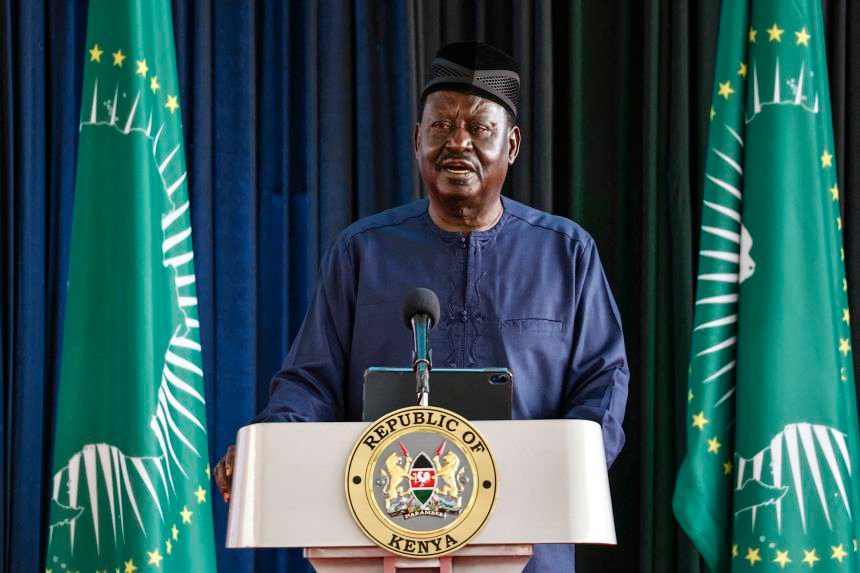
Hundreds of Kenyans and notable figures gathered at the Nyayo Stadium in Nairobi on October 17th 2025, to pay their respects to the late former Prime Minister, Raila Odinga, at his state funeral.

The former figurehead passed away at the age of 80 after suffering a heart attack on October 15th, during a morning walk at a health clinic in Southern India, where he was receiving treatment. Krishnan, a superintendent of police in Kerala, India, confirmed that Odinga was pronounced dead after being rushed to Devamatha private hospital.

During a speech at the funeral, Odinga’s daughter, Winnie, recounted her memory of her father, ‘I watched him at his best. I watched him fall and rise again, each time with grace, forgiveness, and hope.”
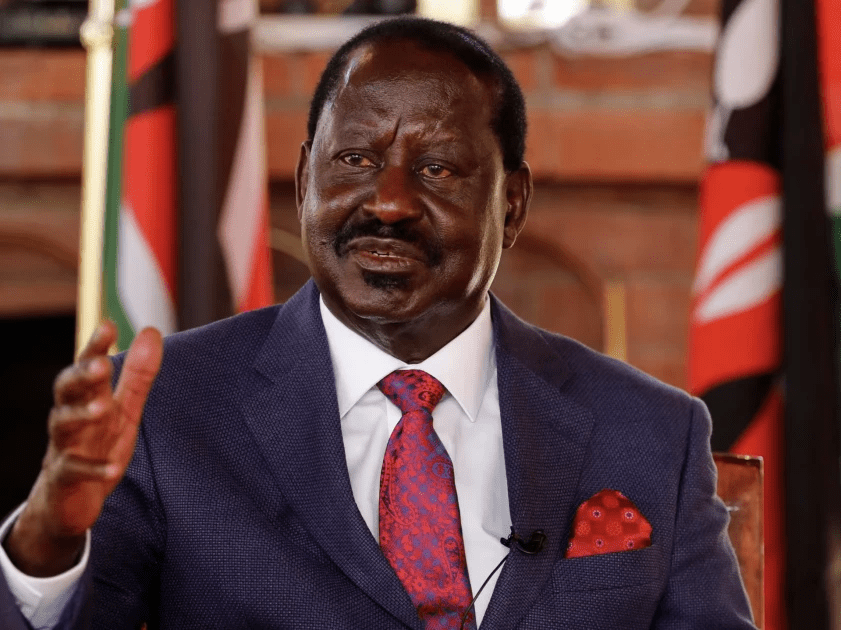
(Photo via The Nairobi Law Monthly)

Being one of the most revered political figures in Kenya, Odinga’s death has attracted condolences from prominent national and international figures. 

In a tribute to the late Prime Minister, President of Kenya, William Samoei Ruto said, “Through his words and deeds, he taught us that true patriotism is not measured by what we receive from our country, but by what we are willing to give in service to it.”

Similarly, the Prime Minister of India, Narendra Modi, commented on Odinga’s death via his official X handle, “Deeply saddened by the passing of my dear friend and former Prime Minister of Kenya, Mr. Raila Odinga. He was a towering statesman and a cherished friend of India.”

Raila Odinga and Indian Prime Minister Narendra Modi
(Photo by Narendra Modi via X)

Former United States president, Barack Obama, equally sympathized with Kenyans, saying, “Raila Odinga was a true champion of democracy. A child of independence, he endured decades of struggle and sacrifice for the broader cause of freedom and self-governance in Kenya…I know he will be missed.”
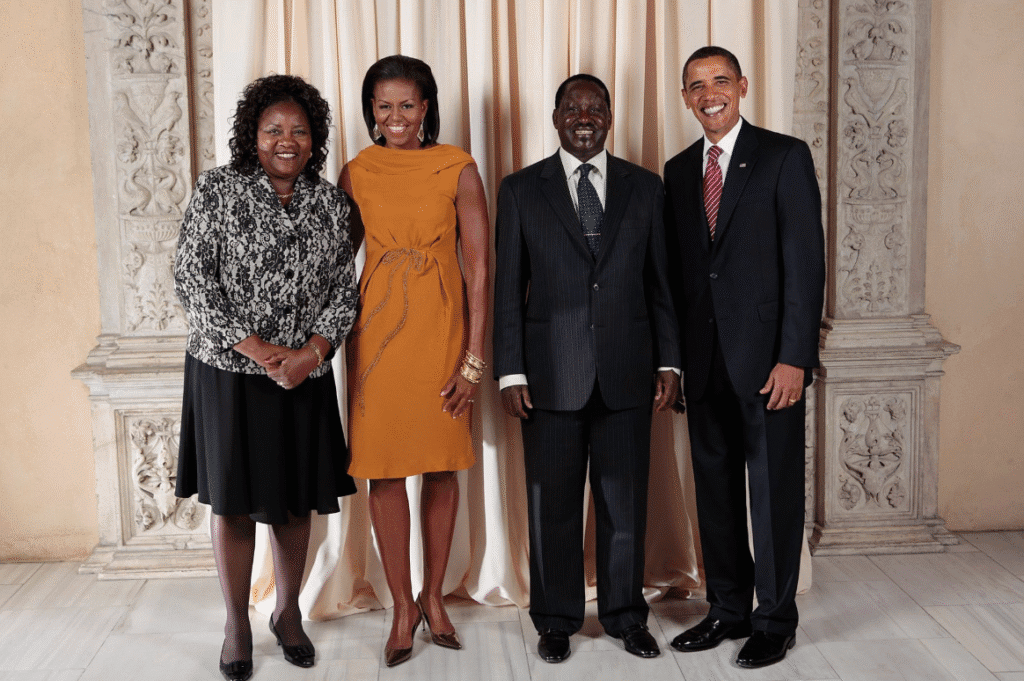
Right to left: Barack Obama, Raila Odinga, Michelle Obama, Ida Odinga
(Photo by Barack Obama via X)

Many Kenyans, who fondly referred to Odinga as ‘Baba’, also took to social media to express their sadness about his death. One user commented, “Every man dies. Not all men live. Baba Raila Amolo Odinga lived. Impactful both in life and death.”

Raila Odinga was born on January 7, 1945, in Maseno, Kenya. As the son of Kenya’s first vice president, Odinga’s exposure to politics began from early childhood. It wasn’t until the late 90s, however, that he became actively involved in politics.

Odinga was notable for his fight against one-party dictatorship in Kenya. In 1982, Odinga was arrested and imprisoned for six years after allegedly plotting a coup against then-president Daniel Arap Moi.

Police arrest of Raila Odinga
Police arrest of Raila Odinga (Photo by Raila Odinga via X)

Despite running for the office of the presidency five times, Odinga never won any elections. He however, occupied various positions in Kenya, including Minister of Roads, Public Works, and Housing (2003-2005), Minister of Energy (2001-2002), and Prime Minister (2008-2013).

As Kenyans continue to turn up in numbers to mourn the death of the former Prime Minister, his wife, Ida Odinga, urges people to remain peaceful and avoid repeating the tragic stampede that resulted in the deaths of others.

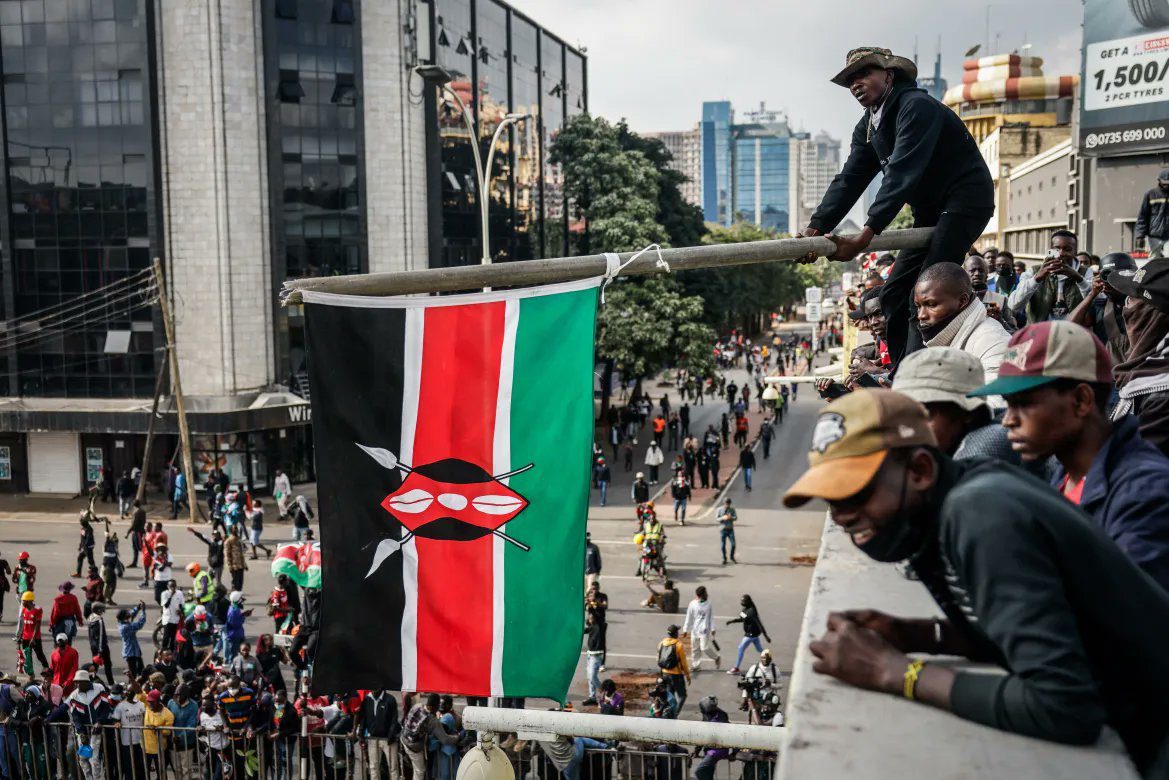
Fewer babies, more growth?

Who doesn’t love babies? They’re cute and they will grow up to support us in our old age. But there’s a problem – people are having fewer of them. Global fertility rates have fallen by more than one child per woman since 1990, to 2.2 live births in 2024, according to United Nations data. The growing financial burden of people living longer has caused alarm throughout the globe. China dropped its one-child policy in 2016, relaxing it further to allow families to have three children in 2021, yet the UN still estimated China’s 2024 birth rate at only just over one child. Latest data from Britain shows fertility rates are at their lowest since records began in 1939, at 1.41 birth per woman. Other European countries have even lower rates, including countries usually regarded as family-orientated, such as Italy and Spain.  But governments which have looked to replace their own populations with younger immigrants have faced pushback. The Brexit vote in Britain to separate the country from the European Union was linked to the EU’s open immigration policy towards its member countries, and anti-immigrant protests have continued in Britain this year.

However, there’s an upside to falling fertility rates. Emerging markets economist Charlie Robertson sees the lower number of births as a boon for developing countries with young populations such as Kenya.

“It’s incredibly dangerous, the Western media narrative about how awful ageing societies are, implying that high fertility rates are a good thing,” he told Yuvoice in an interview.

In Kenya, where the average birth rate has dropped to just over three, compared with nearly five 20 years ago, growth will be turbo-charged in the next few years because in smaller families, parents can afford to put aside savings. More savings mean more money in the banking system, and when the banks are flush with cash, they tend to lend to businesses at lower interest rates. This makes it easier for businesses to expand, driving economic growth. “It’s impossible to have a big banking system with high fertility,” says Robertson.

Fertility rates have played a major role in Western history. Robertson says Marx was wrong on demographics, as he assumed that the high fertility rates of mid-nineteenth century Britain would continue. This would increase competition for jobs, leaving many jobless and ultimately leading to revolution. Instead, “the fertility rate began to slow and continued to decline, we didn’t reach that tipping point”, Robertson says.

The key to lower birth rates is education. When women are educated, they often have fewer children. “You give them the possibility to have a career, to have a choice,” according to Robertson.

So which developing countries are set to benefit from lower fertility rates? In addition to Kenya, Robertson highlights Egypt as poised for take-off after its fertility rate fell in 2019 below three, the magic number for kickstarting growth. Nigeria, with a fertility rate of 4.4, will take longer to industrialise.

In Asia, a fertility rate of 2.1 in Bangladesh translates into faster growth than in Pakistan, for example, where the rate is 3.5. In Afghanistan, meanwhile, a lack of education for women will guarantee the country has “continuing decades of poverty” according to Robertson, because fertility rates will remain high.

His views are controversial with those who feel that a higher birth rate is helpful for families in countries with no social security net. A recent report from development economics platform VoxDev, for example, shows that when women in Africa have a higher income, they have more children to safeguard their long-term economic security.

On the whole, economists in developing countries are on board with the importance of lower fertility rates, according to Robertson, but “politicians don’t get it”. Maybe baby-hugging is just too attractive a photo opportunity for politicians to discard it.

Parliament Set To Make Drastic Moves After Gen-Z Led Kenyan Protest Leaves 16 Dead

Kenya’s Parliament moves to table a restrictive motion on protests in the country following the violent waves of protests in the country in the last two years.

Days after the latest demonstration in the country, the Parliament of the country is now said to be threatening the constitutional right of the people to protest by suggesting laws that will restrict them.

This law will force protest movements to register full names of individuals, addresses of individuals, routes planned, number of protesters, as well as slogans to be chanted during protests.

The proposed law comes after thousands of Kenyan youths marched in protest on 25 June 2025 in the country’s capital, Nairobi, to air out their grievances against the corrupt government, express their dissatisfaction surrounding the mysterious disappearances of fellow Kenyans, and illegal operations of the police force.

This June marked a year since the country witnessed a violent anti-tax bill protest that left 60 people killed and several injured. 

According to a former Member of Parliament, George Koimburi, the controversial financial tax bill was passed by lawmakers in 2024, after the Members of Parliament were offered 2 million in Kenyan Shillings to vote in favour of the bill.

However, after the deadly protest that left the country shaken, the Kenyan president, William Ruto, refrained from signing the bill, stating, “I concede, and therefore I will not sign the 2024 finance bill.”

In honour of last year’s anti-tax protest and to mourn those who were lost during the demonstration, Kenyans came out in their numbers once again, insisting that they have yet to see any substantial changes one year after they marched to parliament demanding a better system.

According to Amnesty International Kenya, the death toll in this year’s protest is marked at 16, while at least 107 persons are said to have suffered from injuries resulting from bullet hits. Al Jazeera notes that peaceful protesters were attacked by police using live rounds, tear gas, rubber bullets, and water cannons.

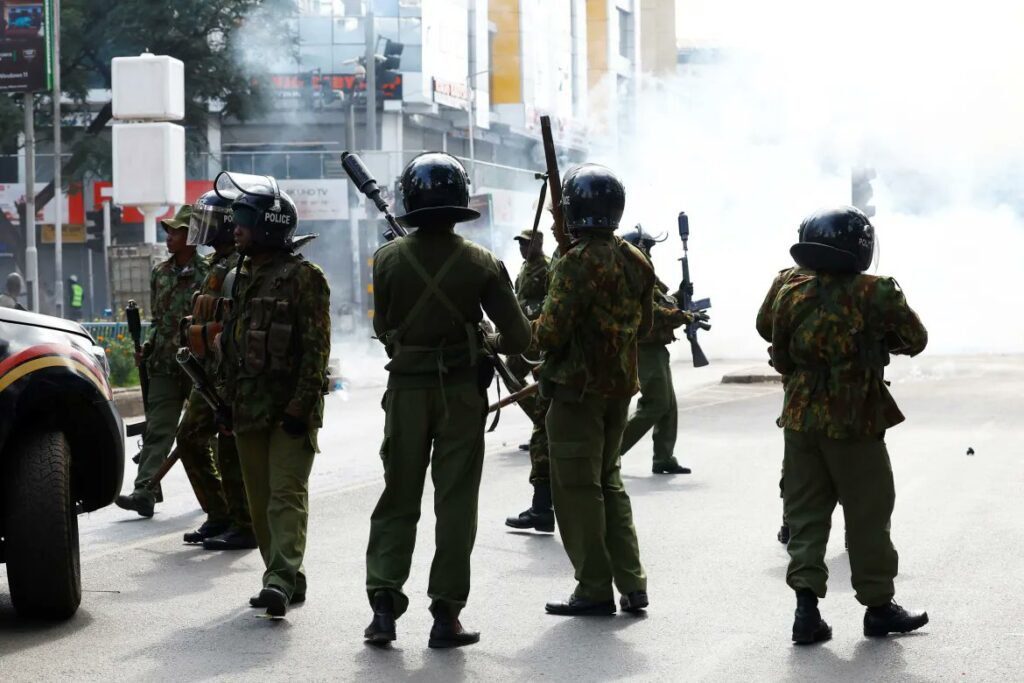
The Kenyan police at the protest scene (Photo by Al Jazeera, via X)
Tear gas being deployed at protesters (Photo by Al Jazeera, via X)

Center of this year’s protest is the death of 31-year-old blogger, Albert Ojwang, who died in police custody. Protesters were seen on video holding up signs with the blogger’s name and chanting ‘Justice for Ojwang.’ 

Ojwang was found dead in his police cell after being arrested at his house because he allegedly posted false and malicious information about the Deputy Chief of the Police Force, Eliud Lagat.

An autopsy conducted on Ojwang revealed that he had suffered a head injury, neck compression, and soft tissue damage, all of which point to assault as the cause of death. 

Ojwang’s case is only one out of many cases of police brutality in Kenya, and the citizens are now saying they have had enough.

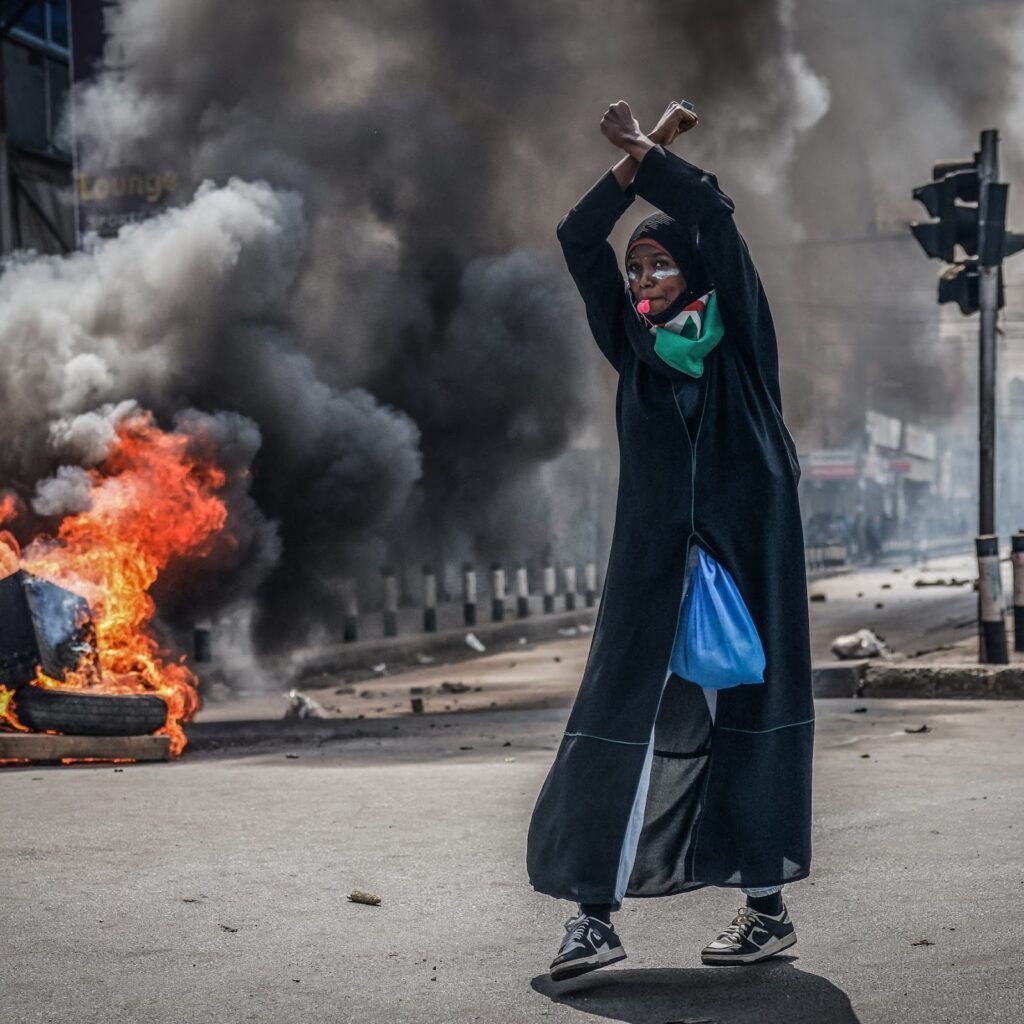
Female protester at the scene (Photo by Thuso Van Zyl, via X)

Kenya’s Independent Policing Oversight Authority (IPOA) has taken up the responsibility of investigating police activities during last year’s and this year’s protests. The body has successfully tracked down 6 men, including police officers, who are connected to the death of Albert Ojwang.

The coverage of this year’s protest was halted by the government after the Communications Authority of Kenya ordered all television and radio stations in the country to stop broadcasting live coverage of the march. 

Several Kenyan broadcast stations that proceeded to offer live coverage of the protest despite the order from the CA were taken off air, however, after a court in Nairobi suspended the ban, broadcasting commenced in those stations.

Responding to this order, the Kenya Editors’ Guild stated in a press release that the “CA is actively undermining judicial authority and reopening the door to unconstitutional state censorship.”

Many youths, particularly those in African countries, have reacted to the protest in Kenya, stating that the courage of Kenyan youths is admirable. One X user posted, “All eyes on Kenya please, they are having a historic Gen-Z-led protest…”

The government’s present efforts to restrict protests in Kenya make many citizens believe the war is far from being over, and with the recent abduction of another blogger, Ndiangui Kinyagia, the youths continue to demand justice on social media using the hashtag #FreeDaguin.

A Kenyan activist, Abigail Arunga, who spoke with Yuvoice, expressed that this could spiral into another protest with the upcoming national holiday on July 7, Saba Saba, which was historically a protest day in Kenya.