I’ll never forget waking up on that special Christmas morning, five years old and excited as any kid would be on Christmas, then walking into the living room to be greeted with the sight of a beautiful red Dachshund puppy wrapped in a blanket. She was the very first pet my family had and I was overjoyed.
However, in 2013, my family unfortunately lost her due to unprecedented health issues that were out of control. Losing her was such a shock to me that I remember remaining numb for the rest of the summer. When we lost her, my parents and I almost considered not getting a second pet, despite looking in the newspaper and on local adoption websites.
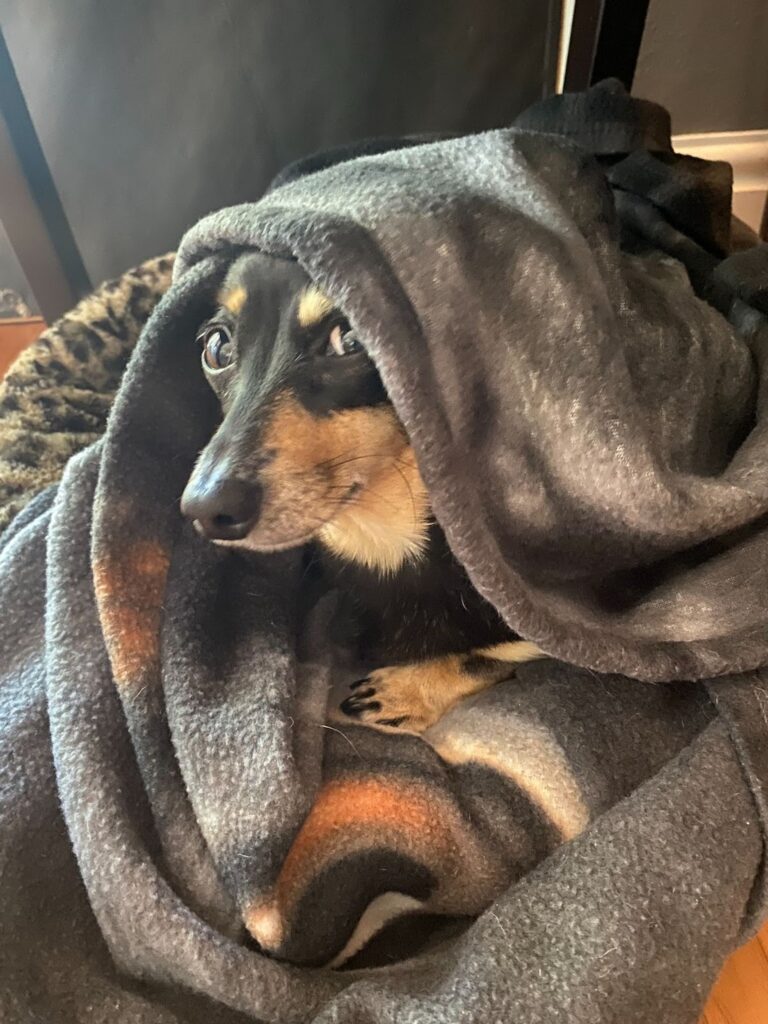
Inside a fur coat
A few weeks later, time came to move forward. After switching from a private school to a public middle school, the stars themselves seemed to align as another family member joined us. The day before when I was supposed to start my first day of eighth grade at a brand new school, my mother received a call from a beloved family friend. The couple could not take care of a brand new, six week old puppy, nor did they want to keep it, and offered that we take it in if interested.
After hanging up the phone, my mother, grandmother, and I all piled into the car just “to see” and “check out” if this puppy would be worth it. However, after an hour’s drive, the second our car turned into the driveway, the three of us were greeted with the sight of the family friend with the tiny puppy on a leash. Seeing this new puppy as a black and tan Dachshund-Chihuahua mix speck sitting at the end of the large driveway, my mother and I immediately died of happiness, and my grandmother knew that this dog would be coming home with us.
On the ride back home, the three of us picked up on a couple of our new four-legged friend quirks that still stick to this day. For example, she loves to lay in my lap while in the car and is extremely well behaved in any vehicle. So much so that, as we will soon figure out, she actually gets mad if she cannot go on errands with us.
Now, as the years have passed, our new “rescue” Heidi, certainly rescued me, and my family. The puppy that we said we’d check out has become a permanent part of our family who we often joke is a human in a fur coat. We love her unconditionally and she does the same in her own ways.
Heidi brings joy and happiness everyday to me and my family that I know we would never trade her for anything. She is such a different dog than my first dog ever was and, while she’s pushing fifteen, Heidi still has so much energy and love to give. Everyday is an adventure with her. Heidi brings life into our house, even at such an old age, that my parents and I make fun of her by calling her an “old lady.”
On a Parcheesi board
Whether she growls at unexpected noises, shows zero fear of fireworks, or passes out on the Parcheesi board in the middle of a game, she is one of the best last-minute chances we’ve ever taken. This dog has gotten my family through loss and hard times, and never failed to make us smile or laugh whenever we need it.
We have given Heidi one of the best homes as a loving family, and it is incredibly important to us to treat all rescues with love and respect, regardless of where they came from. We usually won’t know their situation, unless we adopt and the center knows about the animal’s past, but by showing any kind of animal kind feelings and with time, anything is possible.
For the rescuing
I’ve certainly learned that lesson with all of the pets I’ve had, and Heidi has taught me the importance of adopting. Sure, it might be nice to get a pet from a store or a mill, but adopting or taking in rescues from friends or family is the absolute best way to expand your horizons on the subject of taking care of pets.
Showing them a better home than what they came from should be one of the many necessities in life, otherwise they get put down without even having a chance. I am so glad we took the chance when it came to adopting Heidi. She claims that she’s happy we did.
I’m all too familiar with that clench in my stomach when I first enter a room, knowing it’s full of strangers and not a familiar face in sight. From childhood and well into adulthood, most of us worry about relationships or connections to alleviate loneliness, myself included. Making friends is part of our nature, forming packs or groups to make it easier to survive.
There are a myriad of reasons for me to make friends. Sometimes, though, there’s even more to let them go.
Can I? Should I?
Relationships serve a purpose, whether they are short-lived or long-term. Many times, though, the acquaintances I’ve made are just that: acquaintances. Often, I think to myself, “I really should reach out to that person and see how they’re doing. I should get around to seeing if they want to hang out with me.”
But do they even like me? Am I coming across as annoying?
I would send a text or message to ask how their life is, and I would get either one or two responses back — sometimes no responses at all, and that’s where it hurts. Our half-hearted exchanges show that we’re not in each other’s lives anymore, despite our once-lengthy conversations into the night. I sometimes feel like I’m the only one carrying the discussion. The group chat where memes and jokes were constantly thrown around has been quiet for years now. The childhood friend I’ve known literally my entire school life from kindergarten through all of college is no longer there. We’ve all moved on to pursue different careers or relationships, and we can’t go back. Our roads have diverged.
But that’s okay.
It has to be. And it will be — eventually.
Distance is hard, but also helpful
I’ve gone through my fair share of relationships. We swear to keep in touch, to not be a stranger, to reach out and keep each other in our thoughts. But it’s hard. Proximity keeps them in sight, making it easier to engage, to laugh, to share memories. To overlook irks, red flags, or disappointments. When they’re not right in front of me, how do I maintain that level of closeness? Is it yet possible for us to maintain the connection?
Or is it time to move on?
In other situations, our personalities just didn’t jive, or they felt like a negative influence in my life. I shouldn’t have to validate their happiness with my unhappiness, should I? It hurts when others think I’m being childish or insensitive, but I don’t want to have to justify their negative behavior to make them feel good about their life choices. Toxic relationships can be detrimental to our happiness, whether it’s family or friends — and it hurts more the closer we are to them. I want to stay by their side because they’ve known me the longest, so how can I accept that they don’t need to be in my life anymore?
I’ve found myself at the teetering point of a few relationships recently. They were great work friends, and we’ve spent a lot of time together laughing, eating, and enjoying life. So when it came time to quietly let them go, it was neither easy nor sudden. I had to come to terms that I couldn’t reach out to them quite as easily or look forward to seeing them in person again. We weren’t working together anymore by that point, and we lived in different parts of the area. We didn’t particularly share any recreational activities or hobbies, and our tastes in music and movies were vastly different. It was one of those situational relationships where it worked until the situation changed.
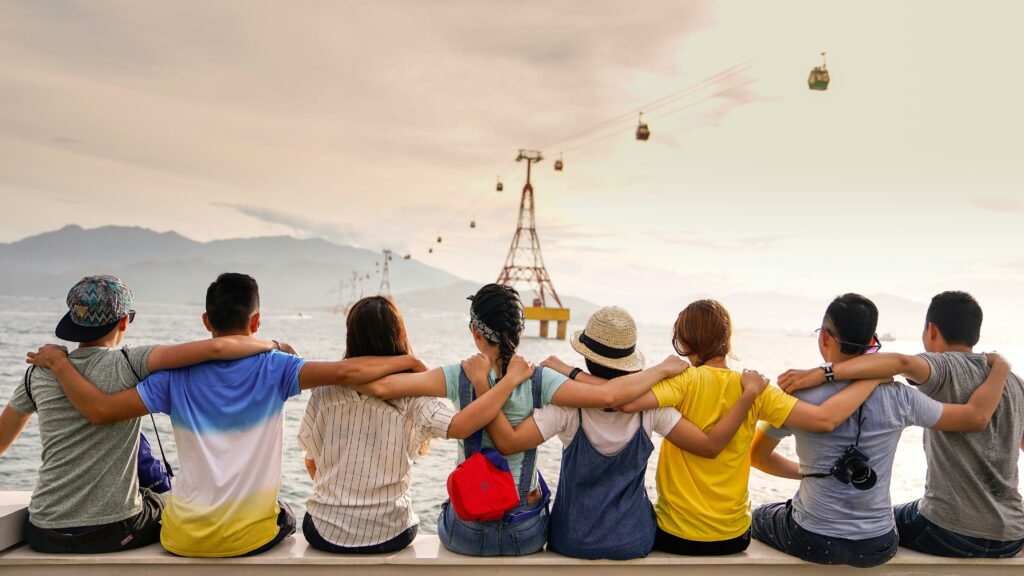
(Image courtesy of Duy Pham via Unsplash)
Relationships serve a purpose
Biologically, we look for others to be with because there’s safety in numbers. It helps alleviate the burden and stress, both physically and mentally. It makes it easier to tolerate loneliness because we have precious memories to think of fondly.
I have many lifelong relationships that I’m thankful for. Some I’ve found late in life, and some after much heartache — some even after we’ve diverged and forced our way back into each other’s way. I’m grateful for the friends I have now, and also to the ones I’ve had to let go. For the sake of my happiness and well-being, it’s healthy to reevaluate relationships once in a while to gauge just how much better my life is with them. But I also know I need to focus on learning to love myself; only then can healthy friendships grow because I know exactly what I should be looking for, what I need in a friend.
I like to believe my past relationships were mutual understandings. We needed each other at that moment, and we’ve served our purposes. Could I have put in more effort? Yes. Could they have as well? Also yes. Finger pointing and victim blaming is impractical because there’s always going to be another chance to be better, and I’m grateful for that opportunity — to be an even better friend to those I’ll meet in the future. As a millennial, I’ve often lamented that it’s hard making friends my age, but it’s not impossible. I know that now.
Coletta Feek was the sole proprietor of the small chocolate shop, Magnifeek Sweets. Her shop remained her entire life and the only thing she had ever actively worked towards. The relationships, and broken days, that she had experienced were, in her eyes, treasures directly resulting from her shop’s success. She had had a honeyed childhood, soul-searching adolescence, and desired nothing. Although her own life experiences were often dressed in ganaches and gossamer doilies, the young woman truly believed that she had felt the kaleidoscope of human emotions already, all due to the wide display window of her shop.
The pane was worn and thin, fogging around the edges where the glass had warped as Magnifeek Chocolates had been everything from a florist to a pharmacy before Coletta had purchased the property. Since the window itself looked rather tired, she did everything she could to make what it housed vibrant. She set false evergreen boughs, dressed in holiday lights, around the edges of the glass and a rich burgundy velvet pooled on the tiered platforms that contained confections of nearly every color and shape.
Chocolate seashells, a seaswept reminder of her grandmother, sat on pewter plates she polished regularly. Stained glass window cookies glistened next to succulent roulades and mousse cakes dressed in candied rind and mint leaves. Bouquets of chocolate lollipops stunned in vases she had never used for flowers, while her shop’s signature chocolate mice with ribbon tails scurried among the treats, adding the whimsy she hoped her customers would appreciate as much as she always had.
Coletta’s most precious part of owning her shop was watching passersby linger, if only briefly, at her shop window, because, for a moment, she could see them as they truly were. She had witnessed families, with children who pressed their small faces against the pane, begging their loved ones to enter the chocolate shop. Lovers of every age had sought out the sweets to enjoy together under streetlights as the rumble of traffic hid their whispers from the rest of the world. And, every once in a while, a widower would come to the shop for a sweet bit of respite, remembering who he had held close as a younger man when kisses were still sugar.
The chocolatier had been privy to the lives of her customers for as long as she could remember, which meant that she had also observed the darker shades of hope outside her shop’s window.
…
In particular, she recalled a middle-aged man who lingered a few steps behind the same attractive couple. His hair was red, with a bit of starlight at its edges, and she recollected the patch of silver in his beard, shaped like a roof shingle. The man never spoke to the couple, but he followed them as wearily as if tethered to them. The couple rarely seemed to notice his presence, and, no matter how many times they crossed the shop’s window, they were never speaking to the man whose shadow was interwoven with their own. Coletta once dropped a chocolate mouse when the redheaded man reluctantly pulled his gaze away from the couple and fixed his cool eyes upon her. She stared down at the ruined sweet, crumbled on the ground in front of her, picked up the pieces and combed the ribbon tail gently between her fingers.
…
The couple continued to walk by Magnifeek Sweets, stopping in for a small box of truffles to share with one another, and, eventually, their affection enveloped even Coletta. She heard the bell ring at the shop’s door.
“Coletta! Kalev and I are here for some of your divine truffles!”
“Hello, you two,” Coletta cooed. She always admired the warmth with which Madigan spoke to everyone, especially her Kalev. He was usually quiet, but always cordial with Coletta, while Mads asked her about new confections and the changes in the display window.
“Coletta, you wouldn’t perchance take custom orders, would you?”
“I haven’t previously, but I am open to the idea,” she responded while carefully packaging an assortment of truffles, adding two complimentary chocolate mice—one with a teal tail, the other with chartreuse—to the box. Mads had picked up the endearing habit of opening the ribbon-wrapped box as soon as Kalev and she were outside, looking incredulously through the display window at Coletta, then running back inside the shop to grab her hand and thank her for such a kindness.
“There are more than just window sweets here!” she would say, squeezing Coletta’s hand while Kalev tipped his hat to her through the window, still holding the open box of truffles.
“You’re very welcome, Mads. Please take care of yourself, and see you soon…” Coletta’s voice trailed off as she recognized the red haired man, sitting on a bench across from the shop, staring with those languishing eyes, at Kalev and Mads. As the duo cheerfully wandered off, the man rose and began trailing them once more.
Coletta had come to relish in those moments of quiet friendship between Kalev, Mads, and herself, but she hadn’t the courage to bring up the bearded man and his concerning surveillance of the couple. Instead, she placed her energy into the curious custom order she had received from the lovers. They had asked for some small chocolates, all embossed with the figure of an imposing hound. The couple had never spoken of owning any animals. Coletta had even spied Mads retreating from a stray mutt that had startled her by accident some time ago. But, the order was an easy one. She crafted the chocolates and filled them with peach preserves and pistachio praline, as Kalev had mentioned the order was a gift. As always, she boxed the chocolates up, including a few extra chocolate mice for good measure. While she placed the finishing touches on her display’s delights, sampling a few to gauge their quality (an indulgent ritual of hers), the red haired man was suddenly standing in her shop. The door’s bell had not rung. “Miss Feek, is it?” His voice was high, akin to a young man’s. “Ye-yes?” Coletta corrected herself immediately, years of customer service conditioning her tongue to mouth certain saccharine salutations. “Please excuse my verbal lapse. Welcome, and how may I assist you, sir?” The man did not stir, and he continued looking, almost through, Coletta. The two stood there in silence for a few moments, until the chocolate in Coletta’s hand began to melt.
“Please pardon my intrusion. I have noticed your stares when I am near, especially when Kalev and Madigan are present?” Coletta caught her breath– he knows their names. She steeled herself, wiping her fingers clean with a damp cloth. “They are friends of mine, and I cannot help but notice you have a rather… keen interest in them.” The man’s eyes appeared less exhausted now. “Well, I see you understand more than chocolate,” he muttered quietly. “You see,” his voice rose slightly, “I have a genuine fondness for both of your friends. We knew each other well, some time ago, but those two probably do not remember me.” “Is that so? Why don’t you speak to them then, instead of following them around like a lost puppy?” Customer service be damned, Coletta thought to herself. The man smirked. “That’s a fair point, Miss. In any case, I simply stopped by to thank you for your kindness to them. I shan’t be much more trouble to Kalev and Madigan, and I assure you that I shall not darken your shop’s doorway again–” “Sir, I apologize for my slip of the tongue. You think it would be sweeter with all the sugar surrounding me. Please, take this, and you are welcome here at any time.” She held out two of the extra chocolates with the hound emblazoned on them, nestled on a square of wax paper. The man grabbed the token gingerly, folding the paper gently around the chocolates. “Another kindness, I see.” He looked at Coletta directly once more, and she darted her eyes towards his gloved hand, holding the small parcel. “Tell me,” he said more gently now, “What made you want to be a confectioner?” Coletta, who began looking out her display window fondly, answered with a certainty that years of pride had instilled. “I want to make this world something we want to cling onto, even on desperate days.” She looked up, hoping to gauge the redheaded man’s reaction to her answer. However, he was already walking by her store’s wide window, never looking back.
…
Madigan and Kalev adored the chocolates Coletta had crafted, and Mads embraced Coletta gratefully. “They’re perfect! Thank you so much, Coletta!” she said serenely. “Yes, they are your best ones yet,” Kalev chimed in calmly. “You two are exceptionally kind. May I ask what these chocolates are for? Kalev, you informed me that they are a gift if I recall?” “Precisely. It is the anniversary of my family’s dog trainer’s passing, and we wished to bring a special gift to his resting place this year. It was my sweet’s idea–” Mads interrupted her heart, “Kalev, I just knew Coletta would work her magic! I still remember how kind Mr. Tihar was when we were children– we should celebrate his memory always.” “I agree, my love. Mr. Tihar was like a father to me years ago, and he always had a fondness for sweets. I am certain he would have loved your shop, if he were still alive.”
…
After Mads had embraced her a few more times, the couple departed, and Coletta was left in the stillness of her beloved shop, with chocolate mice staring back at her knowingly. She smiled, ever-so-slightly, and whispered, “It was lovely to meet you, Mr. Tihar. I hope you enjoy the chocolates.”
There’s this childhood film that, no matter how outdated the CGI clearly is, just seems to get me — even today. “The Adventures of Sharkboy and Lavagirl” made me feel seen in my perceived difference from others my age; I was naturally more of a loner, more of someone on the outside. As I’ve gotten older, however, I’ve come to relate to the movie’s plot through a different understanding —that of losing loved ones.
An unexpected loss times two
At seventeen, I lost my maternal grandfather, Grampy, to stage four brain cancer. A year later, I lost my maternal grandmother, Hud, due to an incident at her assisted living space during the pandemic. Both deaths were unexpected for our entire family.
I couldn’t process it all at the time. It was too much, too fast.
As Grampy and Hud’s only grandchild, we had a strong bond, and they were an integral part of my support system. I felt their encouragement no matter where I was in life. They celebrated me and consistently showed up for events like Girl Scouts, choir performances, birthdays, and more.
I don’t think I’d be the person I am today if it weren’t for both of them.
I often reminisce on the memories I have of my grandparents, looking through scrapbooks we made together and watching movies we loved — like “The Adventures of Sharkboy and Lavagirl.” Over the course of the last few years, I’ve begun to process my grief through these actions. I’ve also managed to retain a connection with my grandparents despite their deaths.
Reconnecting with the things I enjoyed when I was younger allows me to experience how life was when Hud and Grampy were alive — easier, more fun. It’s a temporary escape from the stress of daily life, from adulthood.
Grampy and Hud on one side, Sharkboy and Lavagirl on the other
In “The Adventures of Sharkboy and Lavagirl,” the protagonist, Max, uses a fantasy realm as a method of coping with bullying and family issues; the dream world is his safe place. Like Max in his dream world, my dreams allow me to continue my life with Grampy and Hud as it once was.
In my own dream world, my grandparents regularly appear. We carry out everyday tasks together, like shopping, going out to eat, and having Tuesday night dinners at their house. I wish that time was infinite in those dreams. In other dreams, they’re alive, and I’m trying to prevent their deaths to no avail. Those dreams can’t end fast enough.
I now have a constant fear of unexpectedly losing more loved ones. Emergency medical situations are anxiety-inducing, as are travel plans. My grief is also hard to contain — it overflows, causes me to do things out of the ordinary, and makes me want to punish myself. It’s agonizing, and intensifies my depression and suicidal thoughts. I blame myself for what happened to them, even though I know it wasn’t my fault.
When life doesn’t feel as heavy, I speak about who Grampy and Hud were in honor, much like Max proudly sharing the legacies of Sharkboy and Lavagirl to his peers.
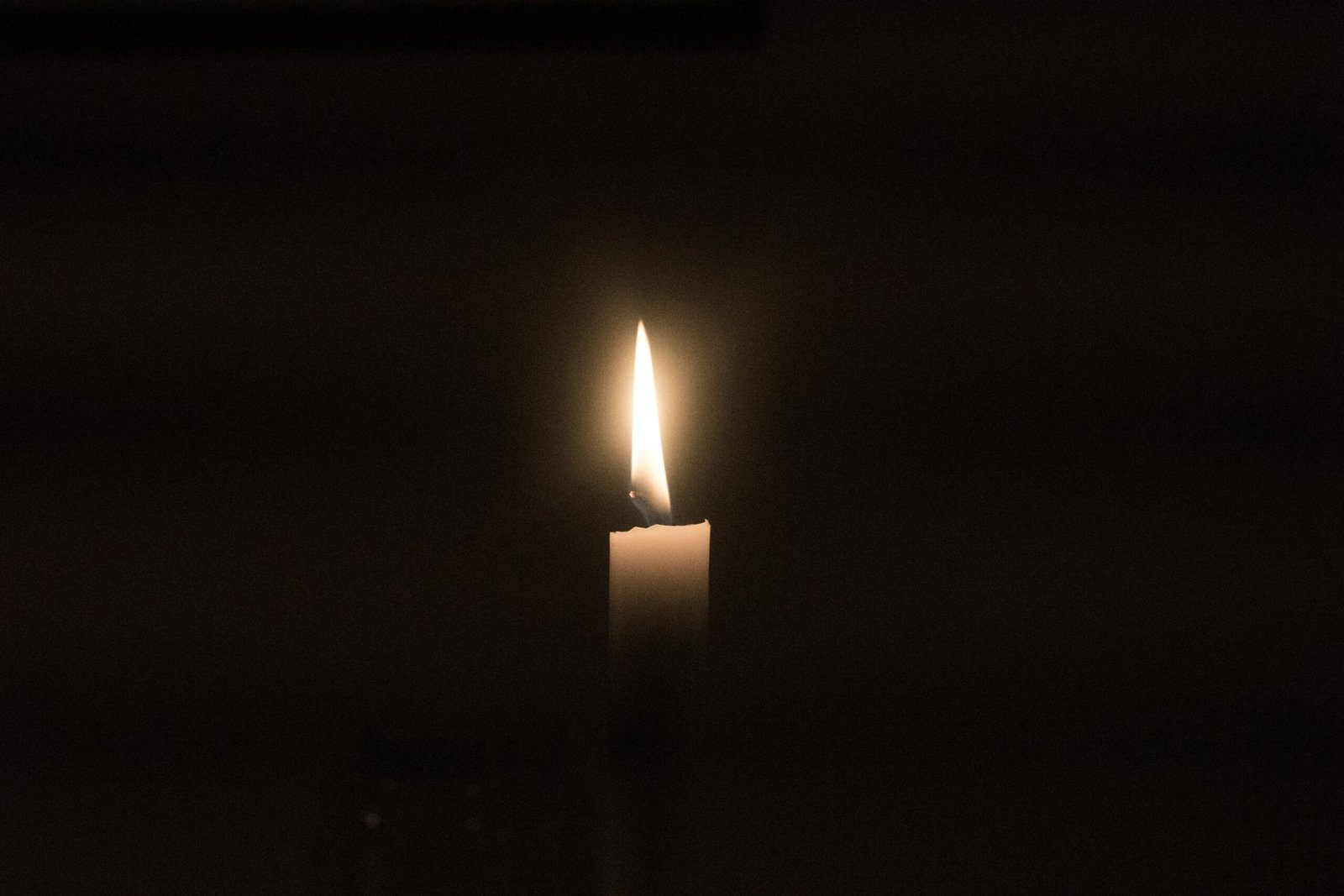
(Image courtesy of Johannes Plenio on Unsplash)
I don’t know where they went
Mentioning Hud and Grampy in the past tense reminds me of Max in the beginning of the film, when he’s unable to explain where Sharkboy and Lavagirl are. Another character asks him: “Why don’t you bring Sharkboy and Lavagirl to class tomorrow?” Max explains, “They went away. I don’t know where they went.”
Much like Max, I don’t know where Hud and Grampy are or where they went. I’m not religious, nor do I have any particular beliefs about what happens after. In all honesty, I don’t really want to think about in what state they might — or might not — exist.
Max knows that Sharkboy and Lavagirl are real, and he knows where they are when he’s asleep — they come alive when he’s dreaming. At the behest of his family and peers, Max tries to tell himself that Sharkboy and Lavagirl don’t exist, but he finds it difficult to believe. This reminds me of the first stage of grief: denial.
Immediately after Hud and Grampy’s deaths, I found it challenging to refer to them in the past tense. It was an internal denial of their passing; I just couldn’t accept it.
The aftermath holds so many questions
I daydream often about how differently my life would have turned out if my grandparents were still alive. Would I be happier? Would I still have admitted myself to a psychiatric facility last year? Maybe it’s unrealistic to think their presence would have changed much, but the questions remain for me.
There’s a moment in the film where Lavagirl asks Max to dream about her so her identity will become stronger. She tells him, “Dream about me next, Max, I need to know who I am. Not just destruction, or a simple flame. Dream of me as something good.”
I frequently wonder which pieces of my identity are a result of Grampy and Hud’s love and which pieces were lost when they died. More questions bound through my brain during these moments.
Would they think I’m a good person? Have I made them proud? What advice would they give me? I’ll never know the answers to these questions, and I never will.
I can’t change the past or bring them back to this earth. However, I can focus on how much love they had for me, and I for them. Those recollections are my safe place, especially when life feels heavy.
I can’t yet mend the parts of myself that were broken when they died back together, but I can hold onto their memory. And like Max, I can dream of them — where life goes on just as it used to.
I grew up drinking rosehip tea with people I knew but couldn’t see. My grandparents, Giszela and Moric, laughed about the good times they had shared with cherished relatives and friends, beckoning them into our conversations, and so into my memories.
I knew about their slo-mo holidays in the Tatra Mountains between Slovakia and Poland, and that ice skating on frozen lakes was pure joy. I could tell anyone about the time my great grandfather, a headmaster at a Jewish school, chose his daughter, my grandmother, to accompany him to the mayor’s ball, an event far out of his comfort zone. But most of all, I felt the lack of prescience of these “invisibles.” My grandparents once grasped that it was time to quit everything that was familiar to them, fast. But they always regretted failing to persuade significant others to share their flight response to what they saw unfolding around them, just before the family’s halcyon days sunsetted and crashed in the wreckage of The War.
Cherries rule!
We were in London, but actually, in the alternate universe of my grandparents’ home, we were always somewhere else. Speaking something else. Hungarian, Czech, Slovak, German, Yiddish, Russian, and French words whizzed past our watchful faces. We listened as we tickled the legs of hapless visitors under the dining room table.
These lower limbs belonged to a thick-accented coterie of relatives and friends just passing the time together on slow afternoons. Most of them, my father too, sashayed between languages, the silver-lining skill of many a refugee. And these came from a region where borders had moved like chess pieces for centuries.
The walls of the forever corridor in my grandparents’ home were decorated with antique maps of the Holy Land and plenty of framed embroidery. These sewn pastoral motifs must have stolen acres of time from their creators, people I could see and those I couldn’t, I thought. My grandmother, for one, the educator’s daughter, who had dabbled in teaching movement, writing, and sewing to small children at her father’s school, but had let her brilliant mind lie fallow. She was known affectionately as Anutzi, mother in Hungarian.
(Image courtesy of Tycho Atsma via Unsplash)
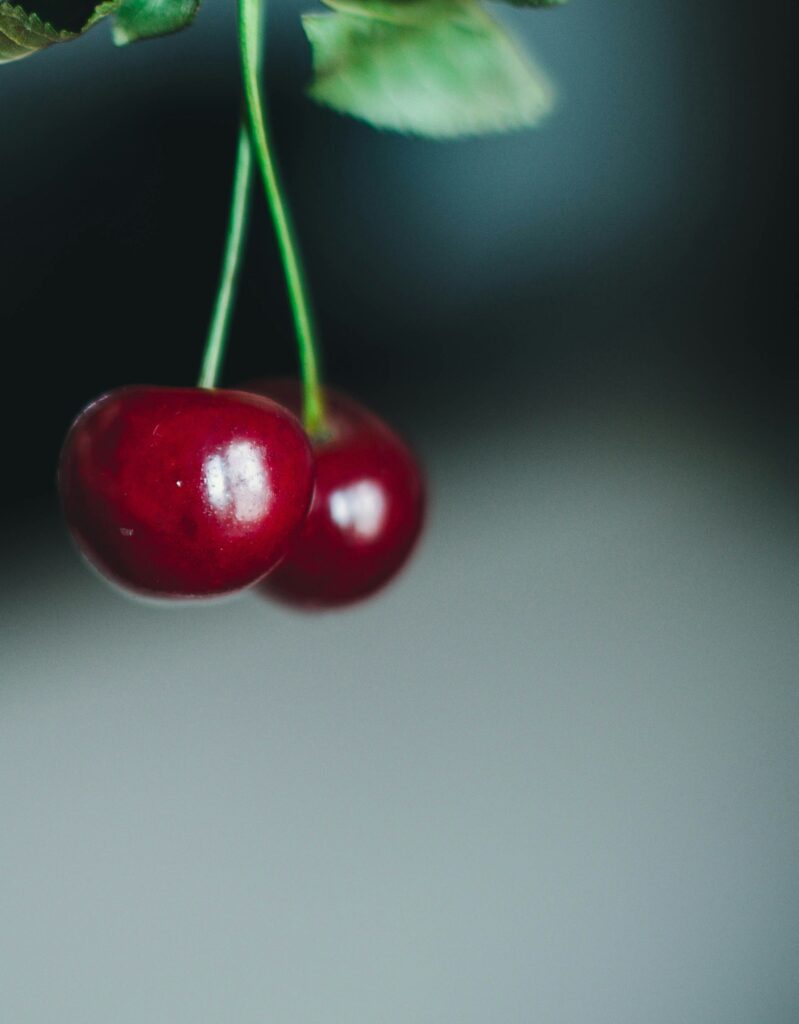
But we felt at home breathing in the paprika-scented dishes, and nibbling on thinly-sliced radishes, always parked on the table. And, of course, we loved the cherries that were everyone’s favorite. We waited for the cherry liquor chocolates in shiny wrappers and the preserved sour cherries in painted jars often brought back by visitors to the Old Country, but especially for the fresh cherries, whose pairs made perfect earrings.
(Image courtesy of Nika Benedictova via Unsplash)
Once, when we bumped into each other on the avenue by his apartment building, my excited grandfather, his eyes twinkling, sang to me about his bounty of delicious purple cherries; the precious package dangling from his Zimmer frame walker.
Drawing back the Iron Curtain
Sometimes, visitors who had remained behind the mysterious Iron Curtain where these languages still bloomed, and who were only dipping their toes in “The Free World,” joined us for chamomile or rosehip tea. They talked about their bleak days under Soviet rule. More than once, these wishful defectors flirted with the idea of escaping to the West and abandoning their families, right in front of us.
But there were plenty of other émigrés who had resettled locally, decades earlier, or who had fled from communism more recently, like my relative Serena, whom we never saw without the plaster covering the number branded on her arm that she had kept hidden since The War. We could count on them to bring their own and very present invisibles along to tea. It didn’t matter that these lost loved ones were long dead, or if we were confused and a little frightened.
On rare rain-free days, these guests and their shadows met up at Mitteleuropa-style coffee shops with names like Louis. They had sprung up between the usual London retail chains, to serve our “resident aliens” anchoring in the familiar setting. Their windows dazzled with creamy patisserie delicacies that I have only ever seen since in Budapest.
We hurried out of the London cold and into their womb-like interiors for yet more tea at the tiny tables where our grandparents’ invisibles were ever-present.
Sidestepping trauma?
Never was the missed presence of these yearned-for people more apparent than at the end of a sentence. A long sigh, eyes locked sideways, held by a memory, lips contorted into bittersweet smiles. We heard of the quintet of my grandmother’s siblings whose lives were snuffed out before they hit middle age. If we ever dared ask, we received the standard it-was-The-War response and knew better than to interrupt the trancing storyteller.
A counsellor once shared with me that to overcome trauma, you should revisit it like a butterfly. Land on it, but only momentarily, and then return for a little longer, before flying off to happier recollections. But instant tears, heaving chests after a bout of sobbing, and constant retellings, all signify work still to be done.
(Image courtesy of Leon S via Unsplash)
As Giszela and Moric aged, they just couldn’t fly away. Instead, they were sucked deeper into their unsettling memories, condemned to relive the rupture from loved ones on constant repeat. Why, my grandmother lamented over and over to us, did she not deceive her dentist brother and tell him that he was guaranteed work in London, offering a white lie that could have saved him, instead of just sending him banknotes hidden in books?
Ah Sándor, if only I had told you that I’d found you work here.
Towards the end of their lives, the past and present began fusing in strange new narratives, powered by the will to regain control over time and history. My grandfather, a natural-born businessman since his apprenticeship in pre-war Frankfurt, asked my mother what he should “do” about the Dalai Lama!
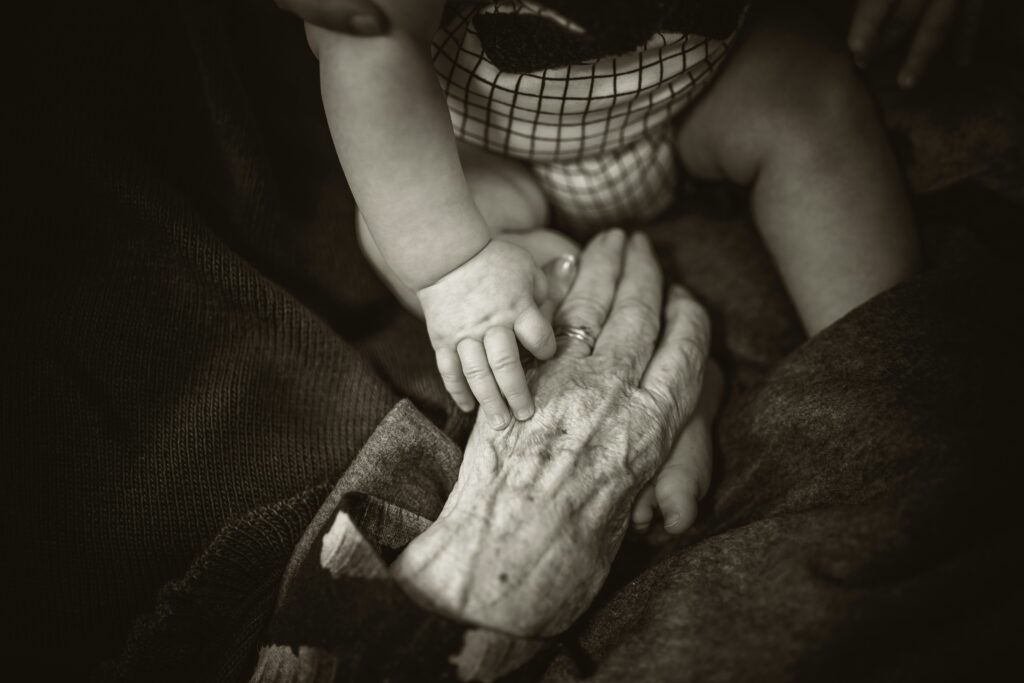
My grandmother, delirious from illness, reassured me as I held her delicate hand, not to worry. Aputzi (my grandfather, father in Hungarian), would ensure that we were all buried very soon. This is a scary thing to hear when you’re a teenager, but not so strange when you remember that this rite of death was denied to many of our family’s extinguished personalities.
It was only in the 1980s, after my father died prematurely from a haunting sadness, my mother said, before we learned the truth. My grandparents followed soon after our father. That’s when we, his daughters, discovered what none of them had ever told us: Our grandparents were actually my father’s aunt and uncle.
They had left for Switzerland and then England in the dawn days of WWII, rushing my father away to safety, at the same time wrenching him from his younger parents, Eszter and Max, our real grandparents, whose lives would be brutally snuffed out in The War. But not before his beloved mother, knowing that they were doomed, wrote my father letters overflowing with love and pain.