You Wake Up In Your Childhood Bedroom

You wake up in your childhood bedroom, and the bad things that happened to you haven’t happened to you yet. It should make you happy, but instead it aches. You can’t curl up inside your childish innocence because it isn’t there. You could pretend it was, if you really wanted to, but you don’t want to really. As you watch the early morning sunlight dance across the wall, you wonder if you can change things this time. You wonder who you’d be if the bad things that happened to you never happened to you. Did they make you better? Did they make you worse? If the bad things that happened to you never happened to you, would you truly be you?

You wake up in your childhood bedroom, and the bad things that happened to you haven’t happened to you yet. You realise that you’ll need to pretend that nothing has changed, and so you go downstairs, your bare feet treading on stairs that you haven’t touched for years. Your brother is already in the kitchen, and he is still your brother because he doesn’t hate you yet. His face is the same as it once was, trapped in the liminal space between boy and man, and his eyes meet yours with that look that only a brother can master, halfway between awe and disgust, respect and embarrassment, shame and love. Before it really occurs to you what you’re doing, you pull him into a hug, the kind of hug that clamps and tightens, the kind of hug that suffocates but is all love, so much love, love that can maim you and love that can mend you. He stiffens at first, then realises that there is no audience to perform for, no jeering friends lingering in the corners of the room, and, as his bony arms wrap around you, a thought solidifies in your mind that things cannot decay this time, that you must hold onto this bond for dear life, grasping and gasping until the rope burns your palms, because this time you cannot lose your brother.

Your sister is not there. Your sister is never there. Your sister is an absence. Your sister is the space between heartbeats, the gap between ribs, the sound of silence on the other end of the telephone. 

You wake up in your childhood bedroom, and the bad things that happened to you haven’t happened to you yet. Your dad comes down and makes breakfast, because that is what he always used to do, and the crackling of bacon and the music on the radio hit you like the melody of a song you haven’t heard in years; first slowly, then like a fierce punch in the stomach with all the force of a car crash. You realise now that you never used to appreciate these tender moments, too tired to do more than sit and watch the breeze dancing through the kitchen blinds. You never appreciated these moments, because you hadn’t realised yet that one day they would be over. You never noticed that, morning by morning, your father was getting older, his presence less resolute, his voice and body less strong. You never considered the fact that one day your mornings would be silent, that one day your father would be gone. But now, burdened by the knowledge that your father’s time is running increasingly short, you wish that you could live in this moment forever, eternally untouched by the sands of time.

You wake up in your childhood bedroom, and the bad things that happened to you haven’t happened to you yet. You make your way back upstairs after breakfast, and, as you reach the hallway, the scent of your mother’s perfume drifts towards you, as gentle as the lullaby she would whisper across your fevered forehead on unsettled nights: a balm of words, a remedy of song. There was always a tenderness to your mother, but there was a sharpness too. She was quick to comfort but even quicker to blame. She was there to take you into her arms after the bad things happened, but she was also the first to suggest that you might have deserved it somehow, that perhaps you had been too forward, too bold, too reckless, too impulsive, too much, too yourself. She was a confidant and an accuser, an ally and a judge, a friend and a stranger. She was your mother, and yet you never truly knew her. You knew only the masks she would present to the world, the image she would carefully curate while the rest of the family was eating breakfast, the perfume, the final act of the performance. You do not knock on the door, because you don’t want your mother to see you. You never wanted your mother to see you, and yet, at the same time, you wanted nothing more. You don’t want your mother to see you because your mother could always see through you, and she would be the first to know that something was different, that you weren’t the child you had been the day before, that you never would be again.

You wake up in your childhood bedroom, and the bad things that happened to you haven’t happened to you yet. You realise with a sense of certainty that you cannot stay. You have long overgrown the mold that was cast for you there. Trying to live out a life that you have experienced before makes you feel ungainly, a giant trying to live in a miniature cardboard town. You’re the only living soul in a house of ghosts, and you can feel yourself slowly becoming haunted. The bad things that happened will happen, have happened, will never not happen, and you would be foolish to try and change that. You wake up in your childhood bedroom, but you do not fall asleep there. You close your bedroom door for the last time, walk down the stairs, open your front door, and walk out into the mild summer night. You don’t know where you are going, but you know that you can’t return. You try and tell yourself that things are better this way, but the lost child inside you knows that that is a lie.
Grief in an Underwater Volcanic Vent

There’s this childhood  film that, no matter how outdated the CGI clearly is, just seems to get me — even today. “The Adventures of Sharkboy and Lavagirl” made me feel seen in my perceived difference from others my age; I was naturally more of a loner, more of someone on the outside. As I’ve gotten older, however, I’ve come to relate to the movie’s plot through a different understanding —that of losing loved ones.

An unexpected loss times two

At seventeen, I lost my maternal grandfather, Grampy, to stage four brain cancer. A year later, I lost my maternal grandmother, Hud,  due to an incident at her assisted living space during the pandemic. Both deaths were unexpected for our entire family.

I couldn’t process it all at the time. It was too much, too fast.

As Grampy and Hud’s only grandchild, we had a strong bond, and they were an integral part of my support system. I felt their encouragement no matter where I was in life. They celebrated me and consistently showed up for events like Girl Scouts, choir performances, birthdays, and more.

I don’t think I’d be the person I am today if it weren’t for both of them.

I often reminisce on the memories I have of my grandparents, looking through scrapbooks we made together and  watching movies we loved — like “The Adventures of Sharkboy and Lavagirl.” Over the course of the last few years, I’ve begun to process my grief through these actions. I’ve also managed to retain a connection with my grandparents despite their deaths.

Reconnecting with the things I enjoyed when I was younger allows me to experience how life was when Hud and Grampy were alive  — easier, more fun. It’s a temporary escape from the stress of daily life, from adulthood.

Grampy and Hud on one side, Sharkboy and Lavagirl on the other

 In “The Adventures of Sharkboy and Lavagirl,” the protagonist, Max, uses a fantasy realm as a method of coping with bullying and family issues; the dream world is his safe place. Like Max in his dream world, my dreams allow me to  continue my life with Grampy and Hud as it once was.

In my own dream world, my grandparents regularly appear. We carry out everyday tasks together, like shopping, going out to eat, and having Tuesday night dinners at their house. I wish that time was infinite in those dreams. In other dreams, they’re alive, and I’m trying to prevent their deaths to no avail. Those dreams can’t end fast enough.

I now have a constant fear of unexpectedly losing more loved ones. Emergency medical situations are anxiety-inducing, as are travel plans. My  grief is also hard to contain — it overflows, causes me to do things out of the ordinary, and makes me want to punish myself. It’s agonizing, and intensifies my depression and suicidal thoughts. I blame myself for what happened to them, even though I know it wasn’t my fault.

When life doesn’t feel as heavy, I speak about who Grampy and Hud were in honor, much like Max proudly sharing the legacies of Sharkboy and Lavagirl to his peers.

Image of a sailboat floating on the water. Above is a night sky filled with stars.
(Image courtesy of Johannes Plenio on Unsplash)

I don’t know where they went

Mentioning Hud and Grampy in the past tense reminds me of Max in the beginning of the film, when he’s unable to explain where Sharkboy and Lavagirl are. Another character asks him: “Why don’t you bring Sharkboy and Lavagirl to class tomorrow?” Max explains, “They went away. I don’t know where they went.”

Much like Max, I don’t know where Hud and Grampy are or where they went. I’m not religious, nor do I have any particular beliefs about what happens after. In all honesty, I don’t really want to think about in what state they might — or might not — exist.

Max knows that Sharkboy and Lavagirl are real, and he knows where they are when he’s asleep — they come alive when he’s dreaming. At the behest of his family and peers, Max tries to tell himself that Sharkboy and Lavagirl don’t exist, but he finds it difficult to believe. This reminds me of the first stage of grief: denial. 

Immediately after Hud and Grampy’s deaths, I found it challenging to refer to them in the past tense. It was an internal denial of their passing; I just couldn’t accept it.

The aftermath holds so many questions

I daydream often about how differently my life would have turned out if my grandparents were still alive. Would I be happier? Would I still have admitted myself to a psychiatric facility last year? Maybe it’s unrealistic to think their presence would have changed much, but the questions remain for me.

There’s a moment in the film where Lavagirl asks Max to dream about her so her identity will become stronger. She tells him, “Dream about me next, Max, I need to know who I am. Not just destruction, or a simple flame. Dream of me as something good.”

I frequently wonder which pieces of my identity are a result of Grampy and Hud’s love  and which pieces were lost when they died. More questions bound through my brain during these moments.

Would they think I’m a good person? Have I made them proud? What advice would they give me? I’ll never know the answers to these questions, and I never will.

I can’t change the past or bring them back to this earth. However, I can focus on how much love they had for me, and I for them. Those recollections are my safe place, especially when life feels heavy. 

I can’t yet  mend the parts of myself that were broken when they died  back together, but I can hold onto their memory. And like Max, I can dream of them — where life goes on just as it used to.

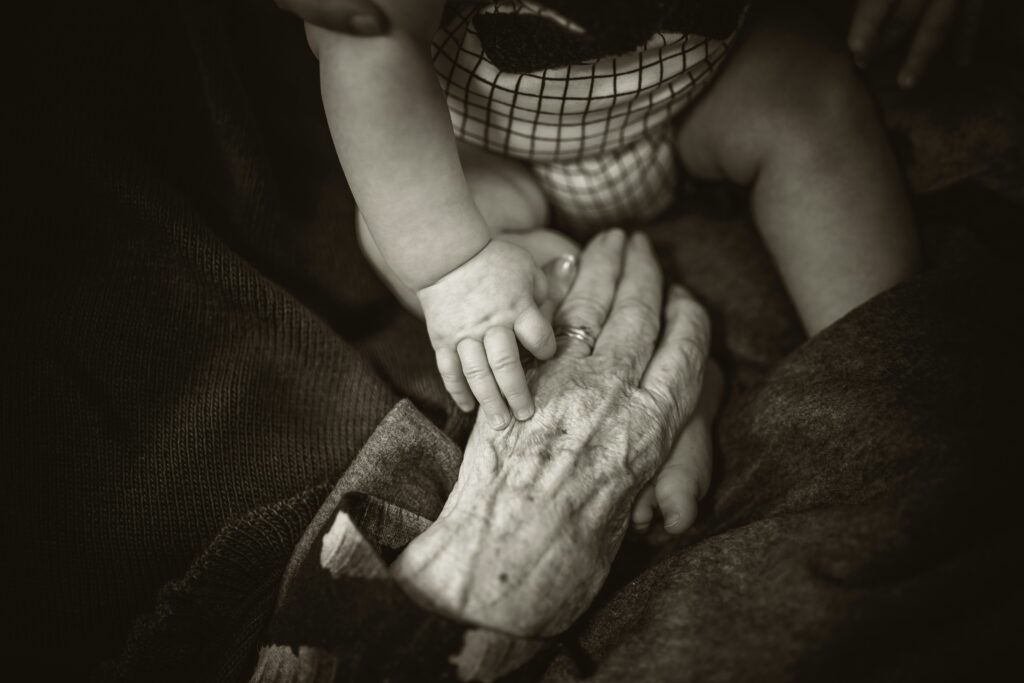
Image of a grandparent holding a small grandchild’s hand.
(Image courtesy of Rod Long on Unsplash)

When the Climate Becomes Your Enemy

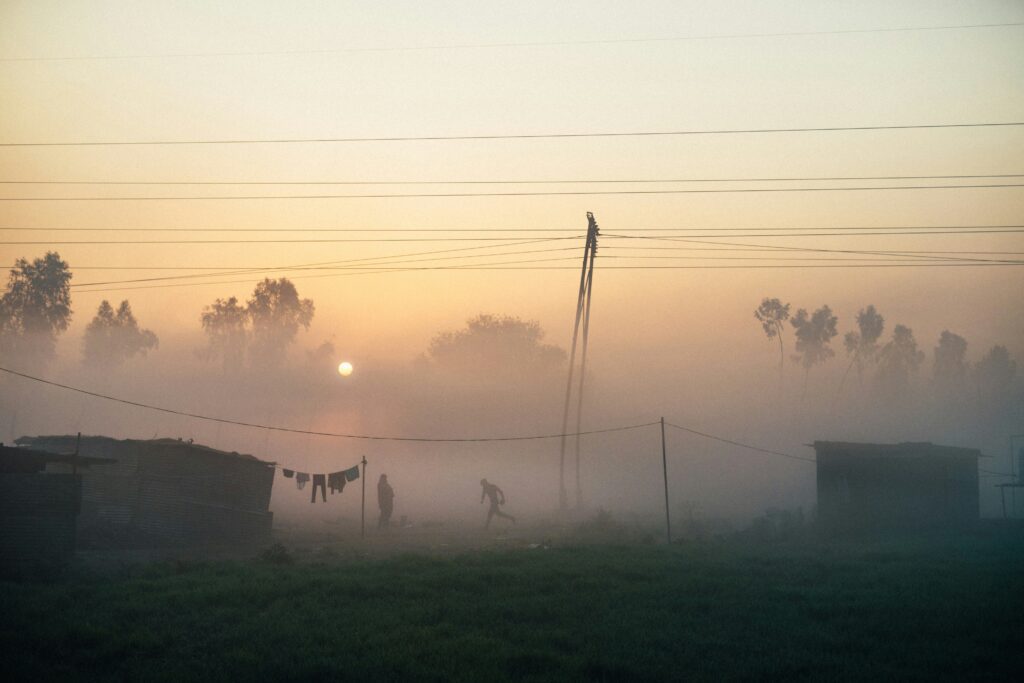
Amidst the sweltering lanes of a Delhi slum, where the sun feels merciless and the air itself seems scorched, life unfolds with harsh lessons. 

This is where I grew up — navigating the world with dyslexia, dyspraxia (a disorder that affects coordination and movement), and a stammer, while also serving as a lifeline for my chronically ill mother. We survived domestic violence, yes, but today we are facing an equal challenge: surviving a world that seems indifferent to its most vulnerable. 

Try and feel them

You hear about heat waves in headlines, but can you feel them? Have you felt that suffocating weight in the air, that oppressive sense of panic when you realize there is no water, no relief, and no escape? For us, enduring a Delhi heatwave in a makeshift home was like being slowly roasted alive. I remember one particular day when the temperature soared, making it unbearable to breathe. Our tiny room felt like an oven; the walls radiated heat, and the ceiling fans offered no respite. Each day was a battle against an invisible enemy, as my mother’s health crumbled and my own challenges flared up.

Finally, after my mother received care from the government hospital, I vividly remember that some of the medicine her doctor prescribed required cold storage, and at that time we had no refrigerator. I had to ask the local pharmacy for help.

In the unrelenting heat,  my dyspraxia intensified, turning even simple tasks into exhausting struggles. One prominent dimension of dyspraxia that becomes increasingly noticeable during this period is sensory overload. Typically, I struggle with processing sensory information, including touch, taste, and sound. However, the combination of intense heat and constant sensory stimulation during the summer significantly amplifies these difficulties.

As temperatures rise, I find it increasingly difficult to regulate my body temperature, which leads to feelings of restlessness, fatigue, and irritability. The discomfort of excessive sweating can also interfere with my ability to hold objects or maintain a firm grip, further intensifying the coordination challenges that are already a part of living with dyspraxia.

Image courtesy of Parker Hilton via Unsplash

Hot and bothered, you are a statistic

The time I rushed my mother to the emergency room during a particularly brutal heatwave, getting to the hospital was a nightmare. Public healthcare was our only option, and the system was stretched to its breaking point. The waiting room was packed, and as I stammered through my explanation, I felt the impatient stares of those around me. The doctors and nurses tried, but they were drowning in a sea of patients. The helplessness I felt when I stammered while trying to explain my mother’s deteriorating condition was overwhelming. In those sterile hallways, you’re not a person — you’re a number, a problem to be processed. It’s a kind of invisibility that’s hard to describe and even harder to live through.

Here’s the painful reality: if our healthcare infrastructure can’t account for the heightened vulnerabilities of disabled people, we’re not just failing, we’re actively contributing to needless suffering. Accessibility isn’t about “nice-to-haves” like ramps or braille signs — it’s about life and death. It’s about creating safe, resilient spaces where people can seek care without being pushed to the margins, or to their own limits. If healthcare can’t adapt to the reality of climate change, then the most vulnerable will continue to pay the price.

We were overheated. Statistics are cold. They can tell you about the number of people affected, but they don’t make you feel it. Stories like ours bring urgency and humanity to these issues. When you look past the numbers, you see people fighting battles that few even realize exist.

From struggle to action: the birth of Green Disability

Out of this experience, I realized that we needed to make our voices heard in the climate conversation. That’s when I decided to start Green Disability, a grassroots initiative for climate action that includes the needs of people with disabilities. Today, our community has grown to over 600 members, with our newsletter reaching over 7,000 people. We’re not just an organization, but a movement, and our message is simple: the climate crisis affects everyone, and you can’t talk about sustainability without talking about accessibility.

We’re working on documenting the lives of disabled people in climate-vulnerable areas, sharing their struggles and their resilience. We’re also simplifying complex research, turning data into stories that resonate with our community and inspire action. This isn’t just about raising awareness. It’s about creating real change.

Climate justice is empty without disability justice

We’re one of the world’s largest minorities, a major minority! Yet we’re often overlooked in climate solutions. But we won’t be ignored anymore. Disability justice and climate justice go hand in hand. 

If we’re serious about tackling the climate crisis, then people with disabilities must be part of the climate conversation.

What is Fear?

What is Fear?

Whenever I plan to write, the white empty paper scares me.

This year, I turn 31. What did I achieve in these years and days of my life? How do I define myself?

My passport says that I am Egyptian, even if I spent more than half my life outside the country. Should I start telling my story from 1993? I was born in Khor Fakkan in Shariah, United Arab Emirates, the youngest of seven children. My parents named me Khadija.

I graduated from high school and returned to Egypt. I participated in a revolution which didn’t achieve its goals. I got married after a great and epic love story…or that’s what I thought, until I got divorced.

I gave birth to two amazing kids. I graduated from Sharjah University with a degree in English literature and translation.

I spent my twenties with my son Qassem. Life was beautiful until I gave birth to my daughter Layla and fell into a hole of postpartum depression. Alice in Wonderland was running after the rabbit, but I was running after myself.

What lessons have I learned from my life? What is the moral of my own story?

I can bake apple Bundt cake, lemon cake and chocolate banana bread. I cannot work under pressure. I used to hide my problems. I love life and in the same way loathe it. I love to prepare my meals with passion  and eat them slowly. I love to spend time with my friends.

I know the sound of typing pleases me. I love writing and literature. I believe that there is a special connection between me and literature and I discover that day after day.

I am fond of language. I lose and I win. I am ambitious. I dream of becoming a great translator. I dream of winning the best mom ever prize (if there is such a thing)!

Why do I hate the Egyptian revolution? The revolution fell from paradise to the earth like Adam’s apple. I wonder, did Adam hate the apple? Did he swear at her?

I was living such a simple life in Dubai in 2011, when the flame of revolution ignited in the Middle East. I was a high school student. The revolution seemed like the greener grass on the other side. I dreamed of being part of what was happening. But since that time, I have been enduring a series of personal and public defeats. Can life lead to better outcomes? Can the course of life change?

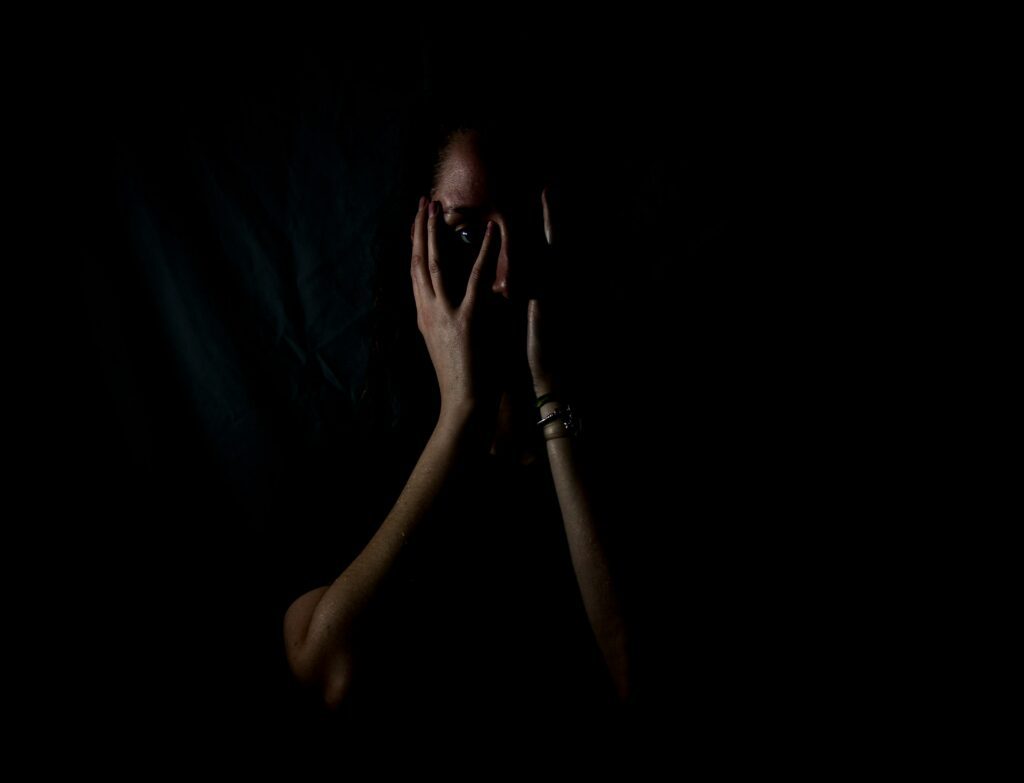
(Image courtesy of Melanie Wasser via Unsplash)

Once you have been broken and tasted fear, fear becomes a habit. Do you know who I am?

I am the girl who at the age of 19 almost got caught by the central security forces at a protest. As I felt them pull my arms and grab me, I screamed “I want my mom!” Since then fear knows my address and acts like that friend who, no matter how many times you avoid her, keeps ringing your doorbell… 

Somebody Shot My Hometown

On the morning of July 4th, 2022, I was lying in bed watching videos on my phone when my mom called me. Earlier that week, we had discussed the possibility of meeting at my parents’ house for a barbecue or a short visit, so I didn’t think anything of the call. However, when I picked up the phone, it was immediately clear that something was wrong.

The usual preamble to our calls, the “Hi, how are you? What’s new?” etc., was replaced by a nervous “Where are you?” After I reassured her that I was safely at home and that my brother had returned to his house in Milwaukee the night before, my mom told me that she and my dad were currently fleeing the downtown area of my hometown, Highland Park, Illinois, because there were gunshots at the Fourth of July parade.

My immediate reaction to learning my loved ones were in danger from a mass shooter was not what one might expect. When I worked in schools, I went to work every day knowing that there was a possibility of a stranger or even one of my students coming into the building with a gun. During quiet moments at my desk, I would think about how I could best protect myself and my students if there were to be a shooting, occasionally glancing out the window to see if there was a safe place to land. Similarly, when I go to the movies, I prefer to go to theaters with emergency exits in the back, so I can sit far away from the entrance and I know I have a place to go if a shooter were to come in. So when my mom called to let me know there was a mass shooter at the parade, I was scared for the people there, but I wasn’t surprised.

For the remainder of the morning, I continued to lie in bed, waiting for the call that would tell me my parents had made it home safely. While I waited, I constantly refreshed a Google search for Highland Park, desperately hoping for new details to come out about what was going on.

When my mom called me the second time, it was to tell me she, my dad, and a group of parade goers had taken refuge at the nearby beach, and she was waiting for a friend to come and pick them up. She also informed me in hushed tones that one of the young men at the beach with them seemed suspicious, and had been smiling the entire time they were there. Hearing this scared me, so it’s hard to fully imagine what she must have been feeling at the time. There was no information what the shooter looked like or where he went, and for all she knew another bout of gunfire was about to erupt where they were now. How could anywhere feel safe after what they had just experienced? After that phone call was the first time I cried that morning, thinking of my parents shuffling through a crowd of people just as scared as they were, not knowing if another round of gunfire was about to erupt in their midst.

I was incredibly fortunate to have my parents make it home that day unharmed, a luxury not everyone from Highland Park can say about that day. This didn’t stop me from feeling a profound sense of loss. Members of my old community had lost their lives at the site of so many wonderful childhood memories. Were I to associate words with Highland Park I would have said quiet or safe, but now I was seeing headlines literally describing it as a warzone.

As details emerged about the shooter, I was shocked to learn he was the son of the owner of a deli that I had frequented for years. I remembered that behind the counter the owner had hung some of his children’s artwork. I wondered if the colored pencil drawing of Iron Man I had admired had been done by a mass murderer. 

Never a community to take things lying down, the town quickly adopted the slogan “HP strong” and began multiple initiatives to help the victims and their families get through this trying time. From local businesses to children with lemonade stands, people did their best to raise much-needed funds for hospital bills, therapy, and medical devices that some victims will have to use indefinitely or for the rest of their lives due to injuries. However, as Highland Park rallied, the events of the day began to quickly fade from the consciousness of those unaffected by it.

Image of a person holding a candle during a vigil.
(Image courtesy of David Dibert via Pexels)

Mass shootings have become a fact of life in America. There have already been over 300 shootings in 2022, and the sad truth is that more will probably occur between my writing this and when this article is published. It’s impossible for people to fully process each one of these tragedies with the gravity they all deserve. It’s easy for people who are disconnected from these events to think that the effects of a mass shooting only last for the duration of the event itself. However, for people who were there or for the community at large it leaves a scar that does not heal quickly.The last time I spoke with my mom, she mentioned that she still checks the rooftops around her while she is in public spaces since that is where the HP shooter attacked from. 

Highland Park residents were scandalized to learn that a website was selling “HP Strong” T-shirts, not to benefit the victims, but to make a profit. The site incidentally has paraphernalia for a variety of mass shooting incidents, capitalizing on the tragedies of not just our community but many.

The Fourth of July parade that the shooter chose to target was a staple of our small town, one that I have memories of attending for years as a child. Now, instead of simply being a time for the town to get together and have some fun, if the parade continues it will be an annual reminder of the tragedy that took place in our town square.

Another aspect of experiencing a shooting in your community is the outside pressure to move on. Whether it’s feeling guilty or selfish for not being as affected by other mass shootings or the toxic positivity of those who didn’t have a personal connection to the attack, I’ve found myself starting to feel crazy for not having moved past it yet. I know I’m not alone in feeling this way as my partner has expressed her own similar feelings. Like me, she also spent the morning worried and unsure if my parents were safe, however, by as early as that evening her mother was making it seem like my partner was overreacting to still be so upset about it. I’ve stopped several times while writing this and had to convince myself that not only am I allowed to be upset about this, but that I should be.

If there’s anything you take away from my experience and those of the people close to me it’s this: As frequent as they are, we should not allow ourselves to start thinking of mass shootings as normal. Other countries seem to have figured out how to get gun violence in check, so it’s clear that there are steps that can be taken to help prevent these attacks from happening. However, people don’t take action to change things they see as natural occurrences. I’ve heard people compare mass shootings to natural disasters which is a dangerously dismissive way to think about the issue. There is no legislation that will stop a tornado, and you can’t regulate a hurricane. People should be able to go to a parade, or to a movie, or to school and not have to worry about being shot, but I do and I’m not alone.