Trigger Warning:Blood, medical attention, stitches
Costumed kids, Pumpkin pie, Wind whips And trees sigh: My tears run (Generator Dies), and you Don’t ask me Not to cry, But say, “Hold Out your hand.”
I soar upwards, watching the world simultaneously minimize and enlarge before my eyes. Roads transform into unraveled threads, mountain ranges into gentle ridges, great lakes into dots of blue.
I know that the land below hasn’t really changed, only my perspective of it. But from several thousand feet high, that’s hard to believe. Lost in myself, I forget that the objective and subjective aren’t the same. In the landscape of my own consciousness, there are no true norths — no indisputable, solid landmarks that can guide me. And just as my perspective shifts, transformed by age, so have my memories.
To recall is not straightforward. We don’t pull a perfectly preserved file from the mind and replace it, unaltered. Instead, to remember is to erase, add shading, embellish. Sitting on this plane, I know my memory of Halloween night has been distorted beyond recognition — a road turned into a shoe string.
Every time I write about my life, I want to caution whoever reads it: what I’m about to tell you is both entirely true and a bold-faced lie.
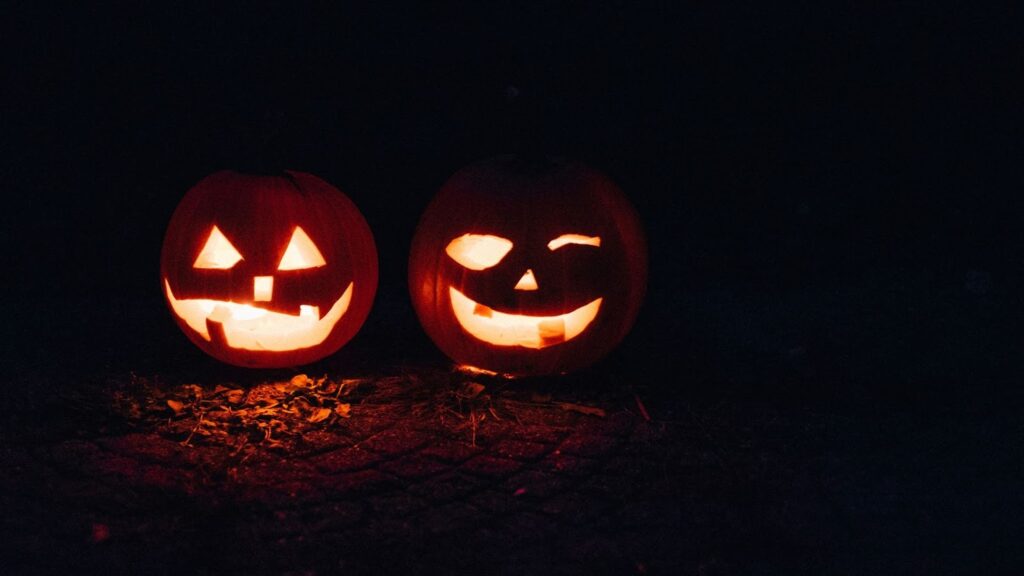
That fateful Halloween of the cat
(Photo by Beth Teutschmann on Unsplash)
Last Saturday, I talked with my brother on the phone. We swapped memories, unsure of whose lay closer to the truth.
“Wasn’t it in the front yard?” I asked.
“No,” he said, “I’m pretty sure it was in the back. Mom wouldn’t have let you play in the front.”
Subscribe to The Superhero Brief!
Free access to the CEO's newsletter.
The views expressed in this newsletter are those of the CEO and do not necessarily reflect the views of the organization.
“But, I thought I remembered Dad getting home,” I argued, “which is why we were out there. I was running out to greet him and show him my cat, and I fell.”
Halloween, 2000, in foggy Pacifica, which is situated on the northern California coast: we were a family of five. I wouldn’t use the adjective “normal” to describe us — because who is normal when you dig deep enough down? — but I will paint you a generic picture: white, suburban, middle-class.
My brother reminded me that he dressed up as Spiderman that year, complete with webshooters that catapulted Silly String. I can picture him at 8 years old, sprinting around the house, trying to climb the walls, spinning web after web. Dodging behind the couch to evade my mother, speeding past one of his little sisters, almost knocking her down. I have no idea what costume my two-or-so self wore, but I imagine it was nothing elaborate. The prior year, I had shrieked so determinedly when my mother attempted to dress me up in anything that, exasperated, she finally drew a circle on my t-shirt, wrote “I’m a pill,” and forced me into it.
Whether I understood Halloween as a concept at two and a half is debatable. However, the great pride I took in the cat I had “painted” at Clay Creation earlier in the week — red splotches blobbed over white ceramic — was not. We must have picked up our artistic triumphs that day. My mother stayed at home with us as our father worked, and she was always spoiling us with that kind of fun — painting, crafts, sewing.
“I know I shouldn’t have let you carry it,” she told me, “but you wanted to show Dad yourself.”
So, I had toddled out to him across the pavement, hands outstretched, clutching my seemingly blood-bespeckled cat (an omen of what was to come) as he got out of the car.
“Dadda, look,” I said proudly. And then I tripped, smashed the luckless cat into a million pieces, fell palm first, and gracefully landed on sharp ceramic.
My “memory” ends there — actually, it ends before the impalement, with the trip, the slow fall, and the shattering. I’m sure I screamed. Blood undoubtedly trickled across the pavement.
“I thought I remembered you saying later,” I told my brother, “that you were really worried you wouldn’t get to go trick-or-treating.”
“Probably. But Dad took us, and we had a really great time. I don’t remember thinking about you at all,” he laughed.
My poor mother, meanwhile, wrapped my hand in a towel and transported me, shrieking, to the emergency room.
Are parents real?
Parents aren’t really people for their children for a very long time; children usually don’t see their caregivers as individuals with wants and needs and vibrant inner lives of their own. I know I certainly didn’t for a long time. Someday, they may see the light, but only through a painful process of maturation that culminates in their own experience of parenthood.
It’s hard for me, even now as a grown woman, to conceptualize what my mother felt then — as impossible as it would be for someone who has never flown to imagine what the world looks like from several thousand feet high. My perspective of her is shifting, but she still hasn’t quite become a person yet, maybe because, in my mind, she was always more of an icon or a household god than a woman with emotions, fears, and a life of her own.
She was always right. She could fix everything. One word, one hug, and she could drive all the sadness away.
That night, after we had arrived at the emergency room and were ushered in to see a doctor, the sky had darkened to pitch black. Fog billowed on the sidewalk, reflecting the streetlights.
My mother remembers the emergency room being busy. Amid the shuffle, bustle, and crying kids, something truly eerie happened — the lights went out, the backup generator failed, and we were left swathed in darkness.
“They got the lights back on again pretty quickly,” my mother told me, “but on Halloween night, it was pretty creepy.”
Bleeding in the dark, I must have been frightened — but not overly so. My mother, after all, was with me. However, a fresh wave of fear must have hit me when I sat before the doctor, sharp metal instruments shining on his left and right, and listened to him say I needed … stitches.
“You were really little,” she always recalls, when telling the story, “and for small children, they strap them down to something called a papoose board. But I knew how much that would scare you. I told them that if I asked you to, you would hold out your hand and be completely still.”
The doctor objected. My mother insisted. I was not strapped down.
“Sofie,” she said to me. “I want you to hold out your hand for the doctor. Keep looking at me and stay still — even though it hurts.”
I did.
To this day, I have a scar on my right palm, extending from wrist to lifeline, drawing a half-moon. And for a long time, the story of my extreme filial obedience was a source of pride. It is clear to me now that all glory should go to my mother, who inspired such a high level of faith and respect in her child, and in a doctor. That is no common thing.
And I do like to think it was trust, not a fear of punishment, that led me to obey. The belief she would never ask me to do something painful unless it were for my ultimate well-being. When you find a deity both all powerful and all good, you follow them.
The crash that follows
Can you sense the inevitable crash to come — anticipate how adult complexities must eventually clash with childlike faith? As I got older, my mother fell off her pedestal. Adolescence and adulthood have brought me great pain as I realized, little by little, that she’s no god after all.
For the last ten years, my sister, the undescribed fifth member of my family, has been sick. She may never get better, nor will she die anytime soon — she’s stuck in a type of half-alive purgatory, a caterpillar cemented in its cocoon.
As we have readjusted to the reality of her illness, life has gone on over this painful backdrop, separate from and yet always intertwined with it. I have fiercely disagreed with my parents; reevaluated my childhood — broken the snow globe and poured the contents on the floor. I have dealt with my own mental illness, gone to therapy. Back to therapy again, as I try to accept that my sister is ill.
I’ve been so, so angry that my mother can’t fix it, can’t make my sister well, can’t wave a magic wand and fix the cracks in our family and the world.
If she were to read this, I’d say. “Any anger I have towards you, any feelings of disappointment … are because you were a damn good parent. You wrapped me in a beautiful illusion, and it’s a testament to the strength of that illusion that seeing you as you are, with limitations, has been so painful for me.”
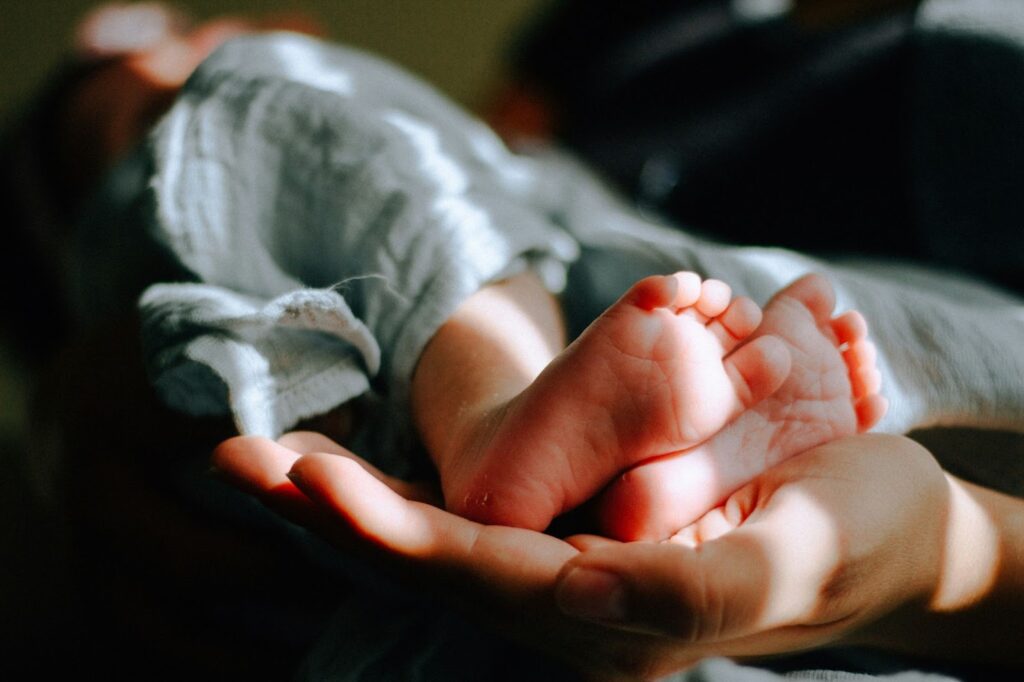
The cycle of life continues
(Photo by Omar Lopez on Unsplash)
Throughout our lives, point of view shifts. Objective truths blur, fade, and come into focus again. Even now, the plane has begun its descent: once again, I can make out rivers, roads, houses.
As my fiancé and I talk about having children, I can feel my perspective morphing into a new shape, one that will only be fully visible when my own children have been raised, and I finally have lived as much life as my mother has.
I know that when I hold my baby girl in my arms, I’m going to hope and pray that we also have the kind of relationship where, if I ask her, she’ll hold out her hand, not counting the cost. What a terrifying privilege and responsibility — beautiful when stewarded, disastrous when mishandled.
It makes me want to weep knowing that, just like my mother, I will champion that responsibility both well and poorly in turn. Because, after all, no one is all powerful or all good — we are all just people, trying, and often failing, to do the best for those we love.
My parents tried much harder than most.
Back together
When we got home that Halloween night, it was to find that my father had meticulously collected every piece of my cat and glued it back together.
I still have it — splattered blood red, lined with deep fissures that tell the story of its shattering and repair. And if I could wave a magic wand, wish away the scars, and make the ceramic smooth again, I wouldn’t.
Sofia Tietze loves the written word. She’s passionate about reading, writing, and editing the works of others. She received a bachelor’s degree in English (with an emphasis in creative writing) and a minor in professional writing from UC Davis and currently works by day as a medical editor. By night, she’s writing down her debut novel and whatever poem happens to possess her. On weekends, you can find her riding her pony in the Sierra Nevada or biking through Sacramento in search of new coffee shops and thrift stores.
Thank you to Yosef Baskin, Jessica Day and Julianna Wages for their inspired edits on the piece.




Comments
Be the first to share your thoughts!
We value diverse perspectives and respectful debate.