Love and Learning in Oslo

Sagene, maybe midnight. Maybe just before. It’s late. I had my usual spot at the local park, up on the rise where a couple of benches sit, with a view to the whole place. It’s January and it is cold — really cold — but I don’t mind it. 

In Norway, they know how to bundle up. Frankly, living two entirely separate existences — from the bright, warmer months to the dark, colder ones — is a necessity. Norwegian winter isn’t a joke, it’s real. You get endless false summits of the snow finally melting, only for it to fall again and again and again.

I was triple-layered all over, beanie on my head and a flask of piping hot coffee in hand as I sat out to smoke. I was escaping, in truth. There was always a part of me in that relationship that just needed…air. I just had to, wanted to. Then of course, I’d feel mildly guilty that I’d pulled such an escape hatch and left my girlfriend back in the flat.

I took my seat on the bench, my increasingly customary spot. I looked up to see the Big Dipper faintly flickering in the sky above. This was my little refuge. Yet that led to a significant question… why exactly did I even need a refuge?

***

I was in Norway, following the girl I loved. She and I had been together some six years when back home came calling for her and, on open invite, I followed.

We both left London feeling we’d found the person we would gladly spend the rest of our lives with. It was magical. Leaving the only country I’d ever known in the name of romance was exhilarating. (It’s also one of the coolest ways to sign off from a job).

We spent six months living at her folks’ place. Amazing people, brilliant hosts, with a pristine haven of a home. I sat, got fed, and mildly fat when, legally, I couldn’t do anything else. It was around the six month mark when my girlfriend got a job interview in Oslo. We moved to the capital and got a little apartment with a balcony in a beautiful, leafy corner.

It’s rare that reality lands like an anvil, giving that shuddering sweep of blood running cold. Those sideswipes happen, but they aren’t often. Usually, typically, reality unfolds, slowly, carefully, over time. As it has been said in writings more important than this one, “God gives us as much truth as we can handle”.

In retrospect, I was running on myths: Myths and half truths — all well meant, I should caveat. It would dawn on me in the weeks ahead that I’d be taking advice about living in Norway from someone who hadn’t actually done that since school age.

Myth Number 1 – Norway is not that expensive.

We were Londoners. We’d spent the best part of our formative 20’s in the Big Smoke. It’s a major capital, and, like most, it comes at a premium. Even so, my girlfriend was fairly confident that the cost of living would be about the same.

I believe we were about two food shops in when she’d turn to me and said,

 “Norway’s bloody expensive, isn’t it?”

Myth Number 2 – Everyone Speaks English There. You’ll Be Fine

Now this is a slippery one. Mostly because it is true. The vast majority of Osloaites (or, in Norwegian, Osloenser) I met or made friends with had a comfortable and easy grasp of English. Yet how this related to job markets was less than inspiring. The inference that speaking Norwegian wasn’t a necessity for employment turned out not to be true. My preceding months of Duolingo were far from enough to get by…

Myth Number 3 – Work Part Time, Do Your Writing

The only doubt I had in moving was that I’d be making major changes in my life I wasn’t ready for. I was confident in the relationship, in my partner, and in the move to a part of the world that gave her family a support network. We spoke before moving and she gracefully, beautifully, gave me the green light: do it, go for it, live your dream. Work some 25-30 hours a week and spend the rest of your time doing what you love.

However, with the above two items being so, this was simply impossible.

All this unfolded over the opening weeks and into months of living in Norway. Reality can never live up to fantasy; that’s why we’re generally dissuaded from it. My partner got a job that was really well paying, and she was good for it. Honestly, she had an incredible mind, a remarkably intelligent person.

She went on a coding course while we were living at her folks’. She got head-hunted by one of the biggest publishers in the country, for a well-paid and profoundly contemporary job. The flipside of the coin was: it swallowed her whole.

She was consumed by it. She stressed about it approaching work. She stressed about it during work, and she stressed about it after work. It became the only topic of conversation when she was back. Weekends were increasingly matters of recuperation, when she was regularly beleaguered with migraines.

I couldn’t help but feel gut-punched at the irony. She was so deserving of this job. This was an immensely capable and smart individual. London’s job market had been indifferent, when not cruel, to her. Finally, she got a chunk of employment that actually measured up to her value. Yet this was the first time a valuable and well paying role had come her way in our time together. I was so happy for her getting the post, but once again, reality clashed with fantasy and visions. I’d never considered that a job which actually made the most of that brilliant brain would leave her depleted and despondent.

I don’t know when exactly the turn happened —when I started to feel the pressure cooker — but I remember a firm sense that… I’d lost my place in the relationship. I began to feel invisible and powerless. My freelancing engagements were hardly enough to line pockets, and Norway is expensive. Her mind was elsewhere, with no conversation but work. I felt like a passenger. As for my love… that was the burn, I still loved her, but love is a raw and beautiful force with many different faces.

She felt like home. I cared for her deeply. I felt an overwhelming sense of responsibility and care for her happiness. I was a best friend, a father figure, a flatmate, and definitely a source of comfort. But… lover, romantic partner? Something got lost on the flight from Heathrow to Oslo. Something altered as the reality of living in Norway unfolded. She was deeply committed to me, and I’d drawn a line in the sand by moving over, but something was gone.

Seven years in, was this normal? How does one tell? Who does one ask? What makes you know?

***
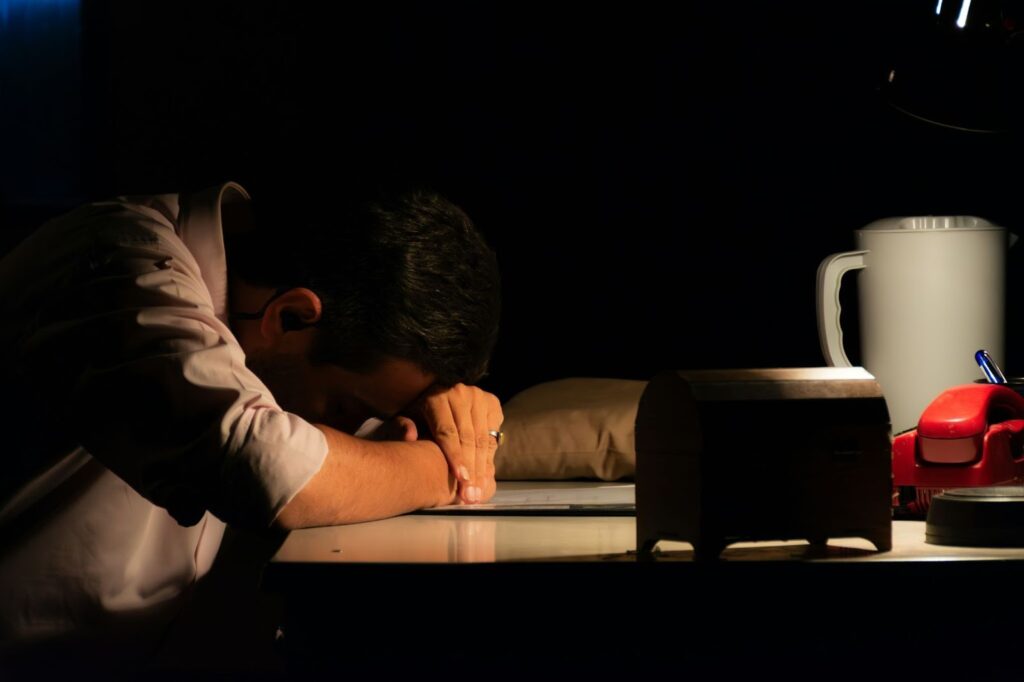
Image of a man at a table, his head down on his crossed arms in front of him. A single light illuminates his body and the objects on the table.
Image courtesy of Human Bahluli on Unsplash

Sagene, gone ten pm, maybe midnight. It’s cold out–or is it? It could be spring, summer. I spent so much time finding my little spot up at the park it’s something of a blur. I do remember kissing my girlfriend before heading to the park, clear as day. I remember her face; I remember coming away from the kiss with it… just not feeling right.

The spot was quiet, just the occasional dog walker passing through. Sitting on the bench, I felt full– something in me not sitting right. Maybe it was the kiss, the relationship.. It was this dark, uncomfortable presence in my psyche that refused to be ignored. My mind swam as memories plumed.

Cabin trips in the spring and summer. Seven beautiful Christmases worthy of oil paintings. A family taking me in as one of their own. Hard times in London. Good times in London. The uncomfortable ups and downs of being a twenty-something. The wonderful ups and downs of being twenty-something lovers. Friends back home. Embarrassments. Arguments. Uproarious laughter. Binge-watching series. Holidays and trips together. Tender holding of one another. Comforting each other through losses. The opening joy of starting up in Oslo together. Her cute face…

I stood up from the bench, my cup ready to spill. I stepped forward just a matter of steps, looking out to the horizon, just a few trees and high-rises filling a spread of skyline. To no one, to anyone, the words left my lips with a throat as tight as vice:

“This isn’t the one…”

And I cried and I cried and I cried. I bawled like an infant, alone in relative darkness. I’d moved everything I had and left everything behind for this. I was all in. I’d rolled the dice and I got snake eyes.

***

What followed was a year of trying. I tried the good-cop way and we kept the groove of the relationship. I tried the bad-cop way and disturbed the groove of the relationship, but not for the better. Sometime in June the following year, I broke the relationship off. Despite the well of tears that followed for us both in the weeks and months ahead, it would increasingly dawn on us that it was the right decision.

I don’t know if my eureka moment was realizing the relationship had to end, or the conviction that came about myself having made the leap. By the time I had to leave Norway, I’d entirely placed my happiness and self-worth in someone else.

I’d taken the archaic maxim ‘happy wife, happy life’ to an extremis that just abandoned me. There were parasitic elements that I couldn’t reconcile or take pride in: your country, you got the good job, you take the reins now.

I’d stopped treating love with love. Some ghastly dependency arrived with an utter sense of resentment; that the success of the move for her hadn’t instantly equated to a glowing happiness. Moving countries for your love is certainly a man’s choice, and I’d turned out a scared boy.

Returning to the UK brought a determination. I couldn’t look to or depend on externals; I needed to look at me. I wanted responsibility and change, with a full understanding that they are harbingers of stress and challenge. I wanted to be the architect and accountable party for my own happiness and never lose sight of that.

I desired reality, even if it meant the frightening prospect of staring it down the barrel. I wanted to be someone who could take that. I set out to do the work of becoming the guy I was meant to be, not someone I thought I was… running on myths out of someone else’s mouth and covert contracts about others.

***

Creative destruction is a term for economics but I feel it can be more broadly applied. Sometimes the antiseptic stings; we have to make decisions that are painful at the time for better results down the line. That’s certainly turned out to be true. I’m very much becoming who I was meant to be with a steeper degree of self-worth, insight and responsibility than I’d ever had in my life. I’m also pursuing what I love more diligently and consistently than I’ve ever done.

As for the villainous matter of being the breaker in the break-up…

When I left my partner, she had a beautiful, full furnished apartment and a well-paying job in the capital of her country. She was just a train ride away from family and had a blooming social life in the city. This hasn’t changed.

There’s a saying that “sometimes, in order to find love, we must hurt the ones we love”.

We’re both for the better for it, with a deeper understanding of love and ourselves that staying together could never have fulfilled. She’s free now and so am I, living the lives we want to.

That’s the reality– no myths required.
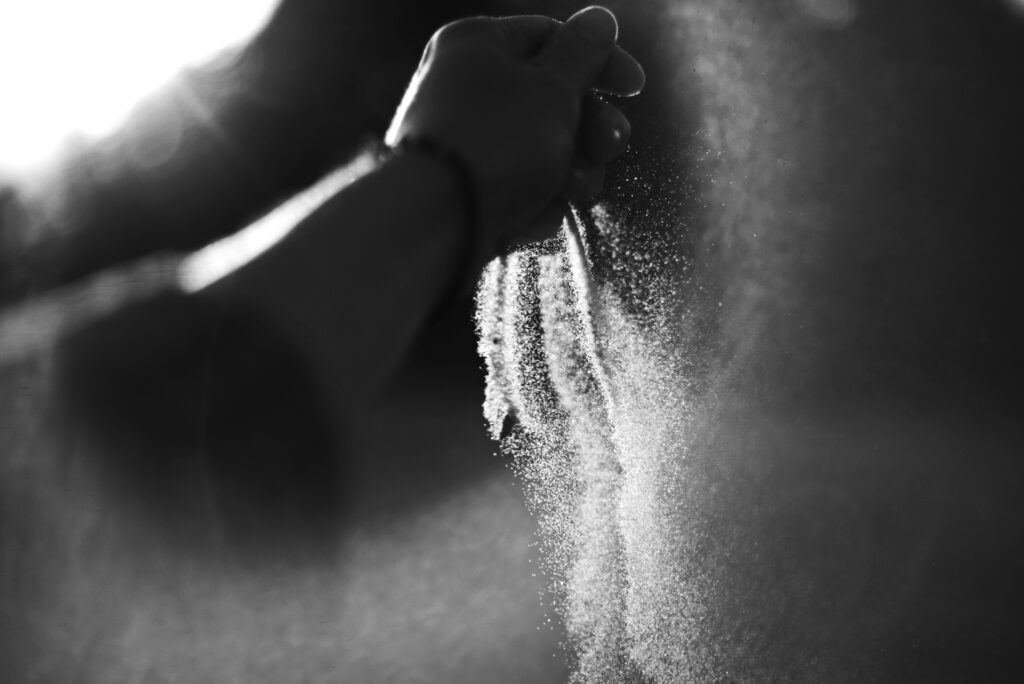
Image of a person’s clutched hand. Sand falls out of their hand as they loosen their grip.
Image courtesy of Liana S on Unsplash

To Feel at Home

To Feel at Home

Trains pass by,

Blue, yellow, painted with

Names, wishes born from aerosol cans,

Stolid tracks stretch out ahead;

You sit across from me,

With a quiet smile,

Knowing full well we’ll

Say goodbye someday.

Cherry lollipops,

Glühwein, steaming kisses

On glass rims–

Your hands are cold;

I smell your perfume,

Honey, the bread they baked

Just for us; there are candles,

Clandestine glances in

The middle of the day,

And the calm of not knowing

What comes next.

Standing There

Standing There

You always worry,

Watching as the car drives off,

Planting prayers like long green grass,

Hands clasped together as the sun shines–

Uncertainty sits at the table, asking

For tea and sandwiches;

You stare out the window while he prattles on…

We know you love us,

Long for us to be happy,

And we are happy,

To have your heart–

a trembling aspen–

So full of our bijoux

That it bangs against your ribcage,

Those facets you crafted so dutifully–

A wren flying into the fading dawn;

A rabbit rushing to feel the forest’s shelter;

The long reeds that beam a ruddy

Yellow against the fresh snow–

Don’t worry. We’ll be home soon.

 Lifetime Haikus

Editor’s Note: This piece is an example of the Japanese “rensaku” poetic form, a collection of haiku poems that connect with one another to create an overarching narrative.

Lifetime Haikus

A shimmer, shadow
Wrapped in swaddle, to blossom
In a mud puddle.

One learns to love the
Days lost to scraped knees, teary
Eyes, hugs that mend all.

Then the legs grow, the
Arms reach out, fingers spread,
The heart finds color.

You love her, lost the
Fears you had handing her bruised
Daisies, wrapped with bows.

She found you, held the
Bouquet close, and you closer,
Even after dawn.

Her hand is on your
Chest, warm, serene, securely
Yours– you breathe her in.

Your daughter is born,
Her eyes still closed, she is safe
Against your bare chest.

Everything is hard,
Harder than you ever thought
It would be to love.

A part of you shrinks as
She grows, no mud to muddle,
You love her. You lose.

She scrapes her knees as
Yours feel heavier, all
Steps forward for her.

You lost her mother,
You lose yourself, but see her
Still, as your heart breathes.

Your lass lingers less
At home, begins her own way.
“It’s alright, sweetie.”

She left today. You’re
So happy to see her eyes
Closed again; you hug.

Everything mending,
She shimmers, the car drives east,
Casting more shadows.

You lose you, again…
Sit there, reading her letters,
As your hair thins, grays.

She visits, her wife
And son– the image of you–
Hug you, eyes open,

As hers crinkle closed,
Like her mother’s; you miss them
Both, brutally now.

On your knees, at the
Cemetery, your eyes mist,
In the fog. You loved.

The photographs blur,
Just a bit, and your daughter’s
Voice sounds less like home.

“It’s alright–,” colors
Paint your heart in antique grays,
Blue, bruised arms that grasp,

That cling on, fingers
Spread wide, on your chest, as you
Still remember them.

You thank the world,
Watch the rain, the mud puddles,
Hold the daisies, bruise them.

The darkness grows, as
Your crinkled eyes close, nothing
To lose. You were loved.

This Fabric Does Not Suit Me

Editor’s Note: The Poetry Foundation defines an acrostic poem as, “A poem in which the first letter of each line spells out a word, name, or phrase when read vertically.” Usually, the central theme of the poem is revealed upon reading this hidden message.

This Fabric Does Not Suit Me

There’s a suit that I keep tucked away,
Hanging in my wardrobe, behind my newer clothes.
Every glance I take, I realise how much I have changed.

Fourteen years since I first laid eyes on it…
Allow me, now, to look in hindsight,
Back to a time when fashion weighed on chasing brainless trends.
Racks in retail shops were filled with fragile, gaudy tat,
Impressive shoes and shirts and hats,
Colorful and contemporary, yet lacking in their substance.

Once, I’ll admit, I sought these things that people viewed as “beautiful…”
Finding my thoughts swayed by spontaneous desire.

Originally, I spied this expensive suit displayed in River Island,
Underlined with crimson curves and shapes that ran red eddies.
Relishing the looks of envy, I swiftly made it mine.

Life felt sensuous when I wore this suit for a time, though…
Opinions of my character were shifting day-to-day.
Very strange choice, they’d say, for someone like me to wear something like that…
Everyone saw how much it was changing me.

Had I listened – understood that popularity was empty,
Allowed myself the chance to think if I actually liked that sumptuous skin…
Separation would have been made much easier.

For a child came from my marriage to this ill-fitting decision.
Red Timberland boots, bought on holiday one year.
And, however much I now look at that suit with scathing eyes,
Yearning to reverse that snap decision…
Everyone I know loves these Timberland boots, and so do I.
Destiny dresses in mysterious ways.

My Ways to Feel

A glance,
A touch,
A greeting

To breathe in the same sights,
Experience the same sensations,
To be next to you
without saying a word –

It’s exactly where I want to be.

Expecting,
Wanting,
Dreaming

Constantly thinking
about what to do next,
Shaping our futures, together
or on my own;
Wanting to use the same blanket
so that no space remains –

It’s exactly what I want to do.

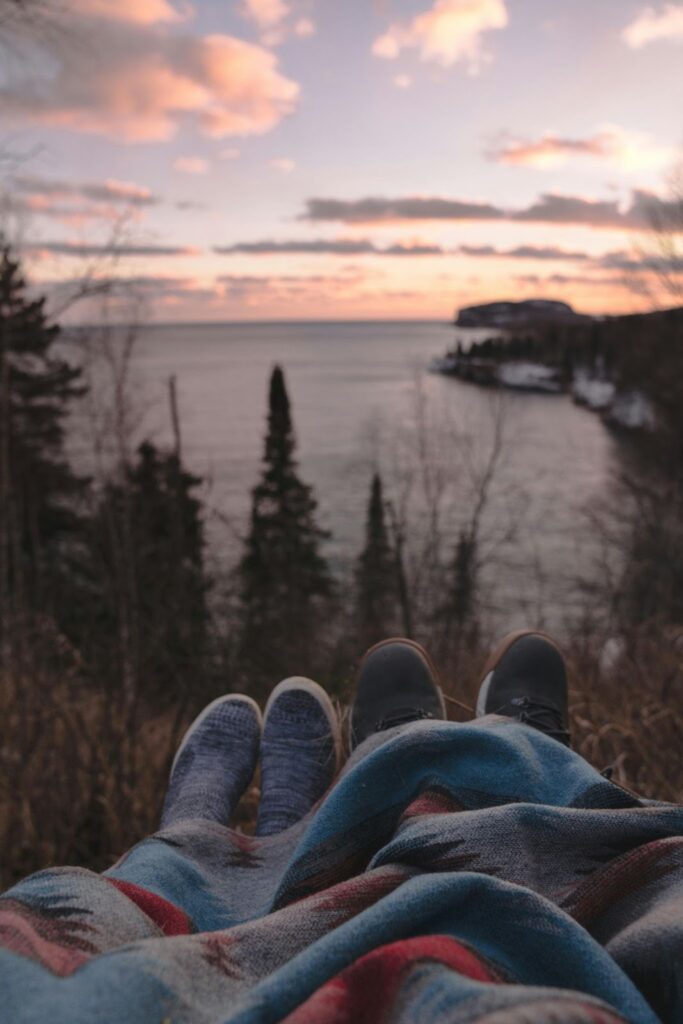
Two people sharing a blanket on a hill, enjoying the sunset over a forest and a lake.
(Image Courtesy of Brady Knoll via Pexels)

Guessing,
Surprising,
Delighting

Hoping you will like
what I planned –
Do you welcome
what you see?
Let’s go and get
what we don’t need –

It’s exactly what I want to hear.

Our routine,
Our rituals,
Our memories

Whether it’s planning them
or thinking about them,
Making ambitious plans,
Dreaming for us
And the days to follow –

It’s exactly what I want to create.

A shared look,
A shared thought,
A shared silence

Knowing what to get
before the words arrive,
How to act
when unsure,
Or to do what’s best –

It’s exactly what I want to protect.

Cherished,
Wanted,
Treasured

Accepting all flaws,
Bearing the pain
to spark that smile,
The twinkle in the eyes,
glistening from our shared emotions –

It’s exactly what I want to feel.

Peonies and Moon Trees

Today, in the stillness of winter, I realized how brilliant my twin brother is. I have always thought of him as highly intelligent. More than that, though, he is a force of good in my life, a being who encompasses constancy, sincere honesty, and all of those facets of society that I wish I beheld more often in other human beings.

Truthfully, I have been struggling with maintaining the same vibrancy I see within him these past months; I find myself looking for the broken pieces of our world upon which to cut my fingers. And there he is: always ready to mend my hands. I cherish him.

One afternoon, while we were walking through the brisk and battling winds of snowfields, we talked. We shared how we were feeling, how we viewed humanity’s tangible vicissitude, and my twin gently reminded me of the triumphs our world continues to nurture in defiance of the tragedies we are living through. However, what I found so powerful was that, unlike my prevailing bias in placing human beings at the center of all achievement, my brother discussed the success of plants, of things that grow simply because they must. 

He described the delicacy of peonies, how they flourished, what they symbolized, their perfect mutualism with the ants that could spoil a picnic and also cause sweet florescence. He spewed metaphors and similes as verdant as the plants whose names he recited, relaying how much we can learn from “those whose speech we rarely stop to listen to, let alone attempt to understand.” I found myself staring at the snow, imagining boughs and buds bursting forth with a vigor I could only hope to emulate.

My brother’s willingness to casually gift me the knowledge that would allow me to engage with nature in such intimate ways was akin to anything I have felt with someone I truly cared about, through reading poetry, tasting the best meal of my life, or landing a new job. It was euphoric, and all he did was describe to me how other living things continue onward despite global atrocities. I felt changed, and welcomed once more, by the living lyceum surrounding me, bestowing silent revelations. There were a few brief moments of envy when I desperately wished that I had arrived in this proverbial place of quietude on my own, but I was comforted by the fact that I have far more conversations, with both my twin and the plants whose languages I have yet to comprehend, to learn from and savor.

***

My brother’s generosity in welcoming me into the sanctity of nature felt healing, potentially from some hurt that had not yet been inflicted, and would now be wholly prevented. It felt rapturous, and so I asked him of other marvels that he leaned on in times of misery. He then spoke of “moon trees.”

For anyone who is unfamiliar, NASA launched Apollo 14 to orbit Earth’s moon in 1971. Aboard the vessel were astronauts, provisions and equipment, and tree seeds that Stu Roosa (the command module pilot of the mission) had stowed away. These seeds traveled through the void and the stars with the crew, and, upon returning to Earth, they germinated and were distributed across the world to national parks and historic locations. The saplings were strong, and, in some aspects, considered to be imbued with an abstruse vitality. They were fondly referred to as “moon trees,” and many continue to prosper today despite everything.

In 2023, more seeds were ferried to space upon the Orion spacecraft. These precious beginnings traveled thousands of miles for over a month before returning to Earth and being cultivated. This time, however, the moon trees were granted to schools, children’s camps, town halls, and community parks. In fact, organizations from across the globe were encouraged to write to NASA and illustrate why these precious trees would be beneficial to their communities, garnering over one-thousand submissions. Students, teachers, construction workers, hair stylists, and other changemakers wrote about the nearly ineffable hope that the moon trees represented and how they would remedy the increasing apathy of our celestial sphere by bringing everyone together.

My brother then described his own adventure locating a precious moon tree at the botanical garden where he once worked, and how he had made a point to map the location of the tree, a sturdy sycamore, so that everyone in the area could marvel at it. 

“It is magnificent,” he said as we walked, our warm breath misting in front of us. “And it is important for others to see that.”

I found myself getting emotional, recognizing the goodness within my twin, and understanding that he himself is, in more ways than one, a moon tree of sorts. He is someone who, like the powder-pink peonies, provides a sweetness that I crave in this bitter reality. He is a being, like the moon trees, who grants his own energy to lift others around him, all while harboring that same spirit that can only be born of stardust and moonlight.

I am proud of my brother for the numerous achievements that punctuate the years of his young life, but I, as his twin, feel fortunate beyond words that I, being half of something that also created him, could potentially be a moon tree to someone someday. I could become the peonies, in early spring, that don crowns of blushing heads, gilded in ants and glistening sugar.

I can choose to grow, whether it is in my ability to say that I was wrong, or to seek to understand when someone else fails to admit that they need help. I should prune my pride so that it does not become hubris, and I can nourish my everyday with humility and gratitude. Most importantly, I must decide to love without condition or expectation. For then, I may be pleasantly surprised when someone reaches out, bouquet in hand, to love me in return.

Yes, I believe that my twin brother has a brilliance that I rarely observe in other souls, but that is precisely why I am so grateful to discover it all over again, on our walks together, during these wintry days. He, along with Mother Nature, generously remind me that I may yet bloom in the snow and ash that surround me.

A white peony, looking as pale as the Moon, flowers in darkness.
(Image courtesy Photo by Anastasia Sineokaya via Pexels)


No Thank You, but Thank You

Are flags red, or are they just reddish?

For my first relationship, I feel like, looking back, I wore rose-tinted glasses to hide all the red flags I didn’t want to see. 

I’m sure I’m not the only one who did the same thing when experiencing love for the first time. I was infatuated with the idea that somebody liked me, so I tried hard to make it work, no matter how terrible I felt throughout the latter half of the relationship.

It lasted nearly three and a half years, far longer than it should have, but I don’t regret it, as I learned many lessons. Like what I should expect from my partner, what makes me happy, and most importantly, how to love myself in the ways I needed rather than what I was told.

Initially it felt like I was reaching while he was settling. Along the way, however, I found myself settling, disregarding the beliefs I thought were important to me. Does he respect my feelings? Did my happiness matter? How were his relationships with his family? Did he take accountability for his finances and career? Does our future line up? Did he care about where our relationship was going? Were there more happy tears than sad? Does he smoke too much, drink too much? Why does his room always feel like a game of “The Floor is Lava”?

It didn’t occur to me that my disappointment stemmed from my moral weakness. I thought that since he had more experience, he knew more.

Until he said he wanted me to experience the “broken heart of life, now you should explore what else can hurt you.”

My first heartbreak

I was naive, young, a hopeless romantic, inexperienced. I was many things. But deep down, I knew better. All along, I should’ve known we just weren’t compatible, that I shouldn’t’ve tried to hold on because I didn’t want to start over. I shouldn’t have to put up with somebody who wanted me to “learn what love was” just so he could let me go.

Screw that.

But at the same time, and I truly hate to admit it, he was right.

My first big step

I did need to know what heartbreak felt like, to know that what we had was not ideal. I was tiptoeing around a field akin to a Minesweeper grid toward the end of the round.

The timing of our relationship ending was fortuitous. I ended up moving to a new city, and it felt like a clean start to truly find myself. The old adages of starting over! and rebranding yourself! became a sort of lifestyle for me for the following three years. I learned to love myself.

I threw myself into a new life of meeting new people, trying new things, exploring new places, and taking new risks. It was a truly magical three years of my life. I met so many amazing people and traveled to exciting places with them and on my own. Everywhere I went and everything I did added to me as a single, whole person. I was on my own, and I truly was content and peaceful.

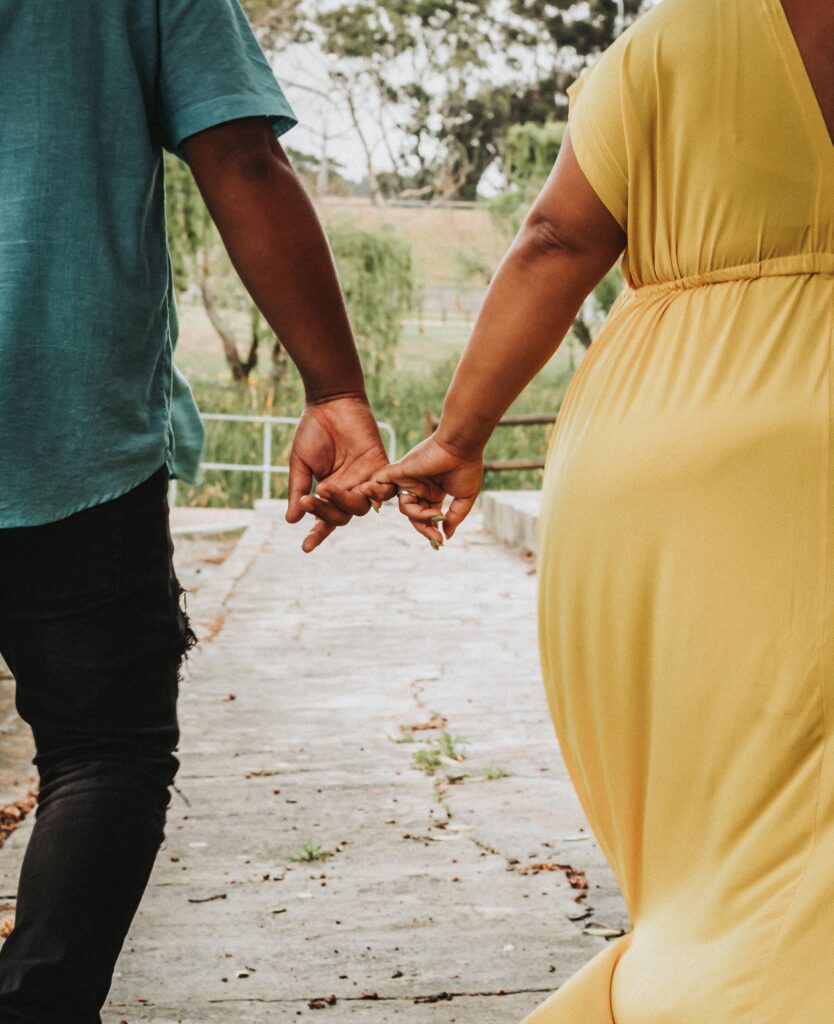
Man and woman holding hands walking down the street, viewed from the back
(Image courtesy of Luwadlin Bosman via Unsplash)

It’s a full-circle moment

Eventually, I found myself ready to start a new relationship, so I began holding myself to higher standards and qualifications — which ultimately led me back to my first relationship.

It’s challenging to find better standards without considering your experiences. So, I thought about him a lot. I thought about how he hurt me, how it felt like my feelings weren’t validated, how it didn’t seem like he was emotionally available, and how I couldn’t picture a lifelong future with him. How much I cried out of sadness alone.

Yes, I still think about him a lot, but it’s because I’m always comparing my current relationship to my past one. I’m happier overall as my feelings, thoughts, emotions, wants, and needs are valued. I get to enjoy activities together with my partner rather than resign myself to doing what my ex had always wanted to do. We have a lot more common interests and travel goals. I’ve definitely cried more happy tears than sad. I’ve found my life partner. Ironically, it was because my ex-boyfriend helped reunite me with an old high school friend I originally had feelings for.

Now, I truly feel happy and blessed. I’ve learned to love myself, and I’ve found somebody who can add to my happiness — not take away from it. We’ve both continued to redefine what we needed in our relationship, what we should look for, and how we can work on our disagreements. 

I’d be lying if I said everything was 100% peaches and cream. But it’s a damn solid 92% in my opinion.

So, thank you for hurting me. It was because of you that I truly became happy.

All Yours

Finding someone isn’t all fun. I’ve got a few miles on me now. Plenty have checked out the terrain. Plenty more have declined. I’m hoping to find that someone, my person.

I miss the regular walks in parks, you know. Never mind the season, I just liked being out with you. Whether you were bright and chirpy or distracted with work, or family, your phone, all three. Park walks were always sweet.

I remember the laughter, every one of yours; the cacklers, the gigglers, the chucklers, the wheezers or snorters. Hearing a laugh, no matter its form, is never a bad thing.

Cuddling up on the sofa with your place half a tip. Cozy and peaceful, the blare of the TV’s screen, its glow, the way you smelled. You, without a worry in the world, giving slow patient affection without a thought. Going out is great. Sometimes home is better.

I can always tell when someone loves me from their eyes. The scores of eyes I’ve had look at me and through me. Happy, loving, angry, or exasperated. Call it selfish, but having all your attention always lit me up.

No matter who I’ve been with, I’ll admit when you went away, you were all I’d think about. I remember each and every time, how happy you were to see me, whenever you returned. In truth, I doubt any of you were as happy to see me, as I was you.

Sure, I’m a dustbin on legs who’ll eat anything, but food with you was always best. Food from you, even better. Always served with a warm smile in your voice or on your face, a loving touch. Excuse the cringe, but the key to this guy’s heart is most definitely his stomach.

I’ll confess, I found meeting your mates overwhelming. They weren’t always fans of me. To be honest, I didn’t always like them, but I’d do it anytime for you. You know, I don’t forget how you wanted to show me off to everyone and how great that felt. 

I know I’m not bad. I know you can do better, too. Maybe someone more focused. Someone who can sit still more, someone better with kids, I don’t know. 

I’ll never forget the moments where you’d just speak to me. From the heart, subconscious, involuntary. It really didn’t matter what you said, it was how you were saying it. It didn’t matter if it was good or deep and meaningful, it could be bad or absolute nonsense. 

It didn’t matter. There was a special frequency, only for me. Like I became your secret confidant. Knowing things even your Mum or besties didn’t know.

I realize I could frustrate you and cause problems you never asked for. I’m a lifelong sufferer of heart-on-my-sleeve. The sleeve’s torn up now. I’m not bad, you know.

Another long afternoon, and it’s sad to think so many opportunities have passed with good and loving people. I’m not giving up yet though – I think you’ve always got to be willing.

Karen might be the sweetest woman I have ever met. She always gives me the same loving look every time she sees me.

She’s been running this kennel for over 10 years now, and, every time I’ve returned, she says, “We’ll find you a home one day, Rolo.”

I hope she’s right. I just wanna belong to someone.

Screw the Standard-Issue Labeling Machine

Message: “Aunt nell, Nanti hettie. Dooey daiture and quinque, parker, Bona lavs, ducky. “
Polari translation: Listen, I am not straight. In 2025, I give you my best wishes, my dear.

In high school gym class, I often overheard conversations about sexual encounters, stories, ‘advice,’ and asking questions. I remember in ninth or tenth grade, a friend asked me questions about sexual experiences due to my being in a relationship. I felt uncomfortable, as this wasn’t something I wanted to discuss out in the open. I also didn’t want to discuss what started occurring in my life at 17 (that I hadn’t yet  fully processed). Sex was an uncomfortable topic. Romance was different.

Finding the right words or labels

I had always felt romantic attraction towards others. My first crush was on a boy in my kindergarten class, and I realized in sixth grade that I was attracted to girls. Throughout my life, I thought of romantic attraction, not sexual attraction, as a vital component of a relationship.

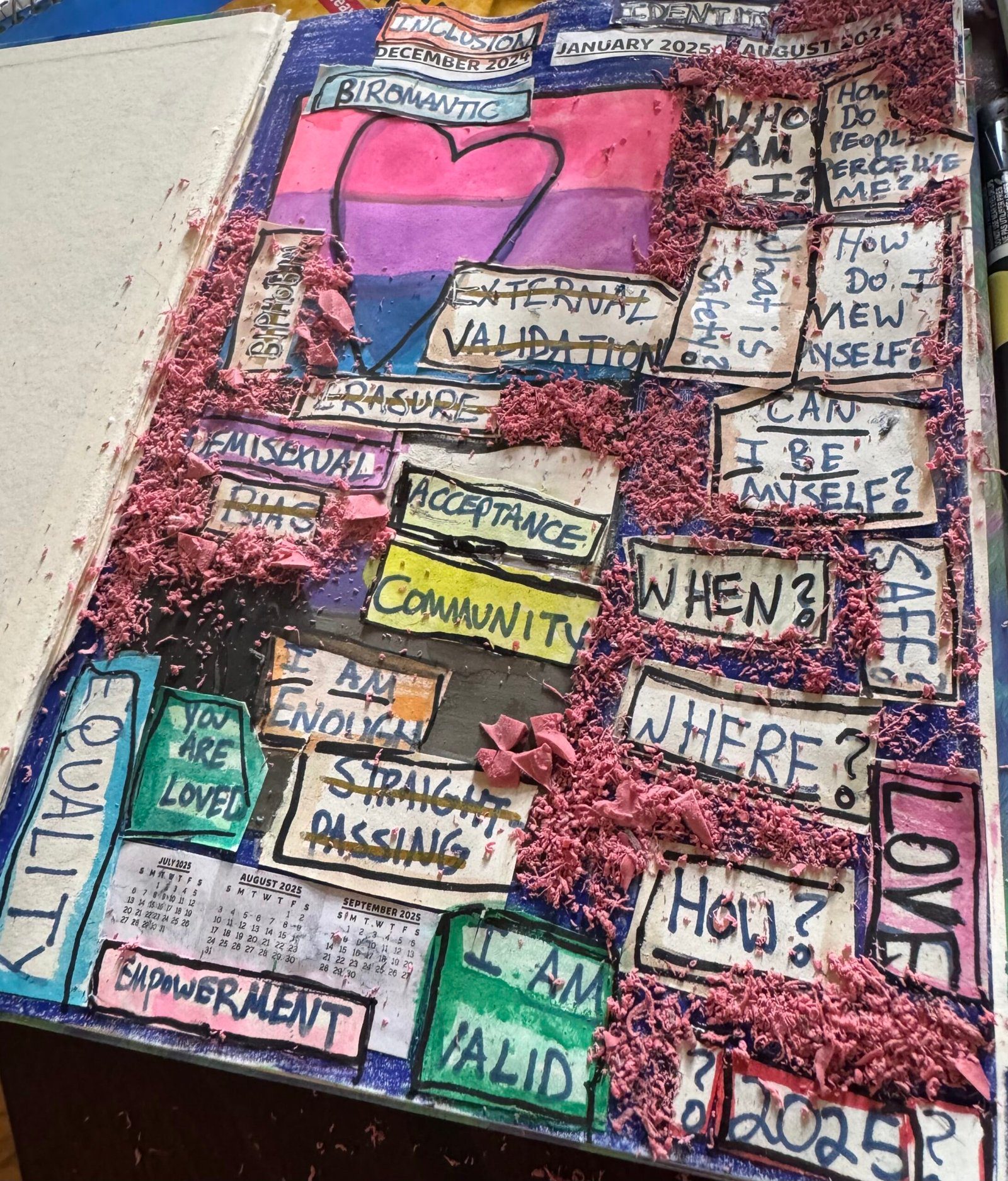
In seventh grade, I discovered the label bisexual. That identity lasted eight years, since I didn’t know there were other options to define myself. Earlier this year, I reconsidered if the label I had worn for so long was accurate to who I am. After thinking it over, I faced that the most accurate way to identify myself was biromantic and demisexual.

Biromantic is described as “being romantically attracted to more than one gender, not exactly in the same degree, same time, or in the same way.”

Biromantic to me means that I am romantically attracted to others, just not in the sexual sense.

Demisexual can be defined as “experiencing little to no sexual attraction without a strong emotional or romantic connection, falling under the ace umbrella (Asexual).”

To me, this means that I’m only sexually attracted to someone after thoroughly getting to know and trusting them on a deep, romantic level. I’ve never viewed myself as someone who could have a one-night stand or a friends-with-benefits situation.

For the past five years, I’ve reconsidered if it’s safe for me to be authentic in terms of my sexuality. With the rise of anti-LGBT laws and bills, I’m afraid to be open about it in public. If I’m with my close friends and in a safe environment, I’m able to speak about it in detail. Without my community, I’d feel lost. 

The feeling of community does not always take the form of a connection that exists in person, since there are online friendships I hold dear to me. For basically ten years now, I have been an active member of the fandom that surrounds two of my favorite YouTubers, Dan and Phil. 

Many within the fandom (phandom) are also LGBTQIA+. In addition, Dan and Phil themselves are queer individuals, and foster community within their fan base. This has been a positive space for me since I was thirteen, and first discovered my attraction to women/feminine-presenting people. 

A friend of mine who I first met in the phandom once exclaimed while hanging out, “I’m here, I’m queer, I’m gay, and I slay.” This is an example of inclusion within the phandom. 

Although I’m afraid to share my identity in some social situations, I have a safety net. The same net simultaneously protects and isolates me. Two years ago, my fiance and I became engaged. Due to bias and biphobia, I’m often viewed as straight because of my fiance’s gender. 

For example, a classmate in high school asked me if I was “still bi” after beginning my relationship with my now-fiance. I’m sometimes not considered part of  the LGBT community as a result of this relationship. That’s isolating.

Erasure is a concept that I internalize, and I have a difficult relationship with it. It makes me feel uneasy knowing that others dictate my identity. Being part of the community is part of my identity. The intersectionality of all my identities live within me: I am a woman, biromantic, demisexual, neurodivergent, and disabled — all at the same time.

Image of paints that make for a rough rainbow
(Image courtesy of Steve Johnson on Unsplash)

The world we live in now

However, in this current climate, I’m privileged to have that safety net of being straight-passing. I am outwardly protected against hatred in some ways, but still discriminated against. 

After a situation that happened to me a few years ago at a local restaurant,  I’m scared to wear pride clothing. A nearby city didn’t have their first pride celebration until 2019. I know that not everyone in the area supports people like myself. 

That protest during senior year

During my senior year of college last year, students found out about a restrictive policy that was passed by the board. This policy stated that transgender, trans, and nonbinary students were no longer eligible for admission; many of my former peers are trans and nonbinary.

At a campus event with a guest speaker, I felt unfairly silenced. We were told we couldn’t speak out, couldn’t interrupt the speaker, yet weren’t allowed to leave yet. Students who weren’t seniors protested the policy by wearing all black and accessorized with pride flag pins. But, I was a senior. 

Part of me knew that the college administration was restricting students, but part of me didn’t know to what extent. I knew I needed to use my voice for good, since the restrictions were even stricter for students who were not closer to graduating. People in my life warned me about protesting, told me to not get myself in trouble. I didn’t care, because it was my senior year and knew just one extra voice could make a difference. I crossed that line almost daily, every time the administration made changes. I constantly worried that I would be called into the dean’s office, but thankfully I wasn’t.

I was surprised to find out how restricted I was as a student, but not shocked at the same time. I believe I was surprised that the administration thought so low of students, as many of us would not have even attempted to interrupt the speaker — without being told not to. I felt a sense of disconnection between how we as students viewed ourselves and our peers vs. how the Admin viewed us. The local police showed up to the Annual Founder’s Day event after the meeting, without our knowledge. I felt as if Admin viewed anyone who spoke out as a threat, when most people were not. 

Some faculty were supportive of students, and I understand why some were not in the position to risk their jobs in order to support us. 

In response to feeling shut out before, that same month I attended a protest on campus where students joined together, raising our voices to “Rescind the policy.” The administration approved the protest ahead of time. It was student-led, with fixed guidelines allowing us to shout approved phrases, hold signs, and only protest during the approved time slot. The protest coincided with the week that a board of directors meeting was occurring on campus. Once the meeting was over, we could no longer protest.

Following the protest, I joined a few others who were planning on speaking to a local reporter.  I didn’t know if I would be punished for speaking out afterwards, but I took that risk. Loved ones warned me not to do it, saying I would get in trouble. However, after the way the campus climate had shifted quickly under the appointment of a new commander, getting in trouble was the least of my concern.

Despite graduating from college and leaving that environment, I face bias and discrimination still, but primarily due to other parts of my identity.

Anxiety comes upon me whenever I see red MAGA banners in nearby cities or when I come across articles online that mention politicians’ stances. Anxiety creeps in when I visit cities that are dominated by primarily anti-LGBT institutions.

I often don’t tell others about my sexuality upon meeting them since I cannot be sure of their intentions. I wonder if I can attend local pride events — if it’s worth the possibility of being targeted online by someone from my hometown who is passionate in their anti-LGBT sentiments. How accepting a particular state is a variable in determining where to relocate. 

As well as this, I never know what will happen to my loved ones who are part of the community in 2025. I wish there were protections in place for every LGBTQIA+ individual. I wish I could foster that progress.

How I define progress and resistance

I may be ridiculed in public when I wear a pride shirt, but I know my experience isn’t the same as LGBTQIA+ people in other states or around the world. I may have been outed in seventh grade — and called a slur when I publicly came out as bisexual on instagram in ninth grade — yet, I cannot compare my experience to those who were queer activists in the 60s, 70s, and  onward. I don’t know what it’s truly like to fear my life on the daily for who I am.

I can’t relate to the community members who spoke a code language for decades in order to share everyday encounters with their friends. There are no direct terms for biromantic and demisexual in this language. Thus, I most likely would have been referred to as bibi palone (bisexual woman). Polari represents the history of the community during one of many  dangerous time periods for those in the LGBTQIA+ community. 

Survive and thrive

The historical basis for pride was to stand up against injustice, fight for those who can’t do so themselves, and make a difference. Pride at its root is about being authentic, even when social barriers are in place.

I’m not suggesting that others outside of myself should necessarily tackle injustice, as individuals exist in different circumstances than myself. I myself am sometimes worried about wearing pride clothing or accessories. Further, fostering change is not a monolith. It can be carried out through different methods.

Prioritizing well-being and self-care may be the only form of autonomy for individuals. Sometimes, resistance consists of survival and, eventually, thriving. Being true to who I am makes a difference. 

I’m very glad to be able to live with my fiance now. Right now, for me, being myself is resistance enough. 

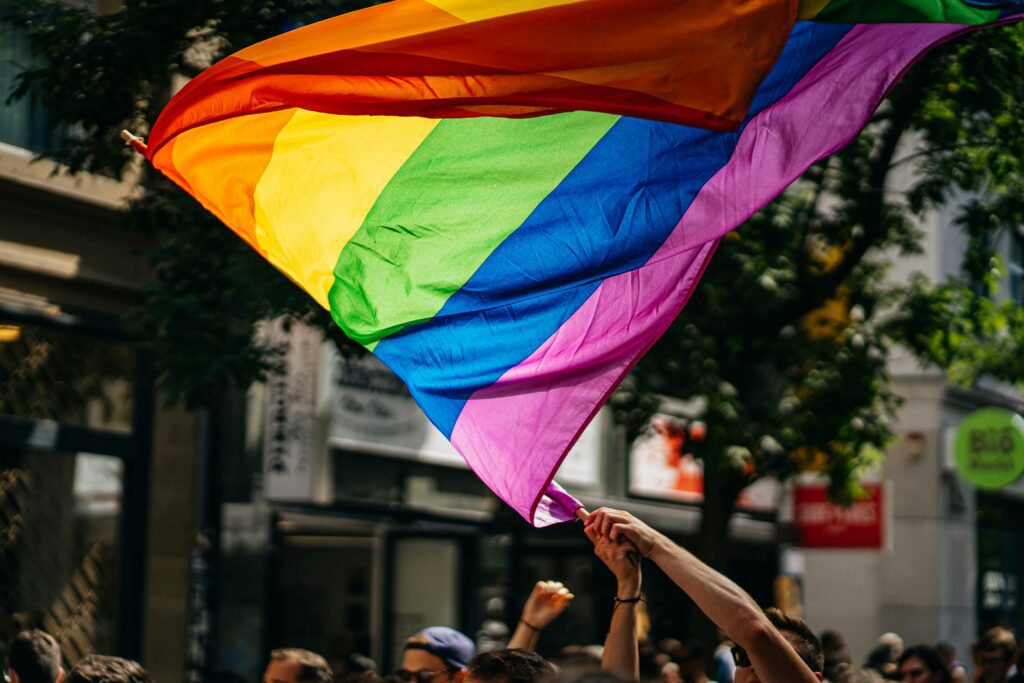
Arms waving a glowing pride flag in the wind
Image courtesy off Raphael Renter | @raphi_rawr on Unsplash