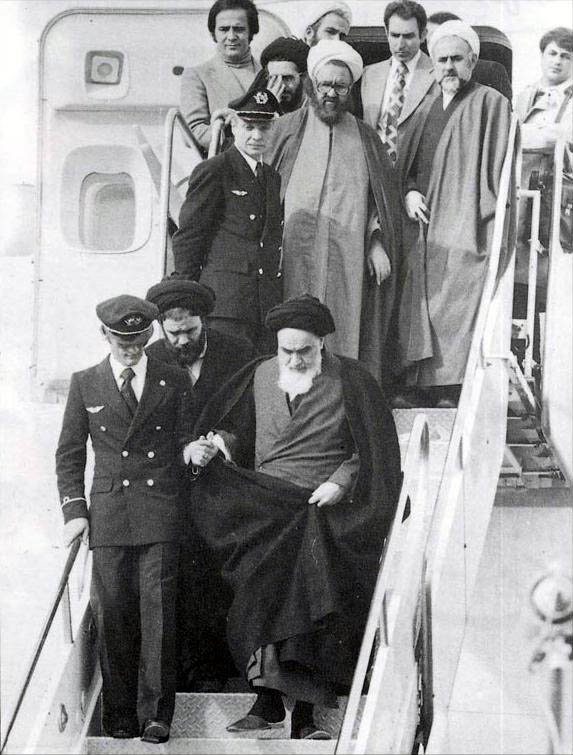
(Image courtesy of Sa.vakilian via Sajed.ir/Wikipedia used with permission)
Halloween comes once a year for most. A night of masks, spooky movies, and pretend scares. But in Iran, under the rule of the mullahs, every day is Halloween.
The mullahs hide behind the mask of religion while practicing a reign of terror. They turn faith into fear and laws into lethal weapons. The world celebrates Halloween as a once-a-year fantasy. For Iranians, it is a daily horror.
I am Iranian. It was for me.
A death that sparked a movement
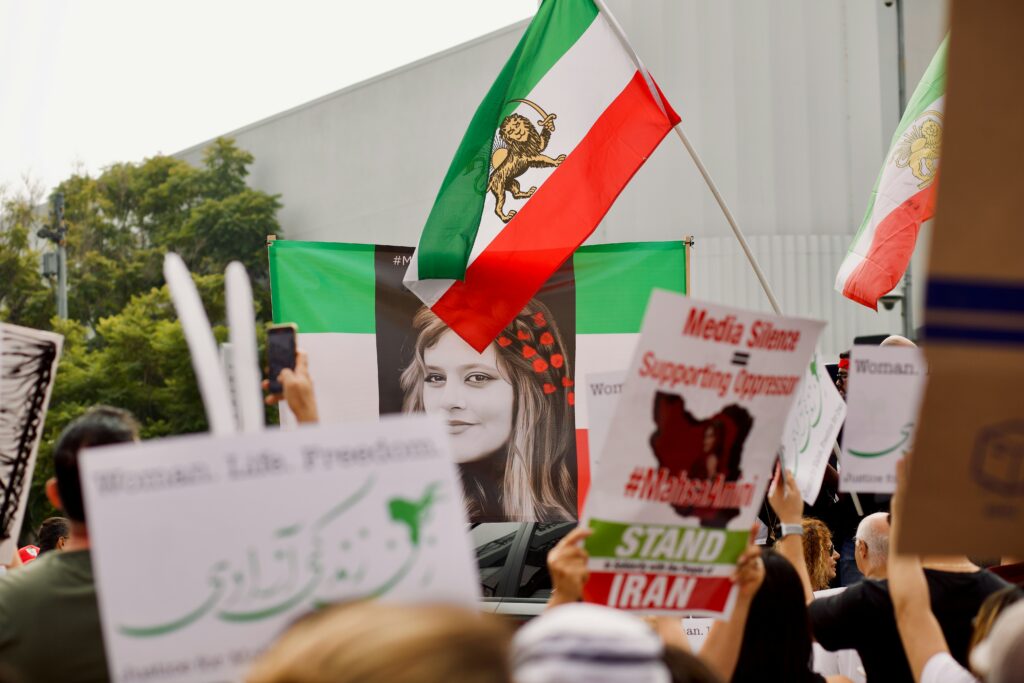
On September 16, 2022, Mahsa Amini, only 22 years old, died after being taken into custody by the frightening gasht-e ershad patrol — “Guidance” in Farsi, but we Persians call it the morality police.
She was arrested and taken to the notorious Vozara detention center because of her hair. Too much of it showed from beneath her hijab. Three days later, she was dead.
The regime insisted it was a heart attack, the people knew it was murder, something a UN report later confirmed. Protests swept across the country. People took to the streets with courage, but unlike in the West, they could not carry painted signs. In Iran, even holding a sign is enough to be detected, arrested, and imprisoned. The images of banners you may have seen come from protests abroad, where Iranians in exile have the freedom to speak in ways that are impossible inside the country. The government responded with full metal jackets.
More than 500 people were killed to prove that Mahsa’s death was not their fault. Proof this is the Islamic Republic within Iran.
Subscribe to The Superhero Brief!
Free access to the CEO's newsletter.
The views expressed in this newsletter are those of the CEO and do not necessarily reflect the views of the organization.
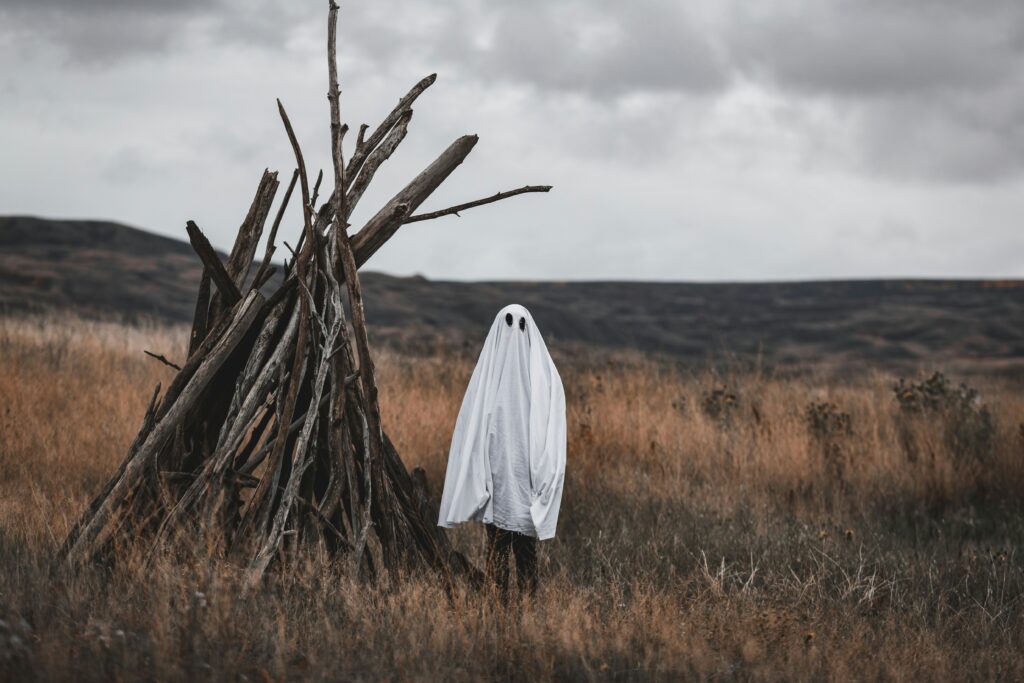
(Image courtesy of Craig Melville via Unsplash)
Since then, executions have become the regime’s loudest weapon. More than 10 protesters have been executed since the uprising, their deaths meant as warnings. In just the first nine and a half months of 2025, more than 1172 people were executed, about three every single day. Imagine this in the 21st century: a state that takes lives on an industrial scale to prove its power. More proof.
The cruelty is not limited to the streets. On January 8, 2020, Ukraine International Airlines Flight PS752 was shot down by Iran’s Revolutionary Guards just minutes after takeoff from Tehran. All 176 people on board, men, women, children, even an unborn baby, were killed. Iran became the only country to shoot down its own civilian plane in its own airspace.
The horror stretches back to the beginning. After the 1979 Islamic Revolution (recall that the country became known as The People’s Islamic Republic of Iran), thousands were executed. Opposition to the regime was framed as opposition to God.
Graves of hundreds remain unknown.
In the 1980s, the Iran–Iraq war was prolonged. not to defend the nation but to silence dissent under the slogan of “wartime unity.” To this day, the true cost of human horror in that meaningless war is hidden.
A dried lake, a dried future
The regime’s brutality is not only against people, but even against nature. Lake Urmia, once the largest saltwater lake in the Middle East and the place of childhood summers for many, has dried. Neglect, mismanagement, and corruption drained this natural treasure and place of cultural heritage, leaving behind salt plains and despair.
Even the land bears scars and wears the mask of this misrule, bereft and humiliated.
A real-life Halloween
What kind of regime kills its women for the way they wear their hair, shoots down its own people in the sky, drains its lakes, and executes three people a day, all while demanding respect?
I know this horror personally. As an academic, my work and my voice put me at risk. The same regime that silences women on the street has no tolerance for those who speak up in universities or in public life. In solidarity with the ‘Woman, Life, Freedom’ movement, I resigned from my position in Iran in 2022. That act of conscience made me a target. Like so many others, I was forced into exile, not out of choice, but out of necessity, to protect both my life and my ability to continue my work.
Here in the West, I have witnessed Halloween in its sweetest form. Children knocking on doors in costumes, candy-filled buckets, laughter under streetlights. I have seen a tiny mermaid holding her father’s hand, a Glinda the Good Witch skipping along with friends, and even a toddler dressed as Sonic the Hedgehog racing up and down the sidewalk. This is what Halloween should be: play, imagination, and community.
Back in Iran, the most dangerous Halloween costume in the world is worn every day. This is the cloak of the mullahs, because behind it is not a happy face, but a machine of death.
The difference between once-a-year Halloween in the West and everyday life in Iran is simple: during Halloween, your fear is pretend. Your nights are filled with trick-or-treat candy and fun. Your daylight brings safety. In Iran, our nightmare does not end at dawn. It just continues to haunt.
Yet Iranians endure. Despite decades of brutality, they remain among the kindest, most resilient people. They hope that there will be light at the end of this darkness. One day, the mask will be torn away, so the nightmare will end.
This Halloween
Soon, I will stand at my door and see children on my street dressed as witches, superheroes, and fairy-tale characters; their laughter will no doubt echo into the night. Their joy in a world where fear is only pretend gives me hope. Hope that one day, children in Iran too will know only the sweet kind of fright, the kind that ends with candy at dusk and safety at dawn. And perhaps then, the mullahs and their reign of horror will be nothing more than a dark fairy tale told of the past.
Ayaz E is a woman, a scientist, and a storyteller from Iran, living in exile yet rooted in curiosity. Her writing weaves together the wonder of science with the human struggle for freedom and resilience, and understanding across borders, highlighting the journeys of displacement and the human side of scientific discovery.
Thank you to Jason Socrates Bardi and Yosef Baskin for their inspired edits on the piece.



Comments
Be the first to share your thoughts!
We value diverse perspectives and respectful debate.