You Wake Up In Your Childhood Bedroom

You wake up in your childhood bedroom, and the bad things that happened to you haven’t happened to you yet. It should make you happy, but instead it aches. You can’t curl up inside your childish innocence because it isn’t there. You could pretend it was, if you really wanted to, but you don’t want to really. As you watch the early morning sunlight dance across the wall, you wonder if you can change things this time. You wonder who you’d be if the bad things that happened to you never happened to you. Did they make you better? Did they make you worse? If the bad things that happened to you never happened to you, would you truly be you?

You wake up in your childhood bedroom, and the bad things that happened to you haven’t happened to you yet. You realise that you’ll need to pretend that nothing has changed, and so you go downstairs, your bare feet treading on stairs that you haven’t touched for years. Your brother is already in the kitchen, and he is still your brother because he doesn’t hate you yet. His face is the same as it once was, trapped in the liminal space between boy and man, and his eyes meet yours with that look that only a brother can master, halfway between awe and disgust, respect and embarrassment, shame and love. Before it really occurs to you what you’re doing, you pull him into a hug, the kind of hug that clamps and tightens, the kind of hug that suffocates but is all love, so much love, love that can maim you and love that can mend you. He stiffens at first, then realises that there is no audience to perform for, no jeering friends lingering in the corners of the room, and, as his bony arms wrap around you, a thought solidifies in your mind that things cannot decay this time, that you must hold onto this bond for dear life, grasping and gasping until the rope burns your palms, because this time you cannot lose your brother.

Your sister is not there. Your sister is never there. Your sister is an absence. Your sister is the space between heartbeats, the gap between ribs, the sound of silence on the other end of the telephone. 

You wake up in your childhood bedroom, and the bad things that happened to you haven’t happened to you yet. Your dad comes down and makes breakfast, because that is what he always used to do, and the crackling of bacon and the music on the radio hit you like the melody of a song you haven’t heard in years; first slowly, then like a fierce punch in the stomach with all the force of a car crash. You realise now that you never used to appreciate these tender moments, too tired to do more than sit and watch the breeze dancing through the kitchen blinds. You never appreciated these moments, because you hadn’t realised yet that one day they would be over. You never noticed that, morning by morning, your father was getting older, his presence less resolute, his voice and body less strong. You never considered the fact that one day your mornings would be silent, that one day your father would be gone. But now, burdened by the knowledge that your father’s time is running increasingly short, you wish that you could live in this moment forever, eternally untouched by the sands of time.

You wake up in your childhood bedroom, and the bad things that happened to you haven’t happened to you yet. You make your way back upstairs after breakfast, and, as you reach the hallway, the scent of your mother’s perfume drifts towards you, as gentle as the lullaby she would whisper across your fevered forehead on unsettled nights: a balm of words, a remedy of song. There was always a tenderness to your mother, but there was a sharpness too. She was quick to comfort but even quicker to blame. She was there to take you into her arms after the bad things happened, but she was also the first to suggest that you might have deserved it somehow, that perhaps you had been too forward, too bold, too reckless, too impulsive, too much, too yourself. She was a confidant and an accuser, an ally and a judge, a friend and a stranger. She was your mother, and yet you never truly knew her. You knew only the masks she would present to the world, the image she would carefully curate while the rest of the family was eating breakfast, the perfume, the final act of the performance. You do not knock on the door, because you don’t want your mother to see you. You never wanted your mother to see you, and yet, at the same time, you wanted nothing more. You don’t want your mother to see you because your mother could always see through you, and she would be the first to know that something was different, that you weren’t the child you had been the day before, that you never would be again.

You wake up in your childhood bedroom, and the bad things that happened to you haven’t happened to you yet. You realise with a sense of certainty that you cannot stay. You have long overgrown the mold that was cast for you there. Trying to live out a life that you have experienced before makes you feel ungainly, a giant trying to live in a miniature cardboard town. You’re the only living soul in a house of ghosts, and you can feel yourself slowly becoming haunted. The bad things that happened will happen, have happened, will never not happen, and you would be foolish to try and change that. You wake up in your childhood bedroom, but you do not fall asleep there. You close your bedroom door for the last time, walk down the stairs, open your front door, and walk out into the mild summer night. You don’t know where you are going, but you know that you can’t return. You try and tell yourself that things are better this way, but the lost child inside you knows that that is a lie.

Let’s Conjure Up Some Jump Scares!

As someone who loves horror films, they still find ways of haunting me. Even now, I occasionally wake up in the middle of the night from a nightmare that feels as real and chilling as Halloween night. In my eyes, these cyclical terrors reveal how expertly crafted the creatures and jump scares of fictional films are. Anytime a jump scare occurs, especially in the Conjuring films, which are personal favorite frights of mine, I have to turn my attention to a random corner of the screen or not look at all. That’s how much they get under my skin. 

With its final film premiering this past September, The Conjuring film series has made its impact as a horror film staple for many horror buffs. The films are fictional retellings of notable, real life cases of paranormal investigators, Ed and Lorraine Warren. Whether or not you believe the events of these chilling ghost hunts are factual or fanciful, the films are a perfect example of what horror films should be: fun and entertaining to watch. Furthermore, the franchise contains jump scares that have lingered in the dark recesses of my mind for years, and they remain insidious reminders of the art of a great scare.  

Prior to the franchise’s final film release, I have been rewatching the previous installments in anticipation of the new horrors that inevitably await me. However, of the four previous films, I cannot seem to get past The Conjuring 2 because of one specific performance that always manages to send shivers up my spine. The character of the “Crooked Man” is a standout ghoul of the second film, invading the household through a toy zoetrope (a spinning lantern) and his eponymous children’s song. I am so terrified of this menace that I have to hide my face behind my hands throughout the sequence – I still don’t entirely know what happens!  What I do understand is that the talented actor who plays the “Crooked Man,” Javier Botet, is able to move his body in such a foreboding way that it makes the character unnerving and desperately uncomfortable to watch. Acting directly against Patrick Wilson (who plays one of the series’ protagonists, Ed Warren), Botet moves like a horrific animatronic, sending the audience spinning like the zoetrope he leaps out of in the dark. 

Speaking of the dark, watching any horror film in the middle of the day seems like the best option for me despite the fact that any little noise after the credits roll will make me question everything that’s going on in my own home. And that is an extremely effective way to prove that these jump scares and other techniques awaken my fight-or-flight mode and rattle me when I’m home alone. A prime example of this manifests whenever my family and I make the mistake of watching a scary film at night. It is my job to take our beloved dog outside for the evening, so, every night without fail, I always glance into the dark garage just to double-check that nothing is lurking in the dark despite the tiny security light remaining on continuously. I still don’t understand why I do this; it has just become a habit at this point, probably as a result of the malignant shadows that my loved ones and I so enjoy watching on screen. Consequently, I have learned that family ties are often tethered to fear as well.

A while back, I decided to watch Hereditary, a petrifying film about how some family secrets continue plaguing future generations in truly horrific ways. I viewed it in the middle of the day, being home alone, and the sunshine brought me little comfort. The physical act of Toni Collete, who plays one of the film’s main characters, climbing the ceiling in her family’s home, her head banging continuously against the wall as her terrified son screams, “Mommy, I’m sorry,” will always haunt me because of her character’s unnerving silence and erratic, inhuman movements. The sight and sounds (or lack thereof) of that particular scene never fail to make my blood run cold. And other films continue to use visual and auditory storytelling to incite dread in their audiences masterfully.

I can’t even watch The Exorcist anymore because of Linda Blair’s incredibly nuanced performance as a child actress portraying a girl who is possessed. The words and actions that leave her mouth shook me to my core when I first watched the film. I was shocked beyond belief that not only was this level of brutalistic horror achieved in the early 1970s, but that my seemingly fearless mom and uncle had a hard time watching it as teenagers. While The Exorcist has produced some incredibly famous imagery, the mental image of Regan (the young girl possessed by a demon that Blair plays) profusely cursing and spitting at the priest and her family trying to save her/exorcise the demon is something I’ll never get over. The very sight of Regan’s appearance changing as she swiftly loses her humanity and the gruff sounds of the young girl’s voice as the demon possessing her fights for control are expertly done, and the film has rightfully achieved its goal of being one of the scariest films of all time. 

More recently, horror continues to expand and include the terrors of the everyday. In Longlegs, a film about an FBI agent investigating the grisly murders of a supposed occultist serial killer, there is an emphasis on how the smallest acts can infuse horror that make one’s heart ache. Nicolas Cage plays the titular villain of the horror crime film and is an incredibly eerie character. His performance perfectly encompasses dread and an inhuman rage as he wails, “Mommy, Daddy, unmake me!” in his own car after being thrown out of a hardware store. Such a small act, as being asked to leave a store, sets Cage’s character into a spiral that utterly terrifies me and showcases how quickly someone can devolve to disastrous degrees. Understanding the additional context of the film, Longlegs’ personal yell is horrifying. Cage’s line delivery played on repeat in my mind for a few days afterwards, and it’s unlike anything I’ve ever seen and heard. 

Horror films are such a delight to experience, whether at home or in the theater, because they often expose us to things, concepts, and characters we would not dare to dream up. And, if the jump scares give me goosebumps, then I know I’ll be in for a wild ride! Additionally, horror films are a great way for my family to connect with one another. Half of my family (including myself from time to time) will binge true crime podcasts, documentaries, and macabre tv shows across all of the streaming platforms, fueling our never-ending love of the genre. My family loves good scares, whether we get them from horror films or one of the countless documentaries we have watched with bated breath and many gasps. Effective jump scares and thrills from horror films make my skin crawl, get my heart pumping, and provide terrors that I believe most individuals can’t truly fathom in the modern world. Finally, the creativity sparked by horror films continues to stand alone as an irreplaceable form of gruesome (and sometimes gratifying) entertainment. 

What Began as a Game

What begins as a game….

Sometimes when we’re young, or even as adults, we want to play that childhood game of imagining “What superpowers would you like to have if you could have anything?” The first things that come to mind are usually invisibility, flying, reading minds, teleporting, the ability to see into the future. What about forgetting all the bad experiences we’ve had throughout our lives? That’s a superpower as well. Why not! 

But what if that superpower grew out of control? What if that game slowly became your reality? What if no one noticed at first, but your forgetting superpower ceased to remain silent and crept like the shadow you and the people around you could no longer avoid. 

If your superhero forgets, are you ready to be forgotten? Is anyone? Of course not!

Not only is being forgotten by someone whose life you are a part of not easy to accept, but it feels like the loss of their memory robs a little part of you as well. Because our existence depends on the memory of others. A little part of you is lost as someone’s memory of you fades. I don’t know if you agree with me, but look, it’s true. I have seen what happens to our lives if our loved ones don’t remember us.

The experience…

It all started with her losing her keys, leaving the stove on, forgetting to return home, forgetting how to cook her favorite dishes, consuming toxic products like kitchen products or ant poison, forgetting who she was and who we were, forgetting her own face in the mirror, being surprised to be told she was a mother and grandmother, and forgetting that she exists even while knowing she’s alive.

Little by little, she lost the ability to speak, although she makes herself understood. Her Catholicism remains intact, and every person she meets receives a blessing from her. Que mi Dios la guarde y la proteja. Amén (“May my God keep her and protect her. Amen.”)

The irony is that in the rush of losing her memories, she is returning to a past that is still present in her mind. She doesn’t know what time she’s in. She completely lost track of time more than 15 years ago. Since that cloud descended, it has hung constantly over her memory, her life, and withered the trunk of a tree that sustained the strength of the family… because yes, I write about Abuelita, an illiterate woman whose intelligence always allowed her to embrace life. Today she could be a master of time, of the eternal moment, and of all existence without needing to know tomorrow. Now she is a stranger to the immediate moment, a slave to time, and someone whose existence forgets yesterday.

Silently, she began to suffer without anyone noticing. As she tried to recall why she couldn’t remember things, her routine dwindled to one day at a time. 

Today, the monster in her head has nothing left to eat. Even as she is forgetting how to walk, I am still following in her footsteps, and the Earth still feels the weight of her bones that refuse to surrender. She just enjoys one day at a time. I don’t know what kind of thoughts she has; she only talks to herself. Understanding her is like trying to understand a smile. I don’t know what time it is to her; we only enjoy her existence to keep her presence in our memory; and I often don’t know what time it is either; we simply forget time when we are by her side.

The Monster…

Alzheimer’s has distorted the challenge of understanding the eternal farewell, hidden the awareness of a time that has expired, faded the reflection in a mirror that will soon break, and stopped the hourglass at the instant when all meaning in life fades. Sand grains frozen in free fall.

The Monster affects neuronal tissue, which adults have on average close to 100 billion of. Even 

a newborn has around 223 million. Neurons create, and recall memories, then protect them. However, when they begin to disappear, a person’s behavior changes. Some become similar to a three-year-old child. I’m not sure how many neurons my grandmother has today. 

She began to suffer in silence, without anyone noticing. As she tried to process why she couldn’t remember, her routine gradually became a puzzle where she constantly had to find the pieces to put her mind back together, until one day she gave up. The pieces didn’t fit together, they were lost and disappeared, leaving a half-finished, meaningless game that was eventually swept off the table and onto the floor. Today I wonder what her last thought was before Monster took charge.

***

When today leads to goodbye…

Today she is 92 years old, and this all started when she was about 60. She used to tell me I was her favorite person—she’d told me that since I was a child—and now that I’m an adult, those words live on in my memory. Today she smiles with a lost gaze, trying to identify the person in front of her, but she can’t. 

I struggle to understand her struggles, and to calm her anger. 

She goes where her steps want to go, because memory doesn’t reach any corner or space.

Memory is a treasure we should all cherish. It’s a magic box where time should be itself and nothing changes. A lockbox where we can keep control and no one can steal any of it. A transparent box where we are the eternal instant that allows us to be alive and no one suspects it. And where experience is captured and refuge teaches us — a permanent storage box where we keep the life in a body and a body in time. 

Yet, I don’t know how many secrets we keep, how many stories no one knows, and even… how much time we have to preserve our lives before an outsider tries to invite us on a journey into oblivion. 

I haven’t said goodbye to her yet. Maybe I’m not ready, because when I am, she suddenly remembers my name, suddenly my time and hers stop for a microsecond, and suddenly the call of hope makes sense… but nothing happens. They are just shooting stars that cross our path to remind us that everything built in life also dies in life, and with it, a hundred stars I’ve seen.

I’d never questioned it, but Alzheimer’s is the answer to understanding that memory has its time, it has a limit, it has an expiration date, it has an end, and it has its own cycle, but all within our own reality.

That game of “What superpowers would you like to have if you could have anything?” is not, for many, an imaginary world, but a reality in which the life of Alzheimer’s itself is silenced behind those who live it. 

Faced with the refusal to accept that death also lives within us once, time is no longer the obstacle many fear.

White swan taking off from the ground
(Image courtesy of Ben Wicks via Morguefile)


Rosehip Time

I grew up drinking rosehip tea with people I knew but couldn’t see. My grandparents, Giszela and Moric, laughed about the good times they had shared with cherished relatives and friends, beckoning them into our conversations, and so into my memories. 

I knew about their slo-mo holidays in the Tatra Mountains between Slovakia and Poland, and that ice skating on frozen lakes was pure joy. I could tell anyone about the time my great grandfather, a headmaster at a Jewish school, chose his daughter, my grandmother, to accompany him to the mayor’s ball, an event far out of his comfort zone. But most of all, I felt the lack of prescience of these “invisibles.” My grandparents once grasped that it was time to quit everything that was familiar to them, fast. But they always regretted failing to persuade significant others to share their flight response to what they saw unfolding around them, just before the family’s halcyon days sunsetted and crashed in the wreckage of The War.

Cherries rule!

We were in London, but actually, in the alternate universe of my grandparents’ home, we were always somewhere else. Speaking something else. Hungarian, Czech, Slovak, German, Yiddish, Russian, and French words whizzed past our watchful faces. We listened as we tickled the legs of hapless visitors under the dining room table. 

These lower limbs belonged to a thick-accented coterie of relatives and friends just passing the time together on slow afternoons. Most of them, my father too, sashayed between languages, the silver-lining skill of many a refugee. And these came from a region where borders had moved like chess pieces for centuries. 

The walls of the forever corridor in my grandparents’ home were decorated with antique maps of the Holy Land and plenty of framed embroidery. These sewn pastoral motifs must have stolen acres of time from their creators, people I could see and those I couldn’t, I thought.  My grandmother, for one, the educator’s daughter, who had dabbled in teaching movement, writing, and sewing to small children at her father’s school, but had let her brilliant mind lie fallow.  She was known affectionately as Anutzi, mother in Hungarian. 

(Image courtesy of Tycho Atsma via Unsplash)

But we felt at home breathing in the paprika-scented dishes, and nibbling on thinly-sliced radishes, always parked on the table. And, of course, we loved the cherries that were everyone’s favorite. We waited for the cherry liquor chocolates in shiny wrappers and the preserved sour cherries in painted jars often brought back by visitors to the Old Country, but especially for the fresh cherries, whose pairs made perfect earrings.

(Image courtesy of Nika Benedictova via Unsplash)

Once, when we bumped into each other on the avenue by his apartment building, my excited grandfather, his eyes twinkling, sang to me about his bounty of delicious purple cherries; the precious package dangling from his Zimmer frame walker. 

Drawing back the Iron Curtain 

Sometimes, visitors who had remained behind the mysterious Iron Curtain where these languages still bloomed, and who were only dipping their toes in “The Free World,” joined us for chamomile or rosehip tea. They talked about their bleak days under Soviet rule. More than once, these wishful defectors flirted with the idea of escaping to the West and abandoning their families, right in front of us.

But there were plenty of other émigrés who had resettled locally, decades earlier, or who had fled from communism more recently, like my relative Serena, whom we never saw without the plaster covering the number branded on her arm that she had kept hidden since The War. We could count on them to bring their own and very present invisibles along to tea. It didn’t matter that these lost loved ones were long dead, or if we were confused and a little frightened. 

On rare rain-free days, these guests and their shadows met up at Mitteleuropa-style coffee shops with names like Louis. They had sprung up between the usual London retail chains, to serve our “resident aliens” anchoring in the familiar setting. Their windows dazzled with creamy patisserie delicacies that I have only ever seen since in Budapest. 

We hurried out of the London cold and into their womb-like interiors for yet more tea at the tiny tables where our grandparents’ invisibles were ever-present. 

Sidestepping trauma?

Never was the missed presence of these yearned-for people more apparent than at the end of a sentence. A long sigh, eyes locked sideways, held by a memory, lips contorted into bittersweet smiles. We heard of the quintet of my grandmother’s siblings whose lives were snuffed out before they hit middle age. If we ever dared ask, we received the standard it-was-The-War response and knew better than to interrupt the trancing storyteller.

A counsellor once shared with me that to overcome trauma, you should revisit it like a butterfly. Land on it, but only momentarily, and then return for a little longer, before flying off to happier recollections. But instant tears, heaving chests after a bout of sobbing, and constant retellings, all signify work still to be done.

(Image courtesy of Leon S via Unsplash)

As Giszela and Moric aged, they just couldn’t fly away. Instead, they were sucked deeper into their unsettling memories, condemned to relive the rupture from loved ones on constant repeat. Why, my grandmother lamented over and over to us, did she not deceive her dentist brother and tell him that he was guaranteed work in London, offering a white lie that could have saved him, instead of just sending him banknotes hidden in books?

Ah Sándor, if only I had told you that I’d found you work here.

Towards the end of their lives, the past and present began fusing in strange new narratives, powered by the will to regain control over time and history. My grandfather, a natural-born businessman since his apprenticeship in pre-war Frankfurt, asked my mother what he should “do” about the Dalai Lama! 

My grandmother, delirious from illness, reassured me as I held her delicate hand, not to worry. Aputzi (my grandfather, father in Hungarian), would ensure that we were all buried very soon. This is a scary thing to hear when you’re a teenager, but not so strange when you remember that this rite of death was denied to many of our family’s extinguished personalities.

It was only in the 1980s, after my father died prematurely from a haunting sadness, my mother said, before we learned the truth. My grandparents followed soon after our father. That’s when we, his daughters, discovered what none of them had ever told us: Our grandparents were actually my father’s aunt and uncle.

They had left for Switzerland and then England in the dawn days of WWII, rushing my father away to safety, at the same time wrenching him from his younger parents, Eszter and Max, our real grandparents, whose lives would be brutally snuffed out in The War. But not before his beloved mother, knowing that they were doomed, wrote my father letters overflowing with love and pain.

(Image courtesy of Lena Tolmacheva via Unsplash)

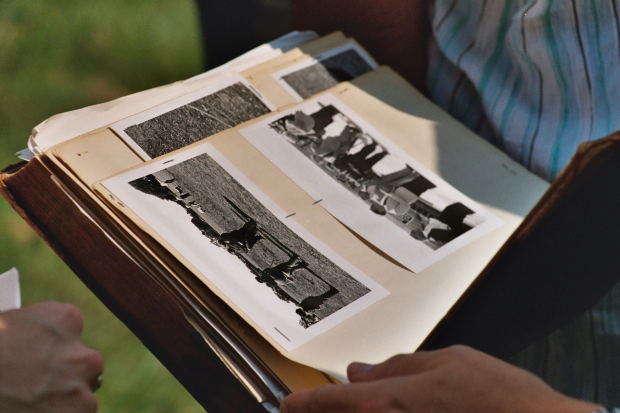
9 AM Discovery

Open the album to see

your roots. Hover your petite fingers across
the beige page with the woman’s
face you inherited.

From full skirt
of exaggerated hips in black
and white, to shorts
with ultra-bright pink, red, purple

spiral. An itch for her
aura strengthens. Once,
you saw her softest smile. How

eerie is it to miss a stranger?

I like

As I find myself in a very difficult time in Israel, where I live, this is a deliberately slow-paced ode to my journey to Ithaka.

I like

how light dances through fluted glass
drowsy streets at dawn
my tall son’s sudden smiles
the doves dozing on our balcony
older folks in redeemed finery
my daughter’s excited curls
the pond toads, sometimes frozen still, sometimes flying over swimming water irises
untranslatable words
drizzle on a hot day
movies in the afternoon
fresh mint
22 years of their father’s playful intuition
unlike another’s vision, once suspending this array beyond reach in our Mediterranean maelstrom.

I like that flying away eastwards, across the waves and years to now, they have all bloomed mine.

Old Photographs

A ghost of a smile
Graced my lips,
Gazing at old faded photos of us I missed,
Younger days have gone so fast.
Truly good times never last.

Old happy times
Memories are forever stored in my mind.
Is this how getting old goes,
Always going back to times, we lost,
Favorite pastime now, I boast.

Old photographs lovingly stored,
Like treasures I dearly behold,
Bringing me back in time,
Like the sound of a sweet chime.

Under the same sky, we reminisce,
Good old times are the best,
Under the same sky, we cry,
Of people and things we lost,
Under the same sky, we gaze,
Never mind if this is a phase.

Every day is a new day to start anew,
Let the blue sky guide us through,
In God’s perfect time
We shall meet again, my friend,
Hoping that we can be the best again.

2027

The invasion happened 40 years ago, in 2027. 

Big, oval-shaped metal ships appeared out of the sky. It’s hard for anyone to think that on that day, millions of lives disappeared. The aliens came in their large spacecrafts with protruding metal legs, and walked around our town in Aberdeen. 

I was ten years old at the time, with Jay, who was eleven, and our mom. We were at the festival park downtown. Our dad wasn’t there, which was how things usually were. I remember that the perimeter of the park had a shaded, circular path for people who took their afternoon walks. There were two playgrounds. At the north-western side of the park, there were numerous wooden picnic tables, shaded by large trees.

 After what felt like hours of Jay and I running around, our mom called us over to the picnic table to have lunch. As we ran over, I heard an eerie, high-pitched buzzing in my ear. I turned around to see where it was coming from. The sound became so loud and painful that I had to cover my ears, trying in vain to protect myself from it. I looked around the park and saw everyone doing the same. A homeless man who always frequented this park with his gang of dogs fell to his knees, his face scrunched up from the buzzing sound. I couldn’t understand what he was saying as I watched him curl into a ball, rolling from side to side with his mouth open. 

Jay grabbed my hand and we ran to our mother as the sky turned dark. The beautiful baby blue color disappeared as the clouds quickly moved in, painting it gray. The wind intensified as we raced to our mother. I was terrified that my brother and I were going to get blown away. But thank God, we reached our mother in time and she took us into her arms. I don’t remember what I said because now all I can see when I close my eyes are the clouds opening and the alien spacecraft crashing from the sky. 

We couldn’t run for cover. The impact of the spacecraft’s landing caused the ground to shake violently. Each time we tried to get up and walk, we ended up with itchy grass on our faces. The ground where the crafts landed on the cars, the public library, and the city hall were all shaking. 

My mom held my brother and me close, whispering, “We are going to be alright.”

She tried her best to shield our eyes from the scene and focused on her, but it was futile. It was impossible not to see the complete destruction of my hometown. I thought again of the homeless man and his dogs. I still remember how hard I screamed when I saw him killed. A part of me, now, is grateful that the buzzing was so loud that I wasn’t able to hear the crushing of his bones or his horror-stricken cry. When the spacecraft’s feet lifted into the air, the man’s body was flattened, and he and the dog’s internal organs fell out of their bodies, mixing together on the ground. 

My mom snatched my face and forced me to look her in the eye, “Mina, keep your eyes on mommy, okay? You too Jay! Kids, hold onto my hand tight and don’t  let go!” 

Jay and I nodded in silent horror.

My mom squeezed our hands, shaking them as she spoke. I didn’t have time to answer and neither did Jay. She got up and dragged us out of the park and towards the car before we could get a word out. I looked at my older brother to see his face turn white, as his eyes flooded with tears, snot running down his nose. I never saw Jay look horrified before then. He was the typical older brother, never afraid of anything. I was the one that would cry hysterically. But at that moment, the roles were reversed. I was the quiet one. I looked over at my mother again. She was clearly horrified, too, but somehow much calmer than either of us, because she wasn’t afraid for herself. Even in the middle of an alien invasion she couldn’t bring herself to be selfish. All she cared about was getting Jay and me out in one piece.

God why didn’t I listen to her then. 

Suddenly, my fingers cease to type. Memories of my mother come flooding back. Her strength, her resolve. How she could be so calm amidst total chaos. Writing about her makes the pang of her absence even more apparent. The sick feeling in my stomach twists as I tell you this story.

My mother started sprinting for the car, dragging us by our arms. As we ran, I turned my head around to look at the mayhem. People scrambled to take cover and dodge the craft’s feet. A man carried a woman on his back towards the parking lot. He leaped over the carcasses of the homeless man and his dog but then slipped on the blood-slicked concrete and fell. My mom yanked my arm to turn me away. We were almost by our car when red lights appeared above us. I looked up and saw that each craft had wand-like appendages with red lights on them. I turned to ask Jay what they were, but his eyes were on our mom, unaware of what was about to happen. 

“Mommy, I’m–“ 

Before I could finish what I was going to say. I heard what sounded like a crack of thunder. 

Rain? Is it going to rain now? 

Suddenly one of the wands shot out a blinding beam of light. The reflection lit up the whole park.  A deep thumping sound came from the wand before another beam came out and struck a woman. She let out a horrified cry as her body turned red, and then her arms, stomach, and legs exploded. Chunks of her body scattered around us, her torso fell to the ground while the remains of her leg landed all around us. Something large and red flew past my head, and a moment later, her blood rained down on us. I turned to my left and saw her disfigured leg on the ground.  

 It was when the three of us took a big leap over something, that I felt a strange substance on my shoulder. I turned my head and saw a red, rust-smelling mass. I tried desperately to get it off me, but Jay’s grip on my hand tightened. I decided to ignore it. We continued running, while our mom pushed and dodged people to get out of our way. She knocked over a woman who was on her knees, screaming for her child to get up. I looked away, unable to bear the sight of it. We were inches away from the car when the sound of multiple lasers rang in the air. 

My mom screamed as we finally reached the car and unlocked it. 

“Keep your eyes on me!”

She threw Jay and me inside before she hurried behind the wheel.  Outside the car window, more crafts swirled around the park, shooting lasers at anything alive and walking. My eyes turned back to the spot where the homeless man was. I saw the woman riding on the other man’s back. She was now on the ground, wailing and calling for him, but he kept running and left her behind. He nearly escaped when the laser beam hit him in the head, disintegrating it immediately.  His lifeless body fell along with the other mutilated corpses around him. In a trance, I watched the bodies explode and the earth shake, and heard the buzzing, which overpowered the sound of my mom calling me.

 She grabbed my face, “Mina! Mina!”  she screamed, her fingernails digging into my skin.

 “Mommy, my face hurts,” I whimpered. I tried to move my face away, but her grip was too strong. 

Our mom’s voice trembled and cracked, “Mina! Listen to me! Do not look outside! Please honey. Look at your brother.” I looked at Jay, and he looked back at me, hyperventilating. With each pained cry he sucked in more air. 

I begged her to let me go, “Mommy please…” I was terrified at the thought that, at any moment, we could all die. 

“Jay, calm down honey, we’re going home. Mina baby…” 

My vision was blurred with tears, and each time  I tried to talk, my throat tightened. The car shook as my eyes trailed away from our mother and landed on the window. More limbs, belonging to both adults and children, were scattered all over the park. Their upper torso would be in one place, but their legs or arms would be far away. The last thing I remember was our mother turning around to start the car. But then, the body of a woman crashed onto the windshield,  and suddenly the bright red light of another laser beam consumed my entire field of vision. 

***

I stop the story and save the document.  The images of the couple and homeless man replay in my head, and I realize I can no longer breathe. I get up from my desk to lay down on my bed. As my head falls on the pillow, I turn off the headset, put it down to my side, and just breathe. On my bookshelf are vintage books and picture frames that have moving holograms inside. One of them contains an image of my mom the last year before she died. 

Our old selves stand in front of the camera with a big smile on each of our faces. Our mom was sitting in the middle while Jay and I flanked her on either side. The three of us posed and waited for the click, when suddenly  Jay burst out into a giggle that made our mom laugh. Looking at this picture always causes this same bittersweet feeling: the memory of being with my brother and mom, the elation we experienced from just being with one another, and the sudden pain in my chest and throat when I realize we will never feel that way again. I stare at the hologram picture until my eyesight gets blurry again. I sniff and wipe my eyes as I turn over to face the other wall.  

I want to write this story–my story. I don’t know why, maybe so I can heal some deep wounds. I take a deep breath and imagine the sound of her laughter on the day the photo was taken. For a second I question why I am even doing this. Forcing myself to remember her in vivid detail and write about how she was before I lost her. The pain of remembering her in this way is too much to bear at times. For a few minutes I entertained the thought of never opening up that document again, of keeping her memory safely tucked away, my only reminders of her the photographs of her smiling eyes. But then I think back to her final moments, how scared yet brave she was. I cannot let her become just a memory. 

I take a deep breath, go to my computer, and open up the document once more. 

Hawaiʻi – School Bus Snapshots

Ho brah, your breath is haunas, dawg. Ever heard of one tooth brush?
Da ting smell so crip, garans gon make somebody make.
Not even. Not as haunas as your body odor, k.
Now das pilau. YOU ever heard of going bocha?

Eh, you brought your cd player and speakers so we can jam music on da ride home or wat?
Yeah, brah. Lemme bust out my collection of burnt CDs. Which one you like jam?
We go listen to some Zack Kekona. “Sitting In My Room”, dawg. You get dat song?
Garans.
Shoots we go jam em den.

You know da kine? Bernadette? She tink you cute, you know.
Not even. How you know?
Brah, she wen message me on AIM last night. Jordan’s cute, ya? She said. I shit you not, brah.
Go sit by her, you. No be sked.
No ways she like me. Brah, I fugly and den. Try ask her one more time if she tink I cute.
K, watch em.
Look. Now she stay smiling at you. Chance em!

Like challenge bloody knuckles? C’mon, brah. No be one panty. Just play.
Fine den. Brah, my knuckles so manini compared to yours. I no more chance and den.
No worries, beef curry. I not gon go all out on you.
Brah, dat was frickin hard, wat you talking bout!?

Eh, Samantha, Nick get one crush on you!
Eww, since when?
Long time already. Look, he like sit by you. Let him.
K, fine. I guess I small kine like him, too.
Hold hands den!

Cut dat shit out back there. All you guys do is yell nonstop da minute you step on da bus. Unreal.
We sorry auntie, but not our fault. Was –
Ainokea whose fault was. All you guys do is just run your pilau mouth. Cannot even be quiet for wat, 5 seconds?
Sheesh. You guys made auntie mad now.

Brah, shut up before da bus driver yell at us again.
Why for, she only gon yell. Nawtin mayjah. Garans she not gon do nawtin.
Bumbai she gon kick you off da bus, watch em.
K, fine. Nevah mind already. I going shut up.

So wat, Kori and Valerie, you guys official yet?
No. Who said dat?
Da kine said dat. Ugh, she so irraz.
Stop. You making her blush.
Ho, how’s Val, her face so red. Like one giant tomato, look em.
So cute you guys. You guys match.

So empty da school bus today. I wonder wat happened to everyone.
Probably sick or got picked up from family. I don’t know.
Eh, at least get some peace and quiet now yeah, auntie?
Dat, and I almost pau work!

I love you guys, but you guys drive me crazy afta school.
I no can remember da last time I had one peaceful bus ride while dropping you guys off.
But das auright. You guys is da highlight of my day, and das 5 times a week.
No matter how crazy you guys drive me, I wouldn’t have it any odda way.


Hauna: smelly, unpleasant odor
Garans: guaranteed
Make: dead
Bocha: take a bath
Panty: scaredy cat
Manini: a small thing (a type of fish; common reef surgeonfish)
No worries, beef curry: no cause for concern
Ainokea: I don’t care
Pilau: rotten stench
Crip: stink
Odda: other
Shoots: alright, okay, yes, I’m down, etc.
Chance em: go for it, take a chance
Auright: alright
Nawtin: nothing
Mayjah: major
Bumbai: later, otherwise, or else
Da kine: A catch-all term to denote literally anything you can’t remember the name of.
Irraz: irritating; to be annoyed
Pau: finished


Definition of Hawaiian Pidgin English terms courtesy of https://wehewehe.org/ and https://oleloonline.com/