
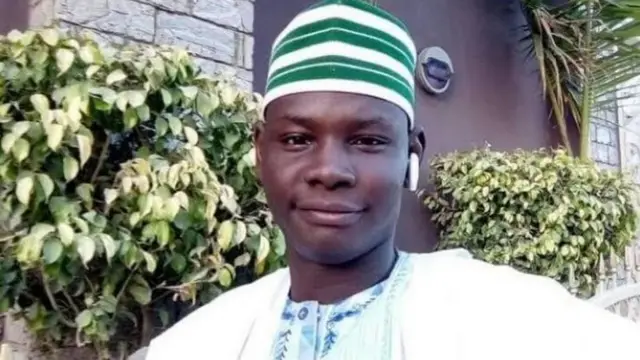
Local Nigerian Musician Files for Appeal After Death Sentence Ruling by Sharia Court

A religious blasphemy case involving a local musician in Kano state, Nigeria, who was sentenced to death by a sharia court, has raised concerns about the sharia law and its infringement on fundamental human rights such as freedom of expression.
A Gavel, used by judges
Photo by Daily Post

The genesis of the case can be traced back to 2020, when Yusuf Sharif Aminu, a local musician based in Kano, was arrested for allegedly sharing song lyrics that were blasphemous against the Prophet Muhammad.

Yusuf’s lyrics generated fury among a certain group of protesters in Kano state who took matters into their hands and set his family’s house ablaze.

The musician was later said to have been arrested and taken into custody by the religious police force in Kano, Hisbah.

In August of 2020, Yusuf was tried by an upper Sharia court in the Hausawa Filin Hockey area of Kano and was sentenced to death by hanging.

The following year, in 2021, Yusuf appealed to the Court of Appeal in Kano after the initial conviction in 2020 was overturned because he had not been granted legal representation during the proceedings.

The court, however, rejected his appeal for release, stating that the Sharia court was not unconstitutional and ordered a retrial of the case by a different Sharia court.

In the most recent development, Yusuf and his lawyers have taken their case to the Supreme Court to request permission to appeal the retrial, which has been approved by the court. Kola Alapinni, the lawyer representing Yusuf, stated, “The court has graciously granted our request and ordered an accelerated hearing. We will file the appeal next week.”
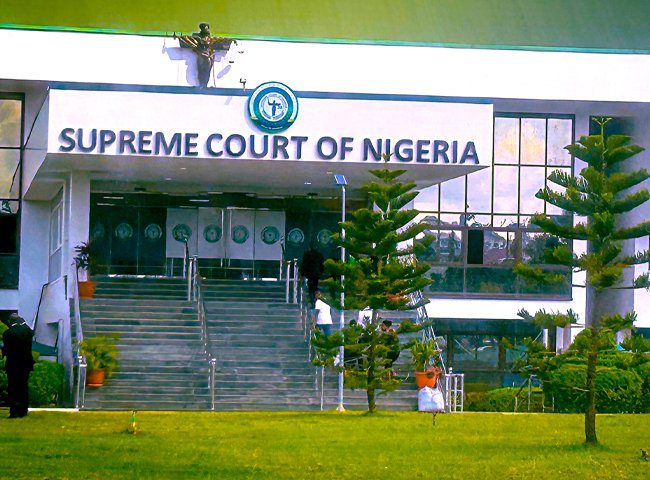
The Supreme Court of Nigeria
Photo by Channels TV

The Supreme Court of Nigeria (Photo by Channels TV)

Five years down the line, Yusuf’s case remains a topic of debate among Nigerians and international bodies. Social media users have expressed concerns over the clash between the provisions of the constitution and Sharia law, insisting that the two cannot coexist in a country of varying religious practices.

An X user commented, “Religion should be personal. Should have no place in law, politics, or the government.”

Analysing the issue during an interview with Yuvoice, a Nigerian lawyer, Barrister Yusufu explained, “Applying Sharia criminal codes in a diverse, multi-faith country creates constitutional and social problems. The best approach is ensuring that no Nigerian, Muslim or non-Muslim is coerced under a religious legal system they do not subscribe to.”

An international lawyer for the Alliance Defending Freedom, Sean Nelson, equally commented on the issue during a lecture with university students. He maintained that blasphemy laws like the one in Yusuf’s case were censorious and infringed on the right to speech and religion.

Yusuf’s case is currently ongoing at the Supreme Court of Nigeria and pending trial.
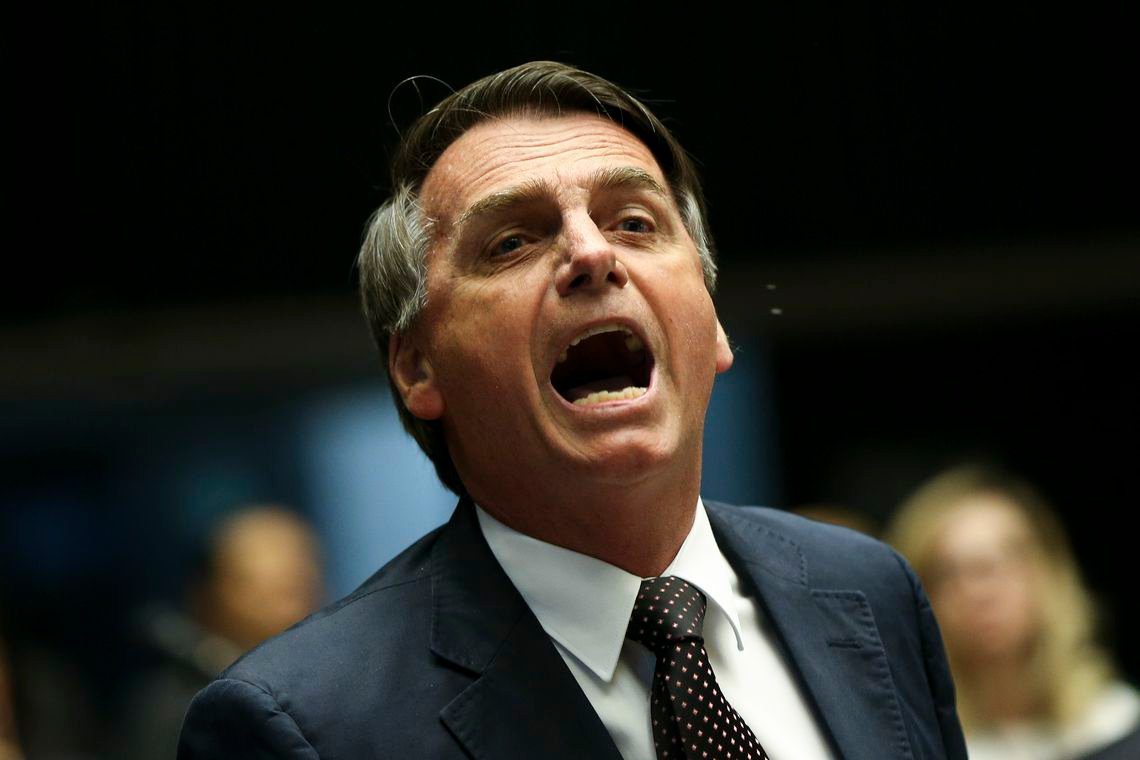
Brazil’s Supreme Court Sentences Former President Bolsonaro to 27 Years for Coup Plot

Last week, Brazil’s Supreme Court delivered a historic ruling: former president Jair Bolsonaro, 70, was sentenced to 27 years and three months in prison for plotting a coup d’état after losing the 2022 election.

The court found Bolsonaro guilty of leading a conspiracy that sought to overturn the democratic process. Plans included dissolving the Supreme Court, disbanding institutions, and even assassinating then president-elect Luiz Inácio Lula da Silva before he could take office. 

Bolsonaro has denied orchestrating a coup, insisting he only sought “constitutional alternatives” to remain in power.

A First in Brazilian History

Brazil has experienced at least 15 coups or coup attempts since the monarchy fell in 1889. This is the first time a leader accused of organizing one has been criminally convicted. 

Alongside Bolsonaro, seven high-ranking allies were also sentenced, including his vice-presidential candidate, his former defense minister, and senior military commanders.

Justice Cármen Lúcia, whose decisive vote sealed the conviction, underscored the court’s message: “In Brazil this has one name only: a coup d’état.”

The sentencing marks a watershed moment for Latin America’s largest democracy. Bolsonaro, often compared to other far-right populist leaders worldwide, energized a movement that reshaped Brazilian politics over the last decade. 

His imprisonment leaves that movement without a clear leader ahead of the 2026 elections.

Public reactions have been mixed. While progressive groups celebrated the decision as a defense of democratic institutions, Bolsonaro’s supporters organized protests, framing the trial as political persecution. 

Polls conducted during the trial showed the country nearly split: about half of Brazilians agreed he should go to prison, while a large minority opposed it.

The case has also stirred international debate. Reports indicate that former U.S. President Donald Trump pressured Brazil to drop the prosecution, threatening steep tariffs. 

The conviction now risks straining relations further, as Bolsonaro’s defense team pushes for him to serve his sentence under house arrest due to health concerns.

“No Amnesty” Movement

Brazilian congresswoman Dandara Tonantzin, a rising voice in the country’s progressive wing, told Yuvoice the conviction was a long-overdue step: “This is a victory for all who defended democracy tooth and nail. There can be no amnesty for those who attempted to silence the ballot box with force.”

Her remarks highlight a growing demand that Bolsonaro’s privileges as a former president (including taxpayer-funded security and staff) be revoked.

She also highlighted the symbolism of Justice Cármen Lúcia casting the decisive vote: “It is not by chance that it was a woman from Minas Gerais who stood firm. Bolsonaro once called the birth of his daughter a ‘weak moment,’ yet now he has been stopped by the strength of a woman’s hands: delicate, but firm.”

For Dandara, the ruling is also a historical reckoning: “What happened was not an exaggeration, not a theory, it was a crime against democracy. Justice being served is an essential step to ensure that never again will anyone attempt to shut down the will of the people with force.”

What’s Next?

Bolsonaro’s lawyers are expected to file appeals, which may delay his imprisonment. The timeline for where and how he will serve his sentence – whether in a federal facility, under house arrest, or elsewhere – remains uncertain. 

Meanwhile, political allies are floating a controversial bill to grant him amnesty, though legal experts say such a move would likely be unconstitutional.

Still, the ruling is already shaping Brazil’s political future. Bolsonaro is now banned from running for office until 2060, effectively ending his electoral career. 

For a country still scarred by past authoritarian regimes, the decision signals both accountability and an attempt to strengthen democratic resilience.

The conviction of Jair Bolsonaro resonates far beyond Brazil. It is a reminder that democratic institutions, however imperfect, can hold even the most powerful figures accountable. 

In a time when democracies worldwide are tested by misinformation, authoritarian pressures, and weakened trust, Brazil’s verdict may stand as a precedent and a warning.