Backing New Beginnings: Refugee Entrepreneurs Find Support Across Britain

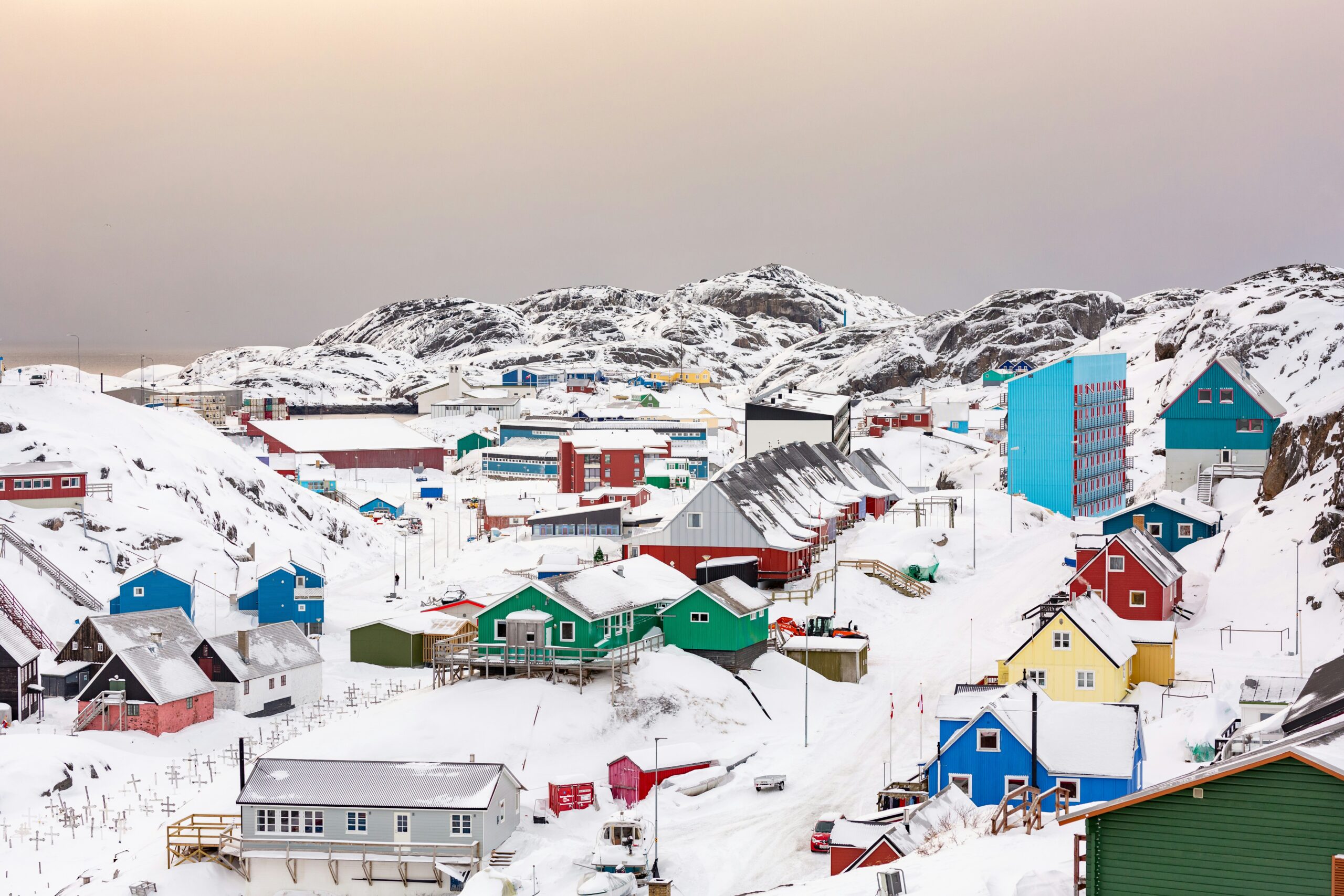
“When the land is full of snow and you don’t know what is underneath — ­business is like that,” says Akbar Majidov, an immigrant to Britain who runs a catering business with his wife Sanobar. You have to take risks, Akbar told The Sentinel: “you just need to walk on the snow. Sometimes there’s a hole there, but sometimes it’s OK.”

Akbar and Sanobar from Uzbekistan in central Asia are operating in London street markets and at private events, selling home-made food originating from their Persian-speaking Tajik culture. 

Akbar has had to tread virgin territory to forge a life for himself since he came to Britain in 2003, a life which has included working in construction and for restaurant group The Breakfast Club. Sanobar joined him permanently in London in 2019.

The husband-and-wife team has received guidance from non-profit organisation TERN, The Entrepreneurial Refugee Network, which is helping refugees to launch their own businesses. TERN helped 725 refugee entrepreneurs in the 2024-2025 financial year. It is seeing such demand for its mentoring and training courses that it is running a waiting list.

Kateryna Reshetnyk, a Ukrainian refugee from the eastern city of Kharkiv, now works with her husband in the Scottish town of Girvan, running PIXSEL UK, which produces hybrid glass protectors for car and motorcycle screens. Kateryna hadn’t operated a business before she was forced to flee the war in Ukraine. She told The Sentinel how she has also benefited from training through TERN.

“I had an accountancy course, an accountant from TERN helped me to create a business plan and I had a course for eBay. TERN and eBay helped refugees like me who want to sell on eBay.”

Immigrants to Britain have been facing a hostile environment in the past few years, both from governments and from right-wing populist party Reform UK, which is leading in opinion polls. However, there is also a groundswell of support for Britain’s multiculturalism. At least 50,000 people joined a march against the far right in London at the end of March. Nowhere is this multiculturalism more apparent than in the variety of international foods available to diners in London, the best city in the world for food, according to Tripadvisor.

The signature dish of the Majidovs’ business, Samarkand Palav, is oshi palav, inscribed in 2016 on UNESCO’s Representative List of the Intangible Cultural Heritage of Humanity. Palav typically features rice, meat and carrots, as well as spices such as cumin. What makes the dish so tasty is that the ingredients are cooked together, with the rice absorbing the flavour of the meat and vegetables, says Akbar.

Another distinctive element of palav is that it is cooked and served in layers, with first rice, then meat, then vegetables, says Sanobar: “this very beautiful layer gives a touch of Bukhara and Samarkand.”

Sanobar says it is important for immigrants to integrate into Britain when they arrive. However, it is also important for them not to forget their own culture. For Sanobar, the contrast between central Asian and British culture can sometimes be great:

“In Uzbekistan, we keep a friendly, centuries-old culture. People live for today, and they don’t worry about money for the future. In the markets, in the bazaar, people share their food, they share everything. I think it’s good if they bring this nice culture with them and they share.”

Kateryna also stressed the importance for refugees of making the most of what they have.

“Thank you to people who trust us and who allow us to create a business here, and who provide advice for refugees. I understand now that everything changes very fast in our lives. You need to live for today and for this moment, not wait. I have been waiting for good things for four years, but we decided to create our business here, to live our full lives.”

MEC Livros: new government platform brings free digital library to Brazilians

On April 5, 2026, Brazil’s federal Ministry of Education (MEC) launched a free digital library featuring a wide range of books. The initiative aims to democratize access to reading for all citizens.

What is MEC Livros?

It is a public, free digital platform offering about 8,000 books, both national and international. The library includes classics, bestsellers, new releases, and various literary genres, aimed at students, teachers, and general readers.

For university student João Pedro Oliveira, MEC Livros revives a culture that has been fading by bringing readers closer to the traditional library experience.

“It’s a wonderful proposal… What’s most interesting, in my view, is that it imitates a library. I think that’s a culture that has been largely lost nowadays.”

The student also highlights the variety of the catalog as a strong point, noting that it can attract different reader profiles.

In a country where access to books is still shaped by economic inequalities, public initiatives to encourage reading become essential for forming new readers. 

The platform’s launch comes at a concerning moment for reading in Brazil. Data from Retratos da Leitura no Brasil, one of the country’s main national surveys on reading habits, conducted by Fundação Itaú — a private foundation linked to one of Brazil’s largest financial institutions — between April and July 2024, indicate that only 47% of the population is considered readers, while 53% had not read a single book in the three months prior to the study.

Additionally, the country has been experiencing a decline in the number of readers in recent years, highlighting an increasing distance between the population and reading habits. This context is directly linked to structural factors such as social inequality and the high cost of books, which limit access, especially for low-income communities.

This difficulty is also reflected in the daily lives of young readers. João Pedro reports that limited access directly hindered his development as a reader, particularly in engaging with Brazilian authors.

“The biggest impact is my lack of reading Brazilian literature. I’ve always tried not to download pirated books, so among everything I’ve read, only a small portion is national literature.”

In contrast to this scenario, Rio de Janeiro’s recognition as UNESCO’s World Book Capital in 2025 — an annual title granted by the organization to cities that promote reading and access to books — reinforces the importance of projects that encourage reading and expand access to literature. 

The city was chosen for its commitment to promoting literature and improving accessibility for all citizens, intensifying discussions about how factors like high book prices and limited access influence low reading rates in the country.

The digital format also stands out as a key advantage of the platform. By gathering thousands of works in an environment accessible via mobile phones, MEC Livros expands opportunities for engaging with reading in everyday life.

“It’s on our phones, something we use very frequently. That makes a huge impact,” João Pedro says.

According to the student, the impact of reading goes beyond the immediate habit:

“It’s something quiet and long-term… The more you read, the more you realize how far your mind can go.”

In this way, platforms like MEC Livros emerge as a way to bring the population closer to the literary world through the democratization of knowledge and digital inclusion on a national scale.

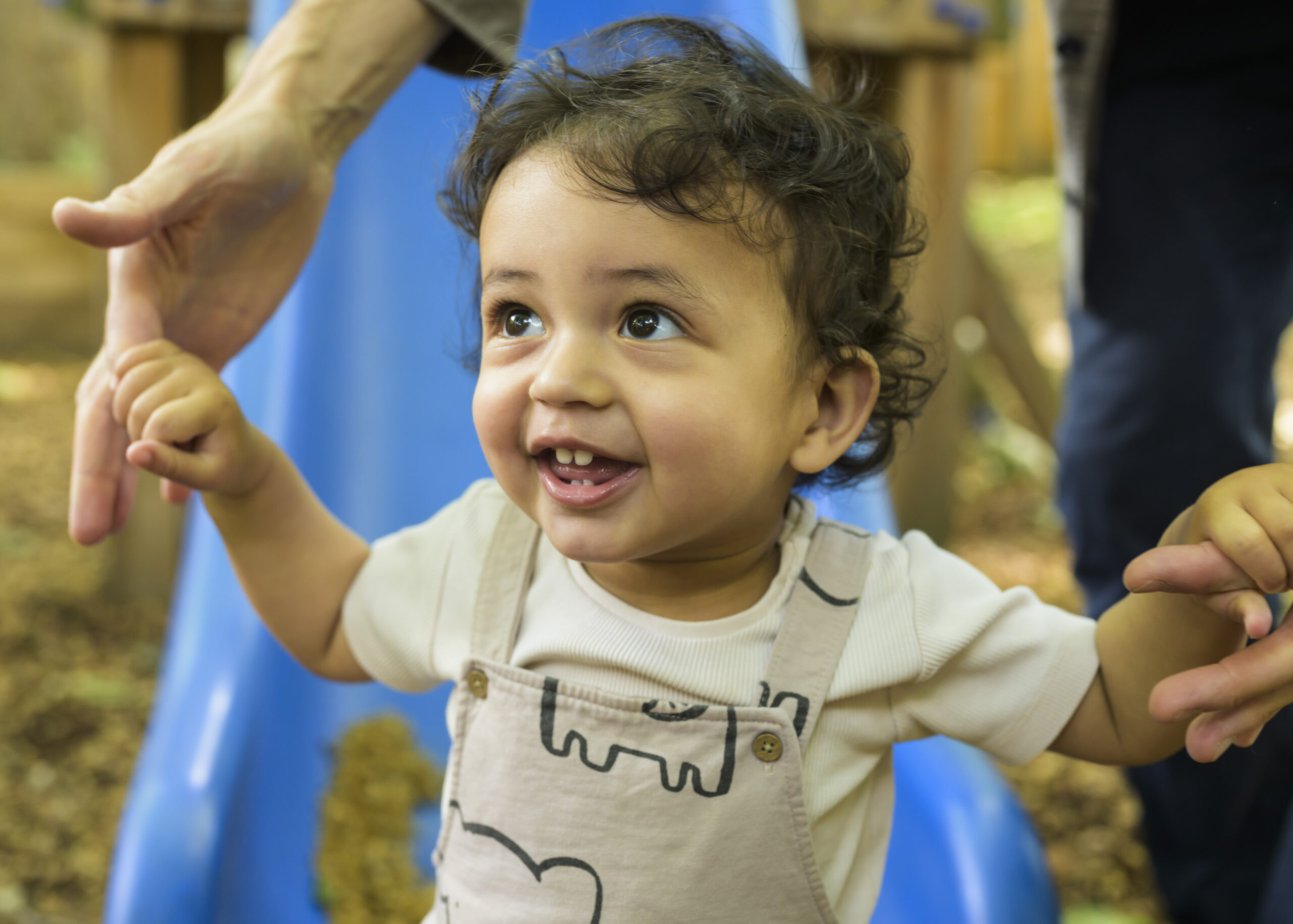
England’s toddlers looking for a home

Fertility in England and Wales is at record low levels of 1.41 births per woman. It’s a trend replicated across Europe, including in countries traditionally seen as family-friendly like Spain and Italy. Meanwhile, the average age of parents has risen. People are waiting longer to have children and are sometimes finding it harder to have them. So finding adoptive parents for young children in need of a family should be getting easier, right? Wrong, according to Dame Carol Homden, chief executive of children’s charity Coram, a major voluntary adoption agency in England.

“Adoption matches and placements are down, but that is not because of a fall in the number of children,” Homden told The Sentinel in an interview, adding that in Britain:

“What is of profound concern is that we have more than 3,000 children waiting and we only have half the number of adopters.”

There are several reasons for a lack of potential adopters, according to Homden, starting with an ageing population.

“We have a demographic time bomb. We have a change in the demographics of the UK, a change in our population which means that the population is older. There are many people post-retirement playing a key role in the lives of their grandchildren. But for the parent age group, or what we normally think of as the parent age group, there are fewer of them.”

Brexit, inflation and war shocks are also taking their toll.

“It is ordinary people who do this extraordinary thing of adopting children, and the cost of living crisis has been a great concern,” Homden said.

“It’s increasingly difficult for young people to leave home and to have the housing that they need to form a family, combined with the cost of childcare, as a great many more women are in the workforce.”

Homden said that parents were “a squeezed middle that’s facing very high childcare costs and increasing burdens for their elderly relatives.”

In addition, scientific advances in IVF have reduced demand for adoption from would-be parents who have had difficulties in bearing their own children, Homden said.

Adoption also faces a barrage of negative publicity, with tales of adoptions which fall apart, Homden added:

“Good news is never news. There is a negative discourse that is drowning out the voice of the many, many children who say they love their adopters, and of the vast majority of adopters who say that it can be tough, but that they would do it again.”

Homden said it may be time to consider different ways of looking after children.

“We are going to need to adapt our ways of thinking about how people can help, even if they are not able to help us full time.”

With divorce high in Britain, one group of people who could be a natural fit for adoption are “second time arounders, where one of the partners has teenagers,” according to Homden.

There is no upper age limit on adoption in Britain, though Homden said Coram took into account the physical toll of looking after young children. “There is a sense check. Health conditions are considered quite carefully.”

There are also no restrictions on adoption by same-sex parents or single parents in Britain.  Joint adoption by same-sex partners is permitted in only 36 countries worldwide, according to the United Nations Population Fund.

“Coram has been welcoming people of all backgrounds for a very long time,” Homden said.”

Established as The Foundling Hospital in London by Thomas Coram in 1739 as a home for babies whose mothers were unable to care for them, Coram operates adoption services in London and the southeast of England.

Homden said that the vast majority of children who are adopted are under the age of five, with most between two and four.

Former primary school teacher Anne, a single woman of Black Caribbean descent, adopted her two daughters, birth siblings Emily and Rachel, through Coram in 2021 and 2022. Her network of family and friends were supportive of her decision, she said in comments provided to The Sentinel by Coram.

I knew it was going to be really tough to adopt as a single parent. But I had faith that this was the right thing for me to do, she said.

“I remember just always having a heart for those children who kind of didn’t fit into the mainstream in different ways. Being around children who were maybe looked-after, or they were known to social care, it really made me think this was something I wanted to do.” 

“Adopting children who are birth siblings I think is really important for their life story and having that connection. I am getting used to taking care of someone else’s needs, we are having new experiences and getting to know each other.” 

Same-sex parents Ben and Adam adopted siblings Lydia and Spencer, and later another child, Jamie, through Coram, according to comments provided to The Sentinel. Ben is a former mental health nurse and a qualified social worker, with experience of working with vulnerable children.

Lydia and Spencer, aged two and one at that time, were the first children Ben and Adam were put in touch with.  “I remember the night before the confirmation on whether we would be their adoptive parents,” Ben said. “The waiting then was the hardest part of everything, we couldn’t sleep because of excitement and nerves. But it was a wonderful process and exciting. 

Ben added that: adoption is a very different form of parenting to biological parenting and I think it’s quite hard to understand that before you do it, so we try to explain the realities to anyone considering it. Adopting our children is absolutely, one hundred per cent the best thing we ever did, no doubt about that.”

Editorial note: Names have been changed to protect the identities of the families.

Living in the Age of Geopolitical Fatigue

As a journalist, staying informed is my job. Lately, however, I find myself avoiding the news cycle. Each time I open my phone, another crisis demands attention. By the time I’ve absorbed one story, three more have displaced it. I closed the app. I look for something, anything, that offers a break.

Turns out, I’m far from alone. The Reuters Institute for the Study of Journalism’s 2025 Digital News report found that 40% of respondents across 47 markets now say they sometimes or often avoid the news, up 11 percentage points from 29% in 2017. When researchers asked why, selective news avoiders cite feeling anxious and powerless, finding the news repetitive and boring, and feeling overwhelmed by its negative nature.

This exhaustion is different from just being tired of politics. It’s the feeling of living through an accelerating cascade of global crises, Ukraine, Gaza, Iran, economic instability, climate warnings, while having almost no capacity to influence any of it. Unlike previous eras where crises had beginnings, peaks, and some kind of resolution, today’s information environment presents them as simultaneous and never ending.

Psychologists are starting to document what many of us already feel. The American Psychological Association’s 2025 Stress in America survey found that 69% of adults now cite the spread of inaccurate or misleading information as a major source of stress, up from 62% in 2024. Another 57% reported stress about the rise of AI, up from 49% the previous year. What’s telling is that this anxiety isn’t tied to direct personal impact, but to what researchers call “ambient awareness,” the background cognitive load of navigating a reality where information itself feels unreliable and emerging technologies reshape daily life faster than we can process the implications.

When More Information Means Less Understanding

Here’s the strange part: we know more about global events than any generation in history, yet understanding those events hasn’t gotten any easier. If anything, it’s gotten harder.

Information overload researchers have long documented this paradox: our cognitive capacity for processing complex, multifaceted issues has limits. Beyond a certain threshold, additional information can decrease comprehension rather than improve it. We become paralyzed by choice, unable to synthesize competing narratives into coherent understanding.

Digital platforms worsen this dynamic. Research examining social media algorithms has found that emotionally charged political content receives substantially more amplification than neutral reporting. A study published in PNAS Nexus examining Twitter’s algorithm found that among tweets selected by engagement based ranking, 62% expressed anger compared to 52% in chronological feeds, and content expressing out-group animosity increased from 38% to 46%. Sociologist Zeynep Tufekci describes this phenomenon as “censorship through noise,” information isn’t blocked, it’s drowned in a flood of high emotion content designed to keep you scrolling.

In this environment, picking a side feels easier than trying to hold multiple competing explanations in your head. The mental shortcut is understandable. The cost is polarization.

Crises That Disappear Before We Understand Them

Think back to February 2023. A massive earthquake killed over 50,000 people in Turkey and Syria. For about 10 days, it was everywhere. Then a Chinese surveillance balloon drifted across North America. Fighting intensified around Bakhmut. A train derailed in Ohio and people worried about chemical contamination. By March, the earthquake had essentially vanished from international news, not because the crisis ended, hundreds of thousands of people were still displaced, but because our collective attention had splintered and moved on.

This keeps happening. Research tracking humanitarian crisis coverage shows that media attention operates in dramatic spikes followed by rapid abandonment. A 2025 analysis of 78,667 news articles covering 10 major humanitarian crises found that coverage is highly event driven, with sustained engagement rare and dependent on sudden developments rather than ongoing need. The pattern suggests we’re moving from crisis to crisis without the time required to understand any of them fully.

When everything happens at once, it becomes almost impossible to maintain any sense of historical continuity. Social media turns into a marketplace where pre packaged interpretations compete for our clicks. And many of us, simply too exhausted to build our own understanding, just pick from what’s already there.

When Exhaustion Becomes the Point

Here’s an uncomfortable thought: fatigue can work as a kind of control, even when nobody’s deliberately engineering it. In authoritarian countries, it’s sometimes by design. Russia’s “firehose of falsehood” strategy intentionally floods information channels with contradictory claims. The goal isn’t to make you believe anything specific, just to make you too tired to figure out what’s true.

In democracies, it works differently but ends up in a similar place. When everything is presented as equally urgent, nothing gets the sustained attention it needs. Research on civic engagement suggests that constant exposure to crisis messaging can produce paralysis rather than mobilization. The perpetual state of emergency becomes normalized, and people retreat into managing their immediate circumstances rather than organizing for broader change.

A tired population doesn’t organize. It just tries to keep up. And when exhaustion turns into apathy, decisions get left to whoever already has the resources and the microphone.

Finding Our Way Back

I can’t solve the wars, the climate crisis, or the economic uncertainty that fills my news feed every morning. Neither can you. But I’m starting to think that understanding how all of this shapes what we pay attention to, and how we think, might be one of the few things we actually can control.

This exhaustion we’re feeling isn’t a personal failing. It’s a reasonable response to an information environment that’s moving faster than our minds were built to handle. We evolved to deal with immediate, local threats. Not a constant stream of global emergencies.

The answer isn’t to unplug completely. It’s to change how we relate to the flood. That’s admittedly an individual strategy for what’s really a structural problem. My personal discipline can’t fix how platforms are designed or how algorithms amplify outrage. But it can give me back something I’ve been missing: the ability to choose what gets my attention right now, and what can wait.

Some researchers are pushing for bigger fixes. Redesigning social media to stop rewarding engagement at all costs. Making algorithms transparent so we know why we’re seeing what we’re seeing. Funding public media that can provide slower, more thoughtful coverage instead of reactive feeds. Whether any of that can overcome the money and lobbying power behind the current system, I honestly don’t know.

What I do know is this: recognizing that my exhaustion makes sense, that it’s not weakness or apathy but a rational response to an overwhelming reality, feels like a small act of reclaiming something. In a world that demands constant reaction, the ability to slow down and actually think might be one of the most important things we have left.

That capacity is getting rarer. Which is exactly why it matters.

Brazilian Film “Gugu’s World” Takes Grand Prix at Berlinale’s Youth Section

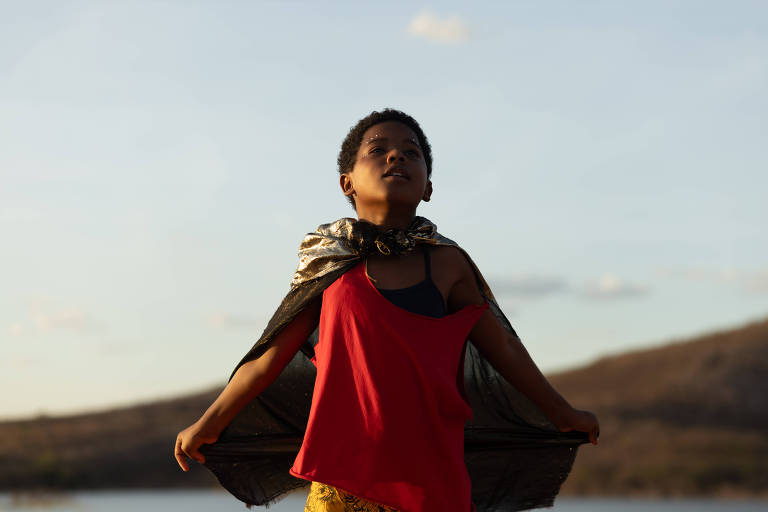
The Brazilian film “Gugu’s World”, winner of the Grand Prix in the Generation Kplus section of the Berlin International Film Festival (Berlinale) in 2026, follows the story of an eleven-year-old queer boy who dreams of becoming a soccer player while facing the progression of his grandmother’s Alzheimer’s disease.

“It’s not a movie that labels itself only as LGBT. It’s a movie that anyone can connect with. Beyond questions of identity, it also deals with memory and family relationships,” says André Araújo, the film’s screenwriter.

The drama conceived by André Araújo and directed by Allan Deberton follows the life of Gugu. Raised lovingly and freely by his grandmother, Dilma, their relationship of care seems to reverse when the progression of Alzheimer’s begins to weigh on her. Afraid that he may have to live with his father – who does not understand him as he is – Gugu tries to hide from everyone what is happening.

The film stars Yuri Gomes, Teca Pereira and Lázaro Ramos, one of Brazil’s most prominent actors, who attended the Academy Awards accompanying his long-time partner Wagner Moura, a 2026 Oscar nominee. The cast also includes names such as Carlos Francisco and Georgina Castro.

Among the film’s critical responses, many highlight Gugu’s singular and determined personality. In an exclusive interview with The Sentinel, screenwriter André Araújo discussed the construction of the character:

“Gugu moves between genders. He isn’t simply a ‘gay kid,’” André emphasizes. “At the same time that he’s a sensitive child who likes to wear makeup, dress up, wear colorful clothes, dance, and express himself through clothing, music, and dance, he also expresses himself through soccer. His dream is to become a soccer player, which is a masculinized space where someone like him normally doesn’t have a place.”

Awards in Berlin

The Berlin International Film Festival (Berlinale) took place between February 12 and 22. The film was screened in the Generation Kplus section, a segment dedicated to works that explore narratives about growing up and coming of age for young audiences.

After its screening, “Gugu’s World” received a warm reception and took home two awards. The Grand Prix of the International Jury was granted by a jury dedicated to selecting the best feature film addressing the world of children and youth. The second award was the Crystal Bear, decided by a vote of the children’s jury.

“The audience applauded the film standing for eight minutes, and people came up to talk to us about how deeply the film touched them […] A man around 60 years old came up to me and said, ‘Look, I really saw myself in that boy, because I was a feminine child, a gay kid,’” André recounts.

Among viewers, the relationship between Gugu and Dilma was also warmly received. André Araújo described their relationship using the term “arenga,” a Brazilian expression from the state of Ceará that refers to a form of love expressed through playful bickering. “It’s their way of saying ‘I love you,’” André concluded.

Film critic Natália Bocanera attended the screening during the Berlin showcase and told The Sentinel about her experience:

“I believe the most striking point in Gugu’s World is the beautiful relationship built between grandmother and grandson and the freedom with which they express themselves. The idea of bringing together extremes carries with it the expectation of conflict and confrontation. However, Gugu and his grandmother Dilma never repel each other; instead, they complement one another to the point that together they radiate such a strong light that all we want is not to look away from their existence,” she concludes.

Natália also highlighted Lázaro Ramos’s performance, emphasizing how powerful it is to see him portray a role so different from his usual ones: that of a father who oppresses his son, struggles to connect with him, and yet still carries the complexity of loving him in some way, bringing the character closer to the reality of many Brazilian families.

The backlands and Alzheimer’s

During the interview, André Araújo also revealed the connection between the film’s narrative and the Brazilian sertão (the semi-arid backlands of northeastern Brazil), a setting that plays an important role in the story.

According to Araújo, the idea for the project emerged after encountering the former town of São Rafael, in the state of Rio Grande do Norte in northeastern Brazil, which is now submerged beneath a dam. The landscapes and the stories of local residents revealed that the impacts extend beyond the physical, reaching symbolic and subjective dimensions of people’s lives.

From this, André began to see the place as a space of memory. The city that is visible only when the water level of the dam drops became a metaphor for Alzheimer’s disease.

“You see a reservoir dry up and, little by little, the old city starts to emerge. Alzheimer’s is a similar process: as the disease progresses, something remains, and that something that remains is often very small. It’s no longer the memory, no longer the everyday recollections, but a trace of who that person once was.”

The relationship between Gugu and Dilma is directly affected by the disease’s progression, and a central part of the film is the coming-of-age that grows out of that experience.

“There comes a moment when he has to take care of his grandmother. He becomes adult-like. He switches roles with this woman: the one who should be caring for him becomes the one cared for by him.”

“Gugu’s World” currently has no scheduled release date in Brazilian theaters or on streaming platforms. International distribution has also not yet been confirmed.

Interview: Kaiony Venâncio on The Secret Agent and Its Oscar Moment

Violence, mystery, and a period in Brazilian history that many would rather forget. This is the backdrop of the acclaimed Brazilian film The Secret Agent, nominated for four Academy Awards: Best Picture, Best International Feature Film, Best Actor (Wagner Moura), and the newly created Best Casting category, introduced for the first time at the 2026 Oscars. 

Even before Hollywood’s most prestigious ceremony takes place in the second week of March 2026, the film has already collected several international awards. In Brazil alone, it has drawn more than 2,350,000 viewers and grossed over R$ 50,000,000 at the box office.

Set outside Brazil’s traditional tourist and cinematic axis of Rio de Janeiro and São Paulo, the film unfolds in Recife, a major city in Brazil’s Northeast region. It reminds audiences that the country extends far beyond iconic landmarks such as Sugarloaf Mountain and Christ the Redeemer. 

By showcasing the breadth and diversity of Latin America’s largest nation, the film highlights a local cast — actors who are not necessarily newcomers, but who may be less familiar to mainstream Brazilian audiences.

One authentic representative of the many Northeastern talents featured in the film is veteran actor Kaiony da Silva Venâncio. Born in Natal, the capital of Rio Grande do Norte state — approximately 287 kilometers from Recife, where the story takes place — Kaiony has previously appeared in productions set in Brazil’s Northeast, such as the series Where the Strong Are Born and Cangaço Novo.

Just days before the Oscar ceremony, Kaiony spoke with The Sentinel by Yuvoice. 

When commenting on the Golden Globe awarded to The Secret Agent, acclaimed actress Fernanda Torres went beyond national pride and emphasized: “the Brazilian Northeast on the world stage. That’s what culture is for.”

1 – How do you view that statement? How do you understand the representation of the Northeast in The Secret Agent  and in other productions set in or referencing the region?

KAIONY: Talking about the Northeast or showing the region in our productions shouldn’t be a reason for celebration — it should be natural, everyday. Unfortunately, due to recurring cases of prejudice against Northeastern Brazilians over the past decade, we are forced to assert ourselves so that our art is respected and recognized as part of our country’s cultural identity.

2 – Still on that subject, what is the importance of a Northeastern cast gaining international visibility?

KAIONY: In this case, I believe it’s extremely important to export Northeastern culture and art to show that Brazil is diverse, with multiple perspectives, formats, and expressions. Even within the Northeast itself, there is great diversity.

3 – You and Wagner Moura have emphasized that the central focus of The Secret Agent  is memory — or even the absence of it. You were a child during that dark period of Brazil’s recent history. What do you remember, and how is that period represented in the film?

KAIONY: I was born in 1979. One of the most vivid memories from my childhood in the 1980s was when we were playing outside at night and would scare each other, saying that “the white hand” would come to grab, arrest, and make us disappear.

We didn’t realize that the “white hand” was actually a reference to the police forces that kidnapped and tortured people during Brazil’s military dictatorship (1964–1985). We were simply repeating what adults said.

“The white hand” was our version of the “Hairy Leg,” a legendary urban myth figure from Recife used to frighten children.

4 – How did you build your character from that era?

KAIONY: I had a real-life reference for the character “Vilmar” when I watched a 1970s documentary about the so-called “Gunman of Serra Talhada.” But beyond that, I built the character based on the precise guidance of director Kleber Mendonça Filho. He was meticulous in describing the character’s behavior, helping me reach the tone he envisioned.

5 – Although many deny it, the 1970s in Brazil were extremely violent, including violence carried out by the State. Your character portrays violence from another perspective—non-state violence. How do you relate these two forms of violence, which unfortunately still exist in Brazil today?

KAIONY: Vilmar is the product of social abandonment by the State. The fact that hired killers still exist today, especially in smaller cities, proves that you cannot separate street violence from state violence. The streets reflect sociocultural, structural, and above all educational neglect.

Vilmar holds a gun because he never had the opportunity to hold a book.

6 – Regarding that violence, how is that historical period perceived outside Brazil? What truth does the film carry beyond national borders?

KAIONY: For countries in South and Central America, it’s easier to relate to this theme, since many also experienced dictatorships—Argentina, Chile, and others across the continent. In Europe, countries that suffered through the two World Wars, the Cold War, and authoritarian regimes understand the context. But they are often shocked by the historical erasure of that bloody period in Brazil, which makes it necessary for us to keep revisiting such a difficult topic as the military dictatorship.

7 – Although Vilmar is a killer, you describe him as gentle or even sweet. Why?

KAIONY: Because he doesn’t kill like a serial killer. He didn’t choose that life; circumstances and lack of opportunity led him there. He doesn’t have a villain’s soul—he has a survivor’s spirit.

8 – With Brazilian cinema gaining international recognition for two consecutive years, what would you like to see improve? And concretely, what has already changed? What tangible impact has The Secret Agent had on Brazil’s film industry?

KAIONY: It’s not exactly The Secret Agent itself that is changing local production, but its achievements help society understand the importance of investing in national audiovisual production. Before we even began filming, the current government had already initiated the restoration of Brazil’s Ministry of Culture and resumed funding through cultural laws and public grants, injecting essential resources into our productions.

What needs to change is the mindset and strategy of our national film academy. It must see our films as works designed to compete in major international festivals, because that brings meaningful benefits to Brazil.

9 – You’ve said that your life can be divided into before and after The Secret Agent. What changed? And tell us about the audition where you forgot to attach your video and still got the role.

KAIONY: My life changed because of the tremendous impact the character achieved. It’s impossible not to be touched by his journey. Just today, I was crossing at a pedestrian lane when two men inside a car shouted, “Hey, Secret Agent!” Vilmar brought me immense and meaningful visibility.

The good part about the audition is that Gabriel Domingues, the casting producer, already knew me from the series Cangaço Novo, which helped because I had done strong work there.

As for the video test, I forgot to send an introductory clip about myself. Before filming began, I received an email from Gabriel’s team asking me to audition for Vilmar. I recorded the scene in my backyard, and nine days later I was called for an in-person audition with Kleber in Recife. I performed the scene three times on the street, he liked it very much, and told me: “We want the honor of working with you.”

10 – Since these questions were prepared before the four Oscar nominations, how do you feel about them? What are your hopes and predictions? And what about the Best Casting nomination — the new category that reflects the diversity of the film’s characters?

KAIONY: I’m really hoping we take home at least one award, even with strong competition. Best Casting would be fantastic, but if I could choose just one, I’d choose International Feature Film, because that award recognizes the entire team and the whole cast.

Brazil enacts Felca Law to protect children from digital adultization

After reports exposing cases of exploitation and the “adultification” of children on social media, Brazil has enacted new legislation aimed at protecting minors in the digital environment.

Law No. 15.211 was published in Brazil’s Official Gazette on September 18, 2025. Sanctioned by President Luiz Inácio Lula da Silva, the legislation establishes the Digital Statue of the Child and Adolescent and seeks to curb serious violations against individuals under the age of 18 in online spaces.

According to the new law, digital platforms must adopt protective measures to prevent young users from accessing inappropriate content, including sexual exploitation, pornography, incitement to violence, and drug use, among harmful materials.

The so-called “Digital ECA” – a reference to Brazil’s landmark Child and Adolescent Statue (Estatuto da Criança e do Adolescente, enacted in 1990) – originated from a bill introduced by Senator Alessandro Vieira of the Brazilian Democratic Movement (MDB), a Brazilian politician party. The legislation provides for penalties against violators, including warnings, fines, temporary suspensions, and even service bans.

Public debate over the exploitation of minors online gained significant momentum in early August 2025. Influencer Felipe Bressanim Pereira, known as Felca, published a video denouncing the exploitation and abuse of children and adolescents on the internet, intensifying national discussions about the frequent adultification and monetization of minors on digital platforms.

The law defines “adultification” as any practice or exposure that leads children to behave like adults, assuming responsibilities, appearances, or language inappropriate for their age. It also includes the promotion of affective-sexual relationships and advertising campaigns with sexual, erotic, or violence content.

Impacts of digital exposure on child development

For specialists, early exposure to the digital environment can have significant consequences for the emotional development of children and adolescents. According to clinical psychologist Joanna Netto, the developing brain – particularly areas responsible for impulse control, risk perception, and emotional regulation – is especially vulnerable during childhood and adolescence.

“When a child is exposed too early to social media, they begin dealing with situations for which they do not yet have emotional maturity”, she explains.

The constant search for validation on digital platforms also directly affects young people’s self-esteem. Likes, comments, and views often function as a “thermometer” of social acceptance. According to data from Brazil’s Unified Healthy System (Sistema Único de Saúde, SUS), there has been an increase of approximately 4,423% in anxiety-related treatments among adolescents aged 15 to 19 over the past decade. The study indicates that this surge has been driven by excessive screen time, social media use, comparison culture, and aesthetic pressures.

Risk of violation and abuse in online spaces

Beyond impacts on self-esteem and identity formation, digital environments can also intensify situations of violence and abuse involving minors. The ease of content sharing, combined with the permanence of material on the internet, can cause episodes of exposure or exploitations to have even deeper and longer-lasting consequences.

According to psychologist Joanna Netto, in cases of abuse, the circulation of images or threats on digital platforms can further intensify victims’ trauma.

“From a neuropsychological perspective, this keeps the brains alert system constantly activated, which may lead to symptoms such as severe anxiety, post-traumatic stress, dissociation, social withdrawal, depression, and suicidal ideation.”

Given this scenario, the specialist emphasizes the importance of parents and guardians closely monitoring children’s digital routines. Sudden behavioral changes may serve as warning signs. Mood swings, isolation, irritability, declining school performance, and fear of social interaction are among the symptoms that require attention.

More than strict supervision, however, she highlights the need for parents to build an environment of trust so that young people feel safe reporting situations of risk.

Iranians in Britain who oppose regime and war

The U.S. and Israeli airstrikes on Iran have ignited passions around the globe, including among Iranians living outside the country. Clashes broke out in London on March 6, six days after Iranian Supreme Leader Ali Khamenei was killed, between supporters of Reza Pahlavi, the son of Iran’s last shah, and supporters of Iran’s current regime.

But three Iranians living in Britain told The Sentinel that these polarised views did not reflect their opinions, nor those of people living under the bombardment in Iran.

For political activist Aghileh Djafari Marbini, who is opposed to the current regime, it was not possible to rejoice at the death of Khamenei: “I’m not sad, but I’m not happy either.”

“The places that are being bombed are places I know.  I haven’t been to Iran for the past 10 years, but you know the smells, you know the places,“ she said, adding that the destruction of Tehran meant it was hard “knowing that my two kids will never go back to the place I left behind.”

Djafari Marbini, who spent most of her childhood in Iran, has been able only intermittently to hear news of her family there, given restricted Internet access.

“We do hear from people. One person hears from them and we hear from them that they’re OK,” though she added that the daily news of the war was “gut-wrenching”.

Djafari Marbini said the use of external force was not the right way to bring about change in Iran.

“I am very anti-this regime, I have never voted for anyone under this regime. What goes on in Iran is not the business of outsiders. We Iranian people have the right to determine our future. I don’t want my country to go from one dictatorship to another. This is not what people want.”

Djafari Marbini said it was important to remember the diversity of views, both inside and outside Iran. An analysis of the slogans used in the January protests in Iran, for example, showed that only 17% indicated support for Pahlavi.

“It’s a country of 90 million people and a variety of opinion, it’s like any other place. Lots of people are very upset about Khamenei having died.”

Djafari Marbini does not favour the return of the monarchy, unlike some of her friends and family, a cause of disagreement between them.

“I can’t see how this fracture can be fixed, I have lost friends, I had a row with a cousin in Canada.”

Her sister Hosnieh Djafari Marbini, a doctor, said the attacks brought back her childhood memories of the Iran-Iraq war of the 1980s:

“I really dreaded the dark because I was so afraid of the bombing, I couldn’t stop shaking when the bombings took place.”

Khamenei has been replaced by his son Mojtaba, whom Suzanne Maloney, vice president of the Brookings Institution’s Foreign Policy Program, described as hardline in a report on leadership transition in Iran published only four days before Khamenei’s assassination.

“Repression increases every time there is war, it hardens views, it breeds fear and anxiety,” said Hosnieh Djafari Marbini. “Now Iran has got an even more hardline regime than it had before. I cannot see how any of this is going to bring so-called freedom or liberty.”

“It is going to make all our lives much harder, it’s causing so much suffering.”

British Prime Minister Keir Starmer has faced criticism both at home and abroad for his unwillingness to enter the war, with U.S. President Donald Trump calling him “not Winston Churchill”.

However, British-Iranian journalist Arash, who declined to give his full name due to the sensitivity of the issue, said Britain should keep out of the war.

“We don’t want the UK to get involved, it will be really bad for the UK,” he said, pointing to the pressure on oil prices. “We need to try to mediate in order to find a diplomatic solution.”

Economist Timothy Ash also highlighted the broader economic impact of the conflict in a Substack post on March 10, pointing out that it went beyond oil prices, given Iran’s current closure of the Strait of Hormuz, a major route for the world’s shipping. Ash said that if this route were not opened soon, “the impacts to the global economy of the on-going war will still be very significant and could well still be globally systemic.”

Mercosur–European Union Trade Agreement Advances and May Facilitate Brazilian Exports

After more than two decades of discussion, the Southern Common Market (Mercosur) and the European Union (EU) signed their long-negotiated trade agreement on January 17, 2026, during a ceremony held in Asunción, Paraguay, which currently holds the rotating presidency of the South American bloc.

The event was attended by the President of the European Commission, Ursula von der Leyen, and the President of the European Council, António Costa. The Argentine President, Javier Milei; the President of Uruguay, Yamandú Orsi; the President of Paraguay, Santiago Peña; and Brazil’s Minister of Foreign Affairs, Mauro Vieira, signed the agreement on behalf of the four full Mercosur member states.

However, the agreement still requires ratification by the parliaments of the European Union member states and the Mercosur countries before it fully enters into force.

According to reporting by the Brazilian news outlet G1, the Brazilian Representation in the Mercosur Parliament approved the agreement, and the text is now set to proceed to the plenary of Brazil’s Chamber of Deputies. 

The outlet also reported that, despite efforts by some European legislators to refer the matter to the Court of Justice of the European Union (CJEU) — a move that could delay implementation by up to two years — diplomats expect provisional application of parts of the agreement as early as March.

When it seemed that negotiations were nearing conclusion, the process faced additional institutional scrutiny in the European Union. A group of Members of the European Parliament supported referring aspects of the agreement to the CJEU for legal review. 

The Court will evaluate whether the pact complies with European Union law, particularly amid concerns about competition from Mercosur agricultural products entering Europe at lower prices, which could affect certain domestic producers. 

As a result, the negotiations that have lasted more than two decades may extend further before full ratification.

The European Union is composed of 27 countries, with a population of approximately 450 million people and a GDP of about USD 22.4 trillion, representing significant business potential. 

An agreement facilitating trade between these two blocs is considered a major step for multilateral trade cooperation at a time of rising protectionist tendencies in parts of the world.

Some products in which Brazil excels are included in the agreement and could benefit specific sectors of the economy. This is the case for fruits, where certain tariffs are expected to be gradually reduced or eliminated. 

Others, such as avocado, lemon, lime, melon, and watermelon, may not be subject to restrictive quotas between the blocs, potentially expanding trade flows.

Vegetables and fruits account for just over three percent of Brazil’s exports to the European Union. Brazilian fruit exports set records for the third consecutive year in 2025. A 12% increase in value reached approximately USD 1.5 billion, while volume grew 19.6% compared to 2024.

Brazil’s fruit cultivation is concentrated in the semi-arid region of the São Francisco Valley, which stands out for its ability to produce year-round, unlike many regions where harvest cycles are seasonal.

This is highlighted by the president of Abrafrutas, the Brazilian Association of Producers and Exporters of Fruits and Derivatives, Guilherme Coelho, in an interview with The Sentinel by Yuvoice:

“The São Francisco Valley is a reference point for irrigated agriculture in Brazil. It’s an impressive sector. What do we have here that neither Europe nor the rest of the world has? The semi-arid climate — a region in the Northeast with very limited rainfall.”

“But we also have the sun and the São Francisco River, which is used for irrigation. With rational water use, such as drip irrigation, only the amount the plant needs is supplied, with minimal waste. That’s why, six months ago, we received an ESG sustainability seal for fruit production. It’s another differentiator for products from the São Francisco Valley.”

Regarding Brazil’s capacity to supply fruit during global off-season periods, Coelho added:

“The semi-arid region, with abundant sun and irrigation, allows us to produce grapes and other fruits year-round. Europe, however, has seasonal gaps in production. In fact, much of the world does.”

“We produce grapes 52 weeks a year, while in Chile there is only one harvest due to colder temperatures. The same happens in South Africa and California.”

Coelho views the prospective entry into force of the agreement with the European Union positively, even though its full implementation depends on legal and parliamentary procedures:

“The agreement may move toward provisional application while legal review takes place. If the court upholds it, it continues; if not, the process may be halted.”

“As for the European Union’s safeguard measures — designed to protect domestic producers — I don’t have the technical expertise to assess their impact. It shouldn’t be seen as brutal competition where someone necessarily loses. Markets tend to adjust over time.”

Greenland and the Minerals That Could Decide Europe’s Green Dream

Since Donald Trump once again said he was interested in Greenland, speculation has resurfaced about why the world’s largest island suddenly commands so much attention. One of many answers lies less in surface and military strategies, but beneath the ground. Literally.

“Rare earths and strategic metals are a hot topic right now because they are essential to technologies we already depend on,” explains Dr. Patrick Conway, PhD in physical metallurgy in metals and rocks. These materials are used in everything from smartphones and electric cars to wind turbines and semiconductors and “you really can’t use other elements for this”. Once a technology is built around them, replacing them is not simple. In simpler words: the raw materials that power modern life.

But what in the world are rare earths and why do they matter so much?

Often referred to as REEs, rare earth elements are small ingredients with an outsized impact. They are used in powerful magnets, batteries, electronics, semiconductors and defence systems. Most modern technologies depend on them in some way, and new uses are constantly being developed.

They are called “rare” not only because they are hard to find, but as Dr. Conway explained, they are really difficult to extract, hard to process and hard to replace — and incredibly expensive. If supply tightens or prices rise, entire industries feel the consequences.

An example of one strategic element that recently proved extremely valuable for new technology is Hafnium (Hf) — a mixture of metals used to make strong materials for electronics, machinery, and other applications. Until recently, it was affordable enough to use in these alloys. However, “in the last couple of years, Hf was found to be extremely good in semiconductors so the demand skyrocketed and so did the cost because of the limited amount. It meant alloys we designed and produced before 2018 with Hf are basically unsellable because of the cost of Hf in it”, as described by Conway.

A rare discovery in Northern Sweden

“But this tension with REEs isn’t new”, he says as he recalls a major discovery in 2023 in Northern Sweden when the state-owned mining company LKAB announced what could be the largest known deposit of rare earth metals in Europe, located near Kiruna, far north of the Arctic Circle. The discovery contains more than one million tonnes of rare earth oxides. This deposit was seen as a huge win for Europe to become less dependent on China for these elements.

Even Swedish leaders celebrated this news as a strategic breakthrough. At the time, Energy and Business Minister Ebba Busch said that electrification and Europe’s push for greater independence from Russia and China would begin “in the mine,” stressing hard that the green transition depended on access to minerals and that Sweden’s mining sector had an important role to play. 

Europe’s dependency problem 

Europe does not currently mine rare earths at scale. Despite Sweden’s discovery, the continent still imports nearly all of the rare earth elements and other critical minerals it uses, with China by far the dominant producer and processor worldwide.

This dependency has long worried European policymakers. Green technologies, from electric vehicles to wind power, require a steady supply of materials that Europe does not control. Even large discoveries like Kiruna take years to turn into actual production. Permits must be approved, infrastructure built and environmental reviews completed — a process that can take a decade or more.

For Sweden, the Kiruna deposit is a major opportunity, but also a reminder of how long and complex the path from rock finding to finished product can be.

Why pay attention to Greenland until now?

Europe’s interest in Greenland did not appear overnight. As demand for green technologies has surged, particularly in the Nordic countries with the green transition, so has the need for reliable access to raw materials.

Greenland is believed to hold large quantities of critical minerals, including rare earths and graphite, which is essential for electric vehicle batteries. According to geological assessments, 25 of the 34 raw materials classified as critical by the EU are found in Greenland. These resources remain largely untapped due to harsh weather conditions, limited infrastructure and high costs.

Greenland has already taken cautious steps. It recently approved a 30-year mining licence for an EU-backed graphite project at Amitsoq, a move seen as strategically important for Europe’s supply chains.

Trump and geopolitics makes the vulnerability visible… and kind of urgent

Europe’s reliance on China for critical minerals has become harder to ignore amid rising geopolitical tensions. That vulnerability moved even more into the spotlight when US President Donald Trump publicly suggested that the United States should take control of Greenland — comments that sparked alarm around the Globe, and especially among European countries.

Swedish Prime Minister Ulf Kristersson made his position clear:

“We will not allow ourselves to be blackmailed. Only Denmark and Greenland decide on issues concerning Denmark and Greenland. I will always stand up for my country, and for our allied neighbors. This is an EU issue that concerns many more countries than those now being singled out. Sweden is now having intensive discussions with other EU countries, Norway and the UK for a joint response”, he wrote on X on January 17, 2026.

Kristersson described the rhetoric as unacceptable and made clear that only Denmark and Greenland have the right to decide Greenland’s future, warning against intimidation and economic pressure.

More than a mining story

Kiruna’s discovery showed Europe that the continent can uncover the resources it needs to power electric cars, wind turbines, and green technologies. Greenland, by contrast, illustrates how uncertain and complex this path remains.

For Europe, and for Sweden, the challenge is bigger than mining alone. It is about building a sustainable green transition that doesn’t compromise values, alliances, or the planet itself. In the end, the fate of Europe’s green ambitions may pivot not just on what lies underground, but on how wisely the continent navigates the road above it.

Accessing these materials involves politics, international cooperation, and environmental responsibility — but perhaps most critically of all, geopolitical stability. Which, it turns out, is also rare to find, to cultivate, and to maintain.