I’m all too familiar with that clench in my stomach when I first enter a room, knowing it’s full of strangers and not a familiar face in sight. From childhood and well into adulthood, most of us worry about relationships or connections to alleviate loneliness, myself included. Making friends is part of our nature, forming packs or groups to make it easier to survive.
There are a myriad of reasons for me to make friends. Sometimes, though, there’s even more to let them go.
Can I? Should I?
Relationships serve a purpose, whether they are short-lived or long-term. Many times, though, the acquaintances I’ve made are just that: acquaintances. Often, I think to myself, “I really should reach out to that person and see how they’re doing. I should get around to seeing if they want to hang out with me.”
But do they even like me? Am I coming across as annoying?
I would send a text or message to ask how their life is, and I would get either one or two responses back — sometimes no responses at all, and that’s where it hurts. Our half-hearted exchanges show that we’re not in each other’s lives anymore, despite our once-lengthy conversations into the night. I sometimes feel like I’m the only one carrying the discussion. The group chat where memes and jokes were constantly thrown around has been quiet for years now. The childhood friend I’ve known literally my entire school life from kindergarten through all of college is no longer there. We’ve all moved on to pursue different careers or relationships, and we can’t go back. Our roads have diverged.
But that’s okay.
It has to be. And it will be — eventually.
Distance is hard, but also helpful
I’ve gone through my fair share of relationships. We swear to keep in touch, to not be a stranger, to reach out and keep each other in our thoughts. But it’s hard. Proximity keeps them in sight, making it easier to engage, to laugh, to share memories. To overlook irks, red flags, or disappointments. When they’re not right in front of me, how do I maintain that level of closeness? Is it yet possible for us to maintain the connection?
Or is it time to move on?
In other situations, our personalities just didn’t jive, or they felt like a negative influence in my life. I shouldn’t have to validate their happiness with my unhappiness, should I? It hurts when others think I’m being childish or insensitive, but I don’t want to have to justify their negative behavior to make them feel good about their life choices. Toxic relationships can be detrimental to our happiness, whether it’s family or friends — and it hurts more the closer we are to them. I want to stay by their side because they’ve known me the longest, so how can I accept that they don’t need to be in my life anymore?
I’ve found myself at the teetering point of a few relationships recently. They were great work friends, and we’ve spent a lot of time together laughing, eating, and enjoying life. So when it came time to quietly let them go, it was neither easy nor sudden. I had to come to terms that I couldn’t reach out to them quite as easily or look forward to seeing them in person again. We weren’t working together anymore by that point, and we lived in different parts of the area. We didn’t particularly share any recreational activities or hobbies, and our tastes in music and movies were vastly different. It was one of those situational relationships where it worked until the situation changed.
(Image courtesy of Duy Pham via Unsplash)
Relationships serve a purpose
Biologically, we look for others to be with because there’s safety in numbers. It helps alleviate the burden and stress, both physically and mentally. It makes it easier to tolerate loneliness because we have precious memories to think of fondly.
I have many lifelong relationships that I’m thankful for. Some I’ve found late in life, and some after much heartache — some even after we’ve diverged and forced our way back into each other’s way. I’m grateful for the friends I have now, and also to the ones I’ve had to let go. For the sake of my happiness and well-being, it’s healthy to reevaluate relationships once in a while to gauge just how much better my life is with them. But I also know I need to focus on learning to love myself; only then can healthy friendships grow because I know exactly what I should be looking for, what I need in a friend.
I like to believe my past relationships were mutual understandings. We needed each other at that moment, and we’ve served our purposes. Could I have put in more effort? Yes. Could they have as well? Also yes. Finger pointing and victim blaming is impractical because there’s always going to be another chance to be better, and I’m grateful for that opportunity — to be an even better friend to those I’ll meet in the future. As a millennial, I’ve often lamented that it’s hard making friends my age, but it’s not impossible. I know that now.
When the announcement was made Robert went numb. As a high earner with status to boot, a total reset of employment and the job market wasn’t exactly in his favor. Robert had hit something of a private, personal, custom-made shellshock.
That was certainly how he felt in the days that followed. Sanitation workers and inner city school teachers were jubilant across social media channels #NewLifeHereICome. Delivery drivers and personal support workers were no less elated, birthing their own TikTok trend. “The Finale” involved displaying and dismissing their final paycheck to the camera (oftentimes with a colorfully worded limerick), before buying a round for the entire bar they were in and toasting the new life ahead. Robert, however, was not feeling so exultant about the seismic change.
He wasn’t alone. There were hundreds of thousands, who, having their 9-5 (or more) taken from them, felt wholly bereft. People openly admitted it in online forums. Even those who were understimulated, or verged on disdaining their jobs, were dreading the prospect of the unknown. There was the comfort of the familiar that so many shared irrespective of its quality. Many made comparisons to the lockdowns of the COVID-19 pandemic, that maybe the time off before the next chapter would bring a different perspective. And then there were the few… the few who really did love their jobs or felt it firmly anchored their identity, who couldn’t shake the dread of what was to come.
Robert came home that night to his wife of 12 years, Marie. She knew him in her gut, could feel him, often more able to identify his feelings than he himself could. Robert wasn’t a go-getter, a strident male. He was perfectly charming when out of his head and grasping his own quiet confidence, but… this was a man who wanted things simple and free of uncertainty. Marie chose Robert for this very clear bottom line of his character; Robert Jessop was relaxed and dependable.
Marie knew this was a painfully uncomfortable time for him. He was borderline mute the evening of the announcement. Marie took it in stride like many others had. She’d had to adapt and claw for everything she’d earned in life. Robert not so much. He was a man who liked the path laid out clearly before him so he could diligently, carefully apply a lifelong perfectionist streak. The “Draft” demanded improvisation and malleability in dimensions yet to be defined. Their usual routine on a Thursday evening was a movie night at home. A warm and cozy nest comprised of blankets, pillows, and bowls of popcorn. That Thursday night, Robert was cold, unblinking, and sans appetite.
The announcement had been rumored. Workplaces, social spaces, and homes were all participating in the conversation– one they had seen on screen after screen, heard on podcast after podcast and witnessed woven into and dodged on podium after podium. AI had gone from replacing some jobs to just gobbling up so many it was dizzying. Job security may have been on the wane in the decades leading up to the Draft, but it had become untenable.
Entire fields were vanishing into computer programs. The knock-on effect on education and vocation was enormous and rapid. The world simply could not keep up. Robert wasn’t glib. He’d gone from doing long hours of case work to completing the repetitive tedium of entering prompts and proofreading AI. When it first arrived, AI helped Robert do his job, but it wasn’t lost on him that it had been the other way around for quite a while. As a legal professional, Robert was quietly hopeful he’d be safe. He was wrong.
Just an email. Cold. Blanketed. Faceless. Factual.
To Whom It May Concern:
This role is no longer statutory.
Make arrangements for departure by the day’s end.
You have been entered into the Draft- 1st Round.
May you succeed in your future endeavors.
The Government disseminated automated, prerecorded announcements to the public of the Draft. There was no human face or voice to the entire operation. The few bullet points afforded to the public on the Draft and its “1st Round” were cold comforts. It spoke vaguely of roles including “Adjudicators” and “Assignors.” After three days at home, which Robert mostly spent listlessly plodding about his flat like a toddler lost in a supermarket, the next email would arrive.
Robert was made an “Assignor.” His new job was to give new jobs to people. The pay wasn’t what he previously had, but it wasn’t shabby either. He was informed he was a practical fit for the position’s personnel specifications and that it was an in-person role along with “Adjudicators.” Robert couldn’t help but feel a wave of unease. This entire great transition had arrived ad-hoc through faceless digital means, yet somehow the most febrile part of it required human faces on the front line.
As an Assignor, Robert was in an eerily similar position to his previous. He was aiding an automated process in which present jobs had already been delineated and chosen, but he had to be there face-to-face to inform people of their fates. Marie tried to assure him that his position would be placating to people, that he was the human face of comfort at the end of a big change most didn’t feel prepared for. Robert felt more convinced that he would be performing some bizarre inverse of Zoom call firings from the early 21st century.
Reading over the job description, there were elements that left him with only questions. The brief outlined “Placebo” roles. These hires were not necessary, were not needed, and were already being performed by automation. Then… why were people also getting assigned these roles? What was the Placebo? Was it AI and machine learning’s way of squeezing more knowledge out of human error, or just a social experiment for only AI’s amusement?
***
He would never forget the first day at a community center renovated for machine purposes rather than human ones. Community centers used to always be unkempt, charmingly messy– a worn book with folded corners. They revealed a space that had been lived in, appreciated, and occupied by many over the years, but, now, Robert entered a vacuum of a space. Off-white glossed every angle; a crisp echo from every sound made; a sight belonging to a space station instead of planet Earth. He made his way to the desk outlined in the brief, used the login information provided and waited until the line outside bubbled and slowly spilled over inside.
He’d never forget her face. He noticed her before she reached the desk. A haunted, wide-eyed expression standing out from the crowd with dark, deep, mahogany eyes that radiated a hurt sadness. The woman’s aura shone through in a line that breathed anxiety and discomfort, no loud sounds, just a continual collective fidget and darting eyes. The entire line screamed of people who were just bursting to ask questions but didn’t dare speak. There was one glaring issue – there was no Adjudicator. Looking at his brief for the umpteenth time, his eyes didn’t deceive him. Robert was supposed to have a fellow authority figure, they just weren’t present. He took a deep breath, readied himself to start proceeding when a voice boomed from outside.
“‘Scuse me, ‘Scuse me,” a rough male baritone trampled the fragile ambience.
Its source soon strode through, a large, hulking figure of a man. One would assume that a bouncer or cage fighter were his potential former posts. He was dressed in black, with a loaded utility belt across his waist, and a confident swagger on approach. Upon reaching the desk, he outstretched his large hand towards Robert.
“Alrigh’ boss?,” a near giddy tone produced.
“Yeah… Your name?,” retorted a taken aback Robert.
“Maocum, I’m ‘judicatah. You the assina, right?”
“Uh, yes. Robert.”
A satisfied grin swept across Malcolm’s face. He tucked his thumbs into his belt, which on closer inspection held a stun baton, pepper spray, and a taser.
“Readuh when ya are,” Malcolm near purred in excitement, before turning away in smug satisfaction.
Robert looked out to the line. All eyes were on Malcolm. The air had gone from buzzing with anxiety to stiff and stilted with fear. Robert’s misgivings were true, the deep-seated ones he had held long before the Draft was upon them. It wasn’t that the machines were taking over the world. It was that they couldn’t see the humans living in it. His first day of the Draft was confirmation.
Robert was the bad news while Malcolm was crowd control.
Whether it increases or decreases, it’s an ever-present factor in my life. While I’ve never been diagnosed with “severe anxiety,” and I don’t experience it daily like some, I’ve dealt with typical nervousness and the occasional worry that things may not go according to plan. Overthinking has also always been a major factor in my life.
Without talk therapy, I’ve found writing to be therapeutic for me. Whether it’s fiction or not, my stories are my own. Writing helps me deal with all of that pent-up, anxious energy that may be going to waste. For me, this form of self-help allows me to focus on what’s important and how to improve myself.
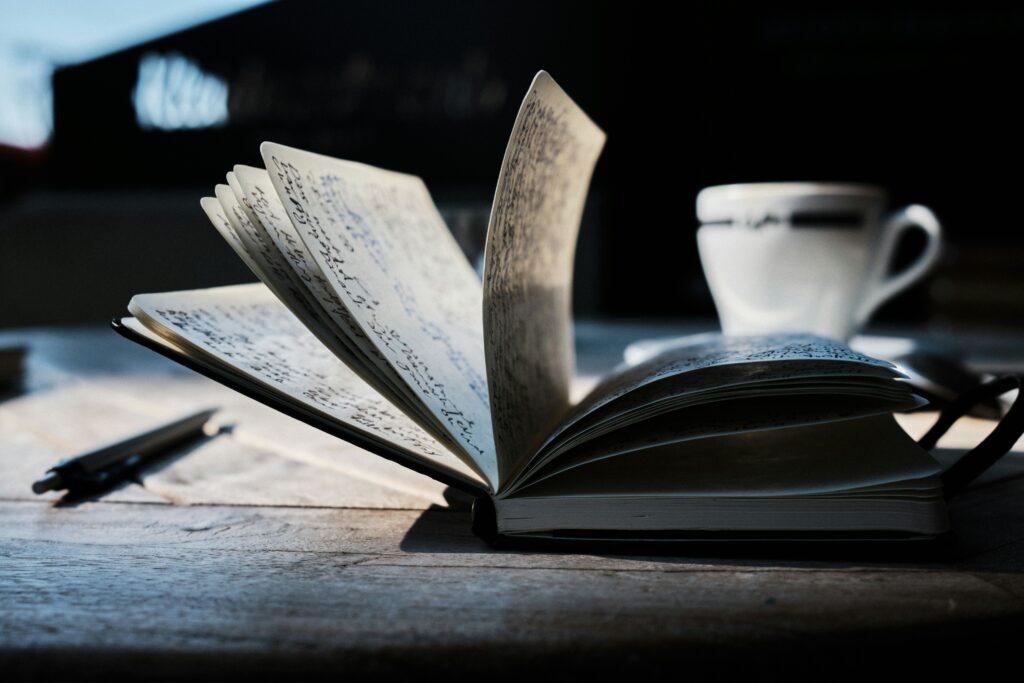
Since my teenage years, I’ve tried many coping mechanisms to help. Breathing exercises, calming music, meditation, and focusing on specific scents help lessen the stress. By using these techniques, my occasional anxiety subsides and helps “reset” my mental health. However, for the past two years, I’ve been able to improve my well-being even more by writing. With a journal and my favorite pen, I can write about anything, allowing myself to vent directly into the lined pages. This form of therapy has reduced the severity of my overthinking. It also aids in clearing my mind; I can think about where the anxiety is coming from before I commit to putting it to paper, leading me to find the source of my feelings faster.
Flashback to the turning point
Ever since I attended and graduated from both Seminole State College and the University of Central Florida, I began to overthink everything, and it nearly took over my life. Much like anxiety, overthinking is something that isn’t meant to be taken lightly, and it led to a somewhat disastrous impact on my physical health at one point. So one day, just like that, I decided that I needed to change my life and better myself.
That was when I purchased my first hardcover journal in 2023.
From then on, I’ve been writing everything into the pages; whether it’s good or bad, it goes along the lines. By putting pen to paper, I can truly express myself and say what’s on my mind without feeling judged. I don’t have an extra layer of stress from interacting with someone, and I’m not forced to deal with any awkward feelings or embarrassment by emotionally dumping everything on a therapist. For me, I don’t see myself having that kind of emotional vulnerability to someone that I could have potentially met twenty minutes ago.
With the journal, it’s one and done. Once I finish any ramblings or add something that may have been bothering me, I feel a significant weight lifted off my shoulders. From then on, I can essentially put the overthinking to bed. Regardless of what the subject matter is, I feel as though I never have to think about it again after writing, which I love. Like writing a shopping list so you don’t have to remember the list.
Not carrying the burden, but setting it down
While writing therapy may not be the best form of self-care for some, it has definitely worked for me, especially as I’ve gotten older. As I’ve become more experienced through school and more aware of the world, I’ve found that journaling is the best technique for me when it comes to keeping a consistent, positive mental attitude. While I choose to not let my anxiety control my life, I genuinely feel that I’m putting myself on the right path with this process.
Living in a world with constant stress, hiccups, and fears, I’m grateful to have an activity that’s all mine.
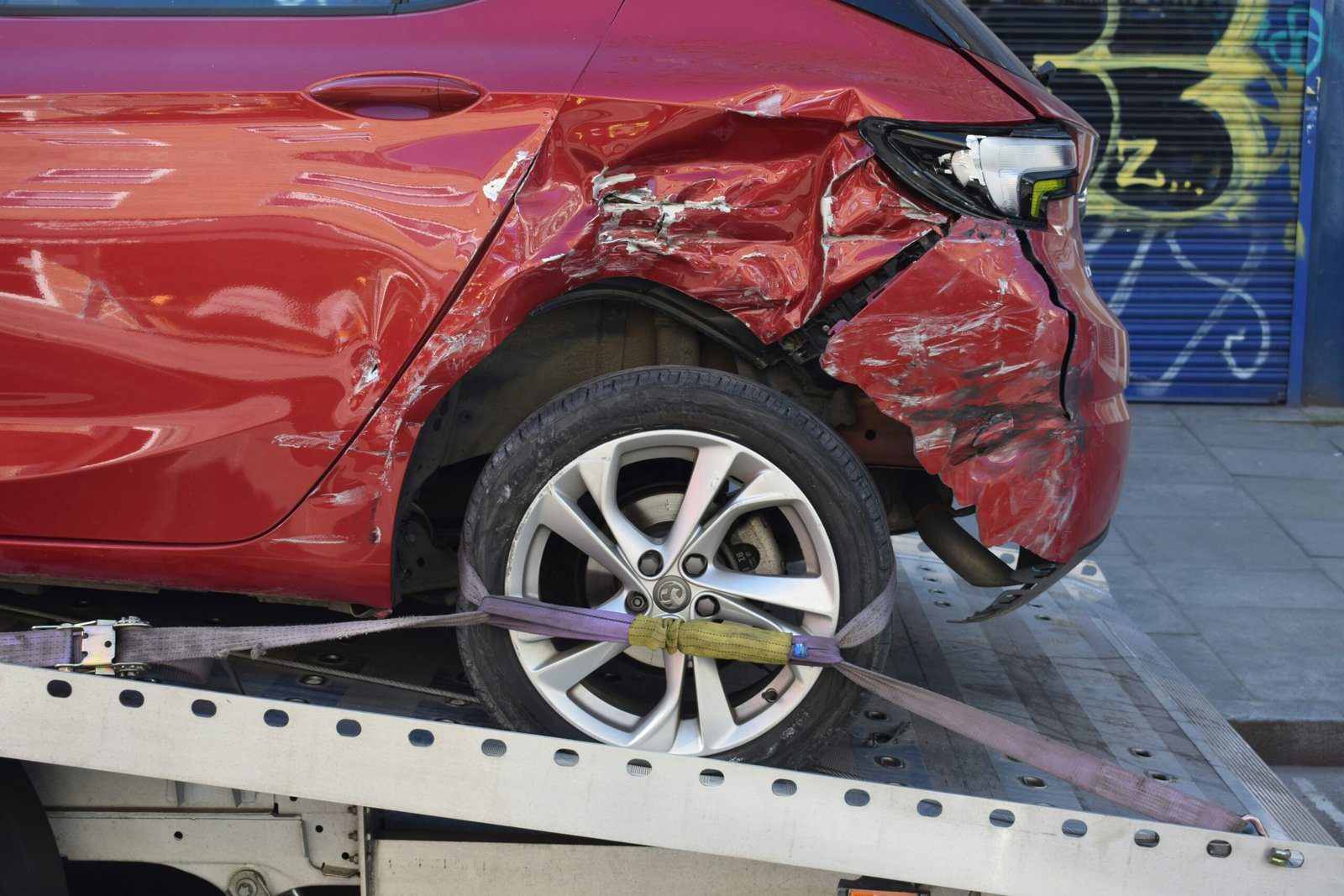
Ride-hailing services Uber and Bolt, once hailed as safer and more affordable alternatives to traditional taxis, are under mounting scrutiny in South Africa. Riders and drivers are increasingly reporting incidents of violence, hijackings, kidnappings, and assaults linked to the platforms have raised urgent questions about safety gaps, weak verification systems, and sluggish emergency response mechanisms.
The recent shooting, arson and execution-style murder of 27-year-old Siyanda Mthokozisi Mvelase in Soweto, is of the many cases that have drawn public attention and the reemergence of the on-going violence between e-hailing drivers and taxi owners in South Africa. In Johannesburg, drivers have been lured to remote locations by fake ride requests, only to be ambushed and hijacked. Riders, meanwhile, have reported kidnappings in which they were driven off-route and held until relatives or friends paid a ransom. Police confirm that such incidents, once sporadic, have become worryingly frequent. Whilst no verified stats on the number of e-hailing related hijacking, it is worth noting that between January and March 2025, SAPS recorded 4,533 car hijackings nationally, down from 5,338 in the same period in 2024. Gauteng saw 2,488 hijackings which is about 55% of all hijackings in the country.
Despite these threats, Uber and Bolt continue to market themselves as safe and convenient. Both companies have rolled out safety features, such as in-app emergency buttons, ride-sharing with trusted contacts, and driver identity verification. However, drivers and riders beg to differ, arguing that these measures have done little to close dangerous loopholes. Verification of drivers remains inconsistent, background checks are often cursory, and when users trigger the in-app emergency function, response times from security teams or law enforcement can be slow.
Drivers say they are increasingly vulnerable. “Drivers are screened but passengers are never screened… That’s how drivers get hijacked and beaten and some even get killed.” – said a Gauteng based Bolt driver, who has been working in the industry for the past two years. Many drivers operate late at night to maximize earnings, which exposes them to higher risk areas. Others complain that fare structures do not account for danger zones, forcing them into hotspots without adequate compensation or protection. In Cape Town, several drivers have begun refusing trips into informal settlements or poorly lit areas, a move that has left many commuters stranded.
The South African Police Service (SAPS) has acknowledged the surge in ride-hailing related crimes but insists that platforms must also take responsibility. “Law enforcement can only do so much. Companies have the data and technology to predict risks and alert us in real time. That isn’t happening.” Furthermore, Brigadier Athlenda Mathe, SAPS national spokesperson, said: “We have noted with concern the rising number of violent incidents targeting e-hailing drivers and passengers. SAPS is intensifying operations in known hotspots and working closely with stakeholders to ensure that perpetrators are apprehended and communities can feel safe using these services.”
Globally, Uber and Bolt have faced similar controversies. In London, Uber temporarily lost its license in 2019 due to safety failings, while Bolt has faced regulatory scrutiny in several European cities over passenger protection but in South Africa, where crime levels are already among the highest in the world, the risks are magnified. Both companies insist they are investing in safety. Uber South Africa says it has expanded partnerships with private security firms to ensure faster emergency responses, while Bolt has introduced a “driver selfie verification” system aimed at reducing account takeovers by criminals. Yet riders and drivers argue that these measures are piecemeal, leaving them exposed to daily threats.
Civil society organizations are now calling for tighter regulation of the industry. The South African National Taxi Council (Santaco), which has long clashed with ride-hailing platforms, argues that Uber and Bolt must be subjected to stricter licensing and safety compliance. Others have suggested creating a central registry of vetted drivers accessible to both police and users.
For now, however, fear persists on both sides of the ride-hailing equation. As one Durban-based driver put it: “We want to work, but every trip feels like a gamble with our lives.”
Until systemic gaps in safety are addressed, Uber and Bolt’s promise of safe, reliable transport in South Africa will remain under a dark cloud of mistrust.
About 15 years ago, I lived in a little corner of West London that played out like the Wild West of the city. If you say West London to most people from the UK, they think Mayfair, Harrods, and the King’s Road. The stereotype is one of opulence: Chelsea tractors — SUVs common in the wealthier parts of the city — flawless complexions, and foreign nationals with bottomless pockets, all examples of how the other half live.
This was not my experience of West London.
Oh, I had a place in Kensington. But it was Kensington in title only: pre-gentrified and somewhat forgotten, buzzing, humming, and possessing a discernible edge. It’s what Londoners call ‘lively’ and what others may call ‘seedy.’ At first, I couldn’t have been happier. It was a studio, but the idea of self-sufficiency, of living on my own, as someone barely past 19 years old grabbed me. It harkened back to what father once glowingly advertised as the colloquially-known ‘bedsit living,’ you could simultaneously shave whilst cooking your eggs in the morning.
But things changed at night, the street transforming as the sun went down. It was as if the shift in light was a cue for subterranean, darker, malevolent energies and presences to emerge. Night would be the setting, but the underlying note to it all would be a single, recurring sound. It would be heard again and again and again.
“Amigo, Amigo.”
This was not a noun; it was a name. Amigo was the big dog, the kingpin, the Capone, the Heisenberg. Amigo was no amigo, as I’d come to learn from a slow but steady grasp on my surroundings. From 9 p.m. ‘til 4 a.m. near every night, “Amigo” would be heard. A man’s voice, a woman’s voice, a delicate whisper, a powerful shout, desperate, friendly, elated, deflated, and always, always with a rattling knock on a ground-floor window. To my great discomfort, it soon came to my attention that I lived at number 12, and Amigo lived at number 10.
Between faded orange street lights offering a dirty glow for illumination, the sound of sex in the air come summer, and Amigo’s clientele, I’d chain-smoke Chesterfields by my flat window, feeling I’d found myself in a Tennessee Williams play, reenvisioned for 2010s London. I was naive and dumb enough to get a kick out of being in and among a risky environment. Clear and present danger was conceptualized as ‘reality.’ Yet reality bites.
One night, a woman in search of both ‘white’ and a gentleman named ‘Frank’ held down our front door buzzer until it was ringing the walls of the entire building. I figured I’d do the responsible thing of answering and telling this individual how this wasn’t okay. I told this person they would not find ‘white’ or a gentleman named ‘Frank’ here, and they needed to stop holding down our buzzer. For my troubles, two kitchen knives the length of my forearm were drawn on me. Miraculously, they weren’t used beyond threat, and after a thoroughly surreal conversation, the woman realized she was looking for next door. In the aftermath, the police provided no help beyond a phone call. The letting agent who’d introduced me to my current flat offered only a list of other rentals nearby. I decided after that night that I’d forgo chatting to Amigo about his customers…
I wanted London, I wanted reality — here I was.
Image courtesy of Andre Benz on Unsplash
The ruler of the land
Amigo, in truth, ran the street. Come nighttime, it felt like many of us were chorus figures, and Amigo’s clientele were the main characters. You see, on the other side of the street was a bed and breakfast, perfect for tourists just a walk from a tube station. These tourists were practically fodder for the local milieu. Time after time, they would be taken by deception. I had the perfect view from my window.
So often, tourists would stand outside, taking their own break from the harsh pounding rhythm of London. Some had just arrived, the loud friction of suitcase wheels on concrete announcing their arrival. Cigarettes as their choice of anesthetic, they’d sit on the little outdoor promenade of the hotel and be approached. ‘Just a tenner’ or ‘20 pounds,’ Amigo’s clients said, stating they’d be back in 10–15 minutes. But Amigo’s clients would never return, much like the money. So who was Amigo?
I saw him once, long, long after it was clear this was a person of whom to be wary, if not afraid.
He was all smiles — a wide deep smile pronouncing easy contentment. A light red tint to the afro hair on a diminutive, gaunt physique. For the man who an entire area was centered on and around, I saw no crime lord. His presence was more a curiosity than anything intimidating. Through a smile, the only words I heard out of an accent I couldn’t place were from the football shirt I was wearing: “Chelsea, Chelsea.”
Months in, Amigo’s supply and demand had evidently managed to develop quite the following. Unfortunately for Amigo, people want to see you doing well — they don’t want to see you doing better than them. The nightly regulars were consistent, the ground-floor window covered in bed sheeting and cardboard still had a steady flow of knocks, but that didn’t mean everyone was happy.
An empire crumbles
The first sign of trouble was the sound of glass shattering.
Alert and wide-eyed from the flurry I’d hear lying in my bed that night, I pondered whether things would change. And yet, business went on much the same. A police presence began to develop on a consistent basis — but never at night, mind you. Soon, the notorious ground-floor window barely maintained through cardboard and bedsheets was boarded up. The night it all went down, however, I wasn’t present. My partner at the time, living in the flat on the floor above mine, would witness it all: a train of ‘little bad men’ — all clad in black tracksuits and balaclavas — made a run on Amigo’s, with bottles, bats, poles, and blades in hand. Not long into the fray, two police vans tore onto the street. What followed was a line of the balaclava-clad gentlemen being cuffed and placed in those vans.
I presumptuously concluded that Amigo’s days were numbered. Police presence, arrests, and the looming threat of escalating violence should have brought an end to it all. The enterprise was seeing its last days, and perhaps the street on which I lived would become a safer place.
It was a spring evening, and I was puffing away on a cigarette in front of my building. An unmarked police car materialized in front of me. Before it stopped moving, an officer opened the door and stepped out. Their tone was urgent and unblinking.
Did I live next door?
I said no.
Had I seen anyone go in next door?
No again.
They’d placed a court order on the building; no one but residents could enter the premises.
Shortly, politely, they returned to the car, which vanished in the same inexplicable manner it had arrived. Adrenaline pumping from the exchange, I walked to the grocery store, realizing Amigo’s days were truly numbered. Returning only minutes later, plastic bags in hand, who stood outside number 10… but Amigo.
The signature smile was intact and the words left his lips:
“Did you see the police?”
A thick flurry of anxiety struck me. How did he know?
Nervously, I answered yes.
An easy, relaxed body language matched the wide smile.
“They are very nice people. They give me a flat in Victoria.”
Looking back, I have no idea why it took me so long to be diagnosed with OCD.
I know that Obsessive Compulsive Disorder is a common mental health condition affecting about 1.2% of the population in the UK. Symptoms can vary quite significantly in different people, but the main symptoms include obsessive thoughts — unwanted thoughts or images that regularly and insistently enter your mind and refuse to leave — and compulsive behaviors that must be performed repeatedly to counteract those same unwanted thoughts.
It’s one of the more well-known mental health conditions, and yet it was only a few years ago that I began to truly understand it, and realize that I had it myself.
The telltale signs of OCD
In my 31 years on this planet, I’ve picked up a few recurring habits that, in hindsight, were obviously symptoms of OCD. These primarily took the form of intrusive thoughts.
You’ll never be good enough to hold down a job.
You can’t make friends in your 30s.
You are going to run out of money.
You’d better not show up to social events.
Nothing particularly extreme, but enough that it would take a toll on my mental health.
Then, compulsive acts. For me, it was regularly checking my bank account and making sure the doors were locked at night. Again, not particularly unusual, but when you’re doing it multiple times in quick succession, it can start to get out of control.
The stigma surrounding OCD makes it easily misunderstood
The problem with OCD (and indeed with many mental health conditions) is that there’s a lot of unhelpful information I’ve read, so it can be hard to properly understand what it is.
For example, there are many people who believe that OCD just means that a person is tidy. While this is probably the case for a lot of people with OCD, it couldn’t be further from the truth in my case. I’m not a particularly tidy and organized person — I don’t fret about things being in their right place or in a certain order. This is a common misconception, and it’s one that I unconsciously believed for most of my life, but it’s the reason it took me so long to realize that my own habits were symptoms of a bigger problem.
Another issue is that OCD tends to be trivialized, both online and in the real world. I often hear people describing themselves as “a little bit OCD” when it comes to keeping tidy or organized, Most of the people joking about OCD aren’t doing it to deliberately trivialize it, but the constant jokes can make it seem like OCD is silly or exaggerated, and not a serious mental health issue that controls your life. When it sure does.
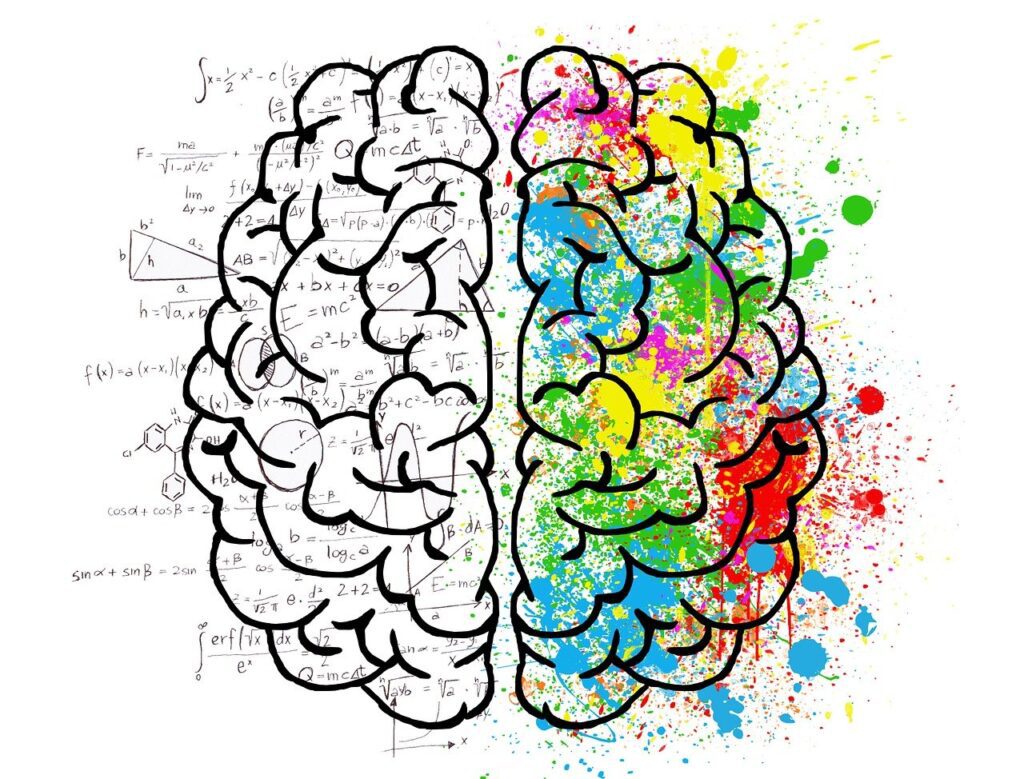
(Image courtesy of Elisa via Pixabay)
It was the diagnosis itself
The misunderstandings surrounding OCD meant that it was only in 2022 that I finally understood that these mental habits weren’t normal. By that point, what had been a few compulsive habits had snowballed into continuous intrusive thoughts that led to anxiety.
Figuring out that these thoughts were being caused by OCD and getting an official diagnosis from the doctor was a life-changing experience. Fully aware of the patterns of OCD, little by little I could now recognize and combat these intrusive thoughts instead of being dragged down by them. Since OCD has a way of making you feel like these worries are entirely legitimate, I found it important to reject them as soon as they come up. Don’t spend time deliberating — just immediately reject.
Things have definitely changed for the better since then. There were times before I was diagnosed when I was sometimes afraid to go to social events, because I was worried something bad would happen like I’d get sick or something like that. After being diagnosed, I was able to see that these thoughts aren’t real, rather the symptoms of an illness. As a result, I no longer feel controlled by anxiety when going out, which has improved my life a lot. It’s manageable now. I am more in charge and not getting sick if I go out. What I’m not saying here is that having a diagnosis didn’t make me completely better, immediately.
What I am saying is it helped me to cope with my reality. I finally had a label for these behaviors and intrusive thoughts that I hadn’t previously. When something finally gets a name, it’s suddenly a lot less powerful than before. We fear the unknown; when we learn what the unknown is, it’s not that scary anymore. The diagnosis is now known, and I know that there are treatment options available to me. I know I can mitigate some of the issues. That knowledge is freeing.
While it’s impossible to eliminate OCD, I’ve been able to say goodbye to a number of habits over the last few years. No more constant worrying about whether I’ve locked the doors, no more continuously checking my bank account for the slightest bit of movement. There will still sometimes be times when I’m drawn back into worrying, but by and large, I’m now able to manage these compulsions.
The stigma surrounding OCD is gradually diminishing, and more people are starting to become aware of the serious effects it can have on a person. Nevertheless, it can still be difficult to determine whether something is just a run-of-the-mill worry and when it’s more serious. My perspective: If a thought or compulsion is causing you anxiety, it’s always best to see a professional.
Getting an official diagnosis can be life-changing, and the first step towards knowing the reason behind, and treating, harmful habits. It was for me, anyway.
(Image courtesy of Washington Oliveira via Unsplash)
On a warm evening earlier this year, actors from Britain’s acclaimed National Youth Theatre joined forces with young refugees to present a new play, “The Flip Side”, in a small theatre on a busy North London road. The play showed both the weekend partying and the miserable weekday existence of young students and low-paid workers trying to get by in Britain today.
The performance was a rare chance to give voice to young refugees in Britain, who are at risk of becoming increasingly marginalised as political parties of left and right speak out against immigration. As The Flip Side was being performed, protests took place outside a hotel accommodating immigrants in Epping, east of London. Several similar protests took place in subsequent weeks, and the ruling Labour government is tightening immigration rules.
Overcoming this hostile climate, the refugee actors – members of arts charity Compass Collective – find joy in performing.
The Flip Side actor Shanzay Dilshad, 24, originally from Pakistan, had never acted before joining Compass in 2022.
“That was the first time where I felt like this is something I definitely want to do. I want to share the stage, I want to be on the stage,” Dilshad told Yuvoice in an interview.
Dilshad said she has performed her own poetry on stage and had even overcome stage phobia to do so, and that Compass gave her “a feeling of home”.
Compass Collective was formed in 2018, becoming a registered charity in 2021. “Our ultimate vision is that young people seeking sanctuary in the UK are welcomed, and that they are able to access provision and meaningful progression, in order to live fulfilling lives”, the Compass executive director Dorothy Hoskins told Yuvoice. Compass trustees include Harry Potter actor Toby Jones.
In addition to drama, music, film and writing programmes, which Hoskins said help build confidence and communication skills, Compass also provides online English classes for young refugees and asylum seekers aged from 14-26. It also has a professional development programme from which Dilshad, co-chair of Compass’s Youth Board, has benefited. Future Compass plans include a project at prestigious London drama school Guildhall.
When young refugees were facing protests outside their hotels on one particularly febrile day this summer, Compass offered online access to games and a safe space.
Dilshad said The Flip Side showed young people’s struggle. “People have that kind of stereotype about young people, their weekend life that they get to live instead of their actual life. Like ‘I’ve been doing this waitress job, but I hate it’.”
Frank Mukisa Nsubuga, fellow The Flip Side actor and co-Youth Board chair of Compass, first got involved with the group in 2019. Mukisa Nsubuga, 27, originally from Uganda, enjoyed online sessions with Compass during the pandemic:
“It used to help me a lot. It was like my therapy,” he told Yuvoice, adding that, coming into a Compass session, “you know that there are people who care”.
Through Compass, Mukisa Nsubuga discovered a love of improvisation. The Flip Side, written by Shireen Mula, built up much of its script from the daily lived experience of its actors. Mukisa Nsubuga’s life story showed that he was burning the candle at both ends, studying and working, with little time to sleep.
“You are kind of having a conversation about your life,” he said. “I didn’t know I have a long day…for the first time I realised I really have no time.” Mukisa Nsubuga said he would like to change the frantic way he lives, “but right now, I can’t”.
Felicia, You tell me that I shouldn’t worry, but that’s not your decision. Every time you text me, you’re distressed from work or family wars, You put yourself down even more, then assure me that you’re “fine.” So forgive me for wanting a clearer vision.
I can’t pretend it doesn’t hurt to see you so depleted. Every day, I wonder if there’s something more that I should do, To solder all this pain in you, but you dissuade my efforts. And so this endless cycle goes untreated.
You dress yourself in apathy like it’s the only thread that fits. A hundred other options would be kinder still in form and shape, But you wear caution like a cape and pull it tightly round you. You can’t defend yourself with smoke and tricks.
Anytime we plan to meet, you’re full of smiles and bubbles. I’m reminded of the younger girl who hoped and dreamed of joys, Who clawed and fought for stupid boys and cared deeply for animals. And I really think that soul is worth the trouble.
We dated once, an eon past, in schooldays of simple mirth; When hormones fused and wrested us, as deep a love as youth allowed. You have another boyfriend now who treats you like an afterthought, But you cannot believe that’s all you’re worth.
You ask me often how I would feel if you were to disappear. How is it that you can chuck about these words so easily? And threaten loss so breezily when I would be destroyed… To think that you had given in to fear.
Let me take this time to say I love you without discretion. Not romantically, our lives are dragging us on different paths, But a part of me is built to last on the foundations that we share. You are my family, always, without question.
So I will wait until the weather blows this raincloud blue. It’s futile fitting plasters on this formless mass your hurting takes, For I’m one man with no more stakes than any other Samaritan. But rest assured, I’ll never give up on you.