Looking back, I have no idea why it took me so long to be diagnosed with OCD.
I know that Obsessive Compulsive Disorder is a common mental health condition affecting about 1.2% of the population in the UK. Symptoms can vary quite significantly in different people, but the main symptoms include obsessive thoughts — unwanted thoughts or images that regularly and insistently enter your mind and refuse to leave — and compulsive behaviors that must be performed repeatedly to counteract those same unwanted thoughts.
It’s one of the more well-known mental health conditions, and yet it was only a few years ago that I began to truly understand it, and realize that I had it myself.
The telltale signs of OCD
In my 31 years on this planet, I’ve picked up a few recurring habits that, in hindsight, were obviously symptoms of OCD. These primarily took the form of intrusive thoughts.
You’ll never be good enough to hold down a job.
You can’t make friends in your 30s.
You are going to run out of money.
You’d better not show up to social events.
Nothing particularly extreme, but enough that it would take a toll on my mental health.
Then, compulsive acts. For me, it was regularly checking my bank account and making sure the doors were locked at night. Again, not particularly unusual, but when you’re doing it multiple times in quick succession, it can start to get out of control.
The stigma surrounding OCD makes it easily misunderstood
Subscribe to The Superhero Brief!
Free access to the CEO's newsletter.
The views expressed in this newsletter are those of the CEO and do not necessarily reflect the views of the organization.
The problem with OCD (and indeed with many mental health conditions) is that there’s a lot of unhelpful information I’ve read, so it can be hard to properly understand what it is.
For example, there are many people who believe that OCD just means that a person is tidy. While this is probably the case for a lot of people with OCD, it couldn’t be further from the truth in my case. I’m not a particularly tidy and organized person — I don’t fret about things being in their right place or in a certain order. This is a common misconception, and it’s one that I unconsciously believed for most of my life, but it’s the reason it took me so long to realize that my own habits were symptoms of a bigger problem.
Another issue is that OCD tends to be trivialized, both online and in the real world. I often hear people describing themselves as “a little bit OCD” when it comes to keeping tidy or organized, Most of the people joking about OCD aren’t doing it to deliberately trivialize it, but the constant jokes can make it seem like OCD is silly or exaggerated, and not a serious mental health issue that controls your life. When it sure does.
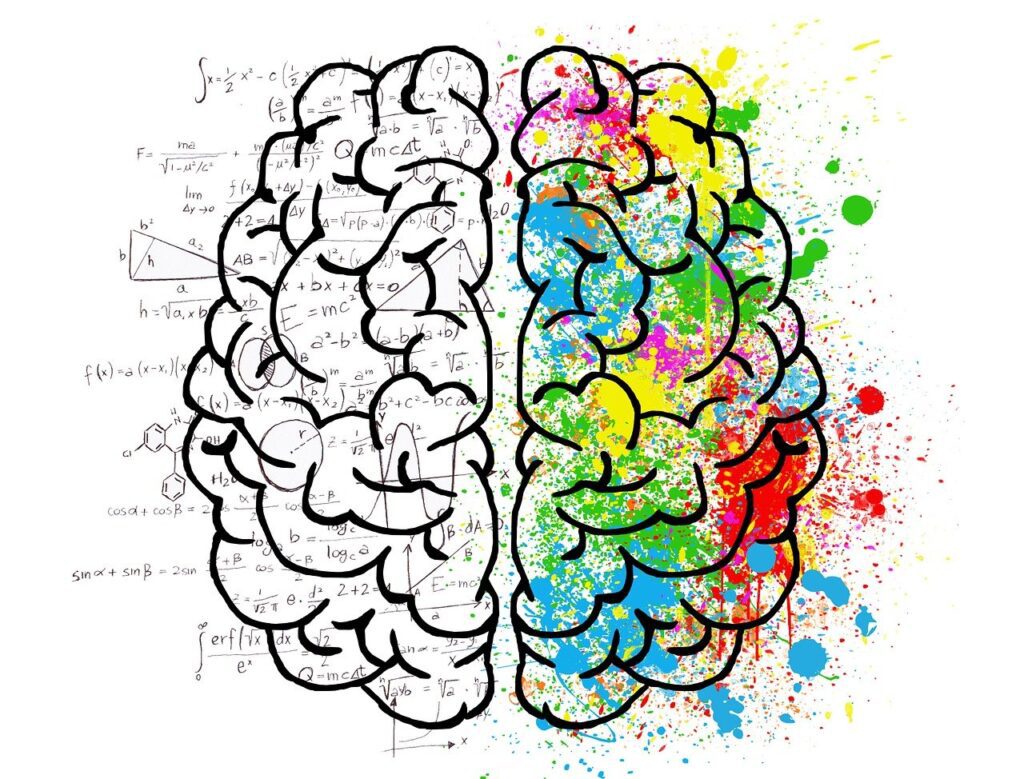
(Image courtesy of Elisa via Pixabay)
It was the diagnosis itself
The misunderstandings surrounding OCD meant that it was only in 2022 that I finally understood that these mental habits weren’t normal. By that point, what had been a few compulsive habits had snowballed into continuous intrusive thoughts that led to anxiety.
Figuring out that these thoughts were being caused by OCD and getting an official diagnosis from the doctor was a life-changing experience. Fully aware of the patterns of OCD, little by little I could now recognize and combat these intrusive thoughts instead of being dragged down by them. Since OCD has a way of making you feel like these worries are entirely legitimate, I found it important to reject them as soon as they come up. Don’t spend time deliberating — just immediately reject.
Things have definitely changed for the better since then. There were times before I was diagnosed when I was sometimes afraid to go to social events, because I was worried something bad would happen like I’d get sick or something like that. After being diagnosed, I was able to see that these thoughts aren’t real, rather the symptoms of an illness. As a result, I no longer feel controlled by anxiety when going out, which has improved my life a lot. It’s manageable now. I am more in charge and not getting sick if I go out. What I’m not saying here is that having a diagnosis didn’t make me completely better, immediately.
What I am saying is it helped me to cope with my reality. I finally had a label for these behaviors and intrusive thoughts that I hadn’t previously. When something finally gets a name, it’s suddenly a lot less powerful than before. We fear the unknown; when we learn what the unknown is, it’s not that scary anymore. The diagnosis is now known, and I know that there are treatment options available to me. I know I can mitigate some of the issues. That knowledge is freeing.
While it’s impossible to eliminate OCD, I’ve been able to say goodbye to a number of habits over the last few years. No more constant worrying about whether I’ve locked the doors, no more continuously checking my bank account for the slightest bit of movement. There will still sometimes be times when I’m drawn back into worrying, but by and large, I’m now able to manage these compulsions.
The stigma surrounding OCD is gradually diminishing, and more people are starting to become aware of the serious effects it can have on a person. Nevertheless, it can still be difficult to determine whether something is just a run-of-the-mill worry and when it’s more serious. My perspective: If a thought or compulsion is causing you anxiety, it’s always best to see a professional.
Getting an official diagnosis can be life-changing, and the first step towards knowing the reason behind, and treating, harmful habits. It was for me, anyway.
(Image courtesy of Washington Oliveira via Unsplash)
Matthew Austin has been passionate about writing since joining the high school newspaper all the way back in 2009. He has a bachelor’s degree in Journalism and a Master’s degree in Magazine Journalism, and has worked as a freelance copywriter since 2021. When not writing, you can usually find him at the local cinema, watching the latest horror and action movies.
Thank you to Yosef Baskin and Jessica Day for their inspired edits on the piece.





Comments
Be the first to share your thoughts!
We value diverse perspectives and respectful debate.