On a warm evening earlier this year, actors from Britain’s acclaimed National Youth Theatre joined forces with young refugees to present a new play, “The Flip Side”, in a small theatre on a busy North London road. The play showed both the weekend partying and the miserable weekday existence of young students and low-paid workers trying to get by in Britain today.
The performance was a rare chance to give voice to young refugees in Britain, who are at risk of becoming increasingly marginalised as political parties of left and right speak out against immigration. As The Flip Side was being performed, protests took place outside a hotel accommodating immigrants in Epping, east of London. Several similar protests took place in subsequent weeks, and the ruling Labour government is tightening immigration rules.
Overcoming this hostile climate, the refugee actors – members of arts charity Compass Collective – find joy in performing.
The Flip Side actor Shanzay Dilshad, 24, originally from Pakistan, had never acted before joining Compass in 2022.
“That was the first time where I felt like this is something I definitely want to do. I want to share the stage, I want to be on the stage,” Dilshad told Yuvoice in an interview.
Dilshad said she has performed her own poetry on stage and had even overcome stage phobia to do so, and that Compass gave her “a feeling of home”.
Compass Collective was formed in 2018, becoming a registered charity in 2021. “Our ultimate vision is that young people seeking sanctuary in the UK are welcomed, and that they are able to access provision and meaningful progression, in order to live fulfilling lives”, the Compass executive director Dorothy Hoskins told Yuvoice. Compass trustees include Harry Potter actor Toby Jones.
In addition to drama, music, film and writing programmes, which Hoskins said help build confidence and communication skills, Compass also provides online English classes for young refugees and asylum seekers aged from 14-26. It also has a professional development programme from which Dilshad, co-chair of Compass’s Youth Board, has benefited. Future Compass plans include a project at prestigious London drama school Guildhall.
When young refugees were facing protests outside their hotels on one particularly febrile day this summer, Compass offered online access to games and a safe space.
Dilshad said The Flip Side showed young people’s struggle. “People have that kind of stereotype about young people, their weekend life that they get to live instead of their actual life. Like ‘I’ve been doing this waitress job, but I hate it’.”
Frank Mukisa Nsubuga, fellow The Flip Side actor and co-Youth Board chair of Compass, first got involved with the group in 2019. Mukisa Nsubuga, 27, originally from Uganda, enjoyed online sessions with Compass during the pandemic:
“It used to help me a lot. It was like my therapy,” he told Yuvoice, adding that, coming into a Compass session, “you know that there are people who care”.
Through Compass, Mukisa Nsubuga discovered a love of improvisation. The Flip Side, written by Shireen Mula, built up much of its script from the daily lived experience of its actors. Mukisa Nsubuga’s life story showed that he was burning the candle at both ends, studying and working, with little time to sleep.
“You are kind of having a conversation about your life,” he said. “I didn’t know I have a long day…for the first time I realised I really have no time.” Mukisa Nsubuga said he would like to change the frantic way he lives, “but right now, I can’t”.
“…as a journalist, when I migrated, I started to face a lot of issues to find one opportunity. And I really wanted to tell these stories…I didn’t find places that wanted to publish [them],” Juliana da Penha admits.
An experienced immigrant, da Penha personally understands the challenges faced by migrant women. Native to Brazil, she has also lived in Portugal, Italy, and Cape Verde before settling in her current home in Scotland. But it was not just the challenges of migration that confronted her. The stories told by the press about migrants, especially women, were also alarming. As da Penha built a life away from her homeland, she began to realize the media did not always portray migrants in an accurate light, often describing them according to untrue stereotypes.
A seasoned migrant with a passion for storytelling
Having worked with an employability project for migrant women, da Penha witnessed firsthand the discrimination talented migrant women with much to offer experienced due to immigration policies and racism. She determined that if no one else would, she would tell their stories. Thus, an idea began forming, one that would blossom into Migrant Women Press, officially launching in 2020. A trained journalist, da Penha used her skills to create an online space for the stories of migrant women to be shared and centered.
Research has shown that the mainstream European media has frequently referenced migration as a “crisis,” framed migrants as either vulnerable or dangerous, rarely offered context for the circumstances of migration, and scarcely provided opportunities for migrants to speak for themselves. In the British media, journalists themselves play a pivotal role in framing public discussion on migration. To that end, Migrant Women Press serves as an influential force disrupting journalistic practices that perpetuate xenophobic, dehumanizing stereotypes.
Letting migrant women glow front and center
Unlike most other news outlets, Migrant Women Press and its content are led and created exclusively by migrant women. Da Penha explains, “…in the UK, for example, we have 94% of the journalism workforce made up of white people, and then we are bringing diverse voices.” In a field dominated by white majority influence, Migrant Women Press offers a fresh perspective to media discourse about migrants. “We are humanizing the discussions about migration. We are not just speaking about numbers, about crisis, we are speaking about people.”
Overall, more than 20 different countries are represented through the publication’s international contributors, fostering a connected global community.
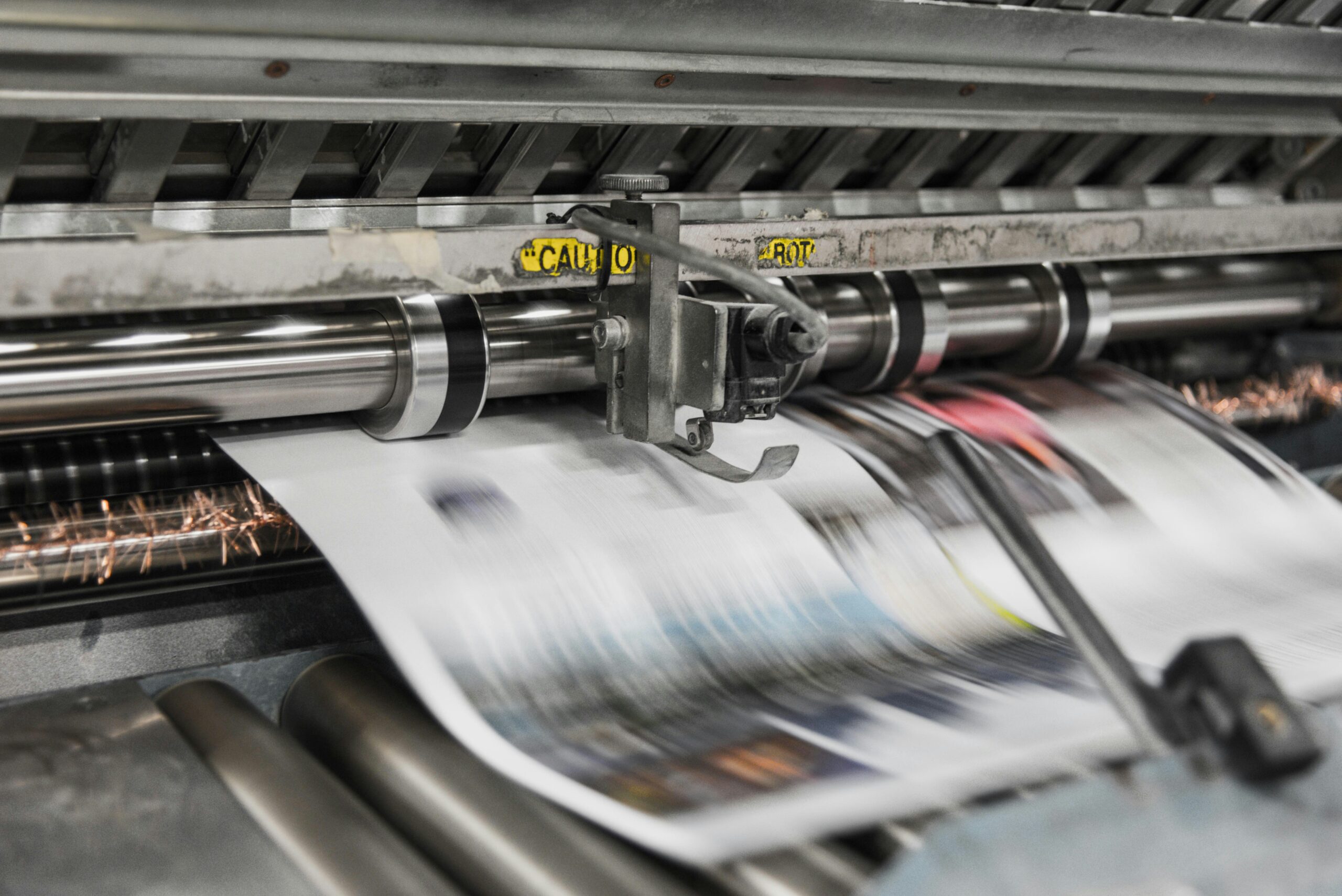
(Image courtesy of Unseen Studio via Unsplash)
Establishing a groundbreaking initiative like this, of course, comes with its challenges. For da Penha, the most difficult ones to overcome were the personal ones. “The barriers were internal barriers, mental barriers,” she reflects. Coping with insecurities regarding being out of the industry for many years and language competency was difficult. Rejecting this mindset and choosing to begin helped da Penha move forward with Migrant Women Press. “It doesn’t need to be perfect. It’s from my heart.”
Migrant Women Press is not a solitary effort. Da Penha works with a team of volunteer writers, editors, journalists, and media specialists from different backgrounds scattered across several countries. Together, they develop content and help shape the direction of Migrant Women Press, drawing on their diverse pool of knowledge and experience.
As a volunteer-led, independent media organization, no two days are alike. “Things change all the time, working with media,” da Penha reports. Despite the dynamic nature of working in the press, regular editorial meetings keep Migrant Women Press running as her team plans its next steps, week-to-week.
Moved by the migrant voices they amplify
For da Penha, the most rewarding part of doing this work is the migrant women she meets. She shares passionately about the experience of working with women, “doing amazing things, speaking with them, listening to their amazing projects, about their dreams, about their potentials, about how they wanted to contribute to making this work better.” Da Penha also emphasizes the importance of offering a space for the stories of migrant women to be told, so they are not lost.
Migrant Women Press has profoundly contributed to diversifying narratives about migrant women by empowering women affected by immigration and displacement to tell their stories, thus challenging stereotypes perpetuated by mainstream media. It has aided in introducing more perspectives to the public discourse. As da Penha notes, “I think it’s positive that we are not having one single side of the story.” She is currently a finalist for the Georgina Henry Women in Journalism Award.
Despite all that Migrant Women Press has accomplished, da Penha has no plans to slow down. Looking towards the future of Migrant Women Press, she hopes to do more investigative work to further influence media discussions around migration, help migrant women develop their media skills, and continue to bring diverse voices to the press. “This is our vision,” she shares.
I am Nargiz Mammadzada, a young woman who moved from Azerbaijan to Poland at the age of 23 during the COVID pandemic’s most frightening period.
I left my family, friends and loved ones behind. In short, my whole life.
Almost two years ago, in April, I started my life from scratch. As difficult as it was, I am just as happy and proud that I did it, mainly because I did it alone.
But why did I do this? What is my story? For this, I will have to take you to the 2000s.
When I was a young child, even before I was in school, I watched TV shows for kids. In one of these shows, two people showed different cities, countries and continents to children by traveling to them. I watched with such admiration that I vividly remember sitting closer to the TV each time and watching with a big smile on my face. And then, when I was just four or five years old, I made a huge decision: I would travel the world, choose all the countries I want to see, and live in each of them for a while.
As I grew older, I did not forget this resolution. I always reminded myself and told my family about my dream. I admired the Eiffel Tower so much that my friends and family always bought me Eiffel Tower accessories. I still admire the Eiffel Tower, but unfortunately, I have not yet had the opportunity to travel to Paris.
Then I started school, and of course, one of my favorite subjects was geography. I have read and researched so much that I have already visited numerous destinations in my dreams, where I have seen different countries and met new people. I scoured encyclopedias about different cultures to prepare myself for my great journey one day.
However, the turning point in my life took place when I was just 13 years old, when I decided to study in another country.
Naturally, the thought of living in another country has always excited me. In my opinion, being born in one country does not mean we have to live in that country for the rest of our lives. Our world, as a whole, is our big home—every inch of it, not just one country. But many other factors led me to make this decision. I was not comfortable with the society in which I lived in and its standards, and I did not feel relevant or that I fit in. One of the driving factors in my decision was that the standard of living was not as high as I wanted it to be.
From early adolescence onwards, I started working harder to build my future the way I wanted it. At first, no one, including my family, believed me because they thought the decision I made in childhood would change. But little did they know that I had remained on that path since that day.
I graduated as an “Honorary Graduate” and pursued a bachelor’s degree. From the very beginning, I planned to study for a master’s degree in another country because I wanted to get my degree, gain some experience by working a little, and take this big step after I had become more confident.
Fortifying my dream while at uni
By the time I was an undergraduate, I had already started to develop my English skills. Learning this language to perfection was one of my biggest goals. I read many articles about different countries and universities. I never stopped researching, I never stopped dreaming, and most importantly, I never lost my passion and desire.
Seeing this determination, my family did their best to support me and help me grow as a more educated young woman. They were the ones who encouraged me to do more research and learn more languages. My peers and colleagues often criticized me and tried to dissuade me from my chosen path because not only was I the only daughter of my family, I was also the only child.
Whenever this happened, whenever people did not understand me and judged me, I always had the same response ready: “No matter what, we are given only one chance to live our lives, and when I will look back in the future, I do not want to start my words with ‘I wish I had done things differently.’ I do not want to regret the life I could not live or blame anyone for that.”
And I would also proudly add: “I am not the only one who thinks so; my mother always tells me that, too. She is my biggest supporter.”
My mom always says, “If you want this so badly, I cannot stop you. It is your right to go and live your life the way you want. In the future, I do not want to be the reason you regret that you did not do it, and I do not want to be the one who got in your way.”
For me, these were the words of a parent who treated their child as an individual, not as a dependent person. Nothing could stop me from following my thoughts and dreams, but of course, the support of my family meant a lot to me.
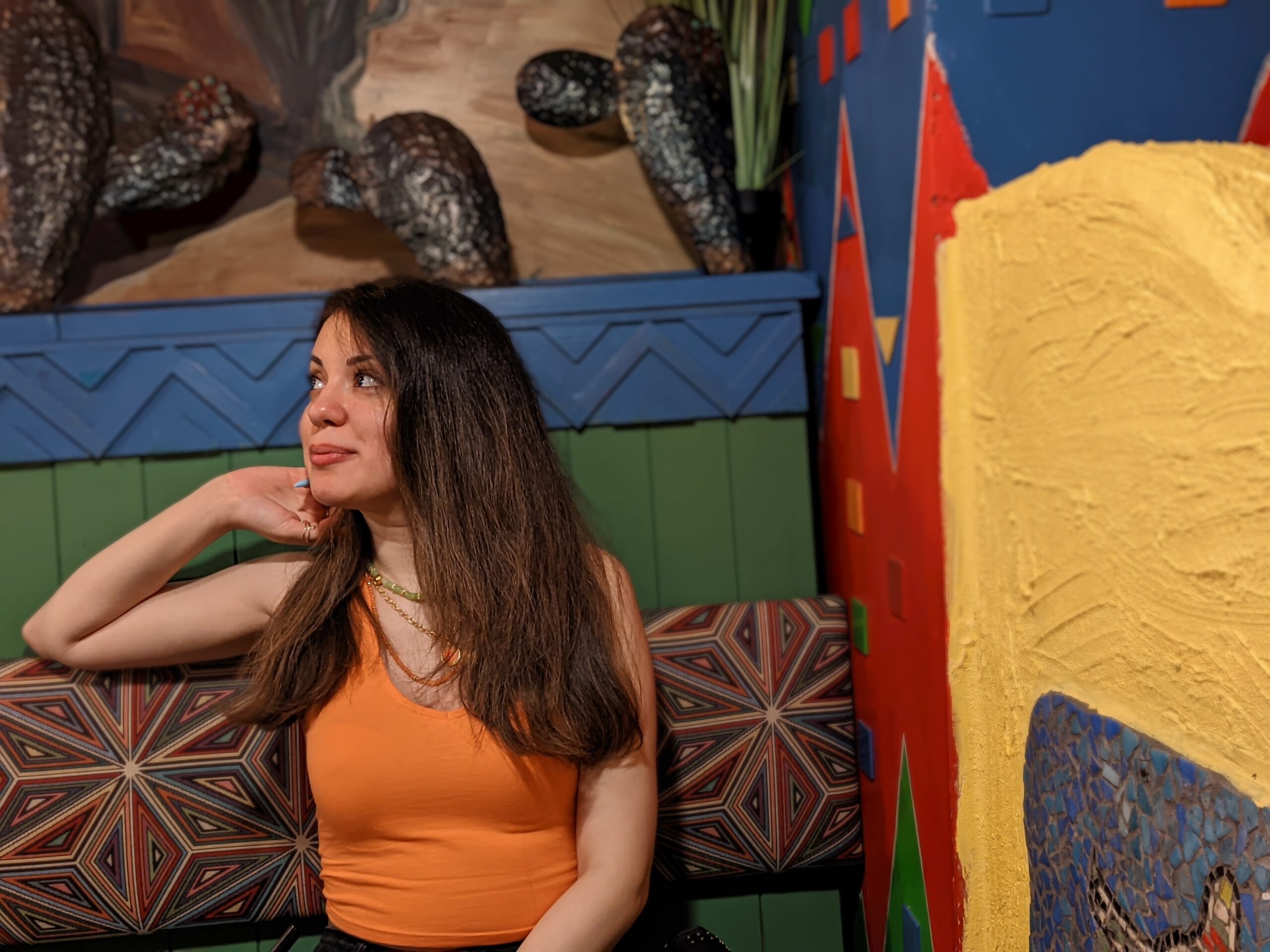
(Image courtesy of Nargiz Mammadzada)
I didn’t let rejection clip my wings
This hasn’t been easy. First, I applied to universities to study in Italy, which was my dream, and I got accepted to five of the world’s top-ranked universities. However, the joy of admission was overshadowed by the rejection of my visa application. Suddenly, my dream of studying in Italy ended before it began.
But this cloud had a silver lining.
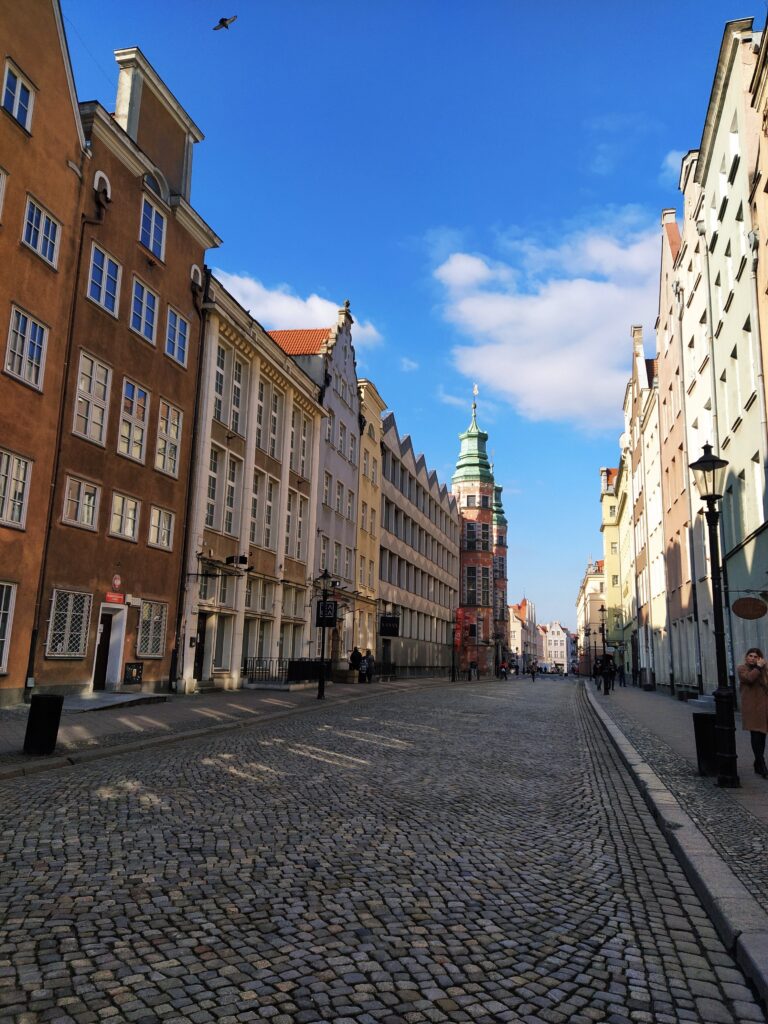
In 2021, I moved to one of the most beautiful cities in Poland, Gdansk, where I started my master’s degree. Shortly after moving, I began working alongside my studies. It was very important for me to be a strong and independent young woman, so standing on my own two feet without needing anyone’s financial support was my main goal.
I overcame culture shock and loneliness to love my adopted city
Of course, the difficulties I experienced in the process of adapting, the culture shock, and the struggle I waged within myself due to being far away from all my loved ones were difficult at first.
At the start, I felt so alone. It was the very first time in my life that I had come so far away from the place where I had lived my whole life. In this country, where I did not even know the language, even doing grocery shopping was a very difficult task for me.
There have been many moments when I have asked myself, “What am I doing here? I want to go back to my country, to my family!” However, despite my initial reservations, I always managed to pick myself up and continue from where I left off.
I didn’t even know how to maintain a healthy relationship with my family and friends on my own, but I am grateful to them that, during these two years, they never once made me feel that I was far away. Hours of phone and video calls with family and friends were sometimes the only things I looked forward to during the day. When I had a problem or when I was looking for someone to share my experiences with, or just to talk to, they were there for me. My phone is full of photos and videos my friends have sent me in the last two years. There was nothing they would not do just to put a smile on my face. And I am so grateful for them and will always be. The first time I had to spend my birthday far away and without anyone, they were once again there for me.
I have to say that since I moved during the height of the COVID pandemic, it was not easy to socialize and make new friends. This, of course, made the situation even more difficult. It was only after the restrictions were lifted did I have the opportunity to meet new people.
But over time, Gdansk started to become my second hometown. Now I can say with all my heart that, in the future, even when I will live in another city or another country, I will remember this city as my second home. It’s where I spent the best years of my youth, a city where I built my independent life with more confidence, and it will always be difficult to do justice to its importance to me with mere words.
I was born in eastern France near the German border, into a large family of modest origin, all raised by a single mother working as a cleaning lady. We are Algerian, Berber and Muslim, and have been educated in this double French-Algerian culture, which was so unique because of its history.
Despite a socially-valued job, my day-to-day life was sorely lacking in meaning. I was no longer interested in it. I had achieved a dream and I was aware of it and grateful for it, but boredom was getting to me more and more. I kept asking myself: what would the next step in my life be? What new chapter could I write?
Following my dismissal and a romantic breakup, I had the opportunity to travel for a few months, which allowed me to think about what I really wanted to do.
Back in Paris, I tried to apply for jobs, but to no avail. I was mostly turned down or didn’t get any response. The frustrating thing about France is that you never know if the rejections or lack of a response is due to you, your profile not matching the criteria, mistakes in your application, the availability of another more suitable candidate, or due to the discrimination faced by non-white people.
According to a 2021 study conducted by DARES (i.e. Research, Studies and Statistics Institute – “Direction de l’Animation, de la Recherche, des Études et Statistiques”): “On average, for comparable quality, applications whose identity suggests a North African origin are 31.5% less likely to be contacted by recruiters than those with a first and last name of French origin.”
Frustrated and losing confidence because of these rejections and the lack of responses, I continued my applications to resume my studies. I was convinced that this would give me an extra asset to distinguish my profile and get a job.
After many ups and downs, I got an offer from a prestigious American university, UC Berkeley. However, I couldn’t accept it because I couldn’t afford the tuition fees and cost of living in the San Francisco region, which was crazy expensive, nor did I have solid guarantees to apply for a loan. But looking back, I think that deep down, I didn’t want to do it then. I wasn’t ready. I had more personal things to accomplish, other adventures to live, and all things considered, I told myself that I would probably do it later. I decided not to because I preferred to defer the pursuit of my studies for when I will be ready personally and financially.
“To my great surprise, although I no longer expected it (…) I was randomly selected to apply for a visa to Canada.”
When I was no longer expecting it and had resigned myself to continuing my fruitless search for a job I wouldn’t like, I was drawn to apply for a visa to Canada.
Hope surfaced again when I saw a goal ahead of me. It was as if an angel was guiding me towards another path, my path, the one on which I would finally find myself and experience fulfillment.
I was deeply happy to move towards a purpose, to have a new challenge, to seek and renew myself elsewhere, despite the many worries about the distance from my friends, the precariousness of my situation, and the uncertainty of such a project.
What was I looking for in Canada? What would I find there? Would I find anything? Would I be happy? I asked myself countless questions, but those questions didn’t stop me from smiling broadly when I talked about it.
The application process went well as there are tutorials for french applicants. As French citizens, we have a specific advantage: the working holiday visa is a two-year visa, unlike for other Europeans.
I wanted to live in a North American and English speaking environment, and Canada was a good compromise between European and North American cultures. I heard that Canada was a more open society in terms of gender and identity, unlike France, which follows a logic of assimilation.
“Despite the odds, all these people continue to move forward, to dream, to dare, to live.”
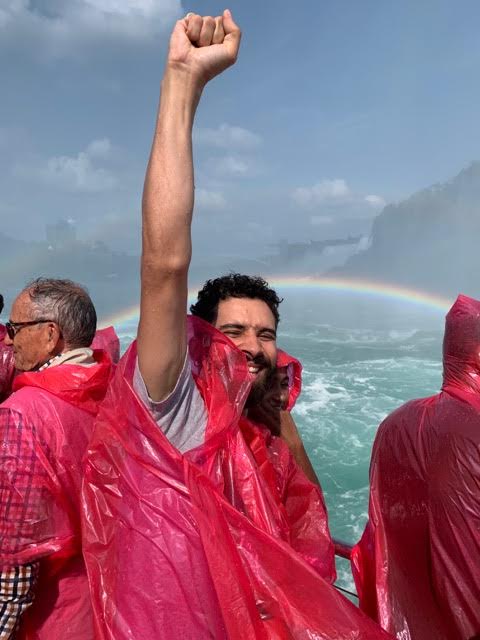
(Image courtesy of Malik)
A few months later, I arrived in Canada. Everything is different here; the buildings, the people, the language, even the air I breathe. I feel full of energy, overflowing with enthusiasm, surfing on a wave that brings a radical change to my person. The excitement is immense, I want to try many things, to meet people, to experiment, to enjoy life even more. I have real curiosity that needs to be quenched.
However, I must admit that the pressure is strong. The imperative to find a job and a place to live in order to integrate quickly and to be autonomous is not easy when you arrive in a new country where you don’t know anyone and where you haven’t yet mastered the culture.
I was in Toronto for two months, planning to move to Montreal in the future, and I felt that it was very hard to connect with people here. I noticed that everyone seemed to be in their bubble and I noticed the lack of interaction between people.
Toronto is a career-driven city where people seem to pursue personal goals whatever they are without connecting with others, which is really different from Paris and France in general, where things are going on in the streets and where people interact with each other. Although even that seems to be mostly arguments! The most I could get from others was small talk without learning their opinions and perspectives on things, whereas French people have an opinion on everything which I admit can be exhausting sometimes.
The thing I love here is the openness of people and that they care about mental health. They won’t judge you based on your identity or your appearance which is very freeing. The work culture is different and seems to care about people’s well-being, or at least more than in France.
Then I met a group of French people who also recently immigrated along with others who have been in my adopted country for longer. Many of the stories I have collected are inspiring.
Some of them made a real impression on me, like the account of a 30-year-old young man who was selected to immigrate here last spring and had left everything, even sold his house, in order to come and live in Canada. He told me about his dream of becoming a pilot, which was simply born after taking an airplane flight course that his relatives had given him for his birthday. Today, he is going to Alberta to work at a ski resort for a while and wants to train to soar in his chosen field.
Then, there are two girls who left Montreal to move to Toronto to pursue their Canadian dream and improve their English. I also met a girl from Liège in Belgium who came to be a teacher in Canada and had to change her plans because of the pandemic. She is now an au pair and seems happy.
As I continue to live in Canada and explore more, I aim to discover more about myself and who I want to be, and this doesn’t go without the career pursuit which will come later. I will also keep in contact with the people I meet. As I am moving to Montreal soon and will be meeting a lot of other immigrants and locals, I will nurture and inspire myself with their stories to create mine. In the meantime, even if I do connect with others, I want to write my own story and I need to reflect on all of that to pursue my quest of self accomplishment.
It is all these stories of immigration experiences that are different from mine, and which may seem more classic, that sustain my hope. Behind each person is a story. Despite the odds, all these people continue to move forward, to dream, to dare, to live. They have a thirst for life and experiences that make me say to myself that everything will be fine, and that despite the setbacks, I will land on my feet. Because of them, I now feel that I don’t need to stress myself out trying to achieve an ideal immigration experience, or accomplish a specific ambition, but that I can just live this new adventure more humbly and simply.
I’d like to conclude by sharing that I wrote a list of 30 things to do before and during the year of my 30th birthday, when I had written that I wished to live abroad and especially in North America. I don’t know if it’s a manifestation or a twist of fate, but I think I’m about to realize a dream!