Campfire Stories: Kindling for Enduring Friendships

Under the clear night sky with countless stars, the campfire crackled with joy and elation at the camp. It brought our now-getting-cold evening retreat back to life on the riverbanks of the Lelesan near Eldoret, Kenya. 

The images of that night still flash vividly in my mind. It was those moments when you feel like time should stop for a while so that you can enjoy every tick without it moving. I had just turned 23 then and had just finished school. I was filled with the spirit of adventure, and this triggered an urge that would later lead to the best camping moment of my life. 

Sharing the spirit with me were my two buddies, Tony and Joshua. Having a common goal, that is to go camping somewhere far away from the monotonous home environment, we embarked on a journey that would later lead us to Lelesan Park. The park is a very beautiful spot that is really nice for decompressing and reconnecting with nature with a stunningly gorgeous popular cliffside lodge overlooking the Kenyan landscape.

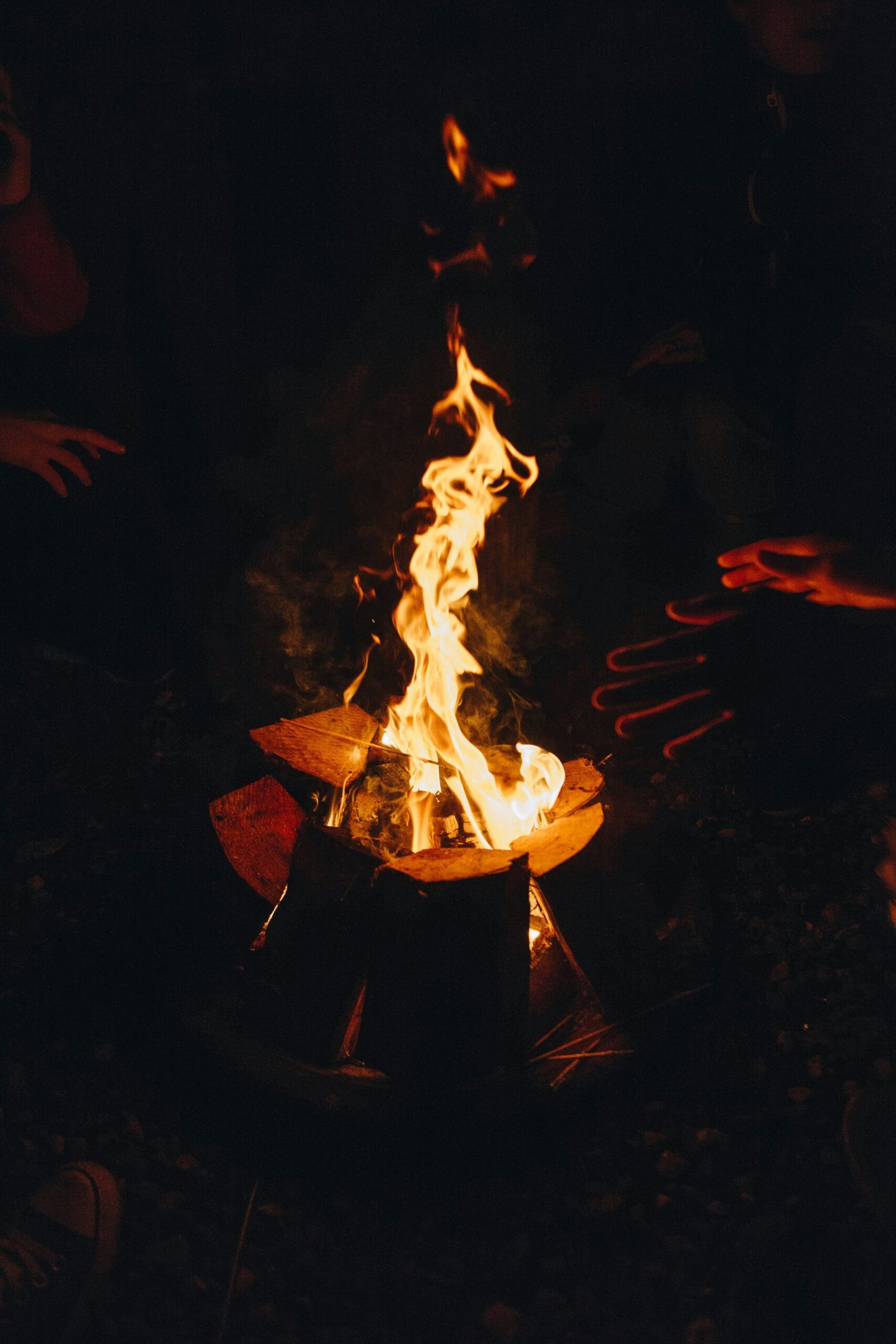
We gathered around the fire after a long day of swimming and fishing in the river. Our hands extended towards the fire, palms out and fingers stretched, as if we were pushing the fire away. Of course, in reality, it was a technique to help our bodies conduct the heat very fast, which was sorely needed as the temperature had quickly dropped as the sun fell.

At the same time, Tony was busy roasting the fish we had caught during the day. Several other people joined us, strangers and friends alike. At this point, one of the campers broke the silence. He suggested we introduce ourselves, now that everyone was at ease with each other and getting along. The invisible bonds among us seemed to be strengthening so quickly that we had reached a point of storytelling without even noticing.

Joshua was the first to go. He cleared his voice dramatically in a bid to capture our attention. “Alright, everyone, gather around. I’ve got a story that will send a cold shiver down your spine.” 

On hearing this, Tony began to complain, “Really, man? I’d rather not ruin the night with your scary stories.”

Joshua was known as the friend who loved watching horror movies and enjoyed every minute of the terror. This was something that Tony and I found very fascinating, as we could not even stand a scene of a horror movie. Despite our hesitance, the majority of the group was fine with whatever chaos Joshua could come up with, so Joshua was free to begin.

Joshua leaned forward, his face struck by the flickering flames. “It was a night much like this one back in my village. There was a funeral taking place, and so, as the culture and tradition dictate, the members of the village and friends always came to have a night vigil. It’s basically to keep the bereaved company as they awaited burying their kin the following day. Now, midnight came, and everything was moving on just normally until immediately before dawn…

“Then, a scream was heard from one of the corners of the compound. It was so sharp that it superseded the noises that came from chatting and dancing, as it is a tradition to give the deceased a ‘last dance.’ Everybody went dumb, staring at the direction of the scream. It was a bush walking towards where the crowd had gathered. Everyone stood to their feet and froze for a minute…

“What happened next would remain a story that would always be said to question the courage of the members of the community. Everybody scrambled to hide so as not to be caught by this mysterious walking bush. They said that that was the spirit of the deceased that was not happy with how his last moments were being celebrated.” Joshua ended this story, leaving us asking many questions that he said he could not answer. 

Indeed, it was a scary story because in its wake, no one wanted to listen to any other story of the sort for the rest of the night. 

“You guys remember back in high school when we broke into the school farm to steal melons?” Tony started drawing us away from the previous scary story of a walking bush. “I remember Joshua was the first to shift the blame after we were caught by the security guards. He was so terrified to a point he was almost pissing in his pants.” 

This did not seem to sit well with Joshua. While I cannot remember word-for-word what he said exactly, the story he decided to bite Tony back with was so brutal that Tony decided to leave the campfire. Joshua reminded him of when, during a school event, we decided to mingle with other students after the function was over, especially those from girls’ schools. Joshua thought he could win over one of the girls who seemed to have captured every boy’s attention, but when he approached her, it was as if the girl had planned to single him out and snub him. The humiliation that came with the action made Joshua swear never to approach any girl again.

Despite Tony’s abrupt departure, the banter went on. Each of us piling on, embellishing the story with details that may or may not have happened. That’s how campfire stories work — half truth, half legend, all heart. Other memories unraveling and coming back to life. The nostalgia felt like the moments happened yesterday and not years back. The rest of the night faded into more stories, pranks, and memories that felt like they belonged in a movie. 

An image of a campsite surrounded by trees, with the stars shining above.
(Image courtesy of Jonathan Forage via Unsplash)

At one point, we all went silent, listening to the crackle of the fire and a distant hooting owl. It was one of those rare pauses when you realize that you’re just right where you need to be with the right group of people who know you well.

We did not see Joshua leave, nor did we realize that he was not at the campsite until he let out a loud yell. It sounded as if he was in grave danger, and this made us panic so badly. We gathered courage and walked slowly and cautiously to where the noise had come from. 

We found Joshua sweating profusely and in shock. We had no idea what was happening until he pointed towards a bush. I have never been shocked like that in my life. You won’t believe it if I tell you the bush was moving much like it had legs. It was unbelievable, just like some voodoo spell. 

Nobody thought this could be a prank until we were almost fainting, did Joshua jump up laughing at us. The whole time, he had connived with one of the campers who had joined us for the campfire to pull a prank on the rest of us. A plan that went well, because if you could see the terror in our faces, you could just know that we were traumatized by the event.

By morning, the campfire was just ashes, and we were feeling bleary and covered in mosquito bites. Packing up the tents was a mess, and Tony somehow lost a shoe in the river due to the night’s fracas, but we were still laughing, still trading jabs about who’d been the most scared of the bush. 

Those nights around the fire, swapping stories and pulling pranks, became the kind of memories we’d carry forever, the kind you pull out years later when someone says, “Remember that time we went camping?”

As we drove back to reality, I looked out the window and thought about how those stories — half-true, half-made-up — were what tied us together. They were our history, our glue, the kind of thing you can’t plan or force. Just a bunch of idiots around a campfire, living for the moment, making memories that would go past the flames.

Brazilian Actress Pre-Selected for the Oscars Had No Idea What It Was

2019. Caicó, in the sertão of Rio Grande do Norte, Brazil. The sertão (semi-arid backlands) is Brazil’s harsh and poetic hinterland—a land of cracked earth, faith, and endurance, where time moves slowly and people survive between drought and devotion. It’s a vast, dry region marked by small rural communities, strong traditions, and a history of resilience amid social inequality.

A team of filmmakers sets out under scorching heat—temperatures never below 32°C even in winter—in search of extras for the film Bacurau. They head toward neighboring Parelhas, to the district of Cobra, 25 km from the city of 63,000 inhabitants chosen as the filming location.

They decide to stop at a house for a snack. A voice breaks the silence:

— Good evening!

The phrase echoed with such force that the filmmakers said:

— That’s it! No need for casting tests. That’s the voice I need. She’s hired.

And that’s how rug artisan Tânia Maria, now 78 years old, became an extra in the drama directed by Pernambuco born Kleber Mendonça Filho. Little did she know she was beginning a journey toward the world’s most prestigious film award—the Oscars—which she admits: “I don’t even know what that is.”

To reach the filming set in the neighboring city, the newly hired actress had to travel by bus for an hour every day. During one lunch break, Kleber and casting director Leonardo Lacca (Leo) invited her to join them and co-director Juliano Dornelles at their table.

— Tell us a bit about your life.

Once again, Tânia’s words enchanted the team. She was later invited to act in a documentary-fiction hybrid about “Seu Cavalcanti,” Leo’s grandfather. Juliano didn’t waste time either and invited Tânia to act in Delegado, which recently wrapped filming and is set to premiere in 2026.

The youngest of five siblings (only one sister is  still alive), the artisan is a single mother. Today, she lives with her daughter, granddaughter, and great-granddaughter in Cobra, a district of Parelhas, 240 km from Natal (capital of Rio Grande do Norte).

But it wasn’t always like this. Long before fame, she made wedding dresses—and not just dresses.    

— I made all the clothes for a wedding. I made an entire wedding. Dresses for flower girls, bridesmaids, mothers of the brides. I just didn’t make jackets for the men. I lived in the brides’ homes for months. I lived in Natal, João Pessoa. I took my little daughter with me.

She explains why she left her career as a seamstress:

— I also made many uniforms for bus drivers and fare collectors, but 20 years ago I decided to change. Brides were too much work—they needed fittings and dress trials. So I started making rugs from used sofa fabrics. Today my daughter helps me. I want to make films, but I don’t plan to stop making rugs. I sell them wholesale to stores in Parelhas.

Welcoming Spirit

In the film O Agente Secreto, officially Brazil’s submission for Best International Feature Film at the 2026 Oscars, Tânia plays Sebastiana, who rents apartments in Recife (capital of Pernambuco  Province) to the character Marcelo, played by internationally acclaimed actor Wagner Moura (Narcos, Mr. & Mrs. Smith, Civil War).

— I’m welcoming, just like Sebastiana. I welcome everyone into my home.

In an interview with Brazilian site C7nema in May 2025, director Kleber Mendonça Filho described Sebastiana’s refugee shelter as a “bunker of affection.”

Sebastiana smokes, but Tânia quit.

— You know I didn’t go to France with the film because I couldn’t handle the flight without smoking? I used to smoke two packs a day, but I quit. The film will be shown in Natal and São Paulo, and I’ll go by plane.

In fact, the plane took the first resident in Parelhas’ history to visit the Palácio da Alvorada, the official residence of Brazil’s president. Not just to visit—Tânia watched the film in a private session with President Luiz Inácio Lula da Silva and First Lady Janja Lula da Silva.

— Lula shouted and patted my back every time my character appeared. He’s a simple man, you know? Lula is “sweet.” And Janja—don’t even get me started. I’m grateful to Kleber, Juliano, and Leo for all of this.

At the end of the film, the president asked Tânia: “What do you need?”

— Films!, said the septuagenarian with an energetic voice, also over the phone in an exclusive interview with The Sentinel by Yuvoice. She surely repeated the line with the same authenticity she used with the president.

She said the president agreed:

— There will be lots of films!

Neighbors had told Tânia to ask for paved roads and a soccer field. But she said she doesn’t drive and doesn’t play soccer—so she asked for opportunities in acting.

And she’s already getting them. Tânia is currently starring in Seu Cavalcanti, will premiere O Agente Secreto in Brazil on November 6, Delegado in 2026, Yellow Cake (already presented at Cannes’ Marché du Film 2025 and filmed in Picuí, Paraíba), and Almeidinha (shot in Caicó and Chile).

Full of Mystery

O Agente Secreto has no clear synopsis on film sites. The directors’ interviews are evasive. The official trailer is inconclusive.

The director says he doesn’t like labeling his films with adjectives. So the atmosphere of mystery isn’t limited to the film. Tânia lets slip a detail about her character’s political alignment—but quickly regrets it.

— You’re not going to publish that, right? They’ll get mad at me!

How could anyone ignore the request of someone so kind, simple, and authentic—still new to dealing with journalists?

I ask: what’s it like seeing Brazil’s Northeast on the world’s screens? Seeing Pernambuco and Northeastern actors rising to such success, even being considered for Oscar nominations?

— It still hasn’t sunk in!

Tânia reveals that Marcelo, Wagner Moura’s character, searches for his son in Pernambuco but doesn’t find him—or his documents.

— You’ve seen the film, right?

— No, Dona Tânia, not yet.

Unfazed, she doesn’t offer any more clues about the plot. Since I couldn’t uncover any secrets, I turn to reality.

— You were in your twenties during the start of Brazil’s military dictatorship. Do you remember what the country was like?

— Yes. Back then we didn’t have electricity. TVs were only near big cities. We got the news from Voz do Brasil on the radio.

— Could you tell what was happening in the country?

— Not really, but we knew something strange was going on. My own father had to hide in the swamp because of political alignment—he was on the run.

We reached the end of the conversation (which she called a “lecture”), and the actress didn’t reveal the political content of O Agente Secreto or any other spoiler . 

The film takes place in 1977, when Brazil still had eight more years under a regime that didn’t honor democratic rights and duties, led by General Ernesto Geisel, the second-to-last general to govern Brazil.

Want more details? Dona Tânia won’t tell us… We’ll just have to wait eagerly for the premiere.

An Apple For My Teacher

In 1995, my 6th grade social studies teacher at the private Catholic school in town fell ill early in the first semester of the school year. Enter Mr. H, now Father Gale. Gale Hammerschmidt came into my life as a substitute teacher in the midst of a crisis. He filled educational shoes no one could think to fill, while also inspiring positive disruption in my hometown and countless members of my community for the last two decades.

The teacher he replaced never returned to Luckey Junior High, where I would spend the rest of my middle school life. So, Mr. H became a prominent male role model. In addition to teaching social studies, he supported the school through other means: coaching almost every sport, acting as referee in debates during the daily religious classes, substituting for other teachers, and more.

By 1996, I was turning 13 years old and preparing for confirmation in the faith — a decision often made during the preteen and teenage years. After less than a year of his tutelage, I asked Mr. H to be my confirmation sponsor, and he agreed. Shortly after that, I landed the position of president at the local parish’s Catholic Youth Organization. 

My religious story would halt there for some time — faith in a higher power replaced by almost any other option for belief.

A wedding to attendand an old friend

Fast forward to July of 2015. I was to be the best man at my brother’s wedding in Tennessee, while working in Los Angeles as an intern. Two days before the wedding, I flew to Nashville, where I was picked up by my mother and driven to the party in Knoxville. My brother and my new sister did it well, admittedly, even if as best man I am required to say this.

By 2015, however, Mr. H made a significant transition from the middle school teacher who ended the last day of every school year with a viewing of “Footloose” to a full-fledged Catholic priest; he would be presiding over the wedding ceremony. I could not recall when last I had spoken to my former teacher and confirmation sponsor, but it had been a long time since my lapse in the Catholic faith began. Best man or not, I was not a practicing Catholic at that time. H is gonna H, however, and the day before the wedding, Mr. H, my brother Brad, and I were part of a 4-man, shotgun-start, golf scramble.

My lack of experience in golf was rivaled only by my lack of practice in Catholicism. Mr. H did not waste a breath on religion with me. We were playing golf, H was not in his collar, and pride was on the line. H brought a long game like a young Tiger, or at least played as if he did. The two others kept our four-man-scramble together, and I shot well in my short game over the first 9 holes. At the end, my father asked for help picking up supplies for tomorrow’s wedding reception.

TJ, a punk who had been hanging around for years, offered to help dad with the pick up. I stepped up as best man, however, handed TJ my clubs, and told him ‘to bring his short game’. TJ listened to my orders, our team won the scramble, and my dad and I completed our pick up successfully. 

The rumors around Knoxville that night, throughout the bar neighborhoods, were of the Catholic priest from Kansas who had come to town for a wedding and set some kind of distance record at a local course just that afternoon. H is gonna H.

The next day, the wedding went off without a hitch, Father Gale (no longer H in this role) being as gracious as ever a person can be, and my brother and his new wife enjoying every opportunity to celebrate with family and friends that evening. I myself enjoyed everything Knoxville could provide. My confidence fluttered early in the night, however, after the standard celebratory dances. Before I could think of anything else, though, I was caught speechless, a feat only a positive disruptor can accomplish. There was Father Gale-turned-H, busting out a move on the reception dance floor — he was doing the worm.

There I was, my life relatively calm and stable to most any other time, surrounded by family and friends from across the country, best man to my little brother, and my 6th grade substitute teacher-turned-priest was performing the worm before an audience breathtaken as much or more so than myself. As a person who has been committed, I have never seen fuller commitment to the task at hand than Father Gale Hammerschmidt at task, even if only to show everyone else on the dance floor how it is to be done.

It comes full circle

Now, in my neighborhood near the campus of my alma mater,  I can walk up to the parish where my confirmation sponsor is a priest. Even if I were not now actively practicing Catholicism again, I would take a heavy dose of comfort just knowing Mr. H is still out there showing others by example how full and joyous life should be.

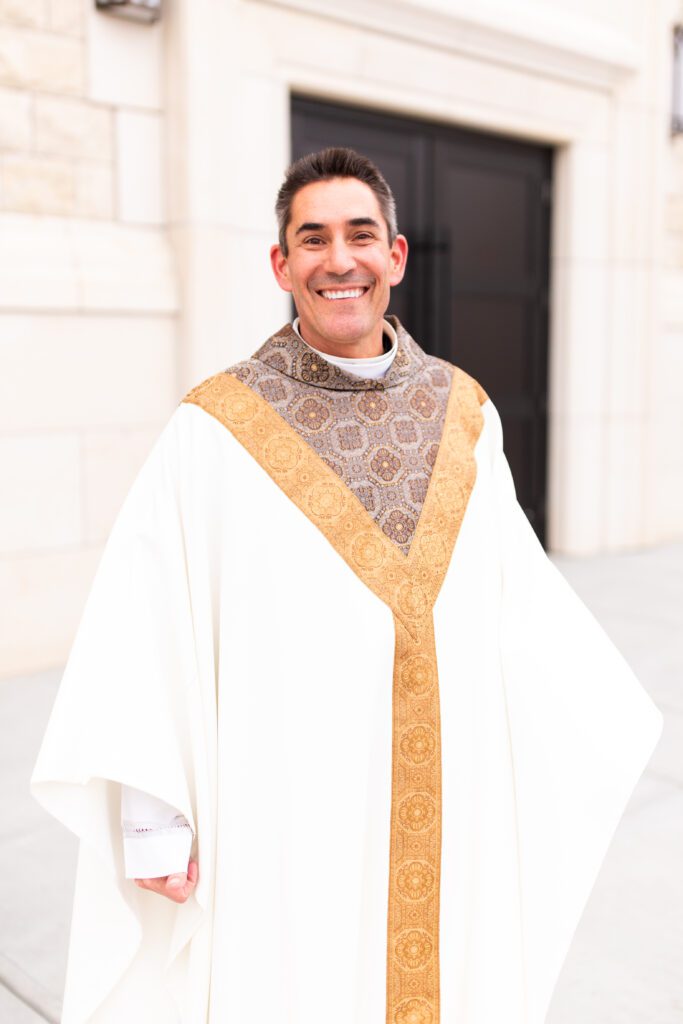
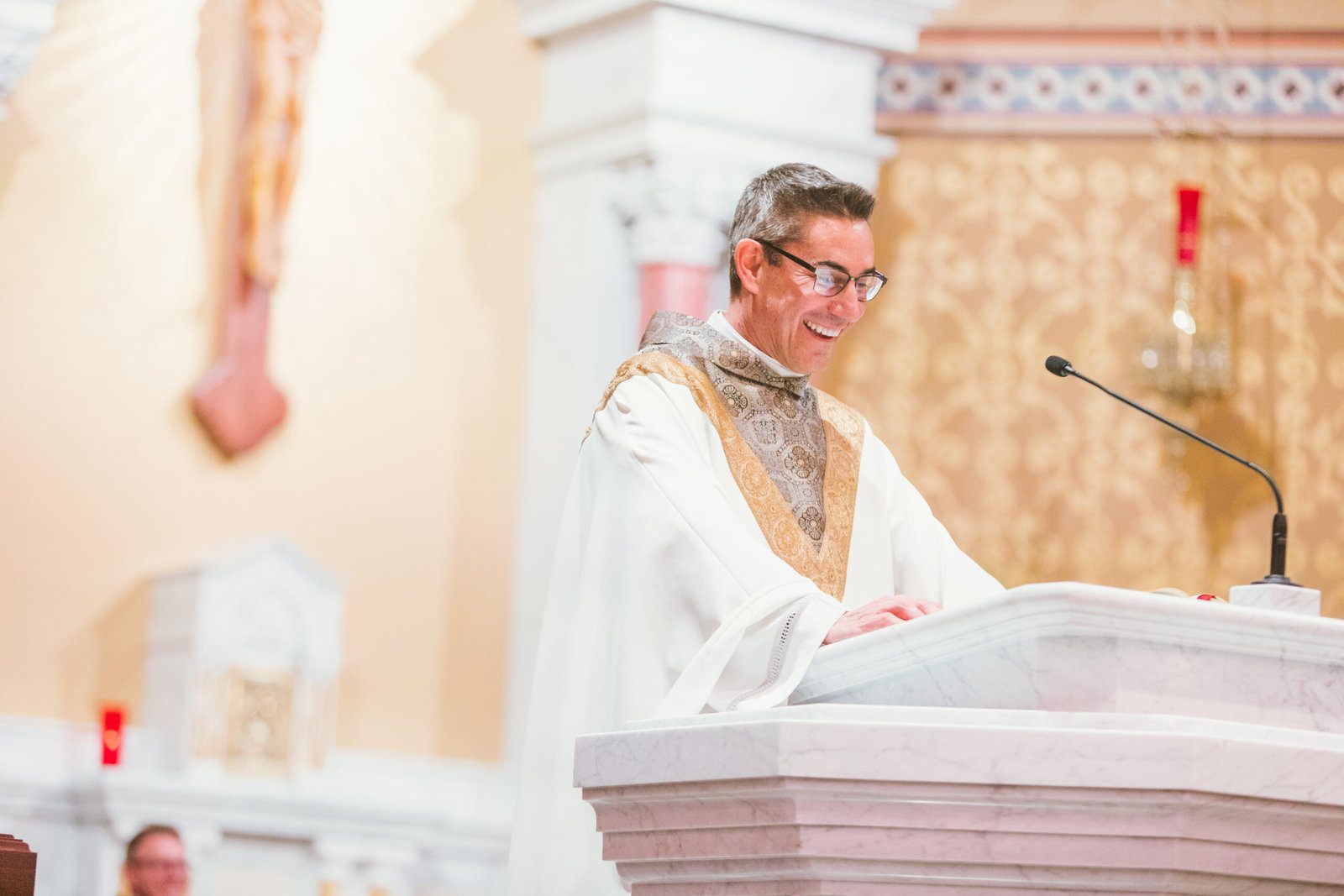
Image of Father Gale Hammerschmidt, the priest at St. Isidore’s Catholic Church, Manhattan, Kansas.
(Image courtesy of St. Isidore’s Catholic Student Center.)

COP30 in the Brazilian Amazon: Expectations, Infrastructure, and Price Controversy

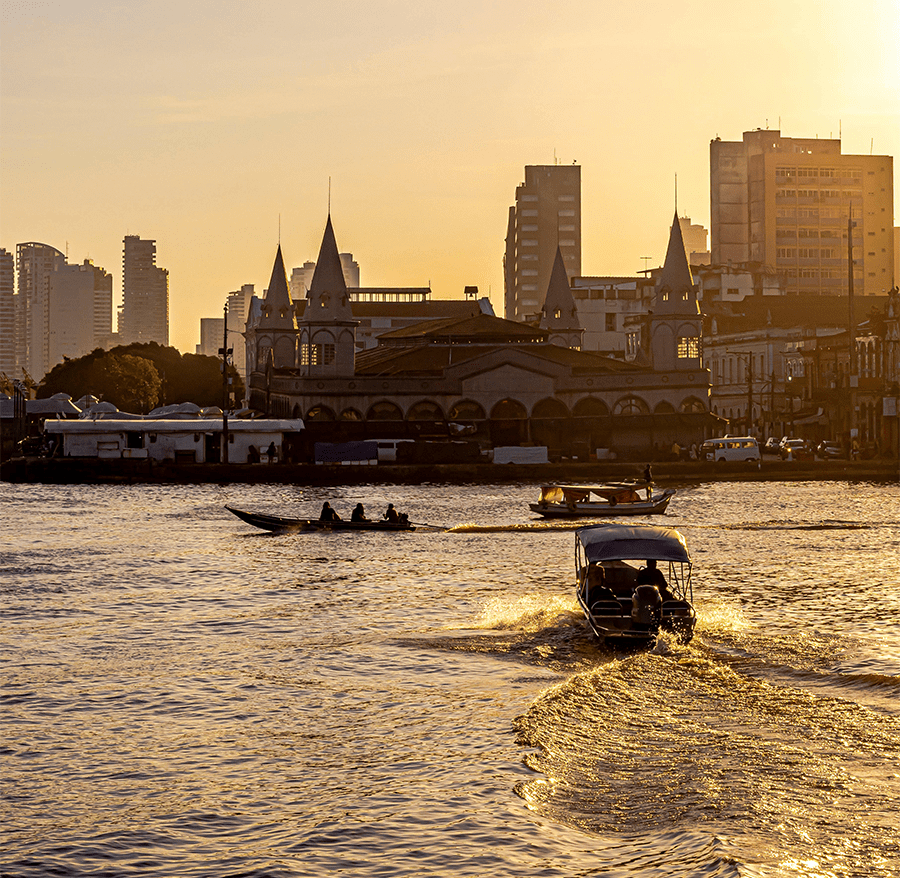
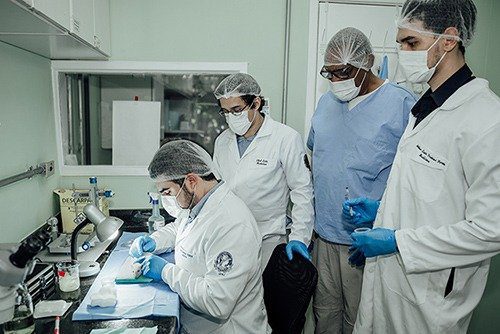
The city of Belém (the capital of Pará state in Brazil), in the heart of the planet’s largest tropical rainforest, is preparing to host the 30th United Nations Climate Change Conference (COP30) in November 2025.

The United Nation’s annual climate meeting plays the crucial role of reviewing climate mitigation and adaptation targets.

The gathering is expected to bring together leaders, negotiators, and activists from nearly 200 countries, placing Brazil, the Amazon, and its people at the center of international climate diplomacy.

However, alongside the anticipation for investment and visibility, tensions are rising due to the increase in accommodation prices during the event’s days.

The Amazon at the Center of the Debate

The choice of Belém as the host city is not random. Far from Brazil’s traditional economic hubs (São Paulo and Rio de Janeiro), the city carries symbolism: it brings the COP directly to the region most strategic for the planet’s climate balance.

Holding the meeting in Belém is a symbolic act and an opportunity to give due focus to the environmental issues experienced in the world’s most important natural reserve.

Professor Silvia Helena Ribeiro Cruz, director of the UFPA School of Tourism, emphasizes the location’s relevance.

“I ask, how can we discuss sustainability, climate change, and socio-environmental justice without being in the Amazon?”

For Brazil, COP30 is more than a large gathering: it’s a chance to transform global discussions into concrete actions, attracting investments in innovation, environmental policies, and sustainable development.

The expectation is that the event will leave lasting results for both the Amazon region and the country as a whole.

Construction Work and the Infrastructure Legacy

According to the Transparency Portal, the Federal Government has allocated more than R$ 4 billion (about US$ 750 million) to prepare Belém. The investment covers structural and logistical improvements that are intended to remain as a legacy for the city.

This funding aims not only to ensure the conference’s logistical success but also to leave a lasting legacy for the city and the region.

Among the projects nearing completion are the re-qualification of the Belém International Airport and the revitalization of Porto Futuro 2, a leisure and social complex on the capital’s waterfront.

Despite the progress, Professor Silvia Cruz warns of an inequality in the allocation of resources.

“The structural legacy will be mainly for the central urban areas, and little for the peripheral neighborhoods, where the socio-environmental problems, like lack of basic sanitation, are located.”

Belém (PA/Brazil), 02/14/2025 / Photo provided by Agencia Brasil, (Ricardo Stuckert/PR)

Hotel Sector, Prices, and the Government’s Response

The international visibility has also brought side effects.

Reports of inflated values for hotels and short-term rentals have multiplied, with extreme cases: a 118 m² apartment advertised for R$ 151,000 (about US$ 28,000) for the 11 days of COP30.

This practice generated a government reaction. On September 24, 2025, the Minister of the Civil House, Rui Costa, confirmed that the Union will take legal action against establishments that are abusing prices.

The justification is clear: to seek “reasonableness” and protect Brazil’s image. “It is not right, it is not fair that hotels are charging stratospheric prices,” declared Costa, highlighting the effort to “deconstruct this narrative, including internationally.”

The ultimate goal, according to him, is for the “great legacy” of the COP to be “the image of a welcoming, warm people, with wonderful cuisine.”

Accommodation available on Booking during COP30. Accessed 09/31/2025.

The Critique of the International “Alarm”

For Professor Silvia Cruz, the media’s excessive focus on Belém’s problems distorts reality.

“In every COP, there is a price increase. This is nothing new. I’ve never seen this level of scrutiny in other cities,” she argues.

She believes the disqualification of the city is unfair and may even be a political maneuver.

“In my perception, the alarm regarding Belém, with media outlets concerning themselves with the city’s inner workings, is a novelty. I never saw this done with other cities where a COP was held, even though all of them have structural problems.”

“This seems to me more like an orchestration to destabilize the event’s organization and remove it from the Amazon,” she adds.

Another point raised by Silvia is the presence of foreign capital.

“The hotel network in Belém is currently comprised of over 60% of hotels belonging to international groups. I haven’t yet seen anyone ask how the daily rates are priced, and these groups are European and American.”

Despite the city facing challenges such as the need for improvements in public transport and the major bottleneck in basic sanitation, Professor Silvia Cruz emphasizes that hosting large-scale events is not new for Belém.

“Belém hosts the Círio de Nossa Senhora de Nazaré every year, an event that attracts, on average, two million people to Belém,” the professor reminds.

She points out that “any major event, in any city, presents challenges,” and that Belém has the capacity to receive large volumes of visitors, overcoming adversity.

Círio de Nazaré, photo by Fernanda Lima, available on pexels

An Invitation to the World

Despite the challenges and controversies, the main goal of COP30 remains to fulfill the global environmental agenda and bring the world’s real demands to the forefront.

The event should also serve as a platform to promote regenerative actions and sustainable tourism in the region, setting the stage for new public policies that envision a development agenda valuing local populations.

The professor argues that the true legacy goes beyond infrastructure: “education actions through socio-cultural actions and environmental policies alongside local populations would be the great legacy.”

She bets on the cultural strength and the welcoming nature of the people of Pará as a differentiating factor.

“The human warmth of the people of Pará will be the differential, that warmth that not only works hard but also welcomes and always offers the best they have to visitors.”

She concludes with an invitation to the world: “We are capable of welcoming so well that even the difficulties will be overcome. My message is don’t be afraid. Come see a bit of the Amazon up close, come see how we live and survive.”

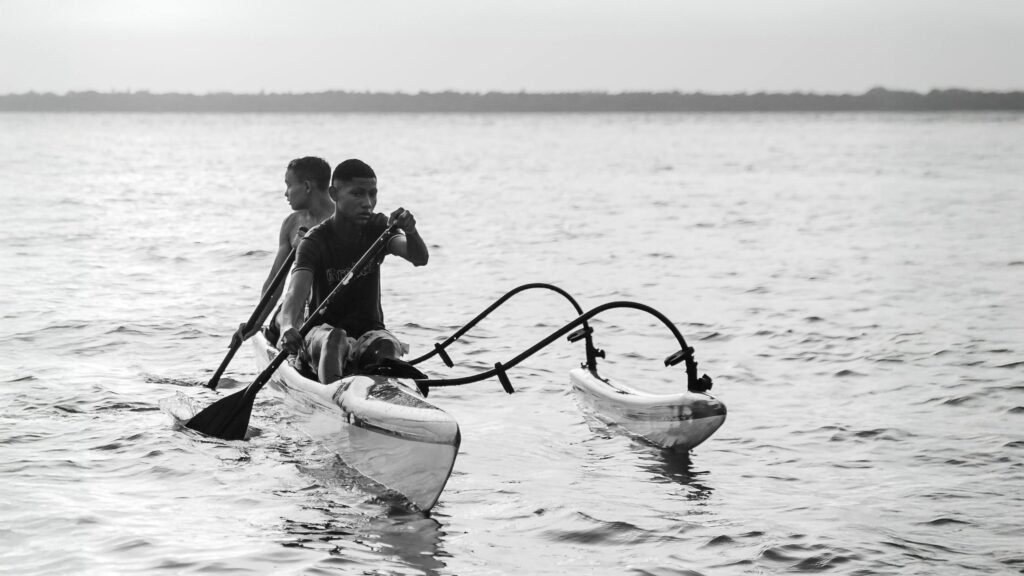
Canoeing on the Amazon River in Belém, Brazil / photo by Gabriela Ally, available on pexels

Grandma goes to uni

“You’re lovely. You remind me of my grandma.” It wasn’t quite the sort of welcome I was hoping for at my first social event as a mature student two years ago. Remind me of my mother – I’ll accept it. Grandma – seems a step too far. However, doing the maths, it does figure. As a (very) mature student of over 60, I could indeed at a pinch have been grandma to the mostly 22-year olds on my humanities master’s at a top British university.

Being a mature student at such an elevated age was a strange and daunting experience. Technology has zoomed at quite a pace since I did my undergraduate degree. I wrote my undergrad dissertation on a typewriter – I was proud that it was an electric one, oh so advanced. Goodness only knows how I did referencing – if I even did any. I’m too scared to look back at that dissertation, which is gathering dust in my attic. Did I put any quotations in my essays I wonder? I would have had to copy those quotes down in longhand from books or journals in the library which I often couldn’t even withdraw. My fave hangout in those days was a library section called “dead periodicals”, and I was usually the only person there. No wonder the younger generation look at me today like someone just out of the Ark. I lived it, but even I find it hard to believe it.

Of course we’ve all had to get to grips with technology in our jobs, and as a news agency journalist I was used to reading fast, thinking fast and typing fast, all helpful attributes for academic study. But I have to admit now, though didn’t want to admit then, that I wasn’t too familiar even with basic programmes like Word, as we used a proprietorial editing system at work. I didn’t even know how to highlight PDFs, for example. Those 22-year-olds were streets ahead of me.

On the master’s, we were reading theoretical papers by people who often hadn’t even published when I was first at uni. Or if they had published, my university was not avant-garde enough to have us reading them. And as for the language they were written in…it took me the two years of the course, which I did part-time, to understand that there is a whole jargon of literary and cultural theory being used on the assumption that you’ve already read a bunch of theorists and understand their language. Michel Foucault, RIP, was one of the main culprits – genealogy, discourse, anyone?

 It’s hard to say quite why I chose to do a master’s when I did. The costs are high to study in Britain these days, even for domestic students. I’m trying not to think about how many luxury holidays I could have had for the price of the fees. However, after years of French evening classes I felt I wanted to delve more into the study of literature and history, and more broadly than into French studies alone. I felt the need to write essays which would require me to read books I would never normally read. I wanted to get feedback – though after the return of nine assignments with criticism of anything from my (arguably?) incorrect use of the comma to complaints that my sentences were too short, I may have got less keen on that. I did find the course constantly demanding and stimulating, however, and it’s whetted my appetite for more – I’m starting evening classes at another uni soon.

However, I wonder whether universities are doing enough to attract mature and part-time students. In Britain, fees may not be as high as for private U.S. universities, but they are high compared with elsewhere in Europe, and of course they are even higher for international students, often a mainstay of British master’s programmes. Academics tell me that the high fees, particularly for students from the European Union post-Brexit, along with the geopolitical climate and an increase in visa restrictions in the UK are deterring international students. Meanwhile, young domestic student numbers are also expected to fall due to demographic changes.

So maybe mature students could be filling that gap. Richard Hebblethwaite, head last year of the award-winning mature, part-time and carer student network at University College London, told Yuvoice he found starting a master’s in his 50s intimidating. But he soon settled in, and says that particularly as the British population gets older, universities should be making a commitment to lifelong learning. Mature students have a lot to offer, Hebblethwaite says:

“They’re a little bit more experienced in terms of life and perspectives. Many of them are not backwards in coming forward with ideas and opinions, they work well with other students in terms of project teams, and often they can initiate conversations and discussions within lectures or seminars.”

Lots of my friends and former colleagues, many much younger than me, say they would like to take a master’s degree when they retire, or before. But they are shocked to hear the cost.

So for anyone out there who would like to attract more part-time and mature students to their universities, here are my ideas, mostly based on good practice I’ve discovered around the place:

–          Provide catch-up classes ahead of the start of the year for those who’ve been away from studying for a long time.

–          For a master’s which would be full-time over one year, offer a part-time programme over three years, rather than two. It’s particularly hard to do a master’s dissertation, which usually counts for at least one-third of the course, when you are working part-time. Studying part-time while working is hard work but makes it more affordable. More time to complete would be a bonus.

–          Put modules all on one day and make it clear which day that is, so people know when they need to take time off from work for the course.

–          Spread compulsory modules evenly over the course, so part-time students in particular aren’t faced with too many modules bunched up together.

–          Masters’ degrees are expensive, so consider offering stand-alone modules, rather than the whole degree. Some universities are doing this already.

–          Offer extra-curricular short courses, ideally with some essay-writing and feedback built in. Again, this is already on offer, but not very much.

I’m sure there are all sorts of logistical reasons why these ideas aren’t feasible for many universities, but if even some of them were put into practice more regularly, I think you would soon see more than one “grandma”, or even grandpa, in a student seminar near you.

Overloaded, Overwhelmed, and I Don’t Like It One Bit

Yes, how to cope with information overload?

I can remember complaining about the dire state of the news cycle all of 10 years ago now, and I have to state it hasn’t gotten any more appealing in the decade since. ‘Cope’ is an interesting word here, as it suggests ‘a lived-with condition’, a sickness, an illness of sorts is being tolerated. It gets me thinking perhaps that’s the best way to consider information overload, an illness in need of treatment that isn’t going anywhere. Now I’m no doctor, but I can talk about what I’ve done and without a copay.

Slow the roll

I’m of the opinion that the news is in need of slowing way down. I’ve found this opinion shared by voices including Ian Hislop and Trevor Noah, who have had to read news daily as part of their jobs. Both are of the opinion that you don’t need to read/consume news every day. Trevor Noah going as far as saying once a week is a lot more reflected and accurate summation of real-time world events. So, while the 24/7 of social media isn’t going anywhere, our consumption of news certainly can be lessened. In my experience, a weekly check-in on news hasn’t cost me anything and left me with a much clearer head.

While the onslaught of information we face isn’t going to change anytime soon, I’d argue our relationship with it can be altered on an individual basis. I’ve witnessed my habits around news and information consumption have required me to be mindful. My worst habit was perfectly innocuous, just a news site… yet I’d find myself, on autopilot, typing in the site on my phone, scanning, scrolling, zoning out. Nothing to do with the content in front of me — all to do with dissociation and escapism. I found myself blocking an innocent news site just to break an empty escapism habit. Vacant doom-scrolling sites are worth getting away from. That’s my take.

Curate your recursive algorithm

I’m something of a YouTube head currently. I don’t think it’s a great app. I have no particular love or affinity for it, but as someone not seeking much TV right now, I find it a great source to listen to music and podcasts in the background. YT is my go-to for that easy convenience. However, like the rest of us, I’ve found that just a single search on a given curiosity tends to fill the entire feed within a matter of minutes. It’s immediately overstimulating content pushed in my face that may have nothing to do with what I actually want.

My contention is: any form of social media or platform requires a consistent degree of pruning. Sad or not, mindful cultivation is a must. Just to avoid a feed full of asinine garbage there to grab my attention, irrespective of any value. I’ve found myself every so many weeks, or sometimes days, purposely doing this. Due to how tailored our individual algorithms are, I think the grim reality of their purpose is easily forgotten.

Their desire is to grab our attention, to keep us clicking, to trigger the advertisements and feed revenue streams. We are simply the users, using and to a degree being used all in the name of data. I’ve found the more carefully I use any social media platform, the less overwhelmed, drowned, or flattened I feel. Spending just a few minutes clicking -Not interested- or -See less of this- has significantly lessened the mindless, unwanted engagement here.

Is the medium the mess?

Last but not least, the format — online, the internet — is this not a considerable vein of the problem? Considering my own relationship with information overload, it’s struck me this is not only a contemporary problem, it’s an entirely digital one. If I look around my flat right now and look at the stacks of books… there was never a complaint of too much information in an entirely analogue world. There was never a declaration that one could read too many books. In fact, you can’t.

My hunch is… this could be key to combatting information overload; be judicious and pick your sources. If scrolling and screens are driving you loopy, swap them out for books and pages. I’m not stating this is the path for everyone, but hasn’t reading  been valued and performed for centuries? 

Try to find your information overload that way, and I bet you never will, and might just get smarter along the way.

A young reader silhouetted against the sunset.
(Image courtesy of Daniel Joshua via Unsplash)

Brazilian public university makes breakthrough that could reverse spinal cord injuries

In September, a study presented by the Federal University of Rio de Janeiro (UFRJ), in Brazil, revealed a discovery that could change the lives of patients with spinal cord injuries. The research, conducted at the public university, uses a protein extracted from the human placenta called polylaminin. 

The study represents hope for those who suffer from spinal cord injuries, a condition that can cause partial or total loss of limb mobility and, until now, has had no treatment capable of reversing the damage.

It is expected that, when applied to the injured area, polylaminin will stimulate nerves to create new pathways and enable partial recovery of movement. The experiment has already shown promising results in animals and small groups of volunteers.

The research is coordinated by the Carlos Chagas Filho Foundation for Research Support of the State of Rio de Janeiro (FAPERJ) and has been ongoing for over 20 years. It is currently in the testing phase but already raises great expectations for the future of medicine. The study also received support from Cristália Laboratory, which invested R$31 million (about US$5.6 million) in the project.

The goal is to recreate the natural protein laminin, produced during embryonic development and responsible for communication between neurons. The lab-produced medication aims to replace this protein, which becomes scarce in adulthood.

Researchers discovered that it is possible to recreate it from proteins extracted from the placenta, forming a kind of mesh that reestablishes communication between nerve cells. Polylaminin is applied directly to the injured area through a single surgery, preferably performed within 72 hours after the accident, which increases the chances of recovery.

Researchers are optimistic that, as the study progresses, people who have been paralyzed for years may also regain movement and mobility.

Recent studies have also shown that polylaminin, when combined with other therapies, can be effective in chronic spinal cord injury cases.

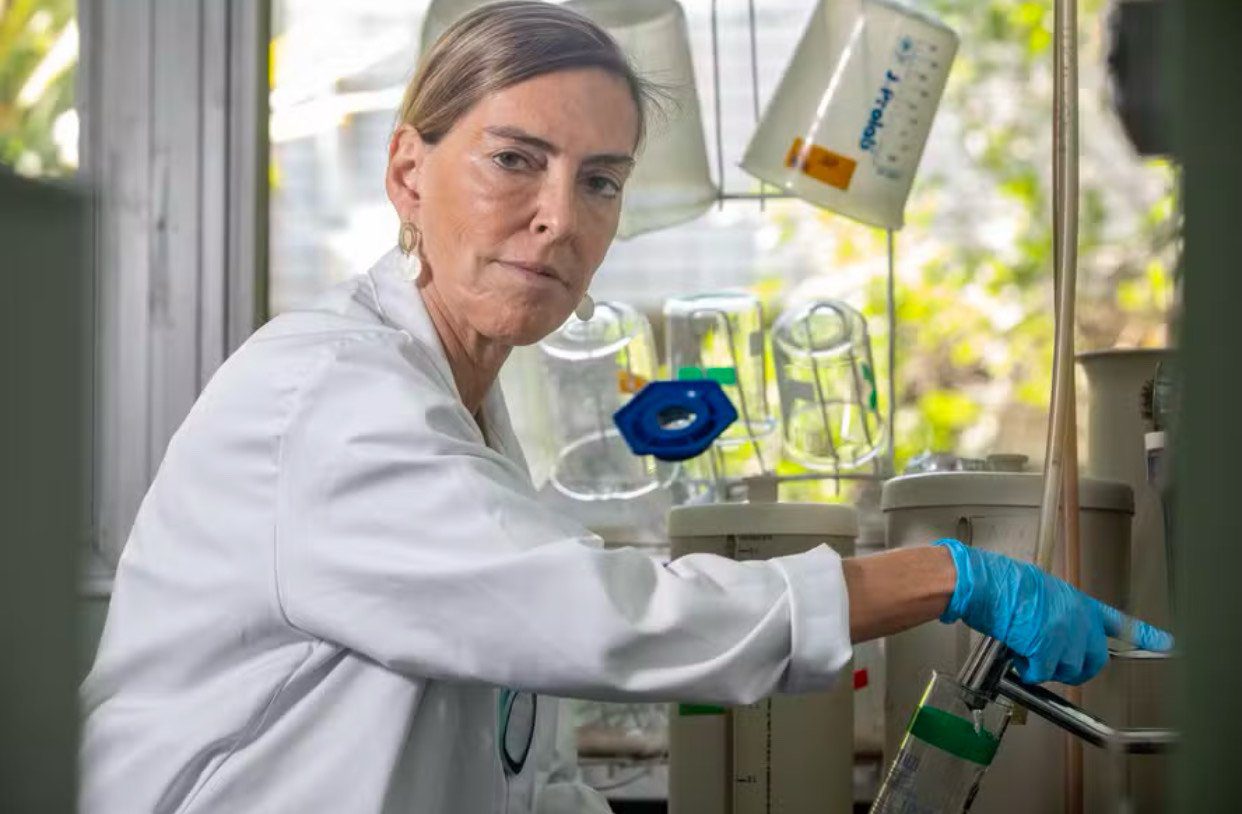
Researchers from UFRJ conducting studies on laminin repolymerization
Researchers from UFRJ conducting studies on laminin repolymerization. Photo by Luciana Sposito.

Results 

The research is led by Tatiana Sampaio, biologist and researcher. In an interview with FAPERJ, she explained that the choice of polylaminin was due to its better cost-effectiveness, ease of production, and safety regarding the predictability of the cellular reaction, compared to stem cell therapies, which are more complex.

“We are simply imitating nature, since this protein is naturally produced by the body during the development of the nervous system,” she explained.

In August, a study published in Frontiers in Veterinary Science tested polylaminin on six paraplegic dogs. Even after surgeries and months of physiotherapy, the animals remained unable to move their legs.

After applying the protein directly to the lesion, four dogs showed improved balance and managed to take a few steps, while the other two had more modest progress. All were monitored for six months and showed no side effects.

In addition to animal testing, the medication was applied to an experimental group of Brazilian volunteers. In total, eight people participated in the study, carried out under academic protocols.

Among the patients, some fully recovered mobility, something considered unlikely without intervention, while others reported significant improvements, such as trunk control and the ability to walk with assistance.

Among the volunteers is Bruno Drummond, a banker who, in 2018, suffered a severe cervical injury after an accident that crushed part of his spinal cord. With his family’s authorization, Bruno participated in the experiment using cells extracted from the human placenta.

Initially, he had no movement in his limbs, but only two weeks after the procedure, he was already able to move a toe. Years later, Bruno regained much of his mobility and managed to resume an independent life.

In an interview with TV Globo, he said:
“Nowadays, I can move my whole body—of course, with some limitations. My leg is moving. I can stand, walk, dance, fly. I’ve regained my independence.”

Expectations

The National Health Surveillance Agency (Anvisa) reports that there is still no request for approval for the clinical use of polylaminin. So far, the results presented correspond to non-clinical stages, that is, laboratory tests and preliminary observations.

Among those following the progress with hope is Alexandre Costa, 51, who was shot in the shoulder during a robbery in 2018 and became paraplegic. After seven months in the hospital, he began his so-called “real battle,” the process of rehabilitation and adaptation to a new life.

Even with family support, he faced difficulties accessing treatment and public healthcare. The pandemic interrupted his rehabilitation efforts, and new health complications forced him to pause therapy more than once. “There are many problems that come with the ‘spinal cord injury package,’” Alexandre says.

Costa reports not only physical but also emotional effects of the injury: “I sank into depression, lost the will to live, and just let life carry me.”

In 2024, a new health complication led to the need for an ileostomy, which he makes a point of mentioning:

“These are different disabilities, but it’s important that people are aware […] the second can be avoided in some cases.”

Because of this, he now runs an Instagram profile (@falailesionado), where he seeks to raise awareness, share his experience, and receive feedback from other people with spinal cord injuries.

In an interview with Yuvoice, he says he watches research like UFRJ’s polylaminin study with caution but also hope:

“I’m hopeful that maybe I can be one of the volunteers. I haven’t signed up yet. I’m waiting for things to advance a bit more. But I’m optimistic, because even a small improvement in your condition, any gain in quality of life, is already a big step forward.”

The road to making the medication publicly available is long. First, laboratory studies must be completed and safety proven in animals. Then, with Anvisa’s approval, large-scale human trials can be conducted, evaluating both acute and chronic injuries. Only after full regulatory approval can the drug be marketed.

The progress observed in animals and volunteers provides an optimistic outlook for improving quality of life and the future of medicine. However, until the research is complete, there is still no definitive treatment for spinal cord injuries.

Explaining the strength of European populism

Why does right-wing populism appear so strong in Europe?

In a recent sign of its success, a populist party led by billionaire businessman Andrej Babis won parliamentary elections in the Czech Republic in October. Other European Union (EU) countries Hungary and Italy also have populist leaders.

In France, the government of centrist president Emmanuel Macron narrowly survived a no-confidence vote. The government has been flip-flopping after Prime Minister Sébastien Lecornu resigned after 26 days, only to return four days later. Macron faces a challenge in the polls from the far-right National Rally, led by Marine Le Pen.

The populist Reform UK is also doing strongly in opinion polls, while Germany’s right-wing AfD party has won state elections in the past year.

The rise of European populism is hard to counteract, because of the continent’s economic performance. Europe is lagging in both technology and  manufacturing, says Ronen Palan, professor of international politics at City St George’s, University of London.

“The fundamental problem that Europe faces is that the fourth industrial revolution skipped it,” Palan told Yuvoice in an interview.

“You have the American companies,  the Magnificent Seven – Meta, Apple etc. There is nothing in Europe remotely like that. Manufacturing excellence is now in China – China is far advanced. Europe is squeezed in between. Without a solution to that problem, we are talking about economic stagnation – Europe becomes a tourist attraction.”

The first industrial revolution started in Britain in the eighteenth century with inventions such as the steam engine.  The second industrial revolution of the late nineteenth century got a boost from the expansion of electricity, while computers led the third industrial wave of the late twentieth century.

The Magnificent Seven U.S. tech companies have stormed ahead in the U.S. stock market in recent years, helped by their role in the development of artificial intelligence.

Populist parties are offering little practical to address these economic concerns, but are playing on people’s sense of the precariousness of their lives, according to Palan.

Laggardness in Europe is also nothing new, he adds.

“Similar events took place in the 1970s. The European car industry was buffeted by the Japanese, the Americans were pulling ahead, the Americans and the Japanese were competing with one another. The answer was the common market and the single market, the creation of European champions, European competitors – we are in the same situation now.”

It has become harder for Europe to pull together as one force since one of its biggest economies, Britain, left the European Union following the Brexit vote, although Britain and Europe continue to collaborate on geopolitical issues, Palan says.

“Brexit created an institutional gap. The fact that Britain is out weakened Europe and weakens Britain,” he said, though he added that: “it doesn’t mean that if Britain were part of Europe, they would find a solution.”

The mood is not all going one way. A pro-European Union party won elections in September in the eastern European country of Moldova. Italian Prime Minister Giorgia Meloni faced a general strike and major protests in September and October following her refusal to recognise the state of Palestine, in contrast to other EU countries such as France and Spain. Left-wing as well as right-wing parties are also popular in France.

However, Palan points out that the rhetoric of both left-wing and right-wing parties is often similar, as right-wing parties such as France’s National Rally and Reform UK also promote strong intervention by the state. British think tank Chatham House said in an October report, that the National Rally’s economic policies were “closer in tone to French Socialist icon Jean Jaurès than to the Iron Lady (former Conservative British Prime Minister Margaret Thatcher)”.

These right-wing populist groups are taking their lead from U.S. President Donald Trump, whose language comes straight from the Marxist playbook, according to Palan.

“The Deep State is a Marxist concept, the idea that there is a small cabal of people – the bourgeoisie – controlling the state, and that Trump represents the working class against the entrenched state,” said Palan, adding that Reform UK leader Nigel Farage “is also adopting Marxist language – it’s very confusing.”

Francesco Rigoli, a political psychologist at City St George’s, University of London, says Europe’s biggest economies, Britain, France and Germany, could all have populist parties in government in a few years.

“The level of polarisation remains extreme,” he told Yuvoice. “There’s a feeling that the traditional parties have disappointed, that they have not fulfilled expectations. There’s a feeling that Europe is in crisis.”

Monopoly Money

Don’t you utilize, monopolize, or anthropomorphize me

According to our saintly and ever-correct oracle the Internet, the word ‘employment’ has two primary definitions. 

  1. The state of having paid work”
  2. “The utilization of something”

I’d be curious to poll the average person on the street as to which of these definitions typically comes to mind on hearing the word. 

And by ‘on the street’, I of course mean those tireless and valiant 9-5 workforce soldiers on their lunch breaks, as they spend their hard-earned money on pre-packaged processed carbohydrates at the cream of our cities’ chain coffee conglomerates. Not those people literally on the street by virtue of not being utilizationed or in a state of having paid work. 

Go ahead, utilize me

You see, I think these two definitions are linked — me being utilized by having paid work. And I’m surprised to find myself admitting that, because I used to say that there was no value in working my fingers to the bone or my brain cells to their nuclei to serve a corporation, community or country that didn’t serve me in return. Maybe my views would’ve been different if my council tax payments bought me something more than a wheelie bin emptied and returned to the wrong house once a fortnight. Or maybe my views would’ve been different if I’d worked in an industry whose primary work product was something tangible, rather than a service. You know, if I’d been making car tires or little cakes or something… 

In my endless quest for prose and provocation, I often like to say that our real currency in life is time, or honesty, or love, or some other such abstract and intangible concept. But, in reality (whatever that is), I know that the only actual currency we have is CURRENCY. Pounds, shillings, and pence. Dollars, dimes, nickels, and cents. They weren’t wrong when they said money makes the world go round, even if it is making it go round the twist. Though I’d prefer to be participating in a place which prioritizes peace as its primary political pledge and considers communication above the concerns of commerce, that’s not the hand we’ve been dealt. 

Take a break, but what time is it?

I write these words a year into a period of unemployment, a time I’ve described to everyone on the outside of my own brain and trusted circle of friends as a ‘career break’ or a ‘career change’ but which has served as a constant internal reminder of the need to earn money. A ticking financial and self-worth time bomb with detonation set for 0:00…and it’s been five minutes to midnight since I collected my last pay packet. 

Have I been utilized in the last year? Sure I have. I’ve written somewhere near 500,000 heartfelt words for various publications, research papers, fictional works and factual projects. I got married. I’ve been to California. I’ve recorded an album with my band. But I haven’t earned any steady money, and even someone as headstrong when it comes to utopian societal dreams as me can’t escape the notion that I need money to be happy. 

Blame it on Monopoly 

Perhaps it’s because from the moment we exit the womb we’re drip-fed that our most significant contribution to our world is financial: the generation of wealth. An idea reinforced by every happy family game of Monopoly, from station to station, house to hotel, where fulfillment rests on the roll of a dice and the turn of a CHANCE! Where, if the cards are stacked against us, we’re better off in jail. 

But where I’d once have cursed society’s plan for me as a preordained conspiracy geared towards the generation of wealth for others — those faceless offshore yacht owners, stubbing out cigars on the trade union banners that adorn their penthouse walls like historical works of art — I don’t think like that anymore. The wealth we’re really generating is the ability to fund the lives we want to live. If even the most visceral human experience costs money to attain, then the true value in paid work is how we use that pay to generate for ourselves: our livelihood. 

What’s it all about?

So maybe that’s okay, as I wanted to write something about this strange phenomenon for a while, where my self-worth is inextricably linked to my earning capacity. I was scared to acknowledge it for fear that the exploratory process of one’s own psychological relationship with money (or lack of) would run out the clock and explode that time bomb before I secured my dream job. One that allows me to practice the skills I’ve amassed, my creativity and flair and my passion for mentorship: all roads lead to Academia. I found my energy waning, replaced by the worry of securing a new career, or what the failure to do so means for my finances and my self-worth. The fear of having to accept a job I didn’t want to do if the righter opportunity didn’t reveal itself. 

But it did. 

Freed from the shackles of welfare worry, I can become spiritually and creatively utilized again. In a good way.

I’ll never stop campaigning for a fairer society, where we take just enough from our supermarkets, and where we recycle everything. 

Where we treat every conversation as an opportunity to make someone’s  day better. 


Where we invest properly in good holistic education across all facets of academic and vocational challenges. 

But I’ll do so in the knowledge that the value in my work isn’t only in the direct impact I’ll be having on my students, but in regaining a monopoly over my own life’s course — hopefully with the occasional free parking surprise and a couple of beauty contest wins. My money is, in the truest sense, monopoly money. 

A sign reads “money makes the world go around”
(Image courtesy of Morguefile)


Racial Equality Lags at Work

Only half of minority employees in Britain feel that companies are making progress on racial equality, according to a report last month by UK-based recruitment firm Green Park.

The report comes as firms battle a global backlash against DEI (diversity, equity and inclusion) policies triggered by the re-election of U.S. President Donald Trump. The views of non-white employees in the Green Park report contrast with those of company leaders and white employees, who are more positive about progress in addressing racial inequalities.

There has been change at the top. Ten years ago, the majority of FTSE-100 companies, Britain’s largest publicly listed firms, was led by all-white boards. This year, only five FTSE-100 companies have all-white boards, the report said. The Green Park survey of more than 700 people showed that 84.4 percent of corporate leaders believe business is making progress in addressing racial inequalities. Among white employees, however, that figure dropped to 69.3%, while for minority employees it fell further, to 51.2%.

“Corporate leaders are in sore need of a wake-up call – their own perception of progress is at odds with the perception of those who work for them,” Black British broadcaster and chair of Green Park Sir Trevor Phillips said in the report.

“The gap in sentiment between leaders and their ethnic minority employees can be seen from space. Not all employees see their bosses’ behaviours in the same way.”

Panellists at a Green Park virtual conference earlier this month warned about resistance to DEI policies. Green Park is a co-founder of Race Equality Matters, a British organisation of companies seeking to achieve racial equality in the workplace.

“The U.S. is the ground zero for the DEI backlash,” Tamara Box, chair of the women advisory committee at Britain’s Chartered Management Institute told the conference, attended by Yuvoice. Box pointed to an increasing wave of “pure self-interest and this sense of me-first”.

Box said Britain had always had a more positive approach to diversity policies than the United States, but added: “don’t kid ourselves that (this wave) isn’t coming here harder and faster”.

A majority of people in Britain view diversity policies positively, but that proportion has dropped to 52 percent, from 62 percent in 2023, according to a separate report released jointly last month by research group More in Common, Oxford University and University College London Policy Lab.

The right-wing Reform UK party, which is currently leading the ruling Labour party by 12 points in opinion polls, has said it will scrap diversity policies if it gains power.

Box told the conference that concerns about DEI policies needed to be taken seriously.

“In almost every organisation there will be a white straight ‘he’ who feels that all the things we talk about…leave him out. You can’t ignore a voice you don’t want to hear. There are people who feel left out of our efforts at inclusion, and by definition that means we are failing at inclusion.”

However, fellow panellist Mark Lomas, head of culture for the commercial insurance market Lloyd’s of London, said that businesses have a way to go, as they are not reflecting the ethnic make-up of the British population, nor of British universities.

“As managers, we have to be really clear that this idea of meritocracy doesn’t exist, anywhere.”