Felicia, You tell me that I shouldn’t worry, but that’s not your decision. Every time you text me, you’re distressed from work or family wars, You put yourself down even more, then assure me that you’re “fine.” So forgive me for wanting a clearer vision.
I can’t pretend it doesn’t hurt to see you so depleted. Every day, I wonder if there’s something more that I should do, To solder all this pain in you, but you dissuade my efforts. And so this endless cycle goes untreated.
You dress yourself in apathy like it’s the only thread that fits. A hundred other options would be kinder still in form and shape, But you wear caution like a cape and pull it tightly round you. You can’t defend yourself with smoke and tricks.
Anytime we plan to meet, you’re full of smiles and bubbles. I’m reminded of the younger girl who hoped and dreamed of joys, Who clawed and fought for stupid boys and cared deeply for animals. And I really think that soul is worth the trouble.
We dated once, an eon past, in schooldays of simple mirth; When hormones fused and wrested us, as deep a love as youth allowed. You have another boyfriend now who treats you like an afterthought, But you cannot believe that’s all you’re worth.
You ask me often how I would feel if you were to disappear. How is it that you can chuck about these words so easily? And threaten loss so breezily when I would be destroyed… To think that you had given in to fear.
Let me take this time to say I love you without discretion. Not romantically, our lives are dragging us on different paths, But a part of me is built to last on the foundations that we share. You are my family, always, without question.
So I will wait until the weather blows this raincloud blue. It’s futile fitting plasters on this formless mass your hurting takes, For I’m one man with no more stakes than any other Samaritan. But rest assured, I’ll never give up on you.
Discovering my voice through writing was surprisingly found in the silence of the process itself.
Since childhood, I have always had a natural connection with people, and talking to others came naturally to me. So, it took me some time to realize that my true calling was in writing.
Journaling away my stuttering
Yet dealing with difficulties in speaking fluently and experiencing stuttering during my childhood made it hard to express myself verbally. This challenge drove me to begin using journals as a way of communicating when speaking felt overwhelming. With each passing day, I made gradual improvements, and unexpectedly I developed a passion for writing, finding solace and peace in it.
I turned what appeared to be a weakness into a motivator for self-improvement.
As I got older, writing became more than just an escape. It emerged as a potent tool for self-expression. Despite having strong opinions, I was challenged by verbal expression. Writing provided me with the bravery to advocate for myself and express my thoughts fervently. For instance, working on articles for my university publication allowed me to explore those topics deeply. For example, how can an individual bridge continents?
This year has been a time of great change for me. Through my work in storytelling and content creation, I encountered a wide range of voices and narratives, highlighting the role of writing in engaging with others. By analyzing and writing compelling stories for my university’s website, I have learned how to present complex ideas engagingly. This work was not only about writing, it involved skillfully combining information and emotion to make a significant impact.
The experience strengthened my belief in the ability of written words to influence, motivate, and express without fear.
Writing as retaliation
(Image courtesy of Prince Patel via Unsplash)
Now that I have a clear sense of purpose, I yearn to be in an environment where I can share my ideas and use my skills to make a positive difference. I crave continuous growth and self-improvement and want to shine, gain confidence, and master my craft. Most importantly, I want to feel proud and have others recognize my abilities.
The recent projects I’ve undertaken have only deepened my commitment to this path, showing me that writing is not just a passion but a vocation that can drive real change outside and fulfillment inside. My writing is the free voice I always deserved, right there.
Say the word, one word
My writing journey has transformed me from struggling with a stutter to discovering my truest, fluid voice.
In my journey, I overcame obstacles to genuinely express myself. I am determined to find an environment where I can thrive, grow continually, and make a meaningful impact. Writing is not merely a passion, but a fundamental part of who I am. Through my writing, I aim to inspire and forge connections with others, contributing to a better world. One word at a time.
Ultimately, my deep connections with people throughout my life, combined with my speaking challenges, made me recognize the significance of writing. It brought comfort and a means of self-expression, turning my weaknesses into strengths and feeding my drive for personal growth and positive change.
Writing didn’t just grant me a voice — it helped shape the person I am today, and with each word, I evolve unencumbered.
Three and a half years ago, when I was just starting my second undergraduate year, I found myself developing an attachment to a mysterious and unnerving activity called…
Improv comedy
*dramatic gasp* Believe me when I say that taking up improv was a jarring change of character. I was no stranger to performance but improv had always terrified me. The very thought of dashing onstage unprepared with no safety net was a waking nightmare.
Aside from a rather embarrassing moment (that I desperately try to avoid reliving) at a preteen summer school, my improv experience was basically non-existent. Outside of acting, I was straight-laced, introverted, and most certainly shy in public scenarios. I could barely talk to people. For most of my first year at Royal Holloway: University of London, I was content with my quiet, online writing society. There were only five members in the group and every one of them was heavily reserved and terrified of giving any criticism. Just my cup of tea!
My second term took place during the COVID-19 lockdown, and as a result, I got involved with some online shows. As expected, I didn’t foster many strong bonds during these performances. The distance and lethargy were affecting all of us, especially in the drama and theater sphere. By the time we were back on campus in term three, I felt I hadn’t made many lasting connections. I hadn’t found my people.
Reflecting upon it now, improv found me at an important turning point in my life. I never would have sought it out on my own, especially not with my reservations. In fact, the only reason I can talk about this today is because of one person.
The Anna effect
Out of all my former course mates, Anna is certainly the wackiest. She is completely unique, quick-witted, fiercely intelligent, and progressive. Technically, she was the very first person I’d met at Royal Holloway. We sat together for an exercise during our induction day, only to be paired up again in our first module on campus for a devising activity. She still terrifies me as she did back then (in the best possible way).
Toward the end of the year, she bullied me, albeit playfully (I think) into joining the university’s improv troupe, the Holloway Players. What struck me was not just her conviction but the way she idolized the people in this group. They’d become family to her. They were her obsession. She had no problem voicing that quite violently to me. Her recommendation arrived at a perfect moment: I’d had a particularly bad experience with my flatmates and was searching for an escape. I was willing to try something a little different, even just to play some drama games, watch some goofy improv, and go home.
I took her advice, and it was one of the greatest decisions I’ve ever made.
Stepping out of my comfort zone
The first session I attended took place on the campus meadow in the gorgeous summer heat. I saw a small group of funnily dressed people, a bunch of snacks laid out on two picnic tables. I could see Anna enthusiastically waving me over. Around then, I was thinking, “Well, I’ve been recruited into a cult, haven’t I?” A couple of their leading members introduced themselves. They were third years and social engineers. Complete strangers. I lingered awkwardly, not really pushing myself to enter any conversations about sacrificial lambs or the strange deities they were bound to worship.
Mercifully, the drama games began quickly. We gathered into a circle to play everyone’s favourite theatre staple…
Zip, Zap, Boing!
For those who haven’t attended a single drama class in their life, it’s an energizing warm-up game with very simple rules. At any time, one person holds a ball of energy that must be passed around the circle. They can either:
Zip, and pass the energy to the person adjacent to them.
Zap, and pass the energy to any person standing across from them in the circle.
Or Boing, reflecting an incoming Zip to reverse the direction of play.
Simple enough, right? Well, this wasn’t like any game of Zip, Zap, Boing I’d ever played.
Bending the rules
Within the Holloway Players, there were certain house rules: player-created bits and routines, collected and preserved throughout the years in addition to the typical moves.
To name but a few, you could call upon Reflector to block a Zap, which would lead to about five or six further utterances passed back and forth in an epic battle sequence. You could turn the Zip into a Boomerang or Ball, causing everyone to duck or jump in turn respectively. Shouting “Andy’s Coming” would have everyone dropping like a ragdoll to the floor like the toys in Toy Story. “Eleanor Cobb” would set off a repetitive chant of “feed me teeth, feed me teeth, feed me teeth” as everyone pranced around and swapped positions in the circle.
So, yes, my initial fears about joining a cult were quickly confirmed.
One of the committee members, Aaron, had cautioned the house rules for newer members by stating that “if you don’t know what’s going on… scream,” which was a surprisingly effective pep talk. He’d also encouraged people to embrace mistakes and improvise around new rules, should they crop up.
I may have taken this a tad too literally.
By this point, the game has been playing for a while. Many exotic and strange rules have been demonstrated. I am given the Zip and turn to Aaron on my left. The word then escapes my mouth before my brain has a chance to process it.
Zindar!
An excruciating moment of silence follows. I begin to regret every life decision that has led to this moment. “What possessed me to say something like that? Where did that stupid thought come from? I have to switch universities. That’s the only option. Anna must think I’m such a buffoon –”
Then, all of a sudden, Aaron starts to raise his arms while bowing his head in reverence.
All hail Zindar!
Something amazing happens. The entire group repeats the phrase, bowing their heads to Zindar. The president walks over and shakes my hand. Aaron starts singing my praises as a rousing applause picks up.
Not even ten minutes into my first session, “All hail Zindar” was born. A rule that has been preserved and still gets quoted in Zip, Zap, Boing to this day.
I’d cemented my Holloway Players legacy.
Something clicked then. I felt embraced. Comfortable. So much so that toward the end of the session, I mustered the courage to join an official improv game. It went terribly! My whole character arc revolved around a watch that exclusively tells you the time since you last ate a radish.
Naturally, I was given areas to improve in, but this criticism was framed with the most overwhelming encouragement and support. These people were fully geared to laugh with you – that is, to remove the fear of mistakes. They were completely unserious and whimsical. Most importantly, they made me feel proud of the steps I’d taken getting to this point. I’d taken the leap and I wanted to do it again.
I suddenly understood why Anna had been so obsessed. I’d found my people.
Moving forward
To make a long story short, the Holloway Players became my home away from home. We took a comedy set to the now-defunct One Night Records venue in London to rousing success. I’ve additionally performed in two fully improvised musicals and an amateur, spin-off version of “Taskmaster.” I was voted “Player of the Year” in my second year and gifted a “Shining Light” award in my third. Moreover, I became the secretary of the society in my final year alongside Anna as president, working to encourage an unprecedented spike in membership and to further develop the inclusive values the society embodies. I’ve stepped into the role of compère for dozens of sessions and pub shows. I even started running some improv workshops at Goldsmiths University in my Master’s year.
When I think back on all these achievements and memories, I wish I hadn’t been hesitant for so long. Since finding improv, my confidence has skyrocketed, both on stage and off. I’ve become more proficient at networking, applying improv skills in conversation to foster greater communication. I’ve directed several short performances and radio episodes – something my younger self would have paled at the thought of. My greatest and dearest friends are all Holloway Players. I continue to credit so many things to that one moment of pushing my boundaries, forcing myself into strange company, and taking an unprecedented leap.
It transformed my life.
Give it a go!
Whether it’s improv or another skill or activity you’re anxious about, I implore you to set aside your apprehensions. Listen to your friends. The only way you’ll discover if something is for you is by doing it. Get out there!
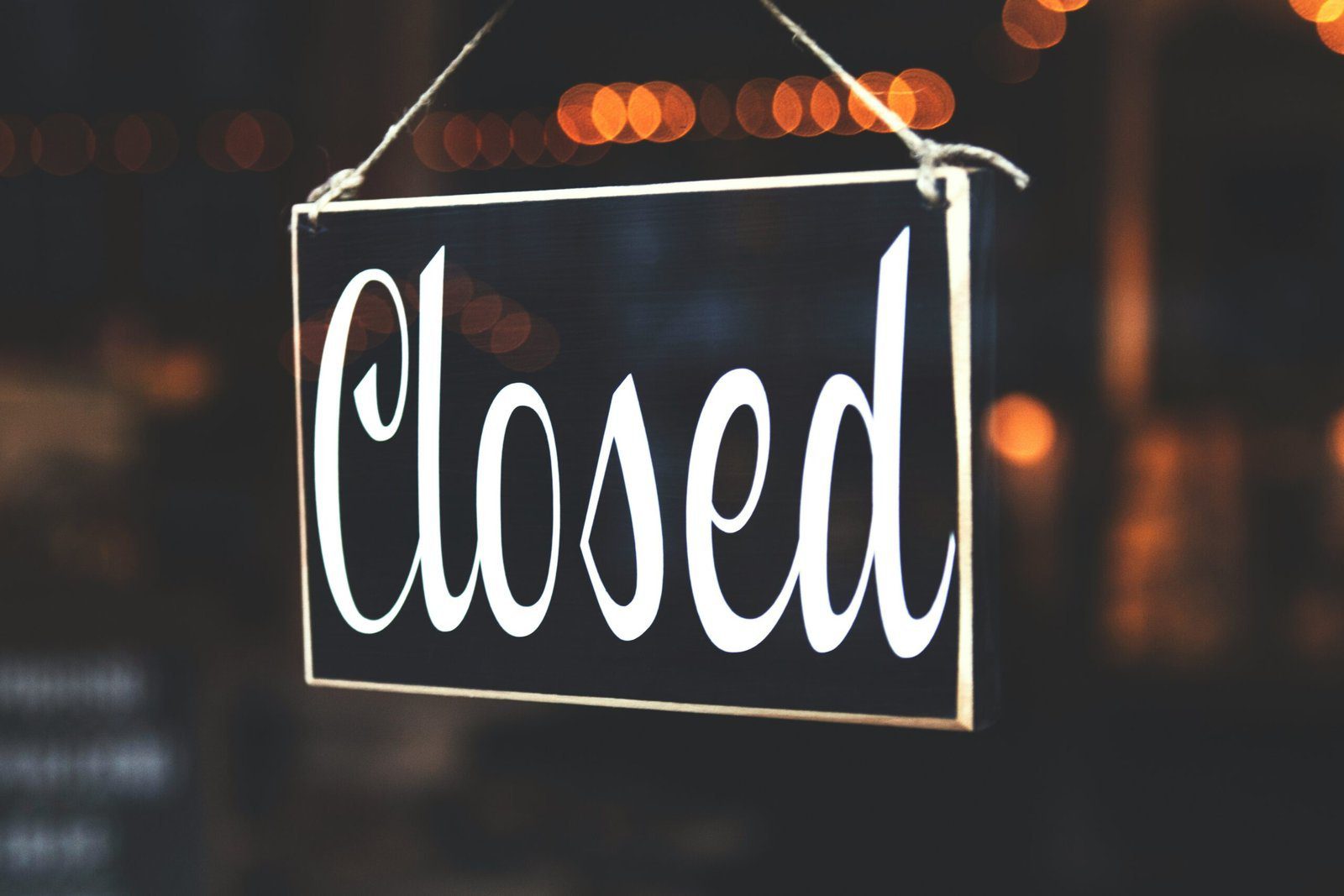
Six letters, six minutes. C-L-O-S-E-D at 8:00pm. It’s now 8:06pm.
I stare at the bold black letters in front of the weathered “J. Hara’s General Store” with a bit of torturous disbelief. My stomach grumbles and I feel my husband’s thinly veiled displeasure radiating off his person like a heat wave. I turn to him and state, “Well now what?”
Grumble, grumble. “I don’t know, honey. I’m just as surprised as you are,” my husband says.
“I know right? It’s a Saturday evening. How can things close at 8 o’clock at night?!”
“Big Island really does things differently from O’ahu.”
I nod in agreement. “Well,” I suggest, “I guess we can try to drive back further into town. Do you want to grab Taco Bell?”
My husband, Jess, ponders my inquiry for a few moments while kicking a rock on the pavement below. I begin to shiver from the evening air while I likewise scan our surroundings.
Currently we’re standing in front of a locally owned market and general store boasting its historical status with old, wooden siding and some sepia tone photos on its outer cork advertisement board. To our left is a gravel parking lot, and to our right is a closed cafe and a small gas station. Other than a few lampposts dotted here or there, the cool, white moonlight shining down is the only illumination we have.
J. Hara’s General Store is the closest to our weekend getaway…a mere 40-minute drive away. Neither my husband nor I really want to keep driving, but we’re too hungry to go back to our campsite without something to eat. We have spent the whole day hiking the Volcanoes National Park and, in our excitement, we have neglected to eat anything beyond trail mix for the better half of the day. So, we hop back into our rental Jeep long past the sunset on Pele’s playground and decide to drive North until we find somewhere to eat.
And now here we are. But we’re six minutes too late.
Perhaps noticing my sudden goosebumps or feeling the cool breeze himself, Jess recommends we head back to our vehicle to try and look up something else on Yelp. Up until a few miles down the road, we have had no phone service, thus the time discrepancy with the restaurant. Agreeing, we begin to walk to the Jeep, chatting about our day all the while, when the young couple at a gas pump catches my eye.
Other than the not-so-amenable employee closing up, my husband and I, and the couple, the parking lot is empty. Typically, I mind my own business, yet I can’t help but notice that the man has been fiddling with the gas pump for the entire time Jess and I have been there. It clearly has an “OUT OF ORDER” bag over its handle, so I can’t understand why he would be trying to use it.
They look young, and seem stylish; the man sporting a boy band singer haircut and monochrome black ensemble and the woman, with her profile poking out of the top of the red Mustang convertible, is pretty enough to be an actress. He continues to call out to his female companion, with increasing frustration when suddenly it clicks.
He’s speaking Korean!
(Image courtesy of Kang So-eun via Pixabay)
Many years before I wound up at this gas station in Kurtistown, Hawai’i, I spent many nights in Monterey, California at a little place called the Defense Language Institute (DLI), the United States military’s premier language learning academy. For sixteen arduous months, I spent upwards of seven hours a day, five days a week learning my assigned language of Korean to become a linguist in the US Navy.
Frankly, the experience was very difficult for me. Although my aptitude was great, and I had not much trouble with the actual Korean learning process, many of the emotional, physical, and spiritual aspects and consequences of my Korean course were back-breaking. The rigorous military-school work balance, homesickness, youth, poor self-esteem, and even just the blunt, and seemingly callus treatment from our native Korean instructors often wore me down.
I can see now how these experiences shaped me and helped me become a much stronger version of myself today, but at the time, I was often melancholy and filled with angst.
I channeled my feelings into despising the Korean language for being required to learn it. I didn’t want it to come to me easily; I wanted to fail and start something new in the Navy, but my fear at what the military would do to me were I to quit at such an advanced stage forced me to continue to perform well academically.
Essentially, I had shown my potential in a difficult course with a low retention rate. Were I to fail, my superiors might know I was doing so purposefully and reassign me a terrible job in the Navy. Like painting ships for twelve hours a day. Needless to say, when I finally graduated from DLI, I was excited to move on and my first duty station was…well, you guessed it, Seoul, South Korea.
Many aspects of living in Korea were very enjoyable, like the cuisine, shopping for cheap skin care and beauty, all activities I enjoyed, though I was not a huge fan of the culture itself. Being a foreigner, even one who spoke Korean fluently, didn’t exactly help me feel at home. The homogeneity of the society only succeeded in making me feel like a fish out of water, no matter how hard I tried to swim.
My time there, luckily, was short, lasting only about four months before I was reassigned to Hawai’i. I’ve more or less been here ever since, though I left the military about a year ago. Nevertheless, my relationship with the Korean language and Korean culture has always been one of contention for me, with me rarely speaking Korean to this day.
Do I speak Korean or not?
So it is, on this June evening in the middle of seemingly nowhere on a verdant, tropical rock in the middle of the sea, that a young Korean gentleman and lady are in need of help, and, if you believe in it, divine intervention sends a Korean linguist their way.
As my husband and I approach the door of our rental car, I feel a mixture of anxiety and apprehension enter my gut. Should I help them? No, they’ll figure it out. But they’ve been stuck there for a while already. But what if I try to help and I mess up? Will they understand me? No, I should just let it go.
Then, I think, “What if they were me?”
I feel myself walking toward the pair as if my feet had a mind of their own. Even if I am shy and my past experiences make me wary, I am going to help these people if it is the last thing I ever do.
After all, especially having come up the way, I know there is nowhere else to get gas but another ten miles north or so into Hilo proper. What if they can’t make it back that far? No, we will Korean our way through this together.
“Hwaiting!” (Pronounced more like high ting, the marker is similar to “Let’s go” or “Do your best.”)
I approach the man meekly, but then energetically surge into Korean, like we’d known each other our entire lives, though much more politely, I hope. He is definitely surprised, but I can see the relief on his face. I explain, “Ee-go-noon an-twey-yo” (It doesn’t work), and that he has to use a different one, that these other pumps have 89 or 93 octane, depending on what the Mustang needs.
His girlfriend/wife even steps out of the car to say thank you, as they are clearly getting very flustered, having never been to the US and are not completely versed in English, signage, and the like. Before we part ways, we even bow to one another as is customary in Korean culture, though rare in Western ones. In spite of my initial fear, I am able to help people in need. This holds a special meaning for me.
As we walk back to our Jeep, Jess says, “Nicely done, babe! I’ve never actually heard you speak Korean before. You seem really good.”
I reflect for a moment on his words. At DLI, our teachers enforced humility. Even the top student was not good enough. In Korea, I never felt good enough either, being a boulder in a world of pebbles. In my heart, I often struggle with worthiness, too.
But tonight, I look at my husband proudly and smirk, “You’re right. I’m actually kind of a pro.” Lesson learned.
If someone asks “Who are you,” how would you answer? Could you even answer honestly? Would you even answer in the first place?
“Who are you?” A simple question I’ve been very familiar with growing up.
Different, though?
I still remember an incident as a child when my family and I visited a distant relative. My mother prompted me to go and greet our hostess, and the first thing that came out of her mouth was, “Who are you?” To which my mother replied, “She’s my youngest daughter.”
Our hostess looked taken aback. “Is she? Why does she look so different from your other kids, though?” My mother explained that I inherited my father’s genetics, which stopped further questions.
Another incident was when my mother’s brother and sister-in-law once visited us from the US. I greeted them as they entered the house. I was already in high school at that time. My aunt asked, “Who are you?”
My mother would once again explain that I am her youngest daughter. My aunt quickly responded, “You gave birth to another child? I thought you only had four children! Why didn’t I hear anything about her till now?” she asked, surprised by the revelation.
Another shock came when I was already in my thirties. A friend of mine arranged a job interview for me at her office. I asked her if the boss knew about the supposed interview, but she assured me that everything was good. However her boss was unaware of it, and to my utter embarrassment he asked me in front of everyone present, “Who are you?’ Justify yourself.
It’s funny how I still remember these incidents after so many years. There were still a few more incidents when I was questioned “Who are you!” I slowly became accustomed to the demand.
As a child, hearing this question over and over felt odd in some way, but I thought nothing about it. In my young mind, I thought it was just a usual way of life. But, as I matured, it made me question my very existence more and more.
“Who am I?”
I would have answered it directly and honestly if not for the rumors flying around that I could no longer ignore.
Some circumstantial shreds of evidence also led me to another question, “Where did I come from?” I tried finding answers on my own with no success. As the holy scripture has its Genesis, so should I.
“How did I come to be?” a question I needed an answer to
When I was about eight or nine years old, my eldest sister had a little disagreement with our father about me, then she referred to me as their “ward” in a burst of anger. This incident made me realize that something wasn’t quite right with my situation because, even in anger, she should have referred to me as her sister, right?
Nosy neighbors, friends, and relatives often asked my parents where I was born; surprisingly, they always had different answers. My father would say that I was born in Manila, while my mother insisted that I was born in the province, leaving me with more questions and doubts. I mean, which parents would provide opposing answers to a question they should have known the answer to, right?
Am I really “the daughter” or a “long-lost daughter of someone else?”
Why does my very existence drive people to ask “Who are you?”It’s a question not even I can answer.
Not even family members are willing to answer. To the grave and beyond, I will carry these doubts. How I wish…. that I could proudly say that I know myself like the back of my hand, but I simply cannot, and that’s just how it will perhaps be for a long time.
Who am I? I feel like a simple person, still trying to find her niche in this world, trying to thrive and find happiness along the way, but if someone asks who I am in a literal sense, my response would be, “I don’t know.”
So many questions left unanswered, one after another.
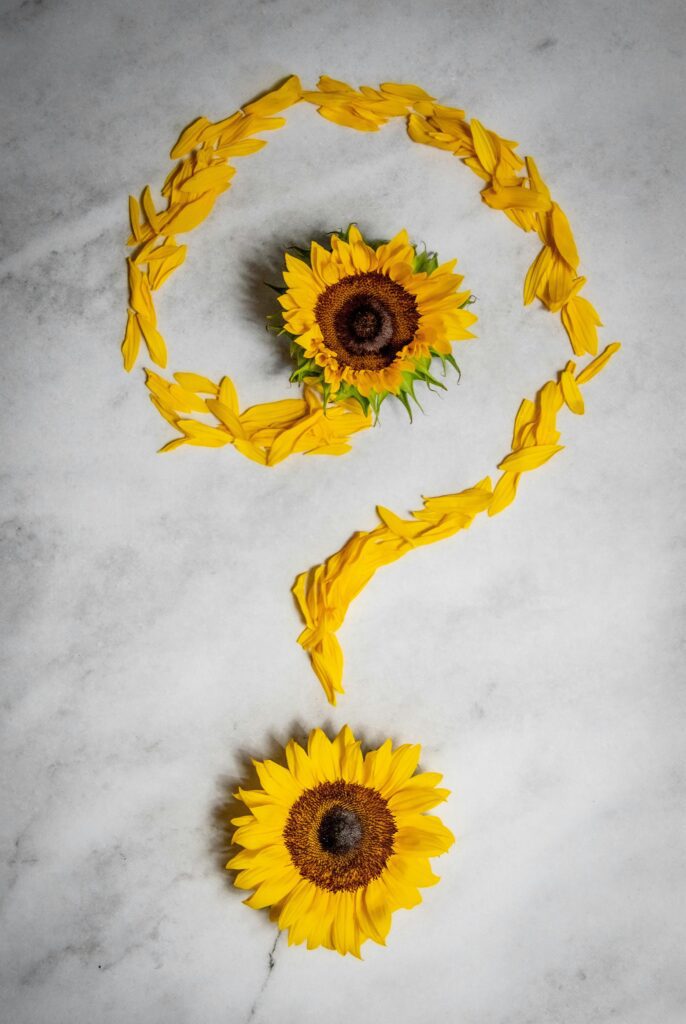
(Image courtesy of Magda Ehlers via Pexels)
Who? What? When? Where? How? All running through my mind nonstop. And every time I try to unravel the mystery, I am met by a wall so high blocking my view of the truth.
I am already weary of looking for some clarity. Yes, the truth might hurt, but also set me free? Only time will tell if I will ever discover the truth. With the way things are at the moment, who knows if I’ll ever find the perfect answer to the nagging question: