
Life Stock

When the announcement was made Robert went numb. As a high earner with status to boot, a total reset of employment and the job market wasn’t exactly in his favor. Robert had hit something of a private, personal, custom-made shellshock.

That was certainly how he felt in the days that followed. Sanitation workers and inner city school teachers were jubilant across social media channels #NewLifeHereICome. Delivery drivers and personal support workers were no less elated, birthing their own TikTok trend. “The Finale” involved displaying and dismissing their final paycheck to the camera (oftentimes with a colorfully worded limerick), before buying a round for the entire bar they were in and toasting the new life ahead. Robert, however, was not feeling so exultant about the seismic change.

He wasn’t alone. There were hundreds of thousands, who, having their 9-5 (or more) taken from them, felt wholly bereft. People openly admitted it in online forums. Even those who were understimulated, or verged on disdaining their jobs, were dreading the prospect of the unknown. There was the comfort of the familiar that so many shared irrespective of its quality. Many made comparisons to the lockdowns of the COVID-19 pandemic, that maybe the time off before the next chapter would bring a different perspective. And then there were the few… the few who really did love their jobs or felt it firmly anchored their identity, who couldn’t shake the dread of what was to come.

Robert came home that night to his wife of 12 years, Marie. She knew him in her gut, could feel him, often more able to identify his feelings than he himself could. Robert wasn’t a go-getter, a strident male. He was perfectly charming when out of his head and grasping his own quiet confidence, but… this was a man who wanted things simple and free of uncertainty. Marie chose Robert for this very clear bottom line of his character; Robert Jessop was relaxed and dependable. 

Marie knew this was a painfully uncomfortable time for him. He was borderline mute the evening of the announcement. Marie took it in stride like many others had. She’d had to adapt and claw for everything she’d earned in life. Robert not so much. He was a man who liked the path laid out clearly before him so he could diligently, carefully apply a lifelong perfectionist streak. The “Draft” demanded improvisation and malleability in dimensions yet to be defined. Their usual routine on a Thursday evening was a movie night at home. A warm and cozy nest comprised of blankets, pillows, and bowls of popcorn. That Thursday night, Robert was cold, unblinking, and sans appetite.

The announcement had been rumored. Workplaces, social spaces, and homes were all participating in the conversation– one they had seen on screen after screen, heard on podcast after podcast and witnessed woven into and dodged on podium after podium. AI had gone from replacing some jobs to just gobbling up so many it was dizzying. Job security may have been on the wane in the decades leading up to the Draft, but it had become untenable.

Entire fields were vanishing into computer programs. The knock-on effect on education and vocation was enormous and rapid. The world simply could not keep up. Robert wasn’t glib. He’d gone from doing long hours of case work to completing the repetitive tedium of entering prompts and proofreading AI. When it first arrived, AI helped Robert do his job, but it wasn’t lost on him that it had been the other way around for quite a while. As a legal professional, Robert was quietly hopeful he’d be safe. He was wrong.

Just an email. Cold. Blanketed. Faceless. Factual.

To Whom It May Concern:

This role is no longer statutory.

Make arrangements for departure by the day’s end.

You have been entered into the Draft- 1st Round.

May you succeed in your future endeavors.

The Government disseminated automated, prerecorded announcements to the public of the Draft. There was no human face or voice to the entire operation. The few bullet points afforded to the public on the Draft and its “1st Round” were cold comforts. It spoke vaguely of roles including “Adjudicators” and “Assignors.” After three days at home, which Robert mostly spent listlessly plodding about his flat like a toddler lost in a supermarket, the next email would arrive.

Robert was made an “Assignor.” His new job was to give new jobs to people. The pay wasn’t what he previously had, but it wasn’t shabby either. He was informed he was a practical fit for the position’s personnel specifications and that it was an in-person role along with “Adjudicators.” Robert couldn’t help but feel a wave of unease. This entire great transition had arrived ad-hoc through faceless digital means, yet somehow the most febrile part of it required human faces on the front line.

As an Assignor, Robert was in an eerily similar position to his previous. He was aiding an automated process in which present jobs had already been delineated and chosen, but he had to be there face-to-face to inform people of their fates. Marie tried to assure him that his position would be placating to people, that he was the human face of comfort at the end of a big change most didn’t feel prepared for. Robert felt more convinced that he would be performing some bizarre inverse of Zoom call firings from the early 21st century.

Reading over the job description, there were elements that left him with only questions. The brief outlined “Placebo” roles. These hires were not necessary, were not needed, and were already being performed by automation. Then… why were people also getting assigned these roles? What was the Placebo? Was it AI and machine learning’s way of squeezing more knowledge out of human error, or just a social experiment for only AI’s amusement? 

***

He would never forget the first day at a community center renovated for machine purposes rather than human ones. Community centers used to always be unkempt, charmingly messy– a worn book with folded corners. They revealed a space that had been lived in, appreciated, and occupied by many over the years, but, now, Robert entered a vacuum of a space. Off-white glossed every angle; a crisp echo from every sound made; a sight belonging to a space station instead of planet Earth. He made his way to the desk outlined in the brief, used the login information provided and waited until the line outside bubbled and slowly spilled over inside.

He’d never forget her face. He noticed her before she reached the desk. A haunted, wide-eyed expression standing out from the crowd with dark, deep, mahogany eyes that radiated a hurt sadness. The woman’s aura shone through in a line that breathed anxiety and discomfort, no loud sounds, just a continual collective fidget and darting eyes. The entire line screamed of people who were just bursting to ask questions but didn’t dare speak. There was one glaring issue – there was no Adjudicator. Looking at his brief for the umpteenth time, his eyes didn’t deceive him. Robert was supposed to have a fellow authority figure, they just weren’t present. He took a deep breath, readied himself to start proceeding when a voice boomed from outside.

“‘Scuse me, ‘Scuse me,” a rough male baritone trampled the fragile ambience.

Its source soon strode through, a large, hulking figure of a man. One would assume that a bouncer or cage fighter were his potential former posts. He was  dressed in black, with a loaded utility belt across his waist, and a confident swagger on approach. Upon reaching the desk, he outstretched his large hand towards Robert.

“Alrigh’ boss?,” a near giddy tone produced.

“Yeah… Your name?,” retorted a taken aback Robert.

“Maocum, I’m ‘judicatah. You the assina, right?”

“Uh, yes. Robert.”

A satisfied grin swept across Malcolm’s face. He tucked his thumbs into his belt, which on closer inspection held a stun baton, pepper spray, and a taser.

“Readuh when ya are,” Malcolm near purred in excitement, before turning away in smug satisfaction.

Robert looked out to the line. All eyes were on Malcolm. The air had gone from buzzing with anxiety to stiff and stilted with fear. Robert’s misgivings were true, the deep-seated ones he had held long before the Draft was upon them. It wasn’t that the machines were taking over the world. It was that they couldn’t see the humans living in it. His first day of the Draft was confirmation.

Robert was the bad news while Malcolm was crowd control.
The Social Foundry: Teaching Life Skills to Youth With Community Support

In Brighter Tomorrow, we like to share stories of changemakers from all over the world. Here is one from the land down under. 

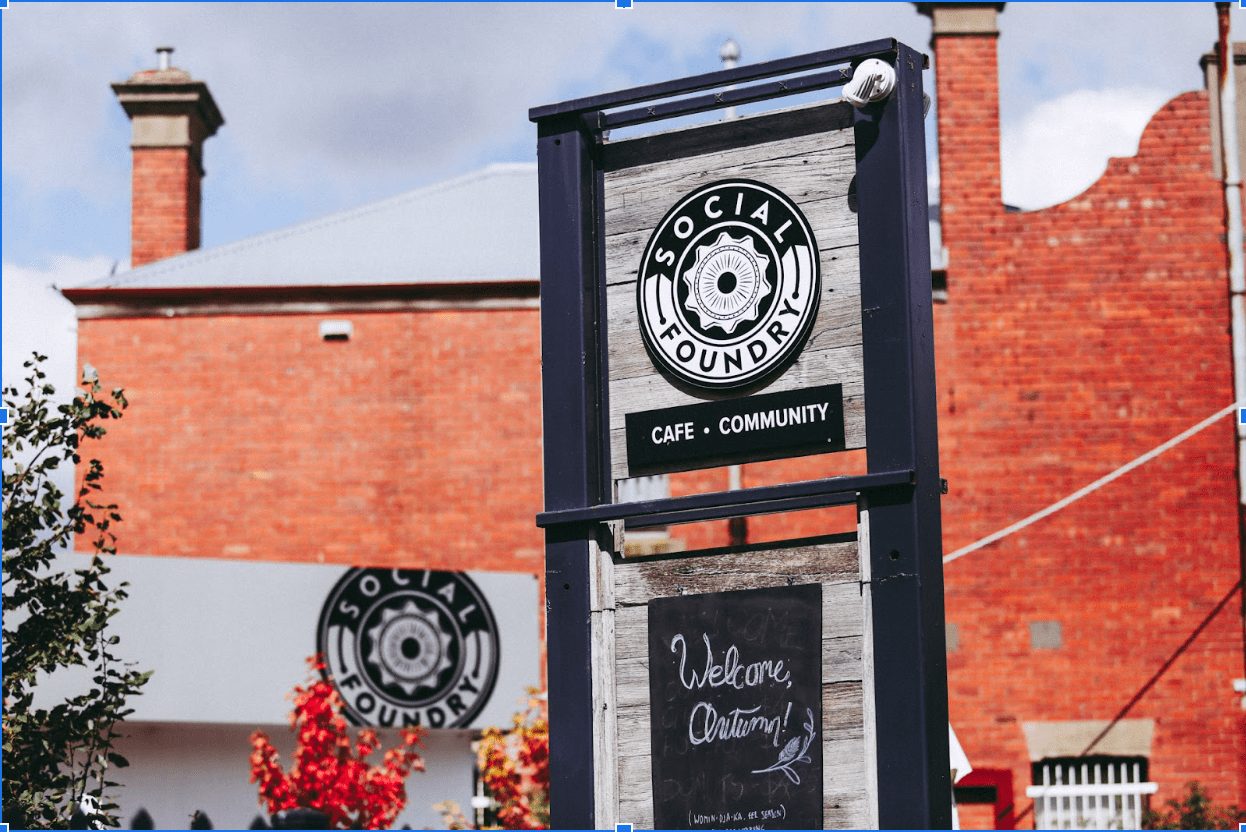
In the rural Australian town of Kyneton in the State of Victoria, the Social Foundry offers “standout food, coffee & service, while also delivering hands-on training for local youth facing barriers to employment.” I had the pleasure of interviewing one of their staff members, Sue-Lee, who works as the community life coordinator. She shared a couple of success stories that the Social Foundry helped create:

Ashley (a pseudonym) came to the not-for-profit after she finished high school and sought a job. She wasn’t sure what she wanted to do. Young school-leavers like her in the countryside have few opportunities to find work so she found help through an employment agency. One thing led to another and she ended up on the doorstep of the Social Foundry. 

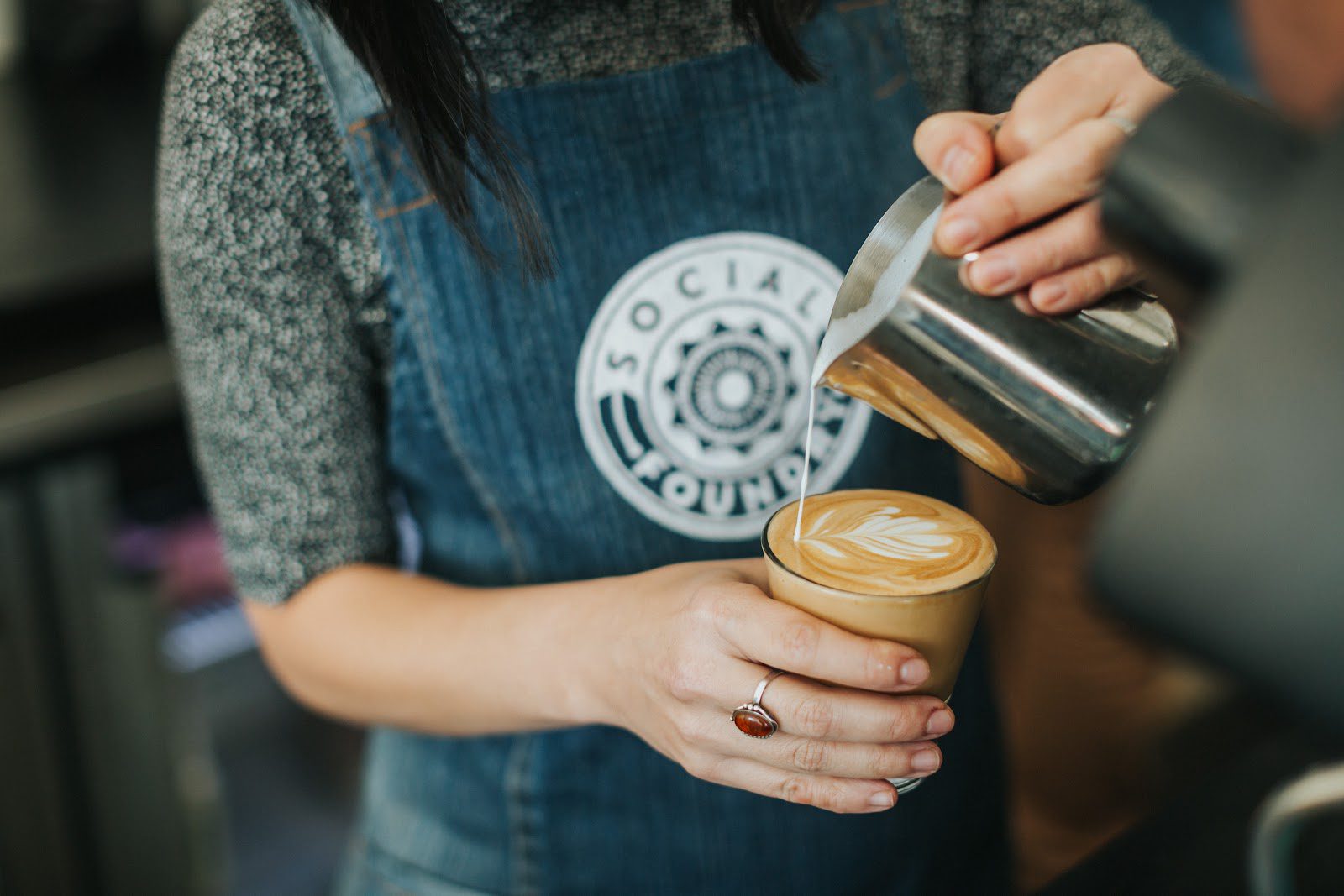
Ashley, as Sue-Lee said, “started off doing the first 10 weeks – it’s called the work skills program. So it’s a 10-week program once a week and we started her off in front-of-house doing customer service delivering drinks and food clearing tables and towards the end of her work, we got her to do a skills program with us. We started her off on the coffee machine. And she really enjoyed that and said in that shift that it’s the first time in her life that she’s found something that makes her happy. So we asked her if she wanted to continue the program with us and do another lot of 10 weeks.” 

Sue-Lee then said it was decided for Ashley to continue on the coffee machine and get trained as a barista. At the end of the ten-week training, Ashley found a job in a local Kyneton café. 

This concluded Ashley’s training and introduction to the world of work. As a result, the trainee’s mental and physical health improved. She said her parents have seen the change in her and her confidence has been built up after it was struck down by her declining mental health. About Ashley’s journey, Sue-Lee said, “That was one of our many good news stories from our program.”

(Image courtesy of The Social Foundry)

In a city like Melbourne, known for its coffee, hospitality is an easy entry into the workforce. It isn’t easy being in the hospitality sector as the market is saturated despite the ubiquity of cafés. Add a social enterprise model into a cafe and there is the additional challenge but Sue-Lee affirms that the reward of all the good news stories make it worthwhile. 

At this point of the interview, Sue-Lee also recounted the story of Jane (a pseudonym) who, in August 2023, trained at the Social Foundry in her year 12. She was from a local high school and could not finish her studies because of her issues with anxiety and lack of connection with the school program. Her school counselor referred her to the Foundry and from there, she began to change. Starting with a short shift of four weeks, she enjoyed life at work rather than at school. She then moved on to the full ten-week training course, like Ashley did. 

“[Jane] came to us last August and was in Year 12 at a local high school and couldn’t finish her year 12, just because she was feeling quite anxious and was not connecting with the school program. Her school counselor shared about our program and introduced her to us. And so we started her off with a short shift for four weeks. When she finished that she enjoyed it. So we asked if she wanted to follow up with the work skills program, which involves a full day shift once a week and she continued to do that.”

According to Sue-Lee, Jane loved the work skills program and became a trainee upon finishing it toward the end of 2023. While training, she also handed out her resume to get a job further down the line. She worked short shifts again at the Social Foundry as she prepared to enter the labor market because she felt working a full day was a bit much for her. After finishing the program with us, she got a job at a local café just around the corner after being employed briefly in a local supermarket where she stopped getting shifts. It was a victory for Jane after a period of feeling low. 

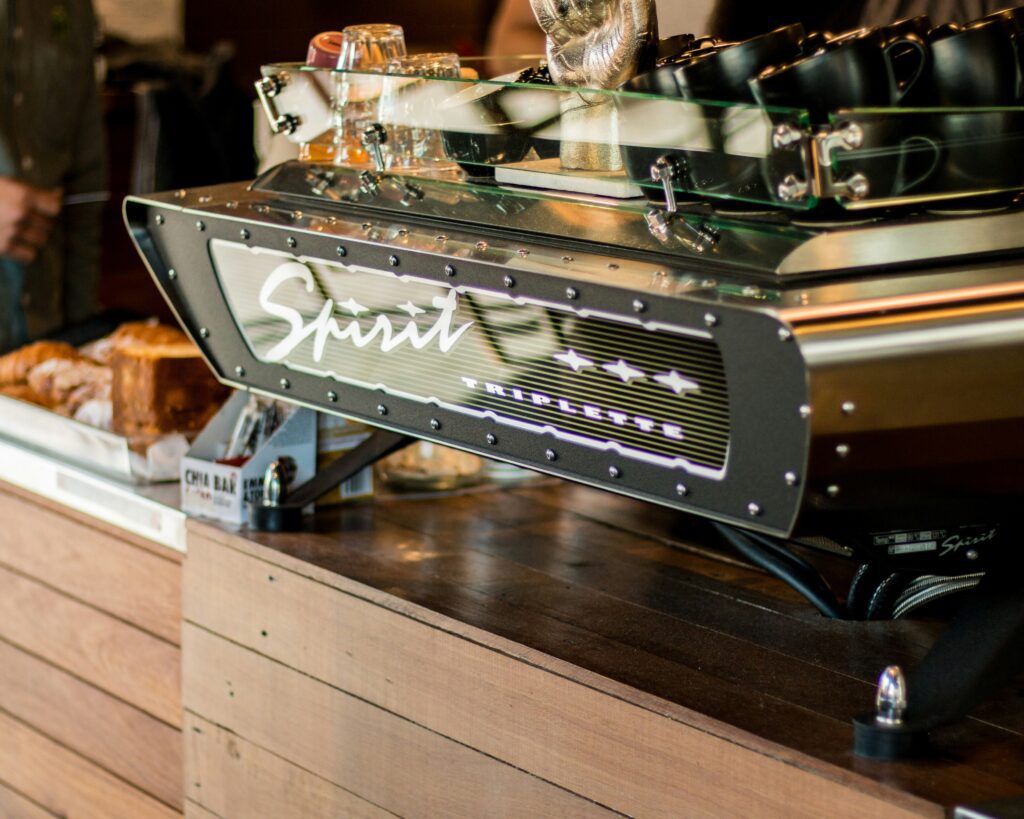
(Image courtesy of Padraig Treanor via Unsplash)

Sue-Lee’s testimony about these two trainees shows that the Social Foundry’s approach is a winner for empowering local youth to engage with their community and the workforce. They say it takes a village to raise a child, and sometimes we forget that only a community can bring the young back from their detachment from society and work. 

Social Foundry, like many not-for-profit organizations, tries not to rely on grants and instead aims to work toward a self-funding model through its café, and event space. Try visiting it if you plan on a trip to rural Australia. The mountains and landscape there are breathtaking and are easily accessible by train. Kyneton, an hour’s ride from Melbourne, is known for its great literary culture and is home to some of the best cafés in the world, staffed by expert baristas.

Congratulations to the Social Foundry of Kyneton, Victoria for its impactful community work in Australia. The project was honored with the Yuvoice Brighter Tomorrow award on August 4, 2024, for its efforts in connecting youth to their community and helping them to overcome barriers to employment. On behalf of our Brighter Tomorrow team, thank you for taking the time to be interviewed. 

My Immigration Story: From France to Canada

I was born in eastern France near the German border, into a large family of modest origin, all raised by a single mother working as a cleaning lady. We are Algerian, Berber and Muslim, and have been educated in this double French-Algerian culture, which was so unique because of its history.

Despite a socially-valued job, my day-to-day life was sorely lacking in meaning. I was no longer interested in it. I had achieved a dream and I was aware of it and grateful for it, but boredom was getting to me more and more. I kept asking myself: what would the next step in my life be? What new chapter could I write?

Following my dismissal and a romantic breakup, I had the opportunity to travel for a few months, which allowed me to think about what I really wanted to do. 

Back in Paris, I tried to apply for jobs, but to no avail. I was mostly turned down or didn’t get any response. The frustrating thing about France is that you never know if the rejections or lack of a response is due to you, your profile not matching the criteria, mistakes in your application, the availability of another more suitable candidate, or due to the discrimination faced by non-white people.

According to a 2021 study conducted by DARES (i.e. Research, Studies and Statistics Institute – “Direction de l’Animation, de la Recherche, des Études et Statistiques”): “On average, for comparable quality, applications whose identity suggests a North African origin are 31.5% less likely to be contacted by recruiters than those with a first and last name of French origin.”

Frustrated and losing confidence because of these rejections and the lack of responses, I continued my applications to resume my studies. I was convinced that this would give me an extra asset to distinguish my profile and get a job.

After many ups and downs, I got an offer from a prestigious American university, UC Berkeley. However, I couldn’t accept it because I couldn’t afford the tuition fees and cost of living in the San Francisco region, which was crazy expensive, nor did I have solid guarantees to apply for a loan. But looking back, I think that deep down, I didn’t want to do it then. I wasn’t ready. I had more personal things to accomplish, other adventures to live, and all things considered, I told myself that I would probably do it later. I decided not to because I preferred to defer the pursuit of my studies for when I will be ready personally and financially.

“To my great surprise, although I no longer expected it (…) I was randomly selected to apply for a visa to Canada.”

When I was no longer expecting it and had resigned myself to continuing my fruitless search for a job I wouldn’t like, I was drawn to apply for a visa to Canada.

Hope surfaced again when I saw a goal ahead of me. It was as if an angel was guiding me towards another path, my path, the one on which I would finally find myself and experience fulfillment.

I was deeply happy to move towards a purpose, to have a new challenge, to seek and renew myself elsewhere, despite the many worries about the distance from my friends, the precariousness of my situation, and the uncertainty of such a project.

What was I looking for in Canada? What would I find there? Would I find anything? Would I be happy? I asked myself countless questions, but those questions didn’t stop me from smiling broadly when I talked about it.

The application process went well as there are tutorials for french applicants. As French citizens, we have a specific advantage: the working holiday visa is a two-year visa, unlike for other Europeans.

I wanted to live in a North American and English speaking environment, and Canada was a good compromise between European and North American cultures. I heard that Canada was a more open society in terms of gender and identity, unlike France, which follows a logic of assimilation. 

“Despite the odds, all these people continue to move forward, to dream, to dare, to live.”

Overlapping skyscrapers
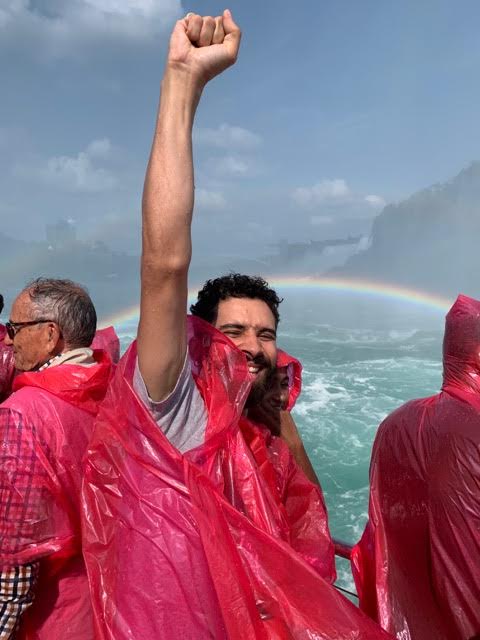
(Image courtesy of Malik)

A few months later, I arrived in Canada. Everything is different here; the buildings, the people, the language, even the air I breathe. I feel full of energy, overflowing with enthusiasm, surfing on a wave that brings a radical change to my person. The excitement is immense, I want to try many things, to meet people, to experiment, to enjoy life even more. I have real curiosity that needs to be quenched. 

However, I must admit that the pressure is strong. The imperative to find a job and a place to live in order to integrate quickly and to be autonomous is not easy when you arrive in a new country where you don’t know anyone and where you haven’t yet mastered the culture. 

I was in Toronto for two months, planning to move to Montreal in the future, and I felt that it was very hard to connect with people here. I noticed that everyone seemed to be in their bubble and I noticed the lack of interaction between people. 

Toronto is a career-driven city where people seem to pursue personal goals whatever they are without connecting with others, which is really different from Paris and France in general, where things are going on in the streets and where people interact with each other. Although even that seems to be mostly arguments! The most I could get from others was small talk without learning their opinions and perspectives on things, whereas French people have an opinion on everything which I admit can be exhausting sometimes.

The thing I love here is the openness of people and that they care about mental health. They won’t judge you based on your identity or your appearance which is very freeing. The work culture is different and seems to care about people’s well-being, or at least more than in France.

Then I met a group of French people who also recently immigrated along with others who have been in my adopted country for longer. Many of the stories I have collected are inspiring. 

Some of them made a real impression on me, like the account of a 30-year-old young man who was selected to immigrate here last spring and had left everything, even sold his house, in order to come and live in Canada. He told me about his dream of becoming a pilot, which was simply born after taking an airplane flight course that his relatives had given him for his birthday. Today, he is going to Alberta to work at a ski resort for a while and wants to train to soar in his chosen field.

Then, there are two girls who left Montreal to move to Toronto to pursue their Canadian dream and improve their English. I also met a girl from Liège in Belgium who came to be a teacher in Canada and had to change her plans because of the pandemic. She is now an au pair and seems happy.

As I continue to live in Canada and explore more, I aim to discover more about myself and who I want to be, and this doesn’t go without the career pursuit which will come later. I will also keep in contact with the people I meet. As I am moving to Montreal soon and will be meeting a lot of other immigrants and locals, I will nurture and inspire myself with their stories to create mine. In the meantime, even if I do connect with others, I want to write my own story and I need to reflect on all of that to pursue my quest of self accomplishment.

It is all these stories of immigration experiences that are different from mine, and which may seem more classic, that sustain my hope. Behind each person is a story. Despite the odds, all these people continue to move forward, to dream, to dare, to live. They have a thirst for life and experiences that make me say to myself that everything will be fine, and that despite the setbacks, I will land on my feet. Because of them, I now feel that I don’t need to stress myself out trying to achieve an ideal immigration experience, or accomplish a specific ambition, but that I can just live this new adventure more humbly and simply.

I’d like to conclude by sharing that I wrote a list of 30 things to do before and during the year of my 30th birthday, when I had written that I wished to live abroad and especially in North America. I don’t know if it’s a manifestation or a twist of fate, but I think I’m about to realize a dream!