My Unlikely Ally Against Doomscrolling

Whenever I think the world can’t get any worse, it proves me wrong in spectacular fashion.

The world has long been unstable, but the last few years have felt especially untenable. Between COVID, ongoing global conflicts, the rise of fascism, and the ongoing effects of climate change, the 2020s have easily become the most stressful years of my life.

During this time, I’ve been unable to stop constantly checking social media. Doomscrolling has been a known phenomenon for many years now, and I’ve been imprisoned since signing up to Twitter more than a decade ago. I initially joined to follow the news as part of my Journalism degree, and while it definitely had its uses it was all too easy to find accounts dedicated to spreading negativity. Since then, it’s been almost impossible to stop myself engaging with these kinds of accounts, which I can now see was my then-undiagnosed OCD forcing me into a repetitive loop.

Doomscrolling is a common problem for many people, especially as the world has become increasingly perilous in the last few years. The term came to prominence during the COVID-19 pandemic, with digital news and social media use increasing significantly during the early days of lockdown. Doomscrolling pulls us in through negativity bias, which refers to our brain’s tendency to focus more on bad news. Once exposed to bad news, I wanted to search more, either to understand the full picture or to find something hopeful.

News and social media sites know full well how addictive doomscrolling can be, which is why you’ll often find dramatic headlines and posts designed to get engagement, good or bad.

I hoped that leaving Twitter (now X) in 2024 and migrating to BlueSky would help me overcome this habit, but while BlueSky is less toxic, the never-ending 24-hour news cycle means that it’s still easy to be trapped online.

Doomscrolling is ruining my mental health, so why can’t I stop?

Unsurprisingly, the constant stream of bad news has had a damaging effect on my mental health. While I hoped that endlessly scrolling would eventually bring some relief, the reality is that doomscrolling only increased my anxiety and trapped me in a cycle of worrying.

As I’ve become more aware of the damaging effects of doomscrolling, I’ve tried many different ways to break this habit: installing time management apps, forcefully blocking social media on my phone, making the process of checking my phone as tedious and time-consuming as possible. Despite those, I still find myself unable to stop the habit, so I’ve been forced to do something drastic: go without my phone, a constant in my life for more than a decade. 

To force myself to go back to a time when I didn’t have the entirety of human knowledge at my fingertips.

This is much more difficult than it sounds. So much of modern life revolves around smartphones. I buy my bus and train tickets through my phone. I regularly send and receive important messages. I make liberal use of Google Maps whenever I’m lost.

For all the damage that smartphones can do, the annoying truth is that they’re essential for modern life. I’ll likely never be able to stop using my phone completely, but I have started to avoid it wherever possible.

The biggest problem is that I travel a lot, and am so used to whiling away the hours on my phone that suddenly going without it has been difficult. That is until I found the unlikely answer.

How a 20-year-old gaming console is helping me beat doomscrolling

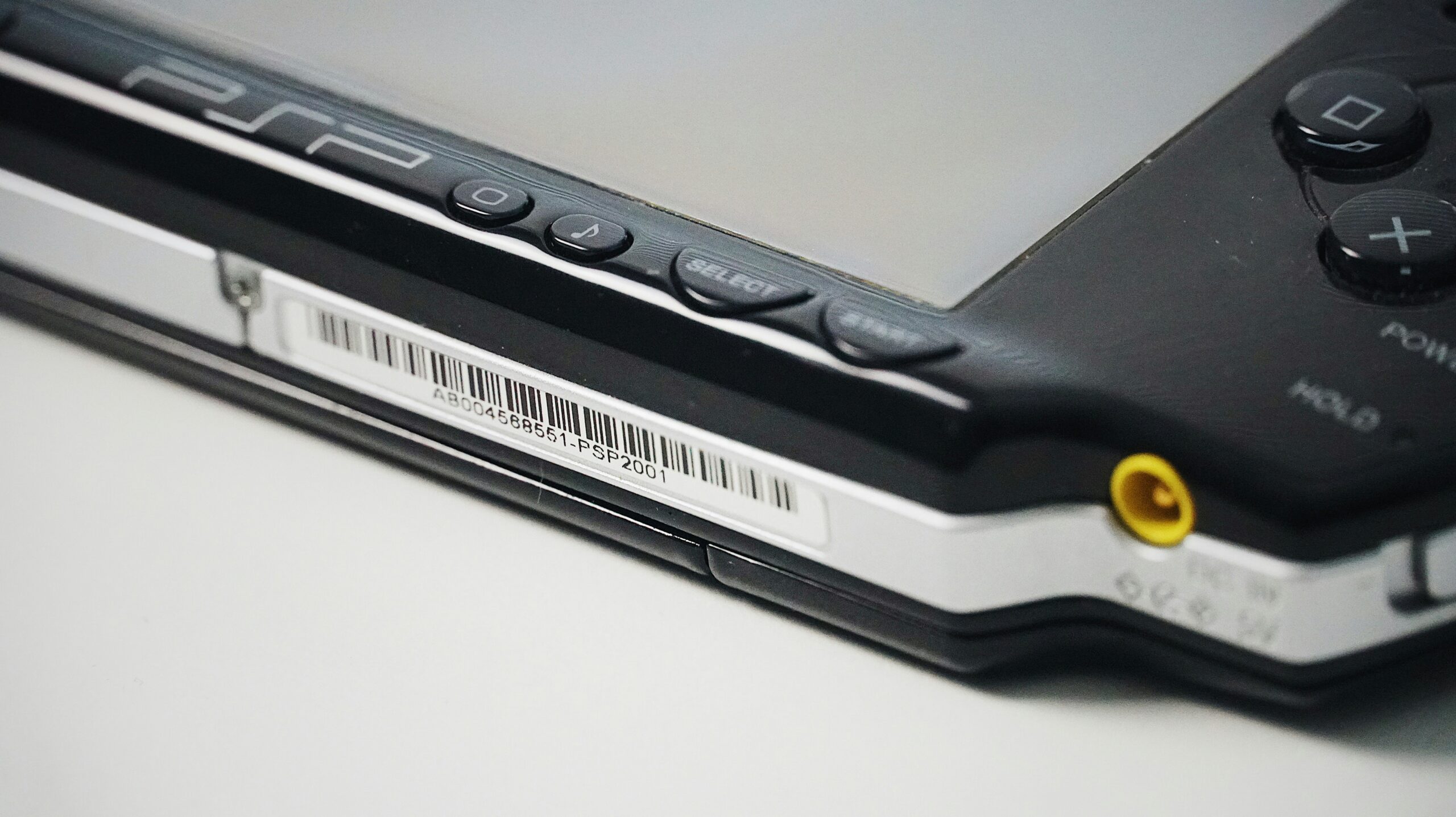
During one of my regular visits to CeX, a second-hand tech shop in the UK, I found a PlayStation Portable, or PSP.

PSP was released by Sony in 2005 as a handheld version of the PlayStation. It apparently sold well, but while I was aware of it growing up, I never had one myself.

Seeing one in the wild got me thinking: would an internet-free handheld games console keep my attention when I’m without my phone? I decided to take a chance, buying the console and a handful of games.

I wasn’t expecting much, but the PSP has been revolutionary for my day-to-day life. There are times when I need to keep my phone on me, but alongside it, I’ve started taking my PSP. Instead of checking the news when on the train, I’ll fire up a quick game of FIFA. In the evenings, instead of mindlessly scrolling through Netflix, I’ll spend hours in an old Star Wars game.

The effect this 20-year-old bit of tech has had on my mental health has been incredible. Alongside the nostalgia inherent in a retro games console, the ability to unplug from the 24/7 news cycle, even just for a little time, has been a massive help. The PSP has no internet; the built-in browser hasn’t been updated in a long time, making it almost unusable for anything besides games. 

Deciding to use an offline device has helped me reshape my online habits. Whenever I feel the urge to waste hours on social media, I’ll pick up the PSP for a short while. 

Forcing myself to spend time away from my phone has also helped me manage unhealthy smartphone habits. No longer am I checking the news every five seconds; I only use my phone when I need to, happy to put it away when done. The more time you spend away from the internet, the easier your relationship with it gets.

It doesn’t have to be a games console. I’m just as happy to replace my phone with a book when I’m out and about, but the result is the same. My smartphone is an important tool in my everyday life and I’ll likely never be able to get rid of it entirely, but taking time away from an always-connected world has had an immediate impact on my mental health and helped me rework my mind to hopefully make doomscrolling a thing of the past.

How Therapy Gave Me My Eureka Moment

About nine years ago, I was convinced that my life was over.

I’d graduated from university about a year before that, securing a respectable degree in journalism with good grades. Despite that, I’d left without any real idea of what I wanted to do with my life. Seeing friends with high-profile jobs and their own houses and cars took a toll on me as I struggled to find my place in the world, a calling. Watching others move forward as I felt stagnant caused me to fall into a deep depression, feeling that I had little left to live for. It began insidiously, first pressing on my mind throughout the day – small taps of worthlessness. It only grew as the time from when I had graduated stretched further and further into the past.

I can remember distinctly when I realized that something was wrong with me; it was a cold February day, shortly after my birthday. After a particularly bad dream where I was back at university, I awoke with a near-unbearable sense of despair so severe that I struggled to get out of bed. Nothing would shake the feeling.

Around the same time, my mum and brother had recently completed a beginner’s therapist course with a professional psychologist. The sessions appeared to have helped both of them. Realizing I needed outside help and seeing this as my chance, I sat down with my mum and spoke with her about my depression, my loss of joy for life. She provided me with the contact information for this psychologist so I could begin therapy immediately.

The sessions were slow at first. Despite being open to the support, I didn’t notice any progress in the first few sessions. After the third or fourth session, however, something changed. My therapist said that I already knew it to be true, despite my brain’s refusal to acknowledge it: this belief that my life was over wasn’t correct. I was only 23. Of course my life wasn’t over! I had just needed someone, a stranger, to examine my life and my thoughts and confirm that yes, I still had so much to live for. Such a simple statement, and yet it changed so much in an instant. It was like someone had shone a light in the darker corners of my mind, chasing the shadows that lingered.

You often hear about something clicking inside a person’s head, or a lightbulb lighting up. A ‘eureka’ moment, if you will. I’d never experienced anything like it until that moment. The feeling of despair began to dissipate as a result of that conversation. I was almost euphoric as I told my therapist of this breakthrough at my next session. Once I’d realised that my life was far from over, I worked with my therapist to look for ways to get my life back on track, determining how I envisioned my own success. I continued for a few more sessions, and by the end, I began to see the light at the end of the tunnel. A few months later, I went back to university, earned a master’s degree, and began my career as a writer. While my depression has never completely vanished – especially given the unprecedented nature of the last few years – I’ve become much better at identifying negative spirals and dismissing them.

Therapy saved my life


Writing about this a decade later feels weird. This belief I had held obviously wasn’t true, and it still isn’t today. I’m 32, I’ve worked as a freelance copywriter for five years now, and I recently started working with an international agency. There are still speed bumps here and there – the COVID-19 lockdown was rough, and I still have struggles with OCD and insomnia – but ultimately, I’m quite happy with my life. It’s strange to think back to a time when I was convinced that there was nothing left to look forward to.

Despite all this, I can’t help but wonder whether I would’ve experienced this eureka moment if I hadn’t gone to therapy. If I’d never seen that therapist, would I still be stuck in the depths of despair? Would I even still be here? I’d like to think that eventually, with the help of my friends and family, I would’ve been able to move past it, but I can’t know for sure. All I can be sure of is that I’m glad I got the help I needed.

It could help others like me

I’ve wondered about others who have suffered from similar thoughts. Are they able to see a therapist? Do they find the support they need? I was extremely lucky; I had money saved up to pay for visits, and my therapist provided me with a discount because he knew my parents. Even so, it was still expensive – upwards of £100 a session.

The price of therapy near me has only worsened as the cost of living crisis continues, and the NHS’s backlog means if you’re not willing to go private, you could wait years to see a therapist. There are so many people out there with the same problems that I had, but without any way to get past them. How many people are still waiting for their eureka moment? How long will it take them to chase away their shadows?

I can only hope that, as mental health awareness becomes more prevalent, the UK government will take steps to make therapy more accessible to the general public. It may not work for everyone, but it helped me understand my own brain, giving me the confidence to make connections, and kickstart my writing career. 

I just hope that other people in similar situations, with or without therapy, find a light to guide them forward.

Archie and Riley and Me – Who Rescued Who?

March 23 2020: UK Prime Minister Boris Johnson announces a nationwide lockdown in an effort to curb the spread of Covid-19.

We all remember the beginning, I think. I know I do. The initial lockdown in the UK was only due to last a few weeks when it was announced. It would turn out to be the first of multiple lockdowns throughout the year, heavily disrupting day-to-day life.

Non-essential businesses were ordered to close, and while I, like many others around the world, hoped that this would be a short-term measure, there was no way to know when things would return to normal — or if they ever would.

So that March 23rd will forever be etched into my brain. It’s not just because of the unprecedented announcement that would upend our lives, however. 

It’s because that day was also when I brought home two rescue lurcher hybrids from a local animal shelter.

Wanted: a new best friend

It wasn’t supposed to happen this quickly. 

I’d been looking for a new companion after losing my dog of 16 years the previous December. My family and I took a trip to the local shelter after hearing of eight lurchers — mixed-breed dogs of greyhound and collie or terrier descent — being brought in from Ireland. It took only a few minutes after our arrival before I completely fell in love with not one but two puppies: Archie and Riley.

One thing that became apparent quickly was that they were much more excitable than my previous dog, Mickey. He was a shy border collie, and an accident early on in his life meant he was always a slow walker. These two were Mickey’s opposite.

As soon as Archie and Riley were let out of their cage to run around, it became clear that they were different beasts entirely. There they were, chasing after each other, play-fighting and jumping up at us with abandon. They were wild, and I loved them instantly. We were all certain that we wanted to bring them home with us, but there were a few things to get sorted first. Namely, preparing for the two dogs’ arrival to our home, as well as ensuring our two cats were fully vaccinated. All of this would take a little while, but I was happy to wait for them. We were in no rush. 

Then the announcement came just a short time later.

Non-essential businesses, which included the animal shelter, had to close. We were left with a choice: adopt them now or wait for an indeterminate amount of time with no guarantee they’d still be there.

My family exchanged glances quickly, and it was settled. We brought Archie and Riley home with us that day. Dogs in tow, we drove back home, lurching into what would come to be a global pandemic.

Settling in

The first few weeks were chaotic. In addition to our new reality that Covid had sprung upon us all, my family had to learn how to handle two six-month-old lurchers. Not only that, they were used to running around big fields, and now they were suddenly confined to a house and garden with a full family and two cats, who quickly established their dominance via a paw to the face. Things were stressful (and expensive — we lost two smart TVs due to rampaging dogs). There was a point where I began to wonder whether we’d made the right decision bringing both of them into our home.

A few weeks later, however, that all changed.. It became apparent that the lockdown wasn’t going away anytime soon, and I was struggling to find a job after graduating from university. It was, looking back, the worst period of my life, and it came to a head one night in April when I had a panic attack. This was the first attack I’d ever suffered, and it was a genuinely scary experience — right up until Riley jumped up onto the sofa, sat down next to me, and rested her head on my lap. I’m convinced to this day that Riley recognized I was in distress and wanted to comfort me. Any doubts I had about adopting them vanished completely; Archie and Riley were my best friends and were going to be with me forever. That night confirmed it.

As the months went on, Archie and Riley kept me sane. About a year later, upon getting my Covid vaccines, I finally took them both on a big, long walk to thank them for how much they had done for me.

Fast forward to 2025

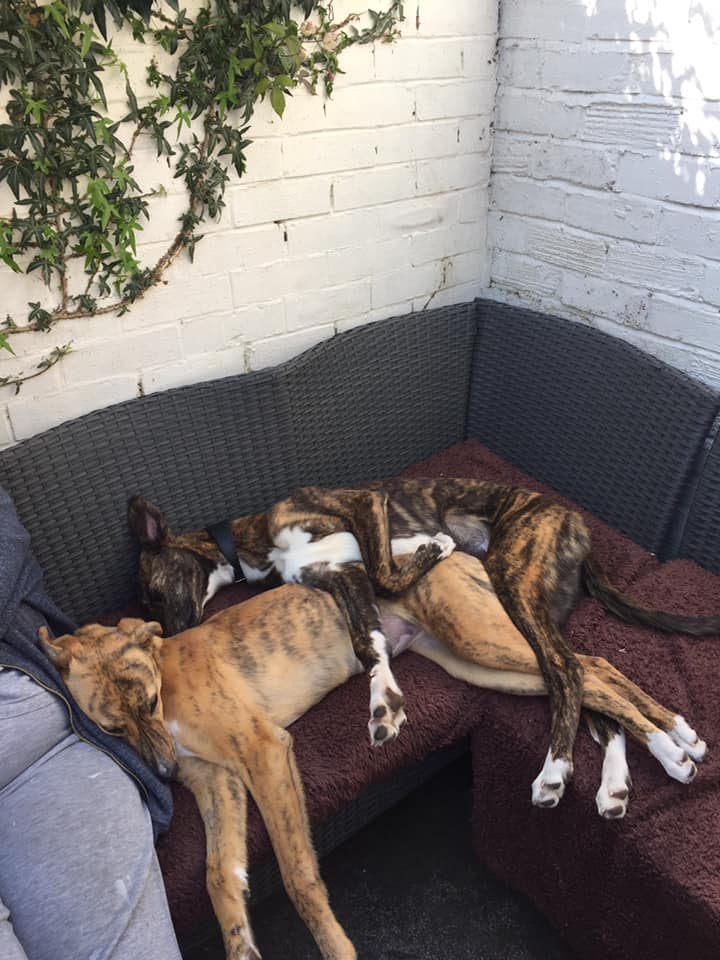
I’m writing this on their sixth birthday. Looking at Archie and Riley now, fast asleep on the sofa, it’s wild to think I struggled with them all those years ago. They’ve grown into well-behaved, loyal, and lovable companions, and they’ve continued supporting me in their own way. Whether in the middle of moving house, grappling with bereavement, or just stress about life, knowing that they’re there has helped me immensely.

I don’t know how I would have fared the pandemic and onward without Archie and Riley by my side. And I’m really glad I’ll never have to know.

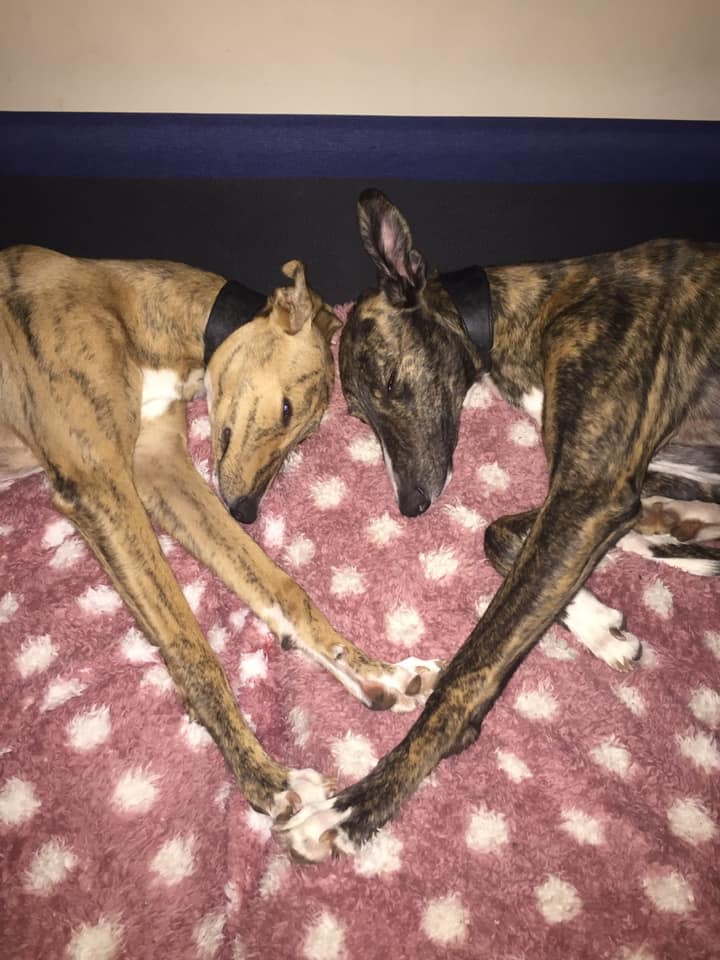
Image of Archie and Riley, asleep on the couch. One is draped over the other.
Image courtesy of the writer.

When Fun Got Lost in the Crowd

New York Comic Con.

An annual gathering of all things nerdy, geeky, and creative. It’s an opportunity to be around like-minded people who enjoy the things you enjoy. It’s the chance to check out all the exclusive merch that’s going to skyrocket in price as soon as the convention ends. It’s travelling into the city with friends and spending nearly an entire day surrounded by the media you adore. You’ve been waiting for this event for months, and it’s finally here. It’s going to be amazing.

Of course, that is how it’s supposed to be. Unfortunately, reality has a knack for falling short of our expectations. This is especially true when you have extreme social anxiety and choose to attend one of the busiest, most populated events of the year — in one of the largest cities in the world. You tell yourself this time will be different; you’re an adult who has been through plenty of anxiety-inducing social situations. Surely this time you’ll keep your cool, maintain a level head, and fully enjoy everything the convention has to offer.

That’s all well and good until you take your first steps through the doors of the huge convention center, already finding yourself jam-packed between an anime swordsman and a book character you vaguely recognize. Somehow, you’re stuck in a security line that looks like it’ll never end. You have no idea when or how you even got into this line with all of the commotion. The heat is intense and getting hotter as other attendees bump into you, your costume uncomfortably sticking to the sweat spots forming on your back. The crowd of people is never-ending, and there’s nowhere to escape to. You’re not even in the actual convention yet, still waiting to go through security, and that terrified little voice in the back of your mind is screaming at you that it’s time to go.

It’s time to go now.

After an hour of waiting in line, you finally get in. For a brief moment, there’s a reprieve. You go to a panel where the voice actors of your favorite childhood show talk about their experiences and show off upcoming media. You have a chance to sit down during the panel, the strain on your legs becoming more noticeable as they finally get a release. But at least things are calm, and your brain isn’t screaming at you to run for the hills. For the moment, anyway.

As they do, all good things come to an end. The panel concludes, and you’re released back into the unfathomable amount of people able to fit into one building that suddenly feels like a reverse TARDIS: big on the outside, but so much smaller on the inside as you bump into one person after the next. Eventually you get lost, your friends splitting up to check out different panels and exhibits while you struggle to stay afloat, hoping for a Moses-figure to part the sea of people and give you an inch of freedom from the growing static and chaos taking over your mind. 

Make it stop, make it stop.

Then, the inevitable happens. You’re having a full-blown panic attack in the middle of a tightly packed convention without a recognizable face in sight. Get out, get out, get out. Despite the roaring in your head, you manage to navigate out of the most crowded zone, stumbling upon a designated “quiet area,” which is only marginally quieter than the cacophony of noise around you, but you’ll take what you can get. You sit down against the wall, your friends catching up with you, making sure you’re okay and giving you time to quiet the pandemonium stirring around your head. Time passes. The roaring quiets.

Once the panic subsides, you feel brave enough to once again enter the crowds. You explore a few more exhibits and panels, your reconvened friend group acting as a shallow barrier against the next panic attack you already feel rising in your body. There are, thankfully, some moments of joy, and you and your friends partake in comic con exclusive activities, walking away with happy memories from the day.

However, even the happiest memories from the convention are tainted by the anguish you endured as your own mind crumbled under the strain of being around too many people. As your friends talk about how much fun they had and what character they should go as next year, you must ask yourself: can you honestly put yourself through this again? Or is it time to accept that you will never thrive in such an extreme social environment?

Who knows?

Image of a large group of people at the Javits Center for the New York Comic Con.
Image courtesy of Connor Gan on Unsplash


I Think I’ll Write That Down

I’ve always seen my anxiety as a spiral.

Whether it increases or decreases, it’s an ever-present factor in my life. While I’ve never been diagnosed with “severe anxiety,” and I don’t experience it daily like some, I’ve dealt with typical nervousness and the occasional worry that things may not go according to plan. Overthinking has  also always been a major factor in my life. 

Without talk therapy, I’ve found writing to be therapeutic for me. Whether it’s fiction or not, my stories are my own. Writing helps me deal with all of that pent-up, anxious energy that may be going to waste. For me, this form of self-help allows me to focus on what’s important and how to improve myself. 

Since my teenage years, I’ve tried many coping mechanisms to help. Breathing exercises, calming music, meditation, and focusing on specific scents help lessen the stress. By using these techniques, my occasional anxiety subsides and helps “reset” my mental health. However, for the past two years, I’ve been able to improve my well-being even more by writing. With a journal and my favorite pen, I can write about anything, allowing myself to vent directly into the lined pages. This form of therapy has reduced the severity of my overthinking. It also aids in clearing my mind; I can think about where the anxiety is coming from before I commit to putting it to paper, leading me to find the source of my feelings faster.

Flashback to the turning point

Ever since I attended and graduated from both Seminole State College and the University of Central Florida, I began to overthink everything, and it nearly took over my life. Much like anxiety, overthinking is something that isn’t meant to be taken lightly, and it led to a somewhat disastrous impact on my physical health at one point. So one day, just like that, I decided that I needed to change my life and better myself.

That was when I purchased my first hardcover journal in 2023.

From then on, I’ve been writing everything into the pages; whether it’s good or bad, it goes along the lines. By putting pen to paper, I can truly express myself and say what’s on my mind without feeling judged. I don’t have an extra layer of stress from interacting with someone, and I’m not forced to deal with any awkward feelings or embarrassment by emotionally dumping everything on a therapist. For me, I don’t see myself having that kind of emotional vulnerability to someone that I could have potentially met twenty minutes ago.

With the journal, it’s one and done. Once I finish any ramblings or add something that may have been bothering me, I feel a significant weight lifted off my shoulders. From then on, I can essentially put the overthinking to bed. Regardless of what the subject matter is, I feel as though I never have to think about it again after writing, which I love. Like writing a shopping list so you don’t have to remember the list.

Not carrying the burden, but setting it down

While writing therapy may not be the best form of self-care for some, it has definitely worked for me, especially as I’ve gotten older. As I’ve become more experienced through school and more aware of the world, I’ve found that journaling is the best technique for me when it comes to keeping a consistent, positive mental attitude. While I choose to not let my anxiety control my life, I genuinely feel that I’m putting myself on the right path with this process. 

Living in a world with constant stress, hiccups, and fears, I’m grateful to have an activity that’s all mine.

A journal splayed open. To the left of the journal is a pen. Behind the journal is a teacup.
(Image courtesy of Yannick Pulver on Unsplash)

Painfully Obsessive

Looking back, I have no idea why it took me so long to be diagnosed with OCD. 

I know that Obsessive Compulsive Disorder is a common mental health condition affecting about 1.2% of the population in the UK. Symptoms can vary quite significantly in different people, but the main symptoms include obsessive thoughts — unwanted thoughts or images that regularly and insistently enter your mind and refuse to leave — and compulsive behaviors that must be performed repeatedly to counteract those same unwanted thoughts.

It’s one of the more well-known mental health conditions, and yet it was only a few years ago that I began to truly understand it, and realize that I had it myself.

The telltale signs of OCD

In my 31 years on this planet, I’ve picked up a few recurring habits that, in hindsight, were obviously symptoms of OCD. These primarily took the form of intrusive thoughts. 

  • You’ll never be good enough to hold down a job.
  • You can’t make friends in your 30s.
  • You are going to run out of money.
  • You’d better not show up to social events.


Nothing particularly extreme, but enough that it would take a toll on my mental health.

Then, compulsive acts. For me, it was regularly checking my bank account and making sure the doors were locked at night. Again, not particularly unusual, but when you’re doing it multiple times in quick succession, it can start to get out of control.

The stigma surrounding OCD makes it easily misunderstood

The problem with OCD (and indeed with many mental health conditions) is that there’s a lot of unhelpful information I’ve read, so it can be hard to properly understand what it is.

For example, there are many people who believe that OCD just means that a person is tidy. While this is probably the case for a lot of people with OCD, it couldn’t be further from the truth in my case. I’m not a particularly tidy and organized person — I don’t fret about things being in their right place or in a certain order. This is a common misconception, and it’s one that I unconsciously believed for most of my life, but it’s the reason it took me so long to realize that my own habits were symptoms of a bigger problem.

Another issue is that OCD tends to be trivialized, both online and in the real world. I often hear people describing themselves as “a little bit OCD” when it comes to keeping tidy or organized, Most of the people joking about OCD aren’t doing it to deliberately trivialize it, but the constant jokes can make it seem like OCD is silly or exaggerated, and not a serious mental health issue that controls your life. When it sure does. 

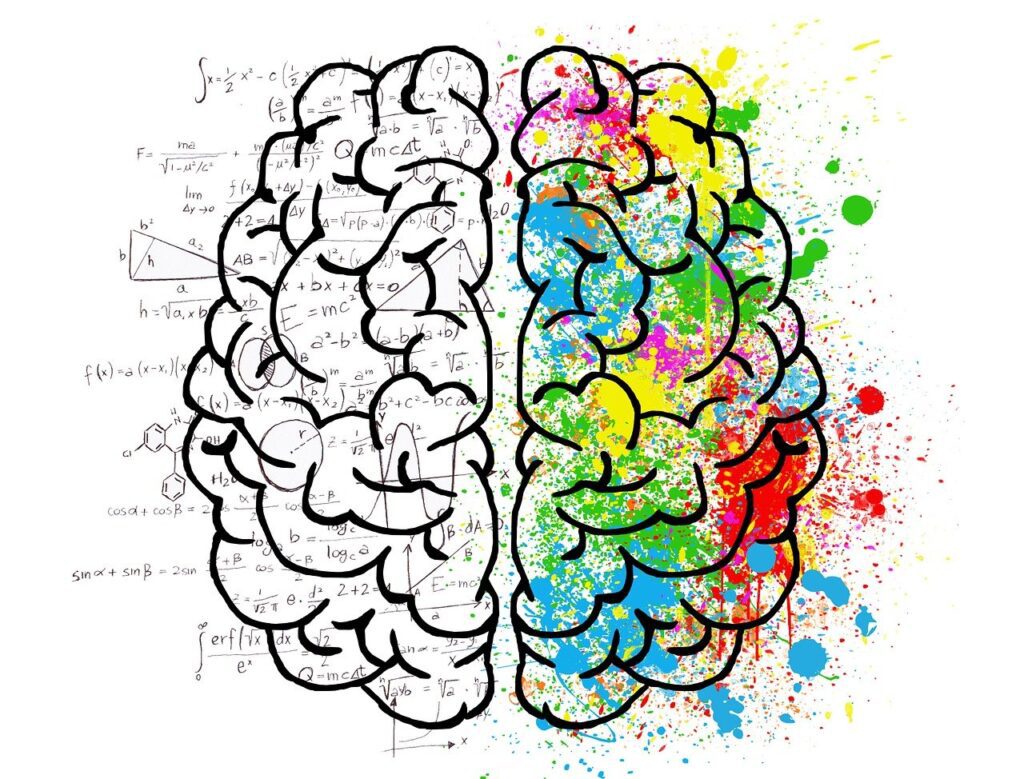
Graphic of a brain. The left has math equations across it, while the right has bright paint splashes.
(Image courtesy of Elisa via Pixabay)

It was the diagnosis itself

The misunderstandings surrounding OCD meant that it was only in 2022 that I finally understood that these mental habits weren’t normal. By that point, what had been a few compulsive habits had snowballed into continuous intrusive thoughts that led to anxiety.

Figuring out that these thoughts were being caused by OCD and getting an official diagnosis from the doctor was a life-changing experience. Fully aware of the patterns of OCD, little by little  I could now recognize and combat these intrusive thoughts instead of being dragged down by them. Since OCD has a way of making you feel like these worries are entirely legitimate, I found it important to reject them as soon as they come up. Don’t spend time deliberating — just immediately reject. 

Things have definitely changed for the better since then. There were times before I was diagnosed when I was sometimes afraid to go to social events, because I was worried something bad would happen like I’d get sick or something like that. After being diagnosed, I was able to see that these thoughts aren’t real, rather the symptoms of an illness. As a result, I no longer feel controlled by anxiety when going out, which has improved my life a lot. It’s manageable now. I am more in charge and not getting sick if I go out. What I’m not saying here is that having a diagnosis didn’t make me completely better, immediately. 

What I am saying is it helped me to cope with my reality. I finally had a label for these behaviors and intrusive thoughts that I hadn’t previously. When something finally gets a name, it’s suddenly a lot less powerful than before. We fear the unknown; when we learn what the unknown is, it’s not that scary anymore. The diagnosis is now known, and I know that there are treatment options available to me. I know I can mitigate some of the issues. That knowledge is freeing.

While it’s impossible to eliminate OCD, I’ve been able to say goodbye to a number of habits over the last few years. No more constant worrying about whether I’ve locked the doors, no more continuously checking my bank account for the slightest bit of movement. There will still sometimes be times when I’m drawn back into worrying, but by and large, I’m now able to manage these compulsions.

The stigma surrounding OCD is gradually diminishing, and more people are starting to become aware of the serious effects it can have on a person. Nevertheless, it can still be difficult to determine whether something is just a run-of-the-mill worry and when it’s more serious. My perspective: If a thought or compulsion is causing you anxiety, it’s always best to see a professional.

Getting an official diagnosis can be life-changing, and the first step towards knowing the reason behind, and treating, harmful habits. It was for me, anyway.

A rainbow of colored pencils lined up, but not exactly so
(Image courtesy of Washington Oliveira via Unsplash)

Show Stage Fright the Stage Door 1-2-3

1 — Surviving stage fright

As a kid, I loved soloing in choirs. But I hated speaking in front of the class, overcome with stage fright — my own private hell. 

As a favor to a new friend, I will resist triggering you with a detailed list of unpleasant-to-debilitating symptoms. You’re welcome. 

2 — Surmounting stage fright

I was choreographing a solo modern piece years later for a dance concert in college. Four weeks before the show, my old friend stage fright barged in hard to block me, claiming squatter’s rights. On my property. Out of nowhere, I invented a new deed & title to show him the door. 

If I give in to him, that guarantees that I drain all the joy from rehearsing to performing to the warm afterglow I wish to bask in. 

I don’t think so. He moved on. 

I was psyched, but relaxed, and the performance excelled. 

3 — Surpassing stage fright 

Now as a singer-songwriter, I share this one freely with newcomers: 

Performing is scary. I can help 1-2-3, but you have to trust me. And I have to say the word ****. 

When you perform, you’re suddenly so magnetic that you become everyone’s world. They all want to **** you. The least you can do is to make them feel like they are yours, too. That is, return the favor by signaling you are quite ready to **** them silly. You have a special privilege like bartenders and waiters who everybody falls in love with because they serve and give, nourish and nurture. Performers, with their job to entice, are automatically attractive. 

Performing is not about you, but what you serve up to your audience. 

Stage fright is about being wrapped up in me while stage presence is about what I bestow upon the audience. Focus on your delivery and ‘bringing it’, so stage fright — what was that about? — might just fade with the lights.

Hey, if you are adored by virtue of the role you took, you should reciprocate symbolically by rewarding the audience with a wonderful performance. 

A duel of love perhaps, a dance, a courtship for sure, entertaining holds the power to cast a spell over an audience, and performers do so as they step onstage, maybe even before the crowd settles. Believe me, you somehow bewitch them. Let that magic linger. 

When we host, we focus without worry on pleasing our guests, not ourselves. As performers, recognize that your guests all arrive hungry for your show, ready to enjoy, ready to love you. Yo’ goodies are baked in, if yet unearned. So earn it. 

Open stage door, up two steps
(Image courtesy of Call Me Fred via Unsplash)

Grief in an Underwater Volcanic Vent

There’s this childhood  film that, no matter how outdated the CGI clearly is, just seems to get me — even today. “The Adventures of Sharkboy and Lavagirl” made me feel seen in my perceived difference from others my age; I was naturally more of a loner, more of someone on the outside. As I’ve gotten older, however, I’ve come to relate to the movie’s plot through a different understanding —that of losing loved ones.

An unexpected loss times two

At seventeen, I lost my maternal grandfather, Grampy, to stage four brain cancer. A year later, I lost my maternal grandmother, Hud,  due to an incident at her assisted living space during the pandemic. Both deaths were unexpected for our entire family.

I couldn’t process it all at the time. It was too much, too fast.

As Grampy and Hud’s only grandchild, we had a strong bond, and they were an integral part of my support system. I felt their encouragement no matter where I was in life. They celebrated me and consistently showed up for events like Girl Scouts, choir performances, birthdays, and more.

I don’t think I’d be the person I am today if it weren’t for both of them.

I often reminisce on the memories I have of my grandparents, looking through scrapbooks we made together and  watching movies we loved — like “The Adventures of Sharkboy and Lavagirl.” Over the course of the last few years, I’ve begun to process my grief through these actions. I’ve also managed to retain a connection with my grandparents despite their deaths.

Reconnecting with the things I enjoyed when I was younger allows me to experience how life was when Hud and Grampy were alive  — easier, more fun. It’s a temporary escape from the stress of daily life, from adulthood.

Grampy and Hud on one side, Sharkboy and Lavagirl on the other

 In “The Adventures of Sharkboy and Lavagirl,” the protagonist, Max, uses a fantasy realm as a method of coping with bullying and family issues; the dream world is his safe place. Like Max in his dream world, my dreams allow me to  continue my life with Grampy and Hud as it once was.

In my own dream world, my grandparents regularly appear. We carry out everyday tasks together, like shopping, going out to eat, and having Tuesday night dinners at their house. I wish that time was infinite in those dreams. In other dreams, they’re alive, and I’m trying to prevent their deaths to no avail. Those dreams can’t end fast enough.

I now have a constant fear of unexpectedly losing more loved ones. Emergency medical situations are anxiety-inducing, as are travel plans. My  grief is also hard to contain — it overflows, causes me to do things out of the ordinary, and makes me want to punish myself. It’s agonizing, and intensifies my depression and suicidal thoughts. I blame myself for what happened to them, even though I know it wasn’t my fault.

When life doesn’t feel as heavy, I speak about who Grampy and Hud were in honor, much like Max proudly sharing the legacies of Sharkboy and Lavagirl to his peers.

Image of a sailboat floating on the water. Above is a night sky filled with stars.
(Image courtesy of Johannes Plenio on Unsplash)

I don’t know where they went

Mentioning Hud and Grampy in the past tense reminds me of Max in the beginning of the film, when he’s unable to explain where Sharkboy and Lavagirl are. Another character asks him: “Why don’t you bring Sharkboy and Lavagirl to class tomorrow?” Max explains, “They went away. I don’t know where they went.”

Much like Max, I don’t know where Hud and Grampy are or where they went. I’m not religious, nor do I have any particular beliefs about what happens after. In all honesty, I don’t really want to think about in what state they might — or might not — exist.

Max knows that Sharkboy and Lavagirl are real, and he knows where they are when he’s asleep — they come alive when he’s dreaming. At the behest of his family and peers, Max tries to tell himself that Sharkboy and Lavagirl don’t exist, but he finds it difficult to believe. This reminds me of the first stage of grief: denial. 

Immediately after Hud and Grampy’s deaths, I found it challenging to refer to them in the past tense. It was an internal denial of their passing; I just couldn’t accept it.

The aftermath holds so many questions

I daydream often about how differently my life would have turned out if my grandparents were still alive. Would I be happier? Would I still have admitted myself to a psychiatric facility last year? Maybe it’s unrealistic to think their presence would have changed much, but the questions remain for me.

There’s a moment in the film where Lavagirl asks Max to dream about her so her identity will become stronger. She tells him, “Dream about me next, Max, I need to know who I am. Not just destruction, or a simple flame. Dream of me as something good.”

I frequently wonder which pieces of my identity are a result of Grampy and Hud’s love  and which pieces were lost when they died. More questions bound through my brain during these moments.

Would they think I’m a good person? Have I made them proud? What advice would they give me? I’ll never know the answers to these questions, and I never will.

I can’t change the past or bring them back to this earth. However, I can focus on how much love they had for me, and I for them. Those recollections are my safe place, especially when life feels heavy. 

I can’t yet  mend the parts of myself that were broken when they died  back together, but I can hold onto their memory. And like Max, I can dream of them — where life goes on just as it used to.

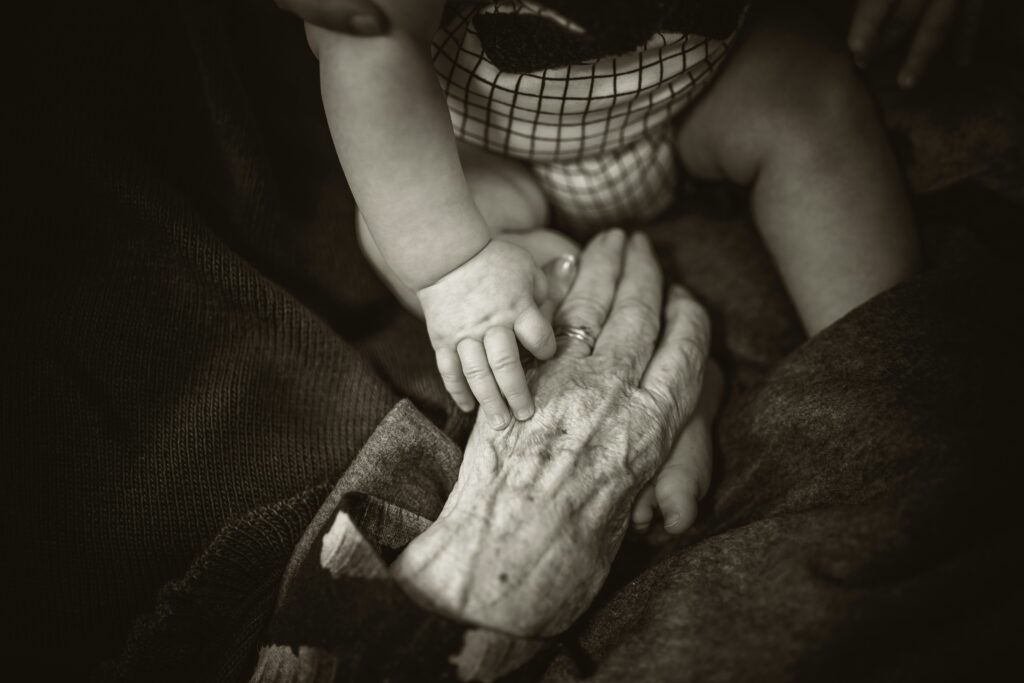
Image of a grandparent holding a small grandchild’s hand.
(Image courtesy of Rod Long on Unsplash)

Well, That Was Awkward

I broke down in tears at the pharmacy this morning.

I cost too much to live. 

I was only $20 off. My car payment of $150 went through the night before. I thought I was in the clear. I had not calculated, however, that I would need to hold an extra $20 in my account to cover my prescriptions.

My medication costs a lot in terms of other people’s money — and my time — just to secure them. I then go to the extra effort of taking them, so as to not waste other people’s money; it would be one thing if I were footing the bill for these meds and didn’t take them, but when someone else is paying for them? Unacceptable.

Second, I take them so as not to spiral into the chaos that is my unmedicated medical condition (insanity) — thus not wasting my time by visiting a mental institution (again). It would also cost more money for that additional visit. And it is already expensive to live: rent, utilities, cell phone bill, gas for the car, rent of the car…. And that’s if you’re normal… but, “no one is normal,” right?

“It is ok to not be ok.” Right?

If you say so.

Life is certainly expensive either way. In addition to the federal government backing the mission that is “Justin’s Life,” my parents give me money to make up for the difference between being a have and a have-not. They provide me with $1,400 or so a month, on top of the $1,500 or so a month I earn by being disabled (what a moral conundrum in and of itself, I must add). With that money, I earn the right to live at the poverty line.

The emotional price

I can provide you with a balanced account from this morning alone. The costs were high — high enough for me to cry as the pharmacists dispensed my medications and politely removed items I could not afford to buy if I wanted to afford my medications. Mouthwash. It upsets me to think that my breath smells, but it makes me feel worse to wake up in a mental institution. So, there is the first emotional cost decision — be unhygienic so it keeps you out of a mental institution or worse. So I cried.

As a 40-year-old, 6’3” white male in Manhattan, Kansas, I am sure I created an awkward situation for the attending pharmacists. They are just trying to do their job in the midst of my existential crisis. I would love to thrive or at least have clean breath, but I have to focus on surviving.

If it costs a lot of money to be disabled, I apologize to the economy. 

But I never met an economy that rewarded me for having emotions so powerful they have to be sedated and subdued with prescription medications. So, how much is my emotional labor worth at this moment? I am breaking down, apologizing for not having enough money to pay for what I need, and these two pharmacists are not paid enough to deal with my shit. So, did I make an emotional deposit with the pharmacists or a withdrawal? 

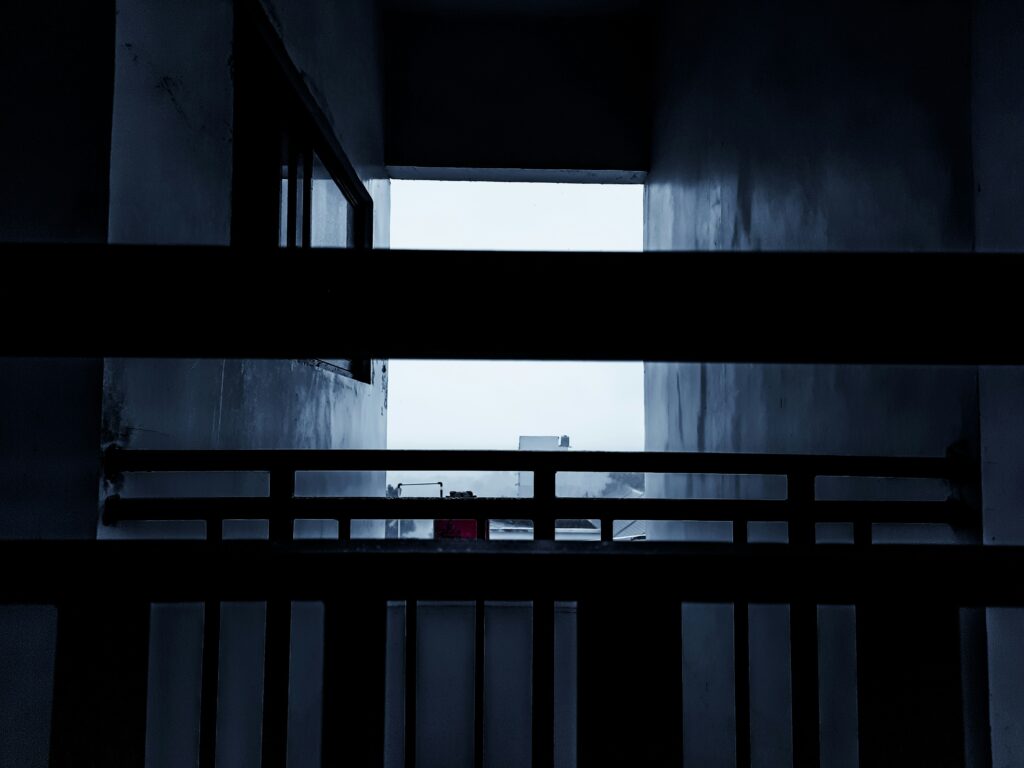
A lonely corridor with high steel bars and a murky gray sky in the background.
(Image courtesy of Indigite Cruel on Unsplash)

The moral price

That is where the moral costs come into play. Were we in Sparta, my baby body would have disintegrated long ago because I was born dead, and thus I would have no value to add. But I was born in America, baby! No concern for the umbilical cord strangling my oxygen supply; they just forced an oxygen tube down my throat and up my butt to bring me to life, according to some. According to those still living, I was born happy and healthy. Either way, according to the federal government, I am permanently disabled. But I was born in America, baby, so I have the rights of Life, Liberty, and the Pursuit of Happiness. 

Healthcare, however, does not fall under the auspices of those rights. 

I gotta fight for those rights every second. A moral dilemma: be an economic burden on the economy by existing or take your chances without the support structure that allows you to survive. A further moral dilemma is believing you are meant to thrive while knowing it takes much more than your emotional budget just to survive.

The intellectual price

My IQ is high as fuck. Too high, really. According to a former psychiatrist, I connect too many dots… that is a nice way of saying I am paranoid, delusional, and insane. But then again, everything is connected, right? From my left nut to my right brain to the end of the cosmos, everything is connected by the reality of energy alone. That is a good-enough stretch for my intellect to admit, in my opinion, that this morning I cried by design. 

What if I spent the money my family gives me to survive on a business that could make me independently wealthy? Then all my problems would be solved. But as a real one once said, “Mo money, mo problems.” That is the smartest thing I have ever heard, and I say that as someone who has seen what happens when people get the wealth they worked toward. I have enough problems as it is.

And so the economy did what it was designed to do — take labor from me in return for goods and services. The labor, however, was in the form of financial, emotional, moral, and intellectual production; my family came through for me financially, as they always do. I merely had to invest the emotional, moral, and intellectual labor. To survive.

What am I capable of when I begin to thrive? 

A single pink tulip and orange and purple pansies thriving next to a brick wall.
(Image courtesy of taliesin on Morguefile)

The Art of Isolation

My relationship with isolation

I’m an introverted person. I can preserve myself quite solitarily, recharging with personal hobbies and quietude. There are often days when my recovery from a social event ends up being the comforting main course of an evening routine, replacing parties with pyjamas after an experimental aperitif. Introversion, however, should never be confused with a lack of social needs. I’m not so crippled by shyness as I once was, and I find myself craving the company of people more often.

Studying drama and theatre for three years, I was constantly surrounded by activity. Seminars, workshops, group projects, society sessions, shows… not to mention living with two amazing, intuitive housemates. During this time, a small university town can feel like your whole world, especially for drama students. God, that frenetic, boundless energy… When you’re sucked into its vortex, your mind and body start to crave it. The pull of creation, catharsis, and community — the push of careening from one show to another. These periods can get intense. Consequently, the small pockets of private time I was able to scavenge were sanctified.

Then, when I moved south to London to pursue a Master’s degree in scriptwriting, everything was flipped on its head. Suddenly, I was buried in work that required disciplined, insular focus. My accommodation turned into a studio. The characters in my brain became my family. Leaving all those fantastic, local connections behind, I found those rushes of interaction harder to replicate. 

Change is scary!

Let’s face it. That being said, there was a knack to my routine, once I screwed my head back on. How to accommodate isolation… and cherish it. I wanted to share a couple of tricks that really helped me in moments of loneliness to self-discipline, protect my mental health and maintain relationships. It’s my hope that anyone facing this level of change — whether it’s a new home, a breakup, or something else — can put their adjustment first. It’s an integral process.

Picture your comfort

One of my biggest regrets was leaving my flat undecorated for months, telling myself it was only a temporary stay. What was the point of moving in? In truth, a room is a reflection of your mental state, and you should tend to it with the same level of respect. Find ways to imbue your intimate surroundings with positive thoughts.

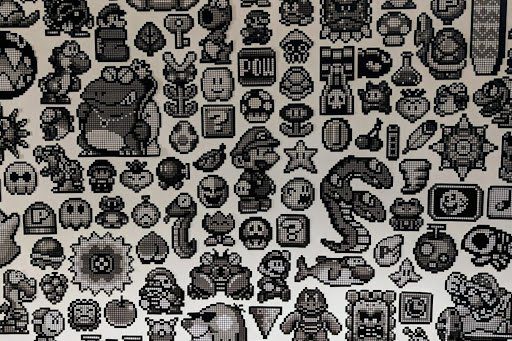
Back in my first family home, I started fostering an obsession with pixel artwork. I spent long afternoons creating greyscale reproductions of characters and objects from the Super Mario Bros. series. I had a whole collage of them set up above the mantelpiece, which looked pretty awesome if I do say so myself. 

So upon moving to London, I spent one long night reinstalling this collage in my new room. Even this simple, childlike action transformed the space, spurring a newfound motivation to decorate and fill my surroundings with home comforts.

Becoming settled in a space is one of the first steps to feeling comfortable in your own skin. Don’t ignore this task.

Adjust your scenery

This suggestion’s been advocated to death, but seriously, touch grass as much as you can. Fresh air is a surefire solution to boost dopamine levels and dispel the malaise of isolation. Surrounding yourself with people, even complete strangers, allows you to feel connected to a larger unit — suddenly, the weight of the world doesn’t solely rest on your shoulders.

After a certain point, it became impossible for me to enforce creativity in my room, so I started taking trips to the local library – there, I was able to hold myself accountable against others, relishing in the purpose of leaving my house. Provided you work remotely, separating relaxation and productivity spaces is integral to building focus and routine; if you can’t work in public, try at least to delineate these places within your home. Spending too long in one confined location is a breeding ground for procrastination.

Never underestimate the healing power of a long walk in nature. I myself have taken an obscene amount of those.

Book your relaxation

One of the greatest pieces of advice I have ever read was that rest is a right and not a reward. As a writer, it’s easy to grind myself into burnout, and I’m also a stickler for last-minute panic and how it turns me into a sleepless superhuman when I’ve got a deadline approaching.

Living in isolation, I find it more difficult to balance work and recreation. I’ve tried a bunch of time blocking-and-tracking methods over the years. More recently, I’ve attempted scheduling hours in the day for my personal hobbies: gaming, composing, novel-writing, watching TV, whatever I may need. I’ve realised that these moments are essential in preserving my productivity, and dedicating my time makes them feel systematic and automatic. As a result, I know I’m working towards something I can look forward to.

Everyone’s work schedule will vary, but it’s essential to create pockets of time throughout the day to do the things we love.

Dose your interactions

Something as simple as seeing an old friend for a day can satisfy your social gauge for a surprisingly long time (travel permitting, of course). On those days when nostalgic trips may not be possible, it’s still important to periodically engage with the local community.

I had a problem with interactions when I moved to London. Having developed friendships over three years in my undergraduate degree, I maintained that I should cherish and bolster these connections above others. Anything I built over a single year of study could never be as robust, right? Realistically, that was only an excuse for my insidious nostalgia, so I continued acting in shows, enjoying a new community in this once-unfamiliar terrain. Some of my greatest confidants arose from my Master’s year, and with many, I’ve remained in regular contact.

Don’t doubt your ability to be appealing to others and make friends in foreign environments. If you are the only obstacle standing in your way… get out of the way.

Starting over

Ultimately, I believe a large part of feeling isolated stems from internal unease. Self-caring for your body and soul before anything else will aid you in building confidence, taking new steps, forging new connections, and engaging with the shifting network of life.

Starting over is never a sign of weakness; sometimes, it is the most prominent indication of strength. 

Image of a thriving daffodil flower bud with drops of dew.
(Image courtesy of Jdurham via Morguefile)