
“When the land is full of snow and you don’t know what is underneath — business is like that,” says Akbar Majidov, an immigrant to Britain who runs a catering business with his wife Sanobar. You have to take risks, Akbar told The Sentinel: “you just need to walk on the snow. Sometimes there’s a hole there, but sometimes it’s OK.”
Akbar and Sanobar from Uzbekistan in central Asia are operating in London street markets and at private events, selling home-made food originating from their Persian-speaking Tajik culture.
Akbar has had to tread virgin territory to forge a life for himself since he came to Britain in 2003, a life which has included working in construction and for restaurant group The Breakfast Club. Sanobar joined him permanently in London in 2019.
The husband-and-wife team has received guidance from non-profit organisation TERN, The Entrepreneurial Refugee Network, which is helping refugees to launch their own businesses. TERN helped 725 refugee entrepreneurs in the 2024-2025 financial year. It is seeing such demand for its mentoring and training courses that it is running a waiting list.
Kateryna Reshetnyk, a Ukrainian refugee from the eastern city of Kharkiv, now works with her husband in the Scottish town of Girvan, running PIXSEL UK, which produces hybrid glass protectors for car and motorcycle screens. Kateryna hadn’t operated a business before she was forced to flee the war in Ukraine. She told The Sentinel how she has also benefited from training through TERN.
“I had an accountancy course, an accountant from TERN helped me to create a business plan and I had a course for eBay. TERN and eBay helped refugees like me who want to sell on eBay.”
Immigrants to Britain have been facing a hostile environment in the past few years, both from governments and from right-wing populist party Reform UK, which is leading in opinion polls. However, there is also a groundswell of support for Britain’s multiculturalism. At least 50,000 people joined a march against the far right in London at the end of March. Nowhere is this multiculturalism more apparent than in the variety of international foods available to diners in London, the best city in the world for food, according to Tripadvisor.
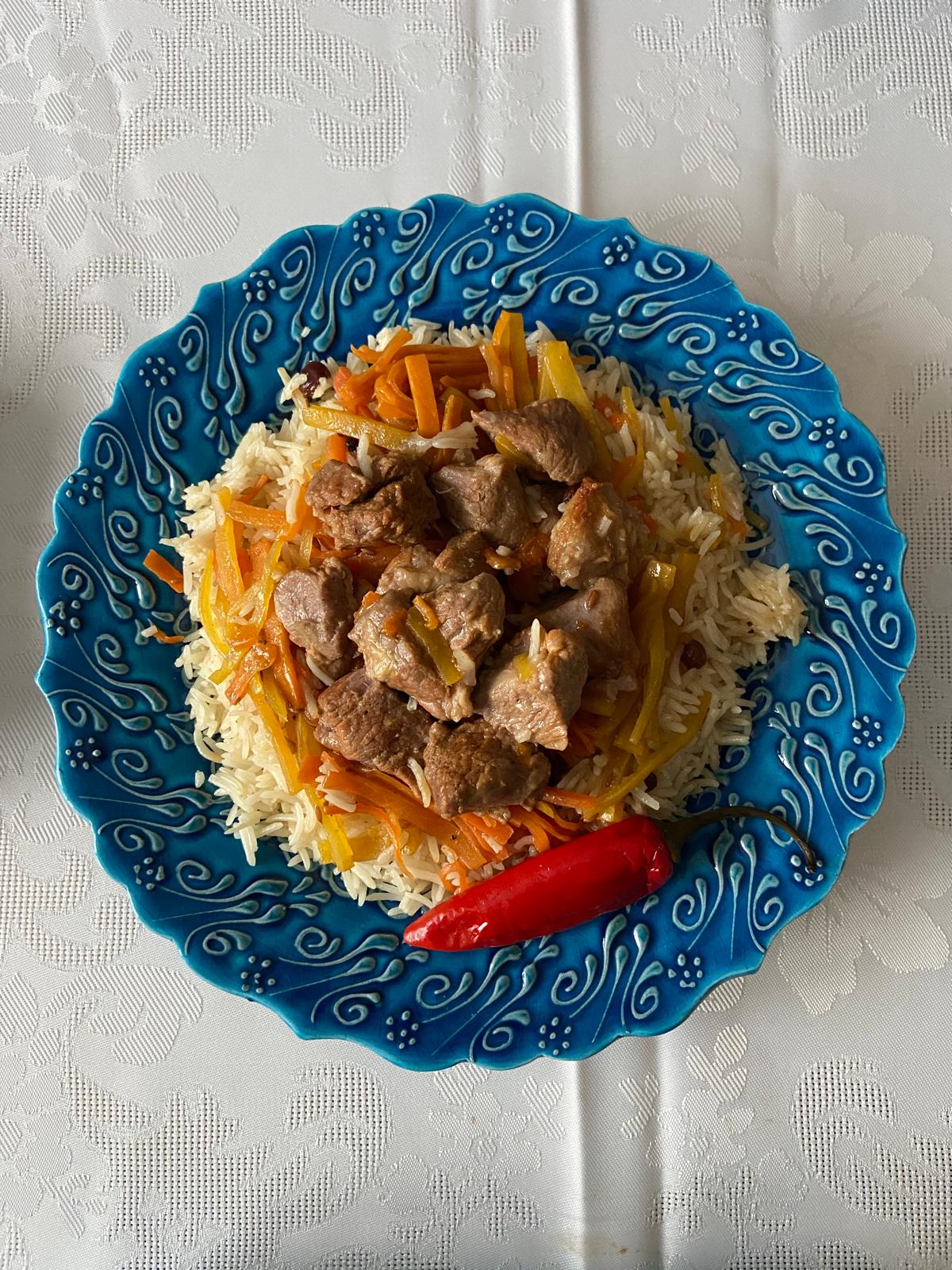
The signature dish of the Majidovs’ business, Samarkand Palav, is oshi palav, inscribed in 2016 on UNESCO’s Representative List of the Intangible Cultural Heritage of Humanity. Palav typically features rice, meat and carrots, as well as spices such as cumin. What makes the dish so tasty is that the ingredients are cooked together, with the rice absorbing the flavour of the meat and vegetables, says Akbar.
Another distinctive element of palav is that it is cooked and served in layers, with first rice, then meat, then vegetables, says Sanobar: “this very beautiful layer gives a touch of Bukhara and Samarkand.”
Sanobar says it is important for immigrants to integrate into Britain when they arrive. However, it is also important for them not to forget their own culture. For Sanobar, the contrast between central Asian and British culture can sometimes be great:
“In Uzbekistan, we keep a friendly, centuries-old culture. People live for today, and they don’t worry about money for the future. In the markets, in the bazaar, people share their food, they share everything. I think it’s good if they bring this nice culture with them and they share.”
Kateryna also stressed the importance for refugees of making the most of what they have.
“Thank you to people who trust us and who allow us to create a business here, and who provide advice for refugees. I understand now that everything changes very fast in our lives. You need to live for today and for this moment, not wait. I have been waiting for good things for four years, but we decided to create our business here, to live our full lives.”
