Faux brown siding lined the one-level home, predating my existence. My parents were newlyweds when they moved in.
Once I was born, the good plates were hidden from my butter fingers– too short to reach. The kitchen, where I slipped; a near concussion.
Dining room blinds shielded the sun’s rays; the living room magnified the television’s speech.
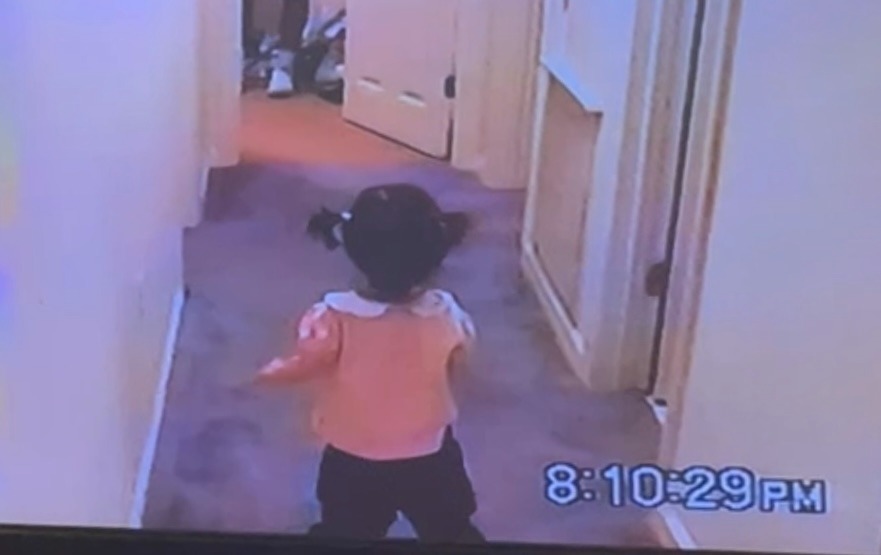
Down the narrow hallway, I heard the shriek of my mother’s hairdryer. The walls were a museum– baby pictures, “old-timey” photos.
The carpet, that brown-blue shag, was where my grandparents witnessed my first steps. Look at you! Oh, sweetie pie.
I was too young to remember.
My bedroom’s visage was everchanging; growing like my own, reflecting my interests, the changes within me.
The closet door, half-open, was where my best friend and I kissed boyband posters, vandalizing them with autographs, fan mail.
At one point, the door was plastered with calligraphy, cranes chased by cats, when I tried to teach myself hieroglyphics.
(Image courtesy of the writer)
I watched my mother’s rituals of femininity in the bathroom. I saw her practice shaving her legs; my father gave himself haircuts over the sink.
Downstairs, the smells of dust and vintage motor oil– mechanical equipment was stored with deer heads on the wall; the wood stove; the basement door that never fully closed.
Outside, dogs broke the silence, Barking in the distance at street lights, stars.
The gravel driveway, pebbles always in my shoes. Grit against tires, The grey clouds from rock dust. A long country road that stretched towards the dogs.
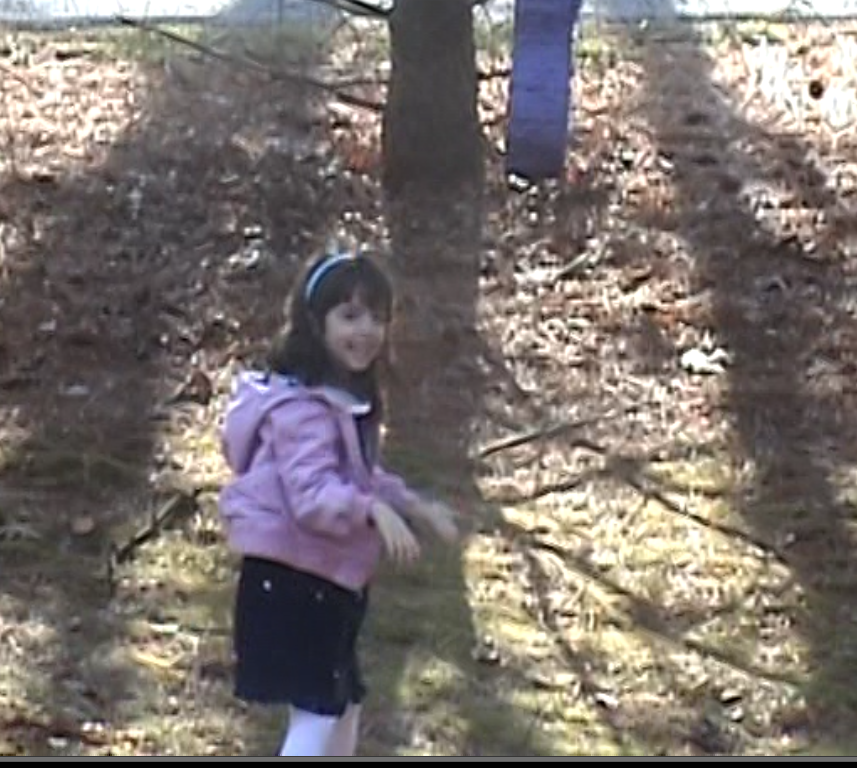
The pine tree where piñatas were hung; The creaking metal porch swing.
My swing set and the dug path where my house met with my neighbors; my best friend just beyond.
(Image courtesy of the writer)
When I wasn’t launching snowballs at The windows, the wooden deck was my stage– my realm where I could play pretend. The lead roles were chosen without auditions; It made sense to us.
Spell books, born of computer paper and staples, Tree branches, our magic wands– We repeated lines from Wizards of Waverly Place.
Imaginary games continued when I was alone. I was convinced that I lived in a log cabin after noticing one on a local trail.
I enjoyed imagining what it would be like to exist in the days when light bulbs were only above people’s heads.
Before I knew it, the lights went out; it was time to move. She said it was to be closer to work.
A new beginning; a chance to make new friends. At a new school where I barely knew anyone.
I didn’t have a chance to tell my friend goodbye. She practically jumped off of the bus when she saw the moving van. She refused to get off the back of it, telling my dad that I couldn’t move away.
I cried, feeling ripped apart from everything. Terrified, unsure of what my life would be now. Of what it would become. Of the people I would meet. The friends I would have to lose.
Deep-seeded, like the pines I watched grow smaller, As we drove away,
Whether it increases or decreases, it’s an ever-present factor in my life. While I’ve never been diagnosed with “severe anxiety,” and I don’t experience it daily like some, I’ve dealt with typical nervousness and the occasional worry that things may not go according to plan. Overthinking has also always been a major factor in my life.
Without talk therapy, I’ve found writing to be therapeutic for me. Whether it’s fiction or not, my stories are my own. Writing helps me deal with all of that pent-up, anxious energy that may be going to waste. For me, this form of self-help allows me to focus on what’s important and how to improve myself.
Since my teenage years, I’ve tried many coping mechanisms to help. Breathing exercises, calming music, meditation, and focusing on specific scents help lessen the stress. By using these techniques, my occasional anxiety subsides and helps “reset” my mental health. However, for the past two years, I’ve been able to improve my well-being even more by writing. With a journal and my favorite pen, I can write about anything, allowing myself to vent directly into the lined pages. This form of therapy has reduced the severity of my overthinking. It also aids in clearing my mind; I can think about where the anxiety is coming from before I commit to putting it to paper, leading me to find the source of my feelings faster.
Flashback to the turning point
Ever since I attended and graduated from both Seminole State College and the University of Central Florida, I began to overthink everything, and it nearly took over my life. Much like anxiety, overthinking is something that isn’t meant to be taken lightly, and it led to a somewhat disastrous impact on my physical health at one point. So one day, just like that, I decided that I needed to change my life and better myself.
That was when I purchased my first hardcover journal in 2023.
From then on, I’ve been writing everything into the pages; whether it’s good or bad, it goes along the lines. By putting pen to paper, I can truly express myself and say what’s on my mind without feeling judged. I don’t have an extra layer of stress from interacting with someone, and I’m not forced to deal with any awkward feelings or embarrassment by emotionally dumping everything on a therapist. For me, I don’t see myself having that kind of emotional vulnerability to someone that I could have potentially met twenty minutes ago.
With the journal, it’s one and done. Once I finish any ramblings or add something that may have been bothering me, I feel a significant weight lifted off my shoulders. From then on, I can essentially put the overthinking to bed. Regardless of what the subject matter is, I feel as though I never have to think about it again after writing, which I love. Like writing a shopping list so you don’t have to remember the list.
Not carrying the burden, but setting it down
While writing therapy may not be the best form of self-care for some, it has definitely worked for me, especially as I’ve gotten older. As I’ve become more experienced through school and more aware of the world, I’ve found that journaling is the best technique for me when it comes to keeping a consistent, positive mental attitude. While I choose to not let my anxiety control my life, I genuinely feel that I’m putting myself on the right path with this process.
Living in a world with constant stress, hiccups, and fears, I’m grateful to have an activity that’s all mine.
Discovering my voice through writing was surprisingly found in the silence of the process itself.
Since childhood, I have always had a natural connection with people, and talking to others came naturally to me. So, it took me some time to realize that my true calling was in writing.
Journaling away my stuttering
Yet dealing with difficulties in speaking fluently and experiencing stuttering during my childhood made it hard to express myself verbally. This challenge drove me to begin using journals as a way of communicating when speaking felt overwhelming. With each passing day, I made gradual improvements, and unexpectedly I developed a passion for writing, finding solace and peace in it.
I turned what appeared to be a weakness into a motivator for self-improvement.
As I got older, writing became more than just an escape. It emerged as a potent tool for self-expression. Despite having strong opinions, I was challenged by verbal expression. Writing provided me with the bravery to advocate for myself and express my thoughts fervently. For instance, working on articles for my university publication allowed me to explore those topics deeply. For example, how can an individual bridge continents?
This year has been a time of great change for me. Through my work in storytelling and content creation, I encountered a wide range of voices and narratives, highlighting the role of writing in engaging with others. By analyzing and writing compelling stories for my university’s website, I have learned how to present complex ideas engagingly. This work was not only about writing, it involved skillfully combining information and emotion to make a significant impact.
The experience strengthened my belief in the ability of written words to influence, motivate, and express without fear.
Writing as retaliation
(Image courtesy of Prince Patel via Unsplash)
Now that I have a clear sense of purpose, I yearn to be in an environment where I can share my ideas and use my skills to make a positive difference. I crave continuous growth and self-improvement and want to shine, gain confidence, and master my craft. Most importantly, I want to feel proud and have others recognize my abilities.
The recent projects I’ve undertaken have only deepened my commitment to this path, showing me that writing is not just a passion but a vocation that can drive real change outside and fulfillment inside. My writing is the free voice I always deserved, right there.
Say the word, one word
My writing journey has transformed me from struggling with a stutter to discovering my truest, fluid voice.
In my journey, I overcame obstacles to genuinely express myself. I am determined to find an environment where I can thrive, grow continually, and make a meaningful impact. Writing is not merely a passion, but a fundamental part of who I am. Through my writing, I aim to inspire and forge connections with others, contributing to a better world. One word at a time.
Ultimately, my deep connections with people throughout my life, combined with my speaking challenges, made me recognize the significance of writing. It brought comfort and a means of self-expression, turning my weaknesses into strengths and feeding my drive for personal growth and positive change.
Writing didn’t just grant me a voice — it helped shape the person I am today, and with each word, I evolve unencumbered.
I’d like to tell you the story of a young boy named Wylie Sowden.
The beginning of the story
Wylie was brought into the world on a cold October morning — a scraggly-haired, wimpish boy, full of innocence, promise, and curiosity. He was an artist to his core with an imagination to move mountains. He had a good heart. Back then, he couldn’t have known how much he was about to suffer.
When Wylie is 16, his brother, Michael, drowns off the coast of Marin County. Devastated, Wylie convinces himself that he was responsible for it. He was there when it happened. He could have done something, but he was too afraid. The guilt swallows him whole. In his grief, Wylie becomes self-destructive. He sacrifices his own happiness for the sake of repentance, leading him into several perilous scenarios…
One day, Wylie wakes up to find himself stranded in an abandoned parking garage he doesn’t recognize — a mysterious voice in his head telling him to complete various tasks… Wait. No, scratch that. Way too heady.
(Image courtesy of Two Dreamers via Pexels)
One day, Wylie wakes up with the ability to blink people out of existence with his eyes. Well, how does that remotely relate to anything?
One day, Wylie wakes up tied to a chair in a basement, slowly uncovering a tight-knit conspiracy between a family of mafia brothers, a shapeshifting reporter, and a psychopathic casino owner. WHO are all these CHARACTERS?
One day, Wylie wakes up. Yep. In juvenile detention. Sure. He confronts embodied representations of the five stages of – Yeah, no, absolutely not.
One day… Wylie wakes up… and Michael returns as an amorphous, faceless ghost, attached to Wylie’s hip by a tether. Hey… A ghostly, incorporeal tether… That could work. How better to show off Wylie’s unending guilt and the bond between brothers than a literal representation of said bond? A tether.
Tethered to indecision
(Image courtesy of Reafon Gates via Pexels)
I had 10 months to write the screenplay for “Tether” in the year I completed my Master’s degree. I had about fifteen, sixteen, seventeen different narratives, squashed into a turmoil of indecision, fighting for attention. My first draft was completed two weeks before the final submission deadline. That’s… insane.
Wylie and Michael had existed from the beginning. The brotherly relationship and the themes of grief and acceptance were at its core. Still, I found myself unable to bring a single draft to completion, uncertainty eating away the months like wildfire. To this day, I’ve wondered how this happened. Did I dislike the ideas I was creating? Hardly. Did I doubt they would make a good story? Not necessarily. On reflection, my indecision was spurned by something entirely different.
From the outset of any scriptwriting degree, you will be taught about the three-act structure and all its variations. The hero’s journey, the relationships between archetypes, the importance of fatal flaws, wants and needs, genre conventions, plotting, pace, and so on. The so-called “master tools” of storytelling — the structure.
I urge you to disregard all these things. Absorb them, internalize them. Discard them.
Structure and flow fighting for attention
You may often hear the first pass of a script referred to as the “vomit draft.” A writer is encouraged to write continuously, effectively vomiting their ideas onto the page. Get their unrefined marble on the plinth before they start to carve it, so to speak. While this sounds good on paper, the execution can be daunting and there’s a reason for that:
Structure interrupts the flow.
Of course, structure is vital, especially later on in the process. It must be introduced to refine a story. But in the early stages, it’s a serious roadblock that threatens individuality, especially for creatives. Any official scriptwriting resource will teach you to write “properly,” enforcing a systematic standard for what makes a “good” story. The inciting incident must happen by page 10, and the turning point by page 30. We must know all our major characters and their motivations before disrupting the equilibrium. The protagonist must confront their flaws and choose values over desires, yadda yadda yadda. All these techniques are tried and tested. They work. They’re commercial. Surely they will aid a writer looking to craft their first smash hit?
Let go for the first draft
Here’s the uncomfortable truth: any idea that you propose for a project is highly unlikely to translate into a final product. Never get too attached to ideas. In the end, I was too attached to Wylie. He had two ghosts haunting him: Michael, tethered to his hip, pulling him around, fueling his pain, and then me… tethered to his hip, pulling him around, fueling his pain. I determined that his journey had to make sense and have merit when a plethora of narratives presented themselves as alternatives. Any one of these ideas could have provided a diving board into a different conflict, a different protagonist, a different world.
I didn’t finish a single one of them.
I couldn’t make them fit inside the structural conventions I was being fed throughout the course. I ruled them out, thinking they were too conceptual, too convoluted. I was making excuses for starting over. I thought that I was making efficient decisions for the merit of the story.
In reality, the journey of bringing a vomit draft to completion will reveal what your story is meant to be. You must allow yourself to fail so that ideas can evolve and change.
This is not exclusive to screenwriting. Novelists, playwrights, poets, comedians, actors, artists, dancers — all creatives are bound by the conventions of structure. A level of detachment is healthy and inspiring in the early stages of emerging work.
The discipline of imperfection
Any writer worth their salt should practice a discipline of imperfection. Get comfortable with terrible writing. Develop fully drawn characters that are destined for the chopping block. Build wonders and erect dreams, knowing they’ll come crashing down. A good friend of mine once said that “there’s no good writing, only rewriting” and this could not be more fundamental. Your project will always be improving but a full page is more motivating than a blank one.
Never let the idea of the best be the enemy of the better.
Finally, an ending
Wylie’s story ends on the beach where it began, confronting the site of Michael’s death. Still tethered to his brother’s ghost, Wylie strides into the waves and imagines one of his drawings descending from the sky – a life-size illustration of Voyager 1. He knows that Michael’s greatest love was space. The idea of exploring the cosmos. Now, he can give Michael a chance. The ghost boards the spacecraft, soaring up into the stars. The tether pulls tighter and tighter until finally… it snaps.
Untethered
I cried, writing those final scenes. The moment of breaking the tether was very meaningful to me. It was a form of acceptance, much like Wylie’s. I had concluded a project of massive scale while still acknowledging and accepting its imperfections, wishing goodbye to ideas abandoned along the way. Finally, I knew that Wylie had a form of happiness.
After everything that I’d put him through, he deserved that.
He deserved an ending.
(Image courtesy of Seymasungr via Pexels)
The writer’s journey is different for everyone. Some prefer to plot every minute detail before setting pen to paper. Others prefer to dive in headfirst, improvise, and let the words unleash themselves. Inevitably, structure must be enforced in the end. But never shy away from chaos. Leave yourself room for wonder. Shut off the conscious brain, if just for a moment, for I firmly believe that everyone has a meaningful story to reveal.
Back in high school, if someone said I’d end up as an SEO content writer, I’d have hesitated. Search engine optimization, or SEO, wasn’t on my radar then — I barely had a simple mobile phone, let alone the devices every high schooler has today. My favorite subject then was mathematics, hence my interest in financial accounting. And, of course, math always got me the best grades. I felt I was set on becoming an accountant.
Fast forward a few years, my interest started taking an altogether different direction. I found myself navigating the world of SEO content writing. I had hardly thought of it in high school.
Life has a funny way of surprising you. Who knew my journey would lead me from crunching numbers to crafting words for SEO? Sometimes, the unexpected can turn out to be the most fulfilling.
Hopping in and out
My failure in getting into university landed me in one of the best teacher-training colleges in Nigeria. The course I ended up studying was Accounting Education. Not getting admitted into a university troubled me – I was confused. At first, I wasn’t too sure about accepting the offer, but eventually, I started liking it and felt happy about my decision.
During my three years in college, I learned both theory and practice in education and accounting. I gained a solid foundation. My dad’s support played a great role. It was the sole reason I was ready to finish my studies in three years. Unfortunately, he passed away in 2013. I missed my dad and his guidance. I was once again confused about what to do next – take a job or continue with my studies.
I continued my education at the university through the direct entry mode, by taking admission in the university in Nigeria directly in the second year. I got the benefit of skipping the first year because I had a certificate in teacher education, a certificate higher than secondary education.
Now, you might be wondering how I transitioned to SEO writing.
Discovering and diving into the world of SEO
In late 2014, I started university after finishing my national certificate in education program. That’s when I stumbled into my newfound love: writing. I even started drafting an accounting book, thinking it could help high school students and maybe even seeing it as a bestseller. Sadly, I somehow lost the file. Despite this setback, I began my newly-minted writing journey.
As an undergrad, I created mini-articles on motivation, inspiration, life, and spirituality, sharing them on social media platforms like Facebook and WhatsApp. My friends and loved ones liked them. Their positive comments encouraged me to write more and more.
Thus, started my journey in content creation and article writing. It was a journey I could not have anticipated a few years earlier.
During my university days, I quenched my thirst for writing by helping my classmates with their writing and research, and by proofreading their work, all for free. As I neared my final year, I began pondering how to turn my passion for writing into a profession. It took a few years to materialize my thoughts. After finishing my degree, I realized that the internet offered opportunities. To me, the opportunities seemed endless.
I began searching for freelance jobs in order to earn money, but I had to avoid scams. That’s when I stumbled upon SEO. At first, it sounded complicated, like one of those course codes at university. But I knew that if I wanted more writing opportunities, I had to learn about this SEO thing, whatever it turned out to be.
Every writer is a teacher
In the past, I taught in school from primary to secondary levels. But in 2021, after the COVID-19 pandemic hit, I shifted to the corporate world. Now, my main gig is teaching and educating through my writing.
(Image courtesy of Marcus Silva via Pexels)
In the writing world, the teacher in me was useful. Simply understanding SEO is not enough to spread a message. Effective communication and organizing information, the skills of a teacher, helped me a lot.
The essence is that being a good teacher makes a better writer.
To put it simply, I strongly believe that every writer is a teacher. You might not agree, and that’s okay. But I think this way because, as a content writer, your job is not just to entertain. Every piece of content you create should also educate your audience.
So, it’s like this: back when I was teaching in schools, I learned how to communicate well and present information. Now, as a content writer, I’m using those skills to ensure my writing entertains but also educates. It’s all about passing on relevant information to the folks reading my content.
Accounting has a story
Obviously, accounting is all about numbers and involves analyzing numbers. My experience in accounting has shaped how I create content, especially in the data and analysis part of writing for search engines.
Because of my education in accounting, I know how numbers tell a story. When I write for the web, I carry that analytical mindset rooted in me. It helps me create content that is not just words, but also backed by data and analysis.
Back when I was studying accounting, I didn’t think I would use it in my writing. However, those skills influenced the way I approach SEO writing. I learned to pay attention to every detail, and that helps me create informative content that is well-optimized for search engines. In the world of writing for the web, the ability to understand and utilize data is crucial. My accounting background has been like a secret weapon. It’s like having a special tool that helps make my content more effective and visible online.
My journey from accounting to content creation might seem like a big leap, but the analytical skills that I gained and nurtured in the past make my writing stand out today. It’s not just about putting words together; it’s about using numbers and analysis to make the content more valuable for the readers and the online world.
Delve into techniques
When I decided to learn about SEO, I figured that the best path to learning is by doing. At first, it seemed a little difficult, but I knew that taking action was key.
While still working my regular 9-5 job, I created my own blog without hiring a web developer. You might not want to build your site, but doing so (on a budget) was a must for me.
I also spent hours watching tutorial videos and learning search engine optimization from SEO experts like Brian Dean and Koray Tugberk Gubur. I applied what I learned to my website and noticed some better page rankings on Google. If you want to succeed, learn from the already-experienced.
Networking – key to success
If you’ve heard “Your network is your net worth,” you know that building connections is like investing in your professional success. Whether you’re into SEO, teaching, or accounting, a strong network helps you grow faster in your career.
For a long time, because I didn’t pay attention to LinkedIn, I was missing out on opportunities. To fill that gap, I started connecting with other professionals in and out of SEO.
Last year, I got invited by a brand owner to speak about SEO at a live event on LinkedIn. That talk is just one example of the many opportunities coming from deliberately building a strong network.
Every story is right
For the record, my story is no more exceptional than others. Everyone has a unique story to tell, right?
We all have our paths and can achieve whatever we set our minds to. Whether you’re trying something new or making a career change, it pays to believe in your potential and put the work in. As Henry Ford wisely predicted, “Whether you think you can, or you think you can’t — you’re right.”
(Image courtesy of Johnathan Ciarrocca via Unsplash)
Turning from the busy conundrum of a dream full of lies, A bittersweet goodbye; Passion so strong Somehow feels so wrong, A meaningless feat, Undeniable defeat; What used to be alluring colorful lights, Now flickering, almost dying, Buzzing sound of glorious harmony, Reduced to a humming melancholy, Hauntingly beautiful. Dreams of golden honey, Fading into distance so uncanny, Bittersweet memories creeping, As nightmares awaken my being. Lightning strike, As grandfather clock struck Witching hour of three, Sky started to cry freely, Downpour came in torrents, Realization abhorrent, Liquids seeping through the crack on the wall, Flowing steadily onto the floor, Blotted it out with crumpled papers to dry, As I stare afar, Paper now drenched, Torn apart into pieces, By the window I perched Pen held tight, No paper in sight, Wanting to write But cannot, So I just sat tight, As the paper on the floor dissolved into unrecognizable mess, Just like my thoughts, Wandering through time lost.