Parents: Surprise, They’re Human Too!

For many children, our parents are our whole world. They are the people whom we idolize most in the first few years of our lives. We romanticize them and expect nothing but the best from them.

Yet as we get older, there comes a moment or series of moments when we realize our parents aren’t quite as perfect as we thought they were. For me, I grew up with two parents in a rather “traditional” household: Dad went to work and earned a living, Mom stayed home and took care of me and my little sister. I always thought the world of both my mom and dad, my mom being the loving caretaker and my dad being the stern yet reliable working man. 

As I grew, I started to see the cracks, some more hidden than others. Arguments, money troubles, mistakes made — and slowly but surely, they eroded that idolized image of my parents, and I came to see them for what they were: flawed human beings. My mom and dad, the two people in my life who could do no wrong, suddenly had an unflattering light shown on them. While cartoons and the Tooth Fairy and all the joys of childhood distracted me from this for a time, every adult knows that whimsy doesn’t last forever. 

Their learned flaws

The parents who raised my generation came from a time when their parents’ words were law — children were meant to be seen, not heard. A parent could never be wrong. A parent needed to be a perfect role model so that the kids grew up to be perfect role models for their kids and the whole cycle would continue. If only life were so simple. 

I imagine for many people the sudden realization that their parents aren’t the epitome of humanity was a rather nasty shock, as it was for me. As that barrier breaks down and you see your parents as flawed human beings, it can become harder to abide by their words, when doubt creeps in over whether or not they’re correct in their views, actions, or behaviors. I held a lot of resentment against both my mom and dad for not being their “honest selves,” some of it earned and some of it due to a lack of understanding of just how difficult it is to be a parent. 

Arguments were swept under the rug, not properly dealt with and discussed. Those arguments would happen because resentment festered and bubbled. My family would not always openly discuss the real issues, instead dealing with the superficial ones while my parents still tried to make it seem like everything was okay. I certainly can’t blame them for wanting to give me a happy childhood, something they both had their own struggles with. Yet not discussing the real problems behind these arguments, sometimes oversharing in the middle of an argument because they had hit their boiling point, only made it more difficult to understand why they would fight if everything was okay. 

My parents had difficult childhoods, as did their parents before them. It’s hard to break cycles like that. Throughout their time raising me, my parents tried not to repeat the mistakes they saw their own parents make. At times they succeeded, and at other times they fell into the trap of trying to be perfect role models, making it all the more confusing whenever they struggled to uphold that impossible goal. There was no smooth transition from idolizing my parents to understanding they were just regular, flawed people.

Parents have a lifelong impact 

I don’t think my parents, or any parents for that matter, were wrong to put on a show at times and pretend everything was okay, even when it wasn’t. I have yet to have the privilege of being a parent, but I’ve worked with many kids and interacted with my nieces and nephews over the past ten years. If there’s one thing I’ve learned, it’s that a panicking adult does no good for a child. Maybe my parents knew that, too, and were just trying to protect me. 

Adults are supposed to have the tools to handle any situation and make sure kids know that everything is going to be okay, even when we don’t know ourselves and lack the tools to determine otherwise.  But we lie or exaggerate. We hold their hands for reassurance, then go and break down silently to process it ourselves, hidden from their prying eyes. 

Being completely honest with a child that you don’t have all the answers and are freaking out yourself can introduce trauma, and life does enough of that already. It’s only since we are all older that both my parents and I can be more honest with each other. I now find that being able to speak openly with my parents about their flaws and mistakes has helped me understand them on a much deeper level and avoid making some of the same mistakes. 

The three of us have come a long way from who we all used to be. In a sense, we’ve come full circle. As a kid, I openly loved my parents and enjoyed being around them. As the years went on and family dysfunction took hold, I distanced myself from them, not fully comprehending why they pretended to be these perfect role models that they never were. Now as an adult, as someone who has been able to openly talk to my parents and discuss and understand their flaws, I’ve grown to understand why they tried to be so perfectly perfect, while also learning how to break the cycle. 

In my opinion, letting a child see that you are human, that you make mistakes and apologize for them, being honest without imposing your own fears and insecurities, is crucial to developing a proper relationship with them. 

With my own nieces and nephews, I make sure to apologize and admit to them when I am wrong. I want them to be able to talk to me about life, and I want to help them navigate it with stories of my own experiences and mistakes. No adult is perfect, no adult will ever have all the answers. Kids need to know that it is okay to be wrong. Otherwise the cycle of the “perfect parents” will continue. And parent-child relationships will suffer as a result.

Amigo, No Amigo

About 15 years ago, I lived in a little corner of West London that played out like the Wild West of the city. If you say West London to most people from the UK, they think Mayfair, Harrods, and the King’s Road. The stereotype is one of opulence: Chelsea tractors — SUVs common in the wealthier parts of the city — flawless complexions, and foreign nationals with bottomless pockets, all examples of how the other half live.

This was not my experience of West London.

Oh, I had a place in Kensington. But it was Kensington in title only: pre-gentrified and somewhat forgotten, buzzing, humming, and possessing a discernible edge. It’s what Londoners call ‘lively’ and what others may call ‘seedy.’ At first, I couldn’t have been happier. It was a studio, but the idea of self-sufficiency, of living on my own, as someone barely past 19 years old grabbed me. It harkened back to what father once glowingly advertised as the colloquially-known ‘bedsit living,’ you could simultaneously shave whilst cooking your eggs in the morning.

But things changed at night, the street transforming as the sun went down. It was as if the shift in light was a cue for subterranean, darker, malevolent energies and presences to emerge. Night would be the setting, but the underlying note to it all would be a single, recurring sound. It would be heard again and again and again.

“Amigo, Amigo.” 

This was not a noun; it was a name. Amigo was the big dog, the kingpin, the Capone, the Heisenberg. Amigo was no amigo, as I’d come to learn from a slow but steady grasp on my surroundings. From 9 p.m. ‘til 4 a.m. near every night, “Amigo” would be heard. A man’s voice, a woman’s voice, a delicate whisper, a powerful shout, desperate, friendly, elated, deflated, and always, always with a rattling knock on a ground-floor window. To my great discomfort, it soon came to my attention that I lived at number 12, and Amigo lived at number 10.

Between faded orange street lights offering a dirty glow for illumination, the sound of sex in the air come summer, and Amigo’s clientele, I’d chain-smoke Chesterfields by my flat window, feeling I’d found myself in a Tennessee Williams play, reenvisioned for 2010s London. I was naive and dumb enough to get a kick out of being in and among a risky environment. Clear and present danger was conceptualized as ‘reality.’ Yet reality bites.

One night, a woman in search of both ‘white’ and a gentleman named ‘Frank’ held down our front door buzzer until it was ringing the walls of the entire building. I figured I’d do the responsible thing of answering and telling this individual how this wasn’t okay. I told this person they would not find ‘white’ or a gentleman named ‘Frank’ here, and they needed to stop holding down our buzzer. For my troubles, two kitchen knives the length of my forearm were drawn on me. Miraculously, they weren’t used beyond threat, and after a thoroughly surreal conversation, the woman realized she was looking for next door. In the aftermath, the police provided no help beyond a phone call. The letting agent who’d introduced me to my current flat offered only a list of other rentals nearby. I decided after that night that I’d forgo chatting to Amigo about his customers…

I wanted London, I wanted reality — here I was.

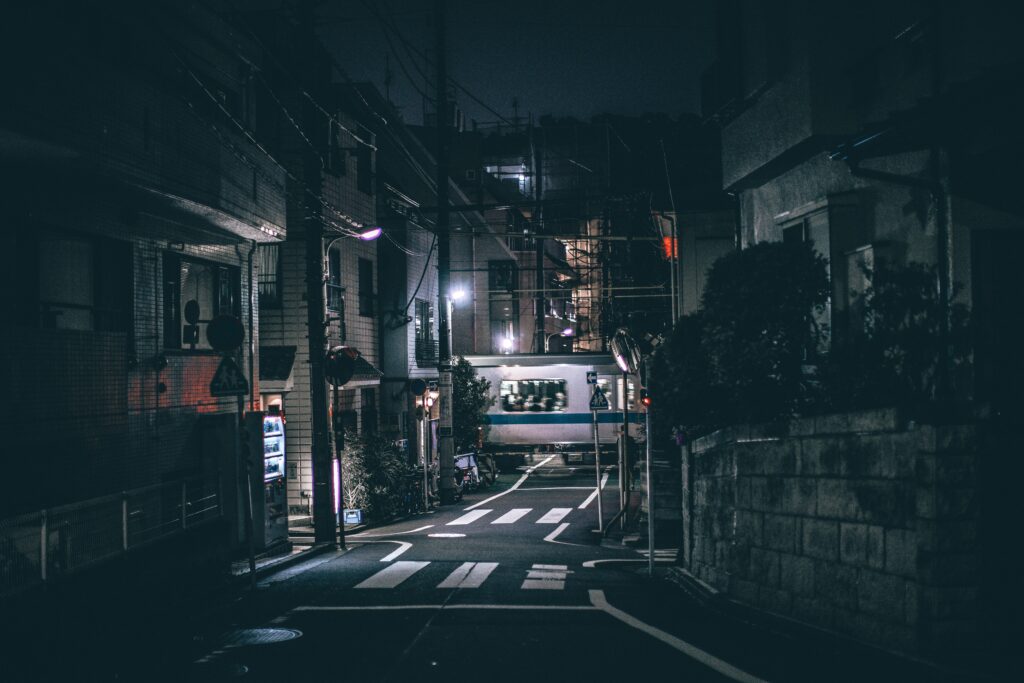
 Image of a dark city road at night. In the background, a train flashes by.
Image courtesy of Andre Benz on Unsplash

The ruler of the land

Amigo, in truth, ran the street. Come nighttime, it felt like many of us were chorus figures, and Amigo’s clientele were the main characters. You see, on the other side of the street was a bed and breakfast, perfect for tourists just a walk from a tube station. These tourists were practically fodder for the local milieu. Time after time, they would be taken by deception. I had the perfect view from my window.

So often, tourists would stand outside, taking their own break from the harsh pounding rhythm of London. Some had just arrived, the loud friction of suitcase wheels on concrete announcing their arrival. Cigarettes as their choice of anesthetic, they’d sit on the little outdoor promenade of the hotel and be approached. ‘Just a tenner’ or ‘20 pounds,’ Amigo’s clients said, stating they’d be back in 10–15 minutes. But Amigo’s clients would never return, much like the money. So who was Amigo?

I saw him once, long, long after it was clear this was a person of whom to be wary, if not afraid. 

He was all smiles — a wide deep smile pronouncing easy contentment. A light red tint to the afro hair on a diminutive, gaunt physique. For the man who an entire area was centered on and around, I saw no crime lord. His presence was more a curiosity than anything intimidating. Through a smile, the only words I heard out of an accent I couldn’t place were from the football shirt I was wearing: “Chelsea, Chelsea.”

Months in, Amigo’s supply and demand had evidently managed to develop quite the following. Unfortunately for Amigo, people want to see you doing well — they don’t want to see you doing better than them. The nightly regulars were consistent, the ground-floor window covered in bed sheeting and cardboard still had a steady flow of knocks, but that didn’t mean everyone was happy. 

An empire crumbles

The first sign of trouble was the sound of glass shattering.

Alert and wide-eyed from the flurry I’d hear lying in my bed that night, I pondered whether things would change. And yet, business went on much the same. A police presence began to develop on a consistent basis — but never at night, mind you. Soon, the notorious ground-floor window barely maintained through cardboard and bedsheets was boarded up. The night it all went down, however, I wasn’t present. My partner at the time, living in the flat on the floor above mine, would witness it all: a train of ‘little bad men’ — all clad in black tracksuits and balaclavas — made a run on Amigo’s, with bottles, bats, poles, and blades in hand. Not long into the fray, two police vans tore onto the street. What followed was a line of the balaclava-clad gentlemen being cuffed and placed in those vans.

I presumptuously concluded that Amigo’s days were numbered. Police presence, arrests, and the looming threat of escalating violence should have brought an end to it all. The enterprise was seeing its last days, and perhaps the street on which I lived would become a safer place.

It was a spring evening, and I was puffing away on a cigarette in front of my building. An unmarked police car materialized in front of me. Before it stopped moving, an officer opened the door and stepped out. Their tone was urgent and unblinking.

Did I live next door?

I said no.

Had I seen anyone go in next door?

 No again.

They’d placed a court order on the building; no one but residents could enter the premises.

Shortly, politely, they returned to the car, which vanished in the same inexplicable manner it had arrived. Adrenaline pumping from the exchange, I walked to the grocery store, realizing Amigo’s days were truly numbered. Returning only minutes later, plastic bags in hand, who stood outside number 10… but Amigo.

The signature smile was intact and the words left his lips:

“Did you see the police?”

A thick flurry of anxiety struck me. How did he know?

Nervously, I answered yes.

An easy, relaxed body language matched the wide smile.

“They are very nice people. They give me a flat in Victoria.”

I wanted London, I wanted reality – here I was.

Image of a darkened city street with street lights.
Image courtesy of Frederico Almeida on Unsplash

Migrant

Note: A profound thank you to Daniel at DS Productions for his impassioned background music which is featured in the audio recording of this piece.

Our land is on fire, regardless of the soil that sustains us,
Our soul is burning, regardless of the lava that cloaks us;
Our body dances the ballet that embraces us.

We are naked and unprotected bodies,
Like migrants born to conquer
The land of the unknown,
The land of the unheard,
The land of absence.

You and I are migrants,
Migrants like the sin of being.

We are nothing more than displaced bodies that seek, amid prayers,
To silence the hunger, arrogance, and abuse of those
Who inhibit our being.
We are nothing more than souls trying to give substance to the ashes that have Blossomed from our being.

We are nothing else than rejected bodies in a land we did not choose to be,
When our life, lost in the mist, searches for the light
To reach praise of the gods,
Once, our tears went unheard.

I’d Get on the Offline

We appear to have hit some event horizon about the state of young men and boys coming of age. This commentary has been running for a few years in the States and now appears to be hitting the UK as a greater cultural conversation. This topic is something of a biased one for me — my beginnings were calamitous at best. It’s taken the other side of 30 to build a genuine identity and a feeling that I’m not just another lost male in a sea of them.

As a millennial, I had a half-and-half childhood. Born in 1991, I had a near clear split between an analogue world of legacy media and phones on walls before the rise of all things wireless and the internet. Someone 10 years my junior has grown up in a profoundly screen-based childhood where most interaction and information are found online. Being online is very much their norm, and suggesting that young people stay clear of what’s “in” might not exactly win me any listeners.

The major concern about our youngest men is a listlessness that easily falls into isolation, gaming, porn, and gambling. Being directionless as a young man is far from easy or fun. We tend to be prone to cover this with a willful, jet-propelled narcissism or overcompensation to make up for a lack of self-image, worth, or direction. Finding one’s feet in a world quick to judge men on their competency when one is still developing is uncomfortable at best. However, I can’t deny that the incredible, godlike tool called the internet is the root cause of this current generational malady. Not for a second am I suggesting young people don’t use the internet, but their relationship with it may well be in need of adjustment.

There is consistent commentary that young men are in need of role models. This is a traditional approach to an entirely novel time. I’d argue that models for the analogue world may not work so well digitally. Role models are great, but counting on them to be present in a society of new-thing-next-thing, throwaway consumerism may be unwise. Young men don’t need father figures; they need to find out who they are. This is often a years-long process, but in my observation working with men younger than myself, there are some simple ways for starting this process.

Time to play the game?

I’m a ‘90s kid. I grew up on Streets of Rage 2, Sonic the Hedgehog, Goldeneye, and other gems. The ‘00s was something of a golden age for video games, and I was a teenager; I won’t deny this was close to bliss. I barely have time for video games now, but I know I don’t want them out of my life altogether. Video games can be a part of any young man’s life, as they have been mine, but there is a difference between my younger years and the lives of young men now. During my youth, video games meant inviting friends round and playing together in the same room. What young men have access to now are headsets and playing online with others who are often miles apart. It’s worth considering either deprioritizing or fighting the tide of an innately singular activity — game less to make time for other interests or commit and develop the interest externally. This would mean attending events, expos, competitions, and online communities to make an isolated interest more sociable.

Porn

There is not a single feted or worthwhile piece of self-help or dating literature for men that doesn’t tell them to give up pornography yesterday. There’s no net win in the usage of porn. If the material is from professionals, we’re possibly witnessing the outcomes of social outcasts, tearaways, and neglect and abuse victims. If the material is from amateurs, none of the above may be true, but you’re still a peeping tom by definition! I’ve read that consistent porn use over time is prone to emotionally numbing the user, the exact opposite of what a young person finding themselves needs. I’m of the firm belief that young men should claim and take responsibility for their own pleasure, not lean on virtual externals to uphold it in some sleazy crutch. I can confirm that it is 100% normal for a young man at the turn of his twenties to have a sky-high sex drive. 

But can the same thing be said about someone taking a laptop to bed every night?

A person using a laptop.
(Image courtesy of duncan karanja on Unsplash)

Address isolation

Coming from a dysfunctional home, isolation and its patterns were the norm. It’s jarring to me that my formative circumstances can hold matters relatable on a mass scale. We were a house of closed doors; we seldom connected or shared a space beyond mealtimes and family holidays. I’ve come to realize in the years since that that experience has impacted how I’ve gone about life. I’m always seeking a place for myself, and despite a clear need for it like anybody else, I can easily find social engagements draining. I have had to be quite proactive and push myself to stave off isolating patterns and habits I inherited and never asked for. My fear is that many young men could find themselves fighting the tide I did, which leads me to…

Apps aren’t the way forward

At the time of writing this, apps geared toward dating, hooking up, and socializing appear to be hitting a saturation point; people are increasingly losing interest in them. I’d argue not a moment too soon. Apps are highly functional, but maybe they’re too much so for what they are supposed to be contending. What should be a boon for technology, a remarkable attempt at providing opportunities for connection, is not so in reality. Apps are more akin to human meat markets, dissolving valuable connection into an impersonal validation frenzy. I don’t know anyone who hasn’t experienced app fatigue sooner or later, and I include myself in that. If you want to meet a woman or new people in general, put yourself out there. There are numerous online platforms that advertise  in-person social events, so it’s easy to find something to do. 

In my experience, they’re well worth it.

Where do we go from here?

Profile of a man standing on a beach, with a sunset behind him.
(Image courtesy of Zeki Okur on Unsplash)

The primary theme I keep returning to seems to be this: get offline. This is not quite true. What the steps above outline is to not rely on the internet to fill one’s needs and to carefully use it to find opportunities in the real world. Be online to find social events, not socialize. Follow your interests to find your calling; don’t fix a job path to define your identity. Focus on building yourself to attract the right people; don’t desperately chase in the hope of finding someone. This is the advice I’d give my younger self. 

Yes, men are judged on competency. Yes, it’s important that a man is competent, but perhaps not in the way we uphold it as a culture. What makes a competent, valuable man? Amor fati. Or, the acceptance of one’s self, life, and fate. Someone who can embrace all of life. He sees the good and the bad, success and suffering, and responsibilities and hardships as all having value and necessity. A competent, valuable man isn’t about his paycheck, lifestyle, or status; it’s about him going after what he wants in life and having a hell of a time getting there. Come rain or shine, upheaval or mastery, any day of the week. 

The struggle is where growth happens, and that growth might be what gives life a sense of unfolding, progressive adventure. In my experience, it’s worth the fight.

The Day A Stranger Saved Me

Sometimes, superheroes aren’t our friends, siblings, or even our parents. 

Sometimes, they are a complete stranger — someone who appears out of nowhere and changes everything, and I mean every single thing. 

My graduation day had finally come — the long awaited day. Excitement kept me awake the night before as I imagined being called a senior student. I couldn’t wait to wear the beautiful dress my grandma had gifted me and step into my senior student era.

That morning, I woke up before everyone else, so happy and eager to get ready. But when I checked the reservoir, I realized that there was no water left for my bath.

 If I wanted to prepare for my big day, I had to fetch some water.

It was too early to wake our neighbor who had a water pump, so I had only one option: the nearby river.

Without thinking twice about it, I grabbed my bucket, slipped on my clothes and the slippers my mother had recently bought for me, and walked to the river. 

On my way, I was so excited that I swung my arms and played with the beads in my braids, already picturing how I’d style my very cute hair.

From stranger to superhero

When I reached the river, I rolled up my trousers so they wouldn’t get wet and stepped into the cool water. In a few seconds, I carefully filled my bucket and turned to leave. However, just as I took two steps forward, my right slipper slipped off and floated away. 

Oh my God, I was so scared and panicked.

My mother had warned me not to lose or destroy my slippers because she wouldn’t buy me a new pair anytime soon. Without thinking twice about it, I dropped my bucket and rushed to grab my floating slipper.

That was a mistake.

Before I realized it, the water had already swept me off my feet. Gosh, it was not funny.

I kicked, struggled and struggled, reaching for anything to hold onto, but nothing was within my grasp, and I didn’t know how to swim at that time. 

(Incidentally, I am now an expert swimmer, and I’m sure I could compete in the Olympics if I wanted to).

The harder I fought, the deeper the river pulled me. Water rushed into my lungs. My legs became weak. I couldn’t fight anymore.

 Just as I was about to give up, a man — a stranger, my superhero — jumped into the river.

I barely saw him before his strong hands grabbed mine. I was too weak to hold on, so he pulled me out of the water and carried me to the shore.

I sat there, shaking, confused, and scared. Tears filled my eyes, not just because I had almost drowned, but also because my slipper was gone. 

My mother would be upset because she had already warned me not to go to the river alone, but I never listened. There was nothing left to do but return home and prepare for the day.

My superhero walked me back. Our house was only a short distance from the river. When we arrived, my mother was angry, but also filled with gratitude.  

I was alive and not dead. She thanked my superhero repeatedly in Yoruba (a major language in Nigeria), saying, “Ese gan ni.” She invited him to dinner that same day, but he never showed up.

As soon as he left, she turned to me, and let’s just say that I received the beating of my life.

After that, she sent my older brother back to the same river to fetch water so I could finally bathe and prepare for my graduation.

 I tried, tried really hard, but no matter how much I tried, I couldn’t feel the excitement anymore. The long-awaited day had turned out to be one of the saddest of my life at the time.

(Image courtesy of Gabriel Bassino on Unsplash)

A stranger’s kindness can change everything

Looking back to that day, I realize that sometimes, the people who save us aren’t the ones we expect. It’s not always family or friends. Sometimes, it’s a complete stranger.

And just like how my superhero saved me, we, too, can be someone else’s superhero.

While my graduation day did not go as planned, and I felt sadness from it all, I am still grateful for the man who saved my life. He taught me that we should care for each other and be kind to each other, even when we are strangers.

Because kindness isn’t limited to those we know, and these acts of kindness can make the world a better place. 

We Don’t Drop F-Bombs in Kansas

Someone from NYC recently asked me what life was like in the South, declaring they could hear my “Southern drawl.” Well, Miss, I’m from a state that isn’t part of the South, nor has it ever been. Speech issues aside, I was born and raised in Kansas, the first free state in the Union.

You see, the Kansan is confident but humble, eager but patient, optimistic but grounded. And there are levels of Kansan, I must surely declare with this post. There is the native Kansan, born and raised, who likely in their youth visited the state capitol building in Topeka where they witnessed John Steuart Curry’s vision of John Brown.

This type of historically aware, compassionate Kansan witnessed the passion in Brown’s eyes, the righteous fury that he conjured, and perhaps felt the urge to make a difference in the world. Over years of education in the first free state, this type would hopefully learn to express their beliefs in more socially tolerable manners than Mr. Brown.

Another type of Kansan is the New Local. They were not born here but moved here, either by election as an adult or late in their rearing; they have lived here long enough that they are part of the community. Maybe they have been to the capitol, they may have heard of John Brown, they may have a thought or two on Kansas’s blood, and they may even know Kansas is the first free state.

Often, however, these folks moved here simply for the cheaper cost of living. A dollar goes further in Kansas than in most any other states. They often love the life they find, should they possess a life which frees them up to pursue their interests. Money helps, too.

There is one other type, of the available plethora of Kansans, which I hope to address; The Interloper. This type of Kansan may be Native or Local, or may simply be passing through. But they do not get it. Whether born and raised here or newly arrived, sometimes the propaganda of the First Free State falls upon deaf ears. The cause, any cause, is not to be addressed to this type of Kansan.

Afforded the opportunity to visit or reside in the First Free State, I’ve seen the Interlopers snicker at our ‘backward ways.’ They know better than The Native what Kansas means in the grand scheme, and they spend time preaching such nonsense to The Local. These folks are free to have their opinion, and frankly I will have a word or two with them out of courtesy, but we shall never see eye to eye.

I may be a white, cis, hetero-normative male with a savior complex, but these labels only validate my label of Kansan: I am merely a product of my environment. My Kansan beliefs align with my country’s founding vision of life, liberty, and the pursuit of happiness. I believe a human’s life must liberally pursue whatever allows for them to be happy in a manner as free from hazard to said vision as a society can allow.

But the Kansan can critically push the envelope in terms of what a society can allow. Following Mr. Brown’s campaign, we then had the prohibitionist hatchet of one Carrie Nation, followed further still by a rather progressive women’s suffrage movement, on up to the more modern subject of public education, specifically with regard to segregation in the groundbreaking Brown v. Board of Education Supreme Court decision.

Of course, this revolutionary history of Kansas is old news to us natives; the Locals will surely come to hear the tales only for the Interlopers to swing in and play devil’s advocate about what this state truly means. We are a heartland flyover state in the bible belt after all, and we have a litany of activities wherein one could argue against the effort; please see Westboro Baptists, Acid King, Timothy McVeigh, Dennis Rader, and honestly, Truman Capote’s whole act.

So why would anyone want to live in the most-southern northern state in the Union? Seems like something is always going on around here, especially on slow days. We catch an occasional college football game or basketball game, we drink at a rather alarming rate, and by God do we love freedom. 

Freedom to drive our trucks, hunt our bucks, and ideally be left the fuck alone.

But there are other types of freedom to which the Kansan in general is rather newly exposed. For many, both within and without Kansas, this freedom embodies itself in money. 

Koch Industries, for example, is a homegrown genuine political monolith, on top of manufacturing most every plastic or paper product in this country. This one Kansas corporation has all the money they need to buy political offices, or whole parties. You know, fuck you money. 

Of course, there is not a lot of money in Kansas and here people rarely say fuck you — either with their money or with their mouth. It is funny that something is ever thought to be the matter with Kansas, when in reality we Kansans set this new reality of politics into motion decades ago.

And so this article is addressed to the notion of Kansan upon which I was raised: The Free Stater. The Free Stater likely moved here for political purposes when the state was merely a territory, rather than any perceivable economic advantage. The Free Stater put their money where their mouth was, and then some. The Free Stater believed life, liberty, and the pursuit of happiness were meant for all of humanity and they mobilized to such effect.

Ideal thinking, surely, but without an ideal which we are to pursue, we are lost in the wake of time. Being lacking of purpose or dispossessed of the ability to think plainly will not get you far in my home state. Our governor, for example, is a fine example of Democratic ideals, while our Attorney General is certainly Republican

(Image courtesy of lorettaflame via Morgufile)

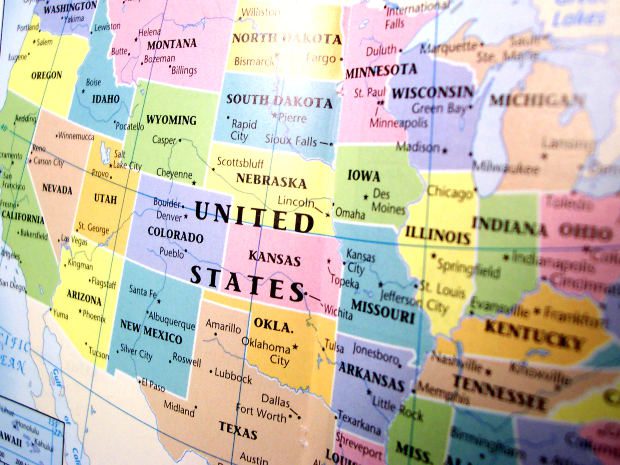
So pull out a map of North America the next time you wonder where Kansas is located. You will find the geographic center of the 48 continental states located within Kansas’s borders, a mere stone’s throw from Lebanon, a small town in Smith County, Kansas. You will find such significant historical markers of the deeds committed on Kansas soil if you travel our highways that you will wonder how there is anyone left standing here to fight. And so you will see a fight started here, and it continues here, centered in the heart of democracy.

Whispers of Ancestry

From the shadows of the ancient dawn, the voices of forefathers 
The tapestry of human history is a blend of triumph and tragedy 
In the heart of Africa three hundred millennia past 
Life came to earth, the evolution of sapiens  

They had no capes nor sweaters, and fought to survive or die waiting 
Following the wisdom of their elders, surviving another day 
Quartz sparking feasting on a giant Irish elk 
Seeking out solace and shelter, nestled in the cavern’s depth  

Under the Tuscan sun, tales of strength and resilience 
Homo sapiens, possessing both perception and native wit  
Babylonian chronicles, unfolding the whispers of ancestry 
Listening to those mighty slumbers, under the quiet earth

Donkey Voting Down Under

Donkey voting with a ‘democracy sausage’

Voting is a fundamental democratic right, allowing citizens to have a say in how their country is governed. But what if it’s mandatory? 

In Australia, as I discovered when I moved there, the voting process is compulsory, aiming to ensure that every eligible voter has the opportunity to cast their ballot and the opportunity to enjoy hot dogs at the polling booth. Normally called a sausage sizzle in Aussie slang, it becomes democracy sausage come election time. 

Within the great Aussie democratic system, I realized, lies the phenomenon of “donkey voting,” a term that might be unfamiliar to many, especially to first-time voters and outsiders like me. 

First of all, let me explain the hee-haw. Numbered voting is required in preferential voting, where voters rank candidates in order of preference or priority. A donkey vote occurs when a voter marks their ballot paper in numerical order from top to bottom without considering the candidates’ policies or merits. 

For example, if the candidates are listed as A, B, C, D, and E, a donkey voter would spitefully mark them 1, 2, 3, 4, and 5 respectively. It is also a donkey vote if it goes the other way around. This type of voting shows up in preferential voting systems, like the one used in Australia,.

It doesn’t count as a sincere vote though, and is more of an act of protest. Voting like this also shows that you have not used any intellectual horsepower to think through your ballot choices. This stubborn act is called donkey voting for a few reasons. 

Number crunching

Now here is why this type of mischief might happen at the polls Down Under for you numbers people: 

1. Lack of interest or knowledge: Some voters might not have enough information about the candidates or might be indifferent to the outcome of the election. As a result, they simply mark the ballot in the order the names appear. Make voting compulsory and people will find a way to half-ass it. Hence it’s dissed as a donkey vote.

2. Protest vote: A donkey vote can be a form of silent, but black and white protest against the political system or the available candidates. It’s a way for voters to show their dissatisfaction with the checklist or the choices without spoiling their ballot. The vote counts, and this one hurts. 

3. In a country where 26 million people reside, having 111,015 people vote sequentially may not seem high enough for concern. Just read this article for more numbers: 

Grazing on democracy’s green grass

As someone who has never voted before, as I am not from much of a democracy, the concept of donkey voting is both intriguing and concerning. I am from an absolute monarchy where brain drain is common and people want to go somewhere more developed where they have freedom. The grass is always greener, somewhere, but do we really have to share it with jackasses? 

I think personally, not voting properly is subverting democracy, turning it assways. There is more to it than that though sometimes. 

While donkey voting is not illegal in Australia, it raises ethical questions about the integrity of the voting process. Critics argue that it undermines the principle of informed voting, where each vote should reflect a considered choice. 

I had always assumed that every vote cast in an election was a deliberate and thoughtful choice. The idea that some people might vote in numerical order instead of preference raises questions about the true representation of the electorate’s will. Who is in the electorate though, I wonder? 

If I was a voter, I would feel a sense of responsibility to ensure that my vote counts in a meaningful way. This means taking the time to research the candidates and their policies, understanding the issues at stake, and making informed voting choices. Donkey voting, in contrast, seems to invalidate this important civic duty. Or could you use it as a form of effective protest? Not as a student during student union elections, I don’t think. 

I remember hearing about it between 2012-2016 in my formative university years as a first time ever voter of any kind. Students do not need to vote during their student union elections although it is a wasted opportunity if one does not learn the basics of the democratic process then. Oh come on now, don’t be such a neigh-sayer and tell me you scoff at the idea. Why I chose to even engage leads me to think that better voter engagement, at the personal or relational level, can improve voter confidence. 

Furthermore, the prevalence of donkey votes underscores the need for better voter engagement. First-time voters, in particular, could benefit from resources that explain the voting process, the significance of preferential voting, and how to make an informed choice. 

Additionally, efforts to increase voter engagement, such as candidate forums and accessible information about political platforms, could help reduce the incidence of donkey voting where mandatory voting means you can’t vote with your feet and protest by not voting at all. 

Passive-aggressive, maybe just aggressive?

I sometimes think that voting this way in protest is probably valid when no one wants to give you a voice in the first place. In case no one represents you, why not express your disagreement and mock the process in a passive-aggressive way? 

In compulsory voting, you need to vote or pay a fine. If you do not want to vote but also want to avoid paying a fine, you can just cast your ballot but not indicate a clear preference in protest. 

In the case of the indigenous Australian population, that might turn out to be a full-on silent treatment.

No wonder, since 60 percent of Australians have recently voted to not give Indigenous Australians their voice. Imagine not letting your host speak at all during a party you crashed;. where is the propriety in that? Reconciliation may indeed be dead, as the 2023 Australian Indigenous Voice referendum showed, and only time will tell if donkey or linear voting will increase along with informal votes. Compulsory voting has its flaws after all. Who can convince 

people to vote democratically in a system they wouldn’t design as the rules of the representational game don’t let them play and win? Not given a voice? Then they won’t give their voice. 

Can the great Australian experiment be saved from going further south? That’s an article for another day so I don’t have to half-ass it. Or maybe ask the original custodians of the land.

What a Difference! I Voted In India and the USA

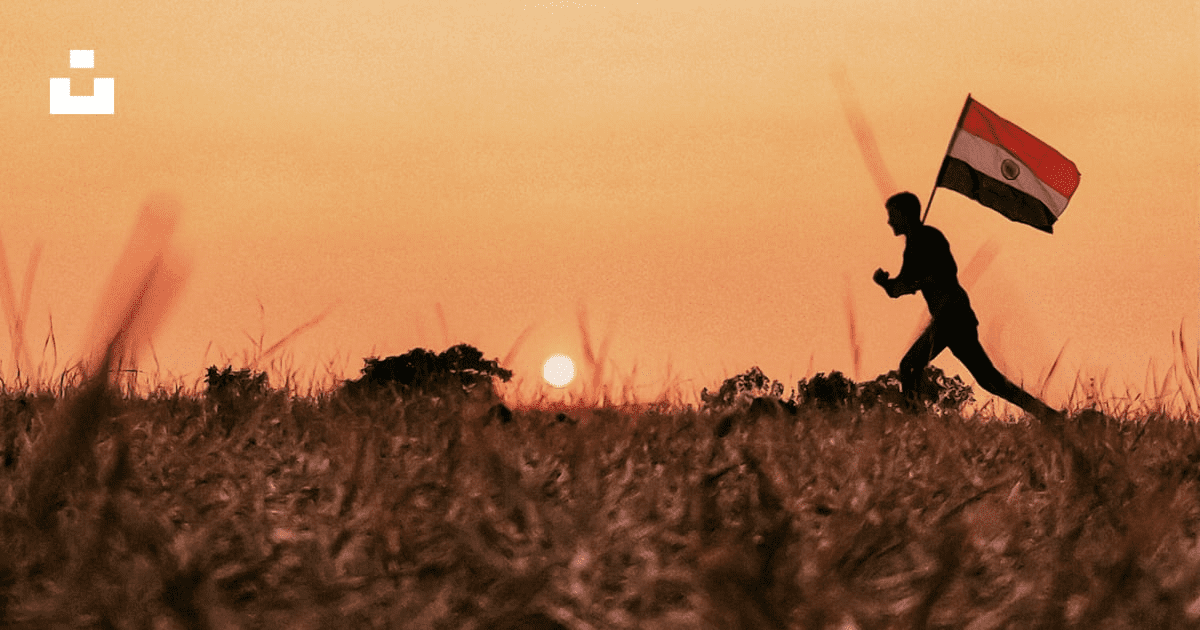
My experience voting in these two countries seems so similar. Electronic voting machines and ballot boxes — covered enough to make it a perfect secret ballot, all set up on school premises. There are similarities in election propaganda, the campaigns, the rallies, and the voters have to be 18 years or older. Yet they are so different. India elects every five years, and the US every four.

Indian elections have a unique flavor, a sort of tanginess


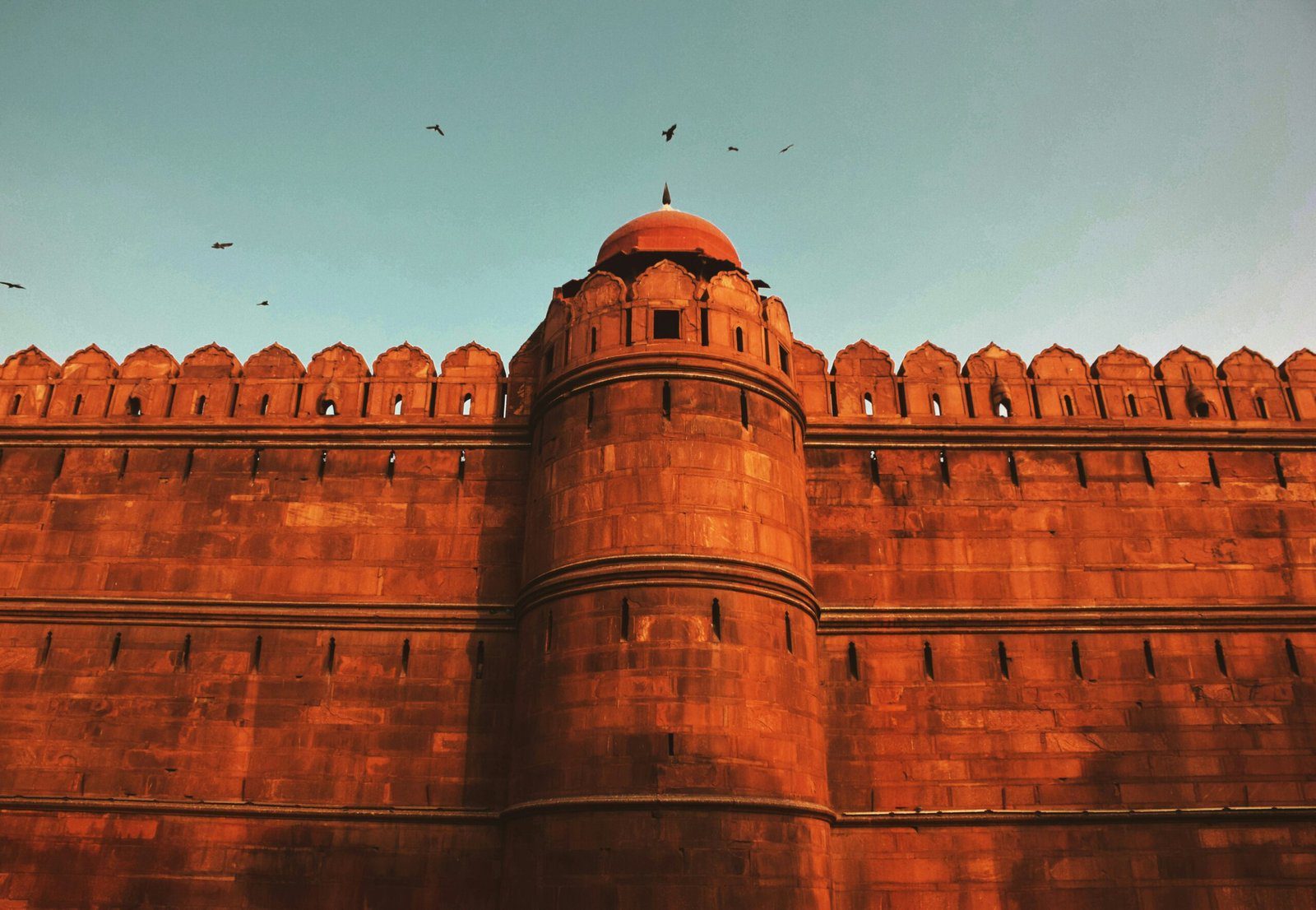
(Photo courtesy of Shreshth Gupta via Unsplash)

Indian elections bring with them more movement than others; they are like carnivals: processions and massive campaign rallies with loud music and rhyming party slogans in Bollywood mashups. Overloaded vehicles of all kinds — bicycles, autorickshaws, cars, and bikes zoom in now and then through the streets — all calling loudly for votes. Life-size campaign banners used to influence voters are what bring in election fervor. Everything is a campaign board — the electric poles, tree trunks, public vehicles, walls, and roads decorated with posters and banners are everywhere. The door-to-door campaigns extend a personal touch. Talking to the candidates made me feel special, stirring in me, the 18-year-old first-time voter, a sense of responsibility— a feeling of “I should vote” and “I am old enough to make decisions.”

It was election day, and I was finally at the polling booth at a school, ready to cast my vote. 7:00 am to 6:00 pm is generally the polling window in India. I thought it would be a simple process, but my confidence shattered once I saw the voting machine in front of me. Where? Who?  I had done my homework, but the long list of symbols with just the candidate’s names beside it made me nervous. After a few seconds of blank, I gathered myself up and voted (thankfully for the right candidate). Voting in the largest democracy with some seven recognized national parties, around 57 recognized state parties, and numerous other notable registered unrecognized parties — the ballot pages sometimes get long and puzzling. 


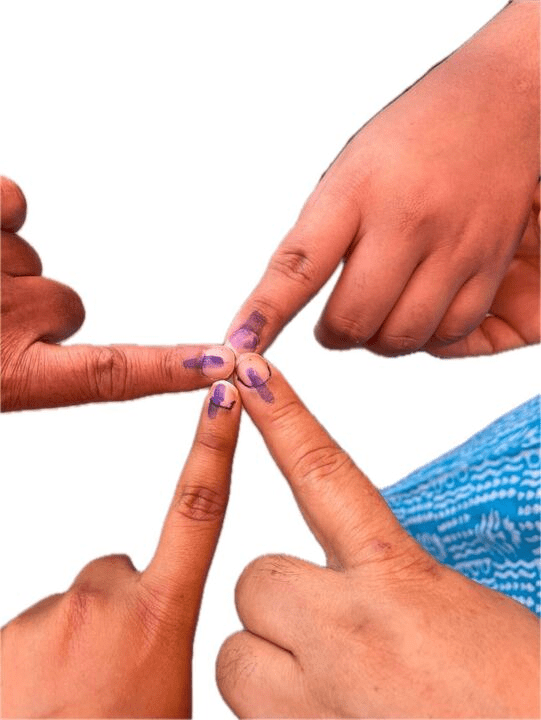
(Photo courtesy of Tripti Mund)

Post-voting indelible ink is used to prevent duplication and fraud in voting. That little drop on the left index finger is a statement of pride, of doing the democratic duty.  It is not mandatory to vote in India, but I take pride in the fact that I voted in all the elections that took place when I was there. 

The year I moved to the US, presidential debates had already begun. For me, it was, with other things, an acculturation of the election process.  I felt the US elections were so calm, which made me miss the volume of Indian elections.  

In the race for 543 seats, the Netajis (male politicians) and the Netrijis (female politicians) campaign standing in an open-top vehicle. Always with a namaskar (folded hands for greeting) and their head almost buried in marigold garlands. Close to elections, dresses in ethnic undertones stand out. Men dressed in kurtas and women in sarees. Heated-up speeches in open grounds from over-decorated stages, almost as tall as a house — visibility to the public is key. Screaming voices, high pitch with long pauses, and stress on every word, I could not find that in the US. 

Lunchbreak voting!

Here, candidates’ speeches and rallies are mostly town halls or debates between just two parties, the Democrats and the Republicans, which are interesting and decent, like TED talks.  

It was election Tuesday, and my US-citizen husband left home a little early. I thought it would take not more than an hour or two for him to be back home. At almost noon, I called him to find he was in the office. Working? This never happens in India! Election day is a holiday to vote or not. Yes, this is how it is in the US: manage time and your civic duties between work. 

Free Stickers with I voted inscription and flag of USA Stock Photo

(Photo Courtesy of Element5 Digital via Pexels)

The Tuesday after the first Monday in November is designated  US election day. This was a culture shock for me. I came from a land where election dates are released two to three months before elections, from a democracy that never votes on one fixed day. Voting dates vary from state to state, even district to district. 

No voter ID card, just your driving license for proof of identity. No indelible ink, just an “I Voted” sticker. Once, we took our first-grader to see the voting process, and it is so different from India. 

Protests close to the elections are very common in both countries. While in the US, they start after office hours and end before 9:00 or 10:00 pm, India crawls to a standstill, with protests impacting daily life from dawn to dusk. I called them holiday perks. 

Flowers, scented flyers, crowds, and traffic jams surround elections. In my teens, I collected the scented flyers and carefully placed them between the pages of my books. They made my bag smell good. When a party wins you can see Holi and Diwali in the streets. What an extravaganza! 

As a citizen of the USA now, I always vote. Here, Tuesday night’s 9:00 pm election debates bring the election fun — both primary and presidential, followed by the television analysis. The debates stir the election mood. I find the primary debates more interesting: candidates of the same party trying to claim their candidature on national television, wow, so much energy! Indian parties hold their primary debates behind closed doors. We just get to know the contesting candidate. The post-debate analysis is animated. At my home, too, we hold parties where we hotly debate election topics.2024 is all elections and elections, and both democracies are out again, fastening their belts. India for its Lok Sabha polls and the USA for its presidential elections. While my family dinner table hosts discussions on Indian bhashans (speeches) and American debates…