
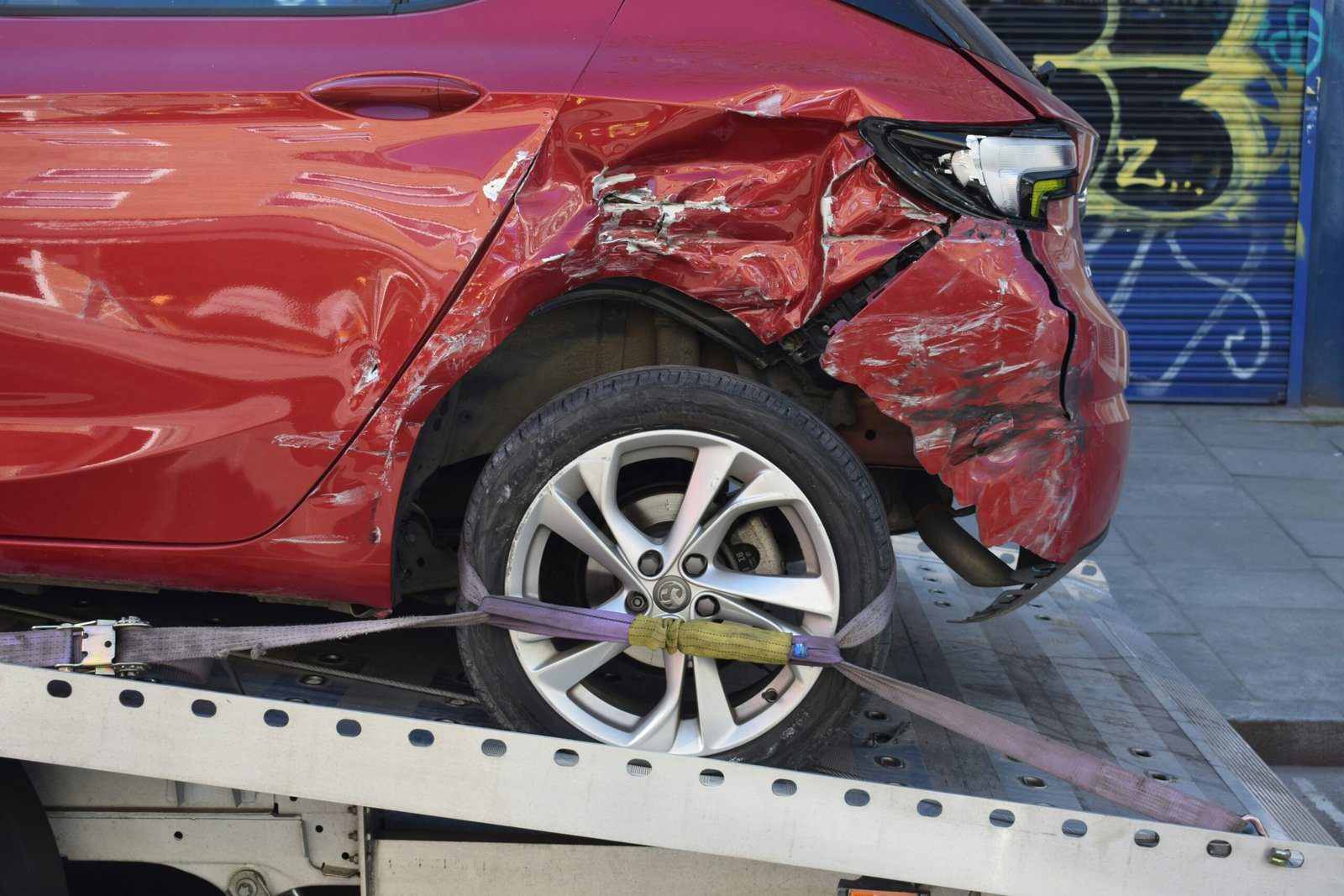
Uber and Bolt Face Mounting Safety Concerns in South Africa

Ride-hailing services Uber and Bolt, once hailed as safer and more affordable alternatives to traditional taxis, are under mounting scrutiny in South Africa. Riders and drivers are increasingly reporting incidents of violence, hijackings, kidnappings, and assaults linked to the platforms have raised urgent questions about safety gaps, weak verification systems, and sluggish emergency response mechanisms.

The recent shooting, arson and execution-style murder of 27-year-old Siyanda Mthokozisi Mvelase in Soweto, is of the many cases that have drawn public attention and the reemergence of the on-going violence between e-hailing drivers and taxi owners in South Africa. In Johannesburg, drivers have been lured to remote locations by fake ride requests, only to be ambushed and hijacked. Riders, meanwhile, have reported kidnappings in which they were driven off-route and held until relatives or friends paid a ransom. Police confirm that such incidents, once sporadic, have become worryingly frequent. Whilst no verified stats on the number of e-hailing related hijacking, it is worth noting that between January and March 2025, SAPS recorded 4,533 car hijackings nationally, down from 5,338 in the same period in 2024. Gauteng saw 2,488 hijackings which is about 55% of all hijackings in the country.

Despite these threats, Uber and Bolt continue to market themselves as safe and convenient. Both companies have rolled out safety features, such as in-app emergency buttons, ride-sharing with trusted contacts, and driver identity verification. However,  drivers and riders beg to differ, arguing that these measures have done little to close dangerous loopholes. Verification of drivers remains inconsistent, background checks are often cursory, and when users trigger the in-app emergency function, response times from security teams or law enforcement can be slow.

Drivers say they are increasingly vulnerable. “Drivers are screened but passengers are never screened… That’s how drivers get hijacked and beaten and some even get killed.” – said a Gauteng based Bolt driver, who has been working in the industry for the past two years. Many drivers operate late at night to maximize earnings, which exposes them to higher risk areas. Others complain that fare structures do not account for danger zones, forcing them into hotspots without adequate compensation or protection. In Cape Town, several drivers have begun refusing trips into informal settlements or poorly lit areas, a move that has left many commuters stranded.

The South African Police Service (SAPS) has acknowledged the surge in ride-hailing related crimes but insists that platforms must also take responsibility. “Law enforcement can only do so much. Companies have the data and technology to predict risks and alert us in real time. That isn’t happening.” Furthermore, Brigadier Athlenda Mathe, SAPS national spokesperson, said: “We have noted with concern the rising number of violent incidents targeting e-hailing drivers and passengers. SAPS is intensifying operations in known hotspots and working closely with stakeholders to ensure that perpetrators are apprehended and communities can feel safe using these services.

Globally, Uber and Bolt have faced similar controversies. In London, Uber temporarily lost its license in 2019 due to safety failings, while Bolt has faced regulatory scrutiny in several European cities over passenger protection but in South Africa, where crime levels are already among the highest in the world, the risks are magnified. Both companies insist they are investing in safety. Uber South Africa says it has expanded partnerships with private security firms to ensure faster emergency responses, while Bolt has introduced a “driver selfie verification” system aimed at reducing account takeovers by criminals. Yet riders and drivers argue that these measures are piecemeal, leaving them exposed to daily threats.

Civil society organizations are now calling for tighter regulation of the industry. The South African National Taxi Council (Santaco), which has long clashed with ride-hailing platforms, argues that Uber and Bolt must be subjected to stricter licensing and safety compliance. Others have suggested creating a central registry of vetted drivers accessible to both police and users.

For now, however, fear persists on both sides of the ride-hailing equation. As one Durban-based driver put it: “We want to work, but every trip feels like a gamble with our lives.

Until systemic gaps in safety are addressed, Uber and Bolt’s promise of safe, reliable transport in South Africa will remain under a dark cloud of mistrust.
State, Crime, and Power: Ramaphosa’s Inquiry Opens a Window into South Africa’s Political Underworld

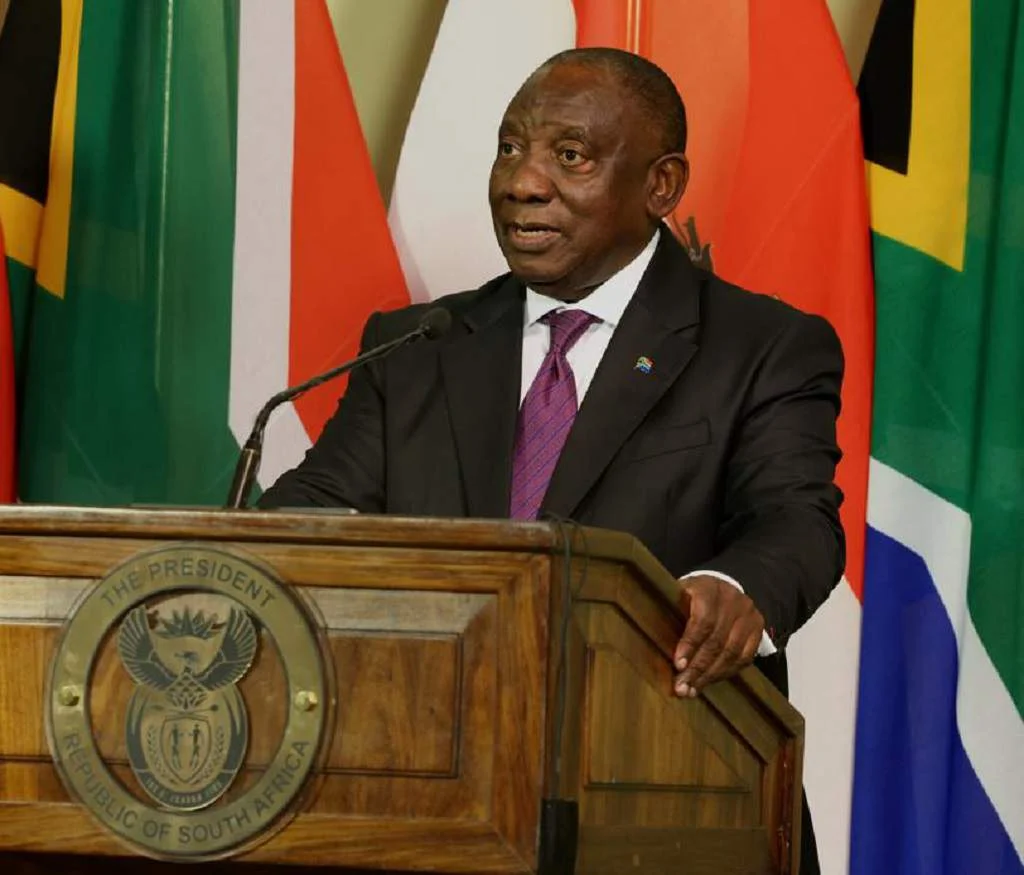
In a country battling record high crime, collapsing public trust, and deep political fragmentation, President Cyril Ramaphosa’s announcement of a judicial commission of inquiry into allegations of collusion between senior politicians, law enforcement, and organised crime marks a defining moment for South Africa’s democracy.

The inquiry, announced in a national address on July 13, follows claims by KwaZulu-Natal’s provincial police commissioner, Lieutenant General Nhlanhla Mkhwanazi, that a powerful criminal syndicate had infiltrated the state. The syndicate allegedly influenced political assassinations, compromised murder investigations, and manipulated senior police appointments. Most disturbingly, Mkhwanazi alleged that the task team investigating political killings in the province had been disbanded under pressure from political actors.

In response, Ramaphosa suspended Police Minister Senzo Mchunu and appointed Acting Deputy Chief Justice Mbuyiseli Madlanga to head the commission, which has been mandated to investigate “the alleged capture of the South African Police Service, the Directorate for Priority Crime Investigation (Hawks), and the justice system by criminal networks.” The president called the allegations “serious” and “threatening to the credibility and integrity of state institutions,” noting that “no person or institution is above the law.”

Shortly after the announcement of the commission, civil society in Durban mobilized in support of Lt-Gen Nhlanhla Mkhwanazi. Ntokozo Mkhize, national spokesperson for the Concerned Citizens of South Africa (CCSA), affirmed the groundswell of local support, stating: “We are not a political party or affiliated with any political entity… we are just ordinary citizens who are fed up with the lies propagated by politicians.

While shocking, these claims are not entirely surprising. South Africa has long battled blurred lines between state institutions and criminal enterprises, most notably during the “state capture” years under former President Jacob Zuma. But this moment feels different. These are not only claims of corruption or mismanagement. These are allegations that the state has become a vehicle for organized crime.

The stakes are high. The violence plaguing South African communities ranging from assassinations, extortion rackets, drug trafficking to illegal mining, is no longer simply a policing issue. It’s a governance crisis. According to a 2024 World Bank study, crime costs the South African economy roughly 10% of its GDP annually, due to lost investment, reduced productivity, and overburdened healthcare and justice systems.

Globally, South Africa is not alone. In Italy, the infiltration of the ’Ndrangheta and Camorra into politics and public procurement became so entrenched that entire municipalities were dissolved. In Germany, investigations into drug trafficking at the Port of Hamburg revealed a 750% increase in cocaine seizures since 2018 and evidence of public officials being bribed by transnational cartels. In Mexico, political assassinations and narco financing of campaigns have allowed organized crime to shape who governs and how resources are allocated.

In South Africa, political assassinations, especially at the local government level, have become a chilling norm. The Global Initiative Against Transnational Organized Crime, recorded at least 10 politically related assassinations between January and April 2024. This contrasts with 31 political assassinations recorded across 2023.

Ramaphosa’s move to establish a commission is intended to send a message: the state will no longer tolerate criminal capture. But critics are wary. Civil society groups and opposition parties argue that commissions of inquiry have become an expensive substitute for prosecution. The Zondo Commission, which exposed state capture during the Zuma era, cost over R1 billion and took four years to complete. Although some progress has been made, over R2.9 billion recovered and R12.9 billion in assets frozen, and only a handful of high profile arrests have followed.

The credibility of the new inquiry hinges on several factors: whether it leads to prosecutions; whether it names sitting political leaders; and whether it delivers interim findings quickly. The inquiry has been given 12 months to complete its work but is expected to submit reports to the president and chief justice at three-month intervals.

Ramaphosa’s commission may be his final opportunity to prove that the rule of law still matters in South Africa. The question now is not whether syndicates exist, they definitely do, but whether the state has the political courage and institutional muscle to fight back.

Can a National Dialogue Revive a Faltering Democracy in South Africa?

Over three decades into democracy, South Africa finds itself in a moment of deep uncertainty. While the right to vote, speak freely, and live in a constitutionally protected society has been achieved, the social and economic promises of 1994 remain painfully out of reach for millions.

Against this backdrop, the government has launched a new National Dialogue framed as a platform to reset the country’s course. But with youth unemployment at 62.4% and public trust in institutions steadily declining, many are asking: is this a meaningful effort to heal a fractured society, or just another elite driven exercise in political theatre?

South Africa’s socio-economic indicators paint a sobering picture. Unemployment remains stubbornly high at 32.9%, and when including discouraged work seekers, the expanded unemployment rate climbs to 43.1%. 

Poverty, too, is pervasive. According to the World Bank, nearly 63% of South Africans live below the upper-middle-income poverty line of  $6.85 per day. Meanwhile, inequality remains among the worst globally, with a Gini coefficient of approximately 0.63 in 2023 thus reflecting extreme disparities in wealth and access. Load shedding, crime, gender-based violence, and dysfunctional service delivery continue to plague communities.

Announced by President Cyril Ramaphosa on 10 June 2025, the National Dialogue aims to bring South Africans together across race, class, and geography to discuss the country’s future and rebuild a sense of shared purpose. It draws inspiration from the Truth and Reconciliation Commission (TRC) in the mid 1990s and is being led by an Eminent Persons Group, including figures like former judge Edwin Cameron, peace activist Ela Gandhi, and Rugby captain Siya Kolisi. The dialogue is expected to unfold in phases, beginning with a national convention in August and continuing into 2026. Its stated focus areas include poverty reduction, youth development, crime prevention, and restoring institutional trust.

But critics warn the effort risks being another “talk shop” disconnected from the realities of ordinary South Africans. Columnists like Malaika Mahlatsi and Ivo Vegter have labelled the dialogue a “costly distraction” with a projected R700 million (40 million USD)  budget though the Presidency insists this is not yet final. It is worth questioning the value of large scale consultations in a country already beset by service delivery failures.

South Africans are not suffering from a lack of ideas. We are suffering from a lack of political will and accountability,” Mahlatsi wrote. “Dialogues have become tranquilizers to pacify the rage of the governed.”

While the Eminent Persons Group features high-profile leaders, it lacks direct representation from unemployed youth, informal workers, or residents of rural and township communities. 

South Africa’s young people are not apathetic, they’re disillusioned. Years of corruption scandals, broken promises, and economic exclusion have eroded confidence in democratic institutions. But many are still hungry for change if they are given real space to lead. That means shifting the dialogue from polished stages in Pretoria to community halls in Khayelitsha, Giyani, Umlazi, and Mahikeng. It means integrating student unions, youth NGOs, and civic movements into the agenda-setting process, not just inviting them as spectators.

Importantly, the outcomes of the dialogue must be linked to tangible action: job creation schemes, basic income support, land and housing reform, and improved access to services. Without clear commitments and timelines, this process risks deepening cynicism.

South Africa’s democracy is 31 years old. But for many, especially the youth, its institutions feel distant and its benefits unequally distributed. The National Dialogue could be an opportunity to reset, reconnect, and reignite participation. But that will only happen if it centres real people, acknowledges hard truths, and delivers more than just words.

What’s needed now is not another blueprint or committee, but bold political will, grassroots inclusion, and honest reckoning with the failures of the past three decades. Because if democracy is to survive the next 30 years, it cannot simply be inherited. It must be rebuilt by the many, not the few.

Death Toll from South Africa’s Eastern Cape Floods Rises to 88 Amid Rescue Struggles

In the early hours of Tuesday morning, June 10th, the town of Mthatha and its surrounding villages in South Africa’s impoverished Eastern Cape province were plunged into chaos. Torrential rains triggered flash floods that tore through homes, collapsed roads, and swept away vehicles, claiming nearly a hundred lives, that number expected to rise.

For residents, the destruction was swift and merciless. Families awoke to the sound of rushing water and crumbling structures as the Mthatha River burst its banks. Makeshift homes and formal houses alike were no match for the sheer force of nature.

“We were not ready,” said one local councillor, his voice heavy with emotion. “We had no early warning, no time to evacuate. Many of the people who died were still sleeping.”

A Rescue Operation “Paralysed” by Resource Shortages

Authorities have acknowledged that rescue efforts in the crucial first hours were severely hampered by a lack of resources and coordination. “We were paralyzed,” said a senior provincial official who requested anonymity. “We didn’t have the air support, the boats, the manpower. It took hours—too many hours—before we could even begin to reach those in need.”

Over the following days, teams composed of the South African Police Service (SAPS), Department of Health, Gift of the Givers, and the South African National Defence Force (SANDF) were deployed. Efforts intensified over the weekend, with aerial searches locating bodies in and around Mthatha Dam and along submerged rivers.

Gift of the Givers’ search and rescue head, Ahmed Bham, said their collaboration with SAPS air support proved pivotal. “On Saturday, while hovering over the Mthatha Dam, we spotted anomalies in the water. Our diver confirmed that we had found three more bodies. We are now combing both riverbanks with boats and K9 units.”

The Toll on Families and Infrastructure

Entire families are among the dead. On Friday, President Cyril Ramaphosa visited the region to offer condolences and view the destruction firsthand. At the collapsed Efata Bridge, a taxi carrying schoolchildren was washed away. At least six learners, a driver, and a conductor died in the incident. Several passengers remain unaccounted for.

“I saw mothers crying in silence,” said President Ramaphosa. “This is not just a natural disaster. It is a humanitarian crisis that exposes the vulnerabilities of the most marginalized in our society.”

Beyond the loss of life, the human toll continues. More than 456 people have reported losing identification documents. Others are displaced entirely, their homes reduced to rubble. Many are sheltering in schools, churches, or with relatives in less-affected areas.

Mobilising Support Amid Widespread Grief

The provincial government, in partnership with relief agencies, is coordinating a multi-pronged humanitarian response. This includes:

  • Burial support in collaboration with funeral service provider AVBOB, covering body storage, funeral arrangements, and transport.
  • Grocery hampers from Interlink Express for affected families.
  • R5,000 in assistance from the Department of Education for families of deceased learners.
  • Mobile Home Affairs units deployed to Butterworth and Mthatha to issue temporary IDs and birth certificates.

So far, assistance has been provided for 26 burials, with many more expected in the coming days.

“This is not just about bodies,” said Athlenda Mathe, SAPS national spokesperson. “We are dealing with trauma, dislocation, and a deep sense of loss. The disaster teams are working around the clock, not just to retrieve the missing, but to comfort the living.”

A Climate Warning in Plain Sight

This disaster is a stark reminder of South Africa’s increasing vulnerability to climate-induced extreme weather events. The Eastern Cape, one of the poorest provinces, is already battling fragile infrastructure, chronic underdevelopment, and service delivery failures. Climate scientists have warned that the region—already grappling with alternating droughts and floods—will see more erratic rainfall and flash flooding in the coming years.

“This isn’t just an environmental event,” said a climate researcher at the University of Fort Hare. “It’s a justice issue. Poorer communities are bearing the brunt of climate change without the resources to adapt.”

A Region in Mourning, A Country on Alert

As floodwaters recede, the Eastern Cape is left to count the cost—emotional, physical, and economic. Roads, water systems, schools, and hospitals have all suffered damage. Local municipalities have declared disaster zones, unlocking emergency funds and support.

Still, for many residents, recovery feels a long way off.

Standing amid the debris of what was once her home, a grieving mother who lost two children to the flood said, “They say help is coming. But nothing will bring back what I lost.”