About 15 years ago, I lived in a little corner of West London that played out like the Wild West of the city. If you say West London to most people from the UK, they think Mayfair, Harrods, and the King’s Road. The stereotype is one of opulence: Chelsea tractors — SUVs common in the wealthier parts of the city — flawless complexions, and foreign nationals with bottomless pockets, all examples of how the other half live.
This was not my experience of West London.
Oh, I had a place in Kensington. But it was Kensington in title only: pre-gentrified and somewhat forgotten, buzzing, humming, and possessing a discernible edge. It’s what Londoners call ‘lively’ and what others may call ‘seedy.’ At first, I couldn’t have been happier. It was a studio, but the idea of self-sufficiency, of living on my own, as someone barely past 19 years old grabbed me. It harkened back to what father once glowingly advertised as the colloquially-known ‘bedsit living,’ you could simultaneously shave whilst cooking your eggs in the morning.
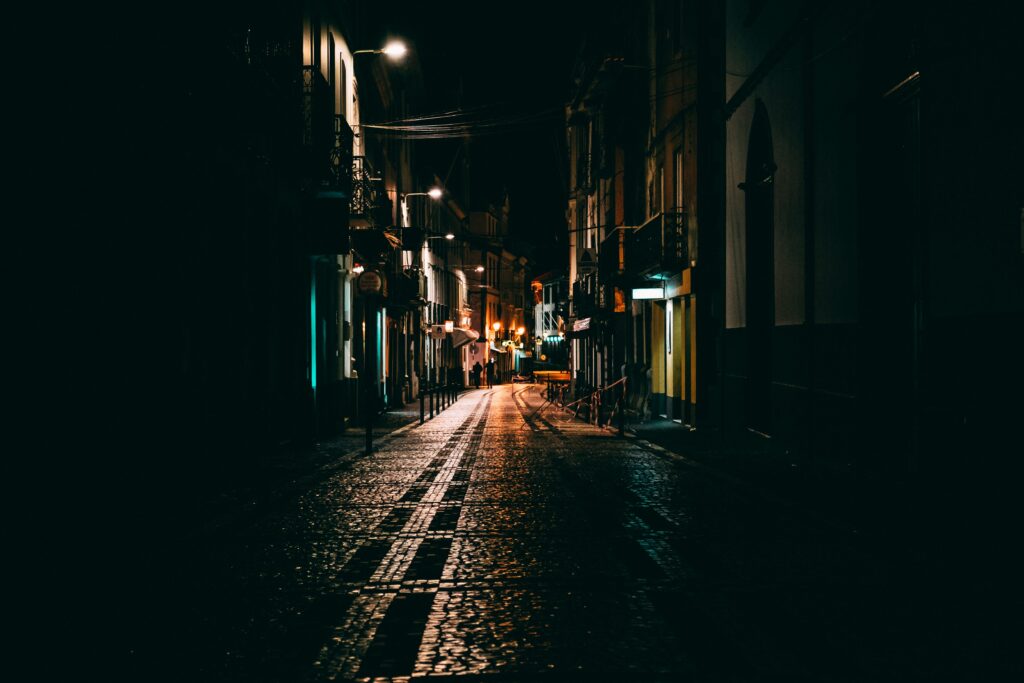
But things changed at night, the street transforming as the sun went down. It was as if the shift in light was a cue for subterranean, darker, malevolent energies and presences to emerge. Night would be the setting, but the underlying note to it all would be a single, recurring sound. It would be heard again and again and again.
“Amigo, Amigo.”
This was not a noun; it was a name. Amigo was the big dog, the kingpin, the Capone, the Heisenberg. Amigo was no amigo, as I’d come to learn from a slow but steady grasp on my surroundings. From 9 p.m. ‘til 4 a.m. near every night, “Amigo” would be heard. A man’s voice, a woman’s voice, a delicate whisper, a powerful shout, desperate, friendly, elated, deflated, and always, always with a rattling knock on a ground-floor window. To my great discomfort, it soon came to my attention that I lived at number 12, and Amigo lived at number 10.
Subscribe to The Superhero Brief!
Free access to the CEO's newsletter.
The views expressed in this newsletter are those of the CEO and do not necessarily reflect the views of the organization.
Between faded orange street lights offering a dirty glow for illumination, the sound of sex in the air come summer, and Amigo’s clientele, I’d chain-smoke Chesterfields by my flat window, feeling I’d found myself in a Tennessee Williams play, reenvisioned for 2010s London. I was naive and dumb enough to get a kick out of being in and among a risky environment. Clear and present danger was conceptualized as ‘reality.’ Yet reality bites.
One night, a woman in search of both ‘white’ and a gentleman named ‘Frank’ held down our front door buzzer until it was ringing the walls of the entire building. I figured I’d do the responsible thing of answering and telling this individual how this wasn’t okay. I told this person they would not find ‘white’ or a gentleman named ‘Frank’ here, and they needed to stop holding down our buzzer. For my troubles, two kitchen knives the length of my forearm were drawn on me. Miraculously, they weren’t used beyond threat, and after a thoroughly surreal conversation, the woman realized she was looking for next door. In the aftermath, the police provided no help beyond a phone call. The letting agent who’d introduced me to my current flat offered only a list of other rentals nearby. I decided after that night that I’d forgo chatting to Amigo about his customers…
I wanted London, I wanted reality — here I was.
Image courtesy of Andre Benz on Unsplash
The ruler of the land
Amigo, in truth, ran the street. Come nighttime, it felt like many of us were chorus figures, and Amigo’s clientele were the main characters. You see, on the other side of the street was a bed and breakfast, perfect for tourists just a walk from a tube station. These tourists were practically fodder for the local milieu. Time after time, they would be taken by deception. I had the perfect view from my window.
So often, tourists would stand outside, taking their own break from the harsh pounding rhythm of London. Some had just arrived, the loud friction of suitcase wheels on concrete announcing their arrival. Cigarettes as their choice of anesthetic, they’d sit on the little outdoor promenade of the hotel and be approached. ‘Just a tenner’ or ‘20 pounds,’ Amigo’s clients said, stating they’d be back in 10–15 minutes. But Amigo’s clients would never return, much like the money. So who was Amigo?
I saw him once, long, long after it was clear this was a person of whom to be wary, if not afraid.
He was all smiles — a wide deep smile pronouncing easy contentment. A light red tint to the afro hair on a diminutive, gaunt physique. For the man who an entire area was centered on and around, I saw no crime lord. His presence was more a curiosity than anything intimidating. Through a smile, the only words I heard out of an accent I couldn’t place were from the football shirt I was wearing: “Chelsea, Chelsea.”
Months in, Amigo’s supply and demand had evidently managed to develop quite the following. Unfortunately for Amigo, people want to see you doing well — they don’t want to see you doing better than them. The nightly regulars were consistent, the ground-floor window covered in bed sheeting and cardboard still had a steady flow of knocks, but that didn’t mean everyone was happy.
An empire crumbles
The first sign of trouble was the sound of glass shattering.
Alert and wide-eyed from the flurry I’d hear lying in my bed that night, I pondered whether things would change. And yet, business went on much the same. A police presence began to develop on a consistent basis — but never at night, mind you. Soon, the notorious ground-floor window barely maintained through cardboard and bedsheets was boarded up. The night it all went down, however, I wasn’t present. My partner at the time, living in the flat on the floor above mine, would witness it all: a train of ‘little bad men’ — all clad in black tracksuits and balaclavas — made a run on Amigo’s, with bottles, bats, poles, and blades in hand. Not long into the fray, two police vans tore onto the street. What followed was a line of the balaclava-clad gentlemen being cuffed and placed in those vans.
I presumptuously concluded that Amigo’s days were numbered. Police presence, arrests, and the looming threat of escalating violence should have brought an end to it all. The enterprise was seeing its last days, and perhaps the street on which I lived would become a safer place.
It was a spring evening, and I was puffing away on a cigarette in front of my building. An unmarked police car materialized in front of me. Before it stopped moving, an officer opened the door and stepped out. Their tone was urgent and unblinking.
Did I live next door?
I said no.
Had I seen anyone go in next door?
No again.
They’d placed a court order on the building; no one but residents could enter the premises.
Shortly, politely, they returned to the car, which vanished in the same inexplicable manner it had arrived. Adrenaline pumping from the exchange, I walked to the grocery store, realizing Amigo’s days were truly numbered. Returning only minutes later, plastic bags in hand, who stood outside number 10… but Amigo.
The signature smile was intact and the words left his lips:
“Did you see the police?”
A thick flurry of anxiety struck me. How did he know?
Nervously, I answered yes.
An easy, relaxed body language matched the wide smile.
“They are very nice people. They give me a flat in Victoria.”
Oliver is a published author and writer for online publications, currently living in London. He is a lifetime lover of roman-à-clef, nonfiction, memoirs, and plays. He is currently forming a television series with a cowriter and is bringing a stage play to the industry.
Thank you to Jessica Day and Emily Delnick for their inspired edits on the piece.





Comments
Be the first to share your thoughts!
We value diverse perspectives and respectful debate.