Living in the Age of Geopolitical Fatigue

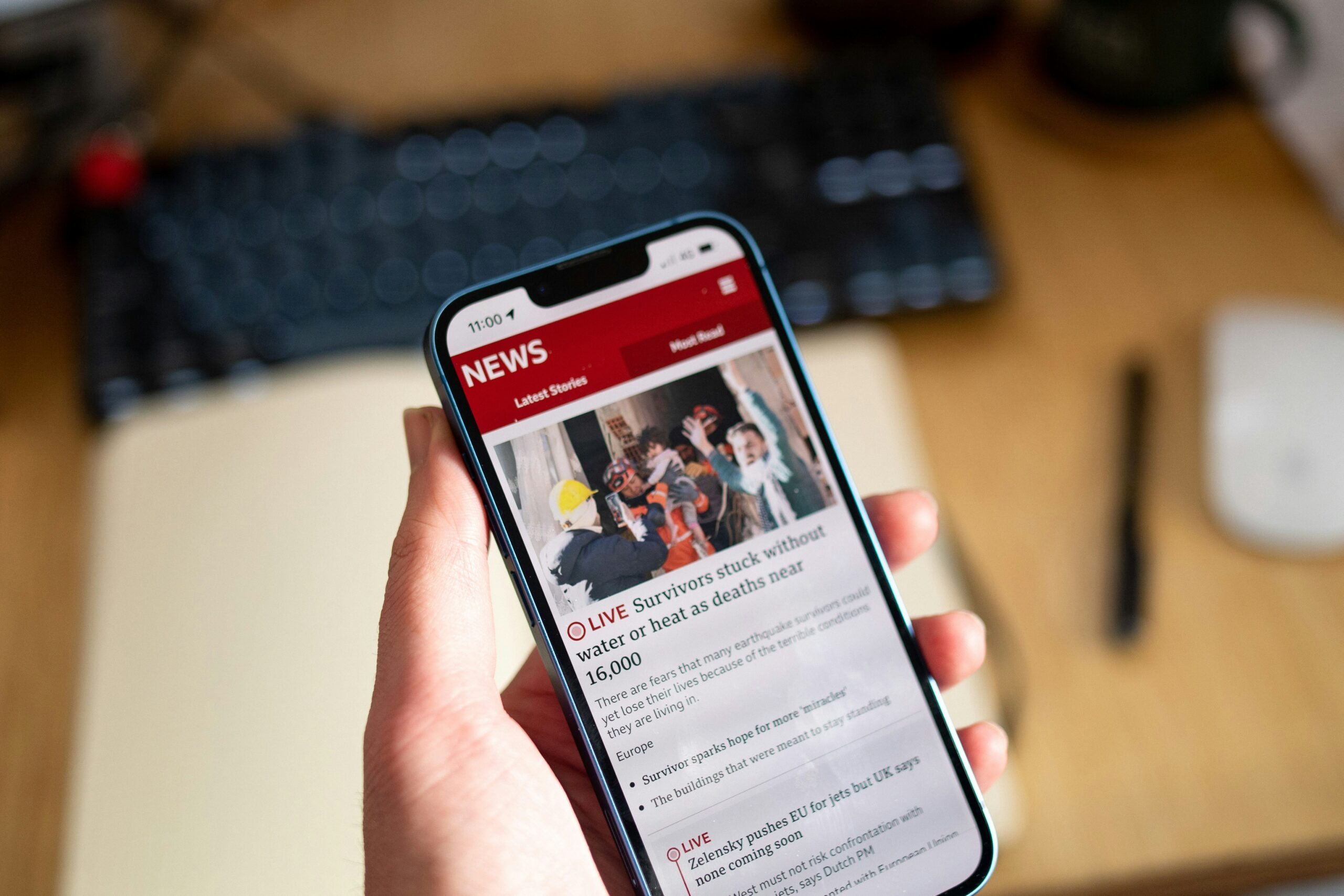
As a journalist, staying informed is my job. Lately, however, I find myself avoiding the news cycle. Each time I open my phone, another crisis demands attention. By the time I’ve absorbed one story, three more have displaced it. I closed the app. I look for something, anything, that offers a break.

Turns out, I’m far from alone. The Reuters Institute for the Study of Journalism’s 2025 Digital News report found that 40% of respondents across 47 markets now say they sometimes or often avoid the news, up 11 percentage points from 29% in 2017. When researchers asked why, selective news avoiders cite feeling anxious and powerless, finding the news repetitive and boring, and feeling overwhelmed by its negative nature.

This exhaustion is different from just being tired of politics. It’s the feeling of living through an accelerating cascade of global crises, Ukraine, Gaza, Iran, economic instability, climate warnings, while having almost no capacity to influence any of it. Unlike previous eras where crises had beginnings, peaks, and some kind of resolution, today’s information environment presents them as simultaneous and never ending.

Psychologists are starting to document what many of us already feel. The American Psychological Association’s 2025 Stress in America survey found that 69% of adults now cite the spread of inaccurate or misleading information as a major source of stress, up from 62% in 2024. Another 57% reported stress about the rise of AI, up from 49% the previous year. What’s telling is that this anxiety isn’t tied to direct personal impact, but to what researchers call “ambient awareness,” the background cognitive load of navigating a reality where information itself feels unreliable and emerging technologies reshape daily life faster than we can process the implications.

When More Information Means Less Understanding

Here’s the strange part: we know more about global events than any generation in history, yet understanding those events hasn’t gotten any easier. If anything, it’s gotten harder.

Information overload researchers have long documented this paradox: our cognitive capacity for processing complex, multifaceted issues has limits. Beyond a certain threshold, additional information can decrease comprehension rather than improve it. We become paralyzed by choice, unable to synthesize competing narratives into coherent understanding.

Digital platforms worsen this dynamic. Research examining social media algorithms has found that emotionally charged political content receives substantially more amplification than neutral reporting. A study published in PNAS Nexus examining Twitter’s algorithm found that among tweets selected by engagement based ranking, 62% expressed anger compared to 52% in chronological feeds, and content expressing out-group animosity increased from 38% to 46%. Sociologist Zeynep Tufekci describes this phenomenon as “censorship through noise,” information isn’t blocked, it’s drowned in a flood of high emotion content designed to keep you scrolling.

In this environment, picking a side feels easier than trying to hold multiple competing explanations in your head. The mental shortcut is understandable. The cost is polarization.

Crises That Disappear Before We Understand Them

Think back to February 2023. A massive earthquake killed over 50,000 people in Turkey and Syria. For about 10 days, it was everywhere. Then a Chinese surveillance balloon drifted across North America. Fighting intensified around Bakhmut. A train derailed in Ohio and people worried about chemical contamination. By March, the earthquake had essentially vanished from international news, not because the crisis ended, hundreds of thousands of people were still displaced, but because our collective attention had splintered and moved on.

This keeps happening. Research tracking humanitarian crisis coverage shows that media attention operates in dramatic spikes followed by rapid abandonment. A 2025 analysis of 78,667 news articles covering 10 major humanitarian crises found that coverage is highly event driven, with sustained engagement rare and dependent on sudden developments rather than ongoing need. The pattern suggests we’re moving from crisis to crisis without the time required to understand any of them fully.

When everything happens at once, it becomes almost impossible to maintain any sense of historical continuity. Social media turns into a marketplace where pre packaged interpretations compete for our clicks. And many of us, simply too exhausted to build our own understanding, just pick from what’s already there.

When Exhaustion Becomes the Point

Here’s an uncomfortable thought: fatigue can work as a kind of control, even when nobody’s deliberately engineering it. In authoritarian countries, it’s sometimes by design. Russia’s “firehose of falsehood” strategy intentionally floods information channels with contradictory claims. The goal isn’t to make you believe anything specific, just to make you too tired to figure out what’s true.

In democracies, it works differently but ends up in a similar place. When everything is presented as equally urgent, nothing gets the sustained attention it needs. Research on civic engagement suggests that constant exposure to crisis messaging can produce paralysis rather than mobilization. The perpetual state of emergency becomes normalized, and people retreat into managing their immediate circumstances rather than organizing for broader change.

A tired population doesn’t organize. It just tries to keep up. And when exhaustion turns into apathy, decisions get left to whoever already has the resources and the microphone.

Finding Our Way Back

I can’t solve the wars, the climate crisis, or the economic uncertainty that fills my news feed every morning. Neither can you. But I’m starting to think that understanding how all of this shapes what we pay attention to, and how we think, might be one of the few things we actually can control.

This exhaustion we’re feeling isn’t a personal failing. It’s a reasonable response to an information environment that’s moving faster than our minds were built to handle. We evolved to deal with immediate, local threats. Not a constant stream of global emergencies.

The answer isn’t to unplug completely. It’s to change how we relate to the flood. That’s admittedly an individual strategy for what’s really a structural problem. My personal discipline can’t fix how platforms are designed or how algorithms amplify outrage. But it can give me back something I’ve been missing: the ability to choose what gets my attention right now, and what can wait.

Some researchers are pushing for bigger fixes. Redesigning social media to stop rewarding engagement at all costs. Making algorithms transparent so we know why we’re seeing what we’re seeing. Funding public media that can provide slower, more thoughtful coverage instead of reactive feeds. Whether any of that can overcome the money and lobbying power behind the current system, I honestly don’t know.

What I do know is this: recognizing that my exhaustion makes sense, that it’s not weakness or apathy but a rational response to an overwhelming reality, feels like a small act of reclaiming something. In a world that demands constant reaction, the ability to slow down and actually think might be one of the most important things we have left.

That capacity is getting rarer. Which is exactly why it matters.
The Eternal Quest For a Good Night’s Sleep

I haven’t always had trouble sleeping. 

About a decade ago, whilst studying for my master’s degree, I lived in a cramped room in a student house in Sunderland. For a full year, I would spend hours intensely studying at my desk before taking about five steps across the room and getting into bed.

It wasn’t a particularly nice bed. It was quite small, and if it hadn’t been for a strategically placed pair of drawers stopping me from falling out I probably would have been on the floor more often than not. And yet despite this, I would always fall asleep within an hour.

Fast forward to 2025, and I’ve upgraded that small bed for a nice double in a reasonably-sized bedroom. I also no longer have the stress of multiple exams and essays hanging over me, so it stands to reason that I would have no trouble falling asleep.

But for multiple reasons, the last five or so years have proven to be challenging as I’ve grappled with insomnia. And despite reading countless self-help books and taking several steps towards creating a better sleeping environment, a good night’s sleep continues to elude me.

I’m quite lucky in that I can still function normally during the day – I get up at a reasonable time, I can still go out with friends and I’m still able to write for my day job – but my poor sleeping habits over the last few years have definitely taken their toll, and there will be some days where I’m too tired to do anything other than sit on my sofa and doomscroll.

It’s hard to pinpoint the main cause of my insomnia. While I’ve often had trouble falling asleep during my life, the issue has really exacerbated in the last five or so years since COVID-19 first reared its head. I don’t need to tell you that the last few years have been stressful for everyone, and there’s every reason to believe that this is the main factor. I also have obsessive-compulsive disorder (OCD), which can lead to intrusive thoughts keeping me awake at night.

Whatever the reason, insomnia has gone from an annoying, but manageable condition to something that was starting to have a real impact on my life. The time had finally come to do something about it.

Improving my sleep hygiene

Go onto any website or read any self-help book about insomnia and you’ll see the term ‘sleep hygiene.’

Essentially, sleep hygiene describes the healthy habits that can help you get a good night’s sleep. This can range from your sleeping environment to what you do during the day.

In the last year or so I’ve started taking these things more seriously, whether it’s creating a nicer sleeping environment (no screens in the bedroom) or thinking more about what I’m doing during the day (eating healthily, no social media in the evening).

There’s a long way to go before I’m getting into a consistent sleeping pattern, but the early signs are encouraging. Simple acts like leaving my phone downstairs or reading before bed are already starting to have an effect, and I’m finding it easier to fall asleep, although I still find myself waking up randomly during the night.

I’ve also found that taking time away from social media (and the internet in general) has had a big effect. With 24/7 news and constant scrolling on social media, it can be incredibly difficult to switch off, even when I can tell that it is having an adverse effect on my mental health. The trick is to put as many barriers between you and those things as possible, whether that’s deleting apps, setting a daily browsing limit, or leaving your phone somewhere else, gradually spending less time online has ultimately had a big impact on my mood and my sleep hygiene.

Still, there are some elements that I can’t control, namely the recent heatwaves in the UK making it impossible to cool down enough for sleep and my dog, who likes to take up most of the bed (and who am I to stop her?), but with a few simple steps I’ve managed to greatly improve my sleep hygiene, and I’m hopeful that as time goes on I’ll be able to say goodbye to my insomnia for good.

I Think I’ll Write That Down

I’ve always seen my anxiety as a spiral.

Whether it increases or decreases, it’s an ever-present factor in my life. While I’ve never been diagnosed with “severe anxiety,” and I don’t experience it daily like some, I’ve dealt with typical nervousness and the occasional worry that things may not go according to plan. Overthinking has  also always been a major factor in my life. 

Without talk therapy, I’ve found writing to be therapeutic for me. Whether it’s fiction or not, my stories are my own. Writing helps me deal with all of that pent-up, anxious energy that may be going to waste. For me, this form of self-help allows me to focus on what’s important and how to improve myself. 

Since my teenage years, I’ve tried many coping mechanisms to help. Breathing exercises, calming music, meditation, and focusing on specific scents help lessen the stress. By using these techniques, my occasional anxiety subsides and helps “reset” my mental health. However, for the past two years, I’ve been able to improve my well-being even more by writing. With a journal and my favorite pen, I can write about anything, allowing myself to vent directly into the lined pages. This form of therapy has reduced the severity of my overthinking. It also aids in clearing my mind; I can think about where the anxiety is coming from before I commit to putting it to paper, leading me to find the source of my feelings faster.

Flashback to the turning point

Ever since I attended and graduated from both Seminole State College and the University of Central Florida, I began to overthink everything, and it nearly took over my life. Much like anxiety, overthinking is something that isn’t meant to be taken lightly, and it led to a somewhat disastrous impact on my physical health at one point. So one day, just like that, I decided that I needed to change my life and better myself.

That was when I purchased my first hardcover journal in 2023.

From then on, I’ve been writing everything into the pages; whether it’s good or bad, it goes along the lines. By putting pen to paper, I can truly express myself and say what’s on my mind without feeling judged. I don’t have an extra layer of stress from interacting with someone, and I’m not forced to deal with any awkward feelings or embarrassment by emotionally dumping everything on a therapist. For me, I don’t see myself having that kind of emotional vulnerability to someone that I could have potentially met twenty minutes ago.

With the journal, it’s one and done. Once I finish any ramblings or add something that may have been bothering me, I feel a significant weight lifted off my shoulders. From then on, I can essentially put the overthinking to bed. Regardless of what the subject matter is, I feel as though I never have to think about it again after writing, which I love. Like writing a shopping list so you don’t have to remember the list.

Not carrying the burden, but setting it down

While writing therapy may not be the best form of self-care for some, it has definitely worked for me, especially as I’ve gotten older. As I’ve become more experienced through school and more aware of the world, I’ve found that journaling is the best technique for me when it comes to keeping a consistent, positive mental attitude. While I choose to not let my anxiety control my life, I genuinely feel that I’m putting myself on the right path with this process. 

Living in a world with constant stress, hiccups, and fears, I’m grateful to have an activity that’s all mine.

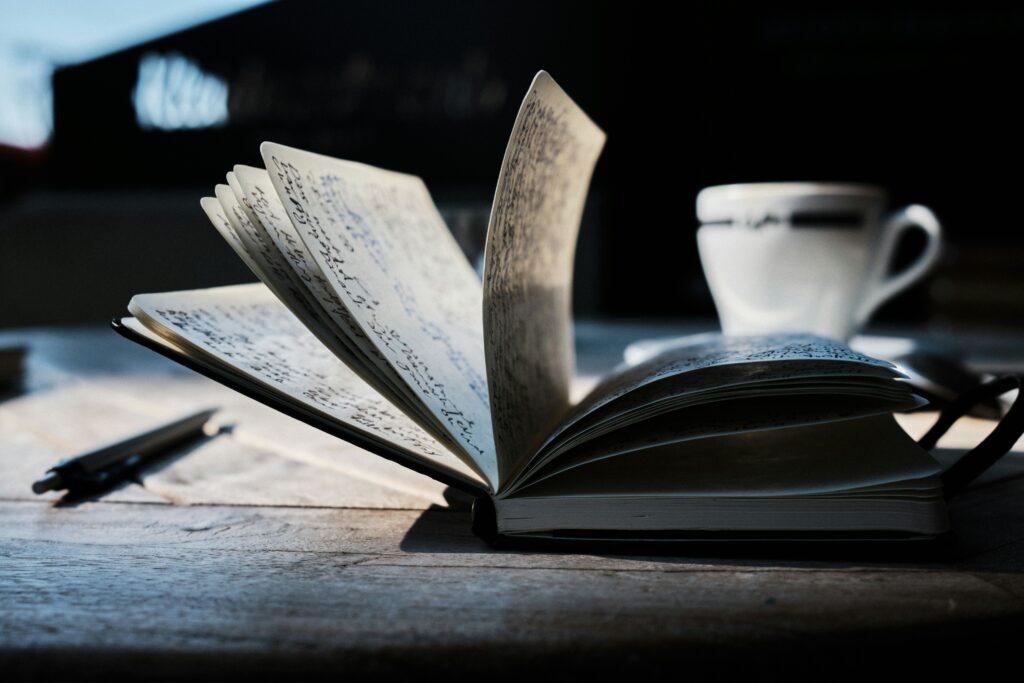
A journal splayed open. To the left of the journal is a pen. Behind the journal is a teacup.
(Image courtesy of Yannick Pulver on Unsplash)

Of Monsters and Motherhood

Amongst humanities graduate students, especially literature students, there is a joke that grad school will kill one’s passion for reading. I always thought that I would be impervious to such a curse – that no matter what my Hispanic Literature programs threw at me, my love of reading would remain unscathed. I chose to study literature because, like most people who do the same, I loved reading from an early age. Further, I loved dissecting passages and plots, analyzing character motivations, and connecting works of fiction to larger societal themes. To a certain degree, I was right about my passion being steadfast in the face of the stresses of advanced academic training. There are numerous books from many different countries and eras that piqued my interest beyond them being required reading.  

However, the greatest book in the world cannot fix the fatigue that a bloated reading schedule causes. I knew what I was getting into, of course, but knowing really doesn’t matter after having to read hundreds upon hundreds of pages of say, Garcilaso de la Vega or Gonzalo Fernández de Oviedo (real ones know!), as I had to do during my Colonial Latin American Literature survey course. For six years, I often felt as though I had one eye on a PDF and one eye on the clock, mentally calculating how long it took to read one page and estimating how quickly I could finish a book before moving on to the next one. However, In early 2021, I found myself free of the constraints of reading under pressure, as I had passed my preliminary exams for my doctoral degree the semester before. 

Turning the page

With my attention now solely focused on crafting my dissertation and teaching Spanish language classes, I had won back something that had been missing during my time taking courses: an eensy, teensy bit of free time. Unfortunately for me, I had also been recently diagnosed with allergic asthma, so some of this free time was spent, once or twice a week, in my allergist’s office, on the receiving end of histamine shots that would (hopefully) reduce the severity of my allergies, while also not inducing anaphylaxis.

In that sterile and uninspiring room, far from the creaky, imposing library shelves I had been dwarfed by for so long, the pressure to read for the purposes of writing papers and bolstering class discussions melted away. Accompanied only by my ancient iPad, loaded with the Libby app, I would spend hours waiting in that office, interrupted intermittently by my doctor checking my airways and the injection site on my arm. At my fingertips was what seemed like an unending catalogue of books whose publications I had missed for the last six years. What’s more, I soon discovered something about me that I never expected: I loved reading horror fiction.

All my life I have hated horror movies. I have only seen one, The Strangers (2008), and even that was against my will. The Halloween of my fourteenth year saw me crowding into my friend’s basement with the rest of our social group, which consisted of teens who were not scaredy-cats like me. Due to a combination of peer pressure and shaky confidence, I agreed to watch the aforementioned horror flick while thinking, “Maybe it won’t be so bad.”

Boy, was I wrong. 

Despite my rejection of slasher films, I wouldn’t consider myself an overly  sensitive person, but my anxious personality is not well-suited to the anticipation and gore of the horror genre. There are some days I refuse to watch even an episode of The X-Files as twilight approaches. So to have been, suddenly, breathlessly waiting for books to come off hold that featured content aimed to terrify was very surprising to me, though I embraced it all the same.

My reading reawakening that began beneath the stale, fluorescent lights in a random medical building in north-central Indiana led to a years-long obsession of reading (when I wasn’t writing my dissertation, of course) anything horror- or thriller-adjacent that I could get my hands on. I devoured litfic that centered around body and/or psychological horror, crimes being committed, anything that boasted showcasing the darker sides of humanity.

I didn’t exclusively read horror and thrillers, but I found myself gravitating back toward such works, desperate for the illusion of control while living in a political landscape that was (and still is) trending anti-woman. In these fictional worlds, women could act on their impulses– something we’re very rarely allowed to do in reality. They may be committing crimes, sure, but aren’t we, as women, allowed a little rage when we’re losing our rights to medical care? Can’t we cheer for women doing exactly as they wish when there are those who wish to take away our rights to vote, to divorce, to be employed? Sadly, to everything there is a season, and it seems as though my time voyeuristically consuming women’s rights and wrongs through fiction has come to a possible end. 

A lone light illuminates an old bookcase.
(Image courtesy of Engin Akyurt via Pexels)

Plot twist

After the birth of my daughter, my anxiety has gone into overdrive in an effort, evolutionarily and biologically, I suppose, to try to maintain my family unit within a small, protective bubble and keep the horrors of the world away. The terror that originally had no effect on me when reading horror is now wholly felt, as if I were back in the eighth grade, in my friend’s basement, watching Liv Tyler and Scott Speedman get stalked and terrorized by three weirdos in masks.

I noticed this change when I was finally able to read Monstrilio by Gerardo Sámano Córdova, a book about a woman mourning the loss of her child to such a degree that she turns a piece of his body into a sentient monster. I read, maybe, 10 percent of the book when panic began to overtake me. What if I lost my daughter? In our world, sadly devoid of magical realism, I wouldn’t be able to manifest such a creature. I would have nothing. Plenty of parents around the globe have obviously experienced loss, so I would not be special. But, such a fact does not eliminate the disquietude that this concept produces. I returned the book almost immediately. Then, very recently, a similar thing happened while I was reading the beginning pages of The Lamb by Lucy Rose. 

I had read books describing cannibalism before and, while the idea personally disgusts me, I was able to push past this revulsion to see how these gruesome tales proceeded. Now, my response was so visceral, so palpably felt, that not even a can of Vernors ginger ale could remedy my nausea.

Both books had been hyped up on Bookstagram (a community with which, like BookTok, I have many issues but ultimately can’t quit) for months, as certain accounts received advanced reading copies and therefore raved about how good they were before library-using plebs like me could gain access to them. I was so excited to read them, but, this enthusiasm, and the state of my emotional moods, were in direct opposition.  

The militant feminist in me (which, let’s be honest, is most of my personality) is begging me to push through. She, to be frank, doesn’t even think it’s appropriate to confess that motherhood has caused any change. I should be able to engage in the things I enjoy, instead of letting possible internalized patriarchal ideals – that dictate that mothers’ lives should revolve around their children; that they should spend every single second of every single hour of every single day thinking about their children and their needs; that they are not complete people now, but accessories to the new generation – win. Whatever individuality I can eke out, says this feminist, should be celebrated and pursued doggedly.

Cliffhanger?

Unfortunately, overriding my brain is easier said than done. I find that I miss the previous catharsis I relished while reading; I have no outlet for my frustrations. Also, a small part of me fears that, with this change in taste, I’m no longer cool. Is this how the process from eclectic individual to lame parent starts?

Maybe I’ll return to Monstrilio and The Lamb in the future, when I’m more practiced at divorcing reading and my anxieties. Maybe it’s finally time to give Marcel Proust’s In Search of Lost Time a try? Maybe I’ll exclusively read nonfiction until I’m 90. The specifics of my reading habits were different at 10, 17, 25, and will continue to vary at 32, 46, 54, and so on.

I find myself back at square one, in a place akin to where I was in 2021, wanting to read but not sure where that desire will take me. Still, I have progressed before and will again. And, I should emphasize, I’m ultimately grateful that my lifelong passion for reading remains in spite of the hiccups detailed here, and that I have passed that passion on to my daughter, who demands a reading of Frog and Toad Are Friends at least once a day.

For now, I suppose the horror books on my to-be-read list must wait patiently  in their dark corners. But, as the current total of this list, according to my profile on The Storygraph, is 3,308 books, there’s plenty to read in the meantime. 

A Connecticut Snowflake Comes Out to Play

As far as I can remember, I have not liked cold weather. 

And I have my own reasons for it. 

My birthday falls in the summer, so you can say it’s in my DNA. 

I’m not a fan of sweaters or long-sleeved shirts. 

I have lived in Connecticut and dealt with brutal winters while growing up. I catch a cold easily and have worn jackets until early May. So naturally, winter isn’t an enjoyable time for me.  Most winter days, you could find me at home, lying on my couch under at least one blanket, snacking on something, and feeling sorry for myself. Though I do it well. 

I have never been officially diagnosed with seasonal depression or seasonal affective disorder. However, many of my bad mental health episodes have occurred during winters, especially in recent years. As I’ve gotten older, the allure of the holidays, playing in the snow, and days off from school faded away. The latter two definitely have.

Gloomy December 

In December, I usually freak out about the end of the year. 

I feel like I haven’t done enough throughout the year. I feel like I should’ve gone to more fun events. This usually leads me to wonder what could’ve been, and I hate going down that path. I’d rather be happy for what I did than feel bad for what I didn’t do. I get caught in cycles of regret and self-hatred whenever I start wondering about all these things.

Lazy January

In January, I feel okay at the start of the year. 

Like most people, I try to stick to my New Year’s Resolutions, but I usually only manage to honor them for about a week. I feel bad for not sticking to them, but I’m unable to overcome my laziness, and I’m not sure why. January also seems to be the longest month. I spend the second half basically hoping it’ll end.

(Image courtesy of Lenin Estrada via Pexels)

Emotional February

February is usually tough for me. I’m single, so Valentine’s Day isn’t fun. 

By this point, I’ve been in the house for three months. It’s the last month of winter, and I just long for warmer weather. I feel like spring is dangling over my head, making me jump for it.

The onset of Spring

The start of March makes me feel better. 

Even though it doesn’t get warm until the end of March or early April, I feel it’s sunny, or at least I convince myself there’s more sun out there. It also seems like more events are happening in my neighborhood during this time, or I’m in the mood to check in frequently.

I have had these feelings for three months, so this past year, I decided to find ways to enjoy myself.

(Image courtesy of Javon Swaby via Pexels)

Overcoming challenges

I made 2023 my “year of health.” 

This past January, I started taking apple cider vinegar gummies. 

I also made it a priority to go to the gym more often. I did new workouts like weight training, and even lifted 25 pounds. I also enhanced my skincare routine by trying new products to see what works best for my skin.

Prioritizing my physical health has helped my mental health. This past winter, I didn’t feel as sluggish as I have in the last few years. It also motivated me to not just lay around my house when not working. 

Want to take it outside?

I realized that one potential source of my winter depression is the lack of sun and going outside. 

This winter, I tried to be outside more, as long as it wasn’t too cold. I realized that I needed exercise, vitamin D, and a change of pace from my usual routine, if only to walk to the grocery store or bookstore up the street during the day. 

Even when it’s cloudy, getting out makes me feel better. It also allows me to add variety to my winter schedule, instead of doing the same thing each day. Maybe connect with nature or reality, but it works. 

I have been trying to go out a lot at night, too. I love going to local drag bars and Meetup events with friends, even if it’s just a casual game night. It’s another thing that helps me break up the monotonous winter darkness.

Even though I’m an introvert, I enjoy going out and spending time with others, selectively. I think it uplifts my mood. Since these activities are indoors, I only have to be outside in the cold for a brief period of time. 

I discovered that spending more time outdoors and strengthening social connections have significantly improved my winter outlook and boosted my overall well-being. 

In body and mind, less isolation. In the end, tougher hide and tender heart. Maybe I created my own behavior modification program without realizing it.

Sunset on the Mountain, Sunrise in My Head

At times when I am faced with life’s inevitable challenges, my initial and persistent thought is “I’ll never get through it this time.” But I’ve come to realize each time that I have made it through, and I will continue to, because that’s just life. I like to think of myself as an optimistic, go-getter type of person, but I can’t deny that I also have a very defeatist mindset. 

Defeat — I can’t think of any better way to describe the feeling of wanting to give up when you can’t seem to find it in you to take just one more step. We’ve all heard it before that “Nothing good ever comes easy,” and these honest, encouraging words prevent me from giving up.

No matter how big or small your struggles are, it requires a great deal of courage to persevere and overcome them, invariably an extraordinary achievement to be proud of.

Walk your dogs!

It may be nothing much to some, but one of my favorite things is taking my sister’s dog, Mahina, out for an evening walk. Such a small yet fulfilling task gives me a sense of accomplishment for being an average person.

Most people in their day-to-day lives don’t see waking up or getting ready in the morning as a burdensome chore, but unless you’ve hit rock bottom, you may not realize how great it is to have the ability to complete such simple tasks with ease. Lately, this pressure has been lifted off my shoulders, but like dust collecting on a high shelf, it always returns no matter how many times I thought I got rid of it.

With the slightest ambition after a long weekend, I grab the dog leash as Mahina pops her head out from her napping spot behind the couch and comes running to the door. I am content to see how excited she is to go for a walk, and that it is enough to get me through what little of the day is left. 

As always, there are a handful of families at the park with all their children running around, playing soccer together, and a few familiar faces of those who also take their dogs out at this time in the evening. This hour seems the most serene with the sun starting to set, a cool breeze blowing, the lines of cars coming home from work, the overgrown weeds tickling the side of my ankles, and the wafting scent of someone grilling dinner in their backyard.

Amongst everyone around me experiencing their individual lives, I find myself as just another regular person taking a walk in the neighborhood park. In moments of bliss like these, I stop wherever I am and just think, ‘I am so happy right now. It was worth it after all,” because it always surprises me that I survived through all the struggles when  I thought I wouldn’t make it past that day. 

(Photo courtesy of Seth Cottle via Unsplash, of Kualoa Ranch, Kaneohe, Hawaii, USA)

With the faint sound of people talking and laughing in the background, I held my phone up closer to my face listening to the soft ringtone and waiting for my friend, Kaden, to answer my call. I asked to see what he was planning for all of us to do the following day, and was shocked to hear him reply with “The boys wanted to go Koko Head.” 

On my way back home, I tried to distract my mind from how intimidating just the thought of it was, and enjoyed the calm last scenes of my walk with Mahina.

Sunset with a view of life

But I wake up the next morning with the same lack of energy and wearied mindset of just enduring the day as much as I can. I am sitting in the passenger seat of Kaden’s car pulling into the parking lot of Koko Head, wondering why I even agreed to do something like this when I barely have the motivation to get out of bed. 

I drag my feet along just to meet up with some of the boys at the bottom, and realize that the hike hasn’t even started yet. Everyone else starts stretching, but instead, I sit on the curb of the sidewalk and stare down at the asphalt road in front of me. We haven’t even started, and I am looking weary and feeling defeated. It is late in the afternoon, even for summer, and the sun is already beginning to go down. As soon as the last few of our friends arrive, we begin to make our way up the steps.

Step after step. 

After step. 

After step. 

After a while, the exhaustion consumes my mind and body. I pause in my tracks and look back at the thousands of steps I have already taken. But when I face again towards the top, I realize, why come this far, to only come this far? 

From this point, I can see the top, but only if I look up high enough beyond the incline. The last couple of steps are just within my reach, yet miles away. I start to feel the burn in my quads and tiredness in my body from only drinking water the entire day, realizing that I forgot to eat anything. Anything. It isn’t even the hunger in my stomach or the pain in my legs, but the mental exhaustion that makes me want to give up. It takes every ounce of energy in me to make another step, after step, after step. 

Finally, I reach the top and immediately sit down on the graffitied concrete wall next to my friends who are waiting for the rest of us. The sudden transition from intense workout to immediate rest rushes a wave of weakness over my faint body, but the feeling of achievement is surely fulfilling. 

I find solace and hope in being able to proudly hold my head high while staring out at the view from the top of a mountain. In a brief moment, I catch a glimpse of the beautifully painted orange sky seconds before it vanishes. I could not feel any more relieved than from letting the cold, thin air blow through my hair, listening to the sounds of crickets chirping, and watching the faded remnants of color leave the sky as night begins to fall. 

You won it, you own it

This experience seemed oddly similar to my walk with Mahina from the day prior. At the end of the day, between celebrating the act of taking a walk outside and hiking to the top of a steep mountain, I was able to conquer something I thought I wouldn’t be able to. 

It didn’t matter on a scale of how large or demanding the activity was, I was proud to have pushed myself to overcome it. Truthfully, nothing good ever comes easy, and perseverance is all a part of the process. 

The sun sets every day regardless of who you are and what you’ve experienced. It is a reminder to us all that it is worth it in the end, to persevere through challenges and to be proud of what you have accomplished.

(Photo courtesy of Taisia Karaseva via Unsplash, of Koko Head Park Road, Honolulu, Hawaii, USA)

The Messy History of A Licensed Psychologist

I have OCD (obsessive-compulsive disorder), ED (eating disorder), depression, severe anxiety, and ADHD (attention deficit/hyperactivity disorder). I’ve always gone to therapy because my mother is a psychologist. 

I can’t even remember my age when I started, but I had more than five psychologists. I established a rapport with none until my first visit to a psychiatrist, when my undeniable mental health was crumbling. My psychiatrist never gave me a proper answer, but she was, and still is, the only therapist who I felt did not give up on me. Many others diagnosed me with borderline personality disorder.

Since I was young, I was always labelled as the “bad,” “problematic,” “rebellious,” and “naughty” kid, from kindergarten to adulthood. People often didn’t even remember my name, but they recognised that out of 14 cousins, I was the troublesome one.

So I started to believe that, too, and my behaviour didn’t change; in fact, it worsened throughout my development stages.

The beginning pangs

And as a teen, I began to self-harm. Eventually, my body felt numb, with no sadness, no fears of being misunderstood or good, pretty, and skinny. After that, my high school suggested my parents take me to a psychiatrist.

Hello, psychiatric medication. I still take them, though I still haven’t been properly diagnosed.

I can’t remember what happened during my first depression episode; I only have blurry memories of the fourteen days I was sent to a psychiatric ward and how I didn’t leave my room the whole time I stayed there. 

After that, my depression began to fade, though I was never the same again. Alcohol, drugs, kisses with older men, and so on were part of my adolescence. My grades were awful, and it took me almost nine years to finish high school.

Of course, I felt like no one cared. I was already the disappointment of my family and always had been, so they just didn’t even try to understand me, not when I was a toddler, when I was a teenager, or even now.

When I decided to apply to college, the OCD set in. Perfect became my goal in every aspect of my life. All my focus was on my studies. My first panic attack happened during class hours; I remember running out of the class and collapsing in the hallway,

In my second year, my goal was to maintain my perfect grades and lose some weight. I’ve always been chubby, and after a few months, anorexia nervosa knocked on my door. I received her like someone I had been waiting for my whole meaningless life. Binge eating eventually appeared, and that was when my whole controlled, perfect life crumbled. 

This is where I am now, fighting eating disorders, a second depressive episode, and more.

Image of ocean waves.
(Image courtesy of Mike Erskine on Unsplash)

The change in the tides

But now, as a clinical psychologist, I know how to fight. We don’t have to give in to the social belief that we are a problem that needs to be fixed, changed, or eradicated. Rather, we believe that people with mental health issues must be treated with compassion and provided with equal rights. Rather than focusing on the disability or disordered aspect of mental health, we focus on our strengths and learn how to rely on them.  

My biggest strength is helping others; doing so makes me feel worth it and empowered, despite and because of my experience, even as hurtful as they are, gave me tools to lift others from their own struggles and dark places. I see a little hope in those little steps of others on their path to wellness.

As we grow older, we start learning and differentiating one emotion from the other, and at the same time, our range of emotions gets bigger. Defiant behaviour sometimes is a sign of depression and/or frustration because you haven’t yet developed the emotional tools to make others understand what you are really feeling. My adolescence was marked by naughty, unruly behaviour that I had been carrying since childhood, which became dangerous and painful to me. I did not have the tools to understand what I was feeling. Past trauma had left its marks on me. Adulthood marked the desire to maintain control of my life, appetite, and surroundings instead of letting my emotions have control of me again. And yet, many times, I failed.

My work changes lives

My role as a psychologist focuses on getting mental health the proper awareness it deserves. We need to raise awareness for this marginalised, stigmatised, labelled and misunderstood community regarding mental health and the lack of opportunities that low socioeconomic status communities have in accessing education and healthcare.

Today, I work in a private organisation as a clinical psychologist, both with group therapy between employees and employers and individual follow-ups. This year, I received the incredible opportunity to start working with the jail population by making new programs that focus more on rehabilitation rather than punishment alone. DINALI is a subsection inside the Ministry of Defence in charge of the Uruguayan policies related to imprisoned people. My main area will be helping people close to finishing their sentences. The main goals are reinsertion into society. I want to give them tools on how and where they can get help on having their basic needs satisfied (food, clothes, a roof above their heads), getting a job and start working on their social life to build a close circle that helps them find purpose in life and feel loved and appreciated. 

Sometimes, I’m still a mess. Sometimes you might be, too. But as I’ve learned throughout every painful twist in my life, if you can’t help yourself, help others. 

Image of two hands reaching toward each other. The hand on the left holds a white flower as if to give it to the hand on the right.
(Image courtesy of Adalia Botha on Unsplash)