Ode To The Bed

How do I love thee? Let me count the sheep.

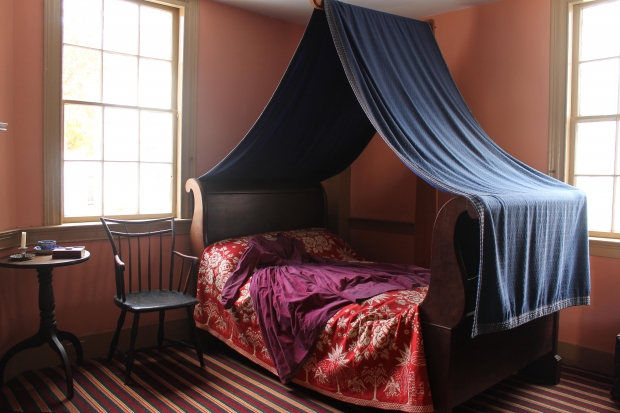
  • My bed is my lieder, I shall not want for song or horizontally for sleep. Thank you. Really.
  • The Lord maketh me lie down in the imaginary pastures of cotton fields at the end of every long day for complete recovery of my heart. Thus, my bed leadeth me beside the stillness of freshly laundered matchy-matchy linens. As fresh as when I changed the bed last. Every two days, no doubt.
  • My bed restores not my soul alone, but my head and body, walking me towards the path of peace and quiet, sometimes well-deserved, always well-needed and luxuriating. 
  • Even though I sleep through the depth of stream-of-consciousness dreams, I fear not, because I so value that respite as restorative above all.
  • Your pillow, blankets and comforter — they comfort me. As I make my bed, so shall I lie in it, to drift off and abandon the day. And you prepare a supportive mattress beneath me in the presence of my bedroom and my cat, who often rests with me, yet not too close.
  • I anoint my hands with lotion, sitting soothed undisturbed for eight hours. Just a light layer so that nought runneth over.
  • Surely goodness and mercy shall follow me all night long for the days of my life and the life of my days. And so I will dwell as well-rested in a bedroom of my own forever.

But when the king’s sleep wanders, waylaid by intrusive thoughts, the bed becomes the prison. Hate it. Hate it. Hate it. After turning and tossing, tossing and turning, he makes a break from the bedchamber and into reruns — anything — for a shift.

To sleep, perchance to dream what dreams may come sweetly when I return afresh to my favorite bedroom and bed fit for a king.

With immense gratitude to the muses of Psalm 23, The Book of Esther, and Hamlet. Plus Elizabeth Barrett Browning and Virginia Woolf. 
Moonscalding

Moonscalding

When you stare at the moon

Through a screen door long enough,

Everything fades into stars and the seaside;

You’re watching bats,

Hair reflecting the moonlight,

A spilt milk mess of cosmos, crabclaws,

Paper dolls and prose;

Your eyelashes catch your sweat–

No tears present– just water

And the warmth you did not used to

Need on those stolid nights;

Ozone eaves settle, woven above you,

While spiders crawl towards nightlights,

Dreams in tow…

You are so afraid of being forgotten,

In that silver light you hoped,

With all of your heart,

Would preserve you like seafoam,

Seatbelts, and the note you left on

The table saying, “I’m sorry for everything.”

Of What Then Could Become

Of What Then Could Become

Faux brown siding lined the one-level home,
predating my existence. My parents
were newlyweds when they moved in.

Once I was born,
the good plates were hidden from
my butter fingers– too short to reach.
The kitchen, where I slipped;
a near concussion.

Dining room blinds
shielded the sun’s rays;
the living room magnified
the television’s speech.

Down the narrow hallway,
I heard the shriek
of my mother’s hairdryer.
The walls were a museum–
baby pictures,
“old-timey” photos.

The carpet, that brown-blue shag,
was where my grandparents
witnessed my first steps.
Look at you!
Oh, sweetie pie.

I was too young
to remember.

My bedroom’s visage was everchanging;
growing like my own,
reflecting my interests,
the changes within me.

The closet door, half-open,
was where my best friend and I
kissed boyband posters,
vandalizing them with autographs, fan mail.

At one point, the door was plastered
with calligraphy,
cranes chased by cats,
when I tried to
teach myself hieroglyphics.

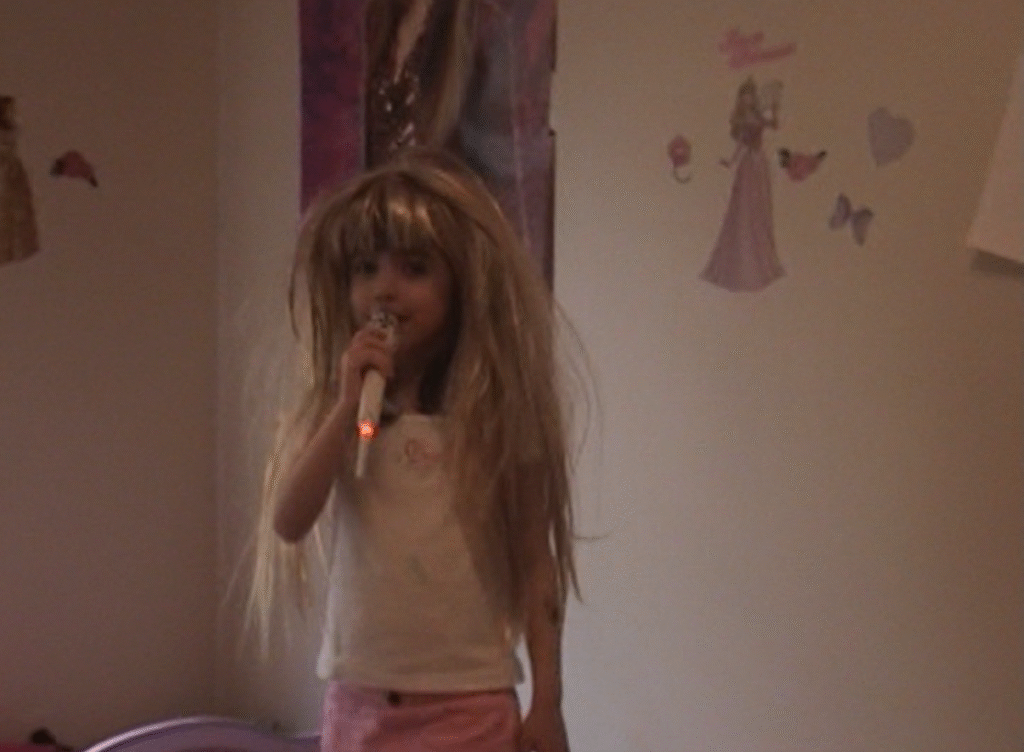
A young girl wears a blonde wig and sings into a microphone. Her room is themed after Hannah Montana.
(Image courtesy of the writer)

I watched my
mother’s rituals of femininity
in the bathroom.
I saw her practice
shaving her legs;
my father gave himself haircuts
over the sink.

Downstairs,
the smells of
dust and vintage motor oil–
mechanical equipment was stored
with deer heads on the wall;
the wood stove;
the basement door that never fully closed.

Outside, dogs broke the silence,
Barking in the distance at street lights, stars.

The gravel driveway,
pebbles always in my shoes.
Grit against tires,
The grey clouds from rock dust.
A long country road that stretched towards the dogs.

The pine tree where piñatas were hung;
The creaking metal porch swing.

My swing set and the dug path
where my house met with my
neighbors; my best friend
just beyond.

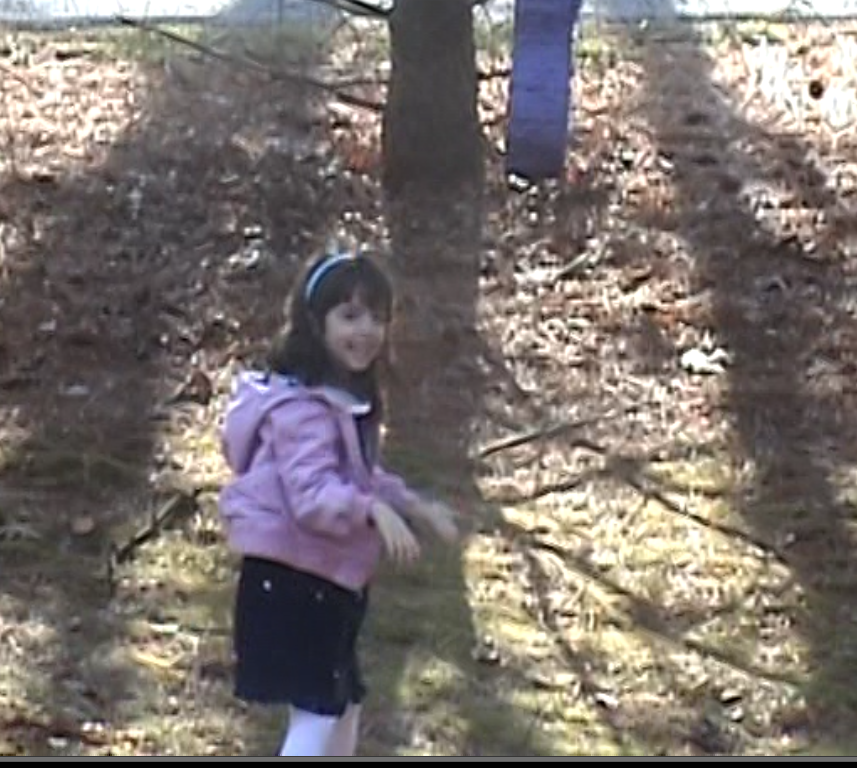
A 6-year-old girl smiles at the camera; she is ecstatic to take a turn at hitting a piñata at her birthday party.
(Image courtesy of the writer)

When I wasn’t launching snowballs at
The windows, the wooden deck was my stage–
my realm where
I could play pretend.
The lead roles were chosen
without auditions;
It made sense to us.

Spell books, born of computer paper and staples,
Tree branches, our magic wands–
We repeated lines from Wizards of Waverly Place.

Imaginary games continued
when I was alone.
I was convinced that
I lived in a log cabin
after noticing one on a local trail.

I enjoyed imagining
what it would be like to exist
in the days when light bulbs
were only above people’s heads.

Before I knew it, the lights went out;
it was time to move.
She said it was
to be closer to work.

A new beginning;
a chance
to make new friends.
At a new school
where I barely knew anyone.

I didn’t have a chance to tell
my friend goodbye.
She practically jumped off
of the bus
when she saw
the moving van.
She refused to
get off the back of it,
telling my dad that I couldn’t move away.

I cried,
feeling ripped apart
from everything.
Terrified,
unsure of what
my life would be now.
Of what
it would become.
Of the people
I would meet.
The friends
I would have to lose.

Deep-seeded, like the pines
I watched grow smaller,
As we drove away,

Anxiety manifested, festered…

It was the opposite of a new beginning.

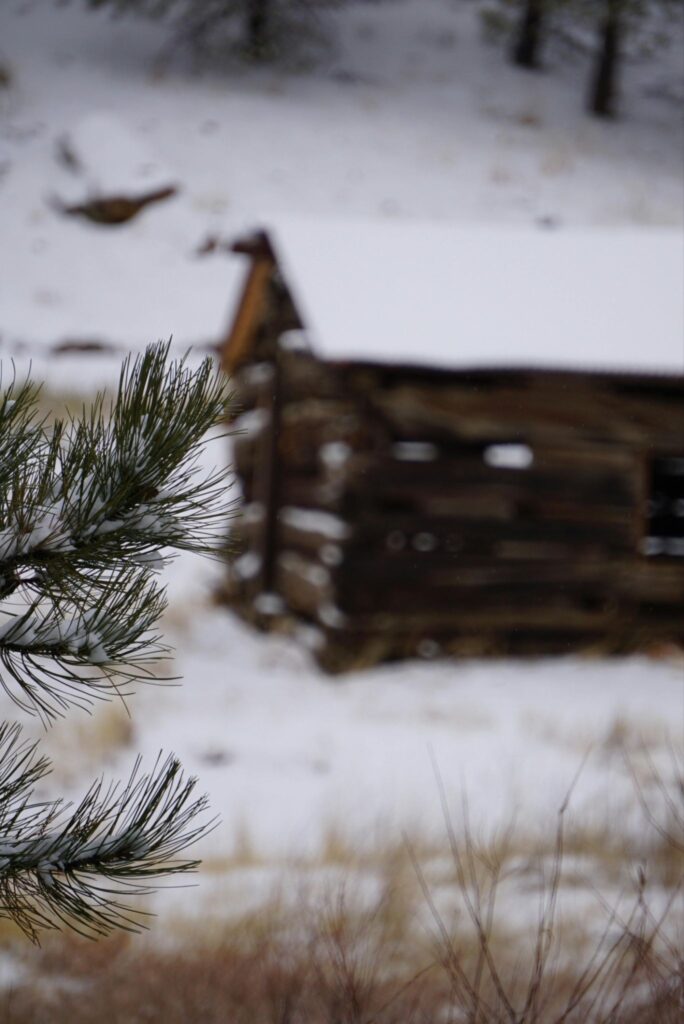
An old-fashioned log cabin sits, out-of-focus, in the background. The ground is covered in snow and pine trees.
(Image courtesy of SpencerGurleyFilms via Pexels)

Heavy Are The Crowns

Heavy are the crowns we wear,
Invisible, but not silent,
Bendable, but not fragile,
Loving, self-sacrificing,
Unable to be forgotten,

A laurel of desperation,
Seeking safety, warmth, and control–
Small, but sturdy in novice hands,
Arches, possibilities within reach,
Fitting loosely on an ambitious head,

An anadem of Renaissance,
Provoked by imagination and intellect,
Eager, encompassing,
One that births revelations,
A statement to those who offer their gaze,

A garland of frugality,
Dulled and scratched in the face of war,
Marred by gruff, firm hands,
Witness to crimson, bone, and coal;
Treasured even in the new era,

A chaplet of enduring strength,
Waterlogged with the weight of grief,
Ashes, dense as streams,
Polished to a shine with regrets,
Dinged, dimpled from the buffeting of obligations,

A coronet of shining radiance
Filled with the adoration of her subjects,
Jewels, not of decadence,
But those that still shine with opulence,
Valued beyond her last days,
Hidden away between painful breaths,

A diadem of bittersweet ties,
Reflecting a lifetime of servitude,
Unearthing the value after a dynasty dies,
Buffed to a mirror reflection,
The lines tracing the story of ghosts,

Heavy are the crowns we wear,
Passed onto us from predecessors,
Our fingers trace a mottled ancestry to times unknown,
But the love and sacrifice are not forgotten.

Rhythms Along the Grey

Rhythms Along the Grey

Slate eyes, drawn by compulsion, to a watch, ever ticking.
Always somewhere to be, something to be…
Flicking deft hands along a tailored suit to sharpen its edges,
Scrubbed clear of lint and hidden creases, an inbuilt calculation.
A briefcase, attached to the second wrist of a creature drawn in frown lines –
The scars of corporate resolve, weighing stronger…
As the bus is delayed even longer.

He settles his pride for a haggard bench, wiping the perch with a sleeve,
With never a glance, never consideration of the slum that shelters him –
Of grinding advertisements, stuttering wantonly,
Advising the masses to do this, buy that, go there,
The billboards of budget-seekers;
Of cigarette butts and whippet canisters;
Of youths, uncouth, ill-advised, impoverished and yearning for a guiding hand,
Met only with indifference;
Of stains and panes marked with cracks, once pristine;
Of green seats and blue backs of fading plastic,
Broadly moulded by the public’s weight;
Of simple shelters, repeating endlessly,
Metal checkpoints in fleeting motion, a flame to the moth of civilisation,
So routine, they’re barely perceptible…
He’s blind to many things when the delay becomes unacceptable.

It is when the day sequesters and musings catch their final trains,
When streetlamps give birth to gnats and midges and mayflies in the rain,
That his bench becomes a resting ground –
The morning dirt reformed with grimy duvet covers and cardboard sheeting,
Arranged with minimal prominence, as if by some grand design,
For privacy is a rare and coveted luxury.
And under these blankets slides a person,
As broken ankles and stinking soles, the totems of wandering, find respite.
A complex life, enshrined by cold,
Convulsing to gain purchase amidst the fraying seams of restful immersion,
Before the buses renew their mindless excursion.

Days tick along but traces remain of diminished and fleeting souls,
Seeking solace and restoration.
A considered sniff may reveal the cloying reek of negligence:
Trash and refuse left alone to seep into cracks and gutters.
Or, perhaps, a glance around could widen a man’s perspective:
The rhythms, though vast in frequency,
Vibrating with elasticity.
Colliding, bouncing, warping, tumbling in and around each other,
Crafting melodies where the mind may be accustomed to white noise.
A gardener leaning on a glass panel, blithely counting cars;
Two sisters gossiping; their voices are hushed,
Spilling secrets and promises before a winding journey home;
A pensioner raising his lighter to a blunt and popping chapped lips;
A Chevy mounting the kerb, commandeered by four pubescent boys,
Throwing crude gestures from the window like bullets in a drive-by shooting;
An author stroking his partner’s hair,
Trying to conquer his public anxiety and failing;
A mannequin of a man narrating loudly over the phone.
A collage of existence, interwoven with frustration,
As eyes find others, equally confounded as to the bus’ location.

When it finally arrives, he pushes right to the head of the queue,
Still in a bustle; it makes no difference.
An uncaring flick of his card, a brisk stash of his briefcase,
He’s seated, settled; his pride surmounting,
Eyes recounting the seconds lost as his fellow passengers shuffle down the aisle –
A bunched host of chaotic lives, uneasily connected…
As he ponders all the paperwork he’s neglected.

Balloons

Balloons

Grieving, I believe,
Is so delicate, and fragmenting,
Because it is
The understanding that
We are bound to love,
All ways…
Deeply,
Profoundly,
To wear a widow’s wedding band
As its tourmaline dulls,
To walk those rooms in which a widower
Could not stop crying, pressing his palms
Into the floor
And loathing the linoleum
Because it reminds him that
His love and body
Are real,
Wracked with the sorrow
That we only withstand because
We are forced
To continue
Cherishing,
Remembering.

Children send letters,
On balloons,
Into persimmon twilights,
Watching the words
They dare not say–
But write instead–
Drift towards the heavens
That look so cold to them…
To heal the hurt
That crusts over
Like marmalade on the jar’s rim;
They love ruefully,
Bungling with the buttons
On their shirts
Because a parent
Used to dress them;

We feel grief because
We are saying goodbye
To the moments we live,
The seconds,
Third glances,
Final embraces,
The feelings, thoughts,
Farewells we’ve yet to accept,
That dawdle alongside us,
With untied shoes,
Long before Loss picks up her child
In a minivan;
And then,
The heaving of a broken heart ebbs,
Tarnishing,
Like a silver teapot,
Until Longing polishes it alone,
When a dog loves unconditionally,
Or a paramour plants praise like
Crocuses in snow;

The orchestra swells in tragedy…
The conductor weeps, too,
Knowing the song must, inevitably, end,
So she loves
Until the final note’s echo
Joins the balloons,
Letters,
And every airy and feeble hope
That our hearts
Would hold less.

Days Gone

Editor’s Note: This poem mournfully reflects upon relationships that have ceased to exist.

Days Gone

You’re plagued with nostalgia’s grotesque
Scraps, an alchemizing insurgent.
That banished inner voice
Barks propaganda dressed in velvet.
Dogma pollutes, preaching
“You’ll be together again.”

Rusty scattered nails, hammered
Without permission, in rotting
Myrtle wood. Every now and then
You hear so-and-so is up
To this, and that. Doing well.
Better than.

What should you expect?

Casting spells and chanting
Fails to countermand the gravity
That holds your feet fast.
It’s easier to submit, but man evolved,
Rebellious, to stand against.
Dejection fills empty driveways.
Simple truths are ignored
As decried memories.
Forget swallowing your dose –
Reality is a brick-sized suppository.

A setting sun overlooks a pier and empty boat on a foggy lake.
(Image courtesy of Johannes Plenio via Unsplash)

To Feel at Home

To Feel at Home

Trains pass by,

Blue, yellow, painted with

Names, wishes born from aerosol cans,

Stolid tracks stretch out ahead;

You sit across from me,

With a quiet smile,

Knowing full well we’ll

Say goodbye someday.

Cherry lollipops,

Glühwein, steaming kisses

On glass rims–

Your hands are cold;

I smell your perfume,

Honey, the bread they baked

Just for us; there are candles,

Clandestine glances in

The middle of the day,

And the calm of not knowing

What comes next.

Standing There

Standing There

You always worry,

Watching as the car drives off,

Planting prayers like long green grass,

Hands clasped together as the sun shines–

Uncertainty sits at the table, asking

For tea and sandwiches;

You stare out the window while he prattles on…

We know you love us,

Long for us to be happy,

And we are happy,

To have your heart–

a trembling aspen–

So full of our bijoux

That it bangs against your ribcage,

Those facets you crafted so dutifully–

A wren flying into the fading dawn;

A rabbit rushing to feel the forest’s shelter;

The long reeds that beam a ruddy

Yellow against the fresh snow–

Don’t worry. We’ll be home soon.

Triggered by ‘Jungle Fever’

We sat on the couch watching Jungle Fever, and gripping your hand tightly,
I wondered if you had noticed the tears in my eyes, the horror.

I watched you closely, wondering why I saw neither in your own.
At the end, I ruptured, fell into your arms and cried.

I wasn’t rooting for the interracial couple, cheaters, bigots in their own way,
But listening to how people spoke about their love,

The dozens of acidic names, rapid fire — that, once launched,
Reduced humans to objects, to animals — it was unbearable.

Our children might someday be called mulatto, quadroon, octoroon,
Or look at their own skin and feel shame.

“I should be comforting you,” I sobbed, rebelling against this absurd reality:
Hadn’t my ancestors razed and pillaged and raped yours

And yet you still sat, holding my hand on the couch?
You offered me a sad smile, voice gentle sorrow as you said:

“This is all new for you.” For you, of course, it was old.
Your tears had turned solid, calcified to line armor chinks.

You had filed it away with all the other hard facts, like a child, who,
After disbelief and dissonance, finally accepts that everybody dies.