Painfully Obsessive

Looking back, I have no idea why it took me so long to be diagnosed with OCD. 

I know that Obsessive Compulsive Disorder is a common mental health condition affecting about 1.2% of the population in the UK. Symptoms can vary quite significantly in different people, but the main symptoms include obsessive thoughts — unwanted thoughts or images that regularly and insistently enter your mind and refuse to leave — and compulsive behaviors that must be performed repeatedly to counteract those same unwanted thoughts.

It’s one of the more well-known mental health conditions, and yet it was only a few years ago that I began to truly understand it, and realize that I had it myself.

The telltale signs of OCD

In my 31 years on this planet, I’ve picked up a few recurring habits that, in hindsight, were obviously symptoms of OCD. These primarily took the form of intrusive thoughts. 

  • You’ll never be good enough to hold down a job.
  • You can’t make friends in your 30s.
  • You are going to run out of money.
  • You’d better not show up to social events.


Nothing particularly extreme, but enough that it would take a toll on my mental health.

Then, compulsive acts. For me, it was regularly checking my bank account and making sure the doors were locked at night. Again, not particularly unusual, but when you’re doing it multiple times in quick succession, it can start to get out of control.

The stigma surrounding OCD makes it easily misunderstood

The problem with OCD (and indeed with many mental health conditions) is that there’s a lot of unhelpful information I’ve read, so it can be hard to properly understand what it is.

For example, there are many people who believe that OCD just means that a person is tidy. While this is probably the case for a lot of people with OCD, it couldn’t be further from the truth in my case. I’m not a particularly tidy and organized person — I don’t fret about things being in their right place or in a certain order. This is a common misconception, and it’s one that I unconsciously believed for most of my life, but it’s the reason it took me so long to realize that my own habits were symptoms of a bigger problem.

Another issue is that OCD tends to be trivialized, both online and in the real world. I often hear people describing themselves as “a little bit OCD” when it comes to keeping tidy or organized, Most of the people joking about OCD aren’t doing it to deliberately trivialize it, but the constant jokes can make it seem like OCD is silly or exaggerated, and not a serious mental health issue that controls your life. When it sure does. 
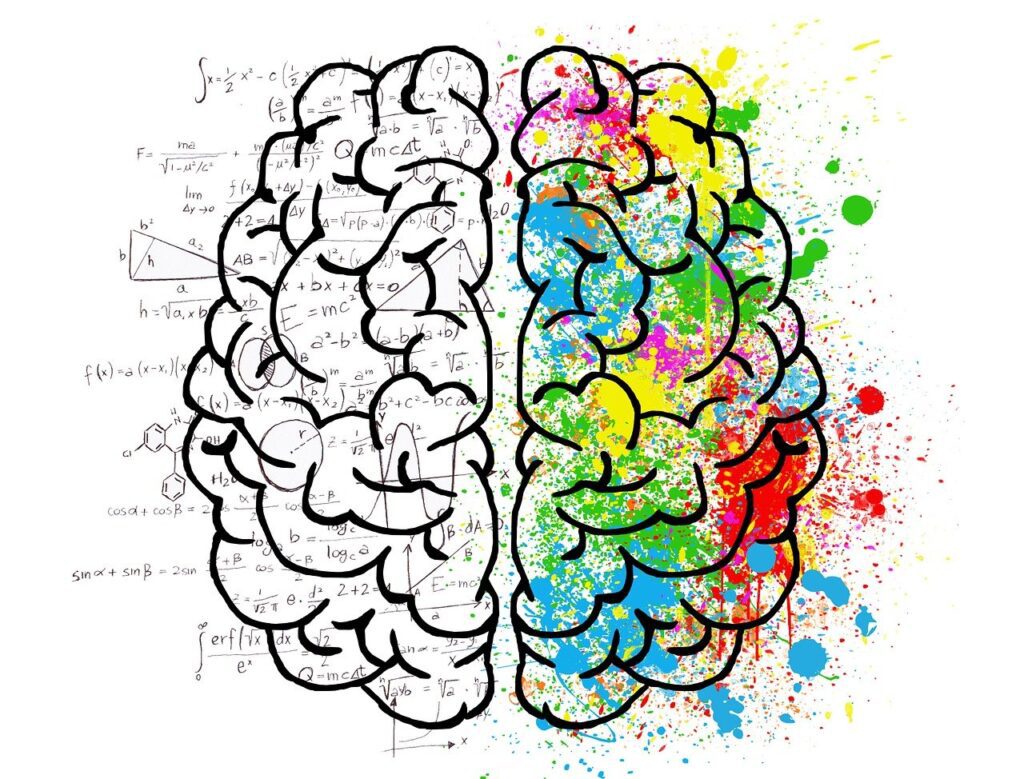
Graphic of a brain. The left has math equations across it, while the right has bright paint splashes.
(Image courtesy of Elisa via Pixabay)

It was the diagnosis itself

The misunderstandings surrounding OCD meant that it was only in 2022 that I finally understood that these mental habits weren’t normal. By that point, what had been a few compulsive habits had snowballed into continuous intrusive thoughts that led to anxiety.

Figuring out that these thoughts were being caused by OCD and getting an official diagnosis from the doctor was a life-changing experience. Fully aware of the patterns of OCD, little by little  I could now recognize and combat these intrusive thoughts instead of being dragged down by them. Since OCD has a way of making you feel like these worries are entirely legitimate, I found it important to reject them as soon as they come up. Don’t spend time deliberating — just immediately reject. 

Things have definitely changed for the better since then. There were times before I was diagnosed when I was sometimes afraid to go to social events, because I was worried something bad would happen like I’d get sick or something like that. After being diagnosed, I was able to see that these thoughts aren’t real, rather the symptoms of an illness. As a result, I no longer feel controlled by anxiety when going out, which has improved my life a lot. It’s manageable now. I am more in charge and not getting sick if I go out. What I’m not saying here is that having a diagnosis didn’t make me completely better, immediately. 

What I am saying is it helped me to cope with my reality. I finally had a label for these behaviors and intrusive thoughts that I hadn’t previously. When something finally gets a name, it’s suddenly a lot less powerful than before. We fear the unknown; when we learn what the unknown is, it’s not that scary anymore. The diagnosis is now known, and I know that there are treatment options available to me. I know I can mitigate some of the issues. That knowledge is freeing.

While it’s impossible to eliminate OCD, I’ve been able to say goodbye to a number of habits over the last few years. No more constant worrying about whether I’ve locked the doors, no more continuously checking my bank account for the slightest bit of movement. There will still sometimes be times when I’m drawn back into worrying, but by and large, I’m now able to manage these compulsions.

The stigma surrounding OCD is gradually diminishing, and more people are starting to become aware of the serious effects it can have on a person. Nevertheless, it can still be difficult to determine whether something is just a run-of-the-mill worry and when it’s more serious. My perspective: If a thought or compulsion is causing you anxiety, it’s always best to see a professional.

Getting an official diagnosis can be life-changing, and the first step towards knowing the reason behind, and treating, harmful habits. It was for me, anyway.

A rainbow of colored pencils lined up, but not exactly so
(Image courtesy of Washington Oliveira via Unsplash)

The Messy History of A Licensed Psychologist

I have OCD (obsessive-compulsive disorder), ED (eating disorder), depression, severe anxiety, and ADHD (attention deficit/hyperactivity disorder). I’ve always gone to therapy because my mother is a psychologist. 

I can’t even remember my age when I started, but I had more than five psychologists. I established a rapport with none until my first visit to a psychiatrist, when my undeniable mental health was crumbling. My psychiatrist never gave me a proper answer, but she was, and still is, the only therapist who I felt did not give up on me. Many others diagnosed me with borderline personality disorder.

Since I was young, I was always labelled as the “bad,” “problematic,” “rebellious,” and “naughty” kid, from kindergarten to adulthood. People often didn’t even remember my name, but they recognised that out of 14 cousins, I was the troublesome one.

So I started to believe that, too, and my behaviour didn’t change; in fact, it worsened throughout my development stages.

The beginning pangs

And as a teen, I began to self-harm. Eventually, my body felt numb, with no sadness, no fears of being misunderstood or good, pretty, and skinny. After that, my high school suggested my parents take me to a psychiatrist.

Hello, psychiatric medication. I still take them, though I still haven’t been properly diagnosed.

I can’t remember what happened during my first depression episode; I only have blurry memories of the fourteen days I was sent to a psychiatric ward and how I didn’t leave my room the whole time I stayed there. 

After that, my depression began to fade, though I was never the same again. Alcohol, drugs, kisses with older men, and so on were part of my adolescence. My grades were awful, and it took me almost nine years to finish high school.

Of course, I felt like no one cared. I was already the disappointment of my family and always had been, so they just didn’t even try to understand me, not when I was a toddler, when I was a teenager, or even now.

When I decided to apply to college, the OCD set in. Perfect became my goal in every aspect of my life. All my focus was on my studies. My first panic attack happened during class hours; I remember running out of the class and collapsing in the hallway,

In my second year, my goal was to maintain my perfect grades and lose some weight. I’ve always been chubby, and after a few months, anorexia nervosa knocked on my door. I received her like someone I had been waiting for my whole meaningless life. Binge eating eventually appeared, and that was when my whole controlled, perfect life crumbled. 

This is where I am now, fighting eating disorders, a second depressive episode, and more.

Image of ocean waves.
(Image courtesy of Mike Erskine on Unsplash)

The change in the tides

But now, as a clinical psychologist, I know how to fight. We don’t have to give in to the social belief that we are a problem that needs to be fixed, changed, or eradicated. Rather, we believe that people with mental health issues must be treated with compassion and provided with equal rights. Rather than focusing on the disability or disordered aspect of mental health, we focus on our strengths and learn how to rely on them.  

My biggest strength is helping others; doing so makes me feel worth it and empowered, despite and because of my experience, even as hurtful as they are, gave me tools to lift others from their own struggles and dark places. I see a little hope in those little steps of others on their path to wellness.

As we grow older, we start learning and differentiating one emotion from the other, and at the same time, our range of emotions gets bigger. Defiant behaviour sometimes is a sign of depression and/or frustration because you haven’t yet developed the emotional tools to make others understand what you are really feeling. My adolescence was marked by naughty, unruly behaviour that I had been carrying since childhood, which became dangerous and painful to me. I did not have the tools to understand what I was feeling. Past trauma had left its marks on me. Adulthood marked the desire to maintain control of my life, appetite, and surroundings instead of letting my emotions have control of me again. And yet, many times, I failed.

My work changes lives

My role as a psychologist focuses on getting mental health the proper awareness it deserves. We need to raise awareness for this marginalised, stigmatised, labelled and misunderstood community regarding mental health and the lack of opportunities that low socioeconomic status communities have in accessing education and healthcare.

Today, I work in a private organisation as a clinical psychologist, both with group therapy between employees and employers and individual follow-ups. This year, I received the incredible opportunity to start working with the jail population by making new programs that focus more on rehabilitation rather than punishment alone. DINALI is a subsection inside the Ministry of Defence in charge of the Uruguayan policies related to imprisoned people. My main area will be helping people close to finishing their sentences. The main goals are reinsertion into society. I want to give them tools on how and where they can get help on having their basic needs satisfied (food, clothes, a roof above their heads), getting a job and start working on their social life to build a close circle that helps them find purpose in life and feel loved and appreciated. 

Sometimes, I’m still a mess. Sometimes you might be, too. But as I’ve learned throughout every painful twist in my life, if you can’t help yourself, help others. 

Image of two hands reaching toward each other. The hand on the left holds a white flower as if to give it to the hand on the right.
(Image courtesy of Adalia Botha on Unsplash)