Raincloud

Felicia,
You tell me that I shouldn’t worry, but that’s not your decision.
Every time you text me, you’re distressed from work or family wars,
You put yourself down even more, then assure me that you’re “fine.”
So forgive me for wanting a clearer vision.

I can’t pretend it doesn’t hurt to see you so depleted.
Every day, I wonder if there’s something more that I should do,
To solder all this pain in you, but you dissuade my efforts.
And so this endless cycle goes untreated.

You dress yourself in apathy like it’s the only thread that fits.
A hundred other options would be kinder still in form and shape,
But you wear caution like a cape and pull it tightly round you.
You can’t defend yourself with smoke and tricks.

Anytime we plan to meet, you’re full of smiles and bubbles.
I’m reminded of the younger girl who hoped and dreamed of joys,
Who clawed and fought for stupid boys and cared deeply for animals.
And I really think that soul is worth the trouble.

We dated once, an eon past, in schooldays of simple mirth;
When hormones fused and wrested us, as deep a love as youth allowed.
You have another boyfriend now who treats you like an afterthought,
But you cannot believe that’s all you’re worth.

You ask me often how I would feel if you were to disappear.
How is it that you can chuck about these words so easily?
And threaten loss so breezily when I would be destroyed…
To think that you had given in to fear.

Let me take this time to say I love you without discretion.
Not romantically, our lives are dragging us on different paths,
But a part of me is built to last on the foundations that we share.
You are my family, always, without question.

So I will wait until the weather blows this raincloud blue.
It’s futile fitting plasters on this formless mass your hurting takes,
For I’m one man with no more stakes than any other Samaritan.
But rest assured, I’ll never give up on you.

Burnout Isn’t Just for the Boardroom

Overwhelmed

Ever reached that point in life exhausted with whatever you are doing and wishing you could just let it be and leave? It may be yardwork, caregiving, or working in an office with job overload. But the first time I felt the weight of the word burnout wasn’t in a boardroom, but in school. Let me tell you a bit about my own burnout story.

It all started when I enrolled at a university in Kenya for my undergraduate course in biological science. Everything went well at first: getting used to the new environment, meeting new friends, and trying out new things. The first and second years passed; then, I reached my third year. At first, I did not notice what was happening inside me. I could feel a sudden increase of pressure, anger building up, the need to make money to survive on campus, and the stress of doing ‘fun’ activities like hanging out with my friends. Of course, the hangouts were not so­­­­­­­­­­­­­­­­­­­­­­­­­­­­­­­­­­­­­­ proper­.

Things at the university were very much contrary to my expectations. In my first year, I knew I was doing additional courses provided by the university because, as my seniors told me, it was laying the foundation. For instance, why were microbiologists learning about angiosperm and gymnosperm taxonomy in detail? They told me that by the third year, I would then start taking fewer units, and they’d only be related to my program. This turned out to be a lie; the number of units never decreased. Instead, many more units that I felt were unnecessary were added. In addition to these, there was the hands-on part of the program — called practicums. Most of the time these practicums were scheduled on weekends. Imagine having to attend boring lectures throughout the week, and then on the weekend when you are expecting to rest, you are required to do a practicum on a mouse’s anatomy or “the park grass experiment” to measure the biomass of grass.

When it came to class, I started feeling overwhelmed by the lectures and the assignments that were given. I could just miss classes intentionally, do assignments shallowly, and never bother to follow up on my academics. My friends were experiencing the same stress, so I felt comforted by their misery at the very least.

However, I had no option but to follow the university’s curriculum. To be sure, I was not the only one who was passing through this hectic system of learning. With resilience, I managed to clear my undergraduate stretch with first-class honors. I was also among the graduates who were able to win a scholarship grant from the university to further my studies at the university of my choice abroad. My hard work and dedication had at least and at last paid off.

A new dawn this was. I was happy that I could focus on my academics, and since it was a new environment, it would be an added advantage for me to socialize with new cultures and people. I managed to enroll in one of the best universities in Israel that offered a master’s degree in biological sciences — Tel Aviv University! Little did I know that this was the point where I would awaken all the pressure giants I had faced and thought I had shrugged off my shoulders back in Nairobi.

I started feeling weak. I lost my appetite, insomnia kicked in, and I began to procrastinate. I could postpone my research, write papers, and even attend lectures. Yet every time I tried to write a paper, I would wonder if I had done the correct thing as required. Would it be listed in the presentation panel? I felt lonely most of the time since most of my friends were not with me. At the same time, I had to look for extra money for my upkeep; the money provided by the scholarship could not cover all my needs. 

Let’s not even talk about the practicum that sent us researching  under the scorching sun of the Arava desert. 

Funnily, those who were around me at that time could not see this and instead applauded me for how I looked focused and serious. But deep down, I was going through a lot. Overwhelmed. The environment there was so much different from what I was used to in Kenya — the food, the climate, the language, and the fact that I was in one of the best universities in Israel. I was doing a work-study at the same time I had to submit my thesis for review, all while I had to attend conferences to maintain my scholarship. It was hectic, and not in a good way.

Weight a minute

Slowly, I gained weight. I was surprised when suddenly my clothes could not fit me anymore. The stress took its toll in other ways, too; I began to miss out on the activities that I enjoyed doing. Most of the time, I found myself outdated with what was trending around the world. I lost my enthusiasm for watching the news as I felt the information didn’t add any value to my life — and instead increased my burdens.

Whenever I turned on my TV or used social media, I felt disgusted. I did not know what to watch. I felt like everything was working against me. From my research, my social life, my private life, and even work-study — which was my primary source of livelihood. It hit hard when my procrastination intensified. I kept postponing everything, and most of the time, I felt trapped in the last-minute rush. 

I seemed to have a lot of problems that I needed solved immediately. The weight was beginning to exceed my limits, so I decided to share my experiences with a local friend. He had also been experiencing similar stress, but for him, he managed to cope with it and overcome it. It was at this moment that I realized what I was going through was burnout, and it was this mental, physical, and emotional exhaustion that made me feel like things were not aligning as they should. My friend recommended I start listening to and reading about matters of mental health. 

Calling out the burnout turned out to help

During this time, I came across a quote that stuck with me. According to a study from  the psychologist Demerouti (2024), ‘’While research trends offer valuable insights into burnout causes and effects, it is crucial to move beyond mere statistics and engage in open discussions about this issue.’’ I embraced Demerouti’s perspective of finding a solution to stress and burnout because it helped me in the end.

With time, I began to embrace my struggles and follow what the resources were suggesting. Through this lens, I developed a greater appreciation for my surroundings. Who knew that I would fall in love with the Israeli moshav (cooperative farming community,) and desert settlements, or that I would complete my research right in this region? Even Covid happening during my thesis presentation felt bearable. 

(Image courtesy of Anthony Cantin via Unsplash)

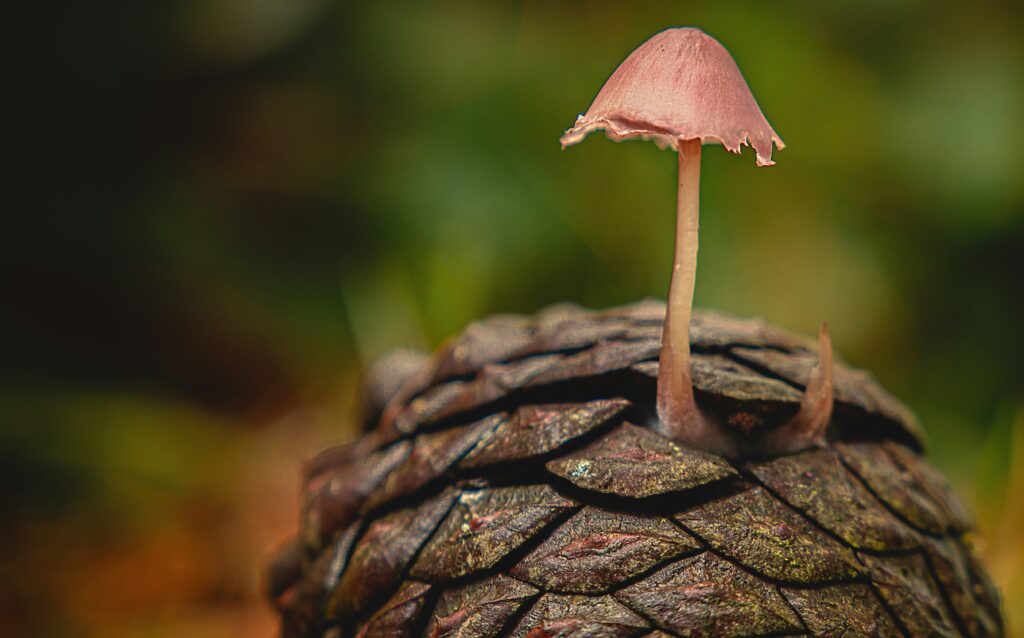
A brown mushroom growing out of a tree log.

The angiosperm and gymnosperm I despised in my undergraduate class finally made sense. I began exercising, fasting, reconnecting with nature, taking deep breaths, and walking on the beautiful Tel Aviv beaches, even the Arava. I began to appreciate myself for how far I had come and everything I had accomplished. The whole time I had been harsh on myself, and I was not even aware. I managed to complete my Master’s program and return to Kenya. 

Ever since, I decided to always appreciate myself and everything around me; I would let worrying be the least of my problems, and this new perspective was all thanks to my friend in Israel. So, thank you to that individual. 

You helped me overcome my own burnout by seeing and saying it.

Own Your Degree and Your Mental Health

Depression is a fickle thing. Becoming depressed is not easily predictable. The best days can be immediately followed by the worst. Still, there are behavior management patterns that can help mitigate its effects. For example, I know that I get very insecure if I use too much energy.   

Confused about emotions

The path that I am on now is long and twisted. At the beginning of this journey, I knew almost nothing about depression, nor did I believe that what I was feeling was depression. I felt like I was exaggerating my emotions or faking it. I didn’t want to believe the changes I was undergoing. Even though my family recognized it and I had a therapist, I still didn’t completely believe I was depressed. 

It’s common for depressed people to feel like they are either tricking everyone into thinking they have depression or finding some other way of feeling like an imposter. 

My depression made me feel like I was ripped from society and I had to fight.

Fight to connect. 

Fight to connect with myself. 

Fight to connect with myself in bits. 

An effort made, even a little—

Strand by strand, I’m pulling myself back.

Support systems

I was privileged enough that my depression was not ignored by those around me, and they shared what they noticed. I was lucky enough to get a good therapist on my first try. This luck was due to the fact that my therapist was found as a result of my parents’ effort. My therapist was lovely. She helped me work through things I was hiding while I invalidated myself. 

I was very anxious in the months before university. My therapist was great at helping me through my anxieties and making plans with me to make the transition to campus easier.   

The things that worried me about school were the academic workload and the fact that I would have to be more independent than I had ever been before. University was in a  different city, away from the one I had lived in my entire childhood. I was anxious. Though a meal plan solved the problem of setting aside time to cook, I needed to budget my time and energy like never before. My first year at university was made easier thanks to the support systems I had, like my therapist and loved ones. 

My new and old friends were key to making my first year a good one. My old friends made me feel supported. My new friends made me feel welcome. Having a community was important, and being a part of one allowed me to grow during my first year. 

(Image courtesy of Mikhail Nilov via Pexels)

My two biggest roadblocks when it comes to succeeding academically are motivation and depressive episodes. Because of this, academic accommodations were another boon that helped me succeed during my first year of university. The school administrators understood that I needed some extra help. I am able to take my tests and exams in a different building than other students so I am not distracted. I also get extra time to finish my papers. Additionally, I get extensions when turning in assignments and can miss a few classes without repercussions. These accommodations take pressure off me to perform my best when I’m at my lowest. 

Boosting myself

Self-motivation is something I’ve struggled with for years. Being unmotivated is definitely a difficult mindset to have. There is no one solution for overcoming it. It’s also not something that I can just force myself through. 

There are a few things that I do to fight the absence of productivity that comes with a lack of motivation: I sit with other people as they do their work, I put on timers to count down the time I have left to work, and I have my accommodations. Often, I have to ask for help.

Learning to ask for help has been hard but at the same time, very rewarding. When I ask for help, I almost always receive it. But asking for help also requires vulnerability, something that is not easy to confront. Part of the process of trusting others is to trust them enough to let them in. Getting to be that much closer to those around me was amazing, and I wouldn’t trade it for anything. 

(Image courtesy of energepic.com via Pexels)

Sometimes it’s a matter of time before my depression gets in the way of my productivity. Sometimes nothing works and I have to wait until the depressive wave ebbs. Sometimes it feels like there is an elephant on my chest and the effort to get its weight off is not worth making. 

When these moments happen, I need to remember that it will leave if I don’t let it push me deeper into the ground.

Depressive episodes pass. 

Assignments get done. 

Time keeps ticking and everything keeps moving on. 

Every university experience is different, but I think every student needs to be patient with themselves because we are all growing. A degree may not be everything, but mental health is. Approaching difficult tasks may be scary, but there are many ways to handle the hard things in life. 

I can be depressed and in university. You can struggle and find the parts of life that are worth living for.  

(Image courtesy of Cottonbro Studio via Pexels)

Less Manic, More Connected

This world is too complicated!

I have lived a life valuing the strength of the human connection in this complicated world. In my journey, I discovered the strong interconnection between language and human emotions.

The journey begins — honeymoon in France

This journey commenced when I started learning French. I never thought it would have such a dramatic impact on my life. I completed four years of learning French, and in those four years, I earned college credit that I was able to transfer to a Jesuit University in the Midwest, to major in French. In those four years, I immersed myself in grammar and literature. In my junior year, I went to study in Strasbourg, France. I studied there for around five months where I lived with a French family during the first month.  Being all by myself in a foreign land troubled me. Everything was entirely new — culture, people, and food. I ate the best food of my life with my host family while I moved  around the French city. Our weekends included enjoying lengthy meals while having endless conversations. In my first month, I went through the honeymoon phase — living overseas in a different culture so distinct from my own. 

 The first undertone

(Image Courtesy of Milada Vigerova via Unsplash)

In the first few months I studied there, I immersed myself in French. Along the way, I often stopped by a bakery or pastry shop sitting on almost every corner of the city. I had the opportunity to meet other French students from the university, and we quickly became friends. After months passed, I became more adapted to the culture and saw the world from a different viewpoint. By the summer after the classes ended, I was missing my family again and made plans to return home. Upon reaching home I shared my photos of France and all the details of the exciting experience I had enjoyed during my stay. Unfortunately, when I returned to my university with so much time passed, the friends I had made seemed uninterested in my stories from my overseas trip back home. Their lives had changed — never knew life would change so fast.  I thought everything would be the same — friends would be the same old friends.

For them, I was no longer important. I felt isolated and became depressed, and so I threw myself into my studies in the last semester. This was the first time I became depressed. I had no knowledge then of my family background with mood disorders. 

Career advancement

(Image courtesy of Armand Khoury via Unsplash)

In 1994, I began my career as an administrative assistant for the  Center of International Relations in my hometown . My hometown had many sister cities, and when I started at this company, the city was setting up a sister city relationship with a city in Senegal. The signing of the sister city treaty between the two was marked with celebrations and special events showcasing and welcoming the Senegalese local government officials. I remember the event so clearly with officials from Senegal — speaking with them in French. It was a great honor for me to communicate with important delegates in their own language, and I knew that it would take me far in terms of preparing me for my next career position. 

In 1997, two years after my previous job, I was employed by a global mobility company as a relocation consultant with varied responsibilities. While I did learn a lot in the relocation field while working here, I didn’t advance in my position. After three years of unhappiness with my job  I decided to move with the hope I might find better career opportunities there.

Since my move, I have had great success in the global mobility and language education market, working for many companies and local language schools. 

The breakdown — slide into mania

(Image courtesy of Nik via Unsplash)

Unfortunately, in 2002, I suffered a mental health crisis with mania and depression, and it hurt me greatly at work. Yet I was not willing to believe that my actions were the reason for my poor job performance.

When I got engaged in December of 2002, I only focused on planning our wedding.

I became obsessed with wedding details, spending two to three hours on the computer daily. I lost sleep and began my slide into mania and showed up late at work. I became agitated and anxious at times. I ignored it. 

Several months later, I went to the emergency room at a nearby university hospital to seek care. Eventually, I met a doctor who recognized my symptoms and asked me to make an appointment with the Mood Disorders Clinic at a local university hospital.  I was taken off all my previous medications and went into bad withdrawal. My mind was racing and I could not quiet my thoughts…

The human touch

(Photo Courtesy of Aditya Romansa via Unsplash)

My mother visited some months later, after a visit from my sister (paid for by my brother, as she herself suffered from bipolar disorder), and my brother and my husband felt it would be of help. My mother lay in the bed alongside me.  I was so agitated with her beside me that she could not sleep either. I was unable to remain still in bed, so without sleep, I had my head on my table with exhaustion. My mind was racing and I could not quiet my thoughts. In the mornings, she helped me eat breakfast and tried to get me to walk a little bit, as it was so difficult for me at that time to even walk down the street.

I cried after my mother left. My husband could not attend to me while he was at work and would arrange a schedule of activities for me. I continued to fall deep into my depression. The medications only stabilized my mood and anxiety and allowed me to sleep for a few hours at a time. 

It was only after a whole year that I started a new medication shown to treat bipolar depression better. It was like a ray of sunshine piercing a cloudy world. After several weeks, I made a major recovery and could proceed with a subsequent trip to Southeast Asia.

Stability

(Image courtesy of Dareius Bashar via Unsplash)

My fiancé and I traveled to Southeast Asia in  December 2004 to get married,  and then traveled to more places for our honeymoon. I learned from experience that when you travel or live in another country you must do as the Romans do — adapt to the different cultural manners, especially with how to dress and how to eat. I also had to dress more ‘modestly as a woman’ in that I couldn’t show my bare legs, and had to learn how to eat with my hands. I have faced more and more challenges along the way in every country I visited. 

After my trip overseas. I returned with more stability and more confidence. I was able to take a class in Teaching Writing Online in a TESOL certificate program while I pursued returning to my career as an ESL instructor. My face-to-face classes, unfortunately, ended when the COVID-19 pandemic impacted the whole world. I had to transition to online lessons. 

Only humanly possible 

Since the COVID-19 pandemic hit in 2020, isolation has disturbed me. I needed human contact. I knew that in the years ahead, it would be very problematic for me without that connection. It changed my mode of communication with my family, as at the beginning of the pandemic we chose to connect over Zoom since we were all indoors with no direct contact with each other. It did bring us closer together and we have become a very close-knit family. 

I have faced multiple challenges in my life and have overcome them. Through these challenges, I have understood the value of self-expression and human connection through emotions and language.

A Connecticut Snowflake Comes Out to Play

As far as I can remember, I have not liked cold weather. 

And I have my own reasons for it. 

My birthday falls in the summer, so you can say it’s in my DNA. 

I’m not a fan of sweaters or long-sleeved shirts. 

I have lived in Connecticut and dealt with brutal winters while growing up. I catch a cold easily and have worn jackets until early May. So naturally, winter isn’t an enjoyable time for me.  Most winter days, you could find me at home, lying on my couch under at least one blanket, snacking on something, and feeling sorry for myself. Though I do it well. 

I have never been officially diagnosed with seasonal depression or seasonal affective disorder. However, many of my bad mental health episodes have occurred during winters, especially in recent years. As I’ve gotten older, the allure of the holidays, playing in the snow, and days off from school faded away. The latter two definitely have.

Gloomy December 

In December, I usually freak out about the end of the year. 

I feel like I haven’t done enough throughout the year. I feel like I should’ve gone to more fun events. This usually leads me to wonder what could’ve been, and I hate going down that path. I’d rather be happy for what I did than feel bad for what I didn’t do. I get caught in cycles of regret and self-hatred whenever I start wondering about all these things.

Lazy January

In January, I feel okay at the start of the year. 

Like most people, I try to stick to my New Year’s Resolutions, but I usually only manage to honor them for about a week. I feel bad for not sticking to them, but I’m unable to overcome my laziness, and I’m not sure why. January also seems to be the longest month. I spend the second half basically hoping it’ll end.

(Image courtesy of Lenin Estrada via Pexels)

Emotional February

February is usually tough for me. I’m single, so Valentine’s Day isn’t fun. 

By this point, I’ve been in the house for three months. It’s the last month of winter, and I just long for warmer weather. I feel like spring is dangling over my head, making me jump for it.

The onset of Spring

The start of March makes me feel better. 

Even though it doesn’t get warm until the end of March or early April, I feel it’s sunny, or at least I convince myself there’s more sun out there. It also seems like more events are happening in my neighborhood during this time, or I’m in the mood to check in frequently.

I have had these feelings for three months, so this past year, I decided to find ways to enjoy myself.

(Image courtesy of Javon Swaby via Pexels)

Overcoming challenges

I made 2023 my “year of health.” 

This past January, I started taking apple cider vinegar gummies. 

I also made it a priority to go to the gym more often. I did new workouts like weight training, and even lifted 25 pounds. I also enhanced my skincare routine by trying new products to see what works best for my skin.

Prioritizing my physical health has helped my mental health. This past winter, I didn’t feel as sluggish as I have in the last few years. It also motivated me to not just lay around my house when not working. 

Want to take it outside?

I realized that one potential source of my winter depression is the lack of sun and going outside. 

This winter, I tried to be outside more, as long as it wasn’t too cold. I realized that I needed exercise, vitamin D, and a change of pace from my usual routine, if only to walk to the grocery store or bookstore up the street during the day. 

Even when it’s cloudy, getting out makes me feel better. It also allows me to add variety to my winter schedule, instead of doing the same thing each day. Maybe connect with nature or reality, but it works. 

I have been trying to go out a lot at night, too. I love going to local drag bars and Meetup events with friends, even if it’s just a casual game night. It’s another thing that helps me break up the monotonous winter darkness.

Even though I’m an introvert, I enjoy going out and spending time with others, selectively. I think it uplifts my mood. Since these activities are indoors, I only have to be outside in the cold for a brief period of time. 

I discovered that spending more time outdoors and strengthening social connections have significantly improved my winter outlook and boosted my overall well-being. 

In body and mind, less isolation. In the end, tougher hide and tender heart. Maybe I created my own behavior modification program without realizing it.

Sunset on the Mountain, Sunrise in My Head

At times when I am faced with life’s inevitable challenges, my initial and persistent thought is “I’ll never get through it this time.” But I’ve come to realize each time that I have made it through, and I will continue to, because that’s just life. I like to think of myself as an optimistic, go-getter type of person, but I can’t deny that I also have a very defeatist mindset. 

Defeat — I can’t think of any better way to describe the feeling of wanting to give up when you can’t seem to find it in you to take just one more step. We’ve all heard it before that “Nothing good ever comes easy,” and these honest, encouraging words prevent me from giving up.

No matter how big or small your struggles are, it requires a great deal of courage to persevere and overcome them, invariably an extraordinary achievement to be proud of.

Walk your dogs!

It may be nothing much to some, but one of my favorite things is taking my sister’s dog, Mahina, out for an evening walk. Such a small yet fulfilling task gives me a sense of accomplishment for being an average person.

Most people in their day-to-day lives don’t see waking up or getting ready in the morning as a burdensome chore, but unless you’ve hit rock bottom, you may not realize how great it is to have the ability to complete such simple tasks with ease. Lately, this pressure has been lifted off my shoulders, but like dust collecting on a high shelf, it always returns no matter how many times I thought I got rid of it.

With the slightest ambition after a long weekend, I grab the dog leash as Mahina pops her head out from her napping spot behind the couch and comes running to the door. I am content to see how excited she is to go for a walk, and that it is enough to get me through what little of the day is left. 

As always, there are a handful of families at the park with all their children running around, playing soccer together, and a few familiar faces of those who also take their dogs out at this time in the evening. This hour seems the most serene with the sun starting to set, a cool breeze blowing, the lines of cars coming home from work, the overgrown weeds tickling the side of my ankles, and the wafting scent of someone grilling dinner in their backyard.

Amongst everyone around me experiencing their individual lives, I find myself as just another regular person taking a walk in the neighborhood park. In moments of bliss like these, I stop wherever I am and just think, ‘I am so happy right now. It was worth it after all,” because it always surprises me that I survived through all the struggles when  I thought I wouldn’t make it past that day. 

(Photo courtesy of Seth Cottle via Unsplash, of Kualoa Ranch, Kaneohe, Hawaii, USA)

With the faint sound of people talking and laughing in the background, I held my phone up closer to my face listening to the soft ringtone and waiting for my friend, Kaden, to answer my call. I asked to see what he was planning for all of us to do the following day, and was shocked to hear him reply with “The boys wanted to go Koko Head.” 

On my way back home, I tried to distract my mind from how intimidating just the thought of it was, and enjoyed the calm last scenes of my walk with Mahina.

Sunset with a view of life

But I wake up the next morning with the same lack of energy and wearied mindset of just enduring the day as much as I can. I am sitting in the passenger seat of Kaden’s car pulling into the parking lot of Koko Head, wondering why I even agreed to do something like this when I barely have the motivation to get out of bed. 

I drag my feet along just to meet up with some of the boys at the bottom, and realize that the hike hasn’t even started yet. Everyone else starts stretching, but instead, I sit on the curb of the sidewalk and stare down at the asphalt road in front of me. We haven’t even started, and I am looking weary and feeling defeated. It is late in the afternoon, even for summer, and the sun is already beginning to go down. As soon as the last few of our friends arrive, we begin to make our way up the steps.

Step after step. 

After step. 

After step. 

After a while, the exhaustion consumes my mind and body. I pause in my tracks and look back at the thousands of steps I have already taken. But when I face again towards the top, I realize, why come this far, to only come this far? 

From this point, I can see the top, but only if I look up high enough beyond the incline. The last couple of steps are just within my reach, yet miles away. I start to feel the burn in my quads and tiredness in my body from only drinking water the entire day, realizing that I forgot to eat anything. Anything. It isn’t even the hunger in my stomach or the pain in my legs, but the mental exhaustion that makes me want to give up. It takes every ounce of energy in me to make another step, after step, after step. 

Finally, I reach the top and immediately sit down on the graffitied concrete wall next to my friends who are waiting for the rest of us. The sudden transition from intense workout to immediate rest rushes a wave of weakness over my faint body, but the feeling of achievement is surely fulfilling. 

I find solace and hope in being able to proudly hold my head high while staring out at the view from the top of a mountain. In a brief moment, I catch a glimpse of the beautifully painted orange sky seconds before it vanishes. I could not feel any more relieved than from letting the cold, thin air blow through my hair, listening to the sounds of crickets chirping, and watching the faded remnants of color leave the sky as night begins to fall. 

You won it, you own it

This experience seemed oddly similar to my walk with Mahina from the day prior. At the end of the day, between celebrating the act of taking a walk outside and hiking to the top of a steep mountain, I was able to conquer something I thought I wouldn’t be able to. 

It didn’t matter on a scale of how large or demanding the activity was, I was proud to have pushed myself to overcome it. Truthfully, nothing good ever comes easy, and perseverance is all a part of the process. 

The sun sets every day regardless of who you are and what you’ve experienced. It is a reminder to us all that it is worth it in the end, to persevere through challenges and to be proud of what you have accomplished.

(Photo courtesy of Taisia Karaseva via Unsplash, of Koko Head Park Road, Honolulu, Hawaii, USA)

Falling into Your Orbit

I’ve thought about
The way the wind would whip my hair
Away from my face just seconds before
I find my end there
On the rocks below
Before your very presence brought
A kind of happiness I wasn’t aware existed
The kind I thought was mythical, you know?

There were days nothing could pierce
The dark and heavy clouds
With agony fierce in my chest
And over my head
I’d wish I was dead.
I’d wish I never existed.

But then you came, the proverbial ray
Of sunshine that could
Make my day bright in a way
It had never been before
You didn’t cure my depression but
You made me care in a way I wasn’t even sure
I was capable of.

And with a reason to give a shit
A reason anyone could benefit from
My existence on this planet
In this galaxy
In the middle of nothing surrounded by more
And vaster nothing in it.

I will never forgive you.
It was easier before I knew
Before when my crises were existential
Not born out of the pull
Of your gravity, your sparkle
But born of a life so lacking in light
It felt as if I was born in darkness
And would remain hidden in fright
And rage at a world so destroyed
So bustling and annoyed
That I couldn’t find my breath

But then there was you
You with your face and voice and
It was then I knew you’d ruin me
I knew the score, waiting for the other shoe
To drop as I learned I would never be your choice
But still. Still, I pined and whirred around you
Suddenly manic, a micro planet
Stuck in the pull of your gravity’s force
I know you didn’t mean for it to be this way
It’s just how you are. It’s just what you do.

And so here I am a satellite, or perhaps space debris
I’m certainly not a rocket
I’m only me
Falling, falling, falling.
Into your orbit.

Image of a woman falling into water. She’s wearing a floral dress.
Image courtesy of Kenneth Surillo on Pexels

Being a Depressed Mom

It’s hard feeling depressed. And it’s really hard to be a depressed mother. 

It takes a lot of effort to get up in the morning and much more effort to take care of others.

Depression is thought to be one of the fiercest mental illnesses, one that nearly paralyzes its patients. Nothing is ever easy. Waking up, eating, going to work or school, even going out with friends is difficult.  

When my older kids reached the age when they could grab a sandwich or a cookie on their own meaning they had a bit of independence and were past the breastfeeding stage and I was hit by one of those overwhelming attacks, I’d often keep them in front of the TV all the time. For how many hours? I could never tell. However, I could only blame myself for the careless mother I was, while sleeping and suffering from nightmares. 

Feeling guilt is, at least for me, the core of depression. Most of the time, I feel guilty about everything for no reason at all. It might be about something I forgot, whenever my kids fall ill, if they’re not eating well, or even when they’re simply annoyed with each other. It was always my fault. 

I am always there to be blamed.

My mind often bombards me with questions like, “Shouldn’t you have put out some veggies for the kids?” or “Couldn’t you at least have spent some time telling them a story first instead of simply just tucking them into bed?” or “How often do you play with your little ones? Do you really believe that once in a while is enough?”

The questions never end.

And the answers are always backed up deep in my mind, with the voice of a very perfect mother, chastising me with remarks like, “You’re always fucked up,” “You’re a loser,” and the ever so sarcastic, “What a perfect mom!” 

And this internal struggle goes on daily, from the moment I wake up. “Have I woken them up nicely today?” or “Why the hell did I yell at them when they drove me crazy?!” And it continues throughout the day with lunch, homework, time to bathe or sleep, screen time, and so on. 

Of course, sometimes, when everything seems to flow smoothly, I dare to think “Perhaps I’m not a bad mommy after all.” But those feelings never stick around for more than a few hours.

I know all mothers have a hard time taking care of their kids, with raising them and the challenges that come with that. But if you add depression to the complicated equation of motherhood, it’s hard to see anything but misery out there. 

There were a lot of nights that I spent wishing I had never been gifted my beautiful little ones. There were days when I thought I ruined their mental or psychological lives, perhaps just due to a word. A lot of my time is spent thinking about the harm I have caused them by living in the same house as a psycho mom who sometimes flees to her room just to cry out or yell or sleep. 

Depressed mothers suffer the most because they are part of the vicious circle that holds them responsible for everything related to their children. However, sometimes, I feel like I’ve learned and taught them something of benefit. I give them most of the time freedom to feel bad, to appreciate the tiny everyday good things and to empathize with me and themselves. Sometimes when I would sink into a depressive episode, my eldest kid would come and hug me saying, “It’s ok, mom.” 

A couple of hours ago, I was really feeling stressed. I was yelling at all of them to get dressed quickly and prepare themselves. I even yelled at my 4-year-old girl as she continued playing. After she surrendered and let me dress her, she kept saying, “I don’t want you to be sad. I didn’t mean that.” 

Although, as a matter of fact, I feel guilty after such words, I also realize that maybe there is a positive side to all this. 

When I was a little girl, I never learned that someone could be mentally ill. I only thought of pain in terms of bleeding or broken bones. If there are no physical symptoms, they are completely fine; they’ve no reason to miss school or postpone an errand. 

I remember crying silently under my blanket at night for so many reasons. I remember trying to make myself sick to skip school. 

Years later, when I was old enough to work, I was still fragile on the inside. I was harassed at work. I still couldn’t speak up at home and say that I was stressed or that I was psychologically down. I came up with a different mature idea to skip both home and work. I said I was going to work as usual but headed for a big park and spent that day there.

I cannot say that I was always depressed. There were times when I was happy. 

Maybe my childhood was hard. I was a quiet kid. I was always clever at school and I was always the model child; the example my parents encouraged my siblings to imitate, but that same pride they showed was always a heavy load to me. Somehow I was prohibited from being who I really am.

Now that I’ve learned the meaning of depression, I can say that maybe I did have early episodes that I wasn’t aware of. When I first went to a psychiatrist and started taking medications, I couldn’t tell my mother and my family what was going on with me. I couldn’t face them with the idea of psychological illness, which we never recognized as being real. I couldn’t cope with their feelings of pity for me and their trials to get me cured. 

After a couple of years, they saw me struggling during one of my episodes. And again, I was always the reason for what’s going on with me. Sometimes the reason I suffered was that I wasn’t close enough to God. At other times, I was accused of not appreciating the blessings I have. And at a different time, my family believed that Satan had control over me. 

My suffering had a different route, a fiercer one, when I became pregnant with my first baby. I started pitying myself and my kid. I started having nightmares about the future of my kid. I couldn’t continue my regular medication being pregnant. I had to endure the whole thing while suffering from the normal hormonal disturbances that all mothers experience. 

And since then, the little seedling of guilt started to grow in me. I started getting anxious about the future of my kids and how my mood would affect them. I started to believe that I was the only reason for everything bad that would happen to them. 

I’m still struggling with these ideas today. My oldest kid is now twelve, a lovely, sensitive, and kind girl. Sometimes I still think that it was wrong to bring my kids into this life. And because I know that I do have depression, I try saying that life is not as cruel as I think it is.

But most of the time I don’t believe it.

Today, I try to mention three good things every day. I’ve done it for three years. For a person with depression, mentioning three good things every day is really hard. 

 Of course, there were many days when I dropped the whole thing. There were weeks that passed me by as I lay in bed thinking about the blessing of death and hoping that the so-called God would just stop my suffering; days when I thought it’s useless, that existence has no meaning and that life itself is such a curse.

However, there were times when my husband took my hands and hugged me while I just cried. There were times when I could overcome my dark ideas bravely and start over again, even though not all the time. There were times when I went to the cinema, watched a movie with my partner and died laughing. 

And so, I’m sharing my struggle publicly. I wanted others to support me, to see that I am struggling and to encourage me to continue. I want to help other mothers grappling with depression just like me. Maybe they’ll find something to help them stand up and keep facing life. I also wanted to create a backup memory that I can check anytime to acknowledge my strengths: to see that I’m a good person, a good mother, a good lover. 

To see that I am a warrior. 

Two Secrets

When you discover a secret, you have two options. 

I say “discover” because a secret is not made to be found out, except only by accident. 

I say “when” because most secrets are easy to discover, and your two options are measured upon a scale. 

The lowest end, the part with less weight, the easiest and most sane thing to do, would be to keep it as it is. To leave it be and walk the other way (much like your lecturers do when they discover your answers while walking around an exam room). The second option, and the one that will earn you pats on the back even as you feel like the shittiest person (because unless you are a rock, you will), is what you, as an arsehole, will do.

There were two secrets that ruled Newton’s life.

The first one was kept from him until he was old enough to handle it, though he doubts anyone can ever be old enough to hold the gravity of such a secret. 

He kept the second one because he did not know he was keeping it. He did not understand it even though it lived in him.

The second secret

“I’m bipolar,” he starts. “I recently got the diagnosis from a psychiatrist I have been seeing since February.”

Newton did not grow up with any information about his mother other than the fact that she was dead. “She passed away when I was a baby. That is all I was ever told whenever I asked my uncle.”

He doesn’t remember half his childhood, unlike you, who recalls nothing under the age of eight. “There are lapses of time, even very long periods of my life, sometimes, that I do not remember. I used to make fun of it in school. We would be in class waiting for the next lesson, and, when the teacher came in to start the lesson, I would not understand shit because I was basically not around when previous classes were taught. I mean, I sat in for the class, but I had no memory of it. My body, an empty shell, sat in the desk, but that was it.”

He didn’t really understand what was happening. The only explanation he could think of was that he was a slow learner. “I thought I lacked book smarts, but I remembered everything I studied half of the time. I just always said I was average.”

The first real episode he remembers was a party. “A friend from school was home alone since her parents had traveled. So she was throwing a party and invited everyone who could come. My uncle was never going to let me go. He never let me do anything, so I didn’t even bother asking for permission.” 

He snuck out.

“I told my uncle I wasn’t feeling well. Probably a stomach thing because a stomachache is easier to hide than a headache.” A stomachache can be pretended by holding onto your abdomen and doubling over, accompanied by just the right facial expression. “A lot of frowning makes you look like you are pooping, and a bit less than required makes parents think you are not really hurting.”

So he snuck out and went to the party. 

Only, he didn’t go. 

“Listen, to help you understand it, you will need to believe me. Most people don’t. I went to that party. I swear. I went there, and I met my friends, and we had an epic time. EPIC. I know that because I have memories of it happening. I still smell the alcohol from that night. I do.”

When he got to school on Monday, his friends were furious!

“Ah Newt, wewe ni mtu bure sana!” (Ah Newt, you are a very vain person!)

“Why sasa?” (Why now?) 

 “Why would you make us wait on you, and you don’t show?”

“Newton, man, I always thought you were a solid guy, my guy…”

“Newton, btw, mimi, I can’t even. I just can’t!”

“They were relentless. And I tried telling them that I did not understand what was going on, but, before I had the chance to, the bell rang. I was so confused.” They all settled down to class; his mind far from stillness. He wrote a note to his deskmate.

/Jay, kwani, what is going on? /

Deskmate opened the note and frowned at him. [Not as severe as Newton’s stomachache performance, but frowny enough to let him know they were in murky waters] Desk Mate handed him back a note

/Dude, you chezad us bana! /

/What did I do? /

/You didn’t show up, man. :(/

/What do you mean I didn’t show up? I came!/

Deskmate shook his head in disappointment.

“Turns out I never went to that party,” he finally says. “It’s a weird thing, being bipolar. I have episodes where I am irritable, and I don’t even know why. Sometimes I am manic, other times depressed; then there are long periods of time when nothing happens. Nothing. And I forget. It takes up to months! There was a time I went for seven full months. Then I had the worst depression in my life. I almost killed myself.”

The first secret

When he turned eighteen, his uncle sat him down because he was “old enough” and told him the first secret of his life. 

“My mother killed herself. They think it was postpartum depression that caused it; but my uncle said she was just like me. She could shift through moods similarly like she was flipping through a flimsy book.”

His mother, bless her heart, did all she could. She had met a man, fallen head over heels, and opened up to him about her mental condition. He said he would love her through it all. He still left. Newton’s uncle does not know when exactly. After he was born, his uncle had dropped by to see his nephew and found his sister in the worst state ever. “He said she looked like she had not slept for weeks. She was distressed. She told my uncle that my father walked out on her because she was too sad all the time.” Then, she asked his uncle to hold him for a minute while she took a shower. She walked into her bedroom and never walked out of that room.

He started making sense of everything he had been going through when he researched his mother’s condition. He studied everything on postpartum disorder, mental health, and, particularly, bipolar disorder. “There are so many types of bipolar disorder; some don’t even have scientific names yet to study or research. Each person reacts differently to it. The levels of hyperactivity (mania) and placidity (depression) are different in everyone. It’s all very complicated.”

His psychotherapist is heavensent. They began by unpacking all his unresolved feelings towards his mother. “I started seeing him a few months ago, and I talk to him every time I have an episode. He is amazing at helping me manage my episodes. I learned that I would forget things I did because I was physically there, but my mind was in an episode. That I could be perfectly calm on the outside but be fighting for my consciousness to be one with my body, and that by fighting it, I was sinking deeper into the episode. I am still learning. My therapist says I should learn to let go of everything, and that I should stop trying to act normal because I’m not.”

Newton had two secrets in his life. The one he hid from the world in his mind and the one his mother and uncle hid from him. 

Turns out, it was the same secret.

[May is Mental Health Awareness Month, and this week we are learning about Bipolar Disorder. I found a really helpful article by Dove International Mental Health Center here. You can read through it to learn more on the disorder, its symptoms, and what you can do to help someone in each of the extremes. Stay safe, alligators!]

Why You Shouldn’t Bury Your Past

One of the biggest lies we are told is that it is possible to live fully in the moment, but the truth is we never can. 

By the time we process any moment, it is already in the past, and that who we are is so wholly defined by our past experiences that any given moment is viewed through the lens of our entire lives. Our pasts can sneak up on us in ways that we never expected. Without taking the time to unpack what led us to certain bad habits or harmful thought patterns, it is too easy to fall right back into them without noticing. 

That happened to me when I decided to become a high school teacher.

The role of teachers

If you know anyone who works in schools, you may have heard that teachers tend to act similarly to the students they teach. For example, K-5 teachers tend to be bubblier. They wear their personalities on their sleeves and know how to have fun. 

High school teachers are also like their students. We think we’re right about everything, we believe instructions given by administrators are bullshit that we don’t have to listen to, and we ultimately spend way more time complaining about things than actively trying to change them. 

Don’t get me wrong, every teacher I know works tirelessly to do what they think is best for their students, and we don’t get a lot of thanks for it. However, I have yet to work in a school that does not have this toxic underbelly of cynicism at the slightest suggestion of change or progress.

 In my junior year of high school, I was hospitalized for depression. Shortly after that, I would learn that the extreme nausea and light-headedness that had become a staple of my daily school experience was actually an undiagnosed anxiety disorder. While some people might be relieved to be able to understand what they were experiencing and be excited about the prospect of working on skills to cope with their specific mental health issues, I was not some people. 

I was embarrassed. I had been brought up in a home where I was constantly reminded how good I had it compared to my parents at my age. I was told to stop whining or not to “be a baby” at the slightest complaint or show of unhappiness. I knew a lot of people with ADHD who exhibited similar symptoms and behaviors to me, but I was never given an evaluation because my parents didn’t believe it was real. 

My slipping grades were chalked up to my lack of effort or a perceived apathy on my part towards doing well in school. Having mental health issues, for me, was just another proof I was a disappointment, squandering my potential. I convinced myself that everyone around me must be feeling the same things I was, and I was just too weak to deal with it.

Too weak to deal with it, or just human?

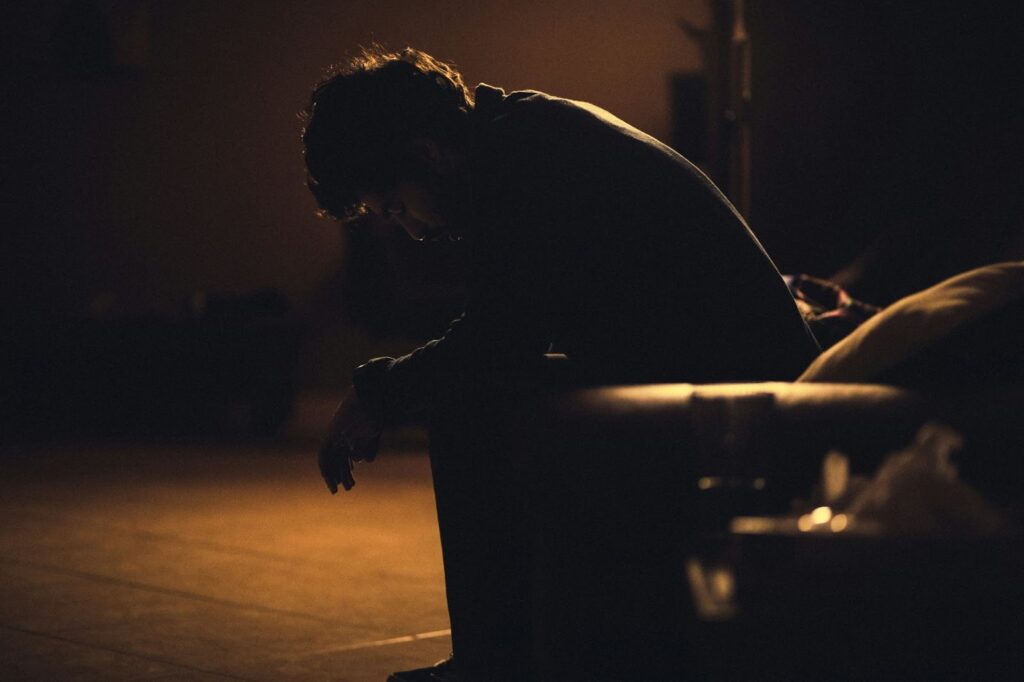
image of a person sitting down, hunched over. The image is dark with little light. Shadows cover most of the person’s body.
(Image courtesy of Gadiel Lazcano on Unsplash)

This sense that my mental health issues were my fault led me to an inelegant and temporary solution: I ignored them. I simply acted like everything was fine without ever putting in the work to make it that way. 

After my hospitalisation, I lied to my therapist about how much better things were for me. I lied to my parents so that I wouldn’t have to keep going to therapy. Worst of all, I perpetuated the lie to myself that I was to blame for everything, and all I needed to do was change my attitude, or at the very least, bury my true feelings so deep that they wouldn’t affect me. A mere seven months after being hospitalized for depression, I was off my anti-depressants because my friends had started drinking and I wanted to join in. Nobody around me questioned that I was somehow all better, and eventually, neither did I.

Except for a messy relationship that neither I nor my partner were emotionally mature enough to handle well, I managed my depression and anxiety very well throughout college and my first few years working professionally. I spoke in the past tense about my struggles with my mental health, as though they were something dead and buried as opposed to something lurking in the shadows. After working in freelance film and TV production, I wanted to find more consistent work, preferably something that felt more meaningful to me than carrying around a tripod or slowly sliding a camera to the right on occasion. 

Then, one day, believing that I had conquered all my problems from my past, I decided to pivot to a career in education. 

My goal was to help students like me who were struggling and felt they had nobody to help them, without realizing I had never actually learned to help myself through that time in a healthy and effective way.

My first few years subbing and teaching weren’t so bad. I was so concerned with learning all the skills necessary for a new teacher that I couldn’t focus on much else. However, due to never having fully confronted my own problems, I quickly realized I would not be able to help the way I would have liked to. I was able to be understanding and flexible when it came to offering extra help and time on assignments to students who struggled, but I hadn’t gotten into teaching to help improve students’ grades. I began to feel like I had failed since I couldn’t have the impact I had sought to have. Worse still, several of my students were hospitalized for mental health issues, and while a healthier me recognizes that I couldn’t have stopped that from happening, at the time, I blamed myself.

In February of 2022, just four years into my career in education, I found myself pretty much where I was in the fall of 2011: on medical leave from work due to my depression. This time I wasn’t hospitalized, though. This time I could seek help without waiting for my parents to understand how dire my symptoms were.

Putting in the work

I took a few months away from my job to participate in an intensive outpatient program five days a week. I was, and still am, lucky enough to be dating someone who has struggled with her own mental health issues. She has been entirely supportive of my needs and urged me to take my recovery seriously this time. No more shoving things down just to get the stamp of approval from my program to go back to work. By using the cognitive behavioral therapy (CBT) and dialectical behavioral therapy (DBT) skills from this program, I finally confronted the issues in my past and understood the types of cognitive distortions that led me to harmful thought and behavior patterns. I was also finally able to start internalizing that I am allowed to feel what I feel and try not to be ashamed or embarrassed about my personal struggles.

Now, I’m not saying that I’m all better, or that getting here was easy. I’ve learned my lesson about thinking I can “cure” my depression in a matter of months. I also recognize I have a long way to go from where I am. Even writing this article took a lot of time, because I kept wondering if it was even worth writing. 

I still have that nagging voice in my head telling me that what I’ve been through doesn’t matter, and I should just stop whining about it. The only thing that got me to go through with it was the hope that you, the reader, might feel the same way. 

You might need to be told, or reminded that you matter regardless of what anyone tells you, and that things will only get better once you begin to take them seriously, instead of ignoring them. 

And if you, like me, have tried to stuff down unresolved issues in the past, I urge you to confront them in a healthy and direct manner, before they come back worse than before. 

 Image of two people hugging each other. Their backs are turned to the camera. They’re facing a brick wall.
(Image courtesy of Melanie Stander on Unsplash)