Moving Away From the Cliff’s Edge: A Mum’s Story of Her Child’s Mental Health

It is no understatement that the last few years have been difficult for various reasons. It’s almost too obvious to state that we, in the West, consume a lot of environmental, social, and political information that clogs up our web browsers and mental state.

Meanwhile, the external world provides further insights with its doom and gloom, and you wonder what this does to your internal world and, more importantly, the internal world of your dependents.

Impact on my son’s world

My son is almost twelve years old. He had rolled through lockdown like most kids his age; with an interest in what is happening in the world and not attending school online.

Days turned into weeks, which turned into months. We were let out briefly, then locked down again.

We didn’t force homework on the kids; we ate meals together and walked around the neighborhood, trying to follow the advice of mental health advocates by maintaining a calm atmosphere.

Eventually, we all returned to our pre-COVID routine: school, work, supermarket shopping, and socializing.

My son entered a new school, a major leap, as he was now a little fish in a big pond. Senior students were young men dressed in school uniforms towering over him. He was excited and wanted to go, especially since many of his friends from his primary school were joining him.

Things went okay; there was lots of new stuff to remember, which was overwhelming for any kid. 

But, as the year passed, he stopped communicating, wanted to stay home more, and got irritated when asked to do his homework. Children undergo emotional cycles that coexist with physical changes, which we understand. It’s natural! 

Let’s face it: We all have to deal with many life changes, so we are all in the same boat, right? 

Then, arrived that moment, when my son uttered that one sentence, which changed my perspective forever!

“Mum, please don’t freak out, but sometimes I think I am pointless and don’t want to be here.”

To this day, I still recall that visceral experience whenever I drive down the street where he said this to me. 

I was ready for a conversation about bullying, but not for one about suicide.

In line with my son’s request, I did my best not to freak out and decided that today was not a day for school, but for getting hot chocolate and heading to the park.

We talked and shared moments of silence before heading home.

Later, I had a breakdown in my bedroom, experiencing a complete red-eyed, sobbing meltdown.

You see, suddenly you understand that your child is grappling with their persistent  suicidal thoughts.

You can effectively address bullying or support someone coming out, as our society is much better at dealing with these issues, and schools are well-placed to help. But, conversations around suicide are different and tricky. They are complex to hear and even more challenging to own. 

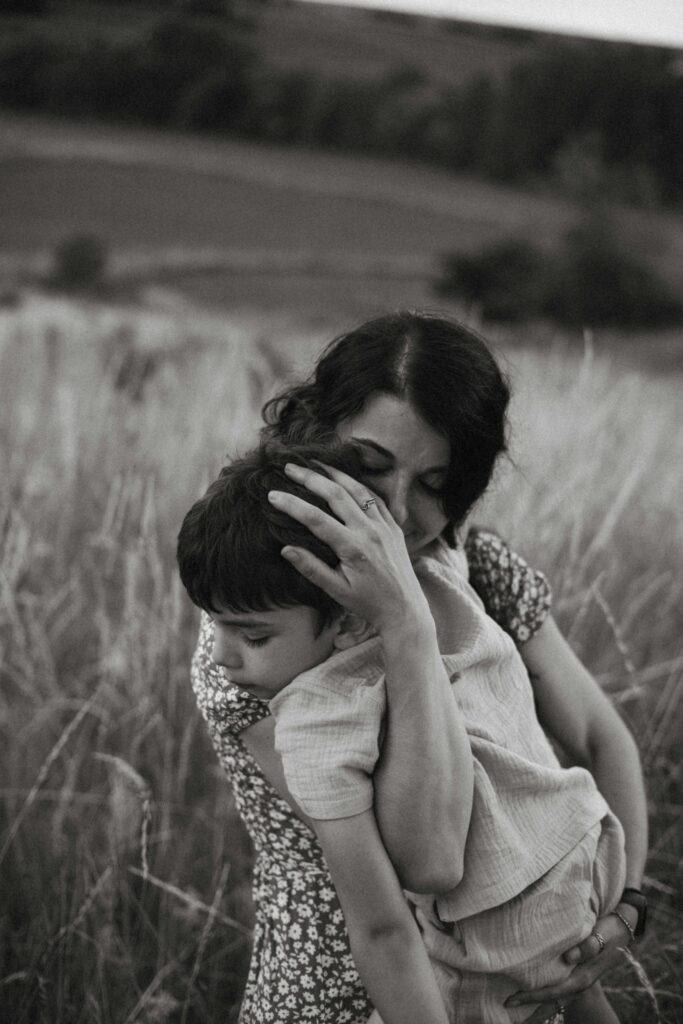
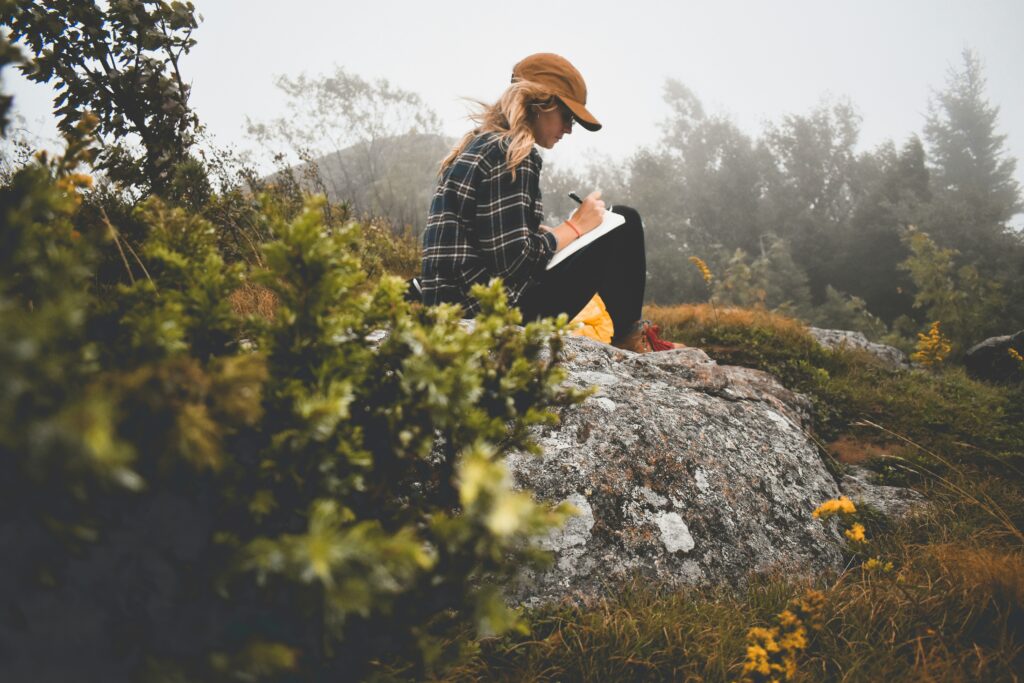
(Photo courtesy of Anastasiia Chaikovska via Pexels) 

Finally, navigating the cliff’s edge

One way to describe this experience  as a parent is to imagine that you are in a field, whose one of the boundaries is a cliff.  You spend most of your time in the middle of the field, with your life seemingly moving along with little fear or disruption.  You can’t even see the cliff edge because there is a natural boundary of beautiful trees or native bush. This vegetation represents the details in your life that keep you intact: a comfortable living environment, the love of family and friends, food on the table, and the power on. 

When something happens, such as a life-threatening health diagnosis, the death of a friend, or, in my case, your child experiencing extreme mental strife, you are catapulted from the relative safety and comfort of the middle of the field to the cliff edge. It triggers a raft of strong feelings, a desire to run away, but a relentless obsession with looking into the abyss. 

You see your friends and family in the middle of the field carrying on with their lives, which now seems pointless or distracting. All you can do is live in a void between the edge of the cliff and the threat of falling to the bottom.

Consequently, your mind gets so tied up in problem-solving and self-doubt, and the need to wrap them up that it gets harder to sleep and talk to anyone about it. It feels like a personal failure. 

Why can’t I make my child feel happy and safe?

What did I do to him?

Can I pinpoint the moment all this started?

Of course, I could not answer these questions sufficiently. All I could do was stop looking over the cliff’s edge and secure my footing to secure my child’s.

Taking the necessary steps

After meeting his facilitators from school, who were helpful and constructive, we consulted a counselor to assist him with his overwhelming feelings.

It’s been a long, difficult road, full of sleepless nights and moments of terror. For any parent, checking your child’s room for anything that may harm him is distressing..

Acknowledging that you can’t fix everything is something we parents instinctively know, yet knowing and fully internalizing that knowledge are two very different paths.

Mental health issues are a part of the human experience, regardless of age. I am incredibly proud of my son for having the strength and bravery to tell me how he felt, especially while being so young.

He is bright and quirky, with a great sense of humor, a talented artist, and a loyal, compassionate friend. He is also a troubled soul with a profound understanding of his darker side. 

As his mother, I am in awe of him, but it feels bittersweet that he carries this self-knowledge.

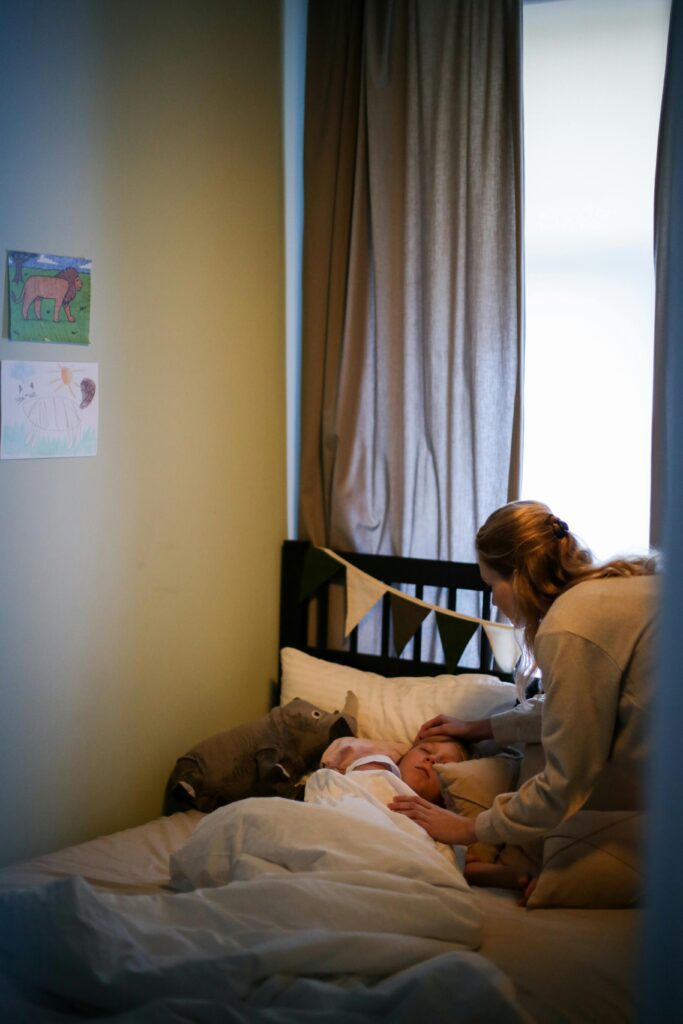
(Photo courtesy of cotton bro studio via Pexels) 

I love him to the moon and back

Shifting Fortunes, Shifting Fates

I still remember the night my father died. The years before were a blur of lavish parties with older men shrunken with age and tall bottles of wine and beer. They visited often, these rich men with their families. 

Sundays saw my mum and Aunty Nneka, barely a teenager herself, in the kitchen pounding soft yams in our large brown mortar until the ground shook. Laughter could be heard for many hours. They spoke boisterously in loud voices over peppered chicken that made their noses run. It felt like the excitement would never end. Until it did. 

I am five

We were a typical Nigerian family. My father attended the men’s meeting and the community meeting, and he donated rather too generously to the church. My mum would tug on his white kaftan as he called out hefty sums like five hundred thousand naira or when he volunteered to finish the church building single handedly. He walked with a poise that oozed pride. His gait was daunting and my mum complemented his look, sitting beside him in a pretty embroidery that radiated affluence. Her headscarf did not make crunchy sounds like the biscuit-like wraps worn by other women in the church. Her gold did not tarnish, nor did her lipstick wane. Her skin was as radiant as day, fresh from the beauty products my father bought her. I ran around the church in my pearly white gown and ponytails, and Aunty Nneka chased me, pulling me by one hand and dusting off my dress when I fell on dirt.

Everyone clustered about our Peugeot after mass and greeted my father, but even as a child, I knew most of their overcompensating pleasantries were borne out of their desire to ask for money. Many carried me high on their shoulders. I was five, but I remember it all. They said I was turning into such a lovely and plump child even though I was scrawny, for my age. My father would dip his long fingers with perfectly manicured nails into his pocket and pull out a wad of crisp notes, giving it to them. He dropped two hundred naira onto the enamel plates held by people begging  by the church’s gate when others dropped torn ten naira notes. 

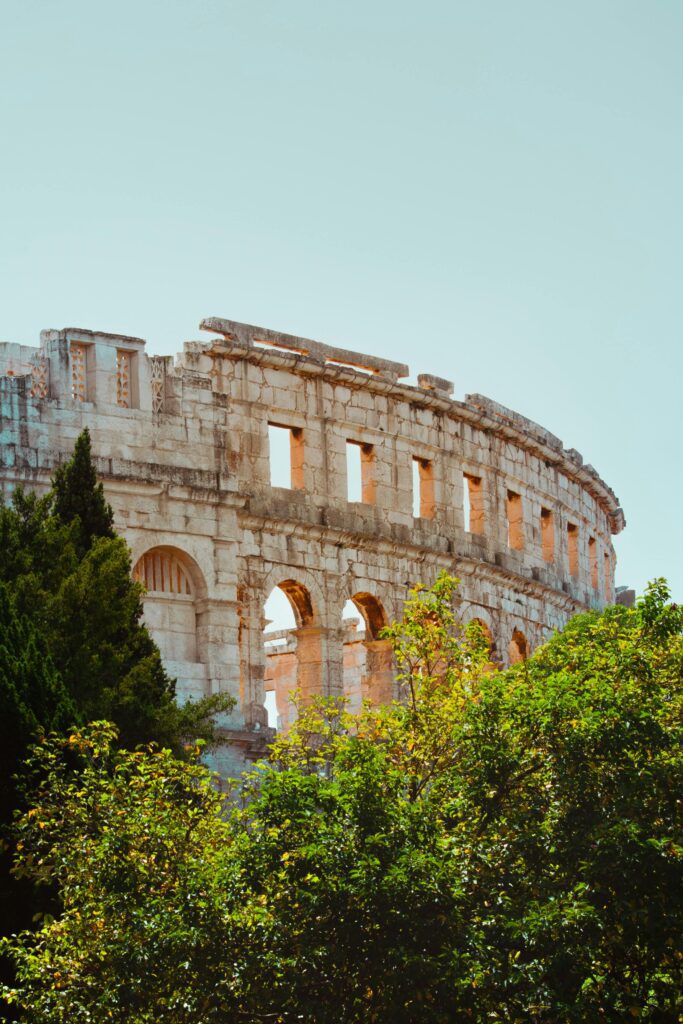
(Image courtesy of Adi Goldstein via Unsplash)

I am six

My sixth birthday was bright and festive with balloons floating in the air and children running about our compound. I stepped on my gown and the lacy extension got torn. My mom scolded me by tugging my ear, so my dad reprimanded her

As usual, he was clinging tightly to his phone and would hurriedly pick it up at the first ring. Mum was pregnant with my little sister then, and since she was a full-time housewife, she worried over things that ordinarily should not be a concern like when Aunty Nneka put  the stew in the yellow bowl instead of the white one. They were both large enough but with my mum, details mattered. No one worried that her nagging was becoming unbearable because she was pregnant. She alone knew, however, that it was not the pregnancy that made her so quick to anger. My father had been cheating on her.

***

He is coughing

Our lives changed a few months after the birth of Chidinma, my baby sister.  My father fell ill. He coughed more often and ate less. He shrunk, looking shriveled on the bed. My mother worried about him even more when the hospital could not figure out what ailed him. 

The parties became few and far between. Friends rarely  visited. My mother dug into the last of my father’s savings and discovered, rather later, that we had fewer assets and more liabilities. We were drowning in poverty as she pumped money into different hospitals, hoping he would get better. He did not.

Aunty Odinaka called rather abruptly on an early Sunday morning. My mother sat with a drooping breast stuck into Chidinma’s ready pink lips. She had stayed up all night to attend to my father, who had remained motionless on his back, struggling to breathe. Aunty Odinaka was my father’s younger sister who had lived with us when she was a student. She referred my mum to a spiritualist in the village, and for what seemed like several hours, my mum refused. 

Ekwu Zina, don’t say that,” she said over and over. She pointed out how diabolical and fetishistic the practices were, how the bible was strongly against them, and how she could never take my father there. 

She changed her mind, however, when my father deteriorated to the point that he stopped moving. My mum tried reaching out to Alhaji Muhammed, my father’s best friend and business partner, who had a round belly and white stubble across his chin. He had given her an envelope heavy with cash, greedily consumed by the hospital in a single day. When my mother called him again, he cut off all communication with us. Even I, now grown and fully able to grasp the gravity of always asking for help, understood why he did that. 

My mother was flustered. The very people she threw lavish parties for now ignored her calls. At first, our house still looked the same with the central gold table and a low chandelier that glowed gently with warmth. It burned my eyes when I stared for too long and the tiny bulbs hung like mango fruit. Then in a few weeks, the golden center table had been sold, and the family car and everything that smelled of luxury had been removed. 

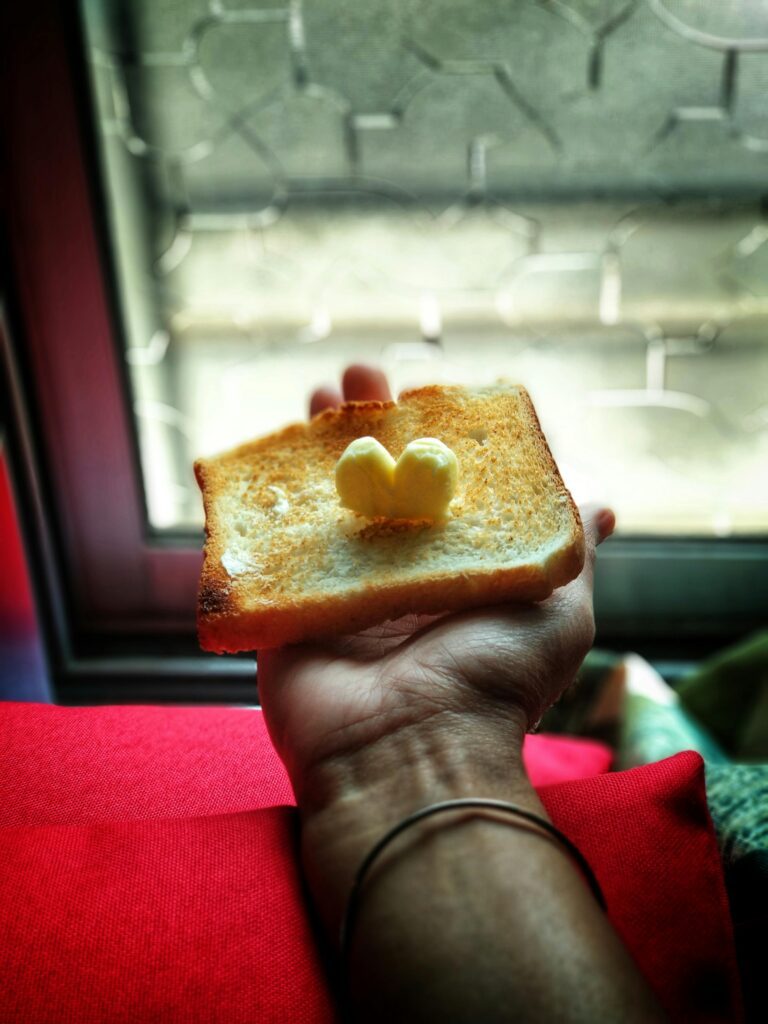
I watched butter leave the table as my mum told me that it tasted sour so she stopped buying it. 

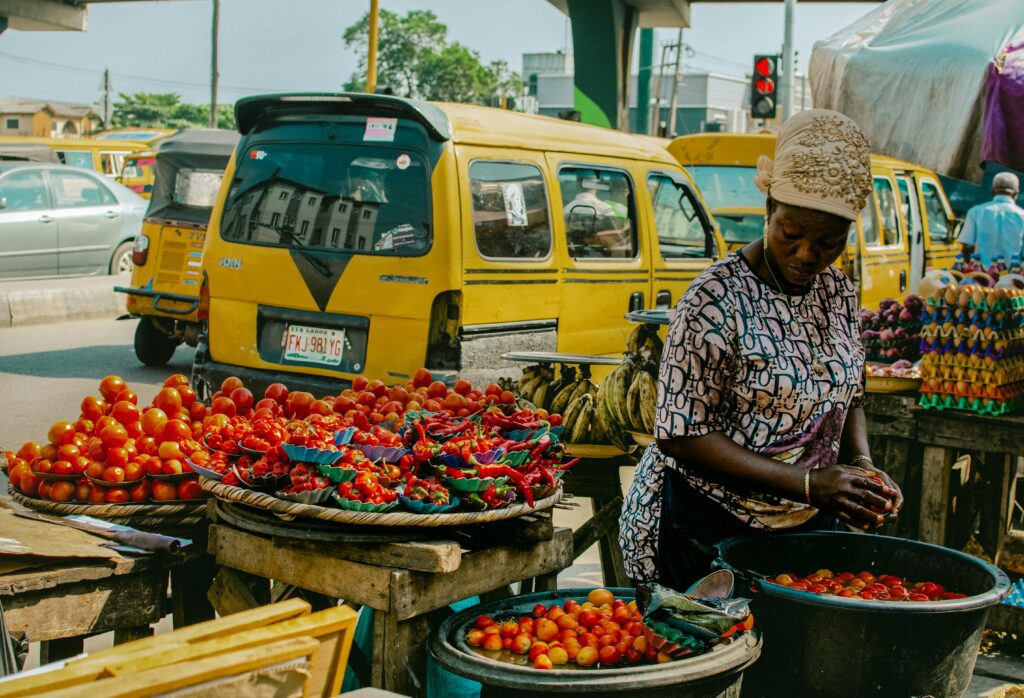
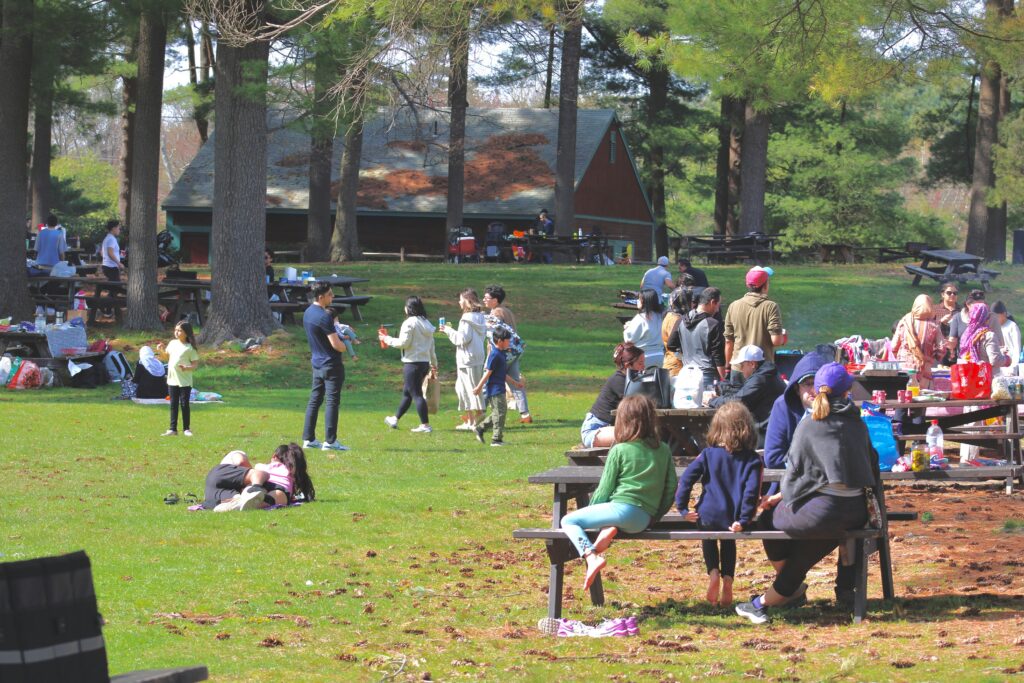
(Image courtesy of Ravi Kant via Pexels)

Later, she would stop buying my favorite treats: Sugary Capri-Sonne drinks were no longer at our usual shops, she explained. I had stopped going to school, because she was no longer satisfied, it seemed, with the teachers. 

***

I am present

The spiritualist was a short man with white material wrapped over his shoulder and under his arm. He often had a leaf frond between his lips and hummed on it fervently. I came to watch the healing magic at the spiritualist’s request: he said that I was a major connection to my ailing dad and must be present.

I stared in disbelief as I watched him pace about the lanky remains of my father and dunk him into the shallow river. He picked up a gourd from a calabash — its edges so poorly cleaned that tiny bits of wood stuck out — and he ran it over father’s face three times. 

After an hour passed and we were sure that no magic was going to happen, we asked the spiritualist what the matter was. His eyes burned a painful red, the kind gotten from downing tall bottles of alcohol, as he urged us to be patient. He proceeded to apply a mild cream over my father’s body and towed him back to the car. 

Fear enveloped us all when my mother felt his face. She could no longer feel the  warm breath from his slender nostrils. Only our shifting fates. 

(Image courtesy of Godiva Omoruyi via Pexels) 

A Connecticut Snowflake Comes Out to Play

As far as I can remember, I have not liked cold weather. 

And I have my own reasons for it. 

My birthday falls in the summer, so you can say it’s in my DNA. 

I’m not a fan of sweaters or long-sleeved shirts. 

I have lived in Connecticut and dealt with brutal winters while growing up. I catch a cold easily and have worn jackets until early May. So naturally, winter isn’t an enjoyable time for me.  Most winter days, you could find me at home, lying on my couch under at least one blanket, snacking on something, and feeling sorry for myself. Though I do it well. 

I have never been officially diagnosed with seasonal depression or seasonal affective disorder. However, many of my bad mental health episodes have occurred during winters, especially in recent years. As I’ve gotten older, the allure of the holidays, playing in the snow, and days off from school faded away. The latter two definitely have.

Gloomy December 

In December, I usually freak out about the end of the year. 

I feel like I haven’t done enough throughout the year. I feel like I should’ve gone to more fun events. This usually leads me to wonder what could’ve been, and I hate going down that path. I’d rather be happy for what I did than feel bad for what I didn’t do. I get caught in cycles of regret and self-hatred whenever I start wondering about all these things.

Lazy January

In January, I feel okay at the start of the year. 

Like most people, I try to stick to my New Year’s Resolutions, but I usually only manage to honor them for about a week. I feel bad for not sticking to them, but I’m unable to overcome my laziness, and I’m not sure why. January also seems to be the longest month. I spend the second half basically hoping it’ll end.

(Image courtesy of Lenin Estrada via Pexels)

Emotional February

February is usually tough for me. I’m single, so Valentine’s Day isn’t fun. 

By this point, I’ve been in the house for three months. It’s the last month of winter, and I just long for warmer weather. I feel like spring is dangling over my head, making me jump for it.

The onset of Spring

The start of March makes me feel better. 

Even though it doesn’t get warm until the end of March or early April, I feel it’s sunny, or at least I convince myself there’s more sun out there. It also seems like more events are happening in my neighborhood during this time, or I’m in the mood to check in frequently.

I have had these feelings for three months, so this past year, I decided to find ways to enjoy myself.

(Image courtesy of Javon Swaby via Pexels)

Overcoming challenges

I made 2023 my “year of health.” 

This past January, I started taking apple cider vinegar gummies. 

I also made it a priority to go to the gym more often. I did new workouts like weight training, and even lifted 25 pounds. I also enhanced my skincare routine by trying new products to see what works best for my skin.

Prioritizing my physical health has helped my mental health. This past winter, I didn’t feel as sluggish as I have in the last few years. It also motivated me to not just lay around my house when not working. 

Want to take it outside?

I realized that one potential source of my winter depression is the lack of sun and going outside. 

This winter, I tried to be outside more, as long as it wasn’t too cold. I realized that I needed exercise, vitamin D, and a change of pace from my usual routine, if only to walk to the grocery store or bookstore up the street during the day. 

Even when it’s cloudy, getting out makes me feel better. It also allows me to add variety to my winter schedule, instead of doing the same thing each day. Maybe connect with nature or reality, but it works. 

I have been trying to go out a lot at night, too. I love going to local drag bars and Meetup events with friends, even if it’s just a casual game night. It’s another thing that helps me break up the monotonous winter darkness.

Even though I’m an introvert, I enjoy going out and spending time with others, selectively. I think it uplifts my mood. Since these activities are indoors, I only have to be outside in the cold for a brief period of time. 

I discovered that spending more time outdoors and strengthening social connections have significantly improved my winter outlook and boosted my overall well-being. 

In body and mind, less isolation. In the end, tougher hide and tender heart. Maybe I created my own behavior modification program without realizing it.

The Magic Of Never Giving Up

I didn’t plan to write this article. 

But the young man I am today is a reflection of all my insecurities from when I was growing up. Reflecting on my primary and secondary school days, many people thought I was weird because I was silent and shy. Losing my mum at a young age and coping with my aggressive stepmom was no less than an adventure I never dreamed of. 

My childhood was full of nightmarish times. I experienced more forms of shame and abuse that you can imagine. You don’t have to be ill or poor to live in hell.

(Photo courtesy of Patrick Tomasso via Unsplash)

Schooldays

My days in primary school played a significant role in shaping who I am today. I struggled — my uniform was among the most ragged in the class, torn and dirty. Each day, I was also the last student to reach school, carrying an unbeatable record for tardiness. I didn’t have the prescribed textbooks, as nobody cared to buy them for me. I was growing up on my own. I managed to photocopy my peers’ exercises for the class tests and exams. Taunts did not just come within my family, my classmates also bullied me, calling out a “food beggar.” 

Despite going through traumatic experiences both at home and school, I didn’t give up and held myself strong and determined. 

My focus was my studies. My rank at school was always among the top four students in my class, mostly ranked first, second, or third. 

At a young age, I knew what I wanted, I had set my goal, so I read and read every book I could find. I was among the teachers’ favorites, always obedient and sincere, building good relationships with them. I didn’t get the warmth of family love and the comforts that most of my classmates had, but I barely cared about it and never let it sour me.

While my childhood taught me the importance of humility, it also taught me what it’s like to experience hunger and abandonment. This went a long way in shaping me, and how I interact with others. My troubled childhood made me a more tolerant adult.

Secondary school was better, financially, as I could make some money by copying notes for less serious students. I also became more consistent in taking first positions and that helped me garner free textbooks. After finishing junior secondary (middle school),  I was transferred to a state government public school for my senior secondary education (high school). My class had over 494 students, and I was the youngest or at least one of them. I loved topping the class, but with over 50% of the students being continuing students, it was almost an impossible nut to crack. They understood the syllabus and exam pattern better than I did as an outsider. I was scared but I had to do it, or else get back to my gloomy home and I never wanted that. 

I started my senior secondary first term as the eleventh out of 494 students and then climbed up to seventh position by the second term. Although I topped in my class, that was only among a quarter of the 494 students I aimed to beat. 

(Photo courtesy of Himal Rana via Unsplash)

It was almost a tradition in the school that “ladies always graduated as the best overall” — a girl would always be the topper, and that remained unbeaten for a long time. After attending the graduation ceremony of my senior batch, my determination to top my graduation knew no  boundaries. I did it — I graduated as the best overall and the best-behaved student of my batch. Thus, the tradition changed — a major self-boosting change for me. How did I do it? I ignored the obstacles I faced and went for what I wanted. Was it easy? No. I had to work very hard and be super determined.

Attending my higher institution is another phase of my story, but not much different from my previous stories. Given my finances, I couldn’t get a university admission after graduation. Disheartened but not crushed, I settled for a vocational course, National Diploma. I joined the institution two months into the semester and still managed to top the class in all the semesters.

Respect regardless of status

I sometimes asked myself, am I a guru or a super exceptional student? And the answer was always No. I knew what I wanted and was going to chase it. I’m basically an introvert by nature, but my own nature helped me build good relationships along the way. I helped others whenever I could and respected everyone regardless of status.

Most importantly, I never gave up. There were times when I failed, but instead of dwelling on them, I corrected my mistakes. 

In addition to never giving up, there are certain key lessons that I learned through my experiences …

Sincerity

In a popular saying, “It is better to be trusted than to be loved.” Always keep to your word and be truthful. My sincerity with my words and actions helped me build trust all through my way. 

Humility 

Many people have underrated this very valuable virtue. No matter how independent you are, you still need others, perhaps even the most ‘irrelevant person‘ in the room. One thing I have realized during my journey is that everyone has something to offer. If you neglect anyone because of their status, you neglect the good they come with. 

Emotional intelligence 

You don’t need to take a course to understand emotional intelligence. Listen to your conscience and never rejoice when others are in pain. Then try not to frown when others are rejoicing. Distinguish between your emotions and your work or academics. Don’t let  problems interfere with  progress or else additional problems will pave its way. 

Stand up for yourself and start your engine

You don’t have to be perfect to be great. The president of any country, like my Nigeria, reached greatness in their realm without always being a saintly genius. Sorry. But here they are. Successful people are not necessarily the most hardworking. 

You lose 100% of the chance to succeed on every opportunity you fail to take. No one will penalize you for trying. 

(Photo courtesy of Alexander Grey via Unsplash)

Take advantage of opportunities

There is never a perfect time to get things done. The fact that you are where you are today doesn’t mean you can’t get to where you want to be. No opportunity is bigger than you if you are the driver of your destiny


Concluding thoughts

I remember saying to my younger self that one day I will write about my life experience, and I feel elated anytime I pick up my pen to do so. I know I haven’t gotten to my destination yet, but it doesn’t hurt to get a feel for what the future looks like. 

Almost Lost Forever: True Love and Survival

When the extraordinary Swedish documentary “Nelly & Nadine,” directed by Magnus Gertten, was released in 2022, it was featured in over 100 festivals and received more than 20 international awards, mainly in Europe. Thankfully in the US, it is now widely available on streaming services like Amazon Prime. For me, it was one of those films that stays with you, makes you think, makes you remember, makes you well up with tears. 

“Nelly & Nadine” is a true story about two women who became lovers at the most harrowing place and time — a concentration camp during WWII. Somehow, they survived. If it weren’t for a benevolent granddaughter named Sylvie, their story would have been lost. 

This documentary spoke to the heart of my own struggles and experiences as a lesbian of Jewish heritage. As a child, I knew my family’s immigrant story, how they crammed onto ships headed to America from Eastern Europe in the early 20th century. Those who stayed behind never visited us, and their lives passed from view. 

I was over sixty when I first visited Prague and went to the historic Jewish cemetery. Written on a memorial wall were the family names of Jews who were transported and killed at the Terezin concentration camp. My eyes scrolled down the lengthy list and stopped short at one name: Rappaport, the family name of my mother’s father. I gasped as a chill went down my spine. If I hadn’t gone to that old graveyard, their fate would have been lost to me. 

Delving into their story

The story of “Nelly & Nadine” begins at a remote farmhouse in Northern France. 

The elderly Sylvie Bianchi goes to the attic and opens dusty boxes, which contain her dead grandmother’s diary, letters, photographs, and home movies. She and her husband became the custodian of the boxes after her mother’s death. They faithfully kept them for many decades, as Sylvie had fond memories of her grandmother, Nelly Mousset-Vos (1906-1987), who had been an opera mezzo soprano of considerable talent. 

Nelly

All Sylvie knew of Nelly was the kind, gray-haired woman with the wonderful voice who came to spend Christmas holidays with her French family, traveling all the way from her home in Caracas, Venezuela. After the end of WWII, Nelly moved there with a woman named Nadine. Sylvie knew only that Nadine was just her grandmother’s friend and housemate. Their relationship was still a secret.

Sylvie was curious and at some point in her search, she found Nelly’s diary. She read only a few lines before it was too painful to continue. Her grandmother never spoke to any family member about her two years in various Nazi concentration camps, but there it was all laid out in words. Finally, she dared to go further, and what she found was astounding.

Sylvie decided to share Nelly’s archive, so this documentary could be made. Researchers, historical recordkeepers, and friends of Nelly and Nadine helped to flesh out their true story. As the story was unearthed bit by bit, Sylvie participated in the key interviews and was shown the documents. She came to appreciate her grandmother not only as a remarkable person, but also as a hero of France. 

Sylvie knew that Nelly performed in cities all over EuropeIn the 1930s, and that she had two children (her marriage ended in divorce.) She learned that after the Nazi occupation of France in 1940, her grandmother joined the Resistance as part of a spy ring. In 1943, Nelly was swept up and arrested by the Gestapo in Paris and sent to the Ravensbrück concentration camp. The prisoners were forced to do hard labor under terrible conditions; if they couldn’t work, they were killed. 

Nadine

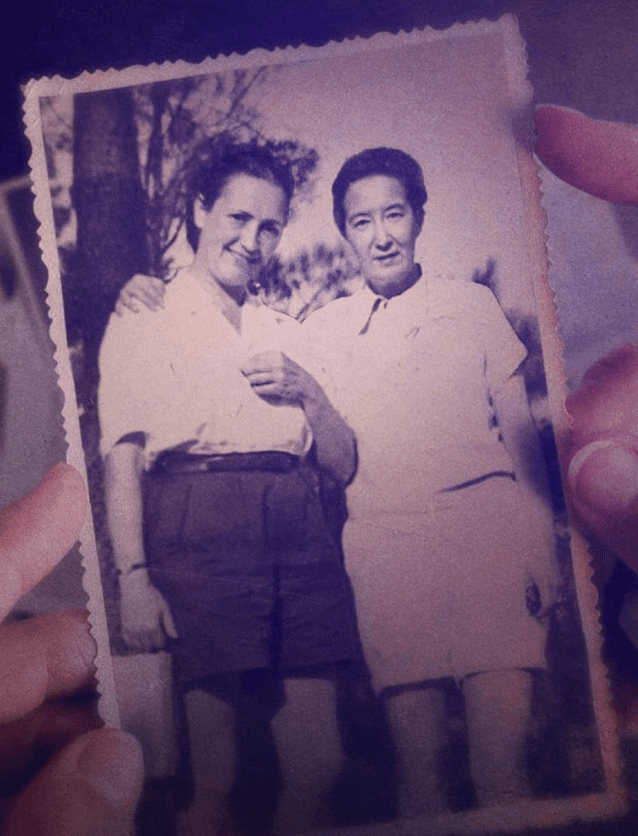
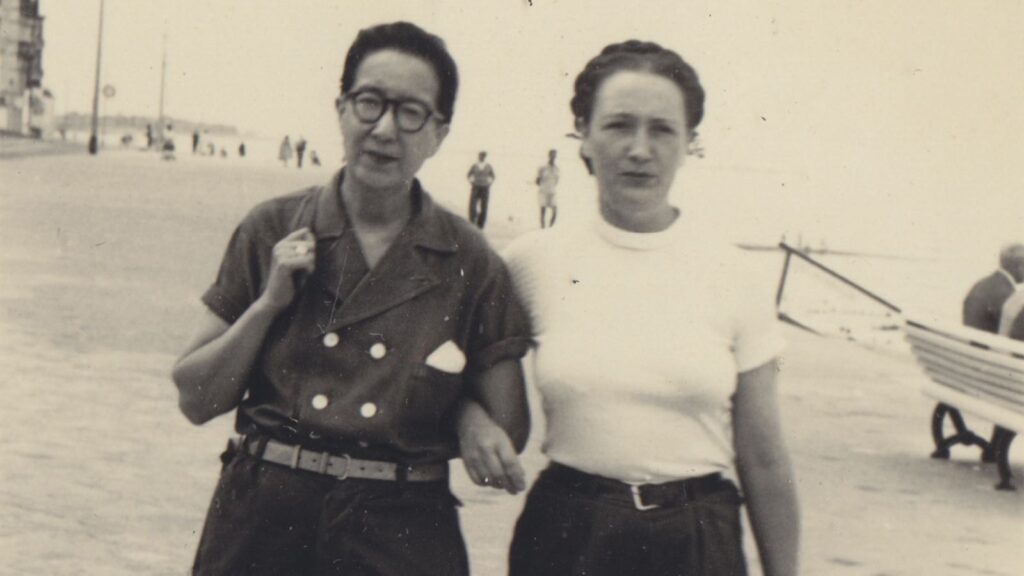
Old photographs and home movies revealed what the mysterious Nadine looked like. She had a tall, elegant figure with short dark hair and often dressed in trousers, a shirt, and tie. Born in Madrid, Nadine Hwang (1902-1972) was the daughter of a high-ranking Chinese diplomat and a Belgian mother. She was educated in multiple languages.

Nadine moved to Paris in 1933 and became part of the feminist/lesbian circle around Natalie Barney (1876-1972). A playwright, poet and novelist, Barney hosted a salon of notable artists and writers at her Left Bank home. Nadine became Barney’s chauffeur and one of her casual lovers. Nelly’s memoir stated that Nadine helped at-risk people escape from occupied France to Spain, which led to her arrest and transportation to Ravensbrück in May 1944. 

Nelly and Nadine

By Christmas Eve 1944, Nelly was forced to perform  carols. Nadine called out a request. 

With Nelly and Nadine meeting in the camp, their relationship became intimate and passionate. Against all odds, their love for each other kept them alive. They were separated when Nelly was later transported to the notorious Mauthausen concentration camp in Austria. Forced labor in the stone quarry usually meant death, and Nelly was close to the edge at this camp. Her intense memories of Nadine kept her going. As it happened, this was late in the war. 

The film shows a poignant clip of a movie taken in 1945 when a group of liberated prisoners from Ravensbrück arrived in Sweden. You see the faces of the survivors deliriously happy to be alive and start their recovery. Nadine was in that crowd. Hers was the only sad, tense face. At the time, no one understood the reason. Nadine was thinking of Nelly. Was she alive or dead?

By some miracle, Nelly had survived, and they found each other again. 

The real reel — my own story

What followed after the war was the story of so many gay men and women before the gay liberation movement of the 1970s. 

I know because I was around then. 

In 1965, I was a sophomore at UC Berkeley when I phoned my father from the dorm. I told him that I wasn’t returning home for the summer. I’d met someone I wanted to be with, someone I loved. Her name was Caitlin. My father exploded, calling me a child, an infatuated fool. He told me to come home or all financial support would end. 

I went with Caitlin, and my life became one of desperate struggle to stay in school and graduate. But I did. 

The price of being honest and true to oneself was so high that gay people had to make heartrending decisions. Some had secret lovers under the beard of a straight spouse. To keep a career and paycheck, one’s real private life was never spoken about at work. Coming out meant stiff societal consequences (even criminal in the case of men). On the streets, fluid gender or flamboyant clothes raised the risk of being beaten or killed. 

Not to compare to the camps, but no gay abandon for society’s rejects, either. Despite the passage of marriage equality and wider acceptance, it’s still tough out there for so many.

Buenos Dios, Caracas

Nelly and Nadine were likewise determined to live free and honest lives. Staying in Europe was too painful after what they experienced in the camps and too close to Nelly’s family. 

(Photo courtesy of  Egildes Rivero via Unsplash)

They picked Caracas, Venezuela — sunny and inexpensive with available jobs for educated, multilingual Europeans. The home movies showed them relaxing and entertaining their queer friends. They lived as partners until Nadine died in 1972.

Especially moving was the way Nadine filmed Nelly at their Caracas apartment. She caught Nelly deep in her own thoughts. Her face reflected a profound inner sadness, as her time in the camps could never be forgotten. One can only imagine that those memories were crushing and tragic. 

(Photo courtesy of Frameline48)

But she had Nadine, and they endured those memories together, always together. Love is love, that’s all, and that’s enough.

Counterfeit World 3.0

Roscoe has defiled Doyle’s living room, again. So, Doyle was siphoning resources—not much, about a tenth of one percent—from RAMPART’s projection of a post-Great Lakes Midwest to figure out what to do about the dog. Head down, avoiding the gaze of tenured professors and project managers, he played with parameters: what if I’d had Roscoe since he was a puppy? What if I was his first and only owner? What if I was still with May and wasn’t trying to take care of him all alone?

Again and again, RAMPART hitches, borrowed computing power tapped dry. Lake Erie is suddenly in stasis, simulated pipelines freezing over without bursting. In a fake California, avocado trees and almond nuts super-chill.

Doyle knows: stranger things will happen. He can’t bring himself to read the weekly reports out of the Minder team. But he sees them burdened more and more with the world’s climate news, with the world’s climate future. Administration has tried to ease burnout by rotating people through, but that just smears the misery around. 

In a little notebook at his workstation, he makes a game out of it, connecting calamities to breakdowns of personal maintenance, along with ways he’ll reward himself for getting them right. He’ll order a pizza and gorge himself on it, he’ll put his work aside and lose himself in a video game, whatever. He has to keep this going, somehow. More and more it’s a victory just to force his eyes open in the morning. 

May tried to talk him into finding another project to work on. “There must be a healthier way to get your hours in,” she told him, three or seven or twenty times. When he replays those memories, Roscoe is always laying its muzzle in her lap, and she is stroking its dumb floppy ear. The two of them were so close, but somehow she’s gone and the dog is still there. 

“Forget the university, forget my department.” In his memory, Doyle always fixes her with a very serious “you’re not thinking this through” look. And then he cringes at what an ass he was, and is. “There is nowhere in the world on the bleeding edge of complexity theory like RAMPART. Maybe an alphabet agency, but do you want to move to Washington?” 

To that she had no answer. That satisfied him just fine. Everything, everything in the world, has a reason for it. Everything is as it is because there can be no other way. The dog poops on the rug because it needs to defecate. The glaciers melt because the Earth’s atmosphere traps too much of the sun’s heat. Doyle stays on with RAMPART because there is nowhere else to understand the world. 

Not that working out why his ex’s dog is violating his living room has ever been one of the uses he’s imagined for his education.

From queries of ideal dog-caretaking scenarios lobbed at RAMPART, Doyle can learn very little. All of the results were perfectly useless. Much of the information the projections provide is, even for useful questions. But there, again, the low reasoning of high planners: if the machine provides answers to questions no one asks and works for those in need of work, run the machine! 

In his chair, he leans back and groans, a balloon deflating. To certain things he’s locked in: hours for teaching undergrads, doing research, writing up results—all of it is non-negotiable. He had not asked for the dog. He doesn’t want it. But when May announced that she was moving out and breaking off their engagement, she had given reason why it would not do otherwise than for the dog to stay with him. He felt helpless before it, before whatever goals she wanted him to move toward, and before the monumental task of taking care of its smelly, drooling, bottomlessly energetic majesty. Taking care of the dog was a bad idea. He let it happen anyway. And now here they are. 

What Doyle needs, ridiculously, is for the dog to understand. And maybe that is overestimating it, but Doyle knows there is plenty that it does understand in its dim doggy brain. Surely, Doyle reasoned, it can be made to understand absence? Absence of time to get it out? Of will to move, to see other human beings going about their lives pretending the world wasn’t going to end in their lifetimes? 

At least an absence of appropriate places to empty its bowels indoors? 

No, RAMPART said. Told him what he already knew. It can’t be other than what it is. Certain outputs are guaranteed by certain inputs. They’re locked in. 

When he goes home, wincing through the blast of feces-tainted air that pours over him as he unlocks his apartment door, he decides to be brave. He decides to try something new. 

After he’s scooped up the offending object and scrubbed the rug with half a bottle of spot-cleaner, he calls, gently: “Dog!” 

Roscoe pads on out, big paws quite delicate. There’s an undeniable cast of shame on his ferretish greyhound face, and Doyle finds himself wondering how that can be: shame is a recognition that an internal self has somehow failed an external other. Most days, Doyle figures the dog barely knows he exists. 

On the soiled carpet, it sits. Stares up at him with eyes liquid and dumb. 

“Bad dog,” Doyle says, but there’s no real anger behind it. His thoughts are elsewhere: he spent the afternoon updating drought projections to line up with a just-approved plan to drain all the Great Lakes, the largest combined freshwater reservoir in the world, to irrigate farms for a handful of billion-dollar agribusiness concerns. Visions of shores receding from piers, of cold and warm fronts sliding over the Great Plains like drunken roller-skaters, of lines of refugees begging for mouthfuls of water. He wants to escape. 

The dog whines up at him, a high piggish squeal. Its tail thumps the carpet. 

“I’m going to stream something,” Doyle says, mostly to release himself from the hope that he’ll do something productive tonight. And the fear, always there, that he’ll do it poorly. He pats his thighs. “Cuddle up?” 

The dog stares at him. 

He collapses onto the couch, remote in hand. Absently he pats the spot beside him, inviting the dog to carve its own groove into the cushion.

Instead, it retreats from him across the room, to where its leash hangs by the door. Eventually, its whines shift from plaintive to aggressive, growing deeper and rougher. 

Doyle sits, insistent. If only it could understand, he thinks. I have nothing in me for you right now. 

Eventually, Roscoe gives up and shuffles out. Doyle avoids eye contact. From the squeak of bedsprings, Doyle can tell it’s claimed the bed. That suits him fine: he curls up on the couch, volume down low, light and sound washing over him until he’s gone. 

***

There’s a simulation he likes to run. To torture himself with. Worst-case scenario: five degrees Celsius, world on fire, economic collapse, water wars, nuclear wars, wars to end all wars. 

He’s feeling crappy today, so he boots it up, finest detail, fifty years ahead. The tail end of his natural lifespan. 

RAMPART is too complicated, and watches too many factors, to give you the same result every time, even with the same parameters. So every sim is like watching a different horror movie from the same series: the same, but startling in its particular depravities. 

Shallow graves pockmark the American southwest. And bullet casings, ammo dumps, burst bridges, contaminated water supplies. Climate refugees from Central America spat. But the violence doesn’t end there. 

So-called American civilization has come to nest in enclaves of a few tens of thousands: in the Rockies, in Appalachia, the Upper Peninsula, and islands in the Pacific. He traces their lines of flight from centers of power in Washington, New York, Chicago, and California. It rhymes with some history he knows; elite flight in times of crisis. They take everything they can and when there is nothing left to take, they move on. 

He can picture all of society like this giant, holding so many on its shoulders. Crushing some underfoot. To outrun some crisis or other it shrugs, and casts off more and more, those with looser grips. Losing ballast. Until there is nothing left, no one. 

When his turn comes, he hopes he’s crushed quickly. Not left to watch it recede from him. Not left by himself.

***

One muggy oppressive April day the Minder team has an opening, and Doyle is asked to fill it. Doyle is almost grateful to have something to think about besides the ruins Roscoe is making of his apartment, until about lunch. 

Technically the job is to mind the RAMPART sims: to keep them up-to-date so that the other teams — Public Outreach, Policy Advising, Climate Diplomacy — have a solid baseline to work from. But to do that you have to look at the thing itself: the rapidly fouling world, the only planet anyone has. 

It’s kind of funny when Doyle thinks about it. To navigate a changing climate, you need models. Someone must make those models: someone must stare unblinking at that worsening climate in the increasingly unlikely hope that anything is done at all. Even a humanitarian project runs on human suffering. 

At least he’s not the only one feeling this way. Every chance he can get to try and connect with anyone else on the team, he takes. They’re all stuck in this together. And it’s pretty funny, the sentiments that fall out of them, this collection of twenty-somethings whose collective decades of study have amounted to, basically, a certainty that their lives are over before they even began. 

Even as everything else is dying, two things flourish: cockroaches and gallows humor. 

Project admins are loose about approving hours. So a run to check climate-monitoring equipment, a job that could be done by two people, can become an all-team road trip. Desks vacated, windows down, scraping something off the highway to share and calling it joy. 

They’re far out in farmland the university runs for its ag programs, not much more than blue skies and grains still greening in the stalk. 

“Bet we could buy this land real cheap,” Sripan says. “Set up some windmills, run some broadband, get some crypto farms running.” 

Everyone groans. Thaddea kicks the back of Sripan’s seat. “I hate the problems I spend all day studying,” she says, voice squeaky and mocking. “But the causes? I love the causes!” 

Sripan looks stung. Doyle knows where he’s coming from: his education hasn’t been cheap, either. There are always costs to defray. You kick the world and all you get is a broken foot, so why not see if the world can help you pay your new medical bills? 

“It sounds like Sripan wants to do crypto sustainably,” Doyle volunteers. “I didn’t hear anything about running a diesel motor to power anything.” 

“Doesn’t matter,” Thaddea says, negotiating with her seatbelt until her back is to the window so she can address the whole team. “So long as someone’s bought in, even doing it sustainably, and someone somewhere else can make money off it, corner-cutting miners will try to get in.” 

“You could say that about any societal evil at this point,” Doyle says before he can think it through. 

Thaddea nods. 

The rest of the trip up is really quiet. 

The equipment they’re there to look at is in a little rural airport the university maintains. It’s mostly rented out to hobbyist pilots and companies making short-notice flight plans, and neither group is making a showing today. They pretty much have the run of the place. 

On the roof of the air traffic control tower they have their instruments, though only Sripan makes a beeline for the ladder. Doyle lingers on the tarmac a moment, trying to picture Roscoe sprinting through fields until he collapses in a panting, drooling mess of doggy endorphins. It’s hard to imagine anything ever being that happy. Then he decides to try and speak to Sripan. To not let him feel alone. Hopefully. 

“How bad is it?” Doyle asks him up top. For a moment, he’s just a researcher following the data. Working out a problem. For a moment, he doesn’t have to live here. 

“Bad.” Sripan shows him the atmospheric data, the temperature readouts, and the heat waves. RAMPART estimates of knock-on deaths and how well they fit with the latest projections on global collapse. “But there is a bright spot.”

Doyle punches him in the shoulder. “Yeah, it’s called the Sun. It’s going to cook us in our own sweat.” 

Sripan doesn’t even seem to feel it. Instead, he pulls up an unfamiliar graph, a range of glorious heights and precipitous drops eventually flattened out to zero. “Recognize this?” 

“Life expectancy of the average human being since the start of the Industrial Age?” 

“I thought not.” Sripan brings up a JPEG of another harebrained crypto-coin that had made a few people obscenely wealthy and consigned most of its investors to their parents’ basements forever with its crash the past fall. 

“Crying over spilled milk?” 

“No. Look at these emissions numbers —”

Doyle snaps his fingers. “Which are tied to electricity production —”

“Which dropped when Babacoin crashed.” Sripan overlays the two figures, and there it is, a lag in new emissions right where they’d hoped it would sit. “The market recovered, and with it emissions, but…” 

Human actions are making this crisis: human actions can unmake it. 

“All we need to do is vaporize the world economy.” The words fall out of Doyle, leaden and lifeless. 

“What I’m hearing is, everyone is screwed.” Thaddea hangs on the last step of the ladder. 

“No,” Sripan retorts. “It’s just that everything is…” 

“Complicated,” Doyle finishes. Human civilization follows one set of rules, rewarding accumulation and positive feedback loops, and the global climate acted according to the laws of physics, which was not as kind to those as the Fortune 500 list was. RAMPART only confirmed an obvious fact: a collision between those two sets of rules would be very, very ugly. 

“So what do we do?” Sripan asks. 

“Can we even do anything in the first place?” Thaddea asks. 

Doyle allows himself a smile. The answer to that question: it’s complicated. 

A mono-rotor plane circles overhead, probably a trainee waiting to land. Toylike, fragile, small enough to reach out and grab, to bash against the rocks until it stops spewing poison. An increase in complexity often — though not always — meant a corresponding drop in robustness, in failure tolerance. A rubber airplane toy can bounce off the ground, be dusted off, and delight its pilot again. A real airplane does not have the same resilience. 

RAMPART itself might have transcended this limit: its distributed network, which gave it its prodigious computing power, might have also rendered it basically beyond dismantling. Certain ways of thinking might have a similar elegance, an indestructibility enviable to anything less than a water bear. 

It remains to be seen if human civilization is a comparable phenomenon. 

“I don’t know,” Doyle says. “Things can happen, but I don’t know how much anyone can do…”

“No one can do anything.” Thaddea takes the roof, and takes her dramatic stand: everyone should just roll over and die. 

Sripan looks like he’s thinking of a retort. But nothing comes of it. 

In a group setting, moods can also achieve that elegance, Doyle thinks. Every time we see the million ways the world is dying: we cannot forget. We cannot think otherwise. 

Depression is a robust complicated meme. Depression is an elegant group phenomenon. Depression is a shared swamp, a crab bucket, everyone dragging each other down. Maybe he could try and get a paper together, or at least a presentation at some conference. He’s supposed to have a career here, after all. Not just be married to misery. 

Doyle wants to say something: we just saw how manmade factors can push things in a positive direction. But the moments tick on, and the mosquito drone of the propeller plane overhead beats at him until he can’t believe it anymore. So they sit in silence, waiting. 

Above, the plane circles, landing not yet approved. Daylight going. Fuel burning. Not grounded and not really in the air. Suspended. 

***

He needs a more exotic apocalypse. RAMPART was built to model climate change, but a little tinkering with its parameters reveals a startling imagination for all things eschatological. So he asks it to surprise him, and it does.

He shouldn’t be doing this. But he doesn’t feel like anything tonight but a slab of sweating meat soaking the couch, squinting at his computer through eyes dry and gunky. Nothing RAMPART will show him can make him feel any worse.

The first thing he knows is the Sun is an angry red, and swollen in the sky. It has outlasted every other star or blocked them out. Or something has gathered them up like marbles on the playground and taken them home.

The Earth’s soil is poisoned with heavy metals, its atmosphere a haze of nerve agents too sophisticated to be there by accident. The Moon rains down on the blasted world every night, its pieces pulverizing the last of the biosphere. He is in awe of what a ruin has been made.

There is a stark beauty here, too. He finds cities ringed around monuments to dead glories, skeins of cracked boulevards, and canals connecting lifeless districts. There are walls etched with art and indecipherable cuneiform. There are garden beds smashed into splinters. There are metal statues, half-gone, lying helter-skelter in the streets and propped against door frames. Some are hollow. Some are packed with ash and charred bone. Some are open-mouthed, their jaws wrenched out-of-socket, mouths hanging open like plastic bags in the wind, empty eyes weeping mercury. 

He can imagine what might have happened here. It does not matter. He will not ask RAMPART to run the model in reverse, to wake these imagined people from their empty deaths back into empty lives. Their rest seems too gentle: their end came for them all, together. He takes a moment to imagine facing the end one among billions laying down for the night to never wake up. It’s not hope. But it is something to hold onto.

Roscoe pads up to him in the dark by his computer. He whines and whines and whines. Doyle could take him for a walk: May left a reflective vest for them. He certainly won’t be sleeping tonight. 

Instead, he shoos Roscoe away, afraid for its sake that it will die alone in mute animal panic with all the rest of them. 

***

May calls him. He can’t believe it. He just stares.  

She drops the call before he can pick it up. 

He can’t bring himself to call. But he can text. And he spends the next twenty minutes nauseous, checking his phone, certain she’s going to pounce on him. 

She wants some more of her stuff back, that is all. They arrange a meet-up, a place of her choosing. On the day in question, he vibrates in the driver’s seat trying to convince himself to not go home and ignore the dog. 

May picked a post-Starbucks coffee shop for their post-love meet-up, gently lit in earth tones. It smells like good coffee in there but Doyle still feels like he’s about to throw up as soon as the door jingles. Even before he spots her. Especially when he spots her. There is a small smile on her face when she waves him over. He almost spills his drink he’s shaking so badly. 

They talk drinks like they used to. Doyle starts to smile and then it’s gone, terrified that might be construed as flirty. If this was their second date, things might be going well. But it’s not. 

For a moment there is silence. Then the hiss and rattle from behind the bar, the shuffle of foot traffic, and the wordless thrashing of himself within himself by himself. He wants to be away. 

“I grabbed the books I know are yours,” he says. He’s been waiting to get them out for months, every memory of them cross-shaded with one of her. He felt nauseous to see them but could not bear to throw them away. Eventually, he heaped a blanket over them. 

“How’s Roscoe doing?” 

“Fine,” he says, too quickly. May can tell: she winces, stung. 

“Is he still with you?” 

“Yes.” Still slobbering, shedding, still shitting in the living room because Doyle can’t get him out. “We are… Having trouble, though.” 

May draws back. “Oh.” 

“I’m having a hard time.” He hasn’t told anyone this. But to May it bursts out like a weeping sore. 

She looks at him, tender, frustrated: you’ve gone and spilled your guts all over me. 

May opens her mouth and he cuts her off: “And it’s not your fault —” 

“I know it’s not,” she says. “It’s yours. You took that job, you plug yourself into your phone until you want to claw your eyes out, you refuse to look for help, you keep everyone away, and when that’s pointed out to you, you use that to torture yourself rather than do anything.” She looks away from him and stares out the coffee shop window. Wondering, Doyle imagines, what life would be like if she had spent these last few years of her life with anyone else.

He knows she’d be better off. Everyone would. He cannot think of a single good thing he’s ever done. It makes no sense to imagine ever having done so — he’s the kind of person who can’t even bring himself to walk a dog. 

“Please take the dog back,” Doyle says. It comes out like a whisper, like something is choking him. 

“No.” Her anger is more threatening than jagged steel. “You need that dog. You need something you can’t push or rationalize away. Something to drag you out of yourself. If he has to, with his teeth.” 

“I can’t make this work,” he says. He’s pleading. Pathetic. “I can’t make anything work.” 

“Why not?”

“There’s nothing else in me, May.” 

If she has anything to say, she doesn’t say it. Doyle can read it in her face: he is not worth the time, or the effort. Or the heartbreak. 

They drift out to his ratty little Subaru. Something about its weird elongated chassis, how low it is, makes it look like it’s cringing from them. 

From the trunk, he takes a box: the books, some spices and kitchen utensils, a miniature sculpture she bought for him he’s used as a paperweight. She doesn’t take it. 

“Doyle,” she says. “You need help. To see someone, or —”

“Okay,” he snaps. He’s tired of hearing this like he’s a child who needs to eat his vegetables. 

Relief seeps into her like a stain. “That’s good to hear.” 

“Come back to me,” he says. He couldn’t not say it. It’s got a pull, inescapable. It was only reasonable. And now that it’s out of him, he has arrived at the place he’s been going to since she left him. There is nowhere else to go.

She wheels away, looking for her car. “No.”

“You said it: I need help, I need someone.” He can feel the grit of the idea as he grasps it. He can make this work. For once, he can get the inescapable working of the world on his side. 

“I’m not doing that. We’re done.” She’s walking away. He follows. He recognizes her RAV-4 up ahead. She’s probably changed her windshield wipers twice in the six months since she left. 

“Because I’m not worth it?” That must be it. There’s no other reason. 

“Because you can’t ask me for that. Because I tried.” 

“How?” He’s demanding, snarling. Passers-by have stopped in their tracks, to watch. 

“I tried and tried. You took and took until I didn’t feel like I was helping.” She swings her door open between them. “I felt like I was drowning with you. I won’t do that again.” 

Her door crunches closed but the engine doesn’t start. Her head is in her hands. 

He did this. This is his fault, proof of his worthlessness. He is an anchor to drag people down and nothing else. 

He still has her stuff. She is still on the other side of the window. One last thing to hold on to, to hope for when all else has deserted him. He is left waiting a long time. 

***

RAMPART is not an arbitrary device. If you want a world that isn’t on fire, you can’t tell it that gas doesn’t burn. You need to ask it to imagine that no one wants to burn gas in the first place. Doyle wants to prove that this will never happen. 

It’s the cowardly impulse to put lit cigarettes out on your arms. It’s a way to spite May, and himself: to know that he is right to feel this way.  

So he goes for broke. Asks RAMPART to show him how to reel back from the brink. Muscular moves away from fossil fuel burning, which means a build-out of public green energy unconstrained by profit motive. And that demands a massive, unimaginable, shift in political economy: basically, everyone above the mayor or middle management in the West needs to go. 

And that’s just to put the brakes on the worst to come. To reverse the damage of these last two centuries requires a snapping of sclerotic and risk-averse societies into vigorous action: reflective aerosols dispersed to increase albedo and lower temperature, shrinking suburban sprawl to make room for habitat corridors. New ecologies need to be built from the ground up, new sciences of control imagined to steer them, and new ethics inscribed to command them. No part of the old and elegant and evil thinking that has so made the world Doyle lives in can remain untouched. 

He can see it all when he closes his eyes. It glimmers, precious and fragile. Its after-image follows him, a counterfeit world trying to superimpose itself. 

If he had a fine, subtle knife, perhaps he could pare away the ruin, disfigure this world until no one could tell the difference between it and the fake. Cut and cut and cut until he has made a newer, gentler place, where springs burst pure. Strange thought on a lonely night: of course there is no such place. This is all he was born to. 

He cannot get the thought of the knife out of his head. The border between this world and the next is so very thin. 

***

He opens his door one day, and before he can even step inside the dog is there, hairs on end, no whites to its eyes, teeth bared. Growling. Right up at him. 

Doyle gets it. He is a bad dog owner. This poor animal has barely left his 600-square-foot apartment in months. It has been reduced: he has seen this dog pleased, head laid gently in May’s lap after a good walk, paws squared up at street corners while they wait to cross. This is not that dog. 

Roscoe is the dog Doyle has made of it because Doyle can’t do — can’t be — anything other than what he is.

When Doyle sees Roscoe like this, his first thought is to dial animal control. Goodbye, dog. Let me get back to my wallowing.

But: there is no reason to think of this vicious mangled animal as any more real than the gentle pet he’s known. He has made it according to one mold, an ugly and selfish one, but he just as easily might remake it. Doyle is aware suddenly that the sky is bright and blue, that Roscoe has vigor in its — in his — limbs, and that he, Doyle, might be able to match him. There is still time. 

He kneels there on his doormat until he’s at the dog’s level. The dog’s expression softens into canine concern, a whine rather than a growl. It makes him laugh. 

“Easy, buddy,” he says. 

Doyle clips the leash onto the dog’s collar, and the dog practically spills out the door, eager to be everywhere, see everything, sniff the same tree, and hear the same squirrel it must have seen a million times before. Doyle guides it down the sidewalk, watching its eyes, how everything is new again to it.

It’s high spring. Doyle frets over the temperature until the sunlight dappling the new shoots catches his eyes. In the branches, birds cry, and squirrels chatter over food hidden through the winter. Doyle doesn’t think it’s beautiful. But he understands how the dog might, and that — knowing that he made that happen —  it feels good. 

He can’t remember the last time something felt good. 

He is not a new man. He cannot bleach away what he knows, even on this lovely day. He refuses to forget any of it. 

But Doyle will make an effort, too, to remember this. How easily he and the dog took this stroll he thought impossible. How this pleasant breeze and daylight gibbous moon could not be contained in his systems of the world. Every day he has ever lived might have held this moment: not ignorance, and certainly not perfection, but a rest from his incomplete understanding. It is not foolish to imagine doing away with the ruin. There is always the chance to see into a better day. Waiting, more true, hidden in this false moment. 

“And where would that leave us, Roscoe?” 

At the sound of his name, Roscoe pulled himself from the tree he had been sniffing, ear cocked crazily. And when his attention settles on Doyle, he seems — though perhaps Doyle was suffering from an overly sunny disposition — to smile.

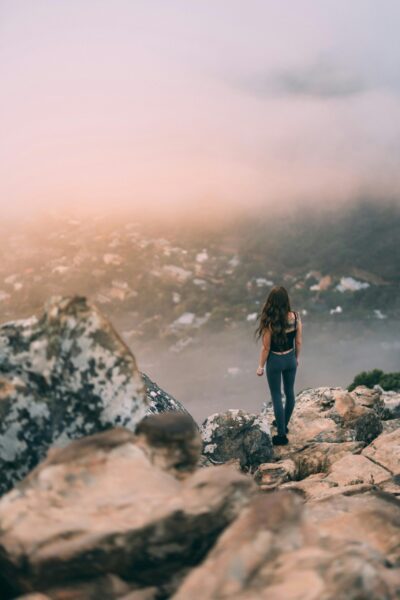
Sunset on the Mountain, Sunrise in My Head

At times when I am faced with life’s inevitable challenges, my initial and persistent thought is “I’ll never get through it this time.” But I’ve come to realize each time that I have made it through, and I will continue to, because that’s just life. I like to think of myself as an optimistic, go-getter type of person, but I can’t deny that I also have a very defeatist mindset. 

Defeat — I can’t think of any better way to describe the feeling of wanting to give up when you can’t seem to find it in you to take just one more step. We’ve all heard it before that “Nothing good ever comes easy,” and these honest, encouraging words prevent me from giving up.

No matter how big or small your struggles are, it requires a great deal of courage to persevere and overcome them, invariably an extraordinary achievement to be proud of.

Walk your dogs!

It may be nothing much to some, but one of my favorite things is taking my sister’s dog, Mahina, out for an evening walk. Such a small yet fulfilling task gives me a sense of accomplishment for being an average person.

Most people in their day-to-day lives don’t see waking up or getting ready in the morning as a burdensome chore, but unless you’ve hit rock bottom, you may not realize how great it is to have the ability to complete such simple tasks with ease. Lately, this pressure has been lifted off my shoulders, but like dust collecting on a high shelf, it always returns no matter how many times I thought I got rid of it.

With the slightest ambition after a long weekend, I grab the dog leash as Mahina pops her head out from her napping spot behind the couch and comes running to the door. I am content to see how excited she is to go for a walk, and that it is enough to get me through what little of the day is left. 

As always, there are a handful of families at the park with all their children running around, playing soccer together, and a few familiar faces of those who also take their dogs out at this time in the evening. This hour seems the most serene with the sun starting to set, a cool breeze blowing, the lines of cars coming home from work, the overgrown weeds tickling the side of my ankles, and the wafting scent of someone grilling dinner in their backyard.

Amongst everyone around me experiencing their individual lives, I find myself as just another regular person taking a walk in the neighborhood park. In moments of bliss like these, I stop wherever I am and just think, ‘I am so happy right now. It was worth it after all,” because it always surprises me that I survived through all the struggles when  I thought I wouldn’t make it past that day. 

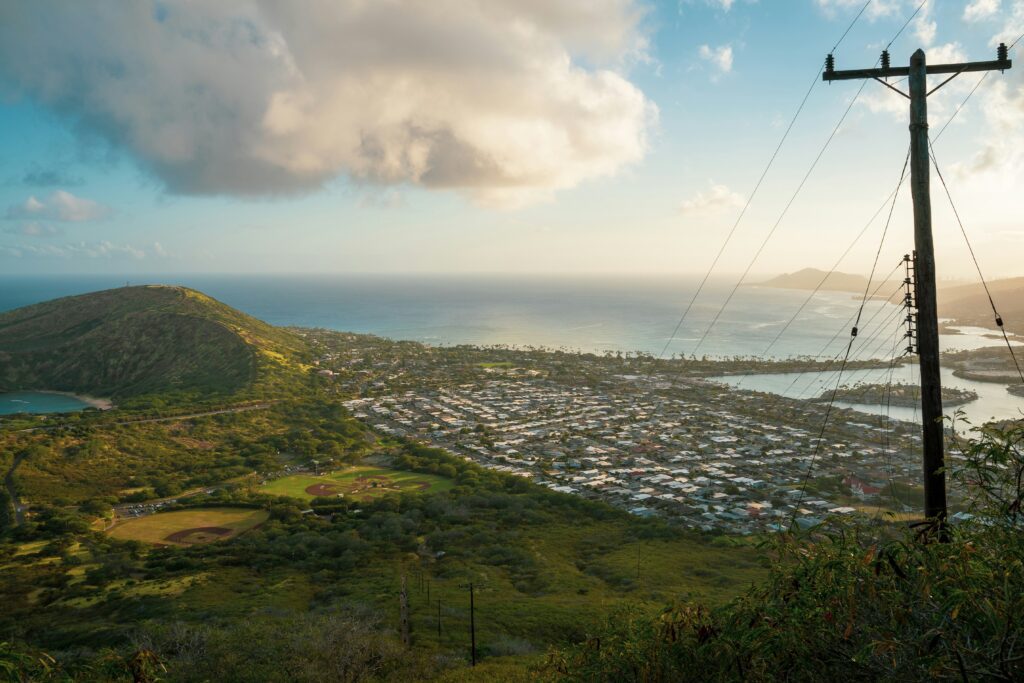
(Photo courtesy of Seth Cottle via Unsplash, of Kualoa Ranch, Kaneohe, Hawaii, USA)

With the faint sound of people talking and laughing in the background, I held my phone up closer to my face listening to the soft ringtone and waiting for my friend, Kaden, to answer my call. I asked to see what he was planning for all of us to do the following day, and was shocked to hear him reply with “The boys wanted to go Koko Head.” 

On my way back home, I tried to distract my mind from how intimidating just the thought of it was, and enjoyed the calm last scenes of my walk with Mahina.

Sunset with a view of life

But I wake up the next morning with the same lack of energy and wearied mindset of just enduring the day as much as I can. I am sitting in the passenger seat of Kaden’s car pulling into the parking lot of Koko Head, wondering why I even agreed to do something like this when I barely have the motivation to get out of bed. 

I drag my feet along just to meet up with some of the boys at the bottom, and realize that the hike hasn’t even started yet. Everyone else starts stretching, but instead, I sit on the curb of the sidewalk and stare down at the asphalt road in front of me. We haven’t even started, and I am looking weary and feeling defeated. It is late in the afternoon, even for summer, and the sun is already beginning to go down. As soon as the last few of our friends arrive, we begin to make our way up the steps.

Step after step. 

After step. 

After step. 

After a while, the exhaustion consumes my mind and body. I pause in my tracks and look back at the thousands of steps I have already taken. But when I face again towards the top, I realize, why come this far, to only come this far? 

From this point, I can see the top, but only if I look up high enough beyond the incline. The last couple of steps are just within my reach, yet miles away. I start to feel the burn in my quads and tiredness in my body from only drinking water the entire day, realizing that I forgot to eat anything. Anything. It isn’t even the hunger in my stomach or the pain in my legs, but the mental exhaustion that makes me want to give up. It takes every ounce of energy in me to make another step, after step, after step. 

Finally, I reach the top and immediately sit down on the graffitied concrete wall next to my friends who are waiting for the rest of us. The sudden transition from intense workout to immediate rest rushes a wave of weakness over my faint body, but the feeling of achievement is surely fulfilling. 

I find solace and hope in being able to proudly hold my head high while staring out at the view from the top of a mountain. In a brief moment, I catch a glimpse of the beautifully painted orange sky seconds before it vanishes. I could not feel any more relieved than from letting the cold, thin air blow through my hair, listening to the sounds of crickets chirping, and watching the faded remnants of color leave the sky as night begins to fall. 

You won it, you own it

This experience seemed oddly similar to my walk with Mahina from the day prior. At the end of the day, between celebrating the act of taking a walk outside and hiking to the top of a steep mountain, I was able to conquer something I thought I wouldn’t be able to. 

It didn’t matter on a scale of how large or demanding the activity was, I was proud to have pushed myself to overcome it. Truthfully, nothing good ever comes easy, and perseverance is all a part of the process. 

The sun sets every day regardless of who you are and what you’ve experienced. It is a reminder to us all that it is worth it in the end, to persevere through challenges and to be proud of what you have accomplished.

(Photo courtesy of Taisia Karaseva via Unsplash, of Koko Head Park Road, Honolulu, Hawaii, USA)

Me. Writer. I Don’t Exactly Have a Point I Want to Achieve

I have always wanted to be a writer.
To tell my story to the world.
This raw feeling to be understood
To be validated by others who are willing to read
And see the world through my brain 
Has been haunting me ever since I was young.

But I always chose to run away.
I didn’t want to write because I think I was unable to write.
The way I poured out my words did no justice
To what I actually feel or think.
I was not skillful enough to deliver my words.
They say perfectionism kills the potential
And I have seen it more than enough, yet learned nothing from it.

Yet here I am today.
I want to start to write.
It’s okay if your words are not aesthetic enough.
You don’t have to be fancy French.
I know you have insecurities about being born a country bumpkin.
I am crude, I am not refined enough-— I cannot be
The high-value girl that could attract everything to her palm.
I need to work for it.
I need to carve my way to even arrive at my destination point.
I was not born rich enough to just live a carefree life.
But given my lot, I am not satisfied with just consuming and living a meaningless life.

I feel lost.
Don’t exactly have a point that I want to achieve.
I am scared that greed will lead my life astray.
But become greedless enough and you can be a vacuum.
Delivered to the open front door of nihilism.

Finding the balance between being and becoming
To be satisfied or to be starved
To living by the moment
Or one day living the life.
I am but a 20-something girl, pulled by the world to be an adult
Driven by fear and anxiety
Just to feel enough.

Some people really enjoy being lost.
They say once you are lost
You are pushed to rediscover your path.
They claim that direction is more important than speed
And being lost is the best way to rediscover it.  

But what if you are not lost, just stuck?
You can’t escape.
The job you hate.
The messy room you currently live in.
The toxic relationship you won’t fix.
Which one is more miserable, the first one or the rest?

Or is it just the fault of your state of confusion where you can’t even decide your current state?
You feel like you are lost
But you also think you are stuck.
In this state of bewilderment, you might, really, just be a coward.
With a diary. 

(Photo courtesy of Ashlyn Ciara via Unsplash)

Ye Olde Plastic Knight

I awoke at the crack of noon. My first order of business was to determine my whereabouts. I appeared to be home, although one can never be certain. I searched for my chalice to soothe my parched throat, but it was empty. 

I resolutely made the journey from reclining to standing. 

Shall I drink to that?

Sir Henry was asleep in his corner of the domicile, and I had not the heart to wake the man. While he may not have been the best companion to share living quarters with — he often complained about the bracing winds that blew through — a man must receive all the rest he can get. I peered into a nearby fount to see if my armour was in good nick. My shoulder-protecting pauldrons were a bit dented, but the rest appeared fine. Most importantly, my cape with the colours of the rainbow, the symbol of any true Plastic Knight, was pristine as always. I left my residence and went to meet my knight in training, Squire Robert. 

He arrived at the meadow on his old steed. It had belonged to his brother, who had no more need of it when he left to become a merchant on the other side of the Kingdom. Robert was a good lad. He spoke to everyone with a smile that could not be false. He had with him my morning’s sustenance. Bread with peanuts ground into a paste and a chalice filled with the dreaded orange sugar beverage.

“I told you not to bring me this vile liquid,” I said.

“Well you can’t just drink wine the whole day,” Robert replied. “Besides, we’re still a week away from the end of the month, and I’m not happy about it either.”

“I shall make do for now. I am simply voicing my displeasure at imbibing such ghastliness.”

“You’re being overly dramatic. Isn’t it the Way of the Plastic Knight to accept food and drink whenever offered?”

I grumbled and finished the drink. Though he was still green, the boy did have an understanding of the Code. 

Leaving the meadow, the two of us proceeded to the Lord’s Castle. We paid our respects and then prepared for monster slaying. The boy was not ready to face beasts, and saying something about his upcoming trials, he departed. 

Hunting monsters is a dangerous task. You must find a locale with a great number of intersections in order to intercept their path. Once there you must attack, with unwavering fortitude in the face of insurmountable odds. The beasts are truly terrifying — chimera of every possible fashion, wolves with horse heads and chicken legs, snake-headed apes sporting the wings of a bat, and more. Too many to count. Truly, only a Plastic Knight wielding a Great Sword can defeat them. 

Fair maiden

From time to time, a citizen of the Kingdom would come and bequeath me the largesse of a small donative for my efforts. At a point, with my cloak flashing brilliantly in the light, a young maiden stopped by me.

“This is amazing,” she said with a smile. “I wish I could give you something, but I don’t have any money on me.”

“Fear not maiden, a Plastic Knight does not strive for wealth, but for honour.”

“You are hilarious.”

I wished the lady farewell and continued my task of defeating the savage hordes. 

Go, Man, Go!

Once my long day of fighting was done, I visited the local merchant quarter. This bustling covered market of the Kingdom housed everything from food vendors to fine tailors. I patronized the wine merchant and, thanks to the generosity of the citizenry, procured two flagons made by the Cousins Four company. Before I left, I decided to head to the grocer and procure two fine Orange Fruit of the Man for me and Robert to have later. The boy has always loved them. I made my request to the merchant. 

“Look Umkhulu, I’m sorry I don’t know what you are asking for?”

“The Orange Fruit of the Man, dearest lady, an exotic sweet fruit from lands far off. It has a sweet taste and green skin. Most delicious and soft.”

“Oh, okay, I see. Don’t worry, you want two, yes?” 

From vintage to nectar to  bottle

As I began the journey home, I noticed Ol’ Salazar guarding Kahs. These vicious and noisy creatures with giant silver teeth, wide-set yellow eyes,  and stunted legs have power to travel much faster than a horse. Protecting Kaws is a very lucrative employment for a Plastic Knight. Unlike most, Salazar takes his task seriously. He is never too far from his mace if anyone molests one of his charges. I nodded to the man and offered him wine. He accepted.

“A fine vintage. One may be inclined to call it a nectar, do you not agree?” I said.

“I dunno, can hardly taste anything these days.”

I examined the man and noticed for the first time how heavy his eyes seemed, how deep the creases on his brow were, how taut the skin on his cheeks. The life of a Plastic Knight, rewarding as it may be, is a hard one. I left my struggling compatriot and headed back to my domicile. Sir Henry greeted me with joyous salutations. I believed my patron was glad I was home until I saw he spied the wine. I gave him a bottle and ignored his overplayed gratitude. I cursed the god that brought this vile wretch to my sanctum. We finished the bottle. I then realised that the sun had nearly set. It was time to meet with my squire again. 

At the arena

Squire was performing in the Arena when I arrived. He struck furiously, the crowd cried out in triumph. I shouted “Huzzah!” and his comrades lifted him up and cheered. I met him outside after the events. 

(Photo courtesy of Niko Pečnik via Pexels)

“Congratulations, young squire! A fine performance, I must say.” 

“Thanks. I saw you were here about halfway in. Did you see me sc…?” but before he could finish his query, he was whisked away by one of his compatriots. I left him to his glory for a while. Once everyone else left, he returned to me.

“Sorry. Josh just wanted to say ‘well done.’ Anyway, why were you so late?” Robert asked.

“Well, hunting and killing the fiercest beasts in the land is not something one can do in a single turn of an hourglass. I also paid a visit to the fine wine vendor. He has a wonderful establishment, I must say.”

My squire seemed despondent. I asked what the matter was. 

“You went to… actually, forget about it.”

“No, what is the matter, my young squire?”

“I just… I just can’t believe you went to the goddamn bottle store again. After what Mom… you know what? Fuck it! I’m done.”

The boy marched off before I could ask him what he was talking about. What is a mum? I decided to let him go. He obviously still burned with the fire of competition.

“Well into the night, towards adventure!”

***

Morning already?

I woke up but kept my eyes closed. I could feel my achy legs from the day before. My knees were stinging from the carpet burn I got off the grass. I rotated my ankles, and felt the dull throbbing pain of the late tackle from after I scored the game-winning goal last night. Everyone was so shocked that the ref didn’t even call a foul. My heart was pumping and I felt an electric energy all through my arms and legs. I could still hear the crowd chanting my name, their roar filling my body. I don’t know how Lebogang Manyana managed to play at Soccer City, with 50,000 chanting his name. I could still see Josh looking at me with a grin on his face, congratulating me. 

Then I saw Granddad stumble over. I made myself cross and now I was properly awake. I called for Mom but she didn’t answer. She had left for church already. I don’t know why she always went to church, probably to pray for Granddad. I left my room and turned right, walked past the bathroom and into the kitchen. I popped some bread in the toaster, hearing the faint click as it locked in my breakfast. It was still six days to the end of the month, so I mixed some No Name squash drink for myself. I had peanut butter on the toast without more. Six days until payday. 

Once I finished eating, I remembered I was supposed to meet up with the old man again today. Part of me felt like going back upstairs and sleeping the day away, but I got dressed, made some food and drink for him, grabbed my bag, got on my bike and was on my way. I rode through the neighbourhood, heading towards the park, our usual meeting place. There weren’t that many cars out, so I could build some speed, feeling the lactic acid in my charley horse legs finally burn away. 

Out to lunch in the park

By the time I arrived at the park, I had a decent sweat going. It was a sunny day with no clouds in the sky. Couples had come in to be in love and make goo-goo eyes at each other. I sat by a bench for a bit just taking in the people. 

(Photo  courtesy of Yiran Yang via Unsplash)

Everyone had a smile on their face and a few gave me a nod as they walked by. I started to look around the park, pushing my bike as I walked. 

I kept looking through the park until I saw a flash of colour through the bushes. I dropped my bike and dived in, the thorns raking through my legs and arms. I felt blood on my legs and I winced in pain. I got to the flash of colour, though I still couldn’t see it clearly through the bushes. I reached for it, more thorns tearing at me, and pulled out a condom wrapper. After washing my hands at a nearby fountain, I decided to move on to the statue.

By the time I got there my legs had started to feel rubbery and I was breathing hard. I looked around. I didn’t know who it was a statue of, just some old guy on a horse with a face too worn to see, but Granddad liked to kneel in front of it. I chilled there for a bit because I was kinda pissed at Granddad and didn’t really feel like finding him. Then I remembered seeing him stumbling, the smell of wine on his breath. I started worrying that he had got himself hurt. It had happened before. 

I stopped people walking past the statue and asked, “Hey, have you seen an old man with a scruffy beard wearing a plastic costume?” 

Some beer belly with a bald head told me to “Fuck off you bloody tsotsi!” He was probably thinking I was scamming him or something. A young white guy ignored me, saying “Sorry I don’t have anything on me, hey.” 

My heart started beating faster and faster, images filled my mind of Granddad lying at the bottom of a ditch, his head cracked open and his face bloody. 

I cycled down the road for quite a while, the sound of my own grinding chain distracting me. I kept going until I got to the courtyard next to the dam. Granddad would often “busk” there, pulling out a long piece of plastic pipe, yes,  and swinging it around like crazy. It doesn’t sound too exciting, but he really goes for it, jumping and diving with flourishes and everything. People would often stop and watch and some would give him money. 

I looked around, remembering that when I was eight years old, I felt so proud watching him. Afterwards he would buy us each a mango, or as he called them the orange fruit of the man. I could almost taste the sweetness of the fruit, sticky pulp clinging to my face. I always felt so safe around him. I believed he was the strongest man in the universe and would always protect me. I thought that until four years later when some drunk asshole punched him in the face during one of his performances. 

I started looking more desperately, calling out to him, feeling the panic building in my chest. 

Before giving in, I thought I’d better check the mini-mall. It was an okay place I guess, it had a little bit of everything, but the building stank and none of the stores ever had exactly what you wanted. I looked in the bushes and the dark corners of the parking lot. Still nothing. I asked Old Sal the car security guard if he had seen him. He rested his chin on his knobkierrie (African club) stick and said, “Not since yesterday. Tell him thanks for the wine.” He gave me a toothless grin. I said “No problem” and let him be. Old Sal had been there as long as I could remember, as unchanging as he was ancient, but still no slouch with his knobkierrie in hand. 

I asked the shopkeepers if he’d been in. The bottle store was already closed and the manager at the supermarket said he didn’t see anything. 

(Photo courtesy of Alexander Mils via Unsplash)

As I was leaving one of the ladies at the counter asked, “Are you looking for the orange man-fruit Umkhulu?” 

“Yeah. An old man who dresses strange?”

“I saw him yesterday. Hasn’t been in today. If I see him, I’ll tell him you are looking for him.”

I figured I’d visit the overpass where he stayed, in case he was holed up there, but that’d be unusual. The place was absolutely trashed, with old blankets and garbage everywhere. Near a dirty mattress was what looked like a puddle of pee. Henry was still asleep. I tried to wake him to ask him where Granddad was, but all I got was a fart in response. 

My Mom had always wanted Granddad to live with us, but he didn’t want to. He had always said, “The life of a Plastic Knight is one of absolute freedom. Why would I allow myself to be chained to the prison of domesticity?” Although he was homeless, Granddad didn’t stray too far away from his usual spots. So if I couldn’t find him anywhere it was something to worry about.

I started cycling through the streets aimlessly, looking out for any sign of Granddad and thinking about the time he helped me learn to ride a bike. 

He would say, “Robert my young lad, to ride a steed first you must earn its respect. You must have confidence, my young man.” 

“But what if I fall, Granddad?”

“Then you will rise again.”

I kept cycling and cycling

My legs ached, the muscles almost cramping. My throat was dry and I had finished Granddad’s orange squash hours ago. My heart was pounding in my ears and my head hurt. I began cycling downhill, pushing pace, going faster and faster. A passing car jumped to a stop. I swerved to avoid it. My bike hit the pavement. Pain shot through my body as the air left my lungs. Luckily I landed in a bush and didn’t seem to have hurt myself too badly. I had cuts all over my arms, hands and legs now. I turned my head and saw a massive rock right by my face. My heart dropped. I get why mom always nagged me about a helmet.  

It was getting dark so I gave up and started for home. I passed by the football field just in case anyone saw him after I left. The field was probably the nicest place in a five-kilometer radius. The grass was always green and mown, the floodlights the only consistent lights in the area, all due to an outreach program that looked for up-and-coming players for professional clubs. My dream was to get a scholarship through the program. I just had to make sure my team won the league. 

Josh came up to me. “Hey man, I just wanted to say again that the goal you scored last night was craaazy,” he said.

“Thanks, man. I was wondering if you saw that guy who was talking to me before I left?”

“Who you talking about?”

“You know, that old man I was with, kinda talks like our Shakespeare lessons in English.”

“Oh shit that guy, uh nah. Haven’t seen him since yesterday, dude.”

“Thanks. I’m out, see you around.”

(Photo courtesy of Skylar Kang via Pexels)

And he kept recycling

I was a few blocks from home, wondering how I was going to tell Mom that her dad was missing, when I actually saw him passed out on the pavement. He was still wearing the suit made of old plastic milk bottles, and his cloak stitched together out of chip packets. 

I woke him up and told him to come with me. I half carried him, with his arm around my shoulder, and most of his weight resting on me. He smelled like toilets and wine. I wondered if he had wet himself while he was sleeping.

“Where are we headed to, my squire?” His words were slurred.

“Back to Mom’s place. You need a meal and a bed. No arguments.”

“You cannot trap me in such confines, my good sir, I will resist with much fortitude.”

He tried to walk away from me and nearly fell back onto the pavement. Picking him back up, I said, “Listen, dear Knight, you have been invited by um … the Countess to come to a royal feast in order to celebrate your many accomplishments. It is, um, at her behest that I implore you to come join us. She has heard of your many exploits — from me.”

“If it is at her behest then I shall join you for said feasting. We shall sing and dance the night away. With many pitchers of wine.” He paused and looked me in the eyes for a second. “You have been injured, dear squire.”

“A few rapscallions are no match for the squire of a Plastic Knight, no?”

“While I have no doubts of your combative prowess, I beseech you leave the slaying of monsters and defeating of vagabonds to professionals. We cannot have the hero of the arena being harmed.”

“I guess you’re right. Come on then, Mom will be happy to see you.”

“Wait, squire, I have something for you.” He stopped and nearly stumbled. He reached into his jacket pocket and pulled out something green and golden. 

“I have an Orange Fruit of the Man.” He took a knife out from his other pocket, made one long slice along the edge, and expertly peeled the mango in one quick movement. He handed it to me with a flourish.  

I bit into it, tasting the sweetness, feeling the soft fruit on my cheeks. 

‘This Is Us’ — The Drama of Body Shaming, Diversity, and Conflict on My TV

Being a voracious reader since forever, I have always been a sucker for a good story. Unwittingly, I tend to submerge myself in characters  so completely that for those few moments I belong entirely to them — crying with them, laughing with them — oblivious of the tear rolling down my cheek or the smile plastered on my face, participating in their glee as well as their grief.

So when I came across “This Is Us” on NBC.com and Amazon Prime, my curiosity was piqued for many reasons. It all started with a news article that caught my attention. Highlighting the acting chops of the mellifluous Mandy Moore, this piece even flirted with a possible Emmy run, witnessing a meteoric rise in popularity. It was a running dual role of a young mother of triplets in a storyline oscillating between the past and present day where she plays an older woman eventually confronting an impending age-related disease.

Eager to see Moore on screen after a long time, I dove right in. 

Image of a person pointing a remote control at a tv.
(Photo courtesy of Erik Mclean via Unsplash)

Family and mental health

I was hooked from the first episode. The pairing of Milo Ventimiglia and Mandy Moore as husband and wife is nothing short of a masterstroke. The passionately in-love, all-in superhero father and husband played by Ventimiglia, masterfully exuding the perfect cocktail of gravitas, charm, compassion, bravado, humility and problem-solver dad had my full attention from the get-go.

Inarguably, if Ventimiglia is the ship that keeps the story afloat, Moore and her immaculate craft are the sails that propel it all forward. With a few charming smiles that age gracefully much like the rest of her, Moore lures you in and makes you believe that Rebecca Pearson is who she is now and forever; that we can never go back to someone called Mandy Moore. Hailing from different worlds, these two characters fit like two broken pieces of the same whole, glued together by their own impervious love.

Unlike other gripping shows that I tend to binge-watch at optimal speed, I took my time with this one. Like a fine wine that is savored and relished with every sip, I took my time to unearth the treasure trove of familial bonds. In particular, between the Pearson triplets  —  the imperfections, the fractious relationships that conversely also formed the cornerstones supporting the reformed relationships of their later years.

Well-embroidered

What I loved the most was the brilliantly and most intricately sewn layer upon layer of not just the broader base story, but the amount of light shone on the unraveling of each character’s backstories and underlying complexities. 

Three siblings who could not be more different, battling their own unique demons since their childhood, deliver a poignant and relatable lesson on the importance of staying united as a family, even in periods of estrangement and coming together to lift up loved ones. I also noted how their father’s influence pulsates through these characters in all they do as their lives progress.

Pick a social issue

In its ingenuity, the show has incorporated important global issues like racism, body shaming, eating disorders, LGBTQIA+ living (seniors and teens), child disabilities, anxiety and mental health into each of its character stories.

How this family comes together for each of its members going through one of these issues, and how the show successfully manages to normalize these conversations is what struck me. Especially those plots under the category of mental health like Randall Pearson’s unrelenting anxiety issues, Kate Pearson’s damaged self-esteem with her weight, and Kevin Pearson’s enormous pressure on himself to live up to the man his father was. Kevin finds himself failing miserably at every step; he’s kind, but not the deepest. 

Affection in our homes

Even an aging Rebecca in the throes of an impending disorder still battles with profound grief after many years, and brings forth the importance of mental health patients. Conversations that need to start within the four walls of our own homes. 

Especially today, on the heels of a gradually quieting global pandemic that upended lives and fractured relationships, the need for families to double down on regular public displays of affection — especially in front of and with their children — is important in my life.

This is something I circle back to often. When I grew up, there was a clear lack of public displays of affection. We just weren’t “huggers”. It didn’t help that the society that surrounded us when we were growing up, and continues to dictate the acceptability of such acts of physical affection in public like hugging and kissing, also ostensibly made such desires within many families within their realm stay away from it. Or perhaps be more conscious of it. This was something the series hit home for me too and I find myself consciously making an effort to encourage physical gestures of love towards my siblings by modeling it for them too.

Diversity and body shaming

Image of a sign that says, “We welcome all races and ethnicities, all religions, all countries of origin, all gender identities, all sexual orientations, all abilities and disabilities, all spoken languages, all ages, everyone. We stand here with you. You are safe here.
(Photo courtesy of Brittani Burns via Unsplash)

In the early 1980s, a white American couple with twin babies adopts a third, an African American newborn abandoned by his father at a fire station. Steeped with the versatility that very few others possess, the inimitable Sterling K. Brown plays this grown-up Black boy, Randall Pearson, who was born to a black family but raised by a white one and was still trying to unearth the full story of his biological family’s checkered past. The show acts as the conduit that brings forth the harsh racism that people of color have been subjected to since time immemorial and still in the period in which the show is based.

It’s a wake-up call to recognize that the difference in color cannot and should not overshadow the sameness of all humanity. We often tend to begin this very important and urgent education too late. Just the other day, when my three-year-old son said that he did not want to play with our house help anymore because she was “dark” in color and not “white” like us, I knew that this education hadn’t started soon enough. A three-year-old doesn’t fully understand the weight of his words, but unwittingly he brought forth the urgency of handholding and guidance on this issue at the toddler stage itself.

Mental health too, remains a core and underlying commonality permeating the essence of the entire show and through all the time periods. Randall Pearson grew up with a white family that was so busy trying to give him a “normal” childhood that they never once addressed his “blackness” and the baggage that comes with it. Or how it could be affecting him and his curiosity to know more about his community and where he really came from. It is one of the main reasons his relationship with his siblings is consistently complicated.

When I think of how my four-year-old is learning to embrace his classmates who come from all cultures, races, countries, sizes and colors of skin, and how all of this is their “normal” right from the get-go, it fills me with hope for a more inclusive, loving, and broad-minded future.

There’s more 

A very overweight Kate Pearson struggles with weight loss, the inability to have a child, multiple failed IVF attempts, and ultimately the success of surrogacy while her best friend is struggling with the eating disorder bulimia. So many issues in this one sentence that go tabooed, unspoken, ill-approved, hushed-and-brushed under the carpet in so many countries and cultures even today. So many issues that for the most part only garner sneering spite instead of support. 

The effortless execution of the portrayal of all these important issues in the show is noteworthy. They don’t all resolve.  And then, there is illness [please ensure that the text in peach isn’t visible to the reader until they click after Spoiler Tag Alert to reveal it!] Spoiler Tag Alert Alzheimer’s disease is addressed across an arc of episodes.  This one hits close to home as it was what took my grandfather from us almost two decades ago. Moore’s portrayal of a woman who has just been diagnosed early with this neurologic disorder is Emmy-worthy in my book.

Aging in the four walls of our own houses

I was still in school and too young to fully comprehend that this evil disease was slowly but surely consuming my grandfather — shutting down his organs bit by bit inside the four walls of our own house. In many ways, this show that I watched decades after losing him is a sort of closure that I needed and didn’t fully understand that I needed back then.

I can write a whole book on why this show is a must-watch, but that would be tough to do without more spoiler alerts! It’s a riveting, heartwarming and stirring watch for everyone in every capacity — as a parent, a mother, a father, a wife, a caregiver, a child, a friend, a partner.

These are our stories too. 

There’s a reason they call it “This Is Us.”  

Two images of ducks in water. The photo on the left has a mother duck with her ducklings, while the photo on the right has just one adult duck.
(Photo courtesy of Siegfried Poepperl via Unsplash)