I don’t know what I hear– I think they’re fireworks. I don’t know what I see. They look like fireflies in the sky. I don’t know what we’re celebrating. I only see people running.
The shooting stars. I’ve seen them closer than ever, Mom. I can’t touch them because they explode and disappear like magic before my eyes.
It all seems like a circus. I think I’m part of the event too. I’ve never been to one, but I thought the animals were different. No one smiles, they just cry, Mom.
There are no stars, But the night shines. There’s no moon, But the silence is a scream. There are no people. Their shadows haunt me…
I’m scared, Mom.
I’m alone. Searching for your skin in the roots, Searching for your voice in the bombs, Searching for your steps among the rubble Searching for your body among ghosts.
Where are you, Mom?
It’s dark… The fireworks aren’t over yet. But the game is, almost, Mom… you won. The game of hide-and-seek I don’t want to play anymore. I don’t want any more bombs and toy guns.
Come out, Mom!
Where are you…? Come back, Mom.
I call your name and you don’t answer. I give up, Mom. Come out, I don’t want to play anymore.
When the extraordinary Swedish documentary “Nelly & Nadine,” directed by Magnus Gertten, was released in 2022, it was featured in over 100 festivals and received more than 20 international awards, mainly in Europe. Thankfully in the US, it is now widely available on streaming services like Amazon Prime. For me, it was one of those films that stays with you, makes you think, makes you remember, makes you well up with tears.
“Nelly & Nadine” is a true story about two women who became lovers at the most harrowing place and time — a concentration camp during WWII. Somehow, they survived. If it weren’t for a benevolent granddaughter named Sylvie, their story would have been lost.
This documentary spoke to the heart of my own struggles and experiences as a lesbian of Jewish heritage. As a child, I knew my family’s immigrant story, how they crammed onto ships headed to America from Eastern Europe in the early 20th century. Those who stayed behind never visited us, and their lives passed from view.
I was over sixty when I first visited Prague and went to the historic Jewish cemetery. Written on a memorial wall were the family names of Jews who were transported and killed at the Terezin concentration camp. My eyes scrolled down the lengthy list and stopped short at one name: Rappaport, the family name of my mother’s father. I gasped as a chill went down my spine. If I hadn’t gone to that old graveyard, their fate would have been lost to me.
Delving into their story
The story of “Nelly & Nadine” begins at a remote farmhouse in Northern France.
The elderly Sylvie Bianchi goes to the attic and opens dusty boxes, which contain her dead grandmother’s diary, letters, photographs, and home movies. She and her husband became the custodian of the boxes after her mother’s death. They faithfully kept them for many decades, as Sylvie had fond memories of her grandmother, Nelly Mousset-Vos (1906-1987), who had been an opera mezzo soprano of considerable talent.
Nelly
All Sylvie knew of Nelly was the kind, gray-haired woman with the wonderful voice who came to spend Christmas holidays with her French family, traveling all the way from her home in Caracas, Venezuela. After the end of WWII, Nelly moved there with a woman named Nadine. Sylvie knew only that Nadine was just her grandmother’s friend and housemate. Their relationship was still a secret.
Sylvie was curious and at some point in her search, she found Nelly’s diary. She read only a few lines before it was too painful to continue. Her grandmother never spoke to any family member about her two years in various Nazi concentration camps, but there it was all laid out in words. Finally, she dared to go further, and what she found was astounding.
Sylvie decided to share Nelly’s archive, so this documentary could be made. Researchers, historical recordkeepers, and friends of Nelly and Nadine helped to flesh out their true story. As the story was unearthed bit by bit, Sylvie participated in the key interviews and was shown the documents. She came to appreciate her grandmother not only as a remarkable person, but also as a hero of France.
Sylvie knew that Nelly performed in cities all over EuropeIn the 1930s, and that she had two children (her marriage ended in divorce.) She learned that after the Nazi occupation of France in 1940, her grandmother joined the Resistance as part of a spy ring. In 1943, Nelly was swept up and arrested by the Gestapo in Paris and sent to the Ravensbrück concentration camp. The prisoners were forced to do hard labor under terrible conditions; if they couldn’t work, they were killed.
Nadine
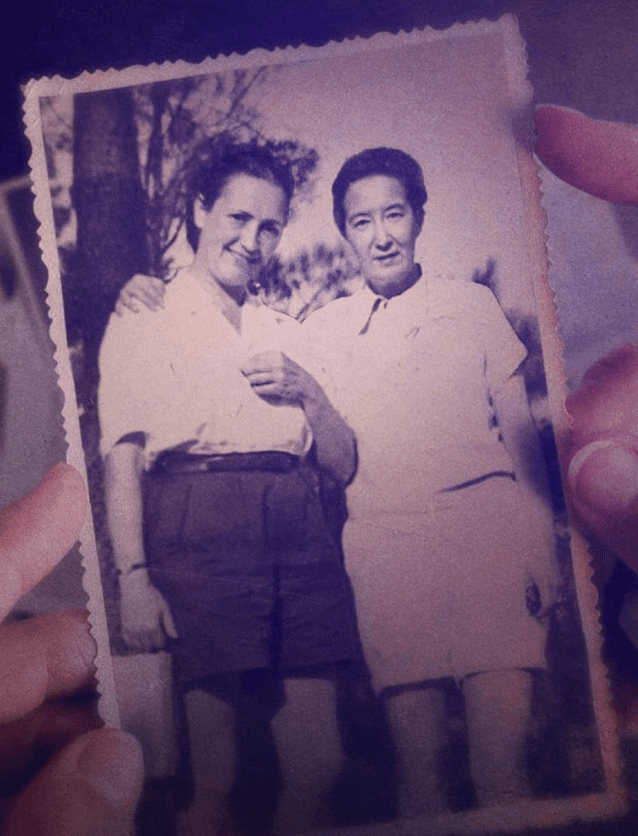
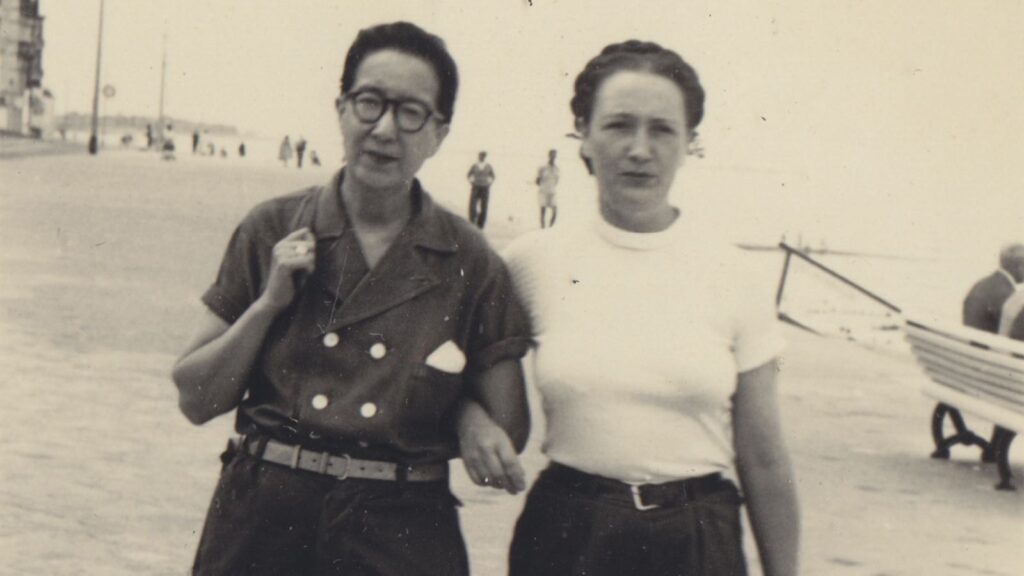
Old photographs and home movies revealed what the mysterious Nadine looked like. She had a tall, elegant figure with short dark hair and often dressed in trousers, a shirt, and tie. Born in Madrid, Nadine Hwang (1902-1972) was the daughter of a high-ranking Chinese diplomat and a Belgian mother. She was educated in multiple languages.
Nadine moved to Paris in 1933 and became part of the feminist/lesbian circle around Natalie Barney (1876-1972). A playwright, poet and novelist, Barney hosted a salon of notable artists and writers at her Left Bank home. Nadine became Barney’s chauffeur and one of her casual lovers. Nelly’s memoir stated that Nadine helped at-risk people escape from occupied France to Spain, which led to her arrest and transportation to Ravensbrück in May 1944.
Nelly and Nadine
By Christmas Eve 1944, Nelly was forced to perform carols. Nadine called out a request.
With Nelly and Nadine meeting in the camp, their relationship became intimate and passionate. Against all odds, their love for each other kept them alive. They were separated when Nelly was later transported to the notorious Mauthausen concentration camp in Austria. Forced labor in the stone quarry usually meant death, and Nelly was close to the edge at this camp. Her intense memories of Nadine kept her going. As it happened, this was late in the war.
The film shows a poignant clip of a movie taken in 1945 when a group of liberated prisoners from Ravensbrück arrived in Sweden. You see the faces of the survivors deliriously happy to be alive and start their recovery. Nadine was in that crowd. Hers was the only sad, tense face. At the time, no one understood the reason. Nadine was thinking of Nelly. Was she alive or dead?
By some miracle, Nelly had survived, and they found each other again.
The real reel — my own story
What followed after the war was the story of so many gay men and women before the gay liberation movement of the 1970s.
I know because I was around then.
In 1965, I was a sophomore at UC Berkeley when I phoned my father from the dorm. I told him that I wasn’t returning home for the summer. I’d met someone I wanted to be with, someone I loved. Her name was Caitlin. My father exploded, calling me a child, an infatuated fool. He told me to come home or all financial support would end.
I went with Caitlin, and my life became one of desperate struggle to stay in school and graduate. But I did.
The price of being honest and true to oneself was so high that gay people had to make heartrending decisions. Some had secret lovers under the beard of a straight spouse. To keep a career and paycheck, one’s real private life was never spoken about at work. Coming out meant stiff societal consequences (even criminal in the case of men). On the streets, fluid gender or flamboyant clothes raised the risk of being beaten or killed.
Not to compare to the camps, but no gay abandon for society’s rejects, either. Despite the passage of marriage equality and wider acceptance, it’s still tough out there for so many.
Buenos Dios, Caracas
Nelly and Nadine were likewise determined to live free and honest lives. Staying in Europe was too painful after what they experienced in the camps and too close to Nelly’s family.
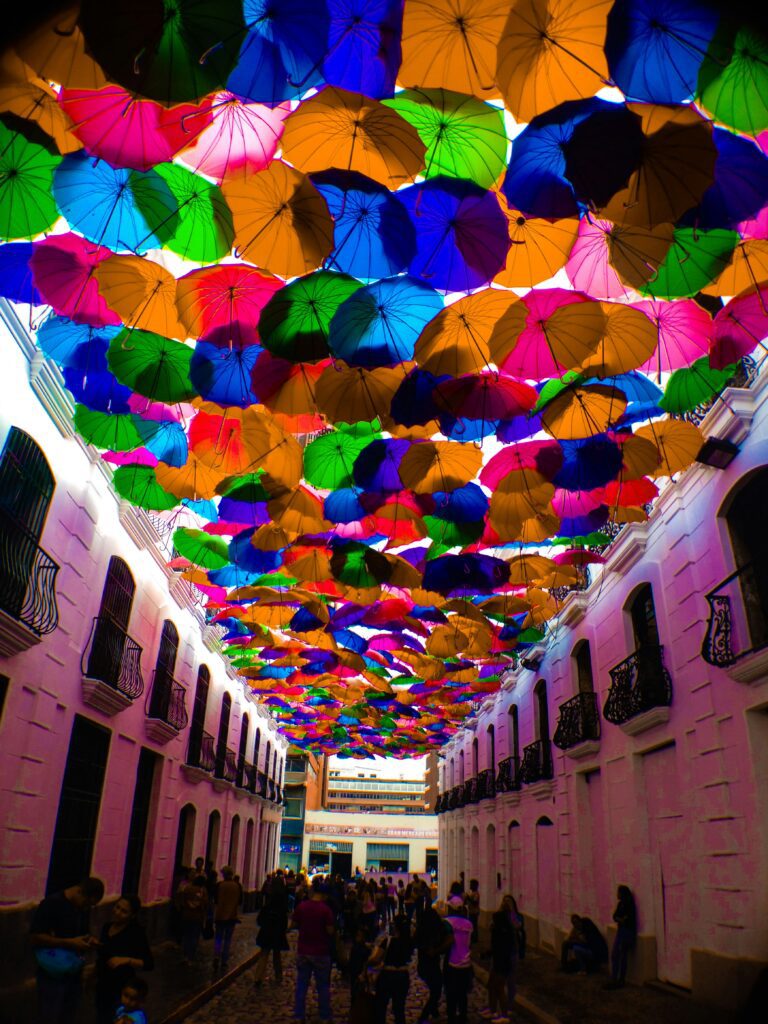
(Photo courtesy of Egildes Rivero via Unsplash)
They picked Caracas, Venezuela — sunny and inexpensive with available jobs for educated, multilingual Europeans. The home movies showed them relaxing and entertaining their queer friends. They lived as partners until Nadine died in 1972.
Especially moving was the way Nadine filmed Nelly at their Caracas apartment. She caught Nelly deep in her own thoughts. Her face reflected a profound inner sadness, as her time in the camps could never be forgotten. One can only imagine that those memories were crushing and tragic.
(Photo courtesy of Frameline48)
But she had Nadine, and they endured those memories together, always together. Love is love, that’s all, and that’s enough.
The end feels so inevitable when it comes. At least, mine does. I am in my final moments, of that there is no doubt. I stand in the biting cold of winter, my bones aching, my wounds bleeding. I know this is where my story ends. I should feel afraid. I should feel absolute terror. I’ve seen it in the faces of those I’ve bested, in the faces of men I held in their final breaths. Men that I respected, brave men, have lost their courage in the face of it time and time again. I always expected fear in the end, but now it has not seen fit to join me. Not only am I unafraid, I’m not even surprised to be meeting my end. After all, what choice did I have?
I’ll admit, I wish it wasn’t so damn cold. My own fault for being on the road so soon after Christmas. It is January of 1404, and the first fortnight of the year will prove to be my last. The trees around me are barren of greenery, the ground covered in a thick blanket of snow. What little dirt that shows is frozen harder than the armor currently sticking to my emerald-colored robes. The clothes I wear under my armor are drenched in sweat and blood that is freezing almost as fast as it emerges.
The same wind that brought this snow has carried the clouds away, letting a glimpse of sunlight crack over the mountains to the east. The sight is beautiful, the wind chills my bones. I’m out in the open, stranded in the middle of the smooth glass surface of this frozen pond. I close my eyes for just a breath and let the sound of the wind ring through the eye slot of my helm. The sound feels more mournful that it should, a moaning in my ears that laments a sorrow I can’t identify. The dry air mixes in my nose with the smell of dirty water, making me open my eyes.
I look to my right, at the slope I fell down to find myself on the ice. At the bottom of the slope is the only hole in an otherwise unblemished surface. I trace the trails of my own blood up the hill, made not so long ago, and I am suddenly aware of how much I hurt. The fall down that slope was bad, the landing on the ice wasn’t pleasant either, but the fight that came before it was worse. If only for my pride.
I lost the fight that preceded my fall, not unprecedented for me but rare enough. Though in all my years wielding a blade, I’ve never lost in such spectacular fashion. The bastard who beat me was just too damn fast with that saber. Too deft at finding the gaps in my armor. I never even touched him. He left me bleeding from a dozen small cuts that sting like I can’t believe.
When he left me, gasping for air and kneeling in my own blood, that’s when he made his mistake. He gave me a pause, speaking in a strange tongue from the east that I couldn’t understand. I’ve heard the language of the Cumans before. I’ve fought them on occasion when they send their raiding parties west into Bohemia. I still can’t speak a word of it. All I could gather was that he sounded quite pleased with himself. That made what came next easier.
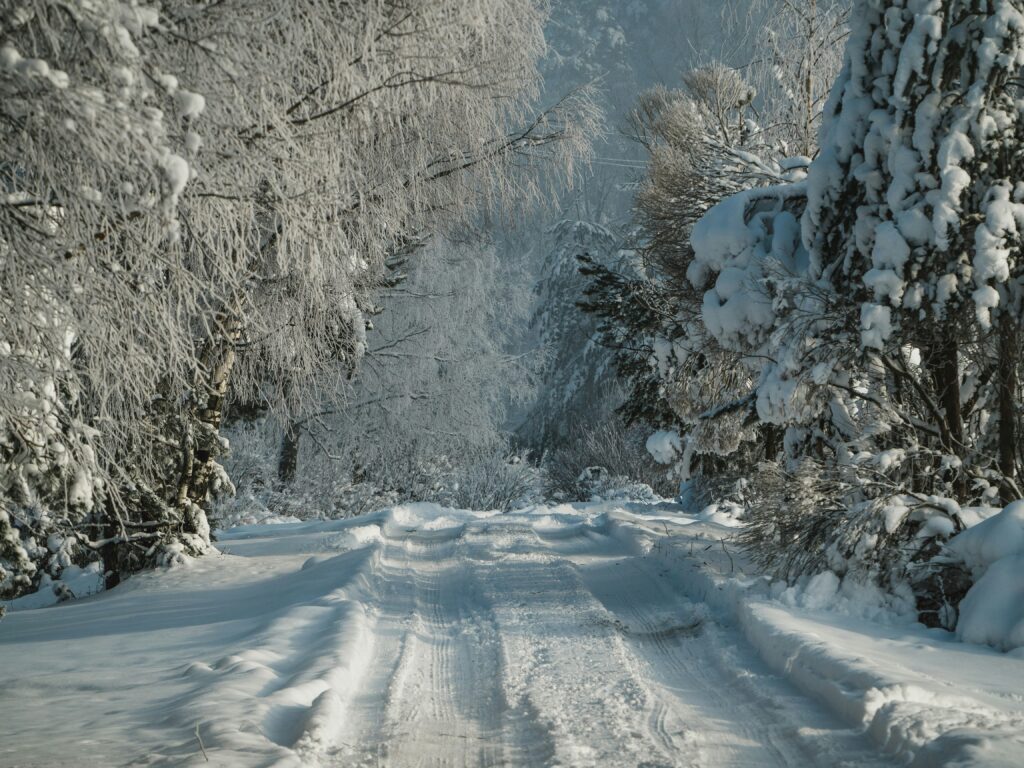
(Image courtesy of a_sobotyak via Unsplash)
He took exactly long enough to gloat for me to gather my wits and track the over-dramatic arc of his swing. I blocked it just like countless other blows in my life, the strong lower section of my blade, just above the cross guard, halting his sword just long enough for me to slam the pommel into his gut. He howled as the air left him, but he recovered faster than I would’ve liked.
His charge towards me was his next mistake. Sure, it sent me sprawling down the slope, seeming to hit every single rock on the way down. Yes, the last six feet were a straight drop to the ice that blasted my senses away from me. But it didn’t kill me. I don’t know how long I lay there. A few seconds? Minutes? The world swam in my eyes, the noise of the battle that had consumed the preceding day and night forgotten. It was the sound of cracking ice that snapped me out of it. My body was lurching for a new patch before my mind grasped how precarious my position was.
Here’s the part I still don’t understand. I’ve seen thirty-three winters, I’m ancient by the standards of a knight who has spent his life bouncing from one war to another. I was certain I had seen everything. I have no idea why that Cuman soldier came down that hill after me. I was beaten. He knew it, I certainly knew it. All he had to do was take his time and circle around. Yet, he dove down that hill after me. He must have seen me hit the ice and figured it was thick enough to hold. It did… for about a heartbeat before he went splashing into the water below.
The Cumans are a culture of horsemen, they prefer to move quickly. They wear lighter armor than knights like myself. They do still wear it, however, and armor is usually heavier than ice. That was more than enough to doom my opponent. He tried his utmost to pull himself out of the hole he fell through, even as chunks of broken ice jabbed at him, making it almost impossible to move his arms. The best he could manage was a handhold on the lip of his tomb.
I pulled myself to my feet with caution, watching the ice to see if the cracks were spreading. I looked down at the man who had triumphed over me mere moments ago. Our eyes met, mine through the slit in my visor, his through the eye holes of the ornate face mask of the strange and exotic helmet so common to his kind. He knew he was finished. I could see the fear in those eyes, tasted it just as I taste the blood in my mouth now. I took my sword in a reverse grip, the blade pointing to the ground, as I’ve done for countless men before in this position. I made the thrust fast and true. His death was clean and quick, as it should be for a warrior.
The sound of steps in the snow snaps my attention back to the present. I can see movement in the trees, shadows shifting against a white canvas. Before long I can make them out. There are maybe a dozen men, all of them in the odd, pointed helms of the Cumans. They move slowly, I’ve made them cautious. Good.
I can see some of them moving off to either side. They’re spreading out, though I don’t know why. They must know I’m the last of my men. Then I see why, and it’s a sight that clenches my gut and makes my heart stand still. A single man steps from the trees, taking easy, casual steps onto the ice in thick chainmail and segmented armor plates that only the highest-ranking Cumans display. This is their warlord. This is the man who slew my master.
The man who started all this has come. The bastard walks straight towards me, without a care. I’d hurl curses at him if I had breath left in me. As it stands, I barely have it in me to rise to my feet, to grasp my blade in my hands and hold it out in challenge. I will die, but not without making them work for it. I try to keep my focus, but it’s hard not to think of when I first saw this man. He started this slaughter just one day ago, and already I hate him more than I’ve ever hated anyone in my life. I hate that this bastard killed my liege lord. I hate that his ragged band of raiders slaughtered my brothers in arms. Mostly, I hate that I didn’t see them for the threat they were when I had the chance.
There were thirteen of us when this started. My lord, Baron Dychtwald, known to many as the bloody bastard of Bohemia, led us. He had ridden out of his home a fortnight past with two sword lines of his soldiers, my own and Sir Kuno’s. I had five warriors under my command, Peter, Frederick, Damian, Jaric, and young Stepan. Stepan had been more of a mascot until this year. I trained him myself. I suppose none of that matters now. There won’t be anyone to remember us. But they were my men, and I was very proud of them. I, Sir Tancred of Moravia, led them for seven years, and they never failed me. A pity the reverse cannot be said.
I didn’t know Kuno or his troops well. He was…rough around the edges. His men were the same. Most had been in the stockade. Some had bounties out on them. Not the sort that you’d take to high tea, but they fought like devils. They died with courage. Damn that swaggering Cuman bastard!
Calm. I need to stay calm. I can’t let him see me falter.
This started at a crossroads. That’s not a metaphor, it happened at a literal crossroads. We’d just left a village. There was nothing special about the place. Just an ordinary village where we had an ordinary lunch while the younger lads stared at some ordinary country girls. We were maybe three miles outside of town when we found ourselves staring at that smirking Cuman prick.
He began by speaking in the worst, most faltering Czech I had ever heard. He was not nearly as clever as he thought. I managed to make out that he expected us to dismount and lay our weapons at his feet. We reacted as you’d expect: laughter from my men, insults and rude gestures from Kuno’s. He didn’t like that. The arrows came next, whistling between branches as I shouted a warning to the others. We should have seen this attack coming. The Cumans are men much different from us, but they’re not fools. I should have seen it.
The horses died first. Their screeches still ring in my head and the weight of their crash may have broken a rib or two. We were still climbing out from under them when the first bunch hit us. That’s how the Baron died, crawling out from under his stallion when that insolent dog, the one now sauntering up to me, ran him through. I tried to get to him, clawing at my leg and the dirt beneath until I was free. I wasn’t fast enough. The baron was a peerless warrior in his day, but that day was long ago. He had spent the last decade at court, his campaigns long behind him. When his death came, he couldn’t even get his sword up to defend himself.
I didn’t have long to linger on the sight, the chattering howls of the enemy echoed through the woods as they descended on us. I’ll say this for Kuno, he got the men up faster than I would’ve thought possible. His and mine, they had lines formed to either side with time to spare before the enemy hit. We stood shoulder to shoulder, just like I taught them. Nobody breaks the line, nobody tries to be a hero. We stand together. Our discipline broke the first wave in moments. I don’t think they expected any resistance. But there was a second wave, then a third. We tried pressing into the trees, which helped funnel them to our stronger warriors. Still, we fell. First Jaric, then Stepan, Peter I held while he bled out between the fifth and sixth waves. Damian they dragged away screaming. I tried to reach him, I really did… bastards.
The irony of it all is that I know for a fact I could have escaped. There was a moment, after Kuno dragged me back from howling after Damian. We were isolated, a hundred yards from what remained of our men. They yelled for us to make it back as Kuno’s eyes locked with mine. I knew what he was thinking before he did. He made his break for it. I didn’t. I can’t say I blame him, but I just couldn’t leave my boys. I have chosen death. I could have run like Kuno did, could have forsaken the oaths I took. No. I could never. What am I without honor? What was all of this for without it? Even now, I know that in choosing between my life and my honor, the trust my men placed in me, there was never any choice at all. I look again at the Cuman warlord walking straight toward me.
I was four years old then. Yet I still vividly remember feeling the ground shake beneath me, the windows shattering during every air strike hitting our area, leaving our house barren and unrepaired. I knew beyond doubt that we would be under the rubble any time soon, buried with the memories and dreams of a life that once was.
April 9, 2003 marks the day when many Iraqis’ lives changed forever. After a month of constant cruise missile attacks on the country’s capital, Baghdad, the American forces completely seized the land and began a full-fledged invasion.
My brother and I slept in our parents’ bed the night Baghdad fell so that we either lived or died together no matter what happened. As children, we were only told that the “Americans were invading.” We were not spared any further explanation – leaving our imagination to make up the political story that later dictated every aspect of our lives.
What was once a country that harbored family, friends, free education, quality healthcare, historical monuments, and most importantly, a sense of belonging for its citizens became one of the most dangerous places in the world—all in a matter of months. Stuck between a rock and a hard place, many families from neighboring countries, like Syria and Jordan, seek refuge and better lives. Even then, continuous political turmoil and unequal opportunities in the region forced many of these displaced Iraqis to move to Western countries for only the chance of a more secure future.
After miraculously surviving three years of terrorism, internal conflict, and a debilitating embargo, my parents decided to take us and finally seek refuge in Jordan–shortly after our elementary school was attacked. After that, my family and I moved to multiple countries, including Jordan and the UAE, before settling in Canada. But ever since then, I have not had the chance to revisit my homeland and childhood home.
Instead, I always wonder about other Iraqis’ refugee stories and where they are today.
One such story is Omnya’s, a colleague of mine in a student-led UNICEF society at our university. She, too, was born in Iraq and left for Syria when she was only two years old during the 2003 war. Syria’s beauty and nature became her home for about seven years until 2010, after which she and her family immigrated to Canada through her aunt’s help and the UN’s family sponsorship program.
With long-held dreams of attending university and advocating for minorities, Canada was the perfect place to make the achievement of Omnya’s goals possible. Surrounded by an academically oriented family, Omnya was heavily influenced to pursue such a learning path – especially since her father was a university professor in Syria. Currently, she is in her fourth year of the Global Rights program at the University of Western Ontario, a degree that wouldn’t have been as easily attainable if she hadn’t moved to Canada. Moreover, because of Canada’s strong political influence and vast advocacy opportunities, no action is too trivial to create a change, however small, toward the positive. The only thing that Omnya needed to fulfill her dreams of protecting vulnerable populations and advocating for her community was the initiative. She certainly had plenty of that.
While most Iraqis had high hopes of making this venture, their lack of opportunity to move abroad had them lose complete access to quality healthcare, safety, and education as they stayed back in what had now become their poverty-stricken homeland. Unlike this large majority, Omnya luckily had family in Canada who helped sponsor her travel and settlement there.
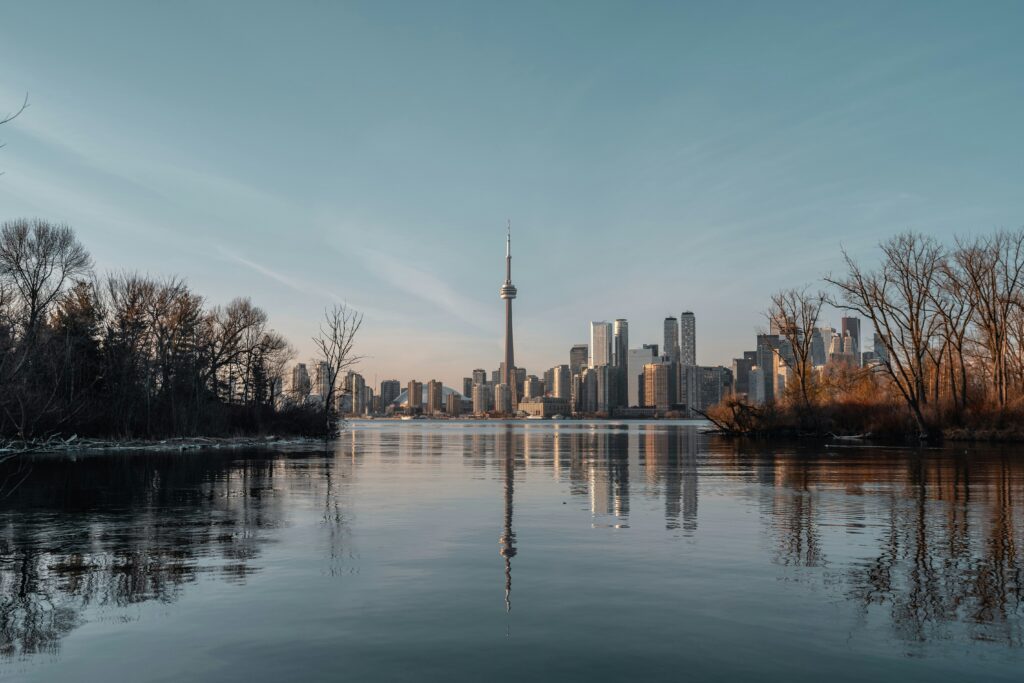
(Image courtesy of Jan Wever via Unsplash)
In contrast, many others only dream of being able to pursue a better life in the West. Recognizing this major obstacle in the lives of immigrants and refugees alike, Omnya aspires to make the immigration process easier than its currently daunting state. She plans to enact this change by increasing the availability of family sponsorship programs across the country. As an active member of the London Cross-Cultural Learner Center, Omnya and her team have made strides in helping immigrants with community integration and settlement, especially given the language barrier and cultural shock that a lot may struggle with at first. This was a difficulty that faced Omnya upon her move to Canada, often feeling inferior and disconnected from her classmates due to her limited English proficiency.
Through the challenges, she became the Project Development Director at RefuHope, a non-profit organization aiming to integrate new refugees. She was the current co-president at UNICEF Western, operating under UNICEF Canada. Omnya has made significant accomplishments in advocacy and support of refugee and immigrant integration. She plans to continue working to reach the ultimate goal of “living in a world where we don’t feel the need to protect one another.
Despite the devastating loss of her father, her biggest role model, to COVID-19 early in the pandemic, Omnya’s resilience to “keep going forward,” as she eloquently puts it, has never been stronger. From the early days of leaving her homeland and moving countries to learn to adapt to new environments and recover from hardship, which really tested her strength. Omnya is a notable example of perseverance. She learned to cope with her challenges by seizing every opportunity and giving back to immigrants whose shoes she was once in.
Such is only one of the success stories of the Iraqi underdog, who, despite the political turmoil and displacement, still made the most out of themselves and helped others. In short, it truly is inspiring to witness the many stories of immigrants and refugees rising from the ashes – an admirable feat, if there ever was one.