
Moving Away From the Cliff’s Edge: A Mum’s Story of Her Child’s Mental Health

It is no understatement that the last few years have been difficult for various reasons. It’s almost too obvious to state that we, in the West, consume a lot of environmental, social, and political information that clogs up our web browsers and mental state.

Meanwhile, the external world provides further insights with its doom and gloom, and you wonder what this does to your internal world and, more importantly, the internal world of your dependents.

Impact on my son’s world

My son is almost twelve years old. He had rolled through lockdown like most kids his age; with an interest in what is happening in the world and not attending school online.

Days turned into weeks, which turned into months. We were let out briefly, then locked down again.

We didn’t force homework on the kids; we ate meals together and walked around the neighborhood, trying to follow the advice of mental health advocates by maintaining a calm atmosphere.

Eventually, we all returned to our pre-COVID routine: school, work, supermarket shopping, and socializing.

My son entered a new school, a major leap, as he was now a little fish in a big pond. Senior students were young men dressed in school uniforms towering over him. He was excited and wanted to go, especially since many of his friends from his primary school were joining him.

Things went okay; there was lots of new stuff to remember, which was overwhelming for any kid. 

But, as the year passed, he stopped communicating, wanted to stay home more, and got irritated when asked to do his homework. Children undergo emotional cycles that coexist with physical changes, which we understand. It’s natural! 

Let’s face it: We all have to deal with many life changes, so we are all in the same boat, right? 

Then, arrived that moment, when my son uttered that one sentence, which changed my perspective forever!

“Mum, please don’t freak out, but sometimes I think I am pointless and don’t want to be here.”

To this day, I still recall that visceral experience whenever I drive down the street where he said this to me. 

I was ready for a conversation about bullying, but not for one about suicide.

In line with my son’s request, I did my best not to freak out and decided that today was not a day for school, but for getting hot chocolate and heading to the park.

We talked and shared moments of silence before heading home.

Later, I had a breakdown in my bedroom, experiencing a complete red-eyed, sobbing meltdown.

You see, suddenly you understand that your child is grappling with their persistent  suicidal thoughts.

You can effectively address bullying or support someone coming out, as our society is much better at dealing with these issues, and schools are well-placed to help. But, conversations around suicide are different and tricky. They are complex to hear and even more challenging to own. 
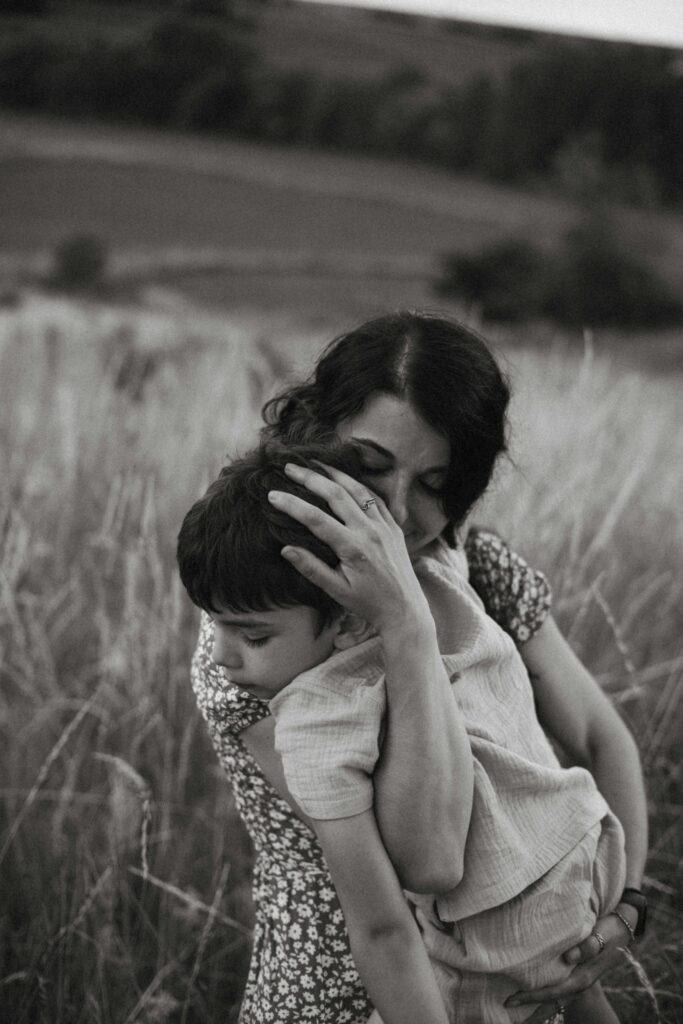
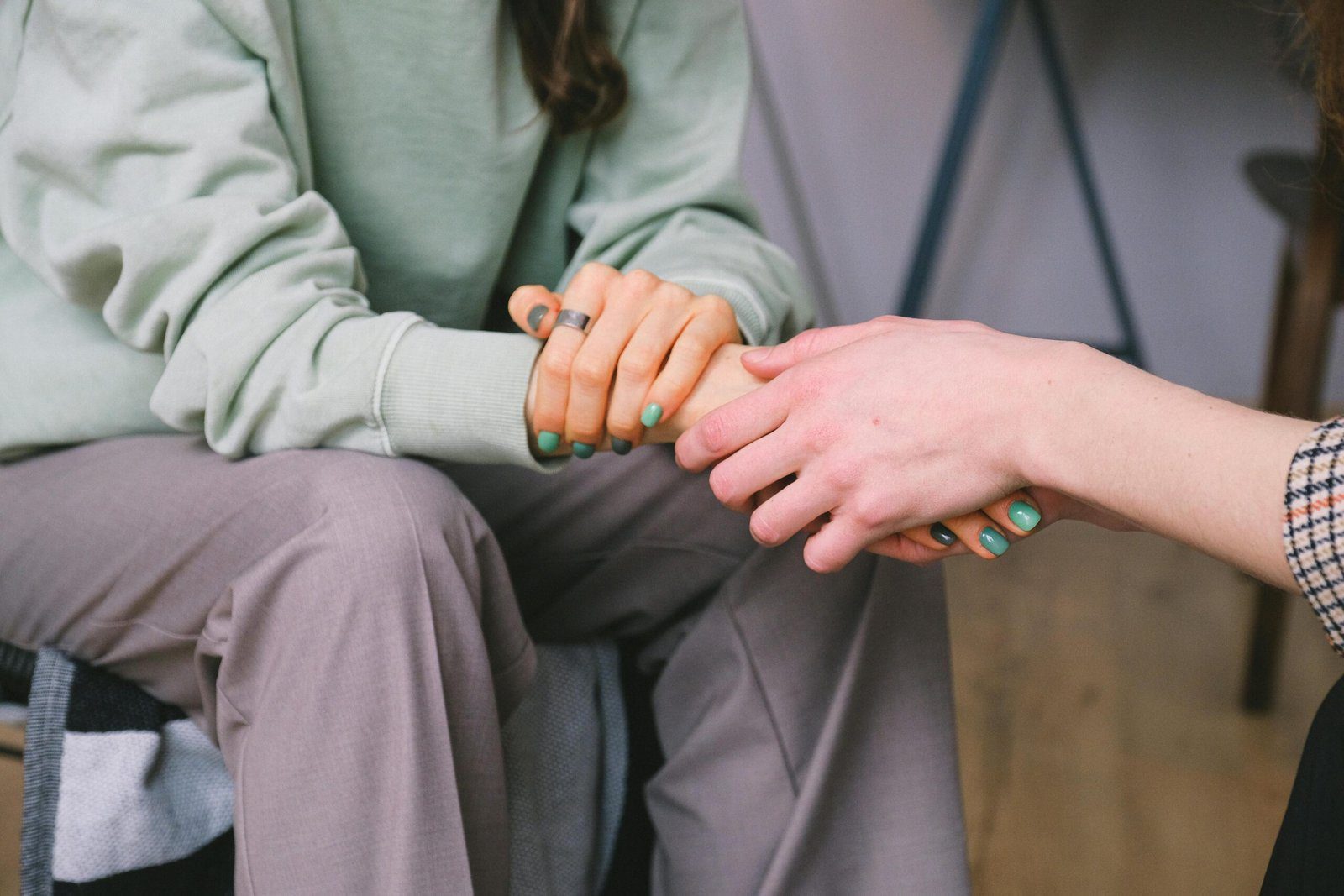
(Photo courtesy of Anastasiia Chaikovska via Pexels) 

Finally, navigating the cliff’s edge

One way to describe this experience  as a parent is to imagine that you are in a field, whose one of the boundaries is a cliff.  You spend most of your time in the middle of the field, with your life seemingly moving along with little fear or disruption.  You can’t even see the cliff edge because there is a natural boundary of beautiful trees or native bush. This vegetation represents the details in your life that keep you intact: a comfortable living environment, the love of family and friends, food on the table, and the power on. 

When something happens, such as a life-threatening health diagnosis, the death of a friend, or, in my case, your child experiencing extreme mental strife, you are catapulted from the relative safety and comfort of the middle of the field to the cliff edge. It triggers a raft of strong feelings, a desire to run away, but a relentless obsession with looking into the abyss. 

You see your friends and family in the middle of the field carrying on with their lives, which now seems pointless or distracting. All you can do is live in a void between the edge of the cliff and the threat of falling to the bottom.

Consequently, your mind gets so tied up in problem-solving and self-doubt, and the need to wrap them up that it gets harder to sleep and talk to anyone about it. It feels like a personal failure. 

Why can’t I make my child feel happy and safe?

What did I do to him?

Can I pinpoint the moment all this started?

Of course, I could not answer these questions sufficiently. All I could do was stop looking over the cliff’s edge and secure my footing to secure my child’s.

Taking the necessary steps

After meeting his facilitators from school, who were helpful and constructive, we consulted a counselor to assist him with his overwhelming feelings.

It’s been a long, difficult road, full of sleepless nights and moments of terror. For any parent, checking your child’s room for anything that may harm him is distressing..

Acknowledging that you can’t fix everything is something we parents instinctively know, yet knowing and fully internalizing that knowledge are two very different paths.

Mental health issues are a part of the human experience, regardless of age. I am incredibly proud of my son for having the strength and bravery to tell me how he felt, especially while being so young.

He is bright and quirky, with a great sense of humor, a talented artist, and a loyal, compassionate friend. He is also a troubled soul with a profound understanding of his darker side. 

As his mother, I am in awe of him, but it feels bittersweet that he carries this self-knowledge.
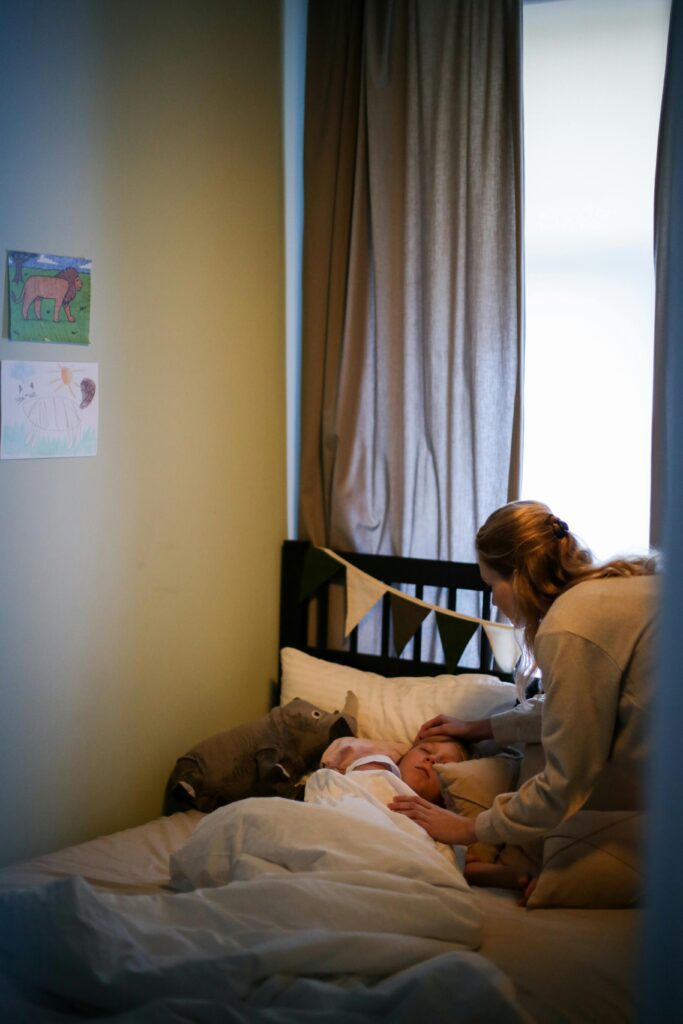
(Photo courtesy of cotton bro studio via Pexels) 

I love him to the moon and back
A Connecticut Snowflake Comes Out to Play

As far as I can remember, I have not liked cold weather. 

And I have my own reasons for it. 

My birthday falls in the summer, so you can say it’s in my DNA. 

I’m not a fan of sweaters or long-sleeved shirts. 

I have lived in Connecticut and dealt with brutal winters while growing up. I catch a cold easily and have worn jackets until early May. So naturally, winter isn’t an enjoyable time for me.  Most winter days, you could find me at home, lying on my couch under at least one blanket, snacking on something, and feeling sorry for myself. Though I do it well. 

I have never been officially diagnosed with seasonal depression or seasonal affective disorder. However, many of my bad mental health episodes have occurred during winters, especially in recent years. As I’ve gotten older, the allure of the holidays, playing in the snow, and days off from school faded away. The latter two definitely have.

Gloomy December 

In December, I usually freak out about the end of the year. 

I feel like I haven’t done enough throughout the year. I feel like I should’ve gone to more fun events. This usually leads me to wonder what could’ve been, and I hate going down that path. I’d rather be happy for what I did than feel bad for what I didn’t do. I get caught in cycles of regret and self-hatred whenever I start wondering about all these things.

Lazy January

In January, I feel okay at the start of the year. 

Like most people, I try to stick to my New Year’s Resolutions, but I usually only manage to honor them for about a week. I feel bad for not sticking to them, but I’m unable to overcome my laziness, and I’m not sure why. January also seems to be the longest month. I spend the second half basically hoping it’ll end.

(Image courtesy of Lenin Estrada via Pexels)

Emotional February

February is usually tough for me. I’m single, so Valentine’s Day isn’t fun. 

By this point, I’ve been in the house for three months. It’s the last month of winter, and I just long for warmer weather. I feel like spring is dangling over my head, making me jump for it.

The onset of Spring

The start of March makes me feel better. 

Even though it doesn’t get warm until the end of March or early April, I feel it’s sunny, or at least I convince myself there’s more sun out there. It also seems like more events are happening in my neighborhood during this time, or I’m in the mood to check in frequently.

I have had these feelings for three months, so this past year, I decided to find ways to enjoy myself.

(Image courtesy of Javon Swaby via Pexels)

Overcoming challenges

I made 2023 my “year of health.” 

This past January, I started taking apple cider vinegar gummies. 

I also made it a priority to go to the gym more often. I did new workouts like weight training, and even lifted 25 pounds. I also enhanced my skincare routine by trying new products to see what works best for my skin.

Prioritizing my physical health has helped my mental health. This past winter, I didn’t feel as sluggish as I have in the last few years. It also motivated me to not just lay around my house when not working. 

Want to take it outside?

I realized that one potential source of my winter depression is the lack of sun and going outside. 

This winter, I tried to be outside more, as long as it wasn’t too cold. I realized that I needed exercise, vitamin D, and a change of pace from my usual routine, if only to walk to the grocery store or bookstore up the street during the day. 

Even when it’s cloudy, getting out makes me feel better. It also allows me to add variety to my winter schedule, instead of doing the same thing each day. Maybe connect with nature or reality, but it works. 

I have been trying to go out a lot at night, too. I love going to local drag bars and Meetup events with friends, even if it’s just a casual game night. It’s another thing that helps me break up the monotonous winter darkness.

Even though I’m an introvert, I enjoy going out and spending time with others, selectively. I think it uplifts my mood. Since these activities are indoors, I only have to be outside in the cold for a brief period of time. 

I discovered that spending more time outdoors and strengthening social connections have significantly improved my winter outlook and boosted my overall well-being. 

In body and mind, less isolation. In the end, tougher hide and tender heart. Maybe I created my own behavior modification program without realizing it.

Wandering, Wondering

Yuvoice Duet: Read another inspiring story about rediscovering life with Autism here.

Imagine being lost in a large bookstore when you were little. You are surrounded by pictures, puzzles, book covers, and other unfamiliar things. It’s a strange place, where so many stories live, including magic, mystery, and science. This array was what caught your attention when your parents were only there to buy some paper. After a while, you lose sight of your parents or they lose sight of you. You think for a moment, about what to do and run around; the place seems so significant to you. After thinking for a while you give up the fight and wait by the entrance.

You weren’t afraid. Not really. The colorful and beautiful things around you were fighting for your attention. You didn’t think then — how could you? — about how long it’s been since you’d been lost and how your parents must be worried. You stood calmly by the guard, thinking about which dinosaurs you would draw when you got home.

You knew they’d find you. 

This moment meant little to me then but it was very near and dear to my mother. It was one of the earliest moments when she was astonished at what I could do and what was going on in my head. But, now, I wonder what it really is.

Then & now

Years ago, when I was young, I was diagnosed with Autism Spectrum Disorder, a condition I barely understood then. 

It is the early 2010s, and things are very different now. I’m more confident and appreciate what it means to myself and others around me. The world I see out there isn’t much clearer than the world of the bookstore. I’m still caught up in the wonder of it all with all the same questions in mind. When I first found out about my diagnosis, I felt like it was a superpower that made me special and set me apart from the crowd. I had a name for what made me better at school and different from the other kids. I had the luxury of looking at it with fondness.

(Image courtesy of Mikhail Nilov via Pexels)

But things are different now

The closer I get to the real world, the more distinct it becomes. I have been living in the Philippines with my superpower, aka Autism Spectrum Disorder (ASD), and have realized that my life was supported by a privilege that protected me from the real world. 

I grew up wealthy. My parents supported me when I acted up at school. They kept me away from the harshness meant for the little miscreant that others might have seen me as. Now, much of that wealth is gone. As I grew up and went to college, my superpower started to feel different in my hands. I met some people who were more successful and popular, and great with studies, and a few who were not. These people showed me more of the truth. I had never met anyone who revealed their struggles with bullying, society, and familial issues before, and that enlightened me to just how much my parents had protected me since I was little.

Now, I also understand how much my mother struggled to get the required care for my condition and how scarce therapy centers are. I’m a grown-up, and don’t need as much care anymore; I have an excellent social life with my classmates, and can easily make friends. But when I do need it, I hear stories repeated in various places, and all of them remind me of how hard it is to get care for ASD in general in my country.

Revisiting the bookstore

When I visited that bookstore as an adult, my mother did not mind. Why would she? Of course, she remembered the story I shared above; it was just that the present was more important. The interiors were changed. The bookstore had been remodeled; the shelves were shorter and the place was more spacious, so it was much harder for a child to get lost now. It was bigger, certainly. The colors and wonders were still there for the adults looking around. All the stories and adventures promised on those beautiful covers were still there. If I had more money, perhaps I could buy one someday. If I had more time, I could have browsed and looked at them all.

This place was the same as I remembered it, even after the changes. I walked past the guard at the entrance and into the aisles with my family to pick up some stationery. My mother knew we could finish this and make time for the trip home. I wanted to spend some more time there, but I knew I couldn’t. With our finances and changing schedules in flux, I knew better than that. I am a grown-up now and no longer have the luxury of getting lost here.

Misery Loves Company

“People who are hurting tend to hurt other people,” my mom says while holding me close and listening to me cry about the day’s events.

“Why?” I ask in between sobs.

“Because they are just unhappy with their own lives and feel miserable, they choose to make other people feel bad about themselves. It’s a vicious cycle, and misery loves company.”

It took me many years to fully understand what my mom was saying in those moments of desperation and utter sadness when I was a teenager. I fully understood the impact of her words and the lesson she was trying to teach me only in my late twenties while living alone. 

The takeaway is to take everything people say with a grain of salt because their opinions will not matter in ten years. They are irrelevant.

Misery does, in fact, love company, and due to the ever-changing economy, rising cost of living, unemployment, the pandemic, and advancements in technology, it has become so much easier to spread hate worldwide. 

How I respond to haters

Most people don’t even bat an eyelash when throwing insults at strangers on the internet. I have noticed that many are angry, hateful, and very ignorant of their own biases. They often judge people without a second thought, based on their profile picture and the content on their page.

Whenever people insult me on Instagram for commenting and leaving an opinion on a post, I try to tackle their hate, judgment, and ignorance with kindness and compassion. I raise awareness of why some people are overweight or prefer to surround themselves with cats rather than people.

People don’t care to understand the struggles of other people. I have noticed supervisors do the same thing and discriminate against an employee when it is illegal to do so in the working environment, but that doesn’t stop them from finding ways to make an employee feel crappy.

So when these types of situations and circumstances occur, I try to reframe the negativity by pointing out how cruel they are by saying, “God bless your hateful, ignorant, and miserable soul.” Then, I proceed by letting them know about how certain health conditions can impact a person’s looks by affecting their weight and skin in a variety of different ways, such as taking mental health medications,  having a vitamin deficiency,  an autoimmune disorder, or a hormone imbalance such as a thyroid condition. 

I ask them to educate themselves further on this topic before automatically spewing their hate toward people they don’t know on the internet. Usually, when I respond to these types of offensive comments with kindness and awareness, many people end up not responding, which leads me to think that, perhaps, they will think twice before choosing violence and responding to someone’s opinion with mean comments the next time.

Our responsibility

Everyone we meet in life is fighting an unknown battle, one we know nothing about. We must do better as a society if we wish to have any hope for future generations. We must consider what type of example we are setting for our children by exhibiting bullying behavior towards strangers. 

It all starts at home, with the example set by the children’s family members

They come into this world already knowing how to love, and unfortunately, it is ultimately the people we surround ourselves with who choose to teach us how to hate, based on how the world treats us as individuals.

A Diagnosis

There was something off; I knew it. I couldn’t quite name it. But it was deeper, darker than what had previously bothered me. 

I was diagnosed with depression at fifteen and generalized anxiety disorder at seventeen. Depression, being familiar to me, seemed like a well-worn jacket weighing me down. Anxiety seemed like a scarf, too tight, wrapped around my throat, restricting my breathing. 

I learned how to manage and to wear them. But this… this was different.

The story behind my diagnosis

For several months, at the end of my freshman year of college and into my sophomore year, I was plagued by misery. I was nineteen and in an abusive relationship that was making me question everything; who I was, my place in the world, my purpose, and my destiny. I started exhibiting troubling symptoms — symptoms that were more extreme than I had experienced before. 

I wasn’t sleeping. I was like a zombie, wandering through the days and nights, lost in the fog of my mind. I was losing my sense of time; hours would pass in a blink, and I could not remember how I had moved from point A to point B. I felt an overwhelming sense of hopelessness. 

I was numb, frozen. 

Some days, I was agitated, jittery, and unable to stop myself from moving. I needed to act, to jump headfirst into whatever I could — projects, games, or adventures. I needed distractions. I needed action. I desired constant motion, my mind racing along with my heart. It was like I was running a marathon and couldn’t stop. 

My depression was unlike anything I had experienced in my young life. It overshadowed my every waking thought, leaving me helpless and weak, lost and confused. I would vacillate wildly from barely moving, eating, and breathing, to being so wired and alert that I couldn’t focus. Either way, I wasn’t functioning. 

It was obvious to anyone who saw or talked to me that something was wrong. I was so unlike myself; it was shocking. I was transforming into some other-worldly version of myself, the opposite of the person I was, a photo negative of the girl I once knew. It was frightening, unsettling, and frustrating. 

(Image courtesy of Ron Lach via Pexels)

The revelation 

It all ended in a burning, blistering, ugly way one night. 

It was late at night and dark. We were somewhere in Boston, outside a liquor store. The boy I was seeing revealed his hand: he had been cheating. All my suffering, all the back and forth, all the mind games, it was all in vain. I started to implode. I cried, I screamed, I fought. I was shattered. 

All I could think about was death. I had been teetering on the brink of suicide for the better part of six months at that point, but now it had become all-consuming. I was ready to end it all. I wanted the suffering to stop, hard, fast, and cold. 

I had a vague notion of a plan, but he stopped me. He wrestled me into the car, drove me back to the college campus, and left me alone to lick my wounds. 

The next morning I was still reeling from the aftershocks, still contemplating ending it all.

But I had survived the night, and that had to count for something. So, instead, I chose to take a leave of absence and headed home. 

I found comfort in the embrace of my family and sought answers from my medical providers to understand what was wrong with me. 

During a session with my provider, she asked direct and unusual questions. Then, she had me fill out a questionnaire. I was as honest as I could, even though I wasn’t entirely sure what I was filling out. I handed it to her; she examined it briefly and then revealed what was on her mind.

The new diagnosis 

A diagnosis that we had somehow missed during my years in talk therapy with her. It took exacerbated circumstances to reveal the more extreme symptoms, but it was clear that I didn’t just have depression. 

I had bipolar disorder. 

Specifically, bipolar II. It is characterized by a severe depressive episode, feelings of hopelessness or intense sadness, coupled with a period of mania and elevated or irritable mood. 

A pendulum of emotions. 

At first, I felt empty. Bipolar was a scary word, a word that felt foreign, unfamiliar. I knew nothing about it. It was bitter in my mouth. The weight of it seemed overwhelming. I tried to wear it on and understood how it fit. It was a little too big, too cumbersome, too heavy. 

But then I tried to sit with it. I considered it. There was comfort in at least having a term for what I had been experiencing. 

Power is in knowing and in having a treatment path. We were going to change my medicine, reach out to my therapist, and work on bipolar-focused treatment instead of just depression. I wasn’t going to be left in the dark with the weight of this new diagnosis. I had a way forward. 

Though the treatment took some time, I did notice improvements. My moods didn’t swing so wildly; my sadness was not as deep, and my mania was not as high. I was becoming more even-keeled and returning to my old self, the self I could recognize in the mirror, the one I loved. 

I kept my diagnosis a secret for a long time. I knew that there was a stigma around being bipolar; I feared people would just assume I was “crazy”. But, as I understood my own experience with it and what living with bipolar actually looked like, I found myself shedding my shame. 

It’s been ten years now of living with this diagnosis. Ten years of treatment. Ten years of understanding how to manage emotions that sometimes feel unmanageable. 

I have accepted my diagnosis with love and understanding, and now I treat myself gently

Having better knowledge of my mind is a blessing. I do not shy away from it and don’t use it as an excuse. It is a part of me, and I have learned to live with it, wear it, move with it, and embrace it. 

(Image courtesy of  Julia Kuzenkov via Pexels)