Unemployed and Uplifted by Strangers

Lost in my job hunt

For several months, I have consistently scoured LinkedIn and other job posting sites for a variety of available roles. During my senior year of college, my mental and physical health took a toll, and I fell behind in job hunting.  After graduating, I spent part of this summer searching for employment opportunities. 

Being unemployed can feel deeply isolating, especially when the people around you seem to have a structured routine. Several of my peers entered graduate school or already had jobs lined up, while I did not. I often find myself comparing my situation to theirs, and have done so recently. It is almost impossible for me to avoid.

Stuck in isolation this summer, I wondered how I could feel less alone; how I could feel like I truly belonged somewhere. A sense of belonging was difficult to have when I was at home by myself most of the day, especially during the weekdays.  

Making connections appears easy in the digital age, at least in theory, but face-to-face interactions can be hard to form when you do not have a way to get to social events. I wasn’t sure how to communicate what I was feeling to the people in my life, so I kept it all inside.

Finding my people online

In-person interactions were not always possible. People sometimes did not understand what I was going through. 

I found that speaking online was simpler.

In June, I discovered a group chat on Twitter (X) tailored for people who were struggling to find a job.  
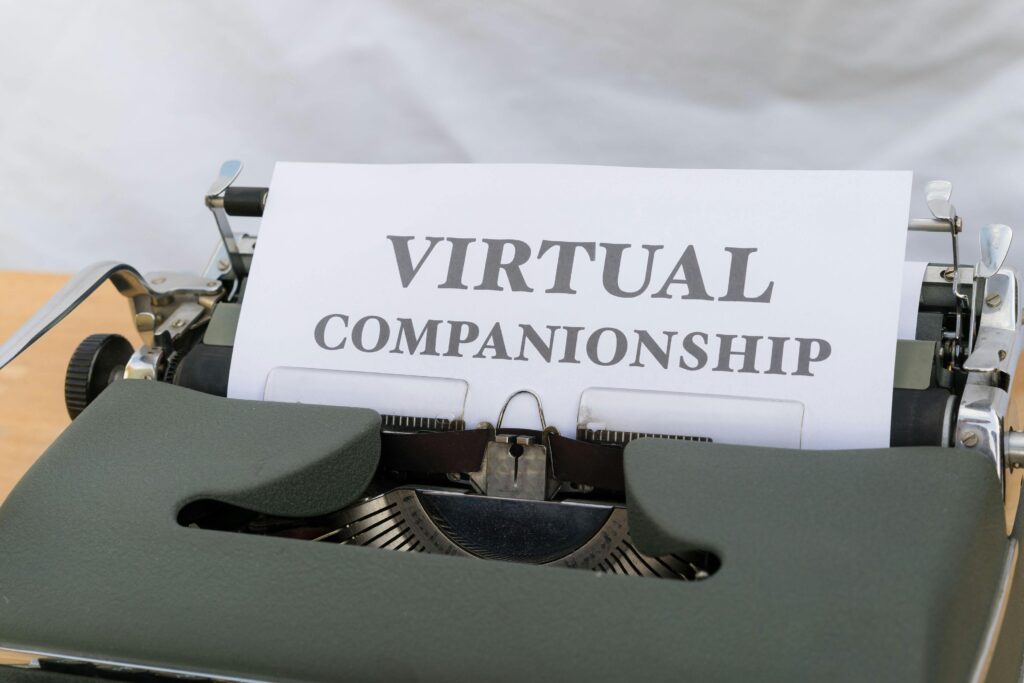
A typewriter with a paper that says virtual companionship.
(Image courtesy of Markus Winkler via Pexels)

Once I discovered that someone in the phandom, as punned by Dan and Phil for fandom (Since 2015, one of my special interests has been the YouTubers, Dan and Phil. ), had posted about a support group for those who are unemployed, I knew I had to join it. 

Soon after, I noticed group members encouraging each other to apply for jobs and sharing small victories along the way. 

For the first time in a while, I felt seen. I then realized that I wasn’t the only person my age who was struggling to find their individual place in the workforce.

Drowning in rejections

In the deep sea of rejection emails, silent application views, and resume downloads that are trashed without a follow-up, I often wonder when an opportunity will finally appear for me. At this point, I’ve applied to over fifty jobs, with no interviews. 

Now, working with the Department of Rehabilitation Services is my only way into the workforce, my best path into employment. Searching for a job is already difficult for most people my age, who are affected by high costs of living, turnover, and the current job market in the U.S.  However, this quest is even more challenging as I have a physical disability that affects my ability to stand for long periods of time and prevents me from lifting much  weight. My dream field, editing, has been restructured, going from mostly human labor to mechanical work due to the incorporation of AI. 

Although I often feel like it is hopeless for me to keep trying to find employment, I persevere with my quest. Every time I want to give up, I am reminded of why it is important, and that I must find a job in order to pay off my student loans. Through the process of attempting to get supported employment and work adjustment coaching, I remember that I am not alone, and there are many others in the same position as I am. 

In my struggles, I am fortunate that at least I have something that is equally important that uplifts & supports me: a digital space full of like-minded individuals, a community where I can share my concerns, voice my frustrations, and continue to be understood. 

I feel empowered by these strangers. It’s interesting and comforting at the same time. How easily we’ve built connection and trust through shared experience. Despite coming together from different places, we’ve discovered we share similar passions, career paths, and even interests beyond the phandom that first brought us together.
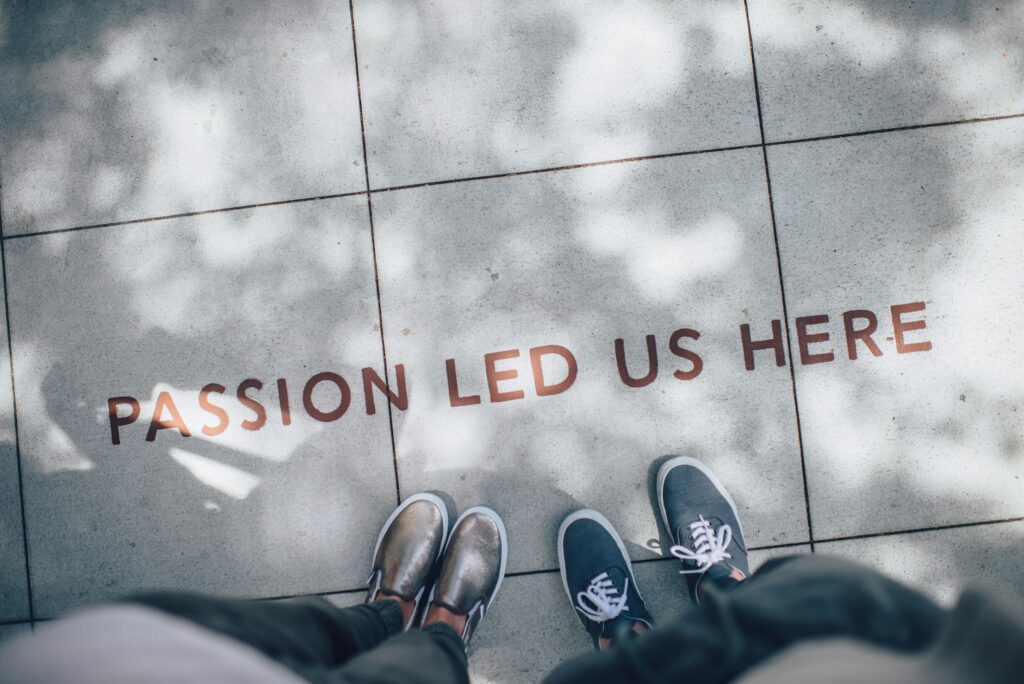
Two people standing on gray paving with text saying, "Passion led us here."
(Image courtesy of Ian Schneider via Unsplash)

Creative dilemmas

People always say that social media is unrealistic and flawed, but in certain online spaces, it can be the only place that fosters genuine conversations. There have been a few occasions when we came together and spoke about how exhausting it was to keep applying and being relentlessly rejected by companies. 

This vulnerability is important. Sometimes, you just need someone to listen and relate to what you are going through. We may not know each other outside of our screens, but I realized that this group chat has been meaningful and beneficial for all thirty-three of us.

I have shared my frustrations about job scams I’ve come across, asking if anyone else has also applied to similar listings that seemed legitimate at first glance but turned out to be fake. In this day and age, where AI is the standard, scams can seem legit, especially when you are neurodivergent, like me.

Additionally, dialogues about how frustrated we are by AI are a common theme in the group chat. My dream is to work in editing and the majority of the creative roles that I see list “AI training” as part of the job description.  

It is frustrating to see opportunities that value machine learning over human creativity.  It is very discouraging to know that I have a bachelor’s, and companies want applicants to use their degrees to train AI, the very technology that could replace them.

A group of four white robots sitting on top of blue laptops.
(Image courtesy of Mohamed Nohassi via Unsplash)

I often find myself reflecting on the ethical implications of using AI and questioning myself as to whether doing so is worth it. I can’t help but fear that AI will continue to advance until my skills will no longer be needed.  

I consider whether the money is worth the risk of teaching AI how to eventually replace me. To me, it is not. 

I may need a job within the next two months in order to be able to afford my monthly student loan payments. But I refuse to go against my beliefs and to compromise my values for a paycheck. I’m just glad I am not the only one within my generation who thinks the same. 

Commonality matters

Having something in common with people is vital in this state of the global job market and economy. While individuality is frequently found within physical spaces, commonality of experiences allows people to support and uplift each other. Even though some of us live hours or time zones away, we still understand one another’s struggles.

Not that we talk about unemployment, but we also often share memes related to Dan and Phil’s content, and anecdotes and stories about how we became their fans. It is encouraging. This may seem random, but it is my way of getting to know my mutual netizens and learn more about people behind the user names.

When my loved ones are busy or unable to chat, I know I can always turn to this digital support group — a space that reminds me I’m not alone.

Hope and optimism

Staying optimistic that I will find employment is emotionally intense for me. But, in the words of Dan and Phil: Whenever I’m alone, or if I’m feeling grey, there’s one place I can go to brighten up my day!

Job or Scam? Flip a Coin!

The internet.

One of the most incredible tools ever made, it has allowed individuals like myself to share ideas, connect, and make each other laugh across continents. More importantly, though, it has made my life easier, like helping me get my degree. Without the internet, I don’t see how I would have had the time to finish my degree in four years.  My books and research materials were readily available through the internet as well. Juggling a full-time job while being a full-time student is hard enough, but I was able to attend classes online and on my own time. 

Don’t fear, don’t trust

Keeping in mind how easily accessible the internet can be is what keeps me suspicious. I also do not trust the infamous algorithm to deliver trustworthy information. Not because I think everyone is outright lying on purpose, but because facts can be misinterpreted before being shared. This can continue until the truth is nowhere to be seen. Director Werner Herzog commented on this during his latest appearance on the podcast, Conan O’Brien Needs a Friend, that aired September 28th, 2025. He equated navigating the internet as a prehistoric man navigating their world by being suspicious of certain types of mushrooms and berries that could be poisonous. His point was we should not fear or hate the internet, but we shouldn’t take it at face value either. I am the prehistoric man who should be wary about what is on the internet.

I recently found myself communicating with a scammer through LinkedIn. Over a year out from graduation, I have yet to find a role that’ll allow me to officially end my time in the fitness industry. Being a trainer was always just a means to make money while I was in school. I’m a textbook example of an introvert, and being social all day can be draining. Plus, the people I have to be social with are the opposite of who I am politically, which adds another layer of exhaustion to the job. 

Now that I have my English degree, the goal is to get a job in publishing or marketing while I continue to write poetry and work on my book. With countless applications sent since completing my education, it’s easy to lose track of them. I couldn’t tell you which companies I applied to last week, let alone six months ago. One day, I received an email about scheduling an interview. Being wary of potential job scams, I looked through my application history and found the company. Excited, I responded with my general availability.

Image of a person typing on a laptop.
Image courtesy of John on Unsplash

Red flags

The next day, I checked my email to find the supposed hiring manager replied at 6:17 a.m. telling me they were available now for the interview. That was the first red flag. I politely reminded them that I work during the hours of about 6 a.m. through 2 p.m. and have availability in the afternoons. That same evening, they responded saying to message them on Teams any time I could, and that the “text-based chat interview” would be conducted. That was the second red flag. A text-based interview sounded like absolute hogwash and would be a good way for someone to conceal their identity.

I combed the company’s website, which I admit I should have done first, and didn’t find the position posted. I then searched for the company on Instagram to see if they had posted on their social media account. What I found unfortunately did not surprise me. They had posted a notice saying to be aware of a job scam pretending to be them. They listed the email they would use to contact applicants, as well as the scammer’s fake email. The email I received was a cleverly crafted scam email address. The difference would go unnoticed by anyone at a first glance. I sent one last message because I couldn’t help myself: “Dayum. You almost got me. Caught you $cammin’.” They never replied.

Don’t succumb to poison

If I had let career desperation override my suspicion, I could have easily fallen deeper into the scam. I’m positive the next step would have been asking for money or personal information somehow, which never happens in an interview process. But people do fall victim to such scams. It is important to treat everything on the internet as false until proven otherwise. The algorithm is not your friend. Treat the next nugget of information you receive as a berry you cannot identify. Rub it on your skin, if there is no reaction, put it to your lips. If there are still no symptoms, chew and spit. Next, take a small bite. Only after this should you consume it.

I didn’t follow my own advice and became complacent. If I had looked a little deeper into the situation in the first place, I wouldn’t have gone as far as I did into the scam. Looking for a job has been taxing. Applications take time and I have become fed up with it. When this “opportunity” presented itself my initial thought was relief. Not only am I desperate for a job but also some interview practice. When I discovered I was speaking to a scammer I felt like an idiot.

This wasn’t the first time I have been targeted by a potential scam through LinkedIn, but it was by far the most convincing. Moving forward, I will have to treat every rare job opportunity as a scam. Being a detective is an unfortunate reality when it comes to the job market these days. I’ve become much pickier when it comes to where I apply. By that I mean I’m only applying to places I would actually want to work, and not just to get out of personal training. With fewer applications sent into the abyss, keeping track of them will be easier making the scammer’s job harder. Although I hope to find another scam one day – messing with them is good fun.

Measure For  Measure, AI is Wanting — So What?

As a freelance writer, there’s always been a part of me that constantly worries about a new form of technology rendering my job obsolete.

The big one is artificial intelligence. It’s something that’s been talked about for years, but it’s become all-encompassing in 2025. Everywhere you look, companies are pivoting towards AI, whether it’s Microsoft’s Copilot, Meta AI or ChatGPT. These companies have all sought to reassure workers that AI is only being used to streamline certain menial tasks, not to  replace them.But with so many layoffs happening around the world, it’s easy to see why people are worried.

I’ve been vaguely aware of generative AI tools like ChatGPT, which are designed to produce texts and images, among other outputs. While there is still that part of me that worries, I’ve always had the belief that I’ll find work because my own writing is better than an AI.

Having tried out generative AI myself, I now have a new worry: that it might not matter. 

Note here that generative AI (original and creative) is bolder than traditional AI (analytical and predictive). 

My experience judging generative AI

Despite my ethical objections to generative AI, I figured that I should at least try it out to see what exactly I was dealing with. As part of a recent article about how students are using AI to study, I decided to experiment with a tool to see what it was capable of.

My request was simple: Explain the pros and cons of using AI to study and present it in a table format. It did that, but it didn’t do it very well.

There were countless spelling mistakes, the table of pros and cons wasn’t completely symmetrical, and it randomly cut off at the end, halfway through the final point.

Generative AI isn’t very good, but does that even matter?

At first, I was relieved. While generative AI could potentially become a useful tool down the road, it would never be capable of producing high-quality writing that would put people like me out of a job. But then I remembered finding  a major internet article written by AI.

It was about the best order to watch the Star Wars movies and TV shows. It was full of glaring mistakes, getting basic information about the timeline wrong and littered with obvious spelling mistakes. Maybe it would have seemed better to someone completely unfamiliar with the series, but even though I don’t consider myself an expert in Star Wars, I’m 100% certain that I could have written a better article.

This wasn’t found on some random no-name website; it was a highly-respected TV and video game site that has produced quality content in the past. Seeing such a poorly written, obviously AI-generated piece there was galling.

Fast forward a few years later, and generative AI is everywhere. So many ostensibly respectable outlets publishing obviously AI content, and sites like Facebook and YouTube drowning in a sea of low-effort slop.

Even if generative AI improves in the future, I doubt it’ll ever be a better writer than I am. 

All right, I hope it won’t be better than me. Than I.  

This thought hasn’t changed, but I’m increasingly worried that it might not even matter anymore. As more of the internet descends into AI, I might find myself out of a job.

What comes next?

As companies around the world go all in on AI, it can feel hopeless to push back. Yet I remain confident that there is, and always will be, a place for genuine human writing on the internet. You can see it on sites like Patreon: people are ready to financially support writers producing original, thought-provoking pieces. The future might look scary, but I’m convinced that there is still demand for flawed-but-human articles and that over time this demand will spell the end of generative AI as a replacement for real people. 

We will continue to matter, even as “an unperfect actor on the stage.” And if Shakespeare can be unperfect, so can we still succeed.

I don’t think for a second that I’m a generationally talented storyteller, far from it. There are far better writers out there than me. Than I. But I like my work. I am proud of it. And even as technology moves ever forward, I continue to believe that I’ll find a home for my work

That’s my story and I’m sticking to it. 

Handwritten Shakespearean Sonnet 23, “As an unperfect actor on the stage”.
Image courtesy of NomeVisualizzato via Morguefile)

Overwhelm: That Need to Do Too Much

Overwhelm

I’ve been in a slump lately. I haven’t felt particularly down or anything. My social life is as buoyant as it can be. I have a steady job which I enjoy working. I’m lucky enough to have a roof over my head, and my sleep schedule, while shaky, is taking a turn for the better. I’m admittedly a chronic snacker, though the comfort mostly surmounts the shame.

What I really feel is overwhelm. Not burnout or anxiety. Rather, I feel now that, in looking forward to a potential creative career, I will be unable to complete all the many projects that I desire to work on. There’s not enough time. I feel that comes with malaise, especially if, like me, you haven’t settled into a proper routine yet.

It’s ironic that this article has taken me so long to write. The fear of abundant possibilities and wasting time are facets I’ve wanted to talk about for a while. They’re somewhat destructive spirals I have challenged repeatedly in post-university life. I don’t necessarily need to make any choices right now, but the pressure still bubbles, pushing me to commit to something. Often, this disables me from getting anything done, leading to other issues such as procrastination, burnout, low energy and so on.

To confront this overwhelm, I decided to reflect on all the various careers I thought I might inhabit as I was growing up. I hope this allows me to make some sense of the indecisions I now face.

Intercontinental Marble Run Designer

Really, it was rather simple to execute. My role would have involved designing interconnected networks of tunnels and rails all around the globe to transport marbles in and out of countries at a moment’s notice. Never mind the logistics or the actual demand for these contraptions – post-toddler me truly believed it was an occupation of studied importance. My parents never understood the vision.

Rockstar

This was around the time I was first getting into music, so I suppose this role should come with a caveat: Rockstar, who looks like Alice Cooper. I owned five of his albums. The makeup never seemed like much of a stretch to me.

World-Class Chef

Following the first time I tried cheesy pasta, which is literally just pasta… and cheese, I demanded that my Mum make it for me three nights in a row. All thoughts of eggy bread and chicken, and broccoli were flung from the window as I raced to learn how to prepare such a complicated dish. I thought I was set. Turns out, most competent restaurant dishes actually have three ingredients. Sometimes more.

Hole Digger and River Maker

One section of my childhood garden was basically woodland, dominated by a large willow tree as a centrepiece. I discovered the earth underfoot was soft enough to dig into for several feet, which spawned many a weary afternoon with the shovel. I would create trenches and position the hose to run water through them, ruminating on how I could one day terraform the planet while the rest of the garden flooded.

Secondary school came, distracting me with subjects I barely wanted to learn until I was finally able to specialise. Thus began my renaissance of career planning, the Game Designer era.

Coder for Video Games

The “do this and do that” doodah. The minute I jumped into computing lessons, I realised how boring coding could be. This passion faded.

Animator for Video Games

I grew up with Disney and DreamWorks and loved playing video games like Minecraft and Undertale. Sometimes I drew pixel art, sometimes I launched into full-blown Blender modelling. I discovered that animation could be just as boggling as the machine language itself, though pixel art and animated media/games have become the major loves in my adult life. I owe a lot to this period.

Composer for Video Games

Video game music fascinated me, and it still does (my playlist of game music once had over 2,000 downloaded tracks and took over five full days to play through the entire collection). By this point, I’d been transcribing lots of my favourite tracks onto a notation program called MuseScore, but I’d never actually made an original track of my own. Little did I know I ignited a spark and composed half of a video game soundtrack during my second year of university — one of the many things I have lying around, waiting to be finished.

I started to comprehend that each of my passions was creative in nature — marked by desire for visibility, recognition and legacy. With university fast approaching, I had to find a simple solution to fall into, one that I could jump into and start earning from immediately. I know!

YouTuber

The Gen Z-vetted choice! I made the decision overnight — I could avoid going onto further education, I could work from home, and I could become a millionaire in under a year. All my parents had to do was invest £2,000 into professional equipment to assist my dream in coming alive. Naturally, my ego was slammed (thanks Mum) in just one evening — I believe there was an almighty tantrum and one accusation of “you’ve ruined my life” involved, which I’m not exactly proud of. Thankfully, this was a short phase.

Stage Actor

It was bound to happen. I’d been acting all my life, so this just made sense. I took Drama and Theatre Studies at Royal Holloway, University of London. Got involved with student companies and improv societies… I started living for the thrill of performance families. Nothing beats the feeling of acting onstage for me. Sadly, the life of a struggling actor was not something I felt fully committed to, so I decided to specialise in something I could achieve from anywhere.

Screenwriter for Film and TV

Having written some, maybe four or five plays by this point, I knew I had an affinity for writing. My Mum is a copywriter and novelist, so this ran in the blood. I took a punt with my master’s and expanded my portfolio into more structured visual media— screenplays and televised drama.

Flashing forward, I now have two polished screenplays under my belt. I feel more confident with this form of output than ever. Still, I found myself drifting back to playwriting, procrastinating with music composition, designing pixel art, editing videos, acting in odd productions… All the things I thought I’d left behind! And with that, an idea started to blossom.

Game Designer

There it is again! Only this time, I could do everything at once. I had the knowledge to construct engaging narratives. I’d long been polishing my composing abilities. With a minimal approach, I could pump out sprites and game assets in an art style that suited me… and with the help of some enthusiastic Udemy courses, I was miraculously beginning to enjoy coding too! All the elements were in place… but I still couldn’t bring myself to commit fully to this resurgence. Don’t get me wrong, I am going to release a video game one day, but something else is becoming clear.

Kind of Like An Everything Writer

I write short stories every week. I write for The Sentinel. I freelance with chatbots, training AI models. I’m planning a fantasy novel. I run my plays and short films through scratch theatre nights. I submit to competitions and initiatives as often as I can. Every project that drives me, everything I’ve learned, revolves around words. I feel confident working with words. I know that something will present an opportunity if I keep working on and honing myself.   

It’s okay not to have everything figured out. It’s okay to experiment. This can be an intimidating place, especially when the competition for careers is so high, but it’s healthy to be curious and to explore different interests if you have space to do so. 

Repetition is exhausting – invest in yourself. You’re not “unfocused”, you’re versatile. You’re human. One day, the dreams and ambitions you once had may feel like a distant memory when newfound purpose takes your life in directions you might never have imagined.

All that being said, I did visit the “House of Marbles” glass-working museum in Devon recently, and I found it very difficult to leave.

The Other Side of the Counter

‘That’ customer in me

I feel the need to start by saying: we have all been the rude customer at some point — myself included. The last time I felt like a bad customer was when my wife and I moved into our current apartment. The leasing office had claimed that if we did not come in to pick up our keys on the official move-in date, it would affect the lease. A lease we had already signed. Not only that, we had already paid the first month’s rent. 

I explained to them that it didn’t matter to me if we picked up the keys a few days later, even though we already paid. They weren’t having it. In the end, this was not due to some overzealous property manager but a computer system designed by some far-off entity operating from the unreachable shadows. I never once considered that. I should have known better, given my years in customer service. This article is not meant to bully rude customers. It is simply my method of handling the rude, the kind, and the incompetent.

Feelings behind the counter

My career as a personal trainer, spanning nearly ten years, has been almost entirely focused on customer service. I’ve seen the other side. 

Most of the time, the person on the other side of the counter would be more than willing to give you everything you want. We can’t, though. 

We have bosses who have bosses breathing down our necks. There are systems in place that make it impossible for employees working in the trenches to be helpful in a real way. We are seen and treated by employers as a shield to criticism rather than empowered to solve problems.

The fact of the matter is, we are not paid enough to care whether or not you get a better deal. Our wages are never affected, for better or worse, on approving or denying customer requests. We only aim to keep our jobs long enough before we bounce to the next slightly better-paying position. This leads to negative experiences for the consumer.

Oftentimes, negative encounters result in the representative being told, “This isn’t very good customer service.” This is something I hear quite a bit in my current work. Which I assume is meant to make the “desk jockey” feel guilty. 

The idea that customer service is giving everything the customer wants is ludicrous. At the gym where I train clients, people often want free guest passes for their friends and family. Let me tell you something, I would love to have a pocket full of free guest passes to hand out. More people coming through the gym with a great experience eventually could lead to me having more clients. 

A sign reads “free entry” in red print with a pointing arrow.
(Image courtesy of Karim Manjra via Unsplash)

However, the company feels differently. No free guest passes for you! Employees in general are shackled by a strict set of regulations out of their control, and we follow them because rent is due on the first.

Myth or the truth

This is where my philosophy on true customer service comes into play. 

Customer service is not about giving everyone what they want. It was never meant to be that. And never will. Customer service is the employee treating you the same as everyone else, while giving you all the available information in a clear and concise manner. 

It doesn’t matter if we have a friendly rapport or if I perceive you to be the most miserable person I have ever met. I greet you by name if I know it. I answer the same question repeatedly without a hint of annoyance. I apologize when I am unable to fulfill a request. Such as moving gym equipment so you can do one single exercise in a specific spot that can be accomplished in several other places. 

Yes, this actually happened, and not out of feeling exposed to the male gaze by a certain exercise.

Wooden Scrabble tiles spell out “I am the truth”.
(Image courtesy of Brett Jordan via Unsplash)

There was an instance regarding the prone hamstring curl machine, which positions your butt in the air for all to gawk at. We did have a woman bring this concern to our attention, and we gladly shifted its position to be more modest.

Some requests are reasonable and will be executed. If yours was not, maybe consider that the employee is not the problem. 

Human side —no — gentle reminder

If a customer I have helped feels my service was less than adequate, I still greet them the same way the next time I see them. Customer service is the representative who never gives you a different side of themselves. 

But believe me, we will be talking about you behind your back. It’s just the way it is. 

So, next time you feel you’re being treated unfairly, please keep a couple of things in mind: the employee has no real power, and usually the manager doesn’t either. If we did, we’d give you what you want just to make you go away. 

Lastly, be kind to those who run the desk. We’re having a worse day than you. 

(The above excludes car dealerships, of course.)

Cog!

In a large hotel conference room speckled with round tables, I drank my lukewarm coffee and listened to my colleague extol the great work our advertising agency had done on a recent product launch. She recounted the late nights, the weekend work, and the hundreds of advertisements routed clean by our team.

“It was hard. It was grueling,” she said. “But we did it. And we did amazing work.”

Coffee cups, deadlines, and the weight of expectations

I kept my eyes focused on the table and played with the paper coffee cup in my hand. I didn’t feel like celebrating.

Weeks earlier, I had attended a pre-launch meeting on a Monday morning. After starting the Teams call, the Accounts person settled into her seat, greeted colleagues, and then, with a sadistic smirk, announced, “I hope you all enjoyed your weekend, because it is the last one you’ll be getting for a long time.”

And in the following weeks, I watched her words come true. The team consistently worked twelve- to fifteen-hour days, squeezing in thirty-minute lunches if they were lucky. Weekends disappeared. Even the Fourth of July wasn’t spared.

Overwork, exploitation, and the people-first myth

Even though I wasn’t technically assigned to the launch team, everyone in Editorial chipped in: I clocked in at 6 a.m. on multiple Saturdays to get in half a day’s work and still salvage my weekend plans. I logged in early and stayed late on weekdays, trying to avoid calculating how much overtime I would have earned if I had stayed at my former company.

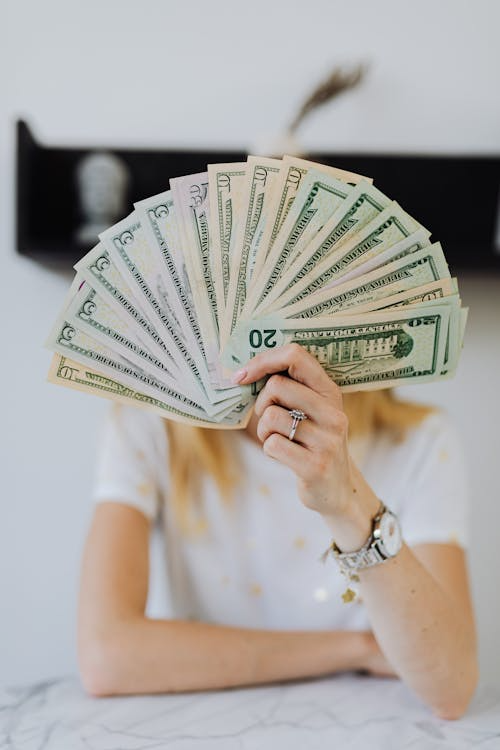
A man holding 5, 10, and 20 dollar bills with his face covered.
(Image courtesy of Carola G via Pexels)

Were there other solutions rather than working the team to the bone? Of course there were. Management could have hired more temporary freelancers to reduce the burden, an option vetoed (I assume) solely because it would have cut into profits. Even if hiring extra manpower was impossible, they could have offered compensatory time to the overworked after the launch, but they didn’t.

Don’t get me wrong — I am genuinely grateful for my job. It not only provides me with a wage that meets my basic needs, but also allows me to travel and save for the future. I work remotely in the comfort of my own home, oftentimes with a purring cat on my lap. I get paid sick leave and vacation, and my agency even closes down for a week between Christmas and New Year’s. I am one of the lucky ones — truly privileged.

Yet, I can’t help but feel like I am a tool, a production piece, a tiny cog in a huge money-making machine. And perhaps I could accept this if the specific money-making machine manipulating me did not claim to have a people-first culture. If it did not insist it supports a healthy work-life balance while simultaneously telling, not asking, employees to work on holidays.

My complaint may sound like a tired one in a world that takes for granted that employees live to work, rather than work to live, a sad inevitability of a capitalist society and one many of us are resigned to. Most of us know, deep down, that no matter what companies say, they mainly care about their bottom lines and little else. 

To genuinely cultivate a people-first culture, which many corporations claim to have, companies will have to put people before profit. It is not enough to merely toss employees a bone when it is convenient or legally required. Rather, it is essential to choose to honor workers even when doing so curbs cash flow.

So, as I listened to the Accounts Team celebrate the virtues of our team at the all-agency meeting  (the amazing work we had done and how thrilled the clients were), I didn’t feel proud. I just felt sad.

I thought of my own parents, both in vastly different fields from my own, who regularly work seventy to eighty hours a week. They do so not because they want to, but because they feel that to do their jobs well and stay employed, they have no choice.

Cogs, families, and what really matters

Overwork is an epidemic in American society, and it’s often packaged as something noble. But it’s not. Employers can shout from the rooftops that working late nights and weekends, neglecting family and recreation, is something to be celebrated, but that doesn’t make it true. At the end of the day, companies — not their employees — are the ones who benefit from the sacrifices of the workforce.   

Twenty years from now, I seriously doubt most of the people who worked on our product launch will remember what they produced for a client. But I’d bet they’ll regret not attending their child’s baseball game because they needed to meet a deadline.

In the end, I’ll put in my extra hours like everyone else: to be a team player, to keep my job, and to make sure my company continues to see me as a valuable resource. Because I need the money: to live, to get married next year, and to start a family.

But make no mistake — any extra hours I’m forced to spend at my computer aren’t a credit to me. And overwork should not be celebrated. Corporate America, you can keep your round of applause.

I’m more than a cog in a machine. 

Monopoly Money

Don’t you utilize, monopolize, or anthropomorphize me

According to our saintly and ever-correct oracle the Internet, the word ‘employment’ has two primary definitions. 

  1. The state of having paid work”
  2. “The utilization of something”

I’d be curious to poll the average person on the street as to which of these definitions typically comes to mind on hearing the word. 

And by ‘on the street’, I of course mean those tireless and valiant 9-5 workforce soldiers on their lunch breaks, as they spend their hard-earned money on pre-packaged processed carbohydrates at the cream of our cities’ chain coffee conglomerates. Not those people literally on the street by virtue of not being utilizationed or in a state of having paid work. 

Go ahead, utilize me

You see, I think these two definitions are linked — me being utilized by having paid work. And I’m surprised to find myself admitting that, because I used to say that there was no value in working my fingers to the bone or my brain cells to their nuclei to serve a corporation, community or country that didn’t serve me in return. Maybe my views would’ve been different if my council tax payments bought me something more than a wheelie bin emptied and returned to the wrong house once a fortnight. Or maybe my views would’ve been different if I’d worked in an industry whose primary work product was something tangible, rather than a service. You know, if I’d been making car tires or little cakes or something… 

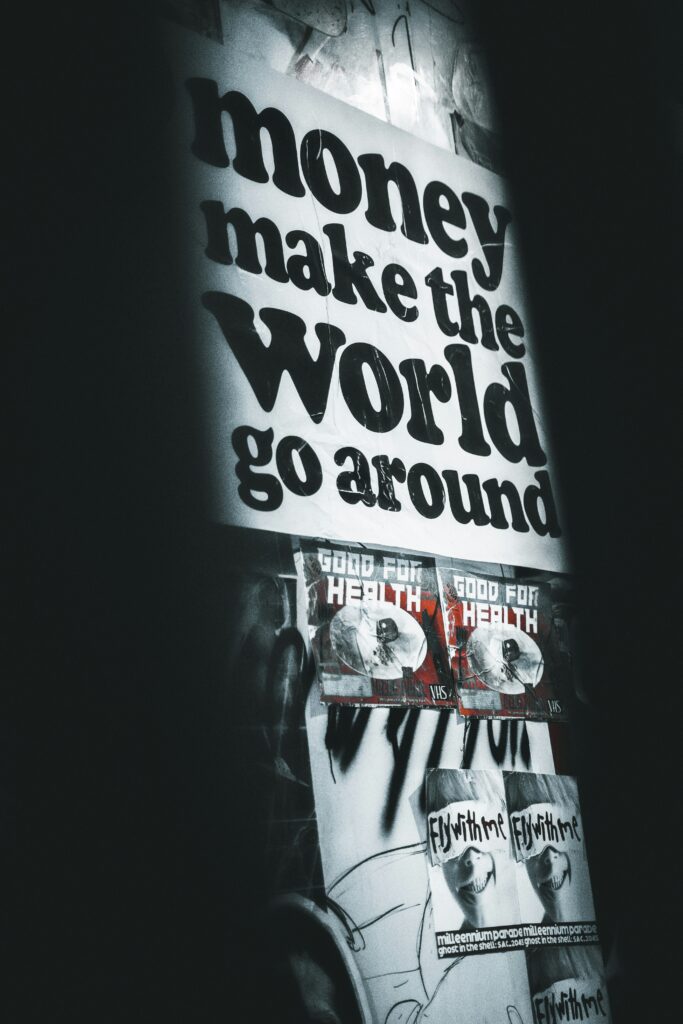
In my endless quest for prose and provocation, I often like to say that our real currency in life is time, or honesty, or love, or some other such abstract and intangible concept. But, in reality (whatever that is), I know that the only actual currency we have is CURRENCY. Pounds, shillings, and pence. Dollars, dimes, nickels, and cents. They weren’t wrong when they said money makes the world go round, even if it is making it go round the twist. Though I’d prefer to be participating in a place which prioritizes peace as its primary political pledge and considers communication above the concerns of commerce, that’s not the hand we’ve been dealt. 

Take a break, but what time is it?

I write these words a year into a period of unemployment, a time I’ve described to everyone on the outside of my own brain and trusted circle of friends as a ‘career break’ or a ‘career change’ but which has served as a constant internal reminder of the need to earn money. A ticking financial and self-worth time bomb with detonation set for 0:00…and it’s been five minutes to midnight since I collected my last pay packet. 

Have I been utilized in the last year? Sure I have. I’ve written somewhere near 500,000 heartfelt words for various publications, research papers, fictional works and factual projects. I got married. I’ve been to California. I’ve recorded an album with my band. But I haven’t earned any steady money, and even someone as headstrong when it comes to utopian societal dreams as me can’t escape the notion that I need money to be happy. 

Blame it on Monopoly 

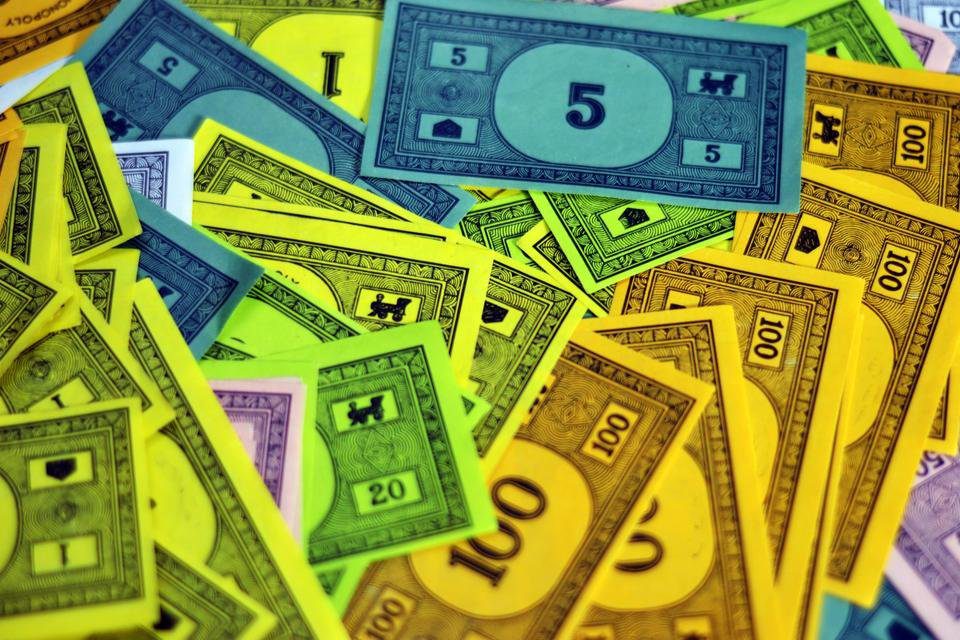
Perhaps it’s because from the moment we exit the womb we’re drip-fed that our most significant contribution to our world is financial: the generation of wealth. An idea reinforced by every happy family game of Monopoly, from station to station, house to hotel, where fulfillment rests on the roll of a dice and the turn of a CHANCE! Where, if the cards are stacked against us, we’re better off in jail. 

But where I’d once have cursed society’s plan for me as a preordained conspiracy geared towards the generation of wealth for others — those faceless offshore yacht owners, stubbing out cigars on the trade union banners that adorn their penthouse walls like historical works of art — I don’t think like that anymore. The wealth we’re really generating is the ability to fund the lives we want to live. If even the most visceral human experience costs money to attain, then the true value in paid work is how we use that pay to generate for ourselves: our livelihood. 

What’s it all about?

So maybe that’s okay, as I wanted to write something about this strange phenomenon for a while, where my self-worth is inextricably linked to my earning capacity. I was scared to acknowledge it for fear that the exploratory process of one’s own psychological relationship with money (or lack of) would run out the clock and explode that time bomb before I secured my dream job. One that allows me to practice the skills I’ve amassed, my creativity and flair and my passion for mentorship: all roads lead to Academia. I found my energy waning, replaced by the worry of securing a new career, or what the failure to do so means for my finances and my self-worth. The fear of having to accept a job I didn’t want to do if the righter opportunity didn’t reveal itself. 

But it did. 

Freed from the shackles of welfare worry, I can become spiritually and creatively utilized again. In a good way.

I’ll never stop campaigning for a fairer society, where we take just enough from our supermarkets, and where we recycle everything. 

Where we treat every conversation as an opportunity to make someone’s  day better. 


Where we invest properly in good holistic education across all facets of academic and vocational challenges. 

But I’ll do so in the knowledge that the value in my work isn’t only in the direct impact I’ll be having on my students, but in regaining a monopoly over my own life’s course — hopefully with the occasional free parking surprise and a couple of beauty contest wins. My money is, in the truest sense, monopoly money. 

A sign reads “money makes the world go around”
(Image courtesy of Morguefile)


Of Monsters and Motherhood

Amongst humanities graduate students, especially literature students, there is a joke that grad school will kill one’s passion for reading. I always thought that I would be impervious to such a curse – that no matter what my Hispanic Literature programs threw at me, my love of reading would remain unscathed. I chose to study literature because, like most people who do the same, I loved reading from an early age. Further, I loved dissecting passages and plots, analyzing character motivations, and connecting works of fiction to larger societal themes. To a certain degree, I was right about my passion being steadfast in the face of the stresses of advanced academic training. There are numerous books from many different countries and eras that piqued my interest beyond them being required reading.  

However, the greatest book in the world cannot fix the fatigue that a bloated reading schedule causes. I knew what I was getting into, of course, but knowing really doesn’t matter after having to read hundreds upon hundreds of pages of say, Garcilaso de la Vega or Gonzalo Fernández de Oviedo (real ones know!), as I had to do during my Colonial Latin American Literature survey course. For six years, I often felt as though I had one eye on a PDF and one eye on the clock, mentally calculating how long it took to read one page and estimating how quickly I could finish a book before moving on to the next one. However, In early 2021, I found myself free of the constraints of reading under pressure, as I had passed my preliminary exams for my doctoral degree the semester before. 

Turning the page

With my attention now solely focused on crafting my dissertation and teaching Spanish language classes, I had won back something that had been missing during my time taking courses: an eensy, teensy bit of free time. Unfortunately for me, I had also been recently diagnosed with allergic asthma, so some of this free time was spent, once or twice a week, in my allergist’s office, on the receiving end of histamine shots that would (hopefully) reduce the severity of my allergies, while also not inducing anaphylaxis.

In that sterile and uninspiring room, far from the creaky, imposing library shelves I had been dwarfed by for so long, the pressure to read for the purposes of writing papers and bolstering class discussions melted away. Accompanied only by my ancient iPad, loaded with the Libby app, I would spend hours waiting in that office, interrupted intermittently by my doctor checking my airways and the injection site on my arm. At my fingertips was what seemed like an unending catalogue of books whose publications I had missed for the last six years. What’s more, I soon discovered something about me that I never expected: I loved reading horror fiction.

All my life I have hated horror movies. I have only seen one, The Strangers (2008), and even that was against my will. The Halloween of my fourteenth year saw me crowding into my friend’s basement with the rest of our social group, which consisted of teens who were not scaredy-cats like me. Due to a combination of peer pressure and shaky confidence, I agreed to watch the aforementioned horror flick while thinking, “Maybe it won’t be so bad.”

Boy, was I wrong. 

Despite my rejection of slasher films, I wouldn’t consider myself an overly  sensitive person, but my anxious personality is not well-suited to the anticipation and gore of the horror genre. There are some days I refuse to watch even an episode of The X-Files as twilight approaches. So to have been, suddenly, breathlessly waiting for books to come off hold that featured content aimed to terrify was very surprising to me, though I embraced it all the same.

My reading reawakening that began beneath the stale, fluorescent lights in a random medical building in north-central Indiana led to a years-long obsession of reading (when I wasn’t writing my dissertation, of course) anything horror- or thriller-adjacent that I could get my hands on. I devoured litfic that centered around body and/or psychological horror, crimes being committed, anything that boasted showcasing the darker sides of humanity.

I didn’t exclusively read horror and thrillers, but I found myself gravitating back toward such works, desperate for the illusion of control while living in a political landscape that was (and still is) trending anti-woman. In these fictional worlds, women could act on their impulses– something we’re very rarely allowed to do in reality. They may be committing crimes, sure, but aren’t we, as women, allowed a little rage when we’re losing our rights to medical care? Can’t we cheer for women doing exactly as they wish when there are those who wish to take away our rights to vote, to divorce, to be employed? Sadly, to everything there is a season, and it seems as though my time voyeuristically consuming women’s rights and wrongs through fiction has come to a possible end. 

A lone light illuminates an old bookcase.
(Image courtesy of Engin Akyurt via Pexels)

Plot twist

After the birth of my daughter, my anxiety has gone into overdrive in an effort, evolutionarily and biologically, I suppose, to try to maintain my family unit within a small, protective bubble and keep the horrors of the world away. The terror that originally had no effect on me when reading horror is now wholly felt, as if I were back in the eighth grade, in my friend’s basement, watching Liv Tyler and Scott Speedman get stalked and terrorized by three weirdos in masks.

I noticed this change when I was finally able to read Monstrilio by Gerardo Sámano Córdova, a book about a woman mourning the loss of her child to such a degree that she turns a piece of his body into a sentient monster. I read, maybe, 10 percent of the book when panic began to overtake me. What if I lost my daughter? In our world, sadly devoid of magical realism, I wouldn’t be able to manifest such a creature. I would have nothing. Plenty of parents around the globe have obviously experienced loss, so I would not be special. But, such a fact does not eliminate the disquietude that this concept produces. I returned the book almost immediately. Then, very recently, a similar thing happened while I was reading the beginning pages of The Lamb by Lucy Rose. 

I had read books describing cannibalism before and, while the idea personally disgusts me, I was able to push past this revulsion to see how these gruesome tales proceeded. Now, my response was so visceral, so palpably felt, that not even a can of Vernors ginger ale could remedy my nausea.

Both books had been hyped up on Bookstagram (a community with which, like BookTok, I have many issues but ultimately can’t quit) for months, as certain accounts received advanced reading copies and therefore raved about how good they were before library-using plebs like me could gain access to them. I was so excited to read them, but, this enthusiasm, and the state of my emotional moods, were in direct opposition.  

The militant feminist in me (which, let’s be honest, is most of my personality) is begging me to push through. She, to be frank, doesn’t even think it’s appropriate to confess that motherhood has caused any change. I should be able to engage in the things I enjoy, instead of letting possible internalized patriarchal ideals – that dictate that mothers’ lives should revolve around their children; that they should spend every single second of every single hour of every single day thinking about their children and their needs; that they are not complete people now, but accessories to the new generation – win. Whatever individuality I can eke out, says this feminist, should be celebrated and pursued doggedly.

Cliffhanger?

Unfortunately, overriding my brain is easier said than done. I find that I miss the previous catharsis I relished while reading; I have no outlet for my frustrations. Also, a small part of me fears that, with this change in taste, I’m no longer cool. Is this how the process from eclectic individual to lame parent starts?

Maybe I’ll return to Monstrilio and The Lamb in the future, when I’m more practiced at divorcing reading and my anxieties. Maybe it’s finally time to give Marcel Proust’s In Search of Lost Time a try? Maybe I’ll exclusively read nonfiction until I’m 90. The specifics of my reading habits were different at 10, 17, 25, and will continue to vary at 32, 46, 54, and so on.

I find myself back at square one, in a place akin to where I was in 2021, wanting to read but not sure where that desire will take me. Still, I have progressed before and will again. And, I should emphasize, I’m ultimately grateful that my lifelong passion for reading remains in spite of the hiccups detailed here, and that I have passed that passion on to my daughter, who demands a reading of Frog and Toad Are Friends at least once a day.

For now, I suppose the horror books on my to-be-read list must wait patiently  in their dark corners. But, as the current total of this list, according to my profile on The Storygraph, is 3,308 books, there’s plenty to read in the meantime. 

Samson in Retrograde

My name is Jordan, and I am a music addict

The other day, someone asked me to list five albums I couldn’t live without. At some point, in some future soul-baring discourse, I may reveal my other four, but for present purposes, let me tell you about one: David Crosby’s 1971 LP If I Could Only Remember My Name

For someone whose cultural frames of reference, creative ideals, and hippy sensibilities throw me at least fifty years out of step, I’m painfully aware that the next decade presents a likelihood that most — if not all — of my heroes will hear their boarding call to the Pearly Gates from the comfortable seats of their Mortal Departure Lounges, to board their final flight. 

Crosby died and I revived

I’ve been lucky, so far, in prolonging the inevitable. I took a quiet moment to mourn Christine McVie. But the only passing that has truly rocked me was David Crosby’s. The relentless rebel. The progenitor of uniquely uncommercial music and mindful challenges to mindless authority. All the way to the end, he sang musical messages of tolerance which, for most people, went out with the invention of the Espresso Martini and the box-office debut of Wall Street. Despite generational attempts to crush the utopian dream, it lives on in some circles.

The dream didn’t die. Not entirely. In certain corners, mine included, it still lives. 

You see, for me David Crosby represents the eternal rebel — authenticity in the face of fakery, creation over stagnation, reinvention, and the recovery of winning the final battle against the toxic trappings of wealth, power, and propaganda. He lives on as the spirit of something I came frighteningly close to losing: my love of music. 

Almost cut my hair, it happened just the other day.
It was getting kinda long, I could’ve said it was in my way. 
But I didn’t and I wonder why. 
I feel like letting my freak flag fly. 
Yes, I feel like I owe it to someone.
— David Crosby, “Almost Cut My Hair (Deja Vu, 1970)

Okay, I cut my hair

Unlike Croz, I did cut my hair.

My unforgivable act of conformism.  

As I packed to fly the nest to university, I visualized the in-flight movie of my own life: a first-class law degree it held and the soaring promise of a lifetime in the “Eight-Miles-High echelon of champagne society. I made an inspired decision: my music and peace-loving persona could not co-exist with my professional ambitions. I had to choose between the circle and the square — I chose the square. 

A suit, a desk, and the slow death of sound

Photo of a long-haired man high above the water on a wakeboard.
(Image courtesy of Abi Greer via Pexels)

My record collection was incarcerated in cardboard, as my listening habits migrated from concept albums to podcasts by CEOs. My guitars and case stared at me from strait-jacketed corners of city apartment rooms, taunting reminders of what I used to be and how far I’ve come. 

Just as the meaning of R&B changed unrecognizably, somewhere — from The Yardbirds to Destiny’s Child — the quiff coif was no longer a symbol of rock and roll defiance. It was the head furniture of a corporate “Yes Man.” My resplendent mane was cut, and with each lost lock, a door slammed on my former self. I left myself behind.

I soon learned that the only thing more miserable than being confined to a desk was its hi-fi electronic appendages beaming surround-sound, direct-injection stress. Fifteen hours a day doing so as a suited and booted, short-haired automaton. Deadlines screaming in stereo. 

Without my daily dose of musical medicine, I was trapped in a loveless marriage to a career, with no visible emergency exit. 

Passion suppressed… 

Personality eroded…

TOTAL SHUTDOWN. 

Coming home to the sound of myself

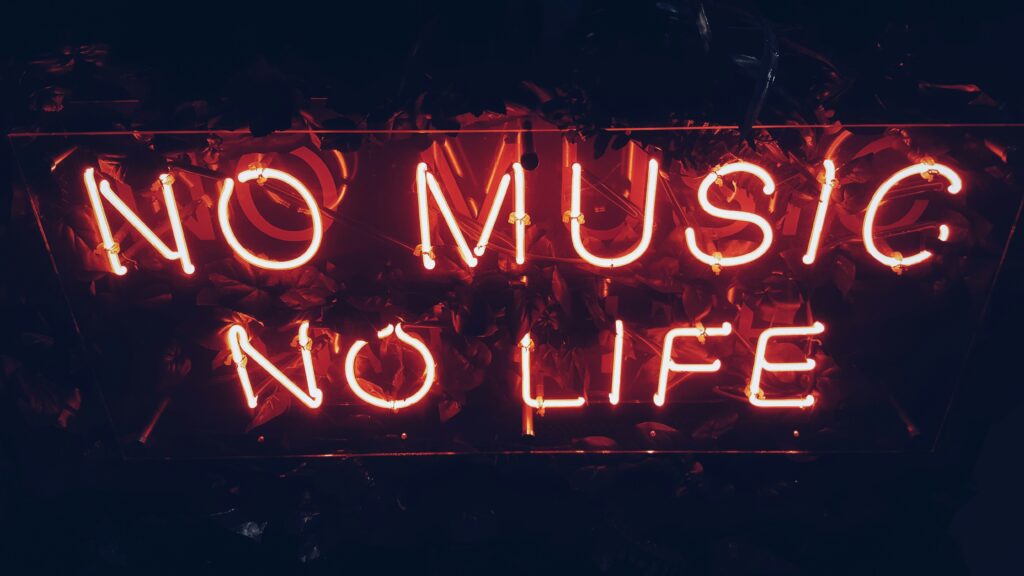
Photo of a red “No music, no life”  neon sign.
(Image courtesy of Simon Noh via Unsplash)

But music has a way of calling you home.

“Why don’t you get back into your music?” 

Sage advice from the reliable co-pilot of my life’s course… 

Sometimes rebellions are small:

Foregoing a business lunch to raid the dusty local record racks.

A slow reintroduction of my favorite sounds to my rusty ears.

Perusing the Lonely Hearts’ Musicians columns for prospective band members.

The uniform started to dissolve. Tie pin swapped for a CND brooch. Gold watch alchemically transformed into a wristful of beads. I scribbled lyrics and chord progressions on the back pages of a legal pad fast filling from the front with to-do lists and financial targets. I was writing songs for the first time in years when I should’ve been working. 

But I was working: doing my real work. And all the while, my hair was regrowing. Past the ears, the collar, the shoulders. Like Samson-in-retrograde.  

Moonlight as a tightrope walker?

Why is it that we reject our passions for professional success? Why can’t a stockbroker also be a record-breaker? A politician, a part-time poet? 

Why can’t an art-loving banker be an artisanal baker? Or a teacher moonlight as a tightrope walker? Why can’t a lawyer be a longhair? With each inch of regrowth, how much did my intelligence recede? Did my legal advice lose its luster? 

No. Those abandoned guitars weren’t telling me what I’d escaped, but what I’d lost. I can combine my profession with my passion, and I should. I owed it to myself.  

Recapturing my love of music was the easiest thing I’ve ever done, because it was what was supposed to happen all along. As I type these words, I’m spinning my copy of David Crosby’s If I Could Only Remember My Name. Its first song: “Music Is Love.”

From Silence to Standing Ovation

“Are you just going to stand there without saying anything?”

That was what someone in the crowd blurted out when I stood on the stage, frozen for over three minutes, trying so hard to remember the opening lines of my speech. Sadly, I couldn’t. Embarrassed was an understatement. I can’t even describe how I felt.

The hall suddenly felt cold — so cold that my body started shaking. At that moment, I wished I had the superpower to disappear. Every student laughed — except my best friend and my tutors. Maybe I wasn’t prepared enough. Or maybe the sight of the crowd scared the words right out of my mouth.

I had no choice but to step down — embarrassed, regretful, and wishing I never got on that stage in the first place. Of course, I cried an entire ocean. 

It was our end-of-the-year party back in high school, and from that day on, it felt like every student — except my best friend — became my enemy. Hours passed. Days passed. But I couldn’t get what happened out of my head. It kept replaying in my mind every time I was alone.

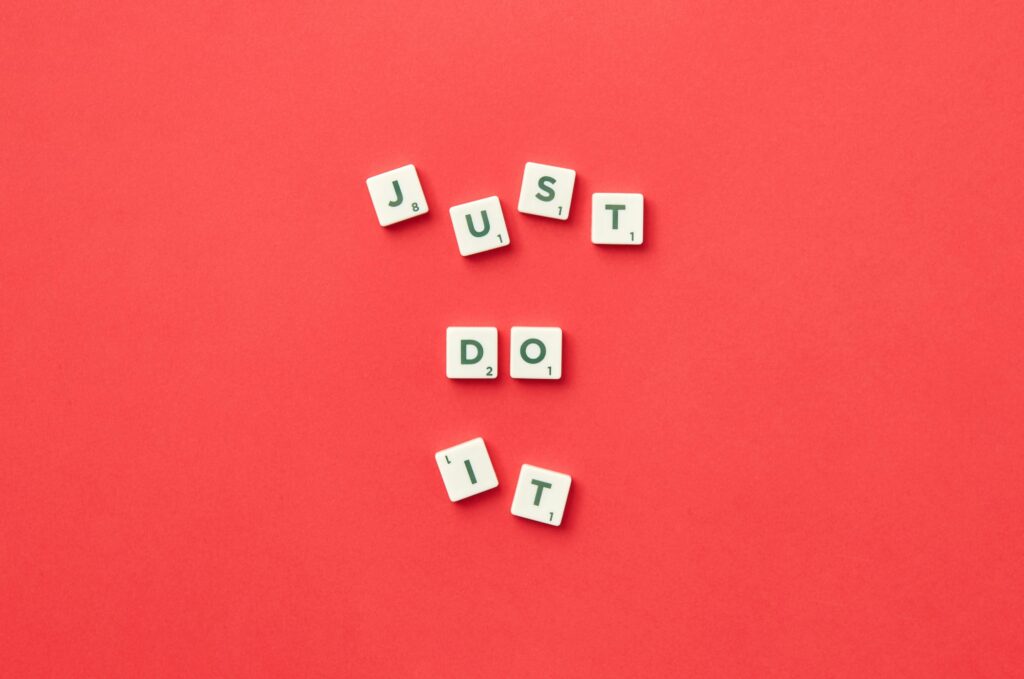
Scrabble tiles on a red background spelling out “Just do it.”
(Image courtesy of D S Stories via Pexels)

On second thought, face your fears 

Seven months later, I was given another chance to speak. And this time, I was ready. Ready to show them what I could really do. But getting there wasn’t easy. It came with a lot of practice and change to a “Can Do” mindset. I spent weeks watching my teachers closely — how they spoke, their body language, their pauses, their tone. I took it so seriously. I studied them like you’d think I was contesting for a national prize, or the president was going to be in the audience.

Still, I failed. A lot while I was practicing. I would skip lines, forget my words, and even go completely blank during practice. But I never gave up. I never did. 

If someone once said “Winners never quit, and quitters never win,” well, I wanted to win. I wanted to earn back my respect. I wanted to silence every mocking laugh. So I could not quit. 

Yes, first impressions matter — but second impressions? They can change everything.

I would call my parents, siblings, and even the workers at home to sit and watch me practice. They gave me honest feedback, and I took every correction seriously.

Slowly, bit by bit, things began to change. I stopped skipping my lines. I didn’t go blank anymore. And the biggest change: my mindset. Before, I had a fixed mindset. I was too focused on proving myself to others instead of becoming better for myself. I wanted validation more than real growth. 

But then, everything shifted.  

I began to focus on myself,  becoming the best version of myself. I became more comfortable in my own skin. Yes, I started loving myself and wanting better for myself. And that’s when the real change started. My speeches flowed naturally. I now spoke with confidence. 

My parents and siblings clapped — genuinely. They told me where I could improve. I listened and applied their feedback.

Then another opportunity came. It was our end-of-the-year party again. But this time, nobody was selected, we were asked to volunteer to speak, and anyone who did would be given a chance to speak…  I didn’t even hesitate. I raised my hand.  And I was lucky enough to get a chance. 

As the day approached, I studied, prayed, and practiced. A lot, I mean, a lot. I stumbled many times.  I was also tempted to step down. Fear still crept in me.

“Are you sure you can do this, huh?” 

“Should I fake being sick?”

 “Should I run away on that day?” 

“What if I mess up again?” 

But deep inside, I kept hearing this quiet voice: “You can do it.” That little voice pushed me to keep going. I heard everything but listened only to “You can do it.”

A black woman speaks powerfully while multiple microphones convey her important message!
(Image courtesy of Alfo Medeiros via Pexels) 

Ditched my fears forever

Finally, the day came.  I mounted the stage. My heart raced the moment I saw the crowd. I was afraid and my hands began to shake — that old fear.  This time, I didn’t let it stop me.

I took a deep breath, looked around, and began. I started with:
“Good morning ladies and gentlemen…”

And I kept going, line after line, word after word, until the very last word. I didn’t skip a single line. I spoke not perfectly, but confidently. That made all the difference. I owned that stage, the stage was mine. My speech ends and…

The auditorium was echoing with claps.  It was loud; everybody was clapping. My overjoyed eyes saw some of my tutors standing while clapping. I saw my best friend crying. She was proud of me.

I got off the stage with teary eyes. This time it was tears of joy and pride. “Did I just do that?” I kept asking myself over and over again.  My tutors and friends came over to me, appreciating me for my performance. One of them, who had laughed at my first speech, came over and said, “I never thought you could pull that off. Bravo.” I replied with a smile, “This is just the beginning.” 

That night I was overjoyed, I didn’t remember to eat dinner. I just sat replaying the video on my phone, again, and again, and again. 

That was the day, it dawned on me —

My voice matters.

And do you know the sweetest part? Your voice matters too. 

Yes — You! 

 It exists.

 Find it!