Covered Mirrors and the Souls of the Dead (November 2)

It may be strange, but my grandfather died between the 1st and 2nd of November 2000. He, who had always been full of life and joy, had been confined to his bed for two months, weakened by a very aggressive cancer. Not even two intensive surgeries had been able to remove it completely. The doctors had always told us not to lose hope, and I had deluded myself into thinking that his recovery was truly possible.

I was sixteen years old and I didn’t know the true meaning of death. Death had seemed like a distant or fantastical concept, something to be read about in a mystery novel or seen in a movie, but reality is different from fantasy. Especially when it comes to the people we love.

That night, death took my grandfather in his sleep and, although we had been expecting it for a while, knowing never stops the pain. When he stopped breathing, the only people in the room were my grandmother and her sister, Caterina, who had volunteered to take shifts with my parents and my maternal uncle and to relieve my grandmother of some of her daily responsibilities. It was she who noticed that my grandfather was finally free from pain.

When I heard the landline phone at home ring, I immediately understood from my mother’s voice that the inevitable had happened. We quickly got dressed and went to my grandparents’ house, which was in a seven-story condominium not far from ours.

I didn’t cry on the way. There was still something unreal about the event. But when my grandmother greeted us in tears and led us into the bedroom, where I saw my grandfather’s waxen and motionless face with my own eyes, I was undeniably confronted with the reality of death.

As my mother sobbed, I felt almost paralyzed. Suddenly, Aunt Caterina put her arm around my shoulders and whispered softly, “You’ll see, your grandfather will be at peace now. But you have to help me do something.”

I looked at her, perplexed. What was there to be done?

“We have to cover all the mirrors in the house.”

I thought she had gone mad as she took me by the arm and slowly led me into the hallway. Dazed and with my heart pounding, I followed her into a small storage room. She grabbed some large dark blue dish towels and a sheet.

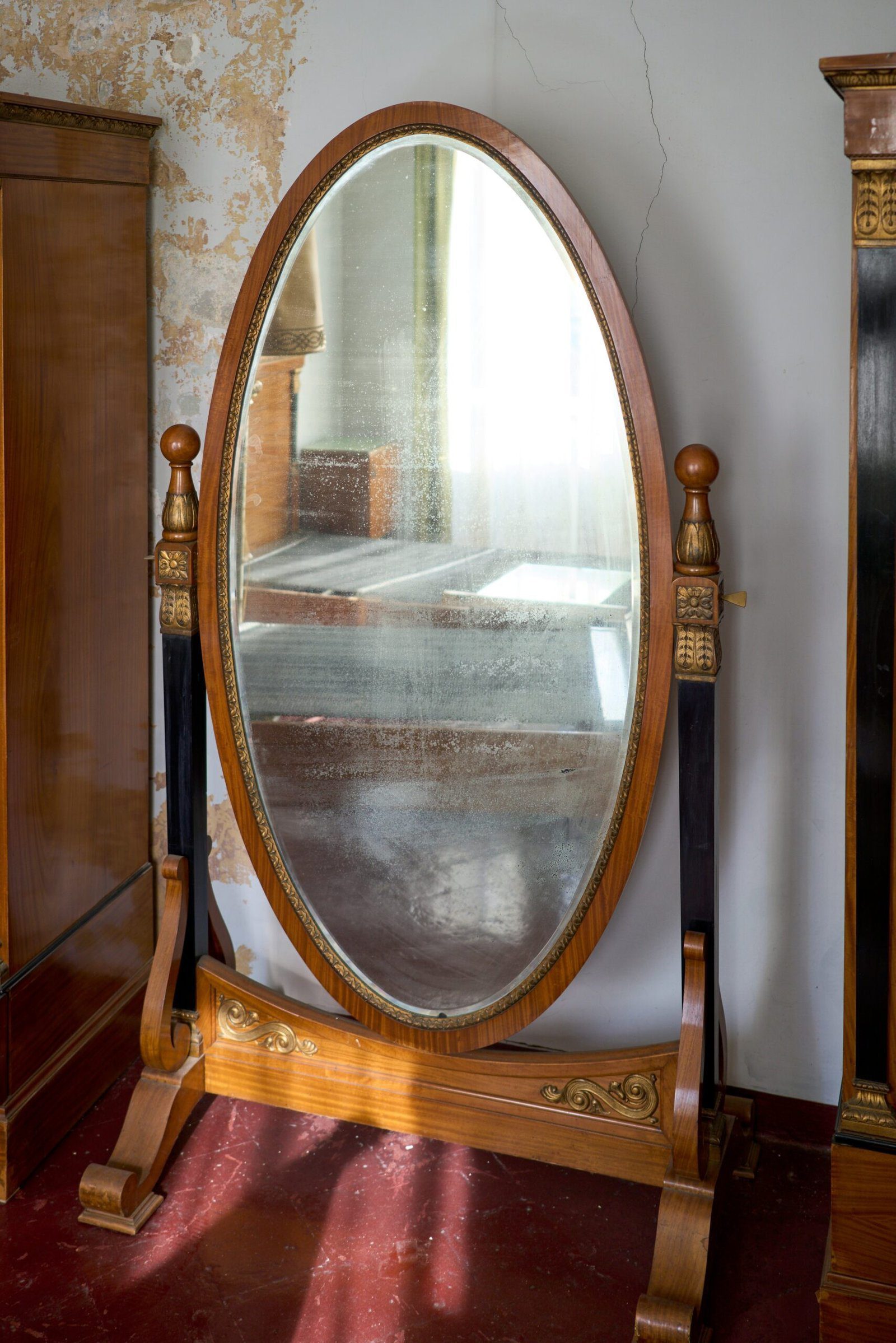
There were three mirrors in my house. One mirror in my grandparents’ bedroom, one in the corridor, and a rather large and antique one in the dining room that had been passed down through three generations.
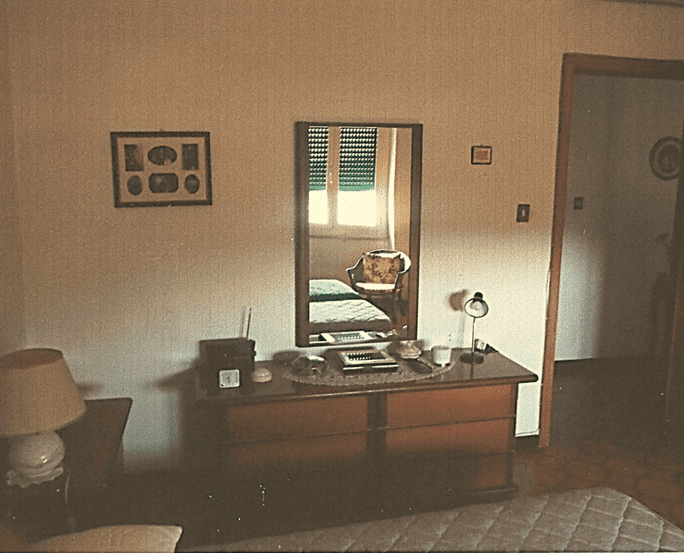
(Image courtesy of Viviana De Cecco – November 2000)

When we entered the bedroom, Aunt Caterina asked me to help her tuck the edges of the cloth into the upper corners of the frame so that it was completely covered. 

It was this way that I discovered one of the funeral customs that are still deeply rooted in Sardinia, in all of southern Italy and in various cultures around the world. There are traditions so old that no one knows exactly when and where they originated. Covering the mirrors when a person dies is a custom that has its roots in the mists of time. 

Aunt Caterina explained to me that covering the mirror with a cloth prevents the soul of a deceased person from being frightened by seeing its own reflection. In addition, to prevent the departing soul from getting lost, it is appropriate to close all the windows, draw the curtains, leave some lights on and leave the door open to facilitate its journey to the afterlife.

The mirror is often seen as a portal between our earthly world and another dimension, and the wandering soul of the deceased, drawn by the glow of its reflective surface, may become trapped there forever. Instead of leaving its mortal remains, it could potentially drag the souls of all the living people reflected in the same mirror and haunt the house of the deceased for all eternity.

I remembered all the times when, as a child, my grandfather would sit me on his lap before a family celebration and make funny faces in the dining room mirror to make me laugh. He was always ready with a joke, and the thought of not seeing his smile again tore at my heart. Seeing those mirrors covered with those big dark cloths, the typical color of mourning, felt like a sign of the end. They reminded me of those abandoned houses where life had faded and happiness has been lost forever.

These dark beliefs are much more prevalent in the inland rural areas than in the cities. That’s why my aunt’s words, coming from a rural village where certain superstitions about the dead are never underestimated, touched me deeply. Even though those ideas may seem quite incredible and ludicrous, there was something both frightening and reassuring about that belief. It was comforting to think that my grandfather’s death wouldn’t be the end, and that we had helped usher in the beginning of his journey to perhaps a better place.
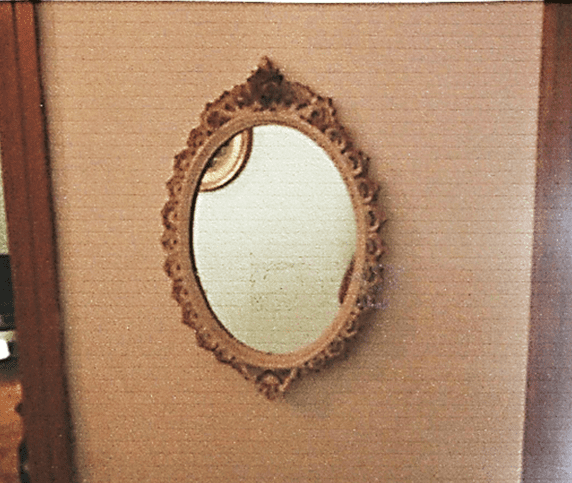
(Image courtesy of Viviana De Cecco – November 2000)

Even today, I feel torn between rational skepticism and doubt that there may be some truth in these ancient beliefs. Perhaps our ancestors were much wiser than us modern people. 

The Greeks and Romans were among the first to seek glimpses of the future in reflective surfaces. Who hasn’t broken a mirror and heard: “Now you’ll have seven years of bad luck”? The Romans believed that a person’s life was divided into seven-year cycles. Breaking a mirror would bring bad luck simply because it represented the souls of the living. Likewise, for the Egyptians, mirrors weren’t just for cosmetic purposes among the wealthier classes, but they also had funerary significance. It was believed that their radiance was linked to the sun god Ra and was a symbol of vital regeneration, which is why they were often depicted in the reliefs of the tombs of high dignitaries.

While doing some research on the internet, I discovered that this belief is also widespread in the Jewish religion. In the sacred text called the Talmud, there’s a phrase that several writers have quoted in their novels that refers to the human relationship with mirrors: “We do not see things as they are, we see them as we are.” This phrase makes me think that a mirror shows us our physical reflection on one side, but also reveals the nuances of our gaze, where all the feelings that lie beneath our exterior are hidden.

When we look at ourselves, we often say that we have a lively gaze. Where does this vitality come from? What can we call it? Is it the soul that we see? What is hidden within us that the mirror cannot really show us?

When a mirror reflects a dead person, there is no gaze to interpret and no movements to reproduce. Think of the vampire, who has no reflection in the mirror precisely because he is dead. Or consider exorcism practices, which sometimes use mirrors to chase demons out of the possessed.

So how do we know what is beyond the reflection of a lifeless body? I believe that superstitions are created to find the answer people have been seeking for centuries in their search for the meaning of life and, above all, its end.

Now it seems to me that this ritual is a demonstration of the living’s love for their loved ones, a testament to their desire to protect them. No one can know for sure what really happens the moment they depart this world, just as no one can know if there is emptiness or light.

What is certain is that, on that night when I returned home with my parents, I looked in the mirror in my room and wondered if my beloved grandfather, who had always been a guiding presence in my childhood, had found peace.

When my Aunt Caterina died three years later, there was no need to cover the mirrors. She died of pneumonia in the hospital, in that sterile environment where death seems even sadder. Everything happened slower with her. I had time to say goodbye to her and to hear that she had no regrets. She had been happy and was going in peace.

At that moment, standing at her bedside with my relatives, I began to believe in the soul. I believed it could be found in the looks of those who are with us, in their words and in all those gestures through which every human being communicates with his fellow human beings.
‘This Is Us’ — The Drama of Body Shaming, Diversity, and Conflict on My TV

Being a voracious reader since forever, I have always been a sucker for a good story. Unwittingly, I tend to submerge myself in characters  so completely that for those few moments I belong entirely to them — crying with them, laughing with them — oblivious of the tear rolling down my cheek or the smile plastered on my face, participating in their glee as well as their grief.

So when I came across “This Is Us” on NBC.com and Amazon Prime, my curiosity was piqued for many reasons. It all started with a news article that caught my attention. Highlighting the acting chops of the mellifluous Mandy Moore, this piece even flirted with a possible Emmy run, witnessing a meteoric rise in popularity. It was a running dual role of a young mother of triplets in a storyline oscillating between the past and present day where she plays an older woman eventually confronting an impending age-related disease.

Eager to see Moore on screen after a long time, I dove right in. 

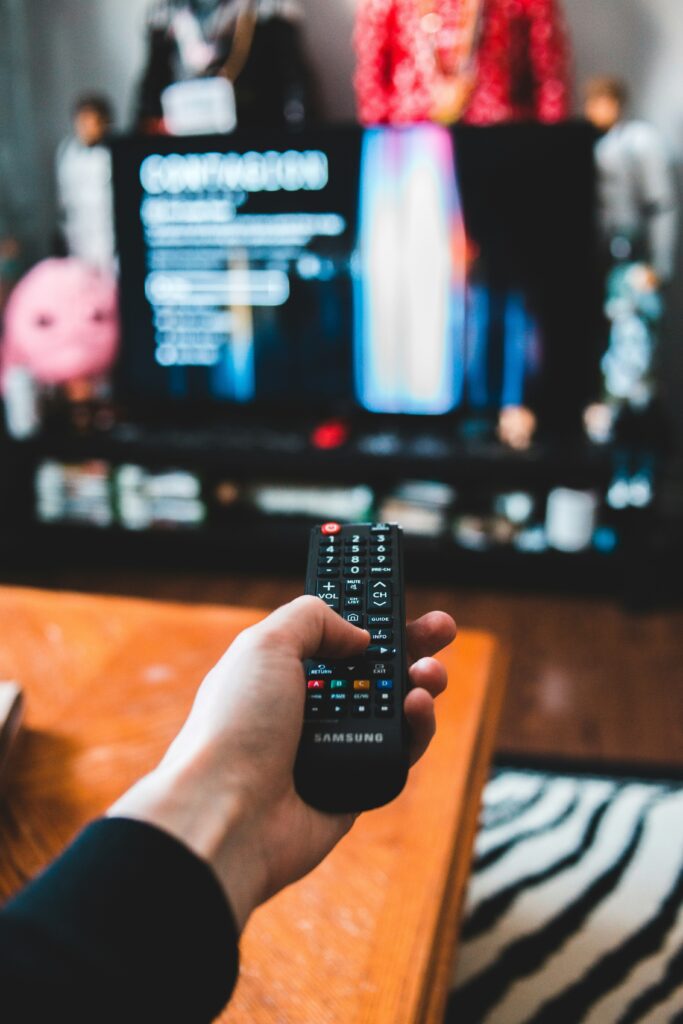
Image of a person pointing a remote control at a tv.
(Photo courtesy of Erik Mclean via Unsplash)

Family and mental health

I was hooked from the first episode. The pairing of Milo Ventimiglia and Mandy Moore as husband and wife is nothing short of a masterstroke. The passionately in-love, all-in superhero father and husband played by Ventimiglia, masterfully exuding the perfect cocktail of gravitas, charm, compassion, bravado, humility and problem-solver dad had my full attention from the get-go.

Inarguably, if Ventimiglia is the ship that keeps the story afloat, Moore and her immaculate craft are the sails that propel it all forward. With a few charming smiles that age gracefully much like the rest of her, Moore lures you in and makes you believe that Rebecca Pearson is who she is now and forever; that we can never go back to someone called Mandy Moore. Hailing from different worlds, these two characters fit like two broken pieces of the same whole, glued together by their own impervious love.

Unlike other gripping shows that I tend to binge-watch at optimal speed, I took my time with this one. Like a fine wine that is savored and relished with every sip, I took my time to unearth the treasure trove of familial bonds. In particular, between the Pearson triplets  —  the imperfections, the fractious relationships that conversely also formed the cornerstones supporting the reformed relationships of their later years.

Well-embroidered

What I loved the most was the brilliantly and most intricately sewn layer upon layer of not just the broader base story, but the amount of light shone on the unraveling of each character’s backstories and underlying complexities. 

Three siblings who could not be more different, battling their own unique demons since their childhood, deliver a poignant and relatable lesson on the importance of staying united as a family, even in periods of estrangement and coming together to lift up loved ones. I also noted how their father’s influence pulsates through these characters in all they do as their lives progress.

Pick a social issue

In its ingenuity, the show has incorporated important global issues like racism, body shaming, eating disorders, LGBTQIA+ living (seniors and teens), child disabilities, anxiety and mental health into each of its character stories.

How this family comes together for each of its members going through one of these issues, and how the show successfully manages to normalize these conversations is what struck me. Especially those plots under the category of mental health like Randall Pearson’s unrelenting anxiety issues, Kate Pearson’s damaged self-esteem with her weight, and Kevin Pearson’s enormous pressure on himself to live up to the man his father was. Kevin finds himself failing miserably at every step; he’s kind, but not the deepest. 

Affection in our homes

Even an aging Rebecca in the throes of an impending disorder still battles with profound grief after many years, and brings forth the importance of mental health patients. Conversations that need to start within the four walls of our own homes. 

Especially today, on the heels of a gradually quieting global pandemic that upended lives and fractured relationships, the need for families to double down on regular public displays of affection — especially in front of and with their children — is important in my life.

This is something I circle back to often. When I grew up, there was a clear lack of public displays of affection. We just weren’t “huggers”. It didn’t help that the society that surrounded us when we were growing up, and continues to dictate the acceptability of such acts of physical affection in public like hugging and kissing, also ostensibly made such desires within many families within their realm stay away from it. Or perhaps be more conscious of it. This was something the series hit home for me too and I find myself consciously making an effort to encourage physical gestures of love towards my siblings by modeling it for them too.

Diversity and body shaming

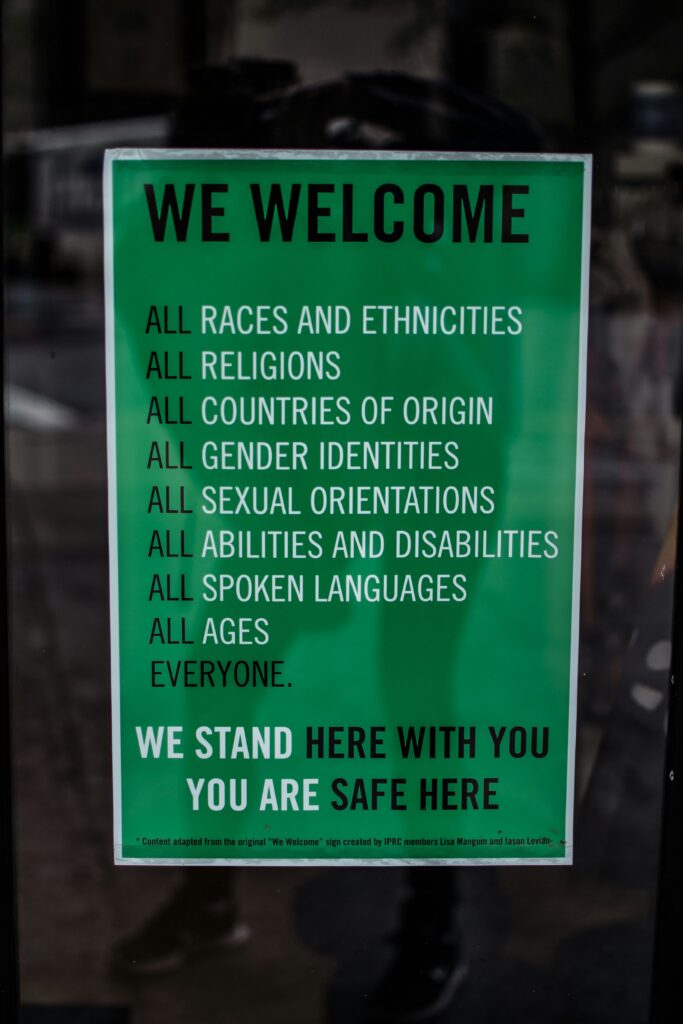
Image of a sign that says, “We welcome all races and ethnicities, all religions, all countries of origin, all gender identities, all sexual orientations, all abilities and disabilities, all spoken languages, all ages, everyone. We stand here with you. You are safe here.
(Photo courtesy of Brittani Burns via Unsplash)

In the early 1980s, a white American couple with twin babies adopts a third, an African American newborn abandoned by his father at a fire station. Steeped with the versatility that very few others possess, the inimitable Sterling K. Brown plays this grown-up Black boy, Randall Pearson, who was born to a black family but raised by a white one and was still trying to unearth the full story of his biological family’s checkered past. The show acts as the conduit that brings forth the harsh racism that people of color have been subjected to since time immemorial and still in the period in which the show is based.

It’s a wake-up call to recognize that the difference in color cannot and should not overshadow the sameness of all humanity. We often tend to begin this very important and urgent education too late. Just the other day, when my three-year-old son said that he did not want to play with our house help anymore because she was “dark” in color and not “white” like us, I knew that this education hadn’t started soon enough. A three-year-old doesn’t fully understand the weight of his words, but unwittingly he brought forth the urgency of handholding and guidance on this issue at the toddler stage itself.

Mental health too, remains a core and underlying commonality permeating the essence of the entire show and through all the time periods. Randall Pearson grew up with a white family that was so busy trying to give him a “normal” childhood that they never once addressed his “blackness” and the baggage that comes with it. Or how it could be affecting him and his curiosity to know more about his community and where he really came from. It is one of the main reasons his relationship with his siblings is consistently complicated.

When I think of how my four-year-old is learning to embrace his classmates who come from all cultures, races, countries, sizes and colors of skin, and how all of this is their “normal” right from the get-go, it fills me with hope for a more inclusive, loving, and broad-minded future.

There’s more 

A very overweight Kate Pearson struggles with weight loss, the inability to have a child, multiple failed IVF attempts, and ultimately the success of surrogacy while her best friend is struggling with the eating disorder bulimia. So many issues in this one sentence that go tabooed, unspoken, ill-approved, hushed-and-brushed under the carpet in so many countries and cultures even today. So many issues that for the most part only garner sneering spite instead of support. 

The effortless execution of the portrayal of all these important issues in the show is noteworthy. They don’t all resolve.  And then, there is illness [please ensure that the text in peach isn’t visible to the reader until they click after Spoiler Tag Alert to reveal it!] Spoiler Tag Alert Alzheimer’s disease is addressed across an arc of episodes.  This one hits close to home as it was what took my grandfather from us almost two decades ago. Moore’s portrayal of a woman who has just been diagnosed early with this neurologic disorder is Emmy-worthy in my book.

Aging in the four walls of our own houses

I was still in school and too young to fully comprehend that this evil disease was slowly but surely consuming my grandfather — shutting down his organs bit by bit inside the four walls of our own house. In many ways, this show that I watched decades after losing him is a sort of closure that I needed and didn’t fully understand that I needed back then.

I can write a whole book on why this show is a must-watch, but that would be tough to do without more spoiler alerts! It’s a riveting, heartwarming and stirring watch for everyone in every capacity — as a parent, a mother, a father, a wife, a caregiver, a child, a friend, a partner.

These are our stories too. 

There’s a reason they call it “This Is Us.”  

Two images of ducks in water. The photo on the left has a mother duck with her ducklings, while the photo on the right has just one adult duck.
(Photo courtesy of Siegfried Poepperl via Unsplash)


Toxic Words

Every language has thousands of words, and the ones we choose, I believe, almost always reflect who we are, what we feel, and what we want to communicate. I say “almost always” because I have never been fond of certainties, and I consider doubt an essential element of life, as to not judge people based solely on what they say. 

Sometimes, I too have said something rude in a moment of anger, but soon after came regret and most of all, the realization that I had made a mistake. No one is perfect, but when the words that are now called “toxic” are repeated and become a deliberate and ongoing way to hurt, then it becomes a conscious intent to denigrate and offend.

Who has not heard the old saying “actions speak louder than words?” 

It is a concept that seems extremely valid to me, but sometimes we forget that words have weight. With thousands of words at our disposal, it is reasonable to assume that most of our linguistic expressions in life and social communication are the result of a choice. Unless fate (or whatever else governs human life) intervenes in our lives, when we speak to another person, we should be careful not to offend the sensitivity of our interlocutor.

Recently, while reading a website of aphorisms, I was struck by a quote by author Rhonda Byrne. In 2006, she wrote the essay “The Secret,” which I plan to read soon, discussing topics related to personal growth and inner development:

            “It only takes a minute to cause hurt but sometimes a lifetime to repair.”

The author puts “words” first and then “actions”. This does not seem to me a coincidence. Words are a way to convey positive feelings, but also to express violence and aggression toward, for example, fragile people.  

Human beings cannot live in isolation. We all often need affirmation, support and help from those around us. I believe that the freedom to express one’s opinion does not preclude the ability to do so with kindness and tact.

My best friend had been the victim of a truly toxic relationship. When she introduced me to her new boyfriend, he seemed to me like a serious and polite young man. He was elegant, handsome, and behaved like a gentleman from another era.

But from the very first night, I could tell that something was wrong in their relationship. There were four of us at the restaurant table where we had made reservations: myself, my then-boyfriend, and the two of them. As the waiter served the first course, my friend’s boyfriend began to share anecdotes about their fledgling relationship.

“You know your best friend can’t cook? And if you saw the mess she makes in the washing machine! She ruined two of my shirts. She can’t even read the washing instructions.”

Throughout the evening, he criticized every one of her actions. As he spoke, I wondered: “How can a man in love only point out the faults of the person he is with?”

Maybe my friend was not perfect. Maybe it was true that she could not cook or use the washing machine. But where is the line between truth and contempt? The point was not to be hypocritical or to hide my friend’s flaws, but to choose words that wouldn’t make her interpret it wrongly and feel inferior because of her minor shortcomings. 

I tried to resist the temptation to confront him in front of everyone in the restaurant, and at the end of the evening I took my friend aside.

“Do you realize that all he did was criticize you? How can you live with someone who doesn’t appreciate you?”

“He has never laid a hand on me, if that is what you mean. He is not violent.”

But I knew that violence does not always manifest itself in actions. There is also a subtle and invisible form that is transmitted through words.

When I told her to leave him, she shrugged. She had always had a difficult home life and a troubled relationship with her father. But she had chosen a man who was even worse.

Every word he spoke was meant to show contempt, to belittle and manipulate her. He wanted to make her feel bad about the smallest things, as if he wanted to prove his superiority.

There was nothing I could do at that moment. The choice was not mine. I could only offer her my support and tell her that I would help her at any time. A few months later, I got a call from my friend. She had left their home. She had reached a point where tolerating it was no longer an option.

This is why I believe we must choose our words carefully when interacting with those close to us. Sensitivity is a value that should not be sacrificed to selfishness.

This is why Rhonda Byrne emphasized the importance of words. How we use them surely reveals the kind of person we want to be.