The Color Of Far, Far Away That I Found In Peru

I had never traveled internationally or spoken any language other than English. Yet somehow, something so seemingly impossible became real. I was about to step out of my comfort zone and personally experience a giant leap of a trip outside of just pictures or videos on the internet. 

Last September, I left my five children for twenty days, crossing the 2,800 miles from North America into South America, but I found myself in Peru. My friend Ana, a native Spanish speaker from Mexico, grabbed my hand before we exited Lima airport, telling me, “Don’t talk to anybody, and stay right behind me.” Her take, not mine, but she was Latina, so I didn’t argue. 

The doors slid open and a sea of faces — clustered close together and vying for attention — called out, voice upon voice, begging to take someone, anyone, any place they could possibly want to go. Ana already had a taxi driver waiting for us, her name written on a board he was holding, standing just outside the swarm. She held me close behind her until we were loading our bags in the trunk.

I sat silently in the back while Ana and our driver chatted. Apparently, the driver asked where I was from. Upon hearing the States, he responded with “Oh, so that’s why your friend doesn’t talk?” 

Rules of the road

The road had no rules. Lanes meant nothing. Other vehicles meant nothing. Horns meant nothing unless you were the one honking, which meant you were serious. 

Our ride and every Peruvian ride we took from then on was a series of “We’re not gonna make it” action movie scenes. The cars maneuvered the way motorbikes do, weaving through the small in-betweens. The bikes, and there were many, carried up to three people at times.

Doorways to other worlds

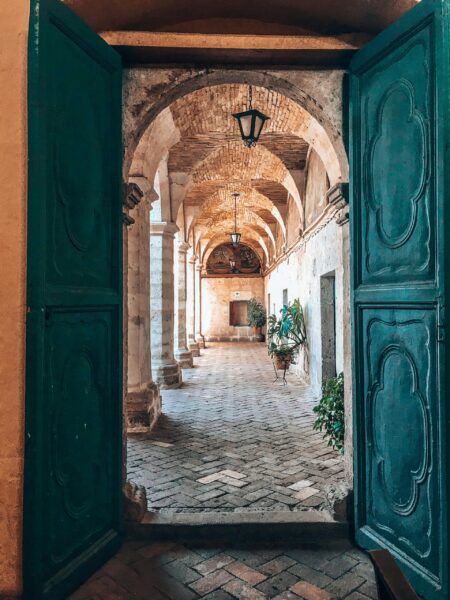
Our hotel entrance was a doorway stuck between all the other buildings and so simple that I glossed over it every time we returned to lay our heads down. That could have been because a doorway does not speak the same way that a door does. 

(Image courtesy of the writer)

A doorway is but a hole, a near emptiness, a thing which may be crossed. But the Peruvian doors are entryways, mystical, unknown, and bursting with the knowledge that an entire life unlike your own exists just beyond. 

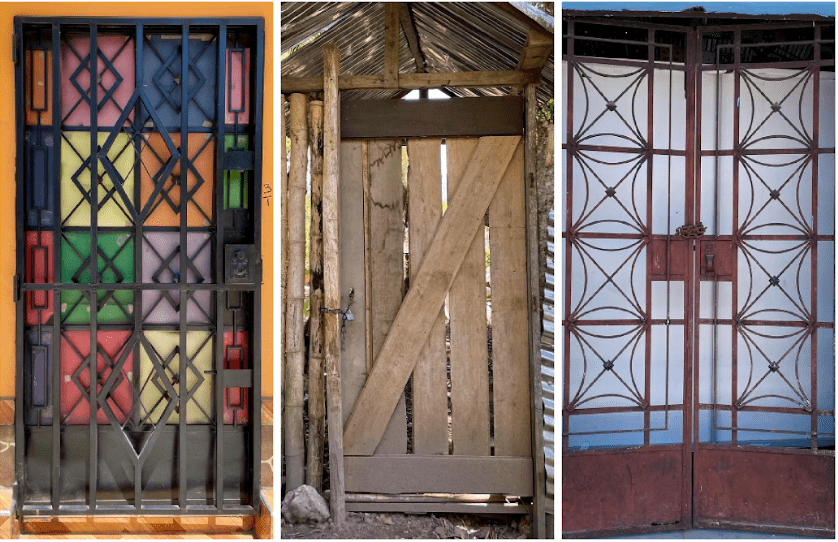
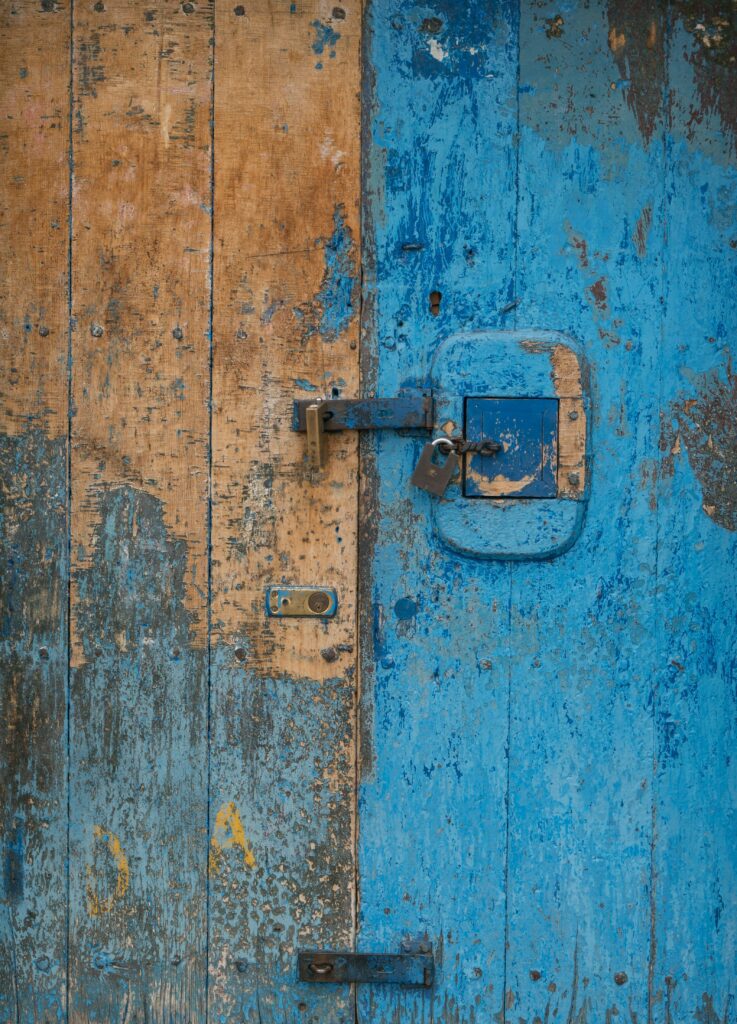
They are made of color, of gated iron, of broken down wood, of stories. Doors became my obsession. If the drivers of Peru were number one on our “ways to die” list, the act of getting a photograph of a specific door was a close second with how dangerous getting to some of them ending up becoming. 
(Image courtesy of Rod Long via Unsplash)

Cathedrals, shanties, museums, and houses had elaborate doors kept safe behind bars whereas some others were left open and easily accessible. Bikes were left to lean around everywhere we looked. One open door, the one to church, required payment to enter. The closed ones — with their lion heads forever keeping their iron rings prisoner — were the most telling.

Closed doors and grated windows were sometimes guarded by the police, all of whom were more than welcoming when I asked to get a picture of them. They said I could join them, or sent me across the street to go beyond a gate there to get a picture with their other police officer friend. The doors told stories. 

Transported to the beautiful unfamiliar

The people told stories, too. The architecture. The murals. The mist that forever kept the city of Lima the same gray as the inside of a cloud: light and dreamy. 

Ana and I walked and walked our first three days, before we moved deeper into the city. Among the people, it was easy to feel like the distance from home wasn’t quite so great. It was a crowded city like any other, where people had little dogs wearing sweaters and booties. We were by the ocean, which felt foreign enough for gleeful excitement, but not enough to feel transported. 

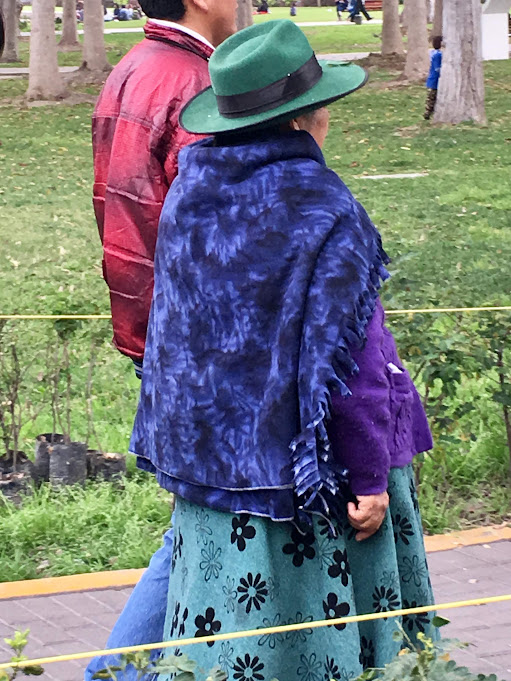
That enchantment happened when we came across the first woman dressed in traditional Peruvian layered Inca clothing. Rich jewel-toned colors and knit patterns wrapped her, and a baby was swaddled against her chest as she walked while selling homemade chocolates. She was petite and beautiful. Gentle like a doe.
(Image courtesy of Yosef Baskin)

Ana spoke with her while I looked on admiringly. Her woven basket of chocolates was just a bit too large for her to reach across its diameter. The chocolates were wrapped in paper with bright stripes of blue and orange. Their tops were cut into strips, erupting from them like a little carnival.

Ana, who is allergic to chocolate, gave her some small change. A blue bundle left the basket as she turned and asked if I wanted the peanut butter chocolate. I gave her my coins. An orange carnival tent came in exchange. I gestured and asked in English if I could see her baby. Shyly, she pulled part of her colorful wrap aside. 

I was stunned by the baby’s beauty — its unknown power that all babies possess — but even more so by his sheer size: to think that he came from his mother’s small frame, and that he was still only seven months old!

That was the moment. The moment that felt like thousands of miles away. The moment when a stranger became a life and a place became a home. The moment that even my best imagination could not come close to comparing to. Peru was just a few thousands of miles away from home, different but similar, and knowing that made it feel surreal. The ground we walked upon, the air we walked through, and the mist-covered mountains that seemed to float in the sky, were always there, yet always out of reach.

So many wonders we will never forget

We ate plenty of food – mostly good, some not. We had a spontaneous paragliding adventure, but that wasn’t nearly as terrifying as the drive to the beach without a seat belt. We were overwhelmed by the marketplace on our “gift getting” day. We spent a day in the plaza and burned our tongues on the best churros ever. During all of these experiences, every single person was kind.

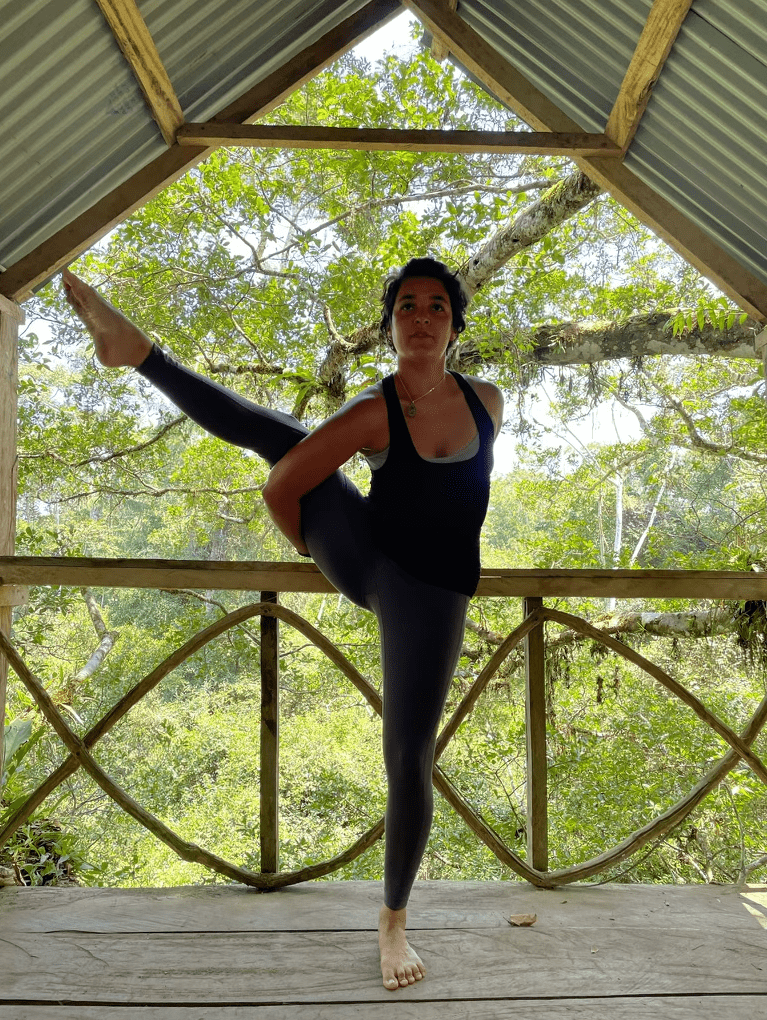
We spent three days in Lima, every second of them filled, and each one with a story of its own. After those three days, we next made our way across the Andes by plane and up the next mountain by car. We traveled deep into the jungle towards Moyobamba – a place where we would train to become certified yoga teachers. 

(Image courtesy of the writer)

In Moyobamba, we spent fourteen days nestled alongside the river at the Kantu Lodge. Thirteen people – nine students and four teachers – got together every day from 5:45 am to 10:00 pm. 

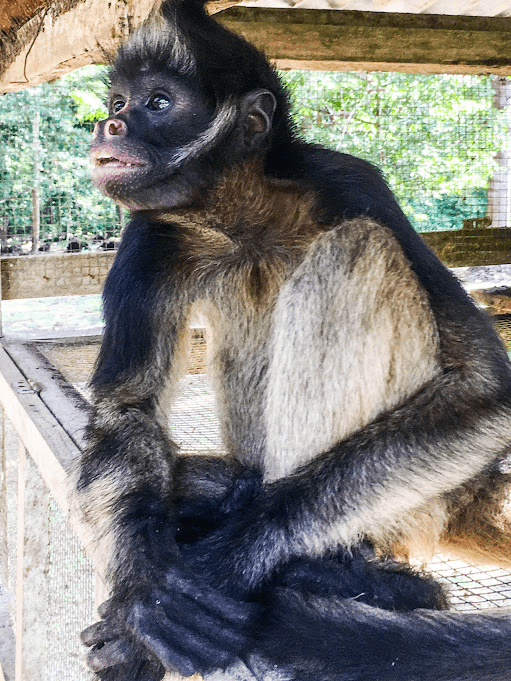
There were also the adorable black spider monkeys with tails as long as their bodies that swung from the trees just outside the shala (a shaded, open pavilion, from the Sanskrit term for adobe) where we practiced. The local butterflies were the size of both my hands together and flew lazily about, their sky-blue iridescence unreal in their authenticity. 

We hand-washed clothes in the bathroom sink and hung them out to dry with the hope it wouldn’t rain. Except for the single day of a continuous 12-hour downpour, our clothes stayed relatively clean. We shooed tarantulas, huntsman, and every other spider from our bedrooms, the shala, and the girls who screamed at every insect that came near them. 

(Image of Amazonian Spider Monkey orphan courtesy of Yosef Baskin)

We did yoga with the children on the streets who happily ran around barefoot —

some no older than four, asking us “Yoga? Yoga!” 
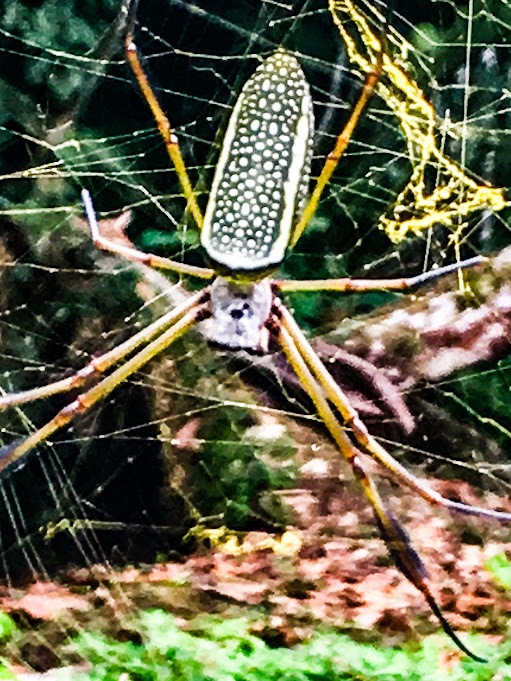

(Image of Peruvian Golden Spider courtesy of Yosef Baskin)

We traveled misty rivers, drank cacao, and visited a remote region filled with medicinal plants run by indigenous women, and to swim in the waters there. We saw hummingbirds and huge, ruddy brown birds with reddish eyes, looking in as they watched us from behind glass. We feasted on 42 total different vegetarian dishes served at every meal. We danced while thunderclouds rolled above us or while a fire crackled between us. We sang loudly from the balcony and along the paths. 

But most importantly, we laughed. We laughed with hearts who knew what it was to really laugh. We left as certified yoga teachers, but that piece of paper holds within it stories of adventures I never thought possible and that were truer than ink can describe. It holds a piece of the world that really does exist, so far, far away from home. 
We Built La Familia

Maybe it was the traveling we always used to do. 

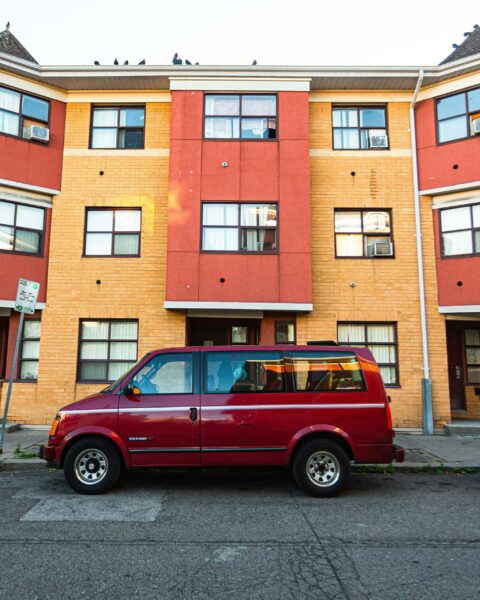
A family of six that would pile into a fire-engine red 1985 Chevy van, a vehicle that could easily hold a family of six. However, we would always load the van with all kinds of toys and goodies, so I imagined it looked like Santa’s sleigh, filled with as much joy and happiness as he delivered on Christmas Eve. 

This is something that my family would do every December for as long as I can remember. A strong family, with beliefs our parents would instill in us and to one day show our future family.

Meet the crew

Our crew of four kids was made up of serious, silly, and sometimes not-so-well-behaved kids. There was my youngest brother, who could not have been older than eight years at the time. He was a chubby child with curly hair that had more waves than the ocean. I remember all my aunts would comment how it was the look their hairdresser should mimic. 

Next was me, a doe-eyed kid with thin, long wavy hair and glasses to finish off my innocent look. Then there was my older brother, a lanky child who would constantly be outgrowing his clothes because of how tall he was getting at that time. The oldest among us was my sister, who stood at 5 foot nothing, with the longest black, spiral shaped hair of anyone we knew except for my mother. While she looked like a little girl that wouldn’t hurt a fly, to us, she was the guardian of the bunch. She was like a second mother to us boys. 

My mother was no taller than my sister, but the respect she demanded from us kids was that of French wrestler Andre the Giant . My father was the tallest man I had ever seen back then, towering over us like Dwayne Johson does to Kevin Hart (compare heights of 6’5”/196cm with 5’2”/157cm). He looked like a Mexican version of Mufi Hannemann, former Mayor of Honolulu, if Mufi had a thick black mustache. 

This is the family that would show me what it means to be la familia

Memories of our journeys

Family trips were some of the fondest memories I could remember. While it felt like we  would travel for what seemed like days, it was only about 12 hours. The long hours were not the reason for the fond memories, but how we came together as a family to make the trip the most memorable. 

We would laugh at each other telling jokes, play card games, and make lonches de aguacate. These avocado sandwiches were not some mediocre meal that anyone could prepare. No, this was left to mi madre, who could make a simple aguacate y jamon con queso lonche (adding ham with sliced cheese) look like the best meal you would have ever had in your entire life. 

My mother would tell us how much of her heart was in making meals for us on the road. It was so important to us that our mother would make the lonches, that when my father wanted to stop at a restaurant to eat, we all would object, “No. Just buy what mom needs.” 

Some of the best jokes told on this trip were, in the opinion of my older brother, “So funny you could laugh so hard that you may laugh your head off.” He would say knock, knock and everyone in the van would have to respond, because if we did not, all anyone would hear for the next century was him nonstop saying, “Knock! Knock! Knock, knock!” Do you see how annoying this was? Nails on a chalkboard. The joke would finally end with, “Well, you made me so mad that I forgot what it was.” 

My older sister was the one who, in her mind, had shuffled the deck of the cards in a manner that would put a Vegas dealer to shame. She would grasp half the cards in the right hand and the other half in the left, then she would bring the cards together to shuffle them and mix the two decks into one. She would finish off her shuffle with a tap of the deck on the cooler that we were all treating as a luxurious green table from the MGM. I never thought it was weird that, as a child, I knew how to play poker. The stakes were high back then, where we all had our one sock that was filled with marbles to place a bet with. 

The scenery would change so much as we traveled south. As we traveled, we would see mighty chunks of rock rise all over the land. To be able to witness mountains that stood with such firm, vertical, gravity-defying peaks was always something to admire.

So many times we would have to travel on a road that hugged the mountain and our van would hug the road just as tight as a child hugs their mom after the first day of school. Just as the mountains came, so did the landscape of the desert. The desert was full of sand, flat, crumbing rock, sandstone, and cacti that looked like it was leaning over searching for water. 

The family reunion

(Image courtesy of Andrik Langfield via Unsplash)

Many of these trips would take us to our family in a little village on the outskirts of Durango, Mexico.

Our arrival at the village my parents grew up in was always something that brought a smile to me and my siblings. The entrance to the village was not very noticeable, but we knew that we had arrived when we had passed the only building that everyone got their hielo (ice) from. This building from the outside looked like it was built with adobe clay. It was as long as my little eyes could see. There was always a line of gente (people) to get their hielo

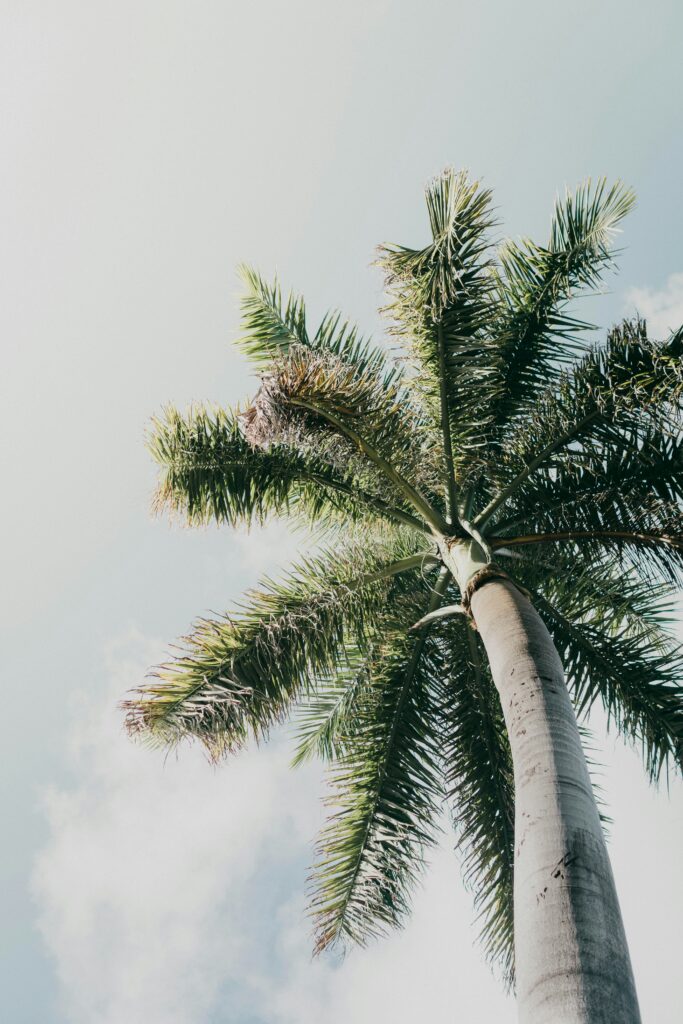
Next would be the road to my grandparents’ house. Believe it or not, there was a La Palma landmark very well known to us. That palm tree was as tall as the Eiffel Tower and would tower over all the houses on that block. My grandparents’ house was in sight from there and we could see the metal french-style door, which changed colors according to which color my abuelita  (granny) felt like at the time. It was a fun guessing game to see what it would be every time we visited. 

The nights in the village were actually brisk and always made the senses feel so much better, as it was the season of Christmas. Coming from a desert-like environment to a colder environment made us embrace the jackets our parents would make us wear, running around with our Parka jackets with our breath visible in the air and our noses as red as a reindeer. All this did not matter to anyone, as we would spend all day and all night in the courtyard of my abuelo’s house. 

My abuelita’s is a 5-bedroom home that at max capacity could hold maybe four families, but we squeezed in and made room where we could lay down. Being able to enjoy this time with our extended family was the greatest time in our life. Our family was as large as could be, with 20 primos y primas (cousins), not including my family and 10 tíos y tías (uncles and aunts). 

Family festivities

Every year was a family reunion with a party that would top the last, with the slaughtering of a goat so that we could enjoy a feast. The party was an epic scene, as it would start in the morning with Abuelita making breakfast for everyone. The adults would be having their cafecito con pan dulce (espresso with sweet buns) and us kids would be eating pan dulce with abuelita’s hot chocolate. 

(Image courtesy of David Guerrero via Unsplash)

Mariachi con la familia

With festivities comes music, of course. Since my father’s family is extremely musical, there would always be music playing in the background so everyone could sing along. My father’s brothers and sister would start singing like a Mariachi concert. It did not matter that the adults were singing ‘til the roosters crowed. It was always a delight to hear so much music coming from the courtyard. 

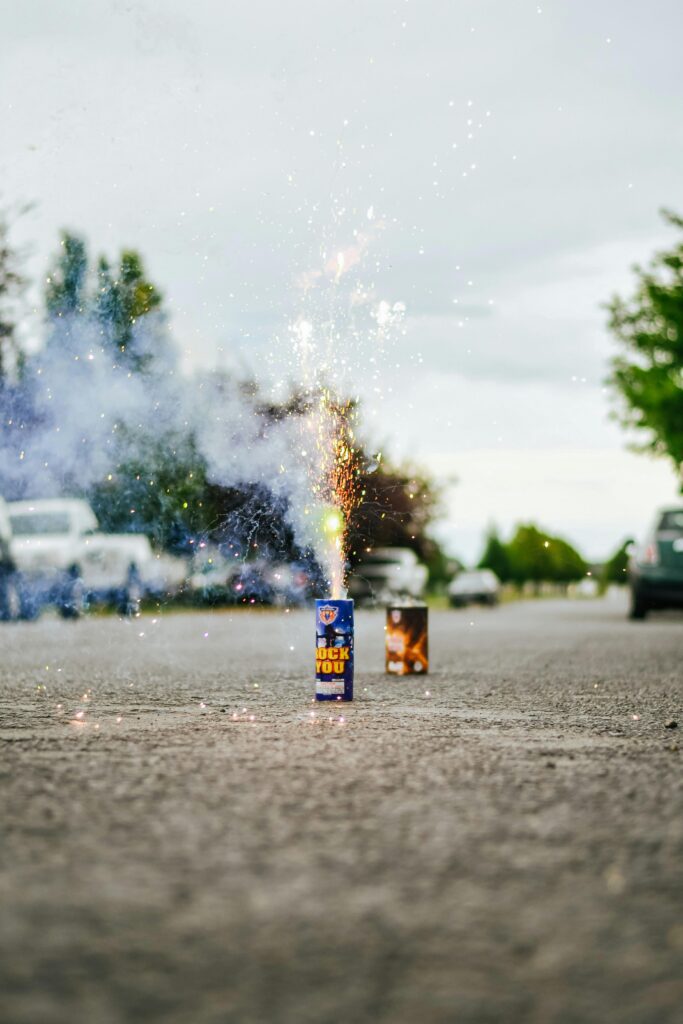
The laughter would continue with the younger siblings. My cousins and I had spent all day buying up all the fireworks we could gather from the corner stores. Each firework had a distinct shape and size. There was one we called La Palomita, it was the size of a pigeon. Not only was the size something to marvel at but, when La Palomita would go off, the paper that was holding what we believed to be gunpowder would fly everywhere like if a bird had just been struck. 

These times ensured great bonds were created and treasured. There was so much to enjoy, so much time — and so little time. These memories are the building blocks for what my belief in family is. La Familia is something that you have to work on. Not only with your immediate family, but with all your distant relatives. This will always be the strongest value that anyone can instill in their children.

(Image courtesy of Nubia Navarro via Pexels)

Almost Lost Forever: True Love and Survival

When the extraordinary Swedish documentary “Nelly & Nadine,” directed by Magnus Gertten, was released in 2022, it was featured in over 100 festivals and received more than 20 international awards, mainly in Europe. Thankfully in the US, it is now widely available on streaming services like Amazon Prime. For me, it was one of those films that stays with you, makes you think, makes you remember, makes you well up with tears. 

“Nelly & Nadine” is a true story about two women who became lovers at the most harrowing place and time — a concentration camp during WWII. Somehow, they survived. If it weren’t for a benevolent granddaughter named Sylvie, their story would have been lost. 

This documentary spoke to the heart of my own struggles and experiences as a lesbian of Jewish heritage. As a child, I knew my family’s immigrant story, how they crammed onto ships headed to America from Eastern Europe in the early 20th century. Those who stayed behind never visited us, and their lives passed from view. 

I was over sixty when I first visited Prague and went to the historic Jewish cemetery. Written on a memorial wall were the family names of Jews who were transported and killed at the Terezin concentration camp. My eyes scrolled down the lengthy list and stopped short at one name: Rappaport, the family name of my mother’s father. I gasped as a chill went down my spine. If I hadn’t gone to that old graveyard, their fate would have been lost to me. 

Delving into their story

The story of “Nelly & Nadine” begins at a remote farmhouse in Northern France. 

The elderly Sylvie Bianchi goes to the attic and opens dusty boxes, which contain her dead grandmother’s diary, letters, photographs, and home movies. She and her husband became the custodian of the boxes after her mother’s death. They faithfully kept them for many decades, as Sylvie had fond memories of her grandmother, Nelly Mousset-Vos (1906-1987), who had been an opera mezzo soprano of considerable talent. 

Nelly

All Sylvie knew of Nelly was the kind, gray-haired woman with the wonderful voice who came to spend Christmas holidays with her French family, traveling all the way from her home in Caracas, Venezuela. After the end of WWII, Nelly moved there with a woman named Nadine. Sylvie knew only that Nadine was just her grandmother’s friend and housemate. Their relationship was still a secret.

Sylvie was curious and at some point in her search, she found Nelly’s diary. She read only a few lines before it was too painful to continue. Her grandmother never spoke to any family member about her two years in various Nazi concentration camps, but there it was all laid out in words. Finally, she dared to go further, and what she found was astounding.

Sylvie decided to share Nelly’s archive, so this documentary could be made. Researchers, historical recordkeepers, and friends of Nelly and Nadine helped to flesh out their true story. As the story was unearthed bit by bit, Sylvie participated in the key interviews and was shown the documents. She came to appreciate her grandmother not only as a remarkable person, but also as a hero of France. 

Sylvie knew that Nelly performed in cities all over EuropeIn the 1930s, and that she had two children (her marriage ended in divorce.) She learned that after the Nazi occupation of France in 1940, her grandmother joined the Resistance as part of a spy ring. In 1943, Nelly was swept up and arrested by the Gestapo in Paris and sent to the Ravensbrück concentration camp. The prisoners were forced to do hard labor under terrible conditions; if they couldn’t work, they were killed. 

Nadine

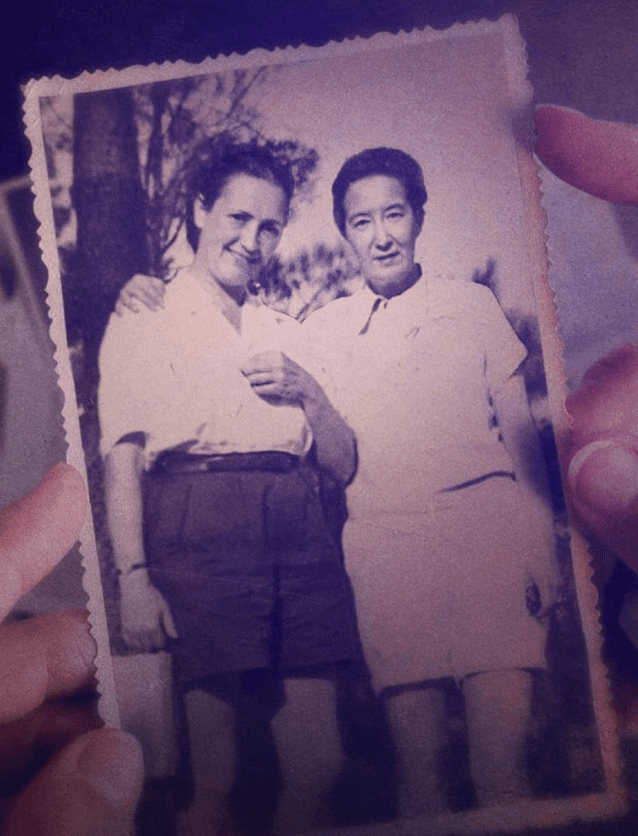
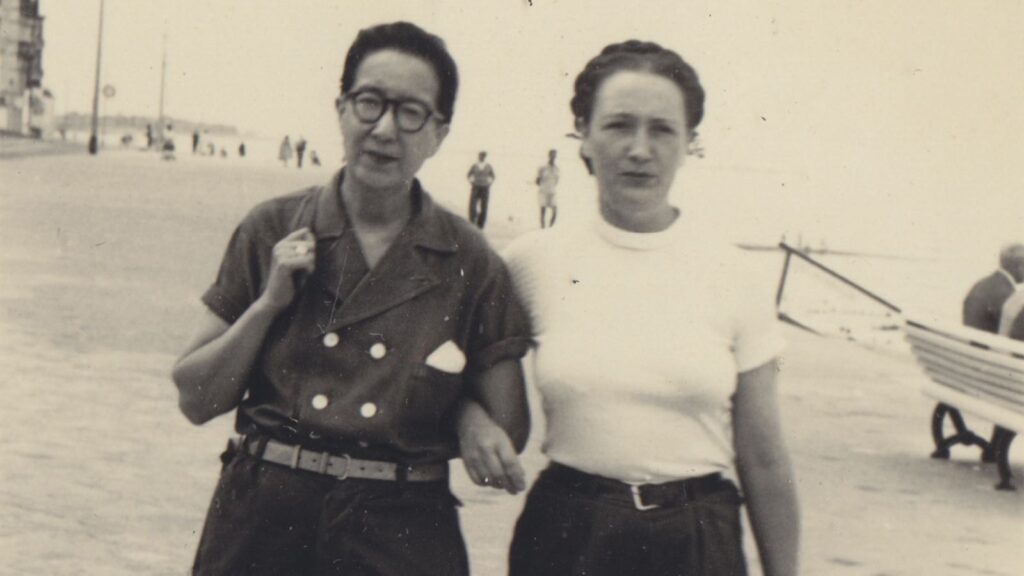
Old photographs and home movies revealed what the mysterious Nadine looked like. She had a tall, elegant figure with short dark hair and often dressed in trousers, a shirt, and tie. Born in Madrid, Nadine Hwang (1902-1972) was the daughter of a high-ranking Chinese diplomat and a Belgian mother. She was educated in multiple languages.

Nadine moved to Paris in 1933 and became part of the feminist/lesbian circle around Natalie Barney (1876-1972). A playwright, poet and novelist, Barney hosted a salon of notable artists and writers at her Left Bank home. Nadine became Barney’s chauffeur and one of her casual lovers. Nelly’s memoir stated that Nadine helped at-risk people escape from occupied France to Spain, which led to her arrest and transportation to Ravensbrück in May 1944. 

Nelly and Nadine

By Christmas Eve 1944, Nelly was forced to perform  carols. Nadine called out a request. 

With Nelly and Nadine meeting in the camp, their relationship became intimate and passionate. Against all odds, their love for each other kept them alive. They were separated when Nelly was later transported to the notorious Mauthausen concentration camp in Austria. Forced labor in the stone quarry usually meant death, and Nelly was close to the edge at this camp. Her intense memories of Nadine kept her going. As it happened, this was late in the war. 

The film shows a poignant clip of a movie taken in 1945 when a group of liberated prisoners from Ravensbrück arrived in Sweden. You see the faces of the survivors deliriously happy to be alive and start their recovery. Nadine was in that crowd. Hers was the only sad, tense face. At the time, no one understood the reason. Nadine was thinking of Nelly. Was she alive or dead?

By some miracle, Nelly had survived, and they found each other again. 

The real reel — my own story

What followed after the war was the story of so many gay men and women before the gay liberation movement of the 1970s. 

I know because I was around then. 

In 1965, I was a sophomore at UC Berkeley when I phoned my father from the dorm. I told him that I wasn’t returning home for the summer. I’d met someone I wanted to be with, someone I loved. Her name was Caitlin. My father exploded, calling me a child, an infatuated fool. He told me to come home or all financial support would end. 

I went with Caitlin, and my life became one of desperate struggle to stay in school and graduate. But I did. 

The price of being honest and true to oneself was so high that gay people had to make heartrending decisions. Some had secret lovers under the beard of a straight spouse. To keep a career and paycheck, one’s real private life was never spoken about at work. Coming out meant stiff societal consequences (even criminal in the case of men). On the streets, fluid gender or flamboyant clothes raised the risk of being beaten or killed. 

Not to compare to the camps, but no gay abandon for society’s rejects, either. Despite the passage of marriage equality and wider acceptance, it’s still tough out there for so many.

Buenos Dios, Caracas

Nelly and Nadine were likewise determined to live free and honest lives. Staying in Europe was too painful after what they experienced in the camps and too close to Nelly’s family. 

(Photo courtesy of  Egildes Rivero via Unsplash)

They picked Caracas, Venezuela — sunny and inexpensive with available jobs for educated, multilingual Europeans. The home movies showed them relaxing and entertaining their queer friends. They lived as partners until Nadine died in 1972.

Especially moving was the way Nadine filmed Nelly at their Caracas apartment. She caught Nelly deep in her own thoughts. Her face reflected a profound inner sadness, as her time in the camps could never be forgotten. One can only imagine that those memories were crushing and tragic. 

(Photo courtesy of Frameline48)

But she had Nadine, and they endured those memories together, always together. Love is love, that’s all, and that’s enough.