Almost Lost Forever: True Love and Survival

When the extraordinary Swedish documentary “Nelly & Nadine,” directed by Magnus Gertten, was released in 2022, it was featured in over 100 festivals and received more than 20 international awards, mainly in Europe. Thankfully in the US, it is now widely available on streaming services like Amazon Prime. For me, it was one of those films that stays with you, makes you think, makes you remember, makes you well up with tears. 

“Nelly & Nadine” is a true story about two women who became lovers at the most harrowing place and time — a concentration camp during WWII. Somehow, they survived. If it weren’t for a benevolent granddaughter named Sylvie, their story would have been lost. 

This documentary spoke to the heart of my own struggles and experiences as a lesbian of Jewish heritage. As a child, I knew my family’s immigrant story, how they crammed onto ships headed to America from Eastern Europe in the early 20th century. Those who stayed behind never visited us, and their lives passed from view. 

I was over sixty when I first visited Prague and went to the historic Jewish cemetery. Written on a memorial wall were the family names of Jews who were transported and killed at the Terezin concentration camp. My eyes scrolled down the lengthy list and stopped short at one name: Rappaport, the family name of my mother’s father. I gasped as a chill went down my spine. If I hadn’t gone to that old graveyard, their fate would have been lost to me. 

Delving into their story

The story of “Nelly & Nadine” begins at a remote farmhouse in Northern France. 

The elderly Sylvie Bianchi goes to the attic and opens dusty boxes, which contain her dead grandmother’s diary, letters, photographs, and home movies. She and her husband became the custodian of the boxes after her mother’s death. They faithfully kept them for many decades, as Sylvie had fond memories of her grandmother, Nelly Mousset-Vos (1906-1987), who had been an opera mezzo soprano of considerable talent. 

Nelly

All Sylvie knew of Nelly was the kind, gray-haired woman with the wonderful voice who came to spend Christmas holidays with her French family, traveling all the way from her home in Caracas, Venezuela. After the end of WWII, Nelly moved there with a woman named Nadine. Sylvie knew only that Nadine was just her grandmother’s friend and housemate. Their relationship was still a secret.

Sylvie was curious and at some point in her search, she found Nelly’s diary. She read only a few lines before it was too painful to continue. Her grandmother never spoke to any family member about her two years in various Nazi concentration camps, but there it was all laid out in words. Finally, she dared to go further, and what she found was astounding.

Sylvie decided to share Nelly’s archive, so this documentary could be made. Researchers, historical recordkeepers, and friends of Nelly and Nadine helped to flesh out their true story. As the story was unearthed bit by bit, Sylvie participated in the key interviews and was shown the documents. She came to appreciate her grandmother not only as a remarkable person, but also as a hero of France. 

Sylvie knew that Nelly performed in cities all over EuropeIn the 1930s, and that she had two children (her marriage ended in divorce.) She learned that after the Nazi occupation of France in 1940, her grandmother joined the Resistance as part of a spy ring. In 1943, Nelly was swept up and arrested by the Gestapo in Paris and sent to the Ravensbrück concentration camp. The prisoners were forced to do hard labor under terrible conditions; if they couldn’t work, they were killed. 

Nadine

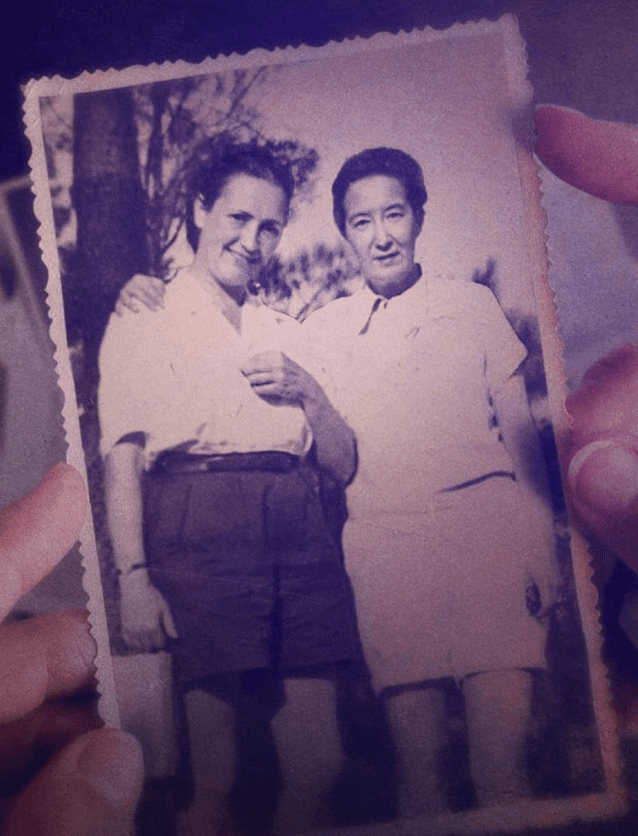
Old photographs and home movies revealed what the mysterious Nadine looked like. She had a tall, elegant figure with short dark hair and often dressed in trousers, a shirt, and tie. Born in Madrid, Nadine Hwang (1902-1972) was the daughter of a high-ranking Chinese diplomat and a Belgian mother. She was educated in multiple languages.

Nadine moved to Paris in 1933 and became part of the feminist/lesbian circle around Natalie Barney (1876-1972). A playwright, poet and novelist, Barney hosted a salon of notable artists and writers at her Left Bank home. Nadine became Barney’s chauffeur and one of her casual lovers. Nelly’s memoir stated that Nadine helped at-risk people escape from occupied France to Spain, which led to her arrest and transportation to Ravensbrück in May 1944. 

Nelly and Nadine

By Christmas Eve 1944, Nelly was forced to perform  carols. Nadine called out a request. 

With Nelly and Nadine meeting in the camp, their relationship became intimate and passionate. Against all odds, their love for each other kept them alive. They were separated when Nelly was later transported to the notorious Mauthausen concentration camp in Austria. Forced labor in the stone quarry usually meant death, and Nelly was close to the edge at this camp. Her intense memories of Nadine kept her going. As it happened, this was late in the war. 

The film shows a poignant clip of a movie taken in 1945 when a group of liberated prisoners from Ravensbrück arrived in Sweden. You see the faces of the survivors deliriously happy to be alive and start their recovery. Nadine was in that crowd. Hers was the only sad, tense face. At the time, no one understood the reason. Nadine was thinking of Nelly. Was she alive or dead?

By some miracle, Nelly had survived, and they found each other again. 

The real reel — my own story

What followed after the war was the story of so many gay men and women before the gay liberation movement of the 1970s. 

I know because I was around then. 

In 1965, I was a sophomore at UC Berkeley when I phoned my father from the dorm. I told him that I wasn’t returning home for the summer. I’d met someone I wanted to be with, someone I loved. Her name was Caitlin. My father exploded, calling me a child, an infatuated fool. He told me to come home or all financial support would end. 

I went with Caitlin, and my life became one of desperate struggle to stay in school and graduate. But I did. 

The price of being honest and true to oneself was so high that gay people had to make heartrending decisions. Some had secret lovers under the beard of a straight spouse. To keep a career and paycheck, one’s real private life was never spoken about at work. Coming out meant stiff societal consequences (even criminal in the case of men). On the streets, fluid gender or flamboyant clothes raised the risk of being beaten or killed. 

Not to compare to the camps, but no gay abandon for society’s rejects, either. Despite the passage of marriage equality and wider acceptance, it’s still tough out there for so many.

Buenos Dios, Caracas

Nelly and Nadine were likewise determined to live free and honest lives. Staying in Europe was too painful after what they experienced in the camps and too close to Nelly’s family. 

(Photo courtesy of  Egildes Rivero via Unsplash)

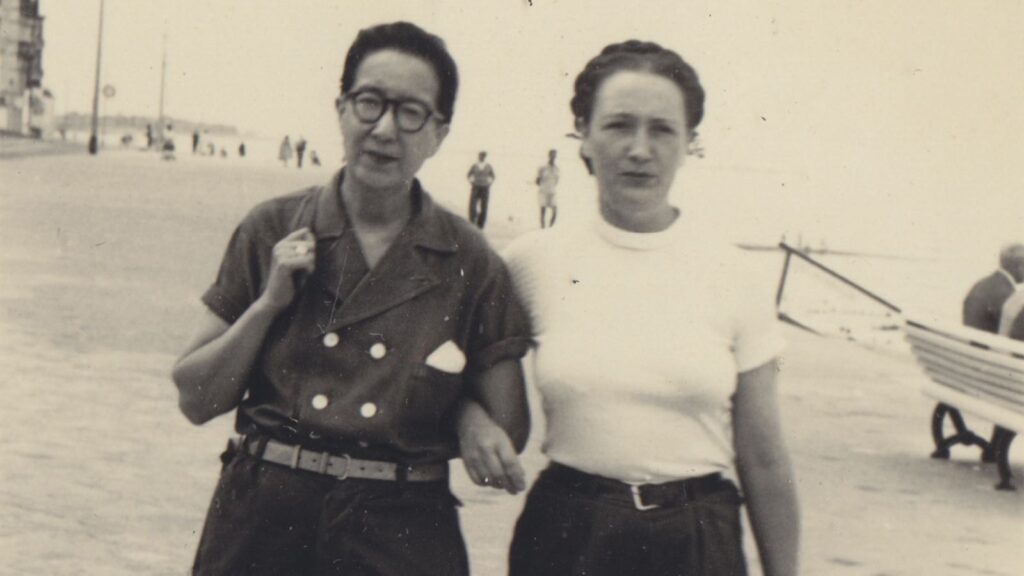
They picked Caracas, Venezuela — sunny and inexpensive with available jobs for educated, multilingual Europeans. The home movies showed them relaxing and entertaining their queer friends. They lived as partners until Nadine died in 1972.

Especially moving was the way Nadine filmed Nelly at their Caracas apartment. She caught Nelly deep in her own thoughts. Her face reflected a profound inner sadness, as her time in the camps could never be forgotten. One can only imagine that those memories were crushing and tragic. 
(Photo courtesy of Frameline48)

But she had Nadine, and they endured those memories together, always together. Love is love, that’s all, and that’s enough.

The Inside Story of a Renegade — What’s It To Ya?

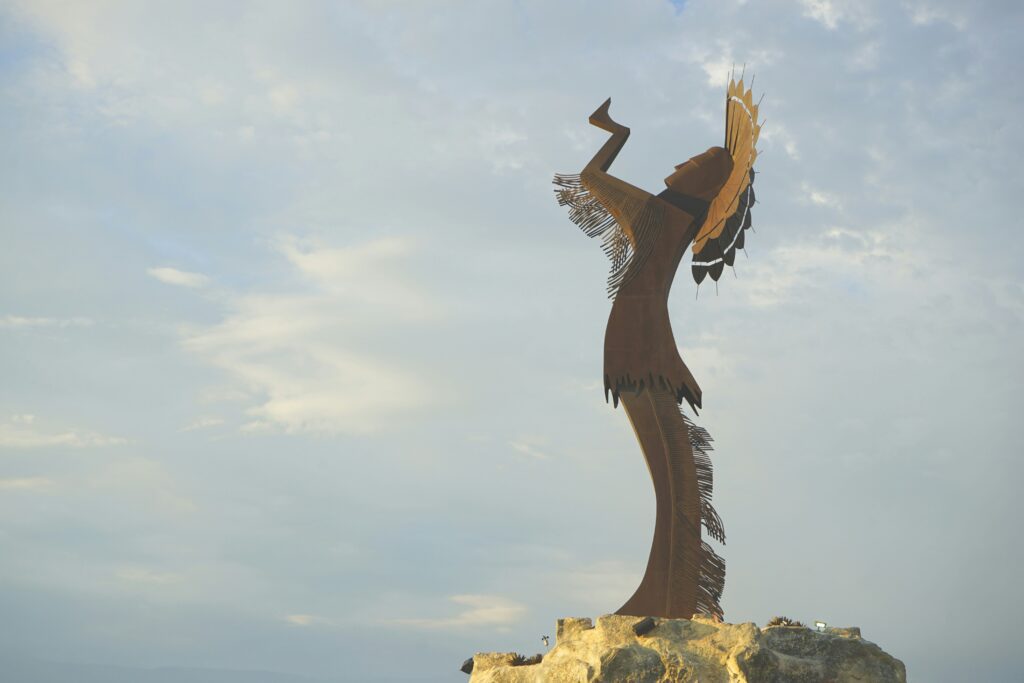
It all started in Wichita, the largest city in Kansas, bustling with the aircraft of Cessna, Learjet, and Boeing. Founded in 1861 as a free state, Wichita was Native American land named after the Wichita and Kanza tribes. This land had a rich, deep cultural heritage predating colonization. Filled with dewy, mystic plains and sunflowers that dance in the wind, Wichita is my birthplace. 

(Photo courtesy of Andrew Cruz via Unsplash)

A few Wiccan friends 

Such a safe and liberal place to grow up, nestled in a place in America called the Bible Belt and Tornado Alley, Wichita had some challenges, too. For those who grew up there and were different in the 1990s and 2000s—life was lived in the tradition of “The nail that sticks out gets hammered down.” It was a very heavily Christian town, and most other belief systems were suspect and not embraced. But I would notice a new kid sitting alone during lunch and instantly befriended them, so they weren’t alone. Renegade. 

I had a few Wiccan friends who were social pariahs. Excommunicated from the popular crowd, they still were my friends. We would walk home from school together and meet their cats. The agnostics, the atheists, the grunge and emo people, the cosplayers; all my friends. Couple them with the Roman Catholics and devout Christians, and you have a full index book of my school associations. No one was left out. I was a friend to the friendless and a bully to the bullies. I still have friends who remind me of times I stuck up for them. Renegade. 

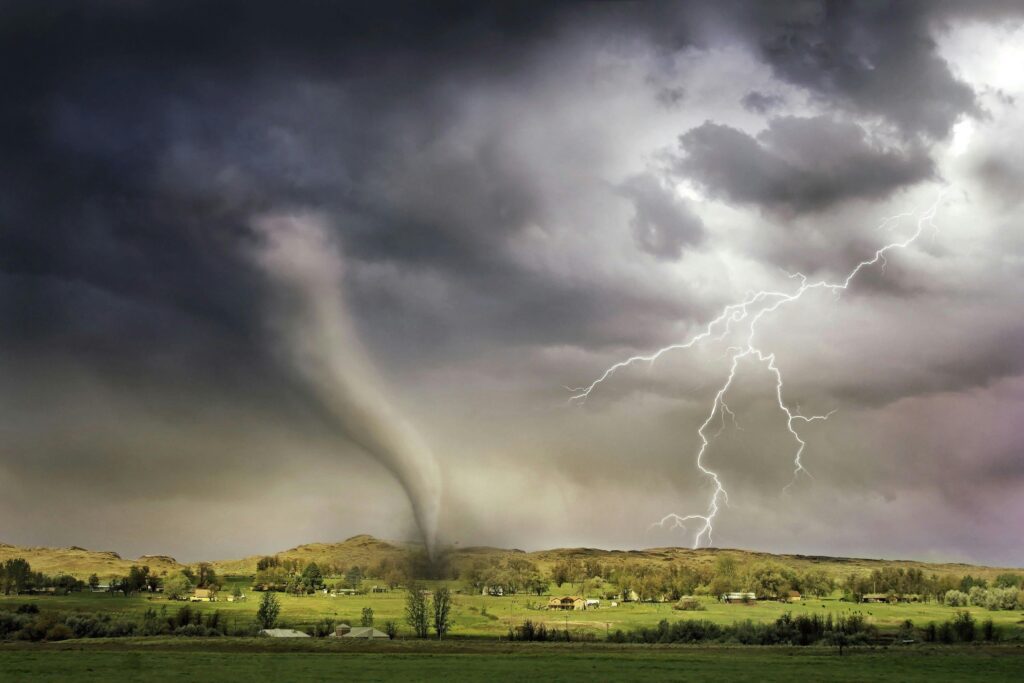
In the spring and early summer, our memories are imprinted with drills. We had to go to the school basement, a musty and dank gym locker room with rusted shower heads and cement walls. We could hear the blaring sirens for miles. Sometimes, we would just line ourselves along the classroom hallways with our heads bent towards the lockers and our hands clasped over the back of our heads. The screaming sound of the sirens would put chills down my spine and create an immediate visceral reaction. Friends’ homes were often destroyed on the outskirts of Wichita due to the tornadoes. But this was home, and we were all used to it. 

(Photo courtesy of Ralph W. lambrecht via Pexels)

Emerging from innocence and charm

My friends and I, and many others in Wichita, were part of a desegregation bussing system. Buses went near and far to take us to Park City in grades K-12. Later to be known as the home of the BTK Killer, it still had its innocence and charm then. I sometimes saw horses, cows, chickens, even llamas on the way to my elementary school, Chisholm Trail—after Jesse Chisholm, a Cherokee merchant. Black Beaver, a Lenape trail guide and cattle rancher, and his friend Chisholm used this trail for cattle driving and trading. 

(Photo courtesy of Phill Brown via Unsplash)

Chisholm Trail was a school breaking barriers. We had a female African-American Principal, Mrs. Saundra Kaye Lyons, and other people of color as our guidance counselors and instructors. We were on the cutting edge of school programs for Wichita and quite diverse.

But in middle school, there was a “magnet school” near my house. The magnet program is another system to attract a diverse student body, a continuation of the desegregation bussing from elementary school. This is where I started to come into myself and learn who I really was.

The facts of Iife crew!

I had a core friend group with three other girls,  the “Facts of Life” crew. I was Tootie, Stephanie was Joe, Leticia was Natalie, and Julia was Blair. When we were together, no one could mess with us. Stephanie was Filipino, sporty, and played soccer. Lucita was black and Panamanian, my best friend from violin class. Julia was a ginger girl who loved animals, spunky, and the first to fight if someone insulted us. When I met Lucita, I was impressed by her basketweave pattern of tightly cornrowed braids. They were immaculate like a work of art. My sister was a hair braider so I found a way to inch into a conversation. Before our conversation, when I complimented her, I had never seen her speak a word to anyone. We became inseparable. I remember one of our teachers comedically telling us to “cut the umbilical cord!” as we laughed feverishly about a picture in our textbook. 

I started to have complex feelings I didn’t understand for our other friend, Jennifer. I kept them in my diary and didn’t tell a soul until a couple of years later. I confessed my true feelings for Jennifer to my bestie, Lucita. She suggested that I write her a letter. I wrote it and put it in her locker, not sure what to expect. Maybe I thought she would be a renegade like me, we’d walk down the hallways holding hands, daring anyone to say anything. Maybe I thought we would stay the same with our flirty yet platonic relationship, but just with an understanding. I did not expect to break up our friends group. 

(Photo courtesy of Marcos Paulo Prado via Unsplash)

And that’s exactly what I was doing, far too much to ask really in small-minded, bible-belted Kansas in the 8th grade. Jennifer was Roman Catholic. She couldn’t publicly associate with me anymore, and I accepted the death of our friendship. 

My secret-laden diary goes AWOL

But fast forward a few months. I left my purse in a class — absent-minded teenager — where I kept my diary. The school jock decided to retrieve my diary and pass it to everyone. A fluffy, zebra-printed, fur-covered little time capsule. I somehow missed it that Friday. On Monday, a girl walked up to me with her jaw open and demanded, “Are you gay?!” I said no……? “Well, your diary is all over school now,” and she walked away as if I was the one who insulted her. I turned the corner, heart beating fast, and wondering about my next move. Then there was a group of people. “Are you gay?!” There wasn’t much I could do to fight it. “Yes, I’m gay.”

But I wasn’t free. People did not leave me alone after my confession. Mobs of people approached me at recess, lunch, and every class. Prodding at me like a science experiment gone wrong. Even some teachers were looking at me like I had the plague. Ultimately, when I retrieved the diary, it was on a teacher’s desk, as if it had been brought in for Show and Tell. Without a word, I grabbed my journal and walked back out. I accepted my new fate as an outsider, like those I had befriended. Thankfully, they were a non-judgmental group of friends. Plenty of the religious ones could no longer associate with me, however. 

My grannie challenge

Being adopted by my grandmother, I had a wisdom most kids my age didn’t yet have. I knew I needed to tell her before anyone else could. I was a little woman in my own right.  We were born and raised in the Baptist church so talking was going to be a huge undertaking. Grannie was the superintendent of Sunday School and an Evangelist. I was the junior secretary there. Her husband had the keys to the church, and we were the first to arrive every Sunday to unlock it. Not going to be easy. 

(Photo courtesy of William Krause via Unsplash)

I was nervous about this confession, but it was too late. I couldn’t put the milk back into the carton, and I didn’t have time to cry over the spill. I eventually confessed to my sisters and Grannie before the gossip. They told me they loved me no matter what. My middle sister told me she was just glad I wasn’t pregnant. My oldest sister said that she already knew. With Grannie, I became emotional. I didn’t want to be a failure in her eyes. She assured me being a lesbian didn’t preclude me from success. She told me to get myself together, and we would talk about it later. One day, I think she just couldn’t hold it anymore and exploded “I’d rather you had been pregnant than gay!” But she eventually came around and even introduced me to an older married lesbian mentor from her workplace. I am to this day grateful for my family’s acceptance, which many LGBT people never received. 

Graduation howling

The last week of school, academic awards were presented in the auditorium before the entire student body. I had joined the cross-country team as a favor to one teacher. I competed in one race and didn’t even finish, but received an award. The entire student body burst into laughter at my name. 

Maybe mild, it felt like outlandish howling. Hey, how would you expect Kansas teenagers to react in 2002?

It stained me. It also built character. Officially out, still working on being proud. 

Manifesting what I really wanted 

The next semester was high school. There were other lesbians in my school, but I still never quite fitted in anywhere. I graduated a year early and wanted to put school as far behind me as possible. 

I went on to attend college to pursue a degree in Psychology. I married my wife, whom I met online in 2002, and we have been married for ten years. She is an Iraqi war Veteran turned teacher and quite amazing. We live in beautiful and accepting Oahu, Hawaii, and happy with our three chihuahua-yorkies. We are currently trying to conceive. Renegade. 

(Photo courtesy of Taylor Hunt via Pexels)

I’m sure Kansas has grown by leaps and bounds since I left years ago, but this was an important snapshot of a time when things were not so easy for the LGBTQIA+ community. It may seem long ago that we were so openly discriminated against, but it was actually very recent and still sometimes happens today. I have also seen many improvements in schools regarding anti-bullying and support for the fostering of strong personalities within very different individuals. Live and let live, and always be yourself. There is a huge payout in the end, and you will manifest yourself exactly where you would have wanted to be in your teenage dreams.