
The Magic Of Never Giving Up

I didn’t plan to write this article. 

But the young man I am today is a reflection of all my insecurities from when I was growing up. Reflecting on my primary and secondary school days, many people thought I was weird because I was silent and shy. Losing my mum at a young age and coping with my aggressive stepmom was no less than an adventure I never dreamed of. 

My childhood was full of nightmarish times. I experienced more forms of shame and abuse that you can imagine. You don’t have to be ill or poor to live in hell.

(Photo courtesy of Patrick Tomasso via Unsplash)

Schooldays

My days in primary school played a significant role in shaping who I am today. I struggled — my uniform was among the most ragged in the class, torn and dirty. Each day, I was also the last student to reach school, carrying an unbeatable record for tardiness. I didn’t have the prescribed textbooks, as nobody cared to buy them for me. I was growing up on my own. I managed to photocopy my peers’ exercises for the class tests and exams. Taunts did not just come within my family, my classmates also bullied me, calling out a “food beggar.” 

Despite going through traumatic experiences both at home and school, I didn’t give up and held myself strong and determined. 

My focus was my studies. My rank at school was always among the top four students in my class, mostly ranked first, second, or third. 

At a young age, I knew what I wanted, I had set my goal, so I read and read every book I could find. I was among the teachers’ favorites, always obedient and sincere, building good relationships with them. I didn’t get the warmth of family love and the comforts that most of my classmates had, but I barely cared about it and never let it sour me.

While my childhood taught me the importance of humility, it also taught me what it’s like to experience hunger and abandonment. This went a long way in shaping me, and how I interact with others. My troubled childhood made me a more tolerant adult.

Secondary school was better, financially, as I could make some money by copying notes for less serious students. I also became more consistent in taking first positions and that helped me garner free textbooks. After finishing junior secondary (middle school),  I was transferred to a state government public school for my senior secondary education (high school). My class had over 494 students, and I was the youngest or at least one of them. I loved topping the class, but with over 50% of the students being continuing students, it was almost an impossible nut to crack. They understood the syllabus and exam pattern better than I did as an outsider. I was scared but I had to do it, or else get back to my gloomy home and I never wanted that. 

I started my senior secondary first term as the eleventh out of 494 students and then climbed up to seventh position by the second term. Although I topped in my class, that was only among a quarter of the 494 students I aimed to beat. 

(Photo courtesy of Himal Rana via Unsplash)

It was almost a tradition in the school that “ladies always graduated as the best overall” — a girl would always be the topper, and that remained unbeaten for a long time. After attending the graduation ceremony of my senior batch, my determination to top my graduation knew no  boundaries. I did it — I graduated as the best overall and the best-behaved student of my batch. Thus, the tradition changed — a major self-boosting change for me. How did I do it? I ignored the obstacles I faced and went for what I wanted. Was it easy? No. I had to work very hard and be super determined.

Attending my higher institution is another phase of my story, but not much different from my previous stories. Given my finances, I couldn’t get a university admission after graduation. Disheartened but not crushed, I settled for a vocational course, National Diploma. I joined the institution two months into the semester and still managed to top the class in all the semesters.

Respect regardless of status

I sometimes asked myself, am I a guru or a super exceptional student? And the answer was always No. I knew what I wanted and was going to chase it. I’m basically an introvert by nature, but my own nature helped me build good relationships along the way. I helped others whenever I could and respected everyone regardless of status.

Most importantly, I never gave up. There were times when I failed, but instead of dwelling on them, I corrected my mistakes. 

In addition to never giving up, there are certain key lessons that I learned through my experiences …

Sincerity

In a popular saying, “It is better to be trusted than to be loved.” Always keep to your word and be truthful. My sincerity with my words and actions helped me build trust all through my way. 

Humility 

Many people have underrated this very valuable virtue. No matter how independent you are, you still need others, perhaps even the most ‘irrelevant person‘ in the room. One thing I have realized during my journey is that everyone has something to offer. If you neglect anyone because of their status, you neglect the good they come with. 

Emotional intelligence 

You don’t need to take a course to understand emotional intelligence. Listen to your conscience and never rejoice when others are in pain. Then try not to frown when others are rejoicing. Distinguish between your emotions and your work or academics. Don’t let  problems interfere with  progress or else additional problems will pave its way. 

Stand up for yourself and start your engine

You don’t have to be perfect to be great. The president of any country, like my Nigeria, reached greatness in their realm without always being a saintly genius. Sorry. But here they are. Successful people are not necessarily the most hardworking. 

You lose 100% of the chance to succeed on every opportunity you fail to take. No one will penalize you for trying. 

(Photo courtesy of Alexander Grey via Unsplash)

Take advantage of opportunities

There is never a perfect time to get things done. The fact that you are where you are today doesn’t mean you can’t get to where you want to be. No opportunity is bigger than you if you are the driver of your destiny


Concluding thoughts

I remember saying to my younger self that one day I will write about my life experience, and I feel elated anytime I pick up my pen to do so. I know I haven’t gotten to my destination yet, but it doesn’t hurt to get a feel for what the future looks like. 

Which Students Does University Life Really Cater To?

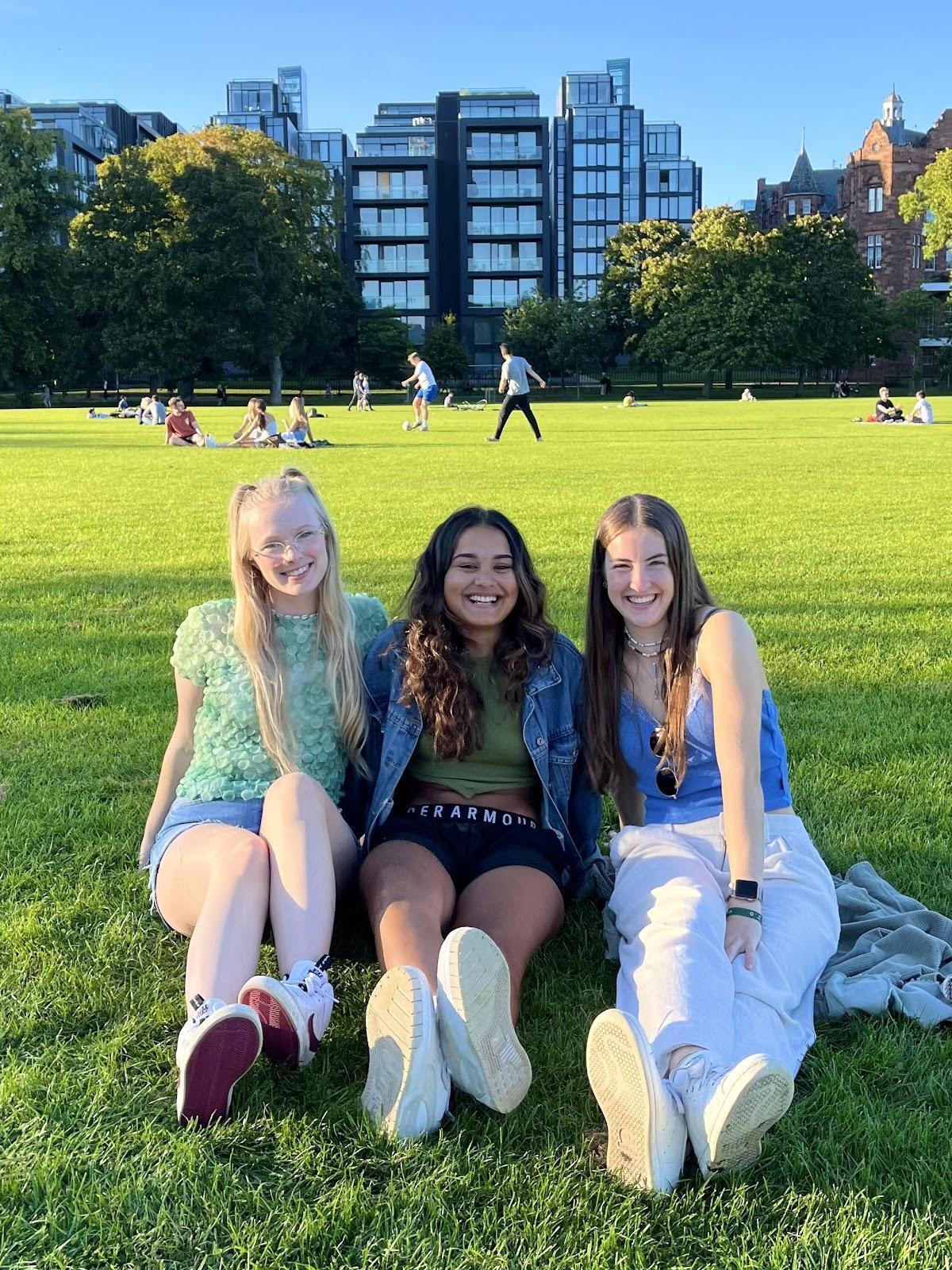
When I received my offer to study at a prestigious institution, The University of Edinburgh, I was overjoyed. Still am. I am incredibly lucky to study in the same place as brilliant academics, in a city immersed in culture and history, and to be able to live with my best friends. I will be eternally grateful for the opportunities I have come across here. However, I am almost equally aware that my journey within this university is starkly different from the majority of students — I have a part-time job, I do not have any contact in any large industry, and I cannot afford to financially juggle my food, shop, and additional fees. A phrase that often comes to mind is a well-known one: “It’s not what you know, it’s who you know”.


(Photo courtesy of the author)

From state school to uni

I grew up in a small town in North East England and attended state schools my entire life. I did not realize how defining this would be to my identity until I began to attend university. I am not claiming to have an “underprivileged” background or lifestyle: I have a happy family with a lovely home, pets, and yearly family holidays. Yet there’s no doubt that the school I attended has wholly defined my friendship circles, social activities, where I live, the societies I’ve joined, and, essentially, every aspect of university life. 

The varsity’s expenses — a paradox

The first reason for this is arguably the most obvious one: money. Rent prices in Edinburgh are notoriously high, and so the location and size of your flat — as well as who your flatmates are — are, of course, defined by what you can afford. Although notable, I suppose this is more of a universal issue rather than intrinsically linked to university life. What is more significant to the university is the extracurricular activities that are available to students. On paper, every student is entitled to join whichever societies or sports clubs they wish. Practically, this is not the case. 

To join most sports, students are required to pay for sports union membership, gym membership, club membership, kit or uniform, race or game fees, travel fees, and so on. But ultimately, this is not accessible to students of all economic backgrounds. I hear you ask, “But surely the university has done something to help with this?” My answer: “sort of.” I heard from my flatmate of something called the “Learning Opportunity Fund,” where the university would pay up to £350 to any student impacted by recent strike action. This money would provide financial aid to go towards certain opportunities, such as joining university sports clubs or unpaid internships. I thought to myself, “Fantastic! What a step in the right direction!” However, when I went to apply for this aid, I found that it was already closed, surprisingly the funds exhausted, meaning it was not made available even for a full semester. Here, I began to question how the funds could be exhausted when Sir Peter Mathieson, the Principal of The University of Edinburgh, has recently had his expenses for 2022/2023 published under Freedom of Information laws, exposing the fact that the university has increased their payments by £26,000 more than the sum of the previous academic year. This is meant for a range of different expenses, but arguably the most notable is spending £1,089  towards landscaping for Mathieson’s eucalyptus tree upkeep and some painting work. So how is it that the most elite members of the university receive five-figure sums in funding, but I am unable to join a sports club?

Loud whisper of stereotyping

The second experience that has stuck with me as a state school student is certain acts of discrimination. I recall, during my first year of university, a conversation I had with some fellow students. We were discussing topics such as which degree we’re studying, our A-Level subjects, and, by association, the school we attended. Upon revealing that I was state-educated, those students turned around and muttered, “She must have got into this uni on the inclusivity program,” and walked away. 

Based on this experience, I can see why so many students at prestigious, traditional universities experience imposter syndrome. Every day it becomes clearer that getting the same grades and attending the same university does not mend the strikingly obvious class divide in the UK, and that if you went to a state school your work ethic and academic ability are likely to be sneered at. Attending a lecture, tutorial, university event, or social occasion and feeling welcomed should be the norm rather than a privilege reserved for society’s elite. Why is it standard for my peers to be shocked when they have never heard of my school? Or to gasp upon learning that I did not pay for my primary and secondary education, but ended up in the same room as them, nevertheless? To clarify, I do not speak for all private school students here: I have many privately educated friends who aren’t bothered where I went to school. I also have no idea about the schools attended by other friends because it’s simply not on my agenda! But things like scholarly confidence and social engagement should not be conditioned by my education or social class; they should be influenced by my ability to dedicate myself to my studies and who I am as a person.

(Photo Courtesy of K. Mitch Hodge via Unsplash)

Need a little help here

My time at university has always treated me remarkably well, and I’m sure it will continue to do so. I’ll always be grateful for how lucky I am to attend such an elite institution, and I have, indeed, been presented with a range of opportunities, both academic and extracurricular. However, it is my inability to access these opportunities that separates me from a lot of the students here. I feel I speak for many students when I say it is remarkably frustrating to be denied opportunities due to the high cost of living and the university’s lack of financial aid. It must be noted that I truly love Edinburgh and that everyone at this university has worked hard to be here and to achieve their goals. 

However, when discussing students’ pasts and futures, it is clear that university culture embodies the UK’s class divide remarkably well. 


(Photo courtesy of the author)