Heavy Are The Crowns

Heavy are the crowns we wear,
Invisible, but not silent,
Bendable, but not fragile,
Loving, self-sacrificing,
Unable to be forgotten,

A laurel of desperation,
Seeking safety, warmth, and control–
Small, but sturdy in novice hands,
Arches, possibilities within reach,
Fitting loosely on an ambitious head,

An anadem of Renaissance,
Provoked by imagination and intellect,
Eager, encompassing,
One that births revelations,
A statement to those who offer their gaze,

A garland of frugality,
Dulled and scratched in the face of war,
Marred by gruff, firm hands,
Witness to crimson, bone, and coal;
Treasured even in the new era,

A chaplet of enduring strength,
Waterlogged with the weight of grief,
Ashes, dense as streams,
Polished to a shine with regrets,
Dinged, dimpled from the buffeting of obligations,

A coronet of shining radiance
Filled with the adoration of her subjects,
Jewels, not of decadence,
But those that still shine with opulence,
Valued beyond her last days,
Hidden away between painful breaths,

A diadem of bittersweet ties,
Reflecting a lifetime of servitude,
Unearthing the value after a dynasty dies,
Buffed to a mirror reflection,
The lines tracing the story of ghosts,

Heavy are the crowns we wear,
Passed onto us from predecessors,
Our fingers trace a mottled ancestry to times unknown,
But the love and sacrifice are not forgotten.

Eleven Killed in Sudan Mine Collapse as Gold Fuels War Economy

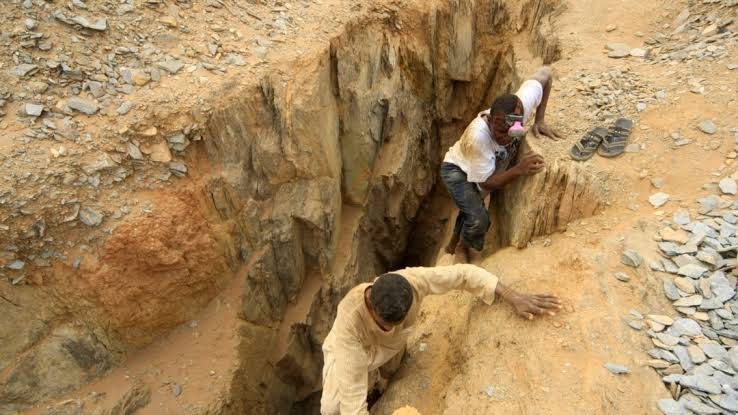
Eleven artisanal miners have died and seven more injured after the Kirsh al-Fil gold mine collapsed in eastern Sudan’s Red Sea State. The site had been previously shut by authorities due to safety concerns but was reopened unofficially as desperate miners sought gold in a region gripped by conflict and poverty.

The tragedy highlights Sudan’s growing war economy. Since civil war broke out in April 2023 between the Sudanese Armed Forces (SAF) and the Rapid Support Forces (RSF), gold has become both a lifeline and a weapon. In 2024, Sudan produced 73.8 tonnes of gold—85% from unregulated artisanal sites. Much of it flows into Chad, Egypt and South Sudan before reaching the United Arab Emirates (UAE), Sudan’s main trade partner.

Sudan has accused the UAE of aiding genocide, a case now before the International Court of Justice. While the UAE denies arming the RSF, gold shipments continue.

“Mineral supply without governance can create a shadow economy that finances conflict,” said Dr. Saleem H. Ali, a professor at the University of Delaware. “But with proper governance, these minerals can become tools for poverty alleviation and peace.”

In South Africa, Clement Moeletsi, also an illegal miner, says he knows this ordeal all too well. On July 24, 2024, he and fellow miners from Zimbabwe, Botswana, Lesotho, Mozambique, and South Africa entered abandoned shafts in search of gold. “The reality was brutal: chest ailments, starvation, and constant exposure to life-threatening hazards were the norm for us,” he said.

But, like many, he felt he had no choice. “We had to put bread on the table for our families.”

Environmental concerns are also mounting. Geoscientist Professor Paida Mhangara warned of long-term ecological damage and loss of cultural heritage: “Unregulated mining destroys vegetation, pollutes rivers and erases archaeological sites.”

As Sudan’s war enters a third year, the mine collapse is a stark reminder that in this conflict, gold costs more than money—it costs lives. 

Death Toll from South Africa’s Eastern Cape Floods Rises to 88 Amid Rescue Struggles

In the early hours of Tuesday morning, June 10th, the town of Mthatha and its surrounding villages in South Africa’s impoverished Eastern Cape province were plunged into chaos. Torrential rains triggered flash floods that tore through homes, collapsed roads, and swept away vehicles, claiming nearly a hundred lives, that number expected to rise.

For residents, the destruction was swift and merciless. Families awoke to the sound of rushing water and crumbling structures as the Mthatha River burst its banks. Makeshift homes and formal houses alike were no match for the sheer force of nature.

“We were not ready,” said one local councillor, his voice heavy with emotion. “We had no early warning, no time to evacuate. Many of the people who died were still sleeping.”

A Rescue Operation “Paralysed” by Resource Shortages

Authorities have acknowledged that rescue efforts in the crucial first hours were severely hampered by a lack of resources and coordination. “We were paralyzed,” said a senior provincial official who requested anonymity. “We didn’t have the air support, the boats, the manpower. It took hours—too many hours—before we could even begin to reach those in need.”

Over the following days, teams composed of the South African Police Service (SAPS), Department of Health, Gift of the Givers, and the South African National Defence Force (SANDF) were deployed. Efforts intensified over the weekend, with aerial searches locating bodies in and around Mthatha Dam and along submerged rivers.

Gift of the Givers’ search and rescue head, Ahmed Bham, said their collaboration with SAPS air support proved pivotal. “On Saturday, while hovering over the Mthatha Dam, we spotted anomalies in the water. Our diver confirmed that we had found three more bodies. We are now combing both riverbanks with boats and K9 units.”

The Toll on Families and Infrastructure

Entire families are among the dead. On Friday, President Cyril Ramaphosa visited the region to offer condolences and view the destruction firsthand. At the collapsed Efata Bridge, a taxi carrying schoolchildren was washed away. At least six learners, a driver, and a conductor died in the incident. Several passengers remain unaccounted for.

“I saw mothers crying in silence,” said President Ramaphosa. “This is not just a natural disaster. It is a humanitarian crisis that exposes the vulnerabilities of the most marginalized in our society.”

Beyond the loss of life, the human toll continues. More than 456 people have reported losing identification documents. Others are displaced entirely, their homes reduced to rubble. Many are sheltering in schools, churches, or with relatives in less-affected areas.

Mobilising Support Amid Widespread Grief

The provincial government, in partnership with relief agencies, is coordinating a multi-pronged humanitarian response. This includes:

  • Burial support in collaboration with funeral service provider AVBOB, covering body storage, funeral arrangements, and transport.
  • Grocery hampers from Interlink Express for affected families.
  • R5,000 in assistance from the Department of Education for families of deceased learners.
  • Mobile Home Affairs units deployed to Butterworth and Mthatha to issue temporary IDs and birth certificates.

So far, assistance has been provided for 26 burials, with many more expected in the coming days.

“This is not just about bodies,” said Athlenda Mathe, SAPS national spokesperson. “We are dealing with trauma, dislocation, and a deep sense of loss. The disaster teams are working around the clock, not just to retrieve the missing, but to comfort the living.”

A Climate Warning in Plain Sight

This disaster is a stark reminder of South Africa’s increasing vulnerability to climate-induced extreme weather events. The Eastern Cape, one of the poorest provinces, is already battling fragile infrastructure, chronic underdevelopment, and service delivery failures. Climate scientists have warned that the region—already grappling with alternating droughts and floods—will see more erratic rainfall and flash flooding in the coming years.

“This isn’t just an environmental event,” said a climate researcher at the University of Fort Hare. “It’s a justice issue. Poorer communities are bearing the brunt of climate change without the resources to adapt.”

A Region in Mourning, A Country on Alert

As floodwaters recede, the Eastern Cape is left to count the cost—emotional, physical, and economic. Roads, water systems, schools, and hospitals have all suffered damage. Local municipalities have declared disaster zones, unlocking emergency funds and support.

Still, for many residents, recovery feels a long way off.

Standing amid the debris of what was once her home, a grieving mother who lost two children to the flood said, “They say help is coming. But nothing will bring back what I lost.”

Shifting Fortunes, Shifting Fates

I still remember the night my father died. The years before were a blur of lavish parties with older men shrunken with age and tall bottles of wine and beer. They visited often, these rich men with their families. 

Sundays saw my mum and Aunty Nneka, barely a teenager herself, in the kitchen pounding soft yams in our large brown mortar until the ground shook. Laughter could be heard for many hours. They spoke boisterously in loud voices over peppered chicken that made their noses run. It felt like the excitement would never end. Until it did. 

I am five

We were a typical Nigerian family. My father attended the men’s meeting and the community meeting, and he donated rather too generously to the church. My mum would tug on his white kaftan as he called out hefty sums like five hundred thousand naira or when he volunteered to finish the church building single handedly. He walked with a poise that oozed pride. His gait was daunting and my mum complemented his look, sitting beside him in a pretty embroidery that radiated affluence. Her headscarf did not make crunchy sounds like the biscuit-like wraps worn by other women in the church. Her gold did not tarnish, nor did her lipstick wane. Her skin was as radiant as day, fresh from the beauty products my father bought her. I ran around the church in my pearly white gown and ponytails, and Aunty Nneka chased me, pulling me by one hand and dusting off my dress when I fell on dirt.

Everyone clustered about our Peugeot after mass and greeted my father, but even as a child, I knew most of their overcompensating pleasantries were borne out of their desire to ask for money. Many carried me high on their shoulders. I was five, but I remember it all. They said I was turning into such a lovely and plump child even though I was scrawny, for my age. My father would dip his long fingers with perfectly manicured nails into his pocket and pull out a wad of crisp notes, giving it to them. He dropped two hundred naira onto the enamel plates held by people begging  by the church’s gate when others dropped torn ten naira notes. 

(Image courtesy of Adi Goldstein via Unsplash)

I am six

My sixth birthday was bright and festive with balloons floating in the air and children running about our compound. I stepped on my gown and the lacy extension got torn. My mom scolded me by tugging my ear, so my dad reprimanded her

As usual, he was clinging tightly to his phone and would hurriedly pick it up at the first ring. Mum was pregnant with my little sister then, and since she was a full-time housewife, she worried over things that ordinarily should not be a concern like when Aunty Nneka put  the stew in the yellow bowl instead of the white one. They were both large enough but with my mum, details mattered. No one worried that her nagging was becoming unbearable because she was pregnant. She alone knew, however, that it was not the pregnancy that made her so quick to anger. My father had been cheating on her.

***

He is coughing

Our lives changed a few months after the birth of Chidinma, my baby sister.  My father fell ill. He coughed more often and ate less. He shrunk, looking shriveled on the bed. My mother worried about him even more when the hospital could not figure out what ailed him. 

The parties became few and far between. Friends rarely  visited. My mother dug into the last of my father’s savings and discovered, rather later, that we had fewer assets and more liabilities. We were drowning in poverty as she pumped money into different hospitals, hoping he would get better. He did not.

Aunty Odinaka called rather abruptly on an early Sunday morning. My mother sat with a drooping breast stuck into Chidinma’s ready pink lips. She had stayed up all night to attend to my father, who had remained motionless on his back, struggling to breathe. Aunty Odinaka was my father’s younger sister who had lived with us when she was a student. She referred my mum to a spiritualist in the village, and for what seemed like several hours, my mum refused. 

Ekwu Zina, don’t say that,” she said over and over. She pointed out how diabolical and fetishistic the practices were, how the bible was strongly against them, and how she could never take my father there. 

She changed her mind, however, when my father deteriorated to the point that he stopped moving. My mum tried reaching out to Alhaji Muhammed, my father’s best friend and business partner, who had a round belly and white stubble across his chin. He had given her an envelope heavy with cash, greedily consumed by the hospital in a single day. When my mother called him again, he cut off all communication with us. Even I, now grown and fully able to grasp the gravity of always asking for help, understood why he did that. 

My mother was flustered. The very people she threw lavish parties for now ignored her calls. At first, our house still looked the same with the central gold table and a low chandelier that glowed gently with warmth. It burned my eyes when I stared for too long and the tiny bulbs hung like mango fruit. Then in a few weeks, the golden center table had been sold, and the family car and everything that smelled of luxury had been removed. 

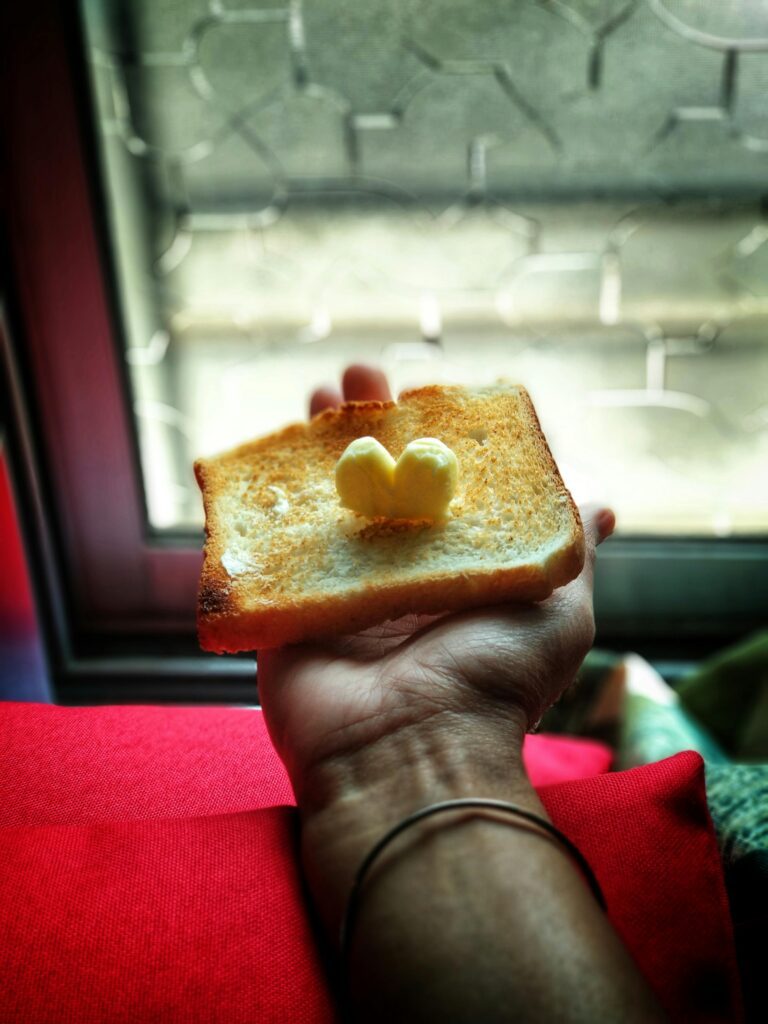
I watched butter leave the table as my mum told me that it tasted sour so she stopped buying it. 

(Image courtesy of Ravi Kant via Pexels)

Later, she would stop buying my favorite treats: Sugary Capri-Sonne drinks were no longer at our usual shops, she explained. I had stopped going to school, because she was no longer satisfied, it seemed, with the teachers. 

***

I am present

The spiritualist was a short man with white material wrapped over his shoulder and under his arm. He often had a leaf frond between his lips and hummed on it fervently. I came to watch the healing magic at the spiritualist’s request: he said that I was a major connection to my ailing dad and must be present.

I stared in disbelief as I watched him pace about the lanky remains of my father and dunk him into the shallow river. He picked up a gourd from a calabash — its edges so poorly cleaned that tiny bits of wood stuck out — and he ran it over father’s face three times. 

After an hour passed and we were sure that no magic was going to happen, we asked the spiritualist what the matter was. His eyes burned a painful red, the kind gotten from downing tall bottles of alcohol, as he urged us to be patient. He proceeded to apply a mild cream over my father’s body and towed him back to the car. 

Fear enveloped us all when my mother felt his face. She could no longer feel the  warm breath from his slender nostrils. Only our shifting fates. 

(Image courtesy of Godiva Omoruyi via Pexels) 

Almost Lost Forever: True Love and Survival

When the extraordinary Swedish documentary “Nelly & Nadine,” directed by Magnus Gertten, was released in 2022, it was featured in over 100 festivals and received more than 20 international awards, mainly in Europe. Thankfully in the US, it is now widely available on streaming services like Amazon Prime. For me, it was one of those films that stays with you, makes you think, makes you remember, makes you well up with tears. 

“Nelly & Nadine” is a true story about two women who became lovers at the most harrowing place and time — a concentration camp during WWII. Somehow, they survived. If it weren’t for a benevolent granddaughter named Sylvie, their story would have been lost. 

This documentary spoke to the heart of my own struggles and experiences as a lesbian of Jewish heritage. As a child, I knew my family’s immigrant story, how they crammed onto ships headed to America from Eastern Europe in the early 20th century. Those who stayed behind never visited us, and their lives passed from view. 

I was over sixty when I first visited Prague and went to the historic Jewish cemetery. Written on a memorial wall were the family names of Jews who were transported and killed at the Terezin concentration camp. My eyes scrolled down the lengthy list and stopped short at one name: Rappaport, the family name of my mother’s father. I gasped as a chill went down my spine. If I hadn’t gone to that old graveyard, their fate would have been lost to me. 

Delving into their story

The story of “Nelly & Nadine” begins at a remote farmhouse in Northern France. 

The elderly Sylvie Bianchi goes to the attic and opens dusty boxes, which contain her dead grandmother’s diary, letters, photographs, and home movies. She and her husband became the custodian of the boxes after her mother’s death. They faithfully kept them for many decades, as Sylvie had fond memories of her grandmother, Nelly Mousset-Vos (1906-1987), who had been an opera mezzo soprano of considerable talent. 

Nelly

All Sylvie knew of Nelly was the kind, gray-haired woman with the wonderful voice who came to spend Christmas holidays with her French family, traveling all the way from her home in Caracas, Venezuela. After the end of WWII, Nelly moved there with a woman named Nadine. Sylvie knew only that Nadine was just her grandmother’s friend and housemate. Their relationship was still a secret.

Sylvie was curious and at some point in her search, she found Nelly’s diary. She read only a few lines before it was too painful to continue. Her grandmother never spoke to any family member about her two years in various Nazi concentration camps, but there it was all laid out in words. Finally, she dared to go further, and what she found was astounding.

Sylvie decided to share Nelly’s archive, so this documentary could be made. Researchers, historical recordkeepers, and friends of Nelly and Nadine helped to flesh out their true story. As the story was unearthed bit by bit, Sylvie participated in the key interviews and was shown the documents. She came to appreciate her grandmother not only as a remarkable person, but also as a hero of France. 

Sylvie knew that Nelly performed in cities all over EuropeIn the 1930s, and that she had two children (her marriage ended in divorce.) She learned that after the Nazi occupation of France in 1940, her grandmother joined the Resistance as part of a spy ring. In 1943, Nelly was swept up and arrested by the Gestapo in Paris and sent to the Ravensbrück concentration camp. The prisoners were forced to do hard labor under terrible conditions; if they couldn’t work, they were killed. 

Nadine

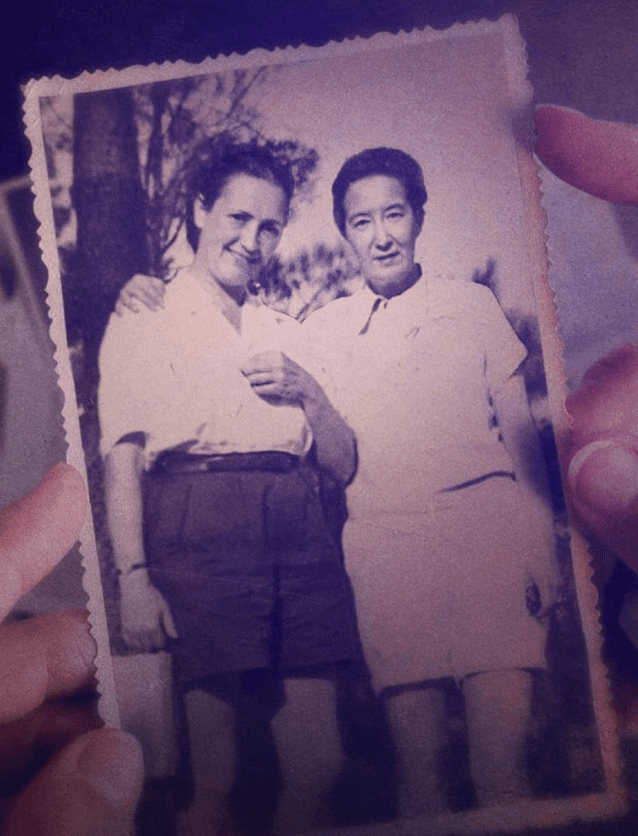
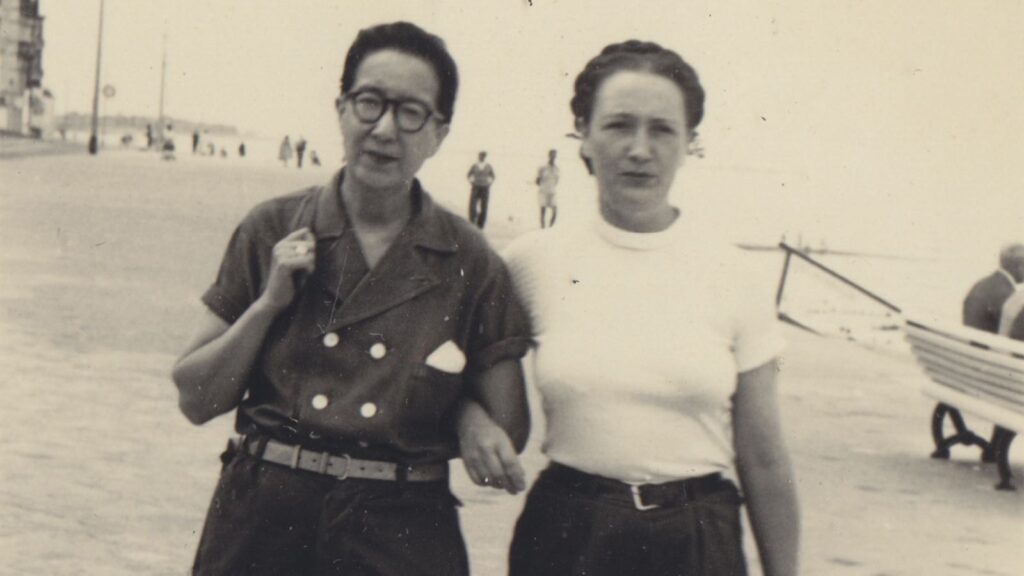
Old photographs and home movies revealed what the mysterious Nadine looked like. She had a tall, elegant figure with short dark hair and often dressed in trousers, a shirt, and tie. Born in Madrid, Nadine Hwang (1902-1972) was the daughter of a high-ranking Chinese diplomat and a Belgian mother. She was educated in multiple languages.

Nadine moved to Paris in 1933 and became part of the feminist/lesbian circle around Natalie Barney (1876-1972). A playwright, poet and novelist, Barney hosted a salon of notable artists and writers at her Left Bank home. Nadine became Barney’s chauffeur and one of her casual lovers. Nelly’s memoir stated that Nadine helped at-risk people escape from occupied France to Spain, which led to her arrest and transportation to Ravensbrück in May 1944. 

Nelly and Nadine

By Christmas Eve 1944, Nelly was forced to perform  carols. Nadine called out a request. 

With Nelly and Nadine meeting in the camp, their relationship became intimate and passionate. Against all odds, their love for each other kept them alive. They were separated when Nelly was later transported to the notorious Mauthausen concentration camp in Austria. Forced labor in the stone quarry usually meant death, and Nelly was close to the edge at this camp. Her intense memories of Nadine kept her going. As it happened, this was late in the war. 

The film shows a poignant clip of a movie taken in 1945 when a group of liberated prisoners from Ravensbrück arrived in Sweden. You see the faces of the survivors deliriously happy to be alive and start their recovery. Nadine was in that crowd. Hers was the only sad, tense face. At the time, no one understood the reason. Nadine was thinking of Nelly. Was she alive or dead?

By some miracle, Nelly had survived, and they found each other again. 

The real reel — my own story

What followed after the war was the story of so many gay men and women before the gay liberation movement of the 1970s. 

I know because I was around then. 

In 1965, I was a sophomore at UC Berkeley when I phoned my father from the dorm. I told him that I wasn’t returning home for the summer. I’d met someone I wanted to be with, someone I loved. Her name was Caitlin. My father exploded, calling me a child, an infatuated fool. He told me to come home or all financial support would end. 

I went with Caitlin, and my life became one of desperate struggle to stay in school and graduate. But I did. 

The price of being honest and true to oneself was so high that gay people had to make heartrending decisions. Some had secret lovers under the beard of a straight spouse. To keep a career and paycheck, one’s real private life was never spoken about at work. Coming out meant stiff societal consequences (even criminal in the case of men). On the streets, fluid gender or flamboyant clothes raised the risk of being beaten or killed. 

Not to compare to the camps, but no gay abandon for society’s rejects, either. Despite the passage of marriage equality and wider acceptance, it’s still tough out there for so many.

Buenos Dios, Caracas

Nelly and Nadine were likewise determined to live free and honest lives. Staying in Europe was too painful after what they experienced in the camps and too close to Nelly’s family. 

(Photo courtesy of  Egildes Rivero via Unsplash)

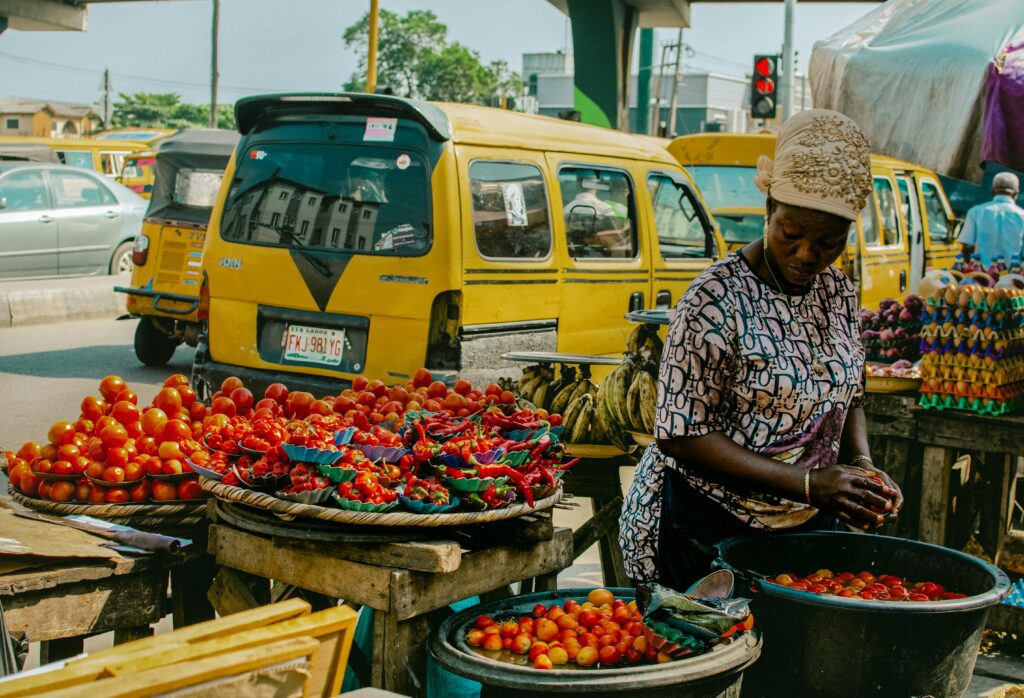
They picked Caracas, Venezuela — sunny and inexpensive with available jobs for educated, multilingual Europeans. The home movies showed them relaxing and entertaining their queer friends. They lived as partners until Nadine died in 1972.

Especially moving was the way Nadine filmed Nelly at their Caracas apartment. She caught Nelly deep in her own thoughts. Her face reflected a profound inner sadness, as her time in the camps could never be forgotten. One can only imagine that those memories were crushing and tragic. 

(Photo courtesy of Frameline48)

But she had Nadine, and they endured those memories together, always together. Love is love, that’s all, and that’s enough.

Her

“You are so talented and smart. The dexterity in your work is astonishing. You, my dear, are going to be a star.” These were my mother’s words to me as she held my face in her hands, her eyes glistening with the hopes and dreams she held for me.

As I gazed at a distant view, I reminisced on how life has shown me its ugly nature. I watched people who formed my universe slowly dissipate into nothingness, their backs turned to me as they left. As time passed, I forgot myself in the whirlwind of events that made up my life. 

A hard knock on the door helped me escape from my thoughts. 

“Miss, it’s time.”

“You can do this,” I said to myself, feeling nauseous with every breath. The weight on my heart increased and I could feel my palms get sweaty with each second. I wanted to run and not face the same reality I have been living in for the last six years. 

I slowly walked towards the stage and took my position in the background, attempting to look as inconspicuous as possible. I stood still and waited for my part. It finally came.

“Hmm,” I said. Yes, that was my part. That phrase which I worked until my tongue felt numb. I tried not to be too slow, fast, unnatural, or gruff. I needed to just be perfect.

“Cut!” the director screamed. “You there!” he said with a harsh tone I was all too familiar with. 

“Me?” I said while feeling the heat on my cheeks from embarrassment.

“No, me dummy,” he said sarcastically. He started walking towards me briskly causing me to take careless steps backwards and stumble. He towered over me as he spoke, “What was with that tone, why are you so stiff? There are millions of people who are desperate for what you have and that is the attitude you show?”

“Sorry sir, let me try again. I promise I will do better if…” 

My voice was shaky and my vision blurred from my tears.

“Enough! You are out.” 

With that, he walked back to his seat.

“But sir, I can…”

“Did I mince my words? Security, get her out of my sight!” He glared at me with so much hate I felt a shiver run down my back. “This is what I get for taking in has-beens.” 

***

They dragged me to the front of the building and pushed me out the front door. My attempt to break my fall caused me to bruise my wrists. My hands throbbed with pain and the heat of the summer stung my back. 

I raised my head to meet the bewildered stares, the nods, and eventually slow departures after getting a good look at  my pain. 

I slowly stood up and walked away into the crowd. I have had enough for one day. 

***

I sauntered around until I felt exhaustion in my bones. Then I went home. I did not want to lay on my bed reminiscing on a bad day.

I walked into my apartment, turned on the light, and stared at the dimly lit room. It was the size of a cubicle with just enough space for a bed and anything I could salvage when I left him.

I slumped into my bed, and stared at my pained wrists which had become purple and swollen. I smiled as sleep embraced me into its warmth.

***

The loud chatter from my neighbors woke me from my slumber. The memory of events of the day before came flooding in along with the pain. I felt hot tears fall freely from my cheeks. I cried for a while, but crying never helped me so I got ready for the day.

***

There was a feeling that came with auditions, the preparation for rejection, and the hope of acceptance. I sat at a coffee shop while going through my script. The coffee tasted as bland as colored water, making me regret every cent I spent on it. The street view, however, made it almost worth it.

“Do you mind if I sit here?”

“Yes,” I said, without bothering to raise my head from my script.

“But I want to.”

“Look kid, skedaddle, okay?” I tore my eyes from my script only to be astounded by her blue eyes that resembled the ocean floor. She smiled at me, revealing a gap in her teeth and adorable dimples. I smiled back at her contagious smile. She was a dazzling young child with curls and freckled cheeks. However, I saw something odd: her smile did not reach her sad eyes.

“Fine, sit, but only till your parents come.”

“They are not coming.” She said as she looked through the window at a distant view that I could not see. “Mum is dead and Dad is busy.”

“I am so sorry.” 

I pitied her because her pain felt familiar, because she felt like I did.

“No biggie.” She shrugged her shoulders and glanced at my script. “You act?” she said, trying to change the subject. 

“Yes, but you cannot go around telling people what you just told me okay?” I needed to stop her from letting this big mean world know her story, that was the mistake I had made.

“I have never told anyone, just you. I like you.” She smiled again and winked at me. It was awkward but I liked it.

“Do you want a drink?” I asked her.

“Nope, the drinks here are horrible. Even water tastes bad.” I laughed, which was something I haven’t done in a long while.

 “What do you want then?” 

“Nothing.”

“Okay, so why did you come to a coffee shop?”

“I like the view.”

“Makes sense,” I said and continued to look through my script. 

“I have to go.” 

“Already?” I said.

“Yep, it’s almost time for my tutor to arrive. I am home-schooled.” I watched her as she stood up and left, still thrown off by this meeting. A girl who spoke to me like we had known each other for ages.

***

Weeks passed and I walked past that coffee shop every day hoping to meet her. I didn’t even get her name.

My audition went as it typically would, a failure. As I was about to walk past the shop’s window, my eyes caught a glimpse of a girl with familiar freckles. My lips curled into a smile as I entered.

The bell jingled and she turned and stared at me, her entire face beclouded with intense sadness, once visible only in her eyes.

“What’s the matter?” I asked, feeling concerned.

Her lips quivered. “Everyone leaves me,” she said quietly but loud enough to make my heart break. Her voice had lost its sonorous essence

“What do you mean?” I asked while leaning closer.

“Exactly what I said!” 

Her eyes welled up with tears and she started to wipe her cheeks frantically.

“What do you mean, did something happen at home?”

She looked at me intently until I started to feel uncomfortable under her gaze. I shifted in my seat. 

“You remind me of her.”

“Who?” I asked puzzled

“My mum,” she bowed her head and stared at her feet as she spoke. “She died a year ago and left me.” 

“I am so sorry.” I placed my hands on her chin, raising her face to meet mine. I finally understood her pain. My heart sank. This was a familiar feeling. The feeling of not being enough. It had dragged me down to its dark alleys for years and mocked my inability to leave.

“Darling, your mum never abandoned you, she…”

“Yes, she did!” she interjected abruptly. “She knew I needed her but she still left. And dad seems to be busy with everything else but me.” She broke into loud sobs. I realized people were staring at us.

“Please stop crying.” Her wails were heart-wrenching, and I needed to do something about it.

“What is your name?” I asked.

“Susan.” she said as she sobbed.

“Well, mine is Stella. See both our names start with the same letter, isn’t that interesting?” She stopped crying and said, “I guess so.”

“Susan, where is your dad right now?”

“He is at home.” 

“Well let’s take you home.” 

“No, I don’t want to go back.” She stood defiantly.

“You have to because I have something very interesting to say to him.”

“You do?” Her eyes widened and glistened as she spoke. “Okay.”

I think she already had an idea of what I wanted to do.

***

We left and started a long walk to her house. “I thought you lived close by, Susan.”

“The goal was to be as far from home as possible every time I left.” 

***

Her house was bigger than I had anticipated, causing me to gawk at its enormous size. We walked past the security guard who eyed me from head to toe suspiciously. “Good day, Sir,” I said to him.

 He replied with a grunt.

“Be nice, she is my guest,” Susan said.

We walked into the majestic house, situated in the heart of an impressive garden.

The inside of the house was as elegant as the outside. The exquisite chandelier drew my attention, glistening as it illuminated the house. The Victorian-style interior seemed to be designed for royalty itself. I was in awe, but had to focus. I came here for a reason.

“Dad! Dad!” Susan ran upstairs, calling him. I paced back and forth, hoping to overcome the ruckus inside my head. I was unsettled, nervous butterflies in my stomach. This feeling took me seven years back. 

***

“What do you mean I should quit?” I asked, puzzled. 

“I’ve said what I’ve said and that’s that,” he said in a stoic manner.

“I will not quit my job because of your small-minded attitude.”  

He chuckled. I have never experienced such coldness from him. 

That was the beginning of my torture. Days turned into months and then years, and the pain stayed. He saw my growth as competition and did everything he could to pull me down. When he started acting out, I did not understand and thought he was just being fussy. Until he showed me his true colors. He ensured he soiled my name, spreading every horrible rumor he could think of. And everyone believed him because he was my husband. I left when I had enough but I was too late.

***

The thumping sound of heavy footsteps descending the stairway woke me from my daymare. Susan raced down the stairs, almost missing a step, and came to stand next to me. Her father wore a scowl on his face, with a look that judged my every breath. The air changed as he took the last step down and walked towards me. I started to rethink my actions but knew it was too late. 

“What is your business with my daughter?” I flinched at his thundering voice as it reverberated through the house.

I cleared my throat. “I know it is not my place to do so, but I need to tell you that you have been brutally unfair to Susan and she has a lot to say to you.” I looked towards Susan and gestured at her to come forward and speak your heart.

She stared at me frightened. I smiled at her hoping to encourage. She took a step towards him, “Dad I would like to say that I do not like how you are always busy and the fact that you are leaving me alone for such a long time.”

His look softened as he approached her. 

“Darling, I never intended to leave you. I just need to take care of a few things, and then we can spend more time together.”

“I don’t like that. If you are going anywhere, I am going too.”

He smiled at her. “Okay, I will be better.” 

She smiled and hugged him.

I was envious of their love. I wish I had what they had, but I felt satisfaction watching them. I nonetheless saw my mistake. I had failed to confront my pain, failed to refuse to be a victim, accepted mediocrity, and lost the star my mother saw. My head throbbed and I knew I had enough.

“Why are you crying?”

I was glad to see them together, it was something I wish I had when I needed it. I felt satisfaction to see that Susan was not alone nor abandoned.

I touched my cheeks and felt moisture. “Oh, I umm…”

“You don’t need to explain Miss….”

“Stella. That is my name.”

“Thank you for your kind actions.”

“I think it’s time for me to go.” I turned and started to walk away quickly.

“Wait!” 

I stopped.

“Is there anything I can do for you, Miss Stella?”

Susan ran to me and held my hand. “Will I get to see you again?”

“Of course, darling, same place.” I touched her cheeks and smiled.

I walked out of that house as a different person. I had enough and I had to do for myself what no one else could do for me. 

Live.

To My Only Friend Who is Gone on a Voyage of Death

Many, at times, think we see a ray of hope to comfort our emotions and whittle down the volcanic cloud of our sadness. But unfortunately, our sense of love and compassion ends up overwhelming the strength to prevent tears. 

For to cry is not to mourn, but to weep is to truly mourn, as it is written that even our Lord wept. 

The beauty of death is that the life the deceased lived will become an amusing experience and sensation for us, to remind us that someday, we will end up as someone else’s amusing experience and sensation.

Do you know where the best cinema is? Found in the euphoria of memories of any event in the mind of a person who is nursing an ambition of good or bad memories of an event. The vividness of such memories is worth more than a setup of an Opera House or performance at a Pit-theater (just like the AwoVarsity Theatre).

Tonight, I am seated outside, on the veranda, hearing the stillest sounds of air, looking at the clouds being separated and fussed over.

Suddenly, the thoughts of my late friend, Hajj Ibn Abubakar struck me. The air around me grew a little cold, colder I should say even. My body let go of the goosebumps for a while as the air became a little wind that whispered a few words to me. They reminded me that no matter what, the goodwill of my late friend still connects with my inner bond whenever I remember him.

I searched my inner man to ask Hajj Ibn Abubakar some questions; then I remembered it was just the memories and his goodwill that spoke. Hajj is long gone to queue up again as one of the silent children from the constellation of stars.

Hajj, my very good friend, was quite older. Yet, he bonded with me; you’d never think he wasn’t my blood. But he became my blood through the nights and plights of the ‘streets’ so much he earned the name, ‘Emperor, the Cross leader of the Streets even to the Moon and Stars.”I called him ‘captain streets’ towards the end of our real life relationship.

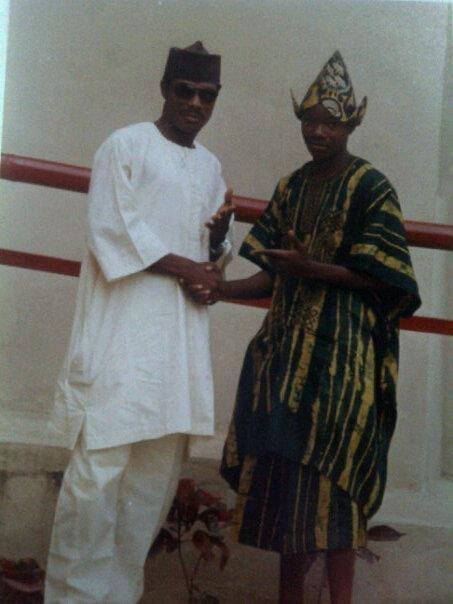
It was at Ipetumodu that we met. I wore black all through, as you might say, from head to toe, with my black shirt having several fire symbols. He strolled into my “base” with three guys. Everyone greeted him with a little bowing while hailing him while I turned my back a little, pretending I was typing a message on my Nokia 6600. 

One of his boys, named Tunde, who later became a follower of one of the ideological groups on Awo Varsity campus but later became a member of a fascist reactionary fraternity, shouted, “Eh oh boy, Paale dey call you.”

I was shocked when I heard a thunderous slap on Tunde. Hajj said, “You sabi who this oga bi? You see people wey young like this amidst these big chests, yet na only am wear full regalia, oh boi I don’t want war here.” 

I still didn’t flinch. I turned to him and sang one of my father’s favorite songs, which says, “Kosi agbara to da bi ti Jesu” that is, no power like that of Jesus. 

They all laughed, and Hajj said, “I am Hajj, son of Abubakar. I’m a trained intelligence officer, and I speak Hausa/Fulani, Igbo, Yoruba, Classical Arabic, French, English, and a little Spanish.”

At that point, I smiled, and I said to him, “My name is Aanuoluwapo; I’m from Ibadan.” I said nothing else to him. 

I beckoned him to come over, and he followed me to my room, which I shared with Ransome, Damilola, Lateef, Gaffar, and Sola. He saw my church’s calendar. He saw my father’s picture on it and asked me why I didn’t say that I was this Baba’s son. I replied that he didn’t ask me initially. 

But Hajj said, “Deny a thousand times, but your eyes and face have given you away. More so, you speak like him.” At that point, I was confused. Hajj further said, “See I know this true man of God, it was when my favorite sister got to his church in the 90s that her womb was opened. And I have never missed his church programs on tv and radio since. And anytime I get the chance to watch him in Lagos or Ibadan.”

I was silent, too quiet. Shock or surprise? 

Hajj then said, one thing I believe is this that today is a remarkable day, “Aanu, I believe you will be kind to me just as your father’s God was kind to my sister through your father. It was such a heavy statement and trust. I tried to mumble some words, only for me to say, ‘may God bless abundantly.” Then he said amen. 

I explained to him not to reveal anything about my true identity; in his words, he said, “Not even on my deathbed except you give me the order.” I laughed, and he saluted me. 

And that was how the beginning of this bond of friendship was struck on the blade of fraternal love and brotherhood. An inside joke between Hajj and myself sometimes was, “Inseparable son of a Christian Minister and son of an Islamic Cleric.”

I remember how he used to call me a creature of the night. I was never scared of walking at night. In fact, he used to be angry that I preferred taking the cemetery road as a shortcut to get to his side. I used to tell him that someday, ours too will scare others. You’re the only friend I ever had, Hajj Abubakar. Indeed Abiku is true. I remember how you felt when I discussed reincarnation and powerful people with strong spirits. Now, you’re the one whom we discussed over 15 years ago. I know you are here, and you never left; but for this space suit called flesh, let it continue to rest.

Hajj, you came visiting through the telepathic lens of dreams a few days ago. I forgot to tell you how I’ve written a Yoruba drama that is dedicated to you, and I titled it OJU-DUDU. I hope and know that many generations will read your name in this forthcoming book (Oju-Dudu).

I remember you said I’ll be alive while you leave for the world beyond. All your words about how I’ll battle “peculiar” issues have happened. You reminded me to be so strong, even over my emotions. I hope I will face any circumstances. You said, “Aanu, your father is favored by God, but as your name implies, you’ve received God’s mercy.” 

Hajj, it is true. I’ve survived many instances that should have stopped my mortal suit of flesh. I wish you called me that day; it is because of you I still pick unknown numbers till date. You’re from the far end side. I’m from the long downside. You’re a core Muslim, and I? A Christian! Yet you encouraged me never to miss my fellowship days and time. You would call me Sheriff, and I, in turn, used to call you Brother Paul. It didn’t matter to us. We were just happy as brothers. None of my family knew you; none of your family knew me. We were too concerned with life and spirituality.

My friend. My only bosom friend. I miss all we used to do; you would have spoken to me about my plans for the year now. You used to tell me I’m not like every other person. You’d tell me just to wait till God gives me whatever I deserve in life. Hajj, rest well so we can play on the circumference of the air again someday. 

Sitting at the Table with the Dead on November 2

On the Italian island of Sardinia, where I was born and still live, there has always been a deep-rooted belief that, on the night of November 1 and 2, the fragile yet unsurpassable boundary between the living and the dead becomes more permeable. In the hope that loved ones who have died will find a way to return to this earthly realm for a few hours, and to nourish them from the dark journey they must take, many families set the table as if it were one of the happiest days of celebration.

This is what we have always called the Dinner of the Dead. The tradition of preparing a rich banquet for the deceased has been handed down for centuries.

In my family, the only one who prepared food for the dead was my great-aunt Alda, an older relative of my mother’s. The first time I attended the Dinner of the Dead, everything seemed shrouded in an air of fascinating yet eerie mystery. I was six years old and could not fully comprehend what it meant to lose a loved one. My grandparents were still alive then, and I was too little to remember my late great-grandparents.

Great-aunt Alda had always told me about her only son, who had died in the 1950s at five years old from a mysterious fever, for which no doctor had ever been able to find a cause, much less a cure. She had also lost her husband a few years earlier, and, as a widow, her life revolved around memories of happy times.

Her desire to feel them again was so strong that she looked forward to the Night of the Dead to remember them, secretly hoping to receive some sign of their presence. She would start cooking two days in advance.

I remember that on November 2, I would get up early and go to the cemetery with my parents and grandparents to place flowers on the graves of my great-grandparents. Then, after lighting candles and saying silent prayers for the departed, we would all go to my great-aunt Alda’s house for dinner. It was a ritual that none of us ever missed. Around seven o’clock, she would diligently pull out the best dishes she had, and set the table for the living and the dead. As soon as she let us into the house, she would show us the table. For this strange feast, she cooked fava beans, legumes, almonds, hazelnuts, dried figs, apples, pasta with cheese, and above all, the typical Sardinian sweets (pabassinas or papassini, pirichittus, cheese cakes and pardulas).

My favorite, however, was the “bones of the dead,” the most popular rustic, oven-baked biscuits. These are made with almonds, eggs, sugar, cinnamon, and lemon zest, then glazed with silver sprinkles. In Cagliari, the island’s capital, they are black because of a special ingredient called “sapa,” made from grape must and associated with mourning precisely because it makes the dough darker than usual. Curiously, the biscuits are not really shaped like bones but like a fish, because they symbolize the faith of the early Christians, who used it as a traditional sign to recognize each other during times of persecution by the Romans.

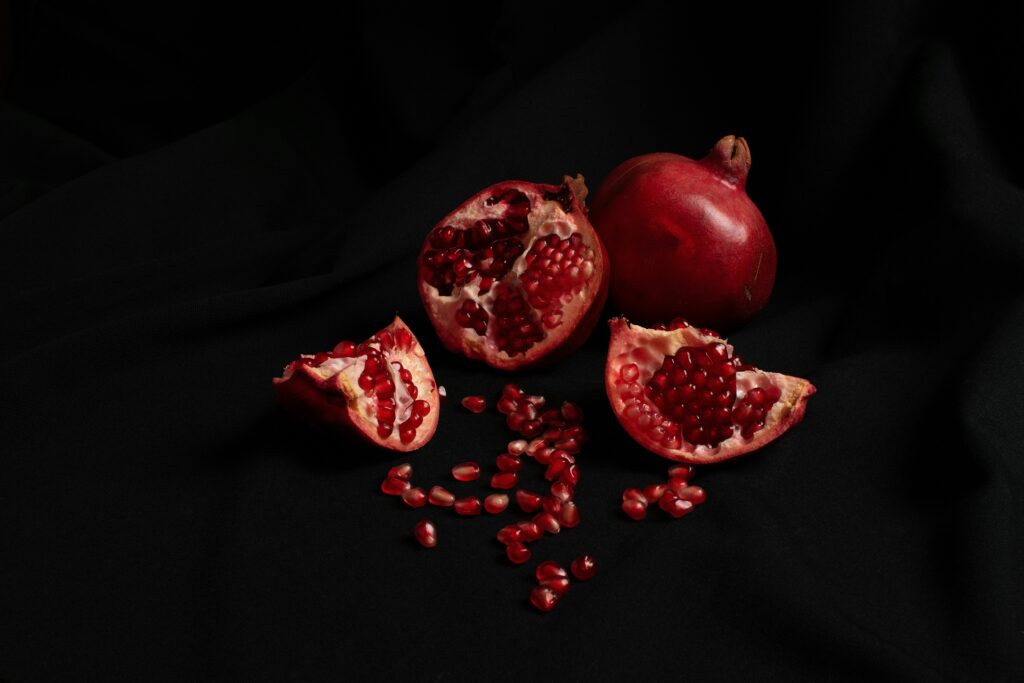
The pomegranate, a typical autumn fruit that grows in the Sardinian countryside, is also often associated with the dead, while its seeds are considered to bring new life.

An open pomegranate, seeds spilling from the center, against a black background.
(Image courtesy of Margarita Zueva via Unsplash)

In short, everyone is free to choose a little bit of what they want, even taking into account the tastes of the dearly departed, who may have had a special fondness for certain foods in life.

My great-aunt explained to me that the plates should always be white, the napkins perfectly folded, the glasses filled with red wine or water, and the chairs of the dead pushed away from the table to prevent the dead from making noise when they arrive. Great-aunt Alda, like other women from the inland villages of the island, used a white tablecloth, which could be made of filet (a traditional lace or crocheted lace with geometric patterns, like those on church altars), linen, or simple cotton, and with embroidery in the shape of roses and ears of corn.

It is customary to light a small candle at the center of the table to guide the lost souls in finding their way back to the house where they lived, and where they can finally embrace mothers, fathers, children, sisters or brothers one last time, or say a quick goodbye before crossing back over to the other side.

In the past, people like my great-aunt used a candle made of a cloth wick soaked in oil and embedded in a piece of cork that was left to float and burn in a bowl or pot of water. Each deceased person had their own flame that burned until midnight. Today, we are content to light ordinary white wax candles.

When everything was ready, my great aunt would make us sit around the table and, before we ate, she would recite a prayer in memory of the deceased. I remember my grandparents praying for their parents, my mother for her grandparents, and my grandfather for his brother who died in World War II. 

As the Dinner of the Dead continued, we were surrounded by a strange and fascinating atmosphere. The candles shining in the darkness, the words whispered in memory of the dead, their names spoken aloud like a loud and clear call, gave this ritual the flavor of ancient magic. But this ritual has a dark side too… 

After the meal, as no one dares to clear the table, this remains set until the next day, in case the dead come to satisfy their hunger. My great-aunt also told us no cutlery—or anything that could be used as a weapon—should remain on the table of the dead. 

On the one hand, the deceased could hurt themselves; on the other hand, sometimes, a soul may have a score to settle with a mortal, so it is best not to leave possible instruments of revenge at hand. So, one must defend oneself against the attacks of those who might cross the dark threshold for a reason that has nothing to do with love.

Bedtime is no different. When the family goes to bed, the front door is left open, or at least ajar; this way the dead can enter without knocking. And to prevent tempting the dead to linger on in this life instead of returning to their dimension, sometimes dishes are placed on the windowsill to prevent the deceased from crossing the house’s threshold.

In times of famine or abject poverty, taking the keys off the doors or leaving the windows wide open also allowed those in need to sneak into homes and take food without being seen and without the humiliation of begging for a piece of bread.

In modern times, of course, no one has ever found an empty plate on the table or on the windowsill the next morning, and the living consume the rest of the food during lunch on November 2, the day on which the dead are officially commemorated.

Now that my grandparents and my great-aunt Alda have passed away, I know what it means to miss the presence of loved ones. Sometimes, as we sit at the table for a Sunday lunch or a birthday dinner, we turn to look at the sadly empty chairs, or the chairs pulled up to the table, where loved ones now reside in a place closed to us. Nothing is more painful than a meal eaten in solitude, or with nostalgia for the laughter that no longer fills the festive air.