Moonlighting as an Extrovert

When I was younger, I had difficulty making friends because I lacked many skills, such as communication and confidence when approaching new people. It got a little easier in high school when I started developing more hobbies and had classes with a more consistent group of individuals. By college, I had more confidence in myself, so I was able to engage in more small talk and exchange contact information much more quickly, whether it was for classes or extracurricular activities. However, as an adult, the only way I could meet new people was gradually limited mainly to the workplace, where each new company brought a fresh group of faces for me to bumble my way through into friendships.

As much as I seemed to be friendly and engaging, I was actually an introvert, and going out all the time turned out to be exhausting.

Starting a new career: extrovert

Whether online or in person, having some sort of confidence to initiate a conversation always seemed to be a necessity, no matter where I went. 

Do I have my Rolodex of formal niceties and social platitudes ready? How do I know when to talk to them? What should my energy level be? Are there any mutual topics or hobbies we can talk about? Where and when should we talk in case I need an escape route if the conversation starts to peter out? Why does it seem like my conversation partner is an interviewer? Or maybe even vice versa, that I’m vetting them to see if we are a good match?

That’s because it actually kind of was. We’re interviewing each other to see if we were a good match. Or, you know, sometimes if they had any malicious intent. Your girl was not in the mood to get into any trouble at any time or wherever I went.

So we’re a fit, now what?

It might not be an issue most people want to acknowledge, but there is that slight fear or anxiety when you start a new friendship and want to solidify it. What task should you take on? When should you voice your opinions? How do you continue to climb the ranks from acquaintance to friend? Maybe even a good or best friend? 

A natural progression of many friendships is going out together, or spending time in more intimate settings or group hangs. That’s when the next challenge comes through: what activity should you do? Do you play it safe or adventurous? Stay local or explore? Is it a food outing or a physical activity?

When I moved to Japan, I had to force myself to be social and interact in order to make friends. Luckily, my company had a great, engaging volunteer community that hosted many events and activities to help everyone get to know each other. Whether it was going to a restaurant as a big group, exploring nature, or experiencing culture, I signed up for as many things as I could financially to meet a variety of people to befriend. Luckily, the people I gravitated toward started standing out to me, and I began seeing them more often at activities I had signed up for. At least we had similar interests that we could riff off of.

A work in process, but in smaller spurts

My social battery was working overtime, and I had a dossier of friendship applicants I could sift through to find my new group. For about two years, my weekends and holidays were spent going on multiple trips, stayed out many nights exploring bars and restaurants, and attended a ton of gatherings and parties. However, during the work week, I stayed home and binged Netflix with either leftovers or store-bought dinners. I like to think these moments alone helped me be a better social butterfly.
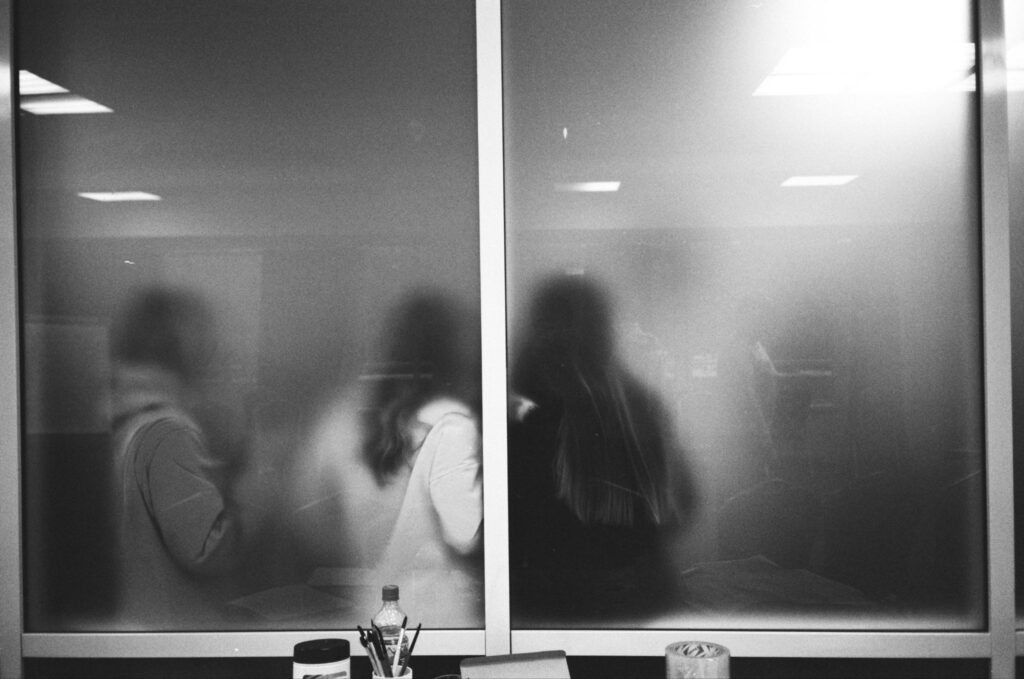
Multiple individuals, behind frosted glass, stand together chatting. They are on the other side of the pane from an office desk with pencils, paper, and other tools sitting on it.
(Image courtesy of Maria Varshavskaya via Pexels)

Eventually, I started aligning with people I would call good friends. Better yet, many of them were introverts like me. So, I would go to the bars less and to each other’s places more. We would go shopping together or plan our own trips outside the company-oriented ones. Sometimes we would meet up just to gripe about work or watch mindless media together — I feel like these moments were essential to keeping me, us all maybe, sane while living away from home. 

Before I knew it, I became a volunteer myself to help my community enjoy their time in a foreign country. I had to stretch my comfort zone here and there to make the most of my time in Japan, and I felt a sense of accomplishment helping others make connections, just like how my predecessors helped me when I first arrived.

Leaving the company, now not in each other’s company

I eventually left Japan and moved back home, and the distance really affected the relationships I made. I’ve kept in touch with some, touched base with others, but have largely grown distant from many of them. The distance and time differences really didn’t help the situation.

Looking back, we were in relationships of convenience; we were thrown together in a foreign country and had to make a few friends to mitigate the loneliness in a sea of unfamiliar faces. Not to mention the language barrier, that was another struggle. I was able to communicate with some of my Japanese coworkers and friends, but I had to switch between English and Japanese often because my proficiency wasn’t that high — and I had a better grasp of the language than many who moved to my area.

Luckily for me though, some of the friendships I made have survived until now. I may not be talking to as many people as I did when I lived in Japan, but it’s been a real blessing to still be in touch with those who wanted to stay connected, whether it’s a trip to see one another or an invitation to a wedding or occasion.
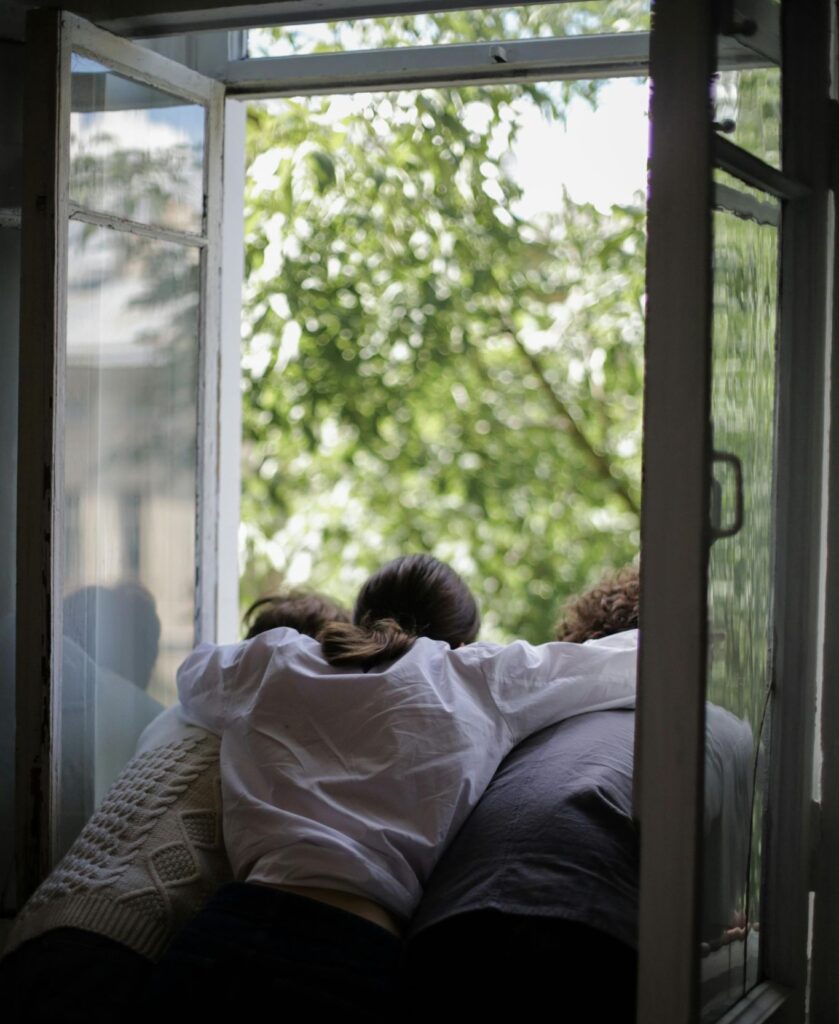
A group of friends, embracing one another, stare out a window together at green trees. They are thinking of other friends, who live far and wide, across the world.
(Image courtesy of cottonbro studio via Pexels)

The exit interview

For me, I wholeheartedly recommend that people move away to a new place. Not only to experience a shock to your system, but to force you out of your comfort zone and make lasting memories. I had a blast meeting new people, going on solo adventures, and making mistakes that I learned from along the way. Would I have preferred to stay holed up on my bed, binging House while eating a cold bento and a slice of melon I bought from a convenience store on my way home? Absolutely. But would I have regretted doing that every single weekend? One hundred percent.

A dear friend of mine is now in Australia, and I do my best to check in once in a while, but I know she’s living her best life right now. At first, I was concerned about her mental well-being while in a new country, but, after persistent encouragement and a nudge to explore here and there, I eased off and let her do her own thing. Now, I’m just waiting for her latest tales of adventure to get me itching for another one of my own.
A Backpack, A Lifeline

Helping vulnerable kids in Victoria

What started as a simple wish nearly a decade ago has delivered 50,000 backpacks to foster children across the state of Victoria, Australia. But the real story of Backpacks 4 VIC Kids is not a simple number on a spreadsheet—it’s about standing up for some of the most vulnerable kids in local communities. 

Many orphans we read about in fiction could have benefited from foster care — say, Harry Potter? We may be aware there are vulnerable children in our neighborhoods, but most of us probably have never thought about taking in a foster child or how the system even works. 

In 2014, Sally Beard of Victoria, Australia, had a realization: if children are being suddenly removed from unsafe homes, why are they arriving with nothing? No toothbrush. No clean clothes. Nothing to comfort them. Beard had been a foster parent herself, and she had some money she wanted to donate to charity. So she asked Christina of Backpacks 4 Aussie Kids for advice and spoke to others in local foster care organizations and from child protective services.

“I had to make sure there were no other competing organizations,” Beard said. “Every single person said yes, please do this, let us know when we can place an order!”

As a former foster parent, Sally knew too well that these kids often arrive with no other belongings than the clothes on their back. Backpacks 4 VIC Kids began in her home in November 2014 and stayed there until mid-2016, when growing demand moved it into a commercial space in Cranbourne, a Melbourne suburb. As the need continued to grow, the organization later relocated to a larger facility in Cranbourne West. 

The entire operation runs on community support with the help of a handful of full-time staff. First through fundraising, sponsorships, donations, and grant funding. Then through the work of an army of volunteers who help gather, help, and distribute the packs. 

Their first big order came from the community health and home care organization Life Without Barriers in April 2015, which expected approximately 700 packs in five months. Instead, it snowballed from there to mean over 47,000 packs in ten years. 

Backpacks 4 Vic Kids aid grew to see more than $10 million AUD in donations  ($6.5 million USD) spread over the ten years that Sally’s group has been in operation. Deliveries were all free of charge to children in emergency accommodation, foster care, or crisis. 

What’s in a backpack?

Each pack is filled with age-appropriate clothing, toiletries, books, torches (flashlights), blankets, comfort items, and more. The backpacks contain things kids need for the first day of school, things they need for their new lives, and fun things like toys. There are a variety of packs.

  • My Essentials Packs — Quality backpacks and nappy bags for displaced babies, children, and youth (clothing sizes 0000 – youth 18) in Victoria, New South Wales, and Tasmania. Children may be homeless, entering out-of-home care or emergency accommodation.
  • Christmas Gift Pack — Age-appropriate gifts of books, toys, activities, and other gifts along with stocking stuffers, all delivered in lovingly handmade Santa sacks.
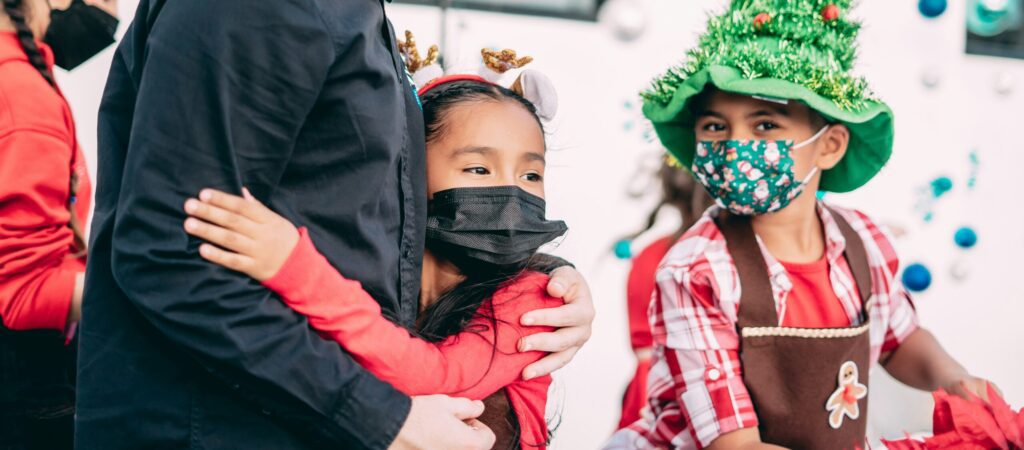
A young man in his twenties smiles as he receives a warm hug from a young girl wearing a festive holiday headpiece and face mask. A boy wearing a hat fashioned like a Christmas tree stands nearby looking at the camera (also masked).
(Image courtesy of Claudia Raya via Unsplash)

The kits are distributed through foster and kinship caregivers, case managers, and child protection officers. Many of these child welfare professionals keep the packs stocked on-site for emergency use within 24–48 hours.

Packs remain free of charge.  While Sally and her crew considered pricing them at $5 to recover costs, they feared it would be a barrier to care. Instead, they rely on community donations and sponsored packs, which come with a tag that lets a child know someone cared. The tag mentions the name of a donor as a gesture of gratitude.

The hidden heroes: kinship carers

Foster parents/caregivers are often called foster carers in Australia and the UK. Backpacks 4 Vic Kids calls them kinship carers. They often need additional support

According to Sally, there are more than 56,000 children in home care across Australia, and kinship carers—often grandparents or extended family—are the invisible backbone of the system. Many are approaching retirement age. Some never planned to become full-time caregivers, but stepped in out of love and necessity. These carers often go without support, and their stories rarely make headlines. But they are the reason many children stay connected to family and culture.

“Kinship carers don’t always get a choice,” Sally says. “They just do it because of family.” Often as seen in film and literature, foster children move in to a close living relative first, and their blood relation will agree to take them in because of their familial obligations.

One such story? Sally’s niece, who came to live with her and completed her Victorian Certificate of Education (VCE) after a year and a half of stability. The VCE serves as the main secondary school certificate in Victoria, Australia, equivalent to a high school diploma.

Kinship carers are the rare kind of people who would open up their homes to anyone who needs it, and remember they are usually older people. In an aging society like Australia’s, they sacrifice a lot of time and resources; so some material support will surely make an impact to aid the children placed in the wizened yet tender hands of the foster care system, the hidden side of foster care in the land down under. 

To be a champion

From a lounge room to a shared garage to a commercial unit and now a 120,000 square meter space and small warehouse, Backpacks 4 VIC Kids has grown because the need remains.

But growth comes at a cost, literally. The charity now carries $800,000 AUD in annual expenditures, including rent, staff, and production. Though distribution surpasses $3.6 million AUD a year, the nonprofit is operating at a loss. Paid staff have been cut by 30 percent just to keep things going.

Support their mission. Let’s keep this story going for the next 10 years — and for every child who deserves more than just the burden on their backs. 

 As the late Rita F. Pierson, an accomplished educator and Ted Talk speaker said:

“Every child deserves a championan adult who will never give up on them, who understands the power of connection, and insists that they become the best they can possibly be.” 

A grandmother hugs her granddaughter lovingly on a cold night. She is a kinship carer, and her granddaughter stares at the camera warmly.
(Image courtesy of cottonbro studio via Pexels)

Girl Talk Club: The Feminist Community Giving Voice to the Displaced

Amid emotional collapse and the overwhelming sense of invisibility that runs through so many women’s lives, a simple idea reignited Bruna de Ornelas’s purpose: to create a space where women could truly meet, both themselves and each other.

That’s how the Girl Talk Club was born: an alternative community weaving together care, learning, and belonging in the heart of São Paulo, Brazil.

Through in-person gatherings, conversation circles, creative clubs, and emotionally safe English workshops, the project has become a refuge for creative, intense women who don’t fit into the traditional corporate mold.

Bruna, who holds a degree in International Business and teaches English to adults, went through a deep depressive episode after facing homophobic abuse in the condo where she lived with her wife and young daughter.

Without institutional support and carrying a history of harassment, she decided to build, from scratch, a new way of inhabiting the world and helping other women do the same.

“I could only go back to teaching if I truly believed I was capable of delivering my best work. But I couldn’t return to teaching in the same way. I needed a life project. A legacy. A love letter to myself and to my students,” she wrote in a letter published on Girl Talk’s social media.

Since then, the club has brought women together for free events, expanding the conversation around identity, voice, and autonomy in a city where many feel alone, even when surrounded by people.

The community also became a space for collective English learning, using collaborative formats that break away from traditional rigidity and center listening, vulnerability, and exchange.

Among Girl Talk’s initiatives are:

  • Open picnics for women, with conversations about career, creativity, and emotional support;
  • Writing and artistic expression workshops, inspired by artists like Geloy Concepcion;
  • Secret subscription-based clubs for more complex activities in smaller groups (reading, cinema, art, letter-writing, and business);
  • Thematic workshops and circles with guests discussing self-esteem, communication, and life transitions;
  • Online and in-person events on topics like “creative vulnerability,” “girl-owned business,” and “nonconforming professional identity.”

Today, Bruna leads the project alongside other women and is already preparing to expand into new educational formats while keeping the essence intact: no one needs to perform perfection to learn or to belong.

Girl Talk defines itself as a “space of subversive care,” created by women who are tired of bending to external expectations. 

In contrast to toxic positivity and performative success, the club embraces the risk of deep listening and the courage to reappear.

English Classes for Adults

As an English teacher beyond the Girl Talk Club, Bruna describes her approach as decolonial and gender-conscious. To her, teaching a language is more than grammar and conversation, it’s about repositioning women in the world.

“We go after this knowledge and then feel ashamed to use it. Because those born with access look at us sideways. And that applies to everything: English, art, education. What I offer is more than a class, it’s a reclamation of belonging. The average student believes they don’t deserve to learn English. That’s not procrastination. It’s historic. It’s structural. It’s healing work,” she says.

Bruna explains that her teaching questions who gets access to knowledge and how that access is perceived by society.

“It’s not well seen when we learn later in life. The system values those born inside of it. But we belong at the table too. We just need to craft new utensils.”

Currently, Bruna offers both individual and group classes, shared mostly through communities and organic networks. Her focus is to keep the space intimate, safe, and collaborative without resorting to the performance of self-promotion.

The Color Of Far, Far Away That I Found In Peru

I had never traveled internationally or spoken any language other than English. Yet somehow, something so seemingly impossible became real. I was about to step out of my comfort zone and personally experience a giant leap of a trip outside of just pictures or videos on the internet. 

Last September, I left my five children for twenty days, crossing the 2,800 miles from North America into South America, but I found myself in Peru. My friend Ana, a native Spanish speaker from Mexico, grabbed my hand before we exited Lima airport, telling me, “Don’t talk to anybody, and stay right behind me.” Her take, not mine, but she was Latina, so I didn’t argue. 

The doors slid open and a sea of faces — clustered close together and vying for attention — called out, voice upon voice, begging to take someone, anyone, any place they could possibly want to go. Ana already had a taxi driver waiting for us, her name written on a board he was holding, standing just outside the swarm. She held me close behind her until we were loading our bags in the trunk.

I sat silently in the back while Ana and our driver chatted. Apparently, the driver asked where I was from. Upon hearing the States, he responded with “Oh, so that’s why your friend doesn’t talk?” 

Rules of the road

The road had no rules. Lanes meant nothing. Other vehicles meant nothing. Horns meant nothing unless you were the one honking, which meant you were serious. 

Our ride and every Peruvian ride we took from then on was a series of “We’re not gonna make it” action movie scenes. The cars maneuvered the way motorbikes do, weaving through the small in-betweens. The bikes, and there were many, carried up to three people at times.

Doorways to other worlds

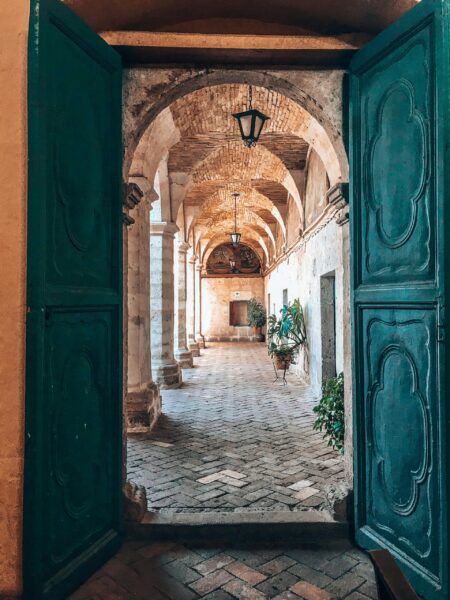
Our hotel entrance was a doorway stuck between all the other buildings and so simple that I glossed over it every time we returned to lay our heads down. That could have been because a doorway does not speak the same way that a door does. 


(Image courtesy of the writer)

A doorway is but a hole, a near emptiness, a thing which may be crossed. But the Peruvian doors are entryways, mystical, unknown, and bursting with the knowledge that an entire life unlike your own exists just beyond. 

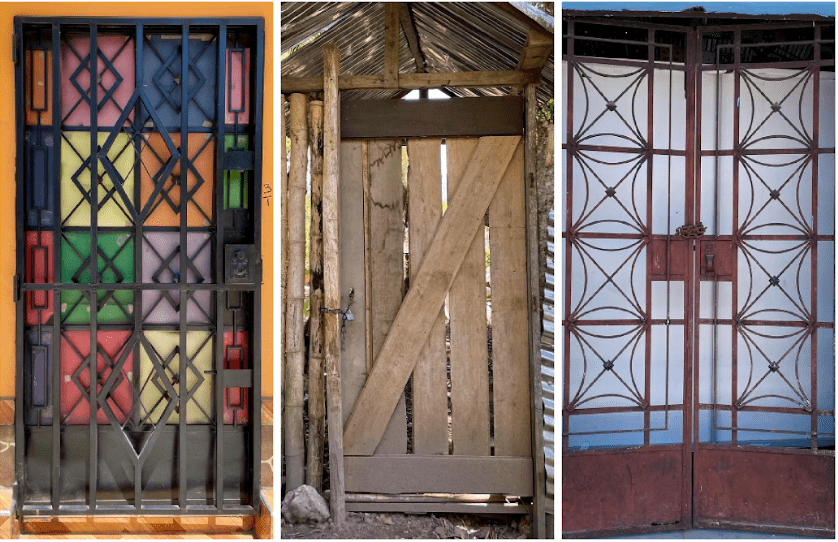
They are made of color, of gated iron, of broken down wood, of stories. Doors became my obsession. If the drivers of Peru were number one on our “ways to die” list, the act of getting a photograph of a specific door was a close second with how dangerous getting to some of them ending up becoming. 

(Image courtesy of Rod Long via Unsplash)

Cathedrals, shanties, museums, and houses had elaborate doors kept safe behind bars whereas some others were left open and easily accessible. Bikes were left to lean around everywhere we looked. One open door, the one to church, required payment to enter. The closed ones — with their lion heads forever keeping their iron rings prisoner — were the most telling.

Closed doors and grated windows were sometimes guarded by the police, all of whom were more than welcoming when I asked to get a picture of them. They said I could join them, or sent me across the street to go beyond a gate there to get a picture with their other police officer friend. The doors told stories. 

Transported to the beautiful unfamiliar

The people told stories, too. The architecture. The murals. The mist that forever kept the city of Lima the same gray as the inside of a cloud: light and dreamy. 

Ana and I walked and walked our first three days, before we moved deeper into the city. Among the people, it was easy to feel like the distance from home wasn’t quite so great. It was a crowded city like any other, where people had little dogs wearing sweaters and booties. We were by the ocean, which felt foreign enough for gleeful excitement, but not enough to feel transported. 

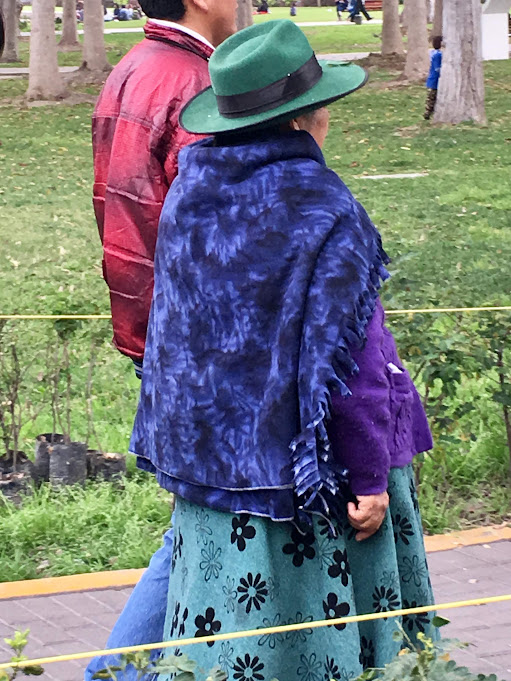
That enchantment happened when we came across the first woman dressed in traditional Peruvian layered Inca clothing. Rich jewel-toned colors and knit patterns wrapped her, and a baby was swaddled against her chest as she walked while selling homemade chocolates. She was petite and beautiful. Gentle like a doe.

(Image courtesy of Yosef Baskin)

Ana spoke with her while I looked on admiringly. Her woven basket of chocolates was just a bit too large for her to reach across its diameter. The chocolates were wrapped in paper with bright stripes of blue and orange. Their tops were cut into strips, erupting from them like a little carnival.

Ana, who is allergic to chocolate, gave her some small change. A blue bundle left the basket as she turned and asked if I wanted the peanut butter chocolate. I gave her my coins. An orange carnival tent came in exchange. I gestured and asked in English if I could see her baby. Shyly, she pulled part of her colorful wrap aside. 

I was stunned by the baby’s beauty — its unknown power that all babies possess — but even more so by his sheer size: to think that he came from his mother’s small frame, and that he was still only seven months old!

That was the moment. The moment that felt like thousands of miles away. The moment when a stranger became a life and a place became a home. The moment that even my best imagination could not come close to comparing to. Peru was just a few thousands of miles away from home, different but similar, and knowing that made it feel surreal. The ground we walked upon, the air we walked through, and the mist-covered mountains that seemed to float in the sky, were always there, yet always out of reach.

So many wonders we will never forget

We ate plenty of food – mostly good, some not. We had a spontaneous paragliding adventure, but that wasn’t nearly as terrifying as the drive to the beach without a seat belt. We were overwhelmed by the marketplace on our “gift getting” day. We spent a day in the plaza and burned our tongues on the best churros ever. During all of these experiences, every single person was kind.

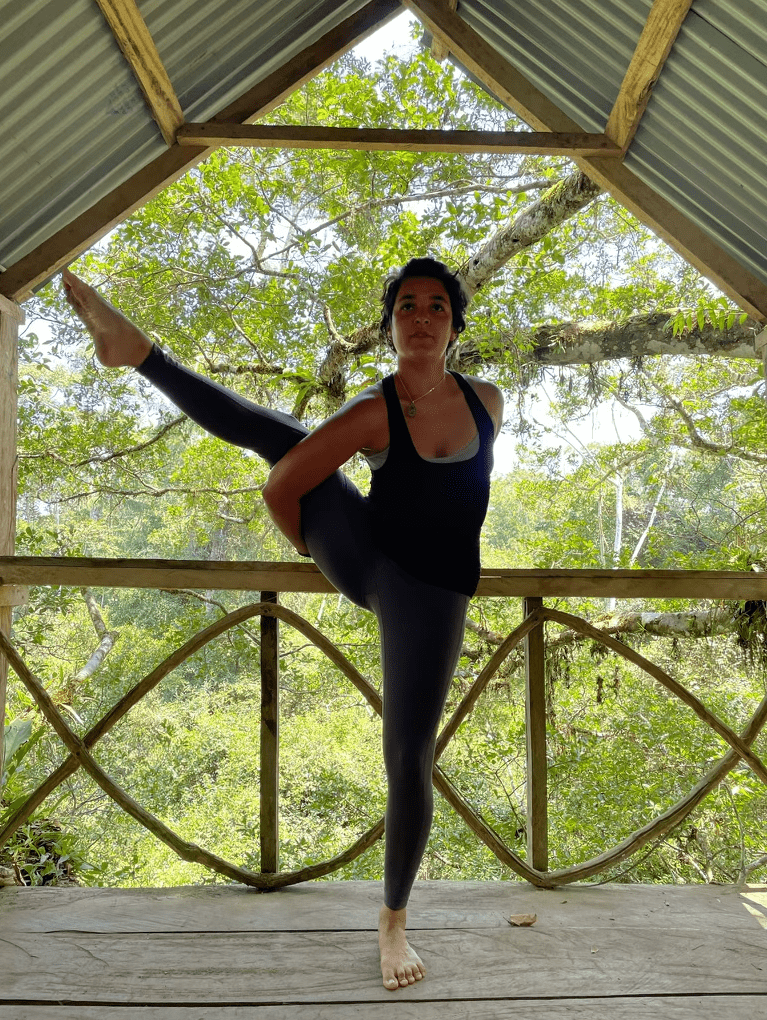
We spent three days in Lima, every second of them filled, and each one with a story of its own. After those three days, we next made our way across the Andes by plane and up the next mountain by car. We traveled deep into the jungle towards Moyobamba – a place where we would train to become certified yoga teachers. 


(Image courtesy of the writer)

In Moyobamba, we spent fourteen days nestled alongside the river at the Kantu Lodge. Thirteen people – nine students and four teachers – got together every day from 5:45 am to 10:00 pm. 

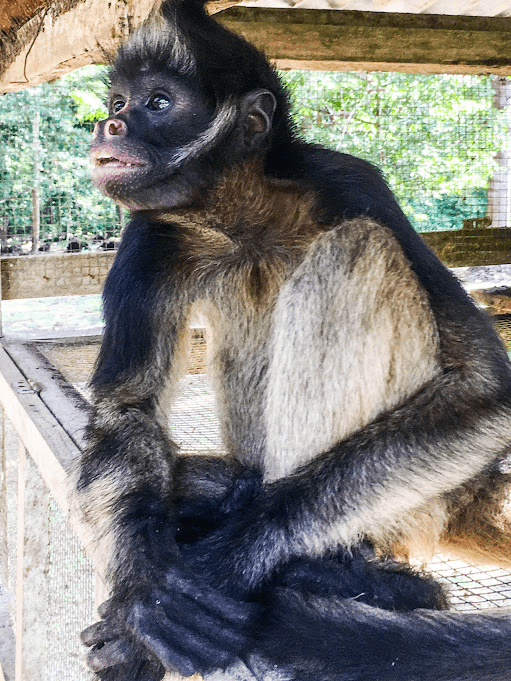
There were also the adorable black spider monkeys with tails as long as their bodies that swung from the trees just outside the shala (a shaded, open pavilion, from the Sanskrit term for adobe) where we practiced. The local butterflies were the size of both my hands together and flew lazily about, their sky-blue iridescence unreal in their authenticity. 

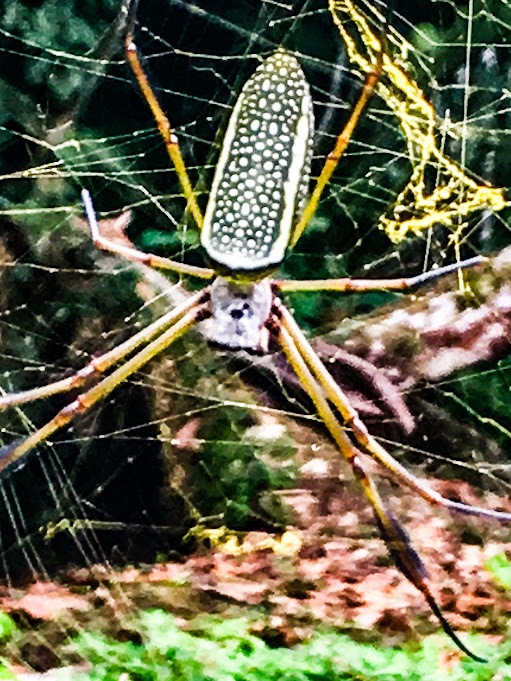
We hand-washed clothes in the bathroom sink and hung them out to dry with the hope it wouldn’t rain. Except for the single day of a continuous 12-hour downpour, our clothes stayed relatively clean. We shooed tarantulas, huntsman, and every other spider from our bedrooms, the shala, and the girls who screamed at every insect that came near them. 


(Image of Amazonian Spider Monkey orphan courtesy of Yosef Baskin)

We did yoga with the children on the streets who happily ran around barefoot —

some no older than four, asking us “Yoga? Yoga!” 


(Image of Peruvian Golden Spider courtesy of Yosef Baskin)

We traveled misty rivers, drank cacao, and visited a remote region filled with medicinal plants run by indigenous women, and to swim in the waters there. We saw hummingbirds and huge, ruddy brown birds with reddish eyes, looking in as they watched us from behind glass. We feasted on 42 total different vegetarian dishes served at every meal. We danced while thunderclouds rolled above us or while a fire crackled between us. We sang loudly from the balcony and along the paths. 

But most importantly, we laughed. We laughed with hearts who knew what it was to really laugh. We left as certified yoga teachers, but that piece of paper holds within it stories of adventures I never thought possible and that were truer than ink can describe. It holds a piece of the world that really does exist, so far, far away from home. 

We Built La Familia

Maybe it was the traveling we always used to do. 

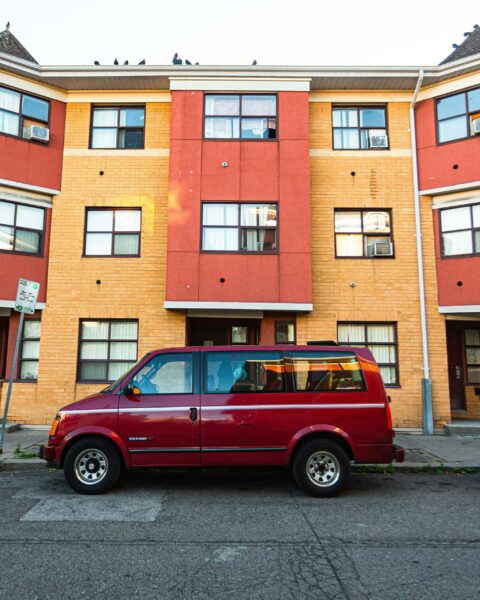
A family of six that would pile into a fire-engine red 1985 Chevy van, a vehicle that could easily hold a family of six. However, we would always load the van with all kinds of toys and goodies, so I imagined it looked like Santa’s sleigh, filled with as much joy and happiness as he delivered on Christmas Eve. 

This is something that my family would do every December for as long as I can remember. A strong family, with beliefs our parents would instill in us and to one day show our future family.

Meet the crew

Our crew of four kids was made up of serious, silly, and sometimes not-so-well-behaved kids. There was my youngest brother, who could not have been older than eight years at the time. He was a chubby child with curly hair that had more waves than the ocean. I remember all my aunts would comment how it was the look their hairdresser should mimic. 

Next was me, a doe-eyed kid with thin, long wavy hair and glasses to finish off my innocent look. Then there was my older brother, a lanky child who would constantly be outgrowing his clothes because of how tall he was getting at that time. The oldest among us was my sister, who stood at 5 foot nothing, with the longest black, spiral shaped hair of anyone we knew except for my mother. While she looked like a little girl that wouldn’t hurt a fly, to us, she was the guardian of the bunch. She was like a second mother to us boys. 

My mother was no taller than my sister, but the respect she demanded from us kids was that of French wrestler Andre the Giant . My father was the tallest man I had ever seen back then, towering over us like Dwayne Johson does to Kevin Hart (compare heights of 6’5”/196cm with 5’2”/157cm). He looked like a Mexican version of Mufi Hannemann, former Mayor of Honolulu, if Mufi had a thick black mustache. 

This is the family that would show me what it means to be la familia

Memories of our journeys

Family trips were some of the fondest memories I could remember. While it felt like we  would travel for what seemed like days, it was only about 12 hours. The long hours were not the reason for the fond memories, but how we came together as a family to make the trip the most memorable. 

We would laugh at each other telling jokes, play card games, and make lonches de aguacate. These avocado sandwiches were not some mediocre meal that anyone could prepare. No, this was left to mi madre, who could make a simple aguacate y jamon con queso lonche (adding ham with sliced cheese) look like the best meal you would have ever had in your entire life. 

My mother would tell us how much of her heart was in making meals for us on the road. It was so important to us that our mother would make the lonches, that when my father wanted to stop at a restaurant to eat, we all would object, “No. Just buy what mom needs.” 

Some of the best jokes told on this trip were, in the opinion of my older brother, “So funny you could laugh so hard that you may laugh your head off.” He would say knock, knock and everyone in the van would have to respond, because if we did not, all anyone would hear for the next century was him nonstop saying, “Knock! Knock! Knock, knock!” Do you see how annoying this was? Nails on a chalkboard. The joke would finally end with, “Well, you made me so mad that I forgot what it was.” 

My older sister was the one who, in her mind, had shuffled the deck of the cards in a manner that would put a Vegas dealer to shame. She would grasp half the cards in the right hand and the other half in the left, then she would bring the cards together to shuffle them and mix the two decks into one. She would finish off her shuffle with a tap of the deck on the cooler that we were all treating as a luxurious green table from the MGM. I never thought it was weird that, as a child, I knew how to play poker. The stakes were high back then, where we all had our one sock that was filled with marbles to place a bet with. 

The scenery would change so much as we traveled south. As we traveled, we would see mighty chunks of rock rise all over the land. To be able to witness mountains that stood with such firm, vertical, gravity-defying peaks was always something to admire.

So many times we would have to travel on a road that hugged the mountain and our van would hug the road just as tight as a child hugs their mom after the first day of school. Just as the mountains came, so did the landscape of the desert. The desert was full of sand, flat, crumbing rock, sandstone, and cacti that looked like it was leaning over searching for water. 

The family reunion

(Image courtesy of Andrik Langfield via Unsplash)

Many of these trips would take us to our family in a little village on the outskirts of Durango, Mexico.

Our arrival at the village my parents grew up in was always something that brought a smile to me and my siblings. The entrance to the village was not very noticeable, but we knew that we had arrived when we had passed the only building that everyone got their hielo (ice) from. This building from the outside looked like it was built with adobe clay. It was as long as my little eyes could see. There was always a line of gente (people) to get their hielo

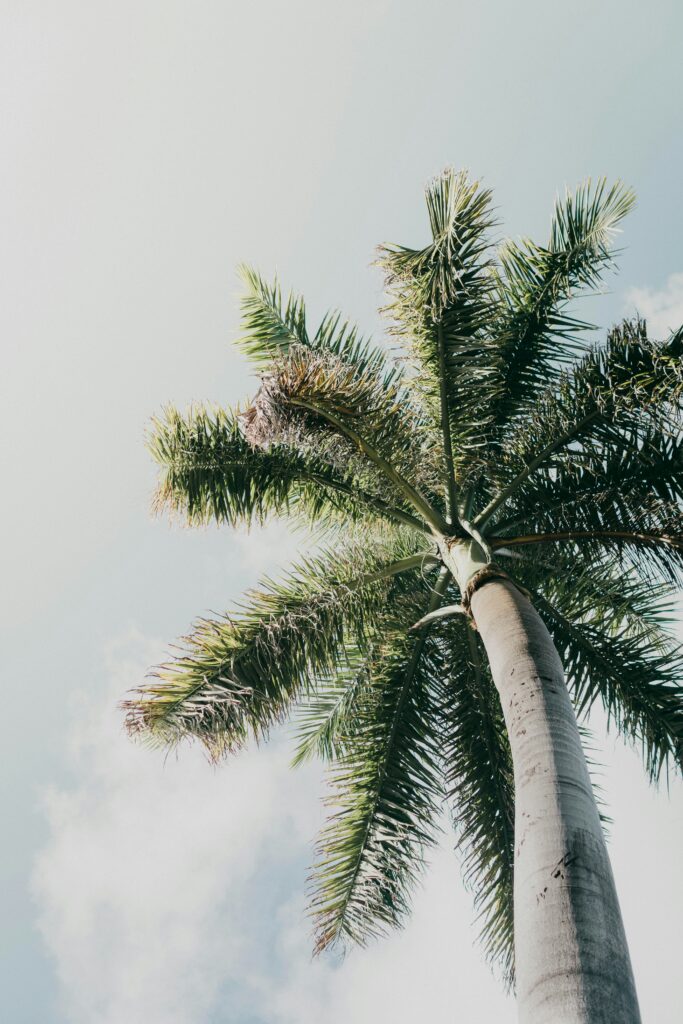
Next would be the road to my grandparents’ house. Believe it or not, there was a La Palma landmark very well known to us. That palm tree was as tall as the Eiffel Tower and would tower over all the houses on that block. My grandparents’ house was in sight from there and we could see the metal french-style door, which changed colors according to which color my abuelita  (granny) felt like at the time. It was a fun guessing game to see what it would be every time we visited. 

The nights in the village were actually brisk and always made the senses feel so much better, as it was the season of Christmas. Coming from a desert-like environment to a colder environment made us embrace the jackets our parents would make us wear, running around with our Parka jackets with our breath visible in the air and our noses as red as a reindeer. All this did not matter to anyone, as we would spend all day and all night in the courtyard of my abuelo’s house. 

My abuelita’s is a 5-bedroom home that at max capacity could hold maybe four families, but we squeezed in and made room where we could lay down. Being able to enjoy this time with our extended family was the greatest time in our life. Our family was as large as could be, with 20 primos y primas (cousins), not including my family and 10 tíos y tías (uncles and aunts). 

Family festivities

Every year was a family reunion with a party that would top the last, with the slaughtering of a goat so that we could enjoy a feast. The party was an epic scene, as it would start in the morning with Abuelita making breakfast for everyone. The adults would be having their cafecito con pan dulce (espresso with sweet buns) and us kids would be eating pan dulce with abuelita’s hot chocolate. 

(Image courtesy of David Guerrero via Unsplash)

Mariachi con la familia

With festivities comes music, of course. Since my father’s family is extremely musical, there would always be music playing in the background so everyone could sing along. My father’s brothers and sister would start singing like a Mariachi concert. It did not matter that the adults were singing ‘til the roosters crowed. It was always a delight to hear so much music coming from the courtyard. 

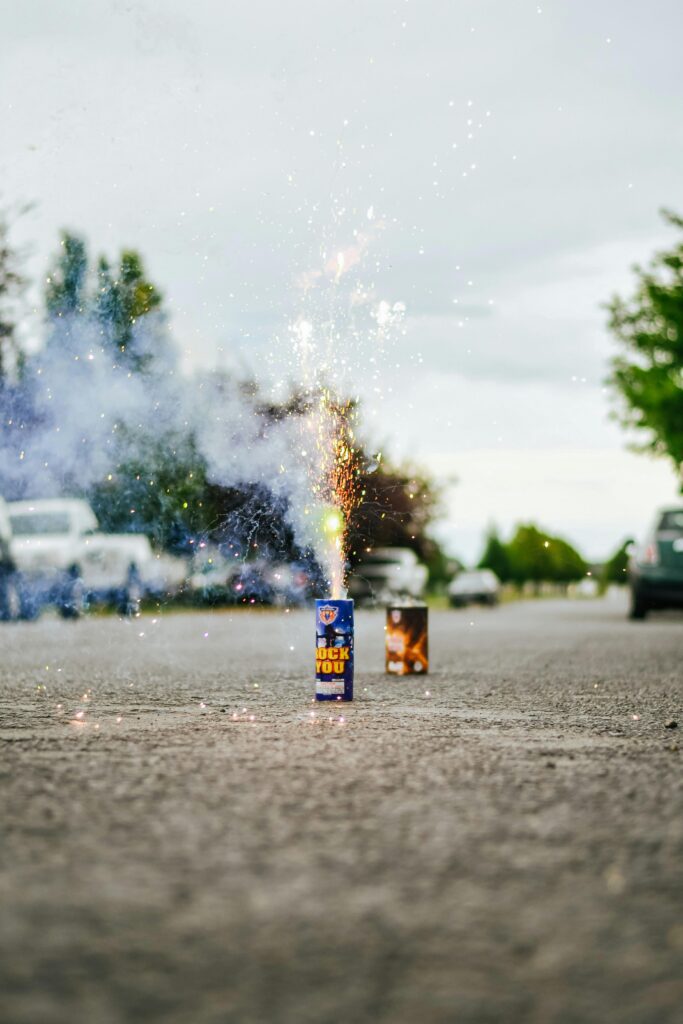
The laughter would continue with the younger siblings. My cousins and I had spent all day buying up all the fireworks we could gather from the corner stores. Each firework had a distinct shape and size. There was one we called La Palomita, it was the size of a pigeon. Not only was the size something to marvel at but, when La Palomita would go off, the paper that was holding what we believed to be gunpowder would fly everywhere like if a bird had just been struck. 

These times ensured great bonds were created and treasured. There was so much to enjoy, so much time — and so little time. These memories are the building blocks for what my belief in family is. La Familia is something that you have to work on. Not only with your immediate family, but with all your distant relatives. This will always be the strongest value that anyone can instill in their children.

(Image courtesy of Nubia Navarro via Pexels)

‘This Is Us’ — The Drama of Body Shaming, Diversity, and Conflict on My TV

Being a voracious reader since forever, I have always been a sucker for a good story. Unwittingly, I tend to submerge myself in characters  so completely that for those few moments I belong entirely to them — crying with them, laughing with them — oblivious of the tear rolling down my cheek or the smile plastered on my face, participating in their glee as well as their grief.

So when I came across “This Is Us” on NBC.com and Amazon Prime, my curiosity was piqued for many reasons. It all started with a news article that caught my attention. Highlighting the acting chops of the mellifluous Mandy Moore, this piece even flirted with a possible Emmy run, witnessing a meteoric rise in popularity. It was a running dual role of a young mother of triplets in a storyline oscillating between the past and present day where she plays an older woman eventually confronting an impending age-related disease.

Eager to see Moore on screen after a long time, I dove right in. 

Image of a person pointing a remote control at a tv.
(Photo courtesy of Erik Mclean via Unsplash)

Family and mental health

I was hooked from the first episode. The pairing of Milo Ventimiglia and Mandy Moore as husband and wife is nothing short of a masterstroke. The passionately in-love, all-in superhero father and husband played by Ventimiglia, masterfully exuding the perfect cocktail of gravitas, charm, compassion, bravado, humility and problem-solver dad had my full attention from the get-go.

Inarguably, if Ventimiglia is the ship that keeps the story afloat, Moore and her immaculate craft are the sails that propel it all forward. With a few charming smiles that age gracefully much like the rest of her, Moore lures you in and makes you believe that Rebecca Pearson is who she is now and forever; that we can never go back to someone called Mandy Moore. Hailing from different worlds, these two characters fit like two broken pieces of the same whole, glued together by their own impervious love.

Unlike other gripping shows that I tend to binge-watch at optimal speed, I took my time with this one. Like a fine wine that is savored and relished with every sip, I took my time to unearth the treasure trove of familial bonds. In particular, between the Pearson triplets  —  the imperfections, the fractious relationships that conversely also formed the cornerstones supporting the reformed relationships of their later years.

Well-embroidered

What I loved the most was the brilliantly and most intricately sewn layer upon layer of not just the broader base story, but the amount of light shone on the unraveling of each character’s backstories and underlying complexities. 

Three siblings who could not be more different, battling their own unique demons since their childhood, deliver a poignant and relatable lesson on the importance of staying united as a family, even in periods of estrangement and coming together to lift up loved ones. I also noted how their father’s influence pulsates through these characters in all they do as their lives progress.

Pick a social issue

In its ingenuity, the show has incorporated important global issues like racism, body shaming, eating disorders, LGBTQIA+ living (seniors and teens), child disabilities, anxiety and mental health into each of its character stories.

How this family comes together for each of its members going through one of these issues, and how the show successfully manages to normalize these conversations is what struck me. Especially those plots under the category of mental health like Randall Pearson’s unrelenting anxiety issues, Kate Pearson’s damaged self-esteem with her weight, and Kevin Pearson’s enormous pressure on himself to live up to the man his father was. Kevin finds himself failing miserably at every step; he’s kind, but not the deepest. 

Affection in our homes

Even an aging Rebecca in the throes of an impending disorder still battles with profound grief after many years, and brings forth the importance of mental health patients. Conversations that need to start within the four walls of our own homes. 

Especially today, on the heels of a gradually quieting global pandemic that upended lives and fractured relationships, the need for families to double down on regular public displays of affection — especially in front of and with their children — is important in my life.

This is something I circle back to often. When I grew up, there was a clear lack of public displays of affection. We just weren’t “huggers”. It didn’t help that the society that surrounded us when we were growing up, and continues to dictate the acceptability of such acts of physical affection in public like hugging and kissing, also ostensibly made such desires within many families within their realm stay away from it. Or perhaps be more conscious of it. This was something the series hit home for me too and I find myself consciously making an effort to encourage physical gestures of love towards my siblings by modeling it for them too.

Diversity and body shaming

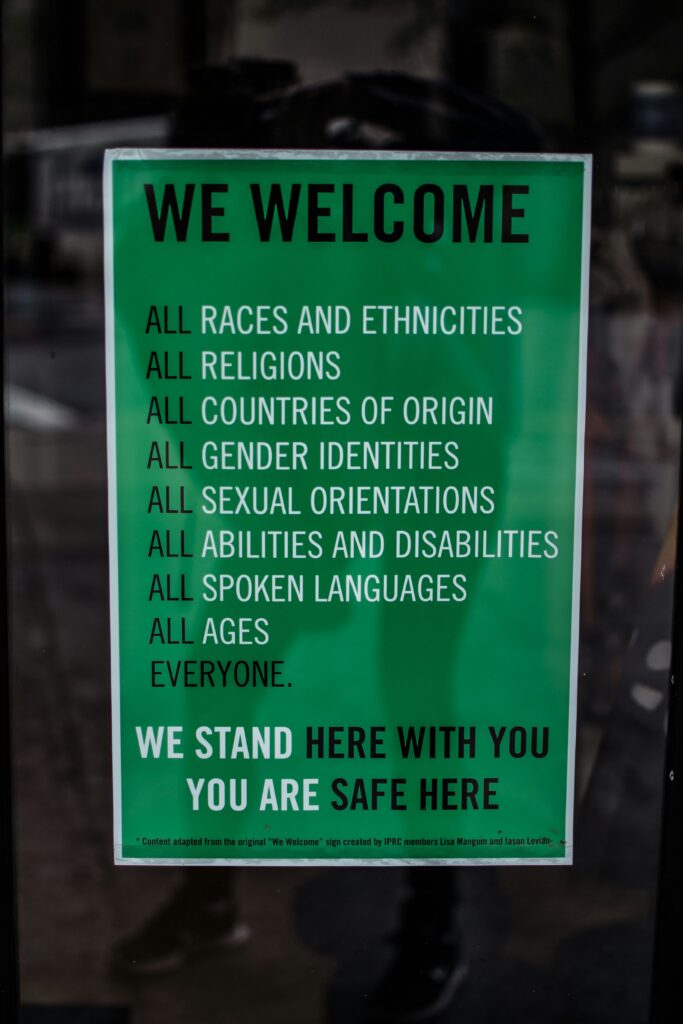
Image of a sign that says, “We welcome all races and ethnicities, all religions, all countries of origin, all gender identities, all sexual orientations, all abilities and disabilities, all spoken languages, all ages, everyone. We stand here with you. You are safe here.
(Photo courtesy of Brittani Burns via Unsplash)

In the early 1980s, a white American couple with twin babies adopts a third, an African American newborn abandoned by his father at a fire station. Steeped with the versatility that very few others possess, the inimitable Sterling K. Brown plays this grown-up Black boy, Randall Pearson, who was born to a black family but raised by a white one and was still trying to unearth the full story of his biological family’s checkered past. The show acts as the conduit that brings forth the harsh racism that people of color have been subjected to since time immemorial and still in the period in which the show is based.

It’s a wake-up call to recognize that the difference in color cannot and should not overshadow the sameness of all humanity. We often tend to begin this very important and urgent education too late. Just the other day, when my three-year-old son said that he did not want to play with our house help anymore because she was “dark” in color and not “white” like us, I knew that this education hadn’t started soon enough. A three-year-old doesn’t fully understand the weight of his words, but unwittingly he brought forth the urgency of handholding and guidance on this issue at the toddler stage itself.

Mental health too, remains a core and underlying commonality permeating the essence of the entire show and through all the time periods. Randall Pearson grew up with a white family that was so busy trying to give him a “normal” childhood that they never once addressed his “blackness” and the baggage that comes with it. Or how it could be affecting him and his curiosity to know more about his community and where he really came from. It is one of the main reasons his relationship with his siblings is consistently complicated.

When I think of how my four-year-old is learning to embrace his classmates who come from all cultures, races, countries, sizes and colors of skin, and how all of this is their “normal” right from the get-go, it fills me with hope for a more inclusive, loving, and broad-minded future.

There’s more 

A very overweight Kate Pearson struggles with weight loss, the inability to have a child, multiple failed IVF attempts, and ultimately the success of surrogacy while her best friend is struggling with the eating disorder bulimia. So many issues in this one sentence that go tabooed, unspoken, ill-approved, hushed-and-brushed under the carpet in so many countries and cultures even today. So many issues that for the most part only garner sneering spite instead of support. 

The effortless execution of the portrayal of all these important issues in the show is noteworthy. They don’t all resolve.  And then, there is illness [please ensure that the text in peach isn’t visible to the reader until they click after Spoiler Tag Alert to reveal it!] Spoiler Tag Alert Alzheimer’s disease is addressed across an arc of episodes.  This one hits close to home as it was what took my grandfather from us almost two decades ago. Moore’s portrayal of a woman who has just been diagnosed early with this neurologic disorder is Emmy-worthy in my book.

Aging in the four walls of our own houses

I was still in school and too young to fully comprehend that this evil disease was slowly but surely consuming my grandfather — shutting down his organs bit by bit inside the four walls of our own house. In many ways, this show that I watched decades after losing him is a sort of closure that I needed and didn’t fully understand that I needed back then.

I can write a whole book on why this show is a must-watch, but that would be tough to do without more spoiler alerts! It’s a riveting, heartwarming and stirring watch for everyone in every capacity — as a parent, a mother, a father, a wife, a caregiver, a child, a friend, a partner.

These are our stories too. 

There’s a reason they call it “This Is Us.”  

Two images of ducks in water. The photo on the left has a mother duck with her ducklings, while the photo on the right has just one adult duck.
(Photo courtesy of Siegfried Poepperl via Unsplash)


Finding Community in Identity: Discovering My Autism in Adulthood

I’ve spent my whole life feeling like I didn’t truly fit in with anyone around me. I’ve always felt there was something “off” about me. It was as though everyone except me received a user manual for how to be human.

It took me 25 years to realize that the reason I felt different from most people is that I’m autistic. But due to my lack of education on the subject, I went that long without even knowing.

Unraveling the signs

Most of my behaviors and a large part of my personality are a result of my autism. But only late in my life did I realize there were names for how I navigated and experienced the world. 

Sensory issues

Growing up, many of the clothes I had bothered me so intensely to the point where the seams or even the type of fabric were all I could focus on all day. Sounds that were too loud to me but not to others led me to cover my ears and want to leave the room. These are only two examples of the many sensory processing issues that I’ve experienced my whole life.

(Unsplash/Majestic Lukas)

Special interests

Whenever I find something I enjoy, whether a hobby, show, book, or topic, I go all in. I want to know everything about that thing, so I spend many of my waking moments thinking about it. For months or years now, much of my life has revolved around my current special interest or hyperfixation. The intensity of my interest in a particular topic goes beyond what most people enjoy.

Shutdowns and meltdowns

I can also get overwhelmed by emotions or sensory input. As a kid, this presented as wanting to withdraw from the world, and usually speaking became difficult and energy-consuming. I still get periods like this, and they can last as long as a few hours to some days. Now I know these are called autistic shutdowns. I also experience autistic meltdowns, where I get so overstimulated or upset that I sob uncontrollably and find it difficult to calm myself down.

Social communication problems

I’ve always found it difficult to express and read people’s emotions, facial expressions, and intentions. For a long time, I called myself “socially awkward.” I often take others’ words out of context and struggle with social cues. While I’ve gotten considerably better at socializing with others, it’s still like speaking a foreign language, and the native speakers can tell it’s not my first language. 

My hardships with social skills have led to many misunderstandings and miscommunications. Since I was a toddler, keeping up with conversations and coping with social situations has been difficult.

Structure and routine needs

I thought I’d eventually grow out of my “weirdness” as I called it. But that didn’t happen. As I grew into adulthood, my problems only seemed to exacerbate. At 18 years old, I got my first job in retail. After that, I held positions in journalism and teaching. These jobs required a lot of spontaneity and lacked routine. Because of this, I struggled. I found myself hopping from one job to another to avoid what I now know are shutdowns, meltdowns, and burnout.

(Unsplash/Christ Montgomery)

A sense of belonging

In my mid-twenties, I came across autistic people’s stories and videos on my social media feeds. I related to most of what they said about their experiences with autism. After months of listening to this community and doing my research, I began to identify as autistic. It felt like I had finally found other people like me and I wasn’t alone in the world.

In late 2022, I pursued an official diagnosis. I found a local psychologist who offered autism diagnostic services. For several hours, he interviewed my mom and me about my entire life—from birth till now. Afterward, I received a six-page report that confirmed that I was, indeed, autistic.

Knowing I’m autistic has helped me realize I’m not the only one who feels this way. I now know I’m not “weird” or alone. I’m just autistic.

Since my diagnosis, I have found a community of people who understand me. I feel like I’ve discovered “my people.” I have made friends with other autistic individuals online who share similar special interests, communication styles, and ways of existing in the world. My allistic, or non-autistic, friends and family are lovely. Nonetheless, it’s been a breath of fresh air to forge relationships with people who process the world like me.

Finding community

This newfound sense of belonging has inspired me to share some tips for anyone who might be feeling different–autistic or otherwise.

  1. Don’t do it alone

Find online groups, forums, hashtags, or even in-person meetings related to a particular interest, feeling, or experience. Hearing about other peoples’ experiences and, even better, interacting in these communities can help build connections with like-minded people. This can foster relationships with dozens, hundreds, and even thousands of others with similar experiences.

  1. Keep an open mind

Be open, honest, and vulnerable. This can be challenging, especially when feeling like an outcast for certain traits, behaviors, or hobbies. But by sharing stories, you will find others with similar experiences. Speaking from experience, authenticity leads to a more profound sense of belonging.

  1. Embrace support

Get support from people who have had those experiences. Getting advice from those who have already walked that path is helpful in getting a headstart in understanding. Other people can offer valuable insight and new perspectives to help with growth and adaptation.

  1. Give yourself time

Don’t rush the journey. It can take a while to find the kinds of people with similar traits and interests. But even if it takes time, those people are still out there. Building relationships with new people can be difficult and time-consuming, but it’s worth it.

Embracing my difference

Since finding a community of like-minded people, I’ve grown a lot. I’ve forgiven myself for many of my social shortcomings and emotional outbursts that have stemmed from my autism.

I didn’t need to hold myself to such high standards anyway, but knowing that I have a disability that hinders me from navigating this world in the same ways as others has helped to understand why I feel the way I’ve felt my whole life. I no longer feel the need to meet the expectations of a society that is not optimized for autistic people.

(Pexels/Min An)

I’ve also been accommodating myself more. I bought noise-canceling headphones to help with sensory overload. I set boundaries with others when I’m not feeling like socializing. I avoid situations where I know I’ll get overstimulated. I’ve started “unmasking” my autistic traits, which means I’m not hiding them as much as I used to.

I have also found beauty in what I have realized are autistic traits. A few of these include my strong sense of social justice, intense passion for my special interests, and great attention to detail. I cherish these aspects (and more) of who I am now more than ever.

There’s nothing wrong with being different. But it’s great to know that my difference has a name and a community. I hope everyone can find their community filled with people that understand them because it’s a beautiful discovery. For me, it has brought me a sense of belonging and self-acceptance that I didn’t know was possible.

Misery Loves Company

“People who are hurting tend to hurt other people,” my mom says while holding me close and listening to me cry about the day’s events.

“Why?” I ask in between sobs.

“Because they are just unhappy with their own lives and feel miserable, they choose to make other people feel bad about themselves. It’s a vicious cycle, and misery loves company.”

It took me many years to fully understand what my mom was saying in those moments of desperation and utter sadness when I was a teenager. I fully understood the impact of her words and the lesson she was trying to teach me only in my late twenties while living alone. 

The takeaway is to take everything people say with a grain of salt because their opinions will not matter in ten years. They are irrelevant.

Misery does, in fact, love company, and due to the ever-changing economy, rising cost of living, unemployment, the pandemic, and advancements in technology, it has become so much easier to spread hate worldwide. 

How I respond to haters

Most people don’t even bat an eyelash when throwing insults at strangers on the internet. I have noticed that many are angry, hateful, and very ignorant of their own biases. They often judge people without a second thought, based on their profile picture and the content on their page.

Whenever people insult me on Instagram for commenting and leaving an opinion on a post, I try to tackle their hate, judgment, and ignorance with kindness and compassion. I raise awareness of why some people are overweight or prefer to surround themselves with cats rather than people.

People don’t care to understand the struggles of other people. I have noticed supervisors do the same thing and discriminate against an employee when it is illegal to do so in the working environment, but that doesn’t stop them from finding ways to make an employee feel crappy.

So when these types of situations and circumstances occur, I try to reframe the negativity by pointing out how cruel they are by saying, “God bless your hateful, ignorant, and miserable soul.” Then, I proceed by letting them know about how certain health conditions can impact a person’s looks by affecting their weight and skin in a variety of different ways, such as taking mental health medications,  having a vitamin deficiency,  an autoimmune disorder, or a hormone imbalance such as a thyroid condition. 

I ask them to educate themselves further on this topic before automatically spewing their hate toward people they don’t know on the internet. Usually, when I respond to these types of offensive comments with kindness and awareness, many people end up not responding, which leads me to think that, perhaps, they will think twice before choosing violence and responding to someone’s opinion with mean comments the next time.

Our responsibility

Everyone we meet in life is fighting an unknown battle, one we know nothing about. We must do better as a society if we wish to have any hope for future generations. We must consider what type of example we are setting for our children by exhibiting bullying behavior towards strangers. 

It all starts at home, with the example set by the children’s family members

They come into this world already knowing how to love, and unfortunately, it is ultimately the people we surround ourselves with who choose to teach us how to hate, based on how the world treats us as individuals.

Madhu Duniya is Creating a Buzz

It is early in the morning. The sky is purplish over the treetops. The forest is still asleep. 

Yet, she is no stranger to this moment. 

Like clockwork, she readies herself. Her day begins to hum right before sunrise. It has been like this for as long as she can remember. Fellow workers are abuzz as they too prepare for the day. They know they must get a move on. Everyone prepares for the long day ahead. They all know what they must do. They all know they play a crucial role in the survival of their community.

Worker 786 is but one of the many in her colony. Thousands from her hive work together to prepare for the morning. Worker 786 and the others in her colony are unique to the Southeast Asian region.  According to the Haribon Organization “Among the stingless bee species, the most important one is Tetragonula biroi (or ‘kiwot’). It shares a similar morphology to honeybees, with the major differences being that the kiwot is the size of an ant and lacks a sting.”

A spokesperson for precious colonies

Like many of her kind, worker 786 is just one of the millions of indigenous Southeast Asian bees under threat. Their plight resulting from pesticides and deforestation does not make the global headlines. She is just one of millions whose voices remain unheard. 

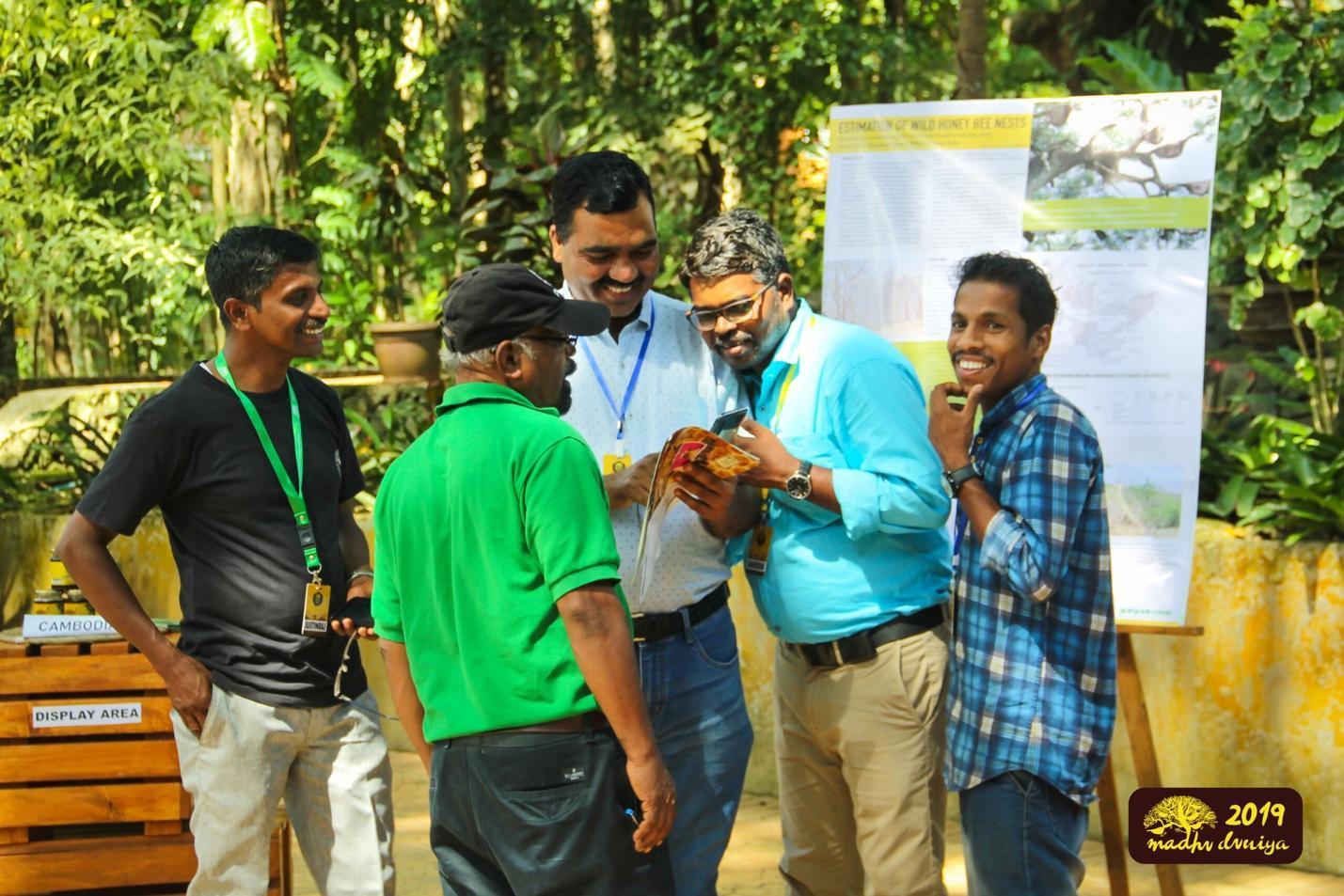
A group of men standing around a sign
Description automatically generated

(Image Courtesy of Madhu Duniya)

Here is where Madhu Duniya comes in. While the Honey World gathering is based in Indonesia, Madhu Duniya works to be the spokesperson for the many bees inhabiting all of Southeast Asia. It hosts conferences and provides educational campaigns geared toward raising international awareness on the regional bees. It particularly strives to gain attention in the West. 

By doing so, the organization also helps local beekeepers develop their livelihoods. It contends that when the local bee population is threatened, so are the lives of the people who make a living from collecting honey and bee by-products. Bees are a crucial component in the local agricultural ecosystem. And globally, a third of all food production depends on them. 

In the organization’s own words, “Since its establishment in 2007, Madhu Duniya has served as a platform for various stakeholders to discuss growing trends, challenges and opportunities around the subject of forest honey and native Asian bees. Madhu Duniya highlights the knowledge and wisdom of community harvesters and supports the participation of community experts from a broad base of indigenous and local honey groups.”

Forest honey networking

In addition, the organization shares that “Throughout the years, Madhu Duniya has been instrumental in facilitating the formation of forest honey networks in at least five Asian countries, as well as providing assistance in securing government permits for forest honey hunters. It has inspired research on honey’s health and medical benefits and has helped raise awareness on (sic) the latest studies and concerns about Asian forest honey and bees. Moreover, the network has been active in creating and promoting proper harvesting and processing protocols, and has successfully linked private sector partners and producers towards the vision of sustainable and enabling community livelihoods.”

Madhu Duniya promotes  “forest honey as crucial for rural incomes, key for forest conservation, and important for human health, not just in Asia but also around the world.” 

These activities are what Madhu Duniya has been working on for a few decades now. While it had officially started in 2007, according to our interviewee, Crissy Guerrero (more formally known as Maria Cristina Guerrero), the initial plans for the group had started in the early 2000s.

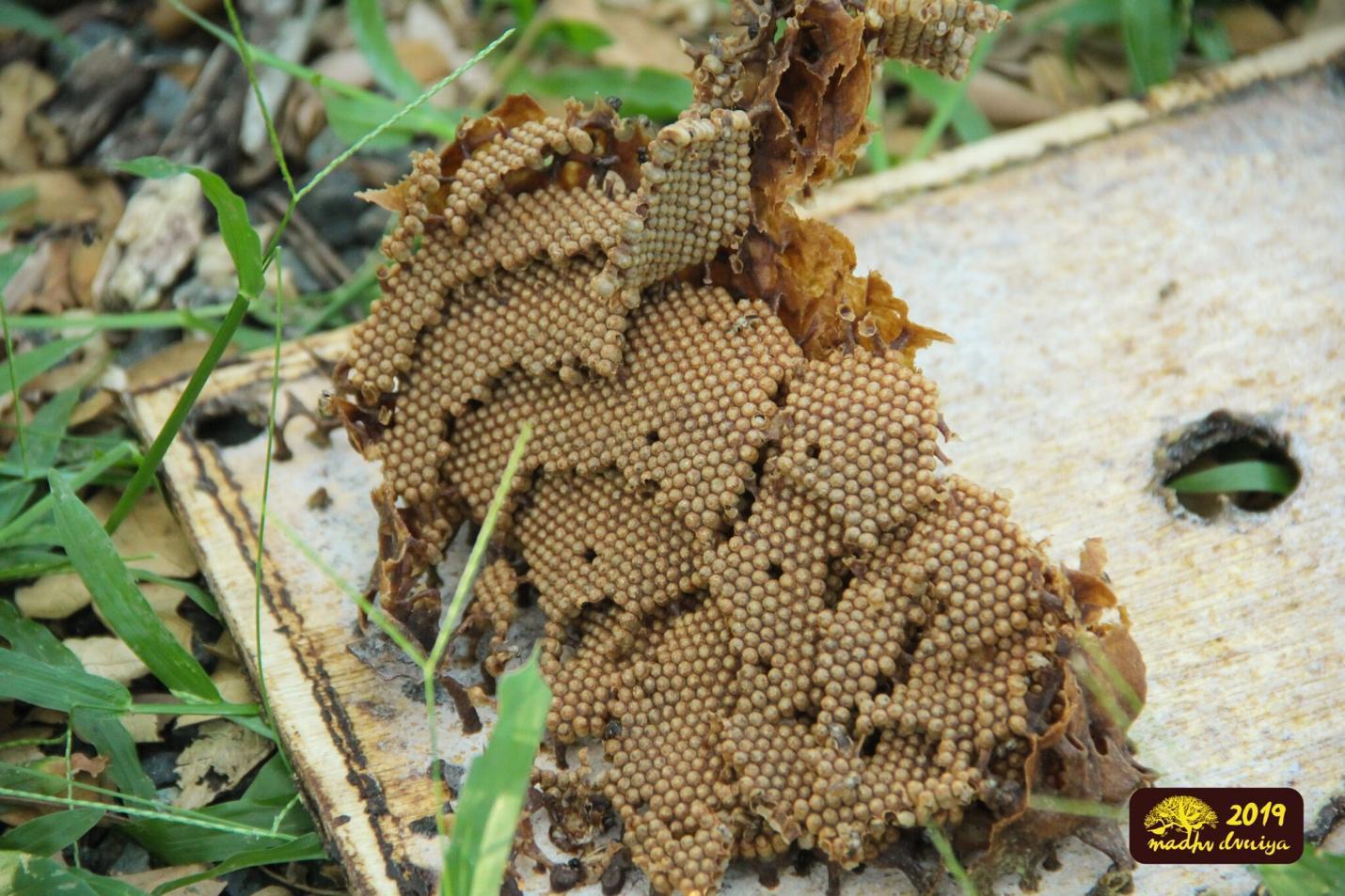
(Image Courtesy of Madhu Duniya)

As Worker 786 prepares for flight, she scans the throngs of bees at the launch area. The mouth of the hive is alive. She has known many of the younger bees since they were just larvae. Across the buzz and flutter of wings, she is unable to find her friend, 662. 

Worker 786 shrugs it off and assumes 662 has already left.

Each bee then takes off in search of the much-needed resources to keep its colony going. The sky fills with a small cloud of black. Compared with the western honey bee, 786 and her colony are smaller and black in color.

Gaining altitude, the workers spread out to various areas within their sphere of operation. Some head north, others south. They have a flight range of 500 meters, so they work in synchronicity to cover the most ground without doubling up. They are efficient that way.

While in flight, 786 approaches her intended patch of flowers. She cannot help but notice a bee she has never seen before. It is visibly bigger, yellow and black, and it was just emerging from one of her own assigned flowers.

Based on extensive research by a Vietnamese expert invited by Madhu Duniya to their events, there is a concern with the introduction of Apis Mellifera, or the western bee, to the Asian environment. The local Apis Cerana and Apis Dorsata, both native to the region, coexist without harvesting the same flowers at the same time. Working the same territory, they do not compete, as if they have a mutual understanding.

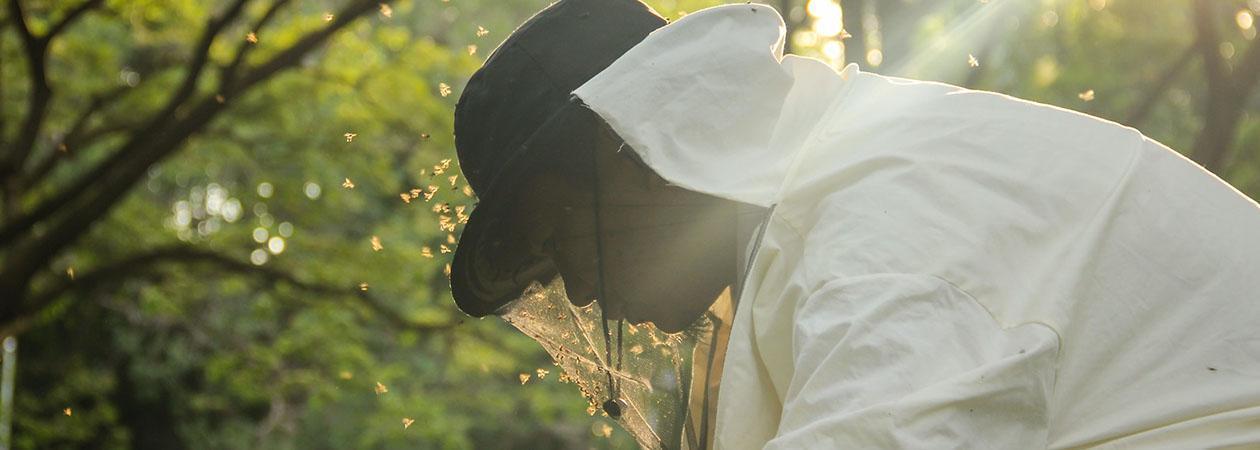
A person wearing a hat and a white shirt
Description automatically generated

(Image Courtesy of Madhu Duniya)

However, Crissy Guerrero pointed out that the research suggests the introduction of Mellifera into the environment disrupted the existing pattern. This led to competition for resources with the local bees.

Surprisingly, commercial honey makers have integrated the non-indigenous Apis Mellifera into the local Asian ecosystems.

Swarming to tackle the challenges

Flying her way back to the colony, 786 cannot help but notice that today she has a lighter load. While looking down at the ground, she sees a familiar bee lying on the ground, struggling. It is 1003, and ants swarm her dying body. 

Commercial pesticides used by agricultural groups have been killing off bee populations. Concurrent with that threat, Madhu Duniya contends that habitat destruction is one of the main factors leading to a dwindling bee population.

Crissy Guerrero adds, “A lot of these bees are based in the forests. If you keep converting these forests into agriculture plantations, you will have a loss in bees.”

Having reached the colony, 786 works her way back to the nursery to deposit her precious cargo. She is a gatherer, and what she gathers becomes the nourishment of the colony. Hungry larvae require sustenance that she helps provide.

From what appears to be a small effort, 786 plays a big role in plant pollination. Her efforts and those of her compatriots are crucial to the environment. Without her aid, plants will not flourish. That is why they are essential not just to growing food crops but to harvesting medicinal plants as well. 

A close-up of a beehive
Description automatically generated

(Image Courtesy of Madhu Duniya)

Back in the hive, 786 is startled by a loud thunderclap. Thunder is unusual for her since it is not expected this time of the year. So 786 hopes the rains will not come early this year. Bees cannot fly out and gather their resources at all in the rain. (Climate change alert—heavy flooding also means lower pollination.)

During November 6-10, 2023, Madhu Duniya conferenced with other global stakeholders in Vietnam. Its goal is to raise awareness for Asian bees which, though numerous, remain deprioritized on a global scale. Madhu Duniya continues to spread the word that bee populations are crucial to the propagation of fruits and vegetables, nuts and flowers, to keep the human food system stable. And in Asia they are under threat.

Many may still not realize it, but Bee Lives Matter Too. We are dependent on them as much as they are on us.

But 786 sat quietly as raindrops fell on top of her hive. Leaks through the insufficient propolis seals meant to protect them slowly let water seep in. She prayed they would make it through the night.

Congratulations to Madhu Duniya for its impactful regenerative work in Southeast Asia. The project was honored with the Yuvoice Brighter Tomorrow award on January 25, 2024, for its efforts in promoting Asian bees by consolidating its findings and spreading the word among members of the international community. On behalf of our Brighter Tomorrow team, thank you for taking the time to be interviewed.

A Diagnosis

There was something off; I knew it. I couldn’t quite name it. But it was deeper, darker than what had previously bothered me. 

I was diagnosed with depression at fifteen and generalized anxiety disorder at seventeen. Depression, being familiar to me, seemed like a well-worn jacket weighing me down. Anxiety seemed like a scarf, too tight, wrapped around my throat, restricting my breathing. 

I learned how to manage and to wear them. But this… this was different.

The story behind my diagnosis

For several months, at the end of my freshman year of college and into my sophomore year, I was plagued by misery. I was nineteen and in an abusive relationship that was making me question everything; who I was, my place in the world, my purpose, and my destiny. I started exhibiting troubling symptoms — symptoms that were more extreme than I had experienced before. 

I wasn’t sleeping. I was like a zombie, wandering through the days and nights, lost in the fog of my mind. I was losing my sense of time; hours would pass in a blink, and I could not remember how I had moved from point A to point B. I felt an overwhelming sense of hopelessness. 

I was numb, frozen. 

Some days, I was agitated, jittery, and unable to stop myself from moving. I needed to act, to jump headfirst into whatever I could — projects, games, or adventures. I needed distractions. I needed action. I desired constant motion, my mind racing along with my heart. It was like I was running a marathon and couldn’t stop. 

My depression was unlike anything I had experienced in my young life. It overshadowed my every waking thought, leaving me helpless and weak, lost and confused. I would vacillate wildly from barely moving, eating, and breathing, to being so wired and alert that I couldn’t focus. Either way, I wasn’t functioning. 

It was obvious to anyone who saw or talked to me that something was wrong. I was so unlike myself; it was shocking. I was transforming into some other-worldly version of myself, the opposite of the person I was, a photo negative of the girl I once knew. It was frightening, unsettling, and frustrating. 

(Image courtesy of Ron Lach via Pexels)

The revelation 

It all ended in a burning, blistering, ugly way one night. 

It was late at night and dark. We were somewhere in Boston, outside a liquor store. The boy I was seeing revealed his hand: he had been cheating. All my suffering, all the back and forth, all the mind games, it was all in vain. I started to implode. I cried, I screamed, I fought. I was shattered. 

All I could think about was death. I had been teetering on the brink of suicide for the better part of six months at that point, but now it had become all-consuming. I was ready to end it all. I wanted the suffering to stop, hard, fast, and cold. 

I had a vague notion of a plan, but he stopped me. He wrestled me into the car, drove me back to the college campus, and left me alone to lick my wounds. 

The next morning I was still reeling from the aftershocks, still contemplating ending it all.

But I had survived the night, and that had to count for something. So, instead, I chose to take a leave of absence and headed home. 

I found comfort in the embrace of my family and sought answers from my medical providers to understand what was wrong with me. 

During a session with my provider, she asked direct and unusual questions. Then, she had me fill out a questionnaire. I was as honest as I could, even though I wasn’t entirely sure what I was filling out. I handed it to her; she examined it briefly and then revealed what was on her mind.

The new diagnosis 

A diagnosis that we had somehow missed during my years in talk therapy with her. It took exacerbated circumstances to reveal the more extreme symptoms, but it was clear that I didn’t just have depression. 

I had bipolar disorder. 

Specifically, bipolar II. It is characterized by a severe depressive episode, feelings of hopelessness or intense sadness, coupled with a period of mania and elevated or irritable mood. 

A pendulum of emotions. 

At first, I felt empty. Bipolar was a scary word, a word that felt foreign, unfamiliar. I knew nothing about it. It was bitter in my mouth. The weight of it seemed overwhelming. I tried to wear it on and understood how it fit. It was a little too big, too cumbersome, too heavy. 

But then I tried to sit with it. I considered it. There was comfort in at least having a term for what I had been experiencing. 

Power is in knowing and in having a treatment path. We were going to change my medicine, reach out to my therapist, and work on bipolar-focused treatment instead of just depression. I wasn’t going to be left in the dark with the weight of this new diagnosis. I had a way forward. 

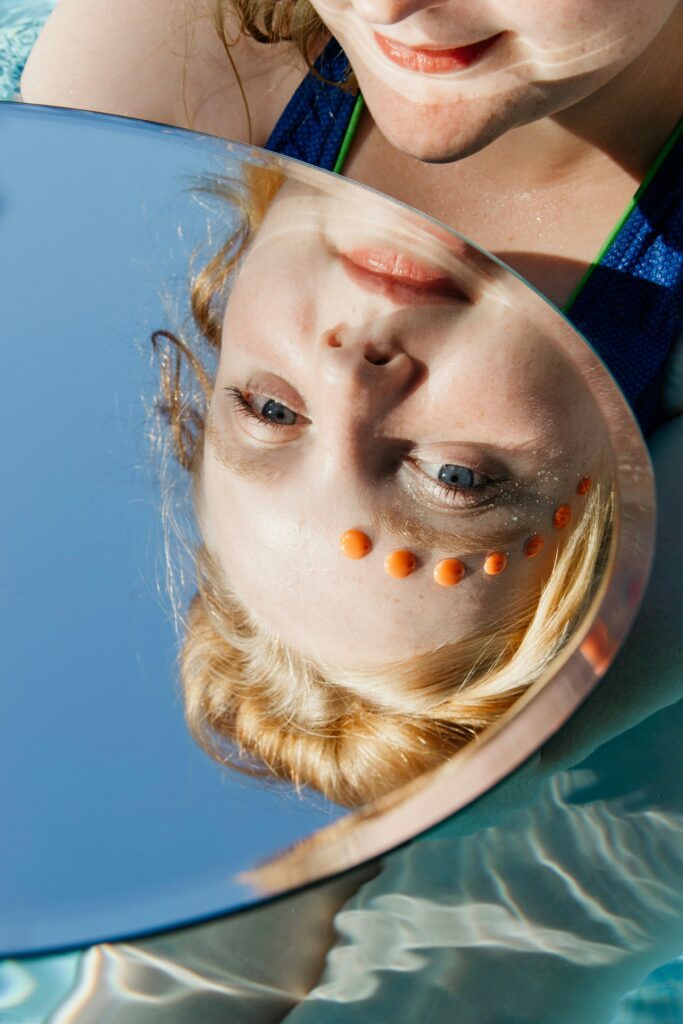
Though the treatment took some time, I did notice improvements. My moods didn’t swing so wildly; my sadness was not as deep, and my mania was not as high. I was becoming more even-keeled and returning to my old self, the self I could recognize in the mirror, the one I loved. 

I kept my diagnosis a secret for a long time. I knew that there was a stigma around being bipolar; I feared people would just assume I was “crazy”. But, as I understood my own experience with it and what living with bipolar actually looked like, I found myself shedding my shame. 

It’s been ten years now of living with this diagnosis. Ten years of treatment. Ten years of understanding how to manage emotions that sometimes feel unmanageable. 

I have accepted my diagnosis with love and understanding, and now I treat myself gently

Having better knowledge of my mind is a blessing. I do not shy away from it and don’t use it as an excuse. It is a part of me, and I have learned to live with it, wear it, move with it, and embrace it. 

(Image courtesy of  Julia Kuzenkov via Pexels)