
Fewer babies, more growth?

Who doesn’t love babies? They’re cute and they will grow up to support us in our old age. But there’s a problem – people are having fewer of them. Global fertility rates have fallen by more than one child per woman since 1990, to 2.2 live births in 2024, according to United Nations data. The growing financial burden of people living longer has caused alarm throughout the globe. China dropped its one-child policy in 2016, relaxing it further to allow families to have three children in 2021, yet the UN still estimated China’s 2024 birth rate at only just over one child. Latest data from Britain shows fertility rates are at their lowest since records began in 1939, at 1.41 birth per woman. Other European countries have even lower rates, including countries usually regarded as family-orientated, such as Italy and Spain.  But governments which have looked to replace their own populations with younger immigrants have faced pushback. The Brexit vote in Britain to separate the country from the European Union was linked to the EU’s open immigration policy towards its member countries, and anti-immigrant protests have continued in Britain this year.

However, there’s an upside to falling fertility rates. Emerging markets economist Charlie Robertson sees the lower number of births as a boon for developing countries with young populations such as Kenya.

“It’s incredibly dangerous, the Western media narrative about how awful ageing societies are, implying that high fertility rates are a good thing,” he told Yuvoice in an interview.

In Kenya, where the average birth rate has dropped to just over three, compared with nearly five 20 years ago, growth will be turbo-charged in the next few years because in smaller families, parents can afford to put aside savings. More savings mean more money in the banking system, and when the banks are flush with cash, they tend to lend to businesses at lower interest rates. This makes it easier for businesses to expand, driving economic growth. “It’s impossible to have a big banking system with high fertility,” says Robertson.

Fertility rates have played a major role in Western history. Robertson says Marx was wrong on demographics, as he assumed that the high fertility rates of mid-nineteenth century Britain would continue. This would increase competition for jobs, leaving many jobless and ultimately leading to revolution. Instead, “the fertility rate began to slow and continued to decline, we didn’t reach that tipping point”, Robertson says.

The key to lower birth rates is education. When women are educated, they often have fewer children. “You give them the possibility to have a career, to have a choice,” according to Robertson.

So which developing countries are set to benefit from lower fertility rates? In addition to Kenya, Robertson highlights Egypt as poised for take-off after its fertility rate fell in 2019 below three, the magic number for kickstarting growth. Nigeria, with a fertility rate of 4.4, will take longer to industrialise.

In Asia, a fertility rate of 2.1 in Bangladesh translates into faster growth than in Pakistan, for example, where the rate is 3.5. In Afghanistan, meanwhile, a lack of education for women will guarantee the country has “continuing decades of poverty” according to Robertson, because fertility rates will remain high.

His views are controversial with those who feel that a higher birth rate is helpful for families in countries with no social security net. A recent report from development economics platform VoxDev, for example, shows that when women in Africa have a higher income, they have more children to safeguard their long-term economic security.

On the whole, economists in developing countries are on board with the importance of lower fertility rates, according to Robertson, but “politicians don’t get it”. Maybe baby-hugging is just too attractive a photo opportunity for politicians to discard it.
“Rescued Nigerian Miners Recount Shocking Ordeal With Chinese Employers”

Twelve Nigerian miners in the Central African Republic (CAR), whom the Nigerian government rescued last month, have recounted the horrible ordeal they endured while working for their Chinese employers.

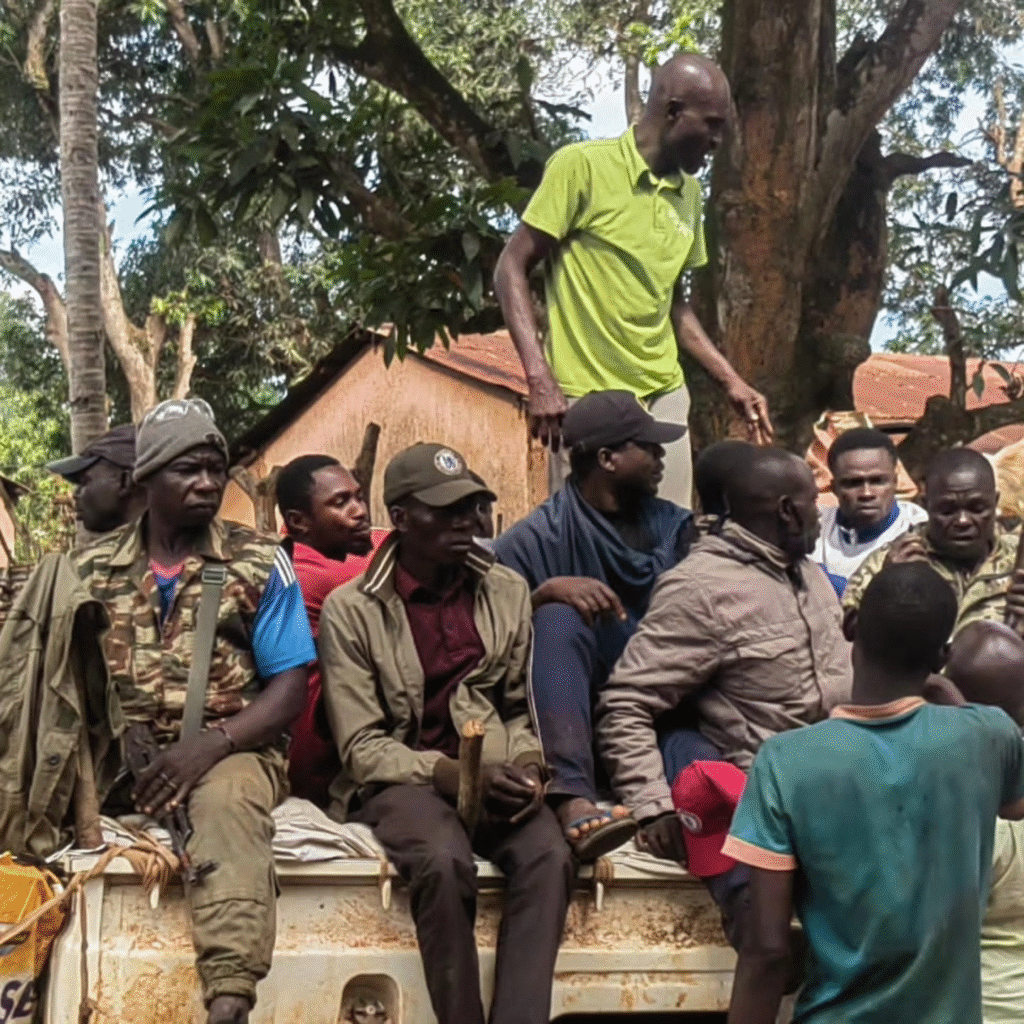
Last month, the attention of the Nigerians in the Diaspora Commission (NIDCOM) was drawn to a viral video of some miners who had been left stranded in the forest by their employers after nearly two years of hard labour.

The commission, with the help of the Ministry of Foreign Affairs, the National Emergency Management Agency (NEMA), Immigration, and the CAR ambassador in Bangui, quickly intervened in the matter and ensured that the miners were safely evacuated from the deserted location.

The Nigerian Miners Being Evacuated From the Forest (Photo by Ministry of Foreign Affairs, Nigeria Via Facebook)

Nearly one month after their rescue, the miners have returned to Nigeria and have recounted the horrid experiences they endured during their 20 months of work. In addition to being abandoned in the forest with no pay for 11 months, the miners also detailed the abuse they were forced to deal with.

One of the rescued miners, Igorigo Freeborn, said, “We were homosexually abused by our Chinese employers in CAR. I am not ashamed to say it. I want other people to learn from it. We were treated badly there, but thank God for sparing our lives to tell the stories today.”

He also went on to express gratitude for their rescue, stating,” I want to thank President Bola Ahmed Tinubu, the Minister of Foreign Affairs, the Nigerian Ambassador in Bangui, NIDCOM, NEMA, Immigration, and all other agencies that helped us.”

Freeborn, who was speaking on behalf of the miners, pleaded with the Federal Government to help them pursue justice on the matter.

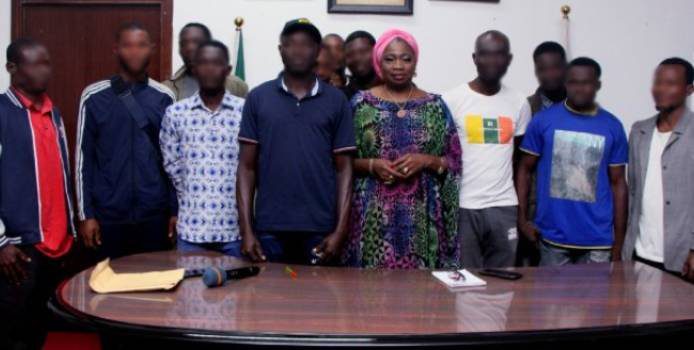
During a scheduled visit with the miners at the NIDCOM office in Abuja, the chairman of the commission, Hon. Abike Dabiri-Erewa, assured the men that the commission and other relevant agencies would follow up to ensure that the injustice is properly addressed and redress obtained.

Chairman of NIDCOM, Hon. Abike Dabiri-Erewa (Photo by Spotlight Nigeria)

As a form of rehabilitation, the workers were offered cash donations by NIDCOM and Perchstone and Graeys law firm, to enable them to support their families and rebuild their lives in Nigeria.

Hon. Dabiri-Erewa equally pleaded with corporate organizations in Nigeria to show support for the miners by providing them with job opportunities that would contribute to their rehabilitation efforts.

Speaking on how to curb these problems and stop other Nigerians from falling victim to such situations, the chairman urged the miners to join the commission’s advocacy campaigns against irregular migration by leveraging their experiences to warn others of the dangers.

The Chinese Embassy in Nigeria has also shown its readiness to address the issue, saying, “We have also just noted the relevant reports and attach great importance to this matter. We will immediately commence an investigation.”

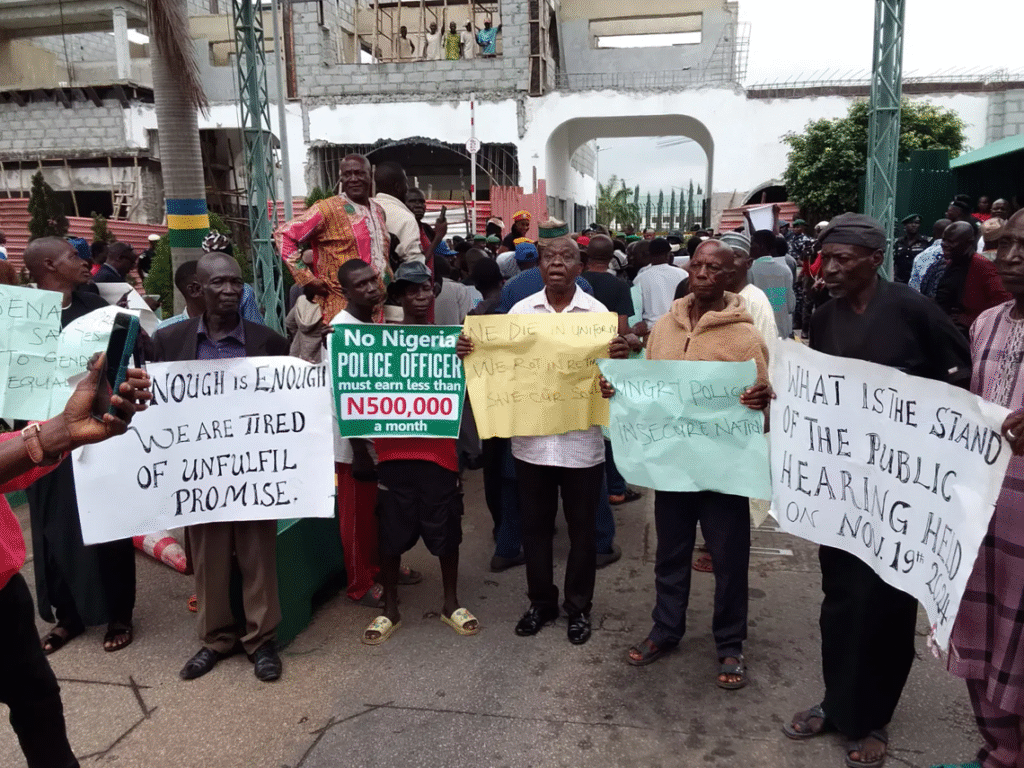
Meager Pension Salaries of Retired Police Officers Leads to Protest in Nigeria

The protest, which started on the 21st of July 2025 in Abuja, was led by several retired officers and activists, including Omoyele Sowore, an activist and 2023 presidential candidate of the African Action Congress in Nigeria.

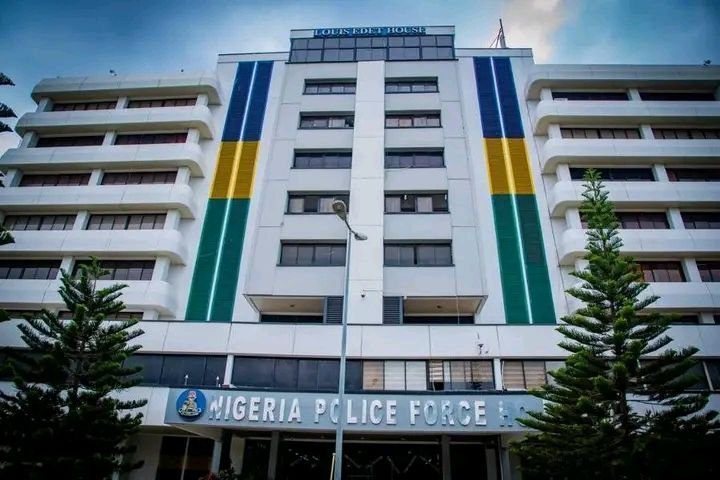
To show the gravity of the matter and express their dissatisfaction with the pension scheme, the retired officers marched to the National Assembly and the Nigeria Police Force Headquarters in Abuja, where they protested under the rain and refused to leave until they spoke with the Inspector General of Police, Kayode Egbetokun.

Aside from the capital in Abuja, retired officers in other parts of the country including: Edo, Plateau, Kwara, Taraba, and Cross Rivers states, also demonstrated their solidarity by starting protests of their own.

Retired Police Officers of Edo State Chapter (Photo via Vanguard)

According to the protesters, retired officers earn about 10,000 to 20,000 Naira monthly, while those managing the pension distribution, PENCOM, languish in wealth. This pension salary, which they have described as ‘discriminatory,’ doesn’t come close to minimum wage and is insufficient to cater to the needs of retirees. 

The major demand of the retired officers is to be removed from the Contributory Pension Scheme (CPS), a pension scheme in Nigeria that was established in June 2004 by the Pension

Reform Act (PRA) 2004.

The leader of the protest, who is a retired Chief Superintendent of Police, Manir Lawal, said, ”We are here to ask the government to remove us from the CPS. The pension scheme is exploitative and unjust.”

Vanguard notes that another protester said, “I am receiving #20,000 as pension after serving for 35 years. This is the receipt, how can anybody survive this very harsh economy with this, let alone children and family?’’

A police officer in the Nigeria Police Force, who I spoke to under condition of anonymity said, “The protest is much needed because the pension scheme is a killer.”

He went further to state that if the government does the needful and reviews the pension scheme, he would be at ease knowing he can adequately cater for his children after retirement.

The Inspector General of Police (IGP), Kayode Egbetokun, addressed the angry protesters at the Force Headquarters, saying, “We all feel concerned. We empathise with you because we are also going to retire. I have been engaging at the highest level to ensure that something is done to improve the condition of the poor pensioner.”

The Nigeria Police Force Headquaters (Photo by POLAC VS NDA Via Facebook)
Retired Police Officers of Edo State Chapter (Photo via Vanguard)

He further added, “I am not opposed to your exiting the CPS, I’m not opposed to it. If exiting from CPS will solve the problem, I will go for it. But if it is difficult for us to exit CPS, what else can we do? We have been agitating, exit CPS, exit CPS. For the past 11 years, it has not worked.”

The IGP, however, assured the retired officers that he was on their side and has been working behind the scenes to ensure that retired officers earn better pension wages.

Late Former President of Nigeria, Muhammadu Buhari Laid To Rest In Hometown

Condolences pour in from around the world as the former president of Nigeria, Muhammadu Buhari, who passed away on the afternoon of July 13th, 2025 at the age of 82, was laid to rest in his hometown, Daura, Katsina State.

Buhari, who was receiving treatment at a clinic in London before his death, had battled with years of ill health. The exact cause of his death, however, remains undisclosed to the public.

The Governor of Katsina State, Dikko Radda, revealed that preparations immediately began to transport the former president’s body for his burial the following day, “I just left his family at the hospital where he died and the decision is that his remains will be taken to Daura for burial, the plan is to leave in the morning,” he said while speaking to DW Hausa.

Vice President of Nigeria, Kashim Shettima, who was in the United Kingdom at the time of his passing, disclosed that he will be escorting the remains of Buhari back to his hometown, Daura. 

As the country mourns the loss of the former leader, the current president, Bola Ahmed Tinubu, assures that the government will pay its final respect to Buhari by lowering the national flag to half-mast across the nation. He also declared Tuesday, July 15th 2025 a public holiday to honour his death.

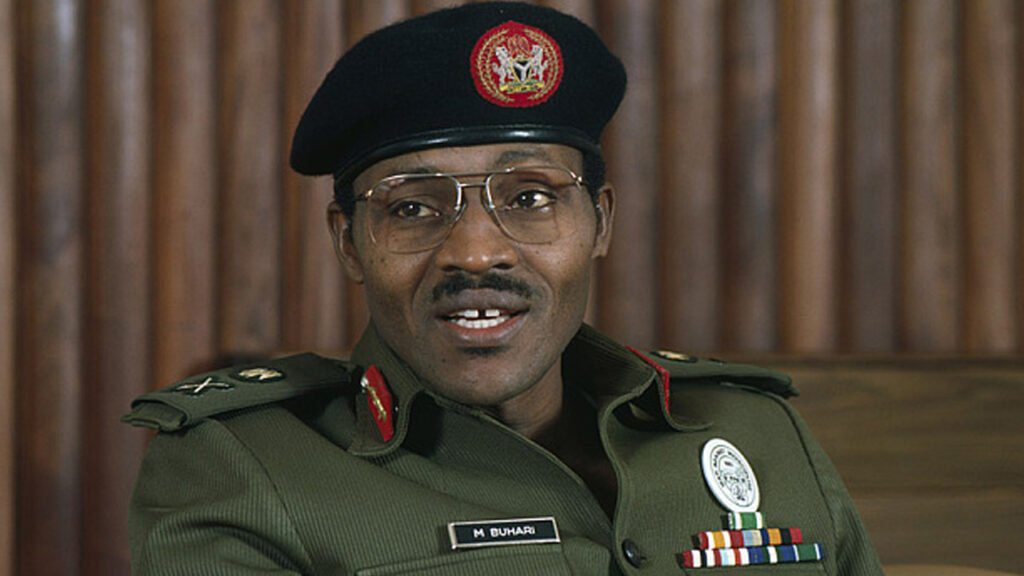
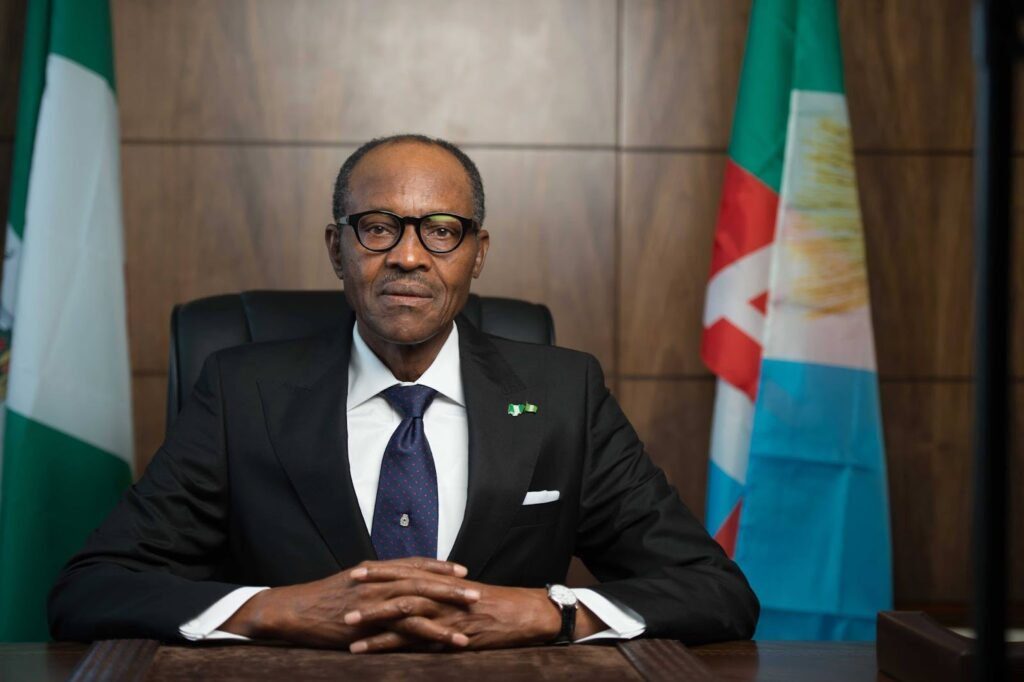
Muhammadu Buhari was a politician who served as both a military head (1983-1985) and a civilian president (2015-2023) in Nigeria. 

Muhammadu Buhari as Military Head of State (Photo by The Guardian)
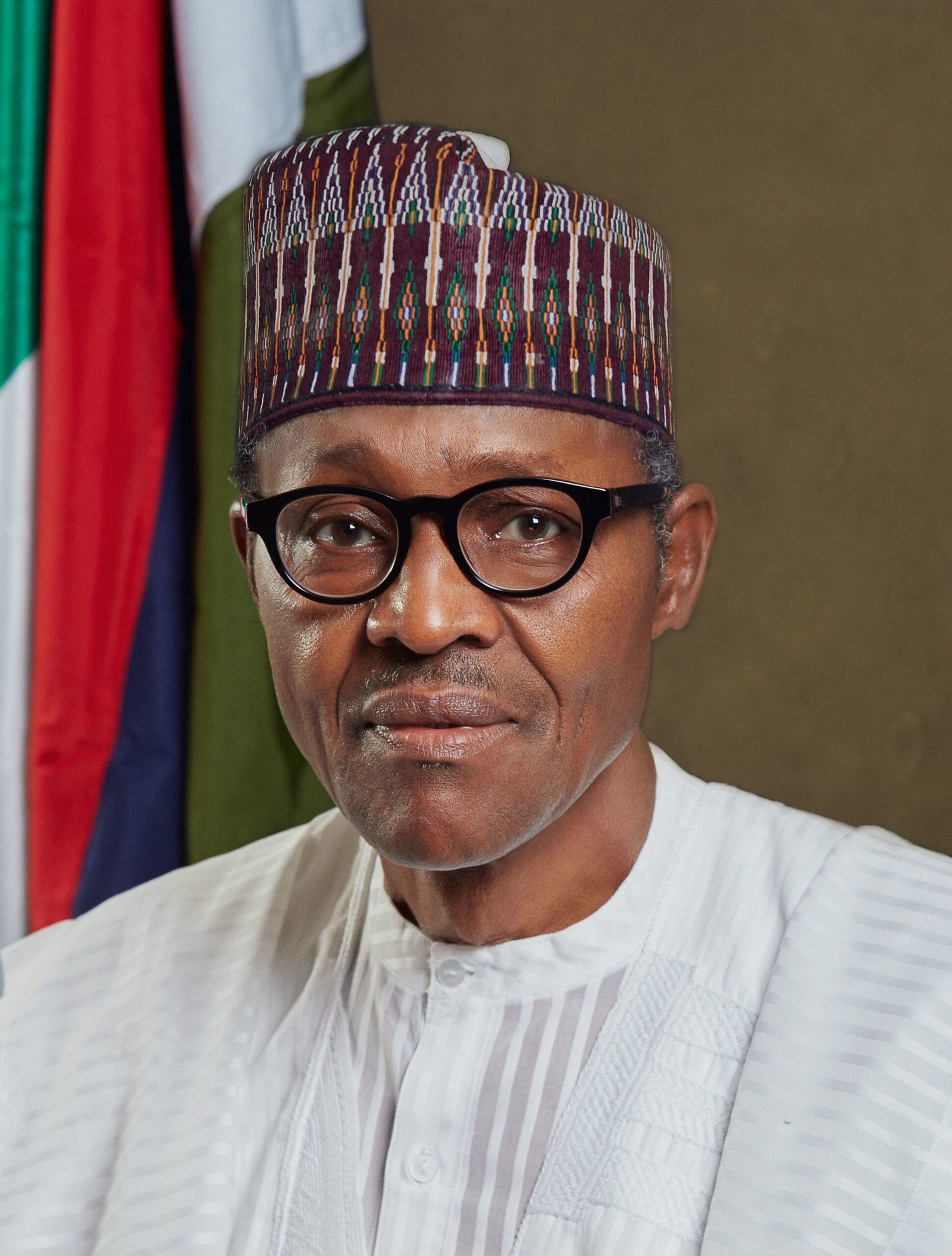
Muhammadu Buhari as Civilian President (Photo by Nairametrics)

He assumed his last position as president after defeating the incumbent president, Goodluck Ebele Jonathan, in the 2014 elections, which was the first time in Nigeria’s history that an incumbent president lost re-election to a new candidate.

Ex Presidents Goodluck Ebele Jonathan and Muhammadu Buhari (2015) (Photo by IBMTimes)

Many Nigerians tagged Buhari’s tenure as the worst of its kind as a result of the country’s worsened economy and hardship faced by citizens during his time in office. Senator Adams Oshiomhole blamed the challenges brought by Buhari’s administration on the kind of policies the former president enforced.

The senator said while speaking with Channels television, “At some point, before the last President left office, I lamented loudly what I saw as reckless policies that were designed to dehumanise the population that was already in pain.”

There have been mixed reactions from Nigerians on social media regarding the death of the former president. While some expressed shock and sadness, others jubilated upon hearing the news about his death. A video on social media showed several youths in a Northern part of Nigeria chanting and dancing to songs celebrating the leader’s death.

While some took to the streets, others shared their feelings surrounding  death on various social media platforms. One X user wrote, “May Muhammadu Buhari’s death give us all hope to see our enemies and tormentors perish while we’re still alive to celebrate.”

Key figures around the world have also reacted to the death of the former president and extended their condolences to the family and country at large.

An Islamic speaker, Mufti Menk, wrote, “He was definitely one of those who made me develop a much better perception of Nigerians as a people…May Allah make it easy for his family, friends, and the nation of Nigeria.”

His majesty, King Mohammed VI of Morocco offered his condolences saying,”I share your grief and want you to know how much I appreciated the working sessions I had with the deceased.”

Several notable figures including immediate Vice President, Yemi Osinbajo and business man, Aliko Dangote were seen present at Buhari’s burial in Daura which was held on the 15th of July.

Court Orders Nigerian Senate to Reinstate Suspended Senator, Natasha Akpoti-Uduaghan

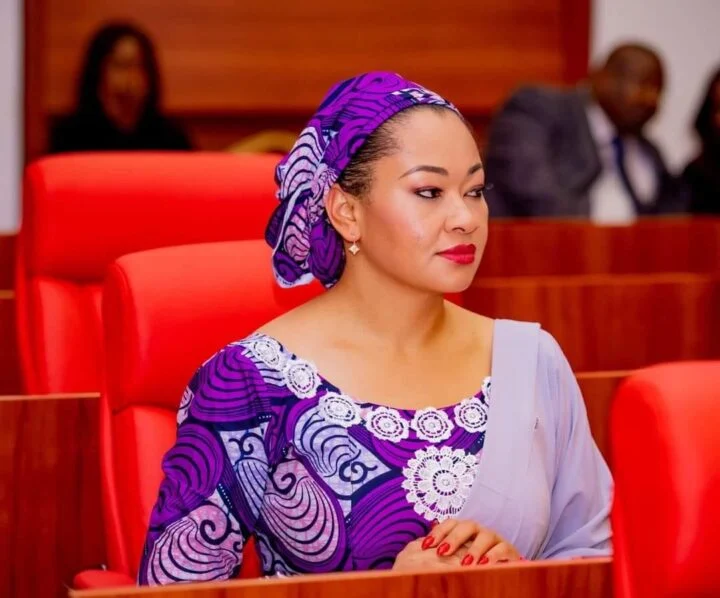
A Federal High Court in Abuja, the capital of Nigeria, has ruled in favor of a senator representing Kogi Central, Natasha Akpoti-Uduaghan, who was suspended by the Senate for six months over alleged misconduct.

Justice Binta Nyako, who led the court sitting on Friday, July 4th, 2025, delivered the judgment stating that the suspension of the senator was ‘excessive.’

The judge added that because lawmakers are expected to sit for 181 days in a legislative session, the six-month suspension would hinder the Senator’s ability to carry out her legislative mandate thereby denying her constituents the right to representation.

Reacting to the favorable judgment, the Senator told supporters, “I thank you for your support. I am glad we are victorious today. We shall resume in the Senate on Tuesday, by the grace of God.”

It can be recalled that Senator Natasha was suspended by the Senate Committee on Ethics after she brought forward a series of allegations against the Senate President, Godswill Akpabio

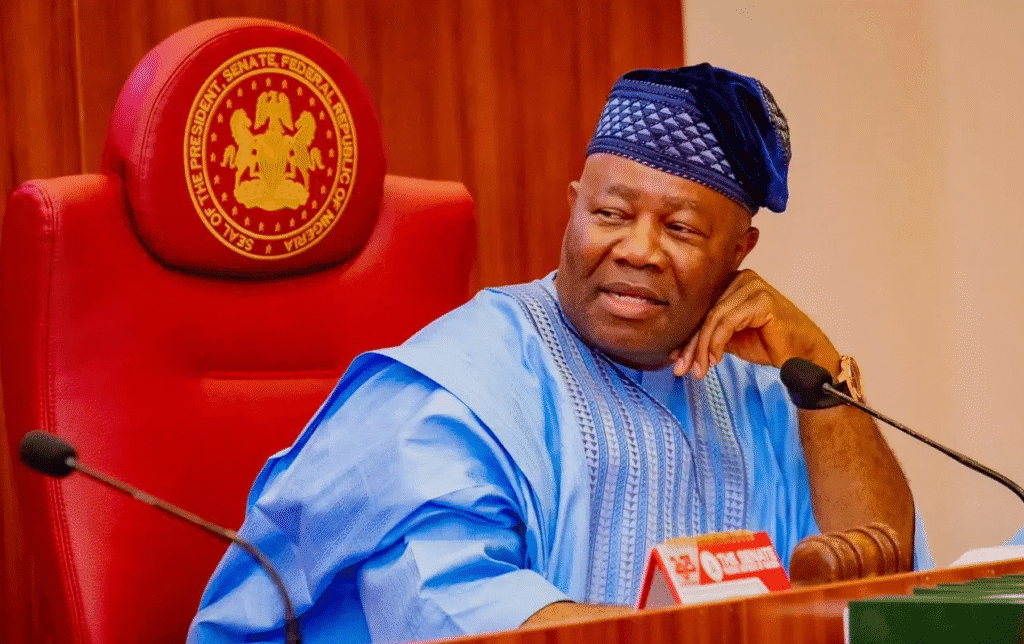
Senate President, Senator Godswill Akapbio (Photo by Vanguard)

The exchange between Senator Natasha and Senator Akpabio began after an argument about a reshufflement in sitting arrangement ensued between her and the Senate President. 

The senator claimed that the new sitting arrangement put her in a dead zone where her legislative activities wouldn’t be captured by cameras. This she insisted, was an attempt by the Senate President to silence her. 

The chairman of the Senate Committee on Ethics, Neda Imasuen rebuffed Senator Natasha’s claims stating that she wasn’t the only one whose position was changed and, “About four or five other senators were moved.”

Analyzing the issue, a Legislative Governance expert, Chibuzo Okereke explained, “She belongs to the minority caucus. They sit on the left side of the presiding officer by the tail of the maze…these things have significance because they are symbolism.”

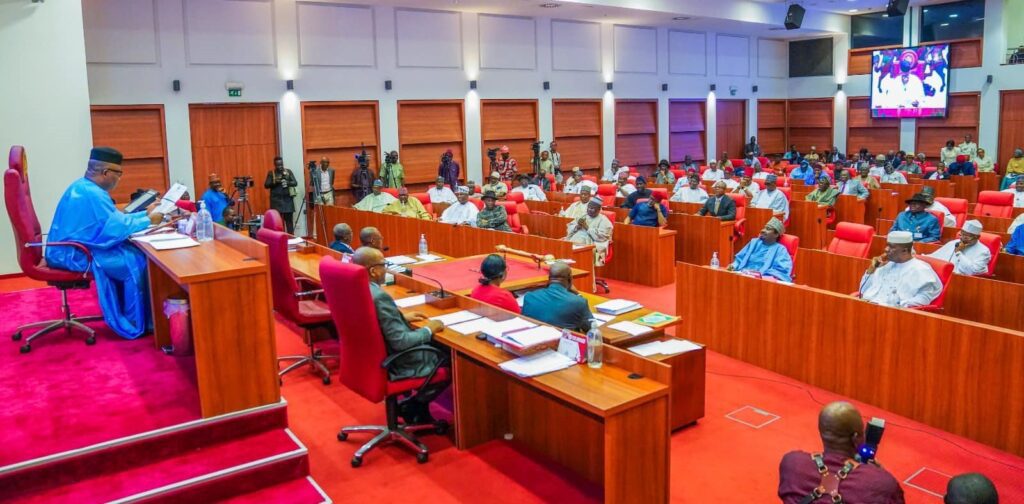
The Nigerian Senate (Photo by Nigerian Senate Via Facebook)

Following the reshuffling disagreement, Senator Natasha presented a petition against the Senate President to the Senate. She accused him of sexual harassment, abuse of office, and malicious obstruction of her legislative functions.

Responding to the claims during the Senate gathering, the Senate President said, “I have the highest regard for women…so at no time will I ever harass any woman.”

Although Senator Natasha’s petition was initially rejected by the Senate, it was later approved and a decision was made by the Committee on Ethics on March 25th, 2025, to suspend the Senator for six months. The body insisted that her actions brought dishonor to the Senate and its leader.

The suspension was accompanied by other strict conditions, such as stripping the Senator of her security detail, cutting off her salary, restricting her visit to the National Assembly, and prohibiting her from introducing herself as a Senator

A lawyer, Chinenye Uwanaka, condemned the situation, saying, “Looking at what has played out in the National Assembly, honestly speaking, it doesn’t look like a place that is welcoming for women.” 

She continued, “We even have case law in Dume and Omo Agege…the Supreme Court held that those suspensions were not constitutional because it’s supposed to be a maximum of 14 days.”

As the court has reviewed the case and come to a consensus that this suspension was ‘overreaching,’ Senator Natasha has begun making preparations to resume her legislative duties. 

Her resumption is, however, still dependent on the Senate’s examination and verification of the Certificate of True Copy (CTC) of the judgment. In a statement on 6th July 2025, the spokesperson for the Senate, Senator Yemi Adaramodu, said, “Pending the receipt and examination of the CTC, and acting on the advice of counsel, the Senate shall refrain from taking any steps that may prejudice its legal position.”

In a separate ruling, Senator Natasha was fined 5 million naira by the same judge after she posted a satirical apology to the Senate President on Facebook, disobeying the gag order that restrained all parties from commenting on the case.

“Several Deaths Recorded In Deadliest Benue State Attack”

The North-Central region of Nigeria remains one of the most susceptible regions to herdsmen attacks, and the recent massacre in Benue state, which has drawn national attention, is being tagged as the deadliest attack yet on the state.

On the night of June 13, 2025, a village in Benue state, Yelewata, was attacked by unknown gunmen suspected to be herdsmen. During the attack, which lasted a couple of hours, several houses were burned down, killing hundreds of innocent victims, including children. 

In a video circulating on social media, a victim of the attack, Fidelis Adidi, narrated how he lost his wife and four children after his house was set ablaze during the attack. Additionally, an anonymous military personnel who spoke with Vanguard confirmed, saying, “We lost two military personnel in that attack.”

According to the Chief of Defense Staff, General Christopher Musa, there was a clear modus operandi. If you see the way some of the burning were made, you know that they were targeted. It shows they have insiders.”

This attack, which has left many hospitalized and homeless, has attracted the attention of notable government personnel, including the president, Bola Ahmed Tinubu, who paid a visit to the state on June 18, 2025, to meet with stakeholders and offer condolences to affected victims.

President Bola Ahmed Tinubu pays a visit to the attack victims (Photo by Business Day)

Many view the incident as one of many land disputes between herders and farmers, which have persisted for years, particularly in the Guma, Logo, and Agatu Local Government areas. This land dispute began to arise when Fulani cattle rearers infiltrated the state and allowed their herds to feed on the farmland of farmers in Benue state. 

This year alone, Guma, Logo, and Ugum local governments have experienced similar attacks in April and May, which have claimed about 100 lives. Acknowledging a pattern in these attacks, a royal head in Benue state, Tor Tiv, tagged the incident as a genocide attack aimed at overtaking the land.

Attacks of this nature continue to persist as a result of the grazing reserve law enacted in 1965, which permits animals to graze in grazing areas within the grazing reserve.

To protect the state from future attacks, the Benue State House of Assembly calls for the implementation of an anti-open grazing law. Daily Post notes, “The House of Assembly has urged Governor Hyacinth Alia to fully implement the Open Grazing Prohibition and Ranches Establishment Law, 2017.”

Being one of the most gruesome attacks recorded in the state, both the State and Federal governments have begun putting strategies in place to safeguard Benue and catch the culprits responsible.

Speaking via his X account, President Tinubu said, “To the good people of Benue…We will restore peace, rebuild, and bring the perpetrators to justice. You are not alone.” 

According to the National Emergency Management Agency (NEMA), 6,527 people have been displaced from their homes, and about 3000 displaced persons are being camped in Nassarawa state following the attack.

Citizens around the country have continued to express their fears and concerns about the ordeal and this has prompted residents of Benue to address the need for self-defence, however, Governor Alia has turned down these demands, insisting that protection using community policing is a better approach.

Enugu Native Doctor Arrested for Suspected Ritual Killings

The recent abduction of a teenager has led to the uncovering of several gruesome crimes committed or aided by a popular traditional doctor in Enugu State, South-East Nigeria. Graphic videos from the home of the accused and testimonies of eyewitnesses confirm years of suspicion among locals.

The native doctor, popularly known as Ezeani or “E dey play, e dey show”,  has been identified as  Levi Onyeka Obieze, and these disturbing incidents  took place in Umuojor, a village in Ezeagu Local Government Area of Enugu State.

On Monday, 26th May, 2025, a 13-year old girl identified as Ukamaka Okonkwo was allegedly  abducted by two men on her way to the farm with her father. The suspects were driving by on a motorcycle when they pretended that their vehicle had developed a fault and asked her father for assistance. Amid the distraction, she was taken away on the motorcycle.

In her video testimony, Ukamaka recounts: ‘We went to bring some firewood for making garri, and then they came up, asking my dad for a machete to repair their machine [motorcycle]. My dad then gave them his machete. They shifted their machine and then grabbed me…’

Upon realizing that his teenage daughter had been abducted, the young girl’s father alerted local vigilante groups, who began a search for her. Several villagers that evening reportedly heard loud cries coming from a nearby bush. Further investigation by the vigilante group led to the compound of a well known traditionalist.

High Chief Levi Onyeka Obieze allegedly tried to restrict the vigilantes from gaining access onto his property, to no avail, and then fled the premises shortly after. The cries of the abducted girl were traced to a pit in this compound around 3:15am on Tuesday, 27th May, as the rest of her testimony confirms:

‘They gagged me and tied my legs up… They kept me in a corner, dug the ground… They covered the hole, I started shouting, and the security officers came and brought me out.’

Other decomposing bodies were found in soakaway pits underneath the building upon further investigation, including that of a man and another of a pregnant woman. This follows reports of missing community members, including a young student of CSS Umana.

Photo by Ozor Ndi Ozor, on X

According to the police spokesman, the victims’ remains were found in a concrete-sealed pit beneath an unfinished building used by the suspect as a shrine. They were recently murdered and buried, or buried alive, as part of rituals. The suspect is known for his lavish lifestyle and has “worked” for many clients.

In the wake of this terrifying and disturbing news, enraged youths of Umuojor community stormed the building, captured photo and video evidence of several decomposing bodies found in soakaway pits and burned down the suspect’s shrine, fleet of cars and parts of his house.

That same day, on the orders of Enugu State Governor Dr. Peter Mbah and in congruence with Enugu State laws, the building was also demolished. A number of native doctors from Ezeagu LGA took to streets the next day in a protest, denouncing Ezeani as one of them.

The Public Relations Officer of the Enugu State Police Command, SP Daniel Ndukwe, later identified three suspects in the teenager’s abduction as Ejike Odinwankpa, 38, Onyedikachi Nweze Ilo, 36, and Uche Kingsley Agumba, 33. 

On Thursday, 29th May, the wanted native doctor was apprehended at the Nigerian Immigration Service in Lagos on his way out of the country. He was caught during a stop and search operation at the border between Nigeria and Benin Republic while attempting to flee.

The suspect’s identity was confirmed at the Seme border, where he denied the allegations and dismissed them as a political issue. He allegedly tried to bribe an NIS official, Ugochukwu Orji, but the prudent man turned him in. This arrest has been confirmed by NIS Public Relations Officer ACI Akinsola Alabi.

Ugochukwu has been praised and rewarded for his uprightness and unwillingness to be swayed by a gift of ten million naira and an iPhone with lives on the line. He has been reportedly gifted the sum of one million naira by politician Ugwumba Uche Nwosu to this effect.

In a statement on Sunday, 1st June, Enugu State’s Commissioner fir Children, Gender Affairs and Social Development, Ngozi Enih, revealed that the state governor has offered a scholarship to the rescued 13-year-old which would see her from her present class up until she concludes her university education.

This comes in addition to moving her to a rehabilitation facility to assist her in overcoming the trauma she faced at the hands of the ritualist. Levi O. Obieze, who is currently in the custody of the Lagos State Police Command, is set to be transferred to Enugu to face trial.

Land Dispute Leaves Six Dead, Including Pregnant Woman

A renewed outbreak of violence in a decades-old land dispute between two communities in Ebonyi State, South-East Nigeria, has resulted in the death of at least six individuals, including a pregnant woman and her unborn child, as confirmed by local authorities.

The involved communities are the Ndukwe Amasiri Community in Afikpo Local Government Area and Idima Autonomous Community in Edda LGA, specifically the people of Okporojo Idima. Over the years, related disputes have led to the destruction of lives and properties worth millions of naira.

On Saturday, 5th April, 2025, Okporojo community was attacked by assailants allegedly from the neighbouring Amasiri community. Among the deceased are a pregnant woman and her unborn child and one Abagha Chukwu, a native of Afikpo who resided in Okporojo until his ill-fated death.

Several pleas have been raised by members of both communities to the state governor Francis Nwifuru, urging him to step in and mediate an amicable resolution of the long-standing land dispute. Although the previous administration of Ebonyi State set up a committee to look into the feud, peace continues to elude the opposing communities.

Chima Ekumankama, who is the current Chairman of Edda Local Government Area, has confirmed the killing of four persons at Okporojo Idima, saying he visited the bereaved community and witnessed the harm done to it. He also praised the efforts of the Ebonyi State Government to ensure peace and normality by deploying security personnel into the disputed area.

The President General of Idima Edda Community also issued remarks to journalists confirming the attack. Comrade Nkama Okoro Agha expressed strong disapproval of the onslaught, recalling a previous incident on 6th February 2023 resulting in the death of innocents and the kidnap of three farmers whose whereabouts are unknown to date.

This 2023 attack was also exacted on Okorojo by suspected Amasiri natives. The President General added his voice to other appeals to the state governor for a more lasting resolution of the land dispute.

Another community leader weighed in on the unfortunate events. Hon. Imo Samuel Oduko, who sits as Chair of the Okporojo Development Union, maintained that the land in conflict belonged to the Okporojo people of Idima Edda, who hired Amasiri farm hands that settled in the area and began fighting their lessors over their rightful estate.

The Chairman of Afikpo LGA, Timothy Nwachi, stressed the unpleasantness of the resumption of hostilities between the two communities and confirmed the presence of security officials to quell the unrest in the area. He also urged the Amasiri people to remain calm while awaiting the government’s decision regarding the conflict.

Another voice spoke out on behalf of the Amasiri people. Maduabuchi Idam, a civil rights lawyer and Amasiri local, petitioned the heads of several security agencies within Ebonyi State over brutality and aggression against his community.

His petition is titled “Re-Emergence of Military Invasion, Brutality, and Aggression Reign Freely Against My Community, Amasiri” and contains complaints regarding the military intervention that followed the renewed clash between the neighbouring communities.

Idam asserted that Amasiri was a peaceful party which had since sought to quash the quarrels in spite of irritation from the Oso Edda community. According to him, on Friday, 11th April, 2025, the Ebonyi State Commissioner of Police set up a peace committee to that effect in Abakaliki, which several Amasiri stakeholders attended.

However, their neighbours refused to take part in the meeting and alternatively attacked some Amasiri natives. He also made mention of the insecurity currently faced by the people of Amasiri on the Okigwe-Afikpo highway, along which Oso Edda natives allegedly waylay and identify commuters identified with Amasiri.

All this goes on without the intervention of the Ebonyi State Government, whom he calls on to take action. He protested military action in his community, which he said involved the destruction of properties, arrests and sporadic shooting in Amasiri while ignoring the neighbouring Edda people.

He petitioned the Commandant of Nkwegu Military Cantonment in Abakaliki, which the military personnel were reportedly deployed from, and the Chief of Defence Staff, naming the Edda people as aggressors who intended to illegitimately lay claim to Amasiri ancestral land.

Calling on fellow Nigerians to join him in denouncing the actions of these security agencies, he insisted that the people of Amasiri have remained peaceful and attended meetings in hopes of resolving the decades-long conflict. He described the military activity in Amasiri as “unlawful, … unwarranted, illegal [and] unprovoked.”

Shifting Fortunes, Shifting Fates

I still remember the night my father died. The years before were a blur of lavish parties with older men shrunken with age and tall bottles of wine and beer. They visited often, these rich men with their families. 

Sundays saw my mum and Aunty Nneka, barely a teenager herself, in the kitchen pounding soft yams in our large brown mortar until the ground shook. Laughter could be heard for many hours. They spoke boisterously in loud voices over peppered chicken that made their noses run. It felt like the excitement would never end. Until it did. 

I am five

We were a typical Nigerian family. My father attended the men’s meeting and the community meeting, and he donated rather too generously to the church. My mum would tug on his white kaftan as he called out hefty sums like five hundred thousand naira or when he volunteered to finish the church building single handedly. He walked with a poise that oozed pride. His gait was daunting and my mum complemented his look, sitting beside him in a pretty embroidery that radiated affluence. Her headscarf did not make crunchy sounds like the biscuit-like wraps worn by other women in the church. Her gold did not tarnish, nor did her lipstick wane. Her skin was as radiant as day, fresh from the beauty products my father bought her. I ran around the church in my pearly white gown and ponytails, and Aunty Nneka chased me, pulling me by one hand and dusting off my dress when I fell on dirt.

Everyone clustered about our Peugeot after mass and greeted my father, but even as a child, I knew most of their overcompensating pleasantries were borne out of their desire to ask for money. Many carried me high on their shoulders. I was five, but I remember it all. They said I was turning into such a lovely and plump child even though I was scrawny, for my age. My father would dip his long fingers with perfectly manicured nails into his pocket and pull out a wad of crisp notes, giving it to them. He dropped two hundred naira onto the enamel plates held by people begging  by the church’s gate when others dropped torn ten naira notes. 

(Image courtesy of Adi Goldstein via Unsplash)

I am six

My sixth birthday was bright and festive with balloons floating in the air and children running about our compound. I stepped on my gown and the lacy extension got torn. My mom scolded me by tugging my ear, so my dad reprimanded her

As usual, he was clinging tightly to his phone and would hurriedly pick it up at the first ring. Mum was pregnant with my little sister then, and since she was a full-time housewife, she worried over things that ordinarily should not be a concern like when Aunty Nneka put  the stew in the yellow bowl instead of the white one. They were both large enough but with my mum, details mattered. No one worried that her nagging was becoming unbearable because she was pregnant. She alone knew, however, that it was not the pregnancy that made her so quick to anger. My father had been cheating on her.

***

He is coughing

Our lives changed a few months after the birth of Chidinma, my baby sister.  My father fell ill. He coughed more often and ate less. He shrunk, looking shriveled on the bed. My mother worried about him even more when the hospital could not figure out what ailed him. 

The parties became few and far between. Friends rarely  visited. My mother dug into the last of my father’s savings and discovered, rather later, that we had fewer assets and more liabilities. We were drowning in poverty as she pumped money into different hospitals, hoping he would get better. He did not.

Aunty Odinaka called rather abruptly on an early Sunday morning. My mother sat with a drooping breast stuck into Chidinma’s ready pink lips. She had stayed up all night to attend to my father, who had remained motionless on his back, struggling to breathe. Aunty Odinaka was my father’s younger sister who had lived with us when she was a student. She referred my mum to a spiritualist in the village, and for what seemed like several hours, my mum refused. 

Ekwu Zina, don’t say that,” she said over and over. She pointed out how diabolical and fetishistic the practices were, how the bible was strongly against them, and how she could never take my father there. 

She changed her mind, however, when my father deteriorated to the point that he stopped moving. My mum tried reaching out to Alhaji Muhammed, my father’s best friend and business partner, who had a round belly and white stubble across his chin. He had given her an envelope heavy with cash, greedily consumed by the hospital in a single day. When my mother called him again, he cut off all communication with us. Even I, now grown and fully able to grasp the gravity of always asking for help, understood why he did that. 

My mother was flustered. The very people she threw lavish parties for now ignored her calls. At first, our house still looked the same with the central gold table and a low chandelier that glowed gently with warmth. It burned my eyes when I stared for too long and the tiny bulbs hung like mango fruit. Then in a few weeks, the golden center table had been sold, and the family car and everything that smelled of luxury had been removed. 

I watched butter leave the table as my mum told me that it tasted sour so she stopped buying it. 

(Image courtesy of Ravi Kant via Pexels)

Later, she would stop buying my favorite treats: Sugary Capri-Sonne drinks were no longer at our usual shops, she explained. I had stopped going to school, because she was no longer satisfied, it seemed, with the teachers. 

***

I am present

The spiritualist was a short man with white material wrapped over his shoulder and under his arm. He often had a leaf frond between his lips and hummed on it fervently. I came to watch the healing magic at the spiritualist’s request: he said that I was a major connection to my ailing dad and must be present.

I stared in disbelief as I watched him pace about the lanky remains of my father and dunk him into the shallow river. He picked up a gourd from a calabash — its edges so poorly cleaned that tiny bits of wood stuck out — and he ran it over father’s face three times. 

After an hour passed and we were sure that no magic was going to happen, we asked the spiritualist what the matter was. His eyes burned a painful red, the kind gotten from downing tall bottles of alcohol, as he urged us to be patient. He proceeded to apply a mild cream over my father’s body and towed him back to the car. 

Fear enveloped us all when my mother felt his face. She could no longer feel the  warm breath from his slender nostrils. Only our shifting fates. 

(Image courtesy of Godiva Omoruyi via Pexels)