Is There a Library in Your Future?

I’ll be honest. My attention span has dwindled drastically since my voracious reading days of high school.

I can’t blame social media and short-form content completely for my lack of attention, however. College demanded me to read prose, sonnets, and anthologies for my English major. Then my various career paths had me read training manuals, handbooks, student writings, peer-written pieces, legal documents, press releases, reports, and interviews. Finally, life became broader and more open in terms of entertainment. New dramas and shows were released regularly — across all the streaming platforms — captivating games always popping up on my never-ending wishlist, and casual mobile apps take up my attention more so than a clunky physical book. I already have enough to carry in my ever-increasingly heavy bag, and the thought of carrying around another item I don’t heavily need makes any e-reader unappealing.

So, what do I do?

I may not be able to read literature like I used to back in my school years, but that doesn’t mean I don’t enjoy reading. From novels to manuscripts to how-tos, digital information allows anyone to discover anything. 

A big reason I don’t read physical books anymore is my phone — and not just because of the games. I’m an avid web comic reader. I’ve always been interested in manga growing up, and with many artists and creators releasing their content on Instagram and WEBTOONS, it’s easier for me to keep up with easy-to-digest updates such as slice-of-life, comedy, drama, and even epics. The artists aren’t the only ones working hard to bring their passion projects to life; writers and support staff work hard too to ensure a well-made experience is consistently being put out there for their dedicated readers.

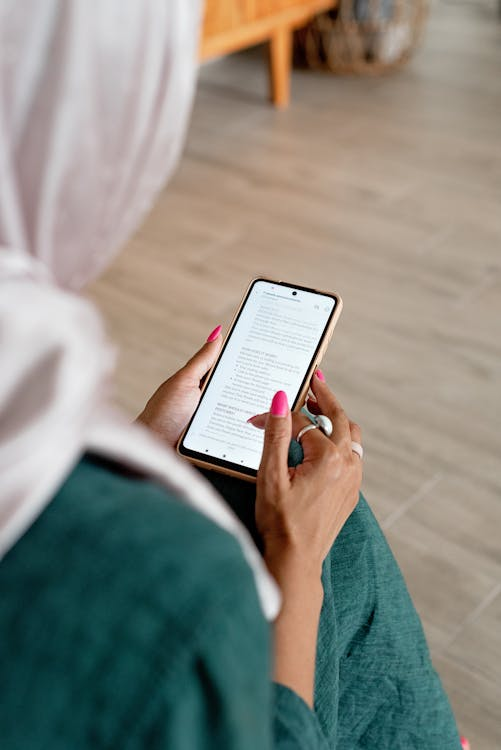
Reading has always been a passion of mine. Growing up, I have attempted to remedy my lack of motivation to read novels. I got a library card to access their e-book library. It took some hoop jumping to finally get to the site I needed to re-read the series I used to enjoy as a high school student, but having a literal library of titles to choose from right on my phone has been a major help. I’m already on the third novel; I may not read through it as quickly as I used to, but when I get in the zone, I really get re-invested in reading again.

This one might be a cheat, but one major reason I don’t read physical books again is because of my work. I copyedit light novels, and I often read the chapters multiple times to ensure I’m consistent and thorough. After staring at words on my screen for multiple hours at a time, though, it’s nice to take a break and go back to my comics.

Are libraries dead? A little bit dead?

Absolutely not. Libraries are essential to any and every community. I respect libraries and what libraries do to help their patrons find what they need. Additionally, they’re adapting to the times. Broadening their services to e-books, video game rentals, and 3D printers is a bonus to the workshops, story times, crafternoons, and computer services they already provide.

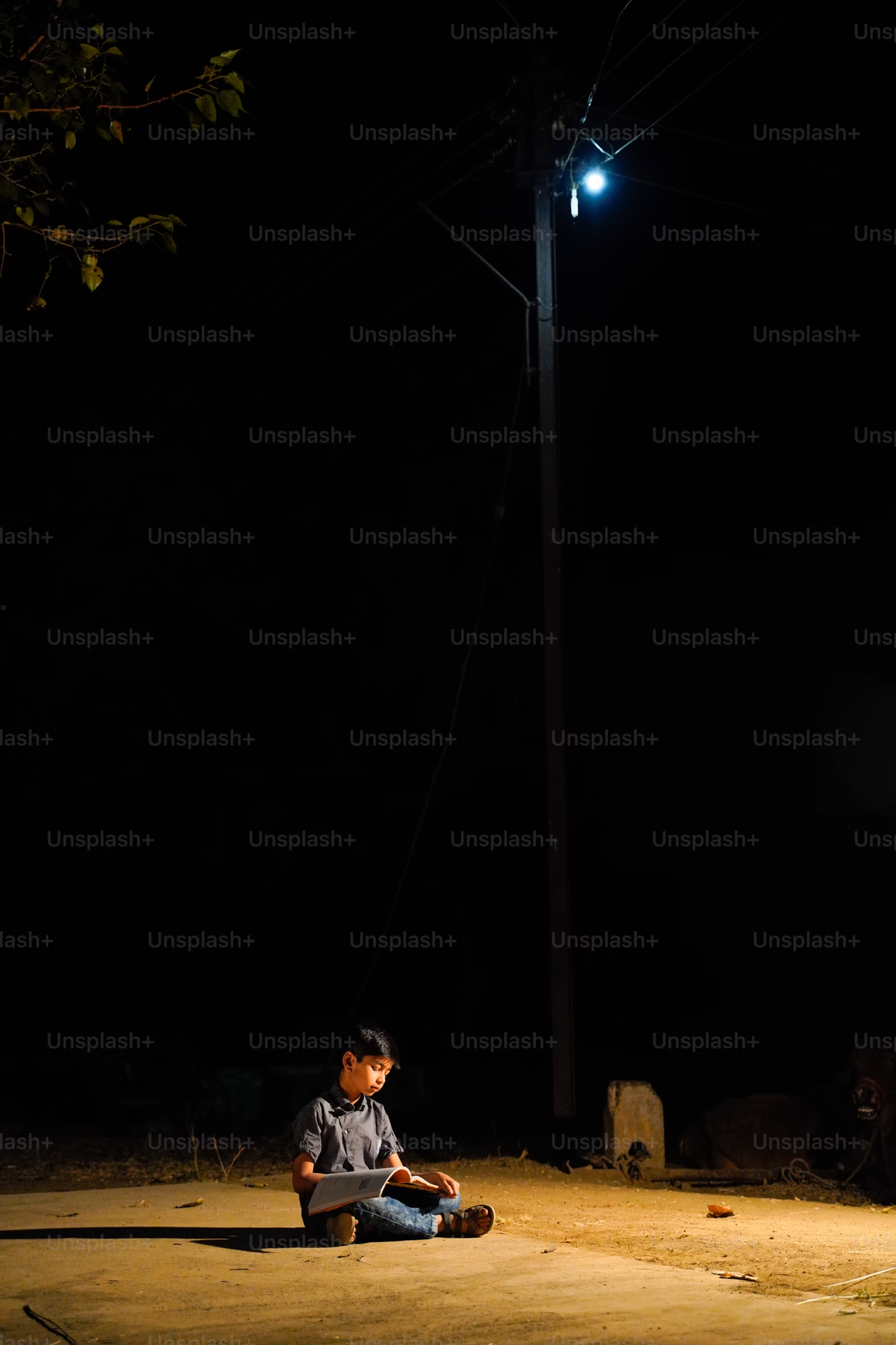
One of the reasons I became an English major was that I used to read a lot. Growing up, I had a lot of downtime after school while my parents worked all day and night. One place they would always make time to take me to was the local library near their workplaces. There, I would grab heaps of books to occupy myself for two weeks before I had to return them — I think my record was twelve books. I was an avid reader; one teacher told me that I was reading above my level and questioned whether I did read as much as I reported on my read-a-thon sheets. I was immersed and rapt by the world found within a stack of books

My mom had to explain that I did indeed just read that much.

A woman lying on the couch reading, surrounded by books.
(Image courtesy of cottonbro studio on Pexels)

It was because of libraries that my world opened up to new ways of thinking, to how sad a book could really become, to far-off places with in-depth lore.

And it’s because of libraries that I believe writers still have a major audience. In this digital age, I’ve become more frugal in where I spend my money. Being able to rent a book and not having to pay $20-$40 is a major steal if I’m only going to read it once. If you still want a physical copy and the location you go to doesn’t have it in stock, the library’s borrowing system can get a copy from another location for pickup.

Of course, let’s not forget the e-library. Signing up for a library card is fast and easy, and it allows you to browse an immense catalog of titles that you can easily rent and re-checkout without having to deal with in-person interactions. And sometimes, you just don’t want to leave the house to grab a book.

But what if I don’t read books?

A rack filled with newspapers.
(Image courtesy of Efrem Efre on Pexels)

Printed text is a sure-fire way to spread information for people in a hurry and in need of a break from their phones. Articles, newspapers, and collections of works are fantastic ways of spreading and recording information. Consumers will always have a need to access the written word, whether it be fiction or nonfiction. 

Libraries can help with that too. Some places, such as universities or metropolitan locations, will house records to preserve history or help with research. Instantaneous consumerism and clickbait articles may be rampant, but in-depth journalism takes time, money, and resources. If you’re looking to wind down with something that’s more factual, I’m willing to bet you’ll find at least a few things to pique your interest if you talk with your local librarian.

Let me know what you end up checking out when you do go. I just may be interested in it myself.

I Can’t Not Use It

How come it’s ”insufferable” but not “unsufferable”? Why is “irregardless” an accepted word? Is it “sneaked in or snuck”? Who actually says “tomato” instead of “tomato” (You know what I mean)?

The root of it all

I’m sure I’m not the only one who read a lot growing up. However, all that exposure to the written language, vocabulary, and different styles of writing didn’t exactly include a dictionary. Believe me, I’ve tried reading it before, and, surprisingly, it wasn’t exactly fruitful. You see, the written word is exactly that: written. If you come across a new word that seems difficult to pronounce, you don’t exactly get to hear what it sounds like unless you ask somebody to help you. And honestly, when you get in the flow of reading, do you really want to stop just to ask?

That all changed when I entered high school.

In my first year, I remember how fascinating it was to learn that much of the English language is borrowed from other countries and that many of the words we know now are based on a dead language — Latin. Latin roots, prefixes, and suffixes particularly drew my interest, and I’ve always chuckled to myself about how I was most interested in English because of Latin.

It was also then I realized that I wanted to pursue a career in English.

Not an English teacher

Now, mind you, I didn’t want to be a teacher; I just wanted to be surrounded by words and books, and I wanted the opportunity to learn more about language. That interest stayed with me all through high school, and I was determined to be an English major.. My favorite one-liner was, “I’m an English major, not a dictionary.” Throughout college, my interest in language continued to grow, and I studied Japanese while learning to teach English as a second oral language. There was also a hot moment when I learned the Korean alphabet (Hangul).

Ironically, I even became a teacher assistant in Japan.

With the help of  my students and the teachers outside the English department, I came to realize that the English language was just a mess.

A stack of older-looking books with an apple perched on top.
(Image courtesy of Ylanite Koppens on Pexels)

Which homophone is the correct word to use? What do these idioms mean? How come there’s a specific order for adjectives? Why is it that when you affix a word (like compile), it’s pronounced differently from the original word (like compilation)? Homonyms? Now they’re just plain rude.

Yet, I pursued the language. I studied linguistics. I bought books to better understand grammar.I researched the same words over and over just so I could confidently explain their meaning to somebody who was trying to understand English themselves. To be honest, though, I still don’t quite know how to use adverbs correctly. But Hangul did come in handy when I was trying to show students how to pronounce English words correctly.

A lifetime within three years

Of the hundreds of students I’ve taught over three years, I’d say about 92% didn’t want to learn, whether from me or in general. Maybe about 6% were interested passively, and the last 2% were genuinely interested in a second language. Learning English helped them open up new opportunities, leave their hometown, and understand something outside their routine lives.

There’s one student, a bright young man, who I think about fondly. He took to the lessons – and my dumb games – with actual interest. I was fortunate to have taught him from his first year through his third year. Then, summer vacation rolled around after graduation, and the new semester started. It wasn’t until then that I learned he went to Hawai’i with his family for vacation and was involved in a tragic accident.

A small part of me thought that I helped cultivate his interest in the language, that I contributed just a small part to his confidence in English, and that it was just enough for him and his family to travel abroad. I may have forgotten his name (a terrible flaw I am truly ashamed of), but I can still picture his face perfectly. I know it’s not something I should hold myself accountable for, that it’s unreasonable to blame anyone for what had happened. Instead, I choose to be grateful that I had the chance to be a positive influence in his life.

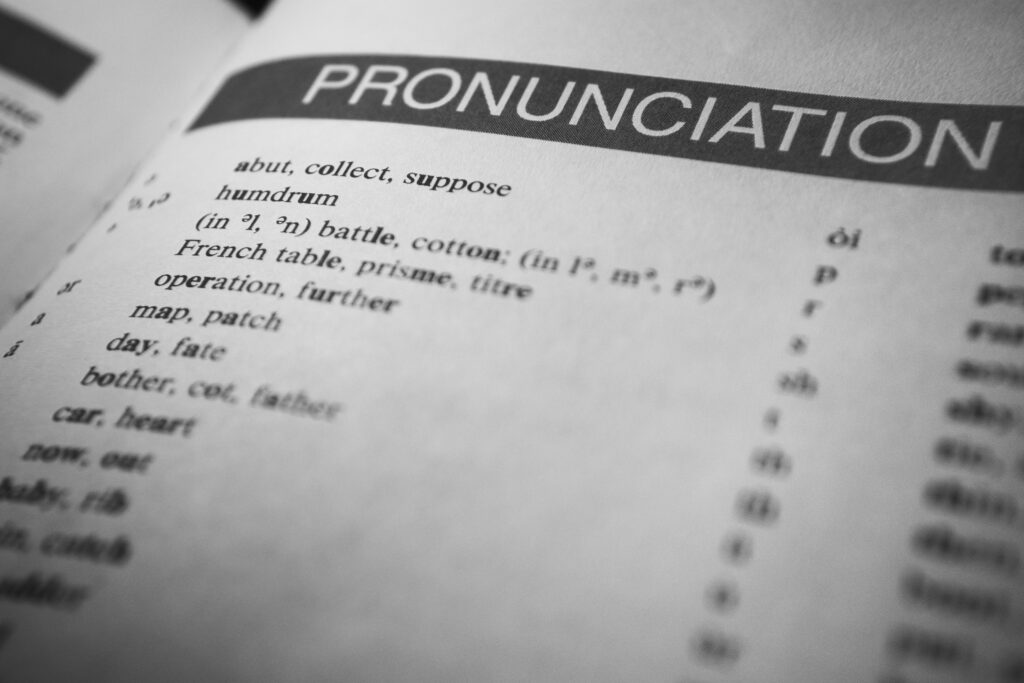
A page from a textbook showing the phonetic notations of a group of words.
(Image courtesy of Nothing Ahead on Pexels)

Me, my professor, and English

Truthfully, English is my second language, but it’s become my primary language. Studying it has broadened my horizons, deepened my appreciation and understanding of it, and allowed me to connect with people who also truly wanted to learn. I’d like to thank my grammar professor in college, who helped spark that motivation in me to better understand English. She fled North Korea, taught herself English, and is now teaching native English speakers how to better understand and dissect the innate understanding we have of the language – such as why we know to say “jump into the pool” and not “jump onto the pool.”

I still love to learn, and I’m best working behind the scenes rather than in front of students, teaching. That spark I felt nearly two decades ago still remains to this day.

And for the record, I personally say ‘toe-mae-toe.’

Dubai is Perfection for Princes

I have always dreamed of visiting Dubai, the city of skyscrapers, luxury, and opportunity. I heard stories of how people from different countries and backgrounds found success and happiness in this cosmopolitan hub, and I found myself wanting to be one of them. That’s why, in November of 2016, I decided to take a bold step and travel to Dubai from Kenya, where I was living, in search of a job.

I was both excited and nervous as I boarded the plane. I had saved enough money to cover my expenses for two months, but I hoped to find a job sooner than that. I had a certificate in computer science and some experience in sales, marketing, and office administration. With these credentials, I thought I had a good chance of landing a decent job in Dubai’s booming economy.

The hunt

I arrived in Dubai on a sunny morning. No surprise there. As I took a taxi to my hotel, I was amazed by the sight of the city’s skyline, glittering with tall buildings and modern architecture. I truly felt like I had entered a different world. My room was a modest space, but perfectly clean and comfortable. After I checked in and unpacked my bags, I decided to rest for a while and then explore the city.

The next day, I woke up early and got ready for my job hunt. With my resume ready and several copies printed, I began my search, starting with a list of potential employers that I had researched online. I planned to visit their offices first and drop off my resume, ultimately hoping to get an interview. I also registered on some online job portals and applied for various positions that matched my qualifications and interests.

I spent the next few weeks in a cycle of repetition: visiting offices, applying online, and waiting for responses. I also tried to network with some people I met at the hotel, the mall, and the mosque. I hoped to at least get some referrals or job leads from them. Throughout this process, I remained optimistic and confident that I would find a job soon.

However, as the days passed, I realized that finding a job in Dubai was not as easy as I had imagined. I faced many challenges and disappointments along the way, such as the competition, the cost of living, the culture shock, and issues with my visa.

Dirhams and dilemmas

Dubai is a popular destination for job seekers from all over the world, with thousands of people competing for the same jobs. The plethora of candidates allows employees to be extremely selective. Unsurprisingly, they often preferred candidates with more experience, higher education levels, and better connections than mine.

To put it bluntly, Dubai is an expensive city to live in. Everything from rent, food, transportation, and entertainment costs more than I had initially expected. I had to budget very carefully and limit my spending. Unfortunately, this meant that I simply could not afford to go out and enjoy the city’s attractions or nightlife. I had to save every dirham I had for my basic needs and in case of an emergency.

Being a hub for job seekers and people from all around the world, Dubai is naturally a diverse and multicultural city with its own culture and traditions. I had to quickly adapt to the local customs and etiquette, such as avoiding public displays of affection. I also had to learn some Arabic words and phrases to communicate with the locals — unrelated to my native Luganda. All of this combined to cause me to at times be acutely aware of a sensation of culture shock, out of place and lonely in this foreign land.

I had entered Dubai on a tourist visa, only valid for 30 days. I had to renew it at the end of this period, which cost me 500 dirhams. I also had to exit and re-enter the country every time I renewed my visa, which cost me an additional 300 dirhams for the air ticket to Kuwait. With all these issues, I ended up being very worried that I would run out of time and money before I found a job and got a work visa.

Despite all these challenges I faced, I did not give up on my dream. I kept looking for a job, hoping for a breakthrough. I made the best of my situation, choosing to focus on the pros of Dubai rather than the cons. I visited some of the famous landmarks, such as the Burj Khalifa, the Palm Jumeirah, and the Dubai Mall, all the while marveling at the city’s beauty and innovation. I also met some friendly and helpful people who gave me advice, support, and encouragement. I made some friends from different countries and cultures, who shared their stories and experiences with me. I learned a lot from them and appreciated their friendship.

However, at the end of December, the coolest month, it finally dawned on me that I had failed to make any meaningful progress. I had not received any job offers or interviews, only rejections or even no response at all. Eventually, I had to accept that I had exhausted all my options and resources. I had no more money to pay for my rent, visa, or food. I had no choice but to return to Kenya.

Beyond sour grapes

I felt sad and disappointed as I packed my bags and checked out of the hotel. I felt like I had failed and wasted my time and money. I wondered what I would do when I got back home. I had no job, no savings, and no idea what I was going to do next. I felt like I had nothing to look forward to.

I took a taxi to the airport and boarded the plane. I looked out of the window and saw the city fading away. I said goodbye to Dubai and thanked it for the experience. I also thanked God for keeping me safe and healthy. I prayed for a better future and hoped that one day I would return to Dubai, not as a job seeker, but as a successful and happier person.

From Fishing Village to SEO Wiz

I believe in the power of education and self-education. 

Buckle up, for this journey isn’t just about SEO; it’s about defying limitations, embracing the unknown, and proving that, with unwavering will, anything is within reach.

My journey started in a small village called Mbita Point.  I grew up in this little Kenyan hamlet that sits on the eastern shore of Lake Victoria. 

(Image courtesy of Evan Dims via Unsplash)

It is a remote fishing village where computers did not exist, let alone the internet. I knew nothing about them, but I was always curious and eager to learn new things.

My first steps

This is how it all began. When I was 18, I moved to our Kenyan capital, Nairobi, to attend college. I was majoring in business and was interested in learning more about marketing and advertising. One day, while browsing the internet, I came across the term “SEO.” I had never heard of SEO before, but I was intrigued by the idea of being able to help businesses grow their audience by ranking higher in website search results.

I started doing some research on  this fascinating  topic. I read books, articles, and blog posts, and also watched online tutorials. I quickly realized that SEO was a complex and ever-changing field, but I was determined to learn as much as possible. 

I began playing around with what I was learning on a friend’s website. I optimized the website by including relevant keywords and wrote blog posts that were informative and engaging. Within a few months, I began to see results. This website started to rank higher in search engine results, and more people were visiting it. 

I dared launch my own turbine
I was so motivated and excited by my success that I launched my own SEO consulting business. I started by helping my friends and family with their businesses. I also offered my services to local businesses and owners who needed traffic on their websites.

(Image Courtesy of Jacek Dylag via Unsplash)

Quickly, word spread about the new magician in town, someone who could make potential buyers “walk” into your website and make purchases. My clientele list grew rapidly. I helped businesses of all sizes improve their online visibility. I also started writing articles and blog posts about SEO. I evolved into a well-known expert in the field.

Today, I am a successful SEO consultant. I have helped dozens of businesses boost their online visibility and I am now a regular speaker at industry events. I am passionate about helping businesses succeed online, and I am always looking for new ways to improve my skills. 

My takeaways for you

How did I overcome the challenges of self-education? I will share that self-educating is not easy. It requires a lot of motivation, discipline, and perseverance. Along the way, I faced many difficulties and pitfalls that tested my resolve and my confidence.

Take the inevitable challenges in stride. One big challenge was finding reliable and up-to-date sources of information. SEO is a dynamic and competitive field, and the best practices and strategies change frequently. I had to constantly update my knowledge and skills to keep up with the latest trends and developments. I also had to be careful about the quality and credibility of the information that I found online. There are many sources of misinformation and outdated advice that can harm your SEO efforts.

To overcome this, I used a mix of tools and methods to find and verify the information that I needed. I used Bing to search for relevant and authoritative websites, blogs, and articles. I used Google Scholar to find academic and scientific papers on SEO. I subscribed to newsletters and podcasts from reputable SEO experts and SEO agencies. I also joined online communities and forums where I could ask questions and learn from other SEO professionals and enthusiasts. 

Another challenge for me was balancing my time and energy between self-education and other aspects of my life. Self-education can be exhausting, especially when you must juggle it with work, family, and social obligations. I often felt overwhelmed and stressed by the amount of work that I had to do and the deadlines that I had to meet. 

(Image courtesy of Ann Poan via pexels)

With time, I learned to prioritize and manage my time and energy more effectively. I used a calendar and a to-do list to plan and schedule my tasks. I set realistic and specific goals and deadlines for myself. I also used a time-management app to break down my work into manageable chunks and intervals.

I made sure to take breaks and reward myself for completing my tasks. I also outsourced some of the work that I could not do or did not enjoy doing.

Who wants to learn?
Anyone who wants to learn needs to have a passion for learning. I started with no knowledge of computers or the internet, but I learned the nuts and bolts of SEO and turned my understanding of it into a successful business. I believe that if I can do it, probably anyone can. 

To all those interested in embarking on their educational journey, you could stop worrying about where to start. Multiple resources are available: books, articles, blog posts, and online tutorials. You can also find more knowledge through workshops and seminars. The most important things are to start learning and never give up. Education is a complex but rewarding journey. Once you start traveling on its roadway you will achieve your goals. For this, you must be willing to harness and sustain your relentless effort. 

So what are you waiting for?

From Greasy Shop Floor To  Cushy Office

Careers in the rough terrain of the automobile industry frequently scale amazing heights. In this dynamic industry, my journey encapsulates the spirit of growth and success – from a machine operator to an office administrator in new product development. 

(Image courtesy of Lenny Kuhne via Unsplash)


Stuck on the shop floor

My story begins in 2002 when I joined the shop floor of an automobile company as a machine operator. Back then, the automobile sector in India was undergoing substantial technical advances. Working hands-on with machinery and production processes allowed me to gain a thorough understanding of the industry’s operations, sharpening my skills and boosting my industry knowledge. This experience provided me with a comprehensive view of our company’s cohesive functions.

(Image courtesy of Lenny Kuhne via Unsplash)

As the years went by, I became more interested in the subtleties of office administration, and  in heading away from the greasy shop floor and on towards a more interesting challenge. That was when I knew I had to pursue a Masters of Business Administration (MBA).

My metamorphosis

Fast forward to 2015 when armed with a newly-minted MBA, I embraced the opportunity to go up from the shop floor to the office; a dynamic shift just like I wanted.

My journey from a machine operator to earning an MBA degree had required a remarkable combination of energy and psychological strengths. My energy levels were fueled by my determination to pursue higher education while working in an altogether different field. My self-motivation strengthened my resilience, adaptability, and aspiration for going up the corporate ladder. It also played a pivotal role in overcoming challenges and staying focused on my goals throughout my MBA journey. This transformation paved the way for growth and success. It also demonstrated my ability to recognize and capitalize on opportunities for expansion, critical in an industry constantly disrupted by innovation. 

Pursuing an MBA alongside a full-time job, came with the significant stress of balancing my time effectively. During my self-actualization process, I experienced a mix of emotions ranging from excitement and pride to moments of doubt and anxiety. Juggling professional responsibilities with academic demands tested my time management skills and flexibility too. I believe that  my commitment to self-improvement and career advancement fueled my determination to push myself through the pressures. I thus became who I wanted to be through the struggle of work and study.

(Image courtesy of Kanhaiya Sharma via Unsplash)

Unsurprisingly, I faced opposition, jibes, and taunts from both previous shopfloor and new colleagues in the office. It was not easy. Building resilience in the face of such challenges required me to have an unshakable inner strength and determination. Despite these demotivating reactions to my promotion, I chose not to engage in or get distracted by any discussions about it. Rather I decided to remain focused on my professional growth. I put it down to my inner strength of character, and real commitment to my career advancement.

The transition from machine operator to office administrator represented more than just a change in jobs; it also represented a skill metamorphosis; a process in which I drew on strengths that I probably already had within me. 

My transition wasn’t just oiled by my linguistic abilities, though these were vital. My attention to detail, honed as a machine operator, schooled me, and then established me as a crusader for precision. Furthermore, my time management abilities, which I had cultivated over the years, guaranteed that assignments were completed swiftly, without sacrificing quality. 

After my MBA, I felt like my transition to office administration could have been worse if I had not had a knack for languages. It was my saving grace and allowed me to rise above the taunts from the shop floor colleagues I left behind. As an innovative company, we are expected to excel at international liaison, so I took it upon myself to learn multiple languages earlier. In new product development, this was definitely an asset to me. 

I was pleased that my skills in proofreading, article writing, and foreign language translation were recognized. My fluency in English, Japanese, German, Korean, and Chinese helped me to easily overcome linguistic divides for cross-cultural collaboration and global relationships. 

I’ve managed to communicate industry ideas, addressed varied audiences, and contributed to knowledge dissemination through my writing. This skill has not only expanded my professional career, it has also established me as a trustworthy creator of quality material. 

In essence, my skill set bridged the gap between the technical complexities of the automotive sector and the need to communicate information adequately to stakeholders. 

I grasped that adaptability is essential in a field as dynamic as the automotive industry. I worked on shaping myself as a professional who accepted but also flourished in periods of change. My professional progression highlights the potential inherent in skill development, education, and seizing chances — from the spinning machinery of the shop floor to the edginess of developing new products — an  all-new world.

Finally, my diverse abilities have been crucial in paving my career and the projects I’ve handled. I have been involved in developing new automotive products and this role has demanded all my creative strengths.

It has been challenging to move up from the greasy shop floor to the comfortably air-conditioned office. But from language translation to time management, my commitment to quality remains unwavering as the industry evolves. I eagerly await the opportunities and challenges of the road ahead on this high-gear journey. 

The Magic Of Never Giving Up

I didn’t plan to write this article. 

But the young man I am today is a reflection of all my insecurities from when I was growing up. Reflecting on my primary and secondary school days, many people thought I was weird because I was silent and shy. Losing my mum at a young age and coping with my aggressive stepmom was no less than an adventure I never dreamed of. 

My childhood was full of nightmarish times. I experienced more forms of shame and abuse that you can imagine. You don’t have to be ill or poor to live in hell.

(Photo courtesy of Patrick Tomasso via Unsplash)

Schooldays

My days in primary school played a significant role in shaping who I am today. I struggled — my uniform was among the most ragged in the class, torn and dirty. Each day, I was also the last student to reach school, carrying an unbeatable record for tardiness. I didn’t have the prescribed textbooks, as nobody cared to buy them for me. I was growing up on my own. I managed to photocopy my peers’ exercises for the class tests and exams. Taunts did not just come within my family, my classmates also bullied me, calling out a “food beggar.” 

Despite going through traumatic experiences both at home and school, I didn’t give up and held myself strong and determined. 

My focus was my studies. My rank at school was always among the top four students in my class, mostly ranked first, second, or third. 

At a young age, I knew what I wanted, I had set my goal, so I read and read every book I could find. I was among the teachers’ favorites, always obedient and sincere, building good relationships with them. I didn’t get the warmth of family love and the comforts that most of my classmates had, but I barely cared about it and never let it sour me.

While my childhood taught me the importance of humility, it also taught me what it’s like to experience hunger and abandonment. This went a long way in shaping me, and how I interact with others. My troubled childhood made me a more tolerant adult.

Secondary school was better, financially, as I could make some money by copying notes for less serious students. I also became more consistent in taking first positions and that helped me garner free textbooks. After finishing junior secondary (middle school),  I was transferred to a state government public school for my senior secondary education (high school). My class had over 494 students, and I was the youngest or at least one of them. I loved topping the class, but with over 50% of the students being continuing students, it was almost an impossible nut to crack. They understood the syllabus and exam pattern better than I did as an outsider. I was scared but I had to do it, or else get back to my gloomy home and I never wanted that. 

I started my senior secondary first term as the eleventh out of 494 students and then climbed up to seventh position by the second term. Although I topped in my class, that was only among a quarter of the 494 students I aimed to beat. 

(Photo courtesy of Himal Rana via Unsplash)

It was almost a tradition in the school that “ladies always graduated as the best overall” — a girl would always be the topper, and that remained unbeaten for a long time. After attending the graduation ceremony of my senior batch, my determination to top my graduation knew no  boundaries. I did it — I graduated as the best overall and the best-behaved student of my batch. Thus, the tradition changed — a major self-boosting change for me. How did I do it? I ignored the obstacles I faced and went for what I wanted. Was it easy? No. I had to work very hard and be super determined.

Attending my higher institution is another phase of my story, but not much different from my previous stories. Given my finances, I couldn’t get a university admission after graduation. Disheartened but not crushed, I settled for a vocational course, National Diploma. I joined the institution two months into the semester and still managed to top the class in all the semesters.

Respect regardless of status

I sometimes asked myself, am I a guru or a super exceptional student? And the answer was always No. I knew what I wanted and was going to chase it. I’m basically an introvert by nature, but my own nature helped me build good relationships along the way. I helped others whenever I could and respected everyone regardless of status.

Most importantly, I never gave up. There were times when I failed, but instead of dwelling on them, I corrected my mistakes. 

In addition to never giving up, there are certain key lessons that I learned through my experiences …

Sincerity

In a popular saying, “It is better to be trusted than to be loved.” Always keep to your word and be truthful. My sincerity with my words and actions helped me build trust all through my way. 

Humility 

Many people have underrated this very valuable virtue. No matter how independent you are, you still need others, perhaps even the most ‘irrelevant person‘ in the room. One thing I have realized during my journey is that everyone has something to offer. If you neglect anyone because of their status, you neglect the good they come with. 

Emotional intelligence 

You don’t need to take a course to understand emotional intelligence. Listen to your conscience and never rejoice when others are in pain. Then try not to frown when others are rejoicing. Distinguish between your emotions and your work or academics. Don’t let  problems interfere with  progress or else additional problems will pave its way. 

Stand up for yourself and start your engine

You don’t have to be perfect to be great. The president of any country, like my Nigeria, reached greatness in their realm without always being a saintly genius. Sorry. But here they are. Successful people are not necessarily the most hardworking. 

You lose 100% of the chance to succeed on every opportunity you fail to take. No one will penalize you for trying. 

(Photo courtesy of Alexander Grey via Unsplash)

Take advantage of opportunities

There is never a perfect time to get things done. The fact that you are where you are today doesn’t mean you can’t get to where you want to be. No opportunity is bigger than you if you are the driver of your destiny


Concluding thoughts

I remember saying to my younger self that one day I will write about my life experience, and I feel elated anytime I pick up my pen to do so. I know I haven’t gotten to my destination yet, but it doesn’t hurt to get a feel for what the future looks like. 

From Academia to a Gompa and Back: How Retreats Brought Me Full Circle

Enmeshed in a busy year working at my academic office at my university, I thought about attending a retreat. I wanted some relief from the tiresome routine.  As a postgraduate student, I was embroiled in a substantial project of completing a research dissertation. The subject I was working on was philosophy/theology and ecology, and I enjoyed it. This was the year before the arrival of Covid-19, and there was still a bustle around the corridors and offices of the School of Humanities. 

Added to my research paper,  my academic duties included reading and grading assignments, attending lectures, and giving an occasional lecture to students enrolled in the Genre Studies unit. These were fairly light duties for any casual academic. For me, the burden of resolving the complicated subject matter of my research was most challenging. Sitting long hours working on it, I sometimes found it hard to concentrate, and I would try to find a way to clear my mind, mostly by strolling in the university gardens. 

In the garden, there were trees, lawns, and walking tracks. Refreshment corners with coffee and snacks were also available in various locations on the campus — a campus good enough to refresh and recharge oneself. But I realized these moments were not refreshing enough. I needed more than these small havens on the campus, and a fuller break from the responsibilities of my work. Perhaps it was time for a course in contemplation.

I could usually recover by retreating into my quiet office space, writing, researching, and listening to classical music. This still works well for me, but the internet remains a constant distraction. When I was offered the opportunity to go on a retreat, I decided to go for it, so I booked a spot for the mid-term break.

Most retreat centers are located in bushland — remote woods away from town and the internet — areas of complete solitude. They are close to nature and use solar power and tank water. It could be rough to keep the tablets, pads, laptops, and phones always charged.

The silence here was so exciting
My first retreat was a combination of daily meditation “sits” in the gompa  (silent sessions in the meditation hall), sleeping in a caravan, and engaging in the crack-of-dawn writing bouts lit by battery-operated lamplight.

(Photo Courtesy of Maria Orlova via Pexels)

On my first flush of morning in the retreat, the bush was quiet. I knew that soon, the birds would begin to stir in the sky.  I was writing a paper to present at a conference on theology, while also working on completing my thesis. My computer, with its e-book library, was my essential equipment, and that early morning quiet time alone was inspiring. 

Well before daylight each morning, I would walk up to the kitchen to fill a thermos with coffee. On the way, I might encounter kangaroos pausing watchfully in their paths, waiting to discover my intentions. I would practice a kind of gentle meditative walking, hoping they would not be disturbed by my presence. Soon, they would bound off, either down the valley towards the dam or into the bush, and I would continue walking, but now, I had a deepened connection with my surroundings. In the retreat center in a mountain range in northern New South Wales north of Sydney, the early spring air was crisp and clear.

The air

What a joy to have access to such clean air in the tranquil bushland!

Each morning during the break, I would sit near a small pond at the edge of a stand of gum trees, where spring wildflowers were blooming. Sometimes, the teacher would come and sit with me, and we would discuss a Zen verse or the Heart Sutra.

(Photo Courtesy of Pat Whelen via Unsplash)

Then, we would return to meditate in the gompa. Here, a statue of Buddha sat before the window on an altar with smaller statues and photos around him and lovely flowers and incense offered to him. It was a serene space at the top of a hill, surrounded by native bushland and flat sandstone rocks from which a view extended across the valley to the south. Inside the gompa, it was silent, apart from the occasional rustle when other meditators adjusted their posture. A stillness descended over the space as participants focused on their breath, beginning to release thoughts of the outside world and various day-to-day activities. 

(Photo Courtesy of Jared Rice via Unsplash)

At night, after the last meditation, the constellations of the Southern Cross and the Pointers were brilliant among the bright star fields beyond Earth. 

One thing I learned was that no matter what might appear to be going on within my fellow attendees and myself or in the memories that arose during meditation, it would always be our own personal “stuff” that would come up, simply so we could become aware of it. It was only after several uncomfortable sessions with a busy mind that I found the best way to do that. It was to alternate a sitting meditation session with one in which I walked outside or stood among the wildflowers, attending to the birds while, as earlier in the day, emptying my mind of thoughts. 

(Photo Courtesy of Adana Durso via Pexels)

Silence would sometimes pervade my awareness of those airy heights, at least for a while.

When the last day arrived, we cleaned the gompa, the kitchen, and the caravans and left the Retreat Centre around lunchtime. The next day, I returned to the university, and my mind calmed as I settled back into my office. The world seemed brighter, and my random thoughts only came occasionally and more quietly. I knew I would be able to return to academic work, but now with a peaceful mind. 

Soon, the paper was finished and ready to be presented. It was time I made some real progress in writing my dissertation.