Who Am I?

If someone asks “Who are you,” how would you answer? Could you even answer honestly? Would you even answer in the first place?

“Who are you?” A simple question I’ve been very familiar with growing up. 

Different, though?

I still remember an incident as a child when my family and I visited a distant relative. My mother prompted me to go and greet our hostess, and the first thing that came out of her mouth was, “Who are you?” To which my mother replied, “She’s my youngest daughter.” 

Our hostess looked taken aback. “Is she? Why does she look so different from your other kids, though?” My mother explained that I inherited my father’s genetics, which stopped further questions.

Another incident was when my mother’s brother and sister-in-law once visited us from the US. I greeted them as they entered the house. I was already in high school at that time. My aunt asked, “Who are you?” 

My mother would once again explain that I am her youngest daughter. My aunt quickly responded, “You gave birth to another child? I thought you only had four children! Why didn’t I hear anything about her till now?” she asked, surprised by the revelation. 

Another shock came when I was already in my thirties. A friend of mine arranged a job interview for me at her office. I asked her if the boss knew about the supposed interview, but she assured me that everything was good. However her boss was unaware of it, and to my utter embarrassment he asked me in front of everyone present, “Who are you?’  Justify yourself. 

It’s funny how I still remember these incidents after so many years. There were still a few more incidents when I was questioned “Who are you!” I slowly became accustomed to the demand.

As a child, hearing this question over and over felt odd in some way, but I thought nothing about it. In my young mind, I thought it was just a usual way of life. But, as I matured, it made me question my very existence more and more.

“Who am I?” 

I would have answered it directly and honestly if not for the rumors flying around that I could no longer ignore. 

Some circumstantial shreds of evidence also led me to another question, “Where did I come from?” I tried finding answers on my own with no success. As the holy scripture has its Genesis, so should I. 

“How did I come to be?” a question I needed an answer to

When I was about eight or nine years old, my eldest sister had a little disagreement with our father about me, then she referred to me as their “ward” in a burst of anger. This incident made me realize that something wasn’t quite right with my situation because, even in anger, she should have referred to me as her sister, right? 

Nosy neighbors, friends, and relatives often asked my parents where I was born; surprisingly, they always had different answers. My father would say that I was born in Manila, while my mother insisted that I was born in the province, leaving me with more questions and doubts. I mean, which parents would provide opposing answers to a question they should have known the answer to, right?

Am I really “the daughter” or a “long-lost daughter of someone else?” 

Why does my very existence drive people to ask “Who are you?”It’s  a question not even I can answer. 

Not even family members are willing to answer. To the grave and beyond, I will carry these doubts. How I wish…. that I could proudly say that I know myself like the back of my hand, but I simply cannot, and that’s just how it will perhaps be for a long time.

Who am I? I feel like a simple person, still trying to find her niche in this world, trying to thrive and find happiness along the way, but if someone asks who I am in a literal sense, my response would be, “I don’t know.”

So many questions left unanswered, one after another. 

(Image courtesy of Magda Ehlers via  Pexels)

Who? What? When? Where? How? All running through my mind nonstop. And every time I try to unravel the mystery, I am met by a wall so high blocking my view of the truth. 

I am already weary of looking for some clarity. Yes, the truth might hurt, but also set me free? Only time will tell if I will ever discover the truth. With the way things are at the moment, who knows if I’ll ever find the perfect answer to the nagging question:

“Who am I?”

The Lone Walk

The sand beneath my feet whirls away,
sweeping me off in a sway.
On the floor, I lay,
as my grief is in bits, gradually fraying.

I stifle a chill as the breezes go hay,
the sun grows cold and gray,
on a thick cloudy day in May
with no hope and no sun rays.

Loneliness pries my soul and I pray
not to be the stranger coated with flay.
Yet, the pain feels like minted spray,
like the one whose beloved went astray.

But I’ll strive to keep my countenance gay;
keep cowardice far from my pathway
and give second chances a little foreplay
because there is a pain in every gained pay.

Toxic Words

Every language has thousands of words, and the ones we choose, I believe, almost always reflect who we are, what we feel, and what we want to communicate. I say “almost always” because I have never been fond of certainties, and I consider doubt an essential element of life, as to not judge people based solely on what they say. 

Sometimes, I too have said something rude in a moment of anger, but soon after came regret and most of all, the realization that I had made a mistake. No one is perfect, but when the words that are now called “toxic” are repeated and become a deliberate and ongoing way to hurt, then it becomes a conscious intent to denigrate and offend.

Who has not heard the old saying “actions speak louder than words?” 

It is a concept that seems extremely valid to me, but sometimes we forget that words have weight. With thousands of words at our disposal, it is reasonable to assume that most of our linguistic expressions in life and social communication are the result of a choice. Unless fate (or whatever else governs human life) intervenes in our lives, when we speak to another person, we should be careful not to offend the sensitivity of our interlocutor.

Recently, while reading a website of aphorisms, I was struck by a quote by author Rhonda Byrne. In 2006, she wrote the essay “The Secret,” which I plan to read soon, discussing topics related to personal growth and inner development:

            “It only takes a minute to cause hurt but sometimes a lifetime to repair.”

The author puts “words” first and then “actions”. This does not seem to me a coincidence. Words are a way to convey positive feelings, but also to express violence and aggression toward, for example, fragile people.  

Human beings cannot live in isolation. We all often need affirmation, support and help from those around us. I believe that the freedom to express one’s opinion does not preclude the ability to do so with kindness and tact.

My best friend had been the victim of a truly toxic relationship. When she introduced me to her new boyfriend, he seemed to me like a serious and polite young man. He was elegant, handsome, and behaved like a gentleman from another era.

But from the very first night, I could tell that something was wrong in their relationship. There were four of us at the restaurant table where we had made reservations: myself, my then-boyfriend, and the two of them. As the waiter served the first course, my friend’s boyfriend began to share anecdotes about their fledgling relationship.

“You know your best friend can’t cook? And if you saw the mess she makes in the washing machine! She ruined two of my shirts. She can’t even read the washing instructions.”

Throughout the evening, he criticized every one of her actions. As he spoke, I wondered: “How can a man in love only point out the faults of the person he is with?”

Maybe my friend was not perfect. Maybe it was true that she could not cook or use the washing machine. But where is the line between truth and contempt? The point was not to be hypocritical or to hide my friend’s flaws, but to choose words that wouldn’t make her interpret it wrongly and feel inferior because of her minor shortcomings. 

I tried to resist the temptation to confront him in front of everyone in the restaurant, and at the end of the evening I took my friend aside.

“Do you realize that all he did was criticize you? How can you live with someone who doesn’t appreciate you?”

“He has never laid a hand on me, if that is what you mean. He is not violent.”

But I knew that violence does not always manifest itself in actions. There is also a subtle and invisible form that is transmitted through words.

When I told her to leave him, she shrugged. She had always had a difficult home life and a troubled relationship with her father. But she had chosen a man who was even worse.

Every word he spoke was meant to show contempt, to belittle and manipulate her. He wanted to make her feel bad about the smallest things, as if he wanted to prove his superiority.

There was nothing I could do at that moment. The choice was not mine. I could only offer her my support and tell her that I would help her at any time. A few months later, I got a call from my friend. She had left their home. She had reached a point where tolerating it was no longer an option.

This is why I believe we must choose our words carefully when interacting with those close to us. Sensitivity is a value that should not be sacrificed to selfishness.

This is why Rhonda Byrne emphasized the importance of words. How we use them surely reveals the kind of person we want to be.

Wandering, Wondering

Yuvoice Duet: Read another inspiring story about rediscovering life with Autism here.

Imagine being lost in a large bookstore when you were little. You are surrounded by pictures, puzzles, book covers, and other unfamiliar things. It’s a strange place, where so many stories live, including magic, mystery, and science. This array was what caught your attention when your parents were only there to buy some paper. After a while, you lose sight of your parents or they lose sight of you. You think for a moment, about what to do and run around; the place seems so significant to you. After thinking for a while you give up the fight and wait by the entrance.

You weren’t afraid. Not really. The colorful and beautiful things around you were fighting for your attention. You didn’t think then — how could you? — about how long it’s been since you’d been lost and how your parents must be worried. You stood calmly by the guard, thinking about which dinosaurs you would draw when you got home.

You knew they’d find you. 

This moment meant little to me then but it was very near and dear to my mother. It was one of the earliest moments when she was astonished at what I could do and what was going on in my head. But, now, I wonder what it really is.

Then & now

Years ago, when I was young, I was diagnosed with Autism Spectrum Disorder, a condition I barely understood then. 

It is the early 2010s, and things are very different now. I’m more confident and appreciate what it means to myself and others around me. The world I see out there isn’t much clearer than the world of the bookstore. I’m still caught up in the wonder of it all with all the same questions in mind. When I first found out about my diagnosis, I felt like it was a superpower that made me special and set me apart from the crowd. I had a name for what made me better at school and different from the other kids. I had the luxury of looking at it with fondness.

(Image courtesy of Mikhail Nilov via Pexels)

But things are different now

The closer I get to the real world, the more distinct it becomes. I have been living in the Philippines with my superpower, aka Autism Spectrum Disorder (ASD), and have realized that my life was supported by a privilege that protected me from the real world. 

I grew up wealthy. My parents supported me when I acted up at school. They kept me away from the harshness meant for the little miscreant that others might have seen me as. Now, much of that wealth is gone. As I grew up and went to college, my superpower started to feel different in my hands. I met some people who were more successful and popular, and great with studies, and a few who were not. These people showed me more of the truth. I had never met anyone who revealed their struggles with bullying, society, and familial issues before, and that enlightened me to just how much my parents had protected me since I was little.

Now, I also understand how much my mother struggled to get the required care for my condition and how scarce therapy centers are. I’m a grown-up, and don’t need as much care anymore; I have an excellent social life with my classmates, and can easily make friends. But when I do need it, I hear stories repeated in various places, and all of them remind me of how hard it is to get care for ASD in general in my country.

Revisiting the bookstore

When I visited that bookstore as an adult, my mother did not mind. Why would she? Of course, she remembered the story I shared above; it was just that the present was more important. The interiors were changed. The bookstore had been remodeled; the shelves were shorter and the place was more spacious, so it was much harder for a child to get lost now. It was bigger, certainly. The colors and wonders were still there for the adults looking around. All the stories and adventures promised on those beautiful covers were still there. If I had more money, perhaps I could buy one someday. If I had more time, I could have browsed and looked at them all.

This place was the same as I remembered it, even after the changes. I walked past the guard at the entrance and into the aisles with my family to pick up some stationery. My mother knew we could finish this and make time for the trip home. I wanted to spend some more time there, but I knew I couldn’t. With our finances and changing schedules in flux, I knew better than that. I am a grown-up now and no longer have the luxury of getting lost here.

Humanity

Even the name is sacred. 

Was it worth it?

Making all those animals go extinct? 

Dinosaurs, Dodos, Rhinoceroses,

How did they ever harm you? 

Killing life instead of nourishing it, 

Cutting down trees, manufacturing cars, 

Smoke streaming from factories.
Tearing down trees, destroying the ozone layer. 

Let me just say
You’re all gathering diseases in your basket.

Will you keep up this destruction? 

Killing animals, destroying forests.

Do you ever think of the harm to our environment? 

The clouds of carbon dioxide, 

The growing dangerous greenhouse gases.

Do you even know how we depend on the Amazon? 

How it produces oxygen for us to breathe? 

How it swallows carbon dioxide? 

Forests are critical for our survival,

Producing not just oxygen, but also luscious fruits and berries. 

So please.

It depends on you.

How you want to live your life.

Do you want to breathe fresh air? 

Do you want to be healthy? 

Plant a tree, save a life,  

Don’t just kill these innocent creatures, 

The choice is yours.
Humanity.

Even the name is sacred. 

No Room For Veal

I was only six months in, working as an apprentice chef at Rocco’s, a family-run catering outfit based in the suburbs of Greater London; Esher Common to be exact. The Esher site was a multi-story production and storage outpost and the place where most of the culinary magic happened.

Mid-July; daytime

The sun was high, and the winds were still over the stony shoreline of Brighton Beach. I smelled the air and listened to the crashing waves in front of me. Peaceful, I thought, took one last drag, and stubbed out my cigarette in the overflowing ashtray.

Our staff had gathered at the client’s site, The Lock, a boxy event space in the arches under the promenade, for a planning meeting ahead of a couple of events they had on the horizon. The first was a birthday celebration in a few days, and the other was the annual Bank Holiday Ball.

Claire was already there, perched on a stool, nursing an Americano. She looked after the business side of things and was perhaps one of the best things to ever happen to Rocco’s. She had beauty and brains and was quite a likable character.

The Head Chef, Pierre, had just stepped in, an hour after the briefing was scheduled to start. His long-sleeved, crisp white dress shirt opened mid-chest and was adorned with a loose paisley print neckerchief. The cuffs were turned up, and the shirt tucked into his trousers.

“Okay, Fabien. Paolo. You have already the menu for the birthday party, yes?” Chef Pierre asked. His accent was thick as a pumpkin.

Ugh. It’s Fabian and Pablo. Nincompoop.

He waved his stubby fingers in the air, beckoning us to speak.

“Yes, Chef,” I said. “We were thinking of spinach and prosciutto stuffed veal rolls, with some greens. And a light garnish—maybe lemon—for the main?”

I said “we,” but the veal was more Pablo’s idea.

Since that Hannibal Lecter guy likened the exquisite delicacy of veal to the taste of human flesh, I was no longer a fan; period. But the prosciutto stuffed veal rolls required an inherent degree of talent, with equal portions of patience. And in that case, Pablo was your guy. He was the one with the most talent. I was just his humble sidekick. Nearly half the kitchen wished they had his skills, Chef Pierre included. But shhh; he’d never admit it.

Pablo was only twenty-four and had swapped the Brazilian sun for the rain and the chills of Britain. To better his talent, he would say. He landed at Rocco’s a month before I arrived and was considered senior to me and Ella Wolfeschlegelsteinhausenbergerdorff, the entitled one. Together, Chef Pierre dubbed us, his three Apprentis de Chefs. Fancy title, right?

“Nuh! We will not be doing that!” Chef Pierre interjected.

His face was set like the rain that was about to be kicked from the sky.

“—but Chef; the couple is from Nice and often travel to Italy with the family, for the cuisine. They haven’t been able to travel much since the pandemic. I thought it would be good to surprise them with something special,’ said Pablo.

That’s it, Pablo, sock it to him. I gave him a reassuring glance. A nod of approval soon followed.

“And for dessert — we will make sweetcorn panna cotta with fresh blueberry compote. I’ve already spoken to Claire, and there’s enough Chianti Classico in the store,” Pablo continued.

“Exactly,” Chef Pierre said. “They’re French. And we will not be making butchered young cows stuffed with anything.”

Chef Pierre raised his eyebrows. His wonky left eye glared at us with such degeneracy. He could have easily sliced us into thin strips of prosciutto if he blinked.

“But Chef—” I pleaded.

“Shut it, Fabien. Paolo, I expected better.”

Hmm, better?

“Chef!”

“Nuh. Instead, we will be making chicken cordon bleu. The other stuff is okay.”

Chef Pierre then turned to Ella what’s-her-face and thanked her for the cordon bleu suggestion. He gave her a cheeky grin and waved the rest of us off.

Of all the dishes imaginable, Chef Pierre chose chicken fucking cordon bleu? I wasn’t okay with that. No matter how you dressed it up, it was just chicken and melty cheese. Not even French. But I guess if Chef was happy with stuffing skinned chicken with blocks of cheddar and ham, then I was happy.

Truth be told, Chef Pierre lost his mojo a couple of years before that. Rumor has it that his wife left his philandering ways for her nail technician — a Thai woman, tall and fair with skin made of silk, I was told. Since then, he’s been searching for happiness at the bottom of the next bottle of Glann Ar Mor. Okay, that is French. In the end, Chief Pierre became a slothful soul and lost his powers of invention. 

I walked over to Pablo and bumped shoulders.

“Hey, don’t worry, Mon,” I said. “I’m sure you’re gonna fix it up nice.”

“I have to. I can’t afford to mess this up, not now.”

Thursday, event day

My night was fitful. I managed to pry my eyes open when the alarm sounded but stayed in bed until I was late, another one of my unshakable toxic traits.

I quickly got dressed, grabbed my kit, and boarded the Thameslink service to Brighton. Thankfully, I caught the last train for the hour. I would have made it to work in time for the briefing had my travel not been limited by the complications of modern-day commuting and earthly physics.

Chef Pierre was already in, busy chatting away with Ella, ignoring everyone else who had gathered in the center of the kitchen, awaiting his edicts, that is, directions.

“Bon. So, this is the menu,” Chef Pierre said, tossing out the stack of menu cards.

I gave the menu a quick whiz. As suspected, nothing had changed.

Chef Pierre instructed the wait staff to take their lead from Claire. The sous chefs and our group of apprentices fell directly under his supreme thumb.

“Boys. I want the mains plated and ready for me before they go out, okay?”

Boys. That was Pablo and me, if ever you were wondering.

“Yes, Chef,” Pablo replied.

We chopped, skinned, peeled, prodded, and poked for the more significant part of the day. 

It was now an hour to service, and my anxiety was ballooning. I needed a quick break, a minute or two to reset my nerves. I gave Pablo a shoulder tap.

“Hey. I’m stepping out back for a bit. Cool?”

“I got this, Man, but be quick,” Pablo said, unwrapping the stack of plates needed for the main course.

I smiled, snuck out the back, and shared a quick spliff with the dish guy. My eyes rolled back on the first pull as I meditated on my misgivings. I said a little prayer, threw some thanks to the heavens, and begged the universe to bring a swift end to the day before I gave in to the sleep that was beckoning.

Bzzt.

A timely distraction sounded from my mobile and my most trusted timepiece and companion for those dire hours in the trenches with Chef Pierre.

“Great news from the bank!” the text said, and then in another line “Let’s catch up ASAP!” I made a mental note to reply later and was about to pop the phone back into my pocket when I heard him. 

Getting high on haute cuisine — vaulted plates

“C’est quoi ça?!” Chef Pierre demanded.

His voice filled the kitchen with a thunderous roar.

“You imbecile!” Chef continued.

I ditched my share of the contraband in the bushes and hurried back to the kitchen, tripping over the door jamb that almost took out both my bony knees as I came crashing on the floor. By God’s grace, I was able to stand, but my ego was still on the floor. As soon as I recovered, I watched in awe as Chef hurled a single-plated main dish across his station.

Splat!

The plate and the dressing hit the wall first. The piping hot cordon bleu followed suit.

A few inches more to the left and the chicken would have connected with Pablo’s forehead — dished and served with all its accompaniments.

Pablo stood motionless and pale-faced.

I could tell Pablo’s heart sank as he watched his hard work reduced to a hot mess on the floor beside him. He never had to say anything; I knew precisely what was coursing through his mind.

“Oie!” I shouted as my neck veins stiffened and my face twisted into a hot mess, too.

The bass in my voice ripped through the kitchen like an unsuspected undercurrent and carried with it months of cultivating rage.

“What the rass yuh do that for? Like, what the actual fuck Pierre?!”

At this point, something colder than ice surged through my veins.

“Vous,”’ he replied. “Vous.”

“Vous what, Pierre?!”

I polished my utter defiance with a bit of Franglais and now, I had his complete attention.

“Yuh so fucking ungrateful!” I continued my rant. “Imagine, we here working on your chicken cordon-fucking-BLUE, all day. And the best you can do is fling the fucking plate at the man’s head? Pierre. Yuh never here. Late all the time. Teach us shit, yet you expect pumpkin pie?”

My fury gave voice to Pablo’s will as I stood up to Chef. For us both.

Ella covered her mouth with both hands as she tried to stifle a scream. Chef Pierre’s behavior was shocking, even by her standards. I imagined, to her, mine must have been simply appalling. But if the truth was ever like a loaded gun, this was the trigger.

I reigned in my Jamaican sass, just in time to see Claire’s face pop from behind the swing door; her mouth open like a bass.

“Get out! Get out now!” Pierre shouted. “Leave my fucking kitchen….”

“Cheups.” I pulled air through my gritted teeth, making the longest hiss imaginable.

My apron and hat were already off, on the floor, somewhere. I didn’t care where.

I almost lost the entire surface of my pupils as I rolled my eyes returning his salty looks.

The rest of the kitchen staff froze. The only noticeable sounds were the splashes of water from the overflowing sink and the few pots next to Pablo that had now started grumbling.

“You’re done, Fabien. You’re done!” His breadfruit fingers pointed to the door.

“Idiot. And it’s FABIAN.”

I was two words short of telling him to stick his job up his arse, as they say in Britain. Instead, I maintained my indignant stare and marched to where Claire stood.

The next day

Chef turned up to work shitfaced and back into his dusty old corduroys. So much for the crisp whites and that tadpole printed neck thing.

I saw that his pot belly was about to burst, so I kicked him a waste bucket. His upper body folded at the waist as he struggled to stand. He puked until the balls of his eyes exploded into pure redness, intoxicating the kitchen with the most putrid scent imaginable, spilling drips of puke onto his oversized coat that hung loosely across his back.

If you ask anyone, they will tell you it’s not uncommon for chefs to go berserk on the odd occasion when the service time was missed or  the vegetables were  not still al dente as commissioned. But no one deserved the utter disdain that Pablo endured. 

Well, there you have it — altered plates

I later learned that Pablo had altered Pierre’s plating arrangements. Knowing Pablo, he probably felt the dish looked flat and unimaginative. And as I suspected, Pablo injected a little life into the dish; some colors, height and texture to the lone chicken and the sprig of green against a dollop of that god-awful mush Pierre swore was the best thing since sweet potato chips.

The truth was that Pierre’s incompetence had become taxing, and it was no longer a secret. Why he lasted there so long, no one knew. But “everything does not have to make sense,” I heard someone say. And often, when you get that feeling, it just might be time to move on.

Pierre hauled himself to the prep table, dead in the center of the kitchen, where we all gathered again for the end-of-day briefing that should have taken place yesterday.

I stood next to my boy Pablo; my head was down, eyes fixated on the shiny surface of the table in front of me. I listened as Pierre cleared his throat and cringed at the thought of the smack that was about to escape his unbathed tongue.

“So, yesterday was okay,” Pierre said. “The couple was happy with the meal and the service. And send their regards.”

Pierre’s eyes were everywhere except where they were meant to be.

“I’ll await suggestions on the ball from vous by later today. That is all.”

He turned and then left the kitchen.

Was it shame? Guilt? Total indifference? I was confused.

It was 8 PM, and the night sky had placed a cloak of darkness over Esher Common. While the rest of the town slept, Pablo and I were busy organizing the ingredients for the upcoming ball.

“Bro. This packing thing is too much,” Pablo whined.

“I know. Plus, it’s just us two,’ I replied. “But we can do it, Mon. Let’s hurry.”

“We should be at the Notting Hill Carnival this weekend… YESSS,” Pablo remarked.

I watched in utter shame as Pablo broke into something like a dance. His body moved like an awkward robot that had lost a couple of screws in the knees and waist.

“Pablo, ah, beg! Leave the gyrating to us Caribbean folks,’ I said. “Dancing is not your thing.” We exchanged a couple of laughs and then got on with the packing.

Throughout the evening, we worked as hard as possible to prep and package the food for the Bank Holiday Ball set for Monday back in Brighton.

It was now 11:15 pm; my phone reminded me with a familiar buzz.

“Your train will be here soon,’ I told Pablo. ‘Go ahead, Man, and I’ll finish up.”

It was a trek back into the city, and the last train for the night was fast approaching.

“You sure, bro?” Pablo asked. “I already fucked up once. I can’t afford to lose this job, Man.”

“Come on, Pablo. You either leave now or catch the night bus to North London.”

The journey back to London by bus would have been long and unsavory, especially on a holiday weekend like this.

Pablo tore off his apron and stuffed it and the other bits in his bag, and he was through the door in seconds.

Moments later, BANG!

A loud thud just outside the door stole my attention. I called for Pablo, but there was no answer, so I walked over and eased the door open.

“Pablo! Pablo! Just go, Mon!” I shouted.

But the cause of the racket wasn’t Pablo; it was Pierre.

Fuck! My thoughts mouthed to form a silent shout.

What was he doing here? “His shift ended eons ago,” I thought, closing the door behind me after squeezing myself through.

Looking at his unbalanced steps, I could tell Pierre was drunk.

Pierre was wearing a gray tracksuit and a dark pair of trainers. His ears were plugged, and the hood of his shirt was up.

I watched as Pierre slid through the unlatched door and downstairs into the staff break room.

I gave a stealthy pursuit, still clutching a roll of cling film; my confused brain neglected to instruct my hand to get rid of it.

My silly hands must have pressed too hard against the swing door, and it plopped open, flooding the room with light from the passageway.

“What are you doing here?!” Pierre barked.

He yanked the earphones from his ears and gave me a cold-eye stare.

“Your shift ended 8 hours ago,” I replied with an equal measure of contempt.

Bzzt. Bzzt. Bzzt.

The ramble from my phone interrupted our stare down.

“Yea, Mon,” I said. “We’re just wrapping up now.”

It was the frozen storage guys; they were running late. I now had plenty more time.

I ran back upstairs, quickly labeled the foodstuff for the ball, and the extra meat, cleaned the counters and meat saw, and gave the floor a quick mop with a bit of vinegar.

The remaining trash, I double bagged and dumped in the food waste skip out back.

“Mate. Can you give me a lift to the station? At this hour, Uber doesn’t come to this side,” I asked the frozen storage guy as he loaded the last crate onto the truck. I figured a minicab from the train station at Esher Common to Croydon wouldn’t be too expensive.

“Sure. No worries, Man,” he replied.

I swung my backpack across my shoulders and hopped into the cabin.

Saturday and the freezer is full

It was now Saturday, and way too early to be awake.

I found myself back at The Locke, with the gang putting things in place for the ball, our client’s last hurrah for the summer. I made a cup of coffee and drowned it with some sweetened condensed milk. I took a good whiff and allowed the scent of imported instant to permeate my nostril.

I sifted through a mountain of paper Pierre had neglected to file and shook my head. Maybe this would be my new normal — I could get used to this.

Bzzt. Bzzt.

“Hello?”

“Is this Fabien?”

“NO. Fabian,” I corrected her, distancing myself from whatever French connection I had left.

“Oh, apologies, my dear. This is Ronda, calling from Brixton Bank. About your recent application?”

Yikes.

“Yes, oh, hi Ronda”

I smirked.

“Fabian. We would like to make you an offer.”

“Fantastic.”

“Can you come in next Tuesday?”

“Absolutely.”

“Great. I’ll see you at nine?”

Now, if only I could get Pierre’s big head out of the way. 

‘Fabian.’

A soft voice called out to me. It was Ella. “Claire wants to know If you guys have decided on the main for the ball?”

Shit. Did I?

“Yes,” I replied. “Veal Piccata. The veal is in the frozen storage containers in Esher. They were shipped just before the fire.” 

Spoiler Alert
Now, if only I could get Pierre’s big head out of the way — of the Piccata. His carved remains were ziplocked and tucked away in the freezer right here, yet only 80 percent frozen. If I don’t relocate it in the freezer soon, it will be rock-hard by Tuesday, too late for reaching the veal.

The weekend

Pablo was right; it was the Bank Holiday weekend. I might go to the Notting Hill Carnival after all.


Who Knew I’d follow My Family of Teachers Into the Profession I Hated!

Some people would say teaching is in my blood and that I am destined for the job. I strongly disagree with this for many reasons. 

In my family, there are many teachers. My mom is a special education teacher, and so is my grandma. One of my aunts teaches 4th grade and another takes health classes for nursing students. However, when I graduated high school in 2012, I knew that teaching as a profession was not for me. I knew, once I left high school, that I would never want to step foot in any other public school classroom ever again. At the time I graduated high school, I didn’t even want to attend college. I felt forced into the decision by my family who all flew in from out of town to attend my graduation and started handing me cash for college expenses.

People don’t realize that they have such power in the words they say and in how they choose to communicate with their peers, whether that be through kind and thoughtful words or hateful and judgmental insults. The never-ending bullying that I endured throughout my childhood in the public education system turned me away from continuing my education in college, and it was the deciding factor for not wanting to be a teacher myself.  A real shame, because I later learned I have the potential to be a straight-A student and actually enjoy learning new things. 

I go back to school

Unfortunately in 2017, at the age of 23, I was forced back into school — this time, working as a special education paraprofessional. I was a lost soul who was severely lacking purpose and direction in life. It was simply a job that paid money, and that it was all anyone cared about. 

To be a teacher, you have to have the right personality to deal with all the bureaucracy in the schools and among the staff. But you also have to have a real passion for the job to deal with the many challenging behaviors from the children; I severely lacked both qualities. Added to that, there’s the lack of proper compensation for all the hard work and effort you put into doing the job. It became evident to everyone involved that I did not want to do it. 

(Image courtesy of Mick Haupt via Unsplash)

In July 2020, I decided to go back to school, because I did not want to spend the rest of my life working jobs I hated just for a paycheck. I didn’t want to be just another number at a job who was reminded every day that I was easily replaceable. I wanted to do something meaningful with my life and be properly compensated for it.  So, I enrolled in an online degree in an elementary teaching program. Yes, teaching! 

(Image courtesy of Cole Townsend via New Old Stock)

However, it was for a very short time. Later in December of 2021, I decided to change my major after being screwed over by yet another school district.

Working in the schools was a lot like being stuck back in school — a feeling of being forced into school, just like in my childhood. 

There are also cliques of employees at every single school and district, and for someone who never fitted in properly in school, even as a child, work easily became a monumental disaster. Not only were the students at these schools now name-calling me. Yes, hurling pet names at a fully-grown adult!  The staff, and my colleagues, started calling me into meetings and pointing out everything I was doing wrong to bully and harass me. 

Many of these districts got rid of me for stupid reasons that weren’t even justifiable. The nerve. They simply didn’t like me and so chose not to invest their time in helping me become a better employee. It was a no-win situation and I eventually felt like an epic failure. 

I saw admin staff send us educators running for the hills

People are saying that there is a teacher shortage, but from what I am seeing, the shortage is of teachers. The shortfall lies in the way these districts are run and run down by staff and administrations. That is, sending many teachers running for the hills and fleeing the profession in outrage. 

As teachers, we want to be appreciated for our work and to be properly compensated for the immense effort we put into the work, especially with the rising cost of living. We want to feel safe at our place of employment and not fear for our safety every day. We also want to be rewarded for our efforts with respect, and not to be belittled and bullied by supervisors on a rampage.

The public education system is severely broken. I say that instead of trying to force change within the students, educators should first look in the mirror and ask what they can do to help create a better working environment for their employees. 

Because when employees don’t care, students can’t. The teachers burn out, they don’t love the material, they don’t love the interaction with the students, and they don’t address or maybe punish — okay, guide — students who misbehave. Isn’t that enough for you to give up the art of being a teacher?

Finding Community in Identity: Discovering My Autism in Adulthood

I’ve spent my whole life feeling like I didn’t truly fit in with anyone around me. I’ve always felt there was something “off” about me. It was as though everyone except me received a user manual for how to be human.

It took me 25 years to realize that the reason I felt different from most people is that I’m autistic. But due to my lack of education on the subject, I went that long without even knowing.

Unraveling the signs

Most of my behaviors and a large part of my personality are a result of my autism. But only late in my life did I realize there were names for how I navigated and experienced the world. 

Sensory issues

Growing up, many of the clothes I had bothered me so intensely to the point where the seams or even the type of fabric were all I could focus on all day. Sounds that were too loud to me but not to others led me to cover my ears and want to leave the room. These are only two examples of the many sensory processing issues that I’ve experienced my whole life.

(Unsplash/Majestic Lukas)

Special interests

Whenever I find something I enjoy, whether a hobby, show, book, or topic, I go all in. I want to know everything about that thing, so I spend many of my waking moments thinking about it. For months or years now, much of my life has revolved around my current special interest or hyperfixation. The intensity of my interest in a particular topic goes beyond what most people enjoy.

Shutdowns and meltdowns

I can also get overwhelmed by emotions or sensory input. As a kid, this presented as wanting to withdraw from the world, and usually speaking became difficult and energy-consuming. I still get periods like this, and they can last as long as a few hours to some days. Now I know these are called autistic shutdowns. I also experience autistic meltdowns, where I get so overstimulated or upset that I sob uncontrollably and find it difficult to calm myself down.

Social communication problems

I’ve always found it difficult to express and read people’s emotions, facial expressions, and intentions. For a long time, I called myself “socially awkward.” I often take others’ words out of context and struggle with social cues. While I’ve gotten considerably better at socializing with others, it’s still like speaking a foreign language, and the native speakers can tell it’s not my first language. 

My hardships with social skills have led to many misunderstandings and miscommunications. Since I was a toddler, keeping up with conversations and coping with social situations has been difficult.

Structure and routine needs

I thought I’d eventually grow out of my “weirdness” as I called it. But that didn’t happen. As I grew into adulthood, my problems only seemed to exacerbate. At 18 years old, I got my first job in retail. After that, I held positions in journalism and teaching. These jobs required a lot of spontaneity and lacked routine. Because of this, I struggled. I found myself hopping from one job to another to avoid what I now know are shutdowns, meltdowns, and burnout.

(Unsplash/Christ Montgomery)

A sense of belonging

In my mid-twenties, I came across autistic people’s stories and videos on my social media feeds. I related to most of what they said about their experiences with autism. After months of listening to this community and doing my research, I began to identify as autistic. It felt like I had finally found other people like me and I wasn’t alone in the world.

In late 2022, I pursued an official diagnosis. I found a local psychologist who offered autism diagnostic services. For several hours, he interviewed my mom and me about my entire life—from birth till now. Afterward, I received a six-page report that confirmed that I was, indeed, autistic.

Knowing I’m autistic has helped me realize I’m not the only one who feels this way. I now know I’m not “weird” or alone. I’m just autistic.

Since my diagnosis, I have found a community of people who understand me. I feel like I’ve discovered “my people.” I have made friends with other autistic individuals online who share similar special interests, communication styles, and ways of existing in the world. My allistic, or non-autistic, friends and family are lovely. Nonetheless, it’s been a breath of fresh air to forge relationships with people who process the world like me.

Finding community

This newfound sense of belonging has inspired me to share some tips for anyone who might be feeling different–autistic or otherwise.

  1. Don’t do it alone

Find online groups, forums, hashtags, or even in-person meetings related to a particular interest, feeling, or experience. Hearing about other peoples’ experiences and, even better, interacting in these communities can help build connections with like-minded people. This can foster relationships with dozens, hundreds, and even thousands of others with similar experiences.

  1. Keep an open mind

Be open, honest, and vulnerable. This can be challenging, especially when feeling like an outcast for certain traits, behaviors, or hobbies. But by sharing stories, you will find others with similar experiences. Speaking from experience, authenticity leads to a more profound sense of belonging.

  1. Embrace support

Get support from people who have had those experiences. Getting advice from those who have already walked that path is helpful in getting a headstart in understanding. Other people can offer valuable insight and new perspectives to help with growth and adaptation.

  1. Give yourself time

Don’t rush the journey. It can take a while to find the kinds of people with similar traits and interests. But even if it takes time, those people are still out there. Building relationships with new people can be difficult and time-consuming, but it’s worth it.

Embracing my difference

Since finding a community of like-minded people, I’ve grown a lot. I’ve forgiven myself for many of my social shortcomings and emotional outbursts that have stemmed from my autism.

I didn’t need to hold myself to such high standards anyway, but knowing that I have a disability that hinders me from navigating this world in the same ways as others has helped to understand why I feel the way I’ve felt my whole life. I no longer feel the need to meet the expectations of a society that is not optimized for autistic people.

(Pexels/Min An)

I’ve also been accommodating myself more. I bought noise-canceling headphones to help with sensory overload. I set boundaries with others when I’m not feeling like socializing. I avoid situations where I know I’ll get overstimulated. I’ve started “unmasking” my autistic traits, which means I’m not hiding them as much as I used to.

I have also found beauty in what I have realized are autistic traits. A few of these include my strong sense of social justice, intense passion for my special interests, and great attention to detail. I cherish these aspects (and more) of who I am now more than ever.

There’s nothing wrong with being different. But it’s great to know that my difference has a name and a community. I hope everyone can find their community filled with people that understand them because it’s a beautiful discovery. For me, it has brought me a sense of belonging and self-acceptance that I didn’t know was possible.

Heaven Simple

the wind did not howl
but the door frame is loose
vibrated and swayed
like the unhinged rusting tin roof
and her anxious heart
like the approach of the wind
the visitors seemed to arrive
to test the breach in the  weakness
what was giving way in her situation
their shadows eerily long
threadbare the last of her hopes
their steps determined and firm
calling her out, voices loud
out in light to accost
treasure ships of riffraff ghosts
any other day
not when she is down with decay
her nerves are far from calm
the visitors as the wind
each raindrop
ceaseless till it stops
want to prevail 
leave her unveiled
that her pillar was gone
that she knew not how strong
uprooted he was
cut down in the sweetest hour 
then she heard am yet to be gone
not until you let me fall
yes I reverberate
in each step from here now you take

From Academia to a Gompa and Back: How Retreats Brought Me Full Circle

Enmeshed in a busy year working at my academic office at my university, I thought about attending a retreat. I wanted some relief from the tiresome routine.  As a postgraduate student, I was embroiled in a substantial project of completing a research dissertation. The subject I was working on was philosophy/theology and ecology, and I enjoyed it. This was the year before the arrival of Covid-19, and there was still a bustle around the corridors and offices of the School of Humanities. 

Added to my research paper,  my academic duties included reading and grading assignments, attending lectures, and giving an occasional lecture to students enrolled in the Genre Studies unit. These were fairly light duties for any casual academic. For me, the burden of resolving the complicated subject matter of my research was most challenging. Sitting long hours working on it, I sometimes found it hard to concentrate, and I would try to find a way to clear my mind, mostly by strolling in the university gardens. 

In the garden, there were trees, lawns, and walking tracks. Refreshment corners with coffee and snacks were also available in various locations on the campus — a campus good enough to refresh and recharge oneself. But I realized these moments were not refreshing enough. I needed more than these small havens on the campus, and a fuller break from the responsibilities of my work. Perhaps it was time for a course in contemplation.

I could usually recover by retreating into my quiet office space, writing, researching, and listening to classical music. This still works well for me, but the internet remains a constant distraction. When I was offered the opportunity to go on a retreat, I decided to go for it, so I booked a spot for the mid-term break.

Most retreat centers are located in bushland — remote woods away from town and the internet — areas of complete solitude. They are close to nature and use solar power and tank water. It could be rough to keep the tablets, pads, laptops, and phones always charged.

The silence here was so exciting
My first retreat was a combination of daily meditation “sits” in the gompa  (silent sessions in the meditation hall), sleeping in a caravan, and engaging in the crack-of-dawn writing bouts lit by battery-operated lamplight.

(Photo Courtesy of Maria Orlova via Pexels)

On my first flush of morning in the retreat, the bush was quiet. I knew that soon, the birds would begin to stir in the sky.  I was writing a paper to present at a conference on theology, while also working on completing my thesis. My computer, with its e-book library, was my essential equipment, and that early morning quiet time alone was inspiring. 

Well before daylight each morning, I would walk up to the kitchen to fill a thermos with coffee. On the way, I might encounter kangaroos pausing watchfully in their paths, waiting to discover my intentions. I would practice a kind of gentle meditative walking, hoping they would not be disturbed by my presence. Soon, they would bound off, either down the valley towards the dam or into the bush, and I would continue walking, but now, I had a deepened connection with my surroundings. In the retreat center in a mountain range in northern New South Wales north of Sydney, the early spring air was crisp and clear.

The air

What a joy to have access to such clean air in the tranquil bushland!

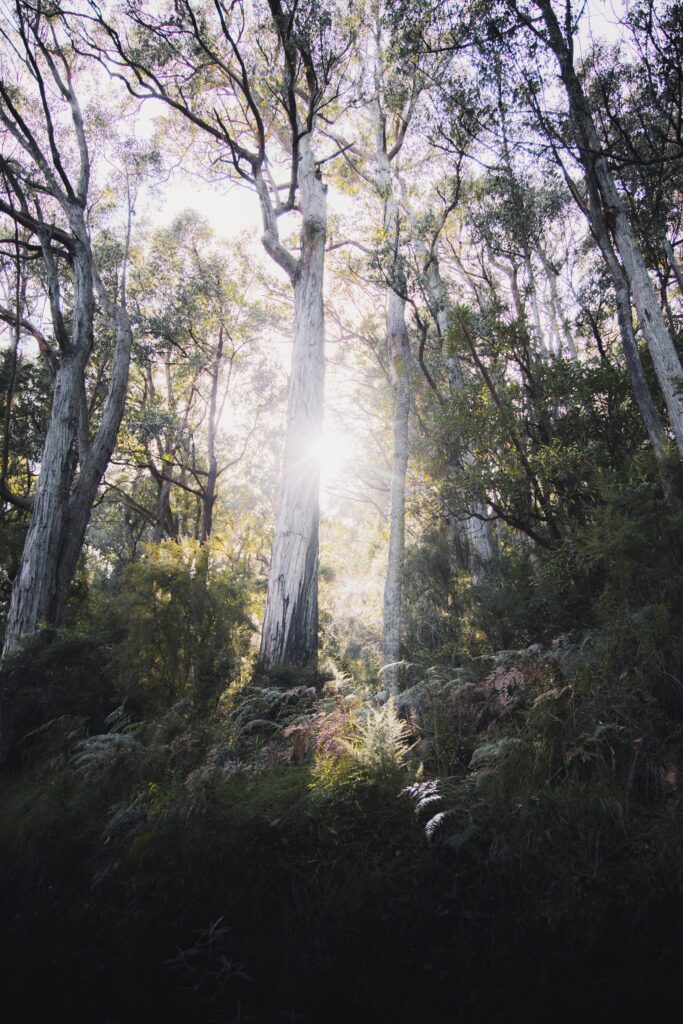
Each morning during the break, I would sit near a small pond at the edge of a stand of gum trees, where spring wildflowers were blooming. Sometimes, the teacher would come and sit with me, and we would discuss a Zen verse or the Heart Sutra.

(Photo Courtesy of Pat Whelen via Unsplash)

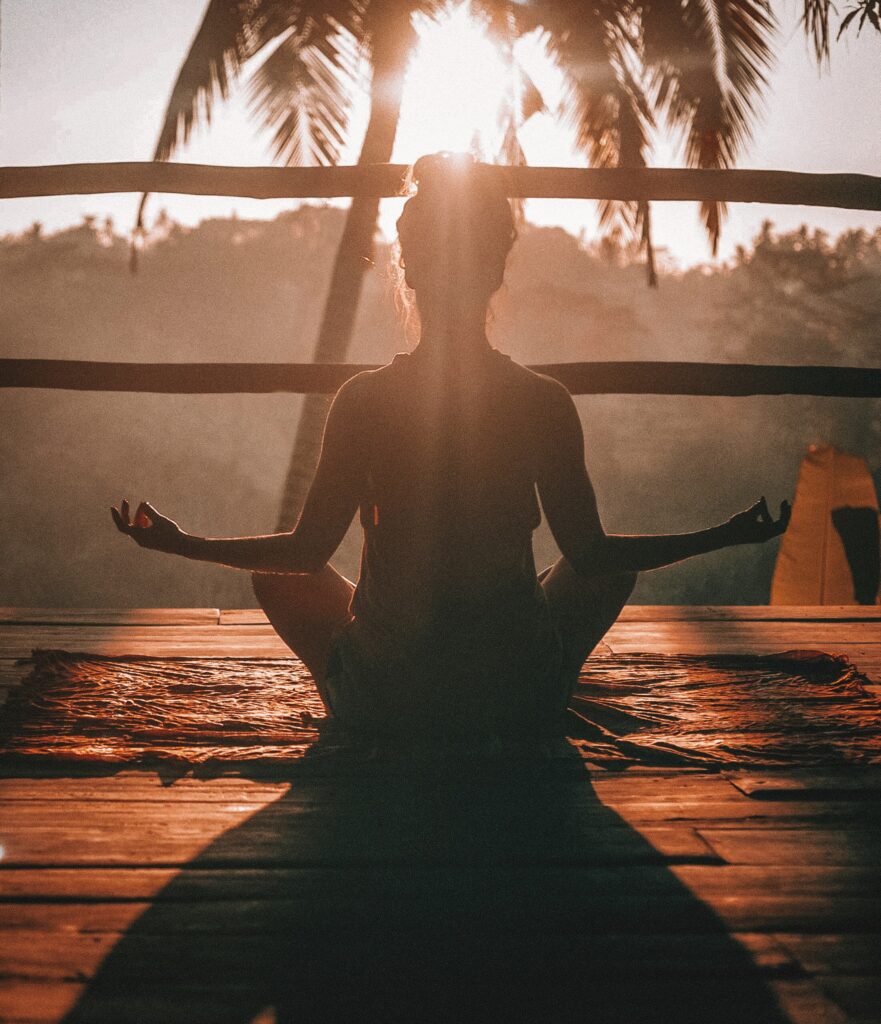
Then, we would return to meditate in the gompa. Here, a statue of Buddha sat before the window on an altar with smaller statues and photos around him and lovely flowers and incense offered to him. It was a serene space at the top of a hill, surrounded by native bushland and flat sandstone rocks from which a view extended across the valley to the south. Inside the gompa, it was silent, apart from the occasional rustle when other meditators adjusted their posture. A stillness descended over the space as participants focused on their breath, beginning to release thoughts of the outside world and various day-to-day activities. 

(Photo Courtesy of Jared Rice via Unsplash)

At night, after the last meditation, the constellations of the Southern Cross and the Pointers were brilliant among the bright star fields beyond Earth. 

One thing I learned was that no matter what might appear to be going on within my fellow attendees and myself or in the memories that arose during meditation, it would always be our own personal “stuff” that would come up, simply so we could become aware of it. It was only after several uncomfortable sessions with a busy mind that I found the best way to do that. It was to alternate a sitting meditation session with one in which I walked outside or stood among the wildflowers, attending to the birds while, as earlier in the day, emptying my mind of thoughts. 

(Photo Courtesy of Adana Durso via Pexels)

Silence would sometimes pervade my awareness of those airy heights, at least for a while.

When the last day arrived, we cleaned the gompa, the kitchen, and the caravans and left the Retreat Centre around lunchtime. The next day, I returned to the university, and my mind calmed as I settled back into my office. The world seemed brighter, and my random thoughts only came occasionally and more quietly. I knew I would be able to return to academic work, but now with a peaceful mind. 

Soon, the paper was finished and ready to be presented. It was time I made some real progress in writing my dissertation.