Sweden’s Coffee Paradox: When Climate Leadership Meets Cultural Tradition

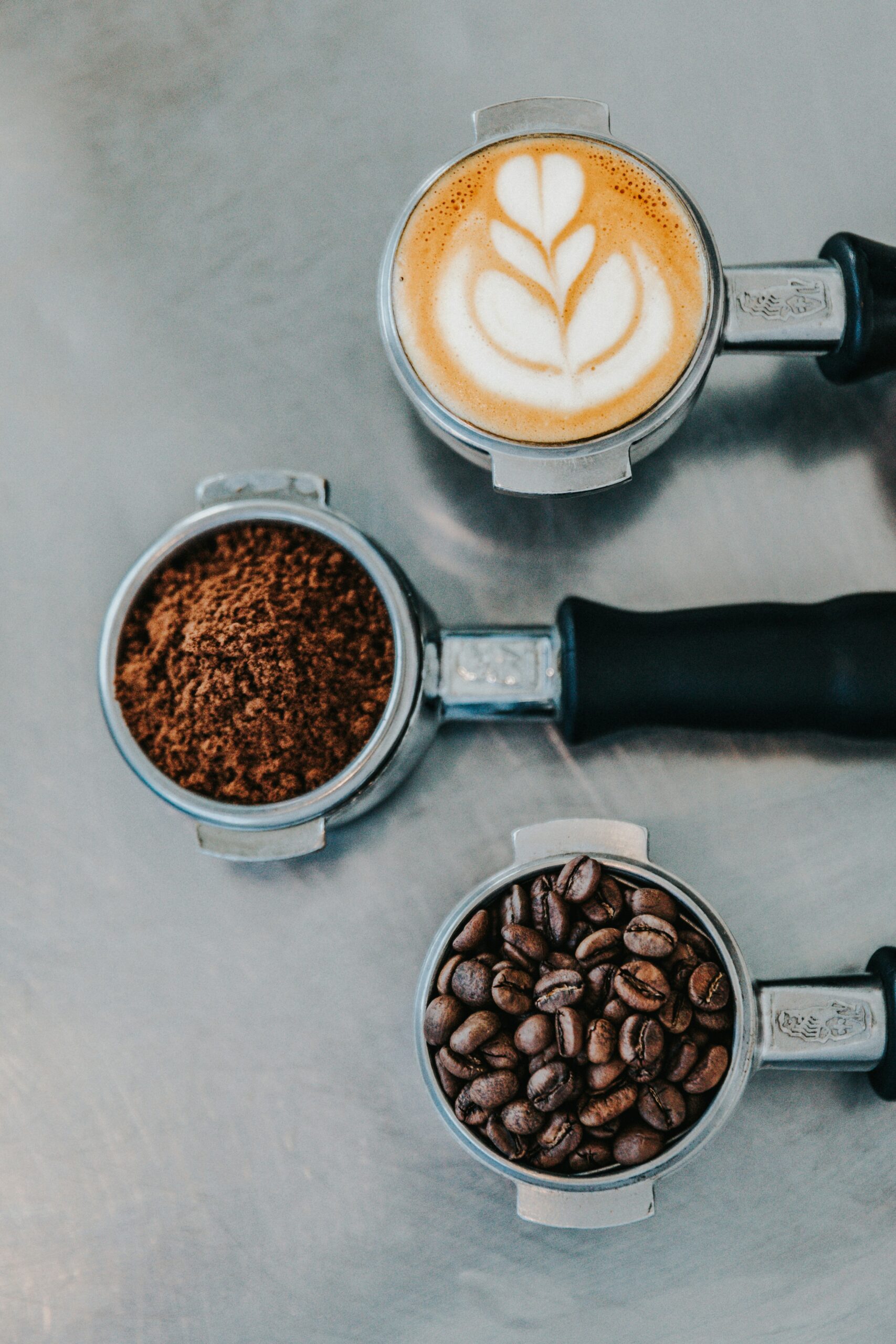
How do you like your coffee?

It’s one of the first questions I’m asked when I arrive at a job interview in Stockholm. Before anyone mentions my CV, someone reaches for the kettle. The interview hasn’t officially started, but in a way, it already has.

This is fika — Sweden’s daily ritual of coffee and conversation. But here’s the paradox: In 2022, Swedish coffee consumption drove the clearing of roughly 331 hectares of Amazon rainforest, exceeding the impact of Swedish beef consumption that same year, according to a 2025 analysis by Chalmers University of Technology, the Stockholm Environment Institute, and WWF.

For a country that topped the Global Sustainable Competitiveness Index in 2024 and aims for fossil-free energy by 2045, this creates an uncomfortable question: How does a climate leader reconcile a beloved cultural tradition with global environmental damage?

The Cost of Comfort

Swedes consume coffee at one of the highest per-capita rates globally. Fika isn’t just a coffee break — it happens at 10 a.m., after lunch, during meetings, on trains, at job interviews. To skip it feels antisocial. This is where colleagues become friends, where business gets done, where the long Nordic winter becomes bearable.

But coffee carries a steep environmental price. At least 312,803 hectares of Brazilian forest were directly cleared for coffee cultivation through 2023, according to Coffee Watch. Up to two-thirds of Brazil’s suitable Arabica growing area could be lost by 2050 under current climate trends. Coffee production depletes water resources, destroys biodiversity, and relies on carbon-intensive supply chains spanning thousands of kilometers.

Swedish University of Agricultural Sciences researchers report that 119 million cups of coffee brewed in Swedish restaurants are wasted annually — before accounting for the beans that never make it to market, the water used in cultivation, or the forests cleared to grow them.

“Coffee is one of the most environmentally damaging crops in global agriculture,” says Anne Charlotte Bunge, a sustainability researcher at Stockholm University. “If fika is to continue, Swedes need to rethink what they drink and how much.”

The Limits of “Klimatsmart”

The response has been what Swedes call “klimatsmart fika” — climate-smart coffee breaks. Cafés now prominently display certifications. Oat milk has become standard. Consumers increasingly choose specialty beans from traceable sources over cheap drip coffee.

Swedish roaster Löfbergs has invested in direct partnerships with producers, supporting agroforestry practices that improve soil health and biodiversity. CEO Anders Fredriksson frames this as both ethical imperative and business necessity: “A sustainable transition is critical for companies that want to remain competitive.”

Market data from late 2024 shows rising demand for sustainably sourced coffee, with artisanal cafés emphasizing ethical production. Plant-based alternatives now appear as expected defaults rather than sacrifices — oat milk in place of dairy, plant-based butter in cinnamon buns.

But does this add up to meaningful change?

The Amazon Footprint Report 2025 notes that while certification can reduce links between consumption and deforestation, no label guarantees a product is entirely deforestation-free. Sweden’s total coffee footprint remains substantial. Incremental improvements in sourcing don’t change the fundamental equation: coffee will never be a local, low-impact crop in Scandinavia.

What’s Not Being Addressed

This disconnect reveals the limits of consumer-focused climate solutions. Individual Swedes making better choices matters less than the aggregate demand signal. Sweden’s total coffee consumption continues at one of the world’s highest per-capita rates despite growing sustainability awareness.

There’s also no policy discussion. Unlike beef or palm oil, coffee faces no import restrictions, no deforestation-free sourcing requirements, no government initiatives to reduce consumption. The burden falls entirely on voluntary consumer action and corporate self-regulation.

A Tradition Under Pressure

Yet giving up fika entirely seems both unlikely and, to many Swedes, undesirable. Traditions rarely disappear because they’re criticized. They do, however, evolve under pressure.

This illustrates the emotional complexity of climate action when it intersects with identity. Fika isn’t fungible. It can’t be replaced with tea or hot chocolate without losing its cultural meaning. The ritual itself — the pause, the social connection, the shared moment — is what Swedes are trying to preserve.

What Would Real Change Look Like?

If Sweden were serious about aligning coffee consumption with climate leadership, several pathways exist:

Import regulations requiring deforestation-free certification for all coffee, similar to emerging EU standards for other commodities. Corporate transparency mandates forcing retailers to disclose supply chain environmental impacts. Public procurement policies prioritizing sustainable coffee in government offices, schools, and hospitals. Investment in alternative protein crops that could reduce agricultural pressure in tropical regions.

None of these are currently under consideration.

The Swedish government’s climate strategy extensively covers transportation, energy, and industrial emissions. Coffee doesn’t appear. This suggests that cultural traditions enjoy implicit protection from the kind of scrutiny applied to other sectors — even when environmental impacts are comparable.

“We have this idea that climate action is about big infrastructure and policy,” Bunge observes. “But it’s also about daily habits that feel too personal to regulate. That’s where it gets difficult.”

The Uncomfortable Middle Ground

The story of klimatsmart fika is ultimately about incremental adaptation in the face of systemic problems. It’s consumers making marginally better choices within a framework that remains fundamentally unsustainable. It’s corporations improving practices without reducing volumes. It’s a country maintaining its self-image as a climate leader while outsourcing environmental damage to distant ecosystems.

Is this progress? Compared to ignoring the issue entirely, yes. Compared to what the climate actually requires, probably not.

What fika reveals is how societies negotiate the gap between values and behavior, between what we believe and what we’re willing to change. The Swedish approach — acknowledging the problem, making adjustments, hoping it’s enough — may be the most honest response available when tradition collides with environmental necessity.

But honesty isn’t the same as adequacy. Sweden can’t forest its way to sustainability if consumption patterns remain unchanged. At some point, climate leadership requires confronting uncomfortable questions about which traditions can continue and which must transform.

For now, the coffee keeps brewing. The ritual continues. And the Amazon keeps shrinking — 331 hectares at a time.

Death Toll from South Africa’s Eastern Cape Floods Rises to 88 Amid Rescue Struggles

In the early hours of Tuesday morning, June 10th, the town of Mthatha and its surrounding villages in South Africa’s impoverished Eastern Cape province were plunged into chaos. Torrential rains triggered flash floods that tore through homes, collapsed roads, and swept away vehicles, claiming nearly a hundred lives, that number expected to rise.

For residents, the destruction was swift and merciless. Families awoke to the sound of rushing water and crumbling structures as the Mthatha River burst its banks. Makeshift homes and formal houses alike were no match for the sheer force of nature.

“We were not ready,” said one local councillor, his voice heavy with emotion. “We had no early warning, no time to evacuate. Many of the people who died were still sleeping.”

A Rescue Operation “Paralysed” by Resource Shortages

Authorities have acknowledged that rescue efforts in the crucial first hours were severely hampered by a lack of resources and coordination. “We were paralyzed,” said a senior provincial official who requested anonymity. “We didn’t have the air support, the boats, the manpower. It took hours—too many hours—before we could even begin to reach those in need.”

Over the following days, teams composed of the South African Police Service (SAPS), Department of Health, Gift of the Givers, and the South African National Defence Force (SANDF) were deployed. Efforts intensified over the weekend, with aerial searches locating bodies in and around Mthatha Dam and along submerged rivers.

Gift of the Givers’ search and rescue head, Ahmed Bham, said their collaboration with SAPS air support proved pivotal. “On Saturday, while hovering over the Mthatha Dam, we spotted anomalies in the water. Our diver confirmed that we had found three more bodies. We are now combing both riverbanks with boats and K9 units.”

The Toll on Families and Infrastructure

Entire families are among the dead. On Friday, President Cyril Ramaphosa visited the region to offer condolences and view the destruction firsthand. At the collapsed Efata Bridge, a taxi carrying schoolchildren was washed away. At least six learners, a driver, and a conductor died in the incident. Several passengers remain unaccounted for.

“I saw mothers crying in silence,” said President Ramaphosa. “This is not just a natural disaster. It is a humanitarian crisis that exposes the vulnerabilities of the most marginalized in our society.”

Beyond the loss of life, the human toll continues. More than 456 people have reported losing identification documents. Others are displaced entirely, their homes reduced to rubble. Many are sheltering in schools, churches, or with relatives in less-affected areas.

Mobilising Support Amid Widespread Grief

The provincial government, in partnership with relief agencies, is coordinating a multi-pronged humanitarian response. This includes:

  • Burial support in collaboration with funeral service provider AVBOB, covering body storage, funeral arrangements, and transport.
  • Grocery hampers from Interlink Express for affected families.
  • R5,000 in assistance from the Department of Education for families of deceased learners.
  • Mobile Home Affairs units deployed to Butterworth and Mthatha to issue temporary IDs and birth certificates.

So far, assistance has been provided for 26 burials, with many more expected in the coming days.

“This is not just about bodies,” said Athlenda Mathe, SAPS national spokesperson. “We are dealing with trauma, dislocation, and a deep sense of loss. The disaster teams are working around the clock, not just to retrieve the missing, but to comfort the living.”

A Climate Warning in Plain Sight

This disaster is a stark reminder of South Africa’s increasing vulnerability to climate-induced extreme weather events. The Eastern Cape, one of the poorest provinces, is already battling fragile infrastructure, chronic underdevelopment, and service delivery failures. Climate scientists have warned that the region—already grappling with alternating droughts and floods—will see more erratic rainfall and flash flooding in the coming years.

“This isn’t just an environmental event,” said a climate researcher at the University of Fort Hare. “It’s a justice issue. Poorer communities are bearing the brunt of climate change without the resources to adapt.”

A Region in Mourning, A Country on Alert

As floodwaters recede, the Eastern Cape is left to count the cost—emotional, physical, and economic. Roads, water systems, schools, and hospitals have all suffered damage. Local municipalities have declared disaster zones, unlocking emergency funds and support.

Still, for many residents, recovery feels a long way off.

Standing amid the debris of what was once her home, a grieving mother who lost two children to the flood said, “They say help is coming. But nothing will bring back what I lost.”

When the Climate Becomes Your Enemy

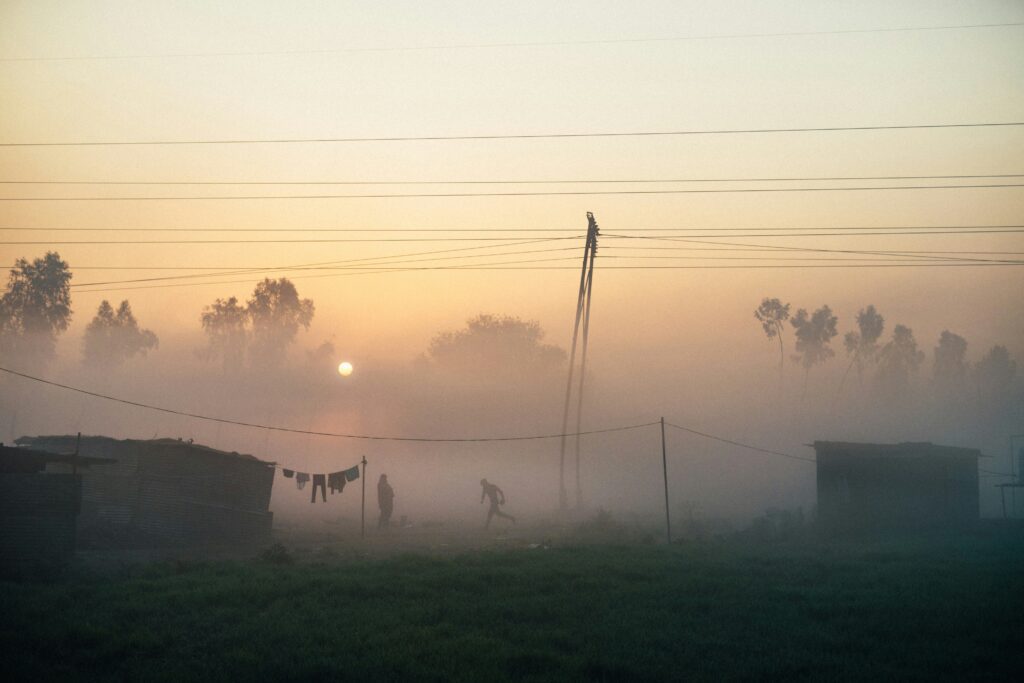
Amidst the sweltering lanes of a Delhi slum, where the sun feels merciless and the air itself seems scorched, life unfolds with harsh lessons. 

This is where I grew up — navigating the world with dyslexia, dyspraxia (a disorder that affects coordination and movement), and a stammer, while also serving as a lifeline for my chronically ill mother. We survived domestic violence, yes, but today we are facing an equal challenge: surviving a world that seems indifferent to its most vulnerable. 

Try and feel them

You hear about heat waves in headlines, but can you feel them? Have you felt that suffocating weight in the air, that oppressive sense of panic when you realize there is no water, no relief, and no escape? For us, enduring a Delhi heatwave in a makeshift home was like being slowly roasted alive. I remember one particular day when the temperature soared, making it unbearable to breathe. Our tiny room felt like an oven; the walls radiated heat, and the ceiling fans offered no respite. Each day was a battle against an invisible enemy, as my mother’s health crumbled and my own challenges flared up.

Finally, after my mother received care from the government hospital, I vividly remember that some of the medicine her doctor prescribed required cold storage, and at that time we had no refrigerator. I had to ask the local pharmacy for help.

In the unrelenting heat,  my dyspraxia intensified, turning even simple tasks into exhausting struggles. One prominent dimension of dyspraxia that becomes increasingly noticeable during this period is sensory overload. Typically, I struggle with processing sensory information, including touch, taste, and sound. However, the combination of intense heat and constant sensory stimulation during the summer significantly amplifies these difficulties.

As temperatures rise, I find it increasingly difficult to regulate my body temperature, which leads to feelings of restlessness, fatigue, and irritability. The discomfort of excessive sweating can also interfere with my ability to hold objects or maintain a firm grip, further intensifying the coordination challenges that are already a part of living with dyspraxia.

Image courtesy of Parker Hilton via Unsplash

Hot and bothered, you are a statistic

The time I rushed my mother to the emergency room during a particularly brutal heatwave, getting to the hospital was a nightmare. Public healthcare was our only option, and the system was stretched to its breaking point. The waiting room was packed, and as I stammered through my explanation, I felt the impatient stares of those around me. The doctors and nurses tried, but they were drowning in a sea of patients. The helplessness I felt when I stammered while trying to explain my mother’s deteriorating condition was overwhelming. In those sterile hallways, you’re not a person — you’re a number, a problem to be processed. It’s a kind of invisibility that’s hard to describe and even harder to live through.

Here’s the painful reality: if our healthcare infrastructure can’t account for the heightened vulnerabilities of disabled people, we’re not just failing, we’re actively contributing to needless suffering. Accessibility isn’t about “nice-to-haves” like ramps or braille signs — it’s about life and death. It’s about creating safe, resilient spaces where people can seek care without being pushed to the margins, or to their own limits. If healthcare can’t adapt to the reality of climate change, then the most vulnerable will continue to pay the price.

We were overheated. Statistics are cold. They can tell you about the number of people affected, but they don’t make you feel it. Stories like ours bring urgency and humanity to these issues. When you look past the numbers, you see people fighting battles that few even realize exist.

From struggle to action: the birth of Green Disability

Out of this experience, I realized that we needed to make our voices heard in the climate conversation. That’s when I decided to start Green Disability, a grassroots initiative for climate action that includes the needs of people with disabilities. Today, our community has grown to over 600 members, with our newsletter reaching over 7,000 people. We’re not just an organization, but a movement, and our message is simple: the climate crisis affects everyone, and you can’t talk about sustainability without talking about accessibility.

We’re working on documenting the lives of disabled people in climate-vulnerable areas, sharing their struggles and their resilience. We’re also simplifying complex research, turning data into stories that resonate with our community and inspire action. This isn’t just about raising awareness. It’s about creating real change.

Climate justice is empty without disability justice

We’re one of the world’s largest minorities, a major minority! Yet we’re often overlooked in climate solutions. But we won’t be ignored anymore. Disability justice and climate justice go hand in hand. 

If we’re serious about tackling the climate crisis, then people with disabilities must be part of the climate conversation.

Humanity

Even the name is sacred. 

Was it worth it?

Making all those animals go extinct? 

Dinosaurs, Dodos, Rhinoceroses,

How did they ever harm you? 

Killing life instead of nourishing it, 

Cutting down trees, manufacturing cars, 

Smoke streaming from factories.
Tearing down trees, destroying the ozone layer. 

Let me just say
You’re all gathering diseases in your basket.

Will you keep up this destruction? 

Killing animals, destroying forests.

Do you ever think of the harm to our environment? 

The clouds of carbon dioxide, 

The growing dangerous greenhouse gases.

Do you even know how we depend on the Amazon? 

How it produces oxygen for us to breathe? 

How it swallows carbon dioxide? 

Forests are critical for our survival,

Producing not just oxygen, but also luscious fruits and berries. 

So please.

It depends on you.

How you want to live your life.

Do you want to breathe fresh air? 

Do you want to be healthy? 

Plant a tree, save a life,  

Don’t just kill these innocent creatures, 

The choice is yours.
Humanity.

Even the name is sacred.