Mount Spurr Volcano Exhibits Elevated Unrest; Eruption Possible in Coming Weeks

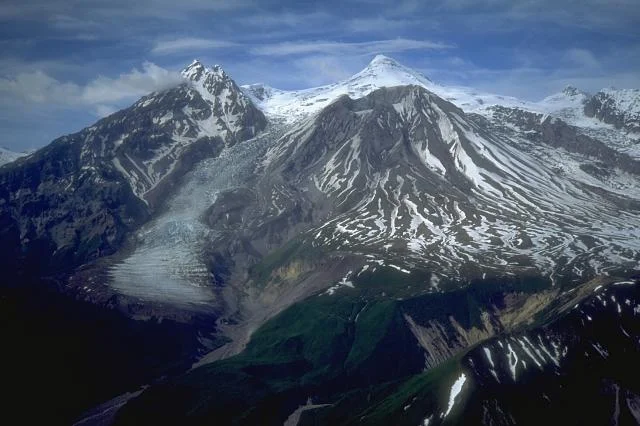
ANCHORAGE, Alaska  April 30, 2025 — Mount Spurr, an 11,070-foot stratovolcano situated approximately 80 miles west of Anchorage, is currently exhibiting signs of heightened volcanic activity. The Alaska Volcano Observatory (AVO) has maintained the volcano’s status at Advisory (Yellow) since October 2024, indicating elevated unrest above normal background levels.

Increased Seismic Activity and Gas Emissions

Since April 2024, AVO has recorded over 3,400 earthquakes beneath Mount Spurr, with weekly counts exceeding 100 events. Most of these earthquakes are shallow, occurring less than 2.5 miles below sea level, and have magnitudes up to 2.7.  Additionally, ground deformation measurements indicate outward movement of approximately 2.6 inches at the closest GPS station, suggesting magma intrusion beneath the volcano.​

Gas emission studies conducted in March 2025 revealed significantly elevated levels of sulfur dioxide and carbon dioxide, particularly at the summit vent. Sulfur dioxide emissions were measured at approximately 450 metric tons per day, a substantial increase from less than 50 metric tons recorded in December 2024. 

Potential Hazards and Preparedness Measures

An eruption of Mount Spurr could have significant impacts on air travel and local communities. The volcano’s previous eruptions in 1953 and 1992 produced ash clouds that disrupted aviation and deposited ash on Anchorage. If a similar eruption occurs, ash plumes could reach altitudes of over 50,000 feet, posing risks to aircraft engines and systems. ​

Local authorities are advising residents to prepare for potential ashfall by acquiring N95 masks and goggles to protect against respiratory and eye irritation. Pet owners are also taking precautions; for instance, Anchorage pet supply stores have reported increased sales of protective gear for animals.

Monitoring and Future Outlook

The AVO continues to monitor Mount Spurr closely, utilizing seismic networks, satellite imagery, and gas emission measurements. While the current level of unrest does not guarantee an eruption, scientists emphasize that any significant changes—such as increased seismic activity, gas emissions, or ground deformation—could indicate that an eruption is imminent. 

Residents are encouraged to stay informed through official channels and to have emergency plans in place. Updates and detailed monitoring data are available on the AVO’s website.​

Humanity

Even the name is sacred. 

Was it worth it?

Making all those animals go extinct? 

Dinosaurs, Dodos, Rhinoceroses,

How did they ever harm you? 

Killing life instead of nourishing it, 

Cutting down trees, manufacturing cars, 

Smoke streaming from factories.
Tearing down trees, destroying the ozone layer. 

Let me just say
You’re all gathering diseases in your basket.

Will you keep up this destruction? 

Killing animals, destroying forests.

Do you ever think of the harm to our environment? 

The clouds of carbon dioxide, 

The growing dangerous greenhouse gases.

Do you even know how we depend on the Amazon? 

How it produces oxygen for us to breathe? 

How it swallows carbon dioxide? 

Forests are critical for our survival,

Producing not just oxygen, but also luscious fruits and berries. 

So please.

It depends on you.

How you want to live your life.

Do you want to breathe fresh air? 

Do you want to be healthy? 

Plant a tree, save a life,  

Don’t just kill these innocent creatures, 

The choice is yours.
Humanity.

Even the name is sacred. 

Sifting Through the Ashes

I thought it was strange that my mom called me so early in the morning. It was 7:30am for me, so it must have been 4:30am for her. 

It was Wednesday, August 9th.

“I wanted to call you before you saw the news. There’s a fire in Lāhainā, Kīhei, and Kula. Everyone in our family is safe and accounted for. I might go pick up grandpa from Kīhei today. Your cousin was in Lāhainā, but escaped to Nāpili. Aunty has not heard from him since last night. I will keep in touch.”  My cousin called my aunty the next day to check in. He was safe and helping with the boats looking for people and bringing in supplies.

We exchanged “I love youʻs” and “take care’s” before hanging up. I went to my social media (because I knew I would get news more quickly from the people I follow who still live on Maui) and saw the footage of the fire. My tears pooled as I scrolled through all of the unaccounted for posts, friends and classmates who hadenʻt heard from their loved ones since the fire. 

Keiki (children) and kupuna (elders) unaccounted for. 

The week was a blur of grief as I consumed the ongoing fires in Maui. Stories began to pour about people being trapped on Front Street, people jumping into the ocean to escape the fire, the alarm systems never sounding, and the realization that the fires swallowed more people than I could comprehend. 

Lāhainā holds moments of my life that are now just memories. Memories that I can no longer physically visit because Lāhainā is gone, in ash. So many of my people have lost their home, the place that their ancestors are rooted. I don’t have the words to fully describe the immeasurable loss that is shared in our community. Those who were able to escape the flames made it out with just the clothes on their backs, while others were swallowed by the fire. And within these same moments of Lāhainā disappearing, Kula was on fire too, adding to the lives lost and people displaced.

115 lives lost and over 1,000 people still missing. Nearly three weeks later, victims are being identified.  

The grief I feel is a collective grief, one felt by my Lāhui, Maui community. 

We are grieving for the lives lost, for the friends and family, the keiki, and the kupuna who did not have time to escape. 

We are grieving for our island, our ʻāina (land), the first capital of the Kingdom of Hawaiʻi. 

We are grieving for those who came before us and for those who will live after us. 

But in this grief, we come together to kōkua (help/support) each other. From compiling GoFundMe and Venmo accounts, to cooking and giving out free food, the mass share of information and kāhea (call) to help, our Lāhui was able to get people the supplies they needed to survive. 

Unfortunately, structures of colonialism make it difficult for Kanaka (Native Hawaiians) and Locals to continue their grassroots efforts to help those in need. Investors and realtors have already begun contacting the survivors of the devastating fires. Maui residents are pleading for tourists to cancel their trips and fly home,while the governor has opened the parts of the island not in ash to the tourists. Maui Electric Company is facing lawsuits that blame the company for the fire, and the man who was in charge of the alert system that never sounded has resigned.

First responders from Hawai’i and the continent are currently searching for remains with their cadaver dogs, while tourists take videos and photos of the devastation for social media clout and snorkel in the same waters our people jumped into to escape fire

We can not just grieve, but we must also fight for our ʻāina and lāhui. And it is exhausting.   

“We are Lāhainā Strong. Yes, but please allow us to also be, Lāhainā Sad. Lāhainā Tender. Lāhainā Worried. Lāhainā Messy.” – Uʻilani Tevaga 

If you feel called to kōkua, please consider monetary donations to these organizations:

Direct Aid for ʻOhana displaced by fires 

Hawaiʻi Peopleʻs Fund

Maui Mutual Aid

Council of Native Hawaiian Advancement, Alakaʻina and Kakoʻo Haleākalā

ʻĀina Momona

Maui Food Bank 

Maui Humane Society