
I Can’t Not Use It

How come it’s ”insufferable” but not “unsufferable”? Why is “irregardless” an accepted word? Is it “sneaked in or snuck”? Who actually says “tomato” instead of “tomato” (You know what I mean)?

The root of it all

I’m sure I’m not the only one who read a lot growing up. However, all that exposure to the written language, vocabulary, and different styles of writing didn’t exactly include a dictionary. Believe me, I’ve tried reading it before, and, surprisingly, it wasn’t exactly fruitful. You see, the written word is exactly that: written. If you come across a new word that seems difficult to pronounce, you don’t exactly get to hear what it sounds like unless you ask somebody to help you. And honestly, when you get in the flow of reading, do you really want to stop just to ask?

That all changed when I entered high school.

In my first year, I remember how fascinating it was to learn that much of the English language is borrowed from other countries and that many of the words we know now are based on a dead language — Latin. Latin roots, prefixes, and suffixes particularly drew my interest, and I’ve always chuckled to myself about how I was most interested in English because of Latin.

It was also then I realized that I wanted to pursue a career in English.

Not an English teacher

Now, mind you, I didn’t want to be a teacher; I just wanted to be surrounded by words and books, and I wanted the opportunity to learn more about language. That interest stayed with me all through high school, and I was determined to be an English major.. My favorite one-liner was, “I’m an English major, not a dictionary.” Throughout college, my interest in language continued to grow, and I studied Japanese while learning to teach English as a second oral language. There was also a hot moment when I learned the Korean alphabet (Hangul).

Ironically, I even became a teacher assistant in Japan.

With the help of  my students and the teachers outside the English department, I came to realize that the English language was just a mess.

A stack of older-looking books with an apple perched on top.
(Image courtesy of Ylanite Koppens on Pexels)

Which homophone is the correct word to use? What do these idioms mean? How come there’s a specific order for adjectives? Why is it that when you affix a word (like compile), it’s pronounced differently from the original word (like compilation)? Homonyms? Now they’re just plain rude.

Yet, I pursued the language. I studied linguistics. I bought books to better understand grammar.I researched the same words over and over just so I could confidently explain their meaning to somebody who was trying to understand English themselves. To be honest, though, I still don’t quite know how to use adverbs correctly. But Hangul did come in handy when I was trying to show students how to pronounce English words correctly.

A lifetime within three years

Of the hundreds of students I’ve taught over three years, I’d say about 92% didn’t want to learn, whether from me or in general. Maybe about 6% were interested passively, and the last 2% were genuinely interested in a second language. Learning English helped them open up new opportunities, leave their hometown, and understand something outside their routine lives.

There’s one student, a bright young man, who I think about fondly. He took to the lessons – and my dumb games – with actual interest. I was fortunate to have taught him from his first year through his third year. Then, summer vacation rolled around after graduation, and the new semester started. It wasn’t until then that I learned he went to Hawai’i with his family for vacation and was involved in a tragic accident.

A small part of me thought that I helped cultivate his interest in the language, that I contributed just a small part to his confidence in English, and that it was just enough for him and his family to travel abroad. I may have forgotten his name (a terrible flaw I am truly ashamed of), but I can still picture his face perfectly. I know it’s not something I should hold myself accountable for, that it’s unreasonable to blame anyone for what had happened. Instead, I choose to be grateful that I had the chance to be a positive influence in his life.
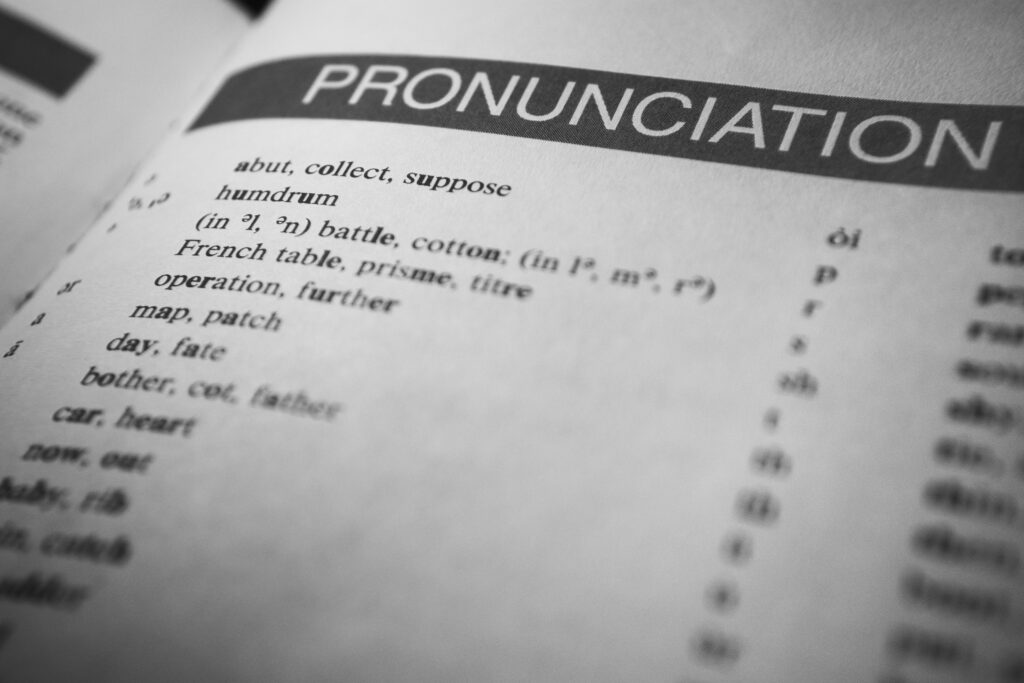
A page from a textbook showing the phonetic notations of a group of words.
(Image courtesy of Nothing Ahead on Pexels)

Me, my professor, and English

Truthfully, English is my second language, but it’s become my primary language. Studying it has broadened my horizons, deepened my appreciation and understanding of it, and allowed me to connect with people who also truly wanted to learn. I’d like to thank my grammar professor in college, who helped spark that motivation in me to better understand English. She fled North Korea, taught herself English, and is now teaching native English speakers how to better understand and dissect the innate understanding we have of the language – such as why we know to say “jump into the pool” and not “jump onto the pool.”

I still love to learn, and I’m best working behind the scenes rather than in front of students, teaching. That spark I felt nearly two decades ago still remains to this day.

And for the record, I personally say ‘toe-mae-toe.’

Honesty is the Best Policy — and Most Profitable One

Teaching in a school and pay lags are forever associated. I am an education officer serving as a mathematics teacher in one of the government high schools here in Nigeria. 

Between a rock and a hard place

(Image courtesy of diana via pexels)

As a government school teacher in my country, you cannot survive financially without a side income. 

Starting a chain of tuition and coaching centers could be a good solution for a teacher, especially for a mathematics teacher. Ironically, if you want to go professional by establishing coaching centers for external exam candidates, you would have to be corrupt to make money out of it. No student would patronize centers where exam malpractices are forbidden

Another option for poorly paid teachers to cope financially is to run other parallel businesses alongside their teaching profession. Although this option is unprofessional, it’s always preferred by teachers like me who innately hate cheating. 

I joined a government school and started my own business with the small amount of money I had saved from my years of working with private schools. Unfortunately, not even a year passed and my business crumbled. Insufficient starting capital. Evacuating the rented shop was tough, but I had to. 

That capital? 

(Image courtesy of Muhammad Taha Ibrahim via pexels)

It hit hard on me, but the idea of reorganizing the business never left me. All I needed was capital! Where to raise it though, the very thought haunted me. Nobody around whom I knew would lend me anything. Not even a small sum, let alone the big capital I was looking for. I was now subsisting on my salary alone, adding to my financial challenges. 

I did not let myself down. I worked hard looking for ways to secure the backbone of my dead business. I wanted to revive it and needed to buy an electric generator.

One of those desperate days, my wife brought home the information that her sister wanted to sell her electric generator at a discounted price, but I couldn’t afford even one-tenth the price she quoted. I looked at her with dejected hope. She knew the extent of my poverty. We were helpless.

Texting my plea

(Image courtesy of Kaboompics.com via pexels)

Instead of submitting to my fate, I started thinking of ways to get money to secure the facility. My mind just landed on a friend of mine who studied with me at a polytechnic school, now a lecturer at the British University of Bahrain. I was hesitant, but I was in need. A very close and helpful friend I felt I could quickly reach out to. I didn’t want any opportunity to slip out of my hands. 

How I would put it to him was another problem. I intended to ask for a loan from him. But could I borrow such a large sum from someone who hasn’t been in Nigeria with me to see whether I’m lying or telling the truth? I just gave it a try through a voice note. I was scared of talking to him directly and dreaded answering his questions. I opted to send it at night, believing that I would gain the courage to see his response by the time he saw the message in the morning. Amazingly, the next morning, I saw a bank alert message of exactly the amount I requested. I immediately checked my WhatsApp, my friend’s reply to the voice note said that I should only refund seventy percent of the money while the remaining thirty percent should be taken as a gift. 

The message left me speechless and with confused emotions. I expressed great gratitude to him for rendering me such an enormous favor, especially during my dire need, and even without confirming the truth of my words. Thank God, I was able to buy the generator.

The next hurdle to cross was to be able to pay back the loan in an installment of seven months, as my lender stated. I tried hard not to skip any of the seven consecutive months of payback. My friend was not here with me in Nigeria to pressurize me to pay back the monthly installments on time. I did not want to let down his trust in me.

Trust refinanced

(Image Courtesy of nappy via pexels)

In the course of the loan period, a lot of my friends and relations who used to pity my financial condition advised me to stop paying it back. Of course, the money would have helped me and my family. They pestered me that my not paying back the money would not affect my friend, financially. After all, he was a lecturer receiving a robust salary from work. I turned a deaf ear to all the ill advice.

To my surprise, it was not long before I reaped the reward of keeping my promise. This was the month after the seventh month I had cleared the electric generator loan, my lecturer friend in Bahrain called me, first to thank me for returning the borrowed money, and second to take an estimate of executing my business plan — the one I had not followed through because of financial constraints.

As a Nigerian himself, he knew I couldn’t depend solely on the government’s ridiculous salaries for teachers. Impressed by my trustworthiness, he promised to lend me money again for my business. He even told me bluntly that he had done similar favors to so many people who happened to be his friends like me, but none of them reciprocated his kind gestures the way I did.

It was then that I realized it really, really pays to be honest, and that honesty pays well. He gave me a loan again. This time to restart my dead business, He asked me to run the business for four months before starting to pay back the capital at a very convenient installment rate of 18 months. I returned everything. Last month I sent the last one. 

Doing the math for my future

(Image courtesy of Safari Consoler via pexels)

Now, I have been able to achieve a lot of things from my resuscitated business — courtesy of my lecturer friend. I’m not even the only one benefitting from this reward for my trustworthiness. Two of my friends are now working with me running the business. 

Due to the attachment I have for teaching, I continue to teach. However, I intend to leave the country in order to receive a salary commensurate with what I have always offered in schools as a responsible and veteran mathematics teacher. 

Quit This Job to Keep That Dream

I am staring at a beautiful sunset over the Puglian shoreline, with a singer passionately belting out his heart. His voice echoes throughout the resort where I am staying. Sono contento.

This moment feels perfect, filled with a profound sense of oneness. It’s one of those full-circle moments where you understand why you made the choices you did.

Standing on the roof of this Adriatic resort, I have just finished my last day of teaching English to 18 students from across Italy for over 14 days. This unforgettable experience was the culmination of decisions for a trajectory I set myself on over six years ago. At the end of 2017, I decided to leave teaching, feeling I had reached my limit and believing it was better to end on a high note. 

Teaching had been good to me, with wonderful co-workers who changed my life and, of course, the students, who were always great, even when they were difficult. Teaching was my world, and I was good at it. It was a calling, like being a nun, monk, or firefighter. You do it not for praise or money, but because you believe you can positively influence the next generation, helping them find their dreams and true happiness so they can serve society beneficially. Grazie.

Reading and writing and filming

Around this time, I rediscovered my passion for screenwriting and filmmaking. I began writing scripts and TV pilots for fun. Friends insisted my writing was funny and enjoyable, which made me think I could pursue this career. I had tried before but was always scared of continuing, opting instead for a steady route that could secure a safe and stable life. However, the dream of becoming a screenwriter had been with me since I was eight years old. I loved movies more than anyone else I knew.

As I got older, I would go to the library and rent 15 to 20 films a week in the summer. I read every film book available, from André Bazin and Jean-Luc Godard, to Federico Fellini, Yasujiro Ozu, and Akira Kurosawa. I paid special attention to books on editing by Walter Murch and screenplays by Woody Allen. This was my world, and anyone who knew me knew this.

When I was 13, instead of having posters of athletes, girls, or bands on the wall (though there were some), I had big, beautiful film posters. Every night as I lay in bed, I would look at these posters, dreaming of the day my own film’s poster would be on the wall. A huge wooden poster of Fritz Lang’s “Metropolis” stood across from “L.A. Confidential,” and over my bed was Atom Egoyan’s “The Sweet Hereafter,” a film that changed me as a young writer. Over the years, I collected posters, from the original print of “Return of the Jedi” to Fellini’s “Otto e mezzo” and many Sergio Leone films. 

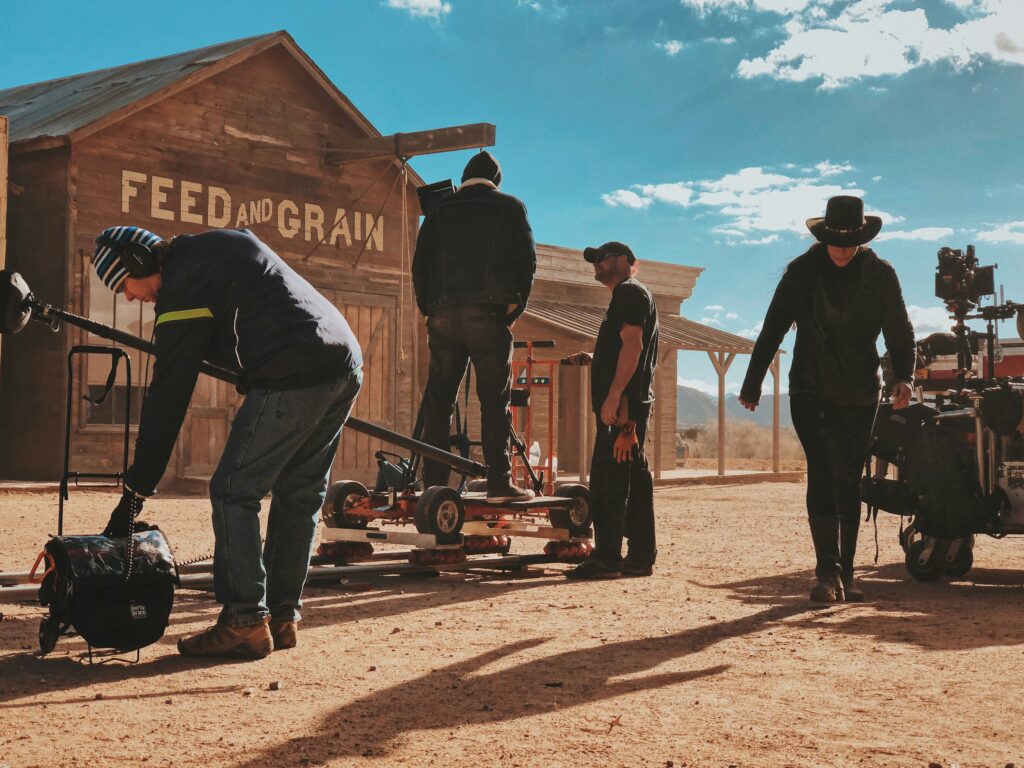
(Image courtesy of Chris Murray via Unsplash)

As I grew older, my love for film became just that — a love. No matter what, film will remain with me forever. During this phase, I was fortunate to work as a crew member on several big movies, learning from wonderful filmmakers who became great teachers. One of my fondest memories was working on a Spike Lee film, an experience that taught me so much. However, unlike many, I was not interested in working in Hollywood; I wanted to work in Europe and make films like my heroes. Soon enough, I finished my master’s degree in cinema and directed music videos in Europe. 

Success came early, and I felt I was too young to understand what was happening. I changed my career path and took courses to become an English teacher. Throughout this career change, I managed to integrate my love of cinema, making English films in class and writing screenplays or plays on particular English topics. In the background, I kept writing screenplays for an audience of no one, believing my time in cinema was over.

By 2017, I hit a wall in my life. I was engaged and had a great job, but I wanted more money for a secure future. Stupid worries raced through my mind like; “How was I going to afford that Maserati with the V8 Ferrari engine that I had on my vision board?” 

Making money

I looked at the job market and saw where I could make more money. I started postgraduate courses in digital marketing, digital product management, platform design, and data analytics. I studied hard and got good grades. Slowly, clients started to come in, and soon I was building my first websites with consulting flowing in. What happened next changed me forever. I took on the role of director of marketing and communications in a startup in Italy. I was successful, and the bosses promised more money, often dangling small rewards in front of me to lure me into working harder to drive their bottom line. 

(Image courtesy of Duren Williams via Pexels)

It started with fancy trips to Vienna, then expensive clothes, lavish yacht cruises, and expensive dinners with famous people. I believed I was getting everything I wanted. Every day I came home exhausted, used, and spent. I had no time for my wife, family, or my hobby, screenwriting. I started to get worse, angry, and hungry to prove myself in front of the rich bosses and investors. 

Just when I was about to give it up, they bought a Maserati, to which I was one of the few to have access. The first day I drove it, the V8 Ferrari engine roared, reminding me of the picture of the Maserati I had always wanted on my vision board. Now it was here. But after an hour of driving with all eyes on me on the highway, I felt empty. How could this not give me the joy I expected? 

I was confused and lost

Then COVID happened, slowing down business and forcing us all to retreat home. With so much time on my hands, I decided to write again. It started with finishing one screenplay, then another and another, and then a book. My wife pushed me to send my work to screenwriting festivals. What happened next was shocking: I started to win, and win a lot, at festivals all over the world. I didn’t need the recognition; I was just having fun writing. 

After COVID and a return to some normalcy, I began to reevaluate everything in my life. This job did not fill me with joy, and the bosses never cared about my well-being or even my relationship with my family. I missed the time I had writing; it made me happier and gave my life purpose.

I started to prioritize my family, my writing, my health, and my mental well-being. The company was shocked because I started to care less about the job. 

(Image courtesy of Duren Williams via Pexels)

It wasn’t really that I cared less; I was simply doing the work I was hired to do. I still met all deadlines and achieved results. But after 5:00 PM, I left the office and shut my phone off. No late nights answering emails. I started to take holidays and my legal two days off. Of course, they tried to guilt-trip me about my priorities. It was at a yoga retreat in the mountains that I made an ultimatum: I would stay one more year, then quit and focus on writing again.

Aiming higher

It’s been over three months since I quit the job that did not serve my higher purpose. I have had more fulfilling, life-affirming experiences than in six years in a job where I did not matter. During this time, I have sold two screenplays, one of which will be in production in February 2025. I have been to amazing concerts, reconnected with my brother in Barcelona, hiked mountains, surfed, ziplined, gone to waterparks, reconnected with God on a deeper level, joined an American football team, and had the best work experience of my life in Puglia, teaching English to 18 amazing students across Italy who have changed my life. 

There are lessons to be learned from chasing money, wealth, and prestige. I learned a lot from all that. For six years, I was on a mission to prove people wrong, to show them how many things I could acquire. This material solace instead created a life devoid of anything meaningful. I failed to see that truly rich people live their purpose. 

Purpose, I came to understand, is doing what you love, which serves your higher self and improves the world around you. The joy I now have for life is incomparable to the six years of boredom I experienced while waiting for my profit share. Or the sailboat I was promised. In the end, none of those things materialized, as they were used as false idols to take me away from myself. I realized I always had the most valuable thing in the world within me: my happiness and my freedom. 

And so do you. Prego

(Image courtesy of Massimo Virgilio via Unsplash)

Who Knew I’d follow My Family of Teachers Into the Profession I Hated!

Some people would say teaching is in my blood and that I am destined for the job. I strongly disagree with this for many reasons. 

In my family, there are many teachers. My mom is a special education teacher, and so is my grandma. One of my aunts teaches 4th grade and another takes health classes for nursing students. However, when I graduated high school in 2012, I knew that teaching as a profession was not for me. I knew, once I left high school, that I would never want to step foot in any other public school classroom ever again. At the time I graduated high school, I didn’t even want to attend college. I felt forced into the decision by my family who all flew in from out of town to attend my graduation and started handing me cash for college expenses.

People don’t realize that they have such power in the words they say and in how they choose to communicate with their peers, whether that be through kind and thoughtful words or hateful and judgmental insults. The never-ending bullying that I endured throughout my childhood in the public education system turned me away from continuing my education in college, and it was the deciding factor for not wanting to be a teacher myself.  A real shame, because I later learned I have the potential to be a straight-A student and actually enjoy learning new things. 

I go back to school

Unfortunately in 2017, at the age of 23, I was forced back into school — this time, working as a special education paraprofessional. I was a lost soul who was severely lacking purpose and direction in life. It was simply a job that paid money, and that it was all anyone cared about. 

To be a teacher, you have to have the right personality to deal with all the bureaucracy in the schools and among the staff. But you also have to have a real passion for the job to deal with the many challenging behaviors from the children; I severely lacked both qualities. Added to that, there’s the lack of proper compensation for all the hard work and effort you put into doing the job. It became evident to everyone involved that I did not want to do it. 

(Image courtesy of Mick Haupt via Unsplash)

In July 2020, I decided to go back to school, because I did not want to spend the rest of my life working jobs I hated just for a paycheck. I didn’t want to be just another number at a job who was reminded every day that I was easily replaceable. I wanted to do something meaningful with my life and be properly compensated for it.  So, I enrolled in an online degree in an elementary teaching program. Yes, teaching! 

(Image courtesy of Cole Townsend via New Old Stock)

However, it was for a very short time. Later in December of 2021, I decided to change my major after being screwed over by yet another school district.

Working in the schools was a lot like being stuck back in school — a feeling of being forced into school, just like in my childhood. 

There are also cliques of employees at every single school and district, and for someone who never fitted in properly in school, even as a child, work easily became a monumental disaster. Not only were the students at these schools now name-calling me. Yes, hurling pet names at a fully-grown adult!  The staff, and my colleagues, started calling me into meetings and pointing out everything I was doing wrong to bully and harass me. 

Many of these districts got rid of me for stupid reasons that weren’t even justifiable. The nerve. They simply didn’t like me and so chose not to invest their time in helping me become a better employee. It was a no-win situation and I eventually felt like an epic failure. 

I saw admin staff send us educators running for the hills

People are saying that there is a teacher shortage, but from what I am seeing, the shortage is of teachers. The shortfall lies in the way these districts are run and run down by staff and administrations. That is, sending many teachers running for the hills and fleeing the profession in outrage. 

As teachers, we want to be appreciated for our work and to be properly compensated for the immense effort we put into the work, especially with the rising cost of living. We want to feel safe at our place of employment and not fear for our safety every day. We also want to be rewarded for our efforts with respect, and not to be belittled and bullied by supervisors on a rampage.

The public education system is severely broken. I say that instead of trying to force change within the students, educators should first look in the mirror and ask what they can do to help create a better working environment for their employees. 

Because when employees don’t care, students can’t. The teachers burn out, they don’t love the material, they don’t love the interaction with the students, and they don’t address or maybe punish — okay, guide — students who misbehave. Isn’t that enough for you to give up the art of being a teacher?

Reminiscing on My First Day of Teaching

There I was teaching live. Even though I majored in English as an undergraduate and as a master’s student, it was difficult for me to imagine myself in front of the classroom. I was notorious for doubting myself. Heck, I still doubt myself today, even if it’s been five years since I started teaching.

Upon earning my Masters in English in Spring 2018 from the University of Hawai’i at Mānoa, I secured a lecturing position there to teach one section of English 100 in the Fall-2018 semester. It was a long shot, becoming a fresh graduate and applying as an adjunct lecturer. Courses were going to be filled based on seniority, as a fresh graduate I was at the bottom of the list- tenured and assistant professors first, doctoral students with funding second, doctoral students without funding third, and graduates last. Luckily, I was able to secure a course to teach. 

I remember stressing out all summer, granted I was overthinking about the lectures I would take, but that was me. I wasn’t sure how I was going to deliver lessons? What should I talk about? How to plan group discussion and activities, the works??? I had signed up for a series of incoming lecturer training sessions. It was really helpful- developing our course syllabus, schedule and major assignments. 

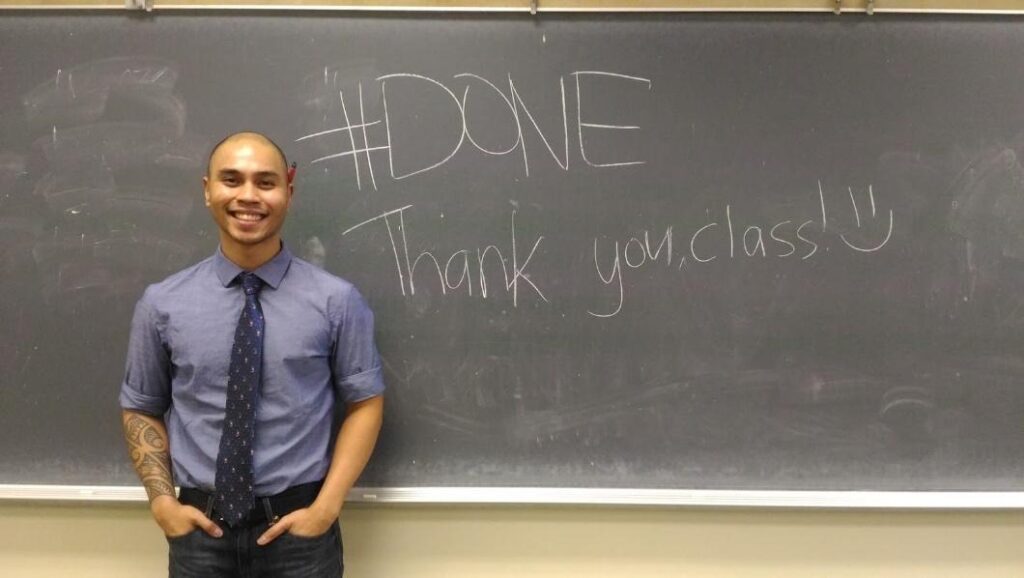
Author Jordan Luz stands in front of a chalkboard that reads, “#DONE Thank you, class :)”
(Image courtesy of Jordan Luz)

Alt text: Author Jordan Luz stands in front of a chalkboard that reads, “#DONE Thank you, class :)” (Image courtesy of Jordan Luz)

We also had the opportunity to give a demo lecture that involved a lesson plan, group activity and feedback from a volunteer audience; they were but the professors and graduate students from the department. Thanks to my masters’ syllabus teaching pedagogy and materials, it was all there. Also, my writing mentor training and working with fellow doctoral students helped immensely. I was placed in the classrooms and worked closely with the students helping them improve their writing, while also being given the opportunity to deliver sample lessons. This rigorous training led me to my first experience in teaching.

Whatever the training, the first classroom experience was nerve wracking. I knew English 100 by heart: free writing, the writing process, thesis statements, topic sentences, transitions, evaluating sources, everything was printed in my head. I had spent so much time engaging with them during graduate school. My major concern was I might mess these topics up and students may not make sense of what I was explaining. 

I thought about everything worse that could happen on my first day of teaching.

Lucky me, I had a great support system of fellow graduates, some of them also had prior teaching experience. We had a joyful nervousness; we were about to start teaching for the first time.

Array of questions ran across me, “I still look like an undergraduate student, can I teach?” 

“Can the students understand my lessons?”

“What if they don’t even listen to me?”

These were the common sentiments. I felt them more as the semester approached. I remember reaching out to Dr. Sarah Allen, my professor of Composition and Rhetoric. and coordinator of the fresh lecturer training series. I will always be grateful to her. Her words, “just do it. The students don’t know what you don’t know. You’ve been in the classroom. You know how it works. YOU can do this. Be yourself. Be honest with your students. I believe in you” still echoes in my ears.

August 20, 2018. The first day of the Fall semester. I wore a long-sleeve button up shirt with jeans and dress shoes, professional, but comfortable. My partner was in my office, helping me calm down. I even remember pacing in my little office in Kuykendall Hall. I also replayed Dr. Allen’s advice in my mind as I walked up to the fourth floor where my classroom was. 

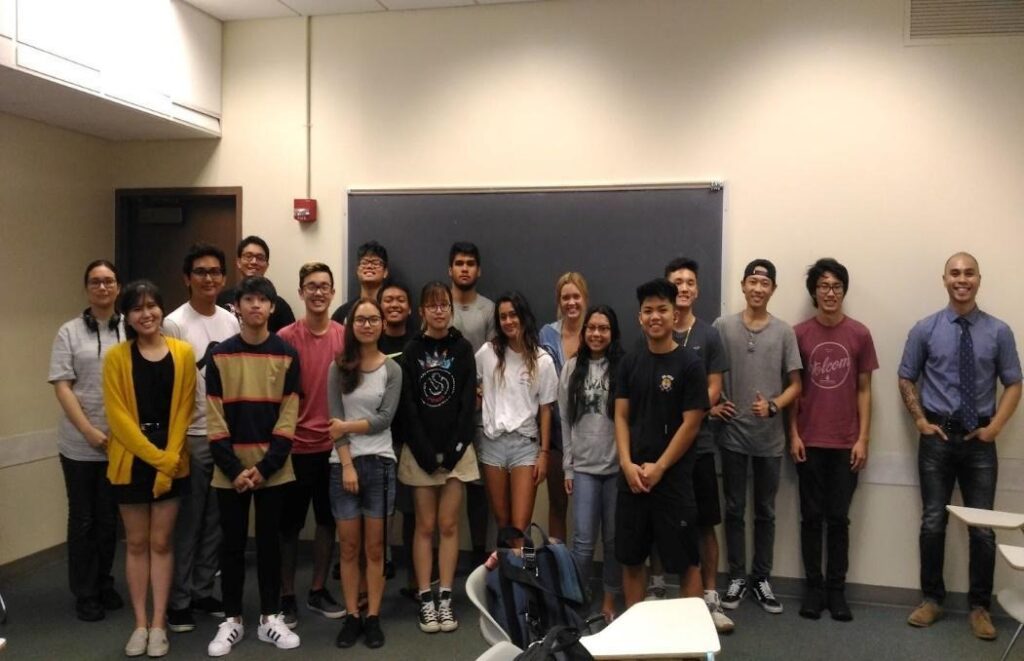
Author Jordan Luz with his class
(Image courtesy of Jordan Luz)

I made my way to the classroom computer and pulled up the class roster and syllabus. Students slowly started to trickle in, I was nervous, an even mix of locals from Hawai’i and students from the mainland U.S.  

The class started, I was sweating profusely, but was able to find my groove once I started talking. I told my students how I was feeling and, to my surprise, they were 

nervous, college freshmen, after all. A new environment for us. It added to my ease. We would navigate this new environment together. 

The heaviness lifted off my chest once I got back to my office. Going through the syllabus and having the students introduce themselves wasn’t so bad after all. 

I shared my feelings with my partner, Dr. Allen and other first-time lecturers.  It turned out that all my nervousness was completely normal; the first day or the 30th day of teaching. I always reiterate Dr Allen’s words “You can be your own worst critic, but rather than focusing on what you did wrong, try to focus on what you did right, what worked, and build on that moving forward.” 

I’ve been teaching for five years now; I still get nervous before every class. It is perfectly ok to be nervous.

Why You Shouldn’t Bury Your Past

One of the biggest lies we are told is that it is possible to live fully in the moment, but the truth is we never can. 

By the time we process any moment, it is already in the past, and that who we are is so wholly defined by our past experiences that any given moment is viewed through the lens of our entire lives. Our pasts can sneak up on us in ways that we never expected. Without taking the time to unpack what led us to certain bad habits or harmful thought patterns, it is too easy to fall right back into them without noticing. 

That happened to me when I decided to become a high school teacher.

The role of teachers

If you know anyone who works in schools, you may have heard that teachers tend to act similarly to the students they teach. For example, K-5 teachers tend to be bubblier. They wear their personalities on their sleeves and know how to have fun. 

High school teachers are also like their students. We think we’re right about everything, we believe instructions given by administrators are bullshit that we don’t have to listen to, and we ultimately spend way more time complaining about things than actively trying to change them. 

Don’t get me wrong, every teacher I know works tirelessly to do what they think is best for their students, and we don’t get a lot of thanks for it. However, I have yet to work in a school that does not have this toxic underbelly of cynicism at the slightest suggestion of change or progress.

 In my junior year of high school, I was hospitalized for depression. Shortly after that, I would learn that the extreme nausea and light-headedness that had become a staple of my daily school experience was actually an undiagnosed anxiety disorder. While some people might be relieved to be able to understand what they were experiencing and be excited about the prospect of working on skills to cope with their specific mental health issues, I was not some people. 

I was embarrassed. I had been brought up in a home where I was constantly reminded how good I had it compared to my parents at my age. I was told to stop whining or not to “be a baby” at the slightest complaint or show of unhappiness. I knew a lot of people with ADHD who exhibited similar symptoms and behaviors to me, but I was never given an evaluation because my parents didn’t believe it was real. 

My slipping grades were chalked up to my lack of effort or a perceived apathy on my part towards doing well in school. Having mental health issues, for me, was just another proof I was a disappointment, squandering my potential. I convinced myself that everyone around me must be feeling the same things I was, and I was just too weak to deal with it.

Too weak to deal with it, or just human?

image of a person sitting down, hunched over. The image is dark with little light. Shadows cover most of the person’s body.
(Image courtesy of Gadiel Lazcano on Unsplash)

This sense that my mental health issues were my fault led me to an inelegant and temporary solution: I ignored them. I simply acted like everything was fine without ever putting in the work to make it that way. 

After my hospitalisation, I lied to my therapist about how much better things were for me. I lied to my parents so that I wouldn’t have to keep going to therapy. Worst of all, I perpetuated the lie to myself that I was to blame for everything, and all I needed to do was change my attitude, or at the very least, bury my true feelings so deep that they wouldn’t affect me. A mere seven months after being hospitalized for depression, I was off my anti-depressants because my friends had started drinking and I wanted to join in. Nobody around me questioned that I was somehow all better, and eventually, neither did I.

Except for a messy relationship that neither I nor my partner were emotionally mature enough to handle well, I managed my depression and anxiety very well throughout college and my first few years working professionally. I spoke in the past tense about my struggles with my mental health, as though they were something dead and buried as opposed to something lurking in the shadows. After working in freelance film and TV production, I wanted to find more consistent work, preferably something that felt more meaningful to me than carrying around a tripod or slowly sliding a camera to the right on occasion. 

Then, one day, believing that I had conquered all my problems from my past, I decided to pivot to a career in education. 

My goal was to help students like me who were struggling and felt they had nobody to help them, without realizing I had never actually learned to help myself through that time in a healthy and effective way.

My first few years subbing and teaching weren’t so bad. I was so concerned with learning all the skills necessary for a new teacher that I couldn’t focus on much else. However, due to never having fully confronted my own problems, I quickly realized I would not be able to help the way I would have liked to. I was able to be understanding and flexible when it came to offering extra help and time on assignments to students who struggled, but I hadn’t gotten into teaching to help improve students’ grades. I began to feel like I had failed since I couldn’t have the impact I had sought to have. Worse still, several of my students were hospitalized for mental health issues, and while a healthier me recognizes that I couldn’t have stopped that from happening, at the time, I blamed myself.

In February of 2022, just four years into my career in education, I found myself pretty much where I was in the fall of 2011: on medical leave from work due to my depression. This time I wasn’t hospitalized, though. This time I could seek help without waiting for my parents to understand how dire my symptoms were.

Putting in the work

I took a few months away from my job to participate in an intensive outpatient program five days a week. I was, and still am, lucky enough to be dating someone who has struggled with her own mental health issues. She has been entirely supportive of my needs and urged me to take my recovery seriously this time. No more shoving things down just to get the stamp of approval from my program to go back to work. By using the cognitive behavioral therapy (CBT) and dialectical behavioral therapy (DBT) skills from this program, I finally confronted the issues in my past and understood the types of cognitive distortions that led me to harmful thought and behavior patterns. I was also finally able to start internalizing that I am allowed to feel what I feel and try not to be ashamed or embarrassed about my personal struggles.

Now, I’m not saying that I’m all better, or that getting here was easy. I’ve learned my lesson about thinking I can “cure” my depression in a matter of months. I also recognize I have a long way to go from where I am. Even writing this article took a lot of time, because I kept wondering if it was even worth writing. 

I still have that nagging voice in my head telling me that what I’ve been through doesn’t matter, and I should just stop whining about it. The only thing that got me to go through with it was the hope that you, the reader, might feel the same way. 

You might need to be told, or reminded that you matter regardless of what anyone tells you, and that things will only get better once you begin to take them seriously, instead of ignoring them. 

And if you, like me, have tried to stuff down unresolved issues in the past, I urge you to confront them in a healthy and direct manner, before they come back worse than before. 

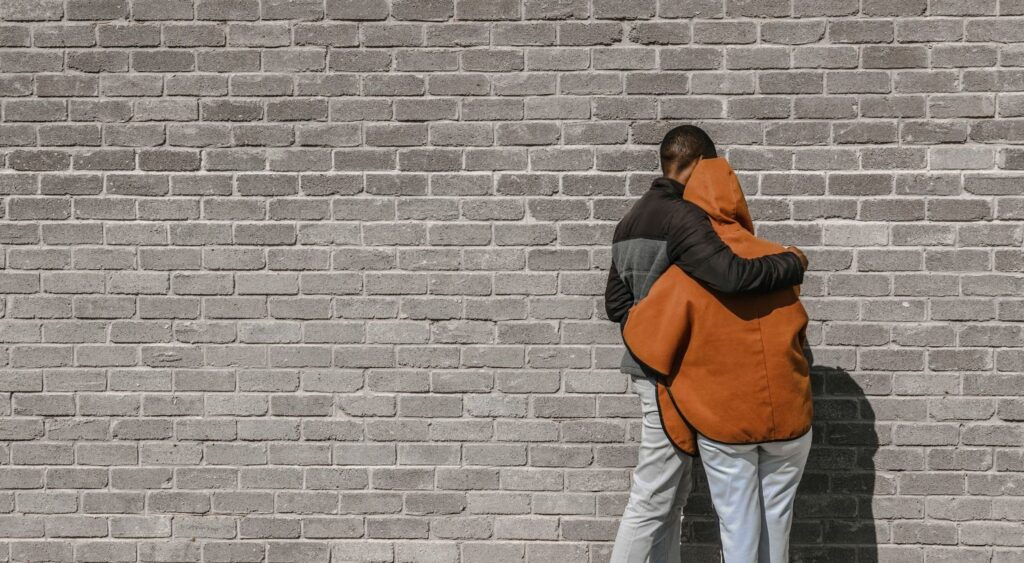
 Image of two people hugging each other. Their backs are turned to the camera. They’re facing a brick wall.
(Image courtesy of Melanie Stander on Unsplash)

Damned If You Do

As a teacher, a member of a large family, and a feminist, I have always had crystal-clear notions about nurturing kids. For most of my teaching career, I’ve taught children ages 10 and under. I also have nephews and nieces that I’m very fond of. So far, children are the only humans who speak not only honestly but also kindly. 

Everywhere I go, I play with every kid I see. But I don’t want to have my own kids. Not now, maybe not ever.

As a firm believer in freedom of speech and the right to express one’s ideas, I have always been open about my desire to get married or stay single without having children. I’d have pets, of course, but not kids.

I don’t keep count, but I’m sure that tons of people are ready with a stock reply about God’s wrath and how women like me risk missing the boat to motherhood. 

“You say you’re not ready, or you don’t want children, but you’ll change your mind one day. However, it will be too late because God will punish you by taking them away from you.” 

Gasp! I’ve heard this statement over and over for several years, but it’s still shocking.

The facts don’t lie

The number of divorces has increased rapidly over the years. The biggest divorce victims are the kids. The Department of Statistics in Jordan tracked this in 2018. According to the study, out of 70,734 marriages, 4,690 ended in divorce. Four of the married women that got divorced were less than 18 years old, divorce lawsuits in the same year hit 4,445, and 2018 divorces were over 50 percent more than those in 2017. 

Numbers and statistics might not be everything, but to me, these numbers offer evidence that is just too strong to argue against. Besides, personal stories of nurturing families and my actual encounters with such families make me want to believe otherwise.

Facts like how many poor families with kids are living through struggles, how many parents are unemployed, or how many kids live through emotional distress resulting from divorce or separation aren’t widely publicized, but these are all part of the picture.

Stories of children I know

During my teaching career, I have witnessed the impact of such broken relationships and how negatively they have affected the children involved, which is why I don’t dare to have kids.

For example, I had a student who had to wait hours with the doorman until his father picked him up only to drop him off at his mother’s in the evening. The kid, 10 years old at the time, was so disconcerted and confused that it was hard to watch. 

Another student had to watch his father beat up his mother and throw her out with a newborn in the street in the middle of the night. The boy, who had just turned 11, found comfort in pornography and was a victim of familial sexual abuse. 

Another student broke my heart as she narrated her cousins’ exploits with her body. 

One last example among scores of kids that I taught was a mother who disappeared in the middle of the night with three of her kids, leaving the other three with their father, never to be heard from again.

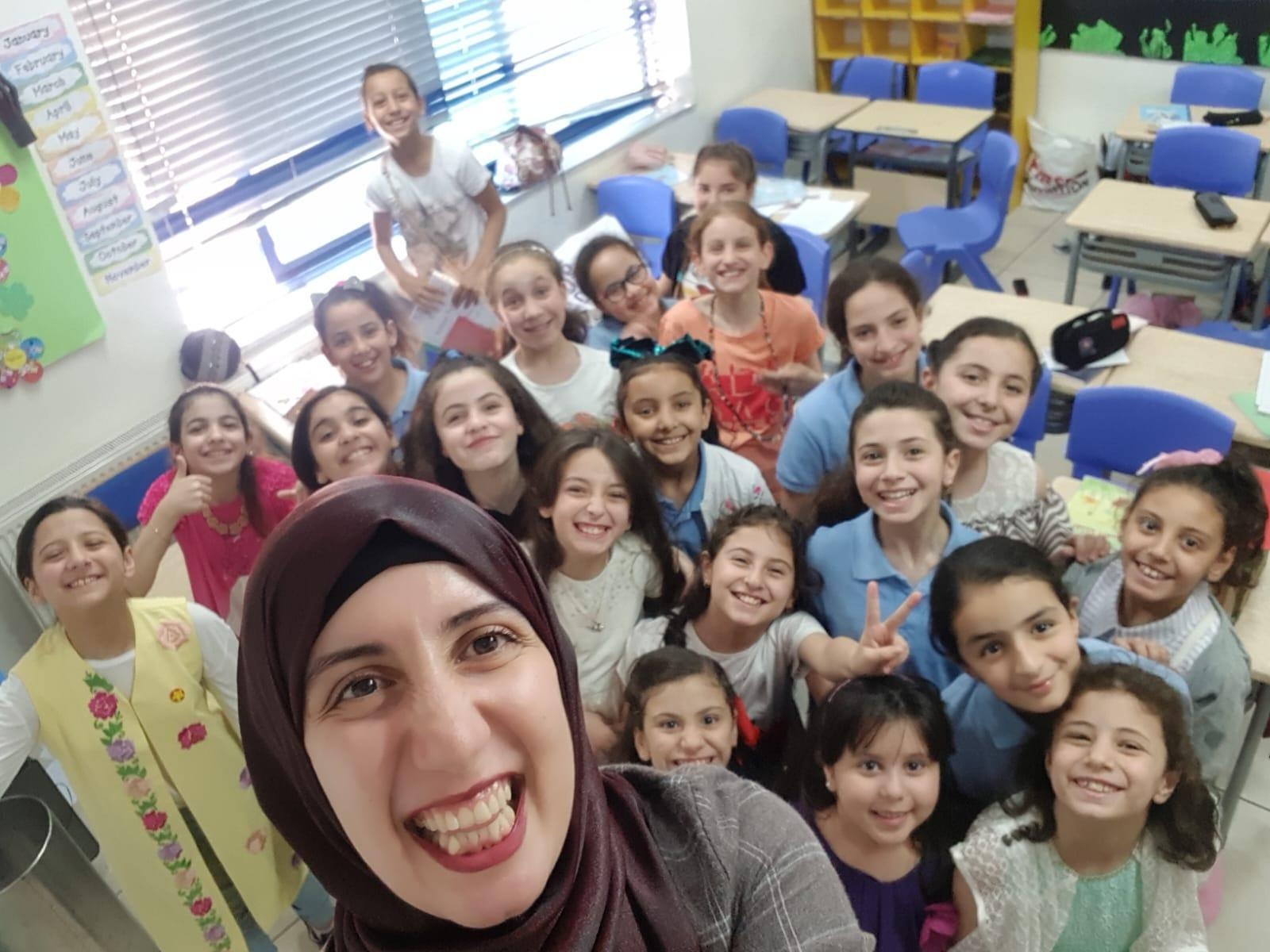
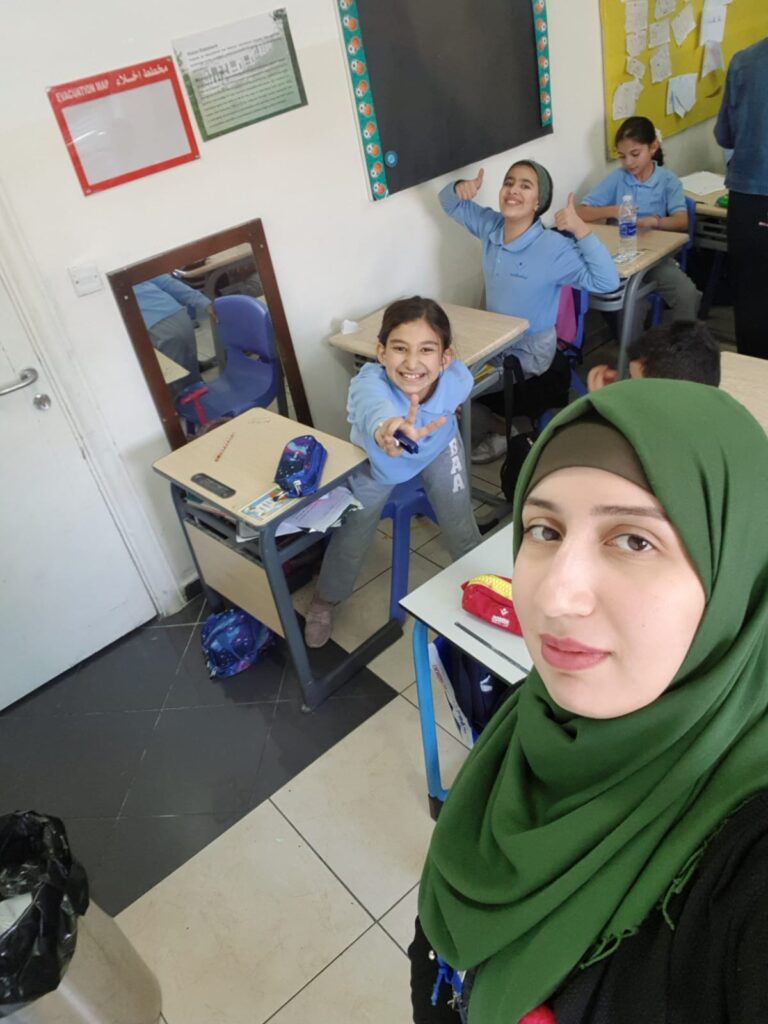
Wiam Najjar and students
(Image courtesy of Wiam Najjar)

Never giving in

When I met my husband, the first and most persistent topic of discussion between us was not wanting children. It was scary to speak about. It was unfathomable to him.

The only reasons I should have kids were to please my in-laws, to make society shut up, to prove I was “woman enough,” and to fit in. 

My husband is not a citizen of my country and, therefore, has no rights. Any child we bring into this world will accordingly have no rights. I can’t list my husband or child on the family register. I’m referred to as the foreigner’s wife. In my country, women are way behind men in terms of human rights, while men are under so much pressure to achieve it all. Having a boy or a girl does not look hopeful. 

Arguing with facts and statistics, expressing one’s fear of bringing a child into an unstable world, or simply stating that not wanting kids is never enough for society. 

God won’t punish me for considering the many possible scenarios and dreary stats. God won’t take anything away from me because I’ve made a choice. Kids are a huge responsibility that cannot be easily handled. It’s not simply instinct or custom. It’s bringing a human into this world and taking care of every aspect of their life until they grow up. 

Yeah, I’m scared of that responsibility. And I must admit that it isn’t an easy decision to make.

So whenever someone decides to ask me when I’ll have kids, I will let them read this piece, even before they ask!